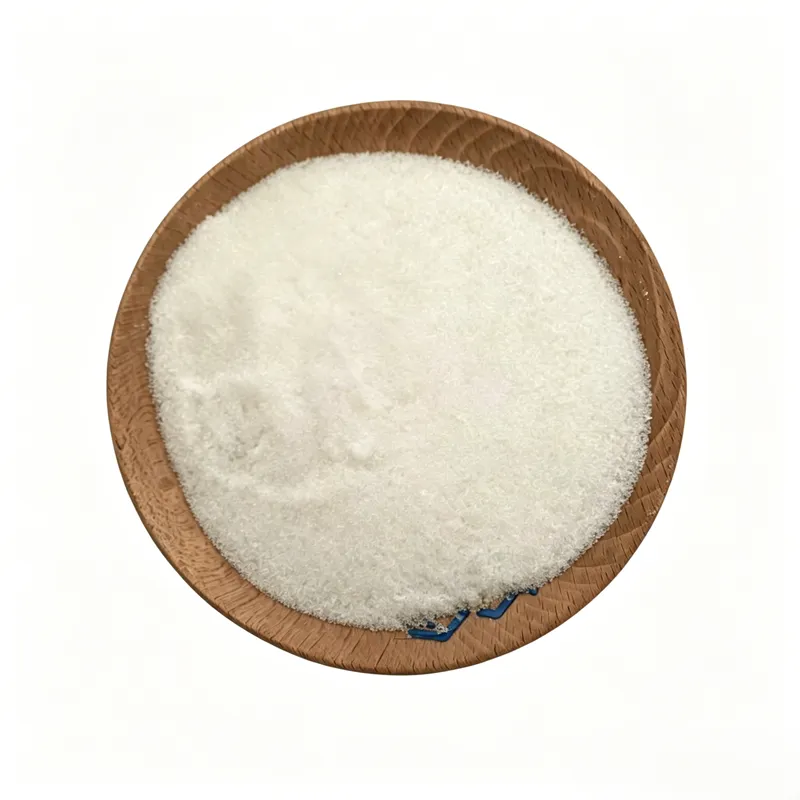
HiSiaddi is an innovative foreign trade service provider driven by both technology transformation and export business. It has established a service system of "1+2+3+4=1" and can supply D-mannose sourced directly from multiple well-known brand manufacturers. With over a decade of market experience and technological cooperation with manufacturers, HiSiaddi possesses rich expertise in product compliance issues. Below is a case of HiSiaddi handling D-mannose cross-border compliance challenges.
For inquiries on more D-mannose product compliance issues, please contact HiSiaddi customer service.
The purchaser is VitalCare GmbH based in Hamburg, Germany, a leading mid-to-high-end urinary health dietary brand in the EU. Its full product line is sold at premium retail channels including DM high-end beauty pharmacies across Germany, Rossmann organic health zones, AH boutique supermarkets in the Netherlands, and BIPA chain pharmacies in Austria. The company’s three core series of dietary supplements are pharmaceutical-grade sustained-release capsules, organic high-purity oral powders, and maternal & infant specialized nutrient solutions. Products are subject to four layers of regulation: EU EFSA, Germany LFGB food regulation, U.S. FDA, and EU REACH chemical regulation. All product categories require completion of domestic German raw material filings, EU SVHC Substances of Very High Concern screening, FDA factory registration, and TGA cross-border document mutual recognition, making it a high-threshold mid-to-high-end raw material procurement client. The brand has an annual D-mannose procurement volume of 112 tons divided into three specifications: pharmaceutical high-purity grade, organic granulated grade, and infant formula water-soluble grade. It previously purchased pharmaceutical D-mannose raw materials from pharmaceutical enterprises in France and Denmark for years. Affected by price hikes and capacity contraction of local European raw materials, the brand planned to switch to raw materials sourced from domestic Chinese manufacturers. Two domestic D-mannose manufacturers with export qualifications were selected for an initial 25-ton trial order, yet four major cross-border compliance hard defects emerged approaching shipment and port arrival, exposing goods to risks of detention at EU ports, inability to complete domestic German raw material filings, and finished product shelf ban at supermarkets. The client spent 45 days independently coordinating manufacturers and third-party testing institutions without full rectification closure, on the verge of canceling domestic procurement plans and reverting to original European suppliers. It urgently entrusted HiSiaddi with full management of full-chain compliance rectification, supplementary document issuance, and regulatory filing implementation.
EU REACH regulation stipulates that chemical raw materials imported in annual volumes exceeding 1 ton must complete registration with ECHA. Non-EU manufacturers must entrust a local EU Only Representative (OR) to submit file filings. Any SVHC Substance of Very High Concern contained in raw materials at ≥0.1% by weight must be disclosed and labeled on SDS safety data sheets. The two domestic manufacturers only held domestic ISO22000 food system certifications, without D-mannose REACH substance registration, no contracted EU OR representatives, and failed full screening per the EU 219-item SVHC list. Existing MSDS adopted domestic national standard formats with inconsistent component labeling, toxicity descriptions, and exposure limits incompatible with EU specifications. Pre-audit by German customs indicated goods would be detained, inspected on-site, or even returned upon port arrival, incurring daily high warehousing fees and fines.
The client’s terminal products require domestic German dietary product listing filings, mandating raw material suppliers to complete filing in Germany’s food regulatory system. Simultaneously, the brand expanded into the U.S. market, requiring raw material factories to complete FDA overseas factory registration for dietary raw materials and designate local U.S. agent institutions. The two Chinese manufacturers could only provide domestic SC production permits, lacking FDA factory registration numbers, Germany LFGB raw material filing dossiers, and cGMP production compliance statements. German food regulatory authorities clarified that raw materials without filings cannot be used for finished product applications for AUST L and EU dietary access numbers; even if raw materials cleared customs, they could not be input into production lines for finished product manufacturing and market launch.
The client’s products comply with USP Pharmacopoeia and FCC Food Chemicals Codex standards, requiring bilingual Chinese-English COAs accompanying each shipment clearly indicating D-mannose monomer content, impurity sugars (glucose, fructose), heavy metals, solvent residues, and full microbial limits. Original manufacturer quality inspection reports were compiled per Chinese national standards with missing test items, inconsistent limit standards against USP, no CNAS certification endorsement, and no English versions. German third-party testing institutions refused to recognize existing quality inspection documents, unable to issue finished product release reports.
Two product lines of the client – organic powders and maternal & infant nutrient solutions – feature clean organic labels, requiring beech wood plant extraction raw materials with full-chain traceability documents covering beech wood harvesting, hydrolysis extraction, and refining purification. Manufacturers only held finished product organic certificates, lacking upstream plant raw material origin traceability, batch-corresponding processing records, and batch-by-batch supplementary Kosher certification pages. EU organic regulatory authorities judged broken organic qualification chains during audits, prohibiting labeling of USDA Organic marks on organic product lines and blocking access to high-end organic supermarkets for terminal sales.
HiSiaddi formed a special team of customs compliance specialists, pharmacopoeia technical specialists, EU regulatory specialists, and organic certification specialists. Leveraging a global compliance resource library accumulated over years of monosaccharide foreign trade experience, the team closed all compliance loopholes in four segments: production site rectification, supplementary testing & certification, overseas registration, and standardized documentation within a 60-day cycle.
1. HiSiaddi partnered with EU local compliance institutions to sign a Hamburg, Germany-based enterprise as the REACH Only Representative (OR) for cooperating manufacturers. Relying on existing raw material physical and chemical data, the team submitted D-mannose tonnage dossiers to ECHA for filing, completing REACH pre-registration archives for an annual volume of 112 tons and obtaining official registration receipt numbers.
2. Entrust SGS laboratories to conduct full screening of three D-mannose raw material specifications against the latest EU 219-item SVHC list, issuing EU-recognized SVHC test reports confirming all Substances of Very High Concern content below the 0.1% disclosure threshold.
3. Compile original English SDS safety data sheets in compliance with EU CLP regulations, revise component classification, storage & transportation requirements, toxicological data, and waste disposal clauses, replacing original domestic-format MSDS to meet German customs clearance document review standards.
1. FDA Filing: Assist both manufacturers in completing online U.S. FDA overseas factory registration for dietary supplements, obtain official FDA factory registration numbers, designate a California-based local U.S. compliance enterprise as the U.S. FDA agent, and organize factory workshop GMP production records, quality control procedures, and clean workshop test records into archived FDA filing dossiers accessible for FDA unannounced inspections in the future.
2. Germany LFGB Filing: Integrate raw material process routes, raw material sources, full toxicological safety data, and historical third-party test reports, entrust a local German food compliance firm to submit D-mannose raw material filing applications to Germany’s Federal Food Regulatory Authority, obtain domestic German raw material access filing receipts to enable legal use of raw materials for dietary preparation production in Germany.
1. Unify internal raw material control indicators aligned with USP Pharmacopoeia standards, adjust factory outgoing testing items to supplement European and American mandatory test items including methanol/ethanol solvent residues, five heavy metals, pathogenic bacteria, and individual impurity sugar content.
2. Coordinate CNAS-certified third-party laboratories to issue batch-by-batch bilingual Chinese-English COA quality inspection forms indicating USP limits and measured values with laboratory certification seals. Each COA is bound to the corresponding production batch number and raw material traceability number for authenticity verification on European and American third-party testing platforms, meeting review requirements of the client’s German laboratory.
1. Trace upstream beech wood raw material suppliers, complete log harvesting origin certificates, raw material procurement ledgers, incoming acceptance records, and production transfer forms for each workshop section, build full-batch traceability archives covering forest land to finished products, and form USDA Organic traceability dossiers.
2. Cooperate with domestic certified certification institutions to supplement batch-by-batch supplementary Kosher certification pages, ensuring independent Kosher documents correspond to each raw material batch, and refine a document system binding organic certificates, production qualifications, and traceability records one-to-one to pass EU organic regulatory audits and enable normal labeling of organic marks for supermarket entry.
After completion of all compliance rectification items, the initial 25-ton trial production raw materials were successfully shipped to Hamburg Port, Germany. Customs completed one-time clearance based on REACH registration documents, revised SDS, and compliant COAs without port detention or inspection withholding. The client’s three D-mannose specifications were fully input into its own production lines for mass production, with finished products smoothly completing domestic German TGA filings and shelf launch at all premium pharmacies and organic supermarkets. Terminal sales volume rose by 31% year-on-year in the first launch quarter. The client formally signed an annual framework procurement contract of 112 tons with raw material breakdown as follows: 48 tons of pharmaceutical USP high-purity raw materials (sustained-release capsules), 39 tons of organic granulated raw materials (organic powders), and 25 tons of maternal & infant nutrient solution dedicated water-soluble raw materials, scheduled monthly across 13 balanced batches throughout the year. Later, the client expanded into high-end dietary markets in France and Spain, fully entrusting HiSiaddi with all D-mannose raw material compliance filings and pre-document reviews, adding a 37-ton annual procurement volume for the Spanish market to raise total annual purchasing capacity to 149 tons. HiSiaddi established an exclusive D-mannose compliance archive library for the client to track real-time updates of EU REACH lists, revisions to Germany LFGB regulations, and changes to FDA policies, conducting pre-review of complete documents before each shipment to avoid emerging compliance risks in subsequent batches.
1. Smoothly realized localization substitution of European raw materials, reducing overall raw material procurement costs by 27.3% compared with imports from France and eliminating high premiums of European raw materials. Complete compliance qualifications opened multi-country supermarket channels in Germany, the Netherlands, Austria, and Spain, saving manpower, testing, and registration costs from separate coordination with local compliance institutions in each country.
2. Adopt full compliance documents issued by HiSiaddi as templates to refine internal global raw material access review standards, applying this set of compliance review specifications to subsequent procurement of additional monosaccharide raw materials to avoid access compliance risks at the source.
Relying on this high-end German client project case, manufacturers supplemented full export compliance qualifications covering FDA, REACH, LFGB, and organic certification, forming standardized quality control systems aligned with European and American pharmacopoeias. Supported by complete compliance endorsements, they subsequently secured fixed procurement orders from three high-end nutrition enterprises in Switzerland and Belgium, successfully accessing the EU high-end pharmaceutical monosaccharide supply chain.
Breaking away from the basic foreign trade model of only supplying goods without compliance support, HiSiaddi built differentiated compliance service barriers in the monosaccharide sector via one-stop compliance services covering regulatory research, testing implementation, overseas registration, and standardized documentation. Supported by mature global compliance resources, the company became a core service provider bridging compliance between upstream and downstream players in the domestic and international D-mannose industrial chain.
Most domestic D-mannose manufacturers focus on domestic national standard production with insufficient understanding of overseas access regulations including EU REACH, Germany LFGB, and U.S. FDA. Compliance documents, testing standards, and certification systems are only adapted to the domestic market, unable to meet stringent multi-country access statutory requirements of mid-to-high-end European and American dietary brands. Overseas mid-to-high-end clients operate within mature regulated European and American markets with mandatory statutory requirements for full-chain raw material compliance, pharmacopoeia indicators, and traceability documents. Manufacturers’ single-product supply model cannot simultaneously resolve cross-regional regulatory barriers. As a neutral foreign trade service provider, HiSiaddi integrates global regulatory resources, third-party testing, and overseas registration institution resources to systematically resolve multi-country, multi-system compliance challenges, enabling overseas clients to stably implement domestically sourced raw material procurement while helping high-quality domestic raw material manufacturers break compliance barriers and smoothly enter the global high-end raw material market.
For inquiries on more D-mannose product compliance issues, please contact HiSiaddi customer service.

 +86-13120989737
  info@hisiaddi.com
 English