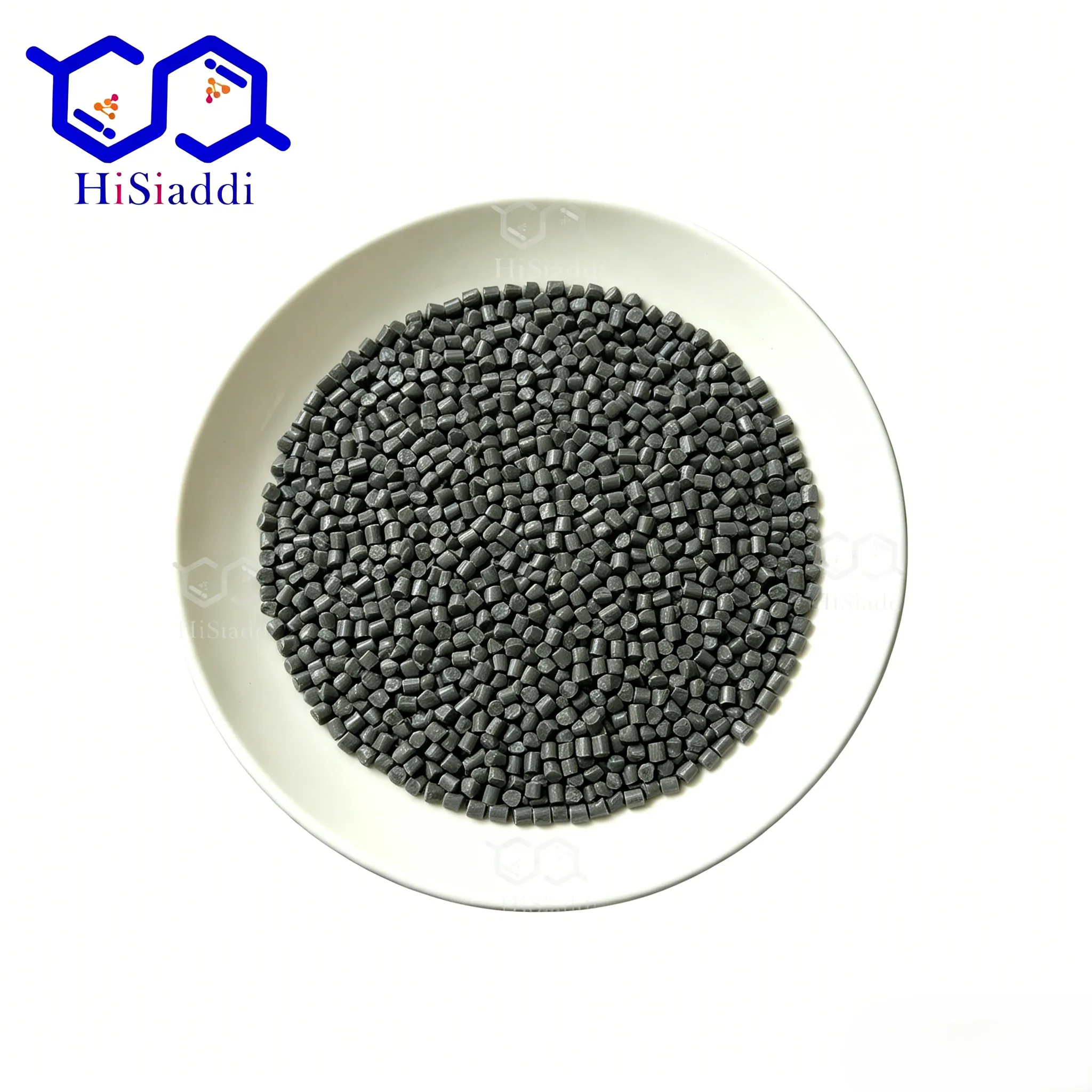
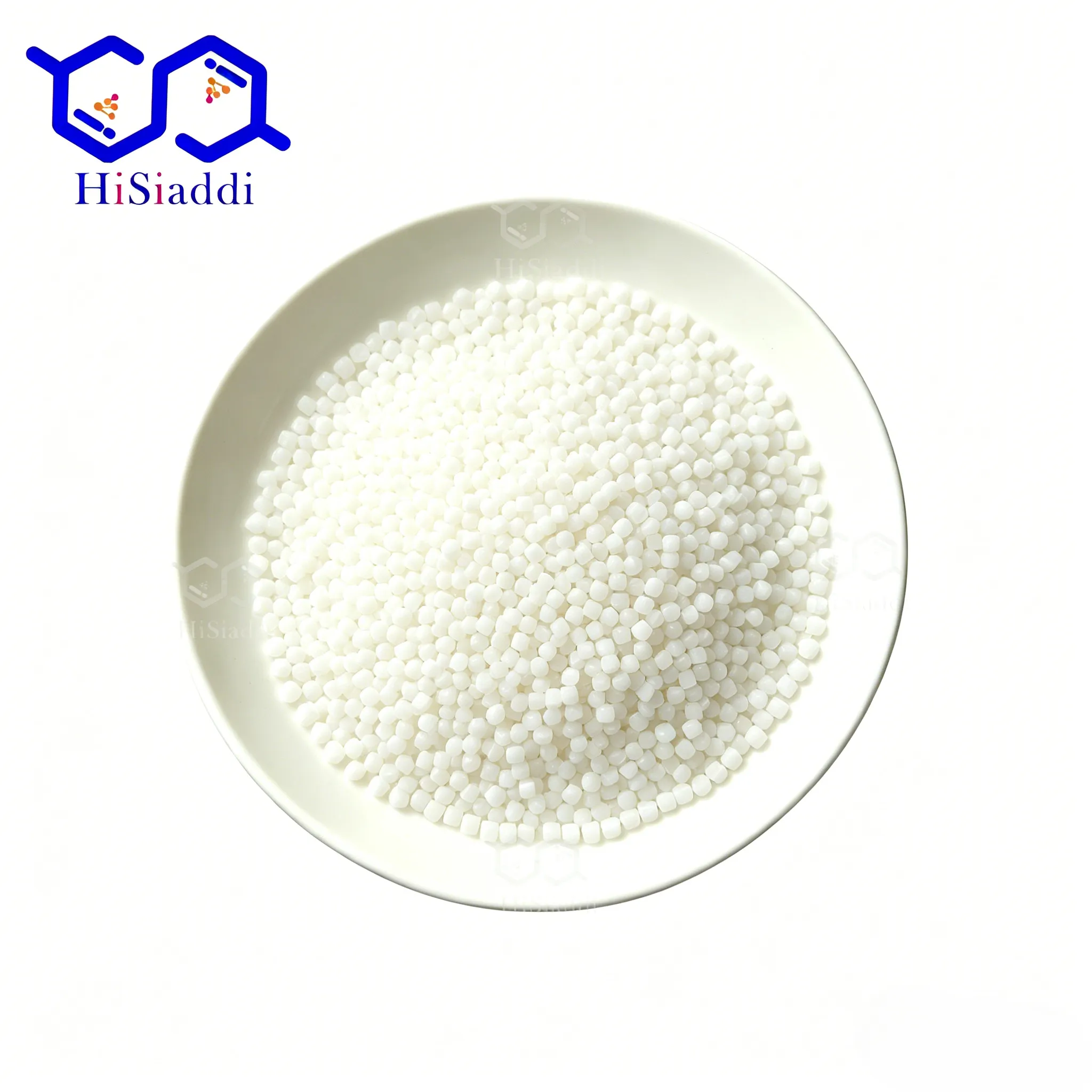
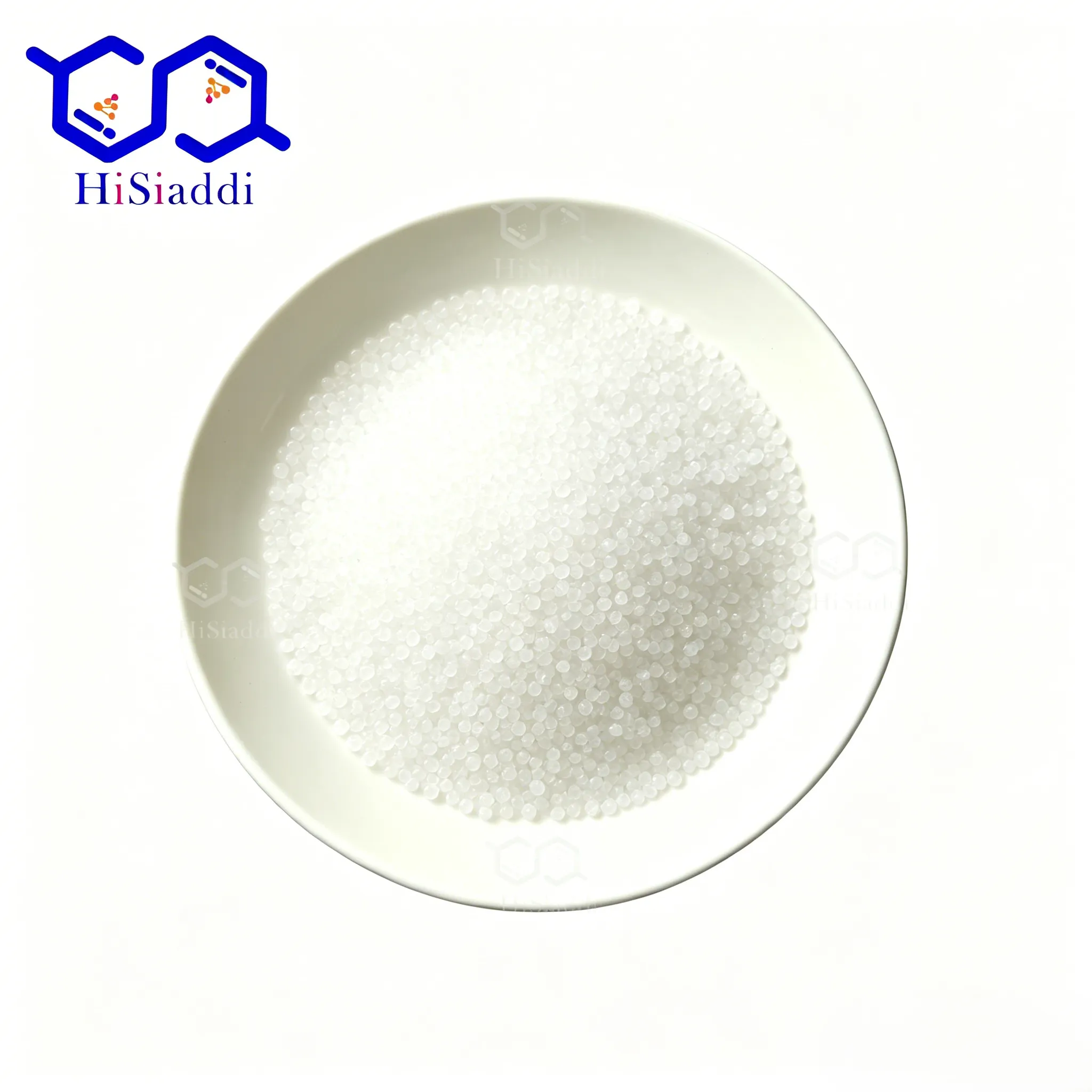
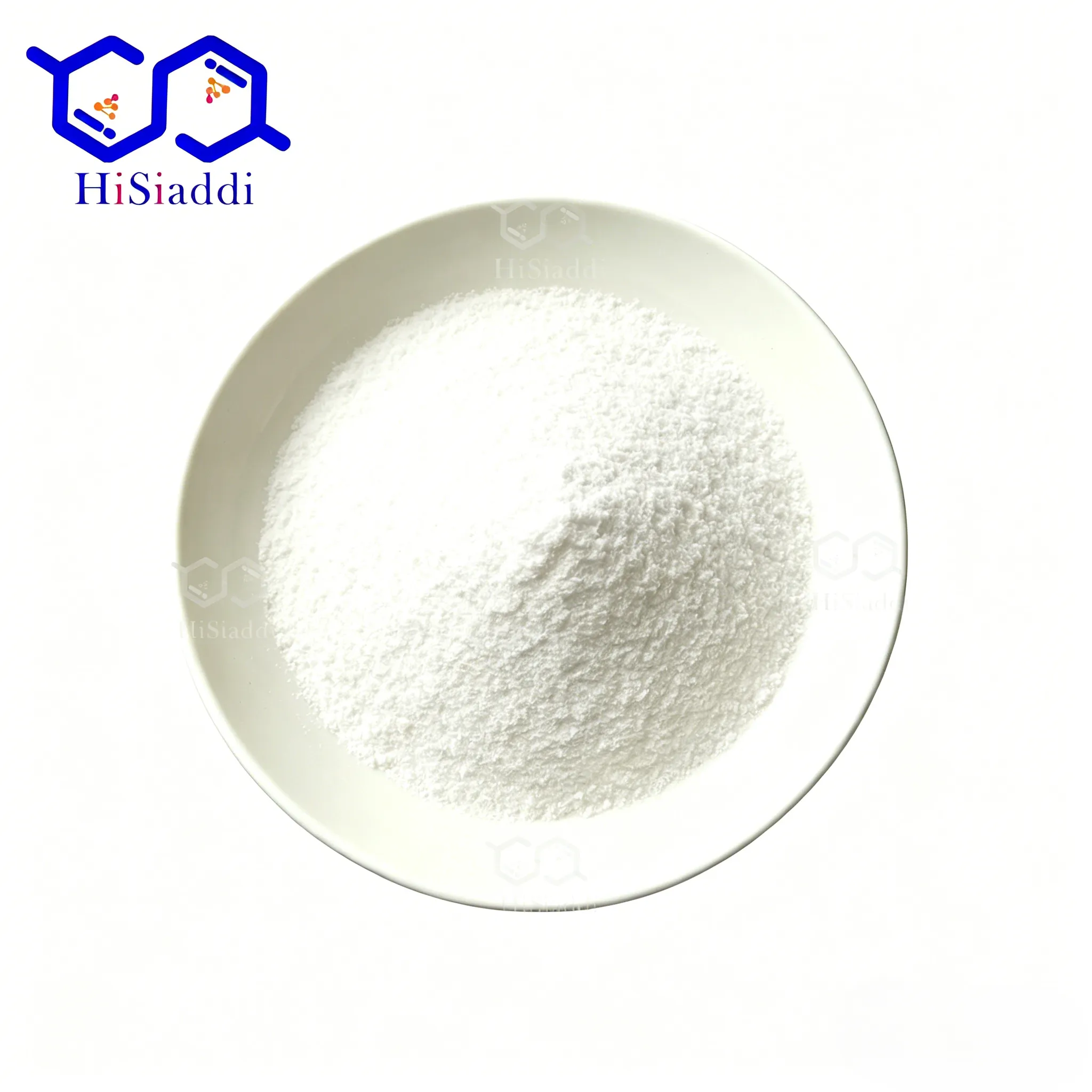
Polyvinylidene Fluoride Resin abbreviated as PVDF, it is used in lithium battery binders and chemical anti-corrosion pipelines. HiSiaddi can supply original factory sources of multiple Chinese brands and provide "1+2+3+4=1" services.
Zheflon: FL2100 (lithium battery grade), solid content ≥99%, narrow molecular weight distribution, high bonding strength, electrolyte corrosion resistance, low impurities (Na<50ppm), 25%~35% lower in price than Solvay Solef with equivalent performance, suitable for new energy material enterprises, photovoltaic backsheet manufacturers and chemical anti-corrosion equipment factories.
Dongyue: DY-500 (extrusion grade), DY-600 (injection molding grade), temperature resistance -40~150℃, flame retardant UL94 V-0, acid and alkali / organic solvent resistance, international grade quality, 20%~30% lower in price, suitable for mid-to-high-end anti-corrosion and photovoltaic applications.
HiSiaddi Service: Customization of molecular weight (low / medium / high) and modification (weather resistance / toughening); formula optimization of lithium battery binder, molding process of anti-corrosion pipeline, technical support for replacing Solvay Solef; testing on bonding strength, corrosion resistance and ionic impurities.
 CONTACT HiSiaddi NOW
| CAS No: | 24937-79-9 | Brand Name: | Multi-brand |
| MF: | C2H2F2 | Model Number: | Multi-models |
| EINECS No: | 24937-79-9 | Grade: | N/A |
| Purity: | 99.5% | Place of Origin: | Guangdong, China |
| MOQ: | 1ton | Storage: | Please refer to the product packaging or contact the customer service. |
When purchasing Polyvinylidene Fluoride (PVDF) as a buyer, you may encounter the following questions:
What are the core performance advantages and application impacts of mainstream models from well-known PVDF brands?
What competitive services can PVDF suppliers provide?
What are the qualification certifications and market reputation of targeted PVDF brands?
How about the inventory level and supply stability of PVDF suppliers?
What key factors should be taken into account when selecting PVDF?
...and many other relevant inquiries.
(Consolidated industry leader, No.1 exporter of lithium battery grade & injection grade PVDF)
DS206 (Homopolymer injection grade), DS208 (High viscosity extrusion grade), DS212 (Special homopolymer for lithium battery binders), DS214 (Alkali-resistant copolymer grade), DS216 (Exclusive for photovoltaic backsheet films)
Molecular weight & melt flow index: Lithium battery grade DS212 features molecular weight of 350,000-420,000 and melt flow index of 0.8-1.5 g/10min with narrow molecular weight distribution, presenting strong adhesion and stable liquid absorption, equivalent to Solvay 5130 in performance.
Chemical resistance: Resistant to 98% concentrated sulfuric acid, strong alkali, chlorides and organic solvents; tensile strength 48-55 MPa, elongation at break 400%-480%, superior to ordinary domestic products.
Purity control: Metal ion content <10 ppm, moisture content <0.05%, ash content <0.03%, fully meeting high-purity requirements for lithium batteries and photovoltaics.
Thermal stability: Long-term service temperature range: -40℃~150℃; thermal decomposition temperature >380℃; excellent UV aging resistance with over 25 years outdoor weatherability.
Processing stability: Minimal batch-to-batch deviation, compatible with overseas high-speed extrusion, injection molding and wet coating production lines without die blockage or film fracture risks.
Priced at 60%-70% of equivalent Solvay/Kureha products; most prominent price advantage in lithium battery grade; delivery cycle shortened by 60%; ★★★★★ cost-effective rating.
Overseas lithium battery manufacturers (power batteries & energy storage batteries), photovoltaic backsheet film producers, anti-corrosion injection pipe manufacturers, fluoroplastic extrusion profile factories and new energy binder compounding enterprises.
Reduce procurement cost of lithium battery binders by 28%-38%, greatly cutting raw material expenditure for overseas battery factories.
Superior batch consistency minimizes electrode powder shedding and lithium precipitation defects, lowering production rejection rate.
Stable global production capacity ensures sufficient supply even in peak seasons, avoiding supply interruption and price surge risks from foreign original suppliers.
Fully compatible with mainstream overseas NCM/LFP battery systems, enabling direct replacement of imported PVDF without formula adjustment.
Prolong cycle life and enhance safety of power & energy storage batteries, reducing thermal runaway hazards.
Excellent weather resistance of photovoltaic backsheets stabilizes 25-year outdoor service performance of PV modules.
Service life of anti-corrosion pipes and profiles extended by 3-5 times, cutting replacement frequency of chemical equipment.
(Leading manufacturer of coating grade & water treatment membrane grade PVDF, highest recognition in overseas anti-corrosion markets)
JF903 (Suspension homopolymer for coatings), JF906 (High weather-resistant copolymer for coatings), JF801 (Water treatment membrane grade), JF803 (High-purity powder grade)
Coating grade: Uniform particle size and excellent dispersibility with great compatibility with fluorocarbon coating additives; salt spray resistance over 2000 hours and top-level anti-yellowing performance against UV rays.
Membrane grade: Controllable pore structure, adjustable hydrophilicity & hydrophobicity, high tensile strength, outstanding anti-fouling and anti-clogging properties, suitable for overseas MBR sewage treatment membranes and seawater desalination membranes.
Weather resistance: Copolymer grades resist acid, alkali and coastal salt fog, ideal for highly corrosive environments in Southeast Asia and Middle East coastal areas.
Eco-friendly performance: Ultra-low VOC content, compliant with EU REACH, RoHS and US EPA environmental standards.
Priced at 50%-60% of equivalent Arkema/Daikin products; globally top cost performance in coating grade; ★★★★★ rating.
Overseas fluorocarbon coating manufacturers, MBR membrane module suppliers, seawater desalination material providers, architectural anti-corrosion material factories and marine engineering anti-corrosion suppliers.
Cut coating raw material cost by 35%-45%, greatly boosting profit margins of overseas coating enterprises.
Excellent dispersibility reduces coating sedimentation and floating color issues, lowering formula debugging costs.
Membrane grade fits mainstream overseas dry & wet membrane-making technologies with stable finished product flux.
Extend service life of anti-corrosion coatings for building exteriors, steel structures and ships by more than 10 years.
Strong anti-fouling capacity of sewage treatment membranes prolongs cleaning cycles and reduces operation & maintenance energy consumption.
Outstanding chloride corrosion resistance improves durability of seawater desalination equipment.
(Rising star exporter of high-purity lithium battery grade & modified PVDF)
LC PVDF L1 (High-purity lithium battery powder), LC PVDF C2 (Hydrolysis-resistant modified copolymer), LC PVDF M3 (Injection compression grade)
High-purity lithium battery grade: Metal ion content <5 ppm with ultra-low impurities, applicable for binders of high-end overseas energy storage batteries and solid-state batteries.
Modified copolymer advantages: Self-developed hydrolysis-resistant and electrolyte swelling-resistant formula; dimensional change rate below 1.2% after electrolyte immersion, outperforming conventional homopolymer PVDF.
Adjustable fluidity: Customizable melt flow index to match overseas high-speed coating and precision injection molding processes.
Strong customization capability: Adjustable molecular weight and comonomer content; flexible small-batch sample delivery.
Priced at 55%-65% of high-end Solvay lithium battery PVDF; ★★★★☆ rating in high-end modified field.
Overseas high-end energy storage battery factories, solid-state battery R&D institutions, precision anti-corrosion injection part manufacturers and semiconductor auxiliary material suppliers.
Meet strict technical standards of overseas high-end batteries, realizing direct replacement of expensive imported materials.
Modified grades solve electrolyte swelling problems of ordinary PVDF and enhance battery operational stability.
Flexible small-batch supply supports R&D-oriented clients and niche high-end orders.
Further improve safety performance and cycle life of high-end energy storage batteries.
Higher dimensional stability of precision anti-corrosion components under extreme working conditions lowers failure rate.
(Major exporter of general injection/extrusion grade & cable insulation grade PVDF)
Main Export Grades
SM PVDF T1 (General injection grade), SM PVDF E2 (Extrusion pipe grade), SM PVDF W3 (Special for cable insulation)
Superior processing fluidity with stable melt flow index, perfect for mass production injection molding and high-speed extrusion overseas.
Excellent low-temperature toughness: No brittle fracture at -40℃ with high impact resistance, suitable for cold regions in Europe and North America.
Stable dielectric property: Volume resistivity over 10¹⁴ Ω·cm and high breakdown strength, ideal for high-frequency cable insulation.
Wide-spectrum chemical resistance: Resistant to oil, acid, alkali and refrigerants, widely used in chemical pipelines and air conditioning pipelines.
Cost Performance
Priced at 48%-58% of Daikin industrial-grade PVDF; ★★★★☆ rating for general industrial applications.
Target Overseas B2B Buyers
Overseas chemical pipe manufacturers, air conditioning refrigeration accessory factories, fluoroplastic cable producers and valve & pump component suppliers.
Ultra-low unit price for bulk procurement adapts to large-scale assembly line production overseas.
Inherent low-temperature toughness fits working conditions in high-latitude regions without extra modification.
Stable insulation performance of cable-grade PVDF reduces insulation defect rate.
Enhanced low-temperature and corrosion resistance of chemical pipelines avoids frost cracking and leakage risks.
Anti-aging and anti-interference special cables improve safety of industrial electrical equipment.
(Growing exporter of high-end copolymer PVDF, photovoltaic film grade and high-purity electronic grade)
YH PVDF CO1 (Weather-resistant copolymer photovoltaic grade), YH PVDF HP2 (High-purity electronic grade), YH PVDF F3 (Special thin-film grade)
Copolymer photovoltaic grade: Outstanding UV and damp-heat resistance with extremely low water vapor transmittance, suitable for double-sided photovoltaic backsheets.
High-purity electronic grade: Metal ion content <3 ppm, low precipitation and low volatility, applicable for semiconductor cleaning equipment.
Excellent film-forming property: Ideal for casting and film blowing processes, producing smooth films free of crystal point defects.
Priced at 60%-70% of overseas high-end copolymer & electronic grade PVDF; ★★★★ rating in high-end segmented markets.
Overseas high-end photovoltaic material enterprises, semiconductor equipment component factories, fluorine film manufacturers and precision electronic anti-corrosion suppliers.
Significantly cut raw material cost of high-end photovoltaic backsheets while maintaining equivalent performance with imported products.
High-purity electronic grade PVDF facilitates entry into overseas high-end semiconductor supply chains, avoiding low-price red ocean competition.
Stronger outdoor stability of double-sided PV modules reduces power generation attenuation.
High cleanliness of semiconductor accessories minimizes contamination risks during chip production

| Comparison Dimension | Shandong Dongyue | Zhejiang Juhua | Shandong Lianchuang | Zhejiang Sanmei | Zhejiang Yonghe |
| Export Ranking | 1 | 2 | 3 | 4 | 5 |
| Core Application Fields | Lithium battery grade, injection/extrusion grade, photovoltaic grade | Coating grade, water treatment membrane grade | High-purity lithium battery grade, modified copolymer grade | General injection/extrusion grade, cable insulation grade | High-end copolymer photovoltaic grade, electronic high-purity grade, thin-film grade |
| Main Export Models | DS206/208/212/214/216 | JF903/906/801/803 | LC PVDF L1/C2/M3 | SM PVDF T1/E2/W3 | YH PVDF CO1/HP2/F3 |
| Benchmarked Foreign Brands | Solvay, Kureha | Arkema, Daikin | Solvay, 3M | Daikin, Kureha | High-end lines of Arkema & Solvay |
| Core Competitive Strength | Narrow molecular weight distribution, metal ion <10ppm, stable batches, strong adhesion, stable glass transition temperature, excellent electrolyte resistance | Superior dispersibility, salt spray resistance>2000h, top-level weather resistance, controllable membrane pore structure, anti-fouling property | Metal ion <5ppm, hydrolysis & swelling resistance, flexible modification, small-batch customization | Excellent low-temperature toughness, good fluidity, stable dielectric property, suitable for cold climates | Ultra-low water vapor transmittance, low precipitation high purity, superior film-forming property, no crystal defects |
| Price Ratio vs Foreign Equivalents | 60%-70% | 50%-60% | 55%-65% | 48%-58% | 60%-70% |
| Cost Performance Rating | ★★★★★ | ★★★★★ | ★★★★☆ | ★★★★☆ | ★★★★ |
| Core Target Overseas B2B Buyers | Overseas power/energy storage battery factories, photovoltaic backsheet manufacturers, anti-corrosion pipe factories | Fluorocarbon coating factories, MBR & seawater desalination membrane suppliers, marine anti-corrosion providers | High-end energy storage battery factories, solid-state battery R&D enterprises, precision anti-corrosion injection factories | Chemical pipe manufacturers, air conditioning accessory factories, special cable producers | High-end photovoltaic material enterprises, semiconductor component factories, fluorine film manufacturers |
| Benefits for Downstream B2B Buyers | 1. Lithium battery binder cost down 28%-38%2. Stable batches reduce electrode defects3. Adequate supply in peak seasons4. Direct import replacement without formula change | 1. Coating raw material cost down 35%-45%2. Good dispersibility cuts formula loss3. Compatible with mainstream overseas membrane-making technologies | 1. Meet strict standards of high-end batteries2. Modified products solve electrolyte swelling issues3. Flexible small-batch supply for R&D orders | 1. Low bulk procurement price for assembly line production2. Low-temperature toughness fits high-latitude areas3. Stable cable insulation lowers defect rate | 1. Cost reduction for high-end photovoltaic raw materials2. High-purity grade accesses high-end semiconductor supply chains |
| End-user Practical Advantages | 1. Longer battery cycle life & higher safety2. Stable weather resistance of PV modules3. Extended service life of anti-corrosion fittings | 1. Over 10-year longer service life of anti-corrosion coatings2. Lower O&M cost for sewage treatment membranes3. Enhanced corrosion resistance of marine equipment | 1. Improved stability of high-end energy storage batteries2. Lower failure rate of precision parts under extreme conditions | 1. Frost & corrosion resistant pipelines2. Safer anti-interference special cables | 1. Lower power generation attenuation of PV products2. Higher cleanliness of semiconductor accessories |
HiSiaddi, a dual-driven foreign trade service provider integrating technology transformation and foreign trade business, has built a "1+2+3+4=1" integrated product service system: 1 foreign trade salesperson with over 3 years of experience, supported by two R&D teams, three multi-vetted high-quality suppliers and four shared warehouses to fulfill all PVDF raw material demands.
With this system, HiSiaddi outperforms most foreign traders in PVDF R&D and modification processes, outperforms standalone fluoroplastic factories in cross-brand market demand & competitive analysis, and outperforms academic institutes in global PV overseas trade operation.
HiSiaddi only employs sales staff with minimum three years’ industry experience. All sales personnel must complete over six months of combined training organized by R&D and foreign trade teams before serving overseas buyers.
(1)PVDF Basic Guarantee Service
Supported by our foreign trade team and standardized corporate service workflows, we deliver full-cycle one-stop document services: issuance & processing of all PVDF compliance certificates, provision of third-party test reports and complete resolution of quality warranty complaints.
(2)PVDF Exclusive Advantage Service
Global PVDF Industry Intelligence Push Service. We send regular updates covering overseas competitor pricing trends and demand shifts in lithium batteries, photovoltaics and fluorocoating sectors, alongside regional procurement preferences and environmental policy revisions, enabling clients to accurately avoid price risks and seize market opportunities.
We carry out deep cooperation with upstream fluorochemical manufacturers via technology transformation and provide internal technical training for sales teams to enable professional PVDF customization and research-level consulting for coating, membrane and battery slurry formula optimization.
(1)PVDF Research-Grade Customization Service
PVDF Technology Transfer & Custom Modification Service. We cooperate with top domestic fluorochemical R&D centers to develop customized PVDF variants including electrolyte-resistant copolymer grades, low dielectric constant, antibacterial, anti-static and seawater-resistant modified PVDF, delivering full small-batch trial to mass production technical conversion to help clients seize high-end niche overseas markets.
Exclusive Co-Developed PVDF Grades for Key Long-Term Clients. We jointly develop proprietary modified PVDF with leading domestic factories, granting clients exclusive formula priority rights to build differentiated products and escape low-price homogeneous competition.
(2)PVDF Research-Grade Consulting Service
Import Substitution Benchmark Special Service. For clients using Solvay, Arkema, Daikin and Wu Yu imported PVDF, we conduct full-dimensional one-to-one performance benchmarking covering molecular weight, melt index, metal ion content, chemical resistance, weatherability and batch consistency, alongside cost and delivery cycle comparison, issuing professional substitution reports unavailable from ordinary trading companies.
Overseas Localized Technical After-Sales Service. Our fluorochemical multilingual technical team provides remote guidance for injection, extrusion, coating and slurry formulation debugging to resolve typical processing pain points.
Lithium Battery Grade Purity Control. Every batch of battery-grade PVDF comes with third-party test reports for metal ions, moisture and ash to meet strict overseas battery system standards.
Coating Grade Formula Optimization. We test compatibility with various resins, pigments and additives to improve coating salt spray and anti-yellowing performance.
Membrane-Grade Processing Matching. We tune PVDF molecular weight and melt index to adapt to dry/wet membrane production and boost water flux & anti-fouling properties.
Extreme Working Condition Simulation Testing. We conduct acid/alkali soaking, salt spray and UV aging tests in domestic certified labs to issue standardized test reports and eliminate client concerns about domestic PVDF stability.
Fluoroplastic Waste Environmental Recycling Solutions. We provide compliant recycling plans for PVDF scraps to meet EU WEEE regulations and lower client environmental disposal costs.
Our foreign trade and R&D teams jointly conduct preliminary market research, on-site factory audits, full product testing, long-term technology transformation cooperation and bulk purchasing agreements to select roughly three manufacturers with stable quality, consistent supply, sound reputation and strong growth potential.
(1)PVDF Greater Initiative to Secure Lower Prices
Long-term technology transfer and exclusive distribution partnerships grant us access to factory-direct low-price PVDF supplies.
(2) PVDF Long-Term Supply Chain Guarantee Service
Continuous production monitoring, full batch traceability, consistent batch quality control and formal compensation clauses for batches failing third-party testing are guaranteed via long-term factory cooperation.
We have 4 warehouses, which are jointly operated and managed with suppliers to store hot-selling products.
(1)PVDF Fast Delivery & Local On-Site Emergency Handling
Warehouses are located at Qingdao Port (North China), Ningbo Port (East China), Shenzhen Port (South China) and Zhengzhou (inland logistics hub), ensuring timely PVDF shipments. Local staff can immediately resolve transit damage, packaging defects and export compliance issues on location.
(2) Offset Seasonal Price Swings & Custom Packaging Support
We pre-stock inventory ahead of peak demand cycles to mitigate excessive price fluctuations. Our self-managed warehouses fully support customized packaging and label design for all client orders.
As a new-type foreign trade service provider driven by both technology commercialization and cross-border trading, HiSiaddi has established a "1+2+3+4=1" service system and can supply original factory PVDF materials from multiple well-known brands. Backed by R&D capabilities as a tech-driven foreign trade enterprise, we systematically sort out typical challenges faced by B-end buyers sourcing PVDF in China and propose targeted solutions from a professional perspective.
For more in-depth, specialized analysis on PVDF selection, please contact HiSiaddi customer service.
1.
Compliance & Labeling Risks PVDF resins are categorized into lithium battery binder grade, extruded filter membrane grade, anti-corrosion injection grade and powder coating grade. North America enforces TSCA registration, RoHS and California Proposition 65 controls. Product labels must clearly state melt flow rate (MFR), crystallinity, moisture content, volatile content, halogen and heavy metal data. Blended PE/PVC recycled materials are forbidden for power battery electrodes and food-grade filter components. Customs detention or incoming quality rejection will occur if MFR or solid content deviation exceeds 5%. Import clearance is impossible without MSDS and third-party compliance reports.
2.
3.
Application & Selection Pain Points Low-melt high-viscosity grades serve as binders for cathode/anode electrodes; medium-melt grades are used for hollow ultrafiltration membrane extrusion; high-flow modified materials for anti-corrosion pump & valve injection molding. Finished products tend to crack under low-temperature environments. The processing temperature window is narrow; excessive heating triggers HF degradation and yellow discoloration. Uneven dispersion when mixed with NMP and conductive carbon black causes screen clogging. Excessive filler addition drastically reduces acid/alkali resistance and binding performance.
4.
5.
Strict Physical & Chemical Safety Standards Lithium battery grade requires volatile content ≤0.3%, Pb <1 ppm and rigorous residual monomer control. Low-cost counterfeit materials blended with PP or waste plastics suffer abrupt declines in temperature and corrosion resistance and cannot be adopted by top-tier power battery and water purification supply chains.
6.
7.
Storage, Transportation & Order Pain Points Powder and pellets require moisture-proof room-temperature storage; trace water absorption under high humidity alters slurry viscosity. New material manufacturers frequently place small trial orders, while major raw material factories enforce multi-ton minimum order quantities, leading to excess inventory or production shutdowns due to material shortages.
8.
1.
Full Compliance Document Package + Label Guidance Supplied with TSCA filing, RoHS/halogen-free and Prop 65 test reports plus graded product labels. Batch-specific CoA locks MFR, moisture content and volatile content with batch fluctuation controlled below 3% to pass customs and factory incoming inspections.
2.
3.
Multi-Spec Stock + Processing Technical Support Three core mainstream grades in stock: lithium battery binder powder, filter membrane extrusion pellets and anti-corrosion coating powder. We provide drying parameters, NMP slurry mixing ratios and extrusion temperature control schemes to resolve brittleness and poor dispersion issues.
4.
5.
Dual-Layer Quality Inspection Joint testing by original factory QC and SGS covering full spectrum of melt flow index, halogen and heavy metal indicators.
6.
7.
Vacuum Moisture-Proof Aluminum-Plastic Packaging + Flexible MOQ Vapor barrier packaging; mixed lots starting at 50kg. Local direct delivery within 3–7 days via North American bonded warehouses for urgent orders.
8.
1.
Heavy Compliance Pressure PVDF monomers and processing additives fall under REACH-SVHC control with a high-concern substance limit of ≤0.1%. Lithium battery and potable water filter materials must additionally meet EU water contact standards. Small and medium manufacturers lack dedicated compliance teams; self-initiated REACH registration takes 5–8 months and delays product certification launches.
2.
3.
Operating Condition Adaptation Deficiencies Low-quality resin releases small-molecule substances during high-temperature extrusion, resulting in pinhole leakage in filter membranes. Raw materials absorb moisture under high-humidity European storage conditions, causing abnormal slurry viscosity. Severe temperature fluctuations during ocean shipping lead to powder caking in simple packaging and disrupt feeding.
4.
5.
Green Procurement Barriers European battery manufacturers and water groups mandate raw material traceability, production carbon footprint and recycled material proportion statements. Materials blended with waste feedstock without traceability documentation are excluded from high-end supporting channels.
6.
1.
One-Stop Compliance Package + Registration Assistance Full set of REACH-SVHC, RoHS and water contact compliance documents provided; dedicated specialists assist with official reviews to shorten audit duration to 3 months.
2.
3.
Custom Process Guidance by Application Scenario Low-volatile modified grades exclusive for lithium batteries and clean food-grade membrane materials, paired with dedicated slurry preparation and extrusion process parameters.
4.
5.
Light-Shielded Moisture-Proof Hermetic Packaging Inner aluminum film vacuum packaging to reduce moisture-induced caking losses during ocean transit.
6.
7.
Green Supply Chain Documentation Support Monomer traceability slips and carbon footprint ledgers to align with EU energy storage and environmental filter material channels.
8.
1.
Disruptive Low-Cost Counterfeits Small manufacturers sell fake PVDF at low prices by blending PE, EVA or PVC powder with calcium carbonate. High-purity polymerized PVDF carries high production costs, squeezing profit margins for legitimate suppliers focusing on low-end segments.
2.
3.
Difficult Indicator Verification Melt flow index and acid/alkali resistance are falsely labeled. Local facilities lack rheology and solvent resistance testing equipment, leading to full-batch returns when finished filter membranes corrode or coatings peel off.
4.
5.
High Storage & Transportation Losses Southeast Asia features hot, rainy climates; powder absorbs moisture and cakes easily. Port detention lasts 1–3 weeks during rainy seasons, causing overall losses of 8%–12%.
6.
7.
Absent After-Sales Support Local traders do not compensate for losses caused by counterfeit materials or moisture caking, with all damages borne fully by buyers.
8.
1.
Tiered Pricing & Graded Supply Economical blended modified materials and virgin high-purity PVDF resin available separately. Economical grades for low-end anti-corrosion coating projects; virgin resin for export lithium battery and water purification orders.
2.
3.
SGS Physical Testing + One-Item-One-Code Traceability Chinese-English bilingual test reports per batch; QR code scanning verifies grade and quality inspection data for rapid authenticity identification.
4.
5.
Double-Layer Moisture-Proof Hermetic Packaging + Staggered Shipment Inner vacuum aluminum bag plus reinforced outer cartons to control losses within 2%. Shipments scheduled to avoid rainy season port congestion with 7–10 day sea transit time.
6.
7.
Dedicated Local After-Sales Service 24-hour specialist support for Southeast Asia; full-batch return & exchange service for non-human-induced storage caking or off-spec performance, with round-trip freight covered by the supplier.
8.
1.
Compliance Barriers PVDF for potable water and seawater desalination requires JAKIM/ESMA halal certification. Import inspections for fluororesins are stringent; shipments without certification face detention and confiscation, with independent certification taking a long time.
2.
3.
Degradation Under Extreme High Temperatures Ambient temperatures exceed 40°C in the Middle East’s dry heat, causing powder caking that hinders slurry preparation and extrusion. Weather resistance of finished products degrades rapidly.
4.
5.
Fragmented Order Demand Small and medium processing factories place trial orders of 20–100kg, while most original manufacturers enforce ton-level minimum order quantities, creating barriers to small-batch procurement.
6.
7.
Localized Formulation Challenges Seawater in the Middle East features high salinity and corrosiveness; standard grades lack sufficient weather resistance, with no dedicated salt-resistant modified grades or supporting processing solutions.
8.
1.
Dual Authoritative Halal Certificates + Customs Clearance Support Full-chain HALAL compliance for food/water contact grades; original JAKIM and ESMA certificates with English translations readily available, with dedicated support for commodity inspection and customs clearance.
2.
3.
Temperature-Isolated Custom Moisture-Proof Packaging Vacuum packaging encased in thermal insulation foam boxes, resisting caking for 3 months under 45°C storage.
4.
5.
Flexible Minimum Order Model Ultra-low MOQ starting at 20kg; delivery within 3–5 days for orders under 100kg. Same-day local delivery from Dubai bonded warehouse for spot goods.
6.
7.
Export of Processing Technology Selection guidance for high salt-resistant modified PVDF plus drying and slurry preparation processes tailored to Middle Eastern seawater desalination operating conditions.
8.
1.
High Market Access Threshold PVDF for pharmaceutical sterile filtration membranes requires GMP cleanroom polymerization production lines. Industrial-grade materials contain excessive residual monomers and small-molecule leachables and fail to meet pharmaceutical filtration standards.
2.
3.
Rigorous Impurity Limits Pharmaceutical-grade material enforces ppm-level control over soluble leachables, single heavy metal content <0.1 ppm and sterility compliance. Industrial resin cannot satisfy biocompatibility and pharmacopoeia filter material standards.
4.
5.
Lengthy Pharmaceutical Regulatory Reviews PVDF used as pharmaceutical auxiliary materials requires DMF, dissolution safety and biocompatibility datasets. EMA reviews take 5–8 months, with applications rejected if documentation fails compliance standards.
6.
7.
Severe Cross-Contamination Risks Pharmaceutical-exclusive grades must avoid co-production and co-packaging with recycled blended materials and industrial anti-corrosion grades; cross-contamination results in full-batch scrapping.
8.
1.
Independent GMP Cleanroom Exclusive Production Lines Class 10,000 dust-free workshops; separate polymerization, pelletization and sieving processes for pharmaceutical PVDF, physically isolated from industrial grades.
2.
3.
Multi-Stage Devolatilization Refinement Deep removal of residual monomers and low-molecular impurities; MFR and volatile content batch deviation controlled ≤±0.3%, with dedicated pharmaceutical CoA issued per batch.
4.
5.
Pre-Reserved Full Pharmaceutical Regulatory Documentation Pre-stored DMF and complete dissolution test datasets; dedicated specialists coordinate with EMA to shorten review periods to 4 months.
6.
7.
Full-Chain Aseptic Isolation Control Dust-free vacuum packaging for pharmaceutical use plus constant-temperature enclosed dedicated logistics, with supporting workshop zoning disinfection and cross-contamination prevention certificates.
8.
For more in-depth, specialized analysis on PVDF selection, please contact HiSiaddi customer service.
Melt flow rate (230℃/5kg): 7.0±0.5 g/10min; Melt strength: ≥18 cN
Density: 1.77~1.79 g/cm³; Crystallinity: 48%~52%
Tensile strength: ≥58 MPa; Flexural modulus: ≥1600 MPa; Elongation at break: ≥120%
Chemical resistance: After 1000-hour immersion in strong acids, strong alkalis, ketones and ester organic solvents at room temperature, mass change rate ≤0.4% and mechanical property attenuation <3%
Accelerated weathering aging: After 2000-hour artificial accelerated aging, yellowing index ΔYI ≤2.0, retention rate of mechanical properties ≥94%
Long-term service temperature: -40℃ ~ 150℃; Flame retardancy rating: V0
Resin appearance: Uniform cylindrical particles with particle size of 3.0±0.3 mm, free of fine powder and agglomeration; compatible with rotational molding, extrusion and injection molding
Difficult balance between melt flow rate and melt strength: Conventional PVDF resin features higher fluidity with a higher melt flow rate, but its melt strength will decrease accordingly. This causes sagging, uneven wall thickness and partial collapse during rotational molding of large anti-corrosion equipment. While improving melt strength will reduce fluidity and increase processing resistance in extrusion and injection molding, making it impossible to adapt to the three molding processes simultaneously.
Complex simultaneous optimization of solvent resistance and weather resistance: Ketone and ester organic solvents in chemical media tend to cause swelling and performance degradation of PVDF. Outdoor flue gas environments are subject to combined erosion of ultraviolet rays, humidity, heat, acid and alkaline flue gas. Simply adjusting crystallinity cannot resist chemical corrosion and UV aging at the same time, which requires multi-dimensional optimization from molecular structure, polymer end groups and anti-aging system.
Strict requirements on particle morphology and low fine powder content: The client's automated production lines are highly sensitive to particle size and morphology. Excessive fine powder leads to bridging during feeding and unstable feeding of extruders. Traditional granulation processes easily produce debris and fine powder, resulting in poor roundness of cylindrical particles.
Precise control of crystallinity: Crystallinity directly determines the hardness, creep resistance and permeability resistance of finished products. The narrow range of 48%~52% puts forward strict requirements on post-polymerization heat treatment and annealing process. Slight fluctuations in parameters will make crystallinity exceed the specified range.
Complicated EU chemical material compliance documents: Supplementary special reports on long-term chemical medium resistance, flue gas aging resistance and flame retardancy are required. Conventional domestic reports lack application data for anti-corrosion equipment, so re-testing, document compilation and certification take a long time.
Special requirements for storage and transportation of fluororesin particles: PVDF particles are prone to static electricity due to friction, and moisture absorption will damage the appearance and mechanical properties of molded products. Strict standards are demanded for moisture-proof, anti-static and breakage-proof packaging during transoceanic shipping.
Tight delivery schedule: There is heavy pressure in linking sample testing, process verification and mass production. The fluctuation limit of melt flow rate, crystallinity and corrosion resistance among batches is extremely low, bringing strict quality control requirements for mass production.
For the balance of melt flow rate and melt strength: We adopted suspension polymerization combined with mild long-chain branching modification. A small amount of long branched chains were introduced without changing the main molecular structure to enhance melt tensile strength. Polymerization temperature and initiator dosage were precisely regulated to stabilize melt flow rate. The final melt flow rate reached 7.1 g/10min and melt strength 18.6 cN, meeting the requirements for fluidity and anti-sagging performance in molding.
For solvent resistance and weather resistance optimization: High-purity vinylidene fluoride monomers were used for polymerization to reduce molecular chain defects and active end groups. Composite weather stabilizers and chemical resistance additives were added after polymerization, and crystallinity was precisely controlled at around 50%. The dense crystalline structure improved resistance to solvent penetration. All accelerated aging tests and medium immersion tests passed, and the products meet the requirements for long-term service in chemical flue gas working conditions.
For particle morphology and fine powder control: Underwater pelletizing combined with hot air circulation shaping technology was applied. The rotating speed of cutters, water temperature and air volume were optimized to produce cylindrical particles with excellent roundness. Multi-stage screening equipment was installed to completely remove fine powder and debris. The fine powder content of finished particles was less than 0.1%, fully compatible with automated production lines.
For precise crystallinity control: Segmented post-polymerization annealing heat treatment was adopted with accurate temperature and time control, keeping the crystallinity fluctuation among batches within 1%.
For EU compliance documents: We completed a full set of tests on medium resistance, weather resistance and flame retardancy in accordance with European standards for chemical anti-corrosion equipment, and compiled full English compliance documents and special application reports. All documents were reviewed by German compliance consultants and can be directly used for client filing.
For packaging and ocean transportation: Outer moisture-proof iron drums lined with anti-static films were used to isolate moisture and static electricity. Constant-temperature dry containers were selected for ocean shipping to prevent particle moisture absorption and damage.
Sagging, uneven wall thickness and partial collapse of rotational molded products, failing to meet pressure bearing requirements.
Insufficient medium resistance: products swell and leak when exposed to acid, alkali and organic media.
High fine powder content in resin leads to feeding bridging in silos and unstable operation of extruders, disrupting continuous production.
Poor weather resistance: products turn yellow rapidly and suffer obvious mechanical property degradation in outdoor service.
Raw material moisture absorption causes cloud-like white spots and tiny internal pores on molded products.
Large fluctuation of melt flow rate among different batches of resin requires frequent adjustment of production processes, increasing production management difficulty.
To solve sagging and uneven wall thickness: Replace with special PVDF resin of high melt strength, optimize the heating procedure and rotating speed curve for rotational molding, and extend the medium-temperature holding stage to improve melt uniformity and eliminate sagging and collapse.
To address medium swelling and leakage: Adopt high-crystallinity corrosion-resistant PVDF grades, and add post-molding annealing and shaping procedures to enhance product compactness. Meanwhile, standardize operating conditions to avoid long-term contact with high-concentration strong solvents.
To reduce fine powder and feeding bridging: Conduct screening inspection for incoming raw materials and adopt PVDF grades with low fine powder content. Install agitators and anti-bridging devices on silos, and keep raw material warehouses dry to prevent particle moisture absorption and agglomeration.
To improve outdoor weather resistance and anti-yellowing performance: Switch to PVDF equipped with composite weather resistance system. Auxiliary weather-resistant coatings can be applied on product surfaces for enhanced protection.
To eliminate white spots and internal pores caused by moisture absorption: Pre-dry PVDF resin at 80℃ for 2 hours before use, control warehouse humidity within 45% and keep raw material drums fully sealed.
To stabilize batch performance: Establish sampling inspection rules for melt flow rate and crystallinity of incoming raw materials, and unify basic process parameters of production lines.
Lead time
Quantity (ton) | 0 - 10 | 10 - 30 | > 30 |
Lead time (days) | 7 | 15 | To be negotiated |
As a new-type foreign trade service provider driven by both technology commercialization and cross-border trading, HiSiaddi has established a "1+2+3+4=1" service system and can supply original factory PVDF materials from multiple well-known brands. Backed by R&D capabilities as a tech-driven foreign trade enterprise, we provide professional analysis of core purchasing considerations and critical performance indicators to ease buyers’ selection concerns.
For more in-depth, specialized analysis on PVDF selection, please contact HiSiaddi customer service.
Two mainstream production processes are suspension polymerization and emulsion polymerization. Product grading is realized via molecular weight regulation, residual monomer devolatilization and modified pelletization:
1. Lithium Battery Binder Grade (core export product): Produced by emulsion polymerization, featuring narrow molecular weight distribution, low residual monomers and low metal ion content. Fine powder dissolves easily in NMP; benchmarked against Arkema and Solvay materials for cathode/anode binding of ternary and LFP batteries.
2. Water Treatment Ultrafiltration Membrane Grade: High-molecular-weight suspension polymer with high melt strength and stable pore formation, suitable for hollow fiber and flat sheet membrane extrusion.
3. Injection & Extrusion Grade: Medium-low melt flow rate pellets with excellent creep resistance, applied in anti-corrosion valves, pump bodies and cable sheaths.
4. Anti-Corrosion Coating Grade: Low-molecular-weight fine powder with good solvent dispersibility, used for outdoor fluorocarbon topcoats and steel structure anti-corrosion coatings.
Excess residual VDF monomers or iron/calcium metal ions will trigger lithium battery self-discharge or pinhole rupture in membrane filaments. Coating-grade low-end PVDF is strictly prohibited from being blended into lithium battery raw materials.
Global mainstream manufacturers include Arkema, Solvay, Kureha and Asahi Kasei. China boasts a mature fluorochemical industrial chain, with Juhua, Lianchuang and other suppliers capable of full-spec mass production.
The material requires room-temperature moisture-proof storage away from high heat to prevent caking; warehouse temperature shall be controlled ≤30°C with dry ventilation. We support long-term framework contracts with fixed pricing for full container loads, small trial orders and phased sea freight delivery, with separate packaging and storage for powder and pellet products.
EU REACH registration and RoHS halogen-free control; TSCA listing for North America; FDA food contact certification for water treatment membrane materials. Customs clearance documents include MSDS, TDS, batch-specific COA and certificate of origin. WRAS certification is available on demand for water-related export shipments to avoid customs detention during chemical inspections.
1. Grade price tiering: Lithium battery grade > membrane grade > injection grade > coating grade. Within the same grade, ultra-fine binder powder carries a higher unit price than general-purpose pellets due to differentiated melt flow index and particle size.
2. Packaging: 25kg PE-lined kraft bags or plastic-paper composite bags. Powder must be hermetically sealed to avoid moisture absorption and caking; losses from damaged packaging and moisture shall be counted as hidden costs. Final landed purchasing cost shall be calculated considering minimum order quantity, payment terms and custom modification fees.
Low-ion ultra-fine emulsion powder for power batteries, high-molecular-weight membrane resin for water treatment plants and extrusion pellets for chemical fittings are available. Customizable specifications include targeted melt flow index, HFP copolymer modification for low-temperature resistant grades and ultra-fine mesh powder. We also provide technical guidance on NMP dissolution processes, membrane production and injection molding parameters, with a sample trial cycle of 3–5 working days.
Multilingual support for grade selection and production scheduling; melt flow index, moisture content and metal ion test reports issued per batch. We cooperate with SGS/Intertek for cross-border sampling inspections and offer after-sales return & exchange support for caked products or off-spec materials, with flexible mixed container and phased shipment solutions.
1. Lithium battery binder grade: MFR 1.5–5 g/10min (customizable per grade as required)
2. Ultrafiltration membrane grade: MFR 0.5–2.0 g/10min, high molecular weight with low fluidity
3. Injection grade: MFR 6–20 g/10min
4. Coating grade: MFR 20–40 g/10min
1. Moisture content: ≤0.15% for all grades; excessive moisture causes lithium electrode swelling and membrane foaming during production.
2. Apparent density: 0.3–0.5 g/cm³ for powder, 0.6–0.8 g/cm³ for pellets.
3. Ash content: ≤100 ppm for lithium battery grade, ≤300 ppm for general-purpose grade; ash content reflects inorganic impurity levels.
1. Heavy metals (Fe, Ca, Na, K): Single element <5 ppm for lithium battery grade; <20 ppm for membrane grade.
2. Residual VDF monomer: <10 ppm for all grades, complying with REACH limit values.
1. Heat deflection temperature ≥130°C; long-term service temperature range: -40°C to 120°C. Resists strong acids, alkalis and oxidants without swelling.
2. Crystallinity: 50%–58% for membrane grade, 42%–50% for binder grade.
Qualified products feature uniform white powder or cylindrical pellets with no yellow discoloration, black particles or caking. Yellowed or caked materials indicate thermal degradation and shall be rejected directly.
25kg bags lined with PE inner film for moisture resistance, covered with kraft paper or woven outer bags. Each package is marked with grade, melt flow index and batch number. Store in cool, dry warehouses away from heat sources, strong solvents and acid/alkali chemicals.
For more in-depth, specialized analysis on PVDF selection, please contact HiSiaddi customer service.
As a new type of foreign trade service provider driven by dual engines of technology commercialization and export services, HiSiaddi has built a "1+2+3+4=1" service system and can supply PVDF raw materials directly from multiple well-known original manufacturers.
As a R&D-focused foreign trade enterprise, HiSiaddi does not only promote its own brands like single factory suppliers. We objectively analyze multiple competitive Chinese PVDF brands with strong export performance and share their production processes, supply stability and key technical indicators, alongside the impacts of these factors on buyers, to help buyers make efficient, stable sourcing decisions.
If you require more genuine, objective information on multiple well-known Chinese PVDF brands, please contact HiSiaddi customer service.
· Core Route: VDF Monomer → Emulsion Polymerization (aqueous phase + anionic emulsifier + persulfate initiator) → Demulsification → Water Washing → Vacuum Drying → Pelletizing / Powder Formulation
· Process Characteristics:
o Emulsion homopolymerization as primary route with minor copolymerization (HFP/CTFE modification); reaction temperature 70–90°C, pressure 2.0–2.5 MPa, reaction duration 8–10 hours.
o Fully self-controlled industrial chain: R142b → VDF → PVDF, monomer purity ≥99.99%, short impurity migration pathways enabling precise control of metallic ions.
o Battery-grade DF-206: Narrow molecular weight distribution (Mw/Mn <1.9) with end-group passivation to reduce electrolyte swelling rate.
· Technical Barriers: Proprietary emulsifier formulation, precise polymerization temperature control and post-production purification; emulsion polymerization delivers superior batch consistency for high-purity high-nickel ternary applications.
· Production Capacity: Total annual PVDF capacity 35,000 tons including 20,000 tons of battery-grade PVDF; dual production bases in Zibo, Shandong and Inner Mongolia, with an additional 5,000 tons of battery-grade capacity launched in 2025.
· Raw Material Security: 100% self-sufficiency of R142b with adequate production quotas, eliminating reliance on external feedstock suppliers.
· Delivery Performance:
o Conventional grades (DF-208/DS204): 300–500 tons permanent inventory, lead times ≤3 weeks with 99.2% delivery compliance rate.
o Battery-grade DF-206: Capacity reserved for bulk orders (≥50 tons), 3–4 week lead times with zero recorded supply disruptions.
· Risk Control Mechanisms: Dual base backup, 3-month strategic raw material inventory, quarterly price-locking agreements to hedge price spikes and production restrictions.
1. Battery-Grade DF-206 (For High-Nickel Ternary Batteries)
· Purity: ≥99.95%; metallic impurities (Fe <0.5 ppm, Na <1.0 ppm, total impurities ≤30 ppb)
· Molecular Weight: Mw = 800,000–900,000; rotational viscosity (0.1 g/mL DMAC) 700–900 mPa·s
· Adhesion Performance: Electrode peel strength ≥8 N/mm; slurry viscosity retention ≥90% after 3 hours
· Thermal Performance: Melting point 165–170°C; 82%+ tensile strength retention after 1,000 hours thermal aging at 160°C
1. Coating-Grade DF-208 (For PV & Architectural Applications)
· Purity: ≥99.9%; ash content ≤150 ppm; stable K-value 25–32
· Weather Resistance: Color difference ΔE <1.0 after 10,000 hours QUV aging; zero discoloration after 25 years outdoor exposure (AAMA2605-18 certified)
· Lithium Battery Clients (Tesla / LG New Energy): Low impurities minimize lithium precipitation risks; strong adhesion matches 4.4 V high-voltage systems extending cycle life by 20%; consistent batches reduce coating defect rates to ≤0.8%.
· PV Clients (North American Power Stations): Meets strict weather resistance standards for 25-year non-yellowing backsheets adapted to harsh North American climates; 25% lower pricing versus imports cuts module manufacturing costs.
· Limitations for Buyers: High minimum order quantity (≥20 tons) for premium grades extending lead times for small-batch orders; production lines require high-solid slurry processes to fully unlock performance advantages.
· Core Route: VDF Monomer → Suspension Polymerization (aqueous phase + cellulose suspending agent + organic initiator) → Centrifugation → Water Washing → Drying → Powder / Pellet Formulation
· Process Characteristics:
o Domestic pioneer of industrialized suspension polymerization (first production line launched 2014); reaction temperature 55–75°C, pressure 2.2–2.8 MPa, reaction duration 10–12 hours.
o Suspension polymerization advantages: Higher molecular weight (Mw = 900,000–1,200,000), crystallinity 45–50%, electrolyte swelling rate <5%.
o Advanced copolymerization capability: VDF-HFP/CTFE copolymerization for high-nickel ternary and silicon-carbon anode applications; landmark patent litigation victory against Solvay breaking foreign technological monopolies.
· Technical Barriers: Proprietary suspending agent formulation, precise polymerization temperature control and particle size regulation; suspension polymerization delivers 99.98% purity with metallic impurities ≤30 ppb for premium lithium battery applications.
· Production Capacity: Total annual PVDF capacity 25,000 tons including 18,000 tons of battery-grade PVDF; single production base in Quzhou, Zhejiang with an additional 7,000 tons of suspension polymerization capacity launched in 2025.
· Raw Material Security: VDF monomer sourced externally (Sinochem Lantian / Juhua), with 1-year long-term price-locking contracts and 1.5-month raw material inventory mitigating price volatility.
· Delivery Performance:
o Battery-grade FL2100: Priority capacity allocation for bulk orders with 3–4 week lead times, 99.5% delivery compliance rate for Japanese and South Korean orders in 2025.
o General-purpose FL2008: 200 tons permanent inventory with lead times ≤3 weeks.
· Risk Control Mechanisms: Long-term price lock-in, diversified feedstock suppliers, flexible production line switching to accommodate seasonal demand surges.
1. Battery-Grade FL2100 (High-Viscosity for Ternary & LFP Batteries)
· Purity: ≥99.98%; metallic impurities ≤30 ppb (Fe <0.3 ppm, Na <0.8 ppm)
· Molecular Weight: Mw = 1,000,000–1,200,000; rotational viscosity (0.1 g/mL DMAC) 800–1,000 mPa·s
· Adhesion Performance: Electrode peel strength ≥9 N/mm; 30% improved electrode flexibility eliminating high-nickel electrode cracking defects
· Electrolyte Resistance: Swelling rate <5% after 72 hours immersion in electrolyte at 60°C, outperforming Kureha 900 imports
1. Battery-Grade FL2052 (Medium-Viscosity for Energy Storage & 3C Batteries)
· Molecular Weight: Mw = 600,000–700,000; rotational viscosity 500–700 mPa·s for fast dissolution matching high-speed coating equipment
· Lithium Battery Clients (Panasonic / Samsung SDI): Ultra-high purity and strong adhesion prevent high-nickel electrode cracking, lifting production yield by 3–5% with cycle life exceeding 2,000 times for premium power and energy storage cells.
· Energy Storage Clients (Europe): Strong adhesion at lower dosage cuts binder consumption by 15% versus imports with stable slurry performance matching large-scale energy storage production lines.
· Limitations for Buyers: 5–8% higher pricing than Dongyue; strict solvent purity requirements (DMAC moisture ≤50 ppm) necessitating high-end dissolution equipment investment.
· Core Routes:
o Emulsion Polymerization: VDF → Emulsion Polymerization → Post-Treatment → Powder for Lithium Battery & Coating Grades
o Suspension Polymerization: VDF → Suspension Polymerization → Post-Treatment → High-Compaction LFP Specialized Resin
· Process Characteristics:
o Dual-process layout: 250 tons/month emulsion polymerization + 50 tons/month suspension polymerization; industry-leading VDF-HFP/CTFE copolymerization capacity in China.
o State-owned integrated industrial chain: 18,000 tons/year R142b production → VDF → PVDF, monomer purity ≥99.99% with rigorous impurity control.
o Battery-grade Zhongnai® 2533: High molecular weight for high-compaction electrodes matching CTP and Blade Battery designs, identified as "Internationally Leading" by China Petroleum and Chemical Industry Federation.
· Technical Barriers: Proprietary copolymer formulations, flexible dual-process switching and rigorous state-owned enterprise quality control systems; batch consistency meets global top-tier standards for leading international clients.
· Production Capacity: Total annual PVDF capacity 28,000 tons including 22,500 tons of battery-grade PVDF; dual production bases in Quzhou, Zhejiang and Changshu, Jiangsu with ample state-backed production capacity.
· Raw Material Security: 100% self-sufficiency of R142b with sufficient production quotas unaffected by environmental production restrictions.
· Delivery Performance:
o Full product portfolio: 500–800 tons permanent inventory with lead times ≤3 weeks and 100% delivery compliance rate for global top-tier clients.
o Custom formulated grades: 4–5 week lead times; flexible state-owned production lines support small-batch customized orders.
· Risk Control Mechanisms: State-owned financial backing, dual production bases, 6-month strategic raw material reserves ensuring stable supply even during extreme market conditions.
1. Battery-Grade Zhongnai® 2533 (High-Compaction for LFP Batteries)
· Purity: ≥99.95%; metallic impurities ≤50 ppb
· Molecular Weight: Mw = 700,000–800,000; electrode compaction density ≥1.65 g/cm³
· Adhesion Performance: Peel strength ≥7.5 N/mm; cycle life exceeding 1,800 times
1. Battery-Grade Zhongnai® 2510 (Low-Viscosity for High-Nickel Ternary Batteries)
· Molecular Weight: Mw = 500,000–600,000; rotational viscosity 400–600 mPa·s cutting dissolution time by 40%
· Lithium Battery Clients (CATL / LG New Energy): Consistent batch performance and high compaction density match CTP and Blade Battery designs boosting energy density by 5–8%; low-viscosity grades compatible with coating speeds ≥50 m/min lifting production throughput.
· Energy Storage Clients (Europe / South America): Balanced performance and ultra-stable supply eliminate supply disruption risks for large-scale energy storage projects with moderate pricing and superior cost-performance.
· Limitations for Buyers: Standardized state-owned enterprise workflows extend certification cycles to 3–6 months; lower customization flexibility compared to private manufacturers.
· Core Routes:
o Suspension Polymerization: VDF → Suspension Polymerization → Post-Treatment → Pellets for Lithium Battery & Injection Molding Grades
o Emulsion Polymerization: VDF → Emulsion Polymerization → Post-Treatment → Powder for Coating & Water Treatment Grades
· Process Characteristics:
o Unmatched full industrial chain cost advantages: 40,000 tons/year R142b production → VDF → PVDF with 100% self-sufficiency cutting manufacturing costs by over 30% versus external feedstock reliant competitors.
o Mature suspension polymerization technology with bimodal molecular weight distribution balancing fluidity and thermal stability for mid-to-low-end lithium battery and anti-corrosion applications.
o VDF-HFP copolymerization capability for PV backsheet and water treatment membrane production with dominant pricing advantages.
· Technical Barriers: End-to-end industrial chain cost control and proprietary suspension polymerization bimodal molecular weight distribution technology; industry-leading cost-performance targeting emerging markets.
· Production Capacity: Total annual PVDF capacity 25,000 tons including 15,000 tons of battery-grade PVDF; single production base in Quzhou, Zhejiang with an additional 15,000 tons of capacity launched in 2025.
· Raw Material Security: 100% self-sufficiency of R142b with sufficient quotas minimizing production cost and price fluctuation risks.
· Delivery Performance:
o General-purpose grades (JD-12/JD-13): 400 tons permanent inventory with lead times ≤3 weeks and 99% delivery compliance rate for Southeast Asian and Indian orders.
o Battery-grade JD-12: 3–4 week lead times for bulk orders with dominant pricing advantages.
· Risk Control Mechanisms: Fully self-sufficient feedstock supply, low manufacturing costs and flexible production lines sustaining profitability even during industry-wide price wars with uninterrupted supply.
1. Battery-Grade JD-12 (Medium-Viscosity for LFP Batteries)
· Purity: ≥99.9%; metallic impurities ≤80 ppb
· Molecular Weight: Mw = 600,000–700,000; peel strength ≥6 N/mm with cycle life over 1,500 times
1. Coating-Grade JD-13 (For Anti-Corrosion & PV Applications)
· Weather Resistance: Color difference ΔE <1.5 after 3,000 hours QUV aging; 82%+ tensile strength retention after 1,000 hours thermal aging at 150°C
· Energy Storage Clients (Southeast Asia / India): 35% lower pricing versus imports matching mid-to-low-end energy storage and power battery requirements with compliant stable performance cutting comprehensive manufacturing costs.
· Anti-Corrosion Clients (Middle East): Outstanding acid, alkali and high-temperature resistance for chemical pipelines and valves, substituting Arkema Kynar 720 at a 30% price discount.
· Limitations for Buyers: Higher metallic impurity levels (≤80 ppb) rendering it unsuitable for premium high-nickel ternary batteries; slightly inferior batch consistency versus Dongyue and Funuo Lin requiring enhanced incoming quality inspection protocols.
· Core Route: VDF Monomer → Emulsion Polymerization (aqueous phase + perfluorinated emulsifier + initiator) → Demulsification → Water Washing → Drying → Powder for Coating, PV & Water Treatment Grades
· Process Characteristics:
o Dominant emulsion homopolymerization delivering uniform particle size (D50 ≤0.85 μm) and superior leveling performance for premium fluorocarbon coatings and PV backsheets.
o VDF-HFP copolymerization capability enhancing weather and hydrolysis resistance for double-glass PV module applications.
o Water treatment grades feature narrow molecular weight distribution (Mw/Mn <1.8) with hydrophilic copolymer units boosting interfacial bonding for consistent large-scale membrane production.
· Technical Barriers: Proprietary perfluorinated emulsifier formulations, precise particle size regulation and weather resistance modification technology; national formulator of domestic coating-grade PVDF standards with world-leading weather resistance performance metrics.
· Production Capacity: Total annual PVDF capacity 15,000 tons including 8,000 tons of coating-grade PVDF; dual production bases in Shanghai and Inner Mongolia with no aggressive capacity expansion plans ensuring stable output.
· Raw Material Security: VDF monomer sourced externally (Sinochem Lantian / Juhua) with 1-year long-term price-locking contracts and 1-month raw material inventory mitigating price volatility risks.
· Delivery Performance:
o Coating-grade FR921-1: 200 tons permanent inventory with lead times ≤3 weeks and 99% delivery compliance rate for North American and European orders.
o PV-grade FR906W: 3–4 week lead times for bulk orders with Southeast Asian orders accounting for 70% of total overseas volume.
· Risk Control Mechanisms: Long-term feedstock price lock-in, dual production bases, strategic focus on high-margin niche segments avoiding brutal low-end price wars ensuring consistent supply.
1. Coating-Grade FR921-1 (For High-End Architectural Applications)
· Purity: ≥99.95%; ash content ≤100 ppm
· Weather Resistance: Color difference ΔE <0.8 after 6,000 hours QUV aging; 90%+ gloss retention after 20 years outdoor exposure (AAMA2605-18 certified)
1. PV-Grade FR906W (For Backsheet Films)
· Tensile strength ≥40 MPa; elongation at break ≥45%; hydrolysis resistance (no cracking after 1,000 hours at 85°C / 85% RH)
1. Water Treatment-Grade FR904W (For Ultrafiltration Membranes)
· Particle size D50 ≤30 μm; superior hydrophilicity delivering water flux ≥500 L/(m²·h·bar)
· Coating Clients (North America / Europe): Unmatched weather resistance for premium commercial building curtain walls eliminating yellowing over 20 years extending building service life with 20% lower pricing versus imports cutting material costs.
· PV Clients (Southeast Asia): Superior UV and hydrolysis resistance compatible with double-glass modules maintaining stable performance over 25 years with dominant cost advantages for large-scale PV power station projects.
· Water Treatment Clients (Europe): High porosity, high flux and anti-fouling performance for municipal and industrial wastewater treatment extending membrane service life to 5+ years lowering operational expenditures.
· Limitations for Buyers: Limited lithium battery-grade product portfolio rendering it unsuitable for power battery manufacturing; restricted total production capacity extending lead times to 4–5 weeks for bulk orders ≥100 tons.
表格
Brand | Production Process | Supply Stability (Capacity / Lead Time) | Core Performance Advantages | Target Downstream Application Scenarios |
Dongyue | Emulsion homopolymerization + fully integrated industrial chain | 35,000 tons/year; 3–4 weeks; sufficient permanent inventory | Ultra-low impurities, strong adhesion, superior weather resistance | Premium lithium batteries, North American PV projects |
Funuo Lin | Suspension copolymerization with auxiliary emulsion polymerization | 25,000 tons/year; 3–4 weeks; long-term feedstock price lock-in | Ultra-high purity, high molecular weight, excellent electrolyte resistance | High-nickel batteries & premium energy storage in Japan, South Korea & Europe |
Sinochem Lantian | Dual emulsion & suspension polymerization (industry-leading copolymerization) | 28,000 tons/year; ≤3 weeks; state-owned enterprise capacity guarantee | High compaction density, low viscosity, exceptional batch consistency | Global top-tier lithium batteries, European energy storage |
Juhua Co., Ltd. | Dual suspension & emulsion polymerization (fully integrated industrial chain) | 25,000 tons/year; ≤3 weeks; lowest manufacturing costs | Superior cost-performance, excellent acid/alkali & thermal stability | Southeast Asian energy storage, Middle Eastern anti-corrosion engineering |
3F | Emulsion homopolymerization (coating technology benchmark) | 15,000 tons/year; 3–4 weeks; specialized niche focus | Industry-leading weather resistance, uniform particle size, outstanding hydrophilicity | North American high-end architecture, Southeast Asian PV, European water treatment |
If you require more genuine, objective information on multiple well-known Chinese PVDF brands, please contact HiSiaddi customer service.
As a new type of foreign trade service provider driven by dual engines of technology commercialization and export services, HiSiaddi has built a "1+2+3+4=1" service system and can supply PVDF raw materials directly from multiple well-known original manufacturers.
As a R&D-focused foreign trade enterprise, HiSiaddi does not only promote its own brands like single factory suppliers. We objectively analyze multiple competitive Chinese PVDF brands with strong export performance and share their certification credentials and market feedback to help buyers make efficient, stable sourcing decisions.
If you require more genuine, objective information on multiple well-known Chinese PVDF brands, please contact HiSiaddi customer service.
1. Battery-Grade DF-206 (Dedicated for High-Nickel Ternary Batteries)
· Market Feedback: Core supplier for global high-nickel battery manufacturers, with overseas shipments accounting for 45% of total volume in 2025. Compatible with Tesla 4680 cells and LG New Energy high-nickel systems. Electrode peel strength ≥8 N/mm, extending cycle life to over 2,000 times. Batch stability outperforms Kureha 900 at a 25% lower price, earning the title "Cost-Performance Champion" from European and American cell manufacturers.
· Core Advantages: Narrow molecular weight distribution with strict control of metallic impurities (Fe <0.5 ppm, Na <1.0 ppm), compatible with 4.4 V high-voltage systems. Slurry viscosity retention improves by 18% after 3 hours.
1. Coating-Grade DF-208 (For High-End Construction & PV Backsheets)
· Market Feedback: Benchmark high-end fluorocarbon coating material for overseas projects, applied to Dubai Airport curtain walls and PV power stations in Western U.S. Zero discoloration after 25 years of outdoor exposure with 10,000+ hours of UV resistance, compliant with AAMA2605-18 standards. Orders from the Middle East and Southeast Asia surged 60% in 2025.
· Core Advantages: Purity ≥99.95%, ash content ≤150 ppm, stable K-value ranging 25–32, delivering world-class weather resistance.
1. Injection Molding-Grade DS204 (For Chemical Anti-Corrosion & Fluid Equipment)
· Market Feedback: Primary procurement grade for European chemical equipment manufacturers, resistant to strong corrosives (concentrated nitric acid, sodium hypochlorite). Tensile strength retention of 82%+ after 1,000 hours of thermal aging at 160°C, substituting Solvay 6010 with 18% European market share.
· Core Advantages: Fully self-controlled industrial chain with 30% lower costs versus imports, suitable for harsh chemical operating conditions.
· System Certifications: IATF 16949 (automotive grade), ISO 9001, ISO 14001, UL94 V-0 flame retardant certification
· Product Certifications: AAMA2605-18 (highest weather resistance standard for coatings), SGS metallic impurity testing ≤50 ppb, REACH registration
· Customer Certifications: Full qualification by CATL, BYD, Tesla, LG New Energy and Oerlikon; the only Chinese PVDF brand admitted to North American high-end PV supply chains
· Industry Honors: National Manufacturing Single Champion, China Well-Known Trademark, Shandong Provincial Governor Quality Award; "PVDF Resin for Power Lithium-ion Batteries" named 2023 Chemical New Material Innovation Product
1. Battery-Grade FL2100 (High-Viscosity for Ternary & LFP Batteries)
· Market Feedback: Benchmark suspension polymerization product with 99.98% purity and metallic impurities ≤30 ppb, compatible with mainstream global battery systems. Electrode flexibility improves by 30%, solving cracking issues of high-nickel electrodes. Overseas shipments to Japan, South Korea and Europe rose 80% year-on-year in 2025, receiving technical recognition from Panasonic and Samsung SDI.
· Core Advantages: High viscosity (≥3.8 Pa·s), polar functional groups enhance adhesion strength and electrolyte corrosion resistance, compatible with both high-nickel ternary and lithium iron phosphate systems.
1. Battery-Grade FL2052 (Medium-Viscosity for Energy Storage & 3C Batteries)
· Market Feedback: Primary procurement grade for Southeast Asian energy storage batteries, delivering strong adhesion at lower dosage (15% less material consumption versus imports) with stable slurry performance. Compatible with CATL and BYD energy storage systems; Southeast Asian orders accounted for over 50% of total volume in 2025.
· Core Advantages: Medium-viscosity formulation enables fast dissolution and matches high-speed coating lines, reducing production costs for energy storage cells.
1. Extrusion-Grade FL2011 (For Chemical Anti-Corrosion & PV Applications)
· Market Feedback: Cited as a landmark domestic breakthrough specialty fluoropolymer in the 2025 Annual Technical White Paper on China’s Chemical New Materials. Tensile strength retention of 92.3% after 1,000 hours immersion in 98% concentrated nitric acid; color difference ΔE <1.2 after 3,000 hours QUV aging, widely purchased by European chemical equipment manufacturers.
· Core Advantages: End-group passivation and crystal phase regulation deliver world-leading chemical and weather resistance performance.
· System Certifications: ISO 9001, ISO 14001, IATF 16949, GMP clean workshop certification
· Product Certifications: SGS metallic impurity testing ≤50 ppb, REACH registration, UL certification, FDA food contact certification
· Customer Certifications: Qualified by CATL, BYD, Panasonic, Samsung SDI and LG Chem; the world’s second enterprise to realize industrialized suspension polymerization PVDF production
· Core Endorsement: Won patent litigation against Solvay at the Supreme People’s Court in 2025, breaking foreign technological monopolies and earning industry recognition as a "technologically independent benchmark"
1. Battery-Grade Zhongnai® 2533 (High-Molecular-Weight for High-Compaction LFP Batteries)
· Market Feedback: Benchmark material for high-compaction lithium iron phosphate cells, compatible with CATL CTP and BYD Blade Batteries, achieving electrode compaction density ≥1.65 g/cm³ with cycle life exceeding 1,800 times. Energy storage orders for Europe and South America surged 70% in 2025, recommended by the European Energy Storage Association.
· Core Advantages: Strong adhesion and alkali resistance boosting battery electrochemical performance; its R&D project "Development and Industrialization of High-Performance PVDF for Lithium-ion Batteries" identified as "Internationally Leading" by the China Petroleum and Chemical Industry Federation.
1. Battery-Grade Zhongnai® 2510 (Low-Molecular-Weight for High-Nickel Ternary Batteries)
· Market Feedback: Benchmark low-viscosity material for high-nickel ternary systems, cutting dissolution time by 40% and eliminating electrode bubble defects for high-speed coating processes. Orders from Japanese and South Korean cell manufacturers accounted for 35% of total overseas volume in 2025.
· Core Advantages: Low-viscosity formulation optimized for high-nickel ternary high-speed production with exceptional batch consistency.
1. Coating-Grade CL-PVDF-702 (For High Weather-Resistance Waterborne Coatings)
· Market Feedback: Leading overseas grade for waterborne fluorocarbon coatings with D50 particle size ≤0.85 μm and excellent leveling performance, slashing VOC emissions by 90% to meet EU environmental standards. European green building orders grew 50% in 2025.
· Core Advantages: Industry-leading water-based technology with uniform particle size, matching green building and environmental engineering requirements.
· System Certifications: IATF 16949, ISO 9001, ISO 14001, UL94 V-0, REACH registration
· Product Certifications: SGS metallic impurity testing ≤50 ppb, TUV weather resistance certification, FDA certification
· Customer Certifications: Stable supplier to 8 out of the world’s top 10 lithium battery manufacturers including CATL, BYD and LG New Energy, core fluorochemical export brand under Sinochem Group
· Industry Honors: Special Patent Award from China Fluorosilicon Industry Association for lithium battery binder synthesis technology; R&D project rated "Internationally Leading" by China Petroleum and Chemical Industry Federation
1. Battery-Grade JD-12 (Medium-Viscosity for LFP Batteries)
· Market Feedback: Ultimate cost-performance grade for mid-to-low-end energy storage and power battery markets, with electrode peel strength ≥6 N/mm and cycle life over 1,500 times, priced 35% lower than imports. Orders from Southeast Asia and India made up 60% of total overseas volume in 2025.
· Core Advantages: Full industrial chain cost advantages with outstanding acid and alkali resistance; tensile strength retention of 92%+ after 1,000 hours immersion in 98% concentrated sulfuric acid.
1. Coating-Grade JD-13 (For High-Temperature Anti-Corrosion & PV Applications)
· Market Feedback: Primary grade for anti-corrosion engineering in the Middle East and Southeast Asia, retaining 82%+ tensile strength after 1,000 hours thermal aging at 150°C with superior UV and salt spray resistance for marine engineering and PV backsheets. Middle Eastern orders rose 55% in 2025.
· Core Advantages: Bimodal molecular weight distribution balancing fluidity and thermal stability for high-temperature operating environments.
1. Water Treatment-Grade JHS-3010 (For Ultrafiltration & Microfiltration Membranes)
· Market Feedback: Dedicated resin for European water treatment membranes, delivering high porosity (0.01–0.2 μm), high flux and anti-fouling performance for municipal and industrial wastewater treatment, recommended by the European Water Association (EWA).
· Core Advantages: Narrow molecular weight distribution with excellent film-forming properties for harsh water treatment operating conditions.
· System Certifications: ISO 9001, ISO 14001, IATF 16949, UL certification, REACH registration
· Product Certifications: SGS metallic impurity testing ≤80 ppb, TUV weather resistance certification, EU certification
· Customer Certifications: Qualified by CATL, BYD, EVE Energy, BASF and Bayer Europe; Zhejiang Export Famous Brand, China Well-Known Trademark
· Industry Position: Veteran domestic fluorochemical leader with annual PVDF capacity of 10,000 tons, ranking among China’s top five PVDF exporters for 10 consecutive years; mastered PVDF copolymerization technology in 2014, realizing domestic substitution of VDF-HFP/CTFE copolymer products
1. Coating-Grade FR921-1 (For High-End Architectural Fluorocarbon Coatings)
· Market Feedback: Pioneer domestic coating-grade PVDF, primary material for global high-end building curtain walls with 20+ years of weather resistance and 90%+ gloss retention, widely used in premium commercial buildings across North America and Europe. North American orders grew 45% in 2025.
· Core Advantages: Dual certified for IEC 61215:2016 thermal-humidity cycling and UV pre-treatment; color difference ΔE <0.8 after 6,000 hours QUV aging, oxygen index 38.5% (UL94 V-0 rating).
1. PV-Grade FR906W (For Backsheet Films)
· Market Feedback: Primary procurement grade for Southeast Asian PV module manufacturers with superior UV and hydrolysis resistance compatible with double-glass modules, priced 20% lower than imports. Southeast Asian PV orders accounted for 70% of total overseas volume in 2025.
· Core Advantages: Homopolymer emulsion product with tensile strength ≥40 MPa, elongation at break ≥45%, melt flow index 18–30 g/10min, matching high-speed PV backsheet production lines.
1. Water Treatment-Grade FR904W (For Ultrafiltration & Microfiltration Membranes)
· Market Feedback: Specialized resin for European water treatment membranes with narrow molecular weight distribution (Mw/Mn <1.8); hydrophilic copolymer units enhance interfacial bonding for large-scale mass production, certified by the European Membrane Technology Association.
· Core Advantages: Monomer purity ≥99.99% with minimal residual metal ions to avoid uneven membrane pore size distribution, suitable for high-end water treatment and biomedical filtration.
· System Certifications: ISO 9001, ISO 14001, IATF 16949, UL certification, REACH registration
· Product Certifications: AAMA2605-18 certification, SGS testing, TUV PV certification, FDA certification
· Customer Certifications: Qualified by AkzoNobel, PPG, CATL and LONGi Green Energy; national formulator of domestic coating-grade PVDF standards
· Industry Position: Leading domestic enterprise in PVDF product variety and output, holding over 30% domestic market share for coating-grade PVDF; named Inner Mongolia Manufacturing Single Champion Enterprise in 2024
1. Dongyue Group: Cutting-edge high-end technology + fully self-controlled industrial chain, matching global top standards for high-nickel batteries and PV products; ideal for buyers sourcing premium power batteries and North American PV projects.
2. Funuo Lin Chemical: Suspension polymerization + ultra-high purity, lithium battery-grade performance surpassing imports with solid patent barriers; optimal for buyers of high-nickel batteries and premium energy storage projects in Japan, South Korea and Europe.
3. Sinochem Lantian: State-owned enterprise background + full-spectrum product coverage, balanced performance for lithium batteries, coatings and water treatment with stable supply to global top customers; suitable for long-term one-stop bulk procurement.
4. Juhua Co., Ltd.: Established manufacturing expertise + extreme cost-performance, dual layout of general and mid-to-high-end grades; best fit for Southeast Asian/Indian energy storage and Middle Eastern anti-corrosion engineering buyers.
5. 3F: Benchmark coating-grade technology + specialized PV & water treatment expertise, globally recognized fluorocarbon coating products; recommended for buyers of North American high-end architecture, Southeast Asian PV backsheets and European water treatment membranes.
If you require more genuine, objective information on multiple well-known Chinese PVDF brands, please contact HiSiaddi customer service.
The monthly inventory volume of PVDF is 10 tons, with appropriate adjustments upwards or downwards in response to peak and off-peak seasons.
HiSiaddi safeguards the supply stability of PVDF through the following measures:
(1) Performance evaluation and screening of PVDF brand factories based on on-time delivery rate, batch pass rate, timeliness of risk alerts, and completeness of documentation to assess their supply stability.
(2) For each mainstream model or major grade of PVDF, secure 1 primary high-quality brand manufacturer and 2 backup high-quality manufacturers.
(3) Each factory operates independent production lines in separate production zones to prevent production halts caused by major unforeseen incidents such as environmental production suspensions and power outages.
Through long-term cooperation with brand manufacturers via technology commercialization and authorized distribution channels, HiSiaddi can effectively strengthen supervision over the production processes of brand manufacturers, optimize full-process traceability management, improve batch stability control, and further reinforce real-time monitoring of the supply stability of PVDF products.
Long-term Annual Framework Supply Guarantee Agreement. HiSiaddi signs 12-month long-term agreements with leading manufacturers. The agreements specify the minimum guaranteed supply volume, maximum price hike range, and priority production scheduling rights during peak seasons. It is stipulated that manufacturers shall issue a 30-day prior written notice if production is suspended due to environmental rectification or equipment maintenance, and backup manufacturers will be activated to replenish goods accordingly.
We have 4 warehouses, which are jointly operated and managed with suppliers to store hot-selling products.The four warehouses are located at Qingdao Port in North China, Ningbo Port in East China, Shenzhen Port in South China, and Zhengzhou, China’s inland logistics hub. This setup guarantees sufficient supply and timely shipment of PVDF during peak seasons.
HiSiaddi issues a rolling demand forecast covering the subsequent three months on the 25th of each month, allowing manufacturers to reserve production capacity in accordance with the forecast. Any new urgent orders from overseas clients will be prioritized to draw on inventories or production capacity from backup manufacturers.
Unstable logistics for PVDF will extend delivery lead times. HiSiaddi has established alternative arrangements covering multiple freight forwarders, ports and transportation solutions:
(1) Binding of multiple professional chemical freight forwarders for PVDF
Each product is assigned 2 to 3 freight forwarders with hazardous chemical/food transport qualifications affiliated with different shipping lines. Alternative sailing schedules can be switched to immediately in case of space shortages or customs inspections on a single shipping route.
(2) Backup transportation solutions for PVDF
Ocean freight serves as the standard mode; air freight and rail freight are reserved as alternatives for urgent orders. Long-term agreements for temperature-controlled containers are signed for temperature-sensitive and perishable food additives to secure shipping space.
(3) Visual tracking and digital early warning for PVDF
Freight forwarders synchronize daily updates on container loading, customs declaration, vessel loading and port arrival milestones. If customs inspection occurs, replenishment from backup inventory will be initiated immediately to shorten client waiting periods.
Full-chain digital early warning automatically monitors four categories of risks:
Factory side: Expiring supplier environmental assessment certificates, renewal of production permits, scheduled major equipment overhauls, and notifications of price hikes for upstream raw materials;
Inventory side: Inventory falling below safety thresholds, excessive inventory age, and batches failing quality inspection;
Logistics side: Shipping line space shortages, strikes at destination ports, and updates to customs policies;
Overseas side: Revisions to additive regulations and adjustments to import restriction lists in target countries.
Early warning notifications are automatically pushed to procurement and business leads, allowing backup suppliers or inventory contingency plans to be activated in advance.



 +86-13120989737
  info@hisiaddi.com
 English