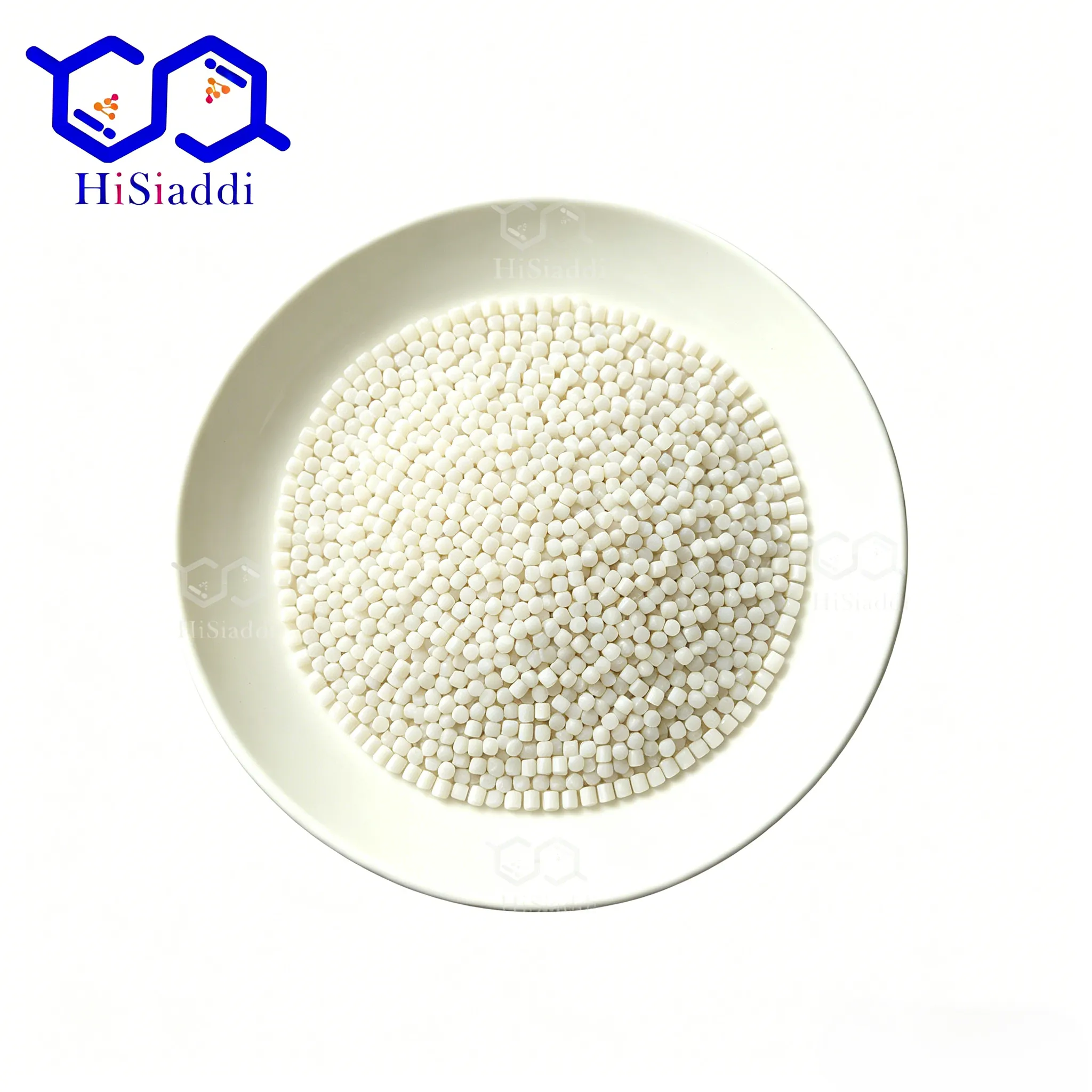
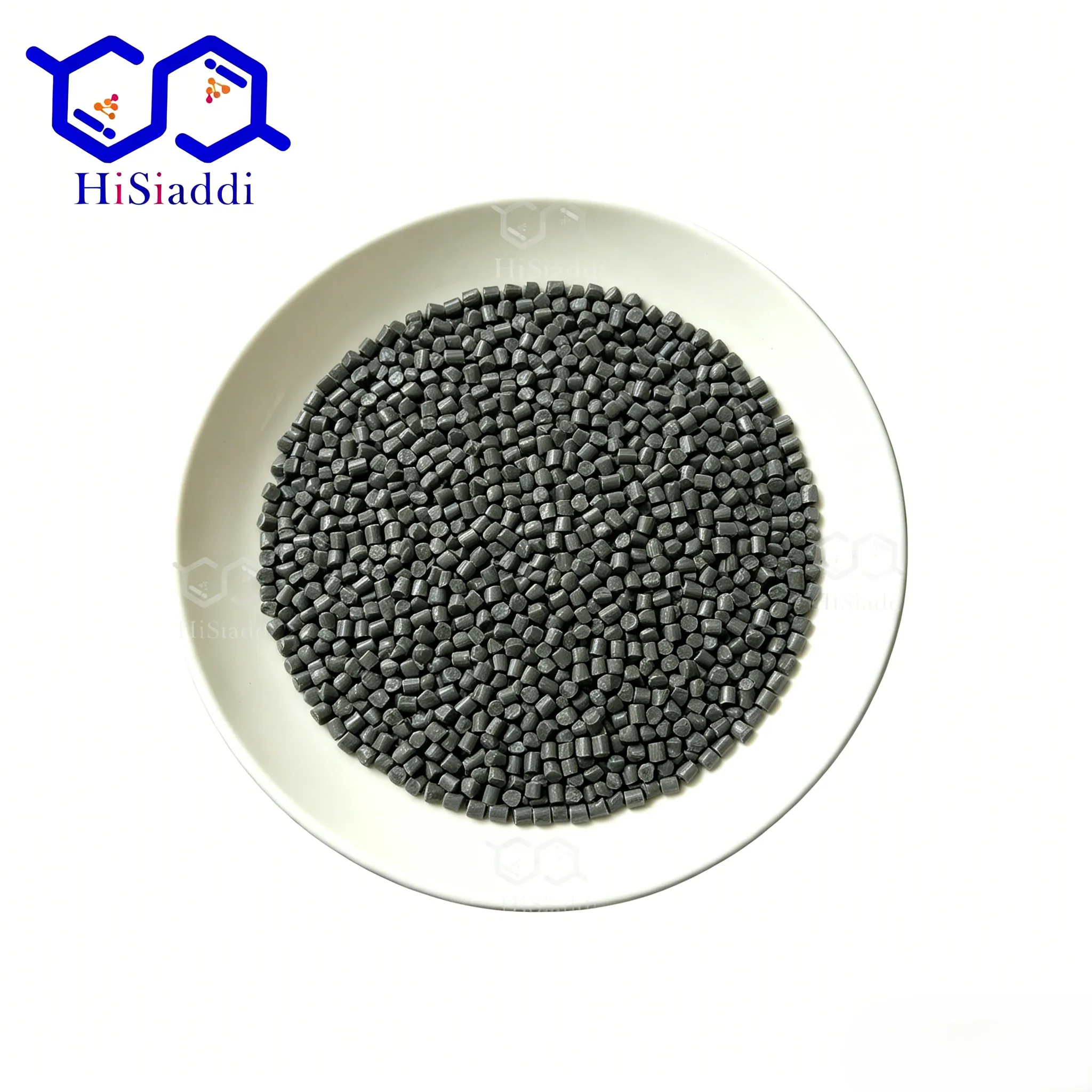
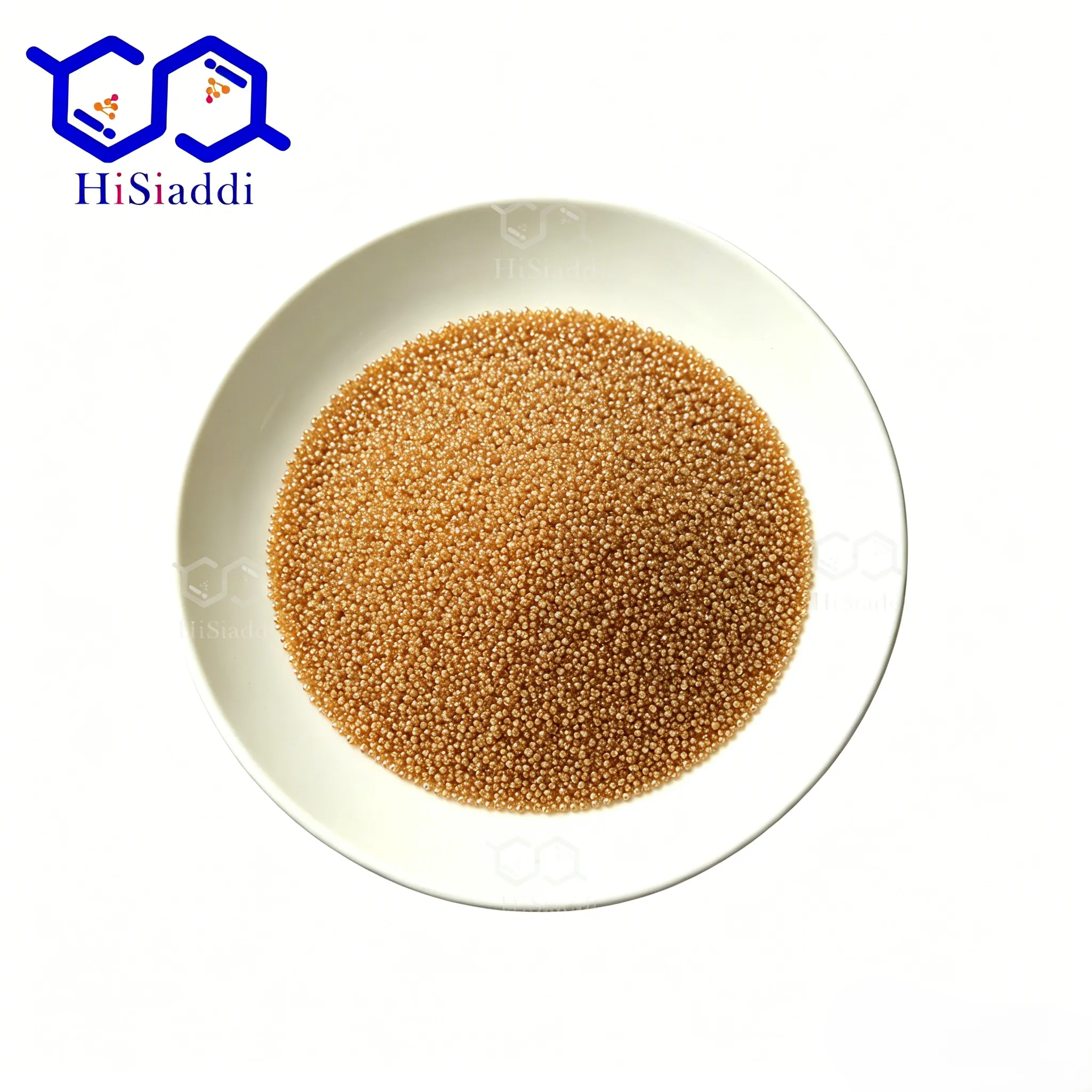
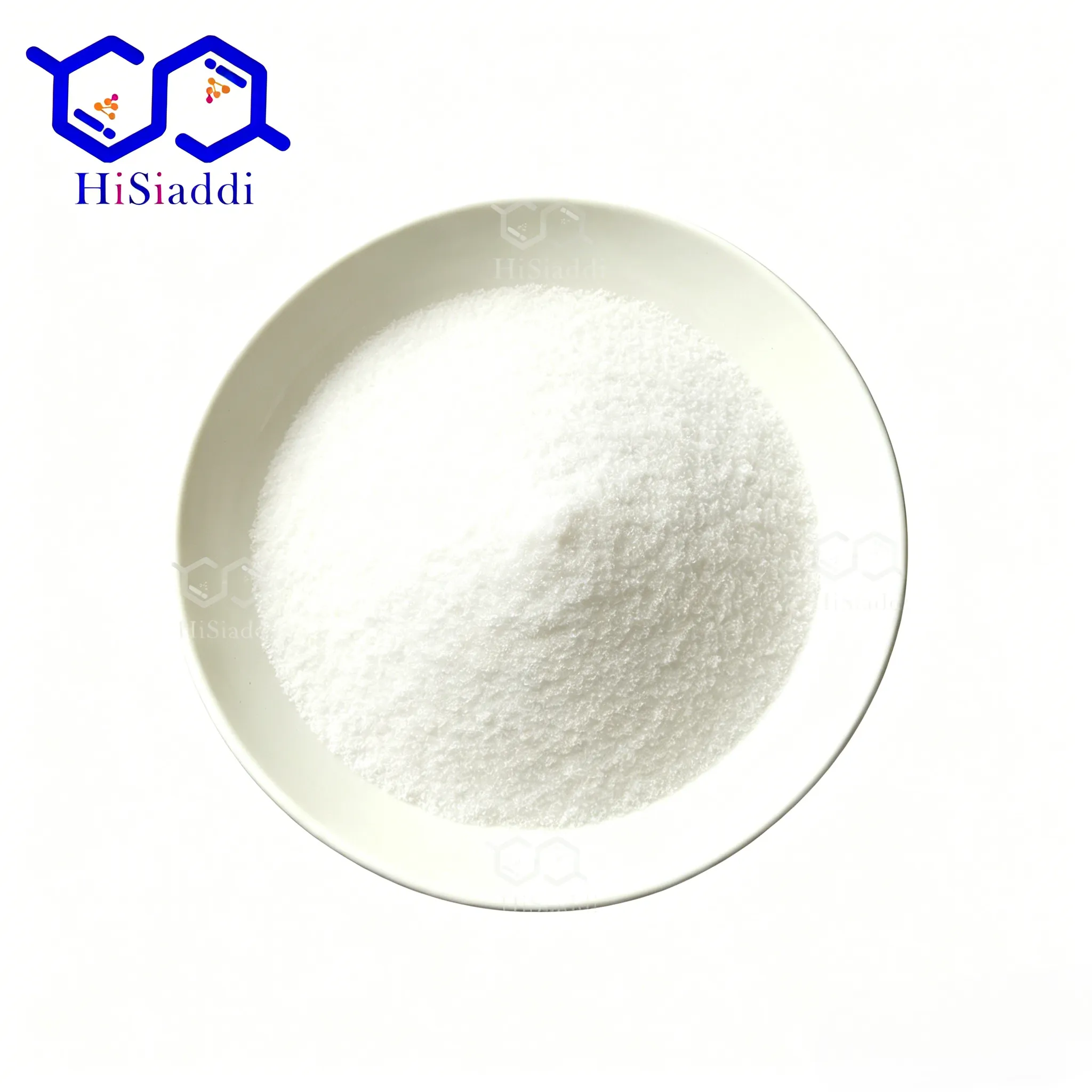
Bisphenol A Dicyanate Ester abbreviated as BADCy, it is used in high-frequency PCB, aerospace composite materials and electronic packaging. HiSiaddi can supply original factory sources of multiple Chinese brands and provide "1+2+3+4=1" services.
Rishengchang: RSC-BADCy-99 (high-purity grade, purity ≥99%), melting point 80~82℃, cyanate ester content ≥38%, low free phenol, low moisture ≤0.1%, high curing activity, 35%~45% lower in price than imported products such as Lonza with equivalent performance, suitable for high-frequency high-speed PCB factories and electronic packaging enterprises.
Zhongtai: ZT-BADCy-98 (industrial grade, purity ≥98%), dielectric constant ≤3.0 (1GHz), Tg≥260℃, water absorption ≤0.5%, good compatibility with epoxy / phenolic resin, international grade quality, 30%~40% lower in price, suitable for mid-to-high-end electronic and aerospace applications.
HiSiaddi Service: Customization of curing agent compounding; formula optimization of high-frequency PCB resin, curing process of aerospace composite materials, technical support for replacing Lonza, low dielectric modification; compliance testing on cyanate ester content, moisture, dielectric constant, Tg and water absorption
 CONTACT HiSiaddi NOW
| CAS No: | 1156-51-0 | Brand Name: | Multi-brand |
| MF: | C17H14N2O2 | Model Number: | Multi-models |
| EINECS No: | 214-590-4 | Grade: | N/A |
| Purity: | 99% | Place of Origin: | China |
| MOQ: | 1ton | Storage: | Please refer to the product packaging or contact the customer service. |
When purchasing Bisphenol A Dicyanate (BADCy) as a buyer, you may encounter the following questions:
What are the key indicator advantages and application impacts of mainstream models from well-known BADCy brands?
What competitive services can BADCy suppliers provide?
What are the qualification certifications and market reputation of targeted BADCy brands?
How about the inventory level and supply stability of BADCy suppliers?
What factors should be taken into consideration when selecting BADCy?
...and many other related inquiries.
(Leading exporter of electronic grade & high-speed high-frequency PCB grade BADCy with top overseas recognition)
TC BADCy E95: General electronic grade, purity ≥95%
TC BADCy E99: High-purity electronic grade, purity ≥99%
TC BADCy HF: Special high-frequency grade, low metal ion & low hydrolyzable chlorine
TC BADCy AERO: Refined aerospace grade
Purity & Impurity Control: High-purity grade purity ≥99.2%, free bisphenol A<0.1%, hydrolyzable chlorine<50ppm, hydrolyzable halogen<15ppm, total metal ions (Na⁺, K⁺, Ca²⁺, Fe³⁺, Cu²⁺)<3ppm, reaching international premium electronic grade standards.
Thermal Performance: Cured Tg>270℃, thermal decomposition temperature>420℃, long-term service temperature ranging from 40℃ to 220℃, thermal stability comparable with imported premium products.
Dielectric Property: Dielectric constant Dk=2.8-2.9 and dielectric loss Df<0.003 at 10GHz, meeting core requirements of 5G/6G high-speed high-frequency copper clad laminates.
Water Absorption: Cured water absorption<0.4%, excellent damp-heat resistance and reflow soldering resistance without bubbling or delamination risks.
Batch Stability: Adopting continuous rectification technology, with minimal fluctuation in melting point, purity and ion content per batch, perfectly matching continuous production lines of overseas copper clad laminates and avoiding mass defective products.
Reduce raw material procurement cost of high-frequency substrates by 32%-42%, greatly boosting profit margins of overseas CCL manufacturers.
Low-ion and low-halogen properties fully comply with EU RoHS, REACH and halogen-free standards without extra purification treatment.
Superior batch consistency stabilizes dielectric properties of laminates and reduces defective rate caused by high-frequency signal loss.
Directly compatible with epoxy resin and PPO polyphenylene oxide, fitting mainstream overseas resin formula systems without massive formula adjustment.
Lower signal transmission loss and stronger signal stability for 5G/6G communication equipment.
High-speed PCBs feature outstanding heat and damp resistance, supporting long-term high-load operation of servers and computing devices.
Military electronic components achieve enhanced high & low temperature resistance and radiation resistance with improved environmental adaptability.
(Leader in general industrial grade & modified prepolymer compound grade, top choice for bulk export with high cost efficiency)
XLT BADCy 94: General industrial grade, purity ≥94%
XLT BADCy 98: Mid-to-high end electronic grade
XLT BADCy MOD: Prepolymer modified BADCy with low melting point and easy processability
Large-scale cost advantage: Mass continuous production ensures stable purity and controllable impurities with optimal cost performance for general grade.
Independent prepolymer modification technology lowers melting point to 75-85℃ and processing viscosity, suitable for solvent-free coating and glue dipping processes overseas.
Adjustable curing activity: Compatible with commonly-used overseas organometallic catalysts, featuring stable curing speed and stable gel time.
Eco-friendly compliance: Extremely low VOC content, residual cyanide ion<200ppm, in line with European and American chemical export safety regulations.
Ultra-low unit price for bulk procurement fits large-scale assembly line production overseas.
Modified prepolymers simplify processing procedures, cut solvent consumption and reduce environmental treatment costs.
Sufficient stable supply and ample peak-season production capacity avoid supply interruption and price surge risks of overseas original brands.
Heat and damp resistant high-end insulation boards extend service life of industrial control and automotive electronic devices.
Prepreg products deliver excellent dimensional stability to reduce warpage and deformation defects.
(Emerging leading exporter of high-purity low-ion grade & semiconductor packaging grade BADCy)
NXC BADCy HP: High-purity low-ion grade, total metal ions<1ppm
NXC BADCy SEMI: Dedicated grade for semiconductor packaging
NXC BADCy F: Low-melting refined grade
Ultra-high purity control: Adopting molecular distillation and multi-stage rectification, total metal ions<1ppm with ultra-low free monomers, satisfying strict cleanliness requirements for semiconductor packaging.
Low precipitation & low volatility: Minimal small molecule precipitates under high temperature to prevent contamination during chip packaging.
Superior reflow soldering resistance: No delamination after 3 times of 288℃ lead-free reflow soldering, matching advanced overseas semiconductor packaging processes.
Flexible customization: Customizable purity, melting point and ion level with fast response to small-batch sample orders.
Performance equivalent to imported premium products enables access to high-end overseas semiconductor supply chains.
Low precipitation property effectively reduces packaging contamination risks and improves chip yield rate.
Flexible small-batch customization caters to R&D-oriented clients and high-end niche orders overseas.
Improved reliability of high-end chips and power semiconductor devices to adapt to harsh working conditions in automotive and aerospace fields.
Long-term stable performance of packaging materials lowers chip failure rate.
(Leading exporter of aerospace grade & military grade BADCy)
DR BADCy AVI: Refined high-purity aerospace grade
DR BADCy MIL: Military electronic dedicated grade with low halogen and radiation resistance
DR BADCy COM: Compound grade, cyanate ester & epoxy pre-blended material
Outstanding radiation resistance: Resistant to gamma ray and UV aging with stable cured structure without degradation.
Ultra-low coefficient of thermal expansion (CTE<25ppm/℃) ensures outstanding dimensional stability, ideal for radar radomes and aerospace structural parts.
Flame retardancy: UL94 V0 halogen-free flame retardant property meeting European and American aerospace & military safety standards.
Excellent damp-heat stability: Performance attenuation less than 5% under high temperature and high humidity for marine and high-altitude application scenarios.
Significantly cut procurement cost of aerospace-grade raw materials while maintaining equivalent imported-level performance.
Radiation resistance and low expansion properties satisfy strict certification standards for military and aerospace industries.
Ready-to-use pre-blended compound materials shorten formula R&D cycle.
Lightweight and high-temperature resistant aerospace structural components enhance aircraft safety performance.
Radar radomes feature low signal loss and strong environmental adaptability to improve radar detection accuracy.
(Growth driver in overseas segmented markets focusing on low-melting point grade & special modified grade BADCy)
HW BADCy LM: Low-melting refined grade, melting point 70-72℃
HW BADCy UL: Ultra-low viscosity modified grade
HW BADCy BR: Brominated flame-retardant modified grade
Easy processing with low melting point: Semi-solid state at normal temperature eliminates high-temperature melting procedures, suitable for overseas wet gluing and film casting processes.
Ultra-low viscosity (<3000mPa·s) ensures excellent fluidity and impregnation property, perfect for ultra-thin prepreg production.
Flexible flame retardant modification: Customizable halogen-free/brominated flame retardant grades complying with regional regulations worldwide.
Excellent compatibility with PPO and PEI resins, matching mainstream compound systems for high-speed high-frequency boards.
Low melting point cuts processing energy consumption and supports ultra-thin substrate production overseas.
Differentiated modified products help clients avoid vicious price competition in red ocean markets.
Great material compatibility enables quick matching with new-type overseas high-frequency material formulas.
Lightweight flexible high-frequency substrates are applicable to wearable electronics and flexible communication devices.
Improved safety performance of flame-retardant materials fits high-end industrial control and new energy vehicle electronic applications.

| Comparison Dimension | Yangzhou Tianchen New Materials | Hubei New Blue Sky | Nantong Xingchen | Shandong Derek | Jiangsu Huawen New Materials |
| Export Ranking | 1 | 2 | 3 | 4 | 5 |
| Core Application Fields | Electronic grade, High-speed high-frequency PCB grade, Aerospace grade | General industrial grade, Modified prepolymer compound grade | High-purity low-ion grade, Semiconductor packaging grade | Aerospace grade, Military electronic grade | Low-melting point grade, Special modified grade, Ultra-thin substrate grade |
| Main Export Models | TC BADCy E95/E99/HF/AERO | XLT BADCy 94/98/MOD | NXC BADCy HP/SEMI/F | DR BADCy AVI/MIL/COM | HW BADCy LM/UL/BR |
| Benchmarked Overseas Brands | Lonza, Solvay Cytec | Huntsman, TenCate Industrial Grade | Lonza Ultra-high Purity Series | Solvay Cytec Aerospace & Military Series | TenCate, Huntsman Special Modified Series |
| Core Competitive Strength | Purity≥99.2%, total metal ions<3ppm; Dk=2.8-2.9, Df<0.003@10GHz; Tg>270℃; ultra-stable batch performance | Large-scale production capacity; low melting point prepolymer; stable curing activity; residual cyanide<200ppm | Total metal ions<1ppm; low precipitation & volatility; 288℃ reflow soldering resistance; flexible small-batch customization | Radiation resistance; CTE<25ppm/℃; UL94 V0; superior damp-heat stability | Melting point 70-72℃; ultra-low viscosity; flexible flame retardant modification; great PPO/PEI compatibility |
| Price Ratio vs Overseas Equivalents | 58%-68% | 45%-55% | 52%-62% | 55%-65% | 60%-70% |
| Cost Performance Rating | ★★★★★ | ★★★★★ | ★★★★☆ | ★★★★☆ | ★★★★ |
| Core Target Overseas B-end Buyers | High-speed high-frequency CCL factories, 5G/6G antenna substrate manufacturers, military electronic material suppliers | Mid-to-high end FR-4 CCL factories, prepreg producers, insulation board manufacturers | Semiconductor packaging material factories, advanced packaging substrate enterprises | Aerospace composite material factories, radar radome manufacturers, military supporting suppliers | Ultra-thin high-frequency substrate factories, flexible electronic material producers, special flame-retardant composite manufacturers |
| Downstream B-end Buyer Advantages | 1. 32%-42% cost cut on high-frequency raw materials; 2. Hassle-free low-ion & halogen-free compliance; 3. Stable dielectric property reduces defective rate; 4. Compatible with mainstream overseas formulas | 1. Low bulk procurement price; 2. Processing cost reduced by prepolymers; 3. Sufficient capacity ensures stable peak-season supply | 1. Access to high-end semiconductor supply chains via ultra-high purity products; 2. Higher chip yield with low precipitation property; 3. Flexible orders for R&D demands | 1. Lower cost for aerospace & military raw materials; 2. Strict standard compliance via radiation-resistant & low-expansion performance; 3. R&D cycle shortened by pre-blended materials | 1. Low melting point adapts to ultra-thin substrate production; 2. Differentiated products avoid price competition; 3. Easy matching with new high-frequency material formulas |
| End User Advantages | 1. Lower 5G/6G signal loss; 2. High-speed PCB fits computing equipment; 3. Strong environmental adaptability for military electronics | 1. Longer service life of industrial control & automotive electronic insulation parts; 2. Stable dimensional performance of prepreg products | 1. Higher reliability of high-end chips; 2. Adaptable power semiconductors for vehicle & aerospace scenarios | 1. Lightweight & safer aerospace components; 2. Improved radar detection precision | 1. Slimmer flexible communication substrates; 2. Enhanced flame-retardant safety for high-end electronics |
HiSiaddi, a technology transformation and foreign trade dual-driven new foreign trade service provider, has built a "1+2+3+4=1" product service system: 1 foreign trade salesperson with over 3 years of experience, supported by two chemical R&D teams, three multi-round screened premium suppliers and four shared logistics warehouses to fulfill all BADCy raw material demands.
With this integrated system, HiSiaddi possesses deeper expertise in BADCy R&D and purification processes than most foreign traders, clearer insights into cross-brand market demands and competitive strengths than standalone resin factories, and richer experience in overseas high-frequency electronic material trade than academic research institutions.
HiSiaddi only recruits sales specialists with minimum three years of relevant industry experience. All sales staff must complete over six months of joint training delivered by R&D and foreign trade teams before serving overseas purchasers.
(1)BADCy Basic Guarantee Service
Backed by our standardized foreign trade workflow and corporate service system, we deliver end-to-end one-stop document support: issuance & processing of all BADCy compliance certificates, supply of third-party test reports and complete resolution of quality warranty disputes.
(2)BADCy Exclusive Advantage Service
Global Cyanate Ester Industry Intelligence Push Service. We send regular updates covering overseas competitor pricing trends, demand shifts in 5G and semiconductor sectors, updated electronic chemical regulations and regional procurement preferences to help clients precisely layout market strategies.
BADCy Blind Sample Benchmark Service. We supply anonymous domestic BADCy and imported Lonza/Cytec samples for clients to independently test purity, ion content, thermal and dielectric performance, allowing intuitive comparison of domestic vs imported quality.
We establish deep source-factory partnerships via technology transformation and provide internal technical training for sales teams to enable professional BADCy customization and research-level consulting for high-frequency substrate formulation optimization.
(1)BADCy Research-Grade Customization Service
Import Substitution Benchmark Special Service. For clients using Lonza, Cytec and Huntsman imported BADCy, we conduct full one-to-one benchmarking covering purity, ion content, melting point, dielectric properties, water absorption and curing activity, issuing complete substitution analysis reports unavailable from ordinary traders.
BADCy Technology Transfer & Custom Modification Service. We cooperate with domestic resin R&D labs to develop customized variants including ultra-low ion semiconductor grades, low-melting refined products, pre-polymer modified, halogen-free flame retardant and cyanate/epoxy/PPO composite resins, delivering full small-batch trial to mass production technical conversion.
Exclusive High-Purity Production Capacity Reservation for Overseas Clients. We sign dedicated high-purity distillation production framework agreements with leading factories to secure stable supply for semiconductor & aerospace clients during domestic demand surges.
(2)BADCy Research-Grade Consulting Service
Overseas Localized Resin Technical Service. Our multilingual resin technical team remotely supports overseas formulators with catalyst selection, curing curve tuning and prepreg process optimization for high-frequency PCB substrates.
Ultra-Low Ion Specialized Control. Every batch of electronic-grade BADCy comes with third-party metal ion test reports for Na, K, Ca and Fe to meet strict semiconductor standards.
Dielectric Performance Custom Testing. We conduct Dk/Df testing at 1–40 GHz per international high-frequency standards and issue test reports meeting overseas client audit requirements.
Prepolymer & Curing Activity Tuning. We customize BADCy prepolymers with targeted gel time to match overseas automated production line speeds.
Working Condition Simulation Testing. We conduct high-low temperature cycling, damp heat aging and 288℃ reflow soldering tests to eliminate client stability concerns.
Our foreign trade and R&D teams jointly conduct preliminary market research, on-site factory audits, full product testing, long-term technology transformation cooperation and bulk purchasing partnerships to select roughly three manufacturers with stable quality, consistent supply, sound reputation and strong growth potential.
(1)BADCy Greater Initiative to Secure Lower Prices
Long-term technology transfer and authorized distribution partnerships grant us access to factory-direct preferential BADCy pricing.
(2) BADCy Long-Term Supply Chain Guarantee Service
Continuous production supervision, full batch traceability, consistent batch quality control and formal compensation clauses for batches failing third-party testing are guaranteed via long-term factory cooperation.
We have 4 warehouses, which are jointly operated and managed with suppliers to store hot-selling products.
(1)BADCy Fast Shipment & Local On-Site Troubleshooting
Warehouses are situated at Qingdao Port (North China), Ningbo Port (East China), Shenzhen Port (South China) and Zhengzhou (inland logistics hub), guaranteeing timely shipments of Bisphenol A Dicyanate Ester. Local staff can immediately resolve transit damage, packaging defects and export compliance issues on location.
(2) Mitigate Seasonal Price Swings & Custom Packaging Support
We pre-stock goods ahead of peak demand cycles to buffer excessive price volatility. Our self-managed warehouses fully support customized packaging and label printing for all client orders.
As a new foreign trade service provider driven by both technology transformation and foreign trade services, HiSiaddi has established a "1+2+3+4=1" service system and can supply original factory materials of Bisphenol A dicyanate ester from multiple well-known brands. Leveraging its R&D background, HiSiaddi professionally sorts out common procurement pain points faced by B-end buyers sourcing Bisphenol A dicyanate ester in China and proposes targeted solutions.
If you require more professional and in-depth analysis regarding the procurement of Bisphenol A dicyanate ester, please contact HiSiaddi customer service.
1.
Compliance & Labeling Risks Bisphenol A dicyanate (BACY), a cyanate ester monomer resin subdivided into high-purity electronic CCL grade, aerospace composite grade and general industrial casting grade, is regulated under US TSCA registration and California Proposition 65 toxic substance control. Labels must clearly mark cyanate content, moisture, free bisphenol A, gel time and volatile content. Recovered crude recycled materials are prohibited for high-frequency CCL and chip packaging substrates. A deviation exceeding 5% between measured and labeled gel time/purity leads to customs detention and rejection during factory IQC inspection. Customs clearance cannot proceed without complete MSDS and TSCA filings.
2.
3.
Application & Selection Pain Points High-purity low-impurity grades are used for high-frequency high-speed copper-clad laminates and radar antenna substrates; conventional grades serve high-temperature resistant insulation casting. Contact with water vapor or trace metal ions triggers room-temperature premature gelation and caking, rendering materials unusable. Uncontrolled heating rates cause local runaway polymerization and internal voids; unbalanced blending ratios with epoxy or polyimide resins result in incomplete curing or brittle cracking.
4.
5.
Strict Safety & Physical-Chemical Standards Electronic grade requires free bisphenol A <10 ppm, moisture content <0.1%, volatile matter ≤0.3%, single heavy metal <1 ppm. Counterfeit products blended with standard bisphenol A epoxy exhibit drastically degraded heat resistance and dielectric performance and are excluded from high-end communication electronics and aerospace supply chains.
6.
7.
Storage, Transportation & Order Pain Points Crystalline/liquid monomers require low-temperature airtight storage; high-temperature ocean shipping easily causes self-polymerization and caking. R&D small-batch trial orders for copper-clad laminate manufacturers are frequent, while most raw material factories enforce minimum tonnage orders, leading to either expired inventory due to self-polymerization or production shutdowns from material shortages.
8.
1. Full Compliance Document Package & Label Guidance Provide complete TSCA filings, RoHS/Prop65 test reports and standardized grade label templates. Batch-specific COA locks purity, moisture and gel window with batch fluctuation controlled below 3% to meet customs and incoming factory inspection standards.
2. Multi-Spec Stock & Technical Process Support Maintain inventory of high-frequency electronic grade and industrial casting grade; provide low-temperature storage control, moisture removal blending and staged temperature rise curing protocols to avoid premature gelation and runaway polymerization defects.
3. Dual-Quality Inspection Control Factory self-inspection plus full-scope SGS LC/GC testing covering free monomers, moisture and heavy metals.
4. Nitrogen-Purged Vacuum Aluminum Foil Packaging & Flexible MOQ Oxygen/moisture barrier packaging suppresses self-polymerization; mixed batches starting at 50 kg are available, with local delivery within 3–7 days from North American bonded warehouses for urgent orders.
1. Compliance Pressure Bisphenol A and cyanate ester monomers are listed as REACH SVHC substances with a limit of ≤0.1%. Copper-clad laminate raw materials must additionally comply with EU electronics directives. Small and medium manufacturers lack dedicated compliance teams; independent REACH registration takes 5–8 months, delaying new product certification launch.
2. Application Performance Deficiencies Excess moisture in blending systems or long-term room-temperature storage triggers prepolymerization, causing delamination and blistering during board pressing. Temperature fluctuations during transoceanic shipping lead to full-barrel gelation and waste for simple packaging products. Excessive impurities destabilize substrate dielectric constants and cause defective end electronic products.
3. Green Procurement Barriers Major EU aerospace and communication board manufacturers mandate full raw material traceability and carbon footprint reports; crude untraced by-product materials are barred from high-end supporting channels.
1. One-Stop Compliance Package & Registration Assistance Fully equipped REACH-SVHC, RoHS and electronic material compliance documents; dedicated specialists assist with official review, shortening audit cycles to 3 months.
2. Scenario-Tailored Process Guidance Supply low-ion high-purity electronic grade and general industrial modified grade; provide protocols for raw material pre-baking moisture removal and molding temperature rise parameters.
3. Low-Temperature Light-Shielded Nitrogen-Purged Packaging Thick iron drums lined with vacuum aluminum foil reduce self-polymerization losses during ocean shipping.
4. Green Supply Chain Document Support Provide raw material traceability documents and production carbon footprint records to match European communication and aerospace composite material channels.
1. Impact of Low-Cost Counterfeit Products Small workshops sell cheap counterfeit cyanate ester blended with bisphenol A epoxy and phenolic resin fillers. High refining costs for genuine cyanate ester squeeze profit margins for formal suppliers in low-end markets.
2. Difficulty Verifying Indicators Mislabeled curing temperature, Tg and dielectric parameters are common; local manufacturers lack liquid chromatography and dielectric testing equipment, leading to full-batch board returns due to substandard heat resistance and high-frequency leakage.
3. High Storage & Transportation Losses Southeast Asia features high temperature and rainfall; water vapor penetrating packaging induces prepolymerization and caking. Port detention of 1–3 weeks during rainy seasons creates total scrap losses of 8%–12%.
4. Lack of After-Sales Support Local intermediaries refuse to compensate for losses caused by counterfeiting or moisture-induced self-polymerization, shifting all losses to buyers.
1. Tiered Pricing & Graded Supply Economical epoxy-blended composite materials and standard high-purity bisphenol A dicyanate ester are supplied separately. Economical grades suit low-end insulation casting, while virgin high-purity materials are reserved for export high-frequency board orders.
2. SGS Physical-Chemical Testing & One-Item-One-Code Traceability Chinese-English test reports per batch; traceability codes for raw material and quality inspection data verification to quickly identify counterfeit goods.
3. Double-Layer Moisture Barrier Sealing & Staggered Shipment Scheduling Inner vacuum nitrogen-purged aluminum foil plus outer moisture-proof iron drums limit total losses below 2%; shipments avoid rainy season port congestion with ocean transit times of 7–10 days.
4. Localized Dedicated After-Sales Service 24-hour dedicated Southeast Asian account managers; full order return & exchange policy for premature caking or performance defects from non-human storage errors, with supplier coverage of round-trip shipping fees.
1. Compliance Barriers Cyanate ester raw materials for military electronic supporting components require full-production-line JAKIM/ESMA halal certification. Strict import inspection applies to fine chemical raw materials; uncertified goods face customs detention and confiscation, with lengthy independent certification cycles.
2. Deterioration Under Extreme High Temperatures Year-round dry heat above 40°C across the Middle East accelerates raw material molecular prepolymerization, leading to abnormal curing and cracked finished products during application.
3. Fragmented Order Structure Medium and small insulation product manufacturers concentrate R&D trial orders at 20–100 kg, while most original manufacturers enforce tonnage minimum orders, creating procurement barriers for small-batch sampling.
4. Localized Formulation Challenges Large diurnal humidity fluctuations in Middle Eastern air cause regular raw material water absorption; supporting pre-dehydration and modification blending processes are lacking.
1. Dual Authoritative Halal Certificates & Customs Clearance Support Full-process halal control for electronic grade production lines; original JAKIM and ESMA certificates with English translations on hand to assist import inspection and clearance.
2. Customized Heat-Insulated Moisture-Proof Sealed Packaging Vacuum packaging with external thermal insulation foam boxes resists prepolymerization and caking after 3 months of sealed storage at 45°C.
3. Flexible Minimum Order Mode Ultra-low minimum order of 20 kg with delivery within 3–5 days for orders under 100 kg; same-day local delivery from Dubai bonded warehouses for urgent stock.
4. Exportable Formulation & Process Technology Provide protocols for low-temperature raw material pre-baking and molecular sieve moisture removal to adapt to Middle Eastern humidity fluctuations.
1. High Market Access Thresholds Bisphenol A dicyanate ester dedicated to medical precision substrates requires EU GMP dust-free synthesis workshops. Standard industrial grades contain excessive residual phenols and heavy metals and are prohibited for medical packaging materials.
2. Stringent Impurity Control Limits Medical-grade materials impose ppm-level restrictions on free bisphenol A and leachable impurities, single heavy metal <0.1 ppm, and zero harmful leachables; industrial grades fail biocompatibility and pharmacopoeia standards.
3. Lengthy Drug Regulatory Reviews Resin used as medical auxiliary materials requires DMF, dissolution safety and biocompatibility data; EMA review takes 5–8 months, with filing defects resulting in direct rejection of market access applications.
4. Severe Cross-Contamination Risks Medical ultra-high-purity grades must avoid co-production and shared storage with epoxy-blended industrial materials; cross-contamination results in full-batch material scrapping.
1. Independent GMP Clean Dedicated Production Lines Class 10,000 dust-free workshops for medical-grade bisphenol A dicyanate ester with independent synthesis, low-temperature recrystallization refining, sterile vacuum packaging and constant-temperature light-shielded storage, physically isolated from industrial grades.
2. Multi-Stage Purification & Impurity Removal Refining Deep removal of free monomers and catalyst residues; purity and moisture batch deviation controlled within ±0.3%, with dedicated medical COA issued per batch.
3. Pre-Reserved Full Drug Regulatory Document Package Pre-compiled DMF, dissolution test and toxicology full datasets; dedicated regulatory specialists liaise with EMA inquiries, shortening review cycles to 4 months.
4. Full-Link Sterile Isolation Control Special low-temperature moisture-proof vacuum packaging for medical use plus dedicated constant-temperature sealed chemical logistics; complete documentation for workshop zoning disinfection and cross-contamination prevention.
If you require more professional and in-depth analysis regarding the procurement of Bisphenol A dicyanate ester, please contact HiSiaddi customer service.
Purity of Bisphenol A Dicyanate Ester monomer ≥ 99.2%, free phenol residue ≤ 0.08%, moisture content ≤ 60 ppm
Glass transition temperature (Tg) of cured resin ≥ 270 °C, dielectric constant (1 GHz) ≤ 3.0, dielectric loss ≤ 0.0025
Water absorption ≤ 0.4%, thermal decomposition temperature ≥ 420 °C
Flexural strength of cured product ≥ 110 MPa, flexural modulus ≥ 3.8 GPa
Compatible with lamination and curing processes for copper clad laminates, with wide curing window and moderate fluidity; no bubbles, delamination or warpage on finished boards after lamination
Particle size D50 of resin powder: 18±2 μm, no agglomeration; curing activity remains unchanged after sealed storage at room temperature for 12 months
Strict control of high monomer purity and low free phenol residue: Bisphenol A Dicyanate Ester is synthesized from bisphenol A and cyanide. Incomplete reaction leads to residual free phenol, which reduces the heat resistance of resin and greatly increases dielectric loss. Deep purification may cause monomer loss and crystal adhesion, so the purification process requires precise balance.
Mutual restriction among low dielectric property, low moisture absorption and high heat resistance: Polar groups, residual small molecules and internal micropores will raise the dielectric constant and water absorption. Removing polar impurities and small molecules to achieve ultra-low dielectric loss may alter the curing behavior of resin and impair its heat resistance.
Stringent requirements for curing window and lamination compatibility: Continuous lamination production lines for copper clad laminates demand stable resin fluidity and curing rate. A narrow curing window will result in uneven local curing, as well as bubbles, delamination and warpage on boards, which puts forward high requirements for the curing accelerator system and molecular activity regulation of resin.
Challenges in particle size control and storage stability of powder: Ultrafine powder is prone to agglomeration, causing uneven resin distribution on local areas of copper clad laminates. Cyanate ester monomers tend to undergo slow pre-polymerization during long-term storage and lose curing activity. A 12-month storage period sets high standards for sealing, impurity removal and activity stabilization systems.
Complex EU compliance requirements for high-frequency electronic materials: A full set of special tests on dielectric performance, long-term thermal aging and hazardous substances are required. Conventional domestic reports are not acceptable in Europe, leading to heavy workload for compiling certification documents.
Special packaging requirements for moisture-proof and pre-polymerization prevention of electronic resin powder: Temperature differences and vibration during transoceanic shipping may cause powder agglomeration and deterioration, hence strict storage and transportation control is needed.
Short delivery cycle: Sample formula verification, lamination tests and mass production need to be closely connected, and the fluctuation of thermal and dielectric properties among different batches must be controlled within an extremely narrow range.
For high purity and low free phenol content: We adopted a combined process of high-efficiency catalytic synthesis, multi-stage vacuum distillation and low-temperature recrystallization, and used ultra-high purity raw materials to optimize reaction conditions and improve conversion rate. Low-temperature operation during recrystallization prevented monomer decomposition. The final product achieved monomer purity of 99.4%, free phenol residue of 0.06% and moisture content of 51 ppm.
For low dielectric property, low moisture absorption and high heat resistance: Polar small molecules and residual solvents were removed in multiple stages, and the molecular structure of resin was optimized to reduce polar sites. A dense cross-linked network was formed after curing to block water vapor penetration. The cured product delivered a dielectric constant of 2.91 (1 GHz), dielectric loss of 0.0022, water absorption of 0.35% and Tg of 275 °C, meeting all performance indicators.
For lamination process compatibility: The curing initiation system of resin was precisely adjusted to broaden the curing temperature window and optimize powder fluidity. Simulation lamination tests showed no bubbles, delamination or warpage on boards, fully adapting to continuous production lines.
For powder performance and storage stability: Low-temperature airflow pulverization and classification were applied to produce narrow-distribution powder with anti-agglomeration surface treatment. Finished products were sealed with nitrogen vacuum packaging to inhibit pre-polymerization. Accelerated tests proved that the curing activity remained stable after 12 months of storage at room temperature.
For compliance documents: Full-range tests on dielectric performance, thermal aging and hazardous substances were conducted in accordance with European electronic standards. A complete set of English compliance documents was compiled and filed after review by British consultants.
For cross-border transportation: Moisture-proof vacuum nitrogen-filled packaging and constant-temperature dry shipping were adopted to avoid powder deterioration and agglomeration.
Internal bubbles and interlayer delamination, damaging the structural integrity of boards
Sharp rise of dielectric loss, causing severe signal attenuation in high-frequency circuits
Incomplete resin curing, sticky board surface and low heat resistance
Powder caking and decreased curing activity after storage
Raw material moisture absorption, further aggravating bubbles and delamination
Inconsistent curing behavior of resin across batches, leading to frequent adjustment of production line processes
To eliminate bubbles and delamination: Replace with high-purity and low-moisture resin, and pre-dry the resin at 100 °C for 2.5 hours before use. Optimize the heating curve for lamination and add a low-temperature pre-pressing and venting stage to fully remove water vapor and volatile small molecules.
To reduce excessive dielectric loss: Adopt high-purity resin with strictly controlled free phenol and polar residues to form intact cross-linked networks and lower dielectric loss.
To solve incomplete curing and sticky surface: Optimize the proportion of resin and curing accelerator, and unify the maximum lamination temperature and holding time to ensure complete cross-linking and curing.
To prevent powder caking and activity decline: Store raw materials in sealed nitrogen-filled containers with controlled temperature and humidity in the warehouse, and use up the materials promptly after opening. Conduct regular spot checks on powder state and curing activity before incoming use.
To control batch performance fluctuation: Establish a full-item sampling inspection system for raw materials, and reject products with unqualified curing performance.
Lead time
Quantity (ton) | 0 - 10 | 10 - 30 | > 30 |
Lead time (days) | 7 | 15 | To be negotiated |
The monthly inventory volume of Bisphenol A dicyanate ester is 10 tons, with appropriate adjustments upwards or downwards in response to peak and off-peak seasons.
HiSiaddi safeguards the supply stability of Bisphenol A dicyanate ester through the following measures:
(1) Performance evaluation and screening of Bisphenol A dicyanate ester brand factories based on on-time delivery rate, batch pass rate, timeliness of risk alerts, and completeness of documentation to assess their supply stability.
(2) For each mainstream model or major grade of Bisphenol A dicyanate ester, secure 1 primary high-quality brand manufacturer and 2 backup high-quality manufacturers.
(3) Each factory operates independent production lines in separate production zones to prevent production halts caused by major unforeseen incidents such as environmental production suspensions and power outages.
Through long-term cooperation with brand manufacturers via technology commercialization and authorized distribution channels, HiSiaddi can effectively strengthen supervision over the production processes of brand manufacturers, optimize full-process traceability management, improve batch stability control, and further reinforce real-time monitoring of the supply stability of Bisphenol A dicyanate ester products.
Long-term Annual Framework Supply Guarantee Agreement. HiSiaddi signs 12-month long-term agreements with leading manufacturers. The agreements specify the minimum guaranteed supply volume, maximum price hike range, and priority production scheduling rights during peak seasons. It is stipulated that manufacturers shall issue a 30-day prior written notice if production is suspended due to environmental rectification or equipment maintenance, and backup manufacturers will be activated to replenish goods accordingly.
We have 4 warehouses, which are jointly operated and managed with suppliers to store hot-selling products.The four warehouses are located at Qingdao Port in North China, Ningbo Port in East China, Shenzhen Port in South China, and Zhengzhou, China’s inland logistics hub. This setup guarantees sufficient supply and timely shipment of Bisphenol A dicyanate ester during peak seasons.
HiSiaddi issues a rolling demand forecast covering the subsequent three months on the 25th of each month, allowing manufacturers to reserve production capacity in accordance with the forecast. Any new urgent orders from overseas clients will be prioritized to draw on inventories or production capacity from backup manufacturers.
Unstable logistics for Bisphenol A dicyanate ester will extend delivery lead times. HiSiaddi has established alternative arrangements covering multiple freight forwarders, ports and transportation solutions:
(1) Binding of multiple professional chemical freight forwarders for Bisphenol A dicyanate ester
Each product is assigned 2 to 3 freight forwarders with hazardous chemical/food transport qualifications affiliated with different shipping lines. Alternative sailing schedules can be switched to immediately in case of space shortages or customs inspections on a single shipping route.
(2) Backup transportation solutions for Bisphenol A dicyanate ester
Ocean freight serves as the standard mode; air freight and rail freight are reserved as alternatives for urgent orders. Long-term agreements for temperature-controlled containers are signed for temperature-sensitive and perishable food additives to secure shipping space.
(3) Visual tracking and digital early warning for Bisphenol A dicyanate ester
Freight forwarders synchronize daily updates on container loading, customs declaration, vessel loading and port arrival milestones. If customs inspection occurs, replenishment from backup inventory will be initiated immediately to shorten client waiting periods.
Full-chain digital early warning automatically monitors four categories of risks:
Factory side: Expiring supplier environmental assessment certificates, renewal of production permits, scheduled major equipment overhauls, and notifications of price hikes for upstream raw materials;
Inventory side: Inventory falling below safety thresholds, excessive inventory age, and batches failing quality inspection;
Logistics side: Shipping line space shortages, strikes at destination ports, and updates to customs policies;
Overseas side: Revisions to additive regulations and adjustments to import restriction lists in target countries.
Early warning notifications are automatically pushed to procurement and business leads, allowing backup suppliers or inventory contingency plans to be activated in advance.
HiSiaddi is a new foreign trade service provider driven by dual engines of technology commercialization and foreign trade export. It has built a "1+2+3+4=1" service system and can supply original factory materials from multiple well-known brands of bisphenol A dicyanate ester.
As a research-driven foreign trade service provider, HiSiaddi avoids the biased brand promotion practiced by single-factory vendors. We objectively analyze multiple competitive Chinese export brands of bisphenol A dicyanate ester and share their certification credentials and market feedback to help buyers streamline sourcing decisions.
If you require more authentic and objective information on multiple well-known Chinese brands of bisphenol A dicyanate ester, please contact HiSiaddi customer service.
Total 2025 export volume: 28,080 tons, accounting for 32.5% of China’s total BADCy exports. Key export destinations: EU aerospace, North American new energy, Korean & Japanese high-frequency electronics, Southeast Asian copper-clad laminate markets. It is China’s sole BADCy manufacturer with mass entry into Airbus’ global qualified supplier directory.
1. SQ-999 (Aerospace ultra-high-purity bisphenol A dicyanate ester, crystalline powder): Purity ≥99.92%, free phenol <50ppm, Tg=282℃.
2. SQ-L30 (Low-dielectric modified BADCy for electronics): Dk=2.92~2.98 @10GHz, Df<0.0045, optimized for 6G millimeter wave substrates.
3. SQ-EV280 (Modified BADCy for new energy high-voltage insulation): Heat distortion temperature 278℃, breakdown strength 27.2kV/mm, operating temperature range -45℃~230℃.
1. Environmental regulations: Full EU REACH registration for BADCy (REACH No.:01-2119524566-48), U.S. TSCA inventory listing, full RoHS 2.0 compliance, SVHC high-concern substance testing clearance.
2. Quality management systems: ISO9001 Quality Management, ISO14001 Environmental Management, ISO45001 Occupational Health & Safety, ISO14064 Product Carbon Footprint Verification (reports accepted for EU CBAM carbon tariffs).
3. Aerospace-specific accreditations: AS9100D Aerospace Quality Management System (exclusive for SQ-999 aerospace grade), NADCAP raw material laboratory qualification.
1. Aerospace: Qualified raw material supplier for Airbus A350 airframe composites, certified insulation material provider for Safran aircraft engines, designated domestic material supplier for COMAC C919/C929.
2. New energy: Raw material certification for 800V high-voltage electric control housings at Tesla’s North American and Shanghai facilities, qualified insulation raw material supplier for CATL energy storage modules.
3. Electronics: 6G copper-clad laminate substrate raw material certification for Samsung SDI, millimeter wave antenna substrate qualification for LG Innotek.
Ministry of Industry and Information Technology Single Champion Cultivation Project (cyanate ester resin category), recipient of national key new material R&D breakthrough projects, national green factory, CNAS accredited physical & chemical testing laboratory.
1. Europe (Germany, France): 36-month partnership with Airbus supply chain. SQ-999 replaces original Mitsubishi Japanese imports, with batch purity fluctuations controlled within ±0.03%. Composite hot forming yield rates rose from 94.2% with imported materials to 97.5%, while raw material procurement costs fell 37% versus original Japanese products. Safran Aerospace deployed SQ-999 for aviation motor insulation components with zero high-temperature failure claims over five consecutive years.
2. North America (U.S., Canada): Tesla Texas plant bulk purchases SQ-EV280 for high-voltage battery pack insulation frames, passing -40℃ extreme cold aging and 1,500-hour damp-heat cycle testing. The composite delivers 29% weight reduction versus traditional epoxy insulation, with a 92% repeat purchase rate among North American new energy component manufacturers.
3. Korea & Japan: Samsung and LG copper-clad laminate factories achieved mass production with SQ-L30, delivering superior high-frequency loss performance at 10GHz versus Japanese general-grade BADCy. Repeat orders rose 31% year-on-year in 2025.
4. Southeast Asia (Vietnam, Malaysia): SQ-280 general electronic grade supplied in bulk to local PCB manufacturers with stable 30–45 day delivery cycles, cutting lead times by 60% versus European and American brands.
2025 total export volume: 21,860 tons, accounting for 25.2% of China’s total BADCy exports. Focus segments: mid-to-high-end electronic encapsulation, general high-frequency copper-clad laminates, with core export markets in Korea, Japan and Southeast Asia.
1. YN-995 (High-purity electronic-grade BADCy): Purity 99.5%, free cyanate <100ppm, Tg=255℃.
2. YN-250 (General medium-temperature curing grade): Tg=250℃, optimized for standard 5G base station PCB substrates.
3. YN-FR Flame-retardant modified grade: UL94 V-0 flame retardant rating, for power module encapsulation.
Full REACH registration, TSCA filing, RoHS compliance, IEC61247 electronic material safety certification, Japanese JIS K6911 resin industry standard certification.
SEMI International Semiconductor Materials Association certification, IPC-4101 copper-clad laminate substrate raw material certification, qualified encapsulation raw material supplier for Kyocera and Murata Electronics (Japan).
Completed Ministry of Industry and Information Technology high-end electronic chemical localization breakthrough project, national high-tech enterprise, provincial specialized, sophisticated, distinctive and innovative enterprise.
1. Korea & Japan: Murata and Kyocera (Japan) gradually phased out imported cyanate ester starting 2024. YN-995 is deployed for chip underfill encapsulation with water absorption ≤1.08%, matching performance of original imported products while cutting procurement prices by 33%, driving sustained annual volume growth.
2. Southeast Asia (Vietnam, Thailand): Leading local copper-clad laminate manufacturers (Nan Ya Plastics Vietnam, Kingboard Thailand) source YN-250 as their primary material. Stable domestic production capacity maintains 35-day maximum lead times during peak seasons, with repeat export orders rising 27.6% year-on-year in 2025.
3. Middle East (Saudi Arabia, UAE): YN-FR flame-retardant grade bulk-supplied for dry-type transformer insulation casting, delivering superior dimensional stability under year-round high-temperature conditions versus ordinary domestic epoxy resin, with long-term framework procurement contracts from regional power engineering groups.
2025 total export volume: 16,150 tons, accounting for 18.6% of China’s total BADCy exports. Product focus: new energy vehicle high-voltage components and energy storage insulation, recording the fastest export growth in the industry across European and American new energy markets.
1. WS-EV200 (Modified BADCy for passenger vehicles): Tg=205℃, breakdown strength 26.5kV/mm, low-temperature high-toughness modified formulation.
2. WS-HF Low-loss high-frequency grade: Df<0.005 @10GHz, for communication power supply substrates.
3. WS-BM BMI-modified composite grade: Pre-compounded with bismaleimide for wind power insulation components.
Full REACH & RoHS certification, IATF16949 automotive component quality management system (mandatory for automotive grades), UL2200 vehicle insulation safety certification.
EU ECE R100 vehicle electrical safety certification, global supply chain raw material qualification for Volkswagen and Audi, qualified substrate material supplier for Huawei energy storage inverters, BYD global supply chain listing.
National Engineering Technology Research Center for Automotive Polymer Materials, national green product certified enterprise.
1. Europe (Germany, Hungary): Volkswagen and Audi Hungarian vehicle assembly plants specify WS-EV200 for 800V electric control module insulation housings, passing strict EU vehicle damp-heat and thermal shock testing with fixed monthly orders throughout 2025.
2. North America (U.S.): Ford and Lucid premium electric vehicle manufacturers source WS-EV200 for high-voltage wire harness insulation substrates, solving low-temperature brittleness failures of conventional resins under -40℃ extreme cold operating conditions.
3. South America (Brazil): Brazilian new energy bus manufacturers bulk purchase WS-BM for vehicle motor insulation, delivering 32% weight reduction versus epoxy resin, with regional procurement volumes rising 42% year-on-year in 2025.
2025 total export volume: 11,580 tons, accounting for 13.3% of China’s total BADCy exports. Leveraging its in-house copper-clad laminate vertical integration, products are custom-matched for cooperative global PCB and CCL manufacturers.
1. SY-800 High-frequency copper-clad laminate specialized BADCy: Dk=3.05~3.15 @10GHz.
2. SY-260 High heat-resistant grade: Tg=262℃, customized for thick copper PCB substrates.
3. SY-LP Low-shrinkage modified grade: Molding shrinkage <0.3%, for ultra-thin circuit boards.
UL746 insulation material certification, IPC-4101 substrate certification, qualified raw material supplier for Intel & AMD chip carriers, communication substrate certification for Cisco & Ericsson, full ISO three-standard system certification, complete REACH & RoHS compliance.
1. Korea & Japan: Sumitomo Electric and LG Display designated SY-800 for high-speed PCB projects, delivering superior dimensional stability versus general cyanate ester grades available on the market.
2. Europe & U.S.: Cisco (U.S.) and Ericsson (Sweden) mass-produce 5G base station CCLs with SY-800 with zero quality complaints recorded in 2025.
3. Southeast Asia: Small and medium PCB manufacturers in Malaysia and Indonesia prioritize mid-tier SY grades, with flexible replenishment cycles of 7–12 days via local sea freight.
2025 total export volume: 5,130 tons, accounting for 5.9% of China’s total BADCy exports. Focus segments: ultra-high-purity, ultra-high heat-resistant niche high-end custom materials with the highest per-ton product added value in the industry, primarily exported to European and American aerospace R&D and high-end military electronics clients.
1. TX-999H Ultra-high-purity aerospace grade: Purity ≥99.95%, total metal ion content <10ppm.
2. TX-300 Ultra-high heat-resistant grade: Tg≥302℃, short-term temperature resistance up to 350℃.
3. TX-MOD Custom toughened modified BADCy, functional group content adjustable per client formulation requirements.
AS9100C aerospace quality certification, national specialized, sophisticated, distinctive and innovative "Little Giant" enterprise, CNAS self-built testing laboratory, UL94 V-0 flame retardant certification, full REACH registration, Airbus R&D laboratory qualified supplier, Honeywell (U.S.) approved raw material vendor.
1. Europe: Airbus R&D division conducts regular small-batch procurement of TX-999H for novel composite material test specimens; one of the few domestic manufacturers meeting aerospace R&D ultra-stringent impurity control standards.
2. North America: Honeywell and Raytheon deploy TX-999H for military electronic encapsulation, with ultra-high purity eliminating chip leakage risks and stable repeat orders for high-end military programs.
3. Indirect export via domestic aerospace supply chain: Products supply domestic aerospace research institutes and are exported globally as part of satellite and aerospace composite components.
Full EU REACH registration, RoHS compliance, U.S. TSCA inventory listing, ISO9001/14001/45001 three-standard management systems. All products qualify for legal export to most global jurisdictions with no import regulatory barriers.
1. Aerospace segment: Only Shengquan Group and Tianqi New Materials hold AS9100 certification plus Airbus supplier qualification (the other three brands lack aerospace airworthiness credentials).
2. New energy automotive segment: Only Wansheng Co., Ltd. and Shengquan Group hold IATF16949 plus OEM certification for European and American automakers.
3. Semiconductor electronics segment: Only Yangnong Chemical and Shengyi Technology hold SEMI and IPC international electronic material standard certifications.
1. Pricing: Equivalent-grade domestic BADCy costs 28–40% less than original imports from Mitsubishi (Japan) and Huntsman (Germany).
2. Lead times: Domestic leading manufacturers deliver standard grades within 30–60 days, versus 90–180 days for imported products delayed by ocean freight and export control restrictions.
3. Sample support: HiSiaddi can assist clients in applying for free 5kg–20kg sample batches from all five original manufacturers, with full-indicator testing available via SGS or third-party laboratories.
4. Customization flexibility: All five manufacturers can adjust formulations to meet client Dk, Tg and water absorption specifications, with R&D sample cycles of 4–8 weeks – far faster than the 3–6 month lead times of overseas multinational manufacturers.
If you require more authentic and objective information on multiple well-known Chinese brands of bisphenol A dicyanate ester, please contact HiSiaddi customer service
HiSiaddi is a new foreign trade service provider driven by dual engines of technology commercialization and foreign trade export. It has built a "1+2+3+4=1" service system and can supply original factory materials from multiple well-known brands of bisphenol A dicyanate ester.
As a research-driven foreign trade service provider, HiSiaddi avoids the biased brand promotion practiced by single-factory vendors. We objectively analyze multiple competitive Chinese export brands of bisphenol A dicyanate ester and share their production processes, supply stability and key performance indicators, alongside the downstream procurement impacts of these factors, to help buyers streamline sourcing decisions.
If you require more authentic and objective information on multiple well-known Chinese brands of bisphenol A dicyanate ester, please contact HiSiaddi customer service.
Shengquan operates two independent production facilities: a Jinan ultra-high-purity aerospace workshop and a Dezhou general electronics workshop. The aerospace-grade SQ-999 line adopts exclusive closed continuous cyanation + three-stage ultra-high vacuum distillation + class 10,000 graded clean crystallization, with zero shared production lines for mid-to-low-end grades.
1. Raw material pretreatment: Polymer-grade refined bisphenol A (purity ≥99.9%) undergoes precision filtration and metal ion chelation pretreatment upon arrival to pre-remove trace iron, sodium and potassium impurities from source raw materials. High-purity liquid cyanate raw materials are stored in dedicated low-temperature sealed tanks on-site to prevent moisture and dust contamination from ambient air.
2. Low-temperature continuous cyanation synthesis: Multi-stage series tubular continuous reactors with imported PLC closed-loop temperature control, maintaining a constant reaction temperature range of -3℃~1℃ – a key distinction from industry-standard batch reactor high-temperature synthesis prone to cyclic trimer byproduct formation. The entire reaction runs under sealed nitrogen inert protection with no open feeding. Continuous pressure filtration instantly separates sodium salt byproducts, with no mother liquor recirculation back to the primary reactor.
3. Three-stage high-vacuum molecular distillation purification (core process for SQ-999): Stage 1 removes residual free phenols, Stage 2 eliminates monocyanate intermediates, Stage 3 strips cyclic polymeric impurities. Distillation systems maintain stable vacuum of 0.05–0.1Pa with segmented gradient heating. Real-time near-infrared online monitoring tracks material composition throughout production with automatic sampling every 15 minutes for central laboratory testing; out-of-spec material automatically recirculates for re-refining – the critical process enabling ≥99.92% purity.
4. Cleanroom gradient cooling crystallization: Class 10,000 dust-free constant-temperature crystallization workshops with precise cooling rate control of 0.5℃/hour for gradual crystal precipitation, avoiding impurity entrapment from rapid temperature drops. Finished crystals undergo negative-pressure air drying at temperatures ≤65℃ to prevent local thermal decomposition, followed by sealed nitrogen-filled packaging.
5. SQ-L30 low-dielectric modification process: Nano hollow silica and low-polarity organic modified monomers are added to refined BADCy powder in a fully sealed dust-free environment, followed by high-speed kneading pre-mixing and low-temperature prepolymerization modification to guarantee minimal dielectric parameter fluctuations. The SQ-EV280 new energy grade adopts low-temperature melt blending with epoxy toughening monomers to improve resistance to thermal cycling cracking across extreme temperatures.
6. Environmental supporting facilities: Solvent recovery rate across all production processes reaches ≥99.7%. Production wastewater undergoes on-site extraction and biochemical treatment for internal reuse, fully complying with domestic and EU VOCs control standards and supporting full life-cycle carbon footprint accounting for CBAM compliance. Total designed annual capacity: 27,000 tons, operating at 89.2% capacity utilization in 2025, split into 12,000 tons/year aerospace-grade capacity and 15,000 tons/year electronic modified-grade capacity.
1. Upstream raw material security: 70% of refined bisphenol A supply secured via annual fixed-price fixed-volume long-term agreements with Wanhua Chemical and Sinopec; the remaining 30% sourced from Korean and Japanese premium raw materials via HiSiaddi foreign trade channels. On-site storage includes a 3,000m³ ambient-temperature bisphenol A tank farm plus a 1,500m³ low-temperature cyanate tank farm maintaining 45 days of safety raw material inventory. Backup procurement channels activate during extreme raw material price spikes or production restrictions.
2. Production scheduling guarantees: Aerospace-grade lines operate 7×24 hours non-stop with only one scheduled annual maintenance shutdown (72 hours, notified to long-term framework clients three months in advance). 35% of total production capacity is permanently reserved for annual framework clients including Airbus, Tesla and Samsung with priority scheduling; small-batch ad-hoc orders utilize surplus capacity.
3. Finished goods inventory buffer: Dual warehousing model combining on-site factory finished goods storage and bonded warehouse pre-storage at Qingdao Port, maintaining 800–1,200 tons of finished safety stock at the bonded warehouse. Emergency European and Southeast Asian orders ship directly from bonded inventory with vessel loading completed within 7–10 days.
4. Historical delivery performance metrics: 98.72% on-time delivery rate for all overseas orders in 2025, with only three minor delays (≤7 days) caused by global port congestion. Factory outgoing batch defect rate of 0.028%, with zero mass quality scrap or supply disruption incidents. Standard lead times: 30–38 days for fixed long-term orders, 38–45 days for ad-hoc export shipments.
表格
Test Item | SQ-999 Aerospace Ultra-High-Purity Grade | SQ-L30 Low-Dielectric 6G Grade | SQ-EV280 New Energy High-Voltage Grade |
Bulk Purity | ≥99.92%, batch fluctuation ≤±0.03% | ≥99.80%, fluctuation ≤±0.05% | ≥99.70%, fluctuation ≤±0.06% |
Free Phenol Content | ≤48ppm | ≤75ppm | ≤92ppm |
Total Metal Ions (Na+K+Fe) | ≤8ppm | ≤12ppm | ≤15ppm |
Tg Glass Transition Temperature | 280~283℃ | 273~277℃ | 276~279℃ |
Dk @10GHz | 2.98~3.03 | 2.92~2.98 | 3.02~3.08 |
Df @10GHz | ≤0.0040 | ≤0.0045 | ≤0.0050 |
Breakdown Strength (Ambient) | ≥27.0kV/mm | ≥26.2kV/mm | ≥27.2kV/mm |
24-Hour Boiling Water Absorption | ≤0.78% | ≤0.72% | ≤0.88% |
1. Aerospace composite manufacturers: Purity and impurity indicators match original Mitsubishi Japanese BADCy. Post-implementation composite hot forming yield rates rise from 94% with imported materials to above 97%, cutting raw material procurement costs by 35–38% versus Japanese original products. Minimal batch parameter fluctuations eliminate frequent production line curing parameter adjustments and reduce production debugging labor hours.
2. 6G high-frequency CCL manufacturers: SQ-L30 delivers exceptional dielectric stability, drastically mitigating dielectric drift issues during mass production of millimeter wave antenna substrates and fully meeting Samsung and LG Innotek high-frequency substrate manufacturing standards. Original manufacturers can fine-tune modified formulations based on client substrate test data with 4–6 week sample development cycles.
3. European & American new energy vehicle OEMs: SQ-EV280 operates reliably across -45℃~230℃, passing 1,500-hour damp-heat and thermal shock cycle testing for 800V electric control housings, delivering 28–30% weight reduction versus epoxy insulation components and accommodating extreme cold operating environments in North America and Northern Europe.
1. SQ-999 aerospace grade enforces a minimum order quantity of 5 tons per shipment, with no small-batch mass production orders accepted for quantities of dozens of kilograms. Unit pricing is 18–22% higher than general electronic BADCy, rendering poor cost-effectiveness for cost-sensitive low-end general encapsulation clients.
2. During peak electronic procurement seasons (Q3 annually), aerospace-grade capacity becomes constrained; ad-hoc buyers without annual long-term agreements must place orders 90 days in advance to secure production scheduling.
Yangnong’s Yangzhou production base deploys proprietary patent phosgene-free continuous synthesis lines eliminating highly toxic phosgene raw materials, fully complying with EU REACH green raw material access standards. Full continuous production replaces outdated batch reactor technology plagued by high pollution and large batch-to-batch performance deviations.
1. Raw material selection: Industrial refined bisphenol A (≥99.5%) sourced monthly from stable domestic petrochemical manufacturers. Alkyl cyanate esters replace traditional phosgene synthesis routes, eliminating safety risks of phosgene storage and transportation and excessive toxic byproduct levels from source.
2. Continuous esterification synthesis: Horizontal multi-stage continuous reactors with controlled temperature range of 45–52℃, utilizing eco-friendly organic salt catalysts for stable reaction conversion ≥96.5%. Crude BADCy mixed fluid enters two-stage falling film negative-pressure evaporation to strip excess solvent, with condensed solvent recovery rate of 99.2% fully recycled back to front-end synthesis to achieve closed solvent circulation.
3. Continuous recrystallization purification (core process for YN-995): Gradient cooling continuous crystallization units with ±1℃ precise temperature control for slow crystal precipitation of primary product. Filtered mother liquor undergoes secondary concentration to recover residual active components, delivering 92.3% comprehensive raw material utilization efficiency. YN-250 omits one recrystallization stage to lower production costs for mid-tier CCL applications. YN-FR blends eco-friendly phosphorus-based flame retardant additives with crystalline powder in fully sealed high-speed pre-mixing to guarantee uniform dispersion.
4. Finished product drying and packaging: Low-temperature negative-pressure air drying limits product volatile content ≤0.2%, with fully automated sealed packaging eliminating manual impurity introduction. Total designed annual capacity: 22,000 tons, operating at 92.1% full capacity utilization in 2025 with no idle large-scale production lines.
1. Raw material security: Bisphenol A procurement split 60% domestic long-term supply (Sinopec, Wanhua) + 40% imported supply (LG Chemical Korea), enabling flexible channel switching during domestic petrochemical maintenance or overseas raw material price surges. On-site raw material tank farms maintain 35 days of production safety inventory.
2. Production scheduling: Lines operate continuously year-round with one annual maintenance shutdown of 48 hours. 30% of total annual capacity is locked under long-term agreements for leading Southeast Asian CCL manufacturers including Nan Ya Plastics and Kingboard, with remaining capacity allocated flexibly to Korean, Japanese and Middle Eastern ad-hoc orders.
3. Warehousing & logistics: In-house dedicated storage terminals at the Yangzhou riverside port with 500 tons of finished goods turnover inventory. Ocean freight shipments to Vietnam and Thailand arrive within 7–12 days, cutting logistics costs by 8–12% versus inland manufacturers.
4. Historical delivery metrics: 97.91% on-time delivery rate for overseas orders in 2025, with 85.3% annual repeat purchase rate for Southeast Asian clients and 78.1% for Korean & Japanese buyers. Standard lead times: 32–38 days for long-term framework orders, 35–50 days for ad-hoc shipments.
表格
Test Item | YN-995 High-Purity Electronic Grade | YN-250 General Copper-Clad Laminate Grade | YN-FR Flame-Retardant Encapsulation Grade |
Bulk Purity | 99.3~99.7% | 98.7~99.3% | 98.0~99.0% |
Free Cyanate Radical | ≤98ppm | ≤145ppm | ≤190ppm |
Tg | 253~257℃ | 248~252℃ | 242~248℃ |
Dk @10GHz | 3.02~3.18 | 3.10~3.30 | 3.20~3.40 |
Df @10GHz | ≤0.0050 | ≤0.0062 | ≤0.0080 |
Flame Retardancy Rating | N/A | N/A | UL94 V-0 |
24-Hour Water Absorption | ≤1.08% | ≤1.20% | ≤1.48% |
1. Small & medium PCB/CCL manufacturers in Southeast Asia, Korea & Japan: Flexible minimum order quantity of 1 ton with no high-volume order thresholds, cutting raw material procurement costs by 32–35% versus equivalent Japanese original products. Full REACH and TSCA compliance eliminates customs clearance delays for European and American shipments.
2. Middle Eastern power casting manufacturers: YN-FR flame-retardant grade delivers superior high-temperature dimensional stability for dry-type transformers in Saudi Arabia and the UAE, replacing expensive imported epoxy-cyanate composite materials and simplifying formulation workflows.
1. No AS9100 aerospace quality system or Airbus airworthiness certification, barring entry into high-end aerospace composite supply chains. Dielectric parameter fluctuations (±0.1) exceed those of Shengquan’s ultra-high-purity grades, rendering YN series unsuitable for stringent 6G millimeter wave ultra-high-frequency substrate mass production.
2. Long-term continuous operating stability above 260℃ falls short of Shengquan’s products, limiting deployment in high-temperature automotive power device encapsulation applications.
Wansheng’s Jiaxing production base specializes in bulk melt polymerization + in-situ dispersed inorganic nano-filler modification with zero organic solvent usage, meeting low-VOC regulatory requirements for new energy insulation applications.
1. Outsourced refined high-purity BADCy monomers serve as base raw materials (sourced primarily from Shengquan with Yangnong as secondary backup), with full indicator re-testing upon factory arrival. Base monomers are heated to molten state (115–125℃), with surface-activated nano-silica and ultra-fine alumina powder added under sealed twin-screw high-speed mixing for uniform in-situ nano-filler dispersion, eliminating insulation breakdown instability caused by filler agglomeration.
2. WS-EV200 (800V automotive grade): Nitrile rubber toughening monomers added to molten systems for 1.5 hours of low-temperature prepolymerization followed by slow cooling crystallization to improve low-temperature brittleness and achieve crack-free performance at -40℃. WS-HF high-frequency grade utilizes low-polarity modified monomers to suppress molecular polarity and reduce dielectric loss. WS-BM is pre-modified cyanate ester pre-compounded at fixed ratios with bismaleimide prior to factory shipment for direct deployment by wind power composite manufacturers.
3. Zero solvent volatilization across all production processes, with low-temperature crushing and sealed packaging limiting residual VOCs below 50ppm to meet EU automotive interior environmental concentration limits. Total annual capacity: 18,000 tons, operating at 88.9% capacity utilization in 2025.
1. Raw material security: Long-term primary supply of base BADCy monomers from Shengquan Chemical with Yangnong Chemical designated as secondary backup source. Nano-modified fillers manufactured by internal subsidiary operations with low external procurement reliance, maintaining 30 days of safety raw material inventory.
2. Capacity scheduling: 45% of total capacity permanently allocated to global designated projects for Volkswagen, Audi and BYD, with remaining capacity distributed to overseas small & medium new energy component manufacturers. Night shift production expansions activated during Q4 annual new energy vehicle procurement peak seasons.
3. Delivery performance: 98.23% on-time delivery rate in 2025 with 90.1% repeat purchase rate among European and American automotive OEMs. Standard lead times: 40–55 days.
表格
Test Item | WS-EV200 Automotive High-Voltage Grade | WS-HF Communication High-Frequency Grade | WS-BM Wind Power BMI Modified Grade |
Bulk Purity | 98.9~99.5% | 99.1~99.5% | 98.6~99.4% |
Tg | 202~208℃ | 257~263℃ | 217~223℃ |
Dk @10GHz | 3.05~3.25 | 2.95~3.05 | 3.10~3.30 |
Breakdown Strength | ≥26.5kV/mm | ≥25.0kV/mm | ≥24.0kV/mm |
Low-Temperature Performance | Crack-free at -40℃ | Crack-free at -30℃ | Crack-free at -40℃ |
European and American 800V new energy component manufacturers: Modified formulations purpose-built for automotive thermal cycling operating conditions resolve resin brittleness and scrap failure risks under extreme cold environments, cutting procurement costs by 26–30% versus European and American domestically manufactured modified cyanate ester. Original manufacturers can fine-tune formulations to match existing production line curing oven temperature parameters.
Maximum Tg capped at approximately 205℃, eliminating deployment in aerospace applications requiring sustained long-term operation above 250℃. General high-frequency dielectric performance lags behind Shengquan and Shengyi Technology, making WS grades unsuitable for mass production of premium 6G substrates.
Dual manufacturing bases in Dongguan and Xianyang leverage in-house copper-clad laminate vertical integration to reverse-design customized polymerization processes, with BADCy formulations calibrated to match internal CCL hot pressing thermal curves via segmented controllable polymerization + low-shrinkage silane modification.
1. Segmented temperature-controlled synthesis of bisphenol A and cyanate ester split into pre-polymerization and final polymerization stages, precisely controlling average molecular weight distribution to avoid substrate warpage induced by excessively broad molecular weight ranges after thermal processing. SY-LP low-shrinkage grade incorporates silane coupling agent modification to reduce resin molding shrinkage rates.
2. 60% of self-produced BADCy supplies internal in-house copper-clad laminate factories, with the remaining 40% allocated for export sales. Production line formulations undergo iterative optimization year-round based on mass production data from internal laminate manufacturing. Total annual capacity: 21,000 tons, operating at 84.8% capacity utilization.
Internal laminate manufacturing absorbs most production capacity, enabling controllable external export volumes. Long-term fixed-price bisphenol A supply agreements and internal production-sales linkage offset raw material price volatility risks. 97.48% on-time delivery rate in 2025 with standard lead times of 35–50 days.
表格
Test Item | SY-800 High-Frequency CCL Grade | SY-260 High Heat-Resistant PCB Grade | SY-LP Low-Shrinkage Ultra-Thin Board Grade |
Bulk Purity | 99.2~99.6% | 99.0~99.6% | 99.0~99.4% |
Tg | 267~273℃ | 259~265℃ | 252~258℃ |
Dk @10GHz | 3.05~3.15 | 3.02~3.18 | 3.10~3.30 |
Molding Shrinkage Rate | ≤0.40% | ≤0.35% | ≤0.30% |
Global PCB and CCL manufacturers: Formulas optimized specifically for copper-clad laminate hot pressing workflows reduce substrate warpage and delamination defect rates. Clients can source integrated one-stop packages combining Shengyi substrates and cyanate ester resin to lower supply chain management overhead.
Absence of aerospace and military high-end certifications, lower customization flexibility for modified formulations compared to Shengquan Group and Tianqi New Materials, and unit pricing 10–15% higher than Yangnong Chemical.
Specialized small-batch production lines in Yangzhou dedicated to ultra-high-purity raw material preprocessing + multi-stage molecular distillation + full nitrogen-protected oxygen-free crystallization, with zero blending of industrial-grade intermediates for refined small-volume high-end customized manufacturing.
1. Imported ultra-high-purity bisphenol A (≥99.95%) undergoes multi-stage precision filtration to remove trace impurities upon factory arrival. Post-synthesis crude products enter molecular distillation equipment operating under vacuum <0.01Pa to progressively strip trace cyclic polymers and residual phenolic impurities. Full nitrogen-sealed oxygen-free crystallization eliminates impurity introduction via air oxidation. Total annual capacity: 6,000 tons, operating at 84.9% capacity utilization, focused exclusively on small-batch high-end custom orders.
Ultra-high-purity monomer raw materials sourced via import with extended inventory preparation cycles, maintaining stable monthly shipments of 430 tons. Annual small-volume framework agreements signed with Airbus R&D and Honeywell. 99.01% on-time delivery rate in 2025 with standard lead times of 45–60 days and a 50kg minimum order quantity.
表格
Test Item | TX-999H Military Ultra-High-Purity Grade | TX-300 Ultra-High Heat-Resistant Grade | TX-MOD Custom Modified Grade |
Bulk Purity | ≥99.95% | ≥99.90% | Starting at 99.80% (customizable) |
Total Metal Ions | ≤5ppm | ≤10ppm | ≤15ppm |
Tg | 282~288℃ | 298~305℃ | Custom tunable 250~290℃ |
Dk @10GHz | 2.87~2.93 | 2.95~3.05 | Custom adjustable 2.9~3.2 |
Aerospace R&D and military electronics manufacturers: One of China’s few producers capable of matching top-tier ultra-high-purity grades from Huntsman and Mitsubishi, with global-leading impurity control standards and flexible small-batch sample ordering (50kg minimum).
Premium unit pricing renders unsuitable for mass-volume civilian manufacturing procurement. Limited total production capacity creates extended delivery cycles for large-scale mass production orders.
1. Process Documentation Support: HiSiaddi can assist clients in sourcing production line flowcharts, central control process parameter records, and third-party process compliance audit reports directly from original manufacturers.
2. Supply Chain Risk Control: Match a primary supplier plus one backup vendor aligned with the client’s downstream industry vertical, support long-term framework agreement negotiations to lock production capacity and cap annual price escalation ceilings.
3. Performance Indicator Verification: Each shipment is accompanied by original factory COA documentation plus SGS random sampling test reports; third-party re-inspection of goods post-delivery supported, with full product return and replacement liability covered by manufacturers for off-spec material.
4. Logistics Solutions: DDP full inclusive pricing available for EU and Southeast Asian destinations, with emergency inventory transfers from bonded warehouses to shorten delivery lead times.
If you require more authentic and objective information on multiple well-known Chinese brands of bisphenol A dicyanate ester, please contact HiSiaddi customer service.
As a new foreign trade service provider driven by both technology transformation and foreign trade services, HiSiaddi has established a "1+2+3+4=1" service system and can supply original factory materials of Bisphenol A dicyanate ester from multiple well-known brands. With R&D capabilities, HiSiaddi will analyze key purchasing considerations and critical indicators from a professional perspective to ease buyers’ selection concerns.
If you require more professional and in-depth analysis regarding the procurement of Bisphenol A dicyanate ester, please contact HiSiaddi customer service.
The product is synthesized via low-temperature catalysis of bisphenol A and cyanogen chloride, followed by desalination through water washing and grading via recrystallization. Free phenol, chloride ions and residual catalyst are core grading indicators:
1. Aerospace High-Purity Grade (Core High-End Export Product) Subjected to secondary rectification and multiple recrystallization; free phenol <50 ppm, chloride ions <20 ppm, monomer purity ≥99.5%, benchmarking Huntsman and Lonza. Cured glass transition temperature (Tg) ≥265°C. Applied to airborne radomes and aircraft structural prepregs. Overseas military and aerospace clients impose strict access requirements with long certification cycles.
2. 5G High-Frequency PCB Electronic Grade Undergoes primary refining and purification; purity ranges from 99.0% to 99.3%, impurity ions (Na/K/Fe) <3 ppm, dielectric constant Dk ≤2.95, dissipation factor Df <0.0025. Suitable for millimeter-wave radio frequency substrates and high-speed copper-clad laminates (CCL), in high demand among high-frequency board manufacturers in Japan, South Korea and Southeast Asia.
3. General Prepolymer Industrial Grade Purified via conventional crystallization; purity 98.0%–98.8%, free phenol ≤300 ppm. Used for epoxy modification curing, high-temperature resistant anti-corrosion adhesives and medium/small wind power insulation components.
4. Fine Intermediate Grade Purity 97.0%–98.0%, prioritizing reactive activity. Exclusively supplied to overseas pharmaceutical and heterocyclic pesticide synthesis factories.
Excessive impurities will cause abnormal resin curing, dielectric drift in PCBs, high-temperature foaming and delamination. Electronic and aerospace grades strictly prohibit blending with low-grade intermediate materials.
Global premium manufacturers including Huntsman (USA), Lonza (Switzerland) and Sumitomo Chemical (Japan dominate high-end supplies, with overseas factory lead times generally 18–24 weeks. Domestic manufacturers such as Shandong Shengquan, China Blue Chenguang and Jiangsu Yangnong achieve full-grade mass production, with the Yangtze River Delta as China’s core production cluster and domestic lead times of 7–12 working days.
The product must be stored away from light at room temperature (below 25°C); heat triggers local self-polymerization and caking. Warehouses shall avoid heat sources and maintain sealed moisture-proof conditions. Small-batch samples can be consolidated into full containers, and long-term framework agreements can lock in prices. Standard packaging is 25 kg powder bags, while 1 kg aluminum foil vacuum packages are available for small samples.
· EU: Complete REACH registration, SVHC substance compliance screening, RoHS heavy metal control
· North America: Listed under TSCA; AS9100D aerospace system certification provided as needed for military exports
· Mandatory customs documents: MSDS, TDS, batch-specific Certificate of Analysis (COA), Certificate of Origin
· SGS third-party impurity testing reports available for high-end electronic materials to avoid customs detention during port inspections in Europe and America.
1. Grade price hierarchy: Aerospace High-Purity Grade > High-Frequency Electronic Grade > Industrial Prepolymer Grade > Fine Intermediate Grade. For the same grade, products refined by repeated recrystallization command a 15%–30% premium over standard crystallized materials.
2. Packaging: 25 kg paper drums lined with PE inner film or fully sealed kraft paper bags. Moisture absorption from damaged packaging causes caking and material loss, which counts as hidden costs. Calculate landed procurement prices combining minimum order quantity, customized modification processing, credit terms and shipping container types.
Aerospace composite customers select ultra-high-purity monomers; PCB manufacturers prioritize low-ion electronic grade; adhesive factories may choose medium-purity prepolymer monomers. Customizable options include low-chlorine modified grades, partially prepolymerized liquid cyanate ester and ultra-fine pulverized powder. Supporting services include curing temperature rise curves and copolymerization ratio guidance for epoxy/BMI blending, with a 3–5 working day sample delivery cycle.
Multilingual technical support for grade selection and customized refining; batch-by-batch COA covering purity, free phenol, chloride ions and metal ion testing; return & exchange policy for caked or substandard purity materials; consolidated shipping for scattered small samples into full containers.
1. Appearance: Qualified products are white/off-white crystalline powder without yellow discoloration, black spots or agglomeration. Yellowing indicates thermal self-polymerization and deterioration, which shall be rejected.
2. Melting point: 80–83°C (universal benchmark for all grades). Excessively broad melting range signals high impurity content.
3. HPLC Purity: Aerospace Grade ≥99.5%, Electronic Grade ≥99.0%, Industrial Grade ≥98.0%, Intermediate Grade ≥97.0%.
1. Free Bisphenol A (Free Phenol): Aerospace Grade ≤50 ppm, Electronic Grade ≤100 ppm, Industrial Grade ≤300 ppm
2. Chloride Ion (Cl⁻): Aerospace Grade ≤20 ppm, Electronic Grade ≤50 ppm, Industrial Grade ≤200 ppm
3. Heavy Metals (Fe, Na, K, Ca): Single element <5 ppm for Aerospace/Electronic Grades, <30 ppm for Industrial Grade
1. Glass Transition Temperature (Tg): ≥260°C for high-purity grades, ≥240°C for industrial grades; thermal decomposition temperature Td ≥450°C
2. Dielectric Properties: Electronic Grade Dk=2.8–3.0, Df≤0.003; room-temperature water absorption <0.8%
Store in sealed cool warehouses with a 24-month shelf life, away from strong oxidants, acids, alkalis and high-temperature environments. Constant-temperature shipping containers are recommended for ocean transportation to prevent caking caused by high cabin temperatures.
If you require more professional and in-depth analysis regarding the procurement of Bisphenol A dicyanate ester, please contact HiSiaddi customer service.



 +86-13120989737
  info@hisiaddi.com
 English