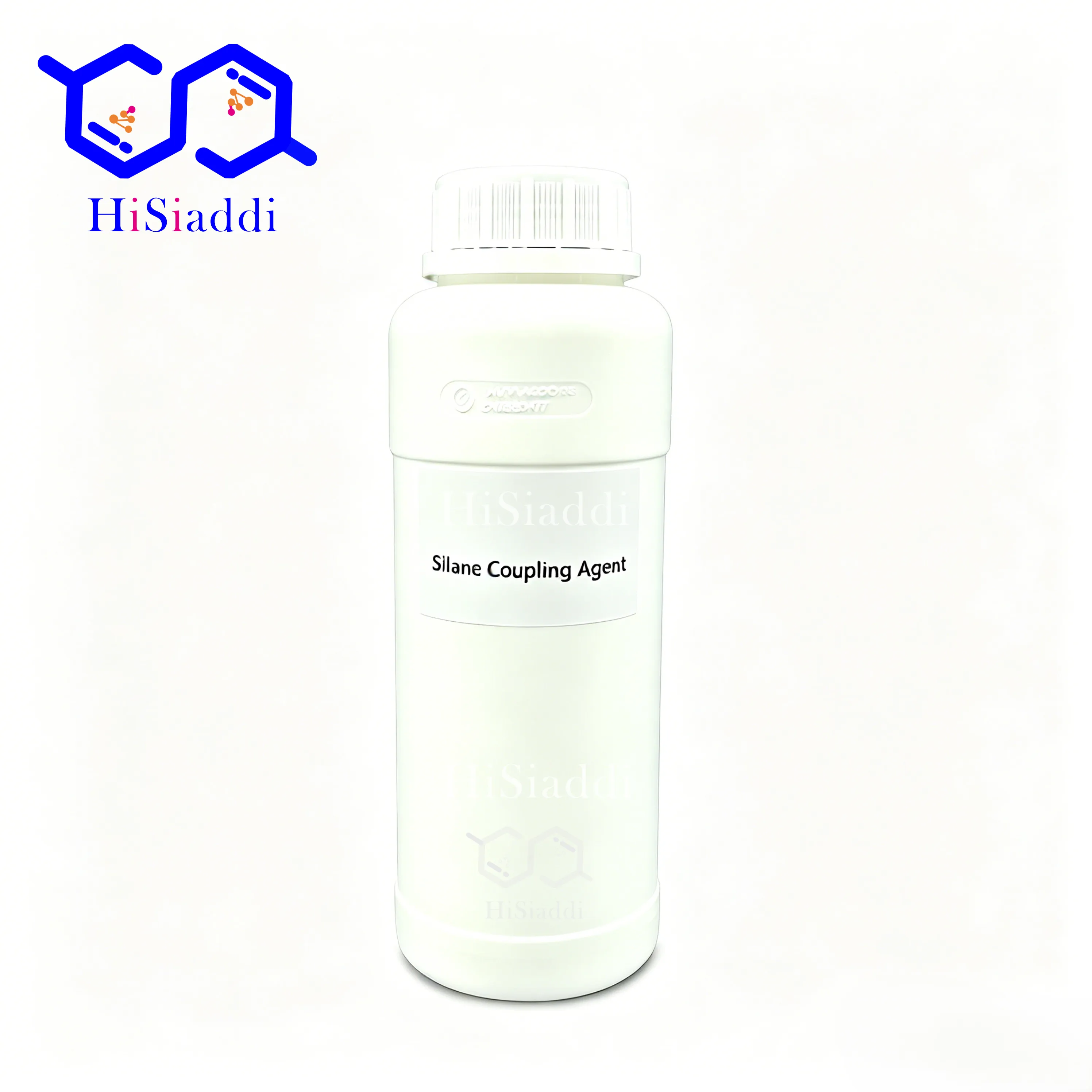
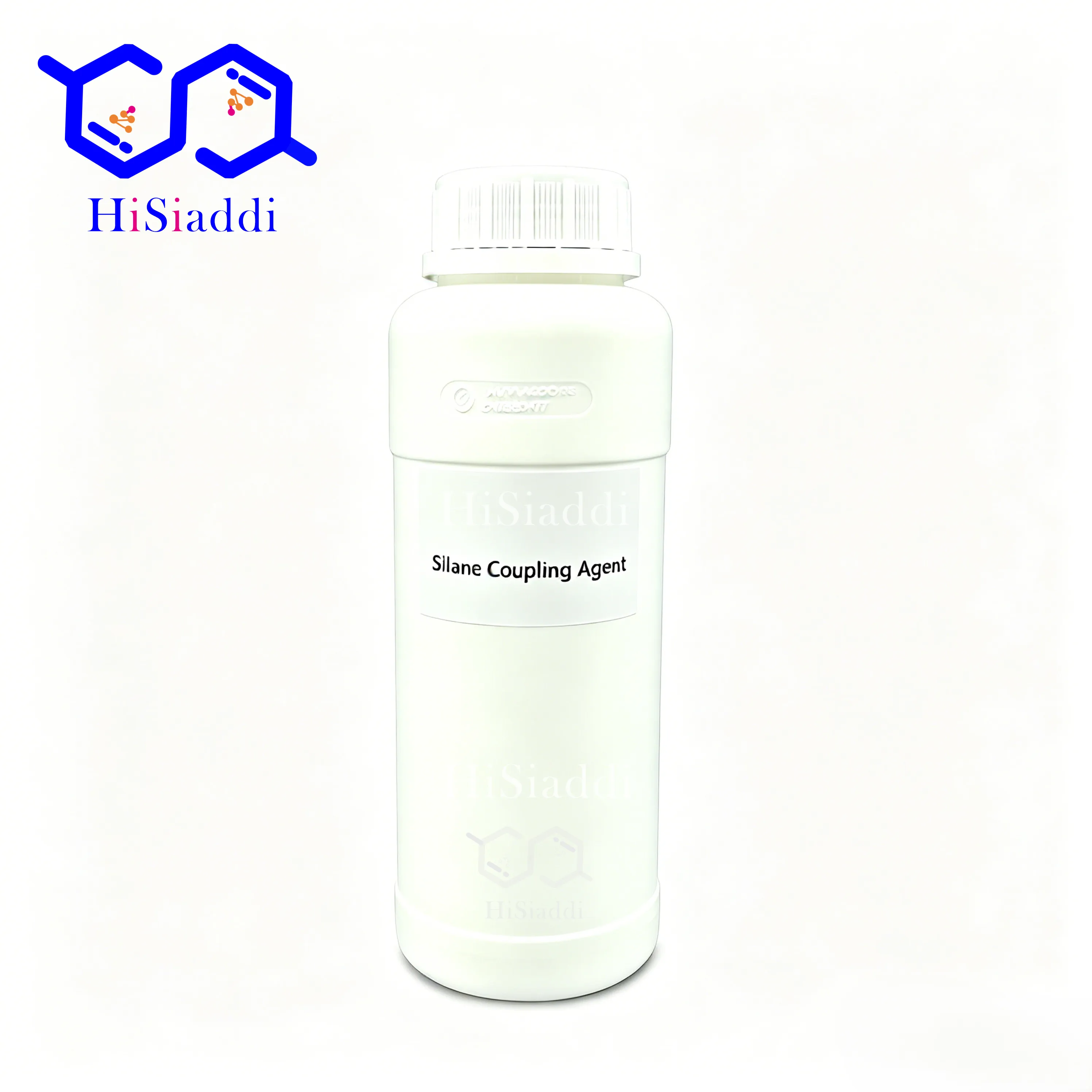
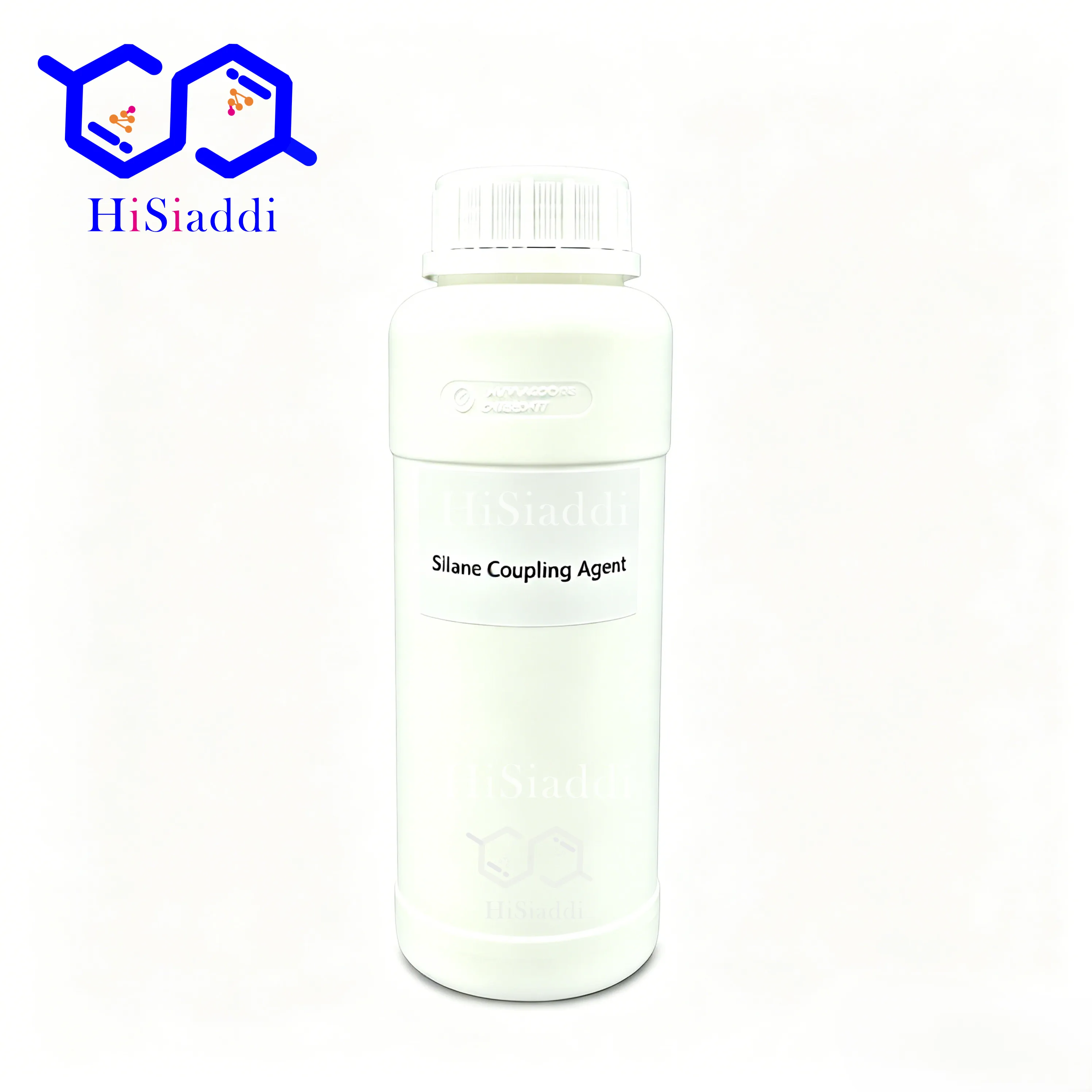
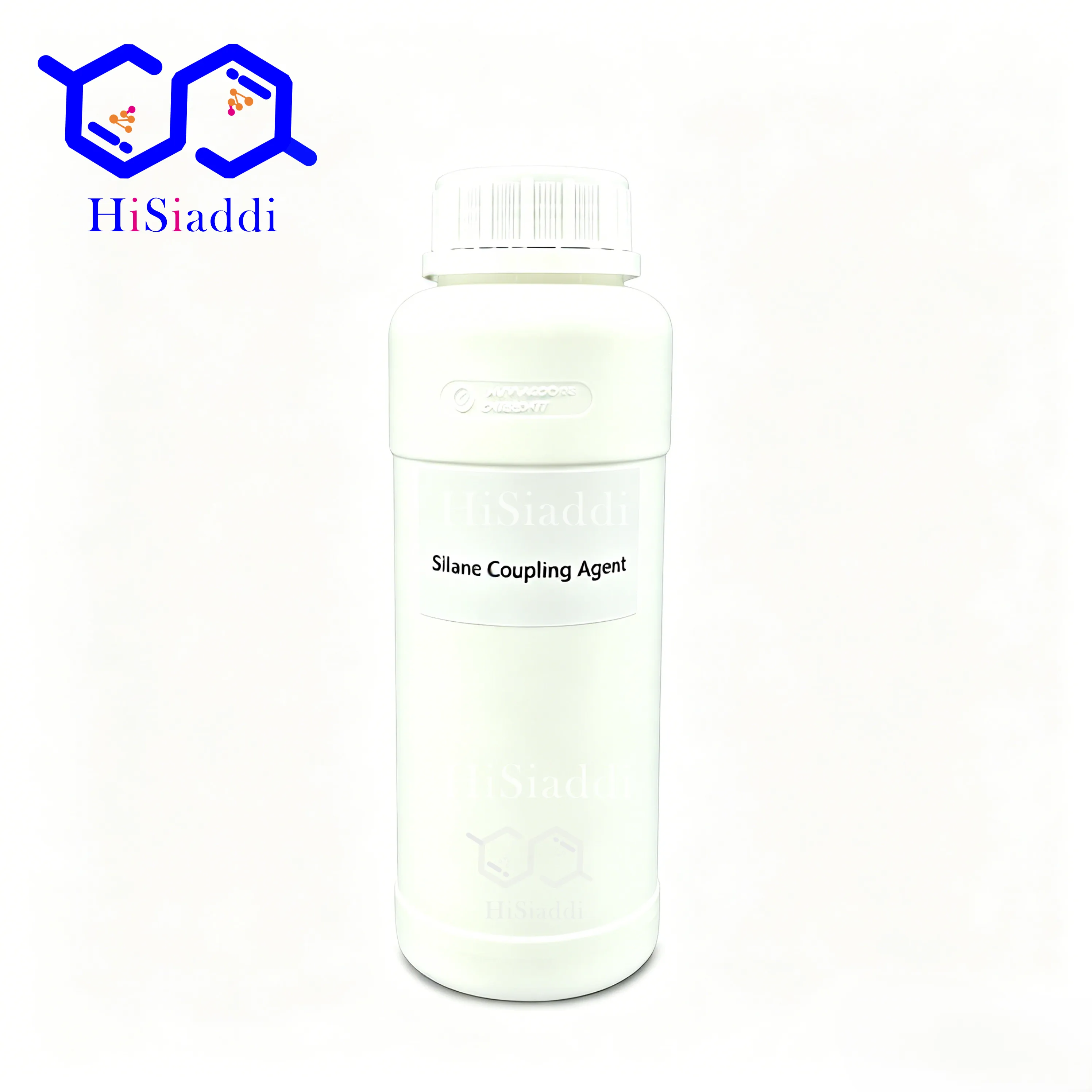
Bis [3-(triethoxysilyl) propyl] tetrasulfide, abbreviated as Si-69 or KH-858, is a sulfur-containing silane coupling agent specially used in green tires and rubber products reinforced by silica. HiSiaddi can supply original factory sources of multiple Chinese brands and provide the "1+2+3+4=1" service.
Hongbai New Materials: HP-669 (Si-69 liquid), Si69-50 (solid pre-dispersion); purity ≥98.5%, sulfur content 22±1%, average sulfur chain length 3.7±0.1, hydrolysis stability ≥6 months, benchmarking Evonik Si-69 with 20%-25% lower price, suitable for global tire giants and rubber product manufacturers.
Chenguang New Materials: CG-Si69, CG-Si69-50; purity ≥98.2%, sulfur content 21.7%-23.3%, ethoxy content ≥95%, low ethanol residue (≤0.3%), performance close to Evonik with 18%-22% lower price and delivery cycle of 2-3 weeks, suitable for medium-sized tire factories and automotive parts sealing component manufacturers.
HiSiaddi Exclusive Service: Adjust sulfur content / viscosity / form on demand; provide COA/GC-MS/NMR test reports; offer rubber formula optimization, mixing process guidance and filler pretreatment scheme consultation.
 CONTACT HiSiaddi NOW
Name: | Silane Coupling Agent Si-69 | Other Name: | Bis(3-triethoxysilylpropyl)tetrasulfane |
CAS No. | 40372-72-3 | Brand: | Multi-brand |
MF: | C₁₈H₄₂O₆S₄Si₂ | Model Number: | Multi-models |
EINECS No. | 254-906-1 | Place of Origin: | Jiangsu, China |
Purity: | 98.0% | Grade: | Industrial grade |
MOQ: | 1ton | Storage: | Please refer to the product packaging or contact the customer service |
When purchasing Si-69 as a buyer, you may encounter the following questions:
What are the core index advantages and application impacts of mainstream models from well-known Si-69 brands?
What competitive services can Si-69 suppliers provide?
How about qualification certifications and market feedback of targeted Si-69 brands?
What is the inventory level and supply stability of Si-69 suppliers?
What factors need to be considered when selecting Si-69?
...and many other related questions.
Mainstream Grades: HP-1869 (High-purity Transparent Grade), HP-Si-69 (Standard Industrial Grade)
Core Index Advantages:
Purity: HP-1869 ≥99.2% (industry top, higher than Evonik Si-69 99.0%); HP-Si-69 ≥98.5%
Total Sulfur Content: 22.0%–22.8%, optimal range balancing vulcanization efficiency and scorch safety
Average Sulfur Chain Length: 3.65–3.75, close to theoretical value 3.7, realizing optimal reinforcement and wear resistance
Impurity Control: CLPTES ≤1.5% (industry average ≤3.0%); ethanol residue ≤0.2% (industry average ≤0.5%). Low VOCs meet EU REACH and US EPA standards
Appearance: HP-1869 is nearly colorless transparent liquid (most competitors are dark yellow), ideal for light-colored & transparent rubber compounds such as high-end shoe materials and medical rubber products
Cost Performance: High-end HP-1869 quoted at 49,500 RMB/MT, over 20% lower than equivalent Evonik grade (62,000 RMB/MT); Standard HP-Si-69 at 44,500 RMB/MT, 3.5% above industrial average with superior quality
Core B-end Buyers:
Global tire giants: Bridgestone, Michelin, Goodyear, Continental (core supplier for green tire formulations)
High-end rubber products: Premium shoe material factories, automotive seal manufacturers and medical rubber component plants in Southeast Asia & Middle East
Downstream Benefits:
For buyers: Batch stability controlled within ±0.3% (international peers ±0.5%) to cut formula debugging costs; low impurities reduce product rejection rate by 5%-8% vs ordinary domestic products; transparent grade opens up high-end light-colored product market with over 15% profit margin
For end users: Tire rolling resistance reduced by 12%-15%, wear mileage increased by over 20%, wet grip improved by 8%-10%; aging resistance of shoe materials & seals extended 3 times, non-yellowing and eco-friendly non-toxic
Mainstream Grades: SG-Si-69 (High-purity General Grade), SG-Si-69E (Low-odor Eco-friendly Grade)
Core Index Advantages:
Purity: SG-Si-69 ≥99.0%, SG-Si-69E ≥98.8%
Hydrolytic Stability: 18-month shelf life (industry average 12 months); moisture-proof packaging adapts to long-distance ocean shipping without deterioration
Vulcanization Activity: Scorch time T10 ≥12 min for high-temperature mixing process to avoid premature vulcanization; optimal cure time T90=25-28 min balancing efficiency and performance
Dispersion Performance: Silica dispersion rate ≥95% (industry average 88%), lowering rubber viscosity by 15%-20% and saving mixing energy consumption
Cost Performance: Quoted at 48,600 RMB/MT, 9.3% above industrial average, 18% cheaper than mid-range Evonik products; long shelf life cuts inventory loss with annual loss rate below 1% (3%-5% for ordinary domestic goods)
Core B-end Buyers:
Mid-to-high-end domestic & overseas tire makers: Zhongce Rubber, Sailun Group, Triangle Tire, Linglong Tire (core supplier for their overseas bases)
Rubber compound manufacturers: Tire compound factories in Southeast Asia and auto rubber parts plants in Middle East
Downstream Benefits:
For buyers: Stable batch consistency with purity maintained above 99.2% for a decade, suitable for automated production lines; low viscosity boosts mixing efficiency by 20% and reduces equipment wear; eco-grade complies with EU VOCs regulations to avoid export compliance risks
For end users: Improved tire uniformity cuts high-speed driving noise by 3-5dB; mechanical property fluctuation of rubber products below 2% raising qualified rate by over 5%
Mainstream Grades: JH-S69 (Standard Industrial Grade), JH-S69H (High-sulfur Wear-resistant Grade)
Core Index Advantages:
Total Sulfur Content: JH-S69 21.7%-22.5%; JH-S69H 22.8%-23.3% (industry maximum for top-tier wear resistance)
Purity: ≥98.5%, stable standard compliance with outstanding cost advantage
Low-temperature Resistance: No solidification at -20℃, applicable to low-temperature markets like Northern Europe and Russia without thermal insulation in winter transportation
Filler Compatibility: Good adaptability to silica, calcium carbonate, talc and other fillers, matching low-cost filling formulations
Cost Performance: Quoted at 43,500 RMB/MT, slightly above industrial average, price close to ordinary domestic products with performance matching international mid-range level; high-sulfur grade delivers Evonik top-class wear resistance at 25% lower price
Core B-end Buyers:
Mid-tier tire manufacturers: Local tire factories in Vietnam, Thailand, Indonesia and commercial vehicle tire plants in Middle East
General rubber products: Manufacturers of cable insulation layers, rubber hoses, common shoe materials and construction seals
Downstream Benefits:
For buyers: High cost-effectiveness cuts raw material cost by 10%-15%; flexible filler compatibility increases calcium carbonate dosage by 10%-20% for further cost reduction; excellent low-temperature stability eliminates winter transportation solidification loss
For end users: Tire wear mileage up over 15% with 8%-10% cost reduction; enhanced toughness of general rubber products meets rigid demand of mid & low-end markets with controllable costs
Mainstream Grades: CG-Si-69 (High-purity Standard Grade), CG-Si-69L (Low-viscosity Easy-dispersion Grade)
Core Index Advantages:
Purity: ≥98.8%, metal ion content ≤5ppm, suitable for electronic-grade rubber and high-end seals
Low Viscosity: Viscosity of CG-Si-69L ≤12mPa·s at 25℃ (industry average 15-18mPa·s), dispersion speed raised by 30% fitting high-speed mixing lines
Thermal Stability: No decomposition at 200℃, applicable to high-temperature vulcanization to reduce volatile loss
Eco-certifications: Fully certified with REACH, RoHS and FDA food contact grade, fully qualified for high-end European and American markets
Cost Performance: Quoted at 45,500 RMB/MT, 5.8% above industrial average, 22% cheaper than Momentive A-1289 with complete certifications and low-viscosity merit
Core B-end Buyers:
High-end European & American rubber products: Automotive seal factories in Germany & France, US food-grade rubber component plants, European electronic insulating rubber manufacturers
International composite material enterprises: Glass fiber reinforced rubber and high-performance adhesive producers
Downstream Benefits:
For buyers: Full certifications enable direct market access to Europe and America, saving annual certification cost of 50,000-80,000 RMB; low viscosity lifts production efficiency by 25% and saves energy; ultra-low metal ions prevent abnormal conductivity for electronic applications
For end users: Food-grade safety for medical and food contact scenarios; stable electronic insulation extends equipment service life; high-temperature resistance boosts product durability by over 30%
Mainstream Grades: DR-Si-69 (Customized Activity Grade), DR-Si-69M (Medium-activity General Grade)
Core Index Advantages:
Customizable Vulcanization Activity: 6 adjustable activity grades with T10 ranging from 8-15 minutes, precisely matching vulcanization processes of commercial vehicle and engineering machinery tires
Impurity Control: Free sulfur ≤0.5% (industry average ≤1.0%) to effectively prevent rubber blooming
Aging Resistance: Thermal-oxidative aging coefficient ≥0.85 after addition (industry average 0.75%) to prolong product service life
High Filling Capacity: Silica filling amount up to 60PHR (industry average 40-50PHR) for substantial cost reduction
Cost Performance: Quoted at 45,200 RMB/MT, 3.2% above industrial average, only 60% price of customized Evonik grades with tailored service and high filling adaptability
Core B-end Buyers:
Commercial vehicle & engineering machinery tires: Heavy-duty truck and construction machinery tire factories in Middle East, Africa and South America (82.4% market coverage of customized active formulations)
High-filling rubber products: Manufacturers of low-cost tire sidewalls, rubber mats and conveyor belts
Downstream Benefits:
For buyers: Customized activity requires no equipment adjustment for direct production line adaptation; silica filling capacity increased by 20% cutting raw material cost by 12%-15%; low free sulfur eliminates blooming issue and lowers defective rate by 3%-5%
For end users: Over 10% improvement on load-bearing performance of commercial vehicle tires with excellent wear and tear resistance adapting harsh road conditions; high-filling products feature low cost and good toughness with prominent cost performance

| Comparison Items | Jiangxi Hongbai(HP-1869/HP-Si-69) | Nanjing Shuguang(SG-Si-69/SG-Si-69E) | Jianghan New Materials(JH-S69/JH-S69H) | Jiangxi Chenguang(CG-Si-69/CG-Si-69L) | Shandong Derek(DR-Si-69/DR-Si-69M) | International BenchmarkEvonik Si-69 |
| 2025 Export Share | 46.5% (1st) | 29.6% (2nd) | 8.7% (3rd) | 4.8% (4th) | 2.7% (5th) | — |
| Core Purity | 99.2%/98.5% | 99.0%/98.8% | 98.5%/98.8% | 98.8%/98.5% | 98.5%/98.0% | 99.0% |
| Total Sulfur Content | 22.0%–22.8% | 21.8%–22.5% | 21.7%–23.3% | 21.8%–22.3% | 21.5%–22.5% | 22.0%–22.5% |
| Key Differentiators | Near colorless transparent, low VOCs | 18-month shelf life, low odor | Max sulfur content 23.3%, non-solidify at -20℃ | ≤12mPa·s low viscosity, full certifications | 6 activity grades customizable, high filling capacity | High purity, strong brand premium |
| 2025 Quotation(10,000 RMB/MT) | 4.95/4.45 | 4.86/4.60 | 4.35/4.50 | 4.55/4.40 | 4.52/4.30 | 6.2(High-end)/5.5(Mid-range) |
| Cost Positioning | Premium grade with 20%+ price cut | Stable high-end grade, 18% cheaper | Mid-tier high cost-performance | Fully-certified premium grade, 22% cheaper | Customized high adaptability, 40% cheaper | High premium via brand & tech monopoly |
| Core Export Regions | Global (EU/US/Southeast Asia/Middle East) | Southeast Asia/Middle East/South America | Southeast Asia/Middle East/Africa | Europe/America/Australia | Middle East/Africa/South America | Worldwide |
| Core B-end Clients | Global tire giants, high-end shoe materials & seals | Mid-to-high-end tires, rubber compound plants | Local Southeast Asian tires, general rubber goods | European & American high-end seals & electronic rubber | Commercial vehicle & engineering tire factories | Top global tire & high-end rubber manufacturers |
| Core Buyer Advantages | Low rejection rate, high-end market profit margin | Stable batches, low energy consumption, full compliance | 10%-15% cost cut, stable low-temperature performance | Certified market access, 25% efficiency improvement | Custom matching, 20% higher filling rate, 12%-15% cost cut | Stable performance, complete certifications, high price |
| Core End-user Advantages | +20% tire wear resistance, non-yellowing, eco-friendly | 3-5dB tire noise reduction, +5% qualified rate | +15% tire wear resistance, cost controllable | Food-grade safety, stable electronic insulation | +10% load capacity, durable for harsh conditions | Superior performance, high price & brand premium |
HiSiaddi is a new foreign trade service enterprise powered by dual drivers of technology transformation and foreign trade services. It has established a "1+2+3+4=1" product service system: 1 foreign trade specialist with over 3 years of working experience, 2 chemical R&D teams, 3 high-quality suppliers and 4 shared warehouses to satisfy one-stop product demands.
With this system, HiSiaddi outperforms most foreign trade firms in the R&D optimization and technical craftsmanship of Si-69/TESPT, grasps market demands and competitive edges of different silane coupling agent brands better than single manufacturers, and boasts deeper insights into the global foreign trade market of this product than research institutes.
HiSiaddi only recruits foreign trade sales staff with over three years of industry experience. All salespeople must complete more than 6 months of joint training delivered by our R&D and foreign trade teams before serving clients.
(1) Basic Supporting Services for Si-69/TESPT
Supported by our complete foreign trade operation system, we deliver one-stop full order follow-up services for Si-69, including but not limited to issuance & application of all compliance certificates, provision of full sets of third-party test reports, and handling all quality after-sales issues.
(2) Exclusive Value-Added Services for Si-69/TESPT
Backed by our professional R&D teams, we provide customized product matching and technical consulting solutions, covering core indicator adaptation & cost comparison of all Si-69 brands, regular global market analysis reports, etc.
Monthly Si-69 industry intelligence report in English, covering domestic output, raw material prices, export statistics, EU REACH updates and competitor procurement intelligence tracking.
We carry out in-depth joint R&D with source manufacturers via technology transfer, while conducting internal technical training for foreign trade teams. This enables us to deliver highly customized Si-69 solutions and research-level technical consultation for brand selection and rubber formulation optimization.
(1) Research-Grade Customization Services for Si-69/TESPT
Customize ultra-high purity (≥99.5%) grades for medical rubber, low-odor automotive rubber, high-dispersion (≥98%) variants for high-speed mixing, adjustable scorch time (T10:8–15min) and low-VOC (≤300ppm) eco tire silane.
(2) Research-Grade Consulting Services for Si-69/TESPT
Domestic vs imported silane side-by-side performance testing: Compare tensile strength, abrasion resistance and rolling resistance vs international brands, issuing English test reports.
Free rubber formulation consulting including mixing and vulcanization parameter optimization; quarterly online English technical webinars for overseas tire manufacturers.
Our foreign trade and R&D teams jointly conduct preliminary market research, factory site inspections, full product testing and long-term technical cooperation, selecting around 3 stable, reputable, high-potential core suppliers.
(1) Advantage of Cost-Effective Factory-Direct Sourcing
Long-term technical transformation and exclusive distribution partnerships grant us access to raw materials at factory bottom prices.
(2) Full-Lifecycle Supply Chain Assurance
Long-term cooperative production supervision strengthens full batch traceability, consistent quality control and full compensation commitments for batches failing third-party inspections.
We operate four warehouses together with our supplier partners to stock hot-selling Si-69 inventory.
(1) Fast Regional Delivery & On-Site Troubleshooting
Our four warehouses are located at Qingdao Port (North China), Ningbo Port (East China), Shenzhen Port (South China) and Zhengzhou inland logistics hub to guarantee timely shipments. Local on-site staff can rapidly resolve transportation damage, packaging faults and export compliance issues when they arise.
(2) Price Risk Mitigation & Custom Packaging Solutions
We pre-stock inventories ahead of peak demand cycles to ease drastic seasonal price swings. Our self-owned warehouses support customized packaging, labels and printing to meet personalized branding requirements.
As an innovative foreign trade service provider driven by both technology transformation and export business, HiSiaddi has established a "1+2+3+4=1" service system and can supply original manufacturer materials of Si-69/TESPT from multiple well-known brands. Endowed with R&D capabilities as a technology-oriented foreign trade enterprise, HiSiaddi will professionally sort out and analyze common difficulties faced by B-end purchasers sourcing Si-69/TESPT in China, and propose targeted solutions from HiSiaddi.
For more professional and in-depth analysis on Si-69/TESPT selection, please contact HiSiaddi customer service.
Poor silica dispersion leading to excessive rolling resistance, scorching under high-temperature mixing, fluctuating sulfur content disrupting vulcanization rhythms, moisture absorption & hydrolysis causing failed reinforcement, elevated low-temperature viscosity resulting in uneven feeding dispersion
1. Insufficient product wetting capacity triggers silica agglomeration in rubber compounds, intensifying the Payne effect. Finished tire rolling resistance fails to meet EU tire label standards, while tire wear mileage drops by approximately 7%.
2. Weak thermal stability causes premature cleavage of tetrasulfide bonds at mixing temperatures of 140–155°C, inducing premature vulcanization (scorch) in rubber compounds and generating hard particles and air bubbles, raising defective rates and forcing production line speed reduction.
3. Wide total sulfur content deviation across batches directly alters vulcanization rate and crosslink density, causing obvious fluctuations in 300% modulus and tear strength. Production staff must repeatedly adjust vulcanization formulas and temperature control parameters, increasing trial production costs.
4. Triethoxysilane groups are susceptible to hydrolysis. Exposure to water vapor during ocean shipping and warehouse storage damages molecular structures, gradually losing coupling activity and weakening interfacial bonding between silica and rubber matrix, leading to continuous deterioration of overall mechanical tire performance.
5. Viscosity rises sharply under low temperatures with impaired fluidity, causing uneven distribution during automatic feeding and inconsistent local reinforcement in rubber compounds, ultimately resulting in substandard tire dynamic balance.
1. Adopt high-purification technology to strictly control impurity content, strengthen wetting and coating capacity for silica, effectively reduce the Payne effect, stabilize rolling resistance to industry standards and simultaneously improve tire wear resistance.
2. Optimize molecular structures to raise thermal decomposition temperature, adapting to high-temperature rubber mixing conditions and eliminating scorch risks from the source to guarantee stable continuous production line operation.
3. Precisely control sulfur content during manufacturing to minimize batch deviation, maintaining stable vulcanization rates and crosslink densities, allowing customers to fix production formulas and process parameters long-term.
4. Add hydrolysis stabilizers to products with nitrogen-sealed packaging to greatly extend hydrolysis cycles, retaining original coupling activity and undiminished reinforcing performance after ocean shipping and long-term storage.
5. Adjust product viscosity curves to widen low-temperature application ranges, maintaining favorable fluidity under cold conditions for rapid uniform dispersion post-feeding and consistent overall rubber compound quality.
Excessive free sulfur causing bloom, unstable color leading to yellowing of light-colored products, incompatibility with multiple rubber additives, unstable Mooney viscosity regulation and insufficient aging resistance
1. Excessive free sulfur content leads to migration of low-molecular sulfur components to product surfaces post-vulcanization, forming white bloom that impairs appearance, weakens sealing performance of gaskets and reduces surface adhesion of rubber shoes.
2. Residual organic impurities and vulcanization by-products gradually darken product color, resulting in yellowed finished light/white rubber products unable to meet high-end appearance requirements.
3. Substandard raw material pH values trigger side reactions with anti-aging agents, plasticizers and vulcanization accelerators, causing precipitation and stratification of additive systems and directly weakening product strength and weather resistance.
4. Inferior Si-69 delivers unstable viscosity reduction effects, failing to effectively lower rubber compound Mooney viscosity and increasing mixing & extrusion processing resistance, raising production energy consumption and reducing finished product molding pass rates.
5. Weak thermo-oxidative and UV-resistant performance of silicon-oxygen bonding structures leads to gradual debonding between fillers and rubber matrix after long-term service or outdoor exposure, causing hardening and cracking and shortening service life.
1. Deeply remove free sulfur with strict indicator control to completely eliminate post-vulcanization bloom and safeguard rubber product appearance and service performance.
2. Adopt rectification and decolorization processes to stabilize product color, preventing discoloration during long-term storage and vulcanization for full compatibility with all light and white rubber product production lines.
3. Neutralize and remove acid-base impurities to maintain neutral systems with excellent compatibility with mainstream rubber additives on the market, delivering stable compound systems free of reactions or precipitation.
4. Ensure stable active component content to sustain viscosity reduction effects, lowering rubber compound processing difficulty and equipment energy consumption while boosting pass rates for extrusion and molding procedures.
5. Strengthen silicon-oxygen bonding stability to enhance product resistance to thermo-oxidation and UV radiation, delaying interfacial debonding and extending rubber product service life.
Incomplete powder coating, moisture absorption & agglomeration of modified powder, poor fluidity of modified powder, activity attenuation under high-temperature modification conditions and inconsistent modification effects across batches
1. Improper product viscosity weakens atomization and spreading capacity, delivering incomplete coating coverage on powder particles. Unactivated residual fillers continue to agglomerate and exhibit poor compatibility in downstream applications.
2. Excess residual ethoxy groups cause modified powder to readily absorb atmospheric moisture and agglomerate, blocking automatic feeding equipment and disrupting full production line operation.
3. Coupling agents attached to powder surfaces increase powder repose angle and impair fluidity, creating pipeline conveying blockages that reduce production efficiency and raise transportation energy consumption.
4. Typical powder modification temperatures range from 110–130°C. Conventional Si-69 lacks sufficient heat resistance, leading to decomposition of active components under high temperature and reduced modification efficiency, forcing enterprises to increase addition dosage and raising production costs.
5. Fluctuating raw material batch indicators generate inconsistent activation rates for powder produced via identical modification processes, causing variable performance of downstream end products and customer complaints.
1. Precisely regulate product viscosity to enhance atomization and spreading performance, achieving full coating coverage of powder particles and compliant activation rates to fundamentally eliminate downstream filler agglomeration issues.
2. Optimize hydrophobic performance to deliver excellent surface hydrophobicity for modified powder, maintaining loose particle state without moisture absorption or agglomeration during long-term storage, fully compatible with automatic batching and conveying equipment.
3. Balance coating performance and powder fluidity to control powder repose angle, ensuring smooth feeding and transportation and effectively reducing production energy consumption.
4. Upgrade product high-temperature stability to retain full activity under 130°C modification environments, enabling fixed addition ratios and stable customer production costs.
5. Implement standardized manufacturing with unified viscosity, active content and other key indicators across every batch, delivering highly consistent powder modification effects and stable downstream application performance.
Fluctuating active ingredients disrupting compounding ratios, stratification and precipitation of compound systems, antagonistic failure with vulcanization system additives, discoloration & odor generation under high-temperature ocean shipping and unqualified shelf life of finished products
1. Large gaps in active ingredient content between different Si-69 batches cause inconsistent coupling and reinforcing performance of finished compound products formulated with fixed ratios, raising defective rates of mass-produced goods.
2. Poor homogeneous stability of base products leads to stratification and bottom precipitation after static mixing with dispersants, anti-scorch agents and other additives, damaging finished product appearance and service performance.
3. Acidic impurities in raw materials chemically react with vulcanization accelerators and activators, deactivating vulcanization systems and triggering delayed vulcanization and insufficient crosslink density.
4. Container temperatures reach 45–55°C during long-distance ocean shipping. High-temperature environments accelerate oxidative decomposition of products, deepening color and generating pungent sulfide odors that fail high-end export private label quality standards.
5. Continuous loss of active components in compounded finished products shortens shelf life, failing to meet market requirements for multi-region overseas distribution and long-cycle warehousing.
1. Strictly control active ingredient indicators with strong batch consistency, allowing customers to directly mass-produce using existing compound formulas without repeated adjustments and guaranteeing stable finished product quality.
2. Add dedicated compatibility stabilizers to maintain uniform compound systems free of stratification or precipitation after long-term static storage, delivering consistent finished product appearance and performance throughout the shelf life.
3. Implement deep deacidification treatment to maintain low acid values, eliminating interference with all types of vulcanization and functional additives and enabling normal vulcanization reactions.
4. Compound high-temperature antioxidant components to withstand ocean shipping high-temperature environments, delivering unchanged color and odor upon arrival and meeting high-end export order standards.
5. Extend system stability cycles to achieve a minimum 12-month normal-temperature shelf life for compound finished products, adapting to circulation requirements of overseas warehousing and distribution.
Adulterated diluted goods on the market, stratification of bulk drum materials after long static storage, sharp activity decline post ocean shipping, missing compliance documents blocking customs clearance and excessive heavy metal/residual impurity content
1. Some low-price sources are diluted with mineral oil and organic solvents to falsely label high purity, resulting in severely diminished effectiveness for downstream end users, frequent returns and customer complaints that damage channel reputation.
2. Long-term static storage of 200L standard bulk drums triggers stratification due to density differences between components – thin upper layers and thick concentrated lower layers. Simple stirring fails to achieve uniform mixing, leading to significant indicator differences between small subpackaged batches.
3. High-temperature sealed environments during long-distance ocean shipping simultaneously trigger product oxidation and hydrolysis, sharply reducing activity and resulting in end-user application performance far below nominal standards.
4. Classified as dangerous chemicals, Si-69/TESPT without English SDS, REACH test reports, CLP classification labels and transportation appraisal documents faces high risks of customs detention at European and American ports, causing cargo stagnation.
5. Excessive heavy metals and residual solvents in inferior products fail EU environmental regulation standards, leading to non-compliance of end products during environmental testing, with risks of product removal and regulatory penalties.
1. Supply genuine high-purity original manufacturer materials without adulteration or dilution, with third-party test reports attached to every batch supporting global third-party re-inspection to eliminate quality complaints from the source.
2. Adopt full-process homogenization manufacturing to prevent stratification of bulk drum materials even after static storage exceeding 90 days, while providing standardized stirring protocols to unify indicators across all subpackaged batches.
3. Adopt dual anti-oxidation and anti-hydrolysis stabilization technology to retain high activity under high-temperature and humid ocean shipping environments, delivering arrival quality nearly identical to factory output.
4. Provide complete sets of English compliance documents alongside goods, including safety technical specifications, regulatory screening reports and transportation qualification files, ensuring smooth customs clearance and legal sales of cargo.
5. Strictly control environmental indicators including heavy metals and residual solvents to fully comply with EU REACH, RoHS and other regulations, supporting compliant sales across all overseas scenarios.
For more professional and in-depth analysis on Si-69/TESPT selection, please contact HiSiaddi customer service.
testtesttesttesttesttesttest
Lead time
Quantity (ton) | 0 - 10 | 10 - 30 | > 30 |
Lead time (days) | 7 | 15 | To be negotiated |
The monthly inventory volume of Si-69/TESPT is 150 tons, with appropriate adjustments upwards or downwards in response to peak and off-peak seasons.
HiSiaddi safeguards the supply stability of Si-69/TESPT through the following measures:
(1) Performance evaluation and screening of Si-69/TESPT brand factories based on on-time delivery rate, batch pass rate, timeliness of risk alerts, and completeness of documentation to assess their supply stability.
(2) For each mainstream model or major grade of Si-69/TESPT, secure 1 primary high-quality brand manufacturer and 2 backup high-quality manufacturers.
(3) Each factory operates independent production lines in separate production zones to prevent production halts caused by major unforeseen incidents such as environmental production suspensions and power outages.
Through long-term cooperation with brand manufacturers via technology commercialization and authorized distribution channels, HiSiaddi can effectively strengthen supervision over the production processes of brand manufacturers, optimize full-process traceability management, improve batch stability control, and further reinforce real-time monitoring of the supply stability of Si-69/TESPT products.
Long-term Annual Framework Supply Guarantee Agreement. HiSiaddi signs 12-month long-term agreements with leading manufacturers. The agreements specify the minimum guaranteed supply volume, maximum price hike range, and priority production scheduling rights during peak seasons. It is stipulated that manufacturers shall issue a 30-day prior written notice if production is suspended due to environmental rectification or equipment maintenance, and backup manufacturers will be activated to replenish goods accordingly.
We have 4 warehouses, which are jointly operated and managed with suppliers to store hot-selling products.The four warehouses are located at Qingdao Port in North China, Ningbo Port in East China, Shenzhen Port in South China, and Zhengzhou, China’s inland logistics hub. This setup guarantees sufficient supply and timely shipment of Si-69/TESPT during peak seasons.
HiSiaddi issues a rolling demand forecast covering the subsequent three months on the 25th of each month, allowing manufacturers to reserve production capacity in accordance with the forecast. Any new urgent orders from overseas clients will be prioritized to draw on inventories or production capacity from backup manufacturers.
Unstable logistics for Si-69/TESPT will extend delivery lead times. HiSiaddi has established alternative arrangements covering multiple freight forwarders, ports and transportation solutions:
(1) Binding of multiple professional chemical freight forwarders for Si-69/TESPT
Each product is assigned 2 to 3 freight forwarders with hazardous chemical/food transport qualifications affiliated with different shipping lines. Alternative sailing schedules can be switched to immediately in case of space shortages or customs inspections on a single shipping route.
(2) Backup transportation solutions for Si-69/TESPT
Ocean freight serves as the standard mode; air freight and rail freight are reserved as alternatives for urgent orders. Long-term agreements for temperature-controlled containers are signed for temperature-sensitive and perishable food additives to secure shipping space.
(3) Visual tracking and digital early warning for Si-69/TESPT
Freight forwarders synchronize daily updates on container loading, customs declaration, vessel loading and port arrival milestones. If customs inspection occurs, replenishment from backup inventory will be initiated immediately to shorten client waiting periods.
Full-chain digital early warning automatically monitors four categories of risks:
Factory side: Expiring supplier environmental assessment certificates, renewal of production permits, scheduled major equipment overhauls, and notifications of price hikes for upstream raw materials;
Inventory side: Inventory falling below safety thresholds, excessive inventory age, and batches failing quality inspection;
Logistics side: Shipping line space shortages, strikes at destination ports, and updates to customs policies;
Overseas side: Revisions to additive regulations and adjustments to import restriction lists in target countries.
Early warning notifications are automatically pushed to procurement and business leads, allowing backup suppliers or inventory contingency plans to be activated in advance.
As a new-type foreign trade service provider driven by dual engines of technology transformation and foreign trade export, HiSiaddi has established a "1+2+3+4=1" service system and can supply original factory goods of multiple well-known brands for Si-69/TESPT.
As a technology-driven foreign trade enterprise, HiSiaddi does not only promote a single factory’s own products like brand manufacturers. We objectively analyze multiple competitive well-known Chinese export brands of Si-69/TESPT and share their qualification certifications and market feedback to help purchasers make efficient, reliable sourcing decisions.
If you require more authentic, objective information on multiple well-known Chinese Si-69/TESPT brands, please contact HiSiaddi customer service.
· JHSI-69 (Standard liquid grade): General-purpose tetrasulfane silane with sulfur content 22.5%±0.5%, equivalent to Evonik Si-69.
· JHSI-69L (Low-VOC modified grade): Free mercaptan <0.1%, compliant with EU environmental standards.
· JHSI-69S (Solid dust-free grade): Safe for transportation with low mixing loss, the mainstream choice for high-end tire production lines.
1. Core supplier to global tire giants: Si-69 export volume reached approximately 19,200 tons in 2025, capturing nearly 20% global market share, ranking No.1 in China and No.3 worldwide.
2. Import-equivalent performance with outstanding cost performance: Coupling efficiency and crosslink density match Evonik Si-69 at a 10%–15% lower price, earning European tire manufacturers’ recognition for "equivalent quality at lower cost".
3. Strong reputation in new energy materials: Metal ion residues ≤5 ppm for power battery packaging adhesives and thermal conductive materials; certified by CATL and BYD, rated as the "premium high-purity domestic silane of choice".
· International certifications: ISO 9001, ISO 14001, REACH registration, EU Tire Labeling Regulation compliance certification.
· Industry certifications: Class A supplier to Michelin, Bridgestone and Continental Tire; strategic partner of Zhongce, Linglong and Sailun.
· Honors & credentials: National-level Specialized, Refined, Unique & Innovative "Little Giant" enterprise; primary drafter of national standards for sulfur-containing silanes.
· HB-Si69 (Standard industrial grade): Classic tetrasulfane silane with superior silica reinforcement efficiency.
· HB-Si69LV (Low-odor low-VOC grade): Adopts wet modification technology to cut mixing time by 25% and VOC emissions by 40%.
· HB-Si69M (Enhanced modified grade): Optimized for high silica loading formulations, boosting tire wear resistance by over 12%.
1. Benchmark brand for green tires: Si-69 export volume hit 8,700 tons in 2025, ranking second domestically; captures over 25% of the European market, recognized as China’s representative low-VOC silane brand.
2. Internationally recognized batch stability: Mooney viscosity fluctuation between batches ≤3%, CV value ≤2.3%, passing Michelin’s long-term stability testing and praised as "a stable domestic silane capable of import substitution".
3. Positive reception for circular economy model: Full industrial chain closed-loop production with 95%+ waste recovery rate and carbon footprint 18% lower than industry average, awarded EU Green Supply Chain Certification.
· International certifications: ISO 9001, ISO 50001, REACH registration, EU Product Carbon Footprint (PCF) certification.
· Industry certifications: Certified supplier to Michelin and Bridgestone; joint R&D partner of Linglong and Sailun.
· Honors & credentials: Shanghai Stock Exchange listed company (605366); national demonstration enterprise for sulfur-containing silane circular economy.
· CG-Si69 (Standard general grade): Cost-effective for mid-to-low-end tires and rubber products.
· CG-Si69H (High-purity grade): Chloride ions ≤10 ppm, metal ions ≤5 ppm, specialized for high-end seals and electronic materials.
· CG-Si69F (Fast-reaction grade): 20% faster coupling speed, optimized for high-efficiency mixing production lines.
1. Leading market share across Asia: Si-69 export volume reached 7,600 tons in 2025, ranking third domestically; captures over 30% of Japan, South Korea and Southeast Asian markets, named "the most trusted domestic silane brand by Asian clients".
2. Praised for rapid customization response: Small-batch customization starting at 500kg with sample delivery within 72 hours, meeting multi-specification demands of rubber product manufacturers and awarded "Best Customization Service Supplier".
3. Rapid breakthrough in new energy sectors: CG-Si69H certified by LG Chem and SKI, delivering stable performance in power battery thermal pads and rated as "cost-effective high-purity silane".
· International certifications: ISO 9001, ISO 14001, REACH registration, Japanese JIS certification.
· Industry certifications: Qualified supplier to Bridgestone and Sumitomo Rubber; alternative supplier for CATL and BYD.
· Honors & credentials: Shanghai Stock Exchange listed company (605399); national-level Specialized, Refined, Unique & Innovative "Little Giant" enterprise; drafter of silane industry standards.
· KH-845-4 (Standard Si-69): Classic domestic Si-69 grade, equivalent to Evonik Si-69 and Dow Z-6940.
· KH-845-4L (Low-VOC variant): Compliant with EU environmental standards with odor grade ≤3.
· SG-Si69S (Solid particle grade): Dust-free and easily dispersible, suited for automated production lines.
1. Quality endorsement from decades of state-owned enterprise operation: 40 years of silane R&D and manufacturing experience with consistent product quality, referred to by European clients as "China’s most reliable traditional silane brand".
2. High market penetration in mid-to-low-end segments: Moderate pricing and stable performance, capturing over 20% market share across Southeast Asia, the Middle East and South America with a reputation as "cost-performance champion".
3. Strong reputation in rubber product applications: Widely deployed in automotive vibration dampers and seals with qualified heat and aging resistance, certified by Continental and Bosch.
· International certifications: ISO 9001, ISO 14001, REACH registration.
· Industry certifications: Qualified supplier to Continental, Bosch and ZF; long-term supplier of Zhongce and Triangle Tire.
· Honors & credentials: National high-tech enterprise; drafter of silane coupling agent industry standards; Jiangsu Provincial Famous Brand Product.
· AK-Si69 (High-purity standard grade): Purity ≥98.5%, sulfur content 22.8%±0.3%, optimized for high-end tires.
· AK-Si69UL (Ultra-low-VOC grade): Free mercaptan <0.05%, odor grade ≤2, exclusively supplied to European high-end markets.
· AK-Si69HT (High-temperature resistant grade): Decomposition temperature >280℃, tailored for high-temperature seals of new energy vehicles.
1. Rapid expansion in high-end markets: Focused on high-purity and low-VOC products with export growth exceeding 40% in 2025, fast-growing market share in European premium tire segments.
2. Internationally recognized impurity control capabilities: Metal ions ≤3 ppm, chloride ions ≤5 ppm, passing Michelin and Bridgestone’s stringent impurity testing and rated as "one of China’s top silane manufacturers for impurity control".
3. Strong supporting reputation for new energy vehicles: AK-Si69HT delivers stable performance in new energy motor seals with superior high-temperature and aging resistance, recognized as "preferred silane for new energy materials".
· International certifications: ISO 9001, ISO 14001, REACH registration, EU RoHS certification.
· Industry certifications: Certified supplier to Michelin and Bridgestone; technical partner of CATL and BYD.
· Honors & credentials: National high-tech enterprise; Guangdong Provincial Specialized, Refined, Unique & Innovative enterprise; patent holder for low-VOC silane technology.
表格
Brand | Core Advantages | Global Market Positioning | Sourcing Value |
Jianghan New Materials | Largest production scale, full-spectrum certifications, superior cost performance | Global top-tier, direct competitor to Evonik | First choice for high-end tires and new energy materials |
Hongbai New Materials | Green technology leadership, low-VOC formulations, exceptional stability | Benchmark for European green tires | Preferred option for environmentally compliant, carbon-reduction focused procurement |
Chenguang New Materials | Leading customization capabilities, extensive Asian distribution network, fast response | Market leader across Asia | Optimal for small-batch, multi-specification procurement |
Nanjing Shuguang | Established state-owned enterprise, consistent quality, moderate pricing | Primary supplier for mid-to-low-end markets | Ideal for cost-sensitive buyers of traditional rubber products |
Guangzhou Aikepu | Ultra-high purity & low VOC, industry-leading impurity control, high temperature resistance | Emerging dark horse in premium high-end markets | Specialized selection for new energy components and high-end seals |
If you require more authentic, objective information on multiple well-known Chinese Si-69/TESPT brands, please contact HiSiaddi customer service.
As a new-type foreign trade service provider driven by dual engines of technology transformation and foreign trade export, HiSiaddi has established a "1+2+3+4=1" service system and can supply original factory goods of multiple well-known brands for Si-69/TESPT.
As a technology-driven foreign trade enterprise, HiSiaddi does not only promote a single factory’s own products like brand manufacturers. We objectively analyze multiple competitive well-known Chinese export brands of Si-69/TESPT and share their production processes, supply stability and key performance indicators, as well as the impact of these core factors on purchasers, to help buyers make efficient, reliable sourcing decisions.
If you require more authentic, objective information on multiple well-known Chinese Si-69/TESPT brands, please contact HiSiaddi customer service.
Core process: Full closed-loop industrial chain covering silicon lumps → trichlorosilane → chloralkylalkoxysilane → Si-69 with self-produced core intermediates to eliminate impurity risks from outsourced raw materials.
· Synthesis route: Chloropropene + trichlorosilane → γ-chloropropyltriethoxysilane (CPTES) → reaction with sodium polysulfide → Si-69. Continuous reaction + negative pressure rectification with precise temperature control at 70–85℃ and reaction time error ≤±5 minutes.
· Environmental upgrades: Wet modification and waste gas recovery technologies introduced in 2024 achieve ≥99.5% conversion of free mercaptans, cutting VOC emissions by 45% versus traditional processes and meeting EU REACH and carbon footprint standards.
· Solid Si-69 process: Melt granulation + dust-free encapsulation with 50%±1% active ingredient content, dust-free and easily dispersible for automated high-end tire production lines.
· Capacity scale: Annual Si-69 capacity of 35,000 tons (global No.1), including 28,000 tons liquid and 7,000 tons solid grades; actual output of 31,000 tons in 2025 with 88.6% capacity utilization rate.
· Base layout: Dual production bases in Yichang (Hubei) and Jiujiang (Jiangxi) with self-owned thermal power plants and warehouses, maintaining safety stock ≥5,000 tons capable of fulfilling monthly orders from the world’s top 10 tire manufacturers (maximum single-month supply of 8,000 tons).
· Delivery capacity: Adopt a "production based on sales + safety stock" model; standard orders delivered within 7 days, peak season orders within 15 days. Signed supply guarantee agreements with Michelin and Bridgestone, achieving a 100% on-time delivery rate for three consecutive years.
· Risk resistance: Self-sufficiency rate of upstream trichlorosilane reaches 92%, limiting energy price fluctuation impact to ≤5%. During the 2025 raw material price surge, pricing was adjusted by only 3%, far below the industry average of 8%.
Main grades: JHSI-69 (liquid), JHSI-69L (low-VOC), JHSI-69S (solid)
表格
Indicator | JHSI-69 (Standard) | JHSI-69L (Low-VOC) | JHSI-69S (Solid) | Imported Evonik Standard |
Appearance | Pale yellow transparent liquid | Pale yellow low-odor liquid | Black particles | Pale yellow liquid |
Sulfur Content (%) | 22.5±0.5 | 22.3±0.5 | 22.0±0.8 (active) | 22.5±0.5 |
Density (20℃, g/cm³) | 1.080±0.010 | 1.082±0.010 | — | 1.080±0.010 |
Free Mercaptan (%) | ≤0.3 | ≤0.1 | ≤0.15 | ≤0.1 |
Metal Ions (ppm) | ≤5 | ≤3 | ≤4 | ≤5 |
Batch Stability (CV Value) | ≤2.0% | ≤1.8% | ≤2.2% | ≤2.0% |
Purity (%) | ≥98.5 | ≥99.0 | ≥95.0 | ≥98.5 |
1. Tire manufacturers (high-end/new energy): Low-VOC and high-purity formulations comply with EU Tire Labeling Regulation, delivering a 12% reduction in rolling resistance and 8% improvement in wet grip. Consistent batch quality minimizes rubber compound fluctuations, cutting defective rates by 30%. Solid Si-69 fits automated production lines to lift mixing efficiency by 25%.
2. New energy material manufacturers: Metal ion levels ≤3 ppm satisfy CATL and BYD certification standards for power battery packaging adhesives and thermal conductive materials, boosting insulation stability by 40% and extending battery cycle life by 20%.
3. Cost impacts: Pricing 10%–15% lower than Evonik, delivering a 12% cost reduction for import substitution. Reliable supply eliminates production shutdown losses (single shutdown loss ≥EUR 500,000) via peak season supply guarantees.
Core process: World-first closed-loop industrial chain integrating silicon lumps → chlorosilanes → Si-69 → by-product silicon tetrachloride → fumed silica, with 100% recycling of hydrogen chloride, zero wastewater discharge and ≥95% solid waste utilization rate.
· Synthesis technology: Phase transfer catalysis + aqueous phase synthesis boosts reaction efficiency by 40% and cuts energy consumption by 18%. Reaction temperature controlled at 60–75℃ with precise sulfur chain length regulation at 3.75±0.15 and S3–S8 content ≥88% for optimal coupling efficiency.
· Low-VOC process: Proprietary wet modification technology limits free mercaptans ≤0.08% with odor grade ≤2, cutting mixing VOC emissions by 50% and earning EU Green Supply Chain Certification.
· Solid Si-69 process: High-dispersion carrier adsorption with 50% active ingredient content and pre-dispersed silica, eliminating additional dispersant requirements during mixing and lifting tire wear resistance by over 12%.
· Capacity scale: Annual Si-69 capacity of 22,000 tons (second domestically), including 17,000 tons liquid and 5,000 tons solid grades; 91% capacity utilization rate with actual output of 20,000 tons in 2025.
· Raw material self-sufficiency: In-house supporting facilities producing 50,000 tons trichlorosilane and 6,000 tons fumed silica achieve 100% self-sufficiency of raw materials, eliminating outsourced price hikes and supply disruption risks.
· Delivery capacity: Single production base in Leping, Jiangxi with safety stock ≥3,000 tons; European orders delivered within 10 days, Asian orders within 7 days. Core supplier to Michelin and Bridgestone for five consecutive years with a 99.8% on-time delivery rate.
· Risk resistance: Self-owned thermal power plants cut energy costs by 20% versus industry peers. Carbon footprint 18% lower than industry average minimizes EU Carbon Border Adjustment Mechanism (CBAM) impacts, driving a 25% increase in European orders in 2025.
Main grades: HB-Si69 (Standard), HB-Si69LV (Low-VOC), HB-Si69M (Enhanced)
表格
Indicator | HB-Si69 (Standard) | HB-Si69LV (Low-VOC) | HB-Si69M (Enhanced) | Industry Standard |
Appearance | Pale yellow transparent liquid | Colorless low-odor liquid | Pale yellow liquid | Pale yellow liquid |
Sulfur Content (%) | 22.5±0.3 | 22.4±0.3 | 22.8±0.3 | 22.0±0.8 |
Free Mercaptan (%) | ≤0.2 | ≤0.08 | ≤0.15 | ≤0.5 |
Average Sulfur Chain Length | 3.75±0.10 | 3.70±0.10 | 3.80±0.10 | 3.75±0.15 |
Carbon Footprint (kgCO₂e/t) | ≤2.8 | ≤2.5 | ≤2.7 | ≤3.5 |
Batch Stability (CV Value) | ≤1.8% | ≤1.5% | ≤1.7% | ≤2.5% |
1. Green tire manufacturers (Europe-focused): Low-VOC and low-carbon footprint formulations directly satisfy EU REACH and CBAM requirements without additional third-party testing. HB-Si69M optimizes high-silica loading formulations to lift tire wear resistance by 12% and reduce rolling resistance by 13%, enabling a 10%–15% product price premium.
2. Automotive rubber product manufacturers (seals/vibration dampers): Low-odor grades meet European automotive interior standards with odor grade ≤2, certified by Continental and Bosch. Aging resistance improves by 30%, extending product service life by 2 years.
3. Cost impacts: Green product premium of only 5%–8%, lower than the 10%–12% premium for imported alternatives. Carbon-footprint-compliant products avoid 5%–8% CBAM tariffs, delivering a net 3%–5% reduction in comprehensive costs.
Core process: Continuous hydrosilylation + automated rectification with full-process DCS control from raw materials to finished goods, achieving ≥99% reaction conversion and stable purity ≥98.8%.
· Synthesis route: Proprietary high-efficiency catalytic system cuts reaction time between γ-chloropropyltriethoxysilane and sodium polysulfide to 2 hours (versus traditional 3–5 hours), slashing energy consumption by 25%.
· High-purity process: Three-stage negative pressure rectification + precision filtration limits chloride ions ≤10 ppm and metal ions ≤5 ppm, delivering electronic-grade purity for new energy material applications.
· Customization process: Flexible production lines enable rapid grade switching for small batches (minimum order 500kg), with customizable sulfur chain lengths (3.6–3.9) and sulfur content (21.5%–23.5%), delivering sample prototypes within 72 hours.
· Capacity scale: Annual Si-69 capacity of 18,000 tons (third domestically), including 15,000 tons liquid and 3,000 tons solid grades. Dual production bases in Pengze (Jiangxi) and Chizhou (Anhui) achieved 89% capacity utilization and 16,000 tons actual output in 2025.
· Raw material security: 85% self-sufficiency rate of upstream intermediates with one-year fixed-price long-term supply agreements with trichlorosilane manufacturers to mitigate price volatility risks.
· Delivery capacity: Asian orders (Japan, South Korea, Southeast Asia) delivered within 5 days, European orders within 12 days; customized small-batch orders fulfilled within 7 days, the fastest lead time in the industry. 99.5% on-time delivery rate for Asian market orders in 2025.
· Risk resistance: Multi-base coordination ensures uninterrupted supply during single-facility maintenance; safety stock ≥2,000 tons enables rapid capacity allocation during peak seasons, with extensive Asian distribution networks minimizing geopolitical supply risks.
Main grades: CG-Si69 (Standard), CG-Si69H (High-Purity), CG-Si69F (Fast-Reaction)
表格
Indicator | CG-Si69 (Standard) | CG-Si69H (High-Purity) | CG-Si69F (Fast-Reaction) | Japanese & South Korean Standard |
Appearance | Pale yellow transparent liquid | Colorless transparent liquid | Pale yellow liquid | Pale yellow liquid |
Sulfur Content (%) | 22.0±0.8 | 22.5±0.3 | 22.3±0.5 | 22.0±0.8 |
Chloride Ions (ppm) | ≤50 | ≤10 | ≤30 | ≤50 |
Metal Ions (ppm) | ≤10 | ≤5 | ≤8 | ≤10 |
Coupling Reaction Time (min) | 15 | 12 | 10 | 15 |
Batch Stability (CV Value) | ≤2.3% | ≤2.0% | ≤2.1% | ≤2.5% |
1. Asian tire/rubber manufacturers (Japan, South Korea, Southeast Asia): Customized formulations optimized for local natural rubber feedstocks lift coupling efficiency by 10%. Rapid delivery shortens production cycles and reduces inventory levels by 20%, with pricing 15%–20% lower than Japanese/South Korean imported alternatives for superior cost performance.
2. New energy material manufacturers (LG Chem, SKI): CG-Si69H high-purity grade holds LG Chem certification for power battery thermal pads, lifting thermal conductivity by 15% with stable insulation performance.
3. Cost impacts: No additional customization premiums for minimum 500kg orders, cutting sample R&D costs by 50%. Accelerated delivery reduces order waiting time and lifts capital turnover ratio by 25%.
Core process: Traditional two-step synthesis (sodium sulfide + sulfur → sodium polysulfide → reaction with CPTES → Si-69), a mature 40-year production process with zero recorded operational failures, simple operation and exceptional stability.
· Reaction control: Temperature maintained at 75–85℃ for 3–4 hours with dual manual and automated oversight to minimize parameter fluctuation. Ethanol reflux purification limits total impurities ≤4%, meeting industrial-grade standards.
· Environmental upgrades: Waste gas collection + activated carbon adsorption systems deployed in 2023 to achieve compliant VOC emissions; brine treatment technology eliminates external wastewater discharge, satisfying domestic environmental regulations.
· Solid Si-69 process: Inert carrier mixing delivers 50% active ingredient content with simple, low-cost manufacturing, optimized for mid-to-low-end rubber product applications.
· Capacity scale: Annual Si-69 capacity of 12,000 tons (fourth domestically), including 10,000 tons liquid and 2,000 tons solid grades. Single production base in Nanjing, Jiangsu with 85% capacity utilization and 10,200 tons actual output in 2025.
· Raw material security: Long-term supply partnerships with upstream raw material manufacturers guarantee stable pricing and consistent delivery. State-owned enterprise financial strength eliminates supply disruption risks.
· Delivery capacity: Domestic and Southeast Asian orders delivered within 7 days, Middle Eastern and South American orders within 15 days; zero standard order delays with a 99% on-time delivery rate in 2025.
· Risk resistance: State-owned enterprise credibility prioritizes fulfillment of long-term cooperation agreements; consistent market demand for cost-effective products limits price fluctuation amplitude to ≤5%.
Main grades: KH-845-4 (Standard), KH-845-4L (Low-VOC), SG-Si69S (Solid)
表格
Indicator | KH-845-4 (Standard) | KH-845-4L (Low-VOC) | SG-Si69S (Solid) | Industrial Grade Standard |
Appearance | Pale yellow transparent liquid | Pale yellow liquid | Black particles | Pale yellow liquid |
Sulfur Content (%) | 22.0±0.8 | 21.8±0.8 | 21.5±1.0 | ≥22.0 |
Total Impurities (%) | ≤4.0 | ≤3.5 | ≤4.5 | ≤6.0 |
Free Mercaptan (%) | ≤0.5 | ≤0.2 | ≤0.3 | ≤0.5 |
Density (20℃, g/cm³) | 1.080±0.020 | 1.080±0.020 | — | 1.080±0.020 |
1. Mid-to-low-end tire/rubber manufacturers (Southeast Asia, Middle East, South America): Stable quality with moderate pricing (RMB 30,000–35,000 per ton) fits cost-sensitive market requirements, delivering consistent performance for standard tires, vibration dampers and seals with defective rates ≤2%.
2. Domestic rubber product manufacturers: Quality endorsement from decades of state-owned enterprise operation with reliable supply and comprehensive after-sales support; low-VOC variants satisfy domestic environmental standards without additional factory renovations.
3. Cost impacts: Pricing 10%–15% lower than leading brands, delivering a 12%–18% cost reduction for mid-to-low-end import substitution. Reliable supply avoids production shutdown losses with 24-hour after-sales response for rapid issue resolution.
Core process: Cutting-edge microchannel continuous reaction + molecular distillation purification technology launched in 2024 delivers ≥99.5% purity and ≤0.5% total impurities, matching premium imported product standards.
· Synthesis technology: Microchannel reactors cut reaction time to 30 minutes with temperature error ≤±1℃, precisely regulating sulfur chain length at 3.75±0.05 and S4 content ≥24% for maximum coupling efficiency.
· Deep purification: Molecular distillation + precision filtration limits metal ions ≤3 ppm, chloride ions ≤5 ppm and free mercaptans ≤0.05%, delivering ultra-high purity for new energy and high-end seal applications.
· High-temperature resistant process: Modified sulfur chain structure achieves decomposition temperature >280℃, optimized for high-temperature seals and motor insulation components of new energy vehicles.
· Capacity scale: Annual Si-69 capacity of 8,000 tons (fifth domestically), including 6,500 tons liquid and 1,500 tons solid grades. Single production base in Guangzhou, Guangdong with 92% capacity utilization and 7,400 tons actual output in 2025, representing over 40% year-on-year growth.
· Raw material security: Custom-sourced high-purity upstream intermediates enable full quality control and ultra-low impurity levels; exclusive supply agreements with core raw material vendors guarantee consistent high-grade feedstock supply.
· Delivery capacity: European and North American high-end orders delivered within 10 days, domestic orders within 7 days; small-batch high-end customized orders fulfilled within 5 days, delivering industry-leading response speed.
· Risk resistance: Exclusive focus on high-end markets delivers exceptional customer stickiness (90%+ repeat purchase rate). High-margin premium pricing (RMB 38,000–42,000 per ton) enhances resilience against raw material price fluctuations.
Main grades: AK-Si69 (High-Purity Standard), AK-Si69UL (Ultra-Low-VOC), AK-Si69HT (High-Temperature Resistant)
表格
Indicator | AK-Si69 (High-Purity) | AK-Si69UL (Ultra-Low-VOC) | AK-Si69HT (High-Temp Resistant) | Imported Premium Standard |
Appearance | Colorless transparent liquid | Colorless odorless liquid | Pale yellow liquid | Pale yellow liquid |
Sulfur Content (%) | 22.8±0.3 | 22.5±0.3 | 23.0±0.3 | 22.5±0.5 |
Free Mercaptan (%) | ≤0.08 | ≤0.05 | ≤0.10 | ≤0.1 |
Metal Ions (ppm) | ≤3 | ≤2 | ≤3 | ≤5 |
Decomposition Temperature (℃) | ≥260 | ≥250 | ≥280 | ≥250 |
Purity (%) | ≥99.5 | ≥99.2 | ≥99.0 | ≥98.5 |
1. High-end tire manufacturers (European premium/new energy): Ultra-low VOC and ultra-high purity formulations satisfy the strictest EU environmental standards with odor grade ≤2. AK-Si69HT high-temperature resistant grade eliminates scorching risks by 50% during high-temperature mixing for new energy tire production.
2. New energy material manufacturers (top battery/motor OEMs): Metal ion levels ≤2 ppm meet CATL and BYD’s rigorous certification standards; high heat resistance delivers a 50% improvement in high-temperature stability and 30% extended service life for battery packaging adhesives and motor seals.
3. Cost impacts: Pricing 8%–12% lower than imported alternatives, delivering a 10% cost reduction for premium import substitution. Ultra-high purity formulations minimize quality incidents and cut defective rates by 40%; superior heat resistance expands viable application scenarios to enable 15%–20% finished product price premiums.
表格
Brand | Core Process Advantages | Supply Stability Highlights | Standout Key Performance Indicators | Optimized Downstream Application Scenarios |
Jianghan New Materials | Full closed-loop industrial chain, top-tier impurity control | World’s largest capacity, dual-base supply guarantee | Low-VOC + ultra-high purity, exceptional batch consistency | High-end tires, new energy materials |
Hongbai New Materials | Closed chlorine cycle green manufacturing, industry-leading low carbon footprint | 100% raw material self-sufficiency, primary European market supplier | Industry-leading low VOC and minimal carbon footprint | Green tires, European export markets |
Chenguang New Materials | High-efficiency continuous synthesis, flexible customization production | Multi-base coordination, fastest Asian market response | Customizable sulfur chain lengths, electronic-grade high purity | Asian tires, new energy thermal conductive materials |
Nanjing Shuguang | Mature, stable traditional synthesis process | State-owned enterprise supply guarantee, stable mid-to-low-end market provision | Consistent industrial-grade quality, lowest cost performance | Rubber products for Southeast Asia, Middle East, South America |
Guangzhou Aikepu | Precision microchannel synthesis + deep molecular distillation, high temperature resistance | Fast-growing capacity, rapid response for high-end orders | Ultra-low VOC, ultra-high purity, superior decomposition temperature | Premium new energy components, high-performance seals |
1. High-end tires/new energy materials (Europe/North America): Prioritize Jianghan New Materials (JHSI-69L) and Guangzhou Aikepu (AK-Si69UL), offering low-VOC, ultra-high purity and consistent supply to meet stringent EU environmental and new energy performance requirements.
2. Green tire production (Europe-focused): Select Hongbai New Materials (HB-Si69LV), with industry-leading low carbon footprint and low-VOC formulations that directly satisfy CBAM and REACH regulations at a modest premium for optimized comprehensive costs.
3. Asian tire/rubber manufacturers (Japan, South Korea, Southeast Asia): Opt for Chenguang New Materials (CG-Si69/CG-Si69H), delivering customizable formulations, fast delivery and outstanding cost performance tailored to local market demands.
4. Mid-to-low-end rubber product manufacturers (Southeast Asia, Middle East, South America): Choose Nanjing Shuguang (KH-845-4), with consistent quality, competitive pricing and mature after-sales service as the optimal solution for cost-sensitive markets.
If you require more authentic, objective information on multiple well-known Chinese Si-69/TESPT brands, please contact HiSiaddi customer service.
As an innovative foreign trade service provider driven by both technology transformation and export business, HiSiaddi has established a "1+2+3+4=1" service system and can supply original manufacturer materials of Si-69/TESPT from multiple well-known brands. Endowed with R&D capabilities as a technology-oriented foreign trade enterprise, HiSiaddi will conduct a professional analysis of critical purchasing considerations and core indicators to ease your product selection concerns.
For more professional and in-depth analysis on Si-69/TESPT selection, please contact HiSiaddi customer service.
Commercially available Si-69/TESPT normally exists as pale yellow to amber transparent oily liquid, with solid carrier masterbatch as an alternative dosage form. Its core performance is determined by active ingredient content, tetrasulfide proportion, sulfur chain distribution, free ethanol, moisture, residual monomers, flash point and thermal stability. Classified as Category 3 flammable liquids, cross-border transportation must comply with IMDG and IATA international dangerous goods regulations. Meanwhile, EU REACH, SVHC, PAHs, VOC, heavy metal and other environmental & safety regulations vary across regions. The rubber industry imposes stringent requirements on batch consistency, vulcanization stability and reinforcing effect. Therefore, procurement decisions cannot rely solely on unit price and appearance comparison; comprehensive evaluation combining downstream rubber grades, mixing processes, local regulations and environmental protection standards is mandatory.
Si-69/TESPT belongs to fine organosulfur silicone chemicals and Category 3 flammable liquids, subject to multi-dimensional supervision covering dangerous goods transportation, chemical registration, screening of substances of very high concern, limits of toxic and hazardous substances, waste gas emission, etc. Complete compliance documents serve as the foundation for cross-border customs clearance, legal production and penalty risk avoidance.
1. Specialized testing and certification matching end-use applications For tires, high-performance rubber products and export rubber & plastic accessories destined for the EU, North America, Japan, South Korea and other mainstream export markets, suppliers must provide REACH registration documents, SVHC screening reports, together with test reports for polycyclic aromatic hydrocarbons (PAHs), heavy metals, residual chlorosilane monomers and volatile organic compounds (VOCs). For rubber used in indoor daily necessities and civil rubber parts, additional odor grading and low volatility verification materials are required. For rubber auxiliary materials in food contact and medical scenarios, food contact safety certifications, substance migration testing and acute toxicology test reports must be supplemented. For general industrial rubber raw materials, waste gas and wastewater pollutant emission test documents shall be provided in accordance with local industrial chemical regulations.
2. Complete documents for cross-border dangerous goods transportation and customs clearance Liquid Si-69/TESPT is categorized as Category 3 flammable liquid. Suppliers must provide multi-lingual Safety Data Sheets (SDS), dangerous goods classification appraisal reports, UN numbers, dangerous goods packaging certificates and standard shipping names – mandatory documents for sea, air and land inspection. Standard customs clearance documents include certificates of origin, batch-by-batch Certificate of Analysis (COA) and production traceability documents. High-end export orders additionally require gas chromatography component analysis and sulfur chain distribution test reports.
3. Supplier qualification screening Prioritize original manufacturers with formal dangerous goods export qualifications and long-term overseas supply experience, and verify the traceability of third-party testing institutions and their reports. Non-compliant dangerous goods packaging, excessive harmful impurities, or unqualified VOC/PAHs indicators will directly lead to cargo detention, production line shutdown, finished product recalls and environmental penalties, so qualification review must be completed in advance.
The active content, tetrasulfide ratio, sulfur chain distribution, free alcohol, moisture and thermal stability of Si-69/TESPT are fully determined by upstream raw material quality as well as the full-process technologies of synthesis, vulcanization, rectification and impurity removal. This also forms the core criteria distinguishing high-purity refined grade, standard industrial grade, low-alcohol low-odor grade and anhydrous grade.
1. Upstream raw material inspection High-quality products adopt high-purity chloropropyltriethoxysilane and refined sodium sulfide as primary raw materials, featuring low monomer impurities and few by-products. After synthesis, they deliver a high proportion of tetrasulfide components, narrow sulfur chain distribution, stable reinforcing effect, mild odor and resistance to decomposition under high-temperature processing. Low-end products utilize industrial crude materials and recycled by-product feedstocks, resulting in high residual monomers, free ethanol and low-molecular sulfides. Such defects cause strong odor in rubber compounds, fluctuating vulcanization rates and deteriorated aging resistance of finished products, making them unsuitable for high-end tires and export goods. For high-grade specifications, purchasers may request suppliers to provide raw material purity certificates.
2. Confirmation of core production processes Mainstream production workflow: silane monomer liquid-phase synthesis → directional vulcanization for chain control → multi-stage vacuum rectification → vacuum alcohol removal → dehydration conditioning → precision filtration.
· High-purity refined grade: deep rectification plus high-temperature vacuum devolatilization to maximally eliminate free ethanol, residual monomers and low-molecular substances. Tetrasulfide dominates sulfur chain distribution with concentrated components, delivering optimal storage and processing stability.
· Standard industrial grade: conventional rectification balancing cost and basic performance, suitable for general rubber products.
· Low-alcohol low-odor grade: enhanced alcohol and low-molecular removal procedures to reduce VOC and pungent odor.
· Anhydrous grade: additional deep dehydration process dedicated to dry mixing and moisture-sensitive systems. Formal production lines adopt continuous closed nitrogen-protected manufacturing with full temperature and oxygen control to prevent material oxidation and deterioration, achieving minimal fluctuation of indicators across batches. High-end specifications utilize independent production lines to eliminate cross-contamination and avoid misrepresentation of industrial grade as high-purity refined grade.
1. Quality control and production capacity assessment Si-69/TESPT is mass-produced via continuous processes with stable supply. It is recommended to request multi-batch COAs, gas chromatography analysis, sulfur distribution and thermal stability & flash point test data, with key monitoring on fluctuation ranges of active ingredient content, tetrasulfide proportion, free ethanol, moisture, viscosity, density and residual monomers. For long-term cooperation, lock raw material grades and process parameters to guarantee formulation consistency across batches. Prioritize source manufacturers with complete synthesis, vulcanization and rectification production lines. Traders blending different batches and purity grades will directly trigger abnormal rubber processing and defective finished product performance. Meanwhile, obtain stability data under high-low temperature cycling, long-term static storage and varying humidity environments to adapt to ocean shipping and global warehousing conditions.
Si-69/TESPT available on the market is classified by purity grade, moisture index, functional subdivision and physical dosage form. Different parameters lead to vast disparities in reinforcing performance, processing characteristics, storage conditions and applicable scenarios. Improper selection will cause abnormal vulcanization, insufficient strength, excessive odor, storage stratification and foaming in systems.
1. Purity grade classification
· High-purity refined grade: high main content, ultra-low impurities and stable tetrasulfide proportion, targeted at high-end tires, high-wear-resistant rubber and export rubber & plastic products.
· Standard industrial grade: cost-effective for common rubber parts, shoe sole rubber and general sealing products. Clearly specify nominal values and allowable fluctuation ranges of active ingredient content, tetrasulfide proportion, free ethanol and moisture in contracts.
1. Moisture specification classification
· Conventional water-containing type: retains trace bound water with moderate hydrolysis activity, matching mainstream wet mixing processes in the industry.
· Anhydrous grade: deeply dehydrated for dry mixing, high-end composite materials and formulations requiring low foaming; the two types cannot be interchangeably used.
1. Physical dosage form classification
· Liquid oily form: fast dispersion and convenient feeding, the mainstream dosage form for the rubber industry, compatible with continuous liquid feeding on internal mixers and open mills.
· Solid carrier masterbatch: active components loaded on inorganic carriers, free of liquid leakage, with high storage & transportation safety and low dust. Suitable for automatic powder batching systems and regions with strict flammable liquid control.
1. Functional subdivision and appearance requirements Low-alcohol low-odor variants apply to indoor rubber products under strict environmental regulations; high-temperature-resistant variants feature optimized thermal stability for high-temperature internal mixing conditions. Qualified liquid products appear as uniform transparent oily liquid without turbidity, stratification or precipitation; masterbatch particles are uniform without caking. Packaging specifications: liquid products are mainly packed in 200L galvanized dangerous goods iron drums or corrosion-resistant plastic dangerous goods drums; solid masterbatches are packed in 25kg fiber drums lined with moisture-proof inner bags. Samples use compliant small-volume dangerous goods packaging. Custom specifications require advance confirmation of minimum order quantity and production lead time. Before bulk order placement, suppliers must send samples for small-scale mixing tests, vulcanization curve verification and mechanical property validation.
As a Category 3 flammable liquid, liquid Si-69/TESPT incurs additional costs for dangerous goods packaging, commodity inspection and international hazardous cargo transportation higher than ordinary chemicals. Significant price gaps exist between different purity grades, dosage forms and functional variants. Cost accounting must not focus solely on unit price but comprehensively calculate based on trade modes and logistics rules.
1. Quotation mode selection
· FOB China Port: quotation covers goods, domestic transportation, special dangerous goods packaging and domestic hazardous goods declaration & inspection fees. International sea freight hazardous operation charges, insurance, destination port customs clearance and hazardous goods inspection shall be borne by purchasers. Suitable for large tire groups, leading rubber & plastic enterprises and filler factories equipped with professional hazardous goods freight forwarders and large-volume annual stockpiling, delivering optimal comprehensive costs.
· CIF Destination Port: quotation includes full sea freight hazardous operation fees, insurance, port charges and document processing, with suppliers coordinating the entire process for simplified operation. Suitable for first-time cooperation, small & medium batch procurement and regional chemical distributors. Simultaneously provide volume tiered pricing and annual long-term price locks to hedge price fluctuations of upstream silane monomers and sulfur raw materials.
1. Settlement, delivery lead time and dispute clauses International trade commonly adopts T/T and irrevocable letter of credit settlements. Dangerous goods orders involve complex document procedures to be executed per agreed timelines. Standard industrial liquid regular grades are in sufficient stock; customized specifications including high-purity refined grade, anhydrous grade, low-alcohol grade and solid masterbatch require reserved lead time for rectification, deep processing, special testing and dangerous goods packaging inspection. Contracts shall define judgment criteria for disputes: substandard active substance/tetrasulfide content, excessive free alcohol/moisture, turbid/stratified liquid, abnormal vulcanization performance or mismatched grades, with agreed procedures for re-inspection, return, replacement and supplementary delivery. Slight color darkening during storage and transportation is a normal phenomenon, with clear liability boundaries between both parties specified.
2. Minimum order quantity and warehousing agreements Liquid dangerous goods are sold per full drum with no bulk splitting allowed. The product is flammable and must be stored in formal hazardous goods warehouses with cool, ventilated conditions away from fire and heat sources. High temperature accelerates volatilization and component oxidation, while high humidity impairs hydrolysis stability. Agree on free domestic warehousing duration and prohibit long-term cargo storage in open-air or high-temperature port yards.
Core risks of liquid Si-69/TESPT during storage and transportation include leakage-induced ignition, oxidative deterioration under high temperature, volatile accumulation and cross-reaction with incompatible substances. Solid masterbatch is combustible and prone to moisture absorption. Full compliance with IMDG and IATA international dangerous goods rules is required, centered on fire prevention, temperature control, leakage prevention, separated storage and moisture resistance.
1. Packaging standards Liquid products adopt brand-new compliant flammable liquid dangerous goods drums – galvanized iron drums or corrosion-resistant plastic drums equipped with sealing gaskets and reinforced lids. Drum bodies are printed with UN numbers, dangerous goods labels and flammable warning statements, with leakage testing conducted for every drum before delivery. Solid masterbatches use double-layer moisture-proof inner bags plus thickened fiber drums marked with combustible warnings. Outer packaging uniformly labels: Flammable Liquid, Keep Away from Fire, Cool Storage & Transportation, No Co-Loading with Oxidants. Packaging strength meets ocean stacking and long-distance bumping requirements.
2. Transportation and environmental control Large-tonnage liquid shipments prioritize international sea freight hazardous cargo holds with sealed isolated containers under constant temperature control of 10~30°C. Avoid high-temperature cabin spaces in summer; temperature-controlled containers are available for high-latitude regions in winter to prevent elevated viscosity at low temperatures affecting unloading. Air transportation strictly follows IATA Category 3 flammable liquid declaration regulations. Minimize transit transfers; intermediate stations must store goods in partitioned formal hazardous goods warehouses with open-air stacking prohibited. High-value high-purity orders are recommended to purchase hazardous goods cargo insurance.
3. On-site usage and storage & transportation reminders Upon arrival at the port, store goods in local compliant flammable goods warehouses with partitioned isolation management. No open flames are permitted in operation areas, which must be equipped with fire and explosion-proof facilities. Increased viscosity of liquid products under low temperature is a normal physical phenomenon – slowly return to room temperature instead of direct open flame or high-temperature baking. Immediately seal drum lids after use; implement moisture-proof protection for solid masterbatches.
Components, sulfur chain distribution, free alcohol and moisture of Si-69/TESPT directly affect rubber mixing, vulcanization speed, scorch safety, finished product strength and odor. Significant differences exist in process parameters across rubber grades, filler ratios and processing equipment, compounded with overseas regulatory requirements, making professional technical services indispensable.
1. Formulation and process support Suppliers provide samples, complete technical documents, chromatographic component and sulfur distribution test reports. Based on customers’ rubber grades, filler systems, mixing temperatures and equipment types, they recommend optimal addition ratios, feeding sequences and process windows, and deliver solutions for insufficient reinforcement, abnormal vulcanization curves, excessive odor, storage stratification and hydrolysis deactivation. Simultaneously interpret REACH, SVHC, dangerous goods and PAHs control regulations of target countries.
2. Post-arrival re-inspection coordination Conduct sampling in accordance with hazardous goods sampling specifications. Customers may self-test content, viscosity, moisture and appearance, or entrust third parties to perform full-item testing of all components, sulfur distribution and residual monomers. Handle substandard indicators via special dangerous goods procedures.
3. Documentation and regulatory assistance Provide multi-lingual SDS, dangerous goods packaging certificates, UN documents, REACH/SVHC/PAHs test reports and certificates of origin on demand, assisting with local chemical registration and rubber raw material access audits. Timely update new regulations related to global organosilicon and rubber auxiliary materials.
Classified into six purchaser groups covering high-end tires & heavy-load rubber products, general industrial rubber products, food/medical contact rubber, dry mixing & anhydrous composite materials, solid masterbatch automatic batching and cross-border hazardous goods distributors, this section clarifies core quality control priorities aligned with international rubber, organosilicon and dangerous goods industry standards.
Core priorities: high stable active content, concentrated tetrasulfide proportion & sulfur chain distribution, ultra-low residual monomers, controlled free ethanol, uniform viscosity, stable vulcanization & scorch safety, excellent reinforcing performance and reliable storage stability
1. Si-69/TESPT active content: strictly compliant with contractual values with minimal fluctuation
2. Tetrasulfide proportion and sulfur chain distribution: concentrated ranges to guarantee stable crosslinking and reinforcement
3. Residual chlorosilane monomers: ultra-low content to retard rubber aging
4. Free ethanol and low-molecular volatiles: tightly controlled to reduce odor and rubber compound foaming
5. Moisture, viscosity and density: consistent across batches for uniform mixing and feeding
6. Scorch time and vulcanization curves: stable parameters matching continuous tire production
7. Mechanical properties: tensile strength, wear resistance, rebound and other reinforcing indicators meet standards
8. Thermal and storage stability: no stratification or deterioration under high-temperature processing and long-distance warehousing
Core priorities: compliant active content, stable viscosity, good compatibility, normal vulcanization and cost-effectiveness
1. Active ingredient content: meets specified grade with allowable regular fluctuation range
2. Tetrasulfide components: satisfy general rubber reinforcement requirements
3. Viscosity and density: stable indicators compatible with standard internal mixing and open mill processes
4. Free ethanol and moisture: controlled within industrial allowable limits
5. Compatibility: no abnormalities when mixed with carbon black, silica, vulcanizing agents and accelerators
6. Appearance: uniform oily liquid without obvious turbidity or precipitation
Core priorities: high purity, compliant heavy metal limits, qualified PAHs, low migration, low toxicity and ultra-low residual impurities
1. Main content and tetrasulfide proportion: stable performance without impairing finished product strength
2. Heavy metals and polycyclic aromatic hydrocarbons (PAHs): meet limit values for food/medical contact raw materials
3. Residual monomers and low-molecular sulfides: deeply removed to reduce substance migration risks
4. Migratable substances and biological toxicity: harmless and compliant with standards
5. Volatile components: strictly controlled to ensure safe application
Core priorities: ultra-low moisture, deep dehydration, strong hydrolysis stability, low foaming risk and good fluidity
1. Moisture content: meets anhydrous grade standards as a hard core indicator
2. Active substances and tetrasulfide components: high purity without hydrolysis deactivation during storage and processing
3. Free ethanol and low-molecular substances: low content to prevent bubble generation in dry systems
4. Hydrolysis stability: consistent performance during long-term storage and mixing
5. Viscosity and fluidity: compatible with dry powder mixing processes
Core priorities: precise uniform active loading, uniform particles free of caking, moisture resistance, low dust and good fluidity
1. Active loading capacity: consistent across batches for accurately controllable addition ratios
2. Particle morphology and particle size: uniform size without large agglomerates
3. Moisture resistance: no moisture absorption or bridging in warehouses and silos
4. Volatiles and dust content: low levels to eliminate silo hazards and improve feeding environments
5. Compatibility: uniform mixing with rubber powder and fillers
Core priorities: stable storage performance across temperature zones, leak-proof sealed dangerous goods packaging and complete universal hazardous goods & regulatory documents
1. Weather-resistant storage: no obvious changes in content, viscosity or color after ocean shipping and temperature alternation
2. Packaging performance: intact dangerous goods drums free of leakage or damage after long-distance stacking and multiple transfers
3. Random inspection of basic indicators: active content, moisture, viscosity and appearance match corresponding grades
4. Low-temperature adaptability: only viscosity rises under low temperature, with full recovery of fluidity upon warming
5. Compliance documents: complete multi-lingual SDS, dangerous goods packaging certificates, UN numbers, various test reports and certificates of origin to support customs clearance and customer audits in multiple countries
For more professional and in-depth analysis on Si-69/TESPT selection, please contact HiSiaddi customer service.



 +86-13120989737
  info@hisiaddi.com
 English