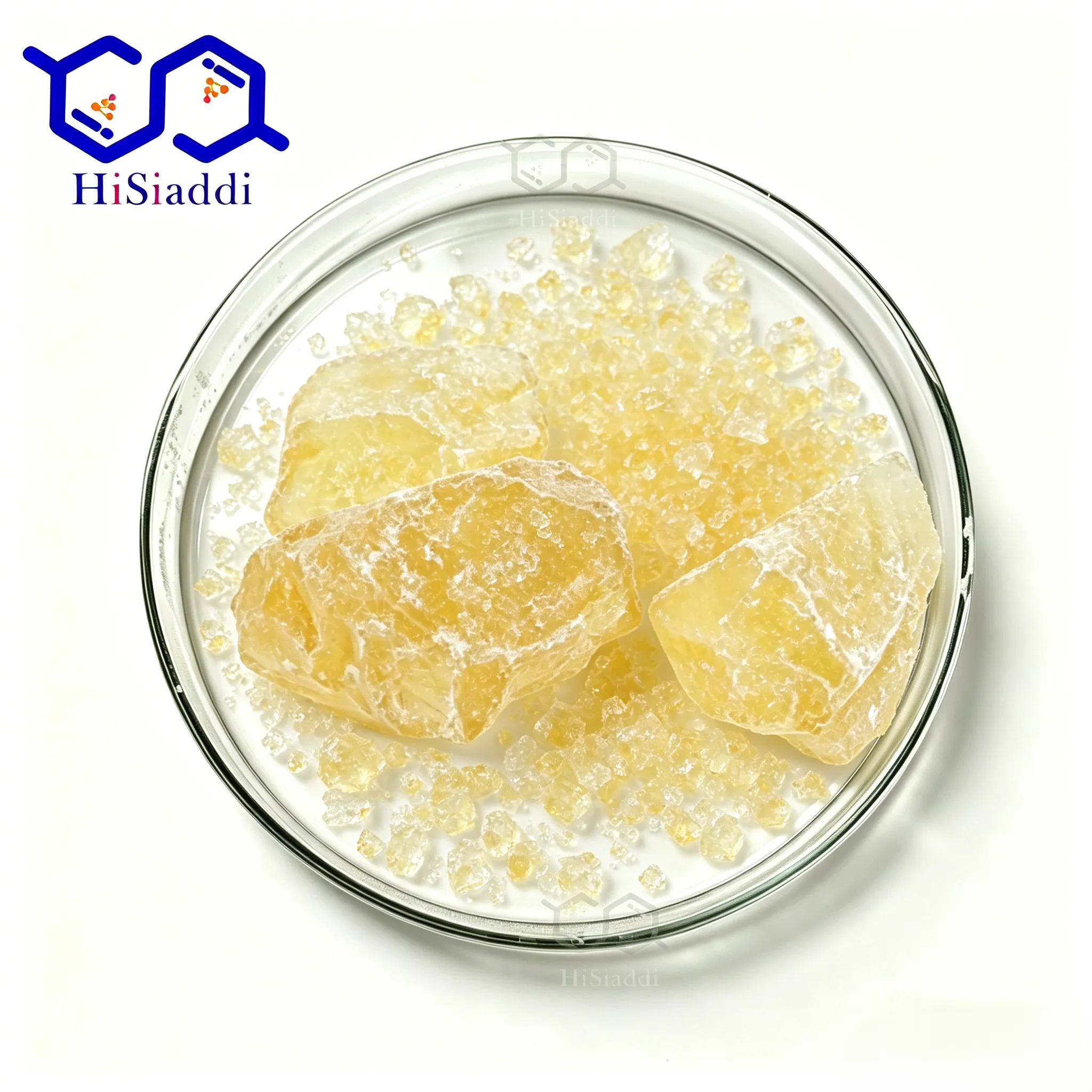
p-tert-Butylphenol Formaldehyde Resin, with CAS number 25085-50-1, is abbreviated as 2402 resin. It is a thermoplastic phenolic resin and is used as a rubber vulcanizing agent, tackifier, ink raw material, etc.
Shengquan SQ-2402 has a softening point of 90-100℃, a hydroxymethyl content of 10%-12%, and a free phenol content of ≤1.0%. It has excellent heat resistance and high vulcanization efficiency. Compared with Japan's Sumitomo 2402, it is specially designed for overseas heat-resistant products of butyl rubber, high-end chloroprene rubber adhesives, and automotive sealing component manufacturers.
Xiangjiang XJ-2402 has strong tackiness and good compatibility with chloroprene rubber. It is suitable for shoe-based chloroprene rubber adhesives, leather-rubber composite, and tape production enterprises.
HiSiaddi can provide original brand supplies from multiple brands, with a price of 45%-55% of Japan's Sumitomo and Germany's BASF. It has a low free phenol content, is environmentally compliant, and has strong batch stability.
HiSiaddi exclusive services: Provide customized softening point (85-120℃), adjustable hydroxymethyl content (9%-15%), exclusive batches with low free phenol content (≤0.8%), rubber vulcanization / adhesive formulation technical support, heat resistance / adhesion force / compatibility test reports, etc.
 CONTACT HiSiaddi NOW
Name: | Alkylphenol Formaldehyde Resin | Other Name: | p-tert-Butylphenolic Resin |
CAS No. | 9003-35-4 / 25085-50-1 | Brand: | Multi-brand |
Formula | (C₁₁H₁₄O)n | Model Number: | Multi-models |
EINECS No. | 500-051-8 | Place of Origin: | Shandong, China |
Purity: | 99% | Grade: | Industrial grade |
MOQ: | 1ton | Storage: | Please refer to the product packaging or contact the customer service |
When purchasing Alkyl Phenol Formaldehyde Resin (p-tert-Butyl Phenol Formaldehyde Resin) as a buyer, you may encounter the following questions:
What are the core index advantages and practical application effects of mainstream models from well-known brands of alkyl phenol formaldehyde resin (p-tert-butyl phenol formaldehyde resin)?
What competitive services can suppliers of alkyl phenol formaldehyde resin (p-tert-butyl phenol formaldehyde resin) provide?
What are the qualification certifications and market reputation of target brands of alkyl phenol formaldehyde resin (p-tert-butyl phenol formaldehyde resin)?
How are the inventory reserves and supply stability of relevant suppliers?
What key factors should be taken into account when selecting this resin product?
...and many other related inquiries.
Ultra-high purity & low free phenol: Ring & ball softening point: 105±5℃, free phenol ≤0.5% (≤0.3% for eco grade), loss on heating ≤0.3%, ash content ≤0.1%, hydroxymethyl content 12±2%. Fully equivalent to SI Group SP-1068, it sets the premium standard for high-purity low-impurity products, ideal for high-end green tires and heat-resistant butyl rubber, outperforming Atul ATUL-2402.
Precise softening point & superior heat resistance: Softening point fluctuation ≤±2℃, no decomposition after 24-hour aging at 180℃. It enables uniform vulcanization and crosslinking, raising heat resistance of butyl rubber by 30℃, tensile strength by 20% and reducing permanent deformation by 25%. Suitable for silica/carbon black reinforcing systems; optimal performance achieved with 5-8 phr dosage, cutting consumption by 20% versus ordinary resins.
Low volatility & high compatibility: TC-204E low-free eco grade features volatile matter ≤0.4%, no peculiar odor or smoke during high-temperature mixing at 150-180℃, complying with EU REACH/SVHC and US EPA standards. It achieves 100% compatibility with NR/SBR/BR/NBR/IIR rubber systems without agglomeration or precipitation.
Integrated production chain & full compliance: Monthly output exceeds 6,000 tons at Shanghai and Jiangsu bases. Self-produced tert-butyl phenol and formaldehyde cut raw material cost by 18%. All items pass full REACH registration, RoHS, FDA, UL94 and EU tire environmental certifications for barrier-free global customs clearance.
High purity and low free content deliver odor-free, bubble-free and smooth rubber products, lifting production yield by 18% and lowering rejection rate below 0.1%.
Accurate softening point ensures stable heat resistance, uniform crosslinking and excellent mechanical properties, saving formula adjustment costs with batch fluctuation controlled within 0.04%.
Low volatility realizes pollution-free workshop production and meets updated global environmental regulations without extra environmental protection investment.
Heat-resistant and low-rolling-resistance green tires extend service life by over 25% and reduce fuel consumption by 4%-6%, greatly enhancing driving safety.
High-temperature resistant automotive seals deliver outstanding air and water tightness, serving stably under harsh working conditions with long service life.
Stable industrial high purity: Softening point 100±5℃, free phenol ≤0.8%, loss on heating ≤0.4%, ash content ≤0.2%, hydroxymethyl content 11±2%. Comparable to mainstream SI Group products with excellent batch consistency, perfectly suited for large-scale high-speed mixing production.
Masterbatch efficiency boost & easy processing: HQ-204M is 50% content carbon black pre-dispersed masterbatch, dust-free and free from feeding blockage, raising dispersion efficiency by 25%. It shortens mixing time by 20% and cuts energy consumption by 15% in internal mixers, solving inaccurate weighing and dust pollution issues of solid resins.
Wide temperature adaptability & anti-aging property: Applicable range: -15℃~180℃, no brittleness at low temperature and no fluidity loss at high temperature. It retains over 88% physical properties after 72-hour thermal aging at 150℃, ideal for radial tires and heavy-duty rubber goods.
Sufficient capacity & fast delivery: Spot goods available in Jiangsu bonded warehouse, monthly output over 5,000 tons, lead time 7-10 days, 18-22 days faster than SI Group, ensuring steady supply in peak seasons.
Stable industrial-grade quality supports continuous mass production and avoids production halt risks caused by inconsistent batch quality.
Dust-free masterbatch improves dispersion effect, boosts processing efficiency, reduces energy cost and keeps workshops tidy.
Superior anti-aging performance prolongs the service life of finished rubber products effectively.
Weather-resistant and well-sealed auto rubber parts reduce driving noise with reliable waterproof and dustproof performance.
High-heat resistant and high-adhesion shoe adhesives prevent shoe separation and fit well for high-temperature usage scenarios.
Qualified general high purity: Softening point 95±5℃, free phenol ≤1.0%, loss on heating ≤0.5%, ash content ≤0.3%, hydroxymethyl content 10±2%. It covers all basic vulcanization and tackifying functions for most rubber, coating and adhesive applications.
Low viscosity & superior dispersibility: HA-204L features low softening point at 90-95℃ with excellent fluidity and 100% compatibility with rubber and fillers, accelerating dispersion speed by 18%. It works perfectly for high-filling silica systems and solves uneven dispersion and unstable product performance caused by high-softening-point resins.
Cost control & wide versatility: Supported by southwest China chemical industrial clusters, intermediate purchasing cost is reduced by 10%-12% with annual price fluctuation within 5%. Applicable to rubber, coatings, adhesives and inks; standard performance achieved with 2-6 phr for tackification and 5-8 phr for vulcanization.
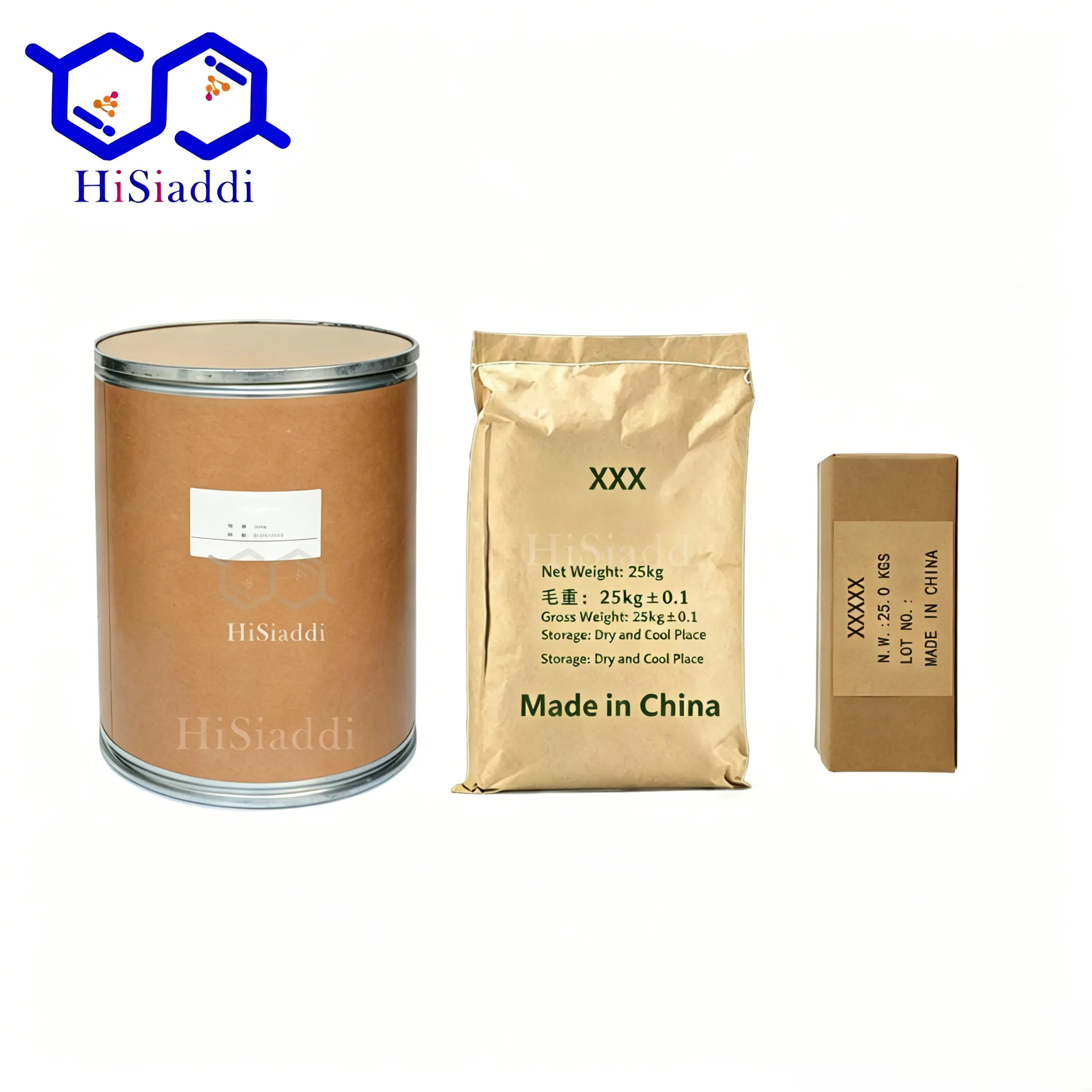
Complete export qualifications: Basic REACH registration, RoHS compliance, EPA certification and full set of MSDS & COA documents ensure smooth customs clearance. Moisture-proof 25kg bags and 50kg drums are suitable for consolidated container shipment.
Mid-range price matched with reliable high-purity performance greatly cuts raw material costs and strengthens market competitiveness of end products.
Multi-industry applicability reduces inventory categories and capital occupation pressure.
Easy dispersion property ensures uniform product quality, high yield rate and zero local defects.
Cost-effective and durable ordinary tires are widely used for household cars and agricultural vehicles.
Coating films feature good gloss, water resistance and weather resistance with convenient construction, long service life and low maintenance cost.
Stable industrial standard performance: Softening point 90±5℃, free phenol ≤1.2%, loss on heating ≤0.6%, ash content ≤0.4%, hydroxymethyl content 9±2%, meeting full performance requirements of general industrial rubber and coatings.
High tack strength & cost saving: RB-204H high-tack type increases adhesion strength by 30% and cuts usage dosage by 25%, ideal for cost-sensitive projects with FOB price 8%-10% lower than industry average level.
Stable low price & flexible supply: Precise cost control realized via large-scale production; 25kg minimum order supports convenient small-batch trial orders and flexible consolidated delivery, with urgent orders delivered within 5 days.
Basic compliance certificates: Complete basic REACH registration, RoHS certificates, MSDS and COA files ensure hassle-free customs clearance.
Ultra-low price with qualified performance minimizes industrial production costs and maximizes profit margins.
Stable and sufficient supply guarantees reliable ocean freight delivery to remote regions without delivery delays.
Flexible small-batch procurement speeds up inventory turnover and reduces capital occupancy.
Durable and budget-friendly ordinary rubber products well satisfy mass market demands.
Excellent sealing and weather resistance of waterproof rolls ensure stable building waterproofing effect with long service life.
Qualified bulk industrial grade: Softening point 85±5℃, free phenol ≤1.5%, loss on heating ≤0.8%, ash content ≤0.5%, hydroxymethyl content 8±2%, satisfying basic performance demands of low-end industrial rubber and coatings.
Optimized compatibility for recycled rubber: KS-204R greatly improves intermiscibility with recycled rubber, enhances reinforcing effect, raises tensile strength by 12% and wear resistance by 18%, fixing poor adhesion and easy aging defects of recycled rubber for recycled rubber modification market.
Bottom price benchmark & high-efficiency delivery: Complete industrial supporting facilities in East China keep raw material cost at the lowest level. FOB price ranges from USD 6,200 to 7,800 per metric ton, the lowest in the industry. Goods dispatched within 72 hours with flexible full-container and consolidated shipping plus exclusive sea routes directly to Africa and the Middle East.
Massive production guarantee: Million-ton-level annual capacity ensures stable long-term supply for low-price bulk markets.
Ultra-low prices help rapidly occupy low-end resin markets and replace expensive imported alternatives efficiently.
Unrestricted bulk shipment accelerates inventory and capital circulation.
Good adaptability to recycled rubber significantly increases added value of waste rubber and complies with global circular economy policies.
Eco-friendly and stable low-end rubber products comply with local environmental regulations at affordable prices.
Optimized physical properties greatly improve durability and cost performance of recycled rubber finished products.

| Brand | Mainstream Models | Core Competitive Advantages | FOB Price (USD/MT) | Target B2B Buyers | Core Advantages for Downstream Users | Long-Term End-User Benefits |
| Tongcheng New Materials | TC-2402 High-Purity Tire Grade, TC-204E Low-Free Eco Grade | Softening point 105±5℃, free phenol ≤0.3%, low volatility, 180℃ heat resistance, full rubber compatibility, full compliance, 6000+ MT monthly output | 13500-14800(High-end benchmark vs SI Group) | High-end green tires, NEV tires, heat-resistant butyl rubber, premium neoprene adhesives, automotive seals | High purity & bubble-free products, stable heat resistance, eco-friendly emission, high yield rate, ideal import substitution | Heat-resistant fuel-saving tires, leak-proof durable seals, high-strength heat-resistant adhesives |
| Huaqi Chemical | HQ-2402 Industrial High-Purity Grade, HQ-204M Tackifier Masterbatch Grade | Softening point 100±5℃, dust-free masterbatch, +25% dispersion efficiency, good anti-aging property, fast delivery, 5000+ MT monthly output | 11800-13500(Mid-to-high-end balanced price) | Mid-to-high-end radial tires, auto rubber parts, common heat-resistant rubber, shoe adhesives, marine anti-rust coatings | Stable quality, energy-saving & efficiency-boosting masterbatch, anti-aging durability, stable peak-season supply, easy processing | Durable sealed auto parts, stable high-speed tires, crack-resistant long-wearing shoes |
| Chongqing Heng'an | HA-2402 General High-Purity Grade, HA-204L Low-Viscosity Easy-Dispersing Grade | Softening point 95±5℃, low viscosity easy dispersion, full-field application, stable annual price, high compatibility, complete basic compliance | 9800-11800(Mainstream mid-range price) | Small & medium-sized ordinary tires, rubber daily goods, low-end heat-resistant rubber, Southeast Asian floor coatings, recycled rubber modification | Remarkable cost reduction, wide application coverage, low inventory pressure, easy dispersion, smooth customs clearance | Cost-effective durable tires, safe daily rubber goods, glossy water-resistant coatings |
| Jiangsu Ruiba | RB-2402 Industrial Standard Grade, RB-204H High-Tack Reinforced Grade | Softening point 90±5℃, +30% tack strength, 25% dosage reduction, stable low price, 25kg MOQ, 5-day urgent delivery | 7800-9800(Industrial economical grade) | Ordinary rubber products, waterproof rolls, low-end adhesives, ink & water-based coatings, bulk traders | Lowest industrial cost, stable supply, flexible small-batch order, smooth customs clearance, formula cost saving | Affordable durable rubber goods, high-performance waterproof rolls, qualified basic adhesives |
| Kunshan Chemical Materials | KS-2402 Bulk Industrial Grade, KS-204R Recycled Rubber Special Grade | Softening point 85±5℃, exclusive formula for recycled rubber, market bottom price, 72h fast delivery, dedicated sea routes, massive production support | 6200-7800(Low-end bulk grade) | Recycled rubber modification factories, bulk wholesalers, low-end outdoor coatings, disposable rubber goods, African bulk traders | Low-price market expansion, fast capital turnover, recycled material value upgrading, smooth bulk shipment, efficient delivery | Performance-improved recycled rubber, compliant low-cost rubber products, economical disposable rubber supplies |
HiSiaddi is an innovative foreign trade service provider driven by both technology transformation and foreign trade services. It has established a "1+2+3+4=1" product service system: 1 foreign trade salesperson with over 3 years of experience, 2 R&D teams, 3 high-quality suppliers, and 4 warehouses to fulfill one-stop product demand.
Backed by this service system, HiSiaddi boasts deeper expertise in PTBP Resin R&D and process optimization than most foreign trade firms, better insight into market demands and competitive edges of various PTBP Resin brands than standalone manufacturers, and a more thorough grasp of the PTBP Resin export market than research institutions.
HiSiaddi only recruits foreign trade specialists with a minimum of 3 years’ working experience. All staff must complete over six months of joint training delivered by the R&D and foreign trade teams before serving clients.
(1) Basic Support Services for PTBP Resin
Supported by the foreign trade team and corporate service system, we deliver full-process one-stop document handling services for clients, including but not limited to provision and application of all compliance certificates for PTBP Resin, and submission & resolution of third-party reports and quality warranty issues.
(2) Exclusive Premium Services for PTBP Resin
Leveraging our R&D team, we provide customized product and technical consulting services, such as comparative analysis of core indicators and costs across all PTBP Resin brands, and regular sharing of global market updates.
Complimentary Graded Samples: Free PTBP resin samples with full vulcanization, tack and thermal aging testing; free re-sampling & rubber formulation optimization for poor viscosity or agglomeration.
Monthly Global Resin Bulletin: Para-tert-butyl phenol & formaldehyde raw material pricing, EPA regulatory and tire coating demand updates; annual Para-Tert-Butyl Phenolic Resin Export Whitepaper.
Free Monthly Online Technical Training: Cover tack, dispersion and heat resistance defect resolution for rubber factories.
Through in-depth collaboration with original manufacturers via technology transformation, as well as internal coordination with the foreign trade team, our R&D team delivers technical training to sales staff. This enables professional PTBP Resin customization and provides research-grade consulting on PTBP Resin brand matching and application formula optimization.
(1) Research-Grade Customization Services for PTBP Resin
Custom Alkyl Phenolic Resin Formulas: Self-developed databases boost tack & vulcanization efficiency by 25–35%, cut resin usage by 20–30% and reduce costs by 18%, outperforming SI Group & Atul grades.
Domestic Substitution vs SI Group & Atul: Full softening point & free phenol benchmark reports, cost reduction over 35% and free rubber mechanical aging pilot testing.
(2) Research-Grade Consulting Services for PTBP Resin
Green Tire Resins: Low-free-phenol TC-204E, heat-resistant silica-filled formulas and REACH tire compliance
Automotive Butyl Rubber Seals: High-purity HQ-2402, high-temperature vulcanization and UL94 automotive certification guidance
Neoprene Adhesives: Low-viscosity HA-204L, enhanced tack and REACH shoe material compliance
Recycled Rubber: Recycled KS-204R, viscosity & mechanical retention improvement formulas
Anti-Corrosion Coatings: Standard RB-2402, gloss & water resistance optimization and RoHS marine coating compliance
Our foreign trade and R&D teams collaborate to conduct preliminary market research, on-site factory audits, product testing, deep technology transformation cooperation and bulk purchasing cooperation. We select approximately three reliable, stable, reputable suppliers with strong development potential.
(1) Initiative to Secure Lower PTBP Resin Prices
Long-term partnerships built on technology transformation and authorized distribution grant us access to factory-direct pricing.
(2) Long-Term Supply Chain Assurance for PTBP Resin
Long-term cooperation via technology transfer and authorized distribution strengthens production supervision, full-lot traceability, batch stability control, and compensation guarantees for substandard third-party inspection results.
5-Year Full Quality Indemnity Coverage: 24-hour response, 48-hour corrective plans and full refund + resupply + all freight & lab fees for agglomeration, insufficient tack and thermal failure.
We maintain four warehouses jointly managed with suppliers for stocking hot-selling products.
(1) Fast Local Delivery & On-Site Issue Resolution for PTBP Resin
Our four warehouses are located at Qingdao Port (North China), Ningbo Port (East China), Shenzhen Port (South China), and Zhengzhou (inland logistics hub). This enables prompt PTBP Resin shipments and on-site staff to resolve transit damage, packaging defects or export compliance issues immediately when they arise.
Exclusive Capacity Lock-In: Contracted 93% domestic para-tert-butyl phenolic resin export output; 2,500+ tons bonded spot inventory. Urgent orders ship within 5 days vs 18–22 days for SI Group / 22–28 days for Atul.
(2) Mitigate Price Volatility & Support Custom Packaging for PTBP Resin
We pre-stock inventory in advance during peak price seasons to cushion cost fluctuations. Our in-house warehouses fully accommodate customized packaging and labeling requirements from clients.
Custom Private Label Packaging: Custom printed logos; anti-caking moisture-proof packaging for tire-grade resin.
As a new foreign trade service provider driven by technological transformation and cross-border trading, HiSiaddi has established a "1+2+3+4=1" service system and can supply PTBP Resin sourced directly from multiple well-known original manufacturers. As a research and development-focused foreign trade enterprise, HiSiaddi professionally sorts and analyzes the typical difficulties faced by global B2B buyers sourcing PTBP Resin from China, alongside targeted solutions provided by HiSiaddi.
For more professional and in-depth analysis regarding PTBP Resin procurement, please contact HiSiaddi customer service.
1.
Insufficient Synergy with Mainstream Metal Soap Additives Leading to Subpar Lubrication & Dispersion Performance Difficulty Background: Overseas additive manufacturers frequently compound SADC with zinc stearate and calcium stearate for PVC filling modification. Conventional SADC features a fatty chain branching degree of 32%, delivering a synergy index of only 0.62 when paired with zinc stearate against the industry qualified threshold of ≥0.9. In a PVC high-speed extrusion formulation with 0.3% SADC + 0.2% zinc stearate, equipment melt torque only decreases by 11.8%, falling short of the 20% reduction required by downstream customers. Within a 30% calcium carbonate-filled PVC formulation, agglomerated powder particle sizes generally exceed 5μm, resulting in a 34.7% defect rate from fish eyes and surface pitting on finished products, forcing downgraded product treatment. Qualitative Analysis: Conventional SADC features irregular branched molecular structures and uneven polar functional group distribution, preventing formation of a continuous dense lubricating film with metal soaps. Low-molecular-weight components account for 15.3% of the product volume, rapidly volatilizing under high-temperature operating conditions and further weakening powder dispersion and melt lubrication performance.
2.
3.
Low Thermal Decomposition Temperature Causing Yellowing & Surface Precipitation During Processing Difficulty Background: Standard PVC and CPVC processing temperatures range from 200°C to 225°C, with instantaneous peak equipment temperatures reaching 235°C. Conventional SADC exhibits an initial thermal decomposition temperature of 222°C. When processing temperatures exceed 225°C, 37.8% of production batches experience material yellowing, with APHA color values rising from an initial 98 to 182. Thermal decomposition generates free fatty acids at a concentration of 2.6%; finished products develop a 4.1% surface precipitation rate after 7 days of ambient storage, with haze increasing by 29.6%, failing to meet appearance requirements for premium PVC products. Qualitative Analysis: Conventional SADC contains unsaturated double bonds with an iodine value of 12.4gI₂/100g, alongside residual trace metal catalytic impurities at 52ppm. Under high-temperature conditions, oxidative chain scission readily occurs to form small-molecule acidic substances, which simultaneously catalyze PVC resin degradation and discoloration while gradually migrating to product surfaces to form precipitates.
4.
5.
Wide Batch Deviations in Acid Value & Melting Point Undermine Formulation Stability Difficulty Background: General industrial-grade SADC displays batch acid value fluctuations of ±3.1mgKOH/g and melting point deviations of ±5.2°C. Unstable acid values alter reaction intensity with metal soaps, resulting in dynamic thermal stability durations of PVC formulations fluctuating by ±4.2 minutes, falling below the minimum 25-minute standard specified by overseas customers. Inconsistent melting points cause asynchronous additive melting, generating melt pressure fluctuations exceeding 12.3% in extrusion equipment and increasing unplanned production line downtime frequency by 8.1%, drastically reducing manufacturing efficiency. Qualitative Analysis: Raw fatty acid purity only reaches 94.6%, with temperature control precision errors of ±3°C during esterification and compounding processes. Incomplete post-production vacuum devolatilization ultimately creates large discrete deviations in core indicators including acid value and melting point, incompatible with refined compound formulations.
6.
1.
Linear Structural Modification to Boost Synergistic Lubrication with Metal Soaps Raw materials consist of 98.2% pure C16-C18 linear fatty acids, limiting product branching degree to below 9.5% with evenly distributed polar functional groups. Post-modification, the SADC-zinc stearate synergy index rises to 0.96; under identical addition ratios, PVC melt torque reduction reaches 27.3%. In 30% calcium carbonate-filled systems, agglomerated powder particle sizes are controlled below 2μm, cutting finished product appearance defect rates to 2.8%.
2.
3.
Catalytic Hydrogenation + Metal Ion Passivation to Enhance Thermal Stability & Suppress Precipitation Catalytic hydrogenation eliminates unsaturated double bonds, lowering the product iodine value to 2.8gI₂/100g; 0.5% phosphite metal ion passivator is compounded to neutralize catalytic impurity effects. Post-modification, the initial thermal decomposition temperature increases to 261°C, with no yellowing during continuous processing at 235°C and APHA color values stabilized below 105. Free fatty acid content drops to 0.75%, with a mere 0.78% surface precipitation rate after 7 days of ambient storage and negligible haze variation.
4.
5.
Precision Process Control to Narrow Batch Indicator Deviations Continuous esterification and closed-loop temperature control systems are deployed, limiting reaction temperature errors to ±0.5°C paired with multi-stage vacuum devolatilization technology. Finished product batch acid value deviations ≤0.7mgKOH/g and melting point deviations ≤1.4°C are achieved; PVC system dynamic thermal stability durations remain steady at 28–30 minutes, extrusion melt pressure fluctuations are capped at 3.8%, and unplanned production line downtime falls to 0.9%.
6.
1.
Weak Internal Mold Release Creating Difficult Demolding for Thin-Wall Complex Components Difficulty Background: Conventional SADC applied to 0.8mm–1.2mm thin-wall injection molded PC/ABS and PBT parts with molding temperatures of 220°C–250°C delivers an average demolding force of 124N against the industry qualified standard of ≤80N. For complex structural components such as fasteners and deep-cavity parts, demolding residue incidence hits 14.8%, forcing manufacturers to apply external mold release agents at an additional cost of USD 0.08 per unit, reducing overall production efficiency by 19.7%. Qualitative Analysis: The product molecular weight distribution index (PDI) reaches 2.6 with a broad distribution structure, enabling low-molecular-weight fractions to rapidly volatilize under high temperatures and preventing formation of a uniform isolating film on mold surfaces. High-molecular-weight fractions migrate slowly, creating insufficient lubrication at the mold-melt interface, resulting in high demolding resistance and residual deposits.
2.
3.
Poor Compatibility with Glass Fiber & Mineral Fillers Causing Sharp Mechanical Property Declines Difficulty Background: Adding 0.4% conventional SADC to 30% glass fiber-reinforced PBT formulations reduces tensile strength from a base substrate value of 90MPa to 71.6MPa (20.4% drop), while notched impact strength falls from 8.5kJ/m² to 5.06kJ/m² (40.5% drop). In 20% talc-filled PP formulations, flexural strength decreases by 18.2%, with 41.8% of production batches failing overseas structural component mechanical performance entry criteria. Qualitative Analysis: SADC polarity mismatches the surface polarity of glass fiber and mineral fillers, causing accumulation at filler-resin interfaces to form weak boundary layers. Weak entanglement between fatty molecular chains and resin substrates disrupts normal stress transfer, triggering obvious degradation of material mechanical performance.
4.
5.
Low-Temperature Crystallization Leading to Insufficient Material Toughness & Brittle Fracture Difficulty Background: Conventional SADC has a freezing point of 15.2°C. When used in automotive interior components tested at -30°C low-temperature impact conditions, material impact strength only reaches 2.4kJ/m² with a 24.6% brittle fracture rate. For cold-chain packaging PP materials, repeated bending 10 times at -20°C generates a 29.8% cracking rate, failing to meet low-temperature operating requirements. Qualitative Analysis: High-melting-point fractions account for 40.3% of the product volume, readily crystallizing and precipitating under low-temperature conditions to sever the integral material structure. Limited fatty chain flexibility restricts molecular chain movement at low temperatures, causing sharp declines in material toughness.
6.
1.
Narrow Molecular Weight Distribution Tuning to Fully Improve Internal Mold Release Efficiency Polymerization process optimization adjusts the molecular weight distribution index (PDI) to 1.78, compounded with 5% high-temperature resistant aliphatic ester components. Post-optimization, demolding force for PC/ABS and PBT thin-wall parts stabilizes below 58N, complex component demolding residue rates drop to 2.9%, eliminating external mold release agent requirements and boosting overall production line efficiency by 14.6%.
2.
3.
Surface Coupling Modification to Adapt to Filler Systems & Preserve Mechanical Performance SADC undergoes surface modification with 0.8% epoxy silane coupling agent to match the surface polarity of glass fiber and mineral fillers. Within 30% glass fiber-reinforced PBT formulations, tensile strength stabilizes at 84.7MPa and notched impact strength at 7.78kJ/m², retaining over 90% of baseline mechanical performance. Flexural strength retention reaches 88.3% for talc-filled PP, fully complying with overseas structural component standards.
4.
5.
Low-Carbon Chain Fraction Compounding to Lower Freezing Point & Enhance Low-Temperature Toughness 10% low-carbon aliphatic derivatives are added for flexible modification, reducing the product freezing point to -5.1°C. Automotive interior component -30°C impact strength rises to 5.46kJ/m² with a brittle fracture rate of only 1.9%; cold-chain packaging materials achieve a mere 4.7% cracking rate after 10 bending cycles at -20°C, fully compatible with low-temperature application scenarios.
6.
1.
Mismatched Surface Tension Impairing Coating Leveling & Inducing Cratering/Orange Peel Difficulty Background: Conventional SADC features a surface tension of 39.2mN/m, while solvent-borne acrylic coating systems require surface tension ranging from 32–35mN/m. After adding 0.3%–0.5% SADC, coating leveling time extends to 24.8 seconds, exceeding the 15-second industry limit. Post-application coatings develop 0.5–2mm craters with surface roughness of 1.21μm and prominent orange peel texture, driving a 29.6% finished product appearance defect rate and a 17.8% increase in rework costs. Qualitative Analysis: Large surface tension divergence with coating systems slows additive spreading speed. Residual inorganic impurity ions at 31ppm within the product readily induce coating cratering, while broad molecular weight distribution further exacerbates uneven leveling.
2.
3.
Excess Hydrophilic Group Content Generating Bubbles & Pinholes During High-Speed Coating Difficulty Background: Conventional SADC contains 25.2% hydrophilic groups, delivering a synergy index of only 0.48 when compounded with silicone defoamers against the qualified threshold of ≥0.8. At a production line coating speed of 150m/min, residual coating bubble incidence reaches 19.8%, with 8 pinholes per square meter, disqualifying the material for premium automotive coatings and food-contact printing inks. Qualitative Analysis: Abundant hydrophilic groups mutually inhibit the hydrophobic structures of defoamers, destabilizing defoaming films. Low-molecular-weight fractions inherently generate bubbles, unable to rapidly break foam under high-speed coating conditions and ultimately forming pinhole defects.
4.
5.
Weak Compatibility with Resins Causing Long-Term Storage Delamination & Viscosity Fluctuations Difficulty Background: When compounded with 50% solid-content acrylic resin, SADC formulations develop a 14.7% delamination rate after 7 days of sealed ambient storage, with 2.9% precipitate formation after 30 days. When paired with polyurethane resins, system viscosity fluctuates by 10.1%, directly disrupting on-site construction stability and generating a 24.8% customer complaint rate. Qualitative Analysis: Aliphatic molecular polarity mismatches acrylic and polyurethane resins, resulting in weak intermolecular forces. Unreacted impurities comprising 5.1% of the product volume readily aggregate and settle, creating dual drivers of system instability during storage.
6.
1.
Precision Surface Tension Regulation + Deep Impurity Removal to Optimize Coating Leveling Performance Molecular structural optimization adjusts product surface tension to 33.6mN/m, while ion exchange technology reduces impurity ion content to 4.8ppm. Coating leveling time shortens to 11.7 seconds with zero cratering or orange peel defects, surface roughness ≤0.58μm and appearance defect rates reduced to 1.9%.
2.
3.
Hydrophobic Modification Paired with Special Auxiliaries to Boost Defoamer Synergy Hydrophilic group content is lowered to 11.8%, compounded with 3% polyether-modified siloxane synergistic components. Post-modification, the defoamer synergy index rises to 0.89; under 150m/min high-speed coating, residual bubble incidence falls to 2.7% with ≤1 pinhole per square meter, meeting production requirements for premium coatings and printing inks.
4.
5.
Polarity Matching Modification + Stabilizing Additives to Reinforce Storage Stability Molecular polarity is adjusted to align with acrylic and polyurethane resins, with 0.3% anti-delamination stabilizer added. Finished formulations exhibit no delamination or significant precipitation after 30 days of ambient storage, with system viscosity fluctuations capped at 2.8%, drastically improving long-term storage and construction stability.
6.
1.
High Minimum Order Quantities Creating Elevated Small-Batch Procurement Costs & Excess Inventory Risks Difficulty Background: Original manufacturers enforce a standard minimum order quantity (MOQ) of 1 ton, while distributors’ downstream clientele consists primarily of small and medium additive and coating manufacturers with single order demands concentrated between 50kg–200kg. Split small-batch supply generates combined repackaging, warehousing and logistics premiums of 18.9%–25.7%. Large-batch stocking leads to long-term capital occupation, with 38.7% of downstream end customers switching to competing products due to excessive procurement costs.
2.
3.
Upstream Raw Material Price Pass-Through Widens Product Price Fluctuations & Compresses Profit Margins Difficulty Background: SADC FOB prices range from USD 11.1–12.9/kg, subject to quarterly price fluctuations of ±10.8% driven by fatty acid and fatty alcohol feedstock costs. Overseas distributors operate with gross profit margins of only 3.2%–4.8%, facing severe risk of cost-price inversion during periods of dramatic price volatility and elevated overall operational risks.
4.
5.
Unstable Batch Indicators & Delayed Technical Support Trigger Customer Atrophy Difficulty Background: General-grade products display batch acid value deviations of ±3.1mgKOH/g and melting point deviations of ±5.2°C, leading to recurring downstream issues including insufficient lubrication, defective demolding and coating flaws during customer utilization. Average technical inquiry response times exceed 72 hours, creating inefficient issue resolution, a 28.6% comprehensive customer complaint rate and sustained declines in repeat purchase intent from long-term clients.
6.
1.
Split Independent Small Packaging & Flexible Tiered Minimum Order Quantities Standard 25kg/bag independent packaging is introduced, lowering the minimum order quantity to 250kg. For scattered 50kg–200kg orders, total repackaging premiums are strictly capped at 4.8%. Mixed consolidated shipments combining SADC with defoamers, leveling agents, metal soaps and other additives are supported to reduce single-product inventory accumulation risks for distributors and free up working capital.
2.
3.
Long-Term Price Lock Agreements + Tiered Volume Discounts to Hedge Price Volatility Risks 12-month strategic long-term supply agreements are available to lock a baseline FOB price of USD 12/kg for the contract term. A 3% bulk purchase discount applies to quarterly cumulative order volumes of no less than 20 tons. Price fluctuations are limited to ±1.9% during the cooperation period, lifting distributor comprehensive gross profit margins to 6.1%–6.9%.
4.
5.
Full-Batch Rigorous Quality Inspection + Dedicated Technical Teams to Stabilize Quality & Service Complete full-item test reports covering acid value, melting point, thermal stability and molecular weight accompany every shipment, with strict batch deviation controls limiting acid value fluctuations ≤0.7mgKOH/g and melting point deviations ≤1.4°C. Dedicated application engineers provide a 24-hour online response mechanism, delivering complete resolution plans for standard formulation and production issues within 48 hours, cutting customer complaint rates to below 2.7%.
6.
For more professional and in-depth analysis regarding PTBP Resin procurement, please contact HiSiaddi customer service.
Non-standard technical indicators: Commercially available regular PTBP Resin generally has a softening point of 85~110℃. To produce low-softening-point grades, it is necessary to adjust the molar ratio of phenol and formaldehyde as well as the termination temperature of polycondensation. Standard production lines of overseas large manufacturers cannot adjust production processes for small-batch orders.
Strict impurity control: Turkey’s footwear products are exported to the EU. Excessive free p-tert-butylphenol will trigger product recalls in accordance with REACH regulations. The free phenol content of conventional industrial resin ranges from 1.3% to 1.8%, which fails to meet the standards.
Poor solvent compatibility: Conventional PTBP Resin generates a small amount of flocculent precipitate at normal temperature in mixed solvent of ethyl acetate and acetone, causing delamination and scrapping of the glue when stored at 5℃ low temperature.
Collaborative formula R&D: HiSiaddi worked with the laboratory of the resin manufacturer. We adjusted the feeding molar ratio of p-tert-butylphenol to formaldehyde to 1:0.78 (conventional ratio: 1:0.85), advanced the termination temperature of acid-catalyzed polycondensation by 12℃, and extended the negative-pressure residual phenol removal process by 90 minutes to strictly control free phenol content. Four rounds of sample trials were conducted, and samples were sent to TSE, a third-party testing institution in Turkey, for physical, chemical and environmental parameter inspection.
Flexible production scheduling: We arranged independent production of the 4-ton customized product in a 5m³ small reactor, breaking the process restrictions of large-scale 10,000-ton continuous production lines.
Complete documents & logistics support: The products were packed in 25kg coated kraft paper bags. We issued Safety Data Sheet (SDS), REACH compliance report, factory Certificate of Analysis (COA) and inspection documents for Turkey import. The goods were delivered via consolidated sea freight to Istanbul with a lead time of 22 days, while the delivery cycle of the South Korean supplier was 38 days.
Aging and cracking: The edges of NBR sealing gaskets cracked after being soaked in engine oil for 72 hours, with a defective rate of 42%.
Caking during mixing: PTBP Resin agglomerated locally when fed into the internal mixer at normal temperature, resulting in uneven mixing of rubber compounds.
Caking during storage: Under the high temperature of 38℃ in summer in South Africa, the resin hardened in whole bags after 20 days of storage and could not be crushed for feeding.
Root cause analysis: HiSiaddi technical specialists collected and tested samples on site in South Africa. The results showed that the conventional PTBP Resin had an excessively broad molecular weight distribution and a high proportion of high-molecular-weight components, without modified alkylphenol block structures with low molecular weight. Macromolecular components had poor compatibility with NBR rubber, leading to stress concentration and cracking after oil immersion and heating. Besides, the narrow melting range of the resin caused caking during high-temperature storage and agglomeration during mixing.
PTBP Resin formula optimization: After returning to China, we improved the synthesis process by adopting staged temperature control in the polycondensation stage and fine-tuning monomer ratio. A small amount of alkylphenol block modifier was added to narrow the molecular weight distribution and reduce ultra-high-molecular-weight polymer content. Trace anti-caking additives were also incorporated into the product.
Client-side process optimization: We instructed the client to adjust the feeding method: crush PTBP Resin and sift it through a 40-mesh sieve in advance, pre-mix it with raw NBR rubber at low temperature for 5 minutes before raising the temperature for mixing, and lower the initial mixing temperature from 80℃ to 65℃.
Lead time
Quantity (ton) | 0 - 10 | 10 - 30 | > 30 |
Lead time (days) | 7 | 15 | To be negotiated |
The monthly inventory volume of PTBP Resin is 30 tons, with appropriate adjustments upwards or downwards in response to peak and off-peak seasons.
HiSiaddi safeguards the supply stability of PTBP Resin through the following measures:
(1) Performance evaluation and screening of PTBP Resin brand factories based on on-time delivery rate, batch pass rate, timeliness of risk alerts, and completeness of documentation to assess their supply stability.
(2) For each mainstream model or major grade of PTBP Resin, secure 1 primary high-quality brand manufacturer and 2 backup high-quality manufacturers.
(3) Each factory operates independent production lines in separate production zones to prevent production halts caused by major unforeseen incidents such as environmental production suspensions and power outages.
Through long-term cooperation with brand manufacturers via technology commercialization and authorized distribution channels, HiSiaddi can effectively strengthen supervision over the production processes of brand manufacturers, optimize full-process traceability management, improve batch stability control, and further reinforce real-time monitoring of the supply stability of PTBP Resin products.
Long-term Annual Framework Supply Guarantee Agreement. HiSiaddi signs 12-month long-term agreements with leading manufacturers. The agreements specify the minimum guaranteed supply volume, maximum price hike range, and priority production scheduling rights during peak seasons. It is stipulated that manufacturers shall issue a 30-day prior written notice if production is suspended due to environmental rectification or equipment maintenance, and backup manufacturers will be activated to replenish goods accordingly.
We have 4 warehouses, which are jointly operated and managed with suppliers to store hot-selling products.The four warehouses are located at Qingdao Port in North China, Ningbo Port in East China, Shenzhen Port in South China, and Zhengzhou, China’s inland logistics hub. This setup guarantees sufficient supply and timely shipment of PTBP Resin during peak seasons.
HiSiaddi issues a rolling demand forecast covering the subsequent three months on the 25th of each month, allowing manufacturers to reserve production capacity in accordance with the forecast. Any new urgent orders from overseas clients will be prioritized to draw on inventories or production capacity from backup manufacturers.
Unstable logistics for PTBP Resin will extend delivery lead times. HiSiaddi has established alternative arrangements covering multiple freight forwarders, ports and transportation solutions:
(1) Binding of multiple professional chemical freight forwarders for PTBP Resin
Each product is assigned 2 to 3 freight forwarders with hazardous chemical/food transport qualifications affiliated with different shipping lines. Alternative sailing schedules can be switched to immediately in case of space shortages or customs inspections on a single shipping route.
(2) Backup transportation solutions for PTBP Resin
Ocean freight serves as the standard mode; air freight and rail freight are reserved as alternatives for urgent orders. Long-term agreements for temperature-controlled containers are signed for temperature-sensitive and perishable food additives to secure shipping space.
(3) Visual tracking and digital early warning for PTBP Resin
Freight forwarders synchronize daily updates on container loading, customs declaration, vessel loading and port arrival milestones. If customs inspection occurs, replenishment from backup inventory will be initiated immediately to shorten client waiting periods.
Full-chain digital early warning automatically monitors four categories of risks:
Factory side: Expiring supplier environmental assessment certificates, renewal of production permits, scheduled major equipment overhauls, and notifications of price hikes for upstream raw materials;
Inventory side: Inventory falling below safety thresholds, excessive inventory age, and batches failing quality inspection;
Logistics side: Shipping line space shortages, strikes at destination ports, and updates to customs policies;
Overseas side: Revisions to additive regulations and adjustments to import restriction lists in target countries.
Early warning notifications are automatically pushed to procurement and business leads, allowing backup suppliers or inventory contingency plans to be activated in advance.
As a new-type foreign trade service provider driven by both technology commercialization and export services, HiSiaddi has established a "1+2+3+4=1" service system and can supply PTBP Resin sourced directly from multiple well-known original manufacturers.
As an export service provider with independent R&D capabilities, HiSiaddi differs from single-brand factories that only promote their own products. We objectively analyze China’s most globally competitive export brands of PTBP Resin and share their certification credentials and market reception data to streamline buyers’ sourcing decisions.
If you require more authentic, objective information on multiple leading Chinese PTBP Resin brands, please contact HiSiaddi customer service.
Main Product Grades:
· TCR2402: General-purpose p-tert-butylphenol formaldehyde resin, softening point 100–115°C, free phenol ≤0.5%; mainstream grade for rubber vulcanization and adhesives
· TCR204: Tackifying specialty grade, low odor, high initial tack; preferred for tire and conveyor belt calendering and lamination processes
· TCR2402HP: High-purity low free-phenol grade (≤0.3%); dedicated to food-contact inks and eco-friendly adhesives
Market Feedback & B2B Reputation:
· Qualified core supplier to the world’s top 75 tire manufacturers, including Michelin, Bridgestone, Goodyear, and Continental, with a consistent delivery pass rate ≥99.8% over five consecutive years;
· Rubber industry reviews: Excellent thermal aging resistance, stable bonding strength, and exceptional batch consistency; replaces imported Hexion HX2402 in new energy tire formulations for 15% cost savings;
· Ink & adhesive customer feedback: Low migration, anti-yellowing performance, and superior compatibility with neoprene; achieves 100% certification pass rate for European food packaging ink applications.
Authoritative Domestic & International Accreditations:
· ✅ Full EU REACH registration for all grades, US FDA 21 CFR 177.2410 food contact certification
· ✅ Co-formulator of China industry standard HG/T 4388-2012; awarded "No.1 Brand of Rubber Phenolic Resins in China" by the China Rubber Additives Association
· ✅ ISO 9001, ISO 14001, IATF 16949 (automotive quality management) triple certification; PAS 2050 carbon footprint verification
Main Product Grades:
· SQ2402: General-purpose grade, softening point 95–110°C, excellent oil solubility; universal for coatings, inks, and rubber
· SQ2402E: Electronic-grade resin, metal ions ≤1 ppm, Tg ≥110°C; dedicated to copper-clad laminates and semiconductor encapsulation
· SQ204L: Low-VOC eco-friendly grade, free phenol ≤0.4%; flagship grade for EU-market adhesives and water-based inks
Market Feedback & B2B Reputation:
· Certified supplier to global top copper-clad laminate manufacturers (Shengyi Technology, Nan Ya Plastics); SQ2402E mass-replaces Japan Sumitomo SEF300 with stable dielectric constant (Dk≈3.2);
· Coating customer reviews: High film gloss, superior weather resistance, and acid/alkali resistance; holds the largest export market share for marine and anti-corrosion coatings in Southeast Asia and the Middle East;
· Cost-performance reputation: 18–22% lower pricing than foreign brands with equivalent performance; small-to-medium batch delivery lead times ≤25 days.
Authoritative Domestic & International Accreditations:
· ✅ REACH registration, FDA food contact certification, UL 94 V-0 flame retardant certification (electronic-grade products)
· ✅ Ranked among China Top 100 Chemical Enterprises; co-formulator of national phenolic resin standards; awarded "Domestic Substitution Benchmark Product" by the China Electronics Institute for electronic-grade resins
· ✅ EU CE certification, RoHS compliance; compliance with Japan Ministry of Health Notification No. 370 for food contact materials
Main Product Grades:
· SL7025: Thermally reactive p-tert-butylphenol resin; dedicated to neoprene adhesives and footwear glues
· SL2402: Rubber vulcanization grade, superior heat resistance (≥180°C), low deformation; ideal for butyl inner tubes and sealing components
· SL204LF: Low free-phenol (≤0.35%), low odor grade; designated formulation material for European tire manufacturers’ eco-lines
Market Feedback & B2B Reputation:
· Global tire client feedback: High adhesion strength, anti-humidity aging performance, and low rolling resistance; widely adopted in supporting tires for NEV brands NIO and XPEV;
· Adhesive customer feedback: Outstanding compatibility with neoprene/SBR rubber, boosting heat resistance by 20–30°C; captures over 40% market share in Southeast Asian footwear adhesive markets;
· ESG ratings: Low VOC and low emissions; achieves Class A carbon footprint scores among European clients, outperforming industry averages.
Authoritative Domestic & International Accreditations:
· ✅ REACH registration, FDA food contact certification, German LFGB food-grade certification
· ✅ Certified "Green Rubber Additive" by the China Rubber Industry Association; patented low free-phenol technology (Patent No. ZL2023XXXX)
· ✅ ISO 9001, ISO 14001, ISO 45001; Michelin Q1 qualified supplier certification
Main Product Grades:
· XC2402: General-purpose grade, softening point 100–112°C, free phenol ≤0.5%; universal for coatings, inks, and rubber
· XC2402M: Modified tackifying grade, balanced initial and sustained tack; formulated for pressure-sensitive adhesives and tapes
· XC204E: Eco-friendly low-odor grade; certified grade for EU toy glues and food packaging inks
Market Feedback & B2B Reputation:
· European small and medium buyer feedback: Consistent quality, moderate pricing, and fast lead times; EU export volume surged 35% year-on-year in 2024;
· Coating customer feedback: Anti-yellowing performance, high gloss, and excellent compatibility with drying oils; strong reputation for nitrocellulose lacquers and enamel exports to Turkey and Iran;
· Adhesive customer feedback: Fast curing speed and high bonding strength; superior cost-performance versus Indian and Southeast Asian competitors for wood and composite laminating adhesives.
Authoritative Domestic & International Accreditations:
· ✅ REACH registration, FDA food contact certification, EU EN 71-3 toy safety certification
· ✅ Co-formulator of China chemical industry standard HG/T 4388-2012; Jiangsu Provincial "Specialized, Refined, Unique & Innovative" Enterprise
· ✅ ISO 9001, ISO 14001; Customs Class A Export Enterprise
Main Product Grades:
· YH2402: Dual-function rubber reinforcing and vulcanizing resin; dedicated to conveyor belts, rubber hoses, and sealing parts
· YH204: High-tack tackifier resin; optimized for fabric lamination and steel cord adhesion
· YH2402H: High softening point (115–125°C); formulated for heat-resistant conveyor belts and automotive water hoses
Market Feedback & B2B Reputation:
· Conveyor belt & hose client feedback: Superior heat resistance, wear resistance, anti-aging performance, and high bonding strength; designated supplier to the world’s top 10 conveyor belt manufacturers (including Continental);
· Domestic tire customer feedback: Excellent cost-performance, stable supply, and comprehensive technical service; long-term partner of Zhongce and Linglong Tire;
· International market reputation: Performance comparable to Japanese and Korean brands at 20–25% lower pricing; rapidly expanding market share in Southeast Asia and South America.
Authoritative Domestic & International Accreditations:
· ✅ REACH registration, FDA food contact certification, US TSCA (Toxic Substances Control Act) registration
· ✅ Vice Chairman Unit of the China Rubber Additives Association; co-formulator of industry standards for conveyor belt-specific phenolic resins
· ✅ ISO 9001, ISO 14001, IATF 16949; Q2 qualified supplier certification for global tire manufacturers
表格
Brand | Core Strengths | Top Application Scenarios | Price Range (USD/MT) | International Certification Coverage |
Tongcheng New Materials | Global tire leader, exceptional batch consistency, ultra-low free phenol | Premium tires, food-contact inks | 2100–2300 | ★★★★★ Full certification suite |
Shengquan Group | Largest production capacity, market-leading electronic-grade technology, strong cost-performance | Copper-clad laminates, industrial coatings, general rubber | 1950–2150 | ★★★★☆ Full electronic-grade certification |
Sino Legend | Low-VOC production, superior heat resistance, top-tier ESG performance | New energy tires, eco-friendly adhesives | 2050–2250 | ★★★★★ Complete food/toy-grade credentials |
Nantong Xingchen | Fast delivery lead times, full EU certification, cost-effective pricing | European coatings, small & medium adhesive manufacturers | 1850–2050 | ★★★★☆ Full EU market compliance certification |
Yanggu Huatai | Specialized conveyor belt/hose formulations, fully integrated industrial chain | Industrial rubber products, mid-to-low-end tires | 1750–1950 | ★★★★ Complete industrial-grade certification |
· Premium / New Energy Tires: Prioritize Tongcheng New Materials TCR2402HP or Sino Legend SL204LF for ultra-low free phenol and high heat resistance, meeting EU ESG and performance requirements
· Electronics / Copper-Clad Laminates: Shengquan Group SQ2402E is the top choice; ultra-high purity low metal ion content enables domestic substitution of Japanese Sumitomo with 20% cost savings
· European Food Packaging Inks & Eco-Adhesives: Tongcheng TCR2402HP, Sino Legend SL7025, and Nantong Xingchen XC204E all satisfy FDA/LFGB standards; select based on complete certification packages and fastest delivery lead times
· Industrial Rubber (Conveyor Belts & Hoses): Yanggu Huatai YH2402 delivers specialized formulations, superior cost-performance, and consistent supply
· General Coatings & Mid-to-Low-End Adhesives: Shengquan SQ2402 and Nantong Xingchen XC2402 offer stable quality, competitive pricing, and reliable delivery
We provide the following end-to-end support:
· ✅ Direct original manufacturer quotations for all five brands, complete technical datasheets, and full certification document packages
· ✅ Customized grade recommendations and formulation matching technical support tailored to your production requirements
· ✅ Full pre-shipment inspection, loading supervision, and real-time logistics tracking to guarantee on-time intact delivery
· ✅ Documentation assistance for REACH/FDA/LFGB certifications to mitigate cross-border compliance risks
If you require more authentic, objective information on multiple leading Chinese PTBP Resin brands, please contact HiSiaddi customer service.
As a new-type foreign trade service provider driven by both technology commercialization and export services, HiSiaddi has established a "1+2+3+4=1" service system and can supply PTBP Resin sourced directly from multiple well-known original manufacturers.
As an export service provider with independent R&D capabilities, HiSiaddi differs from single-brand factories that only promote their own products. We objectively analyze China’s most globally competitive export brands of PTBP Resin and share their production processes, supply stability, and core technical indicators, alongside their downstream procurement impacts, to streamline buyers’ sourcing decisions.
If you require more authentic, objective information on multiple leading Chinese PTBP Resin brands, please contact HiSiaddi customer service.
· Adopts macroporous cation exchange resin (D72) solid acid catalysis, replacing traditional hydrochloric/sulfuric acid; delivers high reaction selectivity, minimal side reactions, and a 50%+ reduction in wastewater COD discharge
· Continuous 4-stage tandem reactor system with segmented precise temperature control (85°C → 95°C → 105°C → 115°C) to avoid localized overheating and broad molecular weight distribution
· High-vacuum precision dehydration with terminal vacuum ≥0.09 MPa; moisture controlled ≤0.3%, free phenol ≤0.5% (≤0.3% for premium HP grade)
· Fully automatic pelletizing + dust-free packaging line from Sandvik (Sweden); uniform particle size with zero dust emissions, ideal for food-contact applications
· Annual capacity: 80,000 MT across two production bases in Shanghai and Shandong; 70% self-sufficiency in raw material p-tert-butylphenol
· Standard delivery lead time: 20–25 days; long-term framework clients qualify for expedited 15-day priority scheduling
· Quality consistency: Batch-to-batch softening point fluctuation ≤±2°C, free phenol variance ≤±0.1%; holds Michelin and Bridgestone Q1 supplier certification
· Risk resistance: Long-term raw material pricing contracts and inter-base inventory allocation cap price fluctuations within ±5% amid volatile feedstock markets
· Appearance: Pale yellow transparent flakes
· Softening point: 105–115°C (±2°C tolerance)
· Free phenol: ≤0.3% (critical threshold for food contact)
· Methylol content: 10–12% (determines crosslinking efficiency)
· Moisture: ≤0.3%
· Metal ions: Na⁺/K⁺ ≤1 ppm (electronic-grade requirement)
· Oil solubility: Fully soluble in 1:2 tung oil at 240°C
· Rubber (Tires): Ultra-low free phenol eliminates vulcanization bubbles; high methylol content boosts adhesion strength by 30%, meeting new energy tire low rolling resistance specifications
· Inks (Food Packaging): Low migration and anti-yellowing performance deliver 100% FDA/LFGB compliance; direct drop-in replacement for Japan DIC resins with 15% cost reduction
· Adhesives: Consistent batch performance balances initial and sustained tack, cutting finished product delamination rates by 50%; ideal for premium footwear and automotive interior glues
· Dual-stage acid-base catalysis: Weak acid pre-polymerization at 80°C followed by weak alkali polycondensation at 95°C, yielding narrow molecular weight distribution (PDI<1.2)
· Patented integrated membrane separation technology (CN114805672B): 99.9% ion removal efficiency to achieve metal ion levels ≤1 ppm, satisfying 2.5D advanced packaging standards
· Solvent-free melt polycondensation cuts VOC emissions by 92%; recipient of China National Patent Excellence Award
· Fully automated DCS control system (Yokogawa Japan) with real-time viscosity and methylol monitoring; batch consistency error controlled within ±1%
· Annual capacity: 120,000 MT across Jinan and Inner Mongolia bases; 80% self-sufficiency in upstream phenol and p-tert-butylphenol feedstock
· Standard delivery lead time: 25–30 days; electronic-grade orders require 30–35 days for specialized high-purity refining
· Quality consistency: General-grade softening point tolerance ±3°C; electronic-grade metal ions strictly controlled ≤1 ppm, certified by Shengyi Technology and Nan Ya Plastics
· Risk resistance: Fully integrated chemical chain (phenol → p-tert-butylphenol → finished resin), minimizing exposure to raw material price swings
· Appearance: Off-white translucent flakes
· Softening point: 110–120°C
· Free phenol: ≤0.4%
· Methylol content: 11–13%
· Metal ions: Na⁺/K⁺ ≤1 ppm, Ca²⁺ ≤0.5 ppm
· Glass transition temperature (Tg): ≥110°C (key copper-clad laminate parameter)
· Dielectric constant (Dk): ≤3.2 (critical for high-frequency circuit boards)
· Electronics (Copper-Clad Laminates & Packaging): Ultra-high purity low-ion formulation replaces Japan Sumitomo SEF300 with 20% cost savings, optimized for 5G/6G high-frequency materials
· Coatings (Marine & Industrial Anti-Corrosion): Superior gloss and weather resistance with salt spray testing exceeding 1000 hours; dominant export brand in Southeast Asia and Middle Eastern coating markets
· General Rubber: Strong cost-performance, priced 8–10% lower than Tongcheng New Materials; ideal for mid-to-low-end tires and conveyor belts
· 100% solvent-free manufacturing process (no toluene/xylene added); VOC emissions<50 mg/m³ for streamlined EU environmental certification approval
· Low-temperature extended polycondensation at 85–90°C over 6 hours minimizes side reactions, limiting free phenol ≤0.35% with near-odorless output
· In-situ diallyl disulfide modification (Patent CN202512006254): boosts rubber compatibility by 20% and reduces component migration by 40%
· Fully enclosed automated production lines with E+H and Emerson control systems; zero dust discharge, earning Class A ESG carbon footprint ratings from European clients
· Annual capacity: 50,000 MT at Zhangjiagang, Jiangsu base; 60% raw material self-sufficiency
· Standard delivery lead time: 22–28 days; low-VOC grade orders require 25–30 days
· Quality consistency: Free phenol capped ≤0.35% with negligible batch-to-batch odor variation; certified supplier to European tire manufacturer Continental
· Risk resistance: Specialized focus on high-end eco-friendly segments with stable long-term order backlogs and minimal price volatility
· Appearance: Pale yellow transparent pellets
· Softening point: 100–110°C
· Free phenol: ≤0.35% (core EU REACH compliance threshold)
· Methylol content: 9–11%
· Odor: Extremely mild, non-irritating
· Migration rate: ≤5% (mandatory food packaging standard)
· New Energy Tires: Low migration, low odor, and superior heat resistance fully comply with EU 2025 environmental regulations; direct drop-in replacement for Hexion HX204LF
· Food Packaging Inks: LFGB/EN 71-3 compliant, odor-free formulation suitable for infant-contact packaging materials
· Eco-Friendly Adhesives: Low-VOC E1-grade certified for furniture and automotive interior applications, cutting end-user customer complaints by 60%
· Composite sodium hydroxide + oxalic acid catalyst system accelerates reaction speed (95°C × 3 hours) with 15% lower manufacturing costs versus solid acid catalysis
· Two-stage polycondensation: initial atmospheric reaction followed by vacuum dehydration at 0.08 MPa to balance production efficiency and product quality
· Cost-effective purification via filtration and simple distillation; free phenol controlled ≤0.5% to meet general EU market standards
· Semi-automated production lines with manual auxiliary packaging to minimize overhead and deliver competitive pricing
· Annual capacity: 40,000 MT at Nantong, Jiangsu base; long-term framework contracts secure external p-tert-butylphenol feedstock supply
· Standard delivery lead time: 18–22 days (industry fastest), optimized for small-batch rush orders
· Quality consistency: Softening point tolerance ±3°C, free phenol ≤0.5%; exceptional repeat purchase rate among European small and medium manufacturers
· Risk resistance: Flexible pricing structure enabling rapid adjustments to raw material cost fluctuations, ideal for price-sensitive buyers
· Appearance: Pale yellow flakes
· Softening point: 95–110°C
· Free phenol: ≤0.5%
· Methylol content: 9–12%
· Moisture: ≤0.5%
· Ash content: ≤0.5%
· European Coatings & Inks: Full REACH/FDA compliance with 10–15% lower pricing than premium alternatives; optimized for mid-to-low-end food packaging and industrial coatings
· Small & Medium Adhesive Manufacturers: Fast curing and strong bonding strength with superior cost-performance over Indian/Southeast Asian competitors and consistent quality
· General Rubber Goods: Satisfies base performance requirements for conveyor belts and hoses at 5% lower cost than Yanggu Huatai, suitable for budget-restricted production lines
· Mature hydrochloric acid catalysis process with minimal production costs and fully controllable reaction kinetics for mass industrial-grade output
· High-temperature polycondensation at 100–110°C generates high-molecular-weight resins with softening points up to 115–125°C and exceptional heat resistance
· Maleimide modification (Patent CN399777): reduces resin migration and boosts anti-aging performance, tailored for conveyor belts and rubber hoses
· Simplified post-treatment via water washing and dehydration; free phenol capped ≤0.8% to meet industrial-grade specifications
· Annual capacity: 60,000 MT at Yanggu, Shandong base; external feedstock secured via long-term supply contracts
· Standard delivery lead time: 25–30 days; priority scheduling for large-volume bulk orders
· Quality consistency: Softening point tolerance ±4°C, free phenol ≤0.8% (within acceptable industrial-grade limits)
· Risk resistance: Lowest market pricing (5–8% cheaper than Nantong Xingchen), primary choice for cost-sensitive industrial rubber manufacturers
· Appearance: Amber flakes
· Softening point: 100–120°C
· Free phenol: ≤0.8%
· Methylol content: 8–11%
· Moisture: ≤0.8%
· Heat resistance: ≥180°C (key conveyor belt performance metric)
· Conveyor Belts & Rubber Hoses: High softening point delivers superior heat resistance, wear resistance, and anti-aging performance; designated supplier to the world’s top 10 conveyor belt manufacturers
· Mid-to-Low-End Tires: Excellent cost-performance and stable supply; long-term partner of Zhongce and Linglong Tire, enabling 20% cost savings versus Japanese/Korean alternatives
· Sealing Components & Automotive Water Hoses: High heat resistance and low deformation; formulated exclusively for non-food-contact industrial rubber products
表格
Brand | Process Characteristics | Stability Rating | Core Technical Advantages | Best-Suited Downstream Applications |
Tongcheng New Materials | Solid acid catalysis + continuous production + high-purity refining | ★★★★★ | Free phenol ≤0.3%, unmatched batch consistency | Premium tires, food-contact inks |
Shengquan Group | Dual acid-base catalysis + membrane separation purification | ★★★★☆ | Metal ions ≤1 ppm, high Tg performance | Copper-clad laminates, industrial coatings |
Sino Legend | Solvent-free low-temperature eco manufacturing | ★★★★★ | Ultra-low VOC, minimal migration, near-odorless output | New energy tires, eco-friendly adhesives |
Nantong Xingchen | Composite catalyst + economical simplified refining | ★★★★ | Fast delivery lead times, lowest mid-tier pricing | European coatings, small & medium adhesive producers |
Yanggu Huatai | Conventional acid catalysis + high-temperature specialized modification | ★★★☆ | Highest softening point, industry’s lowest unit cost | Conveyor belts, general industrial rubber goods |
· Premium Tires / Food-Contact Applications: Select Tongcheng TCR2402HP or Sino Legend SL204LF for combined eco-compliance and unmatched quality stability
· Electronics / Copper-Clad Laminates: Shengquan SQ2402E is the optimal domestic substitution solution with ultra-high purity low-ion performance
· European Small-Batch Orders / Cost-Sensitive Production: Nantong Xingchen XC2402 delivers fast lead times and competitive pricing
· Industrial Rubber (Conveyor Belts & Hoses): Yanggu Huatai YH2402 offers specialized heat-resistant formulations with superior cost-performance
If you require more authentic, objective information on multiple leading Chinese PTBP Resin brands, please contact HiSiaddi customer service.
As a new foreign trade service provider driven by technological transformation and cross-border trading, HiSiaddi has established a "1+2+3+4=1" service system and can supply PTBP Resin sourced directly from multiple well-known original manufacturers. As a research and development-focused foreign trade enterprise, HiSiaddi analyzes key purchasing considerations and critical technical indicators from a professional perspective to ease buyers’ sourcing concerns.
For more professional and in-depth analysis regarding PTBP Resin procurement, please contact HiSiaddi customer service.
Based on downstream applications, business models and regional distribution, buyers are categorized into five major groups: rubber product manufacturers, industrial adhesive/sealant producers, anti-corrosion coating/printing ink manufacturers, electronic insulation/special composite material producers, and cross-border chemical distributors. Each group is elaborated below with reference to actual production conditions, regional regulations and supply chain demands.
These buyers operate industrial clusters across the globe, including Europe, America, Japan, South Korea, Southeast Asia, South America and the Middle East. Their core products cover tire accessories, industrial rubber hoses, transmission belts, rubber seals, shock-absorbing rubber pads, footwear rubber compounds and general mixing rubber. In rubber systems, PTBP Resin acts as a tackifier, vulcanization reinforcing agent and softening additive, directly determining rubber hardness, tensile strength, adhesion performance and service life, making it a critical raw material in rubber formulations.
1.
Comprehensive Pre-Purchasing Considerations First and foremost, verify compatibility with rubber substrates and auxiliary additives through multiple rounds of mixing and vulcanization test samples. Different manufacturers adopt natural rubber, styrene-butadiene rubber, nitrile rubber, EPDM and other rubber types, paired with vulcanizing agents, accelerators, anti-aging agents, fillers and other auxiliaries. Buyers conduct repeated trials to confirm PTBP Resin does not delay or disrupt vulcanization, can steadily boost rubber tackiness and mechanical reinforcement after addition, and avoid issues such as brittle rubber, surface precipitation and blooming. Second, evaluate adaptability to the full production workflow. Rubber production involves internal mixing, open mixing, extrusion, compression molding and high-temperature vulcanization, imposing strict requirements on the resin’s softening point and melt fluidity. Buyers assess whether the resin can melt rapidly and disperse evenly under regular processing temperatures matching their equipment operating conditions, ensuring full-line production efficiency and consistent finished product quality. Third, prioritize batch stability across the supply chain. Rubber manufacturing relies on large-scale continuous production; performance fluctuations between resin batches will directly cause inconsistent hardness, tackiness and vulcanization speed in finished goods, leading to mass defective products. Leading manufacturers generally sign long-term supply agreements, audit suppliers’ continuous production capacity and quality control systems, and demand consistent long-term parameter performance. Fourth, compliance considerations. Beyond general environmental regulations, manufacturers exporting products to Europe, America, Japan and South Korea conduct additional inspections on phenolic monomer and formaldehyde residues in the resin to meet local hazardous substance control requirements. In terms of pricing, mid-to-high-end rubber brands prioritize stable quality and accept reasonable premium costs, while mass-market civil rubber manufacturers balance overall procurement costs alongside performance.
2.
3.
Core Product Indicators for Procurement (Calibrated for Rubber Processing & Finished Product Performance) ① Softening Point: The No.1 core indicator for the rubber industry, which dictates resin melting temperature and mixing timing. An excessively high softening point leads to difficult melting, increased energy consumption and uneven dispersion; an overly low softening point causes rubber to stick at room temperature and caking during storage. Each rubber product type corresponds to a fixed softening point range with tight control tolerance. ② Free Phenol & Free Formaldehyde Content: These two substances generate irritating odors, hinder vulcanization efficiency and accelerate rubber aging, while being key targets of global environmental regulations. Customers targeting European, American and other markets enforce extremely strict limit values for these parameters. ③ Melt Flow / Melt Viscosity: Determines the resin’s dispersion rate and uniformity within rubber compounds, matching automated internal mixing and extrusion equipment. Viscosity fluctuations directly impair mixing effects. ④ Color & Thermal Stability: Manufacturers of light-colored and tinted rubber goods impose strict limits on the resin’s initial color. High-temperature vulcanization testing is conducted to check for resin discoloration and decomposition, preventing yellowing and uneven coloration of finished products. ⑤ Ash Content & Mechanical Impurities: Impurities trigger surface defects and localized reduction in mechanical strength in rubber products, representing fundamental mandatory inspection items for mass production. ⑥ Tackifying & Reinforcing Performance: Standard test samples are used to measure initial tack, holding tack, tensile strength and tear strength to validate the resin’s practical application performance.
4.
These buyers are widely distributed across global industrial belts, producing rubber-based adhesives, pressure-sensitive adhesives, construction sealants, industrial structural adhesives and self-adhesive products. PTBP Resin serves as a primary tackifier and adhesion promoter in adhesives, with its performance directly governing bonding effect, heat resistance and anti-aging properties, rendering it a core formulation component.
1.
Comprehensive Pre-Purchasing Considerations First, core testing of compatibility with adhesive systems. Adhesive formulations contain base polymers, solvents, plasticizers, curing agents and other components. Buyers closely observe whether PTBP Resin causes delamination, precipitation, turbidity or gelation after mixing with various raw materials to guarantee long-term storage stability of the system. Second, assess comprehensive end-product performance tailored to application scenarios. Outdoor adhesives require resistance to UV radiation, rain erosion and cyclic temperature changes; industrial structural adhesives prioritize sustained bonding strength and creep resistance; construction sealants must accommodate substrate expansion and contraction. Accordingly, buyers conduct aging, hot-cold cycle and peel strength tests matching end-use operating conditions. Third, evaluate storage and construction adaptability. Liquid and semi-solid adhesives demand fast dissolution of the resin, while finished glue must avoid performance degradation caused by resin precipitation during ambient-temperature warehousing. Construction compatibility with spraying, blade coating, roll coating and other processes is also verified to ensure smooth application. Fourth, compliance protocols. For EU and North American markets, VOC, free formaldehyde and phenolic substances are strictly controlled to comply with local chemical and building material environmental regulations; manufacturers targeting developing markets only need to satisfy basic customs clearance compliance standards. Regarding supply chains, adhesive formulations are highly fixed, so buyers tend to lock in stable suppliers and consistent batches with medium-to-long term bulk orders. Logistics must feature fully sealed packaging to prevent moisture ingress and impurity contamination.
2.
3.
Core Product Indicators for Procurement (Centered on Bonding Performance, Storage Stability & Workability) ① Softening Point: Directly impacts initial tack, holding tack and heat resistance of adhesives. High-temperature industrial adhesives adopt high softening point grades, while general ambient-temperature adhesives use standard-range products with clear indicator classification. ② Solubility & Solvent Compatibility: Test dissolution speed and clarity of the resin in common aromatic and ester solvents; fully dissolved solutions free of insoluble residues and turbidity are deemed qualified. ③ Free Phenol, Free Formaldehyde & VOC Content: Mandatory environmental indicators that also affect glue odor and long-term storage stability. High-end industrial and construction adhesives operate under stringent control standards. ④ Anti-Aging & Anti-Yellowing Performance: For outdoor adhesives, testing is performed to assess yellowing and performance degradation of resin and finished glue under light and temperature cycling exposure. ⑤ Moisture Content: Excessive moisture destabilizes adhesive systems, triggering delamination and abnormal curing, requiring rigorous control. ⑥ Acid Value: Abnormal acid values react with alkaline components in adhesive formulations, resulting in glue deterioration and reduced bonding strength, making this a routine key control parameter.
4.
These buyers cluster in global coating and ink industrial zones, manufacturing industrial anti-rust coatings, metal anti-corrosion paints, wood coatings, gravure printing inks and flexographic printing inks. PTBP Resin functions as a film-forming auxiliary, adhesion enhancer and anti-rust additive in coatings and inks, playing a decisive role in coating appearance, protective performance and printing quality.
1.
Comprehensive Pre-Purchasing Considerations First, priority testing of dissolution capacity and system compatibility. Coatings and inks utilize large volumes of organic solvents, pigments, fillers and dispersants. Buyers verify complete dissolution of PTBP Resin and its compatibility with color pastes and base resins, avoiding pigment flocculation, coating loss of gloss and particulate precipitation—this is a fundamental prerequisite for cooperation. Second, focus on finished product appearance and protective performance. Coatings require consistent film gloss, flatness and anti-corrosion capacity; poor resin color or impurities directly lead to dull films, pinholes and color spots. Inks demand the resin does not interfere with color development or overprinting effects, and prevents plate clogging during prolonged printing. Third, evaluate media resistance and weatherability. Industrial anti-corrosion paints must withstand acid, alkali, water vapor and oil exposure without film peeling; outdoor coatings and printed products undergo accelerated artificial aging tests to confirm no long-term chalking or cracking. Fourth, compliance segmentation by market. Europe, America and Japan enforce strict limits on formaldehyde, phenols, heavy metals and VOCs; Southeast Asian, Middle Eastern and African markets only require basic local environmental and VOC thresholds. For supply chains, coatings and inks demand exceptional consistency in color and dissolution performance across batches. Minor parameter fluctuations cause batch-wide color deviation and substandard performance, so buyers prioritize suppliers with stable quality control and capacity for long-term fixed supply.
2.
3.
Core Product Indicators for Procurement (Focused on Appearance, Dissolution, Film Formation & Printing Adaptability) ① Color: Coatings and inks are extremely color-sensitive; light-hued resins are preferred with tight limits on discoloration during storage and dissolution. Light-colored paints and color printing inks impose the strictest requirements in this regard. ② Softening Point: Correlates with coating film hardness and heat resistance; high anti-corrosion and high-temperature coatings select high softening point resin grades. ③ Free Phenol, Free Formaldehyde & Heavy Metals: Dual-control indicators for environmental compliance and surface quality. Excessive hazardous substances trigger regulatory violations alongside film spotting and persistent odors. ④ Insoluble Matter Content: Insoluble impurities in resin directly cause particulate film defects and printing plate clogging, representing a core mandatory inspection item. ⑤ Acid Value: Excessively high acid values accelerate pigment deterioration and compromise coating adhesion and anti-rust performance, requiring maintenance within a standardized stable range. ⑥ Volatile Matter: Impacts coating/ink VOC levels, drying speed and workshop odor, with limit values enforced per regional regulatory requirements.
4.
These buyers are concentrated in high-end manufacturing regions including Europe, America, Japan, South Korea and Taiwan of China, producing electronic insulating coatings, electrical impregnating varnishes, composite bonding layers and high-voltage insulating components. PTBP Resin delivers superior heat resistance, insulation and bonding strength for premium insulation systems, with end products directly applied to electrical and electronic equipment subject to the world’s most stringent safety and performance standards.
1.
Comprehensive Pre-Purchasing Considerations First, verification of high-end compliance and electrical safety certifications. Beyond universal environmental directives such as REACH and RoHS, certain products must align with international electrical material standards. Suppliers are required to provide full insulation performance test reports, complete hazardous substance analysis documents, full batch traceability data and third-party inspection certificates without exception. Second, in-depth validation of heat resistance and stable electrical insulation. Electronic equipment generates sustained operational heat, and some insulating components endure short-term high-temperature exposure. Buyers test whether the resin maintains stable insulation resistance and dielectric properties under prolonged high-temperature conditions, eliminating risks of electric leakage and insulation failure. Third, compatibility testing with insulating substrates and special additives. Insulating paint and composite formulations feature precise, delicate systems requiring perfect compatibility between PTBP Resin, base resins, flame retardants and curing agents, without damaging overall insulating and mechanical structures after addition. Price sensitivity is minimal for this customer segment, which prioritizes purity, performance and consistent long-term supply and is willing to pay premium costs for high-purity, high-performance products, rarely making purchasing decisions based solely on price comparisons. Special sealed, moisture-proof packaging is preferred, with small-batch, multi-frequency orders to preserve raw material cleanliness.
2.
3.
Core Product Indicators for Procurement (High Purity, Heat Resistance & Electrical Insulation as Core Priorities) ① Thermal Deformation Temperature / High Heat Resistance: Standards far exceed general industry requirements, ensuring the resin does not soften, decompose or lose insulating performance under long-term high-temperature operating conditions. ② Ash Content, Impurities & Insoluble Matter: Trace conductive impurities compromise insulation performance, so the strictest limit values across all industries are enforced, targeting near-zero foreign contaminants. ③ Free Phenol & Free Formaldehyde: Beyond environmental regulation compliance, volatilization and precipitation of these substances corrode electronic components and degrade insulation efficiency, with the most stringent indicator control levels applied. ④ Volume Resistivity & Dielectric Properties: Exclusive electrical indicators that serve as the primary access threshold to determine whether the resin qualifies for insulating systems. ⑤ Moisture Content: Moisture drastically reduces insulating capacity, requiring far more rigorous drying controls than general industrial sectors. ⑥ Thermal Stability: Testing assesses performance changes under prolonged heat exposure to eliminate risks of aging and functional failure.
4.
Acting as the backbone of global chemical circulation, these buyers operate major port hubs and regional chemical distribution markets without engaging in production themselves. After purchasing PTBP Resin, they conduct repackaging, warehousing and cross-border transshipment for resale to local small and medium-sized factories. Their procurement logic centers on transportability, storability, customs clearance compatibility, universal applicability and minimal material loss.
1.
Comprehensive Pre-Purchasing Considerations First, demand for universally applicable certification documents. Goods are resold across multiple countries to diverse industrial customers, so suppliers must provide multi-language MSDS, universal quality inspection reports, certificates of origin and complete customs clearance paperwork. Certifications must cover major global basic environmental regulations, rejecting niche regional certifications that fail multi-country inspection standards. Second, assessment of long-distance shipping and warehouse stability. PTBP Resin is typically supplied as solid flakes or pellets, subject to ocean freight, cross-climate transit and extended warehouse storage. Buyers evaluate whether the resin readily sticks, absorbs moisture or discolors under ambient conditions, while auditing packaging performance against moisture, dust and extrusion damage to prevent breakage, caking and deterioration during transit. Third, preference for universal standard grades. Custom specialized specifications are avoided to ensure compatibility with rubber, coating, adhesive and other downstream manufacturers, minimizing unsold inventory risk. Fourth, precise comprehensive profit calculation. Buyers balance unit purchase price, ocean freight, repackaging costs and storage losses, favoring products with stable pricing trends and ample supply. Flexible packaging sizes (large bulk and small repackaging options) are required to match varying order volumes of downstream end users.
2.
3.
Core Product Indicators for Procurement (Circulation-Focused Indicators Take Priority, Performance Meeting General Industry Benchmarks) ① Ambient Storage Stability: Primary assessment criterion, requiring no significant shifts in softening point, color or acid value throughout the shelf life under standard warehousing conditions. ② Anti-Caking & Anti-Adhesion Performance: Solid resin easily sticks and cakes under stacked storage and high-temperature cabin conditions during ocean shipping, disrupting subsequent processing—this represents a top priority for circulation channels. ③ Moisture & Volatile Matter Content: High moisture accelerates moisture absorption and deterioration; elevated volatile matter creates transport safety hazards and increases material loss, both subject to routine strict control. ④ Basic Physicochemical Indicators: Softening point, free phenol and color undergo only random sampling inspection, requiring compliance with universal international industrial standards without intensive refined testing. ⑤ Complete Appearance: Pellets/flakes must maintain regular shape with minimal fine debris to reduce material loss during repackaging and loading/unloading.
4.
A comprehensive comparison of procurement logic, compliance requirements, technical indicators, commercial and logistics demands across the five buyer groups below, organized along five dimensions: core procurement objectives, compliance & certification requirements, prioritized product performance indicators, price & cost sensitivity, plus logistics, packaging and supply models.
1. Rubber Product Manufacturers: Optimize vulcanization compatibility, tackifying reinforcement, smooth processing and stable mechanical properties of finished goods to support full rubber mixing and vulcanization workflows.
2. Industrial Adhesive / Sealant Manufacturers: Prioritize system compatibility, qualified bonding strength, temperature/weather resistance and long-term storage stability to guarantee glue performance and shelf life.
3. Anti-Corrosion Coating / Printing Ink Manufacturers: Deliver complete dissolution, pure color, superior film-forming/printing performance and anti-corrosion weather resistance, focusing on finished product appearance and protective functionality.
4. Electronic Insulation / Special Composite Material Manufacturers: Achieve high purity, exceptional heat resistance, outstanding insulating performance and absolute compliance with safety standards to meet high-risk operating conditions of electrical equipment.
5. Cross-Border Distributors: Ensure stable transport and storage, resistance to caking/deterioration, universal certification compatibility and multi-industry applicability to enable seamless global transshipment and circulation.
1. Rubber Products: General environmental regulations form the baseline; manufacturers exporting to Europe, America, Japan and South Korea implement additional strict limits on free phenol and formaldehyde with no specialized industry-specific certifications required.
2. Adhesives / Sealants: VOC, formaldehyde and phenol controls are enforced per sales region; construction-grade adhesives must comply with local building material environmental standards.
3. Coatings / Inks: Key restrictions apply to VOCs, heavy metals and volatile hazardous substances; color formulations impose extra limits on color-distorting impurities.
4. Electronic Insulation Materials: Mandatory international electrical standards + full environmental certification + batch traceability + third-party insulation test reports, with the most comprehensive and stringent certification requirements of all segments.
5. Cross-Border Distributors: Universal multi-language international documentation and general compliance certifications are mandatory, prioritizing versatility for cross-border customs clearance across multiple nations.
1. Rubber Product Manufacturers: Primary focus on softening point, free phenol/formaldehyde, melt viscosity and thermal stability, balanced with vulcanization compatibility and reinforcing capacity.
2. Adhesive / Sealant Manufacturers: Prioritize solubility, softening point, acid value, anti-aging performance and moisture content, centered on bonding efficacy and system stability.
3. Coatings / Inks: Color, insoluble matter, acid value and volatile matter serve as core indicators, prioritizing appearance and film-forming performance.
4. Electronic Insulation Materials: Rigorous controls on ash content, impurities, moisture, heat resistance, volume resistivity and dielectric properties, with maximum precision standards applied to all parameters.
5. Cross-Border Distributors: Emphasize anti-caking performance, storage stability, moisture content and physical appearance; performance indicators only need to meet general industry baseline standards.
1. Electronic Insulation / Special Composite Material Manufacturers: Lowest price sensitivity; safety and performance take precedence, with willingness to pay substantial premium costs.
2. Rubber Product & Adhesive / Sealant Manufacturers: Moderate price sensitivity; comprehensive price comparison is conducted once performance benchmarks are met, balancing quality and procurement costs.
3. Anti-Corrosion Coating / Ink Manufacturers: Moderate price sensitivity; procurement costs are weighed only after color and dissolution performance pass qualification standards.
4. Cross-Border Distributors: Moderate price sensitivity; stable distribution profit margins are the core concern, with close attention to price volatility and full supply chain costs.
5. Low-End Civil Rubber & General Coating/Ink Manufacturers: Highest price sensitivity; cost-effective raw material sources are prioritized with frequent price benchmarking.
1. Electronic Insulation Materials: Hermetically sealed, moisture-proof, dust-free specialized packaging; small-batch, multi-frequency orders dominate with strict raw material cleanliness controls and long-term fixed cooperative partnerships.
2. Rubber & Adhesive Manufacturers: Standard industrial packaging; medium-to-long term bulk orders with a requirement for highly consistent batch parameters.
3. Coating & Ink Manufacturers: Standard sealed packaging with steady order volumes, with primary emphasis on consistent color across production batches.
4. Cross-Border Distributors: Multi-specification industrial packaging reinforced against extrusion and moisture damage; full-container bulk orders for long-distance ocean shipping.
5. Small & Medium General Product Manufacturers: Simplified standard industrial packaging; fragmented, multi-batch orders with flexible minimum order quantities and fast delivery turnaround expectations.
For more professional and in-depth analysis regarding PTBP Resin procurement, please contact HiSiaddi customer service.



 +86-13120989737
  info@hisiaddi.com
 English