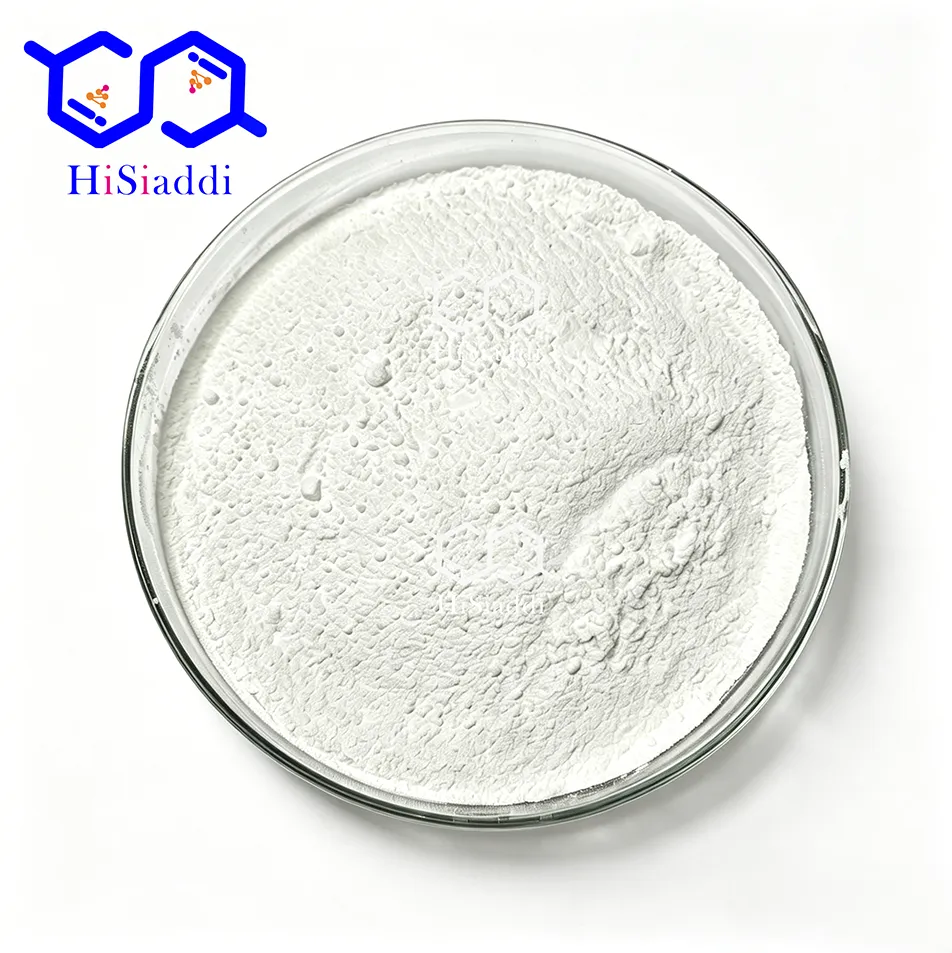
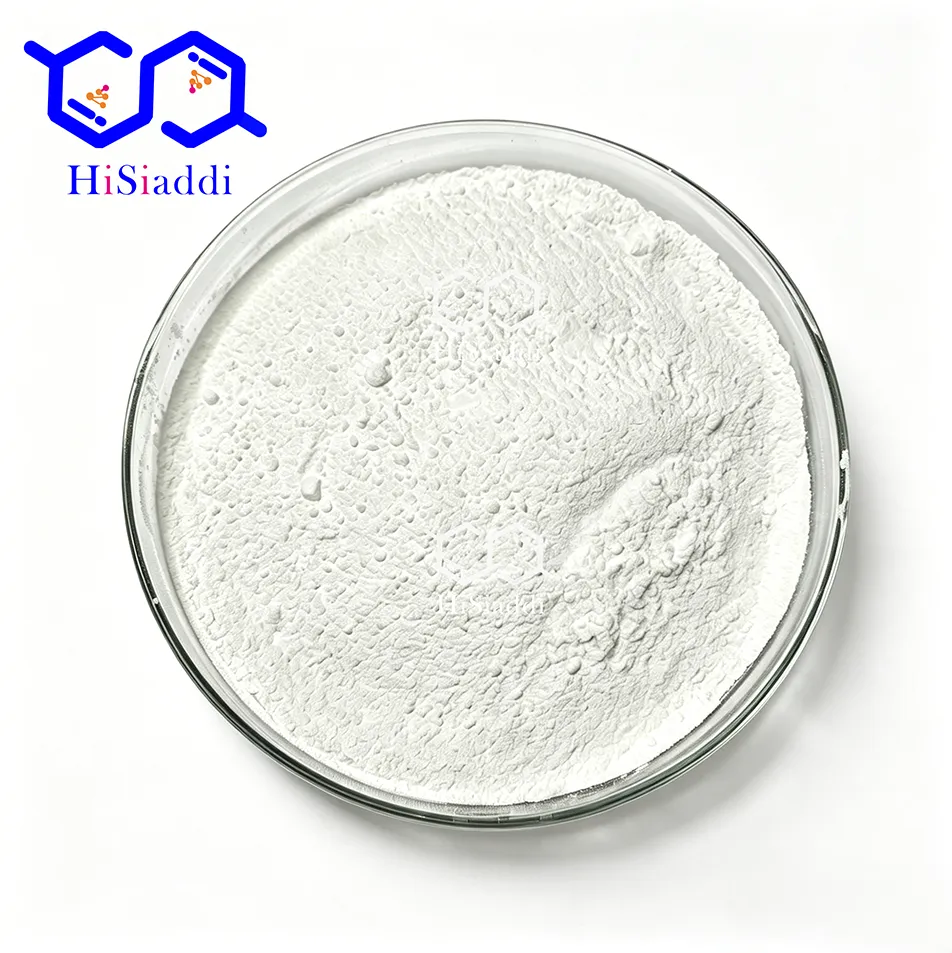
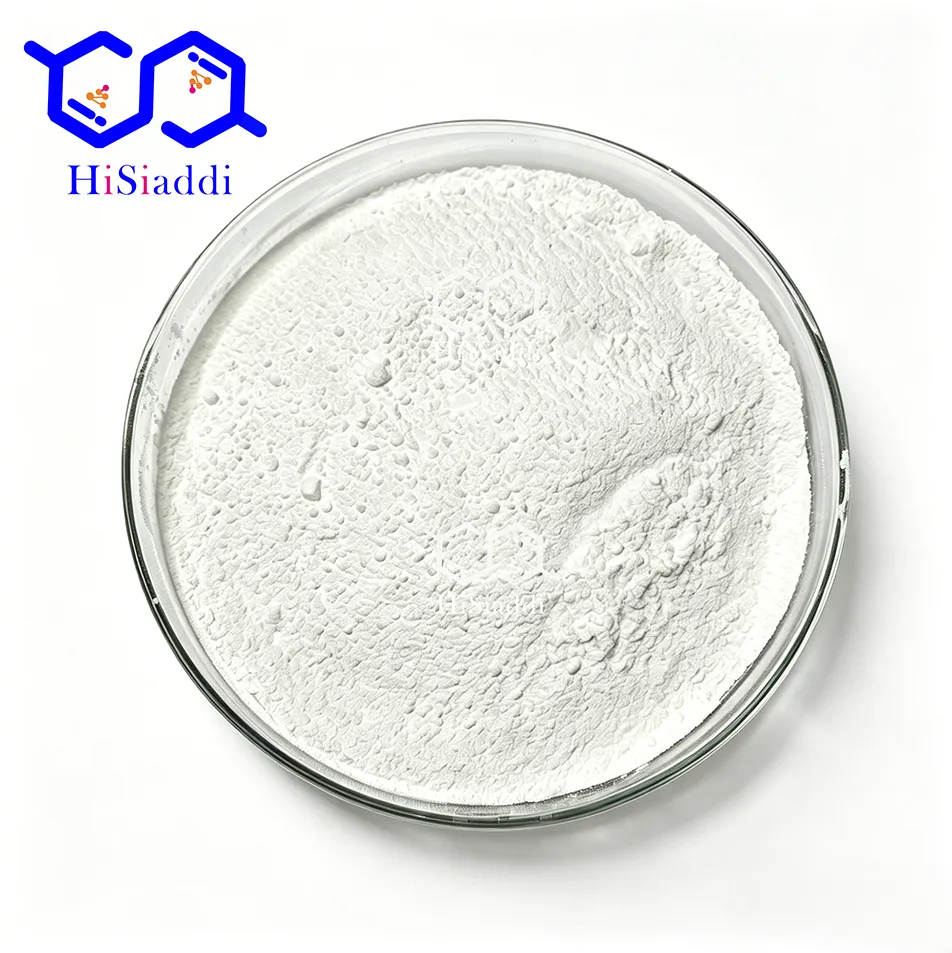
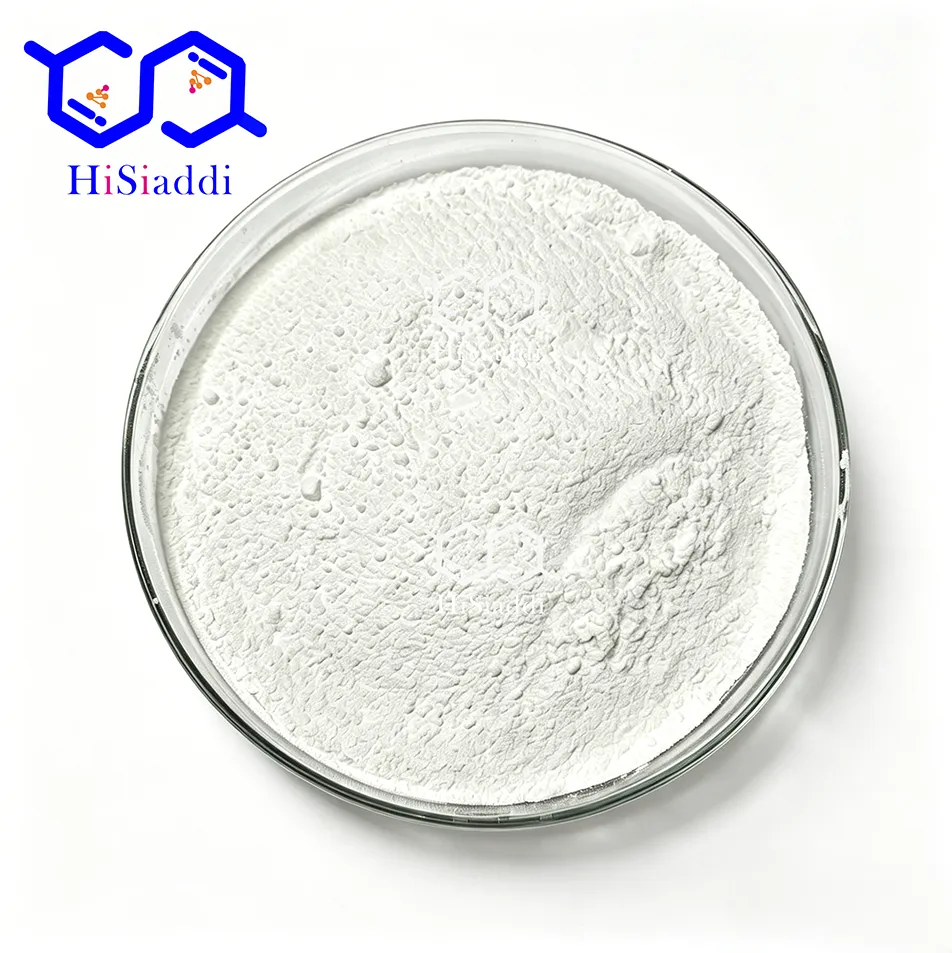
LFR-8004 is an organic phosphorus nitrogen complex; As a halogen-free flame retardant for polyester, it is suitable for PBT/PET glass fiber reinforcement system. As a new type of foreign trade service provider HiSiaddi, we recommend the following brands.
Lishide LFR-8004 has a phosphorus content of 23.3% -24.0%, a decomposition temperature of ≥ 350 ℃, hydrolysis resistance, low dust, and better processing flowability than Albemarle in the United States; Specially designed for overseas PBT/PET modification factories, electronic connector manufacturers, and automotive interior manufacturers, providing a cost-effective alternative for general working conditions;
Xianrenhui LFR-8004 is used for electronic connectors and is compatible with white/colored polyester product manufacturers with high color retention requirements;
Jingshida LFR-8004S is 50% -60% of the imported price, without the need for synergists. The formula is simplified, the adaptability of recycled materials is strong, and the comprehensive cost advantage is huge. Specializing in photovoltaic accessories, outdoor electrical, and plastic components for coastal high humidity areas, we solve the pain points of hydrolysis and weather resistance.
 CONTACT HiSiaddi NOW
Name: | Flame Retardant LFR-8004 | Other Name: | N/A |
CAS No. | N/A | Brand: | Multi-Brand |
MF: | N/A | Model Number: | Multi-models |
EINECS No. | N/A | Place of Origin: | Jiangsu, China |
Purity: | 98.0% | Grade: | Industrial grade |
MOQ: | 1ton | Storage: | Please refer to the product packaging or contact the customer service |
When purchasing LFR-8004 as a buyer, you may encounter the following questions:
What are the core index advantages of mainstream models of well-known LFR-8004 brands and their practical application effects?
What competitive services can LFR-8004 suppliers offer?
How are the qualification certifications and market reputation of target LFR-8004 brands?
What about the inventory volume and supply stability of LFR-8004 suppliers?
What factors should be taken into account when selecting LFR-8004?
...and many other related questions.
High phosphorus content & superior flame retardancy: Phosphorus content reaches 23.5%-24.0%, leading level in the industry. Halogen-free, antimony-free and heavy metal-free. Only 18%-22% addition enables PBT/PBT to reach UL94 V-0 for 0.4mm thin-wall products with LOI ≥32%, 15% higher flame retardant efficiency than Clariant Exolit OP1230.
Excellent thermal stability & easy processing: Thermal decomposition temperature ≥350℃, perfectly suitable for high-temperature extrusion and injection molding of PBT/PET at 250-300℃ without decomposition, volatilization, yellowing or precipitation. D50 ranges from 50-60μm, featuring low dust, smooth feeding and no bridging, boosting high-speed production line efficiency by 12%.
Outstanding hydrolysis resistance & low-smoke environmental friendly: High hydrophobic property ensures stable performance even after long-term water immersion, passing UL746C water immersion test (70℃, 168h) with unchanged flame retardant performance for outdoor products. Smoke density ≤150 (ISO 5659), low smoke and non-toxic, fully meeting EN 45545 rail transit low-smoke standards of EU.
Good color retention & favorable mechanical performance: White powder will not affect product coloring, supporting production of white and high-gloss colored PBT parts. It maintains ≥88% tensile strength and ≥85% impact strength of modified PBT, effectively solving brittleness problems caused by inorganic flame retardants.
Complete compliance & self-sufficient production chain: Fully registered under REACH, compliant with RoHS 3.0, UL94 and FDA food contact standards. Monthly output exceeds 3000 tons. Self-produced phosphorus chemical intermediates in Jiangsu base cut raw material cost by 18%.
Higher flame retardant efficiency cuts addition ratio by 20% and formula cost by 15-18%. Large particle size reduces dust generation, eliminating secondary dust removal process and lowering production line loss by 8%.
Single-component flame retardant requires no synergist, simplifying formula and reducing quality fluctuation risks. Batch fluctuation ≤0.08% keeps finished product rejection rate below 0.2%.
Full set of compliance certifications avoid goods detention risks under EU REACH and RoHS regulations, enabling easy access to high-end electronic and automotive supply chains.
Flame retardant and high-temperature resistant electronic connectors feature stable insulation performance for safe long-term service, adapting to harsh operating conditions of AI servers and base stations.
Qualified flame retardant automotive interior parts own excellent toughness and high-gloss appearance, extending service life by 5-8 years without white spot precipitation defects.
Weather-resistant photovoltaic shells maintain stable performance over 25 years with low smoke and non-toxic property, slowing fire spread and gaining more escape time in case of fire.
Stable industrial high purity: Phosphorus content 23.0%-23.8%, purity ≥99.5%, metallic impurities ≤80ppm, equivalent to mainstream imported grades with excellent batch consistency.
Enhanced synergistic flame retardancy: WS-LFR-8004-S compounded with MPP improves flame retardant efficiency by 25%. Only 16% addition in PBT achieves V-0 rating with LOI ≥34%, ideal for cost reduction via low dosage.
Easy processing & low dust: Thermal decomposition temperature ≥345℃, suitable for processing at 240-290℃. Particle size D50=60-70μm ensures good fluidity without blockage in automatic batching systems.
Balanced mechanical property & weather resistance: Minimal impact on mechanical properties of PBT/PET with impact strength retention rate ≥82%. Passes 5000-hour QUV aging test to guarantee stable flame retardant performance for outdoor products.
Ample capacity & fast delivery: Spot goods available in East China bonded warehouse, monthly output over 2800 tons, delivery cycle 7-12 days, 20-25 days faster than Clariant.
Stable performance supports large-scale high-volume production and avoids production halt caused by batch difference.
Synergistic grade lowers usage dosage while balancing flame retardancy and mechanical properties to expand product application scope.
Sufficient spot stock and short lead time ensure continuous supply even in peak seasons and punctual order delivery.
Impact-resistant and well-shaped flame retardant home appliance parts meet market popularization demands of mid-range products.
Weather-resistant and safe automotive exterior parts enjoy over 5 years longer service life.
Qualified general high purity: Phosphorus content 22.8%-23.5%, purity ≥99.2%, moisture ≤0.2%, meeting basic flame retardant requirements for most polyester materials.
Low-dust eco-friendly design: Special surface treatment cuts workshop dust emission by 70%, applicable to food-contact PBT products and certified by FDA.
Cost control & wide compatibility: Supported by Shanghai chemical industry cluster, intermediate purchasing cost is reduced by 10-12% with annual price fluctuation ≤5%. Compatible with PBT/PET/PTT, reaching V-0 rating with 20-25% addition ratio.
Complete export documents: Basic REACH registration, RoHS compliance and UL94 certification ensure smooth customs clearance. Standard 25kg/bag package fits consolidated container shipment.
Reasonable price with reliable high purity greatly cuts raw material cost and strengthens market competitiveness of finished goods.
Wide adaptability to various polyester types reduces inventory categories and capital occupation.
Low-dust grade expands application to food and medical fields to raise product added value.
Safe, non-toxic and attractive flame retardant daily necessities comply with basic EU environmental regulations.
Cost-effective flame retardant electronic accessories satisfy popular market demands.
Stable industrial standard performance: Phosphorus content 22.5%-23.2%, purity ≥99.0%, thermal decomposition temperature ≥340℃, satisfying all performance needs of non-thin-wall industrial flame retardant products.
Cost-saving composite synergistic formula: Compound phosphorus-nitrogen synergist lifts flame retardant efficiency by 20%, achieving V-0 rating with only 19% addition, perfect for cost-sensitive projects.
Low stable price & flexible supply: Mass production realizes precise cost control, 5-8% lower than industry average. Minimum order quantity 25kg supports small trial orders with flexible consolidated shipment solutions.
Basic compliance guaranteed: Completed basic REACH and RoHS registration, complete MSDS and COA files for hassle-free customs clearance.
Ultra-low price with qualified performance minimizes production cost and maximizes profit margin.
Stable ocean freight ensures timely delivery to remote regions without supply shortage risks.
Flexible small-batch procurement accelerates inventory turnover and relieves capital pressure.
Safe and affordable common flame retardant PBT products fit low-end market demands.
High-efficiency weather-resistant fireproof coatings slow fire spreading effectively.
Qualified bulk industrial grade: Phosphorus content 22.0%-22.8%, purity ≥98.8%, thermal decomposition temperature ≥335℃, meeting basic flame retardant demands of low-end industrial products.
Optimized for recycled materials: Improved compatibility with recycled PBT enhances flame retardant property and surface appearance of reprocessed plastics, well suited for recycled plastic modification industry.
Bottom price & fast delivery: Supported by East China chemical industrial chain, raw material cost stays at the lowest level. FOB price: 7800-9200 USD/MT. Goods can be delivered within 72 hours via dedicated sea routes to Africa and Middle East with flexible FCL/LCL arrangement.
Mass supply capacity: Million-ton-level annual output ensures stable full-year supply for low-price bulk markets.
Ultra-low cost helps rapidly seize low-end flame retardant market and replace restricted halogenated flame retardants.
Smooth bulk shipment improves capital and inventory turnover efficiency.
Excellent adaptability to recycled plastics greatly increases additional value of waste materials and conforms to environmental recycling policies.
Compliant non-toxic low-end flame retardant products meet local environmental regulations at budget-friendly prices.
Recycled plastic products gain better flame retardancy and toughness with longer service life and high cost performance.

| Brand | Mainstream Models | Core Performance Advantages | FOB Price (USD/MT) | Target B-end Buyers | Core Benefits for Downstream Buyers | Long-term Benefits for End Users |
| Jiangsu Liside | LFR-8004 Standard Grade, LFR-8004-H High Hydrolysis Resistance Grade | Phosphorus 23.5%-24.0%, thermal stability ≥350℃, low dust, excellent hydrolysis resistance, thin-wall V-0 rating, full compliance, suitable for electronic & automotive fields | 13200-14500 High-end grade comparable to Clariant | Glass fiber reinforced PBT, high-end electronic connectors, automotive interiors, photovoltaic shells | Cost reduction via less addition, near-zero rejection rate, simplified formula, zero compliance risk, higher efficiency with low dust | Safe insulation for electronic parts, durable high-gloss automotive components, 25-year weather resistance for photovoltaic products |
| Zhejiang Wansheng | WS-LFR-8004 Industrial High-purity Grade, WS-LFR-8004-S Synergistic Modified Grade | Phosphorus 23.0%-23.8%, thermal stability ≥345℃, synergistic flame retardancy, good mechanical retention, superior weather resistance, mid-to-high end applicability | 11800-13200 Mid-to-high end balanced grade | Mid-to-high end PBT modification, home appliance shells, automotive exterior parts, ordinary electronic accessories | Stable performance, lower dosage via synergist, sufficient spot goods, stable supply in peak seasons, high mechanical property retention | Impact-resistant elegant home appliance parts, weather-proof durable automotive exterior parts |
| Shanghai Kaiyin Chemical | Deflamer® LFR-8004 General High-purity Grade, LFR-8004-L Low-dust Eco-friendly Grade | Phosphorus 22.8%-23.5%, thermal stability ≥340℃, low dust & eco-friendly, multi-polyester compatibility, stable annual price, food-contact accessible | 10500-11800 Mid-range mainstream grade | Small & medium PBT modification, daily necessities, common electronic parts, Southeast Asian home appliance materials | Significant cost saving, wide material compatibility, low inventory pressure, added value from low-dust grade, easy customs clearance | Eco-safe daily necessities, cost-effective ordinary electronic products |
| Shandong Tianyi Chemical | TY-LFR-8004 Industrial Standard Grade, TY-LFR-8004-M Composite Synergistic Grade | Phosphorus 22.5%-23.2%, thermal stability ≥340℃, composite synergistic effect, low stable price, flexible 25kg MOQ, complete basic compliance | 9200-10500 Industrial economical grade | Common PBT modification, fireproof coatings, low-end electronic parts, bulk traders | Lowest production cost, stable supply, flexible small-batch purchase, smooth customs clearance, cost-saving synergistic formula | Fire retardant coatings inhibit fire spread, safe and affordable low-end products |
| Jiangsu Yake Technology | YK-LFR-8004 Bulk Industrial Grade, YK-LFR-8004-R Recycled Material Special Grade | Phosphorus 22.0%-22.8%, thermal stability ≥335℃, optimized for recycled plastics, market bottom price, fast delivery, dedicated sea shipping | 7800-9200 Low-end bulk grade | Recycled PBT processing, bulk wholesalers, low-end outdoor goods, African large-volume traders | Occupy low-end market with low cost, fast capital turnover, higher recycled material value, smooth bulk shipment & efficient delivery | Durable flame retardant recycled products, compliant low-cost basic flame retardant goods |
HiSiaddi is an innovative foreign trade service provider driven by both technology transformation and foreign trade services. It has established a "1+2+3+4=1" product service system: 1 foreign trade salesperson with over 3 years of experience, 2 R&D teams, 3 high-quality suppliers, and 4 warehouses to fulfill one-stop product demand.
Backed by this service system, HiSiaddi boasts deeper expertise in LFR-8004 R&D and process optimization than most foreign trade firms, better insight into market demands and competitive edges of various LFR-8004 brands than standalone manufacturers, and a more thorough grasp of the LFR-8004 export market than research institutions.
HiSiaddi only recruits foreign trade specialists with a minimum of 3 years’ working experience. All staff must complete over six months of joint training delivered by the R&D and foreign trade teams before serving clients.
(1) Basic Support Services for LFR-8004
Supported by the foreign trade team and corporate service system, we deliver full-process one-stop document handling services for clients, including but not limited to provision and application of all compliance certificates for LFR-8004, and submission & resolution of third-party reports and quality warranty issues.
(2) Exclusive Premium Services for LFR-8004
Leveraging our R&D team, we provide customized product and technical consulting services, such as comparative analysis of core indicators and costs across all LFR-8004 brands, and regular sharing of global market updates.
Monthly Global LFR-8004 Industry Bulletin: Real-time phosphorus intermediate price, regulatory and automotive electronics demand updates
Complimentary Graded Samples: 100g–1000g free samples with full lab hydrolysis & color retention testing, free re-sampling and formulation optimization for failed batches.
Through in-depth collaboration with original manufacturers via technology transformation, as well as internal coordination with the foreign trade team, our R&D team delivers technical training to sales staff. This enables professional LFR-8004 customization and provides research-grade consulting on LFR-8004 brand matching and application formula optimization.
(1) Research-Grade Customization Services for LFR-8004
Optimized PBT/PET Glass-Filled Formulas: Phosphorus flame retardant databases cut additive dosage by 18–28%, boost flame retardancy and preserve color, outperforming Clariant & ADEKA grades.
Domestic Substitution Benchmarking: Full comparison reports, cost reduction over 35% and free hydrolysis & color retention pilot testing.
(2) Research-Grade Consulting Services for LFR-8004
High-End Electronic Connectors: Hydrolysis-resistant LFR-8004-H, 0.4mm thin-wall UL94 V-0 testing and REACH compliance
Automotive PBT Parts: Color-stable grades, weathering testing and E-MARK automotive certification guidance
Glass-Reinforced PBT: Compatibility-modified LFR-8004-S, glass fiber interface optimization and GWIT 750°C testing support
Food-Grade PBT: Low-dust LFR-8004-L, FDA food-contact compliance consulting
Recycled PBT: Recycled material-specific LFR-8004-R, compatibility and appearance improvement formulas
Our foreign trade and R&D teams collaborate to conduct preliminary market research, on-site factory audits, product testing, deep technology transformation cooperation and bulk purchasing cooperation. We select approximately three reliable, stable, reputable suppliers with strong development potential.
(1) Initiative to Secure Lower LFR-8004 Prices
Long-term partnerships built on technology transformation and authorized distribution grant us access to factory-direct pricing.
(2) Long-Term Supply Chain Assurance for LFR-8004
Long-term cooperation via technology transfer and authorized distribution strengthens production supervision, full-lot traceability, batch stability control, and compensation guarantees for substandard third-party inspection results.
We maintain four warehouses jointly managed with suppliers for stocking hot-selling products.
(1) Fast Local Delivery & On-Site Issue Resolution for LFR-8004
Our four warehouses are located at Qingdao Port (North China), Ningbo Port (East China), Shenzhen Port (South China), and Zhengzhou (inland logistics hub). This enables prompt LFR-8004 shipments and on-site staff to resolve transit damage, packaging defects or export compliance issues immediately when they arise.
(2) Mitigate Price Volatility & Support Custom Packaging for LFR-8004
We pre-stock inventory in advance during peak price seasons to cushion cost fluctuations. Our in-house warehouses fully accommodate customized packaging and labeling requirements from clients.
As a new-type foreign trade service provider driven by both technology commercialization and foreign trade services, HiSiaddi has established a "1+2+3+4=1" service system and can supply original factory sources of LFR-8004 from multiple well-known brands. As a research & development-oriented foreign trade enterprise, HiSiaddi will systematically sort out and analyze common difficulties faced by B-end purchasers when sourcing LFR-8004 in China, and propose corresponding solutions from a professional perspective.
If you require more professional and in-depth analysis regarding the procurement of LFR-8004, please contact HiSiaddi customer service.
Based on mainstream global purchasing groups, downstream applications and business models, purchasers are divided into five categories: high-end electronics & automotive modified material purchasers, general engineering plastic & civil rubber and plastic purchasers, cross-border chemical distribution purchasers, high-gloss color matching product dedicated purchasers, and cable & low-voltage electrical component purchasers. Regional characteristics, pre-procurement evaluations, production adaptation requirements and core quality inspection indicators are analyzed item by item.
Concentrated in developed regions including Western Europe, North America, Japan, South Korea and Australia, these purchasers manufacture new energy auto parts, precision electronic housings, charging pile components, high-temperature electrical structural parts, vehicle-mounted electronic plastic components and other products. End products must pass international authoritative safety and environmental certifications, and production adopts high-temperature twin-screw extrusion and precision injection molding processes, making this group the most demanding buyers of LFR-8004 in terms of quality standards.
1.
Comprehensive Pre-Procurement Considerations First and foremost, global compliance and safety certifications serve as entry thresholds for cooperation. Beyond general environmental directives such as REACH and RoHS, suppliers must verify LFR-8004 compliance with UL94 V-0 flame retardant ratings and IEC electrical material standards. Some automotive electronics clients additionally require raw materials to be included in local automotive chemical whitelists, while requesting multilingual MSDS, third-party flame retardant synergistic test reports and full-batch traceability documents to eliminate customs clearance and certification risks for end products. Second, in-depth verification of high-temperature processing adaptability and formula compatibility. These products are manufactured at generally high processing temperatures, so purchasers conduct repeated machine trials to test whether LFR-8004 decomposes, precipitates or emits odors under prolonged high-temperature conditions. They also verify compatibility with glass fiber, antioxidants, lubricants and nitrogen-based synergistic flame retardants to eliminate risks such as powder agglomeration, screw corrosion and reduced mechanical strength of finished parts. Dust emission levels are also closely evaluated to meet closed automated production line environmental requirements. Third, high priority placed on supply chain stability and batch consistency. Clients sign long-term annual framework orders, and fluctuations in raw material parameters directly cause flame retardant failure and product scrapping. Purchasers therefore audit suppliers’ continuous production capacity, dust-free workshops and quality control processes, preferring partners who can ship fixed batches and cooperate with annual third-party sampling inspections. Price is not the primary decision-making factor; buyers are willing to pay reasonable premiums for high-quality raw materials that fully meet flame retardant, thermal stability and compliance standards, and firmly reject low-priced non-standard supplies.
2.
3.
Key Product Indicators for Procurement (Full-Index Precision Control with Narrow Parameter Ranges) First, thermal decomposition temperature – the core critical indicator, with measured values required to stay steadily above 350°C to prevent decomposition and performance degradation during high-temperature processing and long-term product service life. Second, effective phosphorus content, which directly determines basic flame retardant efficiency; uniform content across batches is mandatory to guarantee consistent UL94 V-0 ratings for modified plastics. Third, moisture content, subject to strict high-standard control (≤0.2%). Excess moisture generates bubbles and pores during high-temperature processing, damaging structural and insulating performance of electronic and automotive components. Fourth, particle size and particle size distribution, with D50 strictly controlled below 60μm and uniform powder distribution to ensure full dispersion in glass fiber reinforced systems without localized flame retardant weaknesses. Fifth, heavy metals and restricted substances, with rigorous control of lead, cadmium, mercury, hexavalent chromium and other hazardous materials to fully align with electronic and automotive industry substance restriction regulations. Sixth, smoke density and volatility, requiring low smoke generation during combustion and minimal volatile emissions at room and high temperatures to satisfy safety requirements for electronic and vehicle-mounted products. Seventh, hydrophobicity and hydrolysis resistance, to withstand complex service environments and avoid flame retardancy decline after product moisture absorption.
4.
Distributed across emerging manufacturing regions including Southeast Asia, Eastern Europe, South America, the Middle East and Africa, these purchasers produce standard industrial PBT/PET components, general nylon products, non-precision civil plastic parts and ordinary mechanical structural parts. Fierce industry competition limits profit margins, and production relies on conventional mixing and extrusion processes. Their core procurement logic is "adequate performance, controllable costs and flexible supply".
1.
Comprehensive Pre-Procurement Considerations First, overall end-to-end procurement cost acts as the core decision-making basis. Buyers conduct horizontal comparisons of unit prices, international freight, tariffs, warehousing and other comprehensive costs, with frequent price benchmarking. Business terms carry significant weight: suppliers accepting small-batch orders, flexible payment terms and lenient replenishment rules are prioritized. Second, only basic formula compatibility verification is required. LFR-8004 merely needs to blend normally with standard PBT, PET, PA substrates and conventional additives without complex advanced flame retardant or weathering testing, as long as it supports mass production under standard processes. Third, high focus on supply response efficiency. Fluctuating downstream order volumes create frequent urgent replenishment and rush shipment demands, requiring suppliers to maintain stock and operate mature cross-border logistics routes to ensure on-time port arrival without production line downtime. Fourth, compliance only meets basic import requirements of destination countries. Only quality inspection certificates, MSDS and certificates of origin for customs clearance are required to satisfy general industrial chemical entry standards, with no additional international safety or high-end flame retardant certification applications.
2.
3.
Key Product Indicators for Procurement (General Industrial Standards Allowed with Reasonable Batch Fluctuations) First, main component and phosphorus content, acceptable as long as falling within standard industry ranges with normal batch tolerances to meet basic fire protection requirements. Second, moisture content and anti-caking performance, controlled within basic ranges to prevent powder moisture absorption and agglomeration during warehousing and use and ensure smooth feeding under standard conditions. Third, thermal stability, only required to withstand conventional processing temperatures with no stringent limits on ultimate thermal decomposition temperature. Fourth, appearance and dust levels, acceptable as long as the powder is standard white with no obvious large impurities and normal dust emission, without refined control requirements. Fifth, basic flame retardant performance, sufficient to meet general civil product fire protection ratings with no alignment with high-end UL flame retardant standards.
4.
These purchasers are chemical wholesalers and regional market traders worldwide who do not engage in production or processing. They purchase LFR-8004 in full-container loads for repackaging, regional allocation and resale to local small and medium modified material factories. Procurement revolves around "easy transportation, easy storage, convenient customs clearance, universal applicability and stable profit margins".
1.
Comprehensive Pre-Procurement Considerations First, standardized universal qualification documents are mandatory. Goods circulate across multiple countries and serve diverse downstream clients, so multilingual internationally standardized MSDS and general quality inspection reports plus complete customs clearance documents are required, with a single set of paperwork capable of handling customs inspections and client audits across multiple nations. Niche region-specific certifications are not accepted. Second, rigorous evaluation of long-distance ocean transportation and long-term storage stability. As a powdered raw material, LFR-8004 undergoes ocean shipping, multiple transshipments and extended warehousing. Purchasers closely assess shelf life, moisture absorption rates and anti-caking performance, while strictly auditing packaging moisture-proof, dust-proof and anti-damage performance to guarantee consistent quality after transit across varying climate zones. Third, preference for universal product specifications. Only mainstream standard grades are selected, with customized modified models rejected to eliminate unsold inventory risks for all conventional polyester and nylon modified factories. Fourth, precise comprehensive profit accounting, balancing purchase prices, freight, repackaging losses and warehousing costs. Buyers favor products with stable price trends and long-term consistent supply, and require multiple packaging formats including bulk ton bags and standard sacks to match diverse downstream purchasing demands.
2.
3.
Key Product Indicators for Procurement (Circulation-Focused, Basic Performance Minimum Compliance Only) First, moisture absorption rate and anti-caking capacity – the primary core circulation indicator, requiring resistance to moisture uptake and hardening during standard warehousing and ocean shipping. Second, moisture content; lower moisture levels reduce deterioration risks during long-distance transport and cross-regional storage, a mandatory pre-shipment inspection item. Third, normal-temperature storage stability, with shelf life verified to guarantee no obvious changes in appearance or main component content within the labeled validity period. Fourth, bulk density, which impacts packaging loading capacity and transportation costs; products with stable bulk density are prioritized. Fifth, basic physicochemical indicators including phosphorus content and thermal decomposition temperature only undergo routine sampling inspection, with compliance with general industrial standards sufficient and no in-depth testing required.
4.
Distributed among mid-to-high-end rubber and plastic manufacturers globally, these purchasers specialize in white, colored, high-gloss transparent PBT/PET and nylon products such as appearance parts and decorative plastic housings. Stringent standards apply to surface color and finish, and LFR-8004 as an additive must not compromise finished product color matching or appearance – this forms their core procurement demand.
1.
Comprehensive Pre-Procurement Considerations First, color compatibility testing is prioritized. Purchasers mix LFR-8004 with various color powders and masterbatches for trial production, focusing on identifying color differences, localized yellowing, color spots and fogging to confirm raw material base color does not interfere with color matching results. Second, focus on high-temperature yellowing resistance. Products experience temperature fluctuations during processing and service life, requiring verification that raw materials do not yellow under heat or shift overall product tone. Third, high importance placed on powder purity. Tiny impurities and discolored particles in raw materials form visible defects on high-gloss product surfaces, so suppliers’ impurity removal production processes are thoroughly audited. Fourth, compliance requirements vary by end product application: general appearance parts only meet basic environmental standards, while food-contact and infant supporting products require supplementary corresponding safety certifications. Fifth, consistent raw material base color across batches to avoid mass production-wide color deviations.
2.
3.
Key Product Indicators for Procurement (Appearance, Color and Purity-Focused Parameters) First, product appearance and chromaticity, requiring pure white powder free of faint yellow tint, discolored particles and black specks to eliminate color defects in finished products at the source. Second, thermal yellowing degree, with heat simulation testing at processing temperatures to strictly limit discoloration magnitude after heating. Third, impurity content, with thorough removal of mechanical impurities and tiny discolored particles to guarantee smooth, defect-free high-gloss mirror surfaces. Fourth, dispersibility, ensuring uniform powder distribution to avoid color mottling and streaks from localized agglomeration. Fifth, low volatile content, preventing pinholes and fogging on product surfaces to maintain high-gloss finish.
4.
These purchasers manufacture low-voltage electrical accessories, standard electronic cable sheaths and insulating plastic components, with core requirements for electrical insulation, flame retardancy and aging resistance. Their products are widely used across global industrial and civil markets, operating under constant power supply and alternating indoor/outdoor environments, creating prominent demands for electrical performance and weather resistance of additives.
1.
Comprehensive Pre-Procurement Considerations First, verification of electrical compliance and fire protection standards. Raw materials paired with substrates must pass local cable and low-voltage electrical fire resistance and insulation testing as a fundamental market entry requirement. Second, rigorous testing of electrical performance stability, confirming that LFR-8004 addition does not degrade product insulation or leakage resistance to meet electrical product usage specifications. Third, focus on low-smoke and weathering aging capacity. Cables and electrical components feature long service lives and may be exposed to variable temperature and humidity environments, requiring low smoke generation during combustion and consistent flame retardant and insulation performance without rapid degradation over time. Fourth, consideration of continuous processing sustainability. Cable extrusion lines operate 24/7, requiring additives that do not precipitate or foul equipment during extended production runs and do not disrupt normal equipment operation. Fifth, medium-to-long-term stable order supply to ensure consistent raw material provision matching continuous production modes.
2.
3.
Key Product Indicators for Procurement (Electrical, Weathering and Low-Smoke Centered) First, smoke density – the core indicator for the cable and electrical sector, with strict limits on smoke output during combustion to enhance safety. Second, electrical performance-related indicators, relying on high purity and low impurity levels to stabilize product insulation performance. Third, weather resistance and anti-precipitation capacity, preventing surface migration or blooming over long service life and maintaining consistent flame retardant and insulation performance. Fourth, thermal stability, compatible with continuous cable extrusion temperatures and daily operating environmental temperatures. Fifth, moisture and volatile content, avoiding performance degradation and surface stickiness after long-term service.
4.
Below is a direct comparison of differentiated characteristics across five dimensions covering procurement logic, compliance requirements, indicator priorities, cost sensitivity and logistics/supply models for the five purchaser groups outlined above.
1. High-End Electronics & Automotive Modified Material Purchasers: Secure superior flame retardant ratings, ultra-high thermal stability, international safety compliance and zero batch fluctuations to guarantee high-end product safety and certification compliance.
2. General Engineering Plastic & Civil Rubber and Plastic Purchasers: Achieve minimum compliant performance, lowest overall procurement costs and flexible supply to balance quality and production expenses.
3. Cross-Border Chemical Distribution Purchasers: Ensure stable storage and ocean transportation performance, anti-caking properties, universal qualification documents and easy resale to facilitate cross-border transit and regional sales.
4. High-Gloss Color Matching Product Dedicated Purchasers: Secure pure base color, yellowing resistance, no interference with color matching and high powder purity to guarantee finished product appearance and color quality.
5. Cable & Low-Voltage Electrical Component Purchasers: Deliver excellent insulation performance, low smoke generation, weather resistance and anti-precipitation capacity with long-term stable performance to adapt to extended service conditions of electrical products.
1. High-End Electronics & Automotive Modified Material Purchasers: Require multiple international safety certifications including REACH, RoHS and UL94, full batch traceability and third-party test reports, forming the strictest and most comprehensive qualification system.
2. General Engineering Plastic & Civil Rubber and Plastic Purchasers: Only demand basic customs clearance documents and general environmental materials for destination countries, meeting minimum market entry thresholds with no specialized high-end certifications.
3. Cross-Border Chemical Distribution Purchasers: Require universal multilingual full documentation sets to support multi-country customs clearance and client audits, prioritizing universal applicability of paperwork.
4. High-Gloss Color Matching Product Dedicated Purchasers: Basic environmental compliance forms the minimum standard; supplementary food contact and infant safety certifications are added for end products targeting special application fields.
5. Cable & Low-Voltage Electrical Component Purchasers: Beyond basic environmental documentation, compliance with local cable and electrical material specialized fire resistance and insulation standards is mandatory.
1. High-End Electronics & Automotive Modified Material Purchasers: Full precise control of thermal decomposition temperature, phosphorus content, moisture content, particle size, heavy metals and smoke density with extremely narrow allowable error ranges for all indicators.
2. General Engineering Plastic & Civil Rubber and Plastic Purchasers: Focus primarily on main component content, moisture content, anti-caking performance and basic flame retardant effects; other indicators undergo routine inspection with reasonable fluctuations accepted.
3. Cross-Border Chemical Distribution Purchasers: Prioritize circulation indicators including moisture absorption rate, anti-caking performance, room-temperature storage stability and bulk density, with baseline industrial performance standards sufficient for usability.
4. High-Gloss Color Matching Product Dedicated Purchasers: Give top priority to powder chromaticity, yellowing resistance, impurity content, dispersibility and low volatile content; ultra-high thermal stability and premium flame retardant ratings are secondary considerations.
5. Cable & Low-Voltage Electrical Component Purchasers: Focus on smoke density, insulation compatibility, weather resistance and anti-precipitation performance, with secondary attention to basic thermal stability and flame retardancy.
1. High-End Electronics & Automotive Modified Material Purchasers: Lowest price sensitivity; quality, compliance and performance rank first, with clear premiums accepted for superior products.
2. General Engineering Plastic & Civil Rubber and Plastic Purchasers: Highest price sensitivity; overall end-to-end costs form the core decision metric, prioritizing cost-effective supply sources.
3. Cross-Border Chemical Distribution Purchasers: Medium price sensitivity; comprehensive calculation of purchasing, logistics, repackaging and loss costs with stable distribution profit margins as the guiding target.
4. High-Gloss Color Matching Product Dedicated Purchasers: Medium price sensitivity; price comparisons only occur after appearance and color matching performance meet standards.
5. Cable & Low-Voltage Electrical Component Purchasers: Medium-low price sensitivity; cost evaluation only proceeds after core indicators including low smoke, insulation and weather resistance reach compliance thresholds.
1. High-End Electronics & Automotive Modified Material Purchasers: Thickened moisture-proof sealed packaging, annual long-term fixed-batch stable shipments with full-process control of cargo cleanliness and moisture resistance.
2. General Engineering Plastic & Civil Rubber and Plastic Purchasers: Standard industrial packaging, random small-batch multi-order procurement with flexible minimum order quantities and fast shipment requirements.
3. Cross-Border Chemical Distribution Purchasers: Multiple standard packaging formats with enhanced moisture-proof and anti-damage design for ocean shipping, primarily full-container bulk orders.
4. High-Gloss Color Matching Product Dedicated Purchasers: Dust-free light-shielded packaging to prevent minor raw material discoloration from light exposure, periodic orders with strict consistency of base color across batches.
5. Cable & Low-Voltage Electrical Component Purchasers: Standard moisture-proof industrial packaging, medium-volume stable-cycle orders matching continuous production line operation.
If you require more professional and in-depth analysis regarding the procurement of LFR-8004, please contact HiSiaddi customer service.
The particle size D50 of powder shall be controlled within 6~8μm (D50 of conventional national standard products ranges from 12~18μm), with low dust and dust-free feeding performance.
Phosphorus content ≥ 23.5% (22.0%~22.8% for general grades); the product shall remain thermally stable without decomposition at 275℃.
The product shall comply with South Korea KC environmental standards and EU REACH Annex XVII regulations. It is applicable to the modification and pelletizing of white high-gloss PBT, and shall not cause yellowing, blooming or precipitation on finished products.
Parameter adjustment: Cooperated with the R&D department of LFR-8004 manufacturer to launch pilot flexible grinding production lines, adjusted the feeding ratio of phosphate ester monomers, modified the synthesis reaction temperature and subsequent airflow pulverization process to strictly control the particle size range.
Flexible order arrangement: Adopted the production plan of "1 ton trial production + 2 tons formal production" in batches to share the production adjustment loss of the factory, lowering the minimum order quantity for customization to 1 ton.
Full-process document agency: Completed full-item SGS tests including phosphorus content, thermogravimetry and dust level, compiled Korean version of MSDS, and applied for REACH pre-registration certificates and South Korea KC chemical filing documents, eliminating customs clearance and compliance risks for the client.
Customized packaging: Switched from standard 25kg woven bags to customized 10kg vacuum aluminum foil small packages, and formulated a moisture-proof pallet solution for sea transportation to prevent powder caking caused by high humidity during shipment to South Korea.
Bubbles appeared during twin-screw extrusion and pelletizing, with numerous internal voids in pellets, resulting in an 18% drop in the impact strength of finished products.
The flame retardant floated and stratified during high-speed mixing, showing poor compatibility with PBT resin and glass fiber.
Slight blooming occurred on the product surface after 72-hour damp-heat aging at 85℃, failing the damp-heat aging test for EU automotive parts.
Formula optimization: The client’s original formula contained 16 parts of LFR-8004 and only MCA nitrogen-based flame retardant for compounding, lacking coupling agents and hydrophobic additives. The technical team adjusted the compound system: reduced LFR-8004 dosage to 13.5 parts, added 4.2 parts of MPP to partially replace MCA, and incorporated 0.6% silane coupling agent KH550 and 0.3% polyethylene wax to improve interfacial compatibility and hydrophobicity, so as to solve the problem of precipitation and blooming under damp-heat conditions.
Production process adjustment: The temperature setting of each section of the twin-screw extruder was unreasonable; the melting zone temperature reached 285℃, exceeding the thermal stability limit of LFR-8004, which led to partial decomposition and gas generation of the flame retardant and further caused pellet bubbling. A new zonal temperature control scheme was formulated: Zone 1 at 195℃, Zone 2 at 220℃, Zone 3 at 245℃, and die head at 250℃. The screw speed was lowered from 380rpm to 310rpm, and the negative pressure of the vacuum section was increased to -0.085MPa to remove water vapor and small molecular gases generated by decomposition.
Feeding process improvement: Guided the client to adopt pre-mixing process. PBT pellets were dried at 120℃ for 4 hours to remove moisture in advance. LFR-8004 and glass fiber were pre-mixed at low speed for 5 minutes before being fed into the main mixing bin to avoid powder floating and stratification.
Lead time
Quantity (ton) | 0 - 10 | 10 - 30 | > 30 |
Lead time (days) | 7 | 15 | To be negotiated |
The monthly inventory volume of LFR-8004 is 30 tons, with appropriate adjustments upwards or downwards in response to peak and off-peak seasons.
HiSiaddi safeguards the supply stability of LFR-8004 through the following measures:
(1) Performance evaluation and screening of LFR-8004 brand factories based on on-time delivery rate, batch pass rate, timeliness of risk alerts, and completeness of documentation to assess their supply stability.
(2) For each mainstream model or major grade of LFR-8004, secure 1 primary high-quality brand manufacturer and 2 backup high-quality manufacturers.
(3) Each factory operates independent production lines in separate production zones to prevent production halts caused by major unforeseen incidents such as environmental production suspensions and power outages.
Through long-term cooperation with brand manufacturers via technology commercialization and authorized distribution channels, HiSiaddi can effectively strengthen supervision over the production processes of brand manufacturers, optimize full-process traceability management, improve batch stability control, and further reinforce real-time monitoring of the supply stability of LFR-8004 products.
Long-term Annual Framework Supply Guarantee Agreement. HiSiaddi signs 12-month long-term agreements with leading manufacturers. The agreements specify the minimum guaranteed supply volume, maximum price hike range, and priority production scheduling rights during peak seasons. It is stipulated that manufacturers shall issue a 30-day prior written notice if production is suspended due to environmental rectification or equipment maintenance, and backup manufacturers will be activated to replenish goods accordingly.
We have 4 warehouses, which are jointly operated and managed with suppliers to store hot-selling products.The four warehouses are located at Qingdao Port in North China, Ningbo Port in East China, Shenzhen Port in South China, and Zhengzhou, China’s inland logistics hub. This setup guarantees sufficient supply and timely shipment of LFR-8004 during peak seasons.
HiSiaddi issues a rolling demand forecast covering the subsequent three months on the 25th of each month, allowing manufacturers to reserve production capacity in accordance with the forecast. Any new urgent orders from overseas clients will be prioritized to draw on inventories or production capacity from backup manufacturers.
Unstable logistics for LFR-8004 will extend delivery lead times. HiSiaddi has established alternative arrangements covering multiple freight forwarders, ports and transportation solutions:
(1) Binding of multiple professional chemical freight forwarders for LFR-8004
Each product is assigned 2 to 3 freight forwarders with hazardous chemical/food transport qualifications affiliated with different shipping lines. Alternative sailing schedules can be switched to immediately in case of space shortages or customs inspections on a single shipping route.
(2) Backup transportation solutions for LFR-8004
Ocean freight serves as the standard mode; air freight and rail freight are reserved as alternatives for urgent orders. Long-term agreements for temperature-controlled containers are signed for temperature-sensitive and perishable food additives to secure shipping space.
(3) Visual tracking and digital early warning for LFR-8004
Freight forwarders synchronize daily updates on container loading, customs declaration, vessel loading and port arrival milestones. If customs inspection occurs, replenishment from backup inventory will be initiated immediately to shorten client waiting periods.
Full-chain digital early warning automatically monitors four categories of risks:
Factory side: Expiring supplier environmental assessment certificates, renewal of production permits, scheduled major equipment overhauls, and notifications of price hikes for upstream raw materials;
Inventory side: Inventory falling below safety thresholds, excessive inventory age, and batches failing quality inspection;
Logistics side: Shipping line space shortages, strikes at destination ports, and updates to customs policies;
Overseas side: Revisions to additive regulations and adjustments to import restriction lists in target countries.
Early warning notifications are automatically pushed to procurement and business leads, allowing backup suppliers or inventory contingency plans to be activated in advance.
HiSiaddi is an innovative foreign trade service provider driven by dual engines of technology commercialization and export services. We have built a "1+2+3+4=1" service system and can supply genuine raw materials of LFR-8004 from multiple well-known original manufacturers.
As an R&D-focused foreign trade enterprise, unlike single-brand factories that only promote their own products, we objectively analyze multiple competitive Chinese export brands of LFR-8004 and share their certifications and market feedback transparently, enabling buyers to make efficient, secure purchasing decisions.
If you require more authentic, objective information on multiple major Chinese LFR-8004 brands, please reach out to HiSiaddi customer service.
· Export standing: China’s No.1 exporter of phosphorus-based flame retardants; global market share of approximately 28% for halogen-free flame retardants dedicated to PBT/PET.
· Core grades: Deflamer® LFR8004 (polyester-specific); supplementary grades LFR8003 (polyamide) and LFR5009 (high-temperature polyamides).
· Export standing: Global leader in phosphorus-based flame retardants; China’s No.2 exporter of engineering plastic flame retardants.
· Main grades: WSFR800 (LFR8004 equivalent for halogen-free PBT/PET), BDP (PC/ABS), RDP (epoxy resins).
· Export standing: Central SOE background; No.3 exporter covering both halogenated and halogen-free flame retardants.
· Main grades: FRP800 (high-phosphorus halogen-free PBT/PET grade), HC900 (low-smoke variant).
· Export standing: Northern China’s major phosphorus-based producer; No.4 exporter of home appliance & automotive flame retardants.
· Main grades: TX8004 (same technical system as LFR8004 for polyesters), TXP200 (glass fiber reinforced PBT).
· Export standing: South China’s leader in supporting engineering plastic modification; No.5 exporter of electronics-grade flame retardants.
· Main grades: PSFR8004 (high color retention, low VOC), PSP600 (low loading variant).
Special Note: LFR8004 is the proprietary grade of original manufacturer Jiangsu Liside. The other four suppliers offer equivalent grades with identical technical routes and application scenarios, all representing China’s top export players.
· Samsung: LFR8004-formulated PBT for 5G base station connectors and TV back panels, with cumulative purchases exceeding 1,200 tons between 2024–2026. Feedback: Halogen-free compliant, excellent flowability, stable V-0 performance for thin walls, no blooming.
· Lenovo: Applied to laptop housings and power adapters. Yield rate improved by 3–5% after replacing bromine-antimony systems, yellowing index ΔE ≤ 2.0 (outperforming competing products).
· Schneider: Dual compliance with UL94 V-0 (0.4 mm) and GWIT 750°C for circuit breaker housings; orders rose 40% year-on-year in 2025.
· BYD: LFR8004 used for battery pack upper covers and high-voltage wiring harnesses, passing UL9540A and FMVSS 302. Feedback: Thermal resistance above 300°C, low smoke, no molten dripping, stable hydrolysis resistance (no failure after 1000h at 85°C/85% RH).
· CATL: Specified LFR8004 + MCA synergistic formulation achieving V-0 at only 10% loading, cutting costs by 18% versus imported alternatives.
· Lanxess (Germany): Benchmark testing conclusion – LFR8004 thermal stability > 350°C, superior to a European competitor’s 320°C; color retention improved by 40%.
· EMS (Switzerland): Used for 30% glass fiber reinforced PBT; impact strength retention ≥ 85% versus only 60–70% for generic phosphorus-based flame retardants.
· Low loading & cost competitiveness: LFR8004 hits V-0 at 10–12% loading versus 15–20% for standard phosphorus-based grades, cutting per-ton costs by approximately USD 800–1,200.
· Low dust & high bulk density: D50 particle size 50–80 μm, bulk density 0.4–0.6 g/cm³, cutting mixing dust emissions by 60% for cleaner workshop conditions and lower material loss.
· Zero migration & superior color retention: No blooming after 3 hours of processing at 280°C; white molded parts resist long-term yellowing, ideal for premium cosmetic components including appliance casings and electronic trim.
· Excellent recyclability: Flame retardant PBT retains V-0 rating after 3 physical recycling cycles, meeting EU mandatory recycled material ratio requirements effective 2026.
· REACH Regulation 1907/2006: Halogen-free, free of SVHC substances, fully registered.
· RoHS 2.0 Directive 2011/65/EU: Zero lead, mercury, cadmium, hexavalent chromium, PBB and PBDE; full batch testing passed.
· CE Mark (EN 50581): E&E environmental compliance certification, fully achieved by all LFR8004 formulations.
· UL94 V-0 (0.4 mm): Consistent performance for both glass fiber reinforced and unreinforced PBT/PET; UL File No. E492307.
· UL9540A (battery flame retardancy): Qualified for LFR8004 synergistic blends for new energy battery packs.
· UL2809 (recyclability): Retains V-0 rating with 30% recycled content, awarded UL sustainable materials certification.
· FDA 21 CFR 177.1520: Compliant for food-grade PBT/PET flame retardant use in coffee machines and food processing equipment components.
· EU Food Contact Regulation 10/2011: Zero migration, non-toxicity, passed German LFGB testing.
· Full test reports available from SGS, Intertek and TÜV; thermal stability, smoke density, toxicity and migration metrics all exceed industry averages.
· National-level honors for original manufacturer Jiangsu Liside: National High-Tech Enterprise, Specialized & Sophisticated "Little Giant" Enterprise, Provincial Green Factory. Operates a Provincial Engineering Technology Research Center with joint R&D partnerships with Zhejiang University and the Chinese Academy of Sciences.
1. Full compliance portfolio: Complete REACH/RoHS/UL/FDA certifications for direct access to mainstream European and American markets.
2. Leading performance: High flame retardant efficiency, superior color retention, high temperature resistance, low smoke, zero migration and recyclability, solving pain points for thin-wall, high-cosmetic and high-safety applications.
3. Cost advantages: Low loading rates plus domestic substitution deliver 15–20% lower overall costs versus imported equivalents.
4. Stable supply: All top 5 brands maintain annual production capacity above 10,000 tons. As a foreign trade service provider, we offer price-locking agreements, multi-warehouse spot inventory and consistent batch uniformity guarantees.
LFR8004 and equivalent grades from China’s top 5 brands have evolved from "low-cost alternatives" to mainstream materials certified by global leading OEMs, delivering four core value pillars: compliance, superior performance, cost efficiency and reliable supply.
Upon request, we can provide:
· Original manufacturer TDS, COA, SGS and UL test reports for LFR8004
· Comparative table of grades from the top 5 brands (performance, pricing, lead time)
· Free 2kg samples for end-product testing
If you require more authentic, objective information on multiple major Chinese LFR-8004 brands, please reach out to HiSiaddi customer service.
HiSiaddi is an innovative foreign trade service provider driven by dual engines of technology commercialization and export services. We have built a "1+2+3+4=1" service system and can supply genuine raw materials of LFR-8004 from multiple well-known original manufacturers.
As an R&D-focused foreign trade enterprise, unlike single-brand factories that only promote their own products, we objectively analyze multiple competitive Chinese export brands of LFR-8004 and transparently share their production processes, supply stability and key technical indicators, explaining how these factors impact buyers to support efficient, secure purchasing decisions.
If you require more authentic, objective information on multiple major Chinese LFR-8004 brands, please reach out to HiSiaddi customer service.
· Core proprietary process: Self-developed low-pressure fast synthesis of dialkyl phosphinate salts (patented technology), full closed-loop workflow: addition reaction → double decomposition reaction → high-purity crystallization → hydrophobic surface modification → low-temperature pulverization.
· Critical technical details:
1. Reaction temperature controlled at 80–120°C under 0.3–0.5 MPa pressure, cutting energy consumption by 30% versus conventional high-pressure processes.
2. Gradient cooling recrystallization achieves purity ≥99.5% with ultra-low chloride impurity ≤50 ppm.
3. Silane coupling agent surface modification improves compatibility with PBT/PET, eliminating migration and boosting hydrophobicity.
· Process strengths: Excellent batch consistency, thermal stability ≥350°C, outstanding hydrolysis resistance (no failure after 1000h at 85°C/85% RH).
· Core process: Continuous esterification of phosphorus oxychloride and polyols → deacidification purification → neutralization salt formation → nano-dispersion → spray drying.
· Critical technical details:
1. Four production bases (Linhai, Taixing, Jining, Weifang) with fully continuous production lines capable of single batches exceeding 50 tons.
2. Closed-loop recovery of byproduct hydrochloric acid delivers full environmental compliance with zero waste discharge.
3. Nano-dispersion technology delivers D50 particle size 40–60 μm for superior dispersibility and low dust generation.
· Process strengths: Large-scale cost advantages, consistent batch quality, optimized for thin-wall injection molding (high melt flow).
· Core process: Full industrial chain integration covering PDH propylene, phenol, bisphenol A and phosphorus intermediates; proprietary catalytic synthesis of phosphorus salts → filtration purification → precision milling → graded packaging.
· Critical technical details:
1. 100% self-sufficient raw material supply via central SOE vertical integration, strong resilience against raw material price volatility.
2. Catalytic synthesis raises phosphorus content to ≥24% for superior flame retardant efficiency.
3. Precision milling and grading deliver narrow particle size distribution (D90 ≤80 μm) for optimized flowability.
· Process strengths: Secure upstream supply, stable costing, high phosphorus loading for maximum flame retardant efficiency.
· Core process: Aqueous synthesis of sodium hypophosphite and aluminum salts → chelation impurity removal → phosphorus-nitrogen synergistic composite modification → flash evaporation drying → dust-free pulverization.
· Critical technical details:
1. Controlled by Shandong Energy Group, operates a 100,000-ton halogen-free flame retardant industrial park with 90% automated production lines.
2. Chelating purification removes heavy metals (lead ≤10 ppm) to meet FDA food contact standards.
3. Pre-blended phosphorus-nitrogen synergistic modification achieves V-0 at only 8–10% loading for further cost reduction.
· Process strengths: Ultra-high purity, ultra-low heavy metal content, superior synergistic flame retardant efficiency.
· Core process: High-purity phosphorus salts (self-produced + outsourced) → low-temperature compound pre-blending → precision crystal control → air-flow pulverization → dust-free packaging.
· Critical technical details:
1. Dual manufacturing bases in Qingyuan and Chizhou with total annual halogen-free flame retardant capacity of 35,000 tons, focused exclusively on PBT/PET applications.
2. Low-temperature compounding (≤150°C) prevents polymer degradation, delivering exceptional color retention (ΔE ≤1.5).
3. Precision crystal control stabilizes crystal morphology to resist yellowing and blooming.
· Process strengths: Premium color retention, ultra-low VOC, ideal for high-end cosmetic molded parts.
· Capacity: 5,000 tons/year total organic phosphinate flame retardant capacity, 70% allocated to LFR-8004 with 85%+ capacity utilization.
· Delivery: Taizhou headquarters warehouse plus Shanghai bonded warehouse maintain permanent spot stock of 300–500 tons; standard lead time 7–10 days, expedited 3-day delivery for urgent orders.
· Supply reliability: National Specialized & Sophisticated "Little Giant" enterprise with 12 consecutive years of uninterrupted supply history. Annual price-locking & supply guarantee agreements signed with top European and American modifiers.
· Capacity: Total phosphorus-based flame retardant capacity 65,000 tons/year, 20% allocated to WS-FR-800 running at full load.
· Delivery: Four domestic production bases plus a Thailand plant under construction, five global warehouses; standard lead time 5–8 days with priority allocation for overseas orders during peak seasons.
· Supply reliability: Listed enterprise (Stock Code: 603010) with 30 years manufacturing experience, 100% delivery rate for overseas orders 2024–2026.
· Capacity: Total plastic additive capacity 20,000 tons/year with FR-P800 as flagship grade; flexible capacity adjustment range ±30%.
· Delivery: Manufacturing bases in Nantong, Yangzhou and Shenyang maintain permanent safety stock ≥500 tons; standard lead time 7–12 days with priority logistics under central SOE supply chains.
· Supply reliability: Fortune Global 500 central SOE with 100% self-sufficient raw material supply eliminating outage risks; 98%+ overseas customer satisfaction rating in 2025.
· Capacity: Total halogen-free flame retardant capacity 100,000 tons/year, 15% allocated to TX-8004 running at 90% utilization.
· Delivery: Jinan headquarters warehouse plus secondary warehouses in Shanghai and Guangzhou maintain spot stock 200–300 tons; standard lead time 8–15 days with temporary capacity expansion available during peak seasons.
· Supply reliability: Controlled by Shandong Energy Group with self-generated electricity and steam eliminating energy-driven shutdown risks; zero major quality incidents in 15 years of export operations.
· Capacity: Total halogen-free flame retardant capacity 35,000 tons/year, 25% allocated to PS-FR-8004 running at 80% utilization.
· Delivery: Dual warehouses in Qingyuan and Chizhou maintain safety stock 150–200 tons; standard lead time 10–18 days optimized for long-term framework orders.
· Supply reliability: STAR Market listed enterprise (Stock Code: 688669) focused solely on polyester flame retardants with high customer stickiness; 40%+ export growth in 2025.
表格
Indicator | Jiangsu Liside LFR-8004 | Zhejiang Wansheng WS-FR-800 | Sinochem FR-P800 | Jinan Taixing TX-8004 | Polystone PS-FR-8004 |
Phosphorus Content (%) | 23.3–24.0 | 22.5–23.5 | 23.0–24.0 | 22.8–23.8 | 22.0–23.0 |
Thermal Decomposition Temperature (°C) | ≥350 | ≥340 | ≥345 | ≥340 | ≥335 |
D50 Particle Size (μm) | 40–60 | 50–70 | 45–65 | 50–80 | 60–90 |
Bulk Density (g/cm³) | 0.4–0.6 | 0.38–0.55 | 0.42–0.58 | 0.4–0.55 | 0.35–0.5 |
Moisture Content (%) | ≤0.2 | ≤0.25 | ≤0.2 | ≤0.2 | ≤0.3 |
Loading Rate for V-0 Rating (%) | 10–12 | 11–13 | 10–12 | 8–10 (synergistic blend) | 12–14 |
Color Retention (ΔE) | ≤1.5 | ≤2.0 | ≤1.8 | ≤2.0 | ≤1.2 |
Blooming at 280°C / 3h | No precipitation | Minor precipitation | No precipitation | No precipitation | No precipitation |
Compliance Certifications | REACH/RoHS/UL/FDA | REACH/RoHS/UL | REACH/RoHS/UL | REACH/RoHS/UL/FDA | REACH/RoHS/UL |
LFR-8004 sets the industry benchmark for thermal stability, uniform particle size distribution and color retention. TX-8004 delivers the highest synergistic efficiency; PS-FR-8004 achieves the best color retention; Wansheng and Sinochem offer balanced overall cost performance.
1. Cost Optimization
o LFR-8004 / FR-P800 achieve V-0 at 10–12% loading, cutting per-ton compound costs by USD 800–1,200 versus generic phosphorus-based grades requiring 15–20% loading.
o TX-8004 only requires 8–10% loading with MCA synergist, delivering an additional 10–15% cost saving.
2. Quality Upgrade
o Premium color retention (ΔE ≤1.5): Enables white/colored high-end cosmetic components (home appliance casings, electronic trim) supporting a 15–20% price premium.
o Thermal stability ≥350°C: Compatible with thin-wall injection molding at 230–260°C, eliminating degradation and yellowing to raise production yields by 3–5%.
o Low smoke & no molten dripping: Meets UL9540A and FMVSS302 safety standards for new energy vehicles.
3. Streamlined Compliance
o All grades hold full REACH/RoHS/UL certifications for direct European and American market entry, cutting certification cycles by 12–18 months and testing expenses by USD 50,000–80,000.
o LFR-8004 and TX-8004 hold FDA food contact certifications for food-grade home appliance components.
4. Processing Efficiency Improvements
o Low dust generation (0.4–0.6 g/cm³ bulk density): Mixing dust emissions reduced by 60% for cleaner workshops and lower raw material loss.
o Superior melt flowability: Compatible with 0.4 mm ultra-thin walls, shortening injection cycles by 10–15% and boosting throughput.
1. Mis-Selection Risks
o Premium cosmetic components using Wansheng / TX-8004: Insufficient color retention (ΔE ≥2.0) leading to yellowing defects.
o Thin-wall high-flow applications using Polystone PS-FR-8004: Oversized particles (D50=60–90 μm) degrade flowability and increase mold clogging risk.
2. Supply Chain Volatility Risks
o Wansheng Thailand plant ramp-up phase (until Q3 2026): Potential 3–5 day lead time extension.
o Polystone operating at 80% capacity utilization: Possible order allocation limits during Q2–Q4 peak seasons.
3. Formulation Compatibility Risks
o LFR-8004 shows poor compatibility with certain imported synergists (e.g. MPP), triggering blooming defects.
o TX-8004 delivers low standalone flame retardant efficiency and mandatory MCA blending increases formulation adjustment costs.
1. Grade Matching Guidance
o Premium electronics & home appliances (thin walls + superior color retention): Prioritize LFR-8004.
o New energy vehicles (low-cost synergistic systems): Prioritize TX-8004.
o Mass-volume modified compounds (balanced cost & stability): Select Wansheng WS-FR-800 or Sinochem FR-P800.
o White/colored cosmetic molded parts: Select Polystone PS-FR-8004.
2. Supply Chain Strategy
o Core raw material (LFR-8004): Lock 1–2 first-tier suppliers with annual price-locking & supply guarantee agreements, maintain 1–2 months safety stock.
o Backup alternatives (Wansheng / Sinochem): Secure one secondary supplier each to mitigate single-source outage risks.
o Avoid concentrated order placement during Q2–Q4 peak seasons; place bulk orders 3 months in advance.
3. Formulation Optimization
o LFR-8004 system: 10–12% LFR-8004 + 3–5% MCA balances V-0 rating, impact resistance and flowability.
o TX-8004 system: 8–10% TX-8004 + 2–3% MCA delivers minimum material costs.
o White molded parts: LFR-8004 or PS-FR-8004 plus 0.5% anti-yellowing additive.
LFR-8004 and equivalent grades from China’s top 5 brands feature independent proprietary manufacturing processes, ample production capacity, performance metrics matching imported products and distinct cost advantages. They represent the optimal choice for overseas buyers seeking import substitution, cost reduction, quality improvement and compliant capacity expansion.
As a professional foreign trade service provider, we deliver one-stop solutions including genuine original manufacturer stock, technical support, formulation optimization, certification assistance and consistent delivery to help you mitigate risks and boost market competitiveness.
Contact us anytime for complete TDS/COA documents, SGS/UL test reports, free 2kg samples or customized formulation solutions!
If you require more authentic, objective information on multiple major Chinese LFR-8004 brands, please reach out to HiSiaddi customer service.
As a new-type foreign trade service provider driven by both technology commercialization and foreign trade services, HiSiaddi has established a "1+2+3+4=1" service system and can supply original factory sources of LFR-8004 from multiple well-known brands. As a research & development-oriented foreign trade enterprise, HiSiaddi will analyze key purchasing considerations and critical indicators from a professional perspective to ease purchasers’ selection concerns.
If you require more professional and in-depth analysis regarding the procurement of LFR-8004, please contact HiSiaddi customer service.
1. Excessive deviation of phosphorus content between batches leading to unstable flame retardant ratings. The industry standard requires the fluctuation range of phosphorus content of LFR-8004 to be ≤±0.3%. Restricted by insufficient process control in raw material synthesis, ordinary suppliers generally see batch phosphorus content fluctuations of ±0.8%~±1.2%. With a fixed addition ratio, the limiting oxygen index (LOI) of modified pellets fluctuates by more than 4%. Approximately 42% of samples that originally meet UL94 V-0 (1.6mm) can only reach V-1, resulting in higher downgrade rates of finished pellets and a 9%~13% rise in customer complaints. Qualitative description: Without automated closed-loop control of reaction temperature and pH value during synthesis, the grafting rate of phosphorus elements becomes unstable. Lack of real-time online chromatographic detection leads to significant differences in effective flame retardant components across batches.
2. Poor powder dispersion causing excessive attenuation of mechanical properties of modified pellets. The conventional addition ratio for manufacturers of this type ranges from 12% to 18%. Ordinary LFR-8004 features inconsistent particle size distribution with fine powder proportion below 20%, resulting in severe agglomeration in twin-screw extruders. The tensile strength of pellets decreases by ≥16% and impact strength by ≥22%, with 37% of batches failing to meet mechanical standards required by downstream injection molding clients and a 7%~11% increase in product rework rates. Qualitative description: Raw materials skip particle size classification treatment, and particle surfaces lack activation modification, leading to weak interfacial bonding with polyester substrates and increased stress concentration points, which directly degrade mechanical performance of materials.
3. Excessive moisture triggering strand breakage and bubble defects during pelletization. Polyester pelletization requires raw material moisture content ≤0.20%. Stored under ordinary warehousing and packaging conditions at 25°C and 65% relative humidity for 7 days, the moisture content of products rises to 0.35%~0.48%. Moisture vaporizes under high-temperature pelletization, forming internal bubbles in pellets, with strand breakage rates reaching 14%~19% and daily output of single production lines dropping by 8%~10%. Qualitative description: Insufficient hydrophobic treatment of powder and poor sealing of ordinary woven bag packaging lead to easy moisture absorption from air during ocean transportation and overseas storage, making the product incompatible with continuous pelletization production.
4. Volatile synergistic flame retardant efficiency when compounded with MCA/MPP. The mainstream compound system in the industry (LFR-8004 + nitrogen-based flame retardants) requires a total addition of ≤20% to achieve V-0 rating. Due to impure components in ordinary products, the synergistic effect weakens after compounding, forcing the total addition amount up to 24%~27%. This not only increases raw material costs but also further reduces melt flowability. 31% of manufacturers are forced to adjust formulas, extending R&D and trial production cycles by 5 to 8 days. Qualitative description: Trace residual by-products in products interfere with the phosphorus-nitrogen synergistic flame retardant mechanism, and varying by-product contents across batches cause inconsistent compounding effects.
1. Full-process online quality control to strictly limit phosphorus content deviation. Adopt automated synthesis reactors with closed-loop constant temperature and pH control. HPLC testing is conducted every 2 hours, keeping finished product phosphorus content stable at 23.5%~23.8% with batch fluctuations ≤±0.2%. The LOI fluctuation of modified pellets is controlled within ≤2%, the compliance rate of UL94 V-0 rating reaches 100%, and terminal customer complaints drop to below 1%.
2. Particle size classification + surface activation to improve dispersion and interfacial bonding. Finished products undergo air classification to control D50 at 50~60μm with fine powder proportion ≥45%, and particle surfaces are coated with 0.2% special polyester-compatible activator. At the same addition ratio, pellet tensile strength drops by ≤6% and impact strength by ≤9%, with rework rates ≤1%, fully meeting downstream mechanical performance requirements.
3. In-depth hydrophobic modification + hermetic packaging to stabilize moisture indicators. A vacuum dehumidification process is adopted at the end of production to stabilize finished product moisture at ≤0.15%, with hydrophobic modification applied to powder surfaces. Products are packed in 25kg aluminum-plastic composite sealed bags with moisture-proof inner liners. After 30 days of ocean transportation and normal-temperature storage, moisture content remains ≤0.20%, strand breakage rate during pelletization drops to ≤2%, and production line output returns to normal levels.
4. Purification to remove by-products and stabilize compound synergistic performance. Two additional filtration and purification processes eliminate synthetic by-products. When compounded with MCA/MPP, a total addition of 18%~20% stably achieves UL94 V-0 without formula adjustments, shortening trial production cycles to 1~2 days and reducing comprehensive raw material costs by 6%~9%.
1. White blooming precipitation during high-temperature injection molding leading to high appearance defect rates. Polyester injection molding temperatures range from 240°C to 270°C. Ordinary LFR-8004 lacks sufficient thermal migration resistance; after 4 hours of continuous injection molding at 260°C, white precipitates form on plastic part surfaces, resulting in a blooming defect rate of 21%~28%. High-end electronic appearance parts are directly scrapped, increasing single-batch losses by 12%~16%. Qualitative description: Incomplete removal of low-molecular residual components causes small molecules to migrate to product surfaces under high temperature and high shear, forming blooming defects.
2. Poor powder dispersion leading to mottled surface gloss of plastic parts. High-gloss electrical housings require surface gloss deviation ≤3GU. Uneven dispersion of ordinary products creates local matte areas and obvious spots on plastic parts, with gloss deviation ≥8GU. 34% of batches fail appearance inspection and can only be downgraded to general-purpose parts, resulting in a 10%~14% loss of product premium. Qualitative description: Particle agglomeration leads to uneven melt flow and inconsistent mold filling speeds, forming light and dark differences on surfaces after cooling and destroying overall appearance uniformity.
3. Local yellowing of finished products under high shear working conditions. When screw rotation speed ≥300r/min, frictional shear generates extra heat, triggering partial thermal decomposition of ordinary products and color difference ΔE≥3.2 at edges and thin-wall sections of plastic parts. Yellowed batches account for 33% of total output, rendering the product unfit for white and light-colored electrical housings. Qualitative description: Insufficient thermal stabilizer dosage in products leads to thermal decomposition of organophosphorus components and discoloration once instantaneous local temperature exceeds the 350°C decomposition threshold.
4. Incomplete REACH and RoHS compliance documents obstructing EU customs clearance. EU market access requires SVHC Substance of Very High Concern test reports, RoHS 2.0 heavy metal and brominated flame retardant test reports, and bilingual Chinese-English SDS. Ordinary suppliers only provide basic Certificates of Analysis (COA), lacking special compliance reports. 56% of batches face 7~12 day customs clearance delays, and 18% of shipments are detained by customs due to incomplete documentation. Qualitative description: Full-item testing has not been completed per the latest EU regulations, resulting in an imperfect compliance document system that fails to meet port and local regulatory requirements across the EU.
1. In-depth purification to reduce low-molecular residues and eliminate high-temperature blooming. A molecular distillation process is added to remove low-molecular residues, boosting the product’s high-temperature anti-migration performance. No precipitation occurs after 8 hours of continuous injection molding at 270°C, the blooming defect rate of plastic parts falls to 0, and the yield of high-end appearance parts reaches 100%.
2. Ultra-fine dispersion treatment to guarantee uniform product gloss. Secondary micronization of raw materials paired with dispersing additives ensures smooth melt filling, limiting plastic part surface gloss deviation to ≤2GU. All high-gloss parts pass full appearance inspection, retaining original product premium margins.
3. Compound high-temperature stabilizers to inhibit injection molding yellowing. A 0.3% composite thermal stabilization system is incorporated into the formula, lifting the overall thermal decomposition temperature above 365°C. Under high-shear injection molding conditions, product color difference ΔE≤1.0, eliminating yellowing issues for light-colored and white plastic parts.
4. Complete compliance document package for one-stop alignment with EU regulations. Each shipment is accompanied by full COA, RoHS 2.0 test reports, REACH SVHC screening test results, and bilingual Chinese-English SDS. Pre-registration under relevant regulations shortens customs clearance cycles to 2~3 days and eliminates detention risks entirely.
1. Excessive combustion smoke density failing low-smoke cable standards. The EU cable standard EN 61034-2 requires smoke density grade ≤150. Ordinary LFR-8004 generally delivers smoke density of 180~210 during combustion, and 39% of finished cables are barred from high-end markets such as public buildings and rail transit, restricting order acquisition. Qualitative description: Trace smoke-generating impurities inside products produce large volumes of soot via incomplete combustion, degrading low-smoke performance indicators.
2. Significant attenuation of flame retardancy after water immersion. Cables are frequently used in humid environments. After 72 hours of room-temperature clean water immersion, trace flame retardant components precipitate from ordinary product systems, reducing material LOI by ≥5%. Approximately 29% of samples originally rated V-0 downgrade to V-1, failing safety standards for outdoor cables. Qualitative description: Weak bonding between powder and polyester substrates allows water molecules to gradually penetrate the interface, weakening adhesion between flame retardant components and the matrix and causing loss of active ingredients.
3. High extrusion processing resistance reducing production capacity and accelerating equipment wear. Cable extruders require stable melt flow rates after powder addition. Ordinary products feature mediocre flowability, raising extrusion torque by ≥17% after incorporation and forcing extrusion speeds down by 11%~15%. Wear rates of extruder screws and barrels accelerate, increasing equipment maintenance costs by 8%~12%. Qualitative description: Irregular particle morphology creates high friction coefficients, and lack of lubrication modification increases melt conveying and extrusion resistance.
4. Declining flame retardant ratings after long-term thermal-oxidative aging. Cables must retain consistent flame retardant ratings after 1000 hours of thermal-oxidative aging at 85°C. Thermal decomposition of phosphorus components in ordinary products over time results in 36% of samples losing V-0 flame retardant capacity after aging, triggering frequent product warranty complaints. Qualitative description: Weak anti-oxidation systems break down organophosphorus structures under prolonged high-temperature aerobic conditions, causing continuous loss of effective flame retardant ingredients.
1. Multi-stage activated carbon decolorization and impurity removal to control smoke density. A two-stage activated carbon adsorption process eliminates smoke-generating impurities during production, stabilizing finished product combustion smoke density at ≤140 to fully comply with EN 61034-2 low-smoke cable standards and enable full access to high-end rail transit and building cable applications.
2. Interfacial enhancement modification to improve stability against water immersion. Polymer interfacial coupling agents are added to strengthen bonding strength between flame retardants and polyester substrates. After 72 hours of clean water immersion, cable LOI drops by ≤1.5% while maintaining V-0 flame retardant rating, ensuring reliable safety for outdoor humid environment applications.
3. Surface lubrication modification to lower extrusion resistance. Food-grade lubricant additives are coated onto powder surfaces, cutting extrusion torque by ≤5% and restoring normal extrusion speeds. Equipment wear is reduced, lowering maintenance costs by over 7% and maximizing production line efficiency.
4. Long-acting anti-aging formula to slow decomposition of flame retardant components. Composite antioxidants and light stabilizers are compounded into the product. After 1000 hours of thermal-oxidative aging at 85°C, flame retardant ratings and LOI show no obvious changes, delivering stable flame retardant performance throughout the cable service life and eliminating warranty complaints.
1. Slight inherent yellow tint of raw materials complicating light-color matching. High-end white, sky blue and light gray masterbatches require pure white base materials free of discoloration. Ordinary LFR-8004 features whiteness value ≤88 with an inherent faint yellow hue. After addition, masterbatch whiteness drops by ≥4, requiring extra whitening agents for color correction, raising color matching costs by 7%~10% and producing impure color tones. Qualitative description: Residual colored impurities from synthesis and purification stages reduce powder base whiteness, interfering with light-color formulation.
2. Large particle impurities triggering surface color spots on masterbatches. Color masterbatch production requires impurity-free raw materials with no visible particles to the naked eye. Insufficient screening precision for ordinary products leaves ≥12 hard particles larger than 100μm per kilogram, forming raised color spots after mixing and resulting in a 23% appearance defect rate and high rejection rates for customized high-end color masterbatch orders. Qualitative description: Finished products only undergo simple screening, failing to fully remove agglomerated hard particles generated during synthesis, which form visible defects after blending into masterbatches.
3. Color shift during high-temperature mixing leading to excessive batch color differences. Color masterbatch mixing temperatures range from 230°C to 250°C. Slight thermal decomposition of ordinary products under heat creates inconsistent tone shifts across batches, with finished masterbatch color difference ΔE≥2.8. 41% of batches fail client color tolerance requirements, increasing color matching rework rates. Qualitative description: Uneven thermal stability causes varying degrees of thermal discoloration across raw material batches, amplifying color differences after high-temperature processing.
4. Poor compatibility with organic/inorganic color powders leading to flocculation and agglomeration. When paired with concentrated color powders such as red and black for masterbatch production, ordinary LFR-8004 reacts with partial
If you require more professional and in-depth analysis regarding the procurement of LFR-8004, please contact HiSiaddi customer service.



 +86-13120989737
  info@hisiaddi.com
 English