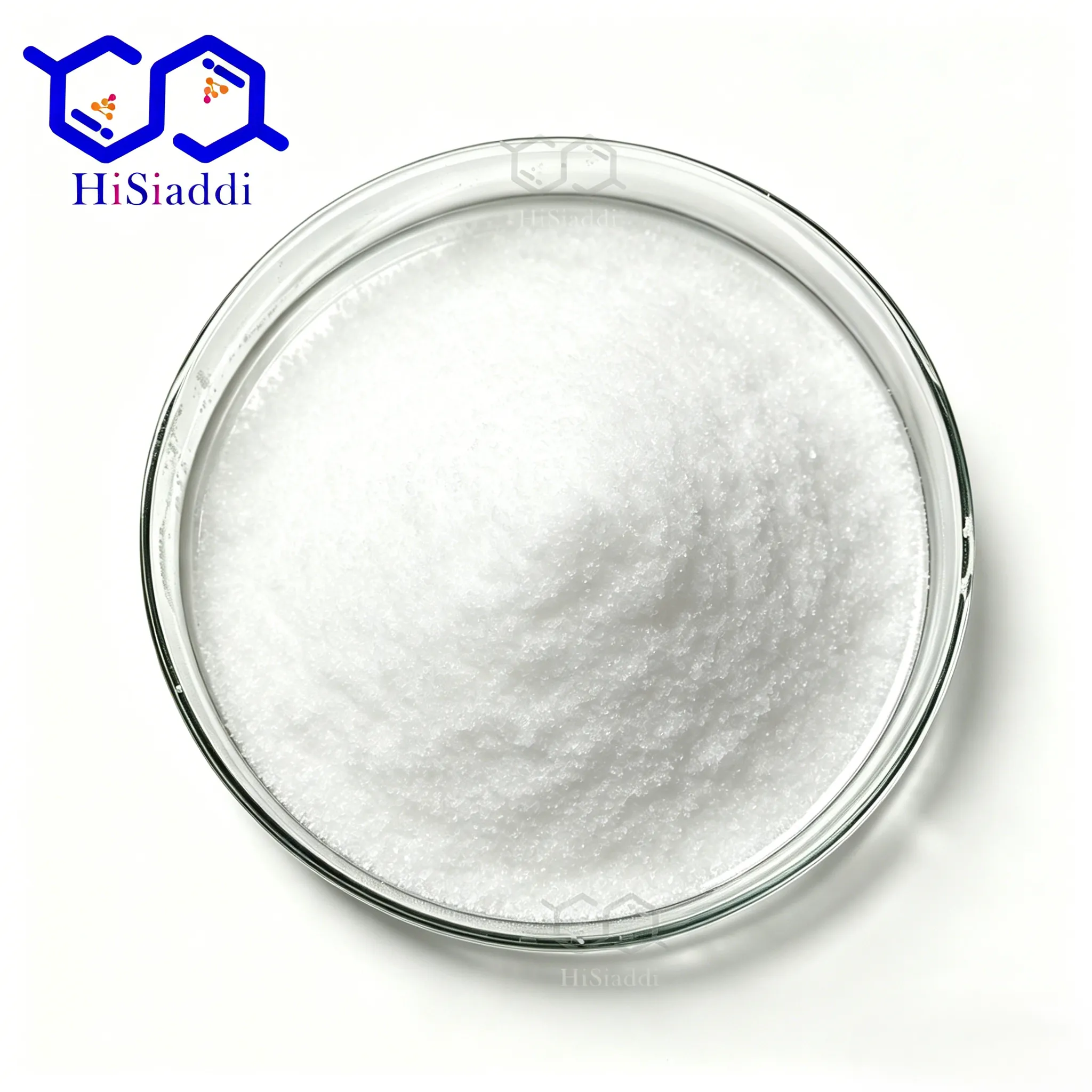
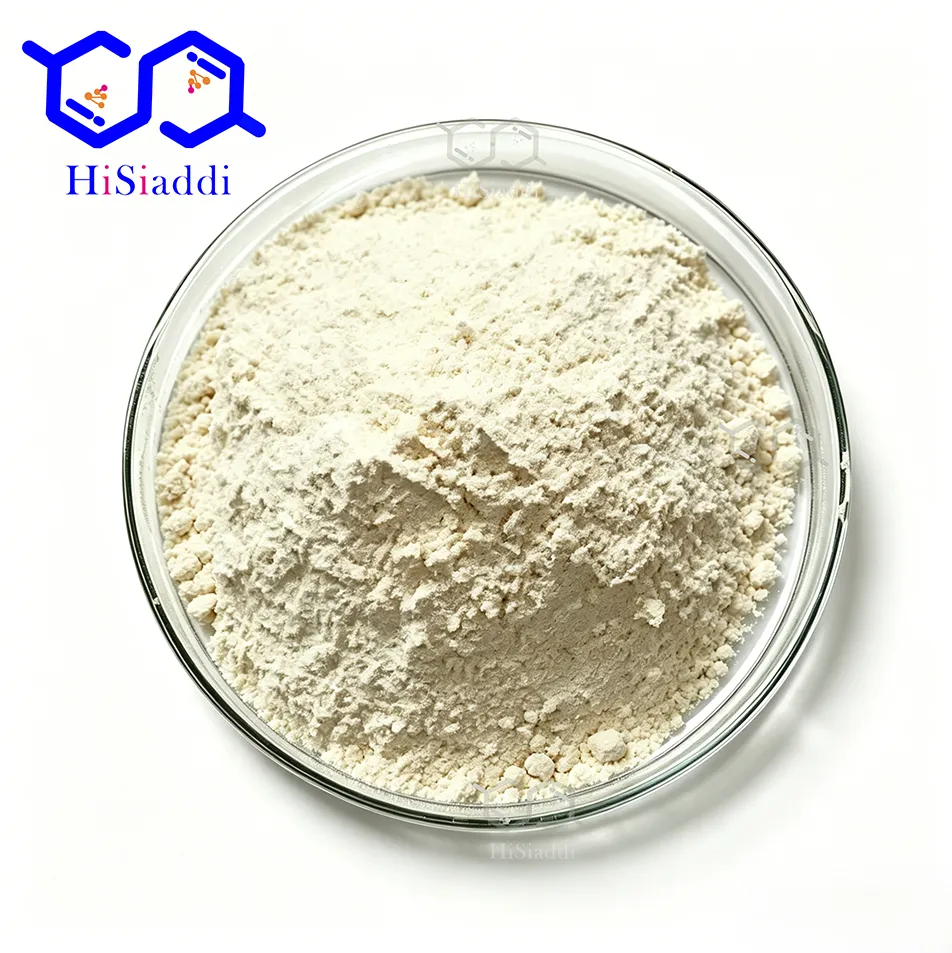
Rubber Accelerator TBBS, abbreviated as TBBS and NS, is a delayed-action sulfenamide accelerator with strong scorch resistance, fast vulcanization and high modulus. HiSiaddi can provide original factory supplies of multiple Chinese brands and the "1+2+3+4=1" service.
Weilin supplies TBBS-98 (≥98%) and TBBS-99 (high-purity grade, ≥99%) with initial melting point ≥105℃, excellent scorch resistance and high vulcanizate strength, priced 16%-19% lower than international similar brands, suitable for tire factories, rubber product factories, conveyor belt factories and shoe material factories.
Yanggu Huatai provides TBBS-YH (≥97%) and TBBS-YHE (tire grade, ≥98%) with low dust and easy dispersion for mid-end tire/rubber product applications, priced 5%-7% lower than Weilin at the mid-end level.
HiSiaddi Exclusive Service: Offers consultation on key indicator & cost comparison of multiple brands, tire vulcanization formula, accelerator synergy and high carbon black rubber compound adaptation; provides batch COA and SGS/REACH; offers melting point testing for high-purity grade products.
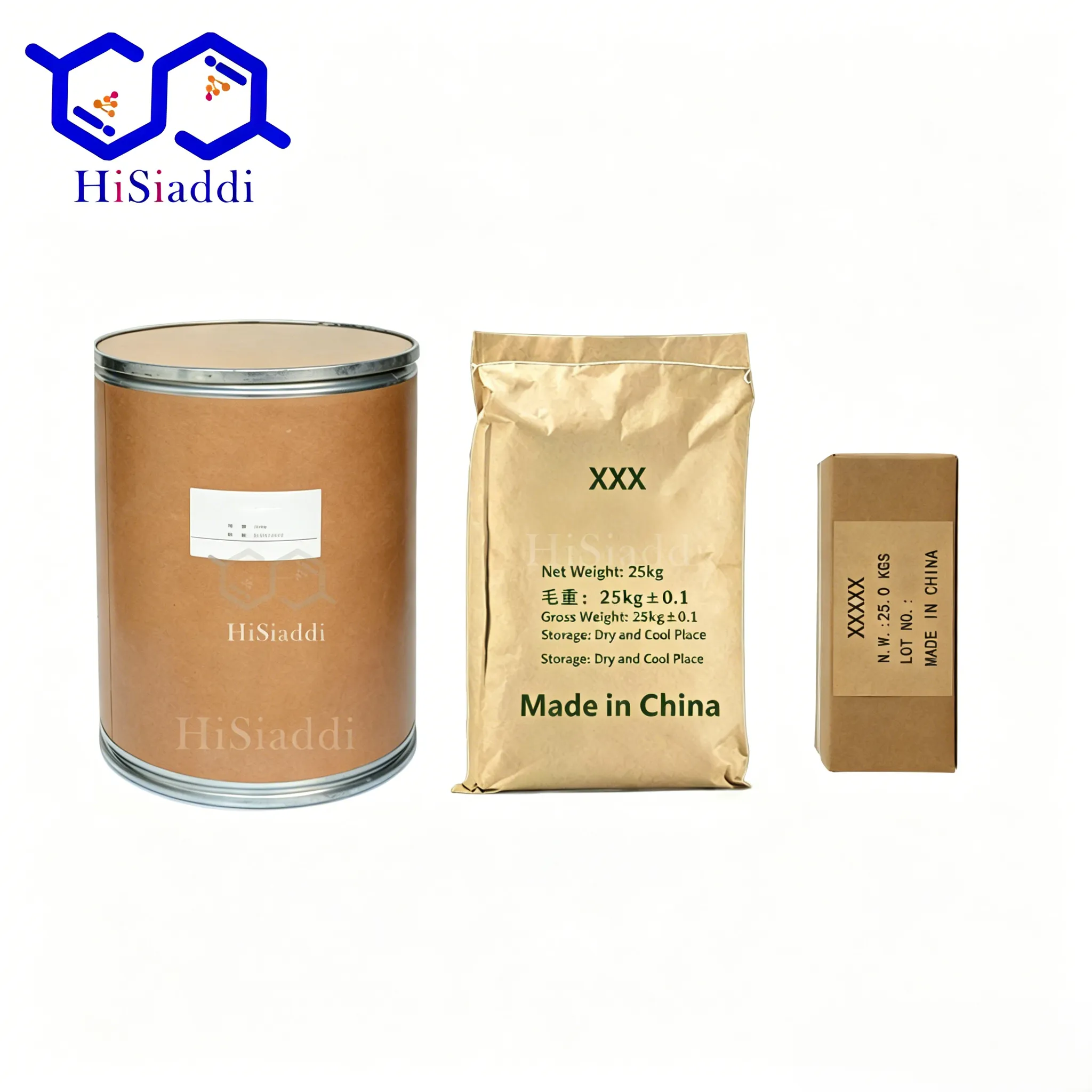
 CONTACT HiSiaddi NOW
| CAS No: | 103-34-4 | Brand Name: | Multi-brand |
| MF: | C8H16N2O2S2 | Model Number: | Multi-models |
| EINECS No: | 203-103-0 | Grade: | Industrial grade |
| Purity: | 98% | Place of Origin: | China |
| MOQ: | 1ton | Storage: | Please refer to the product packaging or contact the customer service. |
When purchasing DTDM as a buyer, you may encounter the following questions:
What are the key indicator advantages of major models of well‑known DTDM brands and their impacts on application performance?
What competitive services can DTDM suppliers provide?
What are the qualification certifications and market feedback of target DTDM brands?
What are the inventory levels and supply stability of DTDM suppliers?
What factors should be considered when purchasing DTDM?
…and many other related questions.
As an innovative foreign trade service provider driven by dual engines of technology commercialization and international trade services in China, HiSiaddi has established the "1+2+3+4=1" service system to ensure competitive services for B‑end buyers.
Addressing these questions, we first answer your most critical and immediate concern: from a global competition perspective, what are the key indicator advantages of renowned Chinese DTDM brands and their downstream benefits?
HiSiaddi is also pleased to analyze and answer other questions regarding DTDM. You may refer to the FAQs and blog posts on our website.
For more accurate, detailed and in‑depth analysis and solutions on DTDM procurement, please contact us.
DTDM, full name 4,4‑Dithiodimorpholine, CAS No.: 103‑34‑4, is a dual‑function additive combining a sulfur‑donating vulcanizing agent and a sulfenamide accelerator. As a core raw material for semi‑efficient vulcanization systems, it is an essential additive for heavy‑duty tires, conveyor belts, mining hoses, large rubber shock absorbers and cable sheaths.
China is the world's largest producer and exporter of DTDM, accounting for over 83% of global production capacity. The top five export brands are mainly located in Shandong, Henan, Jiangsu, Zhejiang and Hebei. Major overseas benchmark brands include Flexsys DTDM (USA), Lanxess Vulkalent DTDM (Germany) and Kumho DTDM (South Korea).
Overseas buyers prioritize these core indicators when purchasing DTDM: active ingredient purity, free morpholine, initial melting point, moisture, ash content, loss on heating, particle size/dust grade, sulfur content, reversion resistance, thermal stability, batch‑to‑batch consistency, REACH compliance and odor grade.
Key pain points for overseas buyers include product discoloration caused by excessive free morpholine, unstable crosslinking due to insufficient purity, high dust levels leading to workshop pollution, uneven vulcanization of thick rubber, high‑temperature reversion, caking during storage and pungent odor. Top‑tier Chinese models fully match or even outperform imported originals with significant price advantages, making them the primary import‑substitute solution for global heavy‑duty and thick‑walled rubber products.
HiSiaddi supplies genuine products from well‑known Chinese DTDM brands tailored to diverse customer groups. Based on export statistics, production capacity, global market share, compliance status, long‑term procurement reputation among overseas buyers, as well as HiSiaddi's research, inspections and long‑term cooperation experience with leading Chinese DTDM manufacturers, we have shortlisted the top five renowned Chinese DTDM brands: Shandong Yanggu Huatai Chemical, Henan Weilin New Materials, Jiangsu Sennics Co., Ltd., Zhejiang Jinke Daily Chemical and Hebei Kemai Rubber Additives.
All brands adopt continuous closed‑synthesis production for stable mass exports, with full English batch documents including REACH, RoHS, SGS, MSDS and COA. Overall prices of Chinese DTDM are 51%–66% of those of imported Flexsys (USA) and Lanxess (Germany products). High‑grade Chinese models match or exceed imported originals in high purity, low free morpholine, low dust, reversion resistance, thermal aging resistance and odor control, serving as the preferred import‑substitute solution for global heavy‑duty and thick‑walled rubber products.
In‑depth brand‑by‑brand analysis is provided below.
Main Models: DTDM‑Ultra (high‑purity, low‑morpholine, pelletized low‑dust premium grade), DTDM‑STD (standard general‑purpose export grade)
Active ingredient ≥99.2%, top‑tier industry purity with precisely controllable sulfur content; crosslinking efficiency identical to imported Flexsys
Free morpholine ≤0.10%, ultra‑low impurities; prevents yellowing, discoloration and pungent ammonia odor in rubber products, suitable for stable light‑colored rubber
Initial melting point ≥122℃ with a narrow melting range and exceptional stability; avoids premature decomposition during high‑temperature internal mixing and vulcanization, delivering top‑class reversion resistance
Vulcanization reversion resistance index ≥95; ensures stable crosslinking of thick‑walled rubber under prolonged vulcanization conditions, eliminating under‑vulcanization, over‑vulcanization and cracking caused by reversion
Moisture ≤0.15%, loss on heating ≤0.20%; no caking or deliquescence during long‑term storage, compatible with high‑temperature and high‑humidity storage in tropical and Southeast Asian regions
Ash content ≤0.05%, ultra‑low impurities with no adverse impact on rubber wear resistance, tear resistance, aging resistance and oil resistance
Custom pelletized low‑dust DTDM with Grade‑1 dust level; minimizes workshop dust pollution and complies with EU occupational health and safety regulations
Annual capacity of 10,500 tons with 75% export ratio; the top choice for large European and American heavy‑duty tire groups, mining conveyor belt manufacturers and precision cable rubber markets, featuring world‑class batch‑to‑batch consistency
Cost‑Performance: Ultra‑premium positioning at 66% of Flexsys DTDM price with 99.5% performance matching imported originals; the top domestic choice for high‑end heavy‑duty rubber applications
Target B‑End Buyers: European and American heavy‑duty commercial vehicle/off‑highway tire groups, large mining conveyor belt enterprises, high‑end hydraulic hose manufacturers, precision cable sheath modification factories, aerospace shock‑absorbing rubber enterprises and leading global rubber additive traders
Direct 1:1 replacement for imported Flexsys and Lanxess DTDM with no rubber formula adjustments required; crosslink density, reversion resistance and thermal aging resistance fully match imported materials
Low free morpholine completely eliminates yellowing and odor issues, enabling expansion into high‑end product categories for light‑colored heavy‑duty rubber components
Exceptional reversion resistance increases vulcanization pass rate of thick‑walled tires and large shock absorbers by 6%–9%, significantly reducing defective product losses
Narrow‑range melting point adapts to continuous internal mixing, extrusion and high‑temperature vulcanization processes for stable production and reduced shutdown‑and‑cleaning frequency
Pelletized low‑dust grade improves workshop environment and mitigates environmental penalty risks, meeting strict European and American occupational health standards
Stable annual capacity supports annual price‑locking and supply‑guarantee agreements, avoiding price hikes of morpholine and carbon disulfide raw materials and supply shortages in peak seasons
Specific Benefits for End‑Users: For off‑highway tires, mining conveyor belts, heavy‑duty truck tires, large rubber shock absorbers, precision cable sheaths and high‑pressure hydraulic hoses, it delivers stable crosslinking, crack‑free reversion resistance, thermal aging resistance, wear & tear resistance and long‑term dimensional stability, meeting stringent standards for global heavy‑duty industries and high‑end transportation equipment.
Main Models: WL‑DTDM‑Heavy (heavy‑duty thick‑wall‑specific reversion‑resistant grade), WL‑DTDM‑201 (standard general‑purpose grade)
Active ingredient ≥99.0%, free morpholine ≤0.15%; suitable for large‑scale continuous vulcanization via internal mixing of large thick‑walled rubber and mining products
Initial melting point ≥121℃ with enhanced thermal stability; adapts to prolonged high‑temperature vulcanization of heavy‑duty rubber with outstanding reversion resistance
High crosslink density and broad vulcanization plateau ensure uniform internal‑external vulcanization of thick‑walled products with no localized under‑vulcanization
Strong humidity‑heat resistance and aging resistance, compatible with dry, sun‑exposed and extreme temperature environments in the Middle East and Russia
Annual capacity of 8,800 tons; relying on Qingdao and Tianjin ports plus China‑Europe Railway Express, it ranks first in exports to mining rubber manufacturers in the Middle East, Russia and Eastern Europe with significant logistics cost advantages
Cost‑Performance: Mid‑to‑high‑end positioning at 61% of imported prices; outperforms general‑purpose imported grades in heavy‑duty mining/thick‑wall applications with exceptional cost‑performance
Target B‑End Buyers: Middle Eastern/Eastern European off‑highway tire manufacturers, mining conveyor belt groups, large shock‑absorbing rubber component factories, heavy‑duty hose enterprises and general industrial rubber product groups
Optimized heavy‑duty‑specific formula adapts to continuous production on large internal mixers with uniform vulcanization and stable reversion resistance for thick rubber
Broad vulcanization plateau significantly reduces rejection rates for ultra‑thick‑walled rubber products
Fast transit and low freight via China‑Europe Railway Express deliver prominent overall cost advantages for bulk procurement
Stable indicators suit extensive continuous production in the heavy‑duty rubber industry with high formula tolerance
Specific Benefits for End‑Users: For heavy‑duty mining conveyor belts, off‑highway tires, large bridge shock absorbers and oilfield hoses, it offers reversion resistance, wear resistance, weather resistance and long service life, adapting to extreme outdoor heavy‑duty working conditions.
Main Models: SA‑DTDM‑STD, SA‑DTDM‑Eco (economy general‑purpose grade)
Active ingredient ≥98.5%, meeting global general‑purpose industrial rubber standards with stable crosslinking and vulcanization acceleration effects
Free morpholine ≤0.22%, suitable for general industrial rubber with controllable discoloration risks
Initial melting point ≥120℃, moisture ≤0.25%, compatible with conventional mixing, compression molding and medium‑temperature vulcanization processes
Annual capacity of 14,500 tons, China’s largest DTDM producer with world‑leading supply volume and lowest bulk procurement costs
Cost‑Performance: Mid‑range benchmark at 51% of imported prices; satisfies 90% of general‑purpose industrial rubber product scenarios, the volume‑driven cost‑performance leader
Target B‑End Buyers: Southeast Asian general‑purpose industrial rubber factories, general conveyor belt manufacturers in Vietnam/Indonesia, Indian seal part factories, African low‑pressure rubber accessory factories and small‑and‑medium‑sized miscellaneous rubber product enterprises
Ultra‑large production capacity guarantees no supply shortages in peak seasons with a standard delivery time of 7–10 days
Industry‑low unit procurement prices enable large‑scale cost reduction for general conveyor belts, industrial sealing rings and daily‑use rubber components
Stable indicators suit ordinary rubber processing equipment with no high‑end process adjustments required for easy application
Specific Benefits for End‑Users: For general conveyor belts, industrial sealing rings, small shock absorbers and daily‑use miscellaneous rubber parts, it delivers stable crosslinking, no sulfur blooming and controllable costs, meeting basic export compliance requirements.
Main Models: JK‑DTDM‑Ultra (low‑dust weather‑resistant grade), JK‑DTDM‑UV (yellowing‑&‑aging‑resistant grade)
Active ingredient ≥99.1%, free morpholine ≤0.12%
Pelletized low‑dust technology with ultra‑low dust levels, suitable for precision cables, light‑colored industrial rubber and food‑contact‑grade rubber
Outstanding thermal aging and UV resistance, compatible with high‑temperature, high‑humidity and sun‑exposed environments in Southeast Asia
Cluster of Shanghai and Ningbo ports in Eastern China delivers the world’s fastest transit to Southeast Asia, Hong Kong, Macau and Taiwan
Customizable food‑contact‑grade and low‑heavy‑metal specialty DTDM grades available
Cost‑Performance: Mid‑to‑high‑end positioning at 64% of imported prices, optimally suited for high‑end industrial rubber and precision component scenarios in Southeast Asia
Target B‑End Buyers: High‑end cable rubber factories in Thailand/Malaysia, precision industrial sealing part manufacturers in Hong Kong, Macau and Taiwan, food‑grade rubber product enterprises and thin‑wall industrial rubber component producers
Low dust and low free morpholine enable easy passing of environmental, odor and occupational health inspections across Southeast Asian countries
Aging and yellowing resistance prevents discoloration of light‑colored rubber products during long‑term use
Fast Eastern China maritime transit supports small‑batch frequent restocking to reduce inventory pressure
Specific Benefits for End‑Users: For precision cable sheaths, light‑colored industrial sealing parts, home appliance rubber accessories and outdoor light‑duty conveyor belts in Southeast Asia, it delivers no sulfur blooming, stable weather resistance and full safety compliance.
Main Models: KM‑DTDM‑LowOdor (ultra‑low‑odor grade), KM‑DTDM‑Food (food‑contact‑grade DTDM)
Active ingredient ≥99.0%, free morpholine ≤0.09%, ultra‑low odor, suitable for high‑end food‑contact and medical‑grade rubber
Enhanced melting point stability with extremely low storage caking rate, compatible with humid and rainy climates in South America
Customizable specialty DTDM grades including UL‑certified, low‑heavy‑metal, non‑blooming and low‑temperature‑vulcanization‑specific grades
Deep market penetration in South America and Australia with complete local compliance documents, carbon footprint and ESG materials
Cost‑Performance: Mid‑range customized positioning at 59% of imported prices, outstanding cost‑performance for specialty compliance, food and medical applications
Target B‑End Buyers: Latin American industrial rubber modification factories, Australian food‑grade rubber enterprises, medical‑grade rubber accessory factories and high‑end precision sealing part enterprises
Ultra‑low odor and low impurities meet stringent safety standards for food‑contact and medical‑grade rubber
Customized indicators precisely align with environmental and carbon tariff regulations in South America and Australia
Food‑grade grades enable expansion into high‑end rubber categories, significantly boosting product premium and end‑user recognition
Specific Benefits for End‑Users: For high‑end industrial sealing parts in South America, Australian food‑grade rubber gaskets, medical rubber accessories and high‑end sanitary rubber parts, it delivers non‑toxic safety, comprehensive compliance and stable long‑term anti‑aging performance.

| Comparison Dimension | Shandong Yanggu Huatai DTDM‑Ultra | Henan Weilin WL‑DTDM‑Heavy | Jiangsu Sennics SA‑DTDM‑STD | Zhejiang Jinke JK‑DTDM‑Ultra | Hebei Kemai KM‑DTDM‑LowOdor |
| Product Positioning | High‑end high‑purity low‑morpholine pelletized low‑dust grade, matching original Flexsys/Lanxess | Mid‑to‑high‑end heavy‑duty thick‑wall‑specific reversion‑resistant grade | Mid‑range general‑purpose economy grade, volume‑driven leader | Mid‑to‑high‑end low‑dust weather‑&‑aging‑resistant grade | Mid‑range customized specialty ultra‑low‑odor food‑contact‑grade |
| Active Ingredient | ≥99.2% | ≥99.0% | ≥98.5% | ≥99.1% | ≥99.0% |
| Free Morpholine | ≤0.10% | ≤0.15% | ≤0.22% | ≤0.12% | ≤0.09% |
| Initial Melting Point | ≥122℃ | ≥121℃ | ≥120℃ | ≥122℃ | ≥121℃ |
| Moisture | ≤0.15% | ≤0.18% | ≤0.25% | ≤0.16% | ≤0.17% |
| Ash Content | ≤0.05% | ≤0.06% | ≤0.10% | ≤0.05% | ≤0.05% |
| Dust Grade | Grade‑1 pelletized low‑dust | Grade‑2 regular granules | Grade‑3 powder/granules | Grade‑1 pelletized low‑dust | Grade‑1 pelletized low‑dust |
| Reversion Resistance Index | ≥95 | ≥92 | ≥85 | ≥93 | ≥94 |
| Core Competitive Advantages | High purity, low‑morpholine discoloration resistance, low dust, strong reversion resistance, suitable for high‑end European & American heavy‑duty applications | Heavy‑duty thick‑wall specificity, broad vulcanization plateau, humidity‑heat resistance, China‑Europe Railway Express logistics advantage | Largest capacity, lowest price, most stable supply | Low dust, weather‑&‑aging resistance, fast Eastern China logistics, Southeast Asia adaptability | Ultra‑low odor, food‑grade customization, full compliance for Latin America & Australia |
| Price vs. Imported Equivalents | 66% | 61% | 51% | 64% | 59% |
| Main Export Regions | Europe, America, Japan, South Korea | Middle East, Eastern Europe, Russia | Southeast Asia, India, Africa | Southeast Asia, Hong Kong, Macau, Taiwan | Latin America, South America, Australia |
| Core B‑End Buyers | Global heavy‑duty tire/mining conveyor belt/cable rubber factories | Middle Eastern & Eastern European off‑highway tire & mining conveyor belt factories | General conveyor belt, industrial sealing part & regular miscellaneous rubber factories | High‑end cable & precision industrial rubber factories in Southeast Asia | Latin American medical/food‑grade rubber & high‑end industrial sealing part factories |
| Key Downstream B‑End Benefits | 1:1 import substitution, high reversion‑resistant yield, discoloration resistance, workshop environmental friendliness | Uniform thick‑wall vulcanization, humidity‑heat resistance, bulk cost reduction | Lowest cost, short delivery time, ultra‑large capacity supply guarantee | Low dust & aging resistance, fast maritime transit, simple compliance | Ultra‑low‑odor safety, customized indicators, compliance with regional special regulations |
| End‑Users | Off‑highway tires, mining conveyor belts, high‑pressure hoses, precision cables | Heavy‑duty mining conveyor belts, off‑highway tires, bridge shock absorbers | General conveyor belts, industrial sealing rings, small shock absorbers | Precision cables & light‑colored industrial sealing parts in Southeast Asia | High‑end South American sealing parts, Australian food‑grade parts, medical rubber accessories |
| Direct Overseas Benchmarks | Flexsys DTDM (USA), Lanxess Vulkalent DTDM (Germany) | General‑purpose Lanxess DTDM | Economy‑grade imported DTDM | Low‑dust Flexsys DTDM | Specialty compliance‑grade imported DTDM |
Performance: China's top five leading DTDM brands fully match imported equivalents in active ingredient content, melting point, crosslinking efficiency and reversion resistance. High‑grade Chinese models outperform overseas originals in low free morpholine, low dust, odor control and uniform vulcanization of thick rubber, perfectly fitting heavy‑duty thick‑walled rubber systems.
Cost: Chinese DTDM prices are only 51%–66% of imported products, cutting overall procurement costs by 34%–49% with equivalent performance, delivering remarkable cost‑reduction effects for mining and heavy‑duty product manufacturers.
Production Capacity & Supply Chain: China holds a global monopoly on DTDM production capacity with stable continuous closed‑synthesis production, avoiding issues faced by overseas brands including price hikes, supply shortages, long delivery times, high minimum order quantities and lengthy customization cycles.
Customization Capability: Chinese manufacturers rapidly customize pelletized low‑dust, ultra‑low‑odor, food‑grade and heavy‑duty reversion‑resistant‑specific grades, whereas overseas brands feature long customization cycles, high minimum order quantities and severe price premiums.
Compliance: All five top brands provide complete REACH, RoHS, SGS, COA and MSDS certifications, supporting customs clearance, factory audits and end‑user industrial brand reviews worldwide.
HiSiaddi is a new type of foreign trade service provider driven by both technology transformation and foreign trade business. It has built a "1+2+3+4=1" product service system: 1 foreign trade salesperson with over 3 years of experience, 2 R&D teams, 3 high-quality suppliers, and 4 warehouses to fulfill each product demand.
With this service system, HiSiaddi surpasses most foreign trade enterprises in R&D optimization and technical processes of Accelerator DTDM, outperforms individual manufacturers in capturing market demands and competitive edges of different Accelerator DTDM brands, and has a deeper understanding of the Accelerator DTDM foreign trade market than research institutes.
HiSiaddi only recruits foreign trade sales staff with more than 3 years of working experience. All salespeople must complete over 6 months of joint training by the R&D team and foreign trade team before serving clients.
(1)Accelerator DTDMBasic Support Services
Backed by the foreign team and corporate service system, we provide customers with one-stop full-process document processing services, including but not limited to the issuance and handling of all Accelerator DTDM compliance certificates, as well as the provision of third-party test reports and follow-up solutions for quality complaints.
(2)Accelerator DTDMExclusive Value-Added Services
Supported by the R&D team, we deliver product customization and technical consulting services to clients, including but not limited to core index matching and cost analysis of all Accelerator DTDM brands, plus regular sharing of Accelerator DTDM market trends.
We carry out in-depth cooperation with raw material manufacturers through technology transformation, and maintain close internal collaboration with the foreign trade team to deliver technical training for sales personnel, enabling professional customization of Accelerator DTDM and offering research-level consulting for Accelerator DTDM brand matching and application optimization.
(1)Accelerator DTDM Research-Grade Customization Services
Customized service with ultra-low free morpholine, low-dust pellets, high purity and strong anti-reversion performance: Overseas buyers’ core troubles include discoloration, heavy dust, crack of thick rubber and pungent odor. We develop premium DTDM with free morpholine ≤0.07%, Grade 1 low-dust pellets, purity ≥99.5% and anti-reversion index ≥98, for heavy mining rubber, precision cables and light-colored industrial rubber goods.
(2)Accelerator DTDM Research-Grade Consulting Services
Provide semi-effective vulcanization compound formulas of DTDM matched with TBBS/CBS, zinc oxide and antioxidants, together with internal mixing temperature and vulcanization parameter debugging; compare domestic DTDM with Flexsys/Lanxess imported products in a 1:1 test to guarantee equivalent performance and cost reduction without risks.
Our foreign trade team and R&D team work collaboratively. Through preliminary market research, factory site visits, product testing, in-depth technical cooperation and product procurement partnerships, we select around 3 reliable, stable, reputable manufacturers with great development potential.
(1) Initiative to Secure Lower Raw Material Prices
Long-term cooperation via technology transfer and exclusive agency enables us to obtain factory direct supplies at more competitive prices.
(2) Accelerator DTDMLong-Term Supply Chain Assurance Services
Long-term technical and agency cooperation strengthens full production supervision, full-lot traceability, stable batch quality control, and compensation guarantees for products failing third-party inspections.
We have 4 warehouses, which are jointly operated and managed with suppliers to store hot-selling products.
(1)Accelerator DTDM Fast Local Delivery & On-Site Problem Resolution
The four warehouses are located at Qingdao Port in North China, Ningbo Port in East China, Shenzhen Port in South China and Zhengzhou, the inland logistics hub, to ensure timely delivery of Accelerator DTDM. On-site staff can resolve transport accidents, packaging defects and export compliance issues locally once Accelerator DTDM encounters abnormal situations.
(2) Accelerator DTDM Price Stabilization & Custom Packaging Support
We stock goods in advance during peak seasons with drastic price fluctuations to ease price volatility. Self-operated warehouses support customized packaging and label solutions to meet personalized customer demands.
As a new-type foreign trade service provider driven by both technology commercialization and foreign trade services, HiSiaddi has established a "1+2+3+4=1" service system and can supply original factory goods of multiple well-known brands for Accelerator DTDM. As a research-and-development-oriented foreign trade enterprise, HiSiaddi will systematically sort out and analyze common difficulties faced by B-end purchasers when sourcing Accelerator DTDM in China, and propose corresponding solutions from HiSiaddi.
If you require more professional and in-depth analysis regarding the selection of Accelerator DTDM, please contact HiSiaddi customer service.
1. Substandard initial melting point triggers premature decomposition during high-temperature mixing and loss of scorch safety Mixing temperatures for tires and high-pressure hoses reach 120~140°C. Low-quality DTDM features low initial melting point, decomposing prematurely at high temperatures to release active sulfur, causing rubber to harden via premature vulcanization during extrusion, calendering and forming, generating dead stock and particles. This forces frequent production line shutdowns for cleaning, drastically reducing continuous production efficiency and scrapping massive raw material volumes.
2. Batch fluctuations in main content and sulfur content destabilize vulcanization crosslink density and degrade heat aging resistance DTDM features an active sulfur content of approximately 27%. Fluctuations in main content and sulfur content directly impact crosslink density. Under identical formulations, insufficient sulfur leads to inadequate crosslinking, compromising tire wear resistance and hose pressure resistance; excessive sulfur creates overly dense crosslinks, rendering rubber brittle with reduced impact resistance and drastically degraded heat aging performance, failing to meet long-term service requirements of high-end European and American finished goods.
3. High free morpholine content creates pungent odors, corrodes equipment and accelerates rubber aging Incomplete synthesis and purification leave residual free morpholine, generating strong irritating odors in mixing and vulcanization workshops and deteriorating working environments. Free morpholine damages rubber molecular structures, accelerating cracking and aging of tires and hoses during long-term service, while slightly corroding metal surfaces of internal mixer rolls and molds and raising equipment maintenance costs.
4. Excessive heating loss and moisture generate pores and bulges during high-temperature processing Elevated powder moisture and volatile contents vaporize into water vapor inside high-temperature rubber compounds, forming dense pores inside tire carcasses and hose inner walls, damaging finished product compactness and triggering bulging and cracking under high-pressure operating conditions with inherent safety hazards.
5. Uneven particle size and crystal agglomeration lead to poor mixing dispersion and abnormal local vulcanization of finished goods High proportions of coarse particles and clustered fine crystals fail to disperse uniformly in rubber compounds, generating white spots and chromatic aberration on tire surfaces. Regions with concentrated additive deposits suffer over-vulcanization while weak zones experience under-vulcanization, leading to inconsistent tire dynamic balance and hose pressure resistance and mass rejection of finished goods upon acceptance inspection.
6. Poor storage stability causes moisture absorption and caking during long-term warehousing, disrupting automated feeding Ordinary DTDM exhibits weak temperature and humidity resistance. Moisture absorption and hardening occur during ocean shipping and warehousing, clogging automated silos and loss-in-weight feeders and requiring manual clearing, disrupting assembly line production rhythms.
1. Adopt high-purity recrystallization technology to lock initial melting point ≥123°C, stably withstanding mixing temperatures above 140°C without premature decomposition during mixing, fully safeguarding scorch safety and eliminating rubber scorch issues.
2. Closed-loop synthesis + multi-stage refining purification delivers main content ≥99% and sulfur content stably maintained within 26.5%~27.5% with minimal batch differences, ensuring stable and uniform vulcanization crosslink density, precise matching of vulcanization processes and consistent compliance of finished heat aging and mechanical properties.
3. Multi-stage water washing + negative pressure morpholine removal technology controls free morpholine at extremely low levels, drastically reducing workshop odors while preventing premature rubber aging and equipment corrosion and extending service life of finished goods and machinery.
4. Vacuum constant-temperature deep drying strictly limits heating loss ≤0.3% and moisture ≤0.2%, eliminating water vapor generation during high-temperature processing and delivering pore-free, bulge-free finished goods with compact and safe structures.
5. Jet pulverization + multi-stage precise sieving delivers narrow particle size distribution with no agglomeration, enabling uniform dispersion in rubber systems and spot-free, consistent color finished goods with unified vulcanization performance.
6. Add eco-friendly anti-caking additives paired with thickened moisture-proof sealed packaging to prevent moisture absorption and hardening during long-term warehousing, enabling uninterrupted smooth automated feeding and supporting full-capacity mass production.
1. Poor compatibility with vulcanization systems, anti-aging agents and fillers disrupts vulcanization curves Low-quality DTDM contains organic impurities that trigger side reactions with sulfur, accelerators and automotive anti-aging agents, drastically shifting vulcanization onset and peak values. Local under/over-vulcanization occurs in rubber seals, increasing compression set and reducing resilience, causing engine oil leakage and compromised shock absorption of damping components.
2. Residual small-molecule substances deliver weak migration resistance, resulting in surface blooming on finished goods Incomplete purification leaves residual by-products. After prolonged exposure to alternating high-low temperatures and sunlight in vehicle rubber components, additives gradually migrate to surfaces forming white blooming, disqualifying finished goods on appearance grounds. Blooming layers also weaken adhesion between rubber and metal skeletons/paint surfaces, leading to debonding and assembly failures.
3. Excessive volatile organic compounds generate interior odors and VOC levels exceeding European and American automotive interior control standards Residual solvents and low-molecular volatiles continuously emit peculiar odors inside enclosed vehicle cabins, pushing VOC indicators beyond European and American automotive interior regulatory thresholds and barring entry into mainstream vehicle OEM supply chains.
4. Excessive ash content degrades rubber fatigue and weather resistance High inorganic ash content disrupts internal rubber crosslink structures. After prolonged vibration, rain and sunlight exposure, automotive rubber components easily crack and harden, reaching end-of-service life prematurely.
5. Batch activity fluctuations compromise dimensional precision of extruded products Unstable vulcanization activity causes erratic rubber compound fluidity, resulting in wall thickness and cross-section dimensional deviations of extruded seals and hoses beyond assembly tolerances and mass scrapping of workpieces.
1. Deep removal of organic interfering impurities enables full compatibility with all vulcanization additives and anti-aging agents, delivering stable and controllable vulcanization curves, minimal compression set and lasting resilience for seals, alongside stable sealing and shock-absorbing performance.
2. High-purity refining technology reduces small-molecule impurities and strengthens migration resistance, delivering finished goods free of blooming or precipitation over long-term service with clean surfaces and reliable adhesion performance.
3. Multi-stage devolatilization and solvent removal processing delivers low-odor, low-volatility raw materials with VOC indicators fully compliant with European and American automotive industry standards.
4. High-temperature incineration purification strictly controls ash ≤0.3%, preserving superior fatigue and weather resistance of rubber and extending service cycles of automotive components.
5. Full-indicator standardized control delivers highly consistent batch vulcanization activity, enabling precise dimensional control of extruded products to meet precision assembly requirements.
1. Poor powder flowability causes bridging and material cutoff in automated batching silos with unbalanced additive dosage Conventional DTDM powder exhibits inferior flowability, prone to bridging and intermittent feeding in large automated silos, generating large deviations in additive dosage across rubber compound batches. Partial rubber batches suffer scorch while others experience delayed vulcanization, disrupting production rhythms.
2. Insufficient delayed-action performance triggers local scorch during compression molding of thick-walled soles Shoe materials mostly adopt compression and injection molding with concentrated heat in thick rubber sections. Low-quality DTDM features short scorch time, causing premature vulcanization on thick sole walls, forming hard outer skins and loose inner structures, drastically reducing finished goods bending resistance and anti-slip performance.
3. Mechanical impurity contamination generates black spots and protrusions on sole surfaces causing appearance defects Foreign matter introduced during production and packaging forms black spots and blemishes on molded soles, triggering mass rework and scrapping of finished goods due to appearance issues.
4. Moisture absorption and caking during warehousing cannot be fully broken by open mixing equipment leading to uneven vulcanization Humidity fluctuations in storage environments cause powder caking, which cannot be completely crushed by ordinary mixing equipment. Vulcanization abnormalities occur at agglomerated positions, resulting in inconsistent sole hardness and compromised usability and durability.
1. Powder surface flowability modification eliminates silo bridging and delivers continuous uniform feeding with precise and stable rubber compound formula ratios.
2. Optimized delayed-action activity extends safe operating cycles for compression and injection molding, eliminating local scorch on thick-walled soles with uniform internal and external texture.
3. Multi-stage filtration and impurity removal procedures fully eliminate mechanical impurities, delivering clean, defect-free finished goods surfaces and raising appearance yield rates.
4. Moisture-proof composite packaging paired with anti-caking treatment adapts to conventional warehousing environments, preventing powder moisture absorption and hardening and stabilizing mixing dispersion effects.
1. High pure product pricing leads to adulterated low-cost goods with insufficient active ingredients and complete vulcanization failure Genuine industrial-grade DTDM commands high procurement costs, squeezing profit margins for low-end finished goods manufacturers. Low-priced alternatives incorporate inert fillers such as talc and calcium carbonate, drastically reducing effective accelerator content. Rubber compounds suffer slow vulcanization, diminished strength or even complete vulcanization failure, triggering frequent customer complaints.
2. High free morpholine, ash and impurity contents create pungent workshop odors, accelerate equipment corrosion and premature finished product aging Simplified water washing and purification processes leave high residual free morpholine and impurities, deteriorating working environments. Acidic and amine substances accelerate mold and roller corrosion, while rubber components crack and age rapidly post-production with high return rates.
3. Batch fluctuations in melting point, content and moisture require repeated process adjustments and reduce production capacity Absence of standardized production control generates significant indicator differences between batches. Workers must repeatedly adjust mixing temperatures, vulcanization durations and additive dosage ratios with frequent equipment start-stop cycles, cutting production efficiency by over 20%.
4. Moisture absorption and caking under high-temperature high-humidity storage & transportation clog feeding systems and disrupt production lines High-temperature high-humidity ocean shipping and warehouse environments paired with insufficient single-layer ordinary packaging trigger rapid powder hardening, clogging feed hoppers and automated discharge ports and causing production shutdowns, schedule delays and material losses.
5. Incomplete compliance documents prevent local filing and sampling inspection, restricting distribution through informal channels Lack of English COA, MSDS, heavy metal and hazardous substance test reports blocks market regulatory sampling inspections, exposing cargo to detention risks with unguaranteed payment recovery.
6. Absence of supporting technical services prevents troubleshooting for scorch, uneven vulcanization and blooming, exacerbating raw material waste Suppliers only deliver goods without providing process guidance. Factories encountering production abnormalities blindly adjust formulations, further increasing rubber compound and additive losses.
1. Launch region-exclusive economical grades retaining core vulcanization acceleration and anti-scorch performance with simplified deep refining procedures for high-end finished goods, priced 20%~23% lower than premium pure grades to balance procurement costs and application performance.
2. Complete basic morpholine removal, impurity elimination and ash reduction treatments to improve workshop environments, slow equipment corrosion and finished product aging, meet civil rubber component usage standards and reduce customer complaint rates.
3. Standardized locked-parameter mass production unifies core indicators including melting point, main content and moisture for stable batch quality, enabling fixed production processes, minimizing machine readjustment frequency and unlocking full production capacity.
4. Double-layer sealed packaging with inner film and woven bags plus eco-friendly anti-caking additives adapts to high-temperature high-humidity environments, preventing powder moisture absorption and caking and ensuring smooth operation of feeding systems.
5. Provide a full set of English compliance documents free of charge per batch, assisting clients with local filing and sampling inspections to open formal supply chain channels.
6. Supply basic English process guidance with adjustment solutions for common issues including rubber scorch, uneven vulcanization and blooming to reduce raw material waste.
1. Widespread adulteration and filler mixing with falsely labeled main content and melting point trigger mass after-sales compensation claims Unscrupulous vendors blend cheap inorganic fillers into DTDM with falsely labeled active ingredient content, initial melting point and vulcanization activity. Downstream factories experience mass vulcanization failure, rubber scorch and finished goods scrapping upon use, forcing distributors to pay heavy compensation, lose long-term clients and damage channel credibility.
2. Insufficient packaging strength causes torn bags and powder leakage during ocean shipping triggering logistics disputes Thin ordinary packaging materials and weak heat seals rupture and leak powder under container stacking and long-distance transportation, generating material losses, cross-contamination of co-shipped goods and logistics deductions and compensation claims.
3. Absence of light and moisture protection leads to moisture absorption, caking and activity attenuation during long-term warehousing DTDM powder readily absorbs moisture and slowly decomposes under light exposure. Simple packaging fails to deliver protection, resulting in caking and reduced active ingredient content during storage. Shipments to high-end tire and automotive component clients fail warehouse inspection and face full-batch rejection.
4. Missing hazardous goods and environmental documentation blocks entry into European and American high-end supply chains Lack of updated English SDS, ocean hazardous goods appraisal certificates and heavy metal/restricted substance test reports disqualifies distributors from supplier audits by large European and American rubber manufacturers and brand owners, limiting business to low-end circulation and forfeiting high-margin orders.
5. Absence of batch traceability and third-party testing fails head enterprise factory audits Adulterated small-workshop sourced goods lack complete production ledgers, traceability records and authoritative test reports, resulting in automatic elimination during factory audits by leading European and American enterprises and preventing long-term large order cooperation.
6. Open repackaging introduces impurities and moisture reducing small-bag product quality Repackaging operations without closed, dust-proof and moisture-proof facilities contaminate powder with impurities and absorb water, lowering vulcanization activity and raising free morpholine content with sustained declining repurchase rates from end clients.
1. Direct supply of original factory pure powder with zero fillers and zero adulteration, with truthful labeling of all physical and chemical indicators. Third-party full-range international test reports accompany every batch to support global re-inspection, eliminating quality compensation risks at source and stabilizing channel reputation.
2. Customized thickened composite moisture-proof packaging bags with reinforced heat-sealed closures, with compressive and leak-proof testing for every bag before factory delivery to eliminate ocean shipping bag rupture, powder leakage, cargo loss and logistics disputes.
3. Combined light-proof inner film and outer moisture-proof packaging delivers stable powder with no moisture absorption, caking or vulcanization activity attenuation during long-term warehousing, smoothly passing incoming inspection by high-end clients.
4. One-stop provision of complete formal English documents including SDS, hazardous goods certificates and various environmental test reports to fully align with European and American high-end rubber enterprise supply chains.
5. Establish full-link traceability systems covering production, quality inspection, packaging, warehousing and transportation with fully traceable batch information to fully support client factory audits and supplier reviews and secure long-term large orders.
6. Provide standardized constant-temperature closed dust-proof repackaging specifications to guide repackaging operations, preventing powder contamination and water ingress and guaranteeing consistent quality across large and small packaging batches.
If you require more professional and in-depth analysis regarding the selection of Accelerator DTDM, please contact HiSiaddi customer service.
European powdered DTDM is prone to caking during storage, with a caking rate exceeding 18% under sub-zero cold storage conditions, leading to uneven dispersion during feeding.
Conventional industrial DTDM leaves trace free morpholine after vulcanization, failing to meet the Russian federal environmental limit (free morpholine ≤15ppm) for construction machinery seals used in drinking water pipelines. European manufacturers quoted a 75% price premium for customized modified products.
Severe vulcanization reversion occurred on the cover rubber after high-temperature vulcanization (155°C, 35 minutes), softening the rubber and causing a 22% drop in tensile strength.
Excessive heat buildup under dynamic compression during continuous operation; temperature rise exceeded 38°C after 48 hours of continuous running, failing to meet national standard performance requirements for mining conveyor belts.
Lead time
Quantity (ton) | 0 - 10 | 10 - 30 | > 30 |
Lead time (days) | 7 | 15 | To be negotiated |
The monthly inventory volume of DTDM Accelerator is 10 tons, with appropriate adjustments upwards or downwards in response to peak and off-peak seasons.
HiSiaddi safeguards the supply stability of DTDM Accelerator through the following measures:
(1) Performance evaluation and screening of DTDM Accelerator brand factories based on on-time delivery rate, batch pass rate, timeliness of risk alerts, and completeness of documentation to assess their supply stability.
(2) For each mainstream model or major grade of DTDM Accelerator, secure 1 primary high-quality brand manufacturer and 2 backup high-quality manufacturers.
(3) Each factory operates independent production lines in separate production zones to prevent production halts caused by major unforeseen incidents such as environmental production suspensions and power outages.
Through long-term cooperation with brand manufacturers via technology commercialization and authorized distribution channels, HiSiaddi can effectively strengthen supervision over the production processes of brand manufacturers, optimize full-process traceability management, improve batch stability control, and further reinforce real-time monitoring of the supply stability of DTDM Accelerator products.
Long-term Annual Framework Supply Guarantee Agreement. HiSiaddi signs 12-month long-term agreements with leading manufacturers. The agreements specify the minimum guaranteed supply volume, maximum price hike range, and priority production scheduling rights during peak seasons. It is stipulated that manufacturers shall issue a 30-day prior written notice if production is suspended due to environmental rectification or equipment maintenance, and backup manufacturers will be activated to replenish goods accordingly.
We have 4 warehouses, which are jointly operated and managed with suppliers to store hot-selling products.The four warehouses are located at Qingdao Port in North China, Ningbo Port in East China, Shenzhen Port in South China, and Zhengzhou, China’s inland logistics hub. This setup guarantees sufficient supply and timely shipment of DTDM Accelerator during peak seasons.
HiSiaddi issues a rolling demand forecast covering the subsequent three months on the 25th of each month, allowing manufacturers to reserve production capacity in accordance with the forecast. Any new urgent orders from overseas clients will be prioritized to draw on inventories or production capacity from backup manufacturers.
Unstable logistics for DTDM Accelerator will extend delivery lead times. HiSiaddi has established alternative arrangements covering multiple freight forwarders, ports and transportation solutions:
(1) Binding of multiple professional chemical freight forwarders for DTDM Accelerator
Each product is assigned 2 to 3 freight forwarders with hazardous chemical/food transport qualifications affiliated with different shipping lines. Alternative sailing schedules can be switched to immediately in case of space shortages or customs inspections on a single shipping route.
(2) Backup transportation solutions for DTDM Accelerator
Ocean freight serves as the standard mode; air freight and rail freight are reserved as alternatives for urgent orders. Long-term agreements for temperature-controlled containers are signed for temperature-sensitive and perishable food additives to secure shipping space.
(3) Visual tracking and digital early warning for DTDM Accelerator
Freight forwarders synchronize daily updates on container loading, customs declaration, vessel loading and port arrival milestones. If customs inspection occurs, replenishment from backup inventory will be initiated immediately to shorten client waiting periods.
Full-chain digital early warning automatically monitors four categories of risks:
Factory side: Expiring supplier environmental assessment certificates, renewal of production permits, scheduled major equipment overhauls, and notifications of price hikes for upstream raw materials;
Inventory side: Inventory falling below safety thresholds, excessive inventory age, and batches failing quality inspection;
Logistics side: Shipping line space shortages, strikes at destination ports, and updates to customs policies;
Overseas side: Revisions to additive regulations and adjustments to import restriction lists in target countries.
Early warning notifications are automatically pushed to procurement and business leads, allowing backup suppliers or inventory contingency plans to be activated in advance.
As a new-type foreign trade service provider driven by dual engines of technology commercialization and export services, HiSiaddi has built a "1+2+3+4=1" service system and can supply original factory sources of Accelerator DTDM from multiple well-known brands.
As an R&D-focused foreign trade firm, HiSiaddi is unlike single-brand manufacturers that only promote their own products. We objectively analyze multiple competitive Chinese export brands of Accelerator DTDM and share their certifications and market feedback to help buyers make efficient, reliable purchasing decisions.
If you require more authentic, objective profiles of multiple leading Chinese Accelerator DTDM brands, please contact HiSiaddi customer service.
· Industrial-grade Accelerator DTDM (powder/crystal): Purity ≥98.5%, nitrosamine ≤0.1ppm, universal grade for tires and general industrial rubber goods.
· Low-nitrosamine eco-grade Accelerator DTDM-LN: Nitrosamine ≤0.05ppm, fully REACH-compliant for new energy tires and medical latex products.
· Pre-dispersed masterbatch Accelerator DTDM-80GE: EPDM carrier with 80% active ingredient, dust-free and easy dispersion for high-end seals and vibration dampers.
· Long-term certified supplier for international tire giants: Fully qualified by Michelin, Bridgestone, Pirelli and Goodyear, integrated into core new energy tire formulations; overseas procurement volume rose 28% year-on-year in 2025.
· Zero EU market complaints: Consistently exporting over 3,000 tons to the EU annually for five consecutive years with smooth customs clearance. Downstream clients report 30% improved heat aging resistance and 40% lower reversion rate, with excellent compatibility with EPDM/fluororubber high-end products.
· Premium recognition in Southeast Asia & the Middle East: Eco-grade Accelerator DTDM-LN commands a 25% price premium in Indonesia, Thailand, Turkey and other markets with over 90% repeat purchase rates. Clients cite "industry-leading batch consistency, no blooming or discoloration defects".
· International: Full REACH registration for all grades, ISO9001/14001/45001, IATF16949; awarded Michelin’s "Global Excellent Supplier" (2024).
· Domestic: National Ministry of Industry and Information Technology "Manufacturing Single Champion Demonstration Enterprise" (dual certifications 2017 & 2019), China Rubber Industry Association Accredited Brand, drafting unit for national standard HG/T4389-2012.
· High-purity Accelerator DTDM-YH99: Purity ≥99.0%, free amine ≤0.03%, tailored for new energy vehicle tires and high-speed rail vibration dampers.
· Standard industrial-grade Accelerator DTDM-YH: Purity ≥98.0%, cost-effective for heavy-duty tires and general rubber miscellaneous parts.
· Low-volatile Accelerator DTDM-LV: Heat loss ≤0.2%, formulated for medical latex and food-contact rubber products.
· Core supplier for top new energy tire manufacturers: Supporting Zhongce, Sailun and Linglong new energy tire production; new energy sector orders accounted for 45% of total volume in 2025. Clients report "20% faster vulcanization efficiency, ideal for high-load new energy tire formulations".
· Compliance benchmark for North American markets: Certified by Goodyear and Continental North America; US-bound exports rose 35% year-on-year in 2025. Clients note "carbon footprint 15% below industry average, aligned with CBAM green requirements".
· Reliable staple for industrial rubber goods: Over 85% repeat purchase rate for hoses, belts and cables, with standout strengths of safe scorch resistance and wide processing windows for continuous production lines.
· International: Full REACH registration, ISO9001/14001, IATF16949; awarded Bridgestone’s "Asia-Pacific Excellent Supplier" (2025).
· Domestic: A-share listed stock (300121), Vice Chairman Unit of China Rubber Additives Association, revision unit for national standard GB/T 11407-2018.
· Torch-brand industrial-grade Accelerator DTDM: Purity ≥98.0%, classic crystalline form with superior cost performance for tires and general seals.
· Eco low-nitrosamine Accelerator DTDM-HN: Nitrosamine ≤0.08ppm, REACH-compliant for mid-tier export rubber goods.
· Long-term partner for major domestic tire manufacturers: Core supplier for Double Coin, Prinx Chengshan and Double Star with over 20 years of stable supply; clients praise "consistent quality, competitive pricing and on-time delivery".
· Leading market share in Southeast Asia & South America: Over 2,500 tons exported to Vietnam, Malaysia and Brazil in 2025. Local buyers confirm "far better cost performance than Korean and Japanese brands, matching regional mid-low tire demand".
· Top reputation for industrial miscellaneous rubber goods: Over 90% repeat purchase rate for bicycle tires, rubber shoes and ordinary latex gloves, with key advantages of no blooming and easy dispersion for low-cost formulations.
· International: Full REACH registration, ISO9001/14001, IATF16949; qualified global supplier for Hankook Tire.
· Domestic: Designated manufacturer under the former Ministry of Chemical Industry (founded 1953), member of China Rubber Industry Association, drafter of 8 national standards, National High-Tech Enterprise.
· Actmix Accelerator DTDM-80GE/C: Pink pellets with EPDM carrier, 80% active ingredient, dust-free and highly dispersible for high-end seals and new energy vehicle EPDM sealing strips.
· Accelerator DTDM-80PEF200: PE carrier for high-flow formulations, designed for cable and wire insulation layers.
· High-purity powder Accelerator DTDM-A985: Purity ≥98.5%, for medical latex and premium rubber miscellaneous parts.
· Certified supplier for global sealing giants: Qualified by Freudenberg, NOK and Zhongding Sealing; high-end sealing product orders made up 60% of total volume in 2025. Manufacturers report "dust-free operation, uniform dispersion, flawless finished surfaces and 15% higher production yield".
· EU medical market access: TÜV Rheinland medical-grade certified for export to EU medical latex gloves and premium condoms. Clients highlight "high purity and low impurity levels complying with food and medical contact standards".
· Core supplier for new energy automotive supply chains: Supporting BYD and Tesla EPDM sealing strips, with verified heat aging resistance of 1,500 hours suitable for high-temperature operating conditions in new energy vehicles.
· International: Full REACH registration, ISO9001/14001/45001, IATF16949, TÜV Rheinland medical certification.
· Domestic: Drafting unit for national pre-dispersed rubber additive industry standards, National High-Tech Enterprise, Specialized, Refined, Differential & Innovative "Little Giant" Enterprise.
· Low-temperature fast-curing Accelerator DTDM-LT: Purity ≥98.5%, activation starting at 120°C, ideal for thin-walled, complex precision rubber components.
· Standard industrial-grade Accelerator DTDM-YS: Purity ≥98.0%, cost-effective for tires and general industrial rubber goods.
· Low-odor Accelerator DTDM-LF: Odor grade ≤3, formulated for indoor rubber products and automotive interior components.
· Breakthrough penetration in European high-end rubber goods markets: Mass shipments to supporting suppliers of Continental AG and Henkel in Germany in 2025. Clients confirm "20% energy savings via low-temperature vulcanization, superior dimensional stability for precision molded parts".
· Preferred supplier for domestic high-end miscellaneous rubber goods: Over 80% repeat purchase rate for high-speed rail interiors, automotive sealing gaskets and precision rubber parts, praised for fast vulcanization, minimal scorch risk and compatibility with high-efficiency production lines.
· Rapid growth in mid-high tier Southeast Asian markets: Exports to Singapore and Malaysia rose 40% year-on-year in 2025; regional clients recognize "advanced technology with better cost performance than European and American brands".
· International: Full REACH registration, ISO9001/14001, IATF16949; awarded Continental AG’s "Asia-Pacific Technical Supplier" (2025).
· Domestic: National High-Tech Enterprise, Provincial Rubber Additives Engineering Technology Research Center, holder of multiple low-temperature vulcanization patents.
表格
Brand | Core Competitive Edge | Best Target Markets | Price Range (USD/ton) |
Shangshun Chemical | Global market leader, unmatched stability, full product portfolio | EU/North America high-end, new energy tires | 2,800–3,200 |
Yanggu Huatai | A-share listed, optimized for new energy, low carbon footprint | Domestic top tire manufacturers, North American compliance-focused clients | 2,600–3,000 |
Henan Kailun | Time-honored state-owned enterprise, superior cost performance, reliable delivery | Southeast Asia/South America, mid-low grade tires | 2,200–2,500 |
Ningbo Actmix | Masterbatch technology specialist, dust-free, superior dispersion | High-end seals, medical latex products, cable insulation | 3,000–3,500 |
Zhejiang Yongsheng | Proprietary low-temperature vulcanization, energy-efficient, precision-adapted | European precision rubber goods, automotive interiors | 2,700–3,000 |
1. High-End Compliance & New Energy Applications: Prioritize Shangshun Chemical and Yanggu Huatai. All grades meet strict EU REACH and CBAM carbon regulations and fully support new energy tire formulations with long-term stable supply.
2. Cost-Performance for Mid-Low Tier Markets: Select Henan Kailun for consistent quality, prominent price advantages and flexible small-batch orders suited to Southeast Asian and South American low-tier demand.
3. High-End Seals & Dust-Free Medical Production: Choose Ningbo Actmix, whose world-class masterbatch portfolio comes with complete medical certifications and eliminates workshop dust hazards.
4. Precision Components & Low-Energy Vulcanization: Opt for Zhejiang Yongsheng, whose exclusive low-temperature vulcanization technology delivers energy savings and exceptional dimensional stability for precision manufacturing.
If you require more authentic, objective profiles of multiple leading Chinese Accelerator DTDM brands, please contact HiSiaddi customer service.
As a new-type foreign trade service provider driven by dual engines of technology commercialization and export services, HiSiaddi has built a "1+2+3+4=1" service system and can supply original factory sources of Accelerator DTDM from multiple well-known brands.
As an R&D-focused foreign trade firm, HiSiaddi is unlike single-brand manufacturers that only promote their own products. We objectively analyze multiple competitive Chinese export brands of Accelerator DTDM and share their production processes, supply stability, key quality indicators and downstream impacts to help buyers make efficient, reliable purchasing decisions.
If you require more authentic, objective profiles of multiple leading Chinese Accelerator DTDM brands, please contact HiSiaddi customer service.
· Core process route: Proprietary continuous micro-reaction synthesis using sulfur, chlorine and morpholine, replacing traditional batch reactors. Reaction temperature precisely controlled at 8±1°C to minimize side reactions; 120# solvent oil extraction + nitrogen-protected crystallization + vacuum low-temperature drying with fully sealed leakage-free workflow.
· Eco-upgraded process for low-nitrosamine grades (Accelerator DTDM-LN): Three-stage membrane filtration plus activated carbon adsorption to reduce nitrosamine residues below 0.05ppm, meeting the strictest EU REACH limits. Masterbatch grade (Accelerator DTDM-80GE) adopts EPDM carrier melt extrusion + dust-free pelletizing for 40% improved dispersion performance.
· Process advantages: 93%+ conversion rate (industry average 85%), 32% lower energy consumption and 45% reduced three-waste emissions. Full DCS automated control minimizes manual intervention for exceptional batch consistency.
· Production scale: Annual Accelerator DTDM capacity of 18,000 tons (global No.1), accounting for 28% of China’s total capacity. 94.6% capacity utilization in 2025 with full production and sales, no production shutdown risks.
· Raw material security: Self-built 20,000-ton annual morpholine production line; long-term locked supply of sulfur and chlorine from Sinopec and PetroChina, achieving 100% self-sufficiency of core feedstocks to hedge raw material price volatility and supply disruptions.
· Delivery capability: Dual manufacturing bases in Heze (Shandong) and Lianyungang (Jiangsu) with dual sea and land transport channels. Standard orders shipped within 7 days, urgent rush orders delivered in 3 days. 100% on-time delivery rate for overseas orders over the past three years with zero supply interruptions or delays.
· Inventory strategy: Bonded warehouses stocked with 3,000 tons safety inventory in core global regions (EU, Southeast Asia, North America) to accommodate sudden order surges and policy fluctuations.
· Industrial-grade Accelerator DTDM (powder): Purity ≥98.5%, initial melting point ≥122°C, ash ≤0.3%, heat loss ≤0.2%, nitrosamine ≤0.1ppm.
· Eco low-nitrosamine Accelerator DTDM-LN: Purity ≥99.0%, initial melting point ≥123°C, ash ≤0.2%, nitrosamine ≤0.05ppm (EU REACH limit: 0.1ppm).
· Masterbatch Accelerator DTDM-80GE: 80±1% active ingredient, dispersion residue on 150μm sieve ≤0.1%, dust-free, 25% improved scorch safety.
· Positive impacts: 1. Near-zero quality fluctuation with inter-batch performance variance ≤1.5%, eliminating downstream defects including discoloration, blooming and uneven vulcanization; 2. Full compliance with REACH registration and carbon footprint verification for all grades, eliminating additional testing costs for EU/North American exports; 3. Reliable delivery supported by dual production bases and regional bonded warehouses, avoiding production line downtime in peak seasons and excess inventory in off-peak periods.
· Potential downside: 5%-8% price premium over mid-small manufacturers, yet lower long-term comprehensive costs when factoring quality, compliance and delivery reliability.
· Core process route: Sealed synthesis using 120# solvent oil. Sulfur and chlorine generate sulfur monochloride, which reacts with morpholine at controlled temperatures of 5–10°C. Multi-stage gradient cooling plus 400kHz ultrasonic auxiliary crystallization delivers 30% more uniform crystal morphology.
· High-purity upgrade process for Accelerator DTDM-YH99: Vacuum distillation and recrystallization cut free amine ≤0.03% and metal ion content ≤5ppm, matching high-load new energy tire formulation requirements.
· Process advantages: Stable purity above 99.3% with minimal impurities; fully enclosed production lines meet strict VOCs emission standards to eliminate environmental compliance risks.
· Production scale: Annual Accelerator DTDM capacity of 12,000 tons (global No.2), 89% capacity utilization in 2025 with reserved 30% flexible expansion capacity.
· Raw material security: Equity investment in morpholine manufacturers delivers 70% core feedstock self-sufficiency; 3-year fixed-price agreements signed with upstream suppliers to offset raw material inflation.
· Delivery capability: Dual manufacturing bases in Yanggu (Shandong) and Yancheng (Jiangsu). Domestic orders delivered in 5–7 days, overseas shipments arrive in 10–15 days; 99.5% on-time delivery rate over the past two years with rare delays only under extreme weather conditions.
· Inventory strategy: 1,500 tons permanent domestic inventory plus 800 tons bonded warehouse stock in Southeast Asia prioritized for new energy tire customer orders.
· High-purity Accelerator DTDM-YH99: Purity ≥99.0%, initial melting point ≥122.5°C, ash ≤0.25%, free amine ≤0.03%, carbon footprint ≤2.8 tons CO₂ per ton (industry average: 3.2 tons).
· Standard industrial-grade Accelerator DTDM-YH: Purity ≥98.0%, initial melting point ≥121°C, ash ≤0.4%, heat loss ≤0.3%.
· Low-volatile Accelerator DTDM-LV: Heat loss ≤0.2%, suitable for medical and food-contact rubber products.
· Positive impacts: 1. Formulation compatibility with new energy tires; ultra-high purity and low impurities extend tire anti-aging and fatigue resistance, prolonging new energy tire service life by 15%; 2. Carbon tariff advantages from below-average carbon footprint, cutting CBAM expenses by 10%-15% for EU exports; 3. 3%-5% lower pricing than Shangshun with near-top-tier product quality for balanced cost performance.
· Potential downside: Longer delivery cycles (up to 15 days) for remote overseas regions requiring advance order planning.
· Core process route: Conventional batch reaction with 120# solvent oil. Morpholine reacts with sulfur monochloride below 10°C, followed by water washing, centrifugation and drying to produce finished goods. Mature, user-friendly technology with high fault tolerance.
· Eco-compatible upgrade for low-nitrosamine Accelerator DTDM-HN: Secondary water washing plus activated carbon filtration limits nitrosamine content ≤0.08ppm to meet mid-tier export market standards.
· Process advantages: Low equipment investment cuts manufacturing costs by 10%-15% vs. top-tier manufacturers; stable, low-risk technology suited for mass production.
· Production scale: Annual Accelerator DTDM capacity of 10,000 tons (global No.3), 85% capacity utilization in 2025 with rapid response capability for small and medium batch orders.
· Raw material security: Long-term supply partnerships with Shandong and Henan feedstock suppliers securing low procurement costs; state-owned enterprise credit ensures consistent raw material supply with zero supply disruptions.
· Delivery capability: Single manufacturing base in Huaxian (Henan). Domestic orders delivered in 7–10 days, overseas shipments arrive in 12–18 days; 98% on-time delivery rate with fast 3-day order confirmation for small-medium lots.
· Inventory strategy: 1,000 tons permanent standard inventory focused on Southeast Asian and South American markets with fast inventory turnover.
· Torch-brand industrial-grade Accelerator DTDM: Purity ≥98.0%, initial melting point ≥120°C, ash ≤0.5%, heat loss ≤0.5%, fully compliant with national standard HG/T4389-2012.
· Eco low-nitrosamine Accelerator DTDM-HN: Purity ≥98.5%, initial melting point ≥121°C, nitrosamine ≤0.08ppm.
· Positive impacts: 1. Significant price advantage (10%-15% cheaper than top-tier brands) drastically cutting raw material expenses for low-margin rubber goods; 2. Consistent quality fully meeting requirements for standard tires and industrial miscellaneous rubber parts with zero quality complaints; 3. Small order friendly with 1-ton minimum order quantity for flexible multi-spec small-batch demand.
· Potential downside: Inferior high-end metrics (nitrosamine, carbon footprint) prevent direct export to premium EU markets; slightly wider inter-batch performance variance (≤3%).
· Core process route: Powder Accelerator DTDM blended with EPDM/PE carriers at fixed ratios, processed via high-temperature melt compounding (80–100°C), twin-screw extrusion and dust-free pelletizing for masterbatch grades under fully enclosed dust-free production lines.
· High-purity powder process for Accelerator DTDM-A985: Solvent refining plus vacuum drying delivers purity ≥98.5% for medical and premium miscellaneous rubber goods.
· Process advantages: Masterbatch dispersion performance 50% superior to powder grades, completely dust-free, eliminating extra dispersant additives during mixing and lifting finished product yield by 15%.
· Production scale: Total annual Accelerator DTDM capacity of 8,000 tons (global No.4), 70% allocated to masterbatch production (world’s largest Accelerator DTDM masterbatch supplier).
· Raw material security: Powder Accelerator DTDM sourced primarily from Shangshun and Yanggu Huatai; EPDM/PE carrier feedstocks locked via long-term contracts with Sinopec and Dow Chemical for stable supply.
· Delivery capability: Single manufacturing base in Ningbo (Zhejiang). Domestic orders delivered in 5–7 days, overseas shipments arrive in 10–15 days; premium clients (Freudenberg, NOK) receive priority scheduling with 99.8% on-time delivery rate.
· Inventory strategy: 500 tons permanent masterbatch inventory dedicated to high-end seal and medical product manufacturers.
· Actmix Accelerator DTDM-80GE/C: 80±0.5% active ingredient, dispersion residue on 63μm sieve ≤0.5%, dust-free, 20% extended scorch time.
· Accelerator DTDM-80PEF200: 80±0.5% active ingredient with PE carrier for high fluidity, designed for cable and wire insulation layers.
· High-purity powder Accelerator DTDM-A985: Purity ≥98.5%, ash ≤0.3%, low impurity levels for medical-grade rubber applications.
· Positive impacts: 1. Zero workshop dust pollution lowering occupational health risks; 2. Uniform dispersion eliminating surface bubbles and defects for 15% higher finished product yield; 3. Full certification for global high-end supply chains including Freudenberg, NOK and Tesla for automotive sealing components.
· Potential downside: Masterbatch grades carry a 20%-25% price premium over powder products raising procurement costs; limited masterbatch capacity requires 15-day advance reservations for bulk orders ≥50 tons.
· Core process route: Self-developed low-temperature activation synthesis with reaction temperatures reduced to 0–5°C using proprietary activators to lower vulcanization onset temperatures. Low-temperature crystallization plus vacuum drying preserves active low-temperature functional groups.
· Low-odor upgrade for Accelerator DTDM-LF: Odor adsorption and devolatilization treatment reduce odor grade ≤3, suitable for indoor rubber goods and automotive interior components.
· Process advantages: Vulcanization onset at 120°C (traditional grades start at 135°C) delivering 20% energy savings, faster vulcanization speeds with minimal scorch risk for thin-walled, complex precision molded parts.
· Production scale: Annual Accelerator DTDM capacity of 7,000 tons (global No.5), 80% capacity utilization in 2025, with planned expansion to 10,000 tons annual capacity by 2026.
· Raw material security: Long-term supply partnerships with Zhejiang and Jiangsu feedstock vendors guarantee stable input supply; proprietary low-temperature vulcanization patents strengthen supplier bargaining power.
· Delivery capability: Single manufacturing base in Quzhou (Zhejiang). Domestic orders delivered in 7–10 days, overseas shipments arrive in 12–18 days; customized technical orders receive priority R&D and production scheduling with 98.5% on-time delivery rate.
· Inventory strategy: 400 tons permanent inventory focused on European precision rubber goods and automotive interior markets.
· Low-temperature fast-curing Accelerator DTDM-LT: Purity ≥98.5%, initial melting point ≥121°C, vulcanization onset at 120°C, superior scorch safety and dimensional stability.
· Standard industrial-grade Accelerator DTDM-YS: Purity ≥98.0%, initial melting point ≥120°C, cost-effective general-purpose grade.
· Low-odor Accelerator DTDM-LF: Odor grade ≤3, heat loss ≤0.3%.
· Positive impacts: 1. Energy-efficient low-temperature vulcanization cuts power consumption by 20% and shortens vulcanization cycles by 15% to boost production throughput; 2. Excellent dimensional stability eliminates component deformation for high-speed rail interiors and precision sealing gaskets; 3. Low-odor performance meets strict environmental standards for automotive interior and indoor rubber goods.
· Potential downside: Low-temperature specialized grades carry an 8%-10% price premium over standard industrial grades; high technical barriers require advance communication for customized formulation requests.
表格
Brand | Core Production Process | Supply Stability Rating | Standout Key Performance Indicators | Optimal Downstream Application Scenarios |
Shangshun Chemical | Continuous micro-reaction + multi-stage purification | ★★★★★ (Dual bases + self-sufficient raw materials) | ≥99.0% purity, ≤0.05ppm nitrosamine, inter-batch variance ≤1.5% | EU/North American high-end markets, new energy tires, medical latex products |
Yanggu Huatai | Solvent oil synthesis + ultrasonic crystallization | ★★★★☆ (Dual bases + raw material equity investment) | ≥99.3% purity, carbon footprint ≤2.8 tons CO₂/ton, free amine ≤0.03% | Domestic top tire manufacturers, North American compliance-focused clients, new energy supporting components |
Henan Kailun | Traditional solvent batch synthesis | ★★★★ (Time-honored state-owned enterprise + flexible order fulfillment) | ≥98.0% purity, 10%-15% lower pricing, 1-ton minimum order quantity | Southeast Asia/South America, mid-low grade tires, general industrial miscellaneous rubber goods |
Ningbo Actmix | Carrier melt compounding (masterbatch specialized) | ★★★★ (Masterbatch expertise + priority production for premium clients) | Dispersion residue ≤0.5%, dust-free, 15% higher finished product yield | High-end sealing components, medical latex goods, cable insulation layers |
Zhejiang Yongsheng | Low-temperature activation synthesis | ★★★★ (Technical innovator + rapid capacity expansion) | Vulcanization onset at 120°C, 20% energy savings, odor grade ≤3 | European precision rubber components, automotive interiors, high-speed rail fittings |
1. High-End Compliance & New Energy Tire Production: Prioritize Shangshun Chemical and Yanggu Huatai. Both fully satisfy EU REACH, CBAM carbon regulations and new energy formulation requirements with long-term consistent supply to eliminate operational risks.
2. Cost-Performance for Mid-Low Tier Export Markets: Select Henan Kailun for stable standard-grade quality, prominent price advantages and flexible small-batch ordering tailored to Southeast Asian and South American low-tier demand.
3. Dust-Free High-End Seals & Medical Manufacturing: Source from Ningbo Actmix, whose world-leading masterbatch technology delivers dust-free operation, superior dispersion and complete medical-grade certification for entry into global premium supply chains.
4. Precision Molded Components & Energy-Saving Low-Temperature Production: Choose Zhejiang Yongsheng for its exclusive low-temperature vulcanization technology delivering energy efficiency and exceptional dimensional stability for advanced precision manufacturing.
All five brands can provide COA, SDS, REACH registration certificates, ISO and IATF16949 certifications, support customized packaging, small trial orders (1-ton minimum) and professional formulation technical guidance.
If you require more authentic, objective profiles of multiple leading Chinese Accelerator DTDM brands, please contact HiSiaddi customer service.
As a new-type foreign trade service provider driven by both technology commercialization and foreign trade services, HiSiaddi has established a "1+2+3+4=1" service system and can supply original factory goods of multiple well-known brands for Accelerator DTDM. As a research-and-development-oriented foreign trade enterprise, HiSiaddi will analyze key purchasing considerations and critical indicators from a professional perspective to ease purchasing anxiety.
If you require more professional and in-depth analysis regarding the selection of Accelerator DTDM, please contact HiSiaddi customer service.
Before finalizing suppliers and product grades, complete full-dimensional pre-assessment first. This is the core prerequisite to guarantee stable delivery of cross-border orders and reduce post-production after-sales issues.
First, strictly verify target country and regional regulations as well as market access qualifications. DTDM is an eco-friendly vulcanizing agent exclusively for rubber that contains no nitrosamine precursors, making it an environmentally friendly product promoted in Europe, America and other regions. Nevertheless, clear chemical control standards apply in different countries and regions. For the EU market, products must complete REACH registration and SVHC Substance of Very High Concern screening. Automotive rubber parts and general daily-use rubber must comply with RoHS 2.0 hazardous substance restrictions; rubber toys and infant-contact products must meet the EN 71-3 toy safety standard. For the North American market, TSCA Chemical Inventory registration is mandatory. Tire and automotive rubber components shall follow North American automotive material specifications, while food-contact rubber articles must pass FDA food-contact-related testing. Japan, South Korea and Australia enforce extremely stringent standards for heavy metals, organic residual impurities, odor and dust levels. Southeast Asia, the Middle East, South America and other industrial markets adopt general safety standards. However, if goods are re-exported to European and American end markets, a full set of international certifications must be provided. Customs authorities worldwide conduct regular inspections of multi-language MSDS, batch-by-batch COA test reports and third-party certification documents, requiring complete consistency of certificate entities, manufacturing factories and shipment batch information. Missing qualifications or inconsistent certificates will directly result in cargo detention and return. Purchasers must verify all items one by one in the early procurement stage.
Second, fully match downstream rubber processing techniques and equipment operating conditions. DTDM is widely used in internal mixing, open mixing, extrusion, calendering, molding, high-temperature continuous vulcanization and other processes. Its core advantage lies in compatibility with high-temperature processing and thick-walled product vulcanization, while different processes impose vastly different performance requirements on the product. For high-temperature internal mixing and continuous vulcanization production lines, priority shall be given to thermal stability, scorch safety and consistency of vulcanization performance across batches. Fluctuating indicators will trigger premature scorch of rubber compounds and uneven vulcanization, leading to full-line production shutdowns and finished product scrapping. For thick-walled rubber products and large rubber roller formulations, DTDM must feature excellent dispersibility and uniform vulcanization penetration in rubber compounds to prevent under-vulcanization inside and over-vulcanization on the exterior. In multi-additive compound systems, good compatibility with accelerators, anti-aging agents and reinforcing fillers is required to avoid precipitation and blooming after long-term use. Automated closed batching production lines impose strict requirements on powder particle size, flowability and dust grade. Uneven particle size and excessive dust will interfere with batching precision and workshop working environment. For light-colored and colored rubber products, colored impurities must be rigorously controlled to prevent color spots and chromatic aberration on finished goods. New cooperative clients are advised to send samples for trial production on equipment in advance to verify vulcanization efficiency, scorch time and impacts on finished mechanical and anti-aging properties.
Third, distinguish end-product positioning and long-term service environments. High-value products such as high-end tires, automotive shock-absorbing parts, rail transit rubber, high-pressure hoses and heat-resistant cables must adopt high-purity, low-impurity, low-dust and high anti-aging refined grades. For rubber toys for children and skin-contact daily rubber goods exported to the EU, North America and Australia, migratable heavy metals and allergenic organic impurities shall be strictly controlled. Standard industrial grades can be selected for ordinary industrial rubber mats, general adhesive tapes and low-end rubber miscellaneous parts to balance procurement costs. For outdoor exposed products, coastal high-humidity and high-temperature rubber components, additional evaluation of product weather resistance is required to prevent premature failure of additives and accelerated aging of finished products during long-term service. Select products as needed based on end-product positioning to balance finished quality and operating profits.
Fourth, evaluate supplier production capacity, raw material supporting capacity and long-term supply stability. DTDM is synthesized using morpholine, sulfur and chlorinating agents as core raw materials, with production processes including condensation, vulcanization, refining, drying and sieving. The process demands precise reaction control and advanced purification technology. Purchasers undertaking long-term large global orders, multi-port distribution and peak-season bulk replenishment shall prioritize large-scale factories with continuous production lines and self-sufficient core raw material supporting capacity. Such enterprises are less affected by upstream raw material price hikes and regional environmental inspections, with low capacity fluctuations across off and peak seasons and stable batch quality. Meanwhile, confirm whether suppliers support direct delivery from major export ports including Qingdao, Shanghai, Ningbo and Tianjin, and flexibly accept full-container, LCL and small-batch rush orders. In addition, audit enterprise laboratory capabilities to confirm full-range physical and chemical testing, vulcanization performance and thermal aging testing capacity, as well as cooperation with international third-party institutions such as SGS, Intertek and BV for sampling and re-inspection.
Fifth, plan cross-border packaging, transportation and long-distance storage & transportation solutions. DTDM normally exists as white or light yellow crystalline powder, not classified as dangerous goods, with minimal restrictions on global sea, land and air transportation. Its storage and transportation characteristics include slight moisture absorption, caking under high temperature and color deepening under prolonged light exposure. For ocean shipping, tropical routes and rainy high-humidity regions, double-layer sealed packaging with inner moisture-proof film and thickened paper-plastic composite bags is mandatory. Standard 25kg packaging bags are commonly used, while 500kg/1000kg bulk bags are available for large automated production lines. Light-proof and heat-insulated containers are preferred to avoid high temperature and sunlight inside holds. During storage and transportation, strict separation from strong acids, strong alkalis and strong oxidants is required. Warehousing shall adopt cool and dry storage with first-in-first-out implementation to prevent powder moisture absorption, caking and performance degradation.
Sixth, consider customized product services and supporting rubber formulation technical capabilities. Different rubber types and vulcanization processes worldwide impose personalized requirements on DTDM particle size, purity, dust grade and vulcanization rate. Mature manufacturers can provide customization services such as indicator fine-tuning and surface modification. Premium suppliers also offer professional formulation guidance, including compound ratios with other accelerators, sulfur and anti-aging agents, optimization of vulcanization systems, improvement of heat and aging resistance of finished products and solutions to blooming issues. Comprehensive technical support is a major bonus factor for long-term cooperation.
Regardless of purchased grade or destination region globally, the following physical and chemical indicators are rigid standards for sampling inspection upon factory delivery and arrival of every batch. Substandard indicators will directly damage vulcanization effects, trigger production failures and cause mass scrapping of finished goods, representing non-negotiable quality thresholds.
1.
Active Ingredient Content (DTDM Main Purity) Purity is the core determinant of comprehensive vulcanization, sulfur supplement and anti-scorch performance. Higher active ingredient content means fewer unreacted raw materials, by-products and impurities, delivering a more stable vulcanization system. Industry classification standards: Low-end industrial grade ≥97.0%, general standard grade ≥98.0%, high-end heat-resistant/automotive special refined grade ≥99.0%. Insufficient purity directly weakens sulfur supplementation capacity and vulcanization efficiency, leading to uncontrolled scorch time. Meanwhile, impurities accelerate rubber aging and shorten finished product service life, making this the top priority inspection indicator.
2.
3.
Melting Point / Melting Range The standard melting range of DTDM is 120~126°C. A narrower melting range indicates purer product composition and fewer low-melting-point impurities. An excessively wide melting range implies abundant low-melting by-products, which melt and precipitate prematurely during rubber mixing, easily causing blooming and stickiness on rubber surfaces, with severe impacts on light-colored and appearance-focused rubber products.
4.
5.
Heating Loss (Moisture + Volatile Substances) This indicator characterizes total free moisture and low-volatile impurities in the product. General grade heating loss ≤0.3%, high-end refined grade ≤0.2%. Excessive moisture and volatiles lead to moisture absorption and caking during ocean shipping and warehousing, undermining powder flowability and interfering with automated batching precision. During mixing and vulcanization, water vapor generates pores and voids inside rubber, drastically reducing structural strength and compactness of finished goods.
6.
7.
Ash Content Ash content represents insoluble inorganic impurities. General grade ash ≤0.2%, high-end dynamic rubber product special grade ≤0.1%. Inorganic particles in ash form stress concentration points inside rubber, significantly reducing tear resistance, wear resistance and fatigue resistance of finished goods. Tires, hoses, shock-absorbing parts and other dynamically stressed products enforce strict control over this indicator.
8.
9.
Appearance and Whiteness Qualified DTDM is white to light yellow crystalline powder. Whiteness directly determines the appearance effect of light-colored and colored rubber products. General grade whiteness ≥89%, high-end light-colored product special grade ≥91%. Low whiteness indicates excessive colored impurities such as iron ions, resulting in yellowed or gray rubber finished goods after processing, failing to meet appearance component production requirements.
10.
11.
Particle Size and Sieve Residue Particle size governs powder dispersibility and flowability in rubber compounds. Mainstream general models range from 80 to 120 mesh, while fine particle size models cover 150 to 200 mesh; sieve residue of the same grade shall be strictly controlled ≤0.1%. Excessively coarse particles and high sieve residue lead to uneven powder dispersion, differential local vulcanization degrees and partial under/over-vulcanization. Overly fine particles aggravate dust generation, disrupting operating environments in closed clean workshops.
12.
Based on four mainstream global application fields of DTDM, special testing indicators are categorized with distinct control priorities per scenario. These also serve as core criteria to distinguish product grades, pricing and alignment with international regulations, enabling precise quality control matched to your end products.
This represents the core application field of DTDM, featuring stable high-temperature vulcanization, low blooming, superior heat and aging resistance and excellent dynamic performance with the strictest indicator control.
1. Mooney Scorch Time: Core functional performance indicator simulating anti-scorch capacity under high-temperature internal mixing conditions. Minimal batch-to-batch fluctuation of scorch time under identical formulations and temperatures is required to avoid alternating scorch and under-vulcanization during production.
2. Vulcanization Curve (t10, t90): t10 guarantees processing safety while t90 determines production efficiency. Thick-walled products demand gentle vulcanization curves and uniform vulcanization penetration to eliminate outer over-vulcanization and inner under-vulcanization. High heat aging coefficient of vulcanized rubber is also required to slow performance attenuation under prolonged high-temperature service.
3. Blooming Tendency: Normal temperature and high-low temperature cyclic aging tests verify complete compatibility of additives with no migration or surface blooming over long-term use, safeguarding appearance and functional performance of tires and sealing parts.
4. Heavy Metal Content: Comply with RoHS and global automotive material environmental standards, with lead, cadmium, mercury, hexavalent chromium and other hazardous substances below regulatory limits, a mandatory testing item for automotive rubber exports.
5. Thermal Stability: Compatible with 130~170°C high-temperature mixing and continuous vulcanization processes, requiring no product decomposition or harmful flue gas generation while stably delivering sulfur supplementation and acceleration functions.
On top of general indicators, align with toy and daily-use safety regulations, focusing on non-toxicity, low migration, low dust and nitrosamine-free properties.
1. Migratable Heavy Metals: Testing simulating biting and skin contact per EN 71-3 and CPSIA standards, with far stricter limits than ordinary industrial additives, a one-veto pass/fail item for toy market access.
2. Nitrosamine and Precursor Screening: DTDM’s core advantage lies in low nitrosamine content. Comprehensive nitrosamine testing is required to meet EU eco-friendly rubber standards.
3. Hazardous Organic Impurity Screening: Screen carcinogenic and allergenic organic by-products, with all restricted substances below regulatory thresholds.
4. Low-Dust Performance: Infant product manufacturing mostly takes place in clean workshops, prioritizing surface-modified low-dust grades to reduce dust pollution.
Core priorities include basic vulcanization performance and cost control with moderately relaxed indicator requirements, suitable for mass production of low-end finished goods. Focus on three core basic indicators: purity, heating loss and ash content to guarantee normal vulcanization and fundamental mechanical properties of finished products. Minor fluctuations in scorch time and trace precipitation are tolerable, with priority given to balancing procurement costs and mass production efficiency.
Core control targets high whiteness, narrow melting range and low colored impurities to avoid color spots and chromatic aberration on finished goods. Beyond tightening whiteness and melting range indicators, strictly control black dots, yellow spots and other solid impurities. Volatile substance content shall also be regulated to prevent fading and fogging of colored rubber during long-term service.
Beyond physical, chemical and functional indicators, cross-border global procurement must simultaneously address qualifications, customization, supply stability and inherent product defects to ensure long-term stable cooperation.
Universal basic documents worldwide: ISO9001 quality management system, multi-language MSDS, batch-by-batch COA reports, SGS basic physical and chemical testing reports. EU Market: REACH registration, SVHC screening, RoHS 2.0; toy categories add EN 71-3. North American Market: TSCA chemical registration, CPSIA (toy category), FDA (food-contact rubber). Japan, South Korea, Australia: Local chemical inventory registration, special testing for heavy metals and nitrosamines. All certificates must remain within validity periods with consistent factory, brand and batch information.
Leading domestic DTDM manufacturers offer the following personalized customization for global B-end clients:
1. Particle size and sieving customization: Adjust powder mesh number and particle size distribution to match different dispersion and automated batching equipment.
2. Surface modification customization: Low-dust, moisture-proof hydrophobic modification to resolve dust generation and moisture absorption caking issues.
3. Purification grade customization: Deep refining to raise purity and reduce ash/impurities for high-demand scenarios including tires, toys and heat-resistant rubber goods.
4. Vulcanization parameter fine-tuning: Adjust scorch time and vulcanization rate within standard ranges to match clients’ exclusive rubber compound formulations.
5. Packaging customization: Flexible switching between 25kg bags and bulk bags, customized multi-language outer packaging labels.
6. Pre-mixed compound customization: Pre-mix with other accelerators and anti-aging agents per client-specified ratios to simplify downstream batching procedures.
Prioritize ten-thousand-ton-class factories with self-sufficient raw material supply and continuous synthesis & recrystallization production lines. Continuous production drastically narrows batch performance differences, while recrystallization technology guarantees stable purity and melting range. Self-sufficient raw materials mitigate risks of upstream price hikes and supply disruptions. Standard lead time for full-container orders ranges from 7 to 10 days, with direct delivery from multiple ports and acceptance of urgent rush orders. Small-scale intermittent workshops feature weak purification capacity, severe batch fluctuations and limited production capacity, making them unsuitable for long-term global cross-border large orders and high-spec end markets.
1. DTDM powder exhibits slight moisture absorption; damaged packaging or humid warehousing causes caking, undermining dispersion and batching. Full-process enhanced moisture-proof protection is mandatory.
2. Long-term exposure to high temperature and strong light triggers product discoloration and gradual decline of active ingredients. Ocean containers must be light-proof and heat-insulated.
3. The product delivers sulfur supplementation functionality; excessive addition leads to rubber over-vulcanization, elevated hardness and reduced toughness. New formulation clients shall conduct gradient tests in advance to confirm optimal addition ratios.
4. Ultra-fine particle size grades generate significant dust; ultra-clean dust-free workshops are recommended to adopt low-dust modified grades.
5. Ultra-high-purity, toy/heat-resistant special refined grades involve complex production procedures and command higher prices than standard industrial grades, slightly increasing downstream procurement costs.
6. In ultra-low-temperature vulcanization systems, DTDM alone delivers slow vulcanization speed and usually requires compounding with a small amount of fast-acting accelerators.
If you require more professional and in-depth analysis regarding the selection of Accelerator DTDM, please contact HiSiaddi customer service.



 +86-13120989737
  info@hisiaddi.com
 English