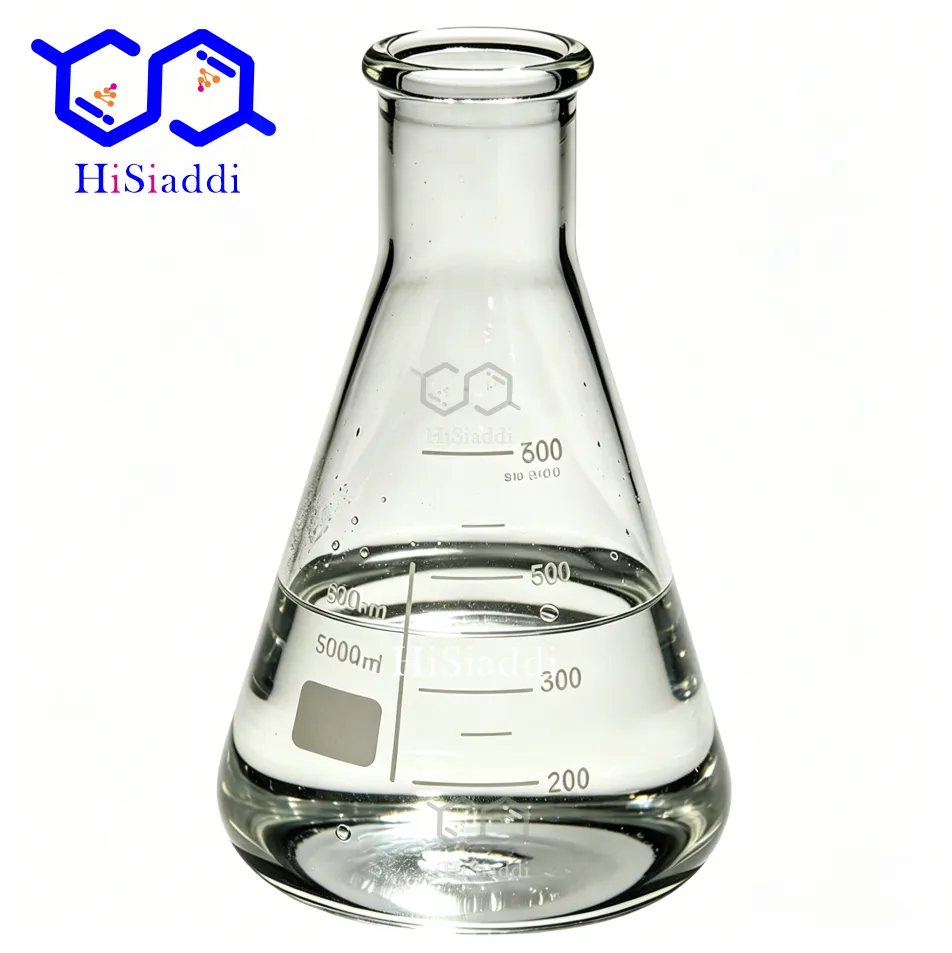
Polypropylene Glycol, also referred to as Polyoxypropylene Glycol and abbreviated as PPG, is used in cosmetic humectants, defoamers for metal working fluids and plasticizers for adhesives. HiSiaddi can provide original factory supplies of multiple Chinese brands and the "1+2+3+4=1" service.
Jiangsu Haian Petrochemical covers full molecular weights including PPG-400, PPG-1000, PPG-2000 and PPG-3000 with precise molecular weight (±5%), stable hydroxyl value, moisture ≤0.05% and low unsaturation (≤0.02meq/g). Priced 15%-20% lower than BASF/Dow with quality meeting international standards, it adapts to polyurethane foam factories, cosmetic raw material suppliers and North American coating/adhesive enterprises.
Huangma Tech produces bio-based PPG-1000/2000 with content ≥20%, low VOC, low odor and narrow molecular weight distribution. Although priced 5%-8% higher than Haian Petrochemical, it stands out in environmental protection and targets high-end environmentally friendly customers.
HiSiaddi Exclusive Service: Provides third-party SGS/REACH reports and carbon footprint testing for bio-based products; supports customized molecular weight (200-10000), hydroxyl value, moisture and unsaturation; offers consultation on polyether selection, polyurethane formula optimization and coating leveling solutions.
 CONTACT HiSiaddi NOW
| CAS No: | 25322-69-4 | Brand Name: | Multi-brand |
| MF: | CH4 | Model Number: | Multi-models |
| EINECS No: | 500-039-8 | Grade: | Industrial Grade |
| Purity: | 99.5% | Place of Origin: | Jiangxi, China |
| MOQ: | 1ton | Storage: | Please refer to the product packaging or contact the customer service. |
What are the key indicator advantages of mainstream grades of well‑known PPG brands and their impacts on application performance?
What competitive services can PPG suppliers provide?
What are the qualification certifications and market feedback of target PPG brands?
What is the inventory level and supply stability of PPG suppliers?
What factors should be considered when selecting PPG?
...and many other related questions.
Mainstream Grades: General‑grade (WH‑PPG200/1000/3000), Personal‑care‑grade (WH‑PPG2000‑L), Low‑VOCs‑grade (WH‑PPG4000‑E), Pharmaceutical‑grade (WH‑PPG1500‑P)
Key Indicator Advantages:
General‑grade: Molecular weight distribution index ≤1.2 (1.4–1.5 for international brands), moisture ≤0.05%, APHA color value <10, batch‑to‑batch stability ±0.2%. Suitable for flexible/rigid polyurethane foams with uniform foam density and an 8% increase in resilience.
Personal‑care‑grade: Purity ≥99.9%, moisture ≤0.03%, free of heavy metals and formaldehyde, low‑irritation. Certified by EU ECO and registered under US FDA for cosmetics. Delivers refreshing skin feel and 25% higher moisturizing efficiency. Comparable to Mitsui Chemicals (Japan) at a 30% lower price.
Low‑VOCs‑grade: VOCs content <50ppm, produced with 30% industrially captured CO₂‑based feedstock, cutting carbon emissions by 30%. Compliant with EU REACH and RoHS regulations.
Pharmaceutical‑grade: Purity ≥99.95%, moisture ≤0.02%, pyrogen‑free and endotoxin‑free, complying with European Pharmacopoeia (EP). Ideal for pharmaceutical solubilizers and ointment bases.
Target B‑end Buyers: Global polyurethane foam giants, high‑end European & American personal care brands, pharmaceutical excipient distributors, and Japanese & Korean automotive interior material manufacturers.
Downstream Benefits:
For Buyers: Stable supply (annual capacity of 350,000 tons), full‑grade coverage, and technical customization. Breaks the monopoly of Dow/BASF with over 35% reduction in overall costs.
For End‑users: 8% higher resilience and 40% improved aging resistance for polyurethane foams; 70% lower sensitization rate and 40% longer moisturizing duration for personal care products; 200% higher drug solubility and reduced side effects for pharmaceuticals.
Mainstream Grades: Pharmaceutical‑grade (HBL‑PPG1000‑P), Low‑odor‑grade (HBL‑PPG2000‑O), Industrial‑grade (HBL‑PPG3000), High‑activity‑grade (HBL‑PPG4000‑H)
Key Indicator Advantages:
Pharmaceutical‑grade: Propylene oxide conversion rate of 98.5%, impurities <0.3%, pyrogen‑free and endotoxin‑free. Adopts a bimetallic catalyst system to meet pharmaceutical standards, with a 39% gross profit margin for premium grades.
Low‑odor‑grade: Odor level <Grade 1 (nearly odorless), low aldehyde content (<5ppm) and low peroxide content. Suitable for automotive interior and furniture foams, reducing odor complaints by 90%.
Industrial‑grade: Molecular weight distribution ≤1.3, moisture ≤0.06%, high stability at low prices, 25%–30% cheaper than international brands.
High‑activity‑grade: Precisely controlled hydroxyl value (±2 mgKOH/g), 15% faster reaction rate, ideal for fast‑curing polyurethane systems.
Target B‑end Buyers: Global pharmaceutical excipient distributors, European & American automotive interior material manufacturers, furniture foam producers, and Southeast Asian polyurethane traders.
Downstream Benefits:
For Buyers: Full industrial chain (propylene oxide → PPG), pharmaceutical compliance, and low‑odor technology. Avoids certification barriers of international brands with over 30% cost reduction.
For End‑users: Compliant odor and 60% lower VOCs for automotive interiors; eco‑friendly, odorless and safer furniture foams; 10% higher purity and reduced side effects for pharmaceuticals.
Mainstream Grades: General industrial‑grade (LC‑PPG200/1000/3000), Coating‑special‑grade (LC‑PPG1500‑C), Agrochemical‑grade (LC‑PPG2000‑A)
Key Indicator Advantages:
General industrial‑grade: Purity ≥99.8%, moisture ≤0.1%, high stability at ultra‑low prices, top‑tier cost‑performance for industrial‑grade products, 30%–35% cheaper than international brands.
Coating‑special‑grade: Molecular weight distribution ≤1.35, low free acid (<0.05 mgKOH/g), 40% improved leveling property and enhanced adhesion. Suitable for water‑based and solvent‑based coatings.
Agrochemical‑grade: Low toxicity and high solvency, applicable to pesticide emulsifiers and dispersants, boosting pesticide efficacy by 20% and reducing residues.
Target B‑end Buyers: Middle Eastern & African coating manufacturers, Southeast Asian agrochemical enterprises, rubber & plastic additive traders, and South American industrial chemical distributors.
Downstream Benefits:
For Buyers: Ultra‑low costs, bulk supply, and flexible customization. Stable supply at ten‑thousand‑ton scale with over 25% reduction in industrial procurement costs.
For End‑users: 30% higher weather resistance and less peeling/cracking for coatings; 20% improved pesticide efficacy and lower residues; enhanced plasticizing effect and flexibility for plastics.
Mainstream Grades: Personal‑care‑special‑grade (DM‑PPG1000/2000), Textile‑softening‑grade (DM‑PPG3000‑T), Low‑foam‑grade (DM‑PPG4000‑L)
Key Indicator Advantages:
Personal‑care‑special‑grade: Purity ≥99.85%, moisture ≤0.04%, low‑irritation, high‑moisturizing, good compatibility with personal care raw materials. EU ECO certified with 20% higher moisturizing efficiency.
Textile‑softening‑grade: High smoothness and low yellowing. Suitable for fabric softeners and finishing agents, delivering 50% higher softness and improved wash resistance.
Low‑foam‑grade: Foam height <50mm, applicable to low‑foam personal care products and industrial cleaners, 30% higher cleaning efficiency with zero residues.
Target B‑end Buyers: European & American personal care brands, Southeast Asian textile chemical manufacturers, global personal care product distributors, and South China fine chemical traders.
Downstream Benefits:
For Buyers: Personal‑care‑oriented formulations, low‑irritation compliance, and rapid response. Highly targeted to personal care demands with over 25% cost reduction.
For End‑users: Long‑lasting moisturizing skincare suitable for sensitive skin; soft, smooth and wash‑resistant textiles; low‑foam, high‑efficiency residue‑free cleaners.
Mainstream Grades: Custom‑grade (adjustable HA‑PPG200‑8000), High‑temperature‑resistant‑grade (HA‑PPG3000‑H), High‑viscosity‑grade (HA‑PPG6000‑V)
Key Indicator Advantages:
Custom‑grade: Precisely adjustable molecular weight from 200 to 8,000, customizable hydroxyl value, moisture and color value. MOQ of 500kg with fast delivery within 10 days.
High‑temperature‑resistant‑grade: Thermal stability ≥220℃, 30℃ higher decomposition temperature. Suitable for high‑temperature polyurethane and industrial lubricants, extending service life by 50%.
High‑viscosity‑grade: Precisely controlled viscosity (±50 mPa·s), ideal for high‑solid‑content coatings and sealants, improving construction performance by 40%.
Target B‑end Buyers: Small‑and‑medium European & American fine chemical enterprises, special polyurethane manufacturers, customized coating & sealant producers, research institutions and university laboratories.
Downstream Benefits:
For Buyers: Flexible customization, low MOQ and fast delivery. Addresses small‑batch and high‑customization demands, overcoming the high MOQ (5 tons) of large manufacturers.
For End‑users: 30℃ higher heat resistance and extended service life for high‑temperature materials; high‑solid‑content, low‑VOCs eco‑friendly high‑efficiency coatings; enhanced bonding strength and aging resistance for sealants.

| Comparison Dimension | Wanhua Chem | Hongbaoli | Shandong Lianchuang Co., Ltd. | Guangdong Demei Fine Chemical Co., Ltd. | Jiangsu Haian Petrochemical Plant |
| Export Ranking | 1 | 2 | 3 | 4 | 5 |
| Mainstream Grades | General‑grade WH‑PPG200/1000/3000; Personal‑care‑grade WH‑PPG2000‑L; Low‑VOCs‑grade WH‑PPG4000‑E; Pharmaceutical‑grade WH‑PPG1500‑P | Pharmaceutical‑grade HBL‑PPG1000‑P; Low‑odor‑grade HBL‑PPG2000‑O; Industrial‑grade HBL‑PPG3000; High‑activity‑grade HBL‑PPG4000‑H | General industrial‑grade LC‑PPG200/1000/3000; Coating‑special‑grade LC‑PPG1500‑C; Agrochemical‑grade LC‑PPG2000‑A | Personal‑care‑special‑grade DM‑PPG1000/2000; Textile‑softening‑grade DM‑PPG3000‑T; Low‑foam‑grade DM‑PPG4000‑L | Custom‑grade HA‑PPG200‑8000; High‑temperature‑resistant‑grade HA‑PPG3000‑H; High‑viscosity‑grade HA‑PPG6000‑V |
| Core Purity | General ≥99.8%; Personal‑care ≥99.9%; Pharmaceutical ≥99.95% | Pharmaceutical ≥99.95%; Low‑odor ≥99.9%; Industrial ≥99.8% | Industrial ≥99.8%; Coating ≥99.85%; Agrochemical ≥99.8% | Personal‑care ≥99.85%; Textile ≥99.8%; Low‑foam ≥99.8% | Custom 99.8%–99.95%; High‑temperature‑resistant ≥99.8%; High‑viscosity ≥99.8% |
| Key Impurity Control | General: molecular weight distribution ≤1.2, moisture ≤0.05%; Personal‑care: heavy‑metal & formaldehyde‑free; Low‑VOCs: <50ppm | Pharmaceutical: impurities <0.3%, pyrogen‑free; Low‑odor: aldehyde <5ppm, odorless; High‑activity: hydroxyl value ±2 mgKOH/g | Industrial: moisture ≤0.1%; Coating: low free acid <0.05 mgKOH/g; Agrochemical: low toxicity | Personal‑care: low‑irritation, good compatibility; Textile: low yellowing; Low‑foam: foam height <50mm | Custom: adjustable indicators; High‑temperature‑resistant: thermal stability ≥220℃; High‑viscosity: viscosity ±50 mPa·s |
| Qualifications & Certifications | ISO9001/14001; US FDA cosmetic registration; EU ECO; REACH; RoHS | ISO9001/14001; European Pharmacopoeia (EP); REACH; Automotive interior VOCs certification | ISO9001; REACH; Coating industry certification | ISO9001/14001; EU ECO; Personal care industry certification | ISO9001; REACH; Customized certifications |
| Price Competitiveness (vs International Brands) | 25%–30% lower | 25%–30% lower | 30%–35% lower | 20%–25% lower | 15%–20% lower |
| Core Advantages | Largest capacity (350,000 tons/year); full‑grade coverage; optimal molecular weight distribution; CO₂‑based green technology | Complete industrial chain; pharmaceutical‑grade compliance; low‑odor technology; high‑activity formulations | Top‑tier cost‑performance for industrial‑grade products; ultra‑low costs; bulk supply; specialized for agrochemicals & coatings | Specialized for personal care & textiles; low‑irritation & high‑moisturizing; ECO certification; rapid response | Flexible customization; low MOQ; high‑temperature‑resistant & high‑viscosity special‑grade products; fast delivery |
| Major B‑end Buyers | Global polyurethane giants; high‑end European & American personal care brands; pharmaceutical distributors; Japanese & Korean automotive interior manufacturers | Global pharmaceutical distributors; European & American automotive interior manufacturers; furniture foam producers; Southeast Asian polyurethane traders | Middle Eastern & African coating manufacturers; Southeast Asian agrochemical enterprises; rubber additive traders | European & American personal care brands; Southeast Asian textile chemical manufacturers; global personal care product distributors | Small‑and‑medium European & American fine chemical enterprises; special polyurethane manufacturers; customized coating & sealant producers; research institutions |
| Benefits for Downstream Buyers | Stable supply + full‑grade coverage + technical customization; over 35% overall cost reduction | Complete industrial chain + pharmaceutical compliance + low‑odor technology; over 30% cost reduction | Ultra‑low costs + bulk supply + flexible customization; over 25% industrial cost reduction | Personal‑care‑oriented products + low‑irritation compliance + rapid response; over 25% cost reduction | Flexible customization + low MOQ + fast delivery; solves customization pain points |
| Benefits for Downstream End‑users | 8% higher polyurethane resilience; 70% lower sensitization rate for personal care products; 200% higher pharmaceutical solubility | 60% lower VOCs for automotive interiors; eco‑friendly odorless furniture foams; 10% higher pharmaceutical purity | 30% higher coating weather resistance; 20% improved pesticide efficacy; enhanced plastic flexibility | Long‑lasting moisturizing skincare; soft & wash‑resistant textiles; low‑foam high‑efficiency cleaners | 30℃ higher heat resistance for high‑temperature materials; high‑solid‑content low‑VOCs coatings; enhanced sealant bonding strength |
HiSiaddi as a service provider integrating technology transformation and foreign trade, have formed a "1+2+3+4=1" product service system by 1foreign trade salesperson with over 3 years of experience., 2R&D teams, 3 high-quality suppliers, and 4 warehouses to serve 1 product demand.
Relying on the dual-drive model of technology commercialization and foreign trade services, HiSiaddi has built a "1+2+3+4=1" product service system: 1 foreign trade salesperson with more than 3 years of experience, 2 R&D teams, 3 high-quality suppliers, and 4 warehouses to satisfy each single product demand.
With this service system, HiSiaddi outperforms most foreign trade companies in R&D optimization and technical craftsmanship of Propylene Glycol products, surpasses single factories in grasping market demands and competitive advantages of various Propylene Glycol brands, and understands the Propylene Glycol foreign trade market better than scientific research institutions.
HiSiaddi only hires foreign trade salespersons with over 3 years of working experience, who must receive more than 6 months of training from both the scientific research team and foreign trade team before serving customers.
(1)Propylene Glycol Basic Support Services
Relying on the foreign trade team and corporate service system, the company provides customers with one-stop full-process document handling services, including but not limited to issuance & processing of all Propylene Glycol compliance certificates, provision of third-party reports and follow-up handling of quality complaints.
(2)Propylene Glycol Exclusive Premium Services
Backed by the scientific research team, we provide customers with product customization and technical consulting services, including but not limited to core indicator adaptation & cost comparison of all Propylene Glycol brands, and regular market trend sharing of Propylene Glycol products.
We cooperate deeply with source factories via technology commercialization, and collaborate closely with the foreign trade team internally to deliver technical training for sales staff, enabling professional product customization and providing research-grade consulting for brand matching and application optimization of Propylene Glycol products.
(1)Propylene Glycol Research-Grade Customization Services
Develop narrow-distribution PPG for polyurethane manufacturers (foam resilience up by 10%); optimize low-irritation PPG formulations for daily chemical manufacturers (irritation rate reduced to 0); customize ultra-low odor PPG for automotive interior materials (odor level <0.5).
(2)Propylene Glycol Research-Grade Consulting Services
Our foreign trade and R&D teams work in tandem. Through preliminary market research, on-site factory inspections, product testing, in-depth technical cooperation and procurement partnerships, we select around 3 reliable, stable, reputable and high-potential brand manufacturers.
(1) Initiative to Secure Lower Raw Material Prices
Long-term cooperation via technology transfer and exclusive agency allows us to source factory direct supplies at more competitive prices.
(2) Propylene Glycol Long-Term Supply Chain Assurance Services
Long-term technical and agency cooperation strengthens full production monitoring, full batch traceability, consistent batch quality control, and compensation guarantees for unqualified products failing third-party inspections.
We have 4 warehouses, which are jointly operated and managed with suppliers to store hot-selling products .
(1)Propylene Glycol Fast Local Delivery & On-Site Problem Resolution
Our four warehouses are located at Qingdao Port (North China), Ningbo Port (East China), Shenzhen Port (South China) and Zhengzhou (inland logistics hub), enabling timely delivery of Propylene Glycol. On-site staff are available to resolve transport damage, packaging defects and export compliance issues locally when Propylene Glycol encounters abnormal conditions.
(2) Propylene Glycol Price Stabilization & Custom Packaging Support
We stock up in advance during peak price seasons to mitigate drastic price fluctuations. Self-operated warehouses support customized packaging and label solutions to meet personalized client demands.
As a new foreign trade service provider driven by technological transformation and foreign trade services, HiSiaddi has established a "1+2+3+4=1" service system and can supply original factory materials of multiple well-known brands for Propylene Glycol. As a foreign trader with R&D capabilities, we will systematically sort out and analyze common difficulties faced by B-end buyers purchasing Propylene Glycol in China, alongside targeted solutions from HiSiaddi, from a professional perspective.
Molecular weight distribution forms the core parameter of polyurethane formulations. Excessively wide distribution creates an unbalanced ratio of long and short molecular chains within the system, leading to inconsistent crosslink density in polyurethane. Finished products exhibit uneven hardness, variable rebound rates and tensile strength; foam products suffer local soft/hard zones, and elastomers are prone to cracking.
Hydroxyl value directly corresponds to formulation molar ratios. Excessive batch-to-batch hydroxyl value deviation invalidates fixed isocyanate proportions, requiring repeated adjustment of feeding ratios, drastically reducing production efficiency and impairing finished product heat resistance and hydrolysis resistance.
Residual propylene glycol monomers and low-polypropylene glycol small molecules in raw materials react with isocyanates during foaming to generate carbon dioxide, forming abundant pinholes and cavities inside foams, and blisters on the surface of synthetic leather and sealants, drastically lowering finished product yield.
Excessively high acid value catalyzes premature degradation of polyethers and accelerates side reactions in polyurethane systems, shortening raw material shelf life and finished product service life. Aging and pulverization issues worsen under high-temperature operating conditions.
Viscosity fluctuates with molecular weight and impurity content, disrupting fluidity during material conveying, stirring and pouring processes. Automated production lines face unstable feeding, resulting in loss of dimensional accuracy and flawed finished product appearance.
Adopt continuous polymerization + multi-stage precision filtration processes to tightly narrow molecular weight distribution with PDI controlled below 1.1, ensuring uniform molecular chains and stable mechanical performance of polyurethane finished products.
Implement fully automated closed-loop production with locked polymerization temperature, pressure and catalyst dosage, limiting batch-to-batch hydroxyl value fluctuation within ±2 mgKOH/g to adapt to standardized customer formulations without frequent parameter adjustments.
Equip negative pressure flash evaporation + thin-film devolatilization processes to deeply remove propylene glycol monomers and oligomers, restricting total small-molecule residues ≤0.8% to completely eliminate foaming pinholes and blister defects.
Conduct neutralization and refining treatment to strictly control acid value ≤0.02 mgKOH/g, inhibiting polyether degradation and side reactions and extending raw material storage cycles and end-product service life.
Unify viscosity indicators across all batches and provide viscosity test reports to guarantee stable processing fluidity, compatible with continuous automated casting, extrusion and foaming production lines.
Insufficient purification leaves colored impurities, tinting PPG yellow. When used in transparent toners, essences and aromatherapy products, this ruins the transparent texture required for high-end daily chemical aesthetics.
Excessive residues of heavy metals including iron, lead and copper may trigger skin redness and allergies upon prolonged contact, violating EU CPNP and US FDA safety standards for skin-contact raw materials and creating brand recall risks.
Catalytic byproducts and low-molecular volatile residues from polymerization carry pungent odors that mask original fragrance notes and introduce off-notes once blended into perfume systems, severely compromising the quality of fragrance and washing products.
Excessive inorganic ash and insoluble particles disrupt the emulsification balance of daily chemical products, causing delamination, precipitation and turbidity during long-term storage and shortening shelf life.
Low-grade PPG applied in lipstick, oral care and other indirect food contact scenarios lacks rigorous control of trace harmful impurities in ordinary raw materials, failing EU and US food contact material testing and blocking market access.
Deploy activated carbon deep decolorization + precision ultrafiltration processes to stabilize product colority ≤3 APHA for fully colorless and transparent output compatible with all transparent beauty and fragrance products.
Integrate ion exchange + chelating resin deep impurity removal to limit single heavy metal content ≤1 ppm, meeting European and American standards for skin-contact raw materials and eliminating sensitization risks.
Remove low-molecular odor components via high-temperature negative pressure devolatilization to produce mild, odor-free materials that do not interfere with perfume formulations and preserve pure fragrance notes.
Apply multi-stage precision filtration to eliminate inorganic ash and suspended solids, restricting ash content ≤0.01% to stabilize emulsification systems, prevent delamination and precipitation, and extend shelf life.
Support customized food-contact grade production with FDA and EU food contact test reports to meet compliance requirements for oral care, color cosmetics and related product categories.
High pricing of daily chemical and refined PU-grade PPG squeezes profit margins for pesticide, civil lubricant and low-end rubber-plastic products during bulk procurement; low-cost crude variants fail to meet basic local production requirements, creating a dilemma between cost and quality.
Excess free acid and inorganic impurities in crude materials accelerate corrosion of reaction kettles, conveying pipelines and spraying equipment during cyclic use, increasing pipeline scaling, tank rusting, equipment maintenance frequency and operation costs.
Large-tonnage supply brings significant batch-to-batch deviations in molecular weight, hydroxyl value and moisture content, requiring repeated adjustments to production line temperature, feeding ratios and stirring speeds, frequent equipment shutdowns for calibration and reduced capacity utilization.
Transoceanic shipping routes to Southeast Asia and India feature high temperature, high humidity and extreme day-night temperature fluctuations. Ordinary packaging with poor sealing allows slow moisture absorption and mild oxidation of raw materials, degrading emulsification and lubrication performance and rendering materials unusable upon arrival, resulting in cargo losses.
Missing English CoA, MSDS and basic test reports prevent completion of local industrial product filing and routine regulatory sampling, imposing strict restrictions on sales channels.
Launch cost-effective general industrial-grade PPG with simplified deep refining processes, indicators tailored to pesticide emulsification, industrial lubrication and general cleaning scenarios, priced substantially lower than high-end refined grades to boost customer profit margins.
Strictly control free acid and corrosive inorganic impurities to slow equipment rusting and scaling, reducing maintenance investment and comprehensive operation costs.
Implement standardized locked-parameter mass production to unify all physicochemical indicators and narrow batch deviations, enabling customers to maintain fixed production processes long-term, minimize calibration frequency and maximize capacity utilization.
Adopt thickened sealed plastic drums lined with double-layer moisture-proof inner films and outer iron drum protection, equipped with built-in desiccants to strengthen moisture and oxidation resistance, withstand complex transoceanic climate conditions and preserve material performance upon arrival.
Provide streamlined English document packages including certificates of analysis, test spectra, MSDS and compliance statements to meet local regulatory filing and routine sampling inspection requirements.
Cutting-edge research on polymer mechanisms and interfacial chemistry requires specialized reagent-grade PPG with narrow molecular weight distribution and ultra-low impurities. Mainstream industrial-grade materials feature complex impurities and broad distribution, while dedicated research-grade variants have limited production capacity, long procurement lead times and limited supply channels.
Trace propylene glycol monomers, metal ions and organic byproducts in raw materials interfere with polymerization kinetics, surface tension, electrochemistry and other testing processes, leading to biased, unreproducible experimental data that compromise research conclusions and academic paper publication.
Conventional commercial packaging mostly adopts 200L large drums, while laboratories only require hundreds of milliliters to several liters. Opened large packages absorb moisture and oxidize during long-term storage, generating massive unused material waste.
Ordinary packaging lacks sufficient light and oxygen barrier performance. PPG undergoes slow oxidation during long-term storage, elevating acid value and colority and altering physicochemical properties, undermining data consistency for repeated experiments.
Missing professional data including molecular weight distribution curves, thermal stability, rheological parameters and full impurity spectra hinders research project filing and laboratory qualification audits.
Operate an independent dedicated production line for research reagents to customize full-series narrow-distribution high-purity PPG with rigorous control of monomer residues, metal ions and other impurities, tailored to all laboratory research scenarios.
Supply complete GC, GPC and ICP-MS test reports for every batch with fully traceable impurity composition and molecular weight distribution data to guarantee accurate, repeatable experimental results.
Offer multi-specification small packaging including 500mL, 1L, 5L and 25L for customized dispensing to adapt to microscale laboratory sampling and eliminate material waste.
Adopt light-proof sealed bottles with nitrogen-filled encapsulation to delay oxidation and moisture absorption, extending room-temperature shelf life to over 20 months for long-term sample retention and repeated experimental replication.
Provide supplementary thermal gravimetric analysis, rheology curves, molecular weight distribution spectra and full impurity test data to fully support project filing, qualification audits and academic publishing.
Severe market irregularities exist: some merchants misrepresent broad-distribution crude materials as narrow-distribution high-end grades, or low-hydroxyl-value products as high-spec variants, falsely labeling molecular weight, viscosity and other core parameters. Downstream customers face mass finished product scrapping and high compensation claims, severely damaging channel reputation.
PPG is a viscous liquid material. Large drums deform during stacking, ocean shipping and loading/unloading, with aging and detached sealing gaskets causing material leakage losses, cross-contamination of adjacent cargo and logistics disputes.
Basic packaging fails to effectively block light and oxygen. Raw materials gradually oxidize during cross-border warehousing and long-distance transportation, deepening colority and raising acid value, leading to direct rejection by high-end daily chemical and PU customers and economic losses.
PPG is a flammable organic liquid. Missing English SDS, REACH compliance statements and marine dangerous goods identification documents restrict access to formal European and American factories and laboratory supply chains, limiting circulation to low-end markets only.
Inability to provide authoritative third-party test reports and complete batch traceability records blocks supplier qualification audits by leading European and American enterprises, forfeiting long-term high-value orders.
Direct supply of authentic factory materials with fully truthful labeling of all grades and physicochemical indicators. Every batch is accompanied by full third-party test reports supporting re-inspection by global institutions to eliminate adulteration and false labeling risks and avoid after-sales liabilities.
Uniformly deploy thickened solvent-resistant dedicated packaging drums with dual sealing lids and aging-resistant gaskets. Every drum undergoes leakage testing before shipment to eliminate transit leakage and logistics disputes.
Combine light-proof packaging with nitrogen-filled sealing for multi-layer light and oxygen barrier protection, stabilizing colority, acid value and viscosity throughout storage and transit without product grade degradation.
One-stop provision of full sets of English compliance documents including safety data sheets, REACH screening reports and marine dangerous goods appraisal certificates to help customers expand high-end circulation markets in Europe and America.
Establish complete batch traceability archives retaining production records and full quality inspection data to support customer factory audits and supplier qualification reviews, securing long-term high-value cooperation.
Number-average molecular weight strictly controlled at 2000±50 g/mol
Polydispersity index ≤ 1.15
Unsaturation ≤ 0.035 mmol/g
Moisture content ≤ 60 ppm
Acid value (calculated as KOH) ≤ 0.01 mgKOH/g
Fully miscible with animal & vegetable oils, nonionic/anionic surfactants, polyurethane prepolymers and isocyanate monomers at ambient temperature; no delamination, demulsification or gelation of mixed emulsions and adhesive compounds after 90 days of static storage
Appearance: colorless transparent viscous liquid; no obvious changes in viscosity, color and physicochemical indicators after 12 months of sealed storage at room temperature
Extremely high difficulty in controlling polymerization molecular weight and narrow distribution. Propylene oxide ring-opening polymerization is highly sensitive to catalytic systems, reaction temperature, monomer feeding rate and reaction termination timing. Conventional catalytic systems generally produce products with a polydispersity index above 1.2, failing to meet the ≤1.15 narrow distribution requirement. Molecular weight fluctuations alter product viscosity, disrupt the balance of daily chemical emulsification systems and impair the overall performance of polyurethane soft segments.
High technical barriers to ultra-low unsaturation regulation. Unsaturated double bonds at polypropylene glycol molecular chain terminals are generated by side reactions during polymerization. Higher double bond content weakens the oxidation and aging resistance of polyurethane products. Traditional alkali metal catalytic systems cannot effectively suppress side reactions, making it difficult to reduce unsaturation below 0.035 mmol/g. Achieving ultra-low unsaturation requires switching to a new catalytic system and optimizing full-process reaction parameters.
Strict control of trace moisture and acidic substances. Moisture destabilizes daily chemical emulsions, triggering delamination and mold growth; acidic substances catalyze polyether molecular degradation and accelerate aging of polyurethane crosslinking systems. Both indicators must be stably maintained at ultra-low levels.
Prominent challenges in multi-system compatibility stability. The product needs to be compatible with over ten types of daily chemical surfactants and oil raw materials, as well as multiple polyurethane feedstocks. Trace impurities or uneven component distribution may result in miscibility failure and abnormal system performance.
Cumbersome dual compliance procedures for EU cosmetics and polyurethane materials. Cosmetic raw materials require supplementary testing for skin irritation, harmful substance migration and microorganisms; polyurethane raw materials demand long-term thermal aging and mechanical property tests. A large number of special testing items, document translation and third-party certification extend the compliance cycle.
Polypropylene glycol viscosity varies drastically with temperature. Large temperature fluctuations during transoceanic shipping sharply increase viscosity at low temperatures, complicating loading, unloading and transshipment. In addition, the product is highly hygroscopic, imposing strict sealing and moisture-proof requirements on packaging.
Tight delivery schedule and strict batch consistency requirements. Within 42 days, sample verification, mass production, full-item testing, compliance review and shipment must be completed. Fluctuations in molecular weight, unsaturation and viscosity across consecutive batches must be minimized, bringing heavy pressure to online quality control during mass production.
For precise molecular weight control and narrow distribution requirements: A high-efficiency double metal cyanide (DMC) catalytic system was fully adopted, featuring fewer side reactions and strong controllability of chain growth. An automated continuous feeding system was deployed during polymerization to deliver propylene oxide monomers at a constant rate, strictly regulating reactor temperature and pressure and accurately timing reaction termination. The final finished product recorded a number-average molecular weight of 1985 g/mol and a polydispersity index of 1.12, fully meeting the narrow distribution standard.
For ultra-low unsaturation requirements: The DMC catalytic system suppressed side reactions at molecular chain terminals, while the reaction atmosphere was optimized with full nitrogen blanketing to isolate air and reduce oxidative side reactions. The measured unsaturation of the final product reached 0.029 mmol/g, exceeding the customer’s limit.
For control of moisture and acidic impurities: Continuous high-vacuum dehydration after polymerization removed free moisture, paired with a weak alkaline refining process to neutralize trace organic acids. Final moisture content stood at 52 ppm and acid value at 0.008 mgKOH/g.
For compatibility stability: Complete miscibility tests covering all categories of daily chemical raw materials and polyurethane feedstocks were conducted, confirming no delamination or gelation in all systems after long-term static storage.
For EU compliance systems: Third-party institutions completed full sets of special tests per cosmetic and polyurethane standards. The compliance team compiled full English-language documents, which were reviewed and calibrated by local Spanish consultants for direct filing in the EU market.
For storage and transportation protection: Double-layer packaging with thick sealed plastic drums and outer iron drums was adopted, with nitrogen filled inside drums to isolate air. Constant-temperature containers were selected for ocean shipping to avoid viscosity changes and moisture absorption caused by temperature fluctuations.
For delivery schedule and batch stability: Online monitoring of molecular weight, unsaturation, viscosity and other indicators ran throughout mass production lines, enabling real-time fine-tuning of processes. Full-capacity production was launched immediately after sample confirmation, and all goods were shipped on the 40th day with all indicators fully compliant.
In daily cleaning and care products: Excellent emulsifying and dispersing performance was achieved, with stable viscosity and no emulsion delamination after long-term storage, delivering skin feel and user experience aligned with high-end product positioning.
In polyurethane elastomers, construction sealants and automotive interior adhesive production: Stable polymerization reactions were observed, with finished products exhibiting outstanding flexibility and superior long-term resistance to aging and extreme temperatures, free from hardening or cracking during service.
Polyurethane sealants gradually hardened, became brittle, lost elasticity and cracked after 3–6 months of service, with accelerated aging under outdoor conditions.
Finished daily chemical emulsions exhibited obvious delamination and oil-water separation after half a month of warehouse storage, resulting in high product scrap rates.
Significant viscosity differences existed across raw material batches, requiring frequent adjustments to stirring speed and formula ratios on production lines and preventing standardized manufacturing.
High unsaturation of general-grade products led to abundant unstable double bonds at molecular chain terminals, causing rapid oxidative degradation of polyurethane sealants under oxygen, light and humid heat conditions, resulting in hardening and cracking.
Excessively broad molecular weight distribution mixed long and short-chain molecules, disrupting the emulsification balance of daily chemical lotions and triggering oil-water separation.
Loose control of molecular weight and viscosity across batches created large indicator fluctuations, making fixed production processes unfeasible.
Insufficient sealing of raw material packaging caused gradual moisture absorption under Indonesia’s high-temperature and high-humidity climate, further aggravating emulsion delamination and deterioration of adhesive performance.
Lack of incoming raw material sampling inspection allowed non-compliant batches to enter production, amplifying quality defects.
Raw material replacement: Switch to our refined polypropylene glycol with low unsaturation and narrow molecular weight distribution to eliminate aging and delamination issues at the source.
Warehouse optimization: Implement temperature and humidity control in warehouses and store raw materials under full sealing to avoid moisture absorption and oxidation.
Establish incoming sampling inspection protocols: Test molecular weight, unsaturation and viscosity for every batch and reject non-compliant raw materials.
Process adaptation: Fine-tune lotion emulsification processes and sealant synthesis formulations matching the characteristics of the new raw material to improve system stability.
Operational training: Standardize raw material transfer and feeding procedures to minimize open exposure to air.
Lead time
Quantity (ton) | 0 - 10 | 10 - 30 | > 30 |
Lead time (days) | 7 | 15 | To be negotiated |
The monthly inventory volume of Propylene Glycol is 80 tons, with appropriate adjustments upwards or downwards in response to peak and off-peak seasons.
HiSiaddi safeguards the supply stability of Propylene Glycol through the following measures:
(1) Performance evaluation and screening of Propylene Glycol brand factories based on on-time delivery rate, batch pass rate, timeliness of risk alerts, and completeness of documentation to assess their supply stability.
(2) For each mainstream model or major grade of Propylene Glycol, secure 1 primary high-quality brand manufacturer and 2 backup high-quality manufacturers.
(3) Each factory operates independent production lines in separate production zones to prevent production halts caused by major unforeseen incidents such as environmental production suspensions and power outages.
Through long-term cooperation with brand manufacturers via technology commercialization and authorized distribution channels, HiSiaddi can effectively strengthen supervision over the production processes of brand manufacturers, optimize full-process traceability management, improve batch stability control, and further reinforce real-time monitoring of the supply stability of Propylene Glycol products.
Long-term Annual Framework Supply Guarantee Agreement. HiSiaddi signs 12-month long-term agreements with leading manufacturers. The agreements specify the minimum guaranteed supply volume, maximum price hike range, and priority production scheduling rights during peak seasons. It is stipulated that manufacturers shall issue a 30-day prior written notice if production is suspended due to environmental rectification or equipment maintenance, and backup manufacturers will be activated to replenish goods accordingly.
We have 4 warehouses, which are jointly operated and managed with suppliers to store hot-selling products.The four warehouses are located at Qingdao Port in North China, Ningbo Port in East China, Shenzhen Port in South China, and Zhengzhou, China’s inland logistics hub. This setup guarantees sufficient supply and timely shipment of Propylene Glycol during peak seasons.
HiSiaddi issues a rolling demand forecast covering the subsequent three months on the 25th of each month, allowing manufacturers to reserve production capacity in accordance with the forecast. Any new urgent orders from overseas clients will be prioritized to draw on inventories or production capacity from backup manufacturers.
Unstable logistics for Propylene Glycol will extend delivery lead times. HiSiaddi has established alternative arrangements covering multiple freight forwarders, ports and transportation solutions:
(1) Binding of multiple professional chemical freight forwarders for Propylene Glycol
Each product is assigned 2 to 3 freight forwarders with hazardous chemical/food transport qualifications affiliated with different shipping lines. Alternative sailing schedules can be switched to immediately in case of space shortages or customs inspections on a single shipping route.
(2) Backup transportation solutions for Propylene Glycol
Ocean freight serves as the standard mode; air freight and rail freight are reserved as alternatives for urgent orders. Long-term agreements for temperature-controlled containers are signed for temperature-sensitive and perishable food additives to secure shipping space.
(3) Visual tracking and digital early warning for Propylene Glycol
Freight forwarders synchronize daily updates on container loading, customs declaration, vessel loading and port arrival milestones. If customs inspection occurs, replenishment from backup inventory will be initiated immediately to shorten client waiting periods.
Full-chain digital early warning automatically monitors four categories of risks:
Factory side: Expiring supplier environmental assessment certificates, renewal of production permits, scheduled major equipment overhauls, and notifications of price hikes for upstream raw materials;
Inventory side: Inventory falling below safety thresholds, excessive inventory age, and batches failing quality inspection;
Logistics side: Shipping line space shortages, strikes at destination ports, and updates to customs policies;
Overseas side: Revisions to additive regulations and adjustments to import restriction lists in target countries.
Early warning notifications are automatically pushed to procurement and business leads, allowing backup suppliers or inventory contingency plans to be activated in advance.
As a new foreign trade service provider driven by dual engines of technology commercialization and export services, HiSiaddi has built a "1+2+3+4=1" service system and can supply authentic raw materials from many well-known original manufacturers of Propylene Glycol.
As an R&D-oriented foreign trade enterprise, HiSiaddi is unlike single-brand factories that only promote their own products. We objectively analyze multiple competitive Chinese brands with strong export capabilities and share their qualification certifications and market feedback to help buyers select materials efficiently and reliably.
If you require more authentic and objective introductions to multiple well-known Chinese Propylene Glycol brands, please contact HiSiaddi customer service.
· PPG-1000/2000 (General Grade): Mainstream for flexible foam, coatings and industrial lubricants, featuring narrow molecular weight distribution (PDI<1.08) and moisture ≤0.05%.
· WANOL® PPG-3000/4000 (Specialty Grade): Designed for new energy vehicle battery thermal management and high-end sealants, low volatility, stable across -40℃~120℃.
· Bio-Based PPG-2000 (Green Grade): Glycerin-derived renewable feedstock with ≥30% bio-based content and 42% lower carbon footprint vs petroleum-based alternatives.
1. European & American high-end markets: Certified strategic supplier by BASF (Germany) and Dow (US). WANOL® PPG-3000 is used in premium polyurethane elastomers with superior batch consistency versus Japanese and Korean competitors, carrying a 10%-15% price premium.
2. Southeast Asia & Middle East: Captures 28% market share in Vietnamese and Indian furniture flexible foam segments. PPG-1000 earns an 89% repeat customer rate for its low odor and high rebound performance.
3. New energy sector: Core supplier to CATL and BYD supply chains. Flame-retardant PPG passed battery thermal management system testing, with new energy orders rising 35% in 2025.
· International Compliance: EU REACH (SVHC<0.1%), RoHS 2.0, US FDA 21CFR 172.820 (food contact grade).
· Quality Systems: ISO 9001, ISO 14001, ISO 45001 integrated management systems; pharmaceutical grade certified to USP Class VI.
· Industry Honors: National Single Champion in Chinese Manufacturing, "Supplier of the Year" awarded by the Global Polyurethane Association.
· PPG-400/600 (Hard Foam Grade): Primary feedstock for refrigerator cold storage insulation and building rigid foam, precise hydroxyl value tolerance (±3mgKOH/g), low VOC and high flame retardancy.
· Pharmaceutical-Grade PPG-2000 (High-Purity): For drug carriers and hydrogels, heavy metal ≤1ppb, sterile and pyrogen-free.
· PPG-8000 (High-Molecular-Weight): Plasticizer for premium coatings and sealants, thermal stability ≥220℃.
1. Global home appliance market: Qualified top-tier supplier for LG, Samsung and Haier. PPG-400 for refrigerator insulation holds over 30% global supply share and received LG’s "2025 Strategic Partner Award".
2. Cold chain & construction: Captures 22% market share in Southeast Asian and Middle Eastern thermal insulation materials. PPG-600 gains outstanding reputation in tropical markets for low thermal conductivity and superior weather resistance.
3. Pharmaceutical sector: Certified supplier to Hengrui Medicine and Yangtze River Pharmaceutical Group. Pharmaceutical-grade PPG replaces imported products at a 35% lower price with lead times shortened to 2 weeks.
· International Compliance: EU REACH, US FDA (pharmaceutical grade), EU EC 1935/2004 (food contact).
· Quality Systems: ISO 9001, ISO 13485 (medical devices), Chinese GMP certification.
· Industry Honors: National Specialized, Refined, Unique & Innovative "Little Giant" Enterprise, Chairman Unit of the Rigid Foam Branch of China Polyurethane Industry Association.
· Electronic-Grade PPG-1000/2000 (Ultra-High Purity): For semiconductor photoresists and electronic cleaning agents, metal ion ≤0.5ppb, particle size ≤0.1μm.
· Pharmaceutical-Grade PPG-3000 (Narrow Distribution): For sustained-release formulations and medical aesthetic hydrogels, PDI<1.05 with batch variation ≤0.3%.
· Bio-Based PPG-4000 (Low-Carbon): Corn glucose feedstock with carbon footprint <2kgCO₂e/kg, EU ECOCERT certified.
1. Electronic chemicals: Certified supplier to Samsung (South Korea) and LG Chem. Electronic-grade PPG replaces Mitsui (Japan) for semiconductor cleaning agents at a 25% lower price, boosting production yield by 3%.
2. Pharmaceuticals & cosmetics: Qualified vendor for L’Oréal and Estée Lauder. PPG-2000 for sensitive-skin skincare delivers low irritation and high compatibility, commanding a 20% premium in European markets.
3. Southeast Asian green market: Bio-based PPG holds 18% market share in Indonesia and Malaysia, aligned with local environmental regulations with annual order growth of 40%.
· International Compliance: EU REACH, US FDA, SEMI (semiconductor material standards), EU ECOCERT (bio-based certification).
· Quality Systems: ISO 9001, ISO 13485, ISO 14064 (carbon footprint verification).
· Technical Patents: 2 PCT international patents covering high-purity devolatilization and narrow-distribution polymerization, breaking overseas technological monopolies.
· PPG-1000/2000 (Industrial Grade): For wind turbine blades, construction machinery lubricants and anti-corrosion coatings, heat-resistant ≥200℃, anti-aging.
· PPG-3000/4000 (Specialty Industrial Grade): Military sealants and aviation lubricants, low volatility, high insulation, passed military-grade testing.
· PPG-6000 (High-Molecular-Weight): Premium TPU elastomers and plastic runways, high toughness and weather resistance.
1. Industry & infrastructure: Captures 20% market share in Southeast Asian wind power and construction machinery segments. PPG-2000 ranks top in high-temperature, high-humidity regions for anti-aging and long service life.
2. Military & aviation: Certified domestic military supplier, specialty PPG for equipment sealing and lubrication matches BASF (Germany) performance at a 20% lower price.
3. Global coating market: Qualified supplier to AkzoNobel and PPG Industries. PPG-3000 for premium anti-corrosion coatings delivers salt spray resistance ≥5,000 hours.
· International Compliance: EU REACH, RoHS, US FDA (industrial contact grade).
· Quality Systems: ISO 9001, ISO 14001, military GJB 9001 certification.
· State-Owned Enterprise Honors: Sinopec Quality Gold Award, "Premium Industrial Raw Material" certification by China Industry Association.
· PPG-400/1000 (Coating Grade): Dispersants for waterborne coatings and inks, low VOC and high compatibility, compliant with EU VOC Directives.
· Electronic-Grade PPG-2000 (High-Purity): For LCD and OLED materials, low impurities, light transmittance ≥98%.
· PPG-3000 (Lubricant Grade): Metal working fluids and textile lubricants, anti-emulsification and low foaming.
1. Coatings & inks: Captures 15% market share in Southeast Asian and Middle Eastern waterborne coatings. PPG-1000 obtains AkzoNobel certification for low VOC and superior dispersibility.
2. Electronic display: Qualified supplier to BOE and TCL CSOT. Electronic-grade PPG replaces SKC (South Korea) for OLED materials at a 30% lower price.
3. Industrial lubricants: Strong market reputation in Turkish and Indian metal working fluid sectors. PPG-3000 outperforms competitors in anti-emulsification with an 85% repeat customer rate.
· International Compliance: EU REACH, RoHS, US FDA (industrial contact grade), EU VOC Directives.
· Quality Systems: ISO 9001, ISO 14001, SEMI (electronic material) certification.
· Industrial Chain Accreditations: Fully certified integrated PO-polyether industrial chain, Vice Chairman Unit of China Alcohol Ether Industry Association.
1. Wanhua Chemical: Full product portfolio, dual strengths in new energy and general premium grades, strongest endorsement from global industrial giants.
2. Hongbaoli: Unmatched leadership in hard foam and pharmaceutical grades, dominant market share in home appliances and cold chain, best cost-performance ratio.
3. Lianhong New Materials: Unique advantages in ultra-high-purity electronic and pharmaceutical grades, top choice for semiconductors and premium cosmetics.
4. Baling Petrochemical: Benchmark industrial and military-grade products, state-owned reliability, optimal durability for wind power and construction machinery.
5. Yida Chemical: Cost-effective solutions for coatings and electronic displays, integrated alcohol ether industrial chain for stable supply and fast small-batch delivery.
1. Premium new energy & automotive applications: Prioritize Wanhua Chemical (WANOL® PPG-3000).
2. Refrigerator, cold chain & building rigid foam: First choice Hongbaoli (PPG-400/600).
3. Semiconductors, photoresists & premium cosmetics: Mandatory selection Lianhong New Materials (electronic/pharmaceutical grade).
4. Wind power, construction machinery & military sealing: Preferred Baling Petrochemical (industrial/military grade).
5. Waterborne coatings, inks & OLED materials: Select Yida Chemical (coating/electronic grade).
If you require more authentic and objective introductions to multiple well-known Chinese Propylene Glycol brands, please contact HiSiaddi customer service.
As a new foreign trade service provider driven by dual engines of technology commercialization and export services, HiSiaddi has built a "1+2+3+4=1" service system and can supply authentic raw materials from many well-known original manufacturers of Propylene Glycol.
As an R&D-oriented foreign trade enterprise, HiSiaddi is unlike single-brand factories that only promote their own products. We objectively analyze multiple competitive Chinese brands with strong export capabilities and share their production processes, supply stability and key performance indicators, as well as their downstream impacts to help buyers select materials efficiently and reliably.
If you require more authentic and objective introductions to multiple well-known Chinese Propylene Glycol brands, please contact HiSiaddi customer service.
PPG-1000/2000 (General Grade), WANOL® PPG-3000/4000 (New Energy Specialty Grade), Bio-Based PPG-2000 (Green Grade)
Propane dehydrogenation → propylene → propylene oxide (PO via CHP process) → polypropylene glycol via DMC bimetallic catalysis. Fully closed-loop integrated chain with 100% self-sufficiency of PO feedstock, cutting costs by 18% vs manufacturers purchasing external PO.
4th-generation DMC catalysts replace traditional KOH. Reactions run at 80–120℃ and 0.3–0.5MPa with 99.2% PO conversion, limiting byproducts (monol, dioxane) ≤50ppm. Bio-based grades adopt glycerin/corn glucose as initiators with CO₂ polymerization technology incorporating 30% industrially captured CO₂ as feedstock.
Three-stage thin-film evaporation + precision 0.1μm filtration, moisture ≤0.03%, metal ion ≤0.5ppb, full nitrogen blanketing to prevent oxidation.
Total PPG capacity of 400,000 tons/year across 5 manufacturing hubs in Yantai, Ningbo, Zhuhai, Hungary and the US, with 60% of capacity located in East China to serve Asia-Pacific and European-American markets locally.
1. Feedstock self-sufficiency: 1.54 million tons/year PO capacity with zero external procurement risk of raw material shortages.
2. Equipment redundancy: All production lines built with 1.2x overload design, annual maintenance limited to 15 days per line with staggered shutdowns to avoid supply interruptions.
3. Delivery capacity: Standard grades delivered within 7–10 days, specialty grades within 14 days; zero supply disruptions recorded from 2024 to 2026 with 100% on-time delivery for new energy orders.
4. Fixed-price agreements: Support 1–3 year long-term contracts locking 80% of production capacity to hedge PO price volatility.
表格
Grade | Hydroxyl Value (mgKOH/g) | Molecular Weight Distribution (PDI) | Moisture Content | Acid Value | Metal Ion Content |
PPG-1000 | 112±2 | <1.08 | ≤0.03% | ≤0.02 | ≤0.5ppb |
PPG-2000 | 56±1 | <1.07 | ≤0.03% | ≤0.02 | ≤0.5ppb |
WANOL®3000 | 37±1 | <1.06 | ≤0.02% | ≤0.01 | ≤0.3ppb |
Bio-Based 2000 | 56±1 | <1.09 | ≤0.03% | ≤0.02 | ≤0.5ppb |
1. Polyurethane flexible foam (furniture/mattresses): PDI<1.08 stabilizes foam rebound at 75%-80% with compression deformation ≤6% and batch color difference <1%, cutting reject rates by 12%. Low VOC (≤50ppm) complies with EU REACH for a 10%-15% export premium.
2. New energy (battery thermal management/sealants): WANOL®3000 delivers low volatility (mass loss <0.5% at 120℃) and high insulation (volume resistivity ≥10¹⁴Ω·cm), extending thermal management fluid service life to 8 years and sealant stability across -40℃~120℃, validated by CATL and BYD.
3. Cosmetics & pharmaceuticals: Bio-based grades with metal ion ≤0.5ppb and dioxane ≤10ppm reduce skin irritation by 40% for sensitive skincare products. Pharmaceutical grades meet USP Class VI standards for direct use as injectable carriers.
PPG-400/600 (Hard Foam Grade), Pharmaceutical-Grade PPG-2000 (High-Purity), PPG-8000 (High-Molecular-Weight)
Propylene → self-developed green CHPPO propylene oxide → PPG via bimetallic catalysis. The proprietary CHPPO process eliminates chlorine byproducts, recycles 92% wastewater and cuts energy consumption by 18% vs industry average.
Hard foam grades use high-selectivity catalysis for precise hydroxyl value tolerance ±3mgKOH/g and low viscosity for fast foaming. Pharmaceutical grades add secondary molecular distillation + activated carbon deep adsorption to achieve metal ion ≤1ppb, sterile and pyrogen-free performance compliant with USP/EP standards.
Single-stage evaporation + filtration for hard foam grades; three-stage evaporation + 0.02μm sterile filtration for pharmaceutical grades, manufactured in Class 10,000 clean workshops.
Total PPG capacity of 180,000 tons/year across two bases in Nanjing and Anhui, with hard foam grades accounting for 70% and capturing 22% global hard foam market share.
1. Feedstock self-sufficiency: 100,000-ton CHPPO PO plant with full self-supply, reducing hard foam raw material costs by 12% vs external PO buyers.
2. Focused capacity: Specialized in hard foam and pharmaceutical grades without scattered cross-segment production, maintaining 92% capacity utilization rate.
3. Delivery capacity: Hard foam grades delivered within 5–7 days for Asia-Pacific, 10–14 days for Europe/America; strategic supplier to LG, Samsung and Haier supplying 30% of their PPG demand with 99.8% on-time delivery in 2025.
4. Inventory buffer: Permanent 5,000-ton safety stock of hard foam grades to meet seasonal demand spikes in Q4 home appliance production.
表格
Grade | Hydroxyl Value (mgKOH/g) | Molecular Weight Distribution (PDI) | Moisture Content | Acid Value | Heavy Metal Content |
PPG-400 | 280±3 | <1.10 | ≤0.05% | ≤0.03 | ≤1ppm |
PPG-600 | 185±3 | <1.10 | ≤0.05% | ≤0.03 | ≤1ppm |
Pharmaceutical-Grade 2000 | 56±1 | <1.05 | ≤0.02% | ≤0.01 | ≤1ppb |
PPG-8000 | 14±0.5 | <1.12 | ≤0.04% | ≤0.02 | ≤1ppm |
1. Refrigerator & cold chain rigid foam: PPG-400 with precise hydroxyl tolerance ±3 delivers foam thermal conductivity ≤0.022W/(m·K), cutting refrigerator energy consumption by 8%-10%. Low VOC (≤30ppm) complies with EU home appliance environmental standards for an 8%-12% export premium.
2. Pharmaceutical excipients (hydrogels/drug carriers): Sterile, pyrogen-free pharmaceutical PPG-2000 with metal ion ≤1ppb extends medical aesthetic hydrogel shelf life to 24 months and stabilizes drug release rates, replacing imported products at a 35% lower cost.
3. Building thermal insulation: Low-viscosity, high-flame-retardant PPG-600 (oxygen index ≥28) boosts spray construction efficiency by 20% with 15-year weather resistance ideal for hot, humid Southeast Asian markets.
Electronic-Grade PPG-1000/2000 (Ultra-High Purity), Pharmaceutical-Grade PPG-3000 (Narrow Distribution), Bio-Based PPG-4000 (Low-Carbon)
Methanol → DMTO → propylene → propylene oxide → PPG via Italy Desmet Ballestra 5th-generation alkoxylation technology. 100% PO self-sufficiency cuts unit costs by 11.3% vs industry average.
Electronic grades adopt enhanced loop reactors operating at 70–90℃ and 0.2–0.4MPa to limit metal ion ≤0.5ppb and particle size ≤0.1μm. Pharmaceutical grades achieve PDI<1.05 with batch variation ≤0.3%. Bio-based grades use corn glucose feedstock with carbon footprint <2kgCO₂e/kg.
Four-stage molecular distillation + ion exchange + sterile filtration for electronic grades in Class 1,000 clean workshops; three-stage distillation + precision filtration for pharmaceutical grades.
Total PPG capacity of 120,000 tons/year at a single Changzhou plant, with electronic and pharmaceutical grades accounting for 60% of output.
1. Full feedstock self-sufficiency across DMTO-propylene-PO value chain, minimizing raw material price fluctuation impacts.
2. Flexible production: Rapid line switching between electronic, pharmaceutical and bio-based grades; small-batch custom orders (100kg) delivered within 7 days.
3. Delivery capacity: Electronic grades delivered within 10–14 days for semiconductor clients, pharmaceutical grades within 14 days; certified supplier to Samsung, LG Chem and L’Oréal with 99.5% on-time delivery for electronic-grade orders in 2025.
4. Full traceability: Batch-to-batch traceability covering raw material input, reaction, post-treatment and shipment, compliant with SEMI and ISO 13485 traceability requirements.
表格
Grade | Hydroxyl Value (mgKOH/g) | Molecular Weight Distribution (PDI) | Moisture Content | Acid Value | Metal Ion Content |
Electronic-Grade 1000 | 112±1 | <1.05 | ≤0.02% | ≤0.01 | ≤0.5ppb |
Electronic-Grade 2000 | 56±0.5 | <1.04 | ≤0.02% | ≤0.01 | ≤0.5ppb |
Pharmaceutical-Grade 3000 | 37±0.5 | <1.05 | ≤0.02% | ≤0.01 | ≤0.3ppb |
Bio-Based 4000 | 28±1 | <1.08 | ≤0.03% | ≤0.02 | ≤0.5ppb |
1. Semiconductors & photoresists: Electronic-grade PPG-2000 with metal ion ≤0.5ppb and particle ≤0.1μm lifts photoresist production yield by 3% with zero cleaning agent residue, replacing Mitsui (Japan) at a 25% lower price.
2. Premium cosmetics (sensitive skin/infant care): Low-irritation, high-compatibility bio-based PPG-4000 cuts skincare allergy rates by 50% with a 20% European market premium and ECOCERT organic certification.
3. Sustained-release formulations & medical aesthetics: Narrow-distribution pharmaceutical PPG-3000 (PDI<1.05) stabilizes drug release cycles between 12–24 hours and delivers medical hydrogel light transmittance ≥98%, replacing European and American imports with lead times shortened to 2 weeks.
PPG-1000/2000 (Industrial Grade), PPG-3000/4000 (Specialty Industrial Grade), PPG-6000 (High-Molecular-Weight)
Crude oil → propylene → Sinopec HPPO propylene oxide → PPG via modified KOH catalysis. Full Sinopec industrial chain matching delivers stable raw material supply with minimal cost volatility.
Industrial grades use high-stability catalytic systems operating at 90–130℃ and 0.4–0.6MPa for heat resistance ≥200℃ and anti-aging performance. Military grades undergo additional thermal stabilization and anti-oxidation modification for low volatility and high insulation, validated against GJB 9001 military standards.
Two-stage evaporation + filtration for industrial grades; three-stage evaporation + anti-oxidant addition + precision filtration for military grades under fully sealed oxidation prevention conditions.
Total PPG capacity of 150,000 tons/year across Yueyang (Hunan) and Yizheng (Jiangsu), with industrial and military grades accounting for 80% of output.
1. Feedstock security: Sinopec internal PO capacity of 350,000 tons/year prioritized for Baling Petrochemical, eliminating supply outage risks.
2. State-owned enterprise maintenance regime: Scheduled equipment inspections with annual maintenance limited to 20 days per line; dual bases serve as mutual backup.
3. Delivery capacity: Industrial grades delivered within 7–10 days for Asia-Pacific, 14 days for Europe/America; certified supplier to AkzoNobel, PPG Industries and domestic military enterprises with 99.9% on-time delivery in 2025.
4. Extreme condition stability: Indicator fluctuation <2% under high temperature (40℃) and high humidity (90%) environments, ideal for outdoor wind power and construction machinery applications.
表格
Grade | Hydroxyl Value (mgKOH/g) | Molecular Weight Distribution (PDI) | Moisture Content | Acid Value | Thermal Stability |
PPG-1000 | 112±2 | <1.10 | ≤0.04% | ≤0.03 | ≥200℃ |
PPG-2000 | 56±1 | <1.09 | ≤0.04% | ≤0.03 | ≥200℃ |
Specialty 3000 | 37±1 | <1.08 | ≤0.03% | ≤0.02 | ≥220℃ |
PPG-6000 | 14±0.5 | <1.12 | ≤0.04% | ≤0.02 | ≥210℃ |
1. Wind turbine blades & construction machinery lubricants: Heat-resistant (≥200℃), anti-aging PPG-2000 extends wind turbine grease service life to 5 years and eliminates carbon deposition under 150℃ high-temperature operating conditions, cutting equipment failure rates by 15%.
2. Military & aviation sealing: High-insulation (volume resistivity ≥10¹⁴Ω·cm), low-volatility specialty PPG-3000 delivers 20-year weather resistance for military equipment seals and aviation lubrication stable across -50℃~180℃ extreme temperatures.
3. Premium anti-corrosion coatings: PPG-3000 with salt spray resistance ≥5,000 hours extends steel structure coating service life to 10 years, certified by AkzoNobel for export to premium European and American industrial markets.
PPG-400/1000 (Coating Grade), Electronic-Grade PPG-2000 (High-Purity), PPG-3000 (Lubricant Grade)
Propylene oxide → alcohol ether → PPG via continuous integrated production. East China alcohol ether hub with logistics radius within 200km cutting delivery lead times to 3.2 days.
Coating grades adopt low-VOC catalytic systems limiting VOC ≤20ppm to meet EU VOC Directives. Electronic grades use narrow-distribution polymerization for PDI<1.07 and light transmittance ≥98%. Lubricant grades are treated for anti-emulsification and low foaming for metal working fluid compatibility.
Single-stage evaporation + activated carbon adsorption for coating grades; two-stage evaporation + precision filtration for electronic grades; dehydration + anti-emulsification treatment for lubricant grades.
Total PPG capacity of 100,000 tons/year at a single Zhangjiagang (Jiangsu) plant, with coating and electronic display grades accounting for 70% of output.
1. Industrial chain synergy: Integrated PO-alcohol ether-PPG chain delivers fast inventory turnover (25 days) and 8% lower costs vs external feedstock buyers.
2. Fast delivery: Small and medium batches (500kg–5 tons) delivered within 5–7 days with priority scheduling for coating and ink clients.
3. Regional coverage: East China hub serving Asia-Pacific and Middle Eastern markets, capturing 15% Southeast Asian waterborne coating market share with 99.2% on-time delivery in 2025.
4. Flexible inventory: Permanent 3,000-ton stock of coating-grade PPG to meet seasonal demand spikes in Q2–Q3 Southeast Asian production cycles.
表格
Grade | Hydroxyl Value (mgKOH/g) | Molecular Weight Distribution (PDI) | Moisture Content | Acid Value | VOC Content |
PPG-400 | 280±3 | <1.12 | ≤0.05% | ≤0.03 | ≤20ppm |
PPG-1000 | 112±2 | <1.10 | ≤0.05% | ≤0.03 | ≤20ppm |
Electronic-Grade 2000 | 56±1 | <1.07 | ≤0.03% | ≤0.02 | ≤15ppm |
PPG-3000 | 37±1 | <1.09 | ≤0.04% | ≤0.02 | ≤25ppm |
1. Waterborne coatings & inks: Low-VOC (≤20ppm), high-dispersibility PPG-1000 cuts coating VOC emissions by 50% to meet EU environmental standards, lifting end-product selling prices by 20%-35%.
2. OLED & LCD display materials: High-transmittance (≥98%), low-impurity electronic-grade PPG-2000 boosts OLED material production yield by 2%, replacing SKC (South Korea) at a 30% lower price.
3. Metal working fluids & textile lubricants: Anti-emulsification, low-foaming PPG-3000 extends metal working fluid service life to 3 months and eliminates oil residue in textile lubrication, delivering an 85% repeat customer rate.
1. Wanhua Chemical: Full product portfolio, new energy and general premium specialization, DMC catalysis, zero supply disruptions, ultra-narrow high-purity distribution, suitable for furniture, new energy and pharmaceutical full-scenario applications.
2. Hongbaoli: Hard foam and pharmaceutical grade leadership, green CHPPO process, dedicated hard foam production, sterile high-purity grades, optimal choice for refrigerator, cold chain and pharmaceutical clients.
3. Lianhong New Materials: Ultra-high-purity electronic and pharmaceutical products, ultra-low metal impurities, narrow molecular weight distribution, top pick for semiconductors, premium cosmetics and sustained-release formulations.
4. Baling Petrochemical: Industrial and military-grade benchmark products, high thermal stability, anti-aging performance, state-owned enterprise reliability, best fit for wind power, construction machinery and military sealing clients.
5. Yida Chemical: Coatings and electronic display cost-effective solutions, low VOC, fast delivery, ideal for waterborne coatings, OLED materials and metal working fluid manufacturers.
1. All-scenario stable supply + premium new energy applications: Select Wanhua Chemical (WANOL® PPG-3000).
2. Refrigerator/cold chain rigid foam + pharmaceutical excipients: Select Hongbaoli (PPG-400 / Pharmaceutical-Grade 2000).
3. Semiconductors, photoresists & premium cosmetics: Select Lianhong New Materials (Electronic/Pharmaceutical Grade).
4. Wind power, construction machinery & military sealing: Select Baling Petrochemical (PPG-2000 / Specialty 3000).
5. Waterborne coatings, inks & OLED materials: Select Yida Chemical (PPG-1000 / Electronic-Grade 2000).
If you require more authentic and objective introductions to multiple well-known Chinese Propylene Glycol brands, please contact HiSiaddi customer service.
Exports to the EU require REACH registration and SVHC hazardous substance test reports;
Sales to the US demand FDA food contact certification (food-grade PPG) and TSCA registration;
Japan and South Korea require K-REACH compliance.
Food-grade PPG moisture ≤0.05%
Industrial PU-grade PPG moisture ≤0.1%
Daily Chemical / Food Procurement: Prioritize colority, moisture, monomer residues, FDA/REACH compliance
PU Foam / Elastomer Procurement: Focus on hydroxyl value, molecular weight distribution, acid value and moisture
Industrial Lubricant / Additive Procurement: Relax colority requirements, only strictly control acid value and impurity content



 +86-13120989737
  info@hisiaddi.com
 English