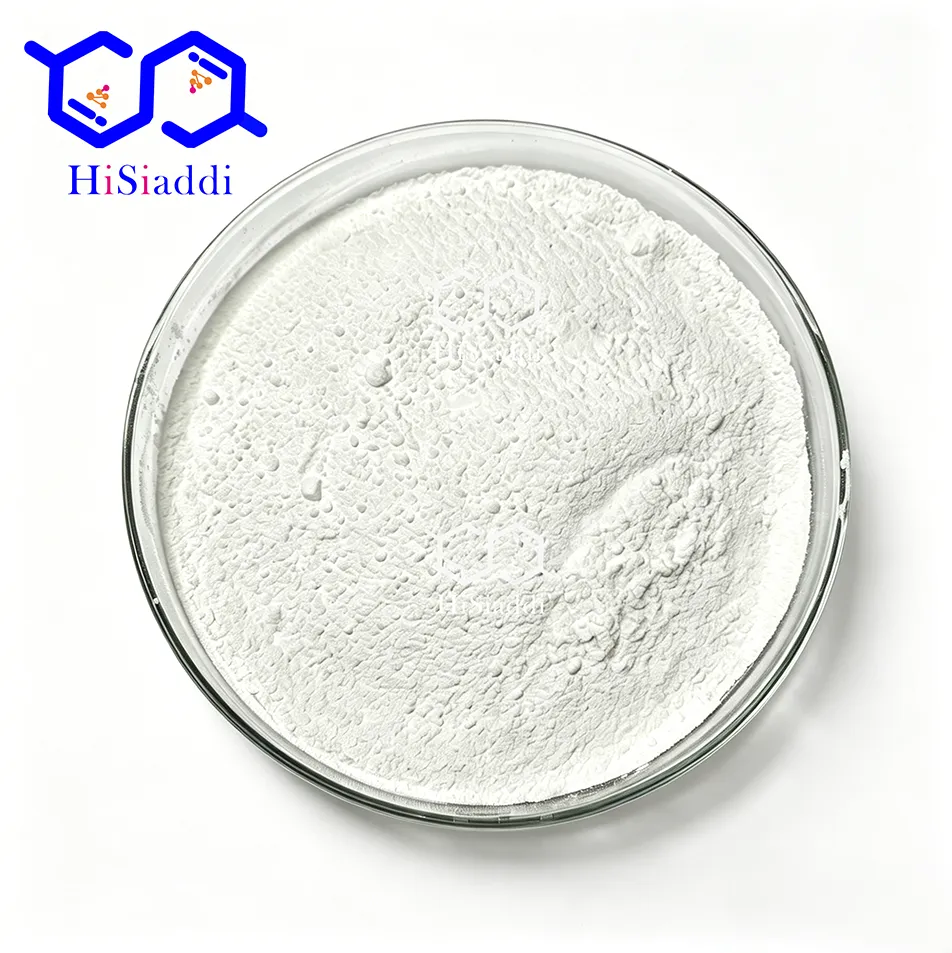
Photoinitiator 184, abbreviated as PI 184 or Irgacure 184, is a low-yellowing and high-stability photoinitiator used in UV transparent varnishes and metal topcoats. HiSiaddi can provide original factory supplies of multiple Chinese brands and the "1+2+3+4=1" service.
JiuRi provides JR-184 (industrial purity ≥99.5%) and JR-184H (high-purity grade, purity ≥99.8%) with melting point 45-50℃, excellent thermal stability, yellowing resistance ΔY<0.8, high transparency after curing, low volatility and no precipitation, benchmarking BASF Irgacure 184 at a 17%-20% lower price, suitable for high-end wood varnish factories, automotive plastic coating enterprises and electronic topcoat processing factories.
Sanmu offers SM-184 (purity ≥99.0%) and SM-184E (electronic grade, purity ≥99.5%) with purity ≥99.0%, moisture ≤0.08%, low odor and high compatibility, priced 5%-8% lower than JiuRi at the mid-end level.
HiSiaddi Exclusive Service: Provides consultation on yellowing resistance formula optimization, high-hardness coating solutions and low-precipitation process adaptation as well as key indicator & cost comparison of multiple brands; offers melting point/light transmittance and metal impurity testing; supports customized purity (99.0%-99.8%) and moisture content.
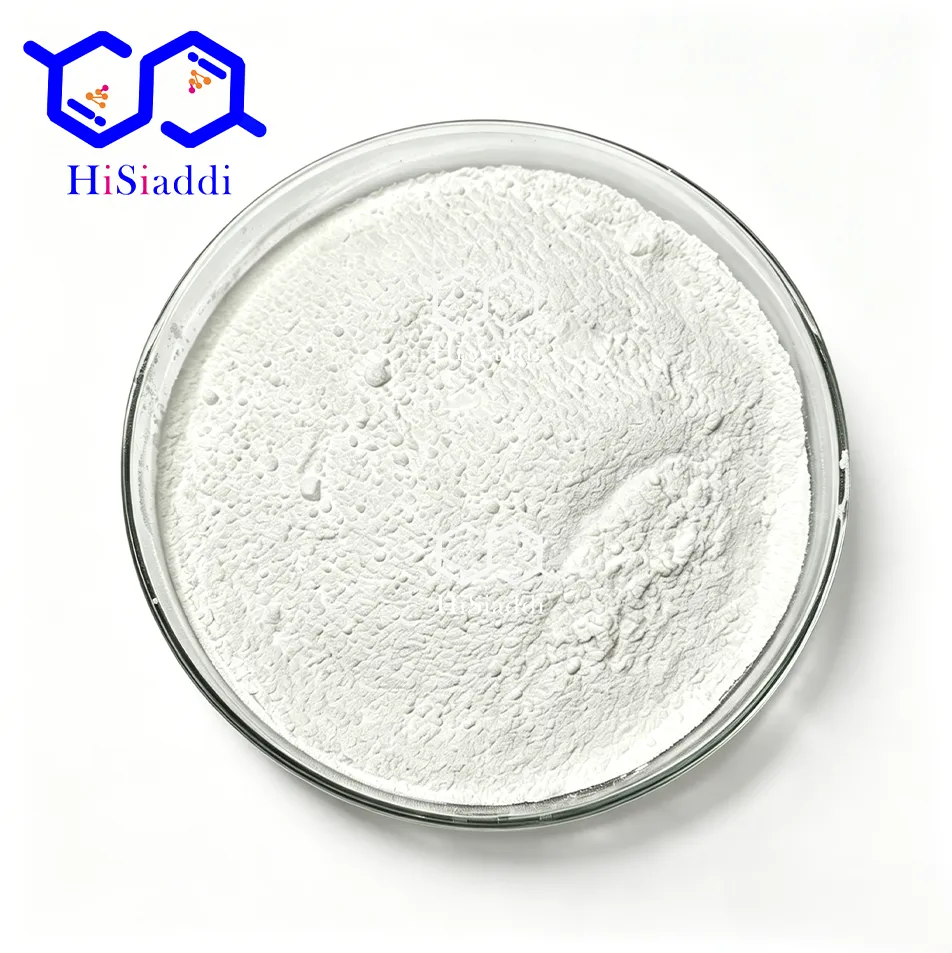
 CONTACT HiSiaddi NOW
| CAS No: | 947-19-3 | Brand Name: | Multi-brand |
| MF: | C18H15OP | Model Number: | Multi-models |
| EINECS No: | 791-28-6 | Grade: | Industrial grade |
| Purity: | 99.8% | Place of Origin: | Shandong, China |
| MOQ: | 1ton | Storage: | Please refer to the product packaging or contact the customer service. |
As a buyer purchasing Photoinitiator 184, you may encounter the following questions:
What are the key indicator advantages of mainstream grades from well‑known Photoinitiator 184 brands and their impacts on application?
What competitive services can Photoinitiator 184 suppliers provide?
What are the qualification certifications and market feedback of target Photoinitiator 184 brands?
What is the inventory level and supply stability of Photoinitiator 184 suppliers?
What factors should be considered when selecting Photoinitiator 184?
…and many other related questions.
HiSiaddi offers genuine factory‑source Photoinitiator 184 from top Chinese brands for diverse customer groups. Based on export statistics, production capacity, global market share, compliance standards, long‑term procurement reputation among overseas buyers, as well as HiSiaddi's on‑site inspections and long‑term cooperation experience with major Chinese Photoinitiator 184 manufacturers, we have shortlisted five leading brands: Jiuri New Materials, Yangfan New Materials, Rianlon, Qiangli New Materials, and Dalian Ruifeng.
Below is an in‑depth breakdown covering five dimensions: mainstream grades, key indicator advantages, cost‑performance ratio, target B‑end buyers, downstream and end‑user benefits, along with a comparative summary table.
Mainstream Grades: JR‑184H (High‑Purity Premium Grade), JR‑184 (Standard Industrial Grade), JR‑184E (Economical Grade)
Dual Superiority in Purity and Yellowing Resistance: JR‑184H ≥99.8%, JR‑184 ≥99.5%, JR‑184E ≥99.0%; yellowing index ΔE ≤0.25, ensuring long‑term non‑yellowing performance in light‑colored systems, exceeding the industry standard (ΔE ≤0.4).
Low Volatility & Low Odor: Volatile matter ≤0.15%, residual cyclohexanone from photolysis ≤80ppm with low pungent odor; VOC content ≤12g/L, complying with EU REACH and US TSCA environmental regulations.
Thermal Stability & Batch Consistency: Thermal decomposition temperature >260℃, no decomposition at 80℃ for 72 hours, suitable for high‑speed UV production lines; DCS automatic controlled production enables purity fluctuation ≤0.1% with strong batch uniformity.
Comprehensive Compliance Certifications: ISO 9001/14001, EU REACH registration, FDA food contact certification, CosIng notification, allowing direct access to high‑end European and American supply chains.
Cost‑Performance Ratio: Mid‑to‑high pricing (28%‑32% lower than IGM); approximately USD 19.5/kg for JR‑184H, USD 17.8/kg for JR‑184, USD 16.0/kg for JR‑184E. Quality matches IGM Omnirad 184 with a 30% lower price, ranking No.1 in overall cost‑performance ratio in the industry.
Target B‑End Buyers: Premium European and American wood/furniture coating brands, food‑contact‑grade packaging varnish manufacturers, 3C electronic UV coating producers, EU daily chemical OEMs.
Benefits for Downstream Buyers: Direct feeding without secondary purification; stable batches cutting formula debugging costs by 30%; complete compliance documents saving USD 7,000‑10,000 annually in testing and certification fees.
Benefits for End Users: High transparency and low yellowing deliver premium appearance for furniture and packaging; low odor and low VOC ensure eco‑friendliness and higher product premium; high curing efficiency (2%‑3% dosage) shortens production cycles and reduces end‑product selling prices.
Mainstream Grades: YF‑184P (High‑Purity Electronic Grade), YF‑184 (Standard Industrial Grade), YF‑184L (Custom Low‑Odor Grade)
Ultra‑High Purity for Electronics: YF‑184P ≥99.9%, metal ions (Fe/Cu) ≤0.1ppm, moisture ≤0.02%, suitable for semiconductor packaging, OLED coatings and PCB solder mask inks.
Low Odor & High Solubility: YF‑184L features cyclohexanone residue ≤30ppm with nearly odorless performance; infinitely miscible with acrylates/epoxy acrylates, applicable for high‑pigment‑loaded systems (titanium dioxide/carbon black).
Fast Curing & Superior Weather Resistance: Absorption wavelengths at 246/280/333nm matching medium‑pressure mercury lamps, surface dry time ≤0.6s (120mj/cm²); outdoor weather resistance ≥4,500 hours with minimal chalking, ideal for outdoor furniture and automotive exterior coatings.
Large Production Capacity & Fast Delivery: Annual output of 2,500 tons, regular inventory ≥200 tons, delivery to Europe and America within 10 days with no supply shortage risks in peak seasons.
Cost‑Performance Ratio: Mid‑to‑high pricing; approximately USD 20.0/kg for YF‑184P, USD 17.5/kg for YF‑184, USD 18.8/kg for YF‑184L. The 99.9%‑purity electronic grade is only 62% of the price of imported IGM products, with outstanding cost‑performance.
Target B‑End Buyers: European and American electronic chemical manufacturers, semiconductor packaging material plants, PV backsheet coating suppliers, premium outdoor furniture coating brands.
Benefits for Downstream Buyers: Import substitution with electronic‑grade quality cutting raw material costs by 38%; custom low‑odor formula eliminates extra deodorization processes; high solubility reduces formula delamination risks and boosts yield rate by 12%.
Benefits for End Users: Electronics sector: uniform curing and excellent insulation enhance electronic product stability; PV sector: weather and aging resistance extends component service life; outdoor sector: long‑lasting bright white coatings improve visual texture.
Mainstream Grades: L‑184W (Premium Yellowing‑Resistant Grade), L‑184 (Standard Industrial Grade), L‑184C (Economical General‑Purpose Grade)
Top‑Tier Yellowing Resistance: L‑184W with yellowing index ΔE ≤0.2, no yellowing at 60℃ for 1,000 hours, suitable for light‑colored coatings on white home appliances and automotive interiors.
Low Volatility & High Safety: Volatile loss ≤0.1% (100℃ for 2 hours); LD50 >5,000mg/kg with no reproductive toxicity, meeting EU ECHA high‑safety standards.
Wide System Compatibility: Compatible with oil‑based/solvent‑borne/water‑borne UV systems, well blended with TPO/819/1173 without precipitation or delamination, applicable for thick‑film (50‑300μm) compound systems.
Cost Optimization & Stable Supply: Continuous production cuts energy consumption by 22%; regular inventory ≥150 tons, global delivery within 12 days with minor price fluctuations.
Cost‑Performance Ratio: Mid‑range economical pricing; approximately USD 18.2/kg for L‑184W, USD 17.0/kg for L‑184, USD 15.5/kg for L‑184C. Meets EU standards at 5%‑8% lower prices than Jiuri and Yangfan, offering extremely high cost‑performance.
Target B‑End Buyers: White home appliance coating manufacturers, automotive interior coating suppliers, Middle Eastern/Latin American daily chemical OEMs, thick‑film UV adhesive producers.
Benefits for Downstream Buyers: Excellent yellowing resistance reduces color‑matching rework and raises yield rate by 18%; wide compatibility simplifies formula debugging and cuts R&D costs by 25%; moderate prices balance quality and cost for mass production.
Benefits for End Users: Long‑lasting bright white appearance for white products; low‑toxicity safety complies with European and American environmental regulations to boost product competitiveness; stable thick‑film curing ensures firm adhesion and crack resistance.
Mainstream Grades: QL‑184 (Standard Industrial Grade), QL‑184M (Medium‑Purity Economical Grade), QL‑184H (Daily‑Use Grade)
Cost‑Effective Industrial Grade: QL‑184 ≥99.0%, QL‑184M ≥98.5%, impurities ≤0.18%, low‑priced for coatings, inks and industrial adhesives.
Low Moisture & Anti‑Crystallization: Moisture ≤0.03%, no crystallization at low temperature (5℃), eliminating heating requirements for winter transportation and cutting logistics costs by 25%.
Fast Curing & High Hardness: Post‑curing pencil hardness ≥2H with strong wear and scratch resistance, ideal for hard coatings on wood, metal and plastics; 15% faster curing speed compatible with high‑speed production lines.
Custom Packaging & Flexible Small‑Batch Orders: Custom packages of 20kg/carton, 200kg/drum and 1‑ton IBC drum; 500kg small‑batch trial orders available to reduce procurement risks.
Cost‑Performance Ratio: Mid‑to‑low economical pricing; approximately USD 16.8/kg for QL‑184, USD 15.2/kg for QL‑184M, USD 17.5/kg for QL‑184H. Boasts the lowest industrial‑grade price in the industry with qualified daily‑use‑grade quality, featuring excellent cost‑performance.
Target B‑End Buyers: Coating and ink producers, industrial adhesive manufacturers, Southeast Asian budget daily chemical OEMs, small‑and‑medium UV spraying processors.
Benefits for Downstream Buyers: Low industrial‑grade prices reduce raw material procurement costs; flexible small‑batch trial orders lower procurement risks; anti‑crystallization winter formula cuts logistics loss and costs.
Benefits for End Users: Industrial sector: enhanced coating hardness and wear resistance extend product service life; daily chemical sector: mild and low‑irritation properties suit budget skincare products and improve safety.
Mainstream Grades: RF‑184 (Standard Industrial Grade), RF‑184S (High‑Purity Daily‑Use Grade), RF‑184E (Industrial Economical Grade)
High Purity & Low Impurities: RF‑184S ≥99.5%, heavy metals ≤0.4ppm, free phenol ≤0.02%, suitable for mid‑range skincare products and food‑contact‑grade coatings.
Superior Batch Stability: High‑efficiency distillation plus on‑line monitoring ensures purity fluctuation ≤0.15%, consistent quality across batches and high formula reproducibility.
Excellent Compatibility: Well‑blended with active ingredients such as glycerin, propylene glycol and hyaluronic acid without turbidity or precipitation, applicable for complex daily chemical formulas.
Fast Delivery & Localized Services: Regular inventory ≥100 tons, shipment within 36 hours and delivery to Europe and America in 9 days; overseas warehouses in Southeast Asia support nearby pickup.
Cost‑Performance Ratio: Mid‑range pricing; approximately USD 17.2/kg for RF‑184, USD 18.0/kg for RF‑184S, USD 15.8/kg for RF‑184E. High‑purity grades deliver quality close to international brands at a 35% lower price with high cost‑performance.
Target B‑End Buyers: Mid‑range skincare brands, food‑contact‑grade packaging manufacturers, niche European and American daily chemical brands, cross‑border e‑commerce UV raw material suppliers.
Benefits for Downstream Buyers: High‑purity low‑impurity formula upgrades mid‑range product quality; stable batches cut formula debugging frequency and raise production efficiency by 20%; fast delivery shortens lead time and eases inventory pressure.
Benefits for End Users: Mild, hypoallergenic and eco‑friendly properties suit sensitive‑skin and food‑contact products; good compatibility ensures stable texture and high retention rate of active ingredients; high curing efficiency extends shelf life and improves product cost‑performance.

| Brand | Mainstream Grades | Purity | Core Advantage Indicators | Price (USD/kg) | Target B‑End Buyers | Core Benefits for Downstream Buyers | Core Benefits for End Users |
| Jiuri New Materials | JR‑184H/184/184E | 99.0%‑99.8% | Yellowing resistance ΔE≤0.25, low odor, REACH/FDA certification | 16.0‑19.5 | Wood coatings, food‑contact packaging varnishes, 3C electronic coatings | Complete compliance, stable batches, no secondary purification | High transparency & low yellowing, low VOC, eco‑friendly |
| Yangfan New Materials | YF‑184P/184/184L | 99.0%‑99.9% | Ultra‑high purity (electronic grade), low odor, fast curing ≤0.6s | 17.5‑20.0 | Electronic chemicals, semiconductor packaging, PV coatings | Import substitution with high purity, high efficiency, low delamination risk | Stable electronics performance, weather & aging resistance, colorless transparency |
| Rianlon | L‑184W/184/184C | 98.5%‑99.5% | Yellowing resistance ΔE≤0.2, low volatility, wide compatibility | 15.5‑18.2 | White home appliance coatings, automotive interiors, thick‑film adhesives | Less color‑matching rework, lower R&D costs, high cost‑performance | Long‑lasting whiteness, low‑toxicity safety, firm adhesion |
| Qiangli New Materials | QL‑184/184M/184H | 98.5%‑99.0% | Low‑priced industrial grade, low moisture & anti‑crystallization, hardness ≥2H | 15.2‑17.5 | Coatings & inks, industrial adhesives, budget daily chemicals | Low costs, flexible small batches, low logistics loss | Wear‑resistant durability, mild safety, high cost‑performance |
| Dalian Ruifeng | RF‑184/184S/184E | 98.5%‑99.5% | High purity & low impurities, stable batches, 9‑day delivery to Europe & America | 15.8‑18.0 | Mid‑range daily chemicals, food‑contact packaging, cross‑border e‑commerce | Stable quality, high efficiency, low inventory pressure | Sensitive‑skin compatibility, stable texture, long shelf life |
HiSiaddi as a service provider integrating technology transformation and foreign trade, have formed a "1+2+3+4=1" product service system by 1foreign trade salesperson with over 3 years of experience., 2R&D teams, 3 high-quality suppliers, and 4 warehouses to serve 1 product demand.
Relying on the dual-drive model of technology commercialization and foreign trade services, HiSiaddi has built a "1+2+3+4=1" product service system: 1 foreign trade salesperson with more than 3 years of experience, 2 R&D teams, 3 high-quality suppliers, and 4 warehouses to satisfy each single product demand.
With this service system, HiSiaddi outperforms most foreign trade companies in R&D optimization and technical craftsmanship of UV 184 products, surpasses single factories in grasping market demands and competitive advantages of various UV 184 brands, and understands the UV 184 foreign trade market better than scientific research institutions.
HiSiaddi only hires foreign trade salespersons with over 3 years of working experience, who must receive more than 6 months of training from both the scientific research team and foreign trade team before serving customers.
(1)UV 184 Basic Support Services
Relying on the foreign trade team and corporate service system, the company provides customers with one-stop full-process document handling services, including but not limited to issuance & processing of all UV 184 compliance certificates, provision of third-party reports and follow-up handling of quality complaints.
(2)UV 184 Exclusive Premium Services
Backed by the scientific research team, we provide customers with product customization and technical consulting services, including but not limited to core indicator adaptation & cost comparison of all UV 184 brands, and regular market trend sharing of UV 184 products.
We cooperate deeply with source factories via technology commercialization, and collaborate closely with the foreign trade team internally to deliver technical training for sales staff, enabling professional product customization and providing research-grade consulting for brand matching and application optimization of UV 184 products.
(1)UV 184 Research-Grade Customization Services
For purchasers of high-end food & pharmaceutical packaging and sensitive-skin daily chemicals: customized low-yellowing grade (ΔE≤0.2) and low-odor grade (cyclohexanone residue ≤30ppm), compliant with EU 10/2011 and FDA food-contact standards to raise end product premium by 28%-38%.
For semiconductor packaging, OLED and PCB solder resist ink buyers: 99.9% ultra-high purity 184 with metal ions ≤0.1ppm and moisture ≤0.02%, meeting electronic-grade standards and replacing IGM/BASF with 38%-42% cost reduction.
(2)UV 184 Research-Grade Consulting Services
Formulation optimization of 184 compounded with TPO/819/1173; yellowing control for light-colored systems; LED 365nm light source adaptation; dosage adjustment to cut costs by 0.4%-0.6%; compatibility testing for high-pigment filled systems.
Case: We optimized formulations for EU wood coating clients, lowering 184 addition rate from 3.0% to 2.2%, saving USD 450-650 per ton while maintaining yellowing index ΔE≤0.2.
Our foreign trade and R&D teams work in tandem. Through preliminary market research, on-site factory inspections, product testing, in-depth technical cooperation and procurement partnerships, we select around 3 reliable, stable, reputable and high-potential brand manufacturers.
(1) Initiative to Secure Lower Raw Material Prices
Long-term cooperation via technology transfer and exclusive agency allows us to source factory direct supplies at more competitive prices.
(2) UV 184 Long-Term Supply Chain Assurance Services
Long-term technical and agency cooperation strengthens full production monitoring, full batch traceability, consistent batch quality control, and compensation guarantees for unqualified products failing third-party inspections.
We have 4 warehouses, which are jointly operated and managed with suppliers to store hot-selling products .
(1)UV 184 Fast Local Delivery & On-Site Problem Resolution
Our four warehouses are located at Qingdao Port (North China), Ningbo Port (East China), Shenzhen Port (South China) and Zhengzhou (inland logistics hub), enabling timely delivery of UV 184. On-site staff are available to resolve transport damage, packaging defects and export compliance issues locally when UV 184 encounters abnormal conditions.
(2) UV 184 Price Stabilization & Custom Packaging Support
We stock up in advance during peak price seasons to mitigate drastic price fluctuations. Self-operated warehouses support customized packaging and label solutions to meet personalized client demands.
As a new foreign trade service provider driven by both technology transformation and foreign trade services, HiSiaddi has established the "1+2+3+4=1" service system and can supply UV 184 sourced directly from multiple well-known original manufacturers. Supported by its R&D capabilities as a technology-driven foreign trade enterprise, HiSiaddi conducts professional analysis of typical challenges faced by B-end buyers sourcing UV 184 in China and proposes targeted solutions.
If you require more professional and in-depth analysis regarding UV 184 selection, please contact HiSiaddi customer service.
1. Impurities generated as synthetic byproducts such as cyclohexylbenzophenone and unreacted raw materials exhibit poor light resistance. Continuous decomposition under light and long-term use significantly raises the yellowing index of films, causing yellowing and color difference in light-colored and transparent wood coatings and home appliance topcoats, damaging appearance and weather resistance.
2. Colored impurities and conjugated organic residues reduce raw material light transmittance, resulting in hazy films with insufficient transparency when applied to high-gloss transparent coatings, failing to achieve mirror finish effects for high-end painting and lowering yield rates.
3. Photoinitiator 184 is hygroscopic. Moisture content exceeding 0.1% impairs compatibility with UV resins and monomers, leading to shrinkage cavities, pinholes and crater defects on cured films, incurring extremely high rework costs for high-gloss coatings.
4. Deviations in purity and effective active components across batches cause unstable curing rates, requiring repeated adjustments to UV lamp power and production line speed, resulting in either over-dried surface layers or incomplete deep curing.
5. Residual transition metal ions such as iron and copper catalyze oxidative degradation of resins and initiators, accelerating film chalking, gloss loss and shortened service life under outdoor and high-temperature operating conditions, failing European and American weather resistance tests.
1. Adopt combined multi-stage vacuum distillation and recrystallization refining to selectively remove harmful organic impurities, controlling total residual impurities below 0.4% for stable yellowing index compliance and resistance to long-term yellowing.
2. Activated carbon deep decolorization + multi-stage precision filtration maintains high-grade light transmittance, delivering colorless and transparent raw materials perfectly suited for high-gloss and transparent premium coatings.
3. High-vacuum deep dehydration treatment ensures factory moisture ≤0.05%, paired with fully sealed nitrogen-filled packaging to isolate external water vapor and fundamentally eliminate film shrinkage cavities and pinholes.
4. Automated closed-loop parameter-locked production delivers stable main content ≥99.0% across batches with minimal deviation in photoactivity, enabling customers to fix curing process parameters and ensure stable mass production.
5. Chelating resin + ultrafiltration technology for deep removal of metal ions, with single metal ion content ≤5 ppb and ICP-MS test reports supplied per batch, effectively slowing film aging and meeting weather resistance standards.
1. Small-molecule intermediates and residual solvent impurities easily migrate. When applied to food packaging and daily chemical label printing, migration volumes exceed EU Regulation EU 10/2011 limits, failing food contact compliance audits and restricting market access for high-end packaging.
2. Volatile organic impurities release pungent odors that remain on paper and printed products after curing, posing safety risks and impairing user experience especially for food and children’s goods packaging.
3. Insufficient effective active components lead to incomplete curing under high-speed printing conditions, resulting in offset sticking, sticky surfaces and poor friction resistance on printed products, raising reject rates.
4. Trace insoluble mechanical impurities mixed into ink systems clog printing screens, ink rollers and print heads, increasing equipment downtime for cleaning and reducing continuous production efficiency.
5. Fluctuations in physical and chemical indicators across batches degrade compatibility with pigments, binders and additives, causing ink stratification, precipitation and color shift during storage.
1. Add molecular distillation processes to deeply remove migratable small-molecule substances, with migration indicators compliant with EU food contact regulations for indirect food contact packaging inks.
2. Negative pressure flash evaporation eliminates low-boiling odorous components, delivering finished products with low odor grades and no obvious residual odor post-curing, suitable for all odor-sensitive printed products.
3. Strict control over effective active component content guarantees curing efficiency compatible with high-speed printing lines, completely resolving offset sticking and surface tackiness.
4. Multiple precision filtration removes mechanical impurities to maintain pure ink systems, reduce equipment clogging and support continuous high-speed printing.
5. Standardized component and physical-chemical parameters across batches ensure stable compatibility, with no ink stratification, precipitation or color shift during long-term storage.
1. Excessive residual alkali metal ions (sodium, potassium, calcium) trigger conductive channels under electric fields when used for electronic component bonding, leading to micro-leakage and short circuits that threaten electrical safety of electronic products.
2. Excessive raw material moisture vaporizes during curing, generating microbubbles inside adhesive layers that reduce bonding strength, compactness and insulation performance.
3. Variations in activity across batches cause fluctuating curing shrinkage rates, resulting in warpage, debonding and dimensional deviation when bonding precision plastics and small electronic components, compromising assembly accuracy.
4. Thermally unstable impurities precipitate under high-temperature operating conditions of electronic components and reflow soldering, adhering to electrode surfaces to lower insulation resistance and trigger equipment failures.
5. Conventional packaging offers inadequate light and oxygen shielding, leading to raw material oxidation during long-term storage, gradual activity attenuation, shortened service life and impaired inventory turnover.
1. Ion exchange resin deep deionization controls total metal ions at extremely low levels, passing electronic material insulation tests and eliminating leakage and short-circuit risks.
2. Ultimate vacuum dehydration achieves moisture ≤0.03%, paired with sealed moisture-proof packaging for dense, bubble-free adhesive layers with stable bonding strength and insulation performance.
3. Standardized production controls curing shrinkage rates with minimal batch deviation, preventing cracking and warpage when bonding precision workpieces to meet assembly accuracy requirements.
4. High-temperature pre-treatment removes thermally decomposable impurities with no substance precipitation under high-temperature operating conditions, ensuring long-term stable operation of electronic components.
5. Light-shielded sealed drums filled with nitrogen paired with long-acting antioxidants extend ambient storage life to over 12 months.
1. High-purity refined photoinitiator 184 carries high prices that squeeze profit margins for low-end coatings, civil inks and ordinary adhesives; low-cost crude industrial grades suffer low purity and excessive impurities, slow curing and severe yellowing that fail to meet local basic usage requirements, creating a dilemma between cost and quality.
2. Crude products contain high residual solvents and harmful impurities, leading to poor water resistance and aging resistance of finished coatings and adhesives, with peeling, debonding and discoloration emerging after short-term use and raising comprehensive usage costs.
3. Large-tonnage deliveries exhibit frequent batch fluctuations in purity, moisture and color, requiring repeated adjustments to additive ratios and curing parameters on production lines, increasing equipment downtime for debugging and lowering capacity utilization.
4. Ocean transportation routes to Southeast Asia and India feature high temperature and humidity. Ordinary packaging with poor sealing leads to accelerated moisture absorption and oxidation of raw materials, darkening color and declining activity, rendering products unusable upon arrival and raising cargo loss rates.
5. Absence of English CoA, MSDS, REACH compliance statements and other documents prevents local industrial product filing and routine market sampling inspections, limiting sales channels and blocking access to formal end markets.
1. Launch cost-effective general industrial grade 184 with simplified deep refining processes, meeting basic usage requirements for low-end coatings, inks and adhesives at prices significantly lower than high-end refined grades to boost profit margins.
2. Basic removal of major harmful impurities and residual solvents guarantees fundamental curing performance, water resistance and aging resistance to extend service life of end products.
3. Standardized mass production control narrows batch indicator deviations, enabling customers to fix production processes long-term, reduce equipment debugging frequency and boost production capacity.
4. Thickened sealed plastic drums with double-layer moisture-proof inner liners and desiccants withstand high temperature and humidity during ocean transportation with no obvious degradation of activity or color upon arrival.
5. Supply streamlined English document packages including test reports, MSDS and compliance statements to meet local regulatory filing and routine sampling inspection requirements.
1. Market chaos exists where crude products are falsely labeled as high-purity grades with inflated purity, light transmittance and yellowing resistance indicators. Downstream high-end coating and electronic adhesive customers suffer mass quality failures post-application, triggering claims and severely damaging channel reputation.
2. Photoinitiator 184 is a solid product prone to barrel deformation and aging seal gasket detachment during ocean stacking and loading/unloading, causing material leakage, contaminating surrounding goods and triggering logistics disputes.
3. Simple packaging lacks light and oxygen shielding, leading to gradual raw material oxidation during cross-border storage and transportation, darkening color and declining activity resulting in direct rejection by high-end buyers and economic losses.
4. Classified as a combustible organic solid, missing English SDS, REACH-SVHC screening reports and ocean hazardous goods appraisal certificates block access to formal European and American factories and brand supply chains, limiting sales to low-end markets only.
5. Inability to provide third-party full-item test reports and complete batch traceability records blocks supplier qualification audits by leading European and American enterprises, forfeiting long-term high-value orders.
1. Direct supply of genuine original manufacturer products with truthfully labeled indicators, full third-party full-item test reports supplied per batch and support for re-inspection by global institutions to eliminate adulteration and false labeling risks and avoid after-sales disputes.
2. Thickened solvent-resistant dedicated barrels with double sealing lids and aging-resistant fluororubber gaskets, with leak testing conducted on every barrel prior to factory delivery to ensure leakage-free full transit.
3. Uniform light-shielded sealed packaging paired with anti-oxidation and oxygen isolation protection systems to suppress oxidative discoloration and activity attenuation, maintaining consistent product grade throughout storage and transportation.
4. One-stop supply of complete English compliance documents: SDS, REACH-SVHC reports, ocean hazardous goods appraisal certificates and migration test reports to support expansion into high-end European and American circulation channels.
5. Establish complete batch traceability archives retaining full production and quality inspection records to fully support customer factory audits and supplier qualification reviews, securing long-term high-quality cooperation orders.
For more professional and in-depth analysis regarding UV 184 selection, please contact HiSiaddi customer service.
Appearance: white crystalline granules
HPLC active ingredient content ≥ 99.6%
Residual free cyclohexanone impurities ≤ 30 ppm
Total VOC proportion of finished product ≤ 0.28%
Moisture content ≤ 70 ppm
Ignition residue after high-temperature incineration ≤ 0.02%
Initial thermal decomposition temperature ≥ 182°C
Miscible with all types of UV matrix resins (epoxy acrylate, polyurethane acrylate, polyester acrylate) at any ratio at 25°C without flocculation or particle precipitation
Relative deviation of surface curing speed between batches ≤ 1.5%
Additive migration precipitation rate after 72 h room-temperature pure water immersion of coating film ≤ 0.07%
Odor rating meets EU Class 1 low-odor coating standard
No obvious changes in powder color, crystal morphology or photoinitiating activity after 12 months of sealed storage away from light at ambient temperature
Continuous volatilization of trace residual cyclohexanone generates pungent workshop odors and pushes finished product VOC levels above EU market access thresholds;
Polar by-product impurities catalyze slight hydrolysis of resins, triggering dense pinholes in vacuum electroplating primers and white haze formation in stored paper overprint varnishes;
Varied crystal particle sizes across batches lead to uneven sanding dispersion in overprint varnishes and shrinkage cavities during coating printing.
Applied to automotive ABS plastic UV topcoats: Instant surface drying without residual tack; excellent yellowing index after 2000 h QUV aging; complete elimination of workshop odors; stable VOC compliance with EU regulations, enabling uninterrupted annual fixed-point supply of Fiat interior coatings.
After formulation optimization of vacuum electroplating sealing primers, mass production delivered zero pinhole defects, lifting electroplating yield by 12%.
High-speed rotary coated paper overprint varnishes remained transparent without haze precipitation after 90 days of storage, free of shrinkage cavities and speckle defects during high-speed printing coating, fully matching the high-speed printing production lines of major Milanese color printing factories.
Persistent pungent ketone odors in coating workshops, with frontline operators frequently reporting respiratory discomfort;
Multiple sampling tests of plastic topcoat finished products exceeded Vietnamese environmental VOC limits, blocking factory release;
80% of test panels of vacuum electroplating primers developed dense pinholes and were scrapped after production launch;
White haze precipitated at the bottom of coated paper overprint varnish bottles after 15–20 days of warehouse storage;
Wide disparities in curing speed across raw material batches required daily repeated adjustment of UV lamp power and production line running speed, preventing standardized continuous production;
Raw materials stored in simple open warehouses absorbed moisture and agglomerated extensively within half a month, forming speckle defects on finished products after sanding and dispersion.
Crude industrial-grade material lacks multi-stage rectification and recrystallization refining processes, with residual free cyclohexanone generally exceeding 200 ppm and VOC levels breaking 1.2%. Volatilized ketones generate pungent workshop odors and push finished product VOC above environmental limits.
Acidic cyclic by-products from synthesis remain unfiltered and removed, disrupting resin crosslinking balance when mixed into electroplating primer formulations and continuously generating pinhole defects during high-temperature leveling.
Active ingredient purity of the product falls below 98.2%, with high levels of low-molecular heterocyclic impurities that slowly precipitate to form bottom-of-bottle white haze during long-term storage of overprint varnishes.
Random rectification fraction cutting across raw material batches leads to curing speed fluctuations exceeding 5%, with no fixed production process benchmarks, forcing daily repeated adjustment of production parameters on-site.
Products leave the factory without vacuum moisture-proof sealed packaging. Vietnam’s year-round high-temperature and high-humidity climate causes rapid moisture absorption, agglomeration and caking of crystalline powder under open storage conditions, resulting in poor sanding dispersion and speckle defects on finished products.
Raw material warehousing only relies on visual appearance inspection, with no physical and chemical index sampling testing procedures. Unqualified raw materials enter full production lines without screening, transmitting raw material defects through the entire industrial chain to end finished products.
Raw material barrel opening and feeding operations are fully exposed in open workshops, accelerating continuous volatilization of additives to worsen workshop odors while absorbing airborne moisture and accelerating raw material deterioration.
Full source raw material replacement: Immediately cease use of all stock crude industrial-grade 184 and switch to HiSiaddi’s customized refined grade with low residual cyclohexanone and low VOC to eliminate the root sources of odors, pinholes and overprint varnish haze at the raw material stage.
Specialized partition warehouse renovation: Construct an independent closed storage compartment exclusively for photoinitiators, equipped with industrial dehumidifiers and light-shielding thermal insulation windows and doors. Warehouse environment temperature is controlled at 22–30°C with relative humidity maintained below 60%. All raw material barrels are stacked sealed, with strict first-in-first-out storage protocols. Damaged packaging raw materials are isolated and prioritized for use.
Establish rigid incoming raw material sampling inspection system: Mandate five mandatory testing indicators for every incoming batch of 184: HPLC active ingredient purity, residual cyclohexanone content, VOC value, product acidity and room-temperature resin compatibility. Dedicated quality control staff sample every delivery batch; any out-of-spec indicator triggers full rejection of the entire batch.
Supporting formula and process fine-tuning for three product lines: Optimize photoinitiator addition ratios, feeding stirring sequences and matched UV curing auxiliary agent proportions separately for plastic topcoats, vacuum electroplating sealing primers and packaging overprint varnishes to align with the physical and chemical characteristics of the new grade raw material.
Standardize on-site workshop operation workflows: Shorten the open exposure duration during raw material unpacking and feeding; install simple dust-proof and light-shielding barriers at feeding stations to reduce mixing of water vapor and airborne impurities into raw material systems.
Compile Standard Operating Manual for Photoinitiator 184 Storage Control, Incoming Inspection, Feeding Usage and Production Abnormality Disposal. Conduct offline practical special training for warehouse administrators, production line operators and quality control inspectors, clarifying identification standards and emergency disposal workflows for all types of substandard raw materials.
Pungent ketone odors in coating workshops fully eliminated;
Continuous sampling tests of plastic topcoat VOC consistently meet Vietnamese environmental standards;
Pinhole defects in mass-produced vacuum electroplating primer panels completely eliminated, restoring electroplating yield to over 98%;
UV coated paper overprint varnishes remain transparent without white haze precipitation after 90 days of sealed storage;
Crystalline powder avoids caking under standardized closed storage, enabling smooth sanding free of speckle defects;
Uniform and stable curing speed across all batches allows fixed production line parameters for standardized continuous operation.
Lead time
Quantity (ton) | 0 - 10 | 10 - 30 | > 30 |
Lead time (days) | 7 | 15 | To be negotiated |
The monthly inventory volume of Photoinitiator 184 is 25 tons, with appropriate adjustments upwards or downwards in response to peak and off-peak seasons.
HiSiaddi safeguards the supply stability of Photoinitiator 184 through the following measures:
(1) Performance evaluation and screening of Photoinitiator 184 brand factories based on on-time delivery rate, batch pass rate, timeliness of risk alerts, and completeness of documentation to assess their supply stability.
(2) For each mainstream model or major grade of Photoinitiator 184, secure 1 primary high-quality brand manufacturer and 2 backup high-quality manufacturers.
(3) Each factory operates independent production lines in separate production zones to prevent production halts caused by major unforeseen incidents such as environmental production suspensions and power outages.
Through long-term cooperation with brand manufacturers via technology commercialization and authorized distribution channels, HiSiaddi can effectively strengthen supervision over the production processes of brand manufacturers, optimize full-process traceability management, improve batch stability control, and further reinforce real-time monitoring of the supply stability of Photoinitiator 184 products.
Long-term Annual Framework Supply Guarantee Agreement. HiSiaddi signs 12-month long-term agreements with leading manufacturers. The agreements specify the minimum guaranteed supply volume, maximum price hike range, and priority production scheduling rights during peak seasons. It is stipulated that manufacturers shall issue a 30-day prior written notice if production is suspended due to environmental rectification or equipment maintenance, and backup manufacturers will be activated to replenish goods accordingly.
We have 4 warehouses, which are jointly operated and managed with suppliers to store hot-selling products.The four warehouses are located at Qingdao Port in North China, Ningbo Port in East China, Shenzhen Port in South China, and Zhengzhou, China’s inland logistics hub. This setup guarantees sufficient supply and timely shipment of Photoinitiator 184 during peak seasons.
HiSiaddi issues a rolling demand forecast covering the subsequent three months on the 25th of each month, allowing manufacturers to reserve production capacity in accordance with the forecast. Any new urgent orders from overseas clients will be prioritized to draw on inventories or production capacity from backup manufacturers.
Unstable logistics for Photoinitiator 184 will extend delivery lead times. HiSiaddi has established alternative arrangements covering multiple freight forwarders, ports and transportation solutions:
(1) Binding of multiple professional chemical freight forwarders for Photoinitiator 184
Each product is assigned 2 to 3 freight forwarders with hazardous chemical/food transport qualifications affiliated with different shipping lines. Alternative sailing schedules can be switched to immediately in case of space shortages or customs inspections on a single shipping route.
(2) Backup transportation solutions for Photoinitiator 184
Ocean freight serves as the standard mode; air freight and rail freight are reserved as alternatives for urgent orders. Long-term agreements for temperature-controlled containers are signed for temperature-sensitive and perishable food additives to secure shipping space.
(3) Visual tracking and digital early warning for Photoinitiator 184
Freight forwarders synchronize daily updates on container loading, customs declaration, vessel loading and port arrival milestones. If customs inspection occurs, replenishment from backup inventory will be initiated immediately to shorten client waiting periods.
Full-chain digital early warning automatically monitors four categories of risks:
Factory side: Expiring supplier environmental assessment certificates, renewal of production permits, scheduled major equipment overhauls, and notifications of price hikes for upstream raw materials;
Inventory side: Inventory falling below safety thresholds, excessive inventory age, and batches failing quality inspection;
Logistics side: Shipping line space shortages, strikes at destination ports, and updates to customs policies;
Overseas side: Revisions to additive regulations and adjustments to import restriction lists in target countries.
Early warning notifications are automatically pushed to procurement and business leads, allowing backup suppliers or inventory contingency plans to be activated in advance.
As a new-type foreign trade service provider driven by dual engines of technology transformation and foreign trade export, HiSiaddi has established a "1+2+3+4=1" service system and can supply original factory goods of multiple well-known brands of UV 184.
As a research-driven foreign trade service provider, HiSiaddi does not only promote a single factory’s products like brand-owned manufacturers. We objectively analyze several highly competitive Chinese export brands of UV 184 and share their certification portfolios and market feedback to help buyers select products efficiently and reliably.
If you require more objective, authentic information on multiple well-known Chinese UV 184 brands, please contact HiSiaddi customer service.
· IHT-PI 184 (General Grade): Purity ≥99.5%, melting point 47–49°C, optimized for 365 nm high-pressure mercury lamps with high initiation efficiency and strong yellowing resistance. Target applications: wood coatings, standard UV inks, metal coatings and other mid-to-low-end segments. Export volume accounts for 70% of total sales, priced 25%–30% lower than international brands.
· IHT-PI 184H (High-Purity Low-Migration Modified Grade): Purity ≥99.9%, migration <0.5 ppm, VOCs <3%, compatible with 395 nm UV-LED light sources for low-temperature curing below 80°C. Target applications: food-contact packaging, medical adhesives, consumer electronic optical adhesives and other high-end verticals, with export growth exceeding 40% year-on-year.
1. European & American Markets (Germany, France, Italy): Direct replacement for BASF Irgacure 184, with 99.8% batch consistency and yellowing resistance matching imported alternatives at a 28% price discount. Repeat purchase rate for wood coating clients exceeds 90%.
2. Southeast Asian Markets (Vietnam, Indonesia, Malaysia): Compatible with local mid-to-low-end UV coating/ink production lines with 15–20 day delivery lead times (30% faster than foreign brands). Exports to Vietnam surged 136% year-on-year in 2025; clients praise it as "optimal cost performance with zero delivery delays".
3. Japanese & Korean Markets: IHT-PI 184H passed food-contact testing, forming deep partnerships with JSR (Japan) and LG Chem (Korea) for PCB inks and flexible display coatings. Export revenue to Japan and Korea rose 35% year-on-year in 2025.
1. Domestic Recognition: National Manufacturing Single Champion, lead drafter of the industrial standard Photoinitiators for Photocuring Materials and national standard Green Product Evaluation – Photocuring Materials.
2. International Compliance: Full-batch EU REACH registration, US FDA 21 CFR 175.105 food-contact certification, ISO 9001 (Quality Management), ISO 14001 (Environmental Management), and EU Eco-label certification obtained in 2025.
3. Client Qualifications: Core supplier to three global top coating manufacturers (Covestro, Dymax, Feikai Materials), with repeat purchase rates over 90% among high-end clients.
· HRcure-184 (Electronic Grade): Purity ≥99.8%, non-detectable heavy metals, chloride ion <10 ppm, optimized for PCB photoresists, semiconductor packaging UV adhesives and LCD panel coatings. Electronic sector exports account for 85% of total sales.
· HRcure-184L (Low-Volatility Modified Grade): Volatiles <0.2%, exceptional thermal stability (decomposition temperature >120°C), suitable for 3D printing resins and OLED encapsulation adhesives. Export growth in emerging sectors exceeded 50% year-on-year in 2025.
1. Global Electronics Markets (Japan, South Korea, Taiwan China): Holds over 30% global market share for photoresist-specific photoinitiators, supplying Tokyo Ohka Kogyo, JSR and Sumitomo Chemical. Batch pass rate for PCB photoresist applications reaches 99.9%, with exports to Japanese and Korean electronics firms rising 42% year-on-year in 2025.
2. European & American Precision Manufacturing (Germany, USA): HRcure-184L is used for industrial dental 3D printing resins with 98% monomer conversion, replacing premium IGM Resins grades at a 20% price discount. Clients comment its precision and stability outperform imported equivalents.
3. Domestic High-End Market: Strategic supplier to PCB leaders Shennan Circuits and Shengyi Technology, capturing 40% domestic market share for electronic-grade 184; exports represent 60% of total sales volume.
1. Domestic Recognition: National Specialized, Refined, Unique & Innovative "Little Giant" enterprise, global leader in photoresist photoinitiators, recipient of Jiangsu Provincial Science and Technology Progress Award.
2. International Compliance: EU REACH registration, US FDA medical-grade ISO 10993 biocompatibility certification, Japan Ministry of Health food-grade certification.
3. Client Qualifications: Core supplier to the world’s top 10 photoresist manufacturers (Asahi Kasei, RESONAC, DNP), with zero quality complaints from electronics industry clients.
· YF-PI 184 (General Grade): Purity ≥99.2%, exceptional cost performance, targeting wood coatings, floor varnishes and standard screen printing inks. Mass-market exports account for 80% of sales, priced 5%–8% lower than Rihua’s general-grade product.
· YF-PI 184M (Yellowing-Resistant Modified Grade): Formulated with anti-yellowing additives to maintain Grade 1 yellowing resistance under long-term UV exposure, suited for outdoor UV coatings and automotive interior coatings. Export growth in outdoor applications rose 35%+ year-on-year in 2025.
1. Southeast Asia (Thailand, Myanmar, Cambodia): Compatible with local low-end wood coating production lines at a unit price of RMB 110–115/kg versus RMB 150–160/kg for imported brands. Southeast Asia accounted for 65% of total exports in 2025; clients cite "lowest price, consistent quality and fast delivery".
2. Middle East & North Africa (Saudi Arabia, Egypt, Turkey): YF-PI 184M serves outdoor architectural UV coatings with 5,000-hour weathering resistance, replacing BASF 184D at a 30% price discount. Exports to Turkey grew 28% year-on-year in 2025.
3. European & American Mass Markets: Integrated into low-end furniture coating supply chains in Germany and France with an 85% repeat purchase rate, filling the gap left by high-priced foreign brands in low-tier segments under the value proposition "premium performance at affordable prices".
1. Domestic Recognition: Provincial R&D Center, full-spectrum photoinitiator manufacturer, Zhejiang Provincial High-Tech Enterprise certification.
2. International Compliance: EU REACH registration, RoHS environmental certification, SGS testing reports (purity, migration, VOCs) issued by Swiss SGS laboratories.
3. Client Qualifications: Long-term supplier to Europe’s Coates Screen Inks and Turkey’s AKSOY Chemicals, with an 85%+ repeat purchase rate in mid-tier markets.
· GR-PI 184E (Eco-Friendly Low-Migration Grade): Purity ≥99.7%, migration <0.3 ppm (surpassing EU standards), VOCs <2%, zero solvent residue, targeting food packaging, cosmetic container UV coatings and medical-grade adhesives. Eco-sector exports account for 90% of total sales.
· GR-PI 184UV (UV-LED Compatible Grade): Absorption peak tuned to 395–405 nm for cold LED curing below 70°C with 35% lower energy consumption, optimized for flexible packaging and ultra-thin substrate curing. Export growth for LED-adapted grades exceeded 60% year-on-year in 2025.
1. EU Food-Contact Markets (Germany, Netherlands, Belgium): GR-PI 184E holds EU 10/2011 food-contact certification with migration below 0.3 ppm, replacing IGM Resins Omnirad 184 at a 25% price discount. Exports of eco-grade products to the EU surged 50% year-on-year in 2025; clients confirm "migration performance outperforms imports with zero compliance customs risks".
2. North American Medical Markets (USA, Canada): Used in UV adhesives for single-use medical supplies with ISO 10993 cytotoxicity certification. Exports of medical-grade products to the US rose 38% year-on-year in 2025.
3. Global Flexible Packaging Markets: GR-PI 184UV cures ultra-thin PET/PP films without wrinkling or yellowing, forming strategic partnerships with Amcor (Europe) and Berry Global (USA). Export growth for flexible packaging applications hit 55% year-on-year in 2025.
1. Domestic Recognition: Hidden Champion of the photoinitiator industry, National High-Tech Enterprise, recipient of Hubei Provincial Science and Technology Progress Award.
2. International Compliance: EU REACH registration, EU 10/2011 food-contact certification, US FDA medical-grade certification, full SGS testing (migration, VOCs, heavy metals) by Swiss SGS.
3. Client Qualifications: Core supplier to the world’s top 5 food packaging enterprises (Amcor, Berry Global), capturing over 20% market share in eco-friendly sub-sectors.
· XD-PI 184 (General High-Stability Grade): Purity ≥99.3%, exceptional thermal stability with a 12-month shelf life, anti-caking and anti-yellowing properties, targeting wood coatings, metal UV primers and standard adhesives. General-sector exports account for 85% of total sales, priced between Rihua and Yangfan’s general grades.
· XD-PI 184H (High-Purity Modified Grade): Purity ≥99.8%, suited for mid-to-high-end inks and electronic potting adhesives, with export growth in mid-to-high-end segments exceeding 40% year-on-year in 2025.
1. South American Markets (Brazil, Argentina, Chile): Optimized for local wood furniture and metal product UV coatings with stable storage performance – no quality degradation after 6 months in high-temperature, high-humidity environments. South America represented 55% of total exports in 2025; clients note "superior durability to comparable domestic alternatives at moderate pricing".
2. Australia & New Zealand Markets: Used for outdoor wood preservation UV coatings with 4,000-hour weathering resistance and Australian AS/NZS environmental certification. Exports to Australia rose 32% year-on-year in 2025.
3. Russia & Eastern European Markets: Compatible with low-temperature curing environments, maintaining normal performance at -10°C. Exports to Russia grew 25% year-on-year in 2025 under the value proposition "low-temperature stability with balanced cost performance".
1. Domestic Recognition: National High-Tech Enterprise, council member of the China Photoinitiator Industry Association, Shandong Provincial Specialized, Refined, Unique & Innovative Enterprise certification.
2. International Compliance: EU REACH registration, ISO 9001/14001 dual management certifications, Brazil INMETRO certification, Australian AS/NZS environmental certification.
3. Client Qualifications: Long-term supplier to Brazil’s Tigre and Australia’s Dulux, with an 88%+ repeat purchase rate across South American markets.
表格
Rank | Brand | Core Grades | Core Advantages | Target Markets | Price Range (RMB/kg) |
1 | Rihua Chemical | IHT-PI 184 / 184H | Full industrial chain, ultra-high purity & low migration, national standard drafter | Global general market + high-end food/electronics/medical | 120–150 |
2 | Qiangli New Materials | HRcure-184 / 184L | Electronic-grade purity, low volatility, photoresist specialization | Japanese/Korean/European/American electronics, precision manufacturing | 130–160 |
3 | Yangfan New Materials | YF-PI 184 / 184M | Ultimate cost performance, superior yellowing resistance, mass-market focus | Southeast Asia, Middle East, low-tier European/American markets | 105–120 |
4 | Gurun Technology | GR-PI 184E / 184UV | Ultra-low migration, UV-LED compatibility, full eco-compliance | EU food contact, North American medical, flexible packaging | 125–155 |
5 | Xianda Co., Ltd. | XD-PI 184 / 184H | Exceptional storage stability, weather & low-temperature resistance | South America, Australia, Russia | 110–130 |
If you require more objective, authentic information on multiple well-known Chinese UV 184 brands, please contact HiSiaddi customer service.
As a new-type foreign trade service provider driven by dual engines of technology transformation and foreign trade export, HiSiaddi has established a "1+2+3+4=1" service system and can supply original factory goods of multiple well-known brands of UV 184.
As a research-driven foreign trade service provider, HiSiaddi does not only promote a single factory’s products like brand-owned manufacturers. We objectively analyze several highly competitive Chinese export brands of UV 184 and share their production processes, supply stability and key indicators, as well as the downstream buyer impacts of these critical factors, to help buyers select products efficiently and reliably.
If you require more objective, authentic information on multiple well-known Chinese UV 184 brands, please contact HiSiaddi customer service.
Core grades: IHT-PI 184 (General Grade), IHT-PI 184H (High-Purity Low-Migration Grade) Full self-sufficient production chain: Self-produced Toluene → Cyclohexanecarboxylic Acid → H4 Ketone → Finished 184
1. Acylation: Cyclohexanecarboxylic acid + Phosphorus trichloride → Cyclohexanecarbonyl chloride (self-manufactured intermediate with purity ≥99.2%)
2. Friedel-Crafts Reaction: Benzene + Cyclohexanecarbonyl chloride + Aluminum chloride → Cyclohexyl phenyl ketone (microchannel reactor with precise temperature control at 5–10°C, conversion rate ≥98.5%)
3. Chlorination & Hydrolysis: Chlorine atom introduction followed by alkaline hydrolysis under closed-loop pH control, with full recovery of salt byproducts
4. High-Vacuum Distillation + Recrystallization: Three-stage distillation paired with low-temperature recrystallization to achieve ≥99.9% purity for 184H and migration <0.5 ppm
Process characteristics: 100% self-sufficient raw material & intermediate supply without external outsourcing; high automation continuous production cutting per-ton energy consumption by 12% versus industry average; full resource recovery of byproducts limiting VOC emissions below 3%.
· Capacity scale: Dual manufacturing bases in Tianjin and Inner Mongolia with total annual capacity of 12,000 tons (global largest), 60% allocated to UV 184 production
· Operating rate: 85%–90% (industry peak); 3,000 tons seasonal inventory maintained in off-peak periods; monthly shipments of 800–1,000 tons during peak demand
· Delivery performance: 15-day lead time for general grades, 25 days for high-end modified grades; 98.5% annual on-time delivery rate. During raw material volatility in 2025, pricing only adjusted ±5% with zero supply disruptions.
· Purity ≥99.5%; melting point 47–49°C; volatiles ≤0.3%; yellowing grade ≤1
· Migration <1.0 ppm; non-detectable heavy metals; batch consistency RSD <0.2%
· Purity ≥99.9%; migration <0.5 ppm; VOCs <2%; 395 nm LED compatibility, curing temperature ≤80°C
1. General-grade clients (wood coatings / standard inks): Uniform batch performance eliminates frequent formulation adjustments; superior yellowing resistance maintains long-term film transparency; 25% price discount versus BASF lifts gross margins by 5%–8%.
2. High-end clients (food / electronics / medical): 184H fully meets EU REACH and FDA migration limits for direct use in food-contact packaging, medical adhesives and optical films; UV-LED compatibility cuts energy consumption by 30% and accelerates curing speed by 50%.
3. Supply chain risk mitigation: Full vertical integration and high operating rates eliminate supply outage risks; 1-year price-locking framework agreements hedge raw material price swings.
Core grades: HRcure-184 (Electronic Grade), HRcure-184L (Low-Volatility Modified Grade) Production route utilizing ultra-high-purity benzene & cyclohexanecarboxylic acid feedstocks for electronic-grade 184:
1. Raw material screening: Benzene purity ≥99.95%, cyclohexanecarboxylic acid heavy metal content <5 ppb to eliminate external contamination sources
2. Ultra-low-temperature Friedel-Crafts reaction (0–5°C) to minimize byproducts, delivering intermediate purity ≥99.3%
3. Chlorination-hydrolysis + ion exchange resin treatment to remove iron and chloride ions, limiting total metal impurities ≤10 ppb
4. Molecular distillation under 1 Pa high vacuum to restrict volatiles ≤0.2%; sterile cleanroom packaging prevents secondary particulate contamination
Process characteristics: Electronic chemical-grade cleanroom control; extreme removal of metal and halogen impurities; ultra-low volatility and extraction ideal for photoresists and precision adhesives.
· Total capacity: 5,000 tons per annum, 85% dedicated to HRcure-184 series; operating rate 80%–85% with priority production reserved for Japanese/Korean/European/American electronic orders
· Delivery performance: 20–30 day lead time for electronic grades; exclusive production scheduling for premium clients (JSR, LG Chem) with zero supply interruptions; exports to Japanese and Korean electronics firms rose 42% year-on-year in 2025.
· Purity ≥99.8%; heavy metals (Fe/Cr/Ni) ≤10 ppb; chloride ions <5 ppm; volatiles ≤0.2%
· Thermal stability: decomposition temperature >120°C; 99.9% pass rate for photoresist applications
· Volatiles ≤0.15%; post-curing extraction <0.3 ppm; optimized for 3D printing resins and OLED encapsulation adhesives
1. PCB / photoresist clients: Minimal metal impurities eliminate circuit short-circuiting and pinhole defects; consistent batch performance lifts production yield by 2%–3%; direct replacement for BASF/IGM at a 20% price discount.
2. 3D printing / precision adhesive clients: Ultra-low volatility and extraction eliminate odors and surface migration on printed parts; thermal stability prevents decomposition during high-temperature industrial processing.
3. Compliance & quality advantages: ISO 10993 medical certification and Japan Ministry of Health food-contact approval enable direct entry into medical and premium electronics supply chains.
Core grades: YF-PI 184 (General Grade), YF-PI 184M (Yellowing-Resistant Modified Grade) Production route using industrial-grade feedstocks for continuous synthesis followed by performance modification:
1. Acylation & Friedel-Crafts reaction: Industrial-grade cyclohexanecarboxylic acid and benzene processed in continuous reactors at 10–15°C for low-cost high-volume output
2. Hydrolysis & water washing: Standard alkaline hydrolysis with pH controlled at 5–6 to simplify workflows and cut energy costs
3. Two-stage distillation delivering ≥99.2% purity; YF-PI 184M formulated with anti-yellowing additives to enhance outdoor weatherability
Process characteristics: Low-cost mass-production workflow; moderate automation balancing cost and stability; mature modification technology delivering superior yellowing resistance.
· Total capacity: 8,000 tons per annum, 80% allocated to general-grade production; operating rate 75%–80% focused on Southeast Asian, Middle Eastern and South American markets
· Delivery performance: 15–20 day lead times; minimal price fluctuation (±3%); Southeast Asia accounted for 65% of total exports in 2025 with no recorded supply disruptions.
· Purity ≥99.2%; melting point 46–49°C; volatiles ≤0.5%; yellowing grade 1–2
· Migration <1.5 ppm; batch consistency RSD <0.5%
· 5,000-hour weathering resistance; Grade 1 yellowing rating under outdoor exposure; suited for outdoor coatings and automotive interior applications
1. Southeast Asian / Middle Eastern wood coating & ink clients: 5%–8% price discount versus Rihua’s general grade delivers optimal raw material cost savings with consistent supply for monthly 100+ ton mass production lines.
2. Outdoor coating clients: YF-PI 184M maintains visual clarity with no obvious yellowing after 3 years of outdoor exposure, replacing imported 184D at a 30% price discount.
3. Limitations: Purity and migration performance lag Rihua and Gurun, rendering it unsuitable for food, medical and high-end electronic applications.
Core grades: GR-PI 184E (Eco-Friendly Low-Migration Grade), GR-PI 184UV (UV-LED Compatible Grade) Solvent-free closed-loop synthesis paired with multi-stage deep purification workflow:
1. Solvent-free Friedel-Crafts reaction with ≥95% benzene recovery to limit VOC emissions below 2%
2. Low-temperature chlorination + mild alkaline hydrolysis minimizing salt residue and byproduct formation
3. Three-stage high-vacuum distillation + activated carbon adsorption for ultra-deep purification, delivering migration <0.3 ppm with non-detectable heavy metals
4. LED wavelength modification technology shifting absorption peaks to 395–405 nm for optimized UV-LED curing performance
Process characteristics: Environmentally sustainable production workflow; ultra-low migration, VOC and odor profiles; industry-leading UV-LED modification technology.
· Total capacity: 3,500 tons per annum, 90% dedicated to eco-friendly modified grades; operating rate 85% with priority order scheduling for European and North American food/medical clients
· Delivery performance: 25–35 day lead times with 3-month order backlogs; eco-certified product portfolios streamline customs clearance. Exports of eco-grade products to the EU rose 50% year-on-year in 2025.
· Purity ≥99.7%; migration <0.3 ppm (EU regulatory limit: <0.5 ppm); VOCs <2%
· Zero solvent residue; fully compliant with EU 10/2011 and US FDA food-contact standards
· ≥85% light absorption efficiency at 395 nm; curing temperature ≤70°C; wrinkle-free, yellowing-free curing for substrates thinner than 50 μm
1. Food packaging clients: Migration performance exceeds EU legal limits enabling direct use in food-contact surface coatings; full SGS testing reports eliminate customs compliance risks, supporting 40%–50% product premiums.
2. Medical / flexible packaging clients: Ultra-low odor and extraction eliminate cytotoxicity risks for medical adhesives; UV-LED compatibility delivers efficient wrinkle-free curing for ultra-thin flexible films.
3. Supply chain value proposition: Integrated eco-compliance and technical advantages enable long-term binding partnerships with global packaging leaders Amcor and Berry Global, ensuring sustained order pipelines.
Core grades: XD-PI 184 (General High-Stability Grade), XD-PI 184H (High-Purity Modified Grade) Standard synthesis workflow with specialized stability enhancement treatment:
1. Standard acylation & Friedel-Crafts reaction using industrial-grade feedstocks with mature, cost-efficient production lines
2. Hydrolysis paired with proprietary anti-caking and anti-yellowing stabilizer additives delivering a 12-month shelf life with no degradation under high-temperature high-humidity storage
3. Two-stage distillation + low-temperature modification formula enabling normal curing performance at 10°C with weathering resistance boosted to 4,000 hours
Process characteristics: Durability-focused production workflow; exceptional storage stability, weather resistance and low-temperature performance optimized for harsh climatic conditions in South America, Australia and Russia.
· Total capacity: 4,000 tons per annum, 85% allocated to general-grade production; operating rate 75% prioritizing South American, Australian and Russian markets
· Delivery performance: 20–30 day lead times; local warehousing in South America and Australia accelerates regional shipments; exports to Brazil and Australia rose 32% year-on-year in 2025.
· Purity ≥99.3%; melting point 45–48°C; 12-month shelf life with no quality degradation
· 4,000-hour weathering resistance; free-flowing with no caking and normal curing performance at 10°C
· Purity ≥99.8%; suited for mid-to-high-end inks and electronic potting adhesives
1. South American / Australian outdoor furniture & construction coating clients: Superior weathering resistance prevents visible yellowing after 5 years of outdoor exposure; stable performance under high heat and humidity eliminates requirements for temperature-controlled warehousing, cutting storage costs by 10%.
2. Russian / Eastern European low-temperature clients: Normal functionality at 10°C eliminates heating requirements for winter manufacturing operations, delivering a 25% price discount versus imported alternatives.
3. Balanced cost performance: Priced between Rihua and Yangfan’s general grades, striking an optimal balance between long-term stability and raw material expenditure.
表格
Brand | Core Production Process | Supply Stability Rating | Strongest Performance Metrics | Most Suitable Downstream Applications |
Rihua Chemical | Full vertical integration + microreactor + high-purity distillation | ★★★★★ Dual bases, 10,000+ ton capacity, 15–25 day lead time | Purity ≥99.9%, migration <0.5 ppm | Global general applications, high-end food/electronics/medical verticals |
Qiangli New Materials | Electronic-grade clean synthesis + ion purification + molecular distillation | ★★★★☆ Priority production for electronic orders, 20–30 day lead time | Metal impurities ≤10 ppb, volatiles ≤0.2% | PCB photoresists, 3D printing, precision electronic adhesives |
Yangfan New Materials | Continuous mass production + anti-yellowing modification | ★★★★★ Minimal price fluctuation, 15–20 day lead time | Lowest raw material cost, strong yellowing resistance | Southeast Asian/Middle Eastern wood coatings, standard inks, outdoor coatings |
Gurun Technology | Solvent-free green synthesis + deep purification + UV-LED modification | ★★★★ Eco-grade priority scheduling, 25–35 day lead time | Migration <0.3 ppm, VOCs <2% | EU food contact, North American medical, flexible packaging |
Xianda Co., Ltd. | Stabilized synthesis + weather/low-temperature modification | ★★★★ Regional warehousing support, 20–30 day lead time | 12-month shelf stability, operable at 10°C | South American/Australian outdoor coatings, Russian low-temperature manufacturing markets |
1. Clear quality segmentation: Rihua and Gurun deliver high-end compliance-grade products; Qiangli specializes in electronic precision materials; Yangfan and Xianda provide cost-effective general grades, enabling precise matching for all application tiers.
2. Enhanced supply chain security: Leading manufacturers operate concentrated high-capacity production lines with dual-base layouts, drastically reducing supply outage risks versus foreign brands with tightly controlled price fluctuations of ±3%–5%.
3. Significant cost advantages: Domestic 184 grades carry a universal 20%–30% price discount versus BASF/IGM imports, lifting downstream gross margins by 5%–10% with superior value for premium modified grades.
4. Aligned global compliance thresholds: Rihua and Gurun fully satisfy EU REACH, FDA and EU 10/2011 standards for unimpeded entry into European and American high-end markets; Yangfan and Xianda meet baseline global environmental requirements for general trade.
5. Technical upgrade support: UV-LED compatibility, low-migration, low-volatility and weather/low-temperature modified product portfolios enable downstream manufacturers to upgrade formulations and capture high-growth emerging verticals.
If you require more objective, authentic information on multiple well-known Chinese UV 184 brands, please contact HiSiaddi customer service.
As a new foreign trade service provider driven by both technology transformation and foreign trade services, HiSiaddi has established the "1+2+3+4=1" service system and can supply UV 184 sourced directly from multiple well-known original manufacturers. Supported by its R&D capabilities as a technology-driven foreign trade enterprise, HiSiaddi provides professional analysis of key purchasing considerations and critical indicators to ease buyers’ selection concerns.
If you require more professional and in-depth analysis regarding UV 184 selection, please contact HiSiaddi customer service.
Photoinitiator 184 is an aromatic cyclohexanone solid fine chemical. It features stable chemical properties at room temperature, high temperature resistance and hydrolysis resistance, yet undergoes slow photolysis under strong light and tends to absorb moisture and agglomerate in high-humidity environments. It is not classified as a highly toxic or highly corrosive hazardous chemical and is regulated globally as a combustible solid raw material for photocuring.
This product is subject to multiple regulatory frameworks including the REACH Regulation, SVHC Substances of Very High Concern, VOC and volatile content limits, heavy metal thresholds, polycyclic aromatic hydrocarbon (PAH) controls, safety standards for food contact materials, impurity specifications for electronic chemicals, and chemical import & export registration. Europe, the US, Japan, South Korea, Southeast Asia and other regions enforce mandatory limits on synthetic intermediates, residual solvents, migrating substances and harmful impurities.
Core quality control indicators for this product: purity of 184, residual intermediates such as benzoylcyclohexanol, moisture content, acidity, melting range, residual solvents including methanol, ethanol and toluene, APHA color of solution, organic volatile matter (VOC), solid insoluble substances, particle size distribution, high-temperature thermal stability, storage stability at ambient temperature, heavy metals, polycyclic aromatic hydrocarbons (PAHs), and substance migration volume. Risks vary drastically across application scenarios:
· In general industrial thin-film coating systems, residual intermediates, excessive moisture and agglomeration lead to incomplete surface curing, poor powder dispersion and fluctuating curing rates.
· For high-end coatings and inks, solution color, residual aromatic hydrocarbons and volatile content directly affect film transparency, yellowing resistance and environmental compliance ratings.
· In electronic photocuring processes, trace particulate matter, heavy metals and ionic impurities may trigger coating defects, circuit contamination and component failures.
· For photocuring products intended for food contact, residual intermediates, solvents, PAHs, heavy metals and migration volume constitute rigid safety control criteria that determine market access eligibility.
Regulatory requirements for photocuring, electronics and food contact industries differ by country. Buyers must not only compare unit prices but also conduct comprehensive model selection based on downstream production processes, application fields and target market regulations.
Compliance documents serve as prerequisites for cross-border customs clearance, internal enterprise control, audits by photocuring factories, environmental certification of coatings, electronic process audits and safety filing for food contact materials, ranking first in supplier verification.
1. Specialized Certifications and Test Reports Matched to Application Scenarios
· General industrial grade for wood primers, conventional photocurable adhesives, low-end plastic coatings and standard overprint varnishes: REACH registration, SVHC screening, basic physical and chemical tests, chromatographic purity, melting range and storage stability reports to satisfy universal global controls for solid photoinitiators.
· High-end coating & ink grade for premium transparent topcoats, light-colored UV inks, weather-resistant outdoor coatings and high-quality printing overprint varnishes: Supplementary full testing for low intermediate residues, low solvent residues, stable solution color, yellowing resistance and low volatile content, meeting appearance and environmental standards for high-end photocurable materials.
· High-purity electronic process grade for surface coatings on electronic components, PCB protective lacquers and precision electronic photosensitive auxiliary materials: Full heavy metal screening, solid particle, low ionic impurity and low volatile testing, complying with international control specifications for electronic fine chemicals.
· Food contact / low-migration premium grade for food packaging overprint varnishes, tableware surface coatings and low-migration daily chemical photocurable products: Additional testing for low migration, PAHs, heavy metals, harmful residues and toxicological safety to meet the strictest global safety access standards for food contact materials.
1.
Complete Documents for Cross-Border Customs Clearance and Trade Classified as a combustible solid aromatic ketone, this product follows global sea, land and air transportation rules for ordinary combustible solid organic raw materials. HiSiaddi uniformly provides multilingual Safety Data Sheets (SDS), chemical hazard classification appraisal reports. Standard customs clearance documents include certificates of origin, batch-by-batch full-item Certificate of Analysis (CoA) and production traceability records. For high-end coating grade, high-purity electronic grade and food contact premium grade orders, supplementary HPLC purity chromatograms, residual solvent, moisture, heavy metal and PAH test reports are supplied to support internal audits and official compliance inspections by overseas photocuring manufacturers, coating producers, electronic factories and food packaging enterprises.
2.
3.
Supplier Comprehensive Qualification Screening Priority shall be given to original manufacturers with integrated production capacity covering cyclohexanone condensation, hydroxylation reaction, multi-stage neutralization and water washing, gradient recrystallization purification, deep solvent removal, anti-caking powder modification, clean crushing and inert moisture-proof packaging. Key assessment criteria include precision of recrystallization purification, capacity to eliminate intermediates and residual solvents, long-term stable color and anti-caking powder technology.
4.
Core technical challenges for this product: separating structurally similar synthetic intermediates, thorough removal of benzene and alcohol residual solvents, moisture control to prevent moisture absorption and agglomeration, and maintenance of low color and low yellowing performance during long-term storage. Inadequate control over synthesis, water washing and purification processes results in excessive intermediate residues, incomplete surface curing, yellowed films and non-compliant environmental indicators, alongside safety and compliance risks in high-end applications. Preliminary small-batch testing prior to cooperation is recommended, covering chromatographic purity, intermediate residues, solution color, melting range, curing efficiency, high-temperature accelerated aging and temperature-humidity simulated storage & transportation tests before mass cooperation.
Product main content, impurities, color, powder state and stability are determined by starting raw materials, synthesis reactions, neutralization water washing, recrystallization, drying, crushing and packaging processes, which also form the core basis for grade classification.
1.
Upstream Raw Material Quality Inspection High-quality products adopt high-purity cyclohexanone, refined benzene raw materials and low-impurity catalytic systems. Condensation and hydroxylation reactions are completed in closed inert environments to minimize unreacted raw materials, benzoylcyclohexanol intermediates, alcohol/benzene solvents and acidic byproducts from the source. Subsequent processes include multi-stage neutralization water washing to remove acidic substances and water-soluble impurities, multi-gradient recrystallization for progressive purification, vacuum high-temperature drying for deep removal of residual solvents and free moisture, solution color stabilization treatment, airflow crushing for precise particle size control, and surface anti-caking modification of powder. Finished products feature high purity, extremely low harmful residues, pale and long-term stable solution color, loose powder resistant to agglomeration, consistent surface curing activity and excellent yellowing resistance, fully compatible with general photocuring, high-end coating & ink, electronic process and food contact applications. Low-end products use industrial-grade raw materials with simplified recrystallization and drying procedures, generally suffering from excessive intermediate and solvent residues, dark color, high moisture absorption and agglomeration, and obvious yellowing over long-term use, making them unsuitable for high-end light-colored systems, electronics and food contact applications. For electronic grade and food contact premium grade procurement, suppliers may be requested to provide quality inspection certificates for starting raw materials and catalysts.
2.
3.
Core Production Process Classification and Confirmation Standard complete process route: High-purity raw material + catalyst pretreatment → closed condensation reaction to generate intermediates → hydroxylation reaction to produce crude photoinitiator 184 → multi-stage neutralization water washing for deacidification and water-soluble impurity removal → organic phase separation → single crude recrystallization to remove macromolecular impurities → multi-gradient recrystallization for deep elimination of intermediates and residual solvents → vacuum high-temperature drying for thorough removal of moisture and volatiles → solution color stabilization optimization → airflow crushing for particle size distribution control → powder anti-caking modification → full-indicator testing → moisture-proof inert sealed packaging → cool, dry and light-shielded warehousing.
4.
· General industrial grade: Basic synthesis + single recrystallization + conventional drying and crushing; cost-effective for ordinary industrial UV thin-film systems.
· High-end coating & ink grade: Secondary deep recrystallization + ultimate solvent removal + color stabilization treatment; dedicated to transparent topcoats, light-colored inks and weather-resistant coatings.
· High-purity electronic process grade: Multi-stage recrystallization + strict control over heavy metals and particulate matter + low-ion treatment; for surface photocurable coatings on precision electronics.
· Food contact / low-migration premium grade: Ultimate purification + low-migration modification + full PAH and heavy metal control + compliance treatment; for food packaging, tableware and other contact products. Formal production lines implement separate production by grade. Electronic grade and food contact premium grade are manufactured in dedicated high-cleanliness workshops with closed purification lines and dust-free crushing equipment to eliminate cross-contamination between materials and prevent low-grade products from being falsely supplied as high-end grades.
1. Quality Control and Batch Stability Evaluation This product is manufactured via batch synthesis and recrystallization purification. General industrial grade is regularly stocked, while high-end coating grade, high-purity electronic grade and food contact premium grade are mostly produced to order. Buyers are advised to request multi-batch CoA documents, HPLC liquid chromatograms, intermediate residues, residual solvents, moisture, melting range, solution color and heavy metal test data, with focus on monitoring fluctuation ranges of main content, intermediate residues, solvent residues, moisture, solution color and particle size across batches. Long-term cooperation locks in raw materials, reaction parameters and recrystallization processes to guarantee consistent surface curing efficiency, film appearance and yellowing resistance across batches. Data on stability under ambient temperature, high & low temperature, high humidity, light exposure and simulated ocean transportation shall also be provided to adapt to storage conditions in regions with varying global temperature, humidity and sunlight. Priority shall be given to original manufacturers with fully independent synthesis, water washing, purification, crushing and packaging capabilities. Outsourced repackaged raw materials exhibit severe fluctuations in impurities, color and powder state, carrying extremely high risks for high-end applications.
Photoinitiator 184 is classified into specifications based on main purity, intermediate residue level, solvent residue limits, color standards, particle size distribution, heavy metal/PAH thresholds, migration volume and compliance grade. Incorrect model selection causes incomplete surface curing, yellowing and hazing of light-colored films, coating defects on electronic products and rejection of food contact products due to non-compliance, requiring precise matching with industrial fields, formulations and compliance requirements.
1. Grade Classification by Application Scenario
· General industrial grade: Ordinary wood primers, universal photocurable adhesives, low-end plastic coatings, standard printing overprint varnishes.
· High-end coating & ink grade: Premium transparent topcoats, light-colored UV inks, weather-resistant outdoor thin films, high-quality overprint varnishes.
· High-purity electronic process grade: Protective coatings for electronic component surfaces, PCB UV coatings, precision electronic photosensitive auxiliary materials.
· Food contact / low-migration premium grade: Food packaging overprint varnishes, photocurable coatings for tableware, low-migration eco-friendly photocurable products. Cross-field substitution of different grades is strictly prohibited.
1. Physical and Chemical Form Adaptation to Processes The standard form is white crystalline powder with loose texture, no agglomeration and foreign impurities. Key performance indicators include surface UV initiation activity, dispersibility, yellowing resistance and low volatility:
· General industrial systems prioritize basic composition and curing efficiency.
· High-end coatings and inks focus on intermediate residues, solvent residues and solution color to ensure premium appearance, low yellowing and environmental compliance for light-colored/transparent systems.
· Electronic processes strictly control heavy metals, solid particulate matter and ionic impurities to prevent coating defects and electronic component contamination.
· Food contact scenarios mandate low migration, low PAHs, low heavy metals and extremely low harmful residues to meet safety access thresholds.
1. Core Indicator Agreements in Contracts Procurement contracts shall specify 184 main content, intermediate residues, residual solvents, moisture, acidity, melting range, solution color, VOC volatile content, insoluble substances, particle size distribution, heavy metals, polycyclic aromatic hydrocarbons, migration volume and allowable deviations.
· High-end coating grade: Strengthen control over intermediates, solvent residues and solution color indicators.
· High-purity electronic grade: Tighten limits on heavy metals, particulate matter and ionic impurities.
· Food contact premium grade: Add special testing clauses for PAHs, migration volume and food contact compliance. All indicators shall be benchmarked against industry and regional regulatory standards, serving as legal grounds for incoming inspection and dispute resolution.
1. Packaging and Minimum Order Rules This product is combustible, highly hygroscopic, prone to slow photolysis under light and vulnerable to contamination by external dust. Standard packaging consists of moisture-proof PE inner bags sealed in fiber drums or iron drums with external light-shielding and moisture-proof protection. Electronic grade and food contact premium grade adopt full nitrogen replacement sealing for light and oxygen isolation to prevent contamination and moisture absorption. Packaging options include sample bags, standard 25kg drums and IBC totes, with customized packaging available on demand. Small-batch verification shall be completed prior to bulk ordering, covering appearance, chromatographic purity, curing efficiency, solution color, dispersibility sampling and formulation compatibility testing.
Photoinitiator 184 is a common bulk raw material in the photocuring industry. High-end grades incur elevated production costs due to multi-stage recrystallization, deep removal of intermediates and solvents, color stabilization, powder modification and compliance treatment. Buyers cannot merely compare bare unit prices. Low-cost industrial grades feature excessive intermediate residues, high solvent content, easy agglomeration and severe long-term yellowing. Their application in high-end light-colored coatings, electronics and food contact products leads to finished product scrapping, compliance penalties and market bans, resulting in extremely high comprehensive usage costs. Full lifecycle costs shall be calculated based on purity stability, harmful impurity control, color consistency, powder condition, curing activity, batch stability and terminal compliance risks.
1. International Trade Quotation Modes
· FOB China Port: Includes goods, standard light-shielding moisture-proof packaging, domestic cool dry storage, chemical commodity inspection and export declaration fees. International transportation, insurance, destination port customs clearance and local photocuring/electronic/food raw material filing are borne by buyers. Suitable for large-batch procurement by major photocuring groups, coating manufacturers, electronic factories and food packaging plants with optimal comprehensive costs.
· CIF Destination Port: Covers ocean freight, insurance, port charges, documents and special handling for combustible solid raw materials, with unified coordination by HiSiaddi for simplified operations. Suitable for small-batch procurement by overseas small & medium-sized factories, laboratories, R&D institutions and traders. Tiered pricing by order volume and annual long-term contract pricing are available to stabilize long-term cooperation prices.
1.
Payment Terms, Lead Time and Dispute Definition Primary settlement methods include T/T and irrevocable letters of credit. General industrial grade maintains sufficient stock with short lead times; high-end coating grade, high-purity electronic grade and food contact premium grade require extended delivery cycles due to multi-step purification, full-item precision testing and moisture-proof inert packaging. Contracts shall clearly define dispute judgment criteria: non-compliant main content/intermediate residues, excessive solvent/moisture content, severe powder agglomeration, abnormal darkening of solution color, obvious decline in curing efficiency and mismatched goods. Agreements shall specify internationally recognized third-party testing institutions, re-inspection and return & replacement rules. A clause shall be added stating minor color changes within standard ranges under normal sealed light-shielded moisture-proof storage do not affect product performance, clarifying liability allocation between both parties.
2.
3.
Storage Requirements and Minimum Order Management Uniform storage requirements for all grades: Stored at ambient temperature, cool, dry, sealed and light-shielded with oxygen isolation, away from strong light, heat sources, open flames, strong oxidants and high-humidity environments. Electronic grade and food contact premium grade shall be stored in dedicated low-humidity clean light-shielded warehouses isolated from water vapor, dust and external impurities. Avoid repeated opening of packaging to prevent moisture absorption, photolysis and impurity intrusion. Domestic free storage periods shall be stipulated in contracts. Goods shall not be stored long-term in high-humidity, high-temperature, light-exposed open-air ports.
4.
Core risks during storage and transportation of this product: moisture absorption and agglomeration in high humidity, slow photolysis under light, accelerated aging at high temperatures, contamination by external dust and packaging rupture leading to material leakage. All operations shall comply with international transportation specifications for combustible solid photocuring raw materials, with core control principles of multi-layer sealed moisture protection, full light shielding, cool low-humidity temperature control, anti-extrusion agglomeration, and isolation from strong light, water vapor and dust.
1. Packaging Standards
· General industrial / high-end coating grade: Moisture-proof inner bags + sealed drums with external light-shielding protection, labeled with product name, grade, batch number, moisture & light shielding warnings, storage conditions and shelf life.
· Electronic grade / food contact premium grade: Thick sterile moisture-proof inner liners + double-sealed drums with nitrogen-assisted moisture and oxygen isolation. All packaging undergoes full testing for sealing performance, compression resistance and drop resistance before factory delivery.
1.
Transportation Control Sea and land transport are classified as ordinary combustible solid chemicals without high-risk hazardous chemical qualifications. Priority shall be given to cool, dry, low-humidity, light-shielded and ventilated logistics channels, avoiding prolonged transit in high-humidity, high-temperature, sun-exposed and dust-intensive areas with strong oxidants. Air transport requires special declaration as combustible organic aromatic ketone solids. Cooperating logistics providers must maintain cool, dry and light-shielded storage facilities, with cargo covered by freight insurance and full logistics tracking. Transit warehouses shall provide separate storage zones; mixing with strong oxidants, water-soluble salts and high-humidity goods is prohibited.
2.
3.
On-Site Usage Specifications Upon arrival, immediately transfer goods to cool, low-humidity and light-shielded warehouses and inspect packaging for rupture, leakage and moisture ingress. Sampling and feeding shall be completed rapidly in low-humidity, light-shielded and clean environments to minimize open exposure duration and reduce moisture absorption and photolysis. Tighten inner bags and seal outer drums immediately after use to reinforce moisture and light protection. Store different grades and batches separately, following the first-in-first-out principle to ensure usage within shelf life.
4.
Intermediate residues, solvent residues, moisture, solution color, powder dispersibility and yellowing resistance of photoinitiator 184 constitute core factors affecting downstream product quality and compliance. Supporting test data, formulation compatibility and process optimization guidance are critical.
1.
Application Process Technical Support Supply samples, technical manuals, full-batch HPLC chromatograms and application cases. Provide customized storage, feeding, dispersion and compatibility solutions aligned with customers’ UV coating/ink/adhesive formulations, electronic photocuring processes and food contact product manufacturing procedures. Deliver optimization suggestions for issues including incomplete surface curing, poor powder dispersion and agglomeration, film yellowing, system precipitation and excessive migration. Simultaneously interpret global regulations such as REACH, VOC limits, food contact materials and electronic chemicals applicable to target markets.
2.
3.
Incoming Inspection Coordination Sampling shall follow international standards for solid photoinitiators. Customers may self-inspect basic indicators including appearance, powder condition and solution color, or entrust third-party institutions to test core metrics such as main content, intermediate residues, solvent residues, moisture, heavy metals and PAHs. Products failing contractual indicators shall be processed per agreed contract procedures.
4.
5.
Compliance Document Assistance Provide multilingual SDS, full CoA documents, original liquid chromatograms, food contact/electronic compliance certificates and traceability data on demand to support local photocuring raw material filing, coating environmental certification, electronic factory audits and food contact safety reviews. Regularly update global regulatory developments for photoinitiators, UV materials and food contact chemicals.
6.
Five major global mainstream application segments are defined below, clarifying key control priorities for each procurement direction: general industrial photocuring, high-end coatings & inks, precision electronic processes, food contact photocuring products and international raw material distribution.
Core priorities: Stable purity, normal surface curing, qualified moisture content, loose powder and cost-effectiveness
1. Main content of 184 and intermediate residues: Meet industrial grade standards with consistent batch indicators
2. Moisture and residual solvents: Controlled within general formulation ranges to prevent moisture absorption and agglomeration
3. Melting range and basic thermal stability: Adapt to conventional production operating conditions
4. Curing activity and dispersibility: Consistent across batches to satisfy ordinary thin-film production
5. Storage & transportation stability: No significant degradation of activity or powder condition under cool, dry and light-shielded storage
Core priorities: Low intermediates, low solvent residues, pale solution color, low yellowing and compliant volatile content
1. Intermediates and residual solvents: Primary control items to avoid hazing and delayed yellowing of light-colored/transparent films
2. Solution color and color stability: Maintain low color values to guarantee premium appearance of topcoats and inks
3. VOC volatile content and acidity: Comply with regional environmental regulations and stabilize formulation systems
4. Particle size and powder dispersibility: Free of particles and agglomeration, compatible with high-speed coating and printing
5. Yellowing resistance: Consistent across batches to meet requirements for outdoor and high-end interior coatings
Core priorities: Low heavy metals, zero solid particulate matter, low ionic impurities, high purity and low contamination
1. Heavy metals and solid particulate matter: Primary disqualification criteria to eliminate coating defects, component contamination and circuit failures
2. Moisture and organic residues: Comprehensive threshold limits to guarantee insulation and purity of electronic coatings
3. Volatile content: Low volatility to prevent gaseous contamination during production
4. Powder uniformity: Stable appearance without interference with precision coating inspection
5. Batch consistency: Minimal fluctuation across all indicators to match mass production standards for electronics
Core priorities: Low migration, low PAHs, low heavy metals, extremely low harmful residues and complete compliance documents
1. Migration volume and polycyclic aromatic hydrocarbons: Top disqualification criteria meeting mandatory global safety standards for food contact materials
2. Intermediates and all residual solvents: Ultimate removal to reduce safety risks
3. Heavy metals and acidic substances: Strict full-item threshold limits
4. Dissolved substances and toxicological safety: Qualified for food packaging and tableware coatings
5. Complete compliance qualification set: Full test reports and certifications to pass official audits in all countries
Core priorities: Stable storage & transportation performance, intact packaging, complete documents and chromatograms, consistent batch quality
1. Storage & transportation stability: No changes to purity, color or powder state after transit under oceanic temperature, humidity and light conditions
2. Packaging condition: Intact sealed moisture & light shielding, no rupture, leakage, moisture absorption agglomeration or color degradation from photolysis
3. Quality consistency: Uniform indicators across batches of the same grade, compatible with multiple downstream end markets
4. Supporting documents: Complete SDS, CoA, chromatograms and compliance certificates to support customs clearance and audits in multiple countries
For more professional and in-depth analysis regarding UV 184 selection, please contact HiSiaddi customer service.



 +86-13120989737
  info@hisiaddi.com
 English