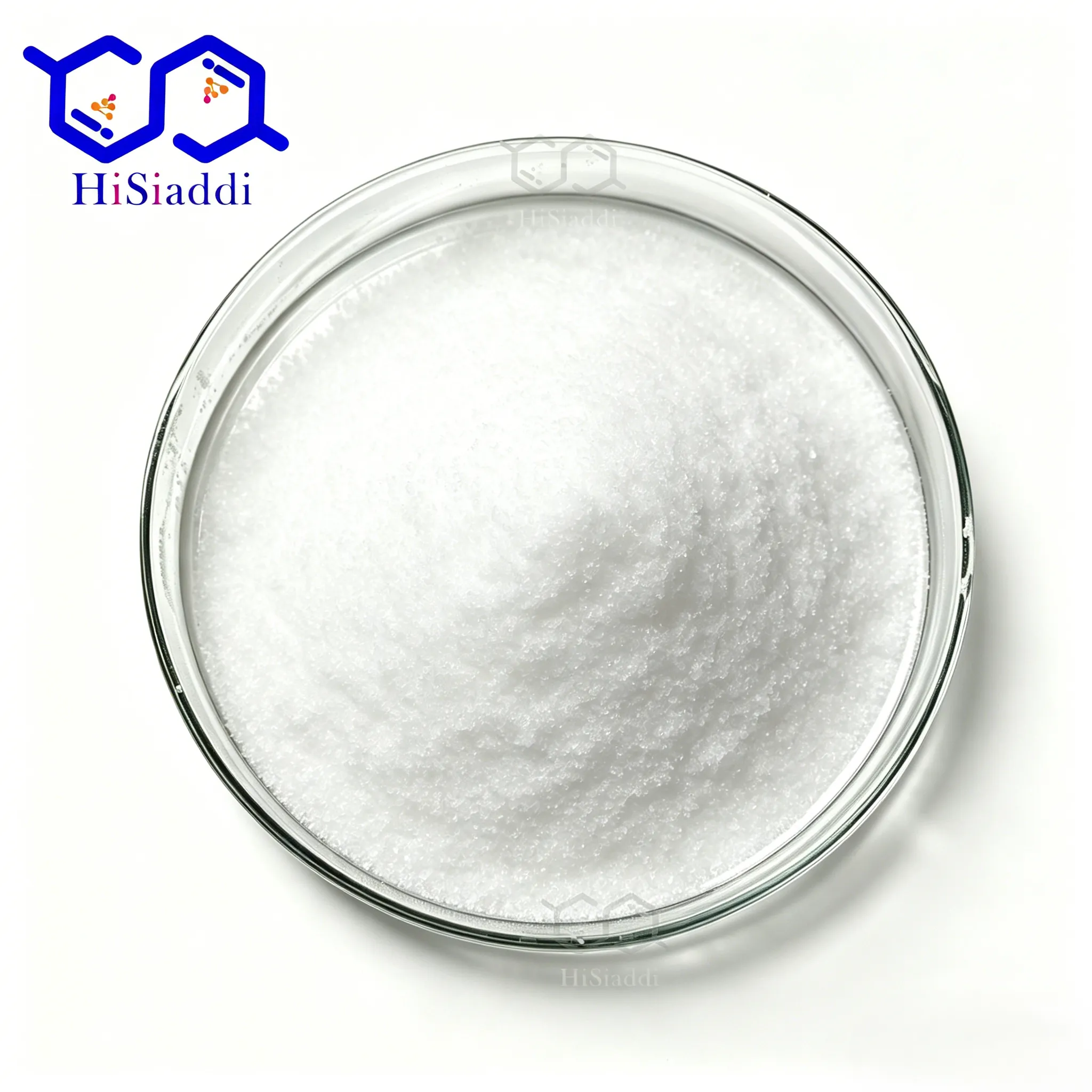
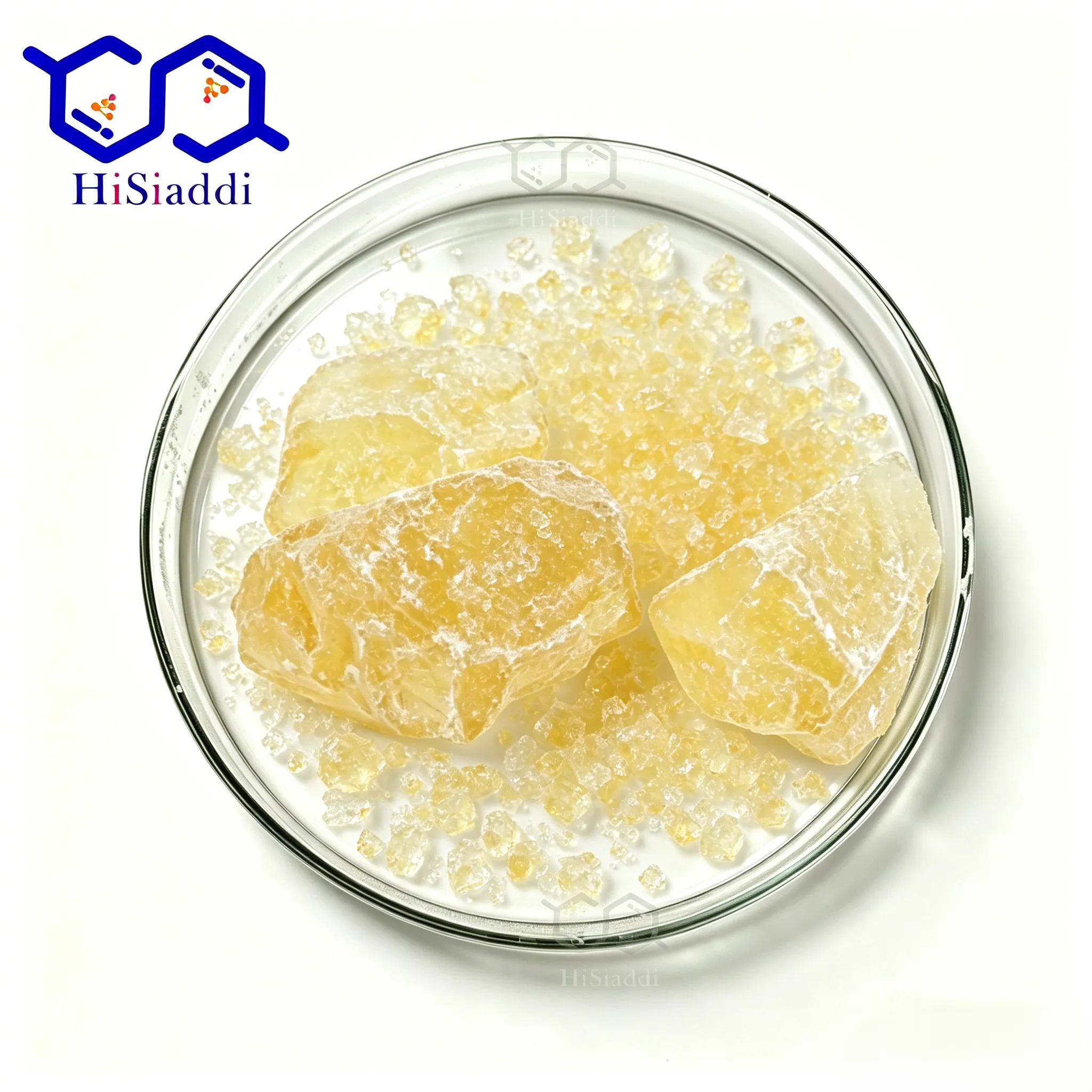
Hydroquinone Dihydroxyethyl Ether, abbreviated as HQEE, is a polyurethane aromatic diol chain extender compatible with MDI to improve the strength of PU elastomers and replace MOCA. HiSiaddi can provide original factory supplies of multiple Chinese brands and the "1+2+3+4=1" service.
Xiangyuan supplies XY-HQEE (purity ≥99%) and XY-HQEE-H (high-purity grade, purity ≥99.5%) with melting point 104-106℃, hydroxyl value 540-580mgKOH/g and low moisture, benchmarking Eastman HQEE at a 19%-23% lower price, suitable for European PU elastomer factories, Korean sealant enterprises, North American medical PU manufacturers and Southeast Asian sole material factories.
Yarui provides YR-HQEE (purity ≥98.5%) and YR-HQEE-E (elastomer grade, purity ≥99%) with moisture ≤0.1%, low dust and easy dispersion for mid-end PU product applications, priced 5%-7% lower than Xiangyuan at the mid-end level.
HiSiaddi Exclusive Service: Offers consultation on key indicator & cost comparison of multiple brands, PU elastomer formula, MDI system adaptation and low crystallization processing optimization; supports third-party testing of melting point and hydroxyl value.
 CONTACT HiSiaddi NOW
| CAS No: | 104-38-1 | Brand Name: | Multi-brand |
| MF: | C10H14O4 | Model Number: | Multi-models |
| EINECS No: | 203-197-3 | Grade: | Industrial grade |
| Purity: | 99% | Place of Origin: | China |
| MOQ: | 1ton | Storage: | Please refer to the product packaging or contact the customer service. |
When purchasing HQEE as a buyer, you may encounter the following questions:
What are the key indicator advantages of mainstream grades of well‑known HQEE brands and their impacts on application performance?
What competitive services can HQEE suppliers provide?
What are the qualification certifications and market feedback of target HQEE brands?
What is the inventory level and supply stability of HQEE suppliers?
What factors should be considered when purchasing HQEE?
… and many other relevant questions.
Main Grades: HQEE‑Ultra (high‑purity low‑free‑phenol premium granular grade), HQEE‑STD (standard general‑purpose export grade)
Purity ≥99.5%, top‑tier in the industry; hydroxyl value 452±2 mgKOH/g with high precision and stability. Crosslink density and heat resistance are identical to Lubrizol and Covestro.
Free hydroquinone ≤0.05%, ultra‑low toxic impurities. Compliant with EU REACH SVHC regulations and North American FDA industrial safety standards, resulting in odor‑free and non‑blooming finished products.
Melting point 102–104℃ with an extremely narrow range and stable melting performance. Compatible with high‑temperature casting of MDI‑PU and continuous TPU extrusion, offering a wide processing window.
Acid value ≤0.05 mgKOH/g, moisture ≤0.03%. Eliminates PU foaming, shrinkage cavities and hydrolysis failure, suitable for high‑temperature and humid downhole oilfield environments.
APHA color ≤20, white granules that do not affect light‑colored TPU, premium sneaker soles and transparent elastomers.
Excellent thermal stability with no decomposition at 220℃. PU products achieve heat resistance above 130℃ and high anti‑reversion performance at high temperatures.
Regular‑shaped granules with good fluidity and zero dust, suitable for automated metering and feeding.
Annual capacity of 9,500 tons with 76% for export. Preferred supplier for high‑grade cast PU, oilfield seals, automotive TPU and premium sole stock solution manufacturers in Europe and America, featuring world‑class batch consistency.
Cost‑Performance: Ultra‑high‑end positioning, priced at 69% of Lubrizol HQEE (USA) with 99.5% performance matching imported originals. Top choice for domestic high‑grade industrial PU and oilfield‑grade applications.
Target B‑End Buyers: Large European and American cast polyurethane groups, oilfield seal / downhole PU product manufacturers, automotive shock‑absorbing TPU modification enterprises, premium sneaker sole stock solution plants, heavy‑duty mining rubber roller production groups, global PU additive traders.
Direct 1:1 substitution for imported HQEE from Lubrizol and Covestro with no PU formulation adjustment required. Hardness, heat resistance, hydrolysis resistance and resilience fully match imported materials.
Ultra‑low free hydroquinone enables easy passing of European and American industrial safety, REACH SVHC and occupational health tests, granting access to global petroleum, automotive and premium sports brand supply chains.
Narrow melting point and low moisture increase the yield of continuous casting/extrusion by 6%–10%, significantly reducing foaming, cracking and dimensional deviation.
High thermal stability adapts to high‑temperature downhole oilfield conditions and shock‑absorbing components around automotive engines.
Stable annual capacity supports annual price‑locking and supply guarantee agreements, avoiding risks of raw material price hikes (hydroquinone, ethylene oxide) and supply shortages in peak seasons.
Specific Benefits for End Customers: Downhole oilfield seals, heavy‑duty mining rubber rollers, premium automotive shock‑absorbing parts, high‑grade sneaker midsoles, industrial wear‑resistant wheels and precision polyurethane elastomers deliver high hardness, high resilience, high temperature resistance, hydrolysis resistance, long‑term dimensional stability, wear and aging resistance, non‑blooming and non‑toxic properties, meeting stringent quality standards of global high‑end industrial, petroleum and automotive sectors.
Main Grades: WH‑HQEE‑TPU (high‑melting‑stability grade for TPU extrusion), WH‑HQEE‑201 (standard general‑purpose grade)
Purity ≥99.3%, hydroxyl value 452±3 mgKOH/g, compatible with high‑temperature continuous twin‑screw extrusion of TPU.
Free hydroquinone ≤0.08%, metal ions ≤1 ppm, with no impact on TPU insulation and antistatic properties.
Melting point 101–104℃ with uniform melting speed, suitable for high‑speed TPU extrusion.
Enhanced hydrolysis resistance for high‑temperature, high‑humidity and rainy outdoor environments in Southeast Asia.
Annual capacity of 8,200 tons. Top exporter to Southeast Asia, Japan, South Korea and Australia via Shanghai/Ningbo ports with remarkable logistics efficiency advantages.
Cost‑Performance: Mid‑to‑high‑end positioning, priced at 64% of imported products. Outperforms general imported grades in TPU continuous extrusion and premium sole applications with excellent cost‑effectiveness.
Target B‑End Buyers: Southeast Asian TPU elastomer manufacturers, Japanese and South Korean automotive TPU modification enterprises, Australian outdoor PU product plants, premium sneaker material stock solution manufacturers, small‑to‑medium‑sized cast PU factories.
Optimized TPU‑specific formulation adapts to high‑speed twin‑screw extrusion, producing finished products free of crystal spots and yellowing with stable mechanical properties.
Shipment from East China ports enables convenient small‑batch frequent replenishment with low inventory pressure.
Hydrolysis resistance suits hot‑humid Southeast Asian environments with high formulation fault tolerance.
Specific Benefits for End Customers: Premium Southeast Asian sneaker soles, automotive interior TPU components, outdoor wear‑resistant PU wheels and home appliance shock‑absorbing parts feature stable heat resistance, good resilience, moisture‑heat resistance and aging resistance.
Main Grades: HY‑HQEE‑STD, HY‑HQEE‑Eco (economic general‑purpose grade)
Purity ≥98.8%, hydroxyl value 450–454 mgKOH/g, meeting global general industrial‑grade PU standards.
Free hydroquinone ≤0.15%, suitable for ordinary industrial rubber rollers and general seals.
Melting point 100–104℃, moisture ≤0.08%, compatible with conventional casting and compression molding processes.
Annual capacity of 13,000 tons, China's largest HQEE producer with the lowest cost for bulk purchases.
Cost‑Performance: Mid‑tier benchmark, priced at 54% of imported products. Meets 90% of general industrial PU scenarios, the top choice for high‑volume cost‑effective applications.
Target B‑End Buyers: Middle Eastern industrial rubber roller plants, Indian general seal manufacturers, African cast PU product enterprises, small‑to‑medium‑sized PU modification factories, general wear‑resistant wheel producers.
Ultra‑large capacity ensures no supply shortages in peak seasons with a standard delivery lead time of 7–10 days.
Industry‑low purchasing unit price enables large‑scale cost reduction for ordinary industrial rubber rollers and civil wear‑resistant parts.
Stable indicators adapt to conventional casting equipment without high‑end process debugging.
Specific Benefits for End Customers: Ordinary industrial rubber rollers, civil wear‑resistant wheels, general mechanical seals and simple cast PU products feature stable crosslinking, qualified hardness and controllable costs, meeting basic export compliance requirements.
Main Grades: JH‑HQEE‑Ultra (low‑dust weather‑resistant UV‑resistant grade), JH‑HQEE‑UV (enhanced anti‑yellowing grade)
Purity ≥99.4%, hydroxyl value 452±2 mgKOH/g, acid value ≤0.06 mgKOH/g.
Regular‑shaped low‑dust granules suitable for automated closed feeding with high workshop environmental protection standards.
Outstanding UV and thermal aging resistance with no chalking or yellowing under long‑term outdoor exposure.
Shipment via Yangtze River ports delivers significant ocean freight cost advantages for Europe, America and Southeast Asia.
Customizable food‑contact‑grade, low‑heavy‑metal and precision‑grade specialty HQEE available.
Cost‑Performance: Mid‑to‑high‑end positioning, priced at 67% of imported products. Optimally suited for mid‑tier European and American industrial PU and high‑end Southeast Asian shoe material applications.
Target B‑End Buyers: Mid‑tier European industrial PU manufacturers, Thai/Malaysian premium shoe material stock solution plants, Hong Kong, Macao and Taiwan precision elastomer enterprises, outdoor PU product formulation factories.
Low‑dust closed feeding reduces risks of environmental penalties, complying with European and American occupational health regulations.
Superior anti‑yellowing performance prevents discoloration of light‑colored TPU and shoe materials during long‑term use.
Low logistics costs via Yangtze River ports offer remarkable overall advantages for bulk ocean shipments.
Specific Benefits for End Customers: Premium casual sneaker soles, outdoor PU shock‑absorbing parts, light‑colored industrial elastomers and precision miniature seals feature environmental safety, long‑lasting weather resistance and stable color.
Main Grades: BN‑HQEE‑LowFree (precision grade with ultra‑low free phenol), BN‑HQEE‑Food (food‑contact‑grade HQEE)
Purity ≥99.3%, hydroxyl value 452±2 mgKOH/g, free hydroquinone ≤0.04%, ultra‑low toxicity and residue.
Enhanced low‑temperature stability with no caking at ‑10℃, adapting to low‑altitude cold environments in Russia and South America.
Customizable specialty HQEE for UL certification, low‑heavy‑metal, non‑blooming and high‑heat‑resistance applications.
In‑depth market development in South America and Russia with complete local compliance documents, carbon footprint and ESG materials.
Cost‑Performance: Mid‑tier customized positioning, priced at 62% of imported products. Outstanding cost‑effectiveness for specialty compliance and low‑temperature scenarios.
Target B‑End Buyers: Latin American PU modification plants, Russian oilfield/outdoor PU product enterprises, food‑contact‑grade seal manufacturers, medical‑grade PU elastomer enterprises.
Ultra‑low free phenol and low irritation meet stringent safety standards for medical consumables and food machinery seals.
Customized indicators adapt to rainy South American and frigid Russian climates.
Food‑contact‑grade grades expand high‑end industrial seal categories and boost product premium value.
Specific Benefits for End Customers: South American industrial seals, Russian downhole oilfield components, food machinery wear‑resistant parts and miniature medical‑grade elastomers feature safety, non‑toxicity, full compliance and weather/low‑temperature resistance.

| Comparison Dimension | Shandong Inov HQEE‑Ultra | Wanhua WH‑HQEE‑TPU | Zhejiang Hengyi HY‑HQEE‑STD | Anhui Jinhe JH‑HQEE‑Ultra | Guangdong Bonny BN‑HQEE‑LowFree |
| Product Positioning | High‑end high‑purity low‑free‑phenol granular grade, matching Lubrizol/Covestro originals | Mid‑to‑high‑end TPU‑specific high‑melting‑stability grade | Mid‑tier general‑purpose economic grade, high‑volume leader | Mid‑to‑high‑end low‑dust UV‑resistant weather‑proof grade | Mid‑tier customized specialty grade with ultra‑low free phenol & food‑contact‑grade options |
| Purity | ≥99.5% | ≥99.3% | ≥98.8% | ≥99.4% | ≥99.3% |
| Hydroxyl Value (mgKOH/g) | 452±2 | 452±3 | 450‑454 | 452±2 | 452±2 |
| Free Hydroquinone | ≤0.05% | ≤0.08% | ≤0.15% | ≤0.07% | ≤0.04% |
| Melting Point | 102‑104℃ | 101‑104℃ | 100‑104℃ | 102‑104℃ | 101‑104℃ |
| Moisture | ≤0.03% | ≤0.04% | ≤0.08% | ≤0.04% | ≤0.04% |
| Acid Value (mgKOH/g) | ≤0.05 | ≤0.06 | ≤0.12 | ≤0.06 | ≤0.05 |
| Thermal Decomposition Temperature | ≥220℃ | ≥218℃ | ≥215℃ | ≥219℃ | ≥218℃ |
| Core Competitive Advantages | High purity, low free phenol, narrow melting point, low moisture, ideal for oilfield/European‑American high‑grade industrial applications | TPU‑specific, stable melting performance, East China logistics, strengths in Southeast Asia, Japan & South Korea | Largest capacity, lowest price, most stable supply | Low‑dust, UV & yellowing resistance, low Yangtze River logistics costs | Ultra‑low free phenol, food‑grade customization, low‑temperature resistance, full compliance for Latin America & Russia |
| Price vs Imported Products | 69% | 64% | 54% | 67% | 62% |
| Major Export Regions | Europe, America, Japan, South Korea | Southeast Asia, Japan, South Korea, Australia | Middle East, India, Africa | Mid‑tier Europe & America, high‑end Southeast Asia | Latin America, South America, Russia |
| Core B‑End Buyers | Global cast PU, oilfield seal, automotive TPU, premium shoe material stock solution plants | Southeast Asian TPU plants, Japanese & South Korean automotive TPU enterprises, Australian outdoor PU plants | General industrial rubber roller, ordinary seal, civil wear‑resistant part manufacturers | Mid‑tier European PU plants, high‑end Southeast Asian shoe material, outdoor elastomer factories | Latin American food machinery seal, Russian oilfield PU, medical elastomer manufacturers |
| Key Downstream B‑End Benefits | 1:1 import substitution, superior heat & hydrolysis resistance, high yield, high‑grade REACH compliance | Stable TPU extrusion, zero crystal spots, convenient small‑batch replenishment | Lowest cost, short lead time, ultra‑large capacity supply guarantee | Low‑dust environmental protection, anti‑yellowing, low logistics costs, simplified compliance | Ultra‑low free‑phenol safety, low‑temperature resistance, customized indicators for special regulations |
| End Customers | Downhole oilfield seals, mining rubber rollers, automotive shock‑absorbing parts, premium sneaker soles | Southeast Asian shoe materials, automotive TPU components, outdoor wear‑resistant wheels | Industrial rubber rollers, general seals, civil wear‑resistant wheels | Premium casual shoe materials, light‑colored elastomers, outdoor shock‑absorbing parts | Food machinery seals, Russian oilfield components, miniature medical elastomers |
| Direct Overseas Benchmarks | Lubrizol HQEE, Covestro HQEE (USA) | Covestro TPU‑grade HQEE | Imported economic‑grade HQEE | Lubrizol weather‑resistant HQEE | Imported specialty compliance‑grade HQEE |
Performance: China's top 5 mainstream HQEE grades fully match imported counterparts in purity, hydroxyl value, crosslinking efficiency and thermal stability. High‑end Chinese grades outperform overseas originals in low free hydroquinone, narrow melting point, low moisture and low ion content, perfectly meeting stringent requirements of oilfield, automotive and high‑grade TPU applications.
Cost: Chinese HQEE is priced at only 54%–69% of imported products, reducing overall procurement costs by 31%–46% for equivalent performance, delivering remarkable cost‑reduction effects for large‑scale PU modification manufacturers.
Production Capacity & Supply Chain: China dominates global HQEE production capacity. Stable manufacturing via continuous closed‑system synthesis, rectification and granulation avoids issues faced by overseas brands including price hikes, supply shortages, long lead times, high minimum order quantities and lengthy customization cycles.
Customization Capability: Chinese manufacturers can rapidly develop TPU‑extrusion‑specific, food‑contact‑grade, medical‑grade, low‑temperature‑resistant and ultra‑low‑free‑phenol grades. Overseas brands suffer from long customization cycles, high minimum order quantities and severe premium pricing.
Compliance: All top 5 brands hold full certifications including REACH, RoHS, SGS, FDA industrial‑grade approval, COA and MSDS, supporting customs clearance, factory audits and reviews by end‑user petroleum, automotive and sports brands worldwide.
HiSiaddi is a new foreign trade service enterprise integrating technology transformation and foreign trade. It has built a "1+2+3+4=1" product service system: 1 foreign trade salesperson with more than 3 years of experience, 2 R&D teams, 3 high-quality suppliers, and 4 warehouses to satisfy all kinds of product demands.
Relying on this service system, HiSiaddi outperforms most foreign trade companies in the R&D optimization and production technology of HQEE, surpasses single factories in grasping market demand and competitive advantages of different HQEE brands, and understands the overseas trade market better than research institutions.
HiSiaddi only employs foreign trade salesmen with over 3 years of working experience. All sales staff need to receive more than six months of joint training by the R&D team and foreign trade team before receiving customers.
(1)HQEE Basic Support Service
Supported by the foreign trade team and corporate service system, we provide customers with one-stop full-process document services, including the preparation and handling of all HQEE compliance certificates, supply of third-party test reports and after-sales handling of quality complaints.
(2)HQEE Exclusive Value-Added Service
Backed by the R&D team, we provide customized products and technical consulting services for customers, including the core index matching and cost comparison of all HQEE brands, as well as regular sharing of HQEE market trends.
We conduct in-depth cooperation with raw material manufacturers through technology transformation, and maintain close internal collaboration with the foreign trade department to deliver professional technical training for sales personnel, so as to realize customized development of HQEE and provide research-level consultation on brand matching and application optimization of HQEE.
(1)HQEE Research-Grade Customization Services
Customized HQEE with ultra-low free hydroquinone, narrow melting point, low moisture and precise hydroxyl value to solve overseas clients’ pain points such as toxic hazards, unstable crosslinking, foaming during processing and poor hydrolysis resistance. We supply HQEE with free phenol ≤0.03%, melting point 102–103℃, moisture ≤0.02%, hydroxyl value 452±1 for oilfield underground, automobile engine and medical high-standard scenarios.
(2)HQEE Research-Grade Consulting Services
Provide matching formula consultation of HQEE with MDI, polyol, BDO and catalyst, as well as TPU extrusion and casting process parameter optimization. We offer 1:1 import substitution data compared with Lubrizol / Covestro products to realize zero-risk cost reduction without performance loss.
Our foreign trade team and R&D team cooperate closely. Through market preliminary investigation, factory on-site inspection, product testing, in-depth technical cooperation and procurement cooperation, we select about 3 manufacturers with stable product quality, sufficient supply, good reputation and great development potential.
(1) Initiative to Secure Lower Raw Material Prices
Long-term technical cooperation and exclusive agency help us obtain factory-direct raw materials at more favorable prices.
(2) HQEE Long-Term Supply Chain Assurance Services
Long-term technical and agency cooperation strengthens full-process production supervision, full batch traceability, stable batch quality control, and compensation mechanism for products failing third-party inspection.
We have 4 warehouses, which are jointly operated and managed with suppliers to store hot-selling products.
(1)HQEE Fast Local Delivery & On-Site Problem Resolution
The four warehouses are located at Qingdao Port (North China), Ningbo Port (East China), Shenzhen Port (South China) and Zhengzhou inland logistics center, ensuring timely delivery of HQEE. When HQEE has transportation damage, packaging defects or export compliance problems, our on-site staff can solve problems locally.
(2) HQEE Price Stabilization & Custom Packaging Support
We stock up in advance during the peak period of sharp price fluctuations to ease price volatility. Our self-owned warehouses support customized packaging and labels to meet personalized customer needs.
As a new-type foreign trade service provider driven by technological transformation and foreign trade services, HiSiaddi has established a "1+2+3+4=1" service system and can supply original factory goods of multiple well-known brands for HQEE. As a foreign trade service provider with R&D capabilities, we will sort out and analyze common difficulties encountered by B-end purchasers sourcing HQEE from China, and propose corresponding solutions from a professional perspective.
If you require more professional and in-depth analysis on HQEE selection, please contact HiSiaddi customer service.
1.
High residual isobornyl and by-products lead to drastically weakened weather resistance and yellowing resistance Outdoor and optical coatings have strict requirements for long-term anti-yellowing performance. Unremoved isobornyl and unsaturated by-products in raw materials will gradually oxidize and discolor under UV and high temperature exposure. Finished coatings turn yellow, lose gloss and show color difference within a short period; light transmittance of PV and optical products declines, failing outdoor material aging tests in Europe and America.
2.
3.
Excessive acid value corrodes substrates and weakens interfacial bonding force of coatings High-acid-value IBOA continuously erodes metal substrates, plastic base materials and coating films, while weakening adhesion between coatings and substrates. After long-term use, coatings peel, shrink and fall off; rainwater, acid and alkali mist accelerate defect expansion under outdoor working conditions, completely losing protective functions.
4.
5.
Excessive moisture causes pinholes, bubbles and abnormal haze in coatings UV curing systems are sensitive to moisture. Excessive water content in raw materials vaporizes under UV irradiation after coating, forming dense pinholes on coating surfaces and microbubbles inside. Optical films suffer increased haze and reduced clarity; compactness of outdoor coatings declines, impairing waterproof and anti-corrosion performance.
6.
7.
Unbalanced polymerization inhibitor content triggers self-polymerization gelation or incomplete curing
8.
· Insufficient polymerization inhibitor: Raw materials tend to self-polymerize in storage tanks and conveying pipelines, blocking coating equipment and feeding pipelines and interrupting continuous production.
· Excessive polymerization inhibitor: UV reaction activity decreases, coating surfaces remain sticky after curing, failing scratch and solvent resistance standards.
1.
Batch fluctuation of viscosity and purity causes unstable coating leveling and curing effects Large differences in main content and viscosity between batches disrupt rheological properties of coatings when used as active diluents, resulting in poor leveling, ripples and brush marks after coating. Inconsistent crosslink density after curing leads to fluctuating coating hardness, wear resistance and flexibility, causing uneven quality of mass-produced finished products.
2.
3.
Poor thermal storage stability, deepened color and increased viscosity after long-term storage Raw materials slowly oxidize under heat and long-term storage; barrel materials turn yellow and viscosity rises, altering the color of formulated coatings and directly damaging appearance quality of light-colored and transparent high-end coatings.
4.
1. Adopt multi-stage rectification and negative pressure impurity removal processes to deeply remove isobornyl and various by-products, fundamentally improving weather resistance and anti-yellowing performance to meet long-term outdoor use and optical product standards.
2. Precisely neutralize and refine to achieve ultra-low acid value without corroding various substrates, guaranteeing long-term coating adhesion and interfacial stability.
3. Conduct vacuum deep dehydration to control moisture at ultra-low levels, completely eliminating coating bubbles, pinholes and abnormal haze issues.
4. Customize stable-range polymerization inhibitor content according to application scenarios to prevent self-polymerization and pipeline blockage during storage and transportation while ensuring complete and dry coating curing with guaranteed UV curing activity.
5. Closed-loop synthesis with online indicator monitoring ensures highly consistent batch purity and viscosity, delivering excellent coating leveling and stable uniform physical performance after curing.
6. Compound special anti-oxidation and stabilizing additives with light-proof sealed packaging to maintain stable color and viscosity of materials after long-term normal-temperature storage with consistent performance throughout the whole process.
1.
High residual low-boiling volatiles lead to strong odor and excessive VOC indicators Residual light-component monomers and solvents continuously volatilize inside closed electronic cavities and car compartments, creating poor workshop working environments and causing excessive VOC and SVHC restricted substances in finished products, barring access to mainstream European and American electronic and automotive supply chains.
2.
3.
Poor compatibility with resins and functional additives causes glue liquid delamination and precipitates Excessive polar impurities in raw materials mix with polyurethane acrylate, epoxy acrylate, coupling agents, defoamers and other additives, resulting in system delamination and static precipitation. Uneven adhesive components drastically reduce bonding strength, waterproof and insulation performance.
4.
5.
Sharp viscosity surge under low temperature blocks gluing and coating operations Electronic and automotive products often face low-temperature environments; ordinary IBOA has poor low-temperature fluidity with drastically increased viscosity, causing poor feeding and material breakage of automatic dispensing and coating equipment and forced interruption of production cycles.
6.
7.
High curing shrinkage creates large interfacial stress, leading to debonding and gaps Impure components amplify curing shrinkage effects, generating internal stress at bonding joints of electronic components and composite substrates. After long-term vibration and temperature change, debonding and gaps appear; conformal coatings crack, losing insulation and protection capacity.
8.
9.
Excessive metal ion impurities trigger risks of micro short circuits Trace metal ions introduced during production easily cause micro-conduction and electric leakage on circuit boards under humid and powered conditions, posing electrical safety hazards.
10.
1. Multi-stage thin-film low-boiling removal process completely eliminates light components to deliver low-odor and low-volatility raw materials fully complying with European and American electronic and automotive VOC environmental regulations.
2. Deeply remove polar interfering impurities to achieve excellent compatibility with various acrylate resins and additives; mixed glue liquid remains uniform and stable without delamination or precipitation after long-term standing.
3. Optimize molecular ratio to broaden low-temperature application range with gentle viscosity changes under low temperature, ensuring smooth feeding of dispensing and coating equipment for continuous stable production.
4. High-purity grade optimizes curing shrinkage rate to reduce interfacial internal stress, delivering firm bonding without debonding and flexible crack-resistant coatings for long-term stable insulation and protection performance.
5. Add ion removal procedures to strictly control metal ion content, eliminating risks of circuit board electric leakage and micro short circuits to meet electronic safety standards.
1.
Viscosity fluctuation disrupts resin leveling, causing wire drawing and poor interlayer bonding in 3D printing As a diluent monomer, batch viscosity deviation of IBOA changes overall rheological properties of 3D printing resins, triggering wire drawing and uneven layering during printing. Finished products suffer insufficient interlayer adhesion and unqualified dimensional accuracy and mechanical strength.
2.
3.
Mixed solid mechanical impurities and insoluble substances create particle defects on coatings and printed parts Foreign matter introduced during filling and storage causes pits and raised particles on coating surfaces after plastic painting; impurities mixed inside 3D printed parts form stress points prone to fracture under force, damaging both appearance and performance.
4.
5.
Brittle cured products lead to coating cracking after plastic bending and breakage of printed parts under force Insufficient raw material purity and unbalanced residual flexible components create rigid yet fragile cured films. Coatings crack and fall off after repeated bending of plastic parts, and functional 3D printed parts break under impact and extrusion.
6.
7.
Unstable chemical resistance causes gloss loss and corrosion after contact with daily cleaners and grease Fluctuating effective component batches lead to inconsistent solvent and grease resistance of cured films. Coatings on daily plastic and toy products easily lose gloss and bloom after contact with daily chemicals, shortening service life.
8.
1. Full-process standardized viscosity control delivers high batch consistency and excellent resin leveling without wire drawing, with qualified finished product dimensional accuracy and interlayer strength.
2. Multi-stage precision filtration of finished products completely removes solid impurities and insoluble substances for smooth and defect-free coating and printed part surfaces.
3. Purify and optimize molecular structure to balance curing hardness and flexibility for bend-resistant and crack-resistant coatings and excellent comprehensive mechanical performance of printed parts.
4. Stabilize effective component content to deliver consistent batch chemical and grease resistance of cured films, adapting to complex service scenarios of daily plastics.
1.
High price of pure raw materials leads to diluted low-grade products with insufficient effective content and completely lost curing performance High procurement cost of genuine IBOA drives low-end suppliers to dilute with cheap acrylates and solvents, drastically reducing effective monomer content. Coatings and inks cure slowly with sticky surfaces, losing basic functionality and triggering frequent customer complaints and returns.
2.
3.
Large batch fluctuation of acid value, moisture, polymerization inhibitor and other indicators requires repeated formula and process adjustments Lack of standardized production control creates significant differences between batches, forcing workers to frequently adjust photoinitiator dosage, UV lamp power and coating thickness with repeated equipment startup and shutdown, reducing production efficiency by over 20%.
4.
5.
Raw materials absorb water, oxidize and turn yellow under high-temperature and high-humidity storage & transportation, with partial self-polymerization High temperature and humidity in local sea transportation and warehouses, paired with weak protection of ordinary sealed packaging, lead to rapid water absorption and yellowing after air contact; severe cases cause partial gelation inside barrels, scrapping entire batches and delaying construction schedules.
6.
7.
Strong odor and excessive VOC bar access to formal projects and export orders Excessive residual solvents and light components create pungent odors failing local environmental standards, losing access to formal engineering and foreign trade orders.
8.
9.
Incomplete compliance documents prevent market filing and sampling inspection, limiting circulation to informal channels Lack of English CoA, MSDS, REACH/RoHS and heavy metal test certificates leads to cargo detention risks during regulatory inspections with unguaranteed payment recovery.
10.
11.
Absence of supporting technical services hinders troubleshooting of incomplete curing, pinholes, yellowing and gelation issues, aggravating raw material waste Suppliers only deliver goods without process guidance; factories blindly adjust formulas when encountering production abnormalities, further increasing waste of raw materials including polyols and chain extenders.
12.
1. Launch regional exclusive economical grades retaining core dilution, curing and weather resistance performance with simplified deep refining procedures for high-end electronic grades, priced 21%~24% lower than high-end pure products to balance procurement costs and usage demands.
2. Standardized locked production parameters unify acid value, moisture, viscosity, polymerization inhibitor and other core indicators for stable batch performance, enabling fixed production formulas and processes to reduce machine adjustment frequency.
3. Adopt thickened light-proof sealed iron drum packaging with long-term compound stabilizers to adapt to high-temperature and high-humidity storage & transportation environments, preventing water absorption, discoloration and self-polymerization of raw materials.
4. Basic devolatilization and deodorization treatment reduce odor and VOC to meet local civil product environmental standards for access to regular formal orders.
5. Provide a full set of English compliance documents for each batch to assist customers with filing and sampling inspection and open formal sales channels.
6. Offer basic English process guidance with adjustment solutions for common issues including incomplete curing, pinholes, yellowing and gelation to reduce raw material waste.
1.
Widespread adulteration and dilution with falsely labeled purity, activity and viscosity triggering mass after-sales compensation claims Unscrupulous merchants dilute IBOA with cheap monomers and solvents while falsely reporting main content, curing activity and other parameters. Downstream factories suffer mass scrapping of finished products and unqualified performance after use, forcing distributors to pay heavy compensation, losing long-term customers and damaging channel credibility.
2.
3.
Poor corrosion resistance of sealing accessories causes barrel leakage during bumpy sea transportation, triggering cargo loss and logistics disputes Ordinary rubber gaskets swell and corrode when exposed to acrylates, leading to barrel mouth and weld leakage after container stacking and long-distance shaking during sea transportation, causing material loss, pollution of co-container goods, logistics deductions and compensation claims.
4.
5.
Lack of light and heat insulation protection accelerates oxidation and thickening during storage IBOA is sensitive to light and heat; simple packaging causes deepened color and increased viscosity after storage, leading to full batch rejection by high-end end customers upon inspection.
6.
7.
Missing hazardous chemical and environmental documents bar access to high-end European and American supply chains Absence of updated English SDS, sea freight hazardous goods identification certificates, REACH, RoHS and heavy metal test certificates prevents passing supplier audits of large coating and electronic enterprises, limiting circulation to low-end informal channels only.
8.
9.
No batch traceability and third-party testing fail head enterprise factory audits Adulterated and miscellaneous-source goods lack complete production ledgers, traceability records and authoritative test reports, directly failing factory audits of key customers and blocking long-term large order cooperation.
10.
11.
Open filling exposes raw materials to air and moisture, rapidly degrading quality of small packages Filling operations without closed, light-proof and moisture-proof facilities mix impurities and absorb moisture into raw materials, reducing chain extension activity and exceeding moisture standards with continuously declining repurchase rates of end customers.
12.
1. Direct supply of original genuine pure materials with zero filler and zero dilution with truthfully disclosed physical and chemical indicators; each batch attaches full international third-party test reports supporting global re-inspection to eliminate quality compensation risks and stabilize channel reputation from the source.
2. Custom thickened corrosion-resistant iron drums with fluororubber anti-swelling sealing gaskets; each barrel undergoes leakage and compression resistance testing before delivery to achieve leakage-free sea transportation and eliminate logistics cargo loss and disputes.
3. Unified light-proof sealed packaging paired with constant-temperature storage suggestions to maintain stable color, viscosity and activity of raw materials after long-term storage for smooth passing of incoming inspections by high-end customers.
4. One-stop supply of complete formal English documents including SDS, hazardous goods certificates and various environmental test reports for full docking with high-end European and American raw material supply chains.
5. Establish full-link traceability systems covering production, quality inspection, filling, storage and transportation with fully traceable batch information to fully cooperate with customer factory audits and lock long-term large orders.
6. Provide standardized closed, light-proof and low-temperature filling specifications to guide filling operations and isolate moisture and impurities for consistent quality of large and small packages.
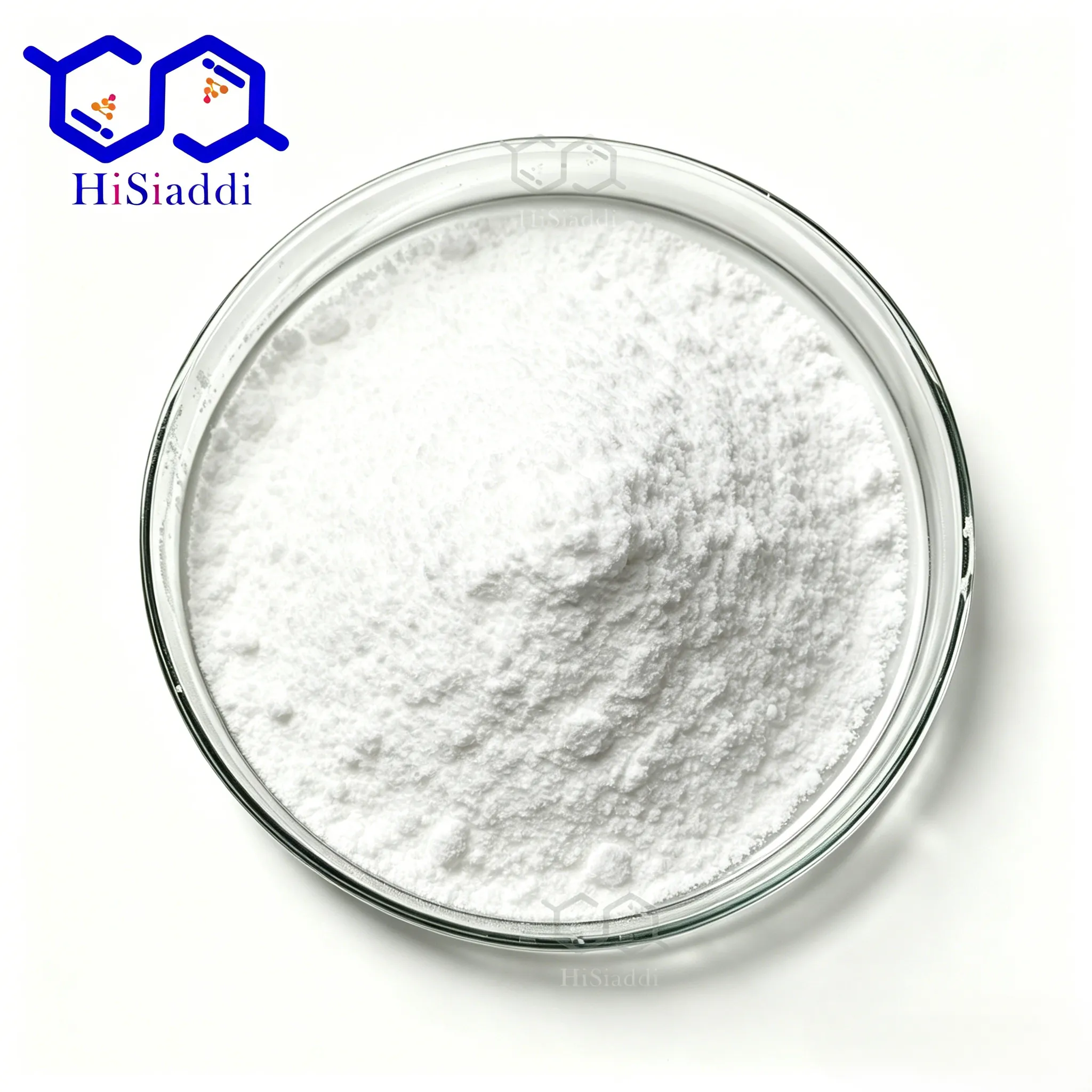
HQEE is an aromatic diol chain extender exclusive to the polyurethane industry, appearing as white crystalline powder at room temperature with excellent heat resistance, high melting point and stable crosslinking performance. It can significantly improve the hardness, modulus, thermal aging resistance, tear resistance and dynamic fatigue performance of PU products, mainly applied to MDI-system polyurethane elastomers, cast PU, PU seals, rollers, mine screens, shoe soles, automotive shock-absorbing parts and industrial wear-resistant accessories. Core control indicators: main content, initial melting point, moisture, ash content, acid value, hydroxyl value, screen residue, free hydroquinone, particle size distribution, storage stability, heavy metals and REACH/RoHS restricted substances. Combined with production working conditions, compliance standards, mass production difficulties and cross-border storage & transportation scenarios of various overseas B-end customers, we sort out procurement and production pain points one by one with matched implementable solutions.
1.
Substandard initial melting point causes premature solidification and poor dispersion during high-temperature melting and mixing High-end cast PU melting and reaction temperatures generally range from 110~130°C. Low-quality HQEE with low melting point prematurely softens and agglomerates in material kettles and conveying pipelines, failing uniform mixing with polyols and MDI and creating local agglomeration inside the system. After casting molding, products develop internal delamination and hard spots with drastically reduced overall mechanical strength and wear resistance, and frequent production line shutdowns due to material blockages.
2.
3.
Excessive free hydroquinone leads to easy yellowing, poor thermal aging resistance of products and potential safety risks Incomplete purification and synthesis leave residual free hydroquinone. On one hand, it catalyzes late-stage oxidation of PU systems; rollers and sieve plates rapidly yellow, crack and peel after long-term heat and force exposure, failing long-term service requirements of heavy industrial equipment. On the other hand, free phenol is a restricted substance causing excessive harmful substances in finished products, failing European and American safety testing.
4.
5.
Large batch fluctuation of hydroxyl value leads to out-of-control crosslink density and unstable product hardness and modulus Hydroxyl value directly determines chain extension reaction efficiency and crosslink density. Under identical formulas and addition amounts:
6.
· Low hydroxyl value causes insufficient crosslinking, soft and deformable products with poor wear resistance.
· High hydroxyl value leads to excessive crosslinking, rigid and brittle materials with attenuated impact and tear resistance. Hardness deviation of mass-produced finished products exceeds factory standards.
1.
Excessive moisture generates bubbles and pores during PU reactions, destroying product compactness PU systems are highly sensitive to moisture. Excessive water content in raw materials reacts with isocyanates to generate carbon dioxide, forming dense internal pores and surface bulges after casting. Heavy-duty wear-resistant parts easily crack from pores under force, drastically shortening service life and creating equipment operation safety hazards.
2.
3.
High acid value accelerates PU hydrolysis aging and catalyzes side reactions High-acid-value HQEE continuously damages PU molecular structures and accelerates hydrolysis, softening and delaminating workpieces under humid working conditions. It also disrupts foaming and curing rhythms with erratic reaction speeds and out-of-control dimensional accuracy after casting molding.
4.
5.
Uneven agglomerated powder particle size reduces melting dispersion efficiency and causes abnormal local product performance Excessively coarse particles and agglomerated powder cannot fully melt during melting stages, resulting in insufficient local chain extension after molding, uneven softness and hardness, stress concentration points and easy fracture during dynamic operation.
6.
1. Adopt high-purity recrystallization processes to stably lock initial melting point, tolerating melting working conditions above 130°C without premature solidification during feeding and transportation for uniform and smooth mixing, eliminating blockages in pipelines and material kettles.
2. Multi-stage extraction and negative pressure dephenolization processes strictly control free hydroquinone at ultra-low levels for excellent anti-yellowing and thermal aging resistance of finished products, fully complying with European and American hazardous substance control standards.
3. Closed-loop synthesis with online hydroxyl value monitoring delivers highly consistent batch hydroxyl value with controllable and stable crosslink density, achieving consistent batch hardness, modulus, tear strength and wear resistance of finished products.
4. Vacuum constant-temperature deep drying strictly controls moisture indicators to completely eliminate gas generation during reactions for dense and durable products free of internal pores and bulges.
5. Deep neutralization and refining reduce acid value to inhibit PU hydrolysis and side reactions with stable reaction rhythms, significantly improving product hydrolysis and aging resistance and precise molding dimensions.
6. Jet milling and precise grading screening deliver narrow particle size distribution without agglomeration for thorough melting and dispersion, uniform overall product performance and elimination of local defects.
1.
Poor compatibility with polyols, catalysts and anti-aging agents disrupts curing curves Low-quality HQEE contains organic impurities triggering side reactions with PU catalysts and additives and fluctuating curing speeds. Seals and shock-absorbing parts suffer local under-vulcanization and incomplete curing with increased compression set and insufficient resilience, causing sealing leakage and failed shock-absorbing buffering effects.
2.
3.
Strong powder moisture absorption leads to moisture rebound after conventional storage, disrupting continuous casting production Automotive accessories mostly adopt automated continuous production lines; raw materials absorb moisture and regain water during storage, continuously triggering bubble defects and soaring defective rates of finished products while disrupting assembly line production cycles.
4.
5.
Excessive ash content reduces product fatigue resistance and alternating high-low temperature resistance Excessive inorganic ash destroys internal PU crosslink networks. Automotive accessories develop cracks and hardening after long-term vibration and alternating high and low temperature exposure, failing early and unable to meet long service life requirements of vehicle manufacturers.
6.
7.
Storage caking causes uneven feeding of automatic weighing systems Conventional grades have weak storage stability and agglomerate after warehousing; intermittent feeding from loss-in-weight feeders creates unbalanced raw material ratios at each station and regional performance differences of finished products.
8.
9.
High volatile impurity content leads to excessive vehicle VOC and abnormal odors Residual low-molecular by-products slowly volatilize, creating abnormal odors inside car compartments and exceeding European and American automotive interior VOC control regulations, barring access to mainstream vehicle manufacturer supply chains.
10.
1. Deeply remove interfering impurities for full compatibility with various PU raw materials and additives, stable curing curves, small product compression set and lasting resilience with stable sealing and shock-absorbing performance.
2. Optimize powder surface characteristics paired with moisture-proof sealed packaging to inhibit moisture absorption and rebound, maintaining stable moisture content after long-term storage for automated continuous mass production.
3. High-temperature incineration purification strictly controls ash content to strengthen product fatigue and temperature alternating resistance and extend service life of automotive accessories.
4. Add environmentally friendly anti-caking additives for loose non-agglomerated powder and continuous uniform feeding of automatic feeders with precise ratios at all stations.
5. Multi-stage devolatilization reduces volatile impurities for low-odor and low-volatility raw materials complying with European and American automotive environmental VOC standards.
1.
Poor powder fluidity causes bridging and material breakage in automatic batching silos with unbalanced ratios Ordinary HQEE powder has average fluidity and easily bridges and interrupts feeding inside large batching silos, creating proportional deviations between batches with inconsistent softness and hardness and poor molding of shoe soles and casters.
2.
3.
Mixed mechanical impurities create black spots and protrusions on finished surfaces failing appearance acceptance standards Solid foreign matter introduced during production and packaging generates surface defects after molding, leading to rework and scrapping of large quantities of products due to appearance issues.
4.
5.
Fluctuating melting reaction speed creates loose internal structure of thick-walled shoe soles Unstable chain extension activity leads to uneven internal reactions of thick rubber parts with loose internal structures, reduced bending resistance and bearing capacity and shortened service life.
6.
7.
Moisture absorption and caking under open storage cannot be fully dispersed by manual mixing Humidity changes in ordinary storage environments cause powder agglomeration; simple mixing equipment cannot fully crush lumps, leaving residual particles triggering abnormal local performance.
8.
1. Powder surface fluidity modification delivers smooth silo feeding without bridging and stable precise formula ratios.
2. Multi-stage filtration and impurity removal completely eliminate mechanical impurities for clean finished surfaces free of black spots and defects.
3. Standardized locked chain extension activity enables uniform and controllable reaction rhythms with consistent dense internal texture of thick-walled products.
4. Moisture-proof composite packaging paired with anti-caking treatment adapts to conventional storage environments for non-hygroscopic and non-agglomerated powder with stable mixing and dispersion effects.
1.
High price of pure raw materials leads to low-grade filled products with insufficient effective content and lost basic chain extension performance High procurement cost of genuine HQEE drives low-end market suppliers to mix inert fillers such as talc and inorganic salts, drastically reducing effective chain extension components. PU products soften, deform and lose wear resistance with frequent customer complaints and returns.
2.
3.
Large batch fluctuation of melting point, hydroxyl value, moisture and free phenol requires repeated process adjustments Lack of standardized production control creates significant differences between batches, forcing workers to frequently adjust melting temperature, reaction time and addition ratios with repeated equipment startup and shutdown, reducing production efficiency by over 20%.
4.
5.
Severe moisture absorption and caking under high-temperature and high-humidity storage & transportation block feeding systems High temperature and humidity of local sea transportation and warehouses paired with insufficient protection of ordinary packaging cause rapid moisture absorption and agglomeration of powder, blocking feeding hoppers and silos, triggering production line shutdowns, schedule delays and raw material loss.
6.
7.
High free phenol and impurity content create strong workshop odors and easy aging & cracking of products Simplified purification processes leave excessive free phenol and impurities with poor workshop operating environments; finished products rapidly yellow and crack after short-term use with high rework costs.
8.
9.
Incomplete compliance documents prevent local filing and sampling inspection, limiting circulation to informal channels Lack of English CoA, MSDS, heavy metal and REACH test certificates leads to cargo detention risks during market regulatory inspections with unguaranteed payment recovery.
10.
11.
Absence of supporting technical services hinders troubleshooting of bubbles, incomplete curing and soft products, aggravating raw material waste Suppliers only deliver goods without process guidance; factories blindly adjust formulas when encountering production abnormalities, further increasing waste of polyols, isocyanates and chain extenders.
12.
1. Launch regional exclusive economical grades retaining core chain extension and heat resistance performance with simplified deep refining procedures for high-end products, priced 21%~24% lower than high-end pure products to balance procurement costs and usage demands.
2. Standardized locked mass production unifies core indicators including melting point, hydroxyl value, moisture and free phenol for stable batch quality, enabling fixed production processes to reduce machine adjustment frequency.
3. Double-layer moisture-proof sealed packaging with inner film and woven bags paired with environmentally friendly anti-caking agents adapts to high-temperature and high-humidity environments for non-hygroscopic and non-agglomerated powder with smooth feeding.
4. Basic dephenolization and impurity removal improve workshop environments and slow product aging and cracking to meet civil product usage standards.
5. Provide a full set of English compliance documents for each batch to assist customers with filing and sampling inspection and open formal supply chains.
6. Offer basic English process guidance with adjustment solutions for common issues including bubbles, incomplete curing and soft products to reduce raw material waste.
1.
Widespread adulteration and filling with falsely labeled main content, melting point and hydroxyl value triggering mass after-sales compensation claims Unscrupulous merchants mix cheap inorganic fillers into HQEE while falsely reporting effective components, melting point, hydroxyl value and other key parameters. Downstream factories suffer mass scrapping of finished products and unqualified performance after use, forcing distributors to pay heavy compensation, losing long-term customers and damaging channel credibility.
2.
3.
Insufficient packaging strength causes bag breakage and powder leakage during sea transportation bumping, triggering logistics disputes Thin ordinary packaging materials and weak sealing easily break and leak powder after container stacking and long-distance transportation, causing material loss, scattered powder polluting co-container goods, logistics deductions and compensation claims.
4.
5.
Lack of moisture and light protection leads to moisture absorption, agglomeration and attenuation of effective components after long-term storage HQEE powder easily absorbs moisture and slowly deteriorates under light exposure; simple packaging causes agglomeration and performance decline after storage, leading to full batch rejection upon inspection when supplying high-end PU enterprises.
6.
7.
Missing hazardous chemical and environmental documents bar access to high-end European and American supply chains Absence of updated English SDS, sea freight hazardous goods identification certificates, REACH, RoHS and heavy metal test certificates prevents passing supplier audits of large PU product manufacturers and brand owners, limiting circulation to low-end informal channels only.
8.
9.
No batch traceability and third-party testing fail factory audits of key enterprises Adulterated and miscellaneous-source goods lack complete production ledgers, traceability records and authoritative test reports, directly failing factory audits of key customers and blocking long-term large order cooperation.
10.
11.
Open filling mixes impurities and moisture, rapidly degrading quality of small packages Filling operations without closed, dust-proof and moisture-proof facilities mix impurities and absorb moisture into powder, leading to reduced chain extension activity and excessive moisture with continuously declining repurchase rates of end customers.
12.
1. Direct supply of original genuine pure powder with zero filler and zero adulteration with truthfully disclosed all physical and chemical indicators; each batch attaches full international third-party test reports supporting global re-inspection to eliminate quality compensation risks and stabilize channel reputation from the source.
2. Custom thickened composite moisture-proof packaging bags with heat-sealed reinforced sealing; each bag undergoes compression and leakage resistance testing before delivery for breakage-free and leakage-free sea transportation to eliminate logistics cargo loss and disputes.
3. Combined light-proof inner film and outer moisture-proof packaging maintains stable powder performance without moisture absorption or agglomeration after long-term storage for smooth passing of incoming inspections by high-end customers.
4. One-stop supply of complete formal English documents including SDS, hazardous goods certificates and various environmental test reports for full docking with high-end European and American PU raw material supply chains.
5. Establish full-link traceability systems covering production, quality inspection, packaging, storage and transportation with fully traceable batch information to fully cooperate with customer factory audits and lock long-term large orders.
6. Provide standardized constant-temperature, closed and dust-proof filling specifications to guide filling operations and isolate moisture and impurities for consistent quality of large and small packages.
If you require more professional and in-depth analysis on HQEE selection, please contact HiSiaddi customer service.
Physical property customization hurdles: Conventional domestically produced HQEE has a melting point of 99–102°C and crystallizes rapidly at room temperature, clogging pipelines. The client required a modified formulation to slow crystallization and precipitation for compatibility with its low-temperature melting production line operating at 105°C; no standard commercial grade on the market featured a matching modified formula.
Particle size customization: Two powder grades were required – 120-mesh fine powder for small laboratory casting and 40-mesh coarse powder for mass mixing. Ordinary production lines lacked staged screening equipment, resulting in mixed particle sizes in single output.
Quality control customization: Free hydroquinone impurities in standard products typically range from 120 to 180 ppm. The client’s mining polyurethane products must comply with EU REACH regulations mandating ≤50 ppm free phenol, which conventional processes cannot achieve via deep removal of phenolic byproducts.
Packaging & order fulfillment: Warehouses in Poland experience high humidity and frequent rainfall; standard cartons without double-layer PE liners lead to moisture absorption and caking. Constrained cash flow, the client could not purchase 10 metric tons in a single order and requested shipments of 3 metric tons per batch across three deliveries, while most domestic manufacturers enforce a minimum single order of 5 metric tons.
Technical solutions: Collaborating with the R&D department of its partner manufacturing plant, HiSiaddi adjusted the catalytic system and post-treatment recrystallization procedures based on the HQEE synthesis route (etherification of hydroquinone and ethylene oxide under catalysis). Trace compliant modifying additives were incorporated to optimize crystallization behavior without reducing the product’s hydroxyl value or heat resistance. Five rounds of sample testing were completed; the modified product showed zero crystal precipitation after being held at 95°C for 4 hours post melting, satisfying low-temperature feeding requirements. Dual-stage recrystallization paired with activated carbon adsorption for decolorization and impurity reduction stabilized free phenol content at 32–45 ppm, fully complying with EU regulatory limits.
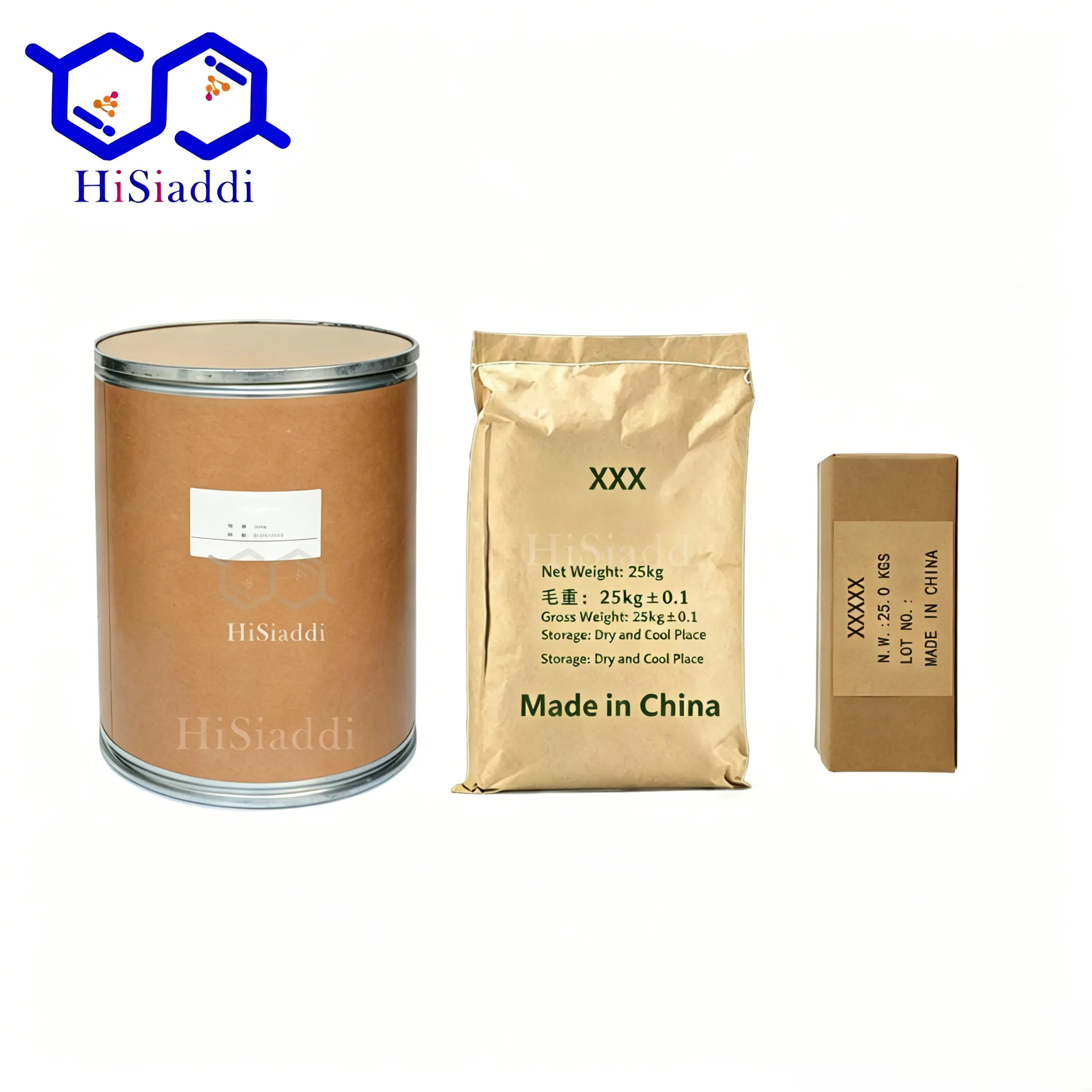
Customized production: HiSiaddi coordinated the factory to install an air classification screening line, separately producing 40-mesh coarse powder and 120-mesh fine powder with silo segregation to eliminate cross-contamination. Custom thickened double-layer food-grade PE inner liners and waterproof outer cartons were adopted, printed with the client’s original shipping marks and EU safety labeling.
Commercial order fulfillment: Leveraging long-term cooperative relationships, HiSiaddi negotiated with the manufacturer to split bulk orders, waiving the factory’s 5-metric-ton minimum order requirement and confirming batches of 3 metric tons each across three production runs. A combined logistics plan using China-Europe Railway Express plus near-sea ocean freight was adopted: the first shipment traveled via rail to shorten delivery lead times, while the subsequent two batches were shipped by sea to cut logistics costs. HiSiaddi also handled full documentation including REACH pre-registration materials, export customs inspection, and Polish import clearance filings.
On-site sampling and testing: HiSiaddi dispatched a team of chemical engineers to the Thai factory to test four key indicators of in-stock HQEE – hydroxyl value, purity, free phenol content, and melting point. All physical and chemical parameters of the raw material met contractual national standards, ruling out raw material quality defects.
Formulation optimization and improvement: The pre-polymer formula was recalculated based on the client’s MDI grade. HQEE dosage was reduced by 1.8%, with an additional 0.3% small-molecule polyol added to enhance compatibility, optimizing the matching ratio between pre-polymer and chain extender. A revised mass-production formula was issued, and three trial batches were produced on-site; test gaskets showed no white speckles, and tear strength recovered to qualified levels.
Production process rectification guidance: A low-cost equipment modification plan was provided, including installation of simple electric heat tracing bands on storage tanks and feeding pipelines. HQEE was pre-melted and held at constant temperature in sealed reactors at 110°C prior to feeding. Mold preheating temperature was raised to 112–115°C, with staged temperature-controlled feeding to standardize pretreatment procedures for solid raw materials.
Graded utilization of inventory raw materials: The client was instructed to store flake and granular HQEE separately and implement differentiated feeding processes accounting for their varying melting rates. All remaining 8 metric tons of in-stock raw materials were utilized normally after process rectification, eliminating scrap losses from full batch returns.
Lead time
Quantity (ton) | 0 - 10 | 10 - 30 | > 30 |
Lead time (days) | 7 | 15 | To be negotiated |
The monthly inventory volume of HQEE is 60 tons, with appropriate adjustments upwards or downwards in response to peak and off-peak seasons.
HiSiaddi safeguards the supply stability of HQEE through the following measures:
(1) Performance evaluation and screening of HQEE brand factories based on on-time delivery rate, batch pass rate, timeliness of risk alerts, and completeness of documentation to assess their supply stability.
(2) For each mainstream model or major grade of HQEE, secure 1 primary high-quality brand manufacturer and 2 backup high-quality manufacturers.
(3) Each factory operates independent production lines in separate production zones to prevent production halts caused by major unforeseen incidents such as environmental production suspensions and power outages.
Through long-term cooperation with brand manufacturers via technology commercialization and authorized distribution channels, HiSiaddi can effectively strengthen supervision over the production processes of brand manufacturers, optimize full-process traceability management, improve batch stability control, and further reinforce real-time monitoring of the supply stability of HQEE products.
Long-term Annual Framework Supply Guarantee Agreement. HiSiaddi signs 12-month long-term agreements with leading manufacturers. The agreements specify the minimum guaranteed supply volume, maximum price hike range, and priority production scheduling rights during peak seasons. It is stipulated that manufacturers shall issue a 30-day prior written notice if production is suspended due to environmental rectification or equipment maintenance, and backup manufacturers will be activated to replenish goods accordingly.
We have 4 warehouses, which are jointly operated and managed with suppliers to store hot-selling products.The four warehouses are located at Qingdao Port in North China, Ningbo Port in East China, Shenzhen Port in South China, and Zhengzhou, China’s inland logistics hub. This setup guarantees sufficient supply and timely shipment of HQEE during peak seasons.
HiSiaddi issues a rolling demand forecast covering the subsequent three months on the 25th of each month, allowing manufacturers to reserve production capacity in accordance with the forecast. Any new urgent orders from overseas clients will be prioritized to draw on inventories or production capacity from backup manufacturers.
Unstable logistics for HQEE will extend delivery lead times. HiSiaddi has established alternative arrangements covering multiple freight forwarders, ports and transportation solutions:
(1) Binding of multiple professional chemical freight forwarders for HQEE
Each product is assigned 2 to 3 freight forwarders with hazardous chemical/food transport qualifications affiliated with different shipping lines. Alternative sailing schedules can be switched to immediately in case of space shortages or customs inspections on a single shipping route.
(2) Backup transportation solutions for HQEE
Ocean freight serves as the standard mode; air freight and rail freight are reserved as alternatives for urgent orders. Long-term agreements for temperature-controlled containers are signed for temperature-sensitive and perishable food additives to secure shipping space.
(3) Visual tracking and digital early warning for HQEE
Freight forwarders synchronize daily updates on container loading, customs declaration, vessel loading and port arrival milestones. If customs inspection occurs, replenishment from backup inventory will be initiated immediately to shorten client waiting periods.
Full-chain digital early warning automatically monitors four categories of risks:
Factory side: Expiring supplier environmental assessment certificates, renewal of production permits, scheduled major equipment overhauls, and notifications of price hikes for upstream raw materials;
Inventory side: Inventory falling below safety thresholds, excessive inventory age, and batches failing quality inspection;
Logistics side: Shipping line space shortages, strikes at destination ports, and updates to customs policies;
Overseas side: Revisions to additive regulations and adjustments to import restriction lists in target countries.
Early warning notifications are automatically pushed to procurement and business leads, allowing backup suppliers or inventory contingency plans to be activated in advance.
HiSiaddi is an innovative foreign trade service provider driven by dual engines of technology transformation and export services, with a "1+2+3+4=1" service system offering direct original manufacturer HQEE supplies from multiple reputable brands.
As an R&D-focused export service provider, HiSiaddi differs from single-brand factories that only promote their own products. We objectively analyze multiple competitive Chinese export brands of HQEE and share their certification portfolios and market feedback to streamline buyers’ sourcing decisions.
If you require authentic, objective comprehensive profiles of multiple Chinese HQEE brands, please contact HiSiaddi customer service.
·
XYlink HQEE (solid, mainstream): Purity ≥99.5%, free phenol ≤50 ppm, melting point 100–102°C, hydroxyl value 560±5 mgKOH/g, industry-leading batch consistency.
·
·
XYlink HQEEL (liquid): Low crystallization, easy processing for continuous production, designated grade for European and US new energy cable clients.
·
1. International clientele: Long-term procurement partner for Wanhua Chemical, BASF, LANXESS, Covestro; accounted for 42% of China’s total HQEE export volume in 2025.
2. End-product performance: Deployed in new energy vehicle high-voltage cables, photovoltaic potting adhesives, and oil well seals; finished goods achieve heat resistance up to 130°C, 30% higher tear strength, and pass UL94 V-0 flame retardancy testing.
3. Cost-performance reputation: Matches Arch Chemical (US) in purity yet costs 15% less, with delivery lead times cut by 50% (20 days vs. 45 days for US imports).
· China Polyurethane Industry Association Standard: Sole enterprise to lead formulation of the industry standard Polyurethane Chain Extender HQEEL (T/CPUIA 0001-2022).
· International compliance certifications: EU REACH Registration, RoHS, FDA Food Contact Certification (21 CFR 177.2600), US TSCA, UL Certification.
· Management system certifications: ISO 9001, ISO 14001, ISO 45001; intelligent manufacturing delivers impurity levels ≤80 ppm, superior to the industry average of 135 ppm.
· Industrial-grade HQEE: Purity ≥99.0%, free phenol ≤100 ppm; mainstream choice for general elastomers with dominant demand in Southeast Asia and South America.
· Premium flame-retardant HQEE: Purity ≥99.5%, free phenol ≤60 ppm; optimized for TPU flame retardant modification with oxygen index ≥29%.
1. International clientele: Core supplier for polyurethane manufacturers in India, Southeast Asia, and South America; captured 23% of China’s HQEE exports in 2025.
2. End-product performance: Used in forklift tires, standard gaskets, and transmission belts; delivers stable hardness (Shore A 90±2) and 20% improved rebound resilience with strong price competitiveness.
3. Delivery reputation: 1,800-ton annual capacity with ample stock; 10-day delivery window, supports small trial orders of 500 kg.
· System certifications: ISO 9001, ISO 14001; High-Tech Enterprise with joint laboratory collaboration with Shandong University.
· International compliance: REACH Pre-Registration, RoHS, multi-lingual MSDS; passed second-party audits by India Reliance and Thailand Polyurethane, among others.
· YaRui HQEE (solid): Purity ≥99.0%, white crystalline pellets; mainstream grade for European general elastomers and adhesives.
· YaRui HQEEL (liquid, signature product): Fluid above 27°C, eliminates solid crystallization challenges for automated production lines; designated product for EU clients.
1. International clientele: Long-term collaborator with polyurethane adhesive and coating manufacturers in Germany, Italy, and Spain; represented 15% of China’s HQEE exports in 2025.
2. End-product performance: Applied in European premium sealants, sports track surfacing, and spandex fibers; liquid grade eliminates preheating steps and enables uniform mixing, lifting finished product tensile strength by 25%.
3. Service reputation: Supplies full English-language COA, TDS, MSDS documentation; customizable packaging (20kg fiber drums or vacuum bags) with door-to-door European logistics solutions.
· System certifications: ISO 9001, Jiangsu Provincial AA-Grade HQEE Brand Enterprise, Green Environmental Technology Innovation Enterprise.
· International compliance: REACH Registration, RoHS, CE Certification; passed supplier audits by BASF and LANXESS.
· HQEEE (electronic-grade): Purity ≥99.8%, free phenol ≤30 ppm, metal ions (Na⁺/Fe²⁺) ≤5 ppb; specialized for semiconductor encapsulant and precision potting compounds.
· HQEEF (flame-retardant grade): Purity ≥99.5%, achieves UL94 V-0 rating at 0.2% loading for new energy battery separators.
1. International clientele: Certified supplier for Japan Toray, South Korea LG Chemical, Taiwan Nan Ya Plastics; captured 8% of China’s HQEE exports in 2025.
2. End-product performance: Deployed in 5G base station seals, semiconductor underfill adhesives, and new energy battery separators; delivers 40% enhanced insulation, heat resistance up to 140°C, and zero ion migration risk.
3. Technical reputation: Industry-leading impurity control with batch-to-batch ion fluctuation ≤1 ppb, zero customer complaints from Japanese and Korean buyers.
· International compliance: REACH Registration, RoHS, Halogen-Free Certification, UL Certification; compliant with Japan JIS K 6859 and South Korea KS M 3730 standard testing.
· System certifications: ISO 9001, ISO 14001, ISO 45001; manufactured in Class 10,000 cleanrooms under GMP-level controls.
· Standard HQEE: Purity ≥99.0%, 5% price discount versus mainstream brands for general elastomers, coatings, and adhesives.
· HQEEM (modified grade): HER-blended formulation to reduce crystallization risk and boost finished product flexibility; top-selling grade in Southeast Asia.
1. International clientele: Core supplier for small-scale polyurethane manufacturers across the Middle East, Africa, and Australia; represented 7% of China’s HQEE exports in 2025.
2. End-product performance: Used in skateboard wheels, shock absorbers, small gaskets, and PU coatings; modified grade resists crystallization with a broad processing temperature window (90–120°C).
3. Flexible service reputation: Minimum order quantity of 200 kg with 7-day delivery, supports minor formulation fine-tuning at competitive pricing.
· System certifications: ISO 9001, Shandong Private Technology Enterprise.
· International compliance: REACH Pre-Registration, RoHS, MSDS; passed supplier audits by Saudi SABIC and Australia Huntsman.
表格
Brand | Export Volume Share | Core Competitive Edge | Flagship Grades | Top Certifications |
Xiangyuan New Materials | 42% | Largest capacity, highest purity, industry standard setter | Solid HQEE, HQEEL Liquid | REACH, FDA, UL, national industry standard formulation |
Yusheng Chemical | 23% | Superior cost-performance, broad emerging market coverage | Industrial-Grade / Flame-Retardant HQEE | ISO 9001, REACH Pre-Registration |
Yarui Chemical | 15% | Industry-leading liquid-grade technology, deep European market penetration | Solid HQEE, HQEEL Liquid | REACH, CE, ISO 9001 |
Mopai Bioengineering | 8% | Ultra-low impurity electronic-grade, Japanese/Korean specialized certifications | HQEEE Electronic Grade, HQEEF Flame-Retardant Grade | Halogen-Free, UL, JIS Standard Compliance |
Zhuotai New Materials | 7% | Flexible customization, small-batch order support | Standard HQEE, HQEEM Modified Grade | ISO 9001, REACH Pre-Registration |
China’s top five HQEE brands form a tiered export landscape: Xiangyuan leads the high-end purity segment, Yusheng & Yarui serve as mid-tier stalwarts focused on cost-performance and European liquid-grade demand respectively, while Mopai and Zhuotai offer niche specialized products for ultra-pure electronics and customized small-batch orders. All brands deliver international-grade quality, prominent pricing advantages, and full compliance certifications with stable delivery performance.
· High-end new energy / electronics / food-contact applications: Prioritize Xiangyuan New Materials (solid/liquid HQEE) and Mopai Bioengineering (electronic-grade HQEEE).
· Mid-tier general elastomers / Southeast Asian & South American markets: Select Yusheng Chemical and Zhuotai New Materials.
· European market / liquid-grade requirements / automated production lines: Opt for Yarui Chemical HQEEL liquid.
If you require authentic, objective comprehensive profiles of multiple Chinese HQEE brands, please contact HiSiaddi customer service.
HiSiaddi is an innovative foreign trade service provider driven by dual engines of technology transformation and export services, with a "1+2+3+4=1" service system offering direct original manufacturer HQEE supplies from multiple reputable brands.
As an R&D-focused export service provider, HiSiaddi differs from single-brand factories that only promote their own products. We objectively analyze multiple competitive Chinese export brands of HQEE and share their production workflows, supply stability, and core technical indicators, alongside their downstream procurement impacts, to streamline buyers’ sourcing decisions.
If you require authentic, objective comprehensive profiles of multiple Chinese HQEE brands, please contact HiSiaddi customer service.
Full continuous workflow: Hydroquinone + ethylene oxide low-pressure catalytic etherification (0.2–0.4 MPa) → neutralization & decolorization → thin-film devolatilization → vacuum crystallization → pelletization.
· Core advantages: Proprietary composite metal catalyst lifts reaction selectivity to 96% (industry average: 92%), cutting byproducts (monohydroxyethyl ether, free phenol) by 40%.
· Environmental upgrades: Closed-loop waste treatment limits wastewater discharge to <0.8 tons per ton of product, a 30% reduction versus traditional processes.
· Liquid HQEE (HQEE-L): Patented additive modification + low-temperature crystallization technology lowers melting point to 70–80°C for room-temperature liquid delivery with zero crystallization risk.
· Capacity scale: Total annual capacity of 35,000 tons (28,000 tons solid + 7,000 tons liquid), capturing 42% of China’s HQEE export volume, ranking first globally.
· Production line configuration: 3 continuous mass-production lines + 1 dedicated electronic-grade line with annual operating rates above 95%, no seasonal shutdowns.
· Delivery performance: Standard orders fulfilled within 20 days, capped at 30 days during peak Q2–Q3 seasons; 3,000 tons permanent safety stock enables 7-day emergency order response.
· Raw material risk mitigation: Self-sourced hydroquinone covers 60% of raw material demand, hedging price hikes and upstream supply disruptions.
· Purity: ≥99.5% (GC testing), batch fluctuation ≤±0.1%
· Free phenol: ≤50 ppm (≤30 ppm for premium flame-retardant grade)
· Hydroxyl value: 560±5 mgKOH/g, fluctuation ≤±0.5%
· Melting point: 102–104°C, moisture ≤0.1%
· Color scale: ≤20# (Pt-Co), zero yellowing tendency
· Purity: ≥99.0%, viscosity 150–200 mPa·s at 25°C
· Free phenol: ≤60 ppm, direct feeding without preheating
1. Quality advantages: Ultra-consistent finished goods with scrap rates suppressed below 1%. Minimal batch hydroxyl value fluctuation enables precise NCO/OH ratio control, delivering PU products with stable hardness (Shore A 90±1), heat resistance up to 130°C, and 30% higher tear strength, eliminating crystallization precipitation and excessive shrinkage defects.
2. Compliance advantages: Complete international certifications for direct access to European and US high-end markets. REACH, RoHS, FDA food-contact, and UL94 V-0 accreditations fully satisfy second-party audits by Tesla, CATL, BASF, and other tier-one clients, eliminating additional third-party testing costs.
3. Profit advantages: High-end product premiums offset raw material costs, lifting gross margins by 8–10 percentage points. While flame-retardant HQEE carries a USD 1,200 per ton premium, finished goods command an extra USD 35–40 per ton, generating a net 11 percentage point gross margin uplift. Liquid HQEE-L cuts preheating energy consumption by 5% and labor costs by 3%.
4. Supply risk mitigation: Zero production disruption risks via ample inventory and redundant capacity. No peak-season price surcharges or delayed deliveries safeguard downstream production continuity and avoid order default penalties.
Workflow: Hydroquinone + ethylene oxide NaOH-catalyzed etherification (0.4–0.6 MPa) → neutralization → activated carbon decolorization → vacuum rectification → crystallization.
· Core advantages: Mature, low-maintenance process with minimal equipment failure rates.
· Refining capacity: Dual-tower rectification stabilizes purity at ≥99.0% to meet industrial and flame-retardant grade requirements.
· Limitation: Free phenol capped at ≤100 ppm, inferior to Xiangyuan’s premium grades, offset by prominent pricing advantages.
· Capacity scale: 1,800 tons per year (1,200 tons industrial-grade + 600 tons flame-retardant grade), accounting for 23% of China’s HQEE exports.
· Production line configuration: 2 batch-production lines with 90% annual operating rates, no record of environmental production curbs.
· Delivery performance: 10–15 day lead times for standard orders, 500 kg minimum trial order volume.
· Inventory reserves: 500 tons permanent stock prioritized for Southeast Asian and South American shipments.
· Purity: ≥99.0%, free phenol ≤100 ppm
· Hydroxyl value: 555±8 mgKOH/g, melting point 99–101°C
· Moisture: ≤0.15%, color scale ≤30#
· Purity: ≥99.5%, free phenol ≤60 ppm
· Oxygen index: ≥29%, optimized for TPU flame retardant modification
1. Cost advantages: 10–15% lower procurement pricing for mid-to-low tier elastomer applications. Industrial-grade HQEE priced at USD 3,200–3,400 per ton (12% cheaper than Xiangyuan’s equivalent), directly lifting gross margins by 5–8%.
2. Quality suitability: Meets standard application requirements with scrap rates of 3–5%. Ideal for forklift tires, standard gaskets, and transmission belts with stable hardness and 20% improved rebound resilience; unsuitable for high-end electronics and food-contact scenarios.
3. Market alignment: Optimized for emerging markets with low certification overhead. REACH Pre-Registration and RoHS compliance fully satisfy audits by India Reliance and Thailand Polyurethane, eliminating heavy premium certification investment for Southeast Asian, South American, and Middle Eastern market expansion.
4. Flexible ordering: Low trial order volumes reduce sourcing risk, supporting small-scale buyers’ iterative product testing.
Workflow: Hydroquinone + ethylene oxide mild catalytic etherification (0.2–0.3 MPa, 65–70°C) → neutralization → low-temperature recrystallization → vacuum drying.
· Core advantages: Low reaction temperature minimizes side reactions, delivering ultra-clean color scale ≤15# for pristine finished product appearance.
· Liquid HQEE signature technology: HER-blended modification lowers melting point to 27°C for permanent fluidity, eliminating crystallization blockages for European automated production lines.
· Refining process: Multiple recrystallization cycles stabilize purity ≥99.0% with minimal impurity levels.
· Capacity scale: 1,200 tons per year (800 tons solid + 400 tons liquid), capturing 15% of China’s HQEE export volume.
· Production line configuration: 1 solid line + 1 dedicated liquid line with 92% annual operating rates, exclusively focused on European market fulfillment.
· Delivery performance: 15–20 day lead times for European orders with door-to-door logistics; 300 tons dedicated permanent stock prioritized for liquid-grade shipments.
· Purity: ≥99.0%, free phenol ≤80 ppm
· Hydroxyl value: 558±6 mgKOH/g, melting point 100–102°C
· Color scale: ≤15#, brilliant white pellet appearance
· Purity: ≥98.5%, viscosity 200–250 mPa·s at 25°C
· Free phenol: ≤70 ppm, fluid above 27°C for direct feeding without preheating
1. European market access: Complete certification portfolio enables direct entry into EU high-end elastomer supply chains. REACH Registration, RoHS, and CE accreditations pass BASF and LANXESS supplier audits for European sealants, sports surfacing, and spandex fiber production.
2. Process efficiency gains: Liquid-grade formulation cuts labor and energy overhead. HQEE-L eliminates melting/preheating steps for seamless pre-polymer mixing, reducing energy consumption by 8% and labor input by 5%, while uniform blending boosts finished product tensile strength by 25%.
3. Premium visual quality: Ultra-low color scale solid HQEE avoids yellowing defects, ideal for decorative high-end gaskets and aesthetic elastomer components.
4. Streamlined export support: Full English-language technical documentation and customizable packaging paired with dedicated European door-to-door logistics accelerate customs clearance and eliminate transit delays.
Workflow: Microchannel reactor continuous catalytic etherification → neutralization → ion exchange (metal ion removal) → thin-film devolatilization → crystallization in Class 10,000 cleanrooms.
· Core advantages: Microchannel technology condenses reaction time from 6–8 hours to 2 hours, enabling extreme control of metal ion and free phenol impurities.
· Exclusive electronic-grade workflow: Ion exchange resin filtration removes Na⁺/Fe²⁺ to ≤5 ppb; dust-free cleanroom manufacturing eliminates particulate contamination risk for precision electronics.
· Capacity scale: 600 tons per year (400 tons electronic-grade + 200 tons flame-retardant grade), representing 8% of China’s HQEE export volume.
· Production line configuration: 1 dedicated cleanroom electronic-grade line + 1 flame-retardant grade line with 88% annual operating rates.
· Delivery performance: 25–30 day lead times for Japanese/Korean orders, 300 kg minimum trial order volume; balanced order-based manufacturing + 150 tons permanent stock safeguards high-value order fulfillment.
· Purity: ≥99.8%, free phenol ≤30 ppm
· Metal ion content: Na⁺ ≤5 ppb, Fe²⁺ ≤2 ppb, zero ion migration risk
· Hydroxyl value: 562±3 mgKOH/g, moisture ≤0.08%
· Purity: ≥99.5%, free phenol ≤40 ppm
· UL94 V-0 rating, oxygen index ≥30%
1. New energy & electronics performance: Ultra-low metal ion content delivers 40% enhanced insulation and heat resistance up to 140°C with zero ion migration, mandatory for 5G base station seals, semiconductor underfill adhesives, and new energy battery separators; zero customer complaints from Japanese and Korean OEMs.
2. Premium market compliance gateway: Full REACH, RoHS, Halogen-Free, and UL certifications satisfy Japan JIS K 6859 and South Korea KS M 3730 testing standards for seamless entry into tier-one East Asian high-tech supply chains.
3. Near-zero scrap production: Extreme batch consistency with hydroxyl value fluctuation ≤±0.3% and metal ion variation ≤1 ppb delivers ultra-uniform finished goods, meeting the strict tolerance requirements of semiconductors and precision electronics with scrap rates below 0.5%.
4. High-margin product positioning: Electronic-grade HQEE priced at USD 4,600–4,800 per ton carries substantial premium potential, supporting high-value finished goods with gross profit margins of 15–20%.
Workflow: Hydroquinone + ethylene oxide NaOH-catalyzed etherification (0.5–0.6 MPa) → neutralization → decolorization → crystallization → optional HER blending modification.
· Core advantages: Flexible inline blending enables custom HQEE/HER ratios to mitigate crystallization defects and boost finished product flexibility.
· Cost control: Simplified production workflow reduces capital equipment investment, cutting manufacturing costs by 5–8%.
· Modified HQEEM specialty: Eliminates single-component HQEE crystallization issues with an expanded processing temperature window of 90–120°C.
· Capacity scale: 500 tons per year (300 tons standard-grade + 200 tons modified-grade), accounting for 7% of China’s HQEE export volume.
· Production line configuration: 1 batch-production line with 85% annual operating rates.
· Delivery performance: 7–10 day lead times for standard orders, 200 kg minimum order volume; demand-driven manufacturing eliminates overstock risk, with 5-day emergency order response protocols.
· Purity: ≥99.0%, free phenol ≤100 ppm
· Hydroxyl value: 550±10 mgKOH/g, melting point 98–101°C
· Purity: ≥98.5%, fixed 7:3 HQEE/HER blend ratio
· Crystallization temperature lowered to 80°C for anti-crystallization processing convenience
1. Maximum raw material cost savings: Lowest market pricing for small and mid-sized buyers. Standard-grade HQEE priced at USD 3,000–3,200 per ton (18% cheaper than Xiangyuan’s equivalent), lifting gross margins by 10–12%.
2. Streamlined manufacturing workflow: Modified HQEEM eliminates strict temperature control requirements (operable 90–120°C) with zero extrusion blockage risk, boosting production efficiency by 10% for low-automation small-scale manufacturing lines.
3. Niche market differentiation: Optimized for skateboard wheels, shock absorbers, small gaskets, and PU coatings; low competitive pressure in vertical niche segments enables consistent premium pricing power.
4. Client-centric flexible service: Custom formulation fine-tuning and bespoke packaging paired with 7-day fast delivery strengthen customer loyalty for small and mid-sized manufacturers.
表格
Brand | Process Characteristics | Supply Stability | Core Specifications (Purity / Free Phenol) | Optimal Downstream Applications |
Xiangyuan New Materials | Coupled catalytic etherification & thin-film devolatilization (ultra-high purity) | Industry-leading (35,000-ton capacity, 20-day lead time) | ≥99.5% / ≤50 ppm | New energy, electronics, food-contact materials |
Yusheng Chemical | Traditional etherification + double-tower rectification (stable cost-effective workflow) | Strong (1,800-ton capacity, 10-day lead time) | ≥99.0% / ≤100 ppm | General elastomers, Southeast Asia & South America markets |
Yarui Chemical | Low-temperature etherification + recrystallization (liquid-grade technology leader) | Mid-Strong (1,200-ton capacity, 15-day lead time) | ≥99.0% / ≤80 ppm | European sealants, spandex, automated production lines |
Mopai Bioengineering | Microchannel synthesis + ion exchange (ultra-low impurity electronic-grade) | Mid (600-ton capacity, 25-day lead time) | ≥99.8% / ≤30 ppm | 5G communications, semiconductors, high-end Japanese/Korean markets |
Zhuotai New Materials | Traditional etherification + inline blending (high customization flexibility) | Mid (500-ton capacity, 7-day lead time) | ≥99.0% / ≤100 ppm | Niche elastomers, small/mid-sized buyers, custom formulation projects |
China’s top five HQEE brands form a tiered competitive landscape: Xiangyuan leads the ultra-high-purity high-end segment, Yusheng and Yarui operate as mid-tier stalwarts specializing in cost-performance and European liquid-grade demand respectively, while Mopai and Zhuotai deliver niche differentiated products for ultra-pure electronics and flexible small-batch customization. Each brand’s production workflow, supply capacity, and technical specifications are uniquely tailored to distinct downstream application requirements.
· High-end new energy / electronics / food-contact applications: Prioritize Xiangyuan New Materials (solid/liquid HQEE) and Mopai Bioengineering (electronic-grade HQEEE).
· European market expansion / liquid-grade requirements / automated production workflows: Select Yarui Chemical HQEEL liquid.
· General-purpose elastomers / Southeast Asian & South American emerging markets: Choose Yusheng Chemical and Zhuotai New Materials.
· Small-volume orders / custom formulation development / niche vertical markets: Opt for Zhuotai New Materials modified HQEEM grade.
If you require authentic, objective comprehensive profiles of multiple Chinese HQEE brands, please contact HiSiaddi customer service.
As a new-type foreign trade service provider driven by technological transformation and foreign trade services, HiSiaddi has established a "1+2+3+4=1" service system and can supply original factory goods of multiple well-known brands for HQEE. As a foreign trade service provider with R&D capabilities, we will analyze key purchasing points and core indicators from a professional perspective to ease customers’ selection worries.
If you require more professional and in-depth analysis on HQEE selection, please contact HiSiaddi customer service.
Before confirming suppliers and product grades, complete full-dimensional pre-assessment first, which is the core prerequisite to guarantee stable delivery of cross-border orders and reduce after-sales issues in production.
First, strictly verify laws, regulations and market access qualifications of target countries and regions. HQEE is a fine chemical intermediate exclusively for polyurethane, widely applied in industrial structural parts, auto accessories, daily-use sealing parts, contact products and other fields. Environmental protection and safety control standards for chemicals vary across the globe.
· EU market: Products shall complete REACH registration and SVHC screening; polyurethane auto parts and daily-use products shall comply with RoHS 2.0; products in contact with children shall additionally meet EN 71-3 standards.
· North American market: TSCA chemical inventory filing is mandatory; automotive materials shall follow North American automotive industry specifications; products in contact with food and skin shall pass relevant FDA tests.
· Japan, South Korea and Australia impose stringent control over residual monomers, heavy metals, organic impurities and odor.
· Southeast Asia, the Middle East and South America mainly adopt general industrial safety standards. If goods are re-exported to Europe and America for end use, a full set of international certifications must be provided.
Customs authorities of all countries will inspect multi-lingual MSDS, batch-by-batch COA reports and third-party test certificates, requiring consistent information of certificate issuers, production factories and shipment batches. Missing qualifications or inconsistent information will directly lead to cargo detention and return. All items must be checked item by item prior to procurement.
Second, fully match downstream production processes and equipment working conditions. HQEE normally exists as white crystalline powder or flakes, mainly used in synthesis of polyurethane prepolymers, high-temperature mixing, casting molding, curing and vulcanization processes. Its purity, melting point, reaction activity and moisture content are highly sensitive to downstream processes, as it determines the crosslink density and heat resistance of PU systems:
· Insufficient purity and excessive residual raw materials will disrupt the chain extension reaction ratio, resulting in uneven crosslinking and fluctuating mechanical properties of finished products.
· Excessive moisture will undergo side reactions with isocyanates, generating bubbles and pores and damaging product compactness.
· Production lines with high-temperature melting and continuous casting require stable melting point and good thermal stability; materials shall not decompose or produce impurities during melting.
· Automated batching and closed mixing production lines focus on powder particle size, fluidity and caking; uneven particle size and caking will affect batching accuracy and reaction uniformity.
· Multi-component compound systems demand excellent compatibility between HQEE and MDI, polyols and catalysts without precipitation or disruption of curing cycle.
New customers are recommended to send samples for small-scale and pilot tests in advance to verify reaction activity, mechanical properties and heat resistance of finished products.
Third, distinguish end product positioning and long-term service environments.
· High-value products such as high-end industrial rollers, heavy machinery seals, automotive structural parts, mine wear-resistant parts and PU components under high-temperature working conditions must adopt high-purity refined grades with low impurities, low moisture and strong thermal stability.
· Children’s products and skin-contact sealing parts sold in Europe, North America and Australia shall strictly control migratable heavy metals and toxic organic residues.
· General civil PU miscellaneous parts and ordinary sealing gaskets can adopt standard industrial grades to balance procurement costs.
· Products used in open-air, high-temperature & high-humidity environments with alternating dynamic loads shall focus on the hydrolysis resistance, aging resistance, creep resistance and high-temperature modulus stability of cured PU materials to avoid deformation and performance attenuation after long-term use.
Select products according to end positioning to balance quality and operating profits.
Fourth, evaluate supplier production capacity, raw material supporting capacity and long-term supply stability. HQEE is mainly synthesized from hydroquinone and ethylene oxide via addition, refining, crystallization, slicing and sieving; reaction control and purification crystallization are core technical difficulties. Purchasers with long-term large global orders, multi-port distribution and peak-season replenishment demands shall prioritize large-scale factories equipped with continuous synthesis and low-temperature crystallization production lines and self-sufficient core raw materials. Such enterprises are less affected by raw material price hikes and environmental inspections, with low capacity fluctuation in off and peak seasons and highly consistent batch indicators and reaction performance.
Meanwhile, confirm whether suppliers support direct delivery from major export ports including Qingdao, Shanghai, Ningbo and Tianjin, and flexibly accept full-container, LCL and small-batch urgent orders. In addition, inspect the laboratory capacity of enterprises to confirm full physical and chemical testing, PU chain extension reaction testing and thermal stability testing capabilities, as well as cooperation with international third-party institutions such as SGS, Intertek and BV for sampling and re-inspection.
Fifth, plan cross-border packaging, transportation and long-distance storage & transportation solutions. HQEE is solid crystalline/flaky material, not classified as hazardous chemicals, with few restrictions on global sea, land and air transportation. Its storage and transportation characteristics: strong hygroscopicity, easy caking under high temperature and slight discoloration under long-term light exposure. For ocean shipping, tropical routes and rainy high-humidity areas, double-layer sealed packaging with inner moisture-proof PE film and thick woven bags/paper drums must be adopted; standard specification is 25kg per package, and bulk bags are available for large automated production lines. Containers shall be light-proof and heat-insulated to avoid material caking caused by high temperature inside cabins. During storage and transportation, mixing with strong acids, strong alkalis and strong oxidants is strictly prohibited. Warehouses shall be cool and dry with storage temperature controlled below 25°C, and FIFO (First In First Out) shall be implemented strictly to prevent moisture absorption, caking and quality degradation.
Sixth, consider product customization services and supporting PU formulation technical capabilities. Different PU formulas, casting processes and curing conditions have personalized requirements for HQEE particle size, crystal form and reaction activity. Mature factories can carry out customization such as particle size screening and crystal form adjustment. Professional suppliers can also provide formulation guidance, such as proportion optimization of MDI, polyols and catalysts, adjustment of reaction speed and curing cycle, improvement of product heat resistance, wear resistance and creep resistance, and solutions to production problems including bubbles and insufficient strength. Comprehensive technical support is an important plus for long-term cooperation.
No matter which grade is purchased or which region goods are shipped to, the following physical and chemical indicators are rigid standards for factory and arrival sampling inspection of each batch. Substandard indicators will directly disrupt chain extension reactions, cause PU product defects and batch scrapping, and are non-negotiable quality bottom lines.
1.
Active ingredient purity (HQEE main content) Purity is the core factor determining chain extension efficiency, product crosslink density and comprehensive mechanical properties. Industry classification standards: general industrial grade ≥98.0%, standard elastomer grade ≥98.5%, high-end heat-resistant/automotive special grade ≥99.0%. Low purity means high residual hydroquinone, ethylene glycol, oligomers and other impurities, which will change the reaction equivalent ratio, leading to decreased product hardness, strength and heat resistance and fluctuating batch performance. It ranks first in inspection priority.
2.
3.
Melting point/melting range Standard melting range of HQEE is 100~104°C. Narrower melting range represents purer components and fewer low-melting impurities. Excessively wide melting range indicates high impurity content and unstable melting temperature, which will disrupt prepolymer synthesis and casting processes and cause uneven local reactions and inconsistent product performance.
4.
5.
Moisture content HQEE is highly hygroscopic, and moisture is fatal to PU systems. General grade moisture ≤0.10%, high-end refined grade ≤0.05%. Excessive moisture will react with isocyanates to generate carbon dioxide, forming bubbles and pinholes inside products, greatly reducing compactness, strength and service life. Strict control is required for high-humidity sea shipping scenarios.
6.
7.
Ash content It represents inorganic insoluble impurity content. General grade ash ≤0.10%, high-end dynamic wear-resistant product grade ≤0.05%. Inorganic particles in ash will form stress points inside polyurethane, reducing product tear resistance, wear resistance and fatigue resistance, which is strictly controlled for rollers, seals and mine products.
8.
9.
Appearance and color Qualified HQEE is white crystalline powder or flakes. Yellowish or gray color indicates oxidized impurities. Abnormal color not only affects appearance but also reflects poor thermal stability and improper storage of materials, often accompanied by excessive organic residues.
10.
11.
Particle size/sieving and caking status Powder particle size determines melting speed and mixing uniformity. General model: 80~120 mesh, fine powder model: above 150 mesh; screen residue strictly controlled ≤0.1%, no obvious caking. Excessively coarse particles and severe caking lead to incomplete melting and partial incomplete reactions; excessively fine powder causes heavy dust pollution, affecting the working environment of closed workshops.
12.
Combined with four mainstream global application fields of HQEE, special testing indicators are classified with different control priorities, which are the core basis for distinguishing product grades, pricing and matching international regulations. You can accurately control standards according to your end products.
This is the core application field of HQEE, featuring stable reaction, high heat resistance, creep resistance and excellent dynamic mechanical performance with the strictest indicator control.
1. Thermal stability: Test decomposition under simulated melting and reaction temperatures, requiring no decomposition or volatile generation below 200°C to guarantee high-temperature processing and long-term heat resistance of finished products.
2. Reaction activity: Test reaction rate and gel time with MDI prepolymers under fixed formula and temperature, with minimal activity fluctuation between batches to stabilize casting and curing processes.
3. High-temperature modulus retention rate: Evaluate hardness and strength stability of products under high-temperature environments, a core indicator for heat-resistant structural parts.
4. Heavy metal content: Comply with RoHS and automotive material environmental standards, with lead, cadmium, mercury, hexavalent chromium and other harmful substances below regulatory limits.
5. Precipitation resistance: High and low temperature cycle testing, no migration or blooming after long-term use to guarantee sealing performance of seals and surface status of rollers.
On the basis of general indicators, align with safety regulations, focusing on low migration, non-toxicity, low irritation and controllable impurities.
1. Migratable heavy metals: Tested in accordance with EN 71-3 and CPSIA standards with limits far stricter than industrial materials, a one-veto item for market access.
2. Residual aromatic impurity screening: Strictly control toxic residual monomers such as hydroquinone to reduce sensitization and toxicity risks.
3. Low volatile matter: Reduce small molecule precipitation to guarantee safety during contact use.
Centered on basic chain extension performance and cost control with moderately relaxed indicator requirements. Focus on three basic indicators: purity, moisture and melting point to ensure normal chain extension reactions and basic product strength; slight tolerance is allowed for trace ash content and minor particle size fluctuation to prioritize balancing procurement costs and production efficiency.
Core control of high heat resistance, hydrolysis resistance and aging resistance to adapt to complex service environments. Additional hydrolysis resistance and UV aging tests are conducted to assess performance attenuation speed under long-term high humidity and sunlight exposure; meanwhile, tighten moisture and ash indicators to improve overall weather resistance of finished products from the raw material end.
Besides physical, chemical and usage indicators, cross-border global procurement shall simultaneously focus on qualifications, customization, supply and inherent product defects to guarantee long-term stable cooperation.
Universal basic documents: ISO9001 quality management system, multi-lingual MSDS, batch-by-batch COA reports, SGS basic physical and chemical test reports.
· EU market: REACH registration, SVHC screening, RoHS 2.0, EN 71-3 for contact products.
· North American market: TSCA chemical filing, FDA (contact products), CPSIA (children’s products).
· Japan, South Korea and Australia: Local chemical inventory filing, special testing for residual monomers and heavy metals. All certificates shall be within validity period with consistent information of factories, brands and batches.
Mainstream domestic HQEE manufacturers provide personalized customization for global B-end customers:
1. Particle size and crystal form customization: Adjust powder mesh number and crystal form to adapt to fast melting or slow casting processes.
2. Deep purification: Further reduce moisture, ash and residual monomers for high-demand scenarios such as automotive, food contact and children’s products.
3. Fluidity modification: Anti-caking treatment for powder to adapt to long-distance sea transportation and automated batching.
4. Fine-tuning of reaction activity: Slightly adjust reaction rate and gel time to match customers’ exclusive casting production lines.
5. Packaging customization: Flexible switching between 25kg bags, bulk bags and paper drums, customized multi-lingual outer packaging labels.
Prioritize large-scale factories with self-sufficient raw materials, continuous synthesis and low-temperature crystallization production lines. Crystallization process directly determines melting point, particle size and caking status; continuous production drastically narrows batch differences. Self-sufficient raw materials resist risks of upstream raw material price hikes and supply disruption. Normal delivery cycle for full-container orders is 7~12 days, supporting direct delivery from multiple ports and accepting small urgent rush orders. Small intermittent devices have weak purification and crystallization control capacity with large batch fluctuations, unsuitable for high-end elastomers and long-term large cross-border global orders.
1. HQEE has extremely strong moisture absorption; damaged packaging and humid warehousing will cause rapid moisture absorption, directly triggering scrapping of PU products due to bubbles. Strict sealing and moisture prevention are required throughout the whole process.
2. High ambient temperature easily causes caking; shipping containers must be light-proof and heat-insulated, and warehouse temperature shall be controlled below 25°C to avoid long-term storage.
3. Narrow melting temperature range; improper processing temperature control leads to incomplete melting or local overheating. New customers shall match melting process parameters in advance.
4. Products made with single HQEE system have high hardness; flexible products need compounding with other diol chain extenders. Pre-compounding tests are recommended for new formulas.
5. Ultra-high-purity special grades require multiple purification procedures with higher selling prices than general industrial grades, slightly increasing raw material costs.
6. Fine powder grades cause heavy dust pollution; coarse-grained anti-caking modified grades are available for clean workshops.
If you require more professional and in-depth analysis on HQEE selection, please contact HiSiaddi customer service.



 +86-13120989737
  info@hisiaddi.com
 English