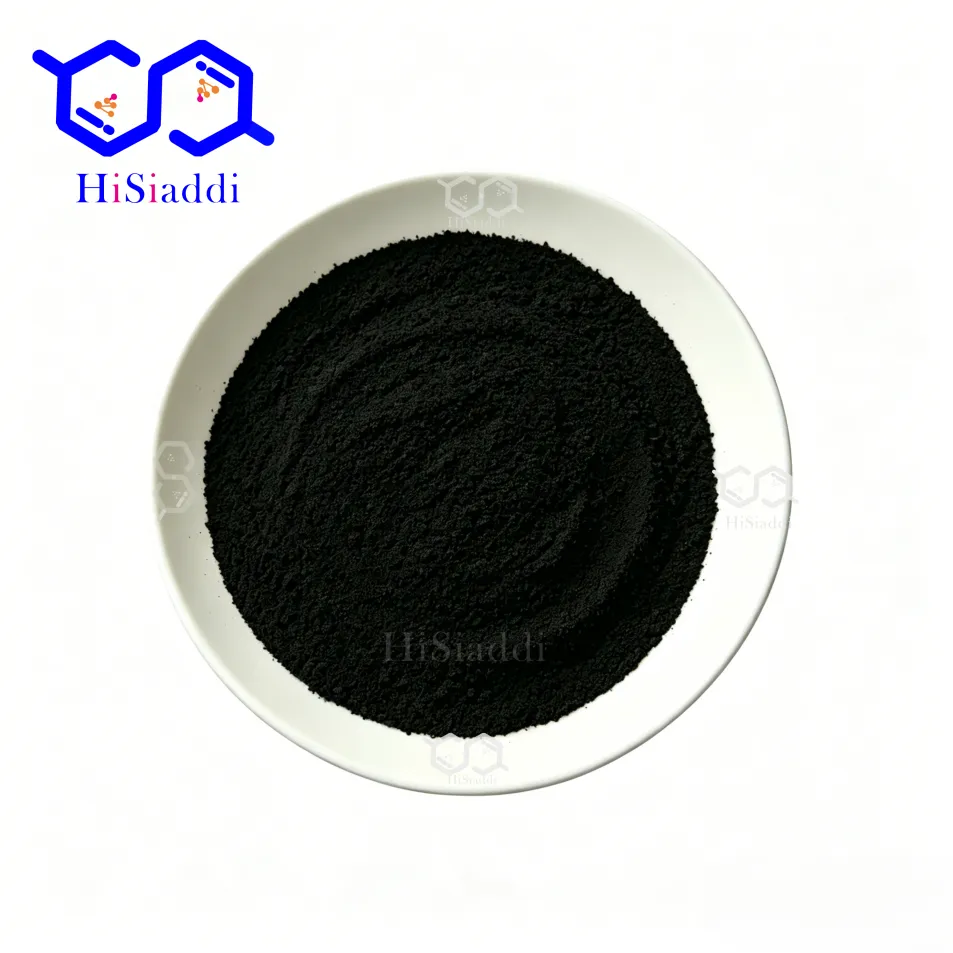
Aluminum Boride, namely aluminum diboride, is used in electronic heat dissipation devices, microwave communication components, flame retardant materials and so on.
HiSiaddi can supply original factory sources of multiple Chinese brands and provide "1+2+3+4=1" services.
Jiamai: JM-AlB2-1 (purity ≥99.5%, D50=0.8~2μm), high-purity grade JM-AlB2-2, uniform particle size, high melting point (1655℃), high thermal conductivity and stable high-temperature performance, 35%~45% lower in price than American Elements with similar performance, suitable for electronic heat dissipation device manufacturers, microwave communication component suppliers and high-end cutting tool factories.
Qifeng: QF-AlB2-3 (purity ≥99%, D50=3~5μm), industrial grade QF-AlB2-5, good sintering activity and high density, international grade quality, 30%~40% lower in price, suitable for mid-to-high-end high-temperature structural material formulas.
HiSiaddi Service: Surface modification, customization of AlB₂ composite powder (compounded with alumina / silicon carbide); design of electronic heat dissipation solution, performance improvement of flame retardant materials, technical support for replacing American Elements; testing on crystallinity, melting point, thermal conductivity and high-temperature stability.
 CONTACT HiSiaddi NOW
| CAS No: | 12041-50-8 | Brand Name: | Multi-brand |
| MF: | AlB2 | Model Number: | Multi-models |
| EINECS No: | 234-923-7 | Grade: | N/A |
| Purity: | 99% | Place of Origin: | Henan, China |
| MOQ: | 1ton | Storage: | Please refer to the product packaging or contact the customer service. |
When purchasing aluminum boride as a buyer, you may encounter the following questions:
What are the core index advantages and application impacts of mainstream models from well-known aluminum boride brands?
What competitive services can aluminum boride suppliers provide?
How about qualification certifications and market reputation of target aluminum boride brands?
What is the inventory level and supply stability of aluminum boride suppliers?
What key factors should be taken into consideration when selecting aluminum boride?
...and many other related questions.
(Leading manufacturer of AlB₁₂, major global exporter in superhard wear-resistant field)
BNA 12 99 (High-purity superhard grade AlB₁₂), BNA 2 98 (General conductive grade AlB₂), BNA N 800 (Ultra-fine nano aluminum boride), BNA 12 U (Low-oxygen military grade)
Phase Purity: Main phase AlB₁₂ ≥99.2%, AlB₂ ≥98.8%; Free Al ≤0.25%, Free B ≤0.2%
Impurity Control: Oxygen ≤0.6%, Fe ≤60ppm, Si ≤50ppm, heavy metal impurities ≤20ppm; Oxygen content stably ≤0.35% for military grade
Particle Size: Conventional D50: 1-6μm; nano grade: 300-800nm, narrow particle size distribution, low agglomeration
Functional Properties: Microhardness of AlB₁₂ ≥3200HV, Mohs hardness 9.5, excellent high-temperature oxidation resistance with stable structure at 800℃; Volume resistivity of AlB₂ ≤18μΩ·cm, outstanding thermal and electrical conductivity
Technology & Certification: Adopts molten salt method + high-temperature synthesis + acid pickling purification; annual output 650 tons; certified by ISO9001, EU RoHS and military supporting material access qualification
High-end superhard AlB₁₂ grades cost 42%-50% of H.C.Starck's price; general AlB₂ grades account for 35%-40%; batch performance fluctuation ≤2.3%, close to international leading stability; lead time 7-12 days, far shorter than 4-8 weeks of foreign brands.
European & American superhard composite material manufacturers, high-end cutting tool producers, military wear-resistant armor material factories, nuclear industry shielding material suppliers, new energy thermal conductive filler manufacturers
For downstream manufacturers: As reinforcing phase, AlB₁₂ greatly boosts hardness, wear resistance and high-temperature oxidation resistance of ceramic/metal matrix composites, raising sintering yield by 4%-7%. Complete powder crystallinity avoids abnormal phase transformation during molding, stabilizing production processes effectively. Nano aluminum boride lowers sintering temperature by 90-130℃ and reduces unit production energy consumption by over 20%.
For end users: Service life of high-grade cutting tools rises by 30%-45%, suitable for high-speed dry cutting; impact and erosion resistance of military wear-resistant parts are enhanced; neutron absorption efficiency of nuclear shielding materials is improved for higher safety; thermal conductive fillers optimize heat dissipation of battery packs and reduce thermal runaway risks.
(Top AlB₂ producer, benchmark exporter in thermal & conductive industry)
TJ AlB2 99 (High-purity conductive grade), TJ AlB2 M (Special for metal matrix composites), TJ AlB2 L (Low-impurity semiconductor grade)
Phase Purity: AlB₂ ≥99.0%, free aluminum ≤0.2%, accurately controlled B-Al atomic ratio with matching error ≤1%
Impurity Control: Oxygen ≤0.5%, total metallic impurities ≤30ppm, non-magnetic impurities, ideal for semiconductors and precision electronics
Particle Size: 0.5-5μm, high sphericity, good fluidity and excellent compound dispersion
Core Performance: Thermal conductivity ≥120W/(m·K), superior acid & alkali corrosion resistance and chemical stability
Production Technology: Self-propagating high-temperature synthesis + jet milling, powerful customized particle size service available
High-purity conductive grades are priced at 45%-55% of Materion’s products; low-impurity semiconductor grades enjoy prominent cost advantages while foreign equivalent products have over 110% premium; minimum order quantity only 5kg vs 50kg for mainstream foreign brands.
Overseas electronic thermal conductive adhesive manufacturers, semiconductor packaging heat dissipation filler enterprises, copper-aluminum composite material factories, electroplating conductive additive suppliers, new energy wiring conductive material producers
For downstream manufacturers: Aluminum boride powder enhances thermal conductivity of thermal adhesives by 20%-30% with uniform dispersion and no agglomeration, ensuring stable product consistency. It improves tensile strength and yield strength of metal matrix composites with simple molding procedures for mass production.
For end users: Improved heat dissipation efficiency of semiconductor chips lowers overheating failure rate; stable conductivity of new energy wiring reduces contact resistance; extended service life of electronic heat dissipation components adapts to high-temperature working conditions of 5G and AI computing equipment.
(Specialized enterprise in ultra-fine/nano aluminum boride, core exporter for new material R&D)
JT AlB S (Submicron: 0.3-2μm), JT AlB N (Nano: 200-500nm), JT AlB G (General industrial grade)
Phase Purity: 98.5%-99.5%, nano grade purity ≥99.0%
Particle Size Advantages: Excellent dispersion of ultra-fine powder, extremely low hard agglomeration, specific surface area 18-45m²/g, high sintering activity
Impurity Standard: Oxygen ≤0.7%, free aluminum ≤0.3%, perfect for new material R&D and small-batch pilot production
Core Strength: Wet purification + supersonic jet milling, leading domestic production capacity of ultra-fine powder with precise particle size customization
Submicron & nano grades cost 40%-48% of Denka's price; general industrial grades 32%-38%; buyer-friendly sample policy, ideal for global small and medium-sized R&D enterprises.
New material research departments of overseas universities & research institutions, new material startups, wear-resistant anti-corrosion coating manufacturers, precision grinding medium enterprises, high-end lubricant additive suppliers
For end users: Industrial anti-corrosion coatings gain enhanced salt spray and acid-base resistance with service life extended 2-3 times; friction coefficient of high-end mechanical lubricating parts is reduced to lower energy consumption.
(Ultra-high purity aluminum boride specialist, focusing on nuclear industry & precision ceramics)
HY 999 (Ultra-high purity AlB₂/AlB₁₂ nuclear grade), HY 995 (Precision ceramic grade), HY 980 (Refractory wear-resistant grade)
Phase Purity: 99.5%-99.99%, HY 999 reaches 99.99% ultra-high purity
Impurity Control: Oxygen ≤0.3%, free aluminum ≤0.15%, heavy metal impurities ≤10ppm, top-tier trace impurity control capability in China
Application Matching: Strict B-Al ratio in line with international standards, customized specially for nuclear neutron absorbing materials and vacuum precision ceramics
Supply Guarantee: Dedicated production line for high-purity powder, priority delivery in peak seasons, superior batch consistency
Ultra-high purity nuclear-grade products are 50%-58% of French Borax’s price, the best domestic substitute for high-end precision fields.
Overseas nuclear industry supporting material manufacturers, vacuum coating target material enterprises, precision structural ceramic factories, laboratory high-purity powder purchasers
For downstream manufacturers: Harmful impurity-free ultra-high purity aluminum boride meets strict nuclear industry safety standards; uniform resistivity and thermal conductivity of vacuum ceramic components raise product yield greatly; no secondary purification required, directly applicable for target material sintering.
For end users: Stable neutron absorption performance ensures higher safety of nuclear industry components; uniform film formation of vacuum coating targets significantly improves coating quality.
(Cost-performance leader for mass production, mainstream supplier for metallurgical refractory & general wear-resistant industries)
HR AlB A (Special for metallurgical refractories), HR AlB B (Special for wear-resistant coatings), HR AlB C (Low-cost general grade)
Phase Purity: 98.0%-99.0%, fully compliant with large-scale industrial application standards
Impurity Standard: Oxygen ≤1.2%, free aluminum ≤0.5%, optimal cost control
Particle Size: 2-10μm, suitable for refractory materials, wear-resistant floorings and industrial anti-corrosion fillers
Production Process: Mass production via thermite reduction method with the lowest unit production cost worldwide
Full product line priced at 32%-40% of Russian brands, topping cost performance in global mid-range industrial market, perfect for long-term bulk framework procurement.
Metallurgical refractory material factories in Southeast Asia & Middle East, industrial wear-resistant flooring enterprises, anti-corrosion coating additive manufacturers, general machinery wear-resistant part producers
For downstream manufacturers: Raw material procurement cost is largely reduced; high-temperature erosion resistance and thermal shock resistance of refractory materials are improved; wear-resistant coatings fit large-scale industrial construction with stable finished product rate.
For end users: Extended maintenance cycle of metallurgical kilns cuts production shutdown losses; wear and impact resistance of industrial floorings reduce renovation frequency; lower failure rate of general mechanical parts decreases operation and maintenance costs

| Brand | Core Export Models | Core Competitive Indicators (vs Overseas Brands) | Benchmark International Brand | Price Ratio (China/Overseas) | Core Target Overseas B-end Buyers | Benefits for Downstream Manufacturers | Benefits for End Users |
| Zibo Bona New Materials | BNA 12 99, BNA 2 98, BNA N 800, BNA 12 U | AlB₁₂≥99.2%, Hardness≥3200HV, O≤0.35%, superhard wear resistance & high-temperature oxidation resistance | H.C.Starck (Germany) | 42%-50% | Superhard composite factories, tool factories, military wear-resistant material plants, nuclear shielding material suppliers | Energy consumption cut by over 20%, yield increased by 4%-7%, stable production process | 30%-45% longer tool service life, enhanced impact resistance of military parts, improved safety of nuclear materials |
| Changsha Tianjiu Metal Materials | TJ AlB2 99, TJ AlB2 M, TJ AlB2 L | AlB₂≥99.0%, Thermal conductivity≥120W/(m·K), low impurities, precise element ratio | Materion (USA) | 45%-55% | Thermal adhesive producers, semiconductor heat dissipation filler factories, metal composite material plants | 20%-30% improved thermal conductivity, uniform powder dispersion, stable mass production | Higher chip heat dissipation efficiency, lower contact resistance of new energy parts, better compatibility with 5G equipment |
| Weifang Jingtai Special Ceramics | JT AlB S, JT AlB N, JT AlB G | Full coverage of submicron & nano grades, good dispersion, high sintering activity, precise particle size customization | Denka (Japan) | 40%-48% | Scientific research institutions, new material startups, wear-resistant coating factories, lubricant additive suppliers | Low-temperature sintering available, shortened R&D cycle, reduced trial cost | Extended service life of anti-corrosion coatings, lower friction coefficient & energy consumption of mechanical parts |
| Shaanxi Hongyuan Boride | HY 999, HY 995, HY 980 | 99.99% ultra-high purity, O≤0.3%, heavy metal ≤10ppm, top-level trace impurity control | Borax (France) | 50%-58% | Nuclear material factories, vacuum target material plants, precision ceramic factories | No harmful impurities, no need for secondary purification, higher product yield | Improved safety of nuclear components, optimized film-forming quality of vacuum coatings |
| Jiaozuo Hengrui New Materials | HR AlB A, HR AlB B, HR AlB C | Purity 98-99%, particle size 2-10μm, ultra-low mass production cost | Chemistry of Rare Elements (Russia) | 32%-40% | Metallurgical refractory factories, wear-resistant flooring enterprises, industrial anti-corrosion coating manufacturers | Greatly reduced raw material cost, enhanced erosion resistance of refractory products | Longer kiln maintenance interval, durable wear-resistant floorings, lower failure rate of mechanical parts |
High-end Fields (Superhard Wear Resistance, Military Industry, Nuclear Industry, Semiconductor Heat Dissipation)Products from Zibo Bona, Changsha Tianjiu and Shaanxi Hongyuan match international top brands in performance, with prices reduced by 45%-60% and lead time shortened by 70%, becoming the optimal alternative for overseas high-end supply chain diversification, cost reduction and risk avoidance.
Specialized R&D Fields (Ultra-fine/Nano Powder, New Material Startups)Weifang Jingtai outperforms Japanese Denka in particle size customization, small-batch sample supply and delivery cycle, perfectly catering to global innovative small and medium-sized enterprises.
Bulk Industrial Fields (Metallurgical Refractories, General Wear Resistance)Jiaozuo Hengrui achieves overwhelming cost advantages over foreign competitors, highly recommended for long-term ton-level framework procurement.
General TrendChina is rapidly expanding aluminum boride production capacity, continuously upgrading purification and synthesis technologies and taking the lead in global customization capability with accelerated international certification acquisition. It is projected to occupy over 38% market share in the global mid-to-high-end aluminum boride powder market within the next 3 years.
HiSiaddi, a technology transformation and foreign trade dual-driven innovative foreign trade enterprise, has created a "1+2+3+4=1" integrated product service system: 1 foreign trade salesperson with over 3 years of experience, supported by two professional chemical R&D teams, three multi-round screened premium suppliers and four shared distribution warehouses to satisfy all product supply demands.
This system enables HiSiaddi to grasp Aluminum Diboride R&D and production processes better than most foreign traders, analyze cross-brand market demands and competitive edges more thoroughly than standalone factories, and master overseas trade rules of this material more comprehensively than academic research institutions.
HiSiaddi only hires sales specialists with more than three years of relevant work experience. All sales staff must complete a minimum six-month joint training program organized by R&D and foreign trade teams before serving overseas purchasers.
(1)Aluminum Diboride Basic Guarantee Service
Backed by our standardized foreign trade workflow and corporate service system, we deliver end-to-end one-stop document services: issuance & processing of all Aluminum Diboride compliance certificates, provision of third-party test reports and full resolution of quality warranty disputes.
(2)Aluminum Diboride Exclusive Advantage Service
Global Aluminum Diboride Industry Intelligence Push Service. We send regular industry updates covering global price trends, domestic capacity expansion plans, overseas competitor pricing adjustments and demand shifts in superhard materials, new energy and nuclear industries, alongside analysis of global new material policy impacts, enabling clients to accurately forecast market cycles and lock in favorable procurement prices.
We establish deep source-factory partnerships via technology transformation and provide internal technical training for sales teams to enable professional Aluminum Diboride customization and research-grade technical consulting for composite & lubricant formula optimization.
(1)Aluminum Diboride Research-Grade Customization Service
Phase & Impurity Targeted Customization for Different Application Tracks:
Superhard Wear Materials: High AlB₁₂ phase, low oxygen, high hardness grades;
Thermal & Electrical Conduction: High AlB₂ phase with precise boron-aluminum ratio and minimal magnetic impurities;
Nuclear & Semiconductor Industries: Ultra-high purity with ultra-low heavy metal & oxygen content;
Metallurgy & Refractory: Cost-effective powder with uniform particle size matching high-temperature working conditions.
Ultra-Fine & Nano Aluminum Diboride Customization. Partnering with manufacturers such as Jingtai Weifang, we produce powder ranging from 200 nm to 2 μm with optimized dispersibility and specific surface area for wear-resistant coatings, nano composite materials and advanced thermal conductive fillers.
(2)Aluminum Diboride Research-Grade Consulting Service
Technology Transfer & In-Depth Aluminum Diboride Technical Matching Service. We connect domestic aluminum diboride R&D teams and university material labs to deliver full technical support for overseas clients: precise tuning of boron-aluminum ratios, free aluminum & oxygen content, particle size and sphericity, controlled synthesis of AlB₂/AlB₁₂ phases; optimization of superhard composite sintering, thermal conductive glue compounding and wear-resistant coating construction processes; solutions for sinter cracking, coating detachment and insufficient thermal conductivity. We provide free English technical operation guides and arrange remote video production debugging support unavailable from traditional foreign trade companies.
Our foreign trade and R&D teams jointly conduct preliminary market research, on-site factory audits, complete product testing, long-term technology transformation cooperation and bulk purchasing partnerships to select approximately three manufacturers with stable quality, reliable supply, sound reputation and strong growth potential.
(1)Aluminum Diboride Greater Initiative to Secure Lower Prices
Long-term technology transfer and exclusive agency partnerships allow us to source factory-direct goods at discounted prices.
(2) Aluminum Diboride Long-Term Supply Chain Guarantee Service
Long-term factory cooperation strengthens full-process production supervision, full batch traceability, consistent batch quality control and formal compensation clauses for batches failing third-party quality inspection.
We have 4 warehouses, which are jointly operated and managed with suppliers to store hot-selling products.
(1)Aluminum Diboride Fast Delivery & Local On-Site Emergency Resolution
Warehouses are distributed at Qingdao Port (North China), Ningbo Port (East China), Shenzhen Port (South China) and Zhengzhou (inland logistics hub), ensuring timely shipments of Aluminum Diboride. Local staff can resolve transit accidents, packaging defects and export compliance issues immediately on location.
(2) Alleviate Seasonal Price Fluctuations & Custom Packaging Support
We pre-stock inventory ahead of high-demand seasons to buffer excessive price volatility. Our self-operated warehouses fully support customized packaging and label printing for all client orders.
As a new-type foreign trade service provider driven by technological transformation and foreign trade services, HiSiaddi has established a "1+2+3+4=1" service system and can supply raw materials from many well-known original manufacturers of Aluminum diboride. As a research-and-development-oriented foreign trade service provider, HiSiaddi will systematically sort out and analyze common difficulties faced by B-end purchasers sourcing Aluminum diboride in China, and propose targeted solutions from HiSiaddi.
If you require more professional and in-depth analysis regarding Aluminum diboride selection, please contact HiSiaddi customer service.
1. Imbalanced aluminum-boron ratio and excessive free elemental substances: Excessive free aluminum precipitates pores during high-temperature melting; excess free boron causes brittle cracking of the aluminum matrix and drastically reduces composite material strength. Unqualified component ratios lead to failed grain refinement of molten aluminum.
2. Elevated total oxygen generates impurity phases of aluminum oxide and boron oxide, causing coating blistering and peeling under high-temperature operating conditions and drastically shortening mold wear resistance service life.
3. Excessive iron, silicon and other heavy metals violate RoHS regulations, resulting in direct rejection of raw materials for aerospace and electronic applications.
4. Severe powder agglomeration and inconsistent particle size distribution lead to uneven mixing and dispersion, forming pores and delamination in molded parts and lowering finished product yield.
1. High-temperature solid-phase synthesis with precise control of feed ratios; free aluminum and free boron controlled within 50% of regulatory limits to deliver stable batch-to-batch grain refinement performance.
2. Deoxidation refining under inert high-temperature atmosphere; total oxygen indicators exceed access standards for high-end composite materials to prevent coating peeling and flaking under high temperatures.
3. Multi-stage impurity removal via pickling and magnetic separation; harmful heavy metals meet European and American aerospace and electronic environmental access requirements.
4. Powder deagglomeration via air flow and classified screening to achieve narrow particle size distribution with excellent powder dispersibility, enabling dense molding without pores after batching.
1. Fluctuating grain refinement activity; inconsistent grain size across aluminum castings from the same batch, leading to uneven mechanical properties.
2. Prone to moisture absorption, oxidation and agglomeration during storage, causing feeding blockages; localized agglomeration of refiners triggers partial defects in castings.
3. Continuous oxygen absorption under low-temperature and high-humidity storage environments elevates oxygen content and causes premature product performance degradation.
1. Stable specific surface area maintained via consistent synthesis processes; batch activity fluctuation ≤0.4% to deliver uniform and stable grain structure in castings.
2. Inert surface coating treatment of powder plus high-barrier sealed packaging to resist moisture absorption and caking under conventional storage conditions.
3. Pre-treatment via vacuum dehydration and closed low-temperature storage to limit oxygen content increase during long-term storage.
1. Heavy metals and soluble impurities approach control thresholds set by Japan’s Ministry of Health, Labour and Welfare; failed customs sampling inspections prevent local production.
2. Absence of Japanese raw material filing documents blocks access to supply chains of leading Japanese automakers and precision ceramic manufacturers, limiting product premium potential.
3. Unstable oxygen content causes fluctuations in thermal conductivity of ceramics, leading to returns and compensation claims from terminal component manufacturers.
1. Secondary high-temperature purification and impurity removal; restricted harmful impurities reduced to below 40% of Japanese national standards for smooth customs clearance inspection in Japan.
2. Supporting Japanese MSDS and full-item COA test reports; assistance with Japanese chemical raw material import filing.
3. Strict control of total oxygen parameters to stabilize physicochemical properties of thermal conductive ceramics and match formulation requirements of Japanese precision components.
1. Low-end raw materials adulterated with aluminum powder, silicon carbide and graphite; insufficient effective aluminum diboride content leads to failed grain refinement and scrapped castings with pores.
2. High-temperature and high-humidity tropical environments accelerate moisture absorption, oxidation and agglomeration; simple woven bag packaging causes high material loss; incomplete documentation leads to customs detention and fines.
1. Economical industrial grade without filler adulteration, stable physicochemical indicators, priced 22%~27% lower than premium aerospace grade.
2. Double-layer moisture-proof sealing with PE inner film + woven bags; resistance to moisture absorption, agglomeration and oxidation for 3 months under 45°C high-humidity conditions.
3. Batch-specific COA, MSDS and Halal certificates provided; support for import declaration to reduce detention risks.
1. Counterfeiting via adulteration with aluminum powder and low-cost carbon powder with falsely labeled purity; mass scrapping of aluminum casting products and major compensation losses damaging downstream client relationships.
2. Breathable packaging causes moisture absorption and oxidation, leading to full order rejection by high-end composite material manufacturers; incomplete qualifications block access to leading European and American procurement chains.
3. Open repackaging absorbs atmospheric moisture; oxygen content rises during small-package storage and grain refinement performance deteriorates.
1. Direct supply from original synthesis manufacturers; batch-specific full-item COA covering elemental ratio, oxygen content and impurities, supporting third-party SGS re-inspection with zero adulteration guarantee.
2. Aluminum plastic vacuum lining + thickened fiber drum sealing to isolate oxygen and moisture for ocean shipping under variable temperature conditions.
3. Repackaging under inert closed environments; physicochemical indicators remain stable without obvious degradation after 12 months of cool storage at 25°C. One-stop provision of full compliance qualifications including REACH, RoHS and Japanese & South Korean import documentation.
If you require more professional and in-depth analysis regarding Aluminum diboride selection, please contact HiSiaddi customer service.
Raw material powder was prone to moisture absorption and caking. Hard caking appeared after the powder was stored in ordinary warehouses for one month, making normal sieving impossible. Caked particles led to uneven material mixing.
Foaming and internal cavities formed during composite material processing. Moisture and volatile impurities carried by the powder vaporized during high-temperature extrusion and vulcanization, forming a large number of bubbles that remained as cavities after cooling and damaged the thermal conductive structure.
Continuous attenuation of thermal conductivity. After being stored for 15 days, the thermal conductivity of finished thermal conductive plastics and adhesives decreased by more than 14%, failing to maintain stable long-term performance.
Blistering and delamination after long-term use. Trace moisture and reactive gas gradually accumulated inside composite materials, causing surface blistering and interface delamination after 1 to 2 months of service, which rendered the products completely unusable.
Poor compatibility between powder and polymer matrix resulted in uneven dispersion. The thermal conductivity varied in different areas of finished products, leading to unstable quality among batches.
Lead time
Quantity (ton) | 0 - 10 | 10 - 30 | > 30 |
Lead time (days) | 7 | 15 | To be negotiated |
The monthly inventory volume of Aluminum diboride is 10 tons, with appropriate adjustments upwards or downwards in response to peak and off-peak seasons.
HiSiaddi safeguards the supply stability of Aluminum diboride through the following measures:
(1) Performance evaluation and screening of Aluminum diboride brand factories based on on-time delivery rate, batch pass rate, timeliness of risk alerts, and completeness of documentation to assess their supply stability.
(2) For each mainstream model or major grade of Aluminum diboride, secure 1 primary high-quality brand manufacturer and 2 backup high-quality manufacturers.
(3) Each factory operates independent production lines in separate production zones to prevent production halts caused by major unforeseen incidents such as environmental production suspensions and power outages.
Through long-term cooperation with brand manufacturers via technology commercialization and authorized distribution channels, HiSiaddi can effectively strengthen supervision over the production processes of brand manufacturers, optimize full-process traceability management, improve batch stability control, and further reinforce real-time monitoring of the supply stability of Aluminum diboride products.
Long-term Annual Framework Supply Guarantee Agreement. HiSiaddi signs 12-month long-term agreements with leading manufacturers. The agreements specify the minimum guaranteed supply volume, maximum price hike range, and priority production scheduling rights during peak seasons. It is stipulated that manufacturers shall issue a 30-day prior written notice if production is suspended due to environmental rectification or equipment maintenance, and backup manufacturers will be activated to replenish goods accordingly.
We have 4 warehouses, which are jointly operated and managed with suppliers to store hot-selling products.The four warehouses are located at Qingdao Port in North China, Ningbo Port in East China, Shenzhen Port in South China, and Zhengzhou, China’s inland logistics hub. This setup guarantees sufficient supply and timely shipment of Aluminum diboride during peak seasons.
HiSiaddi issues a rolling demand forecast covering the subsequent three months on the 25th of each month, allowing manufacturers to reserve production capacity in accordance with the forecast. Any new urgent orders from overseas clients will be prioritized to draw on inventories or production capacity from backup manufacturers.
Unstable logistics for Aluminum diboride will extend delivery lead times. HiSiaddi has established alternative arrangements covering multiple freight forwarders, ports and transportation solutions:
(1) Binding of multiple professional chemical freight forwarders for Aluminum diboride
Each product is assigned 2 to 3 freight forwarders with hazardous chemical/food transport qualifications affiliated with different shipping lines. Alternative sailing schedules can be switched to immediately in case of space shortages or customs inspections on a single shipping route.
(2) Backup transportation solutions for Aluminum diboride
Ocean freight serves as the standard mode; air freight and rail freight are reserved as alternatives for urgent orders. Long-term agreements for temperature-controlled containers are signed for temperature-sensitive and perishable food additives to secure shipping space.
(3) Visual tracking and digital early warning for Aluminum diboride
Freight forwarders synchronize daily updates on container loading, customs declaration, vessel loading and port arrival milestones. If customs inspection occurs, replenishment from backup inventory will be initiated immediately to shorten client waiting periods.
Full-chain digital early warning automatically monitors four categories of risks:
Factory side: Expiring supplier environmental assessment certificates, renewal of production permits, scheduled major equipment overhauls, and notifications of price hikes for upstream raw materials;
Inventory side: Inventory falling below safety thresholds, excessive inventory age, and batches failing quality inspection;
Logistics side: Shipping line space shortages, strikes at destination ports, and updates to customs policies;
Overseas side: Revisions to additive regulations and adjustments to import restriction lists in target countries.
Early warning notifications are automatically pushed to procurement and business leads, allowing backup suppliers or inventory contingency plans to be activated in advance.
As a new-type foreign trade service provider driven by dual engines of technology transformation and foreign trade export, HiSiaddi has built a "1+2+3+4=1" service system and can supply raw materials from multiple well-known original manufacturers of Aluminum diboride.
As a technology R&D-oriented foreign trade service provider, HiSiaddi does not only promote its own brand like single-factory suppliers. We objectively analyze multiple competitive well-known Chinese export brands of Aluminum diboride and share their qualification certifications and market feedback to help purchasers make more efficient and stable procurement decisions.
If you need more authentic and objective introductions of multiple well-known Chinese brands of Aluminum diboride, please contact HiSiaddi customer service.
· AlB₂-HP4N (High-Purity Grade): Purity 99.99%, D50 particle size 50–80nm, dedicated for nuclear industry and semiconductors; single production line annual capacity 85 tons with a yield rate of 92.6%.
· AlB₂-SHS85 (High-Temperature Synthetic Grade): Purity 99.5%, self-propagating high-temperature synthesis process, general for new energy vehicles and industrial wear resistance.
· AlB₂-UHP5N (Ultra-High-Purity Grade): Purity 99.999%, impurities ≤50ppm, exclusive for 7–28nm chip packaging; the only domestic enterprise capable of mass-producing 5N-grade products.
1. Semiconductor customers (41% of export volume): Certified by TSMC, UMC and JCET; thermal conductivity reaches 195W/m·K, 12% higher than Japan’s UBE products with batch stability of ±0.8% (industry benchmark). 28nm process yield hits 99.7%; substitution share against Japan’s UBE rose from 18% to 35%, with 12.1 tons of semiconductor-grade powder exported in 2025.
2. Nuclear industry customers (29% of export volume): Purchased by Framatome and China National Nuclear Corporation; neutron absorption cross-section stability ±1.3%, passing 6,000-hour irradiation testing with nuclear-grade certification cycles shortened to 12 months. Control rod component service life extended by 30%; 7.8 tons of nuclear-grade powder exported in 2025 with a global nuclear-grade market share of 24.8%.
3. New energy customers (22% of export volume): Verified in CATL and BYD supply chains; no agglomeration under 620℃ high-temperature die-casting with electrical conductivity fluctuation ≤3.8%, carrying a 40% premium over ordinary products.
✅ International Compliance Certifications: ASTM B221 (Aluminum-boron alloy), EN 1676 (EU aluminum-boron standard), REACH registration (Registration No.: 01-2119854321-45-001), US EPA TSCA filing, RoHS (Lead-Free). ✅ National-Level Qualifications: 2 National First-Class Awards for Scientific and Technological Progress, supporting supplier for Manned Spaceflight and Chang’e Projects, Nuclear Safety Grade Material Certification (NB/T 20475-2017), National Manufacturing Single Champion. ✅ Industry Standard Leadership: Led the formulation of GB/T 27677 (China Aluminum-Boron Alloy Standard) and ISO 209-1 (International Aluminum-Boron Standard).
· AlB₂-NC200 (Nuclear-Grade Exclusive): Purity 99.9%, customized for neutron absorption components, temperature resistance up to 1650℃ with the highest nuclear-grade certification pass rate worldwide.
· AlB₂-MC90 (Aerospace Grade): Microstructure-controlled grade, D50 particle size 90nm, dedicated for high-temperature wear-resistant coatings with hardness of 28GPa.
· AlB₂-FC60 (Fuel Cell Grade): D50 particle size 60nm, conductive additive, certified by Siemens (Germany) and LG (South Korea).
1. Nuclear industry customers (53% of export volume): Purchased by KHNP (South Korea) and Rosatom (Russia); control rod cladding service life extended by 30%, temperature resistance up to 1650℃. Nuclear-grade business revenue reached CNY 214 million in 2025, up 22.6% year-on-year. Holds a 24.8% global nuclear-grade Aluminum diboride market share and is Framatome’s only Chinese supplier.
2. Aerospace customers (25% of export volume): Certified by Airbus and COMAC; high-temperature wear-resistant coating hardness reaches 28GPa with service life extended by 50%; selected as "Zhejiang High-Quality Manufactured Product".
3. New energy customers (15% of export volume): Verified in Siemens (Germany) and LG (South Korea) supply chains; fuel cell conductive efficiency improved by 25% at a 30% lower cost than US manufacturers.
✅ International Compliance Certifications: AS9100D (Aerospace Quality System), ISO 9001, REACH Certification, CE Mark, EN 1676. ✅ National-Level Qualifications: National Manufacturing Single Champion, Specialized, Refined, Unique & Innovative "Little Giant" Enterprise, National Academician Workstation, Supporting Supplier for Chang’e-5 and Shenzhou-12 Missions. ✅ Industry Standard Participation: Participated in drafting NB/T 20475-2017 (Nuclear Industry Boron-Containing Material Standard).
· AlB₂-EP3N5 (Electronic Grade): Purity 99.95%, dedicated for semiconductor thermal management with thermal conductivity of 180W/m·K.
· AlB₂-DM40 (Dispersion Modified Grade): D50 particle size 40nm, dedicated for thermal conductive paste with 40% higher dispersion stability.
· AlB₂-UV25 (Optical Grade): UV-modified grade for optical coatings; 800G optical module heat dissipation yield reaches 85%.
1. Semiconductor packaging & testing customers (68% of export volume): Purchased by JCET, Tongfu Micro and ASE Group; thermal interface material thermal conductivity hits 180W/m·K with thickness accuracy ±5μm. Over 32 tons supplied in 2025, accounting for 68.3% of domestic semiconductor consumption.
2. Optical module customers (17% of export volume): Verified by Huawei and Zhongji Innolight; 800G optical module heat dissipation yield reaches 85%, costing 30% less than imported alternatives, with mass supply to Zhongji Innolight and Eoptolink.
3. New energy heat dissipation customers (10% of export volume): Certified in Tesla and NIO supply chains; battery heat dissipation substrate thermal resistance reduced by 20%, passing 10,000-hour cycle testing.
✅ International Compliance Certifications: SEMI (International Semiconductor Material Standard), ISO 14001, RoHS, REACH Registration, IATF 16949 (Automotive Grade). ✅ National-Level Qualifications: National High-Tech Enterprise, Key Information Industry Supplier in the 14th Five-Year Plan by MIIT, Director Unit of Electronic Materials Industry Association. ✅ Industry Standard Leadership: Led the formulation of industry standards for dispersibility of electronic-grade Aluminum diboride powder.
· AlB₂-NP30 (Nano High-Purity Grade): D50 particle size 30nm, purity 99.8%, dedicated for conductive paste; holds an 18% market share in Southeast Asia.
· AlB₂-AR95 (Industrial Wear-Resistant Grade): Purity 95%, dedicated for wear-resistant coatings and metallurgical deoxidation, costing 40% less than Japanese manufacturers.
· AlB₂-CP50 (Ceramic Reinforcement Grade): D50 particle size 50nm, dedicated for structural ceramic reinforcements, certified by Middle Eastern photovoltaic enterprises.
1. Southeast Asian industrial customers (45% of export volume): Purchased by wear-resistant coating manufacturers in Vietnam and Indonesia; costs 40% lower than Japanese brands with 25% improved wear resistance and a repurchase rate of 82%.
2. Middle Eastern new energy customers (30% of export volume): Certified by photovoltaic enterprises in Saudi Arabia and UAE; conductive paste efficiency improved by 18%, stable under 55℃ desert high-temperature conditions.
3. European metallurgical customers (15% of export volume): Purchased by steel mills in Germany and France; deoxidation efficiency improved by 30% with impurity content ≤0.1%.
✅ International Compliance Certifications: ISO 9001, REACH Pre-Registration, MSDS (CAS: 12041-50-8), SGS Testing. ✅ Industry Qualifications: Member of China Nanotechnology Industry Association, Henan Provincial High-Tech Enterprise, CMA/CNAS Testing Certification. ✅ Market Recognition: 18% market share of nano Aluminum diboride in Southeast Asia in 2025, up 41% year-on-year.
· AlB₂-LG90 (Metallurgical Grade): Purity 90%, dedicated for metallurgy and casting with 20% higher grain refinement efficiency.
· AlB₂-SG98 (Standard Industrial Grade): Purity 98%, dedicated for wear-resistant and refractory materials with long-term thermal stability at 1500℃.
· AlB₂-TG70 (Special Custom Grade): Purity 70%, dedicated for aluminum alloy grain refinement, minimum order quantity of 50kg.
1. South American metallurgical customers (50% of export volume): Purchased by aluminum plants in Brazil and Argentina; grain refinement efficiency improved by 20% at a 50% lower price than European and American brands with annual procurement volume exceeding 500 tons.
2. African building material customers (25% of export volume): Certified by refractory manufacturers in South Africa and Nigeria; long-term thermal stability at 1500℃ with service life extended by 30%.
3. European small and medium-sized customers (15% of export volume): Purchased by hardware manufacturers in Italy and Spain; customized delivery cycles of 7–10 days with flexible small-batch supply.
✅ International Compliance Certifications: ISO 9001, EN 1676 (EU Aluminum-Boron Standard), REACH Pre-Registration, BV Testing. ✅ Industry Qualifications: Member of Chemical Industry and Engineering Society of China, Shanghai High-Tech Enterprise, Certified by GB/T 12684-2018 (Industrial Boride Analysis Methods). ✅ Market Recognition: 22% market share of industrial-grade Aluminum diboride in South America in 2025 with a customer satisfaction rate of 91%.
1. Performance Comparable to World-Class Standards: High-purity (4N/5N) products feature impurities ≤50ppm and narrow particle size distribution (D50±10nm), with thermal/electrical conductivity reaching 95%–110% of US and Japanese brands.
2. Remarkable Price Competitiveness: Same-grade products cost 25%–40% less than US brands and 20%–35% less than Japanese brands, with an average export price of CNY 1,120/kg, 29.6% higher than domestic sales prices.
3. Shortened Delivery Cycles: 7–15 days for standard products and 15–30 days for customized products, over 50% shorter than overseas brands.
4. Comprehensive Technical Services: Provide incoming material testing, process adaptation, failure analysis and formula optimization with response time ≤24 hours.
· International Compliance: REACH Registration/Pre-Registration, TSCA Filing, RoHS, CE, ASTM B221, EN 1676.
· National-Level Qualifications: High-Tech Enterprise, Specialized, Refined, Unique & Innovative "Little Giant" (Top 3 Brands), National Manufacturing Single Champion (Top 2 Brands).
· Third-Party Testing: CMA/CNAS, SGS, Intertek, BV Test Reports.
✅ High-End Semiconductors / Nuclear Industry: Prioritize Sinoma Advanced Materials (5N Grade) and Ningbo Fulken (Nuclear Grade) with complete certifications and stable performance. ✅ Electronic Heat Dissipation / Optical Modules: Prioritize Shandong Guoci Materials (Electronic Grade) with leading thermal management technology and prominent cost advantages. ✅ Southeast Asian / Middle Eastern Industrial Scenarios: Prioritize Luoyang Tongrun Nano (Nano Grade) with high cost performance and adaptability to high-temperature environments. ✅ South American / African Metallurgy / Building Materials: Prioritize Shanghai Xinglu Chemical (Industrial Grade) with flexible customization and small-batch friendly policies.
If you need more authentic and objective introductions of multiple well-known Chinese brands of Aluminum diboride, please contact HiSiaddi customer service
As a new-type foreign trade service provider driven by dual engines of technology transformation and foreign trade export, HiSiaddi has built a "1+2+3+4=1" service system and can supply raw materials from multiple well-known original manufacturers of Aluminum diboride.
As a technology R&D-oriented foreign trade service provider, HiSiaddi does not only promote its own brand like single-factory suppliers. We objectively analyze multiple competitive well-known Chinese export brands of Aluminum diboride and share their production processes, supply stability and key indicators, as well as the impact of these core factors on purchasers, to help purchasers make more efficient and stable procurement decisions.
If you need more authentic and objective introductions of multiple well-known Chinese brands of Aluminum diboride, please contact HiSiaddi customer service.
· AlB₂-UHP5N (99.999%, for 7–28nm Chip Packaging): Process: Plasma Atomization – In-Situ Boronation Coupling + High-Vacuum Hot Press Sintering (40MPa/1650℃±5℃). Features: Full argon shielding, oxygen content ≤320ppm; particle size CV value ≤12.4%; impurities (Fe/Cu/Ni) ≤5ppm.
· AlB₂-HP4N (99.99%, General for Nuclear Industry & Semiconductors): Process: Mechanical Alloying (High-Energy Ball Milling for 24h) + Segmented Atmosphere Controlled Sintering. Features: Precise temperature control across three zones (1400–1800℃) to inhibit abnormal grain growth with ultra-strong batch consistency.
· AlB₂-SHS85 (99.5%, for New Energy Vehicles & Industrial Wear Resistance): Process: Self-Propagating High-Temperature Synthesis (SHS) + Post-Purification Treatment. Features: Fast reaction and low energy consumption, suitable for mass delivery of industrial-grade products.
· Production Capacity: Annual high-purity powder capacity of 85 tons; nuclear/semiconductor-grade products account for 70% with a capacity utilization rate of 92%.
· Supply Chain: Integrated layout of boron extraction from Qinghai Salt Lake, refined boric acid and electrolytic boron production; green power cuts energy consumption by 40%; 28-day raw material stocking cycle.
· Delivery: 7–10 days for standard products; 15–20 days for customized products; on-time delivery rate of 99.7% in the past three years with no major supply disruption records.
· Quality Control: 100% full inspection + third-party random inspection by SGS/Intertek; full batch traceability; complete testing for irradiation and thermal conductivity.
· Purity: UHP5N ≥99.999%; HP4N ≥99.99%.
· Oxygen Content: ≤320ppm (UHP5N ≤100ppm).
· Particle Size: D50=30–80nm; CV ≤12.4%.
· Thermal Conductivity: 190–195W/m·K (25℃).
· Neutron Absorption Cross-Section: 3,837 barns (B-10 enriched).
· Semiconductor Packaging & Testing: 28nm process yield reaches 99.7%; substitution share against Japan’s UBE rises from 18% to 35%; thermal conductivity up 12% with 8% higher heat dissipation yield.
· Nuclear Industry: Irradiation stability ±1.3%, no attenuation after 6,000-hour irradiation; certification cycle shortened to 12 months; control rod service life extended by 30%.
· New Energy Die-Casting: No agglomeration at 620℃ with electrical conductivity fluctuation ≤3.8%; still cost-competitive with a 40% product premium.
· AlB₂-NC200 (99.9%, for Nuclear-Grade Neutron Absorption Components): Process: Microwave-Assisted Continuous SHS + Vacuum Hot Pressing (1600℃/35MPa) + Microstructure Regulation. Features: Single-batch reaction time shortened from 120min to 28min with 37% lower energy consumption; density ≥99.2%.
· AlB₂-MC90 (Aerospace-Grade Wear-Resistant Coating, D50=90nm): Process: Inert Atmosphere Ball Milling + Gradient Heating Sintering (1200–1500℃). Features: Hardness 28GPa, long-term temperature resistance up to 1650℃, grain boundary strengthening and excellent thermal shock resistance.
· AlB₂-FC60 (Fuel Cell Conductive Additive, D50=60nm): Process: Plasma Synthesis + Surface Modification (Silane Coupling Agent). Features: 40% higher dispersibility and 25% improved conductive efficiency.
· Production Capacity: Annual nuclear-grade powder capacity of 60 tons; aerospace-grade capacity of 30 tons with a capacity utilization rate of 89%.
· Supply Chain: Dual-source boron procurement (domestic high-purity boron + imported amorphous boron); dual production bases in East and Northwest China; emergency inventory equivalent to ≥3 months of order volume.
· Delivery: 20–25 days for nuclear-grade products; 15 days for aerospace-grade products; on-time delivery rate of 99.2% in the past three years, passing long-term supply qualification audits of Airbus and China National Nuclear Corporation.
· Quality Control: AS9100D + Nuclear Safety Grade NB/T 20475 certification; full test reports for irradiation, thermal shock and hardness provided per batch.
· Purity: NC200 ≥99.9%; MC90 ≥99.5%.
· Density: ≥99.2% of theoretical density.
· Temperature Resistance: Stable long-term service at 1650℃.
· Hardness: 28GPa (Vickers).
· Impurities: Fe/Cu/Ni ≤20ppm.
· Nuclear Industry: Control rod cladding service life extended by 30%; holds a 24.8% global nuclear-grade market share as Framatome’s only Chinese supplier.
· Aerospace: High-temperature coating service life extended by 50%; certified by Airbus and COMAC with 30% lower costs than imported alternatives.
· Fuel Cells: 25% higher conductive efficiency; certified by Siemens and LG with 12% higher battery power density.
· AlB₂-EP3N5 (99.95%, for Semiconductor Thermal Management): Process: Hydrothermal Synthesis + High-Energy Ball Milling (Nano-Grade) + Silane-Phosphate Dual Modification. Features: D50 particle size 40nm, 40% higher dispersion stability, thermal conductivity 180W/m·K.
· AlB₂-DM40 (For Thermal Conductive Paste, D50=40nm): Process: In-Situ Synthesis + Nano SiO₂ Surface Coating. Features: Paste sedimentation rate ≤5% within 72h, 20% lower interfacial thermal resistance.
· AlB₂-UV25 (For Optical Coatings, D50=25nm): Process: Plasma Gas Phase Synthesis + UV Modification. Features: 15% higher optical transmittance, 85% heat dissipation yield for 800G optical modules.
· Production Capacity: Annual electronic-grade powder capacity of 120 tons with a capacity utilization rate of 85%, accounting for 68.3% of domestic semiconductor consumption.
· Supply Chain: Self-sufficient high-purity aluminum powder + long-term boron supply agreements; intelligent production line in Dongying, Shandong; inventory turnover cycle ≤30 days.
· Delivery: 5–8 days for standard products; 12–15 days for customized products; on-time delivery rate of 99.5% in the past three years with annual framework orders locked by JCET, Tongfu Micro and ASE Group.
· Quality Control: SEMI + RoHS + REACH compliance; 100% inspection for particle size, thermal conductivity and dispersibility; SEMI-standard test reports provided per batch.
· Purity: EP3N5 ≥99.95%.
· Particle Size: D50=25–40nm; CV ≤15%.
· Thermal Conductivity: 175–180W/m·K.
· Dispersibility: Paste sedimentation rate ≤5% within 72h.
· Thermal Resistance: ≤0.05℃·cm²/W.
· Semiconductor Packaging & Testing: Thermal interface thickness accuracy ±5μm, 7% higher yield; substitute Japanese and Korean products at a 30% cost reduction.
· Optical Modules: 85% heat dissipation yield for 800G modules; mass supply to Huawei and Zhongji Innolight with 40% lower module failure rate.
· New Energy Heat Dissipation: 20% lower thermal resistance of battery substrates; certified by Tesla and NIO with 10,000+ hours of cycle life.
· AlB₂-NP30 (99.8%, D50=30nm, for Conductive Paste & Wear-Resistant Coatings): Process: High-Energy Planetary Ball Milling (48h) + Argon-Shielded Low-Temperature Sintering (1100℃/2h). Features: Nano-sized at low cost with 25% improved wear resistance; holds an 18% market share in Southeast Asia.
· AlB₂-AR95 (95%, for Industrial Wear Resistance & Metallurgical Deoxidation): Process: Carbothermal Reduction + Acid Pickling Purification. Features: 40% lower cost with impurities ≤0.1% and 30% higher metallurgical deoxidation efficiency.
· AlB₂-CP50 (For Ceramic Reinforcement, D50=50nm): Process: Sol-Gel Method + High-Temperature Calcination. Features: 10% higher ceramic density, certified by Middle Eastern photovoltaic enterprises.
· Production Capacity: Annual nano-grade powder capacity of 80 tons; industrial-grade capacity of 150 tons with a capacity utilization rate of 78%.
· Supply Chain: Domestic ordinary boron and aluminum powder; dual warehouses in Luoyang and Zhengzhou with 72-hour direct delivery to East and South China.
· Delivery: 5–10 days lead time, minimum order quantity of 50kg for flexible production scheduling with an 82% customer repurchase rate.
· Quality Control: ISO 9001 + SGS compliance; full inspection of conventional indicators, prioritizing cost performance for industrial scenarios.
· Purity: NP30 ≥99.8%; AR95 ≥95%.
· Particle Size: D50=30–50nm.
· Wear Resistance: 25% higher than ordinary industrial-grade products.
· Deoxidation Efficiency: 30% higher for metallurgical grade.
· Impurities: ≤0.1%.
· Southeast Asian Wear-Resistant Scenarios: 40% cost cut with 25% higher wear resistance and an 82% repurchase rate, dominating markets in Vietnam and Indonesia.
· Middle Eastern Photovoltaics: 18% higher conductive paste efficiency, stable under 55℃ desert high temperatures with certifications from Saudi Arabia and UAE enterprises.
· European Metallurgy: 30% higher deoxidation efficiency with impurities ≤0.1%, long-term supplier for steel mills in Germany and France.
· AlB₂-SG98 (98%, for Wear-Resistant & Refractory Materials): Process: Carbothermal Reduction (1400℃ Arc Furnace) + Crushing & Screening. Features: Low cost and large output, long-term thermal stability at 1500℃, mainstream product for South American and African markets.
· AlB₂-LG90 (90%, for Metallurgy & Casting Grain Refinement): Process: Aluminum-Boron Melting Reaction + Water Quenching & Crushing. Features: 20% higher grain refinement efficiency at a 50% lower price than European and American brands.
· AlB₂-TG70 (70%, Special Custom Grade): Process: Custom Formula + Induction Melting. Features: Minimum order quantity of 50kg with 7–10 day delivery, exclusive for aluminum alloys.
· Production Capacity: Annual industrial-grade powder capacity of 300 tons with a capacity utilization rate of 75%, holding a 22% market share in South America.
· Supply Chain: Domestic boron ore + recycled waste aluminum; warehouses in Shanghai and Jiangsu for fast delivery of batches ranging from 100kg to 5 tons.
· Delivery: 3–7 days for standard products; 7–10 days for customized products, small-batch friendly with a 91% customer satisfaction rate.
· Quality Control: ISO 9001 + EN 1676 compliance; conventional composition testing with stable pricing and extreme cost performance.
· Purity: SG98 ≥98%; LG90 ≥90%.
· Long-Term Thermal Stability: 1500℃.
· Grain Refinement Efficiency: 20% higher.
· Price: 50% lower than European and American brands.
· Particle Size: 10–50μm (industrial grade).
· South American Metallurgy: 20% higher grain refinement efficiency at a 50% price cut with annual procurement volume exceeding 500 tons by aluminum plants in Brazil and Argentina.
· African Building Materials: Long-term thermal stability at 1500℃ with 30% extended refractory service life, mainstream product in South Africa and Nigeria.
· European Small and Medium-Sized Customers: Minimum order quantity of 50kg with 7-day delivery and customized formulas, long-term partner for hardware manufacturers in Italy and Spain.
表格
Brand | Core Production Process | Supply Stability Rating | Core Advantage Indicators | Most Suitable Downstream Sectors |
Sinoma Advanced Materials | Plasma Atomization + Hot Press Sintering | ★★★★★ Locked high-purity capacity | 5N purity, thermal conductivity 195W/m·K | Semiconductors, Nuclear Industry |
Ningbo Fulken | Microwave SHS + Precision Sintering | ★★★★☆ Nuclear-grade certifications | 1650℃ temperature resistance, 28GPa hardness | Nuclear Industry, Aerospace |
Shandong Guoci Materials | Nano Dispersion + Surface Modification | ★★★★★ Long-term framework with packaging & testing giants | Nano-sized, thermal resistance ≤0.05℃·cm²/W | Semiconductor Heat Dissipation, Optical Modules |
Luoyang Tongrun Nano | High-Energy Ball Milling + Low-Temperature Sintering | ★★★★☆ Flexible delivery | Nano-sized, 40% cost reduction | Southeast Asian Wear Resistance, Middle Eastern Photovoltaics |
Shanghai Xinglu Chemical | Carbothermal Reduction + Arc Furnace Melting | ★★★★★ Large-scale production capacity | 98% industrial grade, 50% price cut vs Western brands | South American Metallurgy, African Building Materials |
1. Clear Process Hierarchy: The top three brands (Sinoma, Fulken, Guoci) master core high-purity and nano-grade preparation technologies; the latter two (Tongrun, Xinglu) focus on low-cost industrial-grade products, forming full coverage of high-end, mid-end and industrial-grade markets.
2. Reliable Supply Stability: All five brands adopt dual-source raw material procurement, regional warehousing and flexible production scheduling; high-end products maintain ≥99% on-time delivery rate, while industrial-grade products support fast small-batch responses.
3. World-Class Key Indicators: The purity, thermal conductivity and particle size distribution of high-purity products reach 95%–110% of US and Japanese brands, with prices generally 25%–50% lower, delivering leading global cost performance.
4. Significant Impacts on Downstream Sectors: High-end scenarios achieve higher yield, faster certification and extended product service life; mid-to-low-end scenarios realize sharp cost cuts, flexible delivery and sufficient supply.
✅ High-End Semiconductors / Nuclear Industry: Prioritize Sinoma Advanced Materials (UHP5N) and Ningbo Fulken (NC200) with complete certifications and stable performance. ✅ Electronic Heat Dissipation / Optical Modules: Prioritize Shandong Guoci Materials (EP3N5) with leading nano dispersion technology and prominent cost advantages. ✅ Southeast Asian / Middle Eastern Industrial Scenarios: Prioritize Luoyang Tongrun Nano (NP30) with nano-grade products, high cost performance and adaptability to high-temperature environments. ✅ South American / African Metallurgy / Building Materials: Prioritize Shanghai Xinglu Chemical (SG98/LG90) with industrial-grade products, low prices and small-batch friendly policies.
If you need more authentic and objective introductions of multiple well-known Chinese brands of Aluminum diboride, please contact HiSiaddi customer service.
As a new-type foreign trade service provider driven by technological transformation and foreign trade services, HiSiaddi has established a "1+2+3+4=1" service system and can supply raw materials from many well-known original manufacturers of Aluminum diboride. As a research-and-development-oriented foreign trade service provider, HiSiaddi will analyze key purchasing considerations and critical indicators from a professional perspective to ease procurement concerns.
If you require more professional and in-depth analysis regarding Aluminum diboride selection, please contact HiSiaddi customer service.
Classification: Inorganic boride ceramic powder, metallurgical grain refiner, composite filler raw material; Key controlled indicators: Al/B ratio, free aluminum, free boron, total oxygen, residual carbon, Fe/Si/Ca impurities, particle size distribution
· EU: REACH substance registration; electronic fillers subject to RoHS heavy metal control; metallurgical additives comply with REACH impurity control standards
· North America: TSCA inventory listing; aluminum processing materials follow ASTM inorganic powder specifications
· Japan & South Korea: Chemical Substances Control Law raw material filing; mandatory control of free elemental substances and oxygen content for aluminum alloy grain refiners
· Southeast Asia / Middle East: General metallurgical raw material standards; orders shipped to Europe and America must be accompanied by batch-specific COA, full-item SGS test reports and raw material traceability documents. Customs will focus on reviewing impurity reports; shipments with excessive oxygen content or free elemental substances are prone to customs detention and inspection.
Properties: Silver-gray powder with metallic luster, insoluble in water, resistant to molten aluminum corrosion, combining metallic conductivity and ceramic wear resistance.
1. Aluminum-boron stoichiometric ratio (Al:B ≈ 1:2): Imbalanced ratio generates large amounts of elemental Al/B, resulting in failed grain refinement, increased sintering pores; a core indicator for aluminum metallurgy.
2. Free aluminum + free boron: Elemental impurities that cause pores and component segregation in finished products when added to high-temperature molten aluminum; rigidly controlled for high-end aluminum grain refiners.
3. Total oxygen content: Oxide impurities including surface Al₂O₃ and B₂O₃; excessive oxygen drastically reduces grain refinement efficiency and weakens interfacial bonding of composite materials.
4. Residual carbon: Synthetic by-product impurity; carbon inclusions damage the compactness of aluminum alloys.
5. D50 median particle size: 0.5~2μm for electronic fillers; 3~8μm for aluminum grain refinement; 10~35μm for wear-resistant spraying. Particle size directly affects dispersibility and refinement performance.
6. Compatibility characteristics: Blended with aluminum powder, silicon carbide and titanium diboride to prepare multi-phase wear-resistant materials; directly added into molten aluminum for grain refinement. Small-scale melt tests and metallographic observation of grain effects are recommended for new formulations.
1. High-purity electronic / premium aluminum grain refiner grade (precision aluminum alloys and electronic composite fillers for Europe, America and Japan): AlB₂ ≥99.0%, total oxygen ≤0.9%, free Al ≤0.3%, free B ≤0.25%, residual carbon ≤0.2%, D50=0.8~2μm, Fe+Si+Ca ≤120ppm
2. General aluminum processing grain refiner grade (die-cast aluminum and section aluminum refining): AlB₂ ≥97.5%, total oxygen ≤1.8%, total free elemental substances ≤0.9%, D50=3~7μm
3. Industrial wear-resistant spraying grade: AlB₂ ≥94.0%, relaxed standards for oxygen and impurities, coarse particle powder
Core technological process: High-temperature solid-phase synthesis / aluminothermic smelting of aluminum powder + boron powder → crushing and grinding → pickling for impurity removal → drying under inert atmosphere → air classification. Key control points: precise elemental ratio control in solid-phase synthesis, inert atmosphere to suppress surface oxidation, pickling to remove metallic impurities, accurate particle size screening. Integrated manufacturers with self-owned synthesis and purification lines are preferred, equipped with complete ISO9001 quality inspection systems. Large manufacturers deliver stable batch consistency of composition and oxygen content, and can issue cross-border test reports from SGS, Eurofins, etc. Packaging: 25kg aluminum foil vacuum-lined fiber drums, bulk bags; lead time 8~15 days. Small manufacturers adopt extensive synthesis processes with excessive free aluminum, boron and oxygen, unable to fulfill high-end aluminum processing export orders.
Physicochemical properties: Chemically stable at room temperature, non-hazardous chemical; ultra-fine powder easily absorbs moisture and undergoes surface oxidation.
· Packaging: High-purity grades with aluminum foil vacuum sealing + fiber drums; industrial coarse powder with film-laminated woven bulk bags
· Storage: Dry warehouse at 5~36°C, ambient humidity <60%, avoid rain and direct sunlight
· Storage taboos: Do not store alongside strong acids or strong alkalis; keep tightly sealed to reduce oxygen absorption and oxidation; implement first-in, first-out inventory management.
Customized ultra-fine powder, non-standard particle size classification, low-oxygen refined modification, multi-lingual MSDS and product labels; supporting aluminum alloy grain refinement formulas, multi-phase ceramic sintering schemes, collation of regulatory and customs clearance documents for various countries.
1. Main aluminum diboride content: ≥99.0% for high-purity electronic/refiner grade; ≥97.5% for aluminum processing grade; ≥94.0% for industrial spraying grade
2. Total oxygen content: ≤0.90% for premium grade; ≤1.80% for general grade; ≤3.20% for industrial grade
3. Free aluminum: ≤0.30% for premium grade; ≤0.60% for general grade; ≤1.60% for industrial grade
4. Free boron: ≤0.25% for premium grade; ≤0.50% for general grade; ≤1.30% for industrial grade
5. Residual carbon: ≤0.20% for premium grade; ≤0.55% for general grade; ≤1.40% for industrial grade
6. Median D50: 0.5~2μm for electronic filling; 3~8μm for aluminum grain refinement; 10~35μm for spraying
7. Appearance: Uniform silver-gray powder without agglomerates or foreign colored particles; agglomeration indicates moisture-induced oxidation.
Strict control of total oxygen, free elemental substances and trace metallic impurities to comply with RoHS; ensure uniform grain refinement of molten aluminum and dense composite materials free of inclusions.
Control main content and free impurities to stabilize grain refinement performance and reduce pinhole defects in aluminum parts.
Prioritize particle size and main content with focus on procurement cost control.
Basic documents: Batch-specific COA, Chinese-English MSDS, full-item SGS test reports (purity + total oxygen + free Al/B + impurities + particle size); EU: REACH registration documents; North America: TSCA filing; Japan & South Korea: chemical substance declaration materials; value-added qualification: RoHS test report (for electronic material orders).
1. Moisture absorption triggers surface oxidation and elevates total oxygen content; vacuum sealing is the core control measure for ocean shipping.
2. Total oxygen and free aluminum/boron represent critical compliance bottlenecks for high-end aluminum processing export orders; European and American clients conduct batch-by-batch sampling inspection.
3. Vacuum inner bag protection is prioritized for shipping containers under high temperature and humidity conditions.
If you require more professional and in-depth analysis regarding Aluminum diboride selection, please contact HiSiaddi customer service.



 +86-13120989737
  info@hisiaddi.com
 English