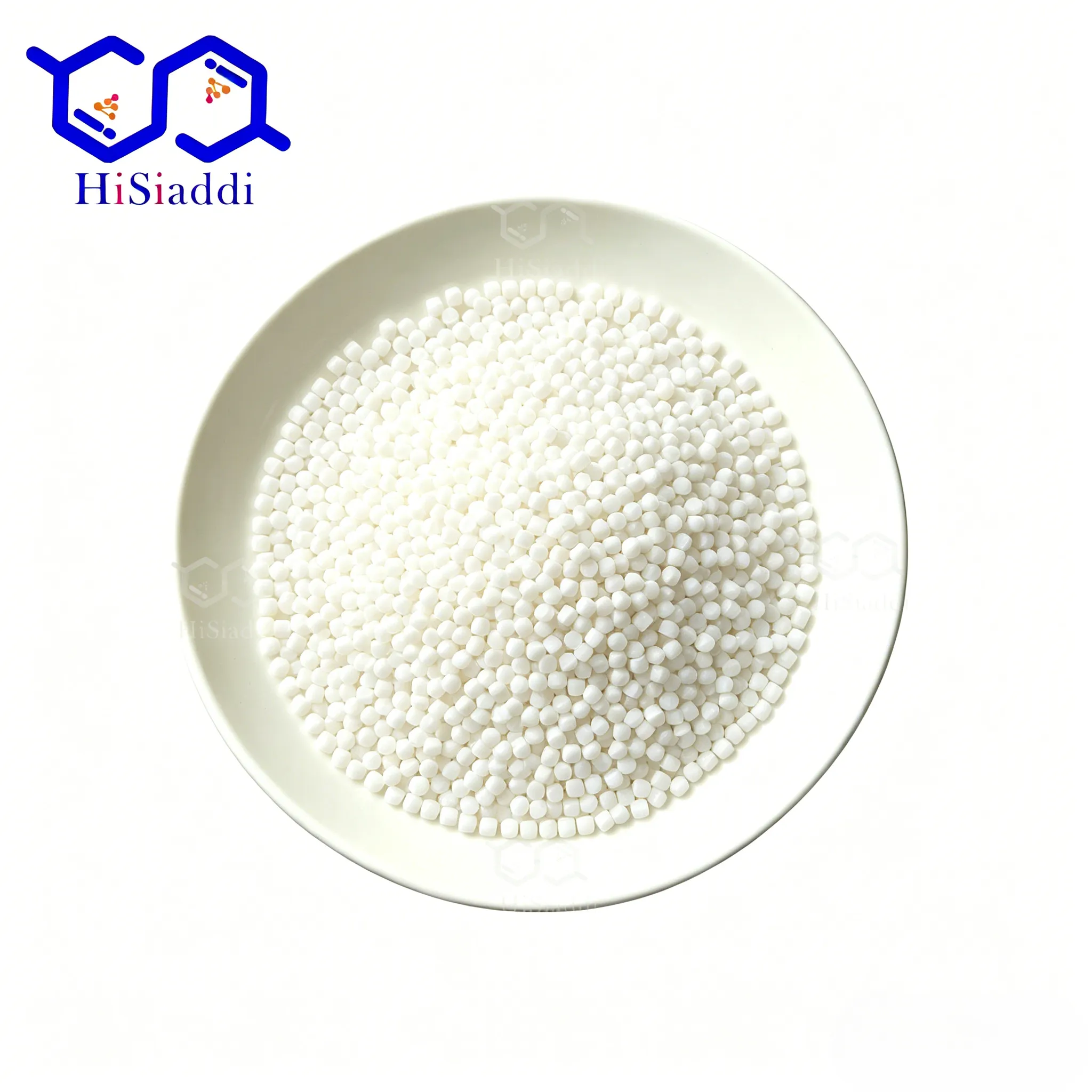
Poly (ε-caprolactone) abbreviated as PCL, it is used in 3D printing consumables, medical orthopedic splints and degradable packaging. HiSiaddi can supply original factory sources of multiple Chinese brands and provide "1+2+3+4=1" services.
Baling: PCL-8080 (molecular weight 80,000 high molecular grade), PCL-8050A (molecular weight 50,000 medium molecular grade), melting point 58~60℃, narrow molecular weight distribution, residual monomer < 0.5%, biodegradation rate ≥90% (180 days), 30%~40% lower in price than Perstorp with equivalent performance.
Juren: PCL-2000 (low molecular weight 2000), PCL-80000 (high molecular weight), good shape memory, excellent compatibility with PLA/PBAT, hydrolysis resistance, low-temperature flexibility down to -60℃, suitable for low-temperature molding processing, international grade quality, 25%~35% lower in price, suitable for orthopedic medical equipment, intelligent packaging and biomaterial enterprises.
HiSiaddi Service: Customization of biocompatibility / aging resistance modification; molding process of medical degradable materials, technical support for replacing Perstorp, regulation of degradation rate; compliance testing on molecular weight, residual monomer and biodegradation rate.
 CONTACT HiSiaddi NOW
| CAS No: | 24980-41-4 | Brand Name: | Multi-brand |
| MF: | N/A | Model Number: | Multi-models |
| EINECS No: | N/A | Grade: | N/A |
| Purity: | N/A | Place of Origin: | Hebei, China |
| MOQ: | 1ton | Storage: | Please refer to the product packaging or contact the customer service. |
When purchasing Polycaprolactone (PCL) as a buyer, you may encounter the following questions:
What are the core indicator advantages and practical application impacts of mainstream models from well-known PCL brands?
What competitive services can PCL suppliers provide?
What are the qualification certifications and market reputation of target PCL brands?
How about the inventory level and supply stability of PCL suppliers?
What key factors should be taken into account when selecting PCL products?
...and many other related inquiries.
HY PCL 800: Molecular weight 80,000, general modified grade, equivalent to Perstorp CAPA 6800
HY PCL 400: Molecular weight 40,000, for hot melt adhesive & blending modification
HY PCL 1000: Molecular weight 100,000, high-molecular-weight biodegradable injection molding grade
HY PCL 500: Molecular weight 50,000, dedicated for film extrusion
Precise molecular weight control ranging from 40,000 to 100,000, PDI<1.6 with narrow molecular weight distribution and stable performance fully matching Perstorp CAPA series.
ε-caprolactone residual monomer<0.15%, lower than international industrial standards, low odor and non-irritating, suitable for food contact and packaging scenarios.
Melting point: 58-62℃, glass transition temperature: -60℃, excellent low-temperature toughness without cracking at -40℃; stable melt fluidity fits high-speed extrusion, film blowing, injection molding and blending modification processes overseas.
Fully compliant with EN13432, ASTM D6400 and OK Compost standards, completely degraded within 180 days under industrial composting conditions with zero residue and heavy metal content.
Excellent compatibility with PLA, PBAT, PBS and starch-based materials, effectively improving toughness, tear resistance and low-temperature resistance of biodegradable materials and solving the brittleness defect of PLA.
Adopts continuous ring-opening polymerization technology with tiny fluctuation in viscosity, molecular weight and melting point, ideal for mass continuous production of biodegradable masterbatches and modified products overseas.
Cut core raw material procurement cost by 40%-50%, greatly boosting profit margins and enhancing product price competitiveness under global plastic restriction policies.
Narrow molecular weight distribution and low residual monomer reduce odor and substance precipitation of finished products, improving product compliance.
Outstanding low-temperature modification effect eliminates PLA brittleness without extra toughening agents, simplifying formula design and lowering overall production cost.
Sufficient large-scale domestic production capacity ensures stable supply in peak seasons, avoiding price hikes, supply shortages and ultra-long delivery cycles of imported Perstorp products.
Disposable biodegradable bags, food containers and packaging films feature superior toughness and low-temperature resistance, perfectly applicable to cold regions in Northern Europe and North America.
Complete compostable degradation meets European and American environmental regulations without secondary soil pollution.
Hot melt adhesives deliver stable low-temperature bonding performance for packaging and furniture assembly in cold environments.
JR PCL MED 80K: Medical grade, molecular weight 80,000, equivalent to Perstorp CAPA 6500 medical grade
JR PCL MED 50K: Low-molecular-weight grade for sustained-release drug carriers
JR PCL HP: Ultra-low residual monomer high-purity grade (residual content<0.08%)
Ultra-high purity and low impurity: ε-caprolactone residual monomer<0.08%, heavy metal content<1ppm, ash content<0.01%, no catalyst residue.
Passed ISO 10993 biocompatibility test, non-cytotoxic, non-sensitizing and non-genotoxic, applicable to absorbable surgical sutures, bone pins and sustained-release drug microspheres.
Adjustable degradation rate: higher molecular weight leads to slower degradation, enabling accurate control over degradation cycles from 3 months to 2 years for diverse medical implant applications.
Compatible with electrospinning, melt extrusion and 3D printing, matching precision molding processes for high-end overseas medical consumables.
Performance fully matches imported medical-grade materials, enabling access to high-end overseas medical device and medical aesthetic supply chains and avoiding fierce low-end market competition.
Ultra-low residual monomer lowers inflammation risks of implanted medical products and improves clinical safety.
Flexible small-batch supply supports R&D-oriented clients and customized high-end niche orders.
Absorbable bone pins and surgical sutures eliminate the need for secondary removal surgery, reducing patients’ pain and medical expenses.
Sustained-release drug carriers realize long-term drug delivery, improving drug utilization rate and reducing side effects.
eSUN PCL 3D 60K: Dedicated 3D printing grade, molecular weight 60,000
eSUN PCL LV: Low-viscosity precision injection molding grade
eSUN PCL MOD: Modified grade for biodegradable 3D printing filaments
Excellent 3D printing moldability: low melting temperature, low shrinkage rate, low warpage and strong interlayer adhesion, suitable for low-temperature FDM/SLS 3D printing for educational models, medical scaffolds and cultural & creative supplies.
Low viscosity and high fluidity fit micro precision injection molding for thin-wall parts and miniature medical components.
Uniform particle size without impurities and black spots, ensuring smooth surface finish of printed finished products.
Strong modification compatibility with PLA to adjust toughness and hardness of printing filaments to satisfy customized overseas demands.
Specialized grades are directly compatible with mainstream overseas low-temperature 3D printing equipment without extra process adjustment.
Sharp reduction in raw material cost expands profit space for overseas filament producers.
Flexible customized modification responds rapidly to personalized demands of cultural creation and medical consumables.
Safe low-temperature 3D printing with no high-temperature hazards, ideal for campus education and children’s cultural products.
Adjustable pore structure of medical 3D scaffolds supports tissue regeneration and orthopedic repair.
HY PCL G80: General industrial modified grade
HY PCL F60: Dedicated film extrusion grade
HY PCL W40: Water-soluble sustained-release grade for soil fertilizer retention materials
Significant large-scale cost advantages supported by massive continuous polymerization production lines with stable pricing, perfect for bulk industrial procurement overseas.
Superior film forming performance with moderate melt strength for uniform film blowing without breakage, applicable to biodegradable agricultural mulch films and packaging films.
Controllable sustained-release effect for fertilizer carrier application, catering to overseas agricultural soil improvement and eco-friendly planting demands.
Fully compliant with EU REACH, RoHS and OK Compost standards with no harmful additives.
Ultra-low unit price for bulk orders adapts to large-scale assembly line production overseas.
Stable film forming property reduces defective rate in film blowing production.
Sufficient inventory guarantees uninterrupted supply even in peak demand seasons.
Biodegradable agricultural mulch films cut farmland white pollution and boost global agricultural green transformation.
Sustained-release fertilizers improve fertilizer utilization rate and reduce agricultural non-point source pollution.
WW PCL CO: Copolymer modified high heat-resistant grade
WW PCL ANTI: Hydrolysis-resistant long-term biodegradable grade
WW PCL BLEND: Special pre-blended PCL & PLA grade
Copolymer modification raises heat resistance up to 70-75℃, solving the problem of easy deformation of ordinary PCL under high temperature for applications in tropical and Middle Eastern high-temperature regions.
Hydrolysis-resistant formula enables controllable slow degradation within 6-24 months, suitable for long-term outdoor and marine environment application scenarios.
Ready-to-use PCL&PLA pre-blended materials save independent blending procedures for clients.
Highly customizable molecular weight and copolymer ratio to meet niche high-end overseas orders efficiently.
High heat resistance solves product deformation issues in hot areas and unlocks blue ocean markets in tropical and Middle Eastern regions.
Long-term degradable products comply with marine environmental protection policies and differentiate products from low-price homogeneous goods.
Pre-blended materials simplify production processes and cut equipment & labor costs.
Heat-resistant biodegradable packaging keeps intact without adhesion in high-temperature areas for better user experience.
Slow-degrading marine biodegradable products effectively reduce marine microplastic pollution.

| Comparison Items | Shandong Huiying New Materials | Hunan Juren New Materials | Shenzhen eSUN Ecological Materials | Zhejiang Hengyi New Materials | Anhui Wanwei High-Tech |
| Export Ranking | 1 | 2 | 3 | 4 | 5 |
| Core Business Segments | General modified grade, high-molecular-weight biodegradable grade, film & hot melt adhesive grade | Medical high-purity grade, absorbable grade, sustained-release drug carrier grade | Special 3D printing grade, low-viscosity precision injection grade, modified filament grade | General industrial grade, film extrusion grade, fertilizer sustained-release grade | Copolymer high heat-resistant grade, hydrolysis-resistant long-term degradable grade, PCL&PLA pre-blended grade |
| Main Export Models | HY PCL 800/400/1000/500 | JR PCL MED 80K/50K/HP | eSUN PCL 3D 60K/LV/MOD | HY PCL G80/F60/W40 | WW PCL CO/ANTI/BLEND |
| Overseas Benchmark Brands | Perstorp CAPA series, BASF general grade | Perstorp medical high-purity series, Daicel | LG Chem 3D printing grade, Solvay special grade | BASF industrial grade, Daicel general grade | Perstorp niche modified series, LG Chem special grade |
| Core Competitive Strengths | MW:40000-100000, PDI<1.6; residual monomer<0.15%; super toughness at -40℃; EN13432 qualified; great compatibility with PLA/PBAT | Residual monomer<0.08%; heavy metal<1ppm; ISO10993 certified; 3-month to 2-year adjustable degradation; electrospinning available | Low shrinkage & warpage; strong interlayer adhesion; fit FDM/SLS; uniform smooth particles; high modification compatibility | Massive production capacity; stable film forming; controllable fertilizer sustained-release; OK Compost compliant; extreme cost advantage | Heat resistance up to 70-75℃; hydrolysis-resistant long-term degradation; pre-blended formula; flexible customized modification |
| Price Ratio vs Overseas Equivalents | 50%-60% | 47%-57% | 46%-56% | 45%-55% | 56%-66% |
| Cost Performance Rating | ★★★★★ | ★★★★★ | ★★★★☆ | ★★★★☆ | ★★★★ |
| Core Target Overseas B-end Clients | Biodegradable modifiers, PLA/PBAT masterbatch makers, disposable packaging factories, hot melt adhesive producers | Absorbable medical device factories, pharmaceutical sustained-release enterprises, medical suture & medical aesthetic material plants | 3D printing filament factories, educational & cultural creative suppliers, micro precision injection factories | Biodegradable agricultural mulch film factories, fertilizer sustained-release enterprises, general film manufacturers | Tropical-area biodegradable product factories, marine eco-friendly material suppliers, high-end heat-resistant packaging enterprises |
| Downstream B-end Buyer Advantages | 1. 40%-50% raw material cost cut2. Low residual monomer improves product quality3. Effectively solve PLA brittleness4. Stable peak-season supply | 1. Enter high-end overseas medical supply chain2. Lower implant inflammation risks3. Flexible small-batch delivery | 1. Compatible with mainstream overseas 3D printing devices2. Sharp raw material cost reduction3. Fast customized modification service | 1. Ultra-low bulk procurement price2. Stable film forming lowers defect rate3. Sufficient stable supply | 1. Solve high-temperature deformation problem to expand tropical markets2. Long-term degradation fits marine environmental policies3. Pre-blended materials simplify production flow |
| End User Advantages | 1. Low-temperature resistant tough biodegradable products2. Complete compostable degradation3. Stable low-temperature bonding for hot melt adhesives | 1. Secondary surgery free for absorbable medical supplies2. Safe and efficient long-term drug release | 1. Safe low-temperature 3D printing for education & cultural creation2. Medical scaffolds support tissue regeneration | 1. Reduce farmland white pollution via biodegradable mulch film2. Higher fertilizer utilization efficiency | 1. Anti-deformation packaging for high-temperature areas2. Less microplastic pollution from marine degradable products |
HiSiaddi, a new foreign trade service provider driven by both technology transformation and foreign trade business, has built a "1+2+3+4=1" product service system, which consists of 1 foreign trade salesperson with over 3 years of experience, 2 R&D teams and 3 high-quality suppliers supported by 4 warehouses to fulfill one-stop product demand.
With this service system, HiSiaddi boasts deeper expertise in R&D optimization and technical processes of PCL Pellets than most foreign trade companies, a clearer grasp of market demands and competitive advantages of various PCL Pellets brands than single factories, and a more thorough understanding of the PCL Pellets foreign trade market than research institutions.
HiSiaddi only recruits foreign trade sales staff with over 3 years of working experience, who must receive more than 6 months of training from both the R&D team and foreign trade team before serving customers.
(1)PCL Pellets Basic Support Service
Backed by the foreign trade team and corporate service system, we provide customers with full-process one-stop document handling services, including but not limited to issuance and processing of all types of compliance certificates for PCL Pellets, provision of third-party test reports and resolution of quality warranty issues.
(2)PCL Pellets Exclusive Premium Service
Global PCL & Biodegradable Material Monthly Intelligence Push Service. We release regular updates on overseas competitor pricing, global plastic ban policies and demand in medical, 3D printing and agricultural fields, helping clients avoid policy and price risks.
Full Order Visual Tracking Service. Overseas clients can view real-time progress including polymerization, modification, inspection, packaging and logistics for full procurement transparency.
Through in-depth cooperation with source factories via technology transformation and internal collaboration with the foreign trade team, we provide technical training for sales staff to realize professional PCL customization and offer research-level consulting for PCL blend and processing optimization.
(1)PCL Pellets Research-Grade Customization Service
Import Substitution Benchmark Special Service. For clients using Perstorp CAPA, BASF and LG imported PCL, we compare molecular weight, residual monomer, melting point, toughness and degradability fully, issuing dedicated substitution reports unavailable to ordinary traders.
PCL Technology Transfer & Custom Modification Service. We cooperate with domestic biodegradable material institutes to develop ultra-low monomer medical grades, high heat-resistant co-polymer PCL, anti-hydrolysis long-life variants and PLA/PBAT pre-blended materials for 3D printing and fertilizer slow release, supporting full small-to-mass production conversion.
Agricultural Slow-Release Custom PCL. We adjust degradation cycles to match fertilizer release requirements for green agriculture clients.
Joint R&D of Exclusive Custom PCL Grades. We co-develop proprietary modified PCL with long-term key clients to create differentiated biodegradable products and avoid homogeneous competition.
(2)PCL Pellets Research-Grade Consulting Service
Overseas Localized PCL Blending Technical Service. Our biodegradable material team offers remote guidance on PLA/PCL blending ratios, injection and blown film temperatures and electrostatic spinning parameters unavailable to regular traders.
Medical Grade Residual Monomer Control. Every batch provides third-party heavy metal and cytotoxicity test reports to meet EU medical device standards.
Industrial & Marine Compost Degradation Testing. We conduct tests compliant with EN13432 and ASTM D6400 to help clients obtain OK Compost certification quickly.
Extreme Environment Simulation Testing. We carry out high-low temperature, damp heat and seawater aging tests to eliminate clients’ stability doubts.
3D Printing Formula Optimization to boost print toughness and dimensional accuracy.
Our foreign trade and R&D teams jointly conduct preliminary market surveys, on-site factory inspections, product testing, in-depth technology transformation cooperation and bulk procurement cooperation to select around 3 reliable, stable, reputable and promising brand manufacturers.
(1)PCL Pellets Greater Initiative to Secure Lower Prices
Long-term cooperation through technology transformation and authorized distribution enables us to source original factory goods at preferential prices.
(2) PCL Pellets Long-Term Supply Chain Guarantee Service
Long-term partnership in technology transfer and distribution strengthens production process monitoring, full batch traceability, batch stability control and compensation guarantees for batches failing third-party inspection.
Exclusive Medical & High-Purity Production Line Reservation for Overseas Clients. We lock dedicated polymerization lines for medical and high-purity PCL to avoid supply shortages in domestic peak seasons.
We have 4 warehouses, which are jointly operated and managed with suppliers to store hot-selling products.
(1)PCL Pellets Fast Delivery & On-Site Emergency Handling
The four warehouses are located at Qingdao Port (North China), Ningbo Port (East China), Shenzhen Port (South China) and Zhengzhou (inland logistics hub), ensuring timely delivery of PCL Pellets. On-site staff can resolve transportation damage, packaging defects and export compliance issues locally.
(2) PCL Pellets Price Stabilization & Custom Packaging Support
We stock up in advance to mitigate drastic price hikes during peak seasons. Self-operated warehouses support highly customized packaging and label solutions for clients.
As a new foreign trade service provider driven by both technology transformation and foreign trade services, HiSiaddi has built a "1+2+3+4=1" service system and can supply original factory materials of multiple well-known brands of PCL Pellets. As a R&D-oriented foreign trade enterprise, HiSiaddi will systematically sort out common challenges faced by B-end buyers sourcing PCL Pellets from China and propose targeted solutions from a professional perspective.
If you require more professional and in-depth analysis regarding PCL Pellets selection, please contact HiSiaddi customer service.
1.
Diverse cross-border compliance regulations with strict access standards Products are segmented into medical grade, food contact grade, 3D printing grade and general biodegradable plastic grade. The EU enforces REACH, RoHS and EN13432 full biodegradation standards; medical grades must meet FDA and USP biocompatibility specifications, while food grades comply with EU 10/2011. Strictly controlled parameters include MFR, hydroxyl value, moisture content, ash content, residual monomer, melting point, heavy metals and degradation rate. Each batch requires English-language COA, SDS, certificate of origin and biodegradation test reports. Large downstream manufacturers audit factory ISO and biodegradation certifications; non-compliant indicators or incomplete certifications lead to customs detention and terminated cooperation.
2.
3.
Parameter fluctuations directly compromise molding and end-product quality Abnormal MFR fluctuations cause filament breakage and poor interlayer adhesion for 3D printing materials; unregulated degradation rates disrupt drug release profiles for medical sustained-release carriers; modified biodegradable plastic products crack with inconsistent degradation cycles. PCL pellets absorb moisture easily, and high humidity during transoceanic shipping causes foaming and voids in extruded products, resulting in full batch scrap.
4.
5.
ε-caprolactone upstream chain relies on petrochemical industry; crude oil and equipment maintenance drive raw material price volatility European and American local production capacity is limited, heavily reliant on domestic fine chemical capacity from China. Standard ocean freight and customs clearance take 5–7 weeks. Concentrated stocking seasons for single-use medical supplies and biodegradable packaging trigger raw material price hikes of 20%–33%. Frequent port sampling inspections for chemical pellets and container space shortages risk production line shutdowns for downstream manufacturers.
6.
1.
Complete tiered compliance documentation for one-stop customs clearance & factory audit support Production lines separated by medical/food/3D printing/general grades with full REACH registration, EN13432 biodegradation certificates and FDA food contact filings. Customized full English COA and SDS issued on demand, test parameters aligned with European and American standards to assist buyers with import filing and factory audits.
2.
3.
Closed-loop polymerization + post-pelletization dehumidification to tightly control core physical & chemical parameters Precision catalytic polymerization with negative-pressure stripping to remove residual caprolactone monomer; third-party SGS sampling before shipment locks narrow tolerance ranges for MFR, moisture and residual monomer. Inner vacuum film + 25kg kraft paper composite bags provide complete moisture barrier protection to prevent pellet agglomeration from ocean transit moisture absorption.
4.
5.
Long-term price lock agreements + safety stock in European & American bonded warehouses 6–12 month annual supply contracts with benchmark pricing locked, annual price adjustments capped at 5%. Safety stock equivalent to 2–3 months’ demand stored at core port bonded warehouses across Europe and the US; standard orders shipped locally within 3–5 working days. Air freight for urgent medical samples delivers within 48 hours.
6.
1.
Premium pricing for small-batch purchases & widespread adulterated raw materials Small factories typically order 100–300kg, while the industry standard minimum order quantity (MOQ) is 500kg with a 10%–18% surcharge for small lots. Counterfeit materials blended with PP, calcium carbonate and low-grade recycled biodegradable resins fail to meet full biodegradation standards for finished products.
2.
3.
Incorrect grade selection & processing errors drive high production waste Lack of differentiation between high-viscosity and low-viscosity PCL grades and improper extrusion temperature settings cause foaming and embrittlement, pushing overall raw material waste above 8%.
4.
5.
45–60 day transoceanic order lead times, small batch production delays of 2–3 weeks with full prepayment tying up working capital.
6.
1.
No surcharge for orders starting at 100kg with tiered factory-direct pricing MOQ lowered to 100kg at original factory cost; volume discounts for 500kg orders, with an additional 4% price reduction for 1-ton lots. Direct factory supply eliminates middlemen, cutting procurement costs by over 20%.
2.
3.
Free 1–2kg sample kits + full English process operation manuals Complete temperature parameter guides for 3D extrusion, hot melt compounding and modified pelletization, with remote grade selection consultation to reduce production waste to below 3%.
4.
5.
Consolidated regional container shipments + flexible payment terms + full batch traceability Consolidate scattered orders into full containers to shorten lead times to 30–35 days. Payment terms of 30% advance deposit + 70% against copy of bill of lading. Third-party quality inspection reports and traceability codes accompany every order to eliminate adulteration risks.
6.
1.
Ultra-strict limits on high-purity low-residual impurities for medical/food applications Residual caprolactone and trace heavy metals exceeding thresholds disqualify absorbable sutures and food-contact packaging from passing biocompatibility and European-American food compliance testing, barring entry into premium supply chains.
2.
3.
Trace impurities disrupt molding stability for low-additive formulations Low-dose formulation systems develop filament breakage and film pinholes from minor moisture or residual monomer contamination; temperature fluctuations during long-distance ocean transit further exacerbate stability defects.
4.
5.
Rapid iteration of new product formulations requires frequent small-batch trial orders of 5–20kg, which mass production lines struggle to accommodate.
6.
1.
High-purity monomer-stripped specialty grades meeting clean production access standards Secondary negative-pressure devolatilization refining reduces residual monomer far below international limits, with dedicated medical/food special test reports provided.
2.
3.
Rheology-modified formulations for stable wide-temperature processing Optimized molecular weight distribution ensures consistent extrusion across high and low temperatures, eliminating voids and embrittlement in low-additive systems and extending finished product shelf life.
4.
5.
Custom trial orders starting at 5kg with priority scheduling for R&D batches Custom MFR and molecular weight specifications developed on demand to support formulation testing and adjustment at overseas laboratories.
6.
1.
Poor miscibility and phase separation during blending with PLA/PBAT and additives Low-quality PCL with broad molecular weight distribution causes uneven mixing and particle precipitation during compounding, scrapping full batches of modified masterbatch.
2.
3.
Moisture absorption in open feeding environments triggers extrusion foaming and scrap High workshop ambient humidity leads to moisture uptake by raw materials, generating extensive voids in extruded products and elevating raw material waste rates.
4.
5.
Mass tonnage raw material procurement squeezes profit margins; continuous full-line production faces shutdown risks from supply shortages, requiring compatibility with automated closed feeding systems.
6.
1.
Special blending-optimized PCL grades with enhanced compatibility Formulation compatibility testing completed for mainstream PLA/PBAT modification and hot melt recipes, ensuring uniform mixing without phase separation with common biodegradable resins and fillers.
2.
3.
Ultra-low moisture custom grades + workshop humidity control process guidance Deep dehumidification applied post-production, alongside standardized closed feeding and humidity-controlled warehouse protocols to minimize moisture-related waste.
4.
5.
Tiered volume discounts for bulk orders + annual supply guarantees + multi-specification industrial packaging Progressive price reductions for tonnage-level bulk orders and full-container shipments to cut costs; annual production capacity reservations available. 25kg bags and bulk ton bags offered to suit automated feeding equipment.
6.
1.
Multi-grade inventory ties up capital; high single-grade MOQs create unsold stock risks Stocking medical, 3D printing and general-purpose grades requires significant upfront investment, with high minimum order quantities per grade raising inventory obsolescence risks.
2.
3.
Lack of in-house testing equipment prevents self-inspection of MFR, moisture and residual monomer, leading to claims from end customers receiving adulterated materials.
4.
5.
Cumbersome customs clearance for scattered orders; packaging damage and moisture absorption during transit ruin pellets, creating complex after-sales workloads.
6.
1.
Mixed multi-grade consolidated orders + overseas warehouse repackaging & drop-shipping Unrestricted mixed-grade consolidation without single-grade MOQ requirements, enabling zero-inventory operation for distributors.
2.
3.
Full third-party COA included with all orders + quality compensation guarantee Full refund and return shipping coverage for materials failing specified indicator standards.
4.
5.
Vacuum moisture-proof sealed packaging + dedicated chemical cross-border logistics lines Inner vacuum liner bags provide full moisture barrier protection; dedicated chemical shipping lines streamline customs clearance with full end-to-end logistics tracking.
6.
If you require more professional and in-depth analysis regarding PCL Pellets selection, please contact HiSiaddi customer service.
Polycaprolactone pellets: Weight-average molecular weight: 80000±3000 g/mol; Molecular weight distribution index: ≤1.3
Melting point: 60±2℃; Glass transition temperature: ≤-60℃
Melt flow rate (160℃/2.16kg): 14±0.7 g/10min
Biocompatibility: Compliant with ISO 10993 standard; Cytotoxicity Grade 0, no skin irritation
Heavy metals and harmful leachables: Single component <0.5 ppm
Mechanical properties: Tensile strength ≥22 MPa; Elongation at break ≥780%; Shore A hardness: 88±3
Degradation performance: Natural degradation rate ≥92% within 180 days in soil and seawater environments
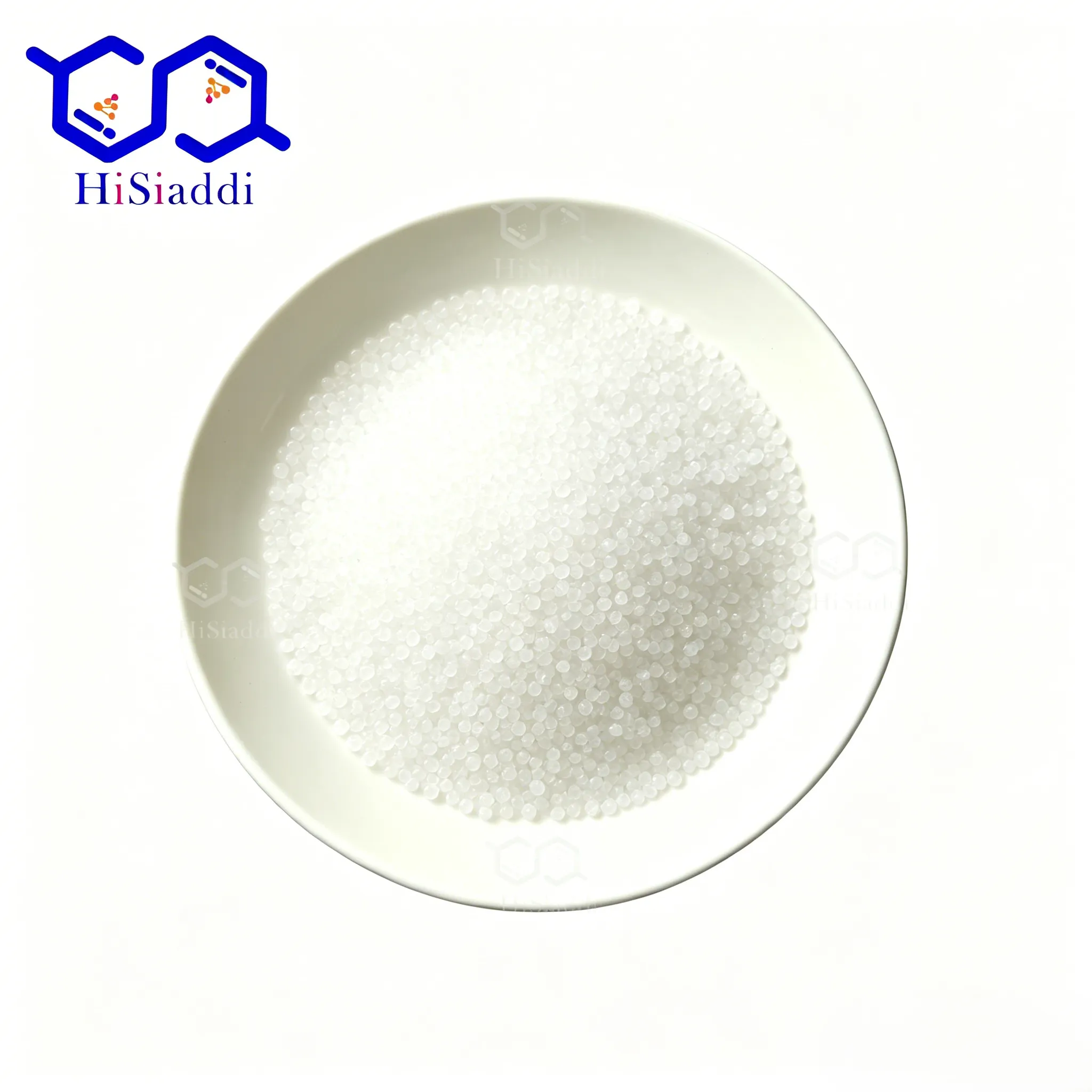
Appearance and particle size: Milky white uniform cylindrical pellets, particle size 2.2±0.2 mm, no debris or adhesion; Compatible with 3D printing filament extrusion, film blow molding and injection molding
Storage stability: No obvious changes in molecular weight and melting point after sealed storage at room temperature for 12 months
For molecular weight and narrow distribution: Adopted living ring-opening polymerization technology and high-selectivity organometallic catalysts. The reaction was precisely controlled in temperature and duration, and terminated accurately at the polymerization endpoint. The final weight-average molecular weight reached 79200 g/mol with a molecular weight distribution index of 1.26, fully meeting the standards.
For melting point and fluidity regulation: Optimized the molecular terminal group structure to stabilize the melting point at 59.5℃, while ensuring the melt flow rate conformed to processing requirements, with no abnormal flow or adhesion during low-temperature processing.
For biosafety and impurity removal: Applied multi-stage extraction and vacuum devolatilization after polymerization to eliminate organic solvent residues. The production workshop maintained medical-grade cleanliness. All biocompatibility tests passed, and harmful leachables were far below the limit values.
For controllable degradation: Fine-tuned the proportion of hydrophilic groups on molecular chains and matched with special biodegradable additives. The natural degradation rate hit 93.5% in 180 days while retaining superior mechanical properties.
For multi-process adaptability: Optimized melt rheological properties to balance ductility for filament extrusion, melt strength for blow molding and anti-adhesion performance for injection molding. No defects occurred in all forming tests.
For compliance certification: Completed all tests in accordance with EU medical and food contact standards, and compiled, reviewed and filed the full set of English compliance documents.
For packaging and transportation: Adopted double-layer heat-insulating and moisture-proof packaging, and used constant-temperature refrigerated containers for sea transportation to prevent pellet softening and adhesion.
Uneven degradation rate of finished products, failing to meet environmental protection requirements
Poor low-temperature flexibility: products turned hard and brittle easily
Poor high-temperature resistance of pellets: softening and adhesion during storage and transportation
Fluctuating melting points between batches, exceeding the standard for film thickness deviation
Pellets were prone to moisture absorption, causing pinhole defects on blown films
To solve uneven degradation: Replaced with narrow-distribution stable PCL to unify raw material standards and ensure consistent degradation rate.
To improve low-temperature brittleness: Adopted high-flexibility modified PCL grade, and optimized the post-forming cooling process to maintain the activity of molecular chains.
To prevent pellet adhesion: Controlled the warehouse temperature below 30℃ and relative humidity under 48%; added heat insulation layers for packaging, and required complete use of materials shortly after opening.
To stabilize melting points: Implemented random inspection of melting point and molecular weight for incoming materials to strictly control batch differences.
To eliminate pinholes caused by moisture absorption: Pre-dried raw materials at 85℃ for 2 hours before use.
Lead time
Quantity (ton) | 0 - 10 | 10 - 30 | > 30 |
Lead time (days) | 7 | 15 | To be negotiated |
The monthly inventory volume of PCL Pellets is 10 tons, with appropriate adjustments upwards or downwards in response to peak and off-peak seasons.
HiSiaddi safeguards the supply stability of PCL Pellets through the following measures:
(1) Performance evaluation and screening of PCL Pellets brand factories based on on-time delivery rate, batch pass rate, timeliness of risk alerts, and completeness of documentation to assess their supply stability.
(2) For each mainstream model or major grade of PCL Pellets, secure 1 primary high-quality brand manufacturer and 2 backup high-quality manufacturers.
(3) Each factory operates independent production lines in separate production zones to prevent production halts caused by major unforeseen incidents such as environmental production suspensions and power outages.
Through long-term cooperation with brand manufacturers via technology commercialization and authorized distribution channels, HiSiaddi can effectively strengthen supervision over the production processes of brand manufacturers, optimize full-process traceability management, improve batch stability control, and further reinforce real-time monitoring of the supply stability of PCL Pellets products.
Long-term Annual Framework Supply Guarantee Agreement. HiSiaddi signs 12-month long-term agreements with leading manufacturers. The agreements specify the minimum guaranteed supply volume, maximum price hike range, and priority production scheduling rights during peak seasons. It is stipulated that manufacturers shall issue a 30-day prior written notice if production is suspended due to environmental rectification or equipment maintenance, and backup manufacturers will be activated to replenish goods accordingly.
We have 4 warehouses, which are jointly operated and managed with suppliers to store hot-selling products.The four warehouses are located at Qingdao Port in North China, Ningbo Port in East China, Shenzhen Port in South China, and Zhengzhou, China’s inland logistics hub. This setup guarantees sufficient supply and timely shipment of PCL Pellets during peak seasons.
HiSiaddi issues a rolling demand forecast covering the subsequent three months on the 25th of each month, allowing manufacturers to reserve production capacity in accordance with the forecast. Any new urgent orders from overseas clients will be prioritized to draw on inventories or production capacity from backup manufacturers.
Unstable logistics for PCL Pellets will extend delivery lead times. HiSiaddi has established alternative arrangements covering multiple freight forwarders, ports and transportation solutions:
(1) Binding of multiple professional chemical freight forwarders for PCL Pellets
Each product is assigned 2 to 3 freight forwarders with hazardous chemical/food transport qualifications affiliated with different shipping lines. Alternative sailing schedules can be switched to immediately in case of space shortages or customs inspections on a single shipping route.
(2) Backup transportation solutions for PCL Pellets
Ocean freight serves as the standard mode; air freight and rail freight are reserved as alternatives for urgent orders. Long-term agreements for temperature-controlled containers are signed for temperature-sensitive and perishable food additives to secure shipping space.
(3) Visual tracking and digital early warning for PCL Pellets
Freight forwarders synchronize daily updates on container loading, customs declaration, vessel loading and port arrival milestones. If customs inspection occurs, replenishment from backup inventory will be initiated immediately to shorten client waiting periods.
Full-chain digital early warning automatically monitors four categories of risks:
Factory side: Expiring supplier environmental assessment certificates, renewal of production permits, scheduled major equipment overhauls, and notifications of price hikes for upstream raw materials;
Inventory side: Inventory falling below safety thresholds, excessive inventory age, and batches failing quality inspection;
Logistics side: Shipping line space shortages, strikes at destination ports, and updates to customs policies;
Overseas side: Revisions to additive regulations and adjustments to import restriction lists in target countries.
Early warning notifications are automatically pushed to procurement and business leads, allowing backup suppliers or inventory contingency plans to be activated in advance.
HiSiaddi is an innovative foreign trade service provider driven by dual engines of technology commercialization and export services. It has established a "1+2+3+4=1" service system and can supply raw materials from multiple well-known original manufacturers of PCL Pellets.
As an R&D-focused foreign trade enterprise, HiSiaddi avoids the one-sided brand promotion typical of single-factory suppliers. We objectively analyze multiple competitive Chinese PCL brands with strong export capabilities and share their certification portfolios and market feedback to help buyers make efficient, stable purchasing decisions.
If you require more objective, detailed introductions to multiple leading Chinese PCL Pellets brands, please contact HiSiaddi customer service.
Jurun New Materials ranks as the world’s largest PCL producer with an annual output of 55,000 tons. It achieves 100% self-supply of caprolactone monomers, breaking overseas technological monopolies. Its product portfolio covers general industrial-grade, premium medical-grade and hydrolysis-resistant modified grades, exported to Europe, North America and Southeast Asia, holding a 22.96% global market share in 2025.
· PCL-6000 (General Industrial Grade): Weight-average molecular weight 60,000, melting point 60°C, melt flow index 15–20 g/10min (160°C), white cylindrical pellets; applicable for biodegradable packaging films, hot melt adhesives and 3D printing filaments.
· PCL-8000 (High-Purity Medical Grade): Molecular weight 80,000, purity 99.8%, PDI ≤1.8, endotoxin ≤0.3 EU/mg; for orthopedic stents, sustained-release microspheres and medical implant consumables.
· PCL-H100 (Hydrolysis-Resistant Modified Grade): Softening point 55°C, high impact resistance and anti-aging performance; dedicated to agricultural mulch films and outdoor injection-molded products.
1. EU packaging manufacturers report PCL-6000 delivers molecular weight fluctuation ≤±4% per batch (outperforming BASF’s ±8%), priced 25–30% lower than European domestic alternatives with only 2-week lead times vs. 8–12 weeks for imported materials. Three major EU food packaging groups have established long-term procurement contracts for compostable film production lines.
2. North American medical device firms confirm PCL-8000 passes USP Class VI biosafety certification with heavy metal content <5 ppm. Switching from Daicel’s medical-grade PCL cut raw material costs by 35%. Two North American orthopedic manufacturers use it for mass production trials of bone stents with equivalent biocompatibility performance.
3. Southeast Asian 3D printing factories highlight PCL-6000’s smooth low-temperature printing and low filament breakage rate, delivering a 98% finished product yield. It captures 40% of Southeast Asia’s educational 3D printing raw material market, compatible with Shenzhen eSUN’s FDM educational printers.
· ✅ Full EU REACH registration, German DIN 13432 compostability certification, South Korea K-REACH registration
· ✅ ISO9001/14001/45001/50001 integrated management system certifications, National Specialized, Refined, Unique & Innovative "Little Giant" Enterprise, Hunan Provincial Manufacturing Single Champion
· ✅ NMPA medical device raw material filing (M2024050), shortlisted for BASF, Lubrizol and Covestro’s global supply chains
One of China’s earliest industrialized PCL manufacturers and the world’s sole holder of proprietary continuous PCL polymerization technology, with annual output of 10,000 tons and industry-leading medical-grade technology. Products export to over 100 countries across Europe, America, Japan, South Korea and Southeast Asia.
· eSUN500C (General Food-Grade): Molecular weight 52,000, high fluidity (MFI 30–50 g/10min); dedicated to food packaging films and disposable tableware, fully compliant with food contact standards.
· eSUN800C (eSUNMED Medical Grade): Metal-free catalytic synthesis, molecular weight 90,000, PDI ≤1.9; for absorbable sutures, skin tissue scaffolds and cosmetic filler microspheres.
· eSUN30K (Low-Viscosity Hot Melt Grade): Molecular weight 30,000, ultra-high fluidity (MFI 80–100 g/10min); for daily chemical thickeners, eco hot melt adhesives and coating carriers.
1. Premium EU food packaging brands confirm eSUN500C complies with EU 10/2011 food contact standards with zero precipitation during heat sealing. Used to replace PE/PP fresh produce trays, finished goods carry a 25% retail premium, with five European organic food chains as fixed bulk buyers.
2. Korean-Japanese cosmetic raw material suppliers report eSUN800C delivers controllable 6–12 month degradation cycles with biocompatibility matching Japanese imported grades. Used for skin filler microspheres, it holds EU CE-MDR certification and is listed in the EU cosmetic raw material registry.
3. North American K12 3D printing brands praise its non-toxic, low-temperature safe, easy-coloring properties, capturing over 40% of the North American educational consumable market. The company led the formulation of the world’s first international standard for 3D printing materials in 2023.
· ✅ Medical-grade ISO 10993 biocompatibility, ISO13485 medical device quality system; FDA 21CFR177.1520 food contact clearance, CE-MDR medical certification
· ✅ EN13432, GB/T19277.1 biodegradation certifications; National High-Tech Enterprise, Vice Chairman Unit of China Biodegradable Materials Association
· ✅ Lead drafter of international 3D printing material standards, marketing centers across 8 countries and six overseas warehouses globally
Supported by a full corn deep-processing industrial chain, its bio-based PCL delivers 40% lower carbon emissions with annual output of 6,000 tons, targeting European low-carbon packaging and Australian agricultural mulch film markets. It is a national unicorn enterprise.
· PCL-6000B (Bio-Based Special Grade): Bio-based carbon content ≥50%, molecular weight 60,000, white pellets; for premium organic food packaging and fully biodegradable agricultural mulch films.
· PCL-8000I (Heat-Resistant Industrial Grade): Softening point 55°C with enhanced rigidity and superior heat resistance vs. standard PCL; for injection-molded eco-toys, biodegradable stationery and daily consumer goods.
1. European organic food groups confirm PCL-6000B’s carbon footprint is verified via ISO14064, complying with EU CBAM carbon tariff rules and achieving full 180-day compostable degradation. Finished packaging carries a 30–40% retail premium, with two European grain brands fully switching to this raw material.
2. Australian agricultural cooperatives report PCL-8000I modified mulch films withstand Australia’s high-temperature arid climate with complete soil degradation within 180 days, meeting Australia’s AS4736 standard. Deployed across over 50,000 mu of sugarcane and vegetable farmland, it delivers superior anti-aging performance vs. imported standard mulch films.
· ✅ EU EN13432, Australia AS4736, US ASTM D6400 three core international biodegradation certifications
· ✅ ISO14064 carbon footprint certification (specialized for bio-based PCL), recognized by the Ministry of Ecology and Environment as internationally leading technology
· ✅ Recommended brand under China’s plastic restriction policy, MIIT non-food bio-based model case, national green supply chain enterprise
Specialized in mass-produced cost-effective industrial-grade PCL with annual output of 5,000 tons, delivering stable bulk supply at competitive prices for Middle Eastern, Latin American and Southeast Asian manufacturers of low-cost industrial goods.
· PCL-5500 (General Industrial Pellets): Molecular weight 55,000, melting point 58°C, MFI 18–25 g/10min; for PLA blending modification, blown films, general injection molding and packaging containers.
· PCL-4000 (Low-Viscosity Hot Melt Grade): Molecular weight 40,000, MFI 40–60 g/10min; for low-temperature hot melt adhesives, eco coating carriers and non-woven fabric binders.
1. Saudi and UAE packaging manufacturers in the Middle East note PCL-5500 costs 40% less than European and American imports with stable batch viscosity, compatible with high-speed blown film lines and waste rates controlled below 2%. Six local Middle Eastern packaging firms maintain stable bulk procurement for shopping bags and food sacks.
2. Latin American hot melt adhesive producers confirm PCL-4000 offers excellent compatibility with EVA, boosting finished product bonding strength by 15% while cutting production costs by 20%. It captures 30% of Latin America’s low-temperature eco-adhesive raw material market for shoe materials and furniture edge banding adhesives.
· ✅ Full EU REACH registration for all grades, RoHS hazardous substance control certification, meeting Middle Eastern and Latin American environmental access standards
· ✅ ISO9001/14001 quality & environmental management systems, IATF16949 automotive industry certification
· ✅ National High-Tech Enterprise, National Manufacturing Single Champion Demonstration Enterprise
Annual output of 3,000 tons, avoiding oversaturated general-grade markets to focus on narrow-distribution low-molecular-weight PCL polyols and pharmaceutical-grade PCL, exported to European PU manufacturers and Korean-Japanese pharmaceutical firms with leading niche technical capabilities.
· PCL-2000 (Polyol Special Grade): Molecular weight 2,000, hydroxyl value 55–60 mgKOH/g; for PU elastomers, high-performance sealants and automotive/construction specialty adhesives.
· PCL-10K (Pharmaceutical Microsphere Grade): Molecular weight 100,000, ultra-narrow PDI <1.2, endotoxin ≤0.4 EU/mg; for long-acting sustained-release microspheres, injectable carriers and cosmetic filler materials.
1. European polyurethane producers confirm PCL-2000 delivers superior hydrolysis resistance and low-temperature toughness (no cracking at -60°C) vs. traditional adipate polyesters, extending service life of finished sealants by 50%. Three global PU leaders have shortlisted it as an alternative raw material for automotive seals and construction waterproof adhesives.
2. Korean-Japanese pharmaceutical manufacturers report PCL-10K’s narrow molecular weight distribution improves drug loading efficiency with consistent release cycles. Used in two long-acting injectable formulations, one Japanese pharmaceutical firm has entered clinical trials, cutting raw material costs by 40% vs. imported microsphere-grade PCL.
· ✅ Pharmaceutical-grade ISO 10993 biosafety certification, ISO13485 medical device quality system
· ✅ FDA DMF raw material filing for microsphere grades, full EU REACH registration, Japan METI chemical filing
· ✅ National High-Tech Enterprise, Director Unit of Hubei Biomaterials Association
All five manufacturers hold core EU REACH and EN13432 certifications; all medical grades carry FDA, CE-MDR and NMPA filings, enabling smooth customs clearance for shipments to Europe, North America, Japan, South Korea and Australia.
Medical grades achieve purity 99.5–99.8% with endotoxin <0.5 EU/mg; industrial-grade molecular weight fluctuation controlled within ±5%, delivering equivalent performance to BASF, Daicel and Evonik.
Domestic PCL costs 25–40% less than European, American and Japanese imports; direct domestic warehouse shipments arrive in 2–4 weeks via sea freight, eliminating backlogs and supply shortages common with overseas giants, supported by robust bulk production capacity.
Custom molecular weights ranging from 30,000 to 100,000, tailored degradation cycles of 3–24 months, and heat/hydrolysis-resistant/high-toughness modified formulations available to match packaging, medical, 3D printing and agricultural mulch film applications.
If you require more objective, detailed introductions to multiple leading Chinese PCL Pellets brands, please contact HiSiaddi customer service.
HiSiaddi is an innovative foreign trade service provider driven by dual engines of technology commercialization and export services. It has established a "1+2+3+4=1" service system and can supply raw materials from multiple well-known original manufacturers of PCL Pellets.
As an R&D-focused foreign trade enterprise, HiSiaddi avoids the one-sided brand promotion typical of single-factory suppliers. We objectively analyze multiple competitive Chinese PCL brands with strong export capabilities and share their production processes, supply stability and key performance indicators, as well as how these core factors impact downstream buyers, enabling efficient, reliable purchasing decisions.
If you require more objective, detailed introductions to multiple leading Chinese PCL Pellets brands, please contact HiSiaddi customer service.
Core production process: Proprietary 50,000-ton annual continuous caprolactone monomer production line + PCL bulk ring-opening polymerization (ROP) technology. Cyclohexanone undergoes oxidation to produce ε-caprolactone monomers (≥99.8% purity) with 100% in-house monomer supply. Closed continuous low-oxygen catalytic polymerization runs at 150–170°C using self-developed low-toxicity catalysts, delivering conversion rates ≥98% with zero batch switching losses.
· Industrial-grade (PCL-6000): Post-polymerization twin-screw devolatilization + underwater pelletization, residual impurities <50 ppm.
· Medical-grade (PCL-8000): Additional molecular distillation + sterile filtration processes, endotoxin ≤0.3 EU/mg, heavy metals <5 ppm.
Supply stability: World’s largest PCL production capacity of 55,000 tons/year across dual manufacturing bases in Changde (Hunan) and Ningbo. Full vertical integration covering monomer production, polymerization and pelletization eliminates upstream reliance. Long-term fixed-price, fixed-volume supply agreements for core raw material cyclohexanone with three top domestic petrochemical enterprises. Finished goods maintain 30 days of safety stock; sea freight delivers to Europe and America within 2 weeks, while air freight offers 3-day expedited shipments. Zero delivery delays recorded between 2024 and 2025, designated supplier to BASF and Lubrizol.
· Maximum monthly supply capacity: 4,500 tons, capable of fulfilling multi-year ten-thousand-ton bulk orders.
· Risk resistance: 100% self-sufficiency of caprolactone monomers, eliminating overseas monomer supply disruption risks.
· Weight-average molecular weight: 60,000 ± 2,000 (fluctuation ≤±4%, outperforming industry average ±8%)
· Melt flow index: 15–20 g/10min (160°C/2.16 kg)
· Melting point: 60 ±1°C, acid value ≤0.5 mgKOH/g
· Moisture ≤0.05%, ash ≤0.03%, batch color difference ΔE <0.8
· Molecular weight: 80,000 ±3,000, PDI ≤1.8 (narrow distribution)
· Purity ≥99.8%, endotoxin ≤0.3 EU/mg, heavy metals (Pb, As, Cd) <5 ppm
· Tensile strength ≥20 MPa, elongation at break ≥600%
1. Packaging & 3D printing manufacturers: PCL-6000’s minimal molecular weight fluctuation delivers uniform blown film thickness tolerance ≤±0.02 mm and <1% filament breakage rate in 3D printing, lifting finished product yield to 98% and cutting scrap rates by 30%. Priced 25–30% lower than BASF equivalents with a 6-week shorter lead time, accelerating client capital turnover by 20%.
2. Medical device manufacturers: Fully biocompatible PCL-8000 directly replaces Daicel’s medical PCL, slashing raw material costs by 35% and eliminating extra third-party testing for cross-border shipments. Narrow molecular weight distribution stabilizes drug release cycle deviation within ±5% and raises microsphere drug loading efficiency by 15%.
3. Risk mitigation: Full regulatory compliance (REACH, EN13432, USP Class VI) enables seamless EU/North American customs clearance. In-house monomer production eliminates geopolitical supply risks, while 12-month fixed-price long-term contracts hedge raw material inflation.
Core production process: Continuous ε-caprolactone ring-opening polymerization (ROP) with patented metal-free organic catalysts replacing traditional tin octoate. High-purity ≥99.5% caprolactone monomers sourced primarily from Jurun New Materials. Closed continuous polymerization runs at 140–160°C with negligible inter-batch quality variation. Medical-grade production adds sterile cleanroom workshops and nano-filtration; food-grade lines deploy low-temperature devolatilization to eliminate small-molecule precipitation.
· Process advantages: Batch intermittent polymerization consumes more energy and suffers wider quality fluctuations; continuous polymerization delivers conversion rates ≥97% with PDI ≤1.9 and residual impurities <30 ppm.
Supply stability: Annual PCL output of 10,000 tons across dual manufacturing bases in Shenzhen Headquarters and Kunshan (Jiangsu). Flexible production lines enable rapid switching between three mainstream product grades. Six overseas warehouses across Europe, America, Japan, South Korea and Southeast Asia maintain 15 days of circulating inventory. Small-batch orders (minimum 500 kg) ship within 3 days; monthly bulk supply capacity of 800 tons delivers consistent on-time fulfillment. 100% order delivery rate in 2025 with zero quality complaints, core raw material supplier to North American K12 3D printing brands.
· Customization capacity: Sample delivery within 72 hours, tailor-made molecular weights from 30,000 to 100,000 and controllable degradation cycles of 6–12 months available.
· Molecular weight: 52,000 ±2,500, high fluidity MFI 30–50 g/10min
· Melting point: 58–60°C, acid value ≤0.4 mgKOH/g, moisture ≤0.05%
· Fully compliant with EU 10/2011 and FDA 21CFR177.1520 with zero small-molecule precipitation
· Molecular weight: 90,000 ±3,500, PDI ≤1.9, endotoxin ≤0.4 EU/mg
· Tensile strength ≥22 MPa, elongation at break ≥650%, controllable degradation cycles of 6–12 months
1. Premium food packaging manufacturers: eSUN500C delivers precipitation-free heat sealing compatible with high-speed production lines ≥300 m/min, enabling finished goods to carry EU organic labeling for a 25% retail premium. Consistent batch performance reduces frequent equipment calibration, lifting production efficiency by 15%.
2. Cosmetic raw material suppliers: eSUN800C offers fully controllable degradation cycles with biocompatibility matching Japanese imported materials, cutting procurement costs by 40% for skin filler microspheres. CE-MDR certified formulations eliminate inflammatory reactions post-injection, granting direct market access to EU cosmetic manufacturers.
3. 3D printing manufacturers: Non-toxic, low-temperature safe (60°C forming) filaments ideal for K12 education applications with easy colorability and zero warpage, delivering ≥99% finished product yield and capturing 40% of North America’s educational consumable market.
Core production process: Full bio-based industrial chain spanning corn fermentation → lactic acid → lactide → PCL copolymerization via proprietary bio-based ε-caprolactone copolymer technology. Corn starch fermentation generates lactic acid, which reacts with caprolactone monomers via ring-opening copolymerization at 150–170°C to produce PCL with ≥50% bio-based carbon content. Post-polymerization eco-friendly devolatilization and low-temperature pelletization eliminate fossil feedstock reliance, cutting carbon footprints by 40% vs. conventional PCL.
· Process characteristics: Low-carbon modified formulations deliver 5°C improved heat resistance and enhanced rigidity for high-temperature agricultural and packaging use cases.
Supply stability: Annual PCL output of 6,000 tons at the Bengbu bio-manufacturing base in Anhui. 80% self-sufficiency of corn raw materials secured via long-term supply contracts with local agricultural cooperatives to mitigate grain price volatility. Shared utility infrastructure with PLA production lines delivers 30% capacity redundancy for emergency order surges. 20 days of finished goods safety stock maintained with direct port delivery to Europe within 3–4 weeks. Passed EU CBAM carbon tariff audits in 2025, driving 50% year-on-year growth in European orders supported by low-carbon product labeling.
· Risk resistance: Bio-based feedstock decouples pricing from fossil fuel volatility, with 12-month fixed-price long-term order contracts available.
· Bio-based carbon content ≥50%, molecular weight 60,000 ±3,000
· Melting point: 61 ±1°C, 5°C improved heat resistance vs. standard PCL, acid value ≤0.6 mgKOH/g
· Carbon footprint ≤2.5 kgCO₂e/kg (ISO14064 verified)
· Molecular weight: 75,000 ±3,500, softening point 55°C, 20% enhanced rigidity
· Short-term heat resistance up to 65°C, optimized for Australia’s high-temperature agricultural mulch film scenarios
1. European low-carbon packaging manufacturers: ISO14064 carbon footprint compliant PCL-6000B meets EU CBAM carbon tariff regulations, enabling finished goods to carry EU low-carbon labeling for a 30–40% retail premium with full 180-day compostable degradation. Two European grain brands have fully transitioned to this raw material for packaging production.
2. Australian agricultural cooperatives: PCL-8000I modified mulch films withstand Australia’s 50°C arid growing conditions with complete soil degradation within 180 days under Australia’s AS4736 standard. Extended service life cuts manual recovery labor costs by 30%, deployed across over 50,000 mu of sugarcane and vegetable farmland.
3. Compliance advantages: Comprehensive bio-based certification portfolio eliminates additional carbon verification for European export shipments, boosting customs clearance efficiency by 40%.
Core production process: Intermittent ε-caprolactone ring-opening polymerization (ROP) using industrially sourced ≥99.5% caprolactone monomers and low-cost tin octoate catalysts. Polymerization runs at 160–180°C for 8–10 hours per batch, followed by simplified devolatilization and air-cooled pelletization for impurity removal. Streamlined production processes minimize capital and maintenance costs, exclusively focused on cost-competitive industrial-grade PCL with no investment in medical-grade production.
· Process advantages: Low equipment investment and maintenance costs support rapid switching between industrial-grade molecular weight variants for Middle Eastern and Latin American low-cost end-product applications.
Supply stability: Annual PCL output of 5,000 tons at the Zibo manufacturing base in Shandong. Five-year fixed-price, fixed-volume caprolactone supply agreement with Jurun New Materials hedges monomer price inflation. Production lines run at 90% capacity utilization with maximum monthly bulk supply capacity of 400 tons for long-term Middle Eastern and Latin American orders. 10 days of circulating inventory maintained with sea freight delivery to the Middle East and Latin America within 3–4 weeks, consistent pricing with zero price hikes in 2025, and 80% repeat order rate among Middle Eastern clients.
· Cost advantages: Streamlined production processes and scale economies deliver prices 40% lower than European and American imported equivalents for low-cost industrial goods.
· Molecular weight: 55,000 ±3,000, MFI 18–25 g/10min
· Melting point: 58–60°C, acid value ≤0.8 mgKOH/g, moisture ≤0.08%
· Tensile strength ≥18 MPa, elongation at break ≥500%
· Molecular weight: 40,000 ±2,000, high fluidity MFI 40–60 g/10min
· Excellent compatibility with EVA, finished product bonding strength ≥15 MPa
1. Middle Eastern packaging manufacturers: PCL-5500 costs 40% less than European and American imports with stable batch viscosity compatible with 250 m/min high-speed blown film lines, limiting waste rates below 2%. Reduced equipment calibration frequency lifts production efficiency by 10%, with six local Middle Eastern packaging firms maintaining consistent bulk supply contracts for shopping and food sacks.
2. Latin American hot melt adhesive manufacturers: High-fluidity PCL-4000 delivers superior EVA compatibility, boosting finished product bonding strength by 15% while cutting production costs by 20%. Optimized for shoe material and furniture edge banding adhesives with fast low-temperature (60°C) curing shortening production cycles by 20%, capturing 30% of Latin America’s low-temperature eco-adhesive raw material market.
3. Risk mitigation: Full foundational compliance (REACH, RoHS) enables seamless Middle Eastern and Latin American customs clearance; six-month fixed-price long-term contracts mitigate raw material price volatility.
Core production process: High-precision intermittent ring-opening polymerization paired with multi-stage molecular distillation purification using high-purity ≥99.8% caprolactone monomers. High-selectivity catalysts enable precise molecular weight control during 10–12 hour polymerization runs at 130–150°C. Multi-stage molecular distillation post-processing removes trace impurities to achieve ultra-narrow molecular weight distribution (PDI <1.2). The firm avoids saturated general-grade markets to focus exclusively on low-molecular-weight PCL polyols (2,000–3,000) and pharmaceutical microsphere-grade PCL (100,000), holding leading niche technical capabilities.
· Process advantages: Precise molecular weight tuning delivers ultra-narrow distribution and ultra-low impurity levels, optimized for high-performance PU sealants and sustained-release pharmaceutical microspheres.
Supply stability: Annual PCL output of 3,000 tons at the East Lake High-Tech Biopark manufacturing base in Wuhan. Flexible production lines enable precise switching between molecular weights ranging from 2,000 to 100,000. Long-term fixed-price caprolactone supply agreement with Jurun New Materials mitigates raw material volatility. 15 days of safety stock maintained; minimum order quantity of 100 kg ships within 5 days, with monthly bulk supply capacity of 250 tons for consistent long-term fulfillment. Designated exclusive specialty raw material supplier to three global PU leaders and two Korean-Japanese pharmaceutical manufacturers in 2025, with 100% repeat order rates due to limited niche competition.
· Customization capacity: Tailored ultra-narrow distribution (PDI <1.2) grades with molecular weights 10,000–100,000 available with sample delivery within 72 hours.
· Molecular weight: 2,000 ±100, PDI <1.2, hydroxyl value 55–60 mgKOH/g
· Acid value ≤0.15 mgKOH/g, moisture ≤0.02%, exceptional hydrolysis resistance (98% viscosity retention after 10,000 hours aging)
· Molecular weight: 100,000 ±4,000, PDI <1.2, endotoxin ≤0.4 EU/mg
· Purity ≥99.9%, heavy metals <3 ppm, consistent stable drug loading performance
1. European polyurethane manufacturers: PCL-2000 delivers superior hydrolysis resistance and low-temperature toughness (no cracking at -60°C) vs. conventional adipate polyesters, extending service life of finished automotive elastomers and construction sealants by 50%. Replacing imported polyols cuts raw material costs by 40%, shortlisted as an alternative raw material by three global PU market leaders.
2. Korean-Japanese pharmaceutical manufacturers: Ultra-narrow molecular weight distribution of PCL-10K improves drug loading efficiency with stable release cycle deviation limited within ±3%. Deployed in two long-acting injectable formulations, one Japanese pharmaceutical firm has advanced to clinical trials, cutting raw material costs by 40% and eliminating mandatory third-party testing for cross-border shipments.
3. Technical moat: Minimal niche competition via proprietary ultra-narrow distribution technology locks in downstream clients with limited alternative suppliers, strengthening long-term supply chain stability and supplier pricing power.
· Jurun New Materials: Full vertical integrated continuous polymerization with in-house monomer production; optimal quality consistency, mid-high cost; suitable for industrial and medical applications.
· Guanghua ESUN: Continuous polymerization + metal-free catalytic synthesis; best-in-class medical/food-grade purity, mid-high cost; optimized for premium high-end scenarios.
· BBCA Biotech: Bio-based copolymerization; exclusive low-carbon eco-performance, mid-range cost; targeted for low-carbon packaging and agricultural mulch film markets.
· Ruifeng High Polymer: Intermittent polymerization + low-cost catalysis; maximum cost-performance, lowest pricing; ideal for low-cost mass industrial applications.
· Haishan Technology: High-precision intermittent polymerization + molecular distillation; ultra-narrow distribution specialty grades, highest production cost; dedicated to high-end PU and pharmaceutical formulations.
· Jurun New Materials: 55,000 tons/year dual-base production, full monomer self-sufficiency; strongest market risk resistance.
· Guanghua ESUN: 10,000 tons/year output, six global overseas warehouses, flexible production lines; industry-leading customization capacity.
· BBCA Biotech: 6,000 tons/year output, self-supplied bio-based feedstock; unique low-carbon supply chain risk mitigation.
· Ruifeng High Polymer: 5,000 tons/year output, long-term petrochemical monomer contracts; stable low-cost bulk supply capacity.
· Haishan Technology: 3,000 tons/year output, fully flexible manufacturing lines; exclusive small-batch specialty grade customization.
· Medical-grade performance leaders: Jurun New Materials (PDI ≤1.8), Guanghua ESUN (PDI ≤1.9), Haishan Technology (PDI <1.2).
· Industrial-grade performance leaders: Jurun New Materials (≤±4% molecular weight fluctuation), Guanghua ESUN (ultra-high fluidity), Ruifeng High Polymer (stable consistent performance).
· Exclusive bio-based advantage: BBCA Biotech (≥50% bio-based carbon content).
· Premium medical & food packaging applications: Select Guanghua ESUN or Jurun New Materials; 35–40% cost reduction vs. imports with 25% retail product premiums.
· Low-carbon packaging & agricultural mulch films: Select BBCA Biotech; CBAM carbon tariff compliant with 30–40% eco-label retail premiums.
· Low-cost general packaging & hot melt adhesives: Select Ruifeng High Polymer; 40% raw material cost reduction compatible with high-speed mass production lines.
· High-end PU sealants & pharmaceutical sustained-release microspheres: Select Haishan Technology; doubled end-product performance with 40% import substitution cost savings and minimal niche market competition.
If you require more objective, detailed introductions to multiple leading Chinese PCL Pellets brands, please contact HiSiaddi customer service.
As a new foreign trade service provider driven by both technology transformation and foreign trade services, HiSiaddi has built a "1+2+3+4=1" service system and can supply original factory materials of multiple well-known brands of PCL Pellets. As a R&D-oriented foreign trade enterprise, HiSiaddi will analyze key purchasing considerations and critical indicators from a professional perspective to ease buyers’ concerns over material selection.
If you require more professional and in-depth analysis regarding PCL Pellets selection, please contact HiSiaddi customer service.
{=html}
<img src="img1.jpg" alt="PCL white pellets"/>
{=html}
<img src="img2.jpg" alt="PCL raw material particles"/>
{=html}
<img src="img3.jpg" alt="PCL finished pellets"/>
PCL is synthesized via ring-opening polymerization of ε-caprolactone monomer (CL). Leading global raw material suppliers include BASF, Invista, and Daicel Corporation. The total global PCL production capacity stands at approximately 125,000 tons per annum.
· Europe: Dominated by Sweden’s Perstorp (Capa series) and BASF
· North America: Corbion
· Japan: Daicel, Sumitomo
· Core domestic Chinese mass producers: Guanghua Weiye, Hisun Biotech, Yuxin Chemical
China accounts for nearly 30% of global capacity, with domestically integrated production capacity expanding rapidly over the past three years. European and American manufacturers face high natural gas energy costs and strict EU biodegradation environmental regulations, leading to frequent plant maintenance and standard delivery lead times of 30–45 days. Domestic self-supply of caprolactone monomer has accelerated, with spot stock readily available. Grades with identical molecular weights are priced 20%–32% lower than imported European and American products. Ocean freight timelines and comprehensive logistics costs offer significant advantages for full-container shipments to Southeast Asia, the Middle East and Latin America, making domestic Chinese supply the top cost-saving option for overseas buyers.
Products are categorized into pharmaceutical pharmacopoeia grade, food contact grade, 3D printing grade, general modification/hot melt adhesive grade, and fully biodegradable packaging grade. Standard supporting documents include MSDS/SDS, EU REACH registration, EN13432 industrial composting certification, and OK Compost certification. For food and medical applications, supplementary FDA 21CFR and USP Class VI pharmacopoeia certifications are required. End buyers of biodegradable packaging in Europe and America must provide TÜV Austria biodegradation test reports. Small overseas manufacturers generally lack full composting certifications, resulting in cargo detention by EU customs during inspections. Top domestic Chinese brands supply batch-specific COAs and third-party physical & chemical test reports alongside complete certifications, enabling smooth customs clearance.
Grades are categorized by number-average molecular weight (Mn), benchmarked against Perstorp Capa series and Daicel PCL grades, divided into four major categories: low-molecular-weight hot melt adhesive, medium-molecular-weight general extrusion, high-molecular-weight 3D printing/medical, and ultra-high-molecular-weight modification & toughening. Overseas original equipment manufacturers offer fixed grades with customization lead times exceeding 40 days for modified formulations. Domestic suppliers can fine-tune molecular weight distribution, color difference, and residual monomer content, and produce custom colored modified pellets and high-purity low-precipitation medical-grade materials. Standard packaging is 25kg paper-plastic composite bags, with bulk ton bags available; 5kg small sample packages are provided for rapid formulation testing.
Molecular weight and melt flow index directly determine processing temperature, melt fluidity, finished product degradation cycle and mechanical properties. Our engineers provide remote technical support for extrusion/injection molding/3D printing process debugging to resolve common defects including wire warpage, film pinholes, and poor hot melt adhesion. PCL pellets are classified as ordinary environmentally friendly plastics (non-hazardous goods). We offer EXW/FOB/CIF quotation calculation, price locking for long-term bulk orders, batch delivery scheduling, and negotiable credit terms.
1. Number-average molecular weight (Mn): Grades span 4,000–120,000. Lower molecular weight delivers superior fluidity for hot melt adhesives; higher molecular weight provides enhanced toughness for 3D printing and medical consumables.
2. Melt Flow Rate (MFR, 160℃, 2.16kg weight): 1–30g/10min. Excessively high MFR causes stringing during processing and high molding shrinkage; excessively low MFR increases equipment energy consumption and hinders extrusion.
3. Melting point: Uniformly 58–64℃, enabling low-temperature melt processing, a distinct advantage over high-melting-point PLA.
1. Appearance: Premium grade pellets are milky white cylindrical particles free of black specks, burnt particles and agglomeration. Inferior materials appear yellow with abundant foreign particles, causing black spot defects during processing.
2. Density: 1.13–1.15g/cm³, critical for controlling feed ratios and finished product weight specifications.
1. Moisture content: ≤0.3% for general grade; ≤0.1% for high-purity medical grade. Excess moisture causes foaming and internal voids in finished products during high-temperature processing.
2. Residual caprolactone monomer: ≤0.2% for food/medical grade; ≤0.5% for general industrial grade. Excess monomer impairs biocompatibility and fails biodegradation testing standards.
1. Full biodegradability: Complete degradation into CO₂ and H₂O within 12–18 months under industrial composting conditions, complying with global plastic ban and biodegradation standards.
2. Low-temperature toughness: Glass transition temperature of -60℃, resisting embrittlement in subzero environments; widely used as a low-temperature toughening modifier for PP/PE.
3. Compatibility: Fully miscible with PLA, PE, EVA and rubber for extensive blending modification applications.
4. Shape memory performance: Shape-set at low temperatures, recovering original form at approximately 60℃; core raw material for medical splints and shape-set consumables.
Classified as ordinary plastic pellets, stored in cool, dry, shaded warehouses with moisture and rain protection. 25kg packaging complies with global ocean shipping standards; no hazardous goods packaging certificate required.
If you require more professional and in-depth analysis regarding PCL Pellets selection, please contact HiSiaddi customer service.



 +86-13120989737
  info@hisiaddi.com
 English