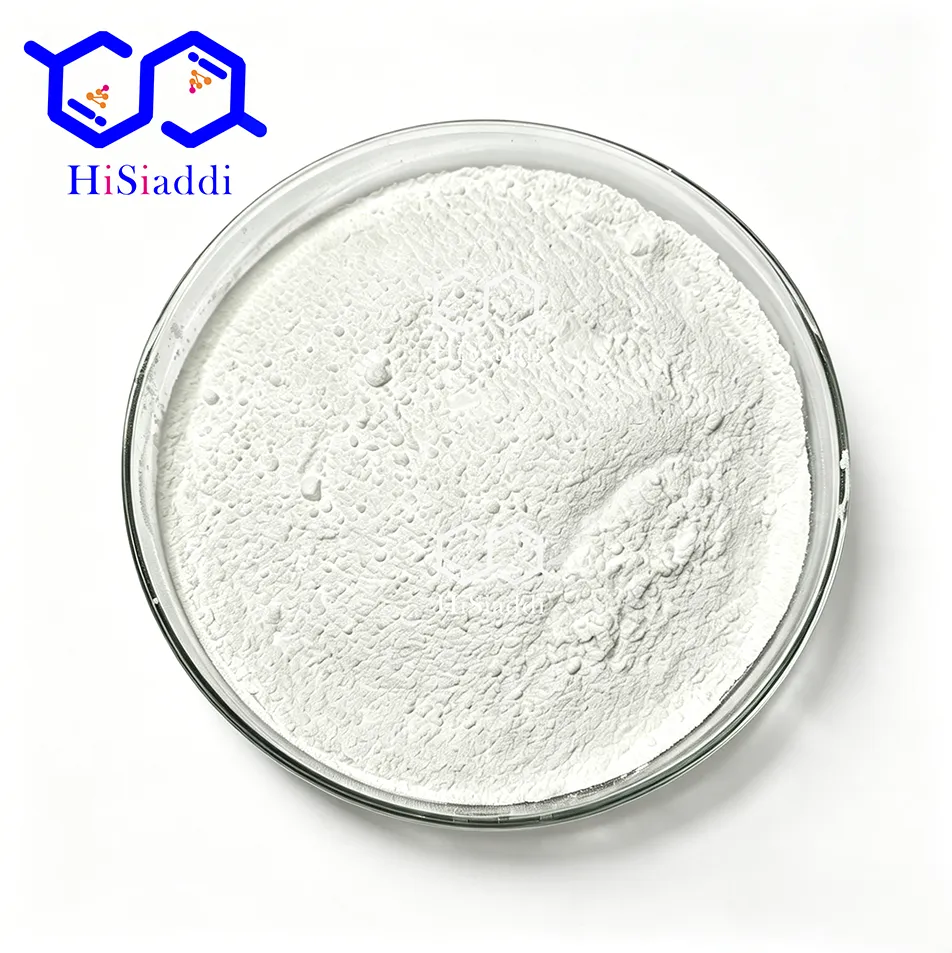
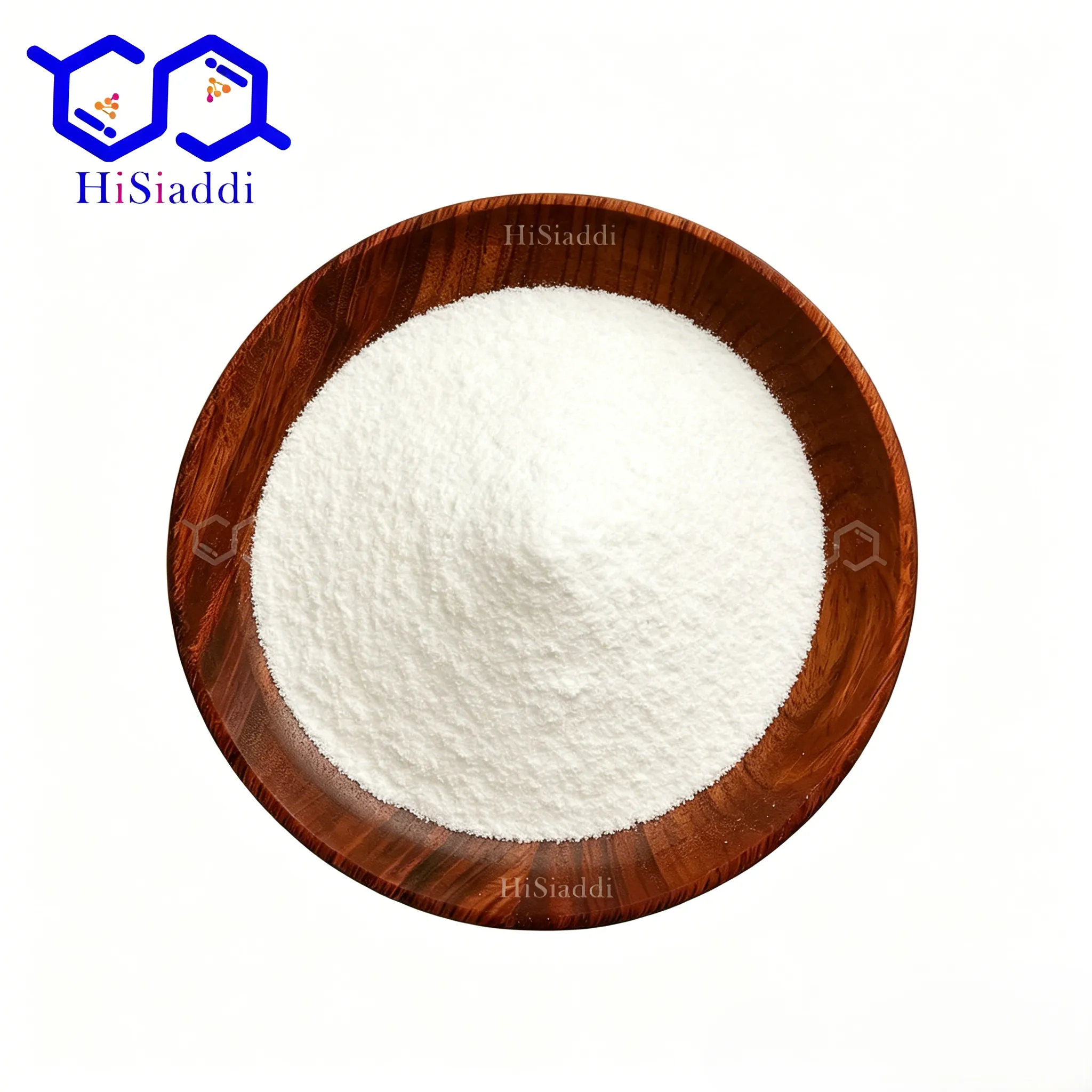
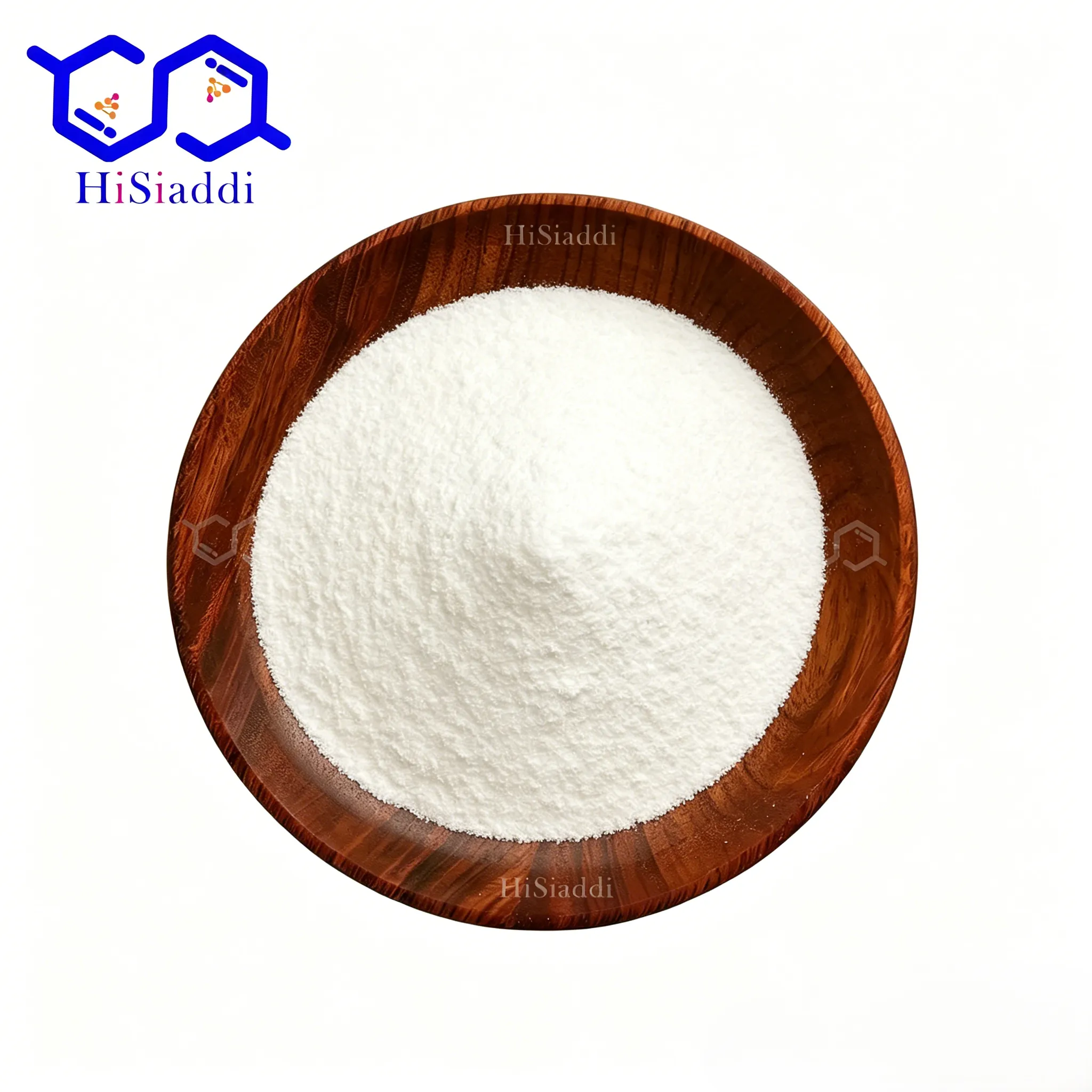
HiSiaddi is an innovative foreign trade service provider driven by both technology transformation and foreign trade operations. We have established a "1+2+3+4=1" service system and can supply hydroxypropyl distarch phosphate sourced directly from multiple well-known original manufacturers. As a foreign trade service provider with R&D capabilities, HiSiaddi has conducted multiple rounds of inspections on enterprises producing hydroxypropyl distarch phosphate products based on technology transformation cooperation with manufacturers, possessing objective and in-depth understanding of different manufacturers. We regularly analyze various brands and manufacturers of hydroxypropyl distarch phosphate for clients to help them select matching products. Below is a brand selection recommendation case.
Contact HiSiaddi customer service for more comparative analysis of brands and models.
The buyer, NutriPremium, a high-end dietary food group headquartered in Zurich, Switzerland, has over 20 years of experience in core mid-to-high-end product lines including Western European low-temperature yogurt, acidic fresh fruit salad dressings, and baked custard fillings. Its products are sold to high-end organic supermarkets and Michelin supporting dessert shops across Switzerland, Germany, and Liechtenstein. All product lines comply with EU Regulation EC1333 on additives, LFGB, Clean Label standards, and KOSHER certifications, with an annual E1442 procurement volume of 39 tons. The group previously exclusively sourced customized modified starch from Roquette, France. Driven by rising European raw material costs and extended delivery cycles, the client launched a domestic E1442 substitution plan and independently requested samples and technical documents from four leading domestic modified starch manufacturers: COFCO Biotech, Henan Hengrui, Jiangsu Tianjiang, and Guangxi Gaoyuan.
A common industry pain point emerged during project advancement: sales and technical staff of all four manufacturers operated in compliance without deliberate denigration of competing brands, yet all focused exclusively on promoting their own products, deliberately avoiding horizontal objective comparison of competitors’ strengths:
· COFCO prioritized general corn-based E1442, omitting introduction of high-transparency acid-resistant models from Hengrui and freeze-thaw stable customized variants from Tianjiang.
· Henan Hengrui emphasized high-transparency starch dedicated to high-end sauces without mentioning COFCO’s full-industry-chain raw material stability and Gaoyuan’s cost-effective cassava starch advantages.
· Jiangsu Tianjiang focused on modified starch for frozen food, rarely introducing mature application cases of Gaoyuan’s dairy products.
· Guangxi Gaoyuan specialized in mass-market general cassava starch, avoiding performance strengths of high-end customized variants from the other three manufacturers under extreme low-pH systems and high-temperature sterilization working conditions.
The client’s R&D team is familiar with European modified starch parameter systems yet lacks understanding of raw material bases, modification process routes, and segmented model performance differences among the four major domestic brands. Nine samples combined from the four manufacturers delivered inconsistent product performance post small-scale testing: some samples rapidly hydrolyzed and separated water in weak acid environments, some failed freeze-thaw stability requirements, and some powder variants exhibited poor dispersion and production agglomeration, accumulating 6,800 EUR in sample testing losses and stagnating multiple formula debugging processes. Unable to select matching raw materials based solely on one-sided manufacturer promotions, the client fully entrusted HiSiaddi via introduction by the Switzerland-China Food Ingredients Chamber of Commerce to horizontally decompose full-series products of the four major domestic brands as a neutral third party and screen matching brands and models aligned with its three product line demands. Differentiated from traditional traders distributing only single-manufacturer products, HiSiaddi adopts a neutral technical perspective unconstrained by manufacturer sales orientation.
Combined with the client’s working conditions of pH3.5~3.8 strong-acid salad dressings, refrigerated yogurt at 4℃, and ambient-stored custard fillings, HiSiaddi sampled core products of each brand for physical and chemical testing (hydroxypropyl substitution degree, cross-linking degree, acid resistance, freeze-thaw stability, powder fineness), compiling a bilingual Chinese-English brand evaluation report objectively listing advantages and disadvantages of each brand without bias toward any manufacturer:
Advantages: Self-owned corn planting bases in Northeast China with high raw material self-sufficiency rates, large-scale intelligent production lines, minimal indicator fluctuations within the same batch, complete ex-factory quality inspection systems, full-series FSSC22000 and LFGB certifications, sufficient production capacity reserves for stable delivery of bulk orders, suitable for mass standardized procurement. Disadvantages: Product lines focus on general-grade corn-based E1442 with limited segmented customized modified variants; few low-substitution acid-resistant dedicated models and ultra-fine mesh mousse-grade products available. Core models: ZL-M1 (general corn E1442 for conventional fillings), ZL-M2 (medium-high viscosity general modified starch for meat products).
Advantages: Mature independent wet modification processes capable of customized high-hydroxypropyl low-cross-linking potato-based E1442, powder refined and crushed to over 120 mesh with industry-leading strong acid resistance and paste liquid transparency, suitable for high-acid fruit juice salad formulas; zero additional auxiliary additives during production to meet EU Clean Label requirements. Disadvantages: Premium quotations for general mass-produced corn-based variants, bulk spot production capacity inferior to COFCO, slightly higher minimum order thresholds compared to mass-market manufacturers. Core models: HR-SA96 (potato E1442 dedicated to strong-acid sauces), HR-YR88 (cassava modified starch dedicated to low-temperature yogurt).
Advantages: Multiple independent dedicated modification production lines built to adjust etherification and cross-linking reaction parameters on demand; cassava-based products deliver water separation rates below 4% after five freeze-thaw cycles, focusing on frozen dairy products and long-term storage baked fillings with high customization flexibility. Disadvantages: Limited spot inventory of general mass-produced variants, weaker short-lead-time rush order preparation capacity compared to COFCO. Core models: TJ-RD92 (high freeze-stability waxy corn E1442 dedicated to custard fillings), TJ-MU85 (modified starch base for frozen yogurt).
Advantages: Backed by local cassava producing areas in Guangxi with controllable raw material procurement costs, cost-effective conventional cassava E1442, abundant mature application cases for basic dairy formulas, low minimum order thresholds for small-batch sample testing. Disadvantages: Limited R&D investment in high-end deep modification, lacking segmented high acid-resistance and ultra-high heat-resistant variants incompatible with extreme strong acid and long-duration sterilization working conditions. Core models: GY-MU75 (cost-effective general cassava starch for yogurt), GY-JA78 (modified starch for ordinary jams).
Eliminating incompatible general COFCO variants and economical conventional models from Guangxi Gaoyuan, HiSiaddi selected two high-end customization-focused modified starch brands – Henan Hengrui and Jiangsu Tianjiang – based on the client’s mid-to-high-end product positioning and strict EU compliance standards, precisely selecting three segmented dedicated E1442 models to match each of the three main production lines:
1. Henan Hengrui HR-SA96 Potato E1442 (Exclusive for Acidic Fresh Fruit Salad Dressings): High-hydroxypropyl low-cross-linking modification process, stable under strong acid at pH3.5 with viscosity retention rate ≥86% post instantaneous sterilization at 121℃; 120-mesh ultra-fine powder specifications allowing dry mixing with white granulated sugar without agglomeration, resolving sauce delamination and surface white specks after sterilization.
2. Henan Hengrui HR-YR88 Cassava E1442 (Exclusive for Low-Temperature Organic Yogurt): Precisely controlled hydroxypropyl substitution degree of 0.081~0.087, low soluble phosphate impurities, zero whey separation after 60 days of refrigeration at 4℃, intact system without emulsion breakdown after five repeated -18℃ freeze-thaw cycles, matching the client’s Clean Label requirement of no redundant additives.
3. Jiangsu Tianjiang TJ-RD92 Waxy Corn E1442 (Exclusive for Ambient-Stored Custard Fillings): High cross-linking modification design with excellent anti-starch-retrogradation performance, no filling dehydration and hardening after 90 days of ambient storage at 25℃, perfectly matching long-term warehousing demands of the client’s baked fillings.
HiSiaddi simultaneously assisted in sorting English COA quality inspection slips, third-party full LFGB test reports, non-GMO raw material traceability certificates, and KOSHER filing documents for the three models, arranging 25kg samples of each variant air-freighted to the Swiss plant in two batches for industrial gradient pilot testing.
NutriPremium’s Swiss R&D team conducted full-working-condition mass production verification over 6 consecutive days, with finished product performance of the three customized E1442 variants fully matching original imported Roquette raw materials from France: strong-acid salad dressings remained non-layered post sterilization with light transmittance meeting high-end sauce standards after 60 days of ambient storage; low-temperature yogurt delivered smooth texture without whey separation throughout refrigeration; custard fillings showed no aging or cracking after three months of warehousing, with defective rates falling from 22.6% during standard domestic starch testing to 2.7%, consistent with yield rates of imported raw material production.
The client formally signed an annual 39-ton framework procurement contract: 15 tons of Hengrui HR-SA96 for salad dressings, 13 tons of Hengrui HR-YR88 for yogurt, and 11 tons of Tianjiang TJ-RD92 for custard fillings, scheduled for monthly production across 10 batches throughout the year. HiSiaddi pre-audited documentation and controlled product indicators for all batches prior to ex-factory delivery. The comprehensive procurement unit price of domestically customized starch decreased by 30.5% compared with European imported raw materials, cutting the client’s annual raw material procurement costs by 103,000 EUR. Supported by stable localized raw materials, the client launched new organic children’s pudding products the following year and placed an additional 7.8-ton customized E1442 order. All subsequent procurement of modified starch and edible colloids within the group was fully entrusted to HiSiaddi for type selection coordination.
Broke single supply chain reliance on European imported modified starch, completed high-quality localized substitution, effectively hedging cost pressures from rising European raw material prices, and smoothly expanded distribution channels in high-end Austrian supermarkets supported by fully compliant domestic raw materials. New product launch schedules were implemented as planned, avoiding economic losses from sample scrapping in early stages.
Based on this benchmark high-end Swiss client project, standardized production processes for three dedicated E1442 variants were refined, with customized products commanding a 34% premium over domestic standard mass-produced starch. Endorsed by this Swiss client qualification, the manufacturers secured sample trial orders from multiple high-end sauce and dairy enterprises in Germany and Finland, breaking free from low-price competition within the domestic starch industry.
A full-chain technical service model for E1442 modified starch was established, covering multi-brand neutral evaluation, reverse type selection aligned with formula requirements, sample follow-up, compliance support, and batch order tracking, breaking free from the traditional trade model relying solely on rebates from single manufacturers and one-sided product promotion. Subsequently, we successively undertook customized starch type selection and procurement cooperation with mid-to-high-end food brands across Northern Europe.
All brands within China’s modified starch industry possess unique product strengths and segmented weaknesses. Restricted by self-owned production capacity, product structures, and performance-oriented targets, manufacturers generally only promote their own products and refuse objective analysis of competitors’ advantages. Overseas mid-to-high-end food brands lack familiarity with domestic brand landscapes and segmented model differentiation, easily selecting mismatched raw materials based solely on one-sided manufacturer introductions, resulting in formula scrapping and sample testing losses. Leveraging years of technical reserves and full-brand product databases for modified starch, HiSiaddi conducts horizontal comparative evaluation as a neutral third party, breaking free from single-brand promotion thinking and precisely matching brand models aligned with terminal product process parameters. This delivers a three-win outcome: overseas high-end clients achieve high-quality localized cost reduction, premium domestic specialized modified starch manufacturers access high-value European ingredient markets, and terminal brands, source manufacturers, and technology-driven foreign trade service providers all benefit mutually.
Contact HiSiaddi customer service for more comparative analysis of brands and models.

 +86-13120989737
  info@hisiaddi.com
 English