HiSiaddi is an innovative foreign trade service provider driven by technological transformation and cross-border trade under the "1+2+3+4=1" service framework, supplying alpha-arbutin sourced from multiple reputable original manufacturers.
As a foreign trade enterprise with independent R&D capabilities, HiSiaddi has conducted multiple rounds of on-site inspections of alpha-arbutin manufacturers and maintains objective, in-depth insights into different brands. We regularly analyze alpha-arbutin manufacturers for clients to facilitate optimal raw material selection. Below is our brand selection case.
For additional cross-brand and cross-grade comparative analysis, please contact HiSiaddi customer service.
Purchaser: Svea Dermo, a high-end cosmeceutical group headquartered in Geneva, Switzerland. The brand operates premium pharmacy and clinical skincare channels across Switzerland, Germany, and Austria, specializing in medical spot-fading essences, post-procedure repair ampoules, and high-concentration brightening serums. All products comply with EU Regulation EC1223, SCCS safety assessments, and COSMOS organic certification, with alpha-arbutin formulated at 1.7%. Previously, the group sourced pharmaceutical-grade alpha-arbutin exclusively from DSM with an annual stable procurement volume of 38 tons. A domestic raw material substitution project was launched in 2025.
Client Pain Points: The client’s European procurement team lacked familiarity with China’s mainstream alpha-arbutin manufacturers, grade classifications, and physical/chemical differences across product lines. After contacting five leading domestic manufacturers (Jiangsu Hanshitong, Zhejiang Garden Biochemical, Shandong Tianli Biotech, Anhui Huaheng Biotech, Zhejiang Anglikang Pharmaceutical), each supplier only promoted its own flagship grades while avoiding objective discussion of competitors’ strengths and applicable scenarios. The client received five sets of divergent product specifications with inconsistent purity, impurity, crystal morphology, and internal control standards. Three batches of trial samples failed compound stability testing due to dissolution agglomeration and minor hydroquinone elevation during storage, halting raw material selection progress. The group entrusted HiSiaddi to conduct cross-brand comprehensive evaluation, grade screening, and targeted product recommendations.
Mandatory Raw Material Selection Criteria: HPLC ≥99.5%, free hydroquinone ≤0.2ppm, β-arbutin isomer <0.1%, powder compatible with automated closed feeding lines, and ability to supply EU-compliant English CoA & SDS documents.
Three mainstream grades: HT-996 High-Purity Crystalline, HT-L15 Sterile Liquid, HT-992 Standard Cosmetic Grade
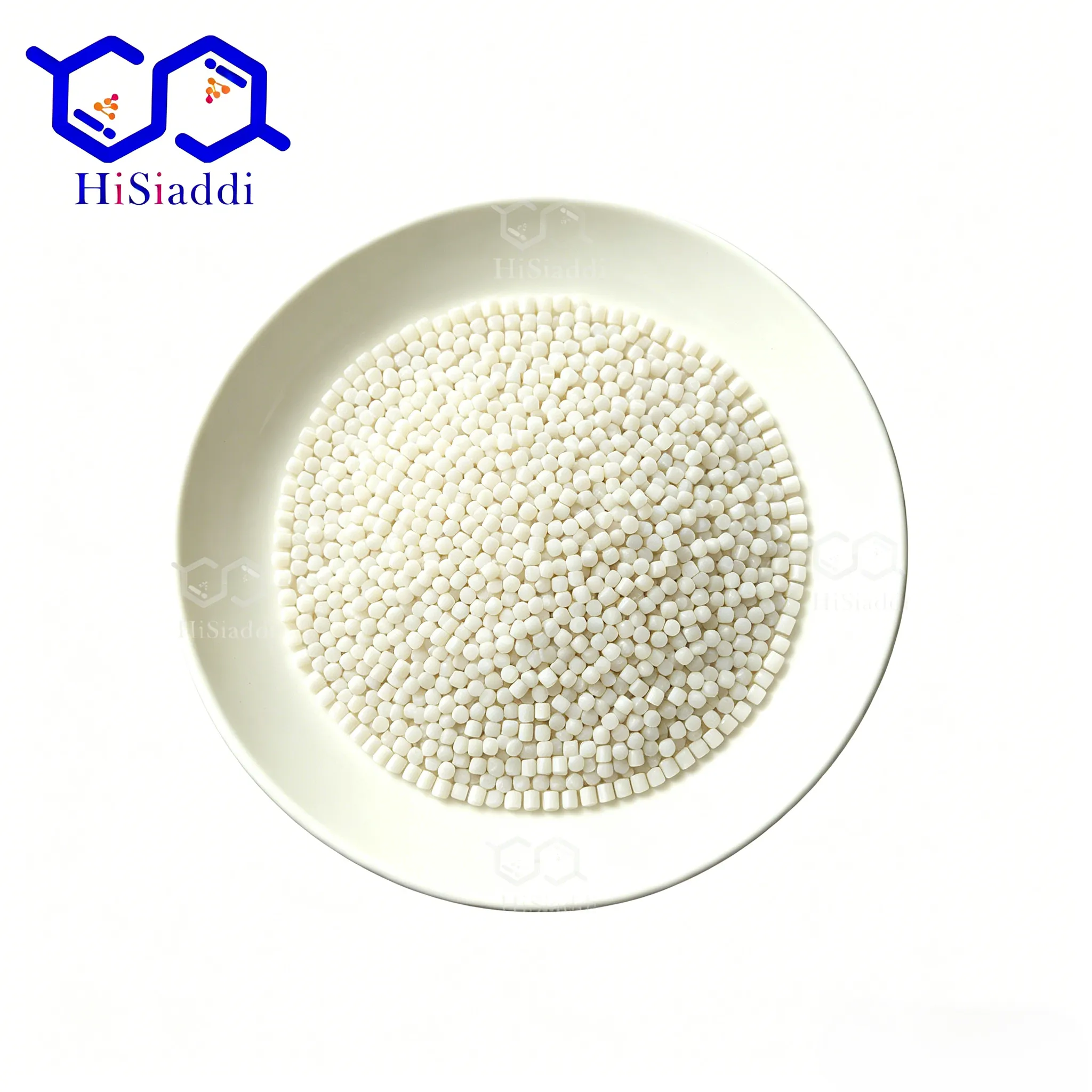
1. Advantages: In-house flexible pilot production lines. HT-996 delivers ≥99.65% purity, hydroquinone ≤0.15ppm, 85-mesh spherical low-hygroscopic crystals compatible with high-concentration clinical formulas, customizable pH adjustment, complete English compliance documentation, and support for small-batch customized modification. HT-L15 is a 15% sterile aqueous solution without preservatives, optimized for ampoule filling lines.
2. Disadvantages: Bulk order quotations are 12% higher than domestic average pricing; standard HT-992 only meets national standard impurity limits and cannot satisfy strict EU high-spec formulations.
Two mainstream grades: HY-PH Pharmaceutical Refined Grade, HY-STD National Standard Cosmetic Grade
1. Advantages: Large annual production capacity, abundant stock reserves, cost-effective HY-STD grade with significant bulk purchasing negotiation space, strong compatibility with generic cosmetic formulas, stable delivery cycles.
2. Disadvantages: Pharmaceutical-grade HY-PH supplies ultra-fine 130~140-mesh powder with high moisture absorption; β-isomer levels average ~0.25%, exceeding the client’s 0.1% strict limit. No support for crystal morphology modification customization, and no sterile liquid mass production capacity.
Two mainstream grades: TL-G High-Purity Modified Grade, TL-B Standard Mass Production Grade
1. Advantages: TL-G features optimized crystallization with moderate repose angle, superior stability when co-formulated with Niacinamide and L-Ascorbic Acid versus national standard stock materials, mid-tier pricing, and mature moisture-proof packaging for transoceanic shipping.
2. Disadvantages: Wide batch-to-batch pH fluctuation (5.2~6.6), unable to lock the client’s fixed formula pH requirement of 5.7±0.2. Limited production capacity for high-purity batches with delivery lead times extended by 15~20 days during peak seasons.
Main grades: HH-NAT Natural Fermented Grade, HH-STD Synthetic Standard Grade
1. Advantages: HH-NAT fermented raw materials feature natural positioning, simplified COSMOS organic filing, extremely low solvent residues, targeted for organic skincare segments.
2. Disadvantages: Maximum purity capped at 99.4%, failing the client’s 99.5% minimum threshold; internal hydroquinone control at 0.3ppm exceeds EU regulatory limits, prone to accelerated hydrolysis during long-term storage in high-concentration formulations.
Main grades: ALK-MED Pharmaceutical Grade, ALK-C Cosmetic Grade
1. Advantages: Leveraging pharmaceutical quality control systems with strict heavy metal and microbial testing aligned with pharmacopoeia standards.
2. Disadvantages: Focused primarily on API supporting materials with few cosmetic-specific modified grades; minor flocculent residue post-dissolution incompatible with transparent essence formulas, suitable only for cream formulations with no liquid grade mass production capacity.
Combining the client’s dual product lines of high-concentration clinical essences and ampoules, strict EU compliance requirements, and automated feeding compatibility, the following suppliers and grades were shortlisted:
1. Selected Grade ①: HT-996 High-Purity Spherical Crystalline Alpha-Arbutin (Primary Procurement Grade) Specifications: 99.68% purity, 0.06% β-isomer, 0.14ppm hydroquinone, 85-mesh spherical powder. Perfectly compatible with the client’s 1.7% high-concentration serum formula, resolving agglomeration pipeline blockages and storage hydrolysis risks.
2. Selected Grade ②: HT-L15 Sterile 15% Aqueous Alpha-Arbutin (Custom Ampoule Grade) Preservative-free sterile formulation, directly feedable into ampoule filling lines, eliminating client in-house raw material dissolution and sterilization workflows.
Selected Grade ③: TL-G High-Purity Modified Grade (Small-Batch Backup Stock) Specifications: 99.52% purity, 0.19ppm hydroquinone, indicators falling within the client’s regulatory thresholds. Purchasing price 7% lower than Hanshitong, reserved as emergency backup stock of 5 tons during peak capacity shortages.
1. Garden Biochemical: Powder morphology and impurity indicators fail requirements for high-concentration formulations → Eliminated.
2. Huaheng Biotech: Purity and hydroquinone levels violate EU updated regulations; natural organic positioning misaligned with the client’s mainstream cosmeceutical product lines → Eliminated.
3. Anglikang: Dissolution flocculent residues compromise essence transparency, unsuitable for clear serum formulations → Eliminated.
1. Sample Trial Stage: HiSiaddi coordinated free sample delivery of the three selected grades from both manufacturers, paired with bilingual Chinese-English CoA and SDS safety documentation. The client’s Swiss laboratory conducted 90-day accelerated stability testing of compound formulations. HT-996 maintained transparent finished products with no precipitation or hydroquinone rebound under ambient storage; HT-L15 sterile liquid produced stable ampoules post filling; TL-G backup samples passed all stability assessments.
2. Quotation & Negotiation Stage: Drawing on long-term cooperative resources, HiSiaddi secured preferential annual long-term order pricing: a fixed annual agreement for 30 tons HT-996 + 3 tons HT-L15 from Hanshitong, plus 5 tons of TL-G backup stock from Tianli.
3. Batch Shipment Stage: The full annual order was split into six batches shipped from Shanghai Port to Rotterdam, then transshipped to Geneva, with moisture-proof vacuum packaging for full transoceanic transit.
1. Client Benefits: All three selected raw material grades passed Swiss drug administration border inspections without incident. New clinical spot-fading serums and single-dose ampoules launched across nationwide Swiss pharmacy chains. Comprehensive raw material procurement costs fell by 29% versus DSM imported materials, and a renewed 42-ton annual framework order was signed the following year. When the client later expanded into organic formulation lines, HiSiaddi assisted in matching Huaheng fermented raw materials for small-batch organic series procurement.
2. Manufacturer Benefits: Hanshitong secured stable European cosmeceutical channel partnerships via this major Swiss high-end order; Tianli’s TL-G grade achieved its first commercial breakthrough in European high-end markets.
3. HiSiaddi Benefits: A comprehensive domestic alpha-arbutin brand evaluation database was established, forming a standardized raw material selection service workflow covering "cross-brand comparative assessment → targeted grade screening → sample trial follow-up → compliance documentation support". Subsequent raw material selection services were delivered to multiple mid-to-high-end skincare groups in Germany and Denmark.
Constrained by production capacity layout, technical routes, and product positioning, most domestic alpha-arbutin manufacturers only promote their own proprietary grades and avoid objective discussion of competitors’ strengths. Mid-to-high-end European cosmeceutical clients are bound by EU regulations and high-concentration formulation limitations; relying solely on unilateral manufacturer recommendations carries high risks of improper raw material selection. Unbound by exclusive interests with individual factories, HiSiaddi delivers neutral cross-brand performance analysis and targeted raw material screening aligned with client formulation and terminal regulatory requirements, minimizing client trial-and-error sample losses while establishing dual primary/backup raw material supply chains for stable production. This breaks down barriers preventing mid-to-high-end overseas brands from accurate domestic raw material selection.
For additional cross-brand and cross-grade comparative analysis, please contact HiSiaddi customer service.

 +86-13120989737
  info@hisiaddi.com
 English