HiSiaddi is an innovative foreign trade service provider driven by dual engines of technology transformation and export services. It has established a "1+2+3+4=1" service system and can supply original PCL pellets from multiple well-known brands. As a tech R&D-oriented foreign trade enterprise, HiSiaddi has repeatedly solved customized PCL pellet demands for customers by leveraging technology transformation cooperation with manufacturers and precise market demand insight. Below is a case of HiSiaddi addressing customized PCL pellet requirements.
For more customized service solutions, please contact HiSiaddi customer service.
HiSiaddi overcomes full-chain customization challenges covering formula design, polymerization and pelletizing to realize domestic substitution
The project partner is BioRegen S.L., a biotechnology company headquartered in the biomedical industrial park of Barcelona, Spain. It is a medium-to-high-end specialized European medical enterprise focusing on research and production of absorbable orthopedic implant stents, medical aesthetic injection microspheres and long-acting targeted drug sustained-release carriers. Its products are supplied to public hospital systems across Spain, French medical aesthetic chain institutions and pharmaceutical enterprises in multiple EU countries. It has long purchased medical-grade PCL pellets from original overseas manufacturers including Corbion (Netherlands) and PerkinElmer (USA), with an annual stable PCL procurement volume of 275 tons.
Its products comply with EU MDR medical device regulations, ISO 10993 biocompatibility standards and USP pharmacopoeia specifications for medical polymers. It imposes extremely strict customized indicators on raw materials, including precise molecular weight control, monomer residue, tin catalyst residual, uniform particle size and controllable in-vivo degradation cycle, representing a typical high-value-added raw material purchaser with stringent market access requirements.
Affected by shrinking local chemical production capacity in Europe and America, surging international ocean freight, and extended customized grade lead times of over 90 days from overseas original manufacturers, BioRegen launched a localized Chinese procurement plan to develop two exclusive modified PCL pellet grades: Grade A for orthopedic stents and Grade B for medical aesthetic injection microspheres, with an initial customized trial order of 45 tons.
The customer independently contacted three large-scale domestic PCL manufacturers in advance, yet most domestic mass producers focus on standardized general grades, and their existing production lines fail to match the customer’s refined customized parameters. All manufacturers either cannot realize narrow molecular weight distribution control or fail to meet modified blending and pelletizing process standards, resulting in complete failure of six consecutive trial productions: interlayer cracking occurred during FDM 3D printing of orthopedic stents, particle agglomeration emerged during microsphere emulsification, and the in-vivo accelerated degradation test cycle deviated from the designed value by over 30%.
Most raw material manufacturers only produce national standard general PCL and refuse to invest in technical transformation to support niche high-end customized formulas, causing cumulative sample loss costs exceeding EUR 32,000 and stagnation of the customer’s customization project. Recommended by the Spanish Biomedical Industry Association, BioRegen fully entrusted Shanghai HiSiaddi Technology (referred to as HiSiaddi) as its exclusive foreign trade service provider. Relying on HiSiaddi’s deep industry resources in biodegradable polymers, in-house material engineering team and designated domestic customized production bases, we disassembled the customer’s customized technical parameters, optimized polymerization processes, adjusted modified formulas and pelletizing techniques, and delivered full-chain customized services covering formula R&D, small-batch sampling, pilot mass production and export compliance. Finally, mass delivery and production of the two customized PCL pellet grades were completed.
Product information: Custom modified PCL pellets, HS code 3907999000, medical-grade packaging in 25kg sterile cardboard drums lined with vacuum aluminum foil. Both grades adopt exclusive customized formulas developed solely for the customer.
1.
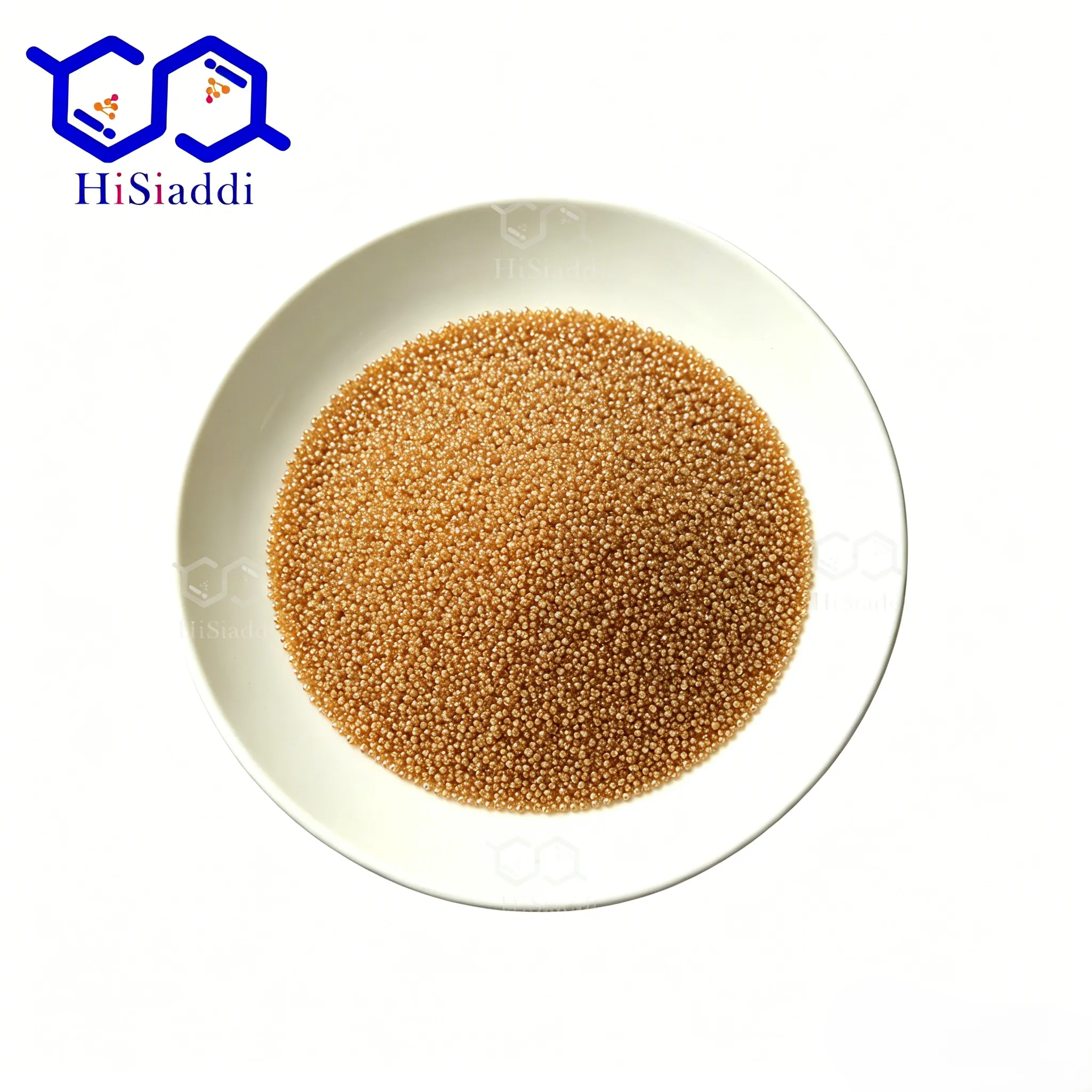
Grade A Modified PCL Pellets for Orthopedic Stents Number-average molecular weight: 82,000±2,000 g/mol; molecular weight distribution index PDI ≤1.35; ε-caprolactone monomer residue <150ppm; tin octoate catalyst residue ≤20ppm. Modified with 12wt% nano β-tricalcium phosphate; particle size 3.0±0.3mm with round particles free of hollow powder scraps. In-vivo degradation cycle under physiological environment: 26±2 months, compatible with high-temperature FDM 3D printing of porous orthopedic stents without warpage and with firm interlayer bonding after molding.
2.
3.
Grade B PCL Pellets for Medical Aesthetic Injection Microspheres Number-average molecular weight: 38,000±1,200 g/mol; PDI ≤1.30; monomer residue <120ppm, free of exogenous heavy metal impurities. Low-temperature modified with 3.5wt% medical-grade citrate plasticizer; particle size 2.0±0.2mm with uniform melt fluidity. The D50 of microspheres prepared via emulsification can be controlled within 25~50μm without adhesion and agglomeration after microsphere molding. In-vivo degradation cycle: 14±1.5 months, applied to subcutaneous injection microspheres for collagen regeneration filling.
4.
1.
Difficulty in precise molecular weight control during polymerization Conventional domestic batch polymerization processes suffer large temperature fluctuations, resulting in a general PDI higher than 1.7 and inability to achieve narrow-distribution precise molecular weight control with molecular weight deviation often exceeding 5,000, directly leading to uncontrolled degradation cycles, which caused either excessively fast or slow degradation in all six rounds of previous samples.
2.
3.
Dispersibility defect of inorganic powder modification Nano tricalcium phosphate added to Grade A is prone to agglomeration. Conventional twin-screw blending processes cause uneven powder dispersion, and locally agglomerated particles lead to broken extrusion filaments during 3D printing and disordered stent pore structures, failing to meet the requirements of orthopedic implant raw materials.
4.
5.
Substandard precision of pelletizing and molding General underwater cutting and air-cooled cutting equipment cannot accurately control particle size, resulting in uneven particle dimensions and hollow particle proportion exceeding 8%. Grade A raw materials feature unstable melt flow, leading to drastically varying microsphere sizes during emulsification with a yield lower than 42%.
6.
7.
Shortcomings in medical clean production and impurity control Conventional manufacturers operate in non-GMP clean workshops, where dust and metal debris are easily introduced during polymerization and pelletizing. Simple catalyst devolatilization processes result in tin residue generally exceeding 50ppm, failing EU medical biosafety screening and MDR compliance standards for raw materials.
8.
Restricted by existing production line equipment and insufficient R&D investment, the three domestic raw material manufacturers could only slightly adjust their mature formulas and refused targeted technical transformation around the customer’s indicators, abandoning in-depth customization one after another and putting the customer’s customization project on the verge of suspension.
HiSiaddi assigned two biomacromolecule engineers to disassemble the customer’s original formula parameters, and cooperated with designated domestic medical-grade PCL customized manufacturers to adjust continuous ring-opening polymerization processes, abandoning traditional batch autoclave production:
1. Segmented temperature-controlled tubular continuous polymerization equipment was adopted with three temperature stages of 115℃, 125℃ and 132℃ to precisely regulate ring-opening polymerization rates. The molar ratio of tin octoate catalyst and hexadecanol terminator was accurately proportioned, and the target molecular weight was precisely anchored by adjusting initiator dosage. Samples were taken online every 2 hours to test intrinsic viscosity with real-time fine-tuning of reaction parameters, tightly confining the molecular weight fluctuation range of both grades within the customer’s tolerance limits. The PDI of Grade A stabilized at 1.32 and Grade B at 1.28, both superior to the upper limit of customized indicators.
2. A three-stage negative-pressure high-temperature devolatilization procedure was added to remove residual monomers and small-molecule byproducts under high vacuum at 210℃, combined with supercritical CO₂ extraction refinement. The final monomer residue of Grade A reached 132ppm and Grade B 108ppm, with tin catalyst residues controlled at 17ppm and 14ppm respectively, meeting EU medical raw material limit requirements.
To address the agglomeration issue of nano β-TCP in Grade A, HiSiaddi optimized pretreatment processes: nano β-TCP powder was subjected to low-temperature surface activation pretreatment with medical-grade silane coupling agent KH550, dried to remove water, and then low-temperature segmented twin-screw blending was adopted with screw zone temperature controlled between 62~95℃ and low-shear dispersion to avoid powder agglomeration. The feeding end accurately metered the proportion of PCL substrate and modified powder, with real-time monitoring of online melt viscosity to completely eliminate inorganic filler agglomeration.
For the medical aesthetic Grade B, pharmacopoeia-grade tributyl citrate was selected as low-temperature plasticizer, and closed negative-pressure feeding blending was applied to isolate air oxidation, ensuring melt index fluctuation of modified resin within ±3% to match low-temperature emulsification microsphere production conditions.
HiSiaddi coordinated manufacturers to renovate dedicated medical pelletizing production lines and replace conventional pelletizing dies:
1. A customized Φ3mm round-hole die head was adopted for orthopedic Grade A pellets with low-temperature air-cooled uniform cutting, matched with online screening equipment to remove hollow and irregular particles. The finished particle size ranged from 3.01~3.28mm, with defective particle proportion reduced to below 1.2%.
2. A customized Φ2mm precision die head was used for microsphere Grade B pellets with low-temperature underwater circumferential cutting + fluidized bed low-temperature drying to strictly control moisture content below 0.15%. Particle size stabilized at 1.9~2.15mm, perfectly matching the parameters of the customer’s melt emulsification equipment.
Small-batch 50kg samples were sent to the customer’s laboratory in Spain for full testing of raw material physical properties, 3D printing and microsphere emulsification. All indicators of both raw materials fully met standards; 3D printed stents were free of cracking and warpage, microspheres featured uniform particle size, and the error between measured degradation cycle and customized standards was lower than 5%.
1. Compilation of EU medical compliance documents Cooperating with third-party EU compliance laboratories, HiSiaddi completed full biocompatibility tests (cytotoxicity, skin sensitization, hemolysis test) for the two customized PCL grades in accordance with MDR regulations and ISO 10993 standards, issued bilingual Spanish-English SDS safety data sheets and COA factory inspection reports, handled REACH pre-registration, SVHC substance screening and SCIP database notification. The complete set of documents can be used for the customer’s EU medical device registration application.
2. Customized medical-grade packaging Sterile vacuum aluminum foil lined cardboard drums were customized in line with Spanish pharmaceutical storage and transportation specifications. Outer packaging was printed with bilingual Spanish-English RoHS safety labels, importer filing information and batch traceability codes to meet EU chemical warehousing specifications.
3. Domestic customs declaration + pre-clearance preparation for Spain HiSiaddi completed pre-classification of customs HS code 3907999000 in advance and standardized export declaration elements. We collaborated with local customs brokers in Barcelona to pre-review full documents, enabling fast customs clearance upon cargo arrival and avoiding detention and warehousing risks.
The initial 45 tons of customized PCL were split into Grade A orthopedic stent material (30 tons) and Grade B medical aesthetic microsphere material (15 tons), shipped in two batches from Shanghai Port to Barcelona Port, Spain. After customs clearance and warehousing, the customer launched full-scale production on both production lines.
After the launch of Grade A raw materials, the yield of the customer’s 3D printed orthopedic stents rose from 91% using original overseas raw materials to 98.6%, and the newly developed porous bone repair stents successfully entered clinical trials in tertiary hospitals across Spain. The finished product pass rate of injection microspheres mass-produced with Grade B raw materials increased from the original 78% to 97.2%, with single-batch production costs reduced by 29.3% compared with imported Dutch raw materials. The customer saved over EUR 280,000 in annual raw material procurement costs, successfully achieving the goal of domestic substitution.
In Q4 2025, BioRegen signed an annual customized procurement framework agreement with HiSiaddi, locking in an annual customized PCL procurement volume of 260 tons with continuous designated production of the two exclusive formulas. Meanwhile, the customer put forward new R&D demands for modified PCL for absorbable nerve conduits, entrusting HiSiaddi to carry out formula customization and small-batch R&D for the third grade, with HiSiaddi coordinating full-chain services covering formula development, process control and compliance.
Relying on this benchmark customized implementation case in Spain, HiSiaddi leveraged BioRegen’s industry resources to successfully contact three medium-to-high-end medical consumable enterprises in Milan (Italy) and Lisbon (Portugal). We replicated the integrated service model of PCL customization + compliance support, and successively delivered small-batch customized sample orders, consolidating HiSiaddi’s differentiated competitiveness in the field of customized foreign trade of European medical biodegradable polymers and breaking free from homogeneous competition faced by traditional traders focusing solely on stock resale.
The core pain point of this case lies in the fact that most domestic PCL manufacturers prioritize standardized mass production and lack service capacity for refined formula customization and flexible production line technical transformation catering to high-end European medical customers, while overseas high-end end-users face constrained localization due to long lead times and high costs of imported raw materials. Breaking away from the traditional foreign trade model of simple supply matching, HiSiaddi relies on its in-house material technical team to deliver closed-loop customized full-chain services covering formula disassembly, polymerization process optimization, modified blending and precision pelletizing, as well as EU medical compliance, accurately fulfilling the customer’s exclusive grade customization demands. Against the backdrop of tightening global medical polymer regulations and intensified fluctuations in overseas raw material supply chains, comprehensive services integrating technical customization and compliance empowerment to bind high-end overseas end-users serve as the core path for chemical new material foreign trade to break free from industry involution and deeply cultivate high-end overseas markets.
For more customized service solutions, please contact HiSiaddi customer service.

 +86-13120989737
  info@hisiaddi.com
 English