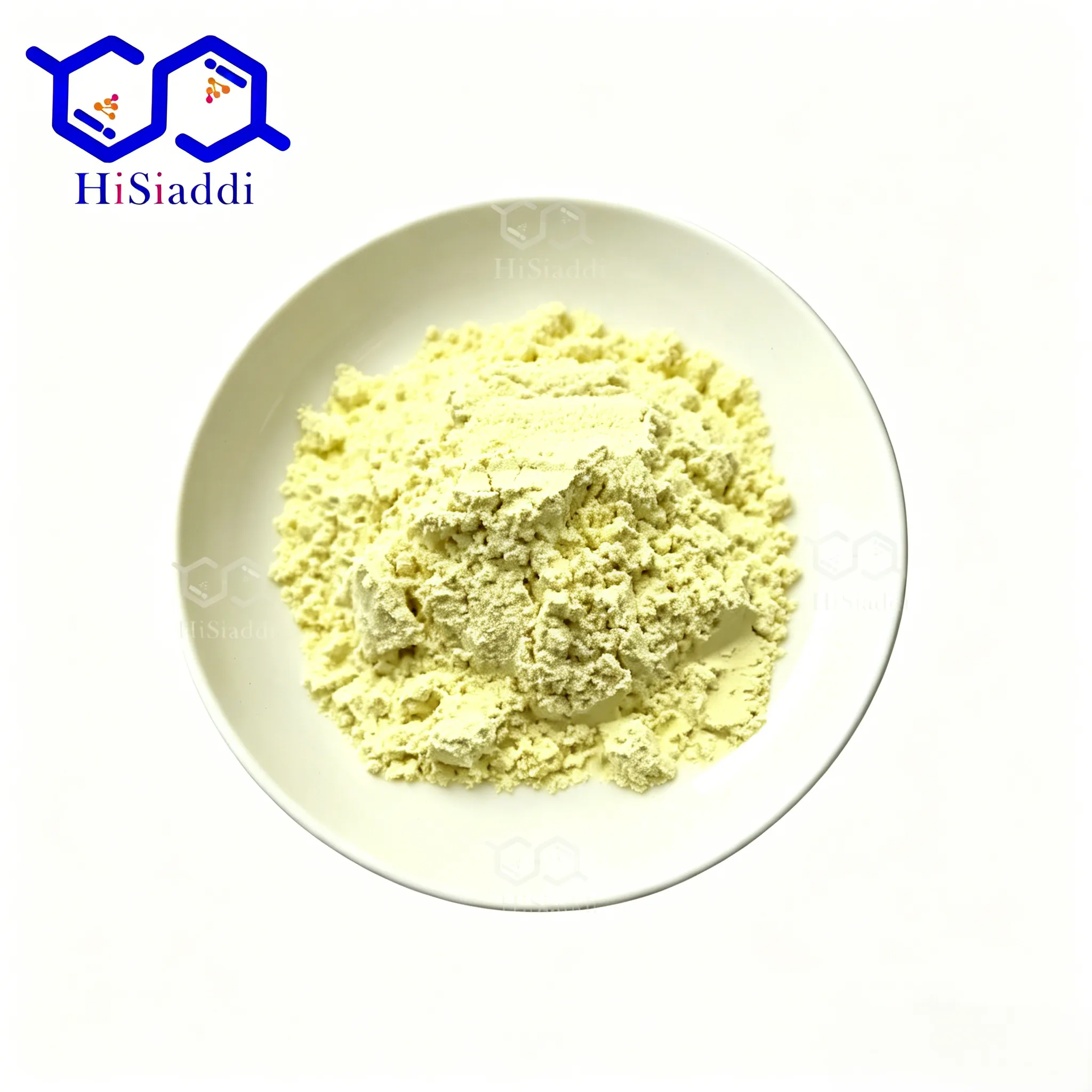
HiSiaddi is an innovative foreign trade service provider driven by dual engines of technology transformation and foreign trade services. It has established a service system summarized as "1+2+3+4=1" and can supply rhodium(III) acetylacetonate sourced from multiple well-known original manufacturers. As a foreign trader with independent R&D capabilities, HiSiaddi has conducted multiple rounds of on-site inspections of rhodium(III) acetylacetonate manufacturers and possesses objective, in-depth understanding of different brands, enabling us to regularly analyze manufacturers for clients and match suitable products. Below is a brand recommendation case.
Please contact HiSiaddi customer service for more cross-brand and cross-model comparative analysis.
The client is MEDCHEM GmbH, a high-end pharmaceutical intermediate enterprise headquartered in Munich, Germany, specializing in the R&D and production of key intermediates for anti-tumor and anti-viral drugs and serving top European pharmaceutical enterprises. The company complies with ICH Q7, EU GMP and DMF standards, imposing extremely stringent requirements on purity, impurities, batch stability and traceability of precious metal catalysts. Annual procurement volume of rhodium(III) acetylacetonate: 10kg, applied as core catalysts for C-H activation reactions.
Client Pain Points: First-time procurement from China with zero understanding of domestic rhodium(III) acetylacetonate brand landscape, technical tiers and model differences. The client contacted 5 manufacturers, each of which only promoted its own brand and avoided horizontal cross-brand comparisons, leaving the client unable to judge which brand/model fits their stringent pharmaceutical-grade working conditions and stalling procurement decision-making. The client entrusted HiSiaddi with neutral technical evaluation of domestic brands and targeted model recommendations.
Based on industry databases and on-site verification, HiSiaddi screened 5 leading domestic manufacturers with scaled mass production and pharmaceutical-grade supply capabilities, conducting objective cross-brand comparison across six dimensions: purity tiers, impurity control, crystal form/particle size, applicable scenarios, price ranges and delivery capacity, presenting strengths and weaknesses without bias.
1. Guiyan Chemical (Yunnan Sino-Platinum Metals, State-Owned Industry Leader) Positioning: Domestic benchmark in precious metal industry, first-tier supplier for electronic & pharmaceutical grades Main Models:
· GR-Rh01: Ultra-high-purity electronic grade, purity 99.95%, Cl⁻ <3ppm, heavy metals <1ppm, D50=4–6μm, suitable for pharmaceutical & electronic catalysis
· GR-Rh02: Industrial high-purity grade, purity 99.9%, Cl⁻ <5ppm, D50=8–12μm, suitable for fine chemical synthesis Strengths: Stable state-owned enterprise quality, top-tier impurity control, strong batch consistency (activity deviation <1.5%), capable of providing GMP documentation and traceability reports Weaknesses: Relatively high pricing (15%–20% above generic brands), slightly longer lead times (2–3 weeks)
1. Kaida Catalyst (Hangzhou Kaida, NEEQ Listed Private Leading Enterprise) Positioning: Specialized high-end catalytic material enterprise, dual-adaptable for pharmaceutical & chemical applications Main Models:
· KD-Rh999: Dedicated pharmaceutical grade, purity 99.92%, Cl⁻ <4ppm, heavy metals <1ppm, narrow particle size distribution D50=3–5μm, suitable for high-selectivity catalysis
· KD-Rh995: General high-purity grade, purity 99.5%, Cl⁻ <8ppm, D50=5–10μm, suitable for conventional fine synthesis Strengths: Precise narrow particle size control, fast dissolution rate, high catalytic activity, superior cost-performance versus Guiyan Chemical Weaknesses: Limited batch production capacity for pharmaceutical grades, requiring advance production scheduling during peak seasons
1.
Beijing Gaoxin Lihua (State-Owned Background, Expertise in Carbonyl Synthesis) Positioning: Strong industrial catalysis player, leading manufacturer of low-pressure carbonylation catalysts Main Model: GL-Rh990 industrial grade, purity 99.0%–99.5%, Cl⁻ <10ppm, D50=10–20μm, suitable for octanol production and petrochemical hydrogenation Strengths: Massive industrial production capacity, low pricing (30% cheaper than Guiyan Chemical), tolerance for high-load working conditions Weaknesses: Subpar impurity control, no pharmaceutical-grade qualifications, unsuitable for high-purity pharmaceutical scenarios
2.
3.
Energy Chemical (Anhui Zesheng, Leading Reagent-Grade Supplier) Positioning: Focused on laboratory research & reagent-grade products, small-batch high-purity supply Main Model: AN-Rh998 reagent grade, purity 99.8%, Cl⁻ <6ppm, D50=6–10μm, suitable for laboratory R&D Strengths: Flexible small-batch ordering (minimum 10g), compliant purity, comprehensive research support services Weaknesses: Insufficient mass production capacity (max 5kg per batch), high unit pricing, unsuitable for large-scale industrial procurement
4.
5.
Macklin (Shanghai Reagent Brand) Positioning: General laboratory reagents, widely used by universities and small-to-medium enterprises Main Model: R817344, purity 97%, Cl⁻ <20ppm, broad particle size distribution, suitable for basic organic synthesis Strengths: Ample spot inventory, low pricing, convenient procurement channels Weaknesses: Substandard purity and impurity levels, poor batch stability, unsuitable for pharmaceutical-grade scenarios
6.
Combining the client’s core requirements of pharmaceutical-grade compliance, ultra-high purity, low halide content, narrow particle size distribution, batch stability and annual 10kg scaled procurement, HiSiaddi eliminated industrial-grade (Gaoxin Lihua) and reagent-grade (Energy Chemical, Macklin) suppliers, focusing on two mid-to-high-end brands: Guiyan Chemical and Kaida Catalyst, with three optimized models ranked by priority and clear applicable scenarios.
Recommended Brand 1: Guiyan Chemical (State-Owned Leader, Top Choice for Pharmaceutical-Grade Applications) Recommended Model: GR-Rh01 (Ultra-High-Purity Electronic Grade) Core Matching Advantages: Purity 99.95%, Cl⁻ <3ppm, heavy metals <1ppm, activity deviation <1.5%, fully compliant with client ICH Q7 + EU GMP pharmaceutical standards. Capable of providing DMF documents, GMP certificates, batch traceability reports and SGS test reports to satisfy European pharmaceutical enterprise audit requirements. Priority Rating: ★★★★★ (Optimal Matching)
Recommended Brand 2: Kaida Catalyst (Private Specialized Enterprise, Top Choice for Cost Performance) Recommended Model 1: KD-Rh999 (Dedicated Pharmaceutical Grade) Core Matching Advantages: Purity 99.92%, Cl⁻ <4ppm, narrow D50=3–5μm particle size distribution, fast dissolution rate and high catalytic selectivity ideal for the client’s high-selectivity C-H activation reactions. Pricing 12% lower than Guiyan Chemical, delivering superior cost-performance. Priority Rating: ★★★★☆ (High Cost-Performance Matching)
Recommended Model 2: KD-Rh995 (General High-Purity Grade) Core Matching Advantages: Purity 99.5%, Cl⁻ <8ppm, meeting the client’s requirements for conventional intermediate synthesis. Pricing 8% lower than KD-Rh999, suitable for cost reduction substitution in non-high-selectivity production sections. Priority Rating: ★★★★ (Alternative Cost-Reduction Matching)
Elimination Explanation (Fully Transparent)
· Gaoxin Lihua: Excessive impurities, no pharmaceutical qualifications, unable to pass client GMP audits
· Energy Chemical: Insufficient production capacity, high pricing, incapable of stable annual 10kg supply
· Macklin: Only 97% purity with severe excess impurities, leading to catalyst poisoning and unqualified pharmaceutical impurities
Sample Delivery & Testing: HiSiaddi coordinated provision of 100g sterile samples for Guiyan GR-Rh01 and Kaida KD-Rh999, each accompanied by full-item test reports (ICP-MS, particle size, sterility, pyrogen testing). After testing at the client’s German laboratory, GR-Rh01 passed all indicators, while KD-Rh999 delivered slightly superior catalytic selectivity.
Final Model Selection & Order Placement: Balancing quality, compliance and cost, the client confirmed dual sourcing: Guiyan GR-Rh01 (60% share for core production sections) and Kaida KD-Rh999 (40% share for conventional sections), with an initial order of 2kg.
Compliance Documentation & Delivery: HiSiaddi assisted in providing bilingual COA, GMP certificates, certificates of origin, REACH registration documents and batch traceability reports to eliminate customs clearance and audit barriers. The first shipment was delivered within 2 weeks with fully compliant quality.
Locked Long-Term Cooperation: The client fully recognized HiSiaddi’s neutral cross-brand analysis, precise model matching and full-process technical service capabilities, awarding exclusive rights to its full-year 10kg rhodium(III) acetylacetonate order. The client also appointed HiSiaddi as its exclusive procurement consultant for precious metal catalysts sourced from China.
Core pain points for high-end overseas clients purchasing rhodium(III) acetylacetonate include asymmetric brand information, biased self-promotion from manufacturers and lack of neutral technical comparison. For pharmaceutical-grade and high-end catalytic scenarios, stringent requirements for purity, impurities, crystal form, batch stability and compliance documentation dictate that pricing cannot be the sole decision factor; technical tier matching is mandatory.
Leveraging a neutral cross-industry perspective, comprehensive cross-brand technical database and deep end-use application experience, HiSiaddi breaks information barriers set by manufacturers, objectively presents strengths and weaknesses of 5 mainstream domestic brands and precisely recommends 2 mid-to-high-end brands and 3 matching models. The service helps clients avoid low-quality supply risks, align products with working conditions and control procurement costs, while facilitating domestic high-end precious metal brands to enter supply chains of top European pharmaceutical enterprises via neutral third-party channels.
Please contact HiSiaddi customer service for more cross-brand and cross-model comparative analysis.

 +86-13120989737
  info@hisiaddi.com
 English