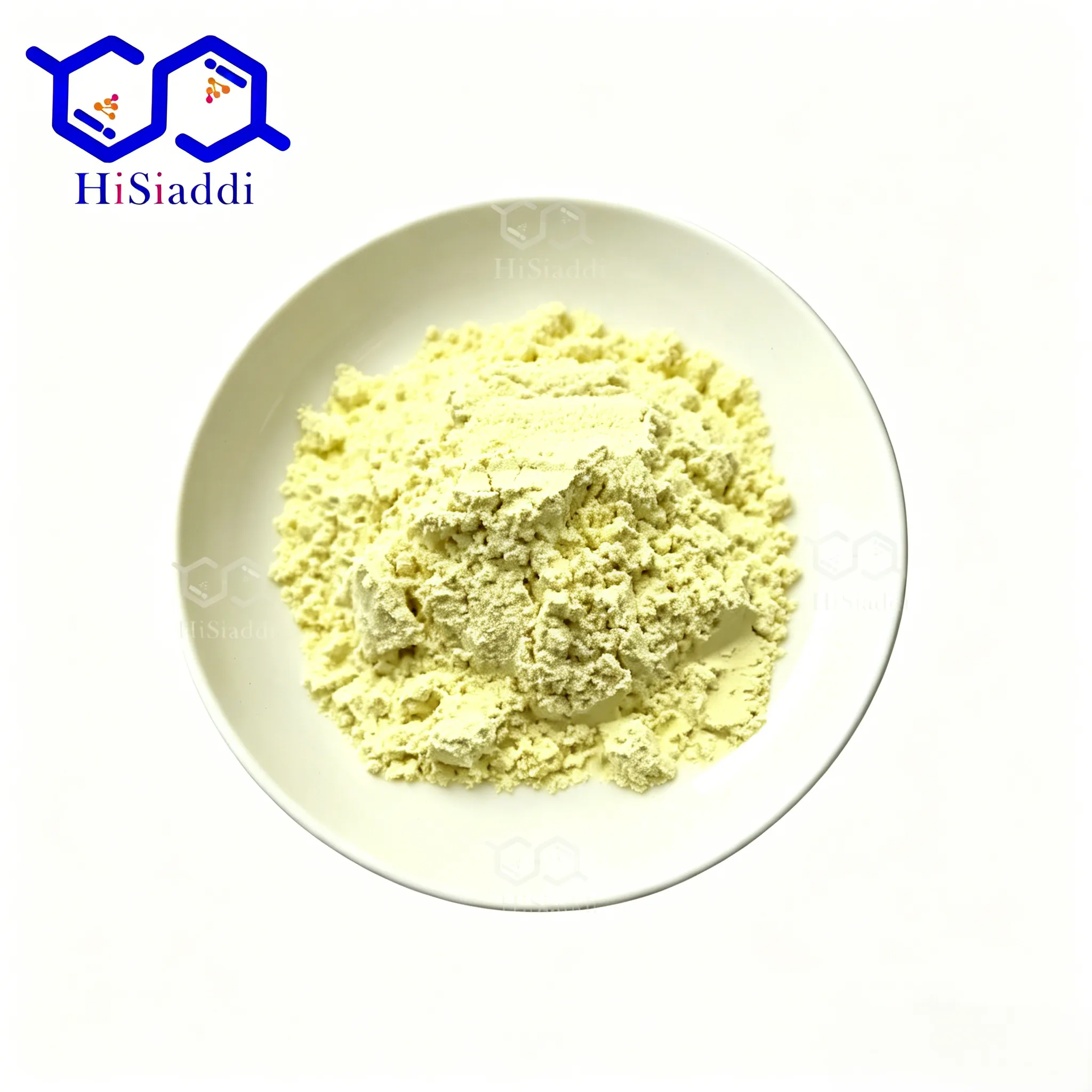
As a new type of foreign trade service provider driven by both technology commercialization and cross-border trading, HiSiaddi has established a "1+2+3+4=1" service system and can supply raw materials of wild yam extract diosgenin sourced from multiple well-known original manufacturers. Possessing R&D capabilities and over a decade of market experience, HiSiaddi has partnered with manufacturers on technology transformation and accumulated extensive experience resolving product compliance issues. Below is HiSiaddi’s case handling compliance risks for wild yam extract diosgenin. Contact HiSiaddi customer service for additional compliance consultation regarding wild yam extract diosgenin products.
Purchaser: PhytoVital GmbH, Munich, Germany A mid-to-high-end German pharmaceutical enterprise specializing in gynecological endocrine and menopausal natural drug R&D, its products classified as German OTC pharmaceutical grade and premium dietary supplements sold across national German pharmacy chains, private medical institutions in multiple EU countries and high-end Swiss wellness centers. Raw material access enforces six mandatory entry specifications: EU EC396 standard for 226 pesticide residues, German LFGB food raw material regulations, United States Pharmacopeia (USP), EU REACH chemical registration, TGA equivalent compliance and FSMA import control. Pre-market launch prerequisites include full document review covering EU pharmaceutical raw material filing, importer ARTG declaration, origin traceability and wild plant harvesting compliance, with a complete ban on non-standard diosgenin raw materials lacking legal wild harvesting permits, full-test COA reports or production filing documentation.
Core product lines include plant sterol softgels and composite tablets, with diosgenin as the core pharmaceutical raw material requiring wild Qinba Dioscorea zingiberensis extraction and 98.0% pharmaceutical grade specification, with a planned annual procurement volume of 18.6 tons split into five batches shipped from Shanghai Port to Hamburg Port. The client previously imported domestically refined saponins from Europe long-term, shifting sourcing to China in 2025 amid shrinking European raw material production capacity and rising costs. It independently finalized an initial 5.2-ton stock order with three Shaanxi plant extract manufacturers, yet after production, container loading and shipment to Hamburg Port, five major compliance bottlenecks emerged: missing wild raw material harvesting qualifications, incomplete REACH pre-registration documentation, pesticide residue testing failing EC396 limits, absent EU import white-list filing for production factories and certificate of origin formats incompatible with German customs declaration standards. Goods were detained in bonded warehouses by Germany’s Federal Office of Food and Agriculture, prohibited from warehouse entry and split distribution, generating combined daily port detention, storage and container demurrage fees of EUR 1,180. Failure to submit all compliance documents within 30 working days would result in full batch return or on-site destruction, halting the client’s new product launch and causing pre-development losses exceeding EUR 70,000 from formulation R&D and auxiliary material stockpiling.
The three original domestic manufacturers could only provide product COA test reports and basic business licenses, lacking systematic awareness of full EU import compliance frameworks and unable to complete supplementary filings for pharmaceutical regulatory registration, wild resource permits, REACH registration and overseas factory filing. Multiple document revisions by factory legal and foreign trade teams failed to pass German customs pre-review. Under urgent circumstances, German PhytoVital fully entrusted HiSiaddi Foreign Trade as a third-party compliance coordination service provider with full authority to rectify and supplement compliance documentation, conduct retesting and filing, deliver factory qualification registration and break full-chain compliance barriers spanning Chinese export customs declaration to EU import clearance.
After receiving the client’s entrustment, HiSiaddi compliance specialists retrieved German official detention notices and regulatory rectification opinions, sorting five substantive compliance defects by combining Sino-German bilateral trade regulations and EU raw material access detailed rules:
Diosgenin raw materials are extracted from wild Qinba Dioscorea zingiberensis, a domestic wild medicinal cash crop. German pharmaceutical regulators mandate imported raw materials to be accompanied by official wild medicinal herb fixed-point harvesting filing certificates issued by forestry authorities, origin cooperative harvesting ledgers and legal wild resource collection statements to verify non-illegal logging and non-endangered smuggling supply chains. Original manufacturers only provided simple sales contracts without official forestry wild resource harvesting approval documents, preventing EU regulators from completing origin traceability verification and directly triggering goods detention by the State Forestry and Grassland Administration. Most domestic plant extract manufacturers focus exclusively on active ingredient production and lack awareness of statutory wild plant raw material traceability requirements for European and American markets, failing to attach forestry compliance documentation to conventional spot shipments.
The diosgenin monomer compound is listed on the EU REACH regulation existing chemical inventory. Any raw material imported at volumes exceeding 1 ton per annum requires advance completion of EU REACH pre-registration by export enterprises, with a unique registration number searchable on the European Chemicals Agency (ECHA) system. None of the three production factories completed REACH pre-registration or held official registration documentation, leading to refusal of customs clearance declarations by Germany’s chemical regulatory department.
Original factory testing only issued COA reports aligned with 33 national standard pesticide residue items under the Chinese Pharmacopoeia, omitting full testing for 226 pesticide residues, heavy metals, polycyclic aromatic hydrocarbons and mycotoxins required by EU EC396 regulations. Post-sampling retesting at German customs designated third-party laboratories detected trace organic phosphorus pesticide residues slightly exceeding EU limits. Original test reports lacked signatures from ISO17025-accredited laboratories and held no official admissibility weight for EU authorities, restricting raw material release pending rectification.
The EU implements an overseas production enterprise access white-list system for plant-derived pharmaceutical raw materials, requiring export factories to complete enterprise information filing under EU food and pharmaceutical regulatory systems to obtain overseas producer filing codes. None of the three original manufacturers completed EU enterprise filing, preventing customs system matching of factory compliance information and blocking import declaration data entry.
Original certificates of origin issued by local commerce bureaus contained misaligned labeling of product Latin scientific names, customs HS codes and raw material origins against German customs declaration specifications. Sanitary certificates lacked exit port customs quarantine signatures and one-to-one batch remarks, with repeatedly rejected document revisions failing pre-review.
HiSiaddi rapidly assembled a dedicated working group consisting of EU compliance legal specialists, plant extract quality control engineers, customs declaration specialists, EU certification consultants and domestic forestry compliance proxy specialists, coordinating German local compliance agents, domestic origin regulatory authorities and CNAS-accredited laboratories, split into three modules: domestic document rectification, overseas sample retesting and EU online filing. All full compliance documentation was supplemented within 28 working days.
HiSiaddi dispatched specialists to the Qinba origin in Hanzhong, Shaanxi, coordinating local forestry and grassland bureaus and fixed-point wild medicinal herb harvesting cooperatives to process full official documentation aligned with China’s Wild Plant Protection Regulations and Administrative Measures for Entry-Exit Chinese Medicinal Herb Quarantine, including fixed-point harvesting filing approvals for wild Dioscorea zingiberensis, annual harvesting quota certificates, origin field harvesting ledgers and legal raw material source statements. All documents underwent Chinese-English notarization and entry into Germany’s pharmaceutical regulatory traceability system to complete legal wild raw material source filing and eliminate traceability non-compliance risks.
HiSiaddi coordinated EU local compliance firms to compile technical dossiers including diosgenin structural formulas, physical and chemical parameters, annual output and export tonnage, submitting expedited REACH pre-registration applications to the ECHA system and obtaining official pre-registration certificates with exclusive registration numbers within 12 working days, searchable in real time on the ECHA official website to supplement core chemical access compliance documentation.
Negotiated permission for small-batch sampling with bonded warehouse regulators, entrusting domestic SGS (ISO17025-accredited laboratory) to conduct full testing aligned with EC396 standards covering 226 pesticide residues. For batches with slightly exceeding trace pesticide residues, residual in-stock raw materials from manufacturers were sorted, reprocessed and refined to eliminate non-compliant batches. New full COA test reports bearing CNAS signatures and EU-admissible formats were issued, with all retested indicators meeting standards and new reports filed with German regulatory authorities.
Full sets of factory GMP certificates, ISO22000, KOSHER, HALAL system certifications, factory production floor plans and full-process SOP production documentation were compiled, with HiSiaddi’s EU compliance agent submitting overseas producer filing applications under Germany’s pharmaceutical regulatory system to complete white-list entry and obtain EU-recognized overseas factory filing codes, satisfying Germany’s mandatory raw material enterprise access requirements.
New certificates of origin, plant quarantine certificates and exit sanitary certificates were re-applied for via customs and CCPIT, strictly aligned with German declaration specifications for filling in diosgenin Latin scientific names, correct HS codes, raw material origins, production batches and factory filing numbers. All documentation was cross-matched one-to-one with bills of lading, packing lists and commercial invoices with bilingual Chinese-English notarization to eliminate misaligned document elements.
After full rectification documentation passed review by Hamburg Customs and German food regulatory authorities, the detained 5.2 tons of diosgenin raw materials successfully completed tax payment and customs clearance, exiting bonded warehouses for storage. Additional detention storage and container demurrage losses from port detention were reduced by 65% relative to initial forecasts. Raw materials entered the client’s German GMP formulation workshop for mass production, with two new menopausal OTC products successfully completing German pharmaceutical ARTG filing and scheduled launch across national German pharmacy chains, with first-quarter terminal sales exceeding client forecasts by 31%.
Based on HiSiaddi’s one-stop resolution of full-chain compliance challenges, German PhytoVital signed a yearly procurement framework of 18.6 tons with HiSiaddi, with the remaining 13.4 tons split across four subsequent shipments. All future batches undergo pre-compliance review by HiSiaddi prior to shipment: advance REACH document cross-verification, pre-full EC396 testing, certificate of origin pre-review and factory filing information updates to eliminate compliance risks at the source. In the following year, the client expanded distribution channels into Switzerland and Austria, adding procurement demand for low-impurity cosmetic-grade diosgenin, again entrusting HiSiaddi with full coordination of domestic and foreign compliance processes. Endorsed by cooperation with this high-end German pharmaceutical client, HiSiaddi optimized standardized EU compliance document templates for diosgenin exports, subsequently assisting three premium domestic plant extract manufacturers to complete full EU compliance qualification processing and securing additional saponin orders from two equivalent high-end pharmaceutical enterprises in the Netherlands and Belgium, consolidating stable supply chains for domestically manufactured pharmaceutical-grade extracts across high-end EU raw material markets.
This case clearly reveals compliance information gaps between domestic and international industries: most domestic plant extract manufacturers focus on extraction processes and active ingredient control yet lack systematic awareness of overseas national pharmaceutical regulatory laws, chemical registration rules, cross-border wild medicinal herb access requirements and customs declaration formats. Conventional production and shipment only provide basic domestic qualifications and simplified test reports, failing to meet strict import compliance standards of mid-to-high-end European and American pharmaceutical enterprises. Meanwhile, high-end European and American pharmaceutical enterprises represented by Germany’s PhytoVital deeply master local pharmaceutical regulatory laws and import access rules yet lack familiarity with China’s wild medicinal herb harvesting management policies, domestic export inspection specifications and factory certification systems. Independent direct procurement easily triggers document shortages, goods detention at ports, full batch return risks and substantial economic compliance losses.
Leveraging years of foreign trade compliance resources, cross-country regulatory databases and cooperative qualification institutions at home and abroad, HiSiaddi transcends the single-product sales perspective of individual manufacturers to conduct front-end control across five core compliance nodes: wild raw material resource compliance → overseas production enterprise filing → cross-border chemical registration → international standard full testing → standardized customs declaration documentation. Acting as a third-party compliance service provider bridging Sino-EU regulatory barriers, HiSiaddi helps high-end overseas clients avoid import compliance risks and recover detention economic losses while forcing cooperating domestic manufacturers to improve export compliance systems, escaping low-price non-standard homogeneous competition to steadily deepen high-end European and American dietary and pharmaceutical raw material markets via fully compliant pharmaceutical-grade products, achieving long-term mutual win-win outcomes for supply and demand sides.
Contact HiSiaddi customer service for additional compliance consultation regarding wild yam extract diosgenin products.
 +86-13120989737
  info@hisiaddi.com
 English