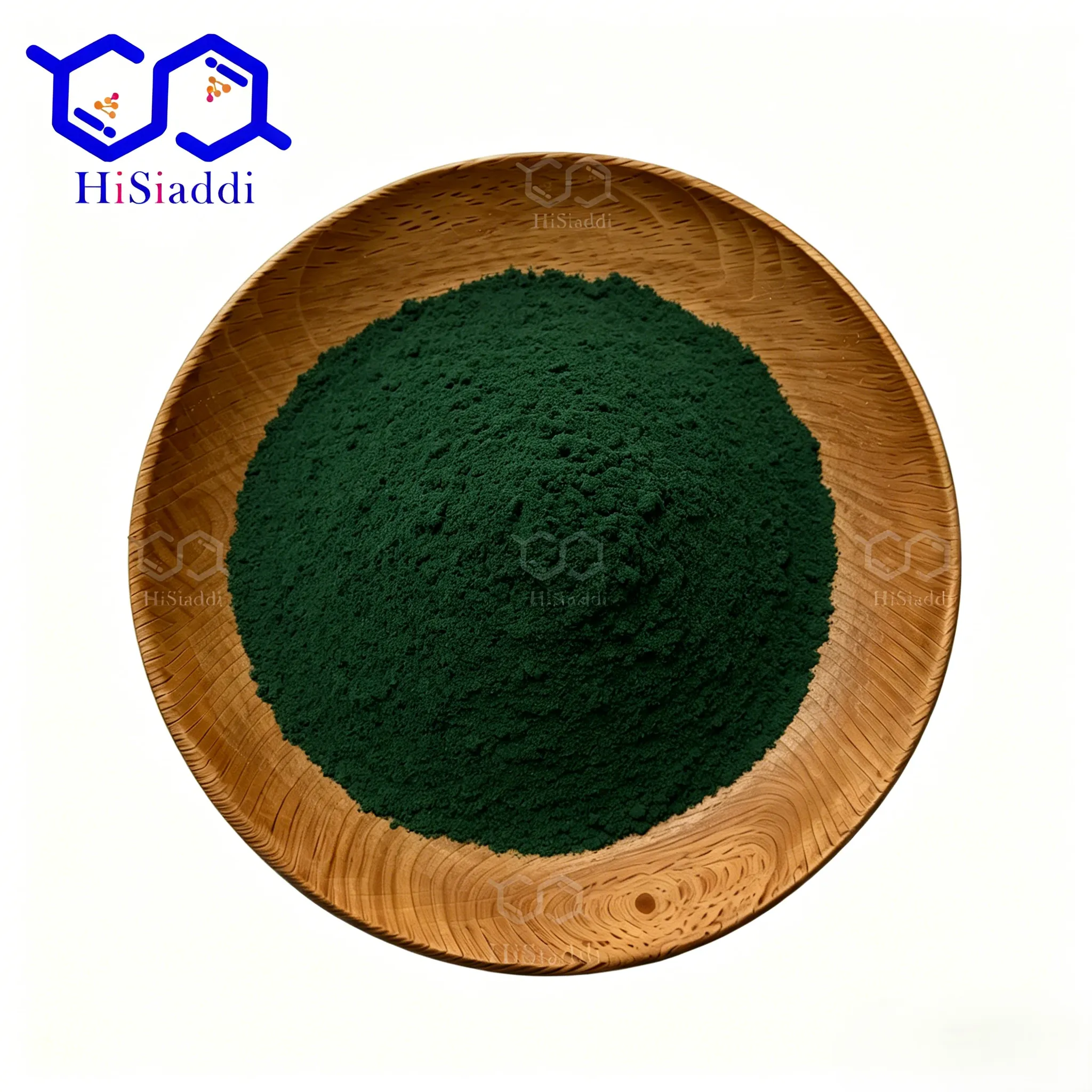
As a new-type foreign trade service provider driven by technological transformation and export business, HiSiaddi has built a "1+2+3+4=1" service system and can supply wild yam extract and diosgenin sourced from multiple well-known original manufacturers.
Boasting R&D capabilities in technological transformation, HiSiaddi has collaborated with factories on technical conversion and accurately captured market demands, repeatedly proposing formula optimization plans and application improvement suggestions for wild yam extract and diosgenin. Below is a technical consulting case of HiSiaddi optimizing wild yam extract and diosgenin formulations.
Contact HiSiaddi customer service for more formula optimization consulting services.
The purchasing party is NaturaEndo Inc., Vancouver, Canada, a leading mid-to-high-end brand specializing in menopausal endocrine conditioning and premium functional dietary supplements across Canada. Its full product line is sold in premium organic chain pharmacies nationwide, private endocrinology clinics and high-end North American wellness centers. The brand enforces strict raw material access standards including USP, Canadian HPFB food regulations, FSMA import control, EU EC396 226-item pesticide residue testing and cGMP formulation production specifications, rejecting extracts from industrially cultivated yams and low-cost non-standard saponin raw materials.
Its core product lines are premium menopausal soft capsules and phytosterol composite tablets, with diosgenin as the core functional raw material in formulations. Mandatory requirements: wild Dioscorea zingiberensis source, pharmaceutical-grade diosgenin at 98.0%±0.4%, split into two customized specifications: ultrafine powder for soft capsules and general powder for tablets. Annual fixed procurement volume: 19 tons, with a scheduled new product launch cycle of 6 months.
The Canadian brand operates an independent formulation laboratory and has long sourced saponin raw materials from India and Mexico. To cut procurement costs and boost raw material stability, it turned to Chinese suppliers of wild yam extract diosgenin in 2025. After independently selecting three domestic plant extract manufacturers for sampling and small trials, 11 batches of samples were sent to authoritative third-party Canadian laboratories for testing and pilot production was conducted at its in-house GMP formulation workshop. Five systematic technical failures emerged consecutively: fluctuating raw material component batches, filling malfunctions caused by powder physical defects, formulation discoloration induced by extract impurities, low bioavailability due to poor diosgenin liposolubility disrupting finished product dissolution, and softened/leaking soft capsule shells triggered by residual raw material solvents. The new product launch was delayed by 98 days, with combined losses from sample testing, auxiliary material scrapping and production line downtime equivalent to 32,000 Canadian dollars.
The three original suppliers could only control product content indicators, lacking R&D capacity for terminal formulation applications and unable to implement simultaneous rectification across raw material production, formula adaptation and terminal manufacturing. Recommended by the Domestic Plant Extract Industry Association, NaturaEndo Inc. fully entrusted HiSiaddi Foreign Trade to set up a special technical team to coordinate full-chain technical delivery covering upstream raw material process improvement, midstream customized powder modification and downstream terminal formulation optimization. Drawing on over a decade of experience in plant extract foreign trade, raw material resources, formulation application databases and a team of engineers, HiSiaddi decomposed and delivered targeted technical solutions item by item.
To lower raw material costs, original partner factories mixed artificially mass-cultivated Chinese yam tubers from Shaanxi with wild Qinba Dioscorea zingiberensis as feedstock. The two raw materials have vastly different endogenous saponin base contents: wild Dioscorea zingiberensis achieves over 13% saponin conversion rate, while cultivated Chinese yams only reach 2.8%~4.2%. Without standardized separate feeding controls, the mixing ratio varies randomly per batch. Meanwhile, crude open strong acid hydrolysis processes fail to regulate byproducts, leaving residual macromolecular impurities such as polysaccharides, plant colloids and inorganic acid residues in finished products. Measured diosgenin content fluctuates disorderly between 96.2%~98.9%, failing to stably meet the client’s internal labeling standard of 98.0%±0.4%. Excessive impurity peaks in HPLC chromatograms violate USP pharmacopoeia incoming raw material acceptance standards, preventing the client from designing fixed active ingredient dosing ratios for formulations.
Conventional finished powder from manufacturers is coarse 80~100-mesh material with wide particle size distribution, strong electrostatic particle adsorption and bulk density discrete values exceeding 0.18g/ml, alongside a powder repose angle >45° leading to poor flowability. The Canadian client uses fully enclosed automatic soft capsule filling lines without auxiliary arch-breaking devices for feeding hoppers. Raw material bridging and agglomeration occur frequently during feeding, causing equipment blockages 3~5 times per hour on average, with cleaning downtime severely reducing mass production efficiency. Single capsule filling weight error peaks at 7.6%, far exceeding the Canadian pharmacopoeia qualified threshold of ≤3%, pushing finished product scrap rates above 28% and rendering large-scale production unfeasible. Some powder batches have moisture content >1.2%, absorbing moisture and clumping in Canada’s high-humidity storage environment to further exacerbate filling failures. Multiple adjustments to feeding speed and hopper diameter yielded no improvement.
The client’s flagship menopausal tablet formula combines diosgenin, vitamin C, zinc citrate and kudzu root extract. Trace organic acids, heavy metal ions and plant colloid impurities remaining in original saponin raw materials accelerate vitamin C oxidative degradation under 25℃ room-temperature light-protected stability testing. Tablets turn dark brown from pale beige after 45 days storage, with active ingredient attenuation exceeding 16%. Repeated adjustments to auxiliary material addition sequences and replacement of antioxidant excipients failed to eliminate discoloration at the source, violating the mandatory 24-month shelf-life standard for Canadian supermarket products and blocking new product market filing.
Diosgenin is a highly hydrophobic monomer compound with extremely low solubility in aqueous digestive fluids. Without hydrophilic modification by manufacturers, tablets produced per the established formula only achieve a cumulative 45-minute in vitro dissolution rate of 51.3% in Canadian pharmacopoeia dissolution testing, far below the minimum admissible threshold of ≥75%. Insufficient dissolution directly reduces in vivo absorption efficiency, creating large deviations from the brand’s pre-development pharmacological trial data and failing to deliver the expected product efficacy – a critical technical bottleneck delaying new product launch.
Traditional single-tank strong acid hydrolysis and atmospheric ethanol extraction processes leave ethanol residues ranging from 620~750ppm, exceeding the client’s internal control limit of ≤450ppm. Trace residual organic solvents continuously interact with soft capsule gelatin shells over time, gradually damaging gelatin crosslink structures and causing shell softening and oil seepage after 3 months of room-temperature storage, posing a high risk of full batch scrappage. Original factories lack closed rectification solvent removal equipment and cannot reduce solvent residues via post-production simple drying.
HiSiaddi rapidly assembled a special project team consisting of plant extract R&D engineers, Canadian dietary formulation consultants, powder scientists and CNAS-accredited third-party testing specialists. On-site inspections were conducted at raw material bases in the Qinba Mountains of Shaanxi and partner GMP plant extract factories. Combined with the client’s formulation process parameters, three validation stages (100g small samples → 50kg small trials → 500kg pilot production) were implemented to conduct layered rectification from raw material source control to terminal formula delivery.
HiSiaddi selected two agricultural cooperatives with legal wild medicinal herb harvesting qualifications in the Qinba Mountains and signed annual exclusive targeted harvesting agreements. Harvesting of natural wild Dioscorea zingiberensis tubers is strictly limited to late autumn after frost, with artificially cultivated Chinese yams fully prohibited as feedstock. Each raw material batch is accompanied by official wild resource harvesting certificates issued by local forestry authorities, field harvesting ledgers and pre-inspection pesticide residue reports. Raw materials undergo standalone HPLC testing upon arrival; entire batches with native tuber saponin base content below 12.5% are rejected to eliminate finished content fluctuations caused by mixed feeding at the raw material stage. Simultaneously, the pre-processing water washing procedure was optimized with three-stage gradient water rinsing to remove surface soil, exogenous pesticide residues and water-soluble colloid impurities, reducing byproduct generation during subsequent extraction and easing purification process burdens.
The outdated open high-temperature strong acid full hydrolysis industry standard was abandoned, replaced with a customized advanced process combining biological enzymatic pretreatment, low-temperature biphasic hydrolysis, SMB simulated moving bed chromatographic grading purification and gradient recrystallization:
1. Composite cellulase closed-wall breaking at room temperature gently disrupts yam cell wall structures to boost saponin conversion efficiency and avoid active ingredient oxidative degradation from high temperature and strong acid exposure;
2. Segmented temperature-controlled hydrolysis locks the optimal hydrolysis temperature window at 122℃, stabilizing saponin conversion efficiency at approximately 93.5% and reducing dehydration byproduct formation;
3. Multi-stage silica gel chromatography removes colloids, organic acids and heavy metal impurities, followed by low-temperature gradient recrystallization refining. Final finished diosgenin is stably controlled between 97.9%~98.3%, perfectly matching the client’s customization standard of 98.0%±0.4%. Impurity peaks in HPLC chromatograms are reduced by over 85%, drastically cutting impurity levels and eliminating formulation discoloration triggers at the production stage. A three-stage negative-pressure closed rectification system was simultaneously deployed for cyclic ethanol recovery, strictly controlling finished solvent residues at 260~390ppm (below the client’s 450ppm internal control limit) and completely resolving soft capsule shell swelling and oil leakage issues.
Two customized powder specifications were developed to match the client’s separate soft capsule and tablet production lines:
1. Ultrafine powder dedicated to soft capsules: Low-temperature jet ultrafine milling + inert nitrogen closed sieving, with all finished particles passing a 200-mesh sieve. Powder moisture is controlled ≤0.5%, with a repose angle of 34°±2° and bulk density of 0.43~0.46g/ml to drastically lower particle electrostatic adsorption and agglomeration risks. After powder flowability optimization, daily filling line blockages dropped from dozens to 0~1 per day, capsule filling weight error stabilized within ±1.7%, and scrap rates fell from 28% to below 1.2%.
2. General tablet powder: Moderate graded milling paired with inert gas homogenization balances moldability and flowability for dry tableting processes, avoiding tablet loose core and cracking defects. Full-process nitrogen-sealed low-temperature drying prevents powder moisture absorption and clumping during storage.
HiSiaddi collaborated with the client’s Canadian R&D center to adjust formulations bidirectionally via both raw material modification and auxiliary material compatibility:
1. Raw material modification: Low-temperature β-cyclodextrin inclusion modification enhances the dispersion solubility of hydrophobic diosgenin monomers in aqueous media without altering main saponin content, fundamentally resolving dissolution limitations. Post-modification 45-minute in vitro dissolution rate rose from 51.3% to 82.7%, easily clearing the Canadian pharmacopoeia dissolution threshold.
2. Formula fine-tuning: Adjust auxiliary material ratios and feeding sequences, removing trace acidic excipients prone to oxidation promotion and replacing partial ordinary microcrystalline cellulose with chelating calcium citrate. Calcium ions chelate residual trace heavy metals in raw materials to block heavy metal-catalyzed vitamin C oxidation reactions. Feeding procedures were revised: diosgenin powder and mineral excipients are pre-mixed and fed separately to prevent direct contact between active ingredients and strongly reductive vitamin C. Post-improvement tablets show no discoloration after 90 days of room-temperature storage, passing all 24-month shelf-life stability tests.
HiSiaddi compiled a full English manual Diosgenin Raw Material Storage & Formulation Production Operation Guidelines to deliver implementation details to the client’s GMP factory: raw materials require constant 20℃ temperature-controlled moisture-proof closed storage, with small-batch on-demand retrieval upon unsealing. For soft capsule batching, the material liquid pH is controlled between 4.8~5.2 to shorten room-temperature standing duration. Humidity in tablet pressing workshops is stabilized at 42%~48% to prevent powder moisture absorption altering physical and chemical parameters, consolidating optimization outcomes via terminal production details.
After 3 rounds of small samples and 2 rounds of pilot samples shipped cross-border, all full-item physical, pesticide residue and dissolution tests at Canadian third-party laboratories passed, and 7 consecutive days of mass production trials at the client’s formulation workshop operated without process failures. The first shipment of 5.7 tons of customized products in two specifications was vacuum-aluminum foil nitrogen-sealed and shipped from Shanghai Port to Vancouver. Pre-review of HPFB customs documentation in Canada passed in one round, enabling customs clearance without inspection for smooth warehousing. After raw material deployment, the client’s two new menopausal soft capsule and composite tablet formulations successfully completed Canadian drug regulatory filing and full rollout in premium domestic pharmacies. Terminal sales in the first quarter post-launch exceeded brand projections by 22%.
Based on the successful delivery of full-process technical optimization, NaturaEndo Inc. signed an annual locked-price procurement framework for 19 tons with HiSiaddi, split into 9 monthly production batches (11.2 tons of ultrafine soft capsule powder and 7.8 tons of general tablet powder). The following year, the client expanded a premium skincare-grade low-impurity diosgenin customization project, fully entrusting HiSiaddi to coordinate raw material process R&D, sample follow-up and production control. Backed by this mid-to-high-end Canadian brand partnership, HiSiaddi’s partner manufacturing factories completed standardized technical upgrades to saponin production lines and refined pharmaceutical-grade diosgenin customization systems, subsequently securing orders from three equivalent premium endocrine dietary brands in Australia and the Netherlands to steadily integrate domestically refined wild yam extracts into high-end global raw material supply chains.
The majority of domestic plant extract manufacturers only focus on single active ingredient content production, lacking R&D capacity for powder science, downstream formulation compatibility adaptation and terminal production condition research. Their production processes retain crude traditional extraction routes with limited systematic understanding of European and American pharmacopoeia indicators, formulation compatibility taboos and powder physical property impacts on mass production. Meanwhile, mid-to-high-end European and American dietary pharmaceutical brands such as Canada’s NaturaEndo Inc. possess in-depth expertise in terminal formulation R&D and local drug regulatory and production standards, yet lack research channels covering China’s wild medicinal herb supply chain irregularities and varying domestic plant extract process tiers. Independent direct procurement easily triggers cascading losses including adulterated raw materials, production failures, formula failure and delayed new product launches.
Drawing on cross-disciplinary technical resources, HiSiaddi forms a full-chain technical closed loop covering upstream wild raw material traceability control, midstream extraction purification and customized powder modification, downstream formula optimization and workshop production guidance. Acting as an impartial third-party technical service provider bridging Chinese and foreign supply and demand, HiSiaddi rectifies raw material and process defects at the production source while reverse-optimizing raw material indicators aligned with the client’s terminal dosage form characteristics, delivering one-stop resolution for full-chain technical challenges spanning raw materials to finished products. The service helps mid-to-high-end overseas clients avoid procurement trial-and-error costs while assisting high-quality domestic plant extract factories to escape low-price homogenization competition and access the global high-end natural extract industrial chain via customized pharmaceutical-grade products.
Contact HiSiaddi customer service for more formula optimization consulting services.

 +86-13120989737
  info@hisiaddi.com
 English