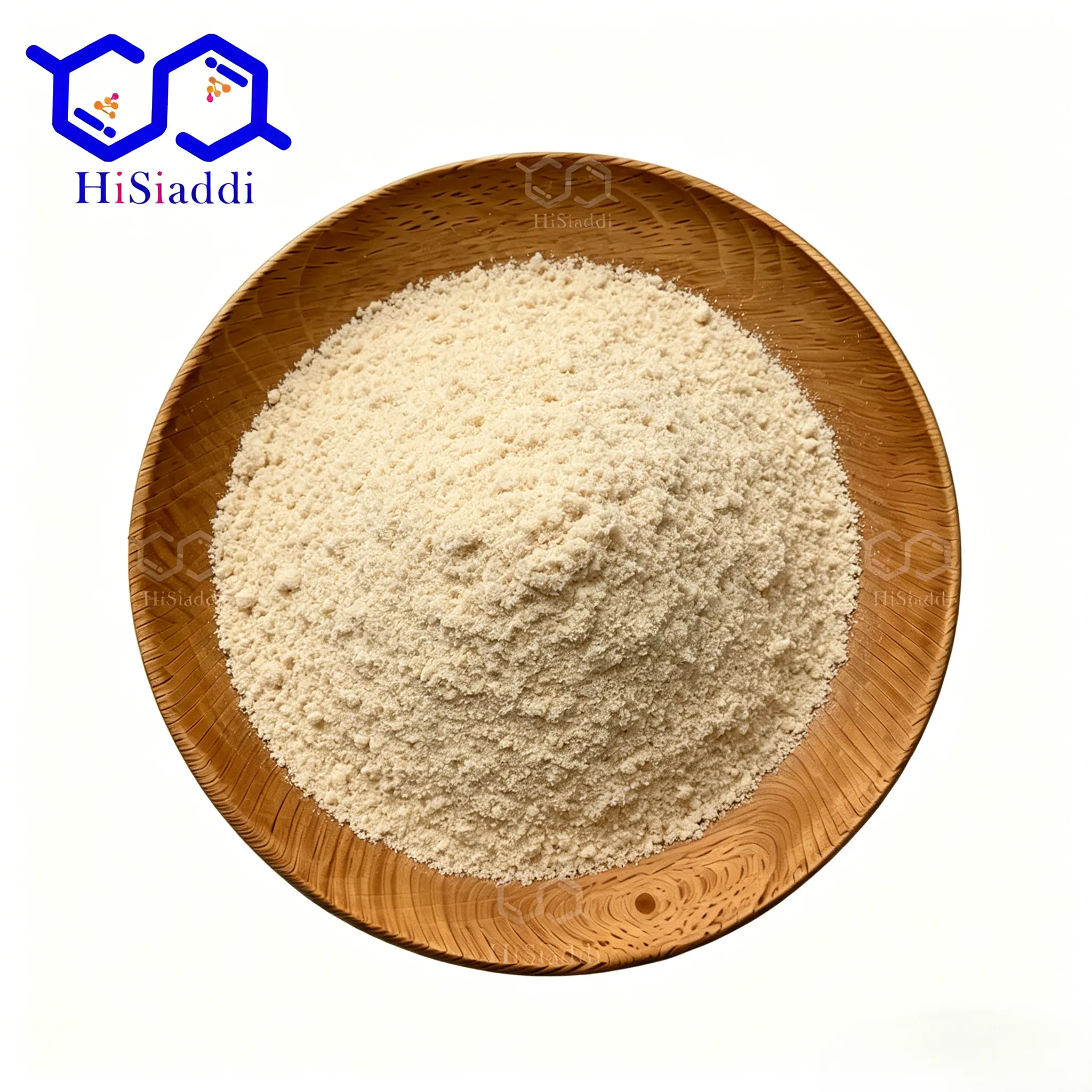
HiSiaddi is an innovative foreign trade service provider driven by technology transformation and export business. It has established a service system of “1+2+3+4=1” and can supply bovine collagen from multiple well-known original manufacturers.
As a foreign trader with independent R&D capabilities, HiSiaddi repeatedly proposes formulation optimization plans and application improvement suggestions for bovine collagen products through factory technology transformation and precise market insight. Below is a case of bovine collagen formulation optimization consultation delivered by HiSiaddi.
For more formulation optimization consultation services, please contact HiSiaddi customer service.
The partner is BIOLIFE Bio Anti-Aging Co., Ltd., based in Barcelona, Spain. It specializes in high-end oral anti-aging drinks for the Iberian Peninsula, clinic beauty powder, and joint care special medical tablets, with products sold in Spanish chain medical aesthetic institutions and premium EU organic supermarkets. Raw materials comply with EFSA EU food regulations, BSE/TSE bovine-origin safety control standards, EP Pharmacopoeia, and BRCGS factory specifications, with an annual procurement volume of 29 tons of food-grade hydrolyzed bovine collagen previously sourced from German high-purity collagen manufacturers.
To cut raw material costs and shorten delivery cycles, the client independently selected two domestic collagen factories for mass raw material procurement. After raw material arrival and production launch, four critical production failures emerged simultaneously: turbidity and precipitation in oral liquids, blockages during powder filling, native bovine fishy odor in raw materials, and tablet browning after compounding with VC. Production lines suffered intermittent shutdowns, over three batches of finished products were scrapped, and the new product launch was delayed by 42 days, incurring R&D and production losses equivalent to 69,000 Euros. The two raw material factories only delivered products meeting national standard factory indicators without understanding the compatibility logic of terminal drink and tablet formulations, making targeted raw material performance optimization impossible. The client entrusted HiSiaddi to resolve technical challenges comprehensively through upstream raw material process improvement, terminal formulation fine-tuning, and workshop production parameter optimization.
Mandatory raw material usage standards for the client’s two terminal products:
1. Oral liquid: Fully soluble in cold water without flocculent precipitates; pH 5.3~5.9; no discoloration after 6 months of normal-temperature storage when compounded with fruit acids and vitamin C.
2. Solid powder: Loose powder resistant to moisture absorption without jamming automatic filling machines; no native meat odor with zero external flavor additives, complying with EU clean label standards.
General domestic collagen adopts one-step full enzymatic hydrolysis, resulting in scattered molecular weights ranging from 500Da to 4800Da. Macromolecular collagen peptides gradually flocculate in the client’s acidic oral liquid system, forming white suspended matter after 30 days of low-temperature storage and rendering products unfit for filling and delivery.
Conventional high-temperature drying for deodorization partially denatures collagen and leaves sulfide-based meaty odors. The client’s formulation prohibits flavorings to mask odors, leading to substandard sensory experience for end consumers and high risk of consumer complaints.
Uneven crushed particle sizes and large powder voids cause raw materials to absorb moisture and clump within 24 hours of opening in the client’s Spanish production workshop with ambient humidity maintained at 50%~58%. High-speed filling equipment suffers slow feeding, drastically reduced production efficiency, and increased waste volume.
Raw materials only undergo two rounds of water washing and filtration for purification, leaving high residual trace heteroproteins that slowly oxidize when compounded with L-ascorbic acid, resulting in surface yellowing of tablets after 2 months of storage and violating EU finished product appearance control standards.
HiSiaddi assigned collagen process engineers and food formulators to on-site support, implementing rectification across three segments: upstream collagen production process optimization, client terminal formulation fine-tuning, and client workshop production control optimization.
1. Gradient staged enzymatic hydrolysis + three-stage nanofiltration grading: Abandon crude single-batch enzymatic hydrolysis; add compound hydrolase at controlled temperatures in three separate stages and screen via three layers of nanofiltration membranes with differentiated apertures to lock average molecular weight at approximately 1300Da with ≥77% small-molecule peptides below 1000Da, eliminating macromolecular impurities and permanently resolving flocculation and precipitation in acidic liquids.
2. Low-temperature biological deodorization + negative-pressure low-temperature drying: Add biological deodorase to decompose volatile odor-causing impurities, with all drying completed at ≤45°C under vacuum to avoid high-temperature modification, fully removing bovine odor while preserving collagen stability with zero external flavorings.
3. Airflow agglomeration modification treatment: Post-drying airflow granulation optimizes powder stacking structure and reduces the angle of repose, limiting moisture absorption weight gain to less than 0.9% after 72 hours under identical temperature and humidity conditions and fundamentally eliminating moisture absorption and caking defects.
4. Upgraded three-stage refined water washing: Activated carbon adsorption and precision membrane filtration are added to remove heteroproteins and trace soluble impurities, preventing oxidative yellowing after compatibility with vitamin C.
Four rounds of small sample testing and two batches of 500kg pilot trials were completed, with samples delivered to the client’s Spanish R&D laboratory for testing after passing full-indicator EU-standard testing by SGS.
Minor auxiliary material ratio adjustments were made within EU regulatory frameworks without altering product efficacy positioning:
1. Oral liquid formulation: Add compliant sodium citrate buffer systems in small quantities to stabilize pH fluctuations and weaken interactions between collagen and organic acids, improving long-term storage stability of liquid products.
2. Tablet formulation: Replace partial high-hygroscopic corn starch with low-moisture microcrystalline cellulose, paired with trace food-grade anti-caking agents to block direct contact between vitamin C and collagen impurities and delay oxidative browning.
1. Install dehumidifiers in raw material warehouses to control ambient humidity ≤42%; package raw materials in double-layer aluminum foil sealed drums for partial retrieval to avoid large-area exposure and moisture absorption.
2. Adjust oral liquid feeding sequence: Prepare acidic base liquid first, then slowly add collagen under low-temperature low-speed stirring to reduce local precipitation caused by localized over-acidification.
The first batch of 5.7 tons of optimized collagen arrived in Spain and was fully put into production: oral liquids remained clear without precipitation after 6 months of refrigeration, powder automatic filling operated smoothly without jamming, and tablets showed no yellowing or odor after six months of normal-temperature storage. The anti-aging new product whose launch had been delayed by 42 days was successfully mass-produced and launched on shelves. The full-year 29-ton order was delivered in 8 split batches. Compared with German imported raw materials, the client’s comprehensive procurement cost decreased by 24.3%.
Spanish BIOLIFE terminated cooperation with German suppliers, switching 100% of its collagen raw material supply to Chinese sources coordinated by HiSiaddi. In the following year, the client added customized medical-grade ultra-fine collagen with full pasture traceability, placing an additional annual procurement order of 10.5 tons. Meanwhile, the client fully entrusted HiSiaddi with all technical coordination and procurement of raw materials including fish collagen and soybean oligopeptides.
Large domestic collagen manufacturers design mass production processes targeting low-cost domestic health supplement markets, only controlling basic national standard indicators without experience in customized modification for EU high-end drinks and special medical tablets, making it impossible to predict compatibility defects of raw materials in terminal formulations. Overseas mid-to-high-end brands excel in finished product R&D yet lack familiarity with process shortcomings of domestic collagen production, often falling into production failures and delayed new product launches when sourcing independently. Breaking the traditional foreign trade model limited to supply quotation matching, HiSiaddi provides full-chain technical services covering raw material process optimization, terminal formulation debugging, and on-site production guidance. It helps overseas mid-to-high-end brands cut costs and resume production while enabling high-quality domestic collagen manufacturers to escape low-margin bulk raw material competition and access high-value EU raw material supply chains.
For more formulation optimization consultation services, please contact HiSiaddi customer service.

 +86-13120989737
  info@hisiaddi.com
 English