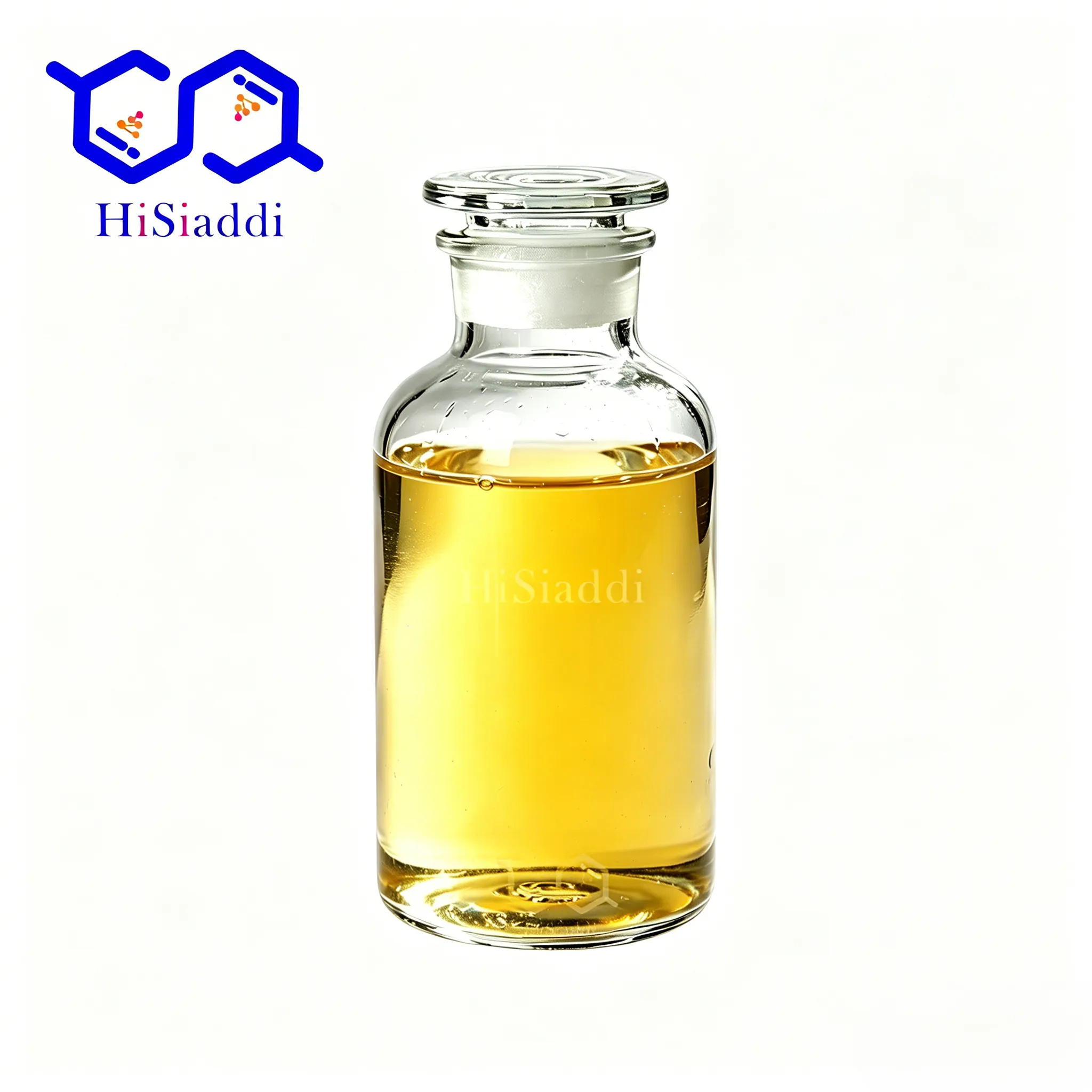
As a new type of foreign trade service provider driven by both technology transformation and foreign trade services, HiSiaddi has established a "1+2+3+4=1" service system and can supply dimethylsilicone oil sourced directly from multiple well-known original manufacturers. As a tech-driven foreign trade enterprise, HiSiaddi has repeatedly resolved customized product demands for dimethylsilicone oil through technological transformation cooperation with manufacturers and precise insight into market demands. Below is a case where HiSiaddi addressed customized requirements for dimethylsilicone oil.
For inquiries about customized service solutions, please contact HiSiaddi customer service.
MedLife of Austria is located in the Vienna Biomedical Industrial Park. For 31 years, it has focused on the R&D and production of pharmaceutical excipients, release agents for baked food, and antifoaming raw materials for health supplements. It owns a Class 100,000 clean compounding workshop and an independent third-party R&D laboratory. Its products supply local Austrian pharmaceutical factories, leading central European bakery chains, and dietary supplement brands. All product lines comply with EU Regulation EC1935 on food contact materials, European Pharmacopoeia (EP) standards for pharmaceutical excipients, and REACH chemical control regulations, with all raw material formulas filed with the Austrian Federal Food Safety Authority.
For over a decade, the enterprise has steadily purchased food and pharmaceutical grade dimethylsilicone oil from Wacker Germany, relying on the manufacturer’s strict impurity control, precise viscosity indicators, and low cyclic siloxane residues to guarantee finished product compliance. However, due to maintenance shutdowns at major European organosilicon manufacturers, surging international ocean freight costs, extended delivery lead times of up to 112 days, and a 45% increase in procurement unit prices, the group launched a localized China substitution project in 2025, with an annual planned procurement volume of 207 tons of customized dimethylsilicone oil split into three differentiated non-standard grades: ① 72 tons for soft capsule demolding in pharmaceutical applications ② 75 tons of high-temperature release agent food-grade silicone oil for baking ③ 60 tons of antifoaming silicone oil for health supplement fermentation tanks
The technical indicators of the three products all differ from standard industrial-grade and generic food-grade silicone oil readily available on the domestic market.
The client previously independently contacted three conventional domestic silicone oil manufacturers, which mainly mass-produced national standard general-purpose dimethylsilicone oil via conventional hydrolysis polymerization of dimethylcyclosiloxane with fixed mass production parameters, suitable only for low-end rubber, plastic and coating industries. These manufacturers lacked synthesis and post-processing processes tailored for refined customization in food and pharmaceutical sectors. Five rounds of sample delivery and testing at Austrian laboratories all yielded unqualified results: the pharmaceutical grade samples exceeded the limit for volatile cyclic siloxanes D4/D5; the baking-grade samples yellowed after high-temperature baking at 220°C; the fermentation antifoaming grade broke emulsions and lost efficacy in weakly acidic fermentation broth. The manufacturers refused to adjust raw material monomers, polymerization temperature control and rectification purification procedures, citing compliance with domestic chemical industry national standards, and declined to invest in pilot modification and commissioning. The customized procurement project stalled for 56 days, leading the client to terminate all prior cooperation and fully entrust HiSiaddi’s Chemical Foreign Trade Technology Division to coordinate the full process including parameter conversion, small-batch trial development, pilot mass production and cross-border testing.
Compliant with European Pharmacopoeia EP standards, customized specifications:
· Kinematic viscosity: 100mm²/s±2
· Total residual cyclic siloxanes D4+D5 <50ppm
· Total heavy metals (lead, arsenic, cadmium) <1ppm
· Volatile matter ≤0.3%
· No solidification after 72-hour storage at -15°C
Generic domestic silicone oil usually contains over 300ppm cyclic siloxane residues with viscosity fluctuations exceeding ±8, failing European Pharmacopoeia raw material access inspections and disqualifying them for pharmaceutical excipient production.
Designed for continuous tunnel ovens operating at 210~230°C, customized requirements:
· Post-treated via hydrofining, no yellowing after constant-temperature baking at 230°C for 4 hours
· Unsaturated end group content <0.05%
· Compliant with EU food contact material migration limits
· No stratification after 12 months of normal-temperature storage when compounded with vegetable oil
Generic food-grade silicone oil without hydrofining oxidizes and yellows easily under high temperatures, leaving oily discoloration spots on baked goods and violating EU food regulations.
Adapted to weakly acidic lactic acid bacteria fermentation broth (pH 4.2~5.5), customized indicators:
· Modified with trace polyether side chains to prevent emulsion breaking in weak acid systems
· Defoaming onset time <5s, foam suppression duration ≥24h
· No negative impact on strain activity
Generic pure dimethylsilicone oil has excessive hydrophobicity, leading to rapid stratification in acidic systems and drastically reduced defoaming efficiency.
HiSiaddi screened two leading domestic manufacturers with food and pharmaceutical grade silicone oil production qualifications (Xinan Food Silicon Division and Xinyaqiang Refined Silicone Workshop), leveraging their sealed polymerization reactors and precise molecular distillation rectification equipment to complete customized development in four cycles.
1. Pharmaceutical soft capsule dedicated silicone oil: High-purity D3 monomers were selected as raw materials instead of industrial-grade mixed DMC feedstock. A segmented temperature control polymerization curve (105°C and 145°C staged polymerization) was optimized. After synthesis, two-stage molecular distillation units were installed to remove D4/D5 cyclic siloxane by-products under negative pressure. Finished products achieved a total cyclic siloxane residue of 42ppm with stable viscosity ranging from 99 to 101mm²/s, while heavy metal and volatile matter levels all met EP Pharmacopoeia limits.
2. High-temperature release agent silicone oil for baking: A high-pressure catalytic hydrofining process was added post-polymerization to eliminate unsaturated silanol end groups, controlling unsaturated groups below 0.04%. Samples remained clear and free of yellowing after prolonged baking at 230°C, and maintained uniform dispersion without stratification when blended with various edible vegetable oils for long-term storage.
3. Weak acid resistant defoaming modified silicone oil for fermentation: A small amount of hydrophilic polyether side chains were grafted at the end of polymerization to fine-tune the silicone oil’s hydrophilic-lipophilic balance. Simulating the client’s weakly acidic lactic acid bacteria fermentation system, testing showed defoaming initiated within 3.8 seconds with no foam rebound over 26 consecutive hours and no inhibition of strain growth.
Sterilely packaged samples of the three trial products were airfreighted to MedLife’s R&D center in Austria, accompanied by test reports from CNAS-accredited and EU GLP-certified third-party laboratories. After comprehensive tests including full pharmacopoeia compliance checks, high-temperature accelerated aging and fermentation compatibility trials, all samples matched the performance of original Wacker products, prompting the client to issue a formal product finalization confirmation letter.
All three products are non-standard customized grades and cannot share general mass production pipelines. HiSiaddi coordinated manufacturers to suspend general silicone oil production lines and deploy three separate sealed clean reaction, rectification and filtration equipment sets with dedicated feeding zones and filling workshops to prevent cross-contamination from industrial-grade raw materials. Meanwhile, German-English bilingual COA certificates, REACH-SDS documents and food contact compliance certificates were compiled in accordance with EU food and pharmaceutical regulations.
An initial trial batch of 45 tons (24 tons pharmaceutical grade, 13 tons baking grade, 8 tons fermentation grade) passed domestic food-grade commodity inspection and hazardous goods declaration, and was shipped from Shanghai Port to Vienna Port. Complete compliance documents facilitated one-time customs clearance and warehousing. After deployment on the client’s production lines, soft capsule demolding proceeded smoothly without adhesion, baked goods exhibited no oily yellow spots, and foam in fermentation tanks remained under control. The three products successfully passed on-site sampling inspections by the Austrian Food and Drug Authority.
Standardized complete production process documents were finalized, and manufacturers reserved dedicated clean production lines with priority for MedLife orders year-round. The remaining 162 tons were delivered in four monthly batches aligned with the seasonal production schedule of the European food and pharmaceutical enterprise, achieving 100% on-time delivery of the full 207-ton annual customized silicone oil order.
1. Optimized Procurement Costs: The comprehensive procurement unit price of domestically customized silicone oil decreased by 38.6% compared to original Wacker products, ocean shipping lead times were shortened from 112 days to 39 days, and the client’s comprehensive production costs for food and pharmaceutical excipients dropped by 21.2%.
2. Renewed Contract and Expanded Product Scope: In the following year, MedLife renewed its annual long-term contract for 253 tons of dimethylsilicone oil series, and fully entrusted HiSiaddi with exclusive handling of customized procurement and compliance coordination for polyether modified antifoams, silicone waxes and other food and pharmaceutical grade organosilicon raw materials sourced from China. Leveraging the reputation built from this project, the client introduced two additional local Austrian pharmaceutical enterprises to establish cooperation intentions.
1. Industry Pain Points by Product Tier: China boasts massive dimethylsilicone oil production capacity, yet most manufacturers focus on low-end industrial markets such as rubber, plastics and coatings, adopting low-cost extensive synthesis processes without high-end post-processing equipment including molecular distillation and hydrofining. They can only mass-produce generic off-the-shelf products with large viscosity fluctuations and high impurity levels. Low-end domestic purchasers face loose regulatory constraints and can mask raw material defects via additive formulation adjustments. In contrast, mid-to-high-end European food and pharmaceutical clients are strictly regulated by pharmacopoeia and EU food laws; trace impurities exceeding limits lead to finished product scrapping and drug regulatory penalties, creating rigid demand for refined customized products.
2. HiSiaddi’s Core Service Value: The company bridges customized pharmaceutical-grade indicator requirements from overseas high-end clients and flexible R&D production capacity of domestic food-grade silicon manufacturers, translating EU regulatory standards into implementable production processes. It eliminates two-way information barriers: manufacturers lack familiarity with EU food and pharmaceutical market access standards, while overseas clients have limited understanding of premium domestic customized production capacity. Deeply binding high-quality overseas end users through full-process customized technical services.
3. Procurement Logic of Mid-to-High-End Clients: European and American food and pharmaceutical end users prioritize impurity control, regulatory compliance and working condition adaptability of raw materials, with procurement price as a secondary consideration. Delivering a complete set of non-standard customized solutions is the core factor securing large annual long-term orders.
For inquiries about customized service solutions, please contact HiSiaddi customer service.

 +86-13120989737
  info@hisiaddi.com
 English