As a new type of foreign trade service provider driven by technology commercialization and foreign trade services, HiSiaddi has built a "1+2+3+4=1" service system and can supply raw materials of L-Theanine from multiple well-known original manufacturers. Having been deeply engaged in the L-Theanine foreign trade market for more than a decade, HiSiaddi has sorted out full global procurement cost breakdowns for your reference.
For inquiries about L-Theanine full procurement costs or other product questions, please contact HiSiaddi customer service or visit our official website www.hisiaddi.com.
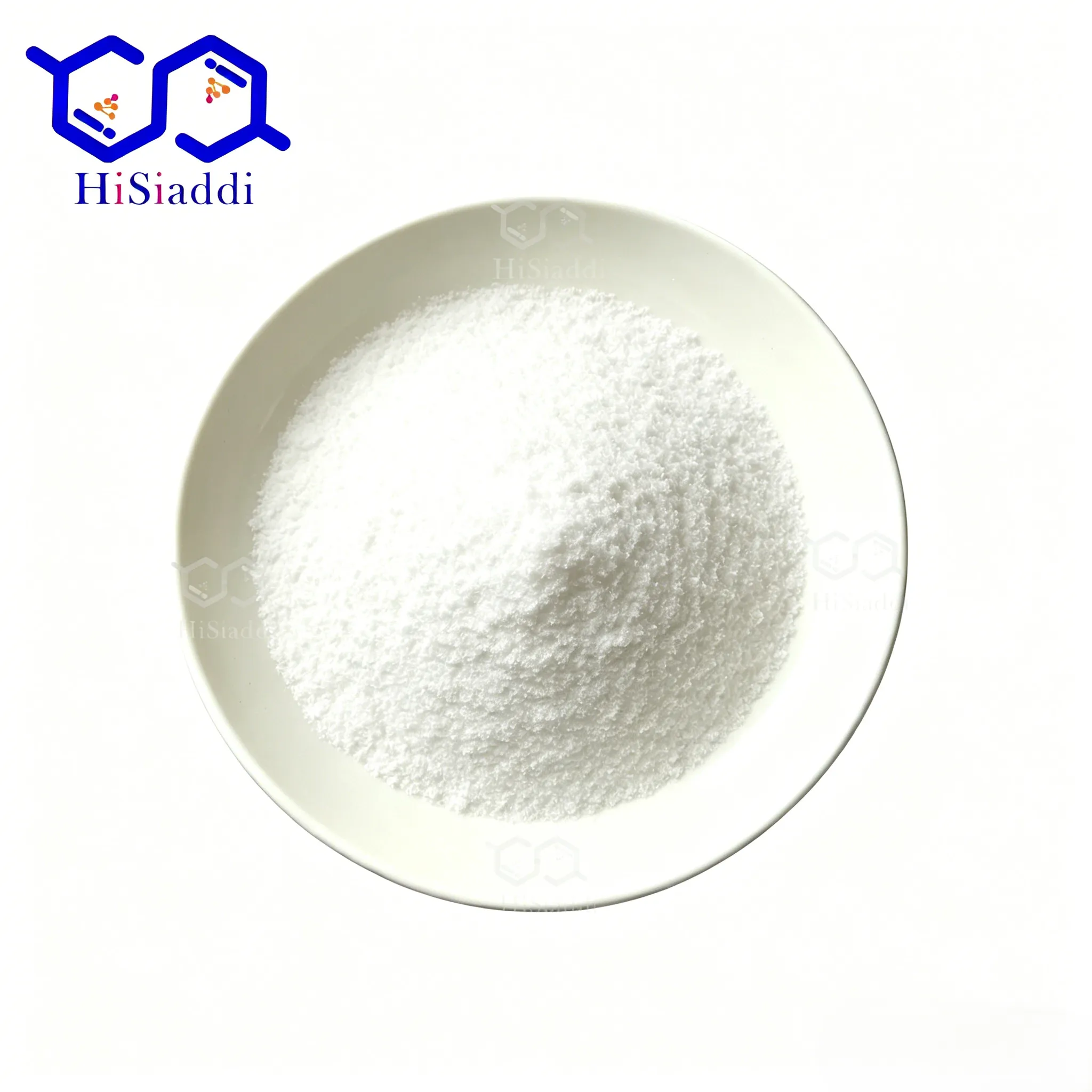
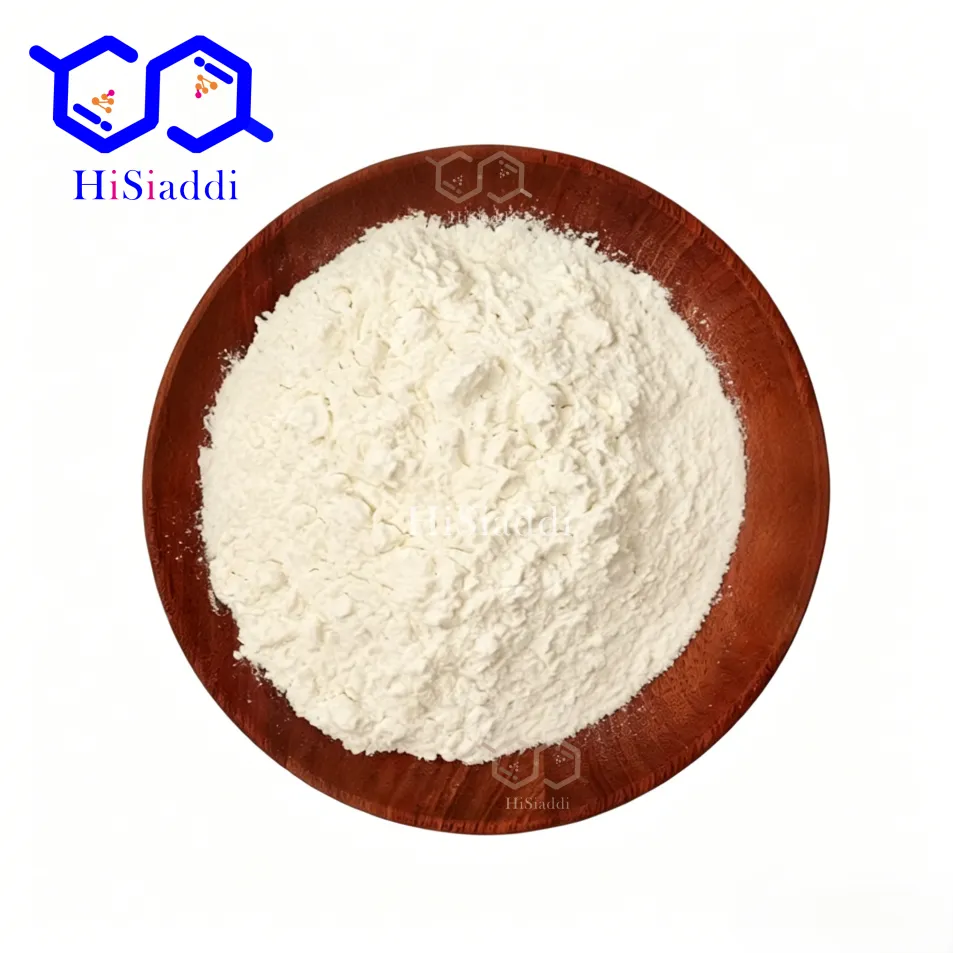
L-Theanine (CAS No. 3081-61-6), chemical name N-ethyl-γ-L-glutamine, is a natural non-protein amino acid extracted from tea leaves, appearing as white crystalline powder, odorless with faint sweet taste, highly soluble in water and insoluble in ethanol, ether and other organic solvents. Its core functional benefits include sedative stress relief, fatigue reduction and sleep improvement with zero addictive potential.
1. Core Specifications: Food grade (≥98.5% purity, compliant with FCC/USP standards), pharmaceutical grade (≥99.0% purity, heavy metals ≤10ppm), health supplement grade (≥99.0% purity, microbiological indicators meeting Chinese national standards). Food grade represents the mainstream market specification;
2. Production Technology: Three categories – tea extraction (natural, high cost), chemical synthesis (low cost, high purity), microbial fermentation (eco-friendly, aligned with clean label health consumption trends). Chemical synthesis and fermentation dominate global manufacturing workflows;
3. Global Capacity Distribution: China stands as the world’s largest producer accounting for over 80% of global capacity, concentrated in Zhejiang, Jiangsu, Anhui tea-growing regions and fine chemical industrial belts. International production capacity is primarily located in the US and Japan relying mainly on tea extraction workflows.
· International Brands: Taiyo (Japan), Ajinomoto (US), Medchem (US);
· Domestic Brands: Zhejiang Huakang Pharmaceutical, Jiangsu Zhengxing Food Additives, Anhui Guangsheng Tang Biotechnology, Zhejiang NHU Co., Ltd.
Full procurement costs cover seven modules across the entire purchasing workflow with the following proportional weightings and detailed composition:
1. Product Purchase Price: 68%–78% (core component including unit price, volume discounts, foreign exchange conversion and early payment rebates);
2. Logistics Costs: 9%–16% (international/domestic transportation, customs clearance, moisture-proof packaging, loading/unloading insurance premiums);
3. Warehousing Costs: 3%–5% (sealed moisture-proof storage fees, capital interest tied up in inventory, storage loss, preservation charges);
4. Quality Costs: 3%–6% (sample testing fees, third-party full batch testing, return & rework costs for non-compliant goods, compliance re-inspection fees);
5. Compliance Costs: 2%–4% (import tariffs, VAT, international compliance certification maintenance, food/pharmaceutical grade qualification testing fees);
6. Administrative Costs: 1%–2% (procurement staff salaries, travel expenses, supplier management, operational workflow overheads);
7. Risk Costs: 3%–6% (raw material price volatility, foreign exchange fluctuations, supply disruption losses, policy adjustment liabilities).
Cost comparison between imported sourcing (Taiyo, Japan, FOB Kobe Port) and domestic sourcing (Zhejiang Huakang Pharmaceutical, tax-inclusive ex-factory price) for a health supplement manufacturer with net-30 payment terms.
· Unit Purchase Price (5% volume discount applied): FOB USD 210/kg, exchange rate 1USD=CNY7.2, equivalent to CNY 1,512,000/ton; post tariff & VAT price CNY 1,578,000/ton;
· Logistics Costs: 20GP full container sea freight (15 tons per container, moisture-proof sealed packaging) + domestic inland transport + customs clearance, total CNY 18,500/ton;
· Tariff & VAT: HS Code 2924199090, MFN tariff rate 6.5%, VAT 13%, total CNY 66,000/ton;
· Warehousing Costs: Sealed moisture-proof storage (2-month inventory turnover), total CNY 12,000/ton;
· Quality Costs: Third-party full testing (FCC/USP standards) + non-compliant return losses (0.25% rejection rate), total CNY 8,500/ton;
· Compliance & Administrative Costs: Japanese JHFA certification maintenance + procurement operations, total CNY 600/ton;
· Risk Costs: JPY exchange rate volatility (±4%) + supply disruption contingency losses, total CNY 45,000/ton;
· Total Full Cost Per Ton: CNY 1,728,600.
· Unit Purchase Price (8% volume discount applied): Tax-inclusive ex-factory price CNY 1,280,000/ton;
· Logistics Costs: Domestic highway transport (Zhejiang to Hangzhou) + loading/unloading, moisture-proof packaging, total CNY 1,200/ton;
· Warehousing Costs: Sealed moisture-proof storage (1.5-month inventory turnover), total CNY 8,500/ton;
· Quality Costs: Third-party domestic food grade testing + non-compliant
return losses (0.15% rejection rate), total CNY 5,800/ton;
· Compliance & Administrative Costs: Domestic food-grade qualification maintenance + procurement management, total CNY 400/ton;
· Risk Costs: Raw material (glutamic acid, glucose) price swings (±5%) + supply interruption losses, total CNY 38,000/ton;
· Total Full Cost Per Ton: CNY 1,333,900.
Domestic procurement cuts per-ton cost by CNY 394,700, representing a 22.83% cost reduction. Its core advantages include zero import tariffs, logistics expenses only 1/15 of import costs, domestically-produced fermented goods meeting international food-grade standards, shorter delivery cycles and lower return & rework costs. Imported products only hold an edge in natural extraction certification, making them suitable for high-end natural health supplement procurement scenarios.
1.
Market Price Factors
2.
o Raw Material Fluctuations: Chemical synthesis relies on glutamic acid and ethanol derived from petrochemicals; fermentation feeds on glucose and nitrogen sources tied to agricultural commodity prices. A 10% raw material price hike pushes L-Theanine prices up by 5%–7%.
o Production Technology Gap: Tea-extracted L-Theanine costs 30%–40% higher than fermented variants. Chemically synthesized goods carry the lowest price tag, yet food-grade buyers predominantly opt for fermented products due to green compliance requirements.
o Volume-Based Discounts: Annual purchases above 1,500 tons qualify for 8%–10% discounts, while orders under 500 tons only unlock 2%–3% rebates, creating a 6%–8% price gap.
o Foreign Exchange Volatility: Imports are settled in USD or JPY; every ±1% swing in exchange rates shifts procurement costs by ±0.8%–1.0%.
3.
Logistics & Trade Factors
4.
o Transportation Requirements: L-Theanine absorbs moisture easily and clumps, requiring sealed moisture-resistant packaging. Ocean freight for imports incurs extra preservation fees; air freight is far costlier at approximately CNY 60,000 per ton.
o Tariffs & Trade Barriers: Most-favored-nation tariff stands at 6.5%; additional punitive tariffs will drastically inflate total costs. The EU and US enforce stringent standards for food additives on microorganisms and heavy metals, pushing testing fees 50% higher than domestic rates.
5.
Quality & Compliance Factors
6.
o Testing Standards: Food and pharmaceutical grades require FCC, USP and Chinese national standard certifications. Testing fees for pharmaceutical grade are 60%–90% higher than food grade.
o Compliance Obligations: Tea-extracted products need full tea raw material traceability documents; synthetic/fermented variants must provide environmental compliance certificates. Non-compliant goods trigger returns, fines and other hidden expenses.
7.
Supply Chain Risk Factors
8.
o Supply Stability: International suppliers carry a 0.4% risk of delivery disruption stemming from global logistics and raw material shortages; domestic manufacturers only face a 0.15% disruption risk thanks to ample capacity and convenient local transport.
o Policy Risks: The global clean label trend boosts demand for fermented L-Theanine, while some nations restrict chemically synthesized food additives, reshaping viable procurement channels. Upgraded domestic environmental regulations eliminate small-scale producers, tightening short-term supply availability.
· Centralize procurement and sign 1–3 year long-term supply contracts to lock in fixed pricing and secure maximum volume discounts; prioritize fermented L-Theanine for balanced cost and clean label compliance.
· For imported purchases, hedge USD/JPY exchange rate risks via forward foreign exchange contracts to offset currency volatility losses.
· Select suppliers with self-sufficient raw material capacity (e.g., Zhejiang Huakang) to reduce cost pass-through from upstream raw material inflation.
· Importers should opt for full-container sea freight and partner with professional customs brokers to streamline procedures and cut inspection & clearance charges.
· Domestic buyers prioritize nearby manufacturers in Zhejiang, Jiangsu and Anhui, deploying full-truck shipments to slash unit transportation fees.
· Adopt standardized sealed moisture-proof packaging to minimize transit losses and packaging expenses, avoiding product scrappage from damaged packaging.
· Establish strict supplier access audits to verify full food/pharmaceutical grade qualifications, raw material traceability and quality control systems; consolidate third-party testing orders to reduce per-batch inspection costs.
· Cap inventory turnover cycles at 1.5–2 months for food grade, and 1–1.5 months for pharmaceutical grade; implement first-in-first-out stock rotation. Adopt consignment stock models from suppliers to lower in-house warehousing overheads.
· Explicitly allocate all return, rework and compliance re-inspection expenses for non-conforming goods to suppliers within formal contracts.
· Build a diversified supplier matrix: 2–3 core suppliers plus 1–2 backup vendors, covering both fermentation and synthetic production lines to avoid production halts from single-source dependency.
· Purchase comprehensive cargo all-risk insurance covering transit loss, moisture absorption and caking damage.
· Deploy price and foreign exchange early warning mechanisms; trigger procurement strategy adjustments when fluctuations exceed ±5%, and build up safety stock during raw material price troughs.
· Food / Health Supplement Grade: Prioritize domestic fermented manufacturers (Zhejiang Huakang, Jiangsu Zhengxing). They deliver superior cost-performance, meet global quality benchmarks and cut total costs by over 20% versus imported alternatives.
· High-End Natural Health Supplements: Source tea-extracted products from Taiyo (Japan) or Ajinomoto (US), with strict verification of full raw material traceability documentation.
· Pharmaceutical Grade: Select domestic GMP-certified manufacturers (Zhejiang NHU) for controllable quality and lower compliance overheads.
· Focus on purchase price and logistics cost control; build a full-cost accounting system for regular variance analysis, with optimization of order volume and transport modes as top priorities.
· Deploy digital procurement platforms to streamline inquiry, contracting and payment workflows, cutting administrative costs and boosting operational efficiency.
· Track global clean label and natural green consumption trends, prioritize fermented L-Theanine procurement and pre-establish partnerships with fully certified manufacturers.
· Anticipate rising demand from pharmaceutical and cosmetic sectors, pre-source premium high-spec raw materials to align with downstream industrial upgrading.
· Negotiate raw material price linkage clauses with suppliers to share inflation pressure and stabilize long-term procurement costs.
For inquiries about L-Theanine full procurement costs or other product questions, please contact HiSiaddi customer service or visit our official website www.hisiaddi.com.

 +86-13120989737
  info@hisiaddi.com
 English