As a new type of foreign trade service provider driven by technology commercialization and foreign trade services, HiSiaddi has built a "1+2+3+4=1" service system and can supply raw materials of L-Theanine from multiple well-known original manufacturers. Having been deeply engaged in the L-Theanine foreign trade market for more than a decade, HiSiaddi has sorted out key considerations for global sourcing and selection for your reference.
For inquiries about L-Theanine sourcing, product selection or other product questions, please contact HiSiaddi customer service or visit our official website www.hisiaddi.com.
L-Theanine, CAS No. 3081-61-6, molecular formula \(\boldsymbol{C_7H_{14}N_2O_3}\), molecular weight 174.20, chemical name N-ethyl-γ-L-glutamine, is a non-protein amino acid naturally found in fresh tea leaves such as green tea and white tea. It can also be produced via biosynthesis or chemical synthesis. Its core physicochemical properties are listed below:
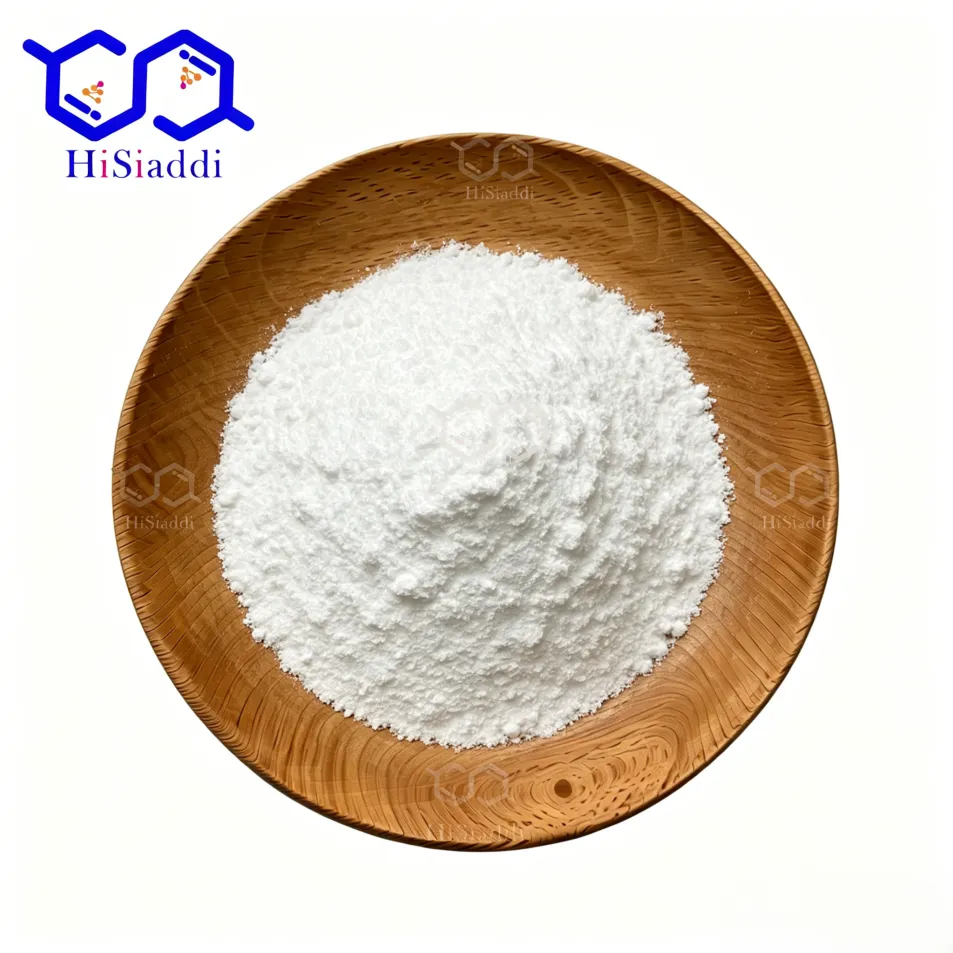
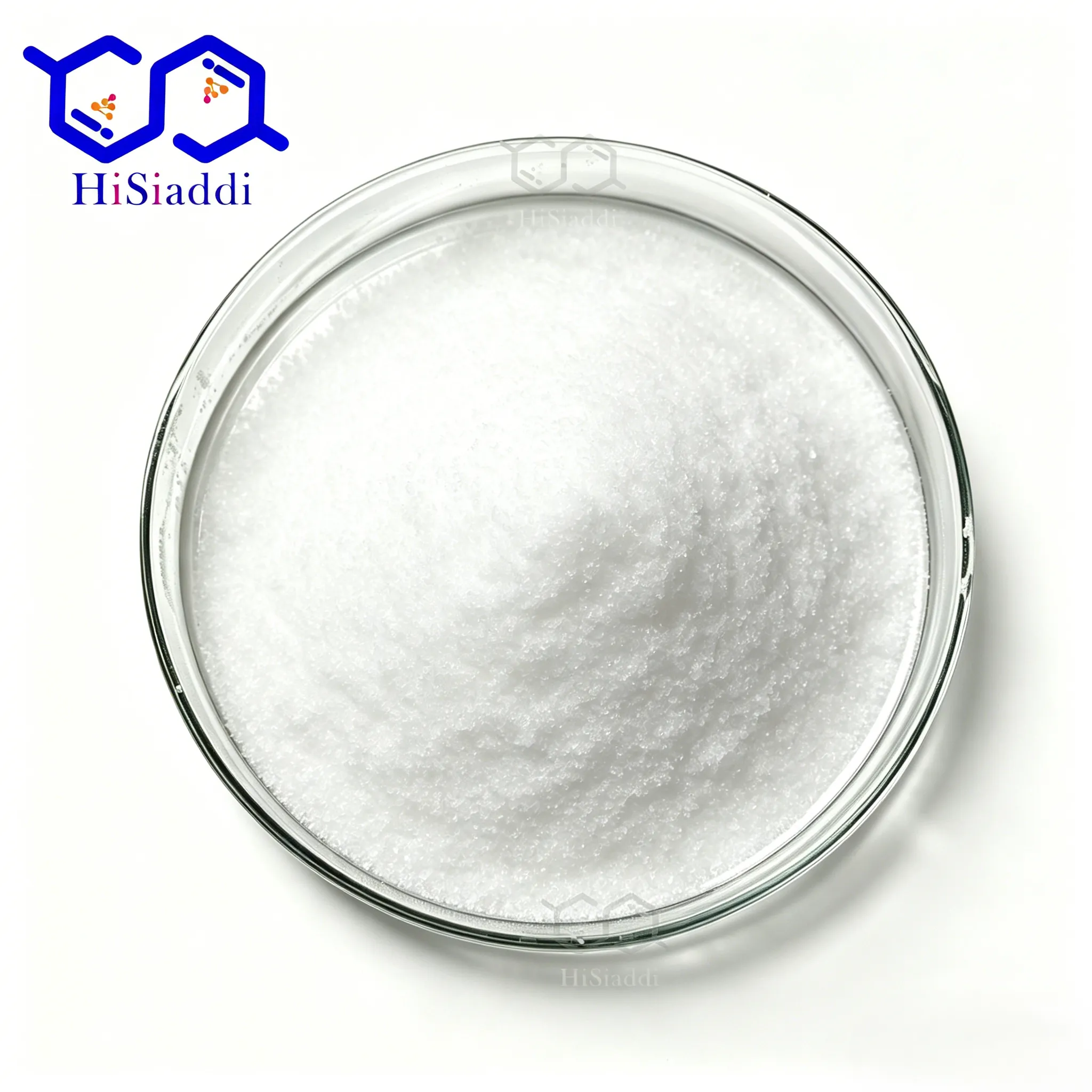
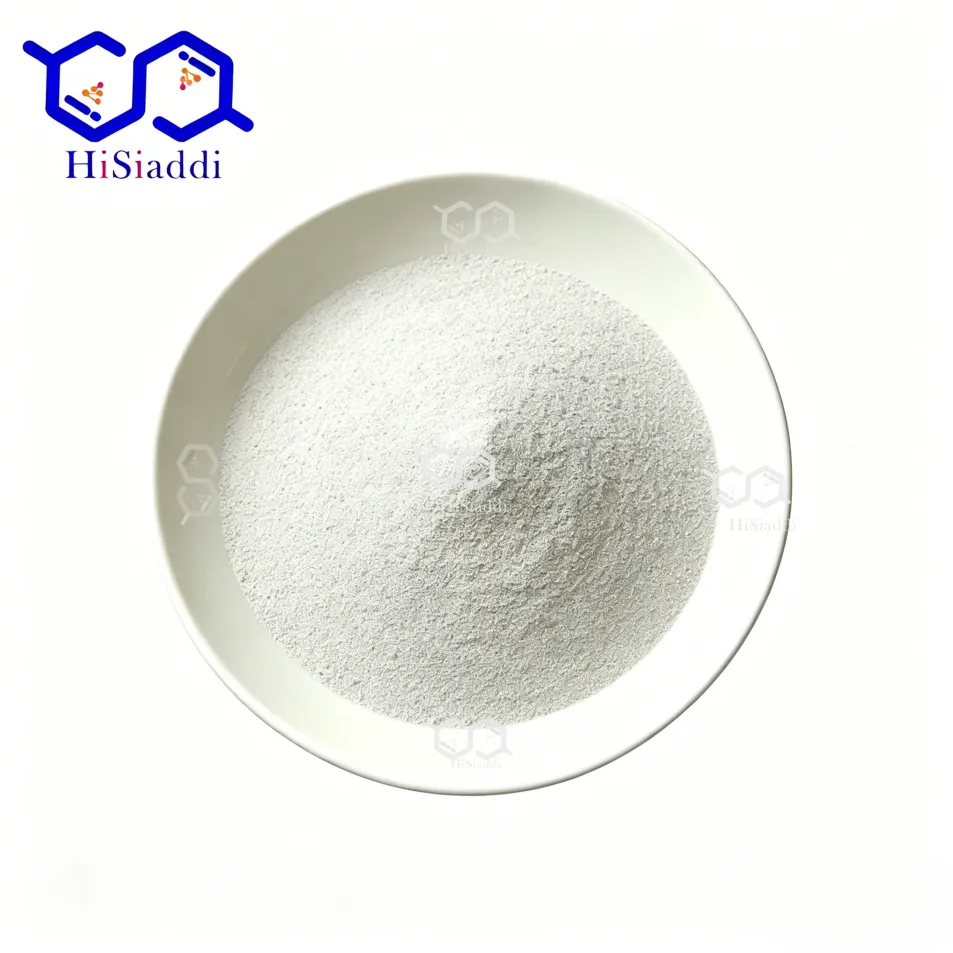
· Appearance: White crystalline powder or acicular crystals at room temperature, free of visible impurities and irritating odor, with a slight umami taste;
· Melting point: 217–218°C; highly soluble in water (approx. 40g/100mL at 25°C), slightly soluble in ethanol, insoluble in organic solvents including ether and acetone;
· Stability: Stable at ambient temperature, acid and alkali resistant; hardly decomposes under high-temperature processing (≤120°C); shelf life exceeds 24 months when stored in light-proof sealed packaging;
· Optical activity: Optically active, specific rotation \([\alpha]_{D}^{20}\) ranging from -7.0° to -8.5° (c=5, water), serving as the core indicator to distinguish L-Theanine from D-Theanine;
· Safety: Naturally present in tea leaves with low toxicity and no carcinogenicity. Approved as a new food raw material by the National Health Commission of China in 2014, with a daily consumption limit ≤0.4g, applicable to food, health supplements, cosmetics and other sectors.
As a functional raw material with nutritional benefits, L-Theanine boasts prominent advantages and is widely used in food and health supplement industries with the following characteristics:
1. Sedative & calming effect: Crosses the blood-brain barrier to regulate brain neurotransmitters, relieving anxiety and improving sleep without causing drowsiness, suitable for functional food and health supplement scenarios;
2. Synergistic potentiation: When compounded with caffeine, it mitigates caffeine’s stimulatory side effects while boosting focus and concentration, making it a core raw material for energy drinks and sports supplements;
3. Antioxidant & liver-protective effects: Possesses antioxidant capacity to scavenge free radicals and protect liver cells, applicable to liver-protecting health supplements and functional foods;
4. High safety profile: Natural-derived products have no side effects and long-term consumption is safe, complying with food safety standards of China, the EU, the US and other regions;
5. Flavor modification: Delivers mild umami and sweet notes to mask bitterness and astringency in foods and beverages, ideal for tea drinks and snack production.
The application of L-Theanine is closely correlated with production process, purity and compliance certifications, concentrated in four major categories dominated by functional foods and health supplements:
1. Functional Foods & Beverages: Energy drinks, tea beverages, snacks and meal replacement powders, mainly demanded for calming effects and flavor improvement with full compliance requirements;
2. Health Supplements & Dietary Supplements: Sleep-improving, liver-protecting and anti-anxiety supplements, requiring high purity, high bioavailability and complete compliance certifications;
3. Cosmetics & Skincare Products: Soothing facial masks and skincare items, demanding mildness, low irritation, antioxidant properties and improved skin condition;
4. Pet Food: Calming pet snacks and supplements, required to be non-toxic and effective for pet emotional regulation.
The global L-Theanine market is divided into three major grades based on production technology, purity and applicable scenarios, with significant differences in indicators directly determining sourcing suitability. Food grade accounts for the largest market share.
表格
Grade | Production Process | Minimum Purity | Specific Rotation \([\alpha]_{D}^{20}\) | Max Moisture | Max Ash | Max Heavy Metals (ppm) | Core Application Scenarios |
Pharmaceutical Grade | Biosynthesis + Multiple Recrystallization Refining | 99.5% | -7.5°~-8.5° | 0.1% | 0.05% | ≤5 | High-end health supplements, pharmaceutical intermediates |
Food Grade | Biosynthesis / Green Tea Extraction + Refining | 99.0% | -7.0°~-8.5° | 0.2% | 0.1% | ≤10 | Functional foods, beverages, standard health supplements |
Industrial Grade | Chemical Synthesis + Simple Refining | ≤98.0% | -6.0°~-9.0° | ≥0.3% | ≥0.2% | ≤20 | Pet food, low-end cosmetics (non-export) |
The following key indicators must be prioritized during sourcing to avoid insufficient efficacy and compliance failures caused by substandard products:
1. Purity: Directly determines product efficacy and safety. Pharmaceutical grade ≥99.5%, food grade ≥99.0%; purity below standards reduces efficacy and introduces impurities;
2. Specific rotation: Critical identification indicator. Qualified L-Theanine must fall within -7.0°~-8.5° (aqueous solution); values outside this range indicate D-Theanine contamination or impurities, cutting bioavailability drastically;
3. Moisture content: Excess moisture leads to caking and mold growth, undermining storage stability. Max 0.2% for food grade, max 0.1% for pharmaceutical grade;
4. Ash & heavy metals: High ash content signals low purity; excess heavy metals (lead, arsenic, mercury, etc.) pose safety hazards. Max 10ppm heavy metals for food grade, max 5ppm for pharmaceutical grade;
5. Residual solvents: Biosynthetic and chemically synthesized products must be tested for residual solvents to meet global food safety standards (e.g. EU EC 1881/2006) with residuals within permissible limits or non-detectable;
6. Microbiological indicators: Food and pharmaceutical grades must comply with corresponding microbial limits (total plate count ≤1000CFU/g, mold and yeast ≤100CFU/g, absence of pathogenic bacteria).
Low-quality products circulate in the global L-Theanine market and must be avoided during sourcing, with the following critical red flags:
1. Products labeled as food/pharmaceutical grade with purity ≤98.0%, mostly crudely manufactured with impurities and D-Theanine;
2. Specific rotation outside the -7.0°~-8.5° range or unmarked optical activity, indicating L/D racemic mixtures with only ~45% bioavailability of pure L-Theanine;
3. Heavy metals ≥20ppm, excessive microbial load or lack of microbial test reports, posing food safety risks;
4. No complete compliance documents (COA, MSDS), with unavailable test data for purity, optical activity and other core indicators, failing to guarantee environmental and food safety compliance;
5. Yellowed, caked or malodorous appearance, indicating oxidation, mold or insufficient purity – purchase is strictly forbidden.
Global L-Theanine suppliers are split into three tiers with distinct strengths, weaknesses and applicable scenarios. Chinese manufacturers dominate global supply, accounting for over 70% of worldwide capacity, primarily adopting biosynthesis technology.
1. Core Enterprises: Blue California (US, brand Suntheanine®), Kyowa Hakko Bio (Japan, brand Suntheanine®), Ajinomoto (Japan)
2. Product Advantages: Biosynthesis followed by multiple recrystallization refining with exceptional batch stability; pharmaceutical grade purity ≥99.5% with full compliance certifications including US FDA GRAS, EU EFSA, Kosher and Halal, supplied to top European and American health supplement and food enterprises (Nestlé, P&G);
3. Disadvantages: High FOB prices (60%–80% higher than Chinese manufacturers), long sea transit time (40–50 days), high minimum order quantity (≥20 tons);
4. Applicable Scenarios: High-end European/American health supplements, pharmaceutical intermediates, food-contact products and other sectors with stringent compliance and purity requirements.
1. Core Enterprises: Zhejiang Huakang Pharmaceutical Co., Ltd., Jiangsu Aikang Biomedicine R&D Co., Ltd., Huzhou Zhanwang Pharmaceutical Co., Ltd., Anhui BBCA Group Co., Ltd.
2. Product Advantages: Core global L-Theanine suppliers (Zhejiang Huakang boasts annual output over 3,000 tons), adopting biosynthesis or green tea extraction processes; food grade ≥99.0% purity, pharmaceutical grade ≥99.5% purity with simplified compliance certifications (FDA, REACH, RoHS); FOB prices 40%–60% lower than international giants, flexible lead times with low minimum order quantity (≥5 tons), extensively exported to Southeast Asia, the Middle East and Latin America;
3. Segment Strengths:
o Zhejiang Huakang Pharmaceutical: Domestic industry leader with mature biosynthesis technology, supplying both food and pharmaceutical grades with export volume exceeding 45%, ideal for international food and health supplement manufacturers;
o Jiangsu Aikang Biomedicine: Core pharmaceutical grade producer with ≥99.5% purity and compliant optical activity, suitable for high-end health supplements and pharmaceutical intermediates;
o Huzhou Zhanwang Pharmaceutical: Leading green tea extract L-Theanine manufacturer with natural source products for natural food and tea beverage applications;
4. Applicable Scenarios: Mid-to-high-end global procurement, emerging market imports, domestic food and health supplement production – the primary choice for global buyers.
1. Core Characteristics: Chemical synthesis or crude extraction processes, mainly industrial grade with purity ≤98.0%, incomplete compliance certifications, low prices but unstable quality;
2. Sourcing Limitations: Only permitted for domestic low-end pet food and general cosmetics; prohibited for food, health supplement and export applications, prone to compliance failures and insufficient efficacy;
3. Core Risks: High impurity content, substandard optical activity and excessive microorganisms carrying food safety hazards with high hidden costs.
Targeted supplier recommendations tailored to global regional market characteristics, balancing cost, quality and lead times while leveraging regional trade policy benefits:
1. Domestic China Sourcing: Prioritize Zhejiang Huakang Pharmaceutical, Jiangsu Aikang Biomedicine and Huzhou Zhanwang Pharmaceutical. No import tariffs, low logistics costs, lead times of 3–7 days, customizable packaging and grades – optimal for domestic buyers;
2. Southeast Asia Sourcing: Choose Chinese suppliers with FOB Shanghai/Ningbo shipments or local bonded warehouse stock, enjoying zero tariffs under RCEP with transit times of 7–15 days for low cost and fast delivery;
3. European & American Sourcing: Select Blue California, Kyowa Hakko Bio local bonded warehouse stock or Chinese suppliers’ European bonded warehouse inventory to avoid partial tariffs, with 30–40 day lead times and full FDA/EFSA compliance documentation;
4. Middle East & Latin America Sourcing: Opt for Chinese suppliers’ FOB export goods distributed via Southeast Asian transit warehouses to evade high tariffs, with 20–30 day lead times and outstanding cost-performance matching local food and health supplement markets.
1. Core Sourcing Requirements: Pharmaceutical grade L-Theanine mandatory, purity ≥99.5%, specific rotation -7.5°~-8.5%, moisture ≤0.1%, heavy metals ≤5ppm, biosynthetic products preferred for high bioavailability;
2. Supplier Selection: Prioritize Blue California, Zhejiang Huakang Pharmaceutical and Jiangsu Aikang Biomedicine, requiring full compliance certifications including FDA GRAS, EU EFSA, Kosher and Halal for sleep-improving and liver-protecting high-end supplements;
3. Key Indicators: Bioavailability ≥98%, recommended addition rate 0.1%–0.3%, effective for anxiety relief and sleep improvement with no side effects, complying with global health supplement registration standards;
4. Sourcing Red Flags: Ban industrial grade and optically non-compliant products to avoid insufficient efficacy and registration/sales compliance failures.
1. Core Sourcing Requirements: Food grade L-Theanine, purity ≥99.0%, specific rotation -7.0°~-8.5%, moisture ≤0.2%, compliant microbial indicators; either biosynthetic or green tea extract variants acceptable;
2. Core Indicators: Excellent water solubility with rapid dissolution without precipitation, mild neutral flavor, compatible compounding with caffeine for energy drinks and tea production with no precipitation or layering;
3. Supplier Selection: Prioritize Zhejiang Huakang Pharmaceutical and Huzhou Zhanwang Pharmaceutical, requiring food contact test reports complying with EU EC 1881/2006 and China GB 2760 to guarantee food safety.
1. Core Sourcing Requirements: Food or cosmetic grade L-Theanine, purity ≥99.0%, heavy metals ≤10ppm, low irritation and clean formulations for soothing skincare and facial masks;
2. Core Indicators: Superior antioxidant capacity to scavenge free radicals and improve skin condition, mild formula passing skin irritation tests suitable for sensitive skin product manufacturing;
3. Supplier Selection: Prioritize Jiangsu Aikang Biomedicine and Huzhou Zhanwang Pharmaceutical, requiring cosmetic grade compliance reports with no excess residual solvents or heavy metals to ensure product safety.
1. Core Sourcing Requirements: Industrial or food grade L-Theanine; food grade (≥99.0% purity) for high-end pet food, industrial grade (≥98.0% purity) for standard pet snacks;
2. Supplier Selection: Prioritize Zhejiang Huakang Pharmaceutical and Anhui BBCA Group for outstanding cost-performance, no mandatory high-end compliance certifications, 20%–30% lower procurement costs than pharmaceutical grade;
3. Key Indicators: Non-toxic, odor-free and palatable for pets, alleviating pet stress without side effects and complying with pet food safety standards.
1. Demand Confirmation: Clarify application sector (health supplement/food/cosmetic), product grade, production technology (biosynthesis/green tea extraction), procurement volume, export region and compliance requirements, locking core indicators (purity, optical rotation);
2. Preliminary Supplier Screening: Filter tier-matched suppliers, verify production capacity, technology and compliance certifications, prioritizing manufacturers with export experience, sufficient capacity and complete certification documentation;
3. Sample & Documentation Audit: Request 500g samples and full compliance certificates (COA, MSDS, FDA/EFSA certifications), inspect sample appearance and core indicators, eliminate suppliers with incomplete documents or substandard samples;
4. Third-Party Testing: Submit samples to CMA-accredited third-party laboratories for full testing of purity (HPLC method), specific rotation, moisture, heavy metals, microorganisms and other core indicators to confirm alignment with selection standards;
5. Small-Batch Trial Production: Procure 5–20kg small lots for trial manufacturing of food, health supplements or cosmetics to verify efficacy, flavor and formulation compatibility with production workflows;
6. Supply Contract Signing: Explicitly define product grade, production technology, core indicators, lead times, payment terms, return clauses, and unconditional return/compensation provisions for non-compliant test results;
7. Warehouse Receipt Inspection & Regular Spot Checks: Conduct strict incoming inspection for every batch, implement periodic spot testing of core indicators, establish supplier management files and quarterly supplier rating optimization.
1. Mandatory Documentation: Complete COA for each batch (covering purity, optical rotation, moisture, ash, heavy metals, microorganisms), bilingual MSDS, compliance certification reports (FDA/EFSA/Kosher). Imported goods require certificates of origin and third-party SGS/Eurofins inspection reports;
2. Visual Inspection: Food and pharmaceutical grades must be uniform white crystalline powder free of caking, yellow discoloration and odor; industrial grade white crystalline powder may show slight yellow tint with no visible impurities after crushing. Yellowed, caked or malodorous goods shall be rejected immediately;
3. Re-test Core Indicators: Mandatory HPLC purity, specific rotation and moisture testing for every incoming batch. Pharmaceutical grade requires additional testing for heavy metals, microorganisms and residual solvents; reject and claim compensation for non-compliant batches;
4. Packaging Inspection: 25kg fiber drums lined with food-grade plastic bags (light-proof and moisture-proof) or 1kg/5kg food-grade aluminum foil bags with intact seals and no leakage. Clear labeling including product name, grade, production technology, batch number, production date and expiry date required on all packaging.
1. Quality Risk: Industrial grade falsely marketed as food/pharmaceutical grade, or L/D racemic mixtures leading to insufficient efficacy, food safety hazards and batch-wide quality failures;
2. Compliance Risk: Incomplete supplier compliance certifications resulting in customs detention and fines for export shipments. European and American markets impose strict requirements for FDA GRAS and EU EFSA certifications, with additional product registration documents mandatory for health supplements;
3. Lead Time Risk: Production capacity shortages at small and medium manufacturers, international shipping congestion or tariff policy changes causing delivery delays and disrupted production schedules;
4. Adulteration Risk: Some manufacturers blend low-cost starch or glucose, or add D-Theanine, leading to low purity and abnormal optical rotation with high test failure rates.
1. Quality Risk Mitigation: Prioritize Tier 1 and Tier 2 suppliers, sign quality agreements defining core indicators and compensation terms for non-compliance, conduct full batch spot testing with unconditional return and compensation clauses for substandard goods;
2. Compliance Risk Mitigation: Audit supplier compliance certifications prior to procurement, require core certifications including FDA GRAS and EU EFSA, prepare certificates of origin and third-party compliance test reports in advance for export shipments, and verify supplementary product registration credentials for health supplements;
3. Lead Time Risk Mitigation: Specify lead time and delay compensation clauses in supplier contracts, collaborate with 2–3 core suppliers to diversify delivery risks, maintain 1–2 months of safety stock to offset raw material price hikes and delivery delays;
4. Adulteration Risk Mitigation: Request HPLC chromatograms from suppliers to confirm absence of impurity peaks, strictly test purity and specific rotation upon warehouse receipt to avoid adulterated goods and L/D racemic mixtures.
1. Prioritize Top Chinese Suppliers: Zhejiang Huakang Pharmaceutical, Jiangsu Aikang Biomedicine, Huzhou Zhanwang Pharmaceutical and other manufacturers deliver balanced quality, cost and compliance certifications with sufficient production capacity and flexible lead times, customizable grades and packaging, representing the optimal global L-Theanine sourcing choice for all application scenarios;
2. Match Grade & Technology to Application Scenarios: Select biosynthetic pharmaceutical grade for high-end health supplements and pharmaceutical intermediates; food grade (biosynthetic or green tea extract) for functional foods and beverages; industrial grade for pet food and low-end cosmetics. Never deploy industrial grade materials in food, health supplement or export products;
3. Emphasize Optical Rotation & Purity: Ensure specific rotation falls within -7.0°~-8.5° for all applications to avoid L/D racemic mixtures. Opt for ≥99.5% purity for high-end sectors and ≥99.0% purity for standard applications;
4. Long-Term Cooperation Priority: Sign annual long-term supply agreements with core suppliers to lock prices and lead times, negotiate payment term concessions, and request technical support (dosage optimization, compound formulation solutions) to cut procurement costs and strengthen supply chain stability;
5. Regionally Optimize Sourcing: Source domestically from local manufacturers for China market; select Chinese FOB export goods for Southeast Asia; utilize local bonded warehouses or Chinese transit inventory for European and American markets to balance cost and lead times while fully leveraging regional trade policy benefits.
L-Theanine sourcing and selection must revolve around five core dimensions: application scenario, product grade, production technology, compliance certification and core indicators. Prioritize matching grade products from top Chinese manufacturers to balance quality, cost and compliance. High-end sectors (health supplements, pharmaceutical intermediates) focus on ultra-high purity, compliant optical rotation and full documentation; mid-to-low-end sectors (food, pet food) prioritize cost-performance and batch stability. Strictly avoid inferior products and compliance risks to guarantee raw material compatibility with food and health supplement manufacturing while reducing procurement and supply chain costs.
Driven by rapid global growth in functional food and health supplement demand, L-Theanine market consumption will keep rising. Chinese top manufacturers will continue dominating the global market thanks to mature biosynthesis technology and cost advantages, emerging as the primary supply partner for global buyers. During sourcing, always focus on product optical rotation, purity and compliance certifications, accurately match grades and production processes to downstream applications, and build stable supplier partnerships to secure an efficient and resilient supply chain.
For inquiries about L-Theanine sourcing, product selection or other product questions, please contact HiSiaddi customer service or visit our official website www.hisiaddi.com.

 +86-13120989737
  info@hisiaddi.com
 English