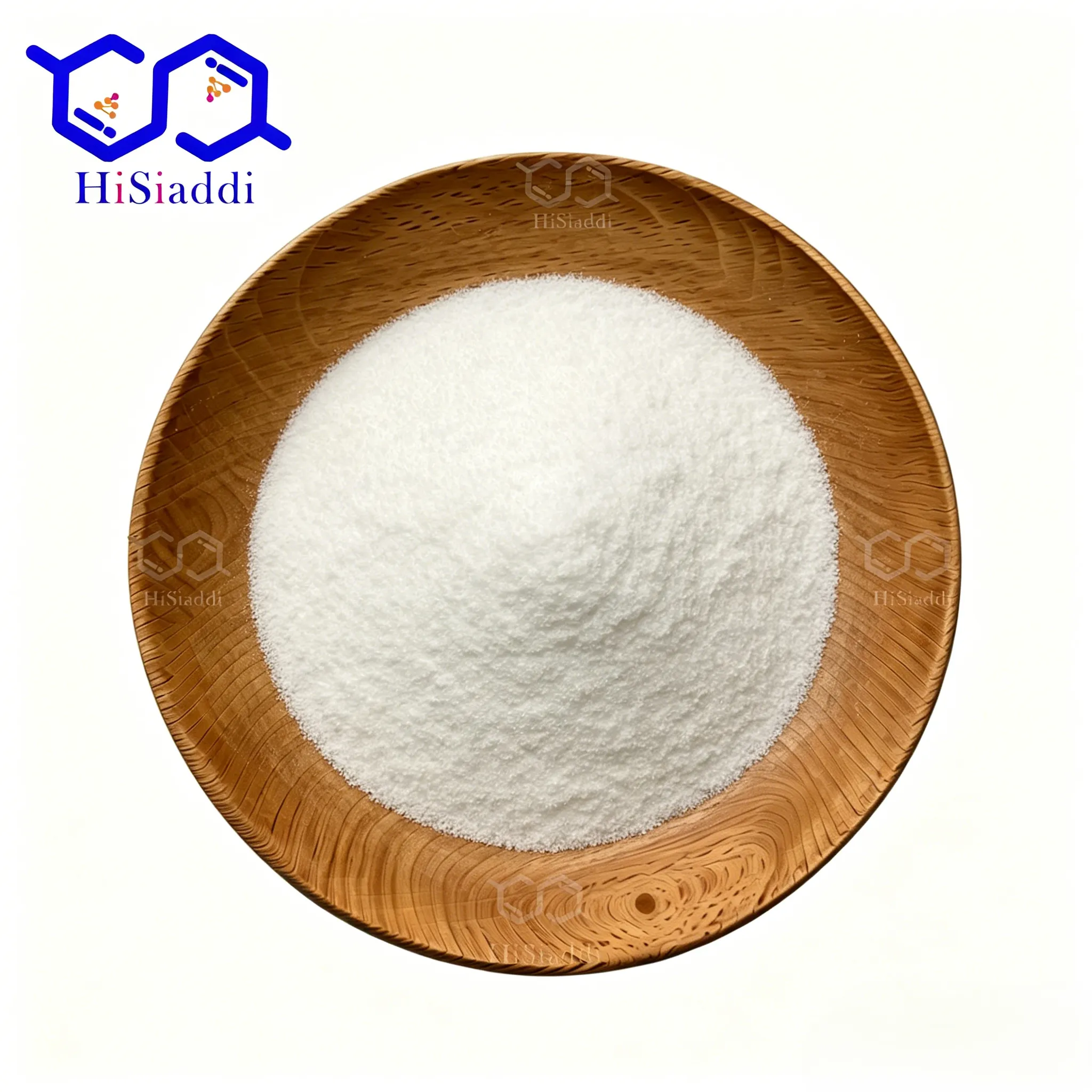
As a new-type foreign trade service provider driven by both technology commercialization and foreign trade services, HiSiaddi has established a "1+2+3+4=1" service system and can supply original manufacturer materials of Silicon Nitride from multiple well-known global brands. Having over a decade of deep engagement in the Silicon Nitride foreign trade market, HiSiaddi has sorted out global supply and demand market data for your reference.
For inquiries about Silicon Nitride supply & demand market conditions or product information, please contact HiSiaddi customer service or visit the official website: www.hisiaddi.com.
This report focuses on silicon nitride powder (Si₃N₄, CAS No.: 12033-89-5), integrating global production capacity, demand, import & export data, competitive landscape, price trends and medium-to-long-term forecast data from 2024 to 2026. It covers four core downstream sectors: ceramic materials, electronic semiconductors, new energy and aerospace, subdividing product tracks by purity, particle size and application scenarios. Combined with industry hot topics including environmental compliance and high-end structural ceramic upgrading, this report fully unpacks industrial chain supply-demand contradictions, cost logic, industry risks and corporate operation strategies, presented in full text format.
Silicon nitride powder is a high-performance ceramic raw material, primarily mixed hexagonal α-Si₃N₄ and β-Si₃N₄ crystal powder, categorized into micron-grade (particle size 1–10 μm) and nano-grade (particle size ≤100 nm). Mainly synthesized via nitridation reaction of silicon powder and nitrogen, it features outstanding high-temperature resistance, high strength, high hardness and corrosion resistance, serving as the core raw material for high-end structural and functional ceramics, widely applied in new energy, electronics, aerospace and automotive industries. Classified by purity: industrial grade (purity ≥98%), high-end electronics grade (purity ≥99.5%, low impurity content), aerospace grade (purity ≥99.9%, high densification). Industrial grade accounts for over 65% of market volume as the mainstream product category.
The global silicon nitride powder raw material market size reached approximately USD 1.87 billion in 2025, growing 12.3% year-on-year, with a 2025–2033 compound annual growth rate (CAGR) of 8.5%. Total global production capacity stands at roughly 48,000 tons per annum, with total annual demand of 45,000 tons, maintaining a tight overall supply-demand balance. Driven by raw material supply volatility and rising demand from downstream new energy & semiconductor industries, structural shortages persist for high-end electronics and aerospace grade silicon nitride powder. China is the world’s core producer with 60% of global capacity, dominating mid-to-low-end markets via cost and industrial chain advantages, while import reliance for high-end electronics and aerospace grade products remains above 35%. The US, Germany and Japan master high-end refining and sintering technologies, controlling the global high-end market. The Asia-Pacific region represents the world’s largest consumer market, with steady demand growth in new energy and semiconductor sectors across Europe, America and China. The global market size is projected to reach USD 3.5 billion by 2033, with high-end electronics and aerospace grade silicon nitride powder as core growth tracks.
1. Industrial Grade (Purity ≥98%, Particle Size 1–10 μm): Mainly used for ordinary ceramic cutting tools, wear-resistant ceramic components and automotive parts, with loose requirements for impurity content and particle size uniformity. Low technical barriers, low unit price, accounting for over 65% of total market demand as the mainstream product.
2. High-End Electronics Grade (Purity ≥99.5%, Particle Size 0.5–5 μm): Strict control of heavy metal and impurity levels, compliant with EU RoHS and US UL electronic material standards, excellent insulation performance. Applied in semiconductor packaging, electronic ceramic substrates and new energy battery insulation components, high technical barriers and added value, accounting for approximately 20% of market demand.
3. Aerospace Grade (Purity ≥99.9%, Particle Size 0.1–2 μm): Produced via high-purity refining with exceptional high-temperature and thermal shock resistance, suitable for aerospace engine parts and spacecraft structural components, meeting aerospace material standards. Highest technical barriers and added value, accounting for roughly 15% of market demand.
· Ceramic Materials: 22,500 tons (50%)
· Electronic Semiconductors: 9,000 tons (20%)
· New Energy Industry: 6,800 tons (15%)
· Aerospace: 4,500 tons (10%)
· Other Sectors: 2,200 tons (5%)
· Excellent high-temperature resistance: Decomposition temperature ≥1900℃, long-term service temperature above 1200℃, suitable for high-temperature working conditions
· Superior mechanical performance: Hardness second only to diamond, high compressive strength, outstanding thermal shock and wear resistance for high-end wear-resistant components
· Strong chemical stability: Acid & alkali resistance, corrosion resistance, inert to most molten metals for harsh working environments
· Excellent insulation of electronics-grade products: Low dielectric constant for semiconductor and new energy electronic applications
· Eco-friendly properties: Non-toxic, pollution-free, meeting high-end manufacturing environmental standards, capable of partially replacing metallic materials
Core process: Silicon powder direct nitridation – high-purity silicon powder reacts with nitrogen under high-temperature nitridation to generate silicon nitride powder, followed by milling, classification and refining to form finished products. High-end products require additional purification, particle size regulation and crystal phase control processes, with technical barriers concentrated in high-purity refining, uniform particle size control and crystal phase modulation to match high-end application requirements.
· Upstream: Core raw materials – high-purity silicon powder (40–45% of total production cost) and nitrogen gas, plus catalysts and high-purity reagents, with major suppliers concentrated in China, the US and Germany. Silicon powder prices fluctuate sharply due to demand from metallic silicon and photovoltaic industries.
· Midstream: Global manufacturers distributed across China, the US, Germany and Japan, forming tiered competition differentiated by production processes and product grades. Core competitive advantages lie in product purity, particle size uniformity and compatibility with high-end application scenarios.
· Downstream: Ceramic manufacturers (Kyocera, Oriental Zirconium), electronic semiconductor enterprises (TSMC, Samsung), new energy manufacturers (CATL, BYD) and aerospace companies. Customers impose strict requirements on product purity and performance stability with high supplier stickiness.
Total global silicon nitride powder production capacity reached approximately 48,000 tons per annum in 2025, with a supply pattern of "China dominates mid-to-low-end markets, Europe, America and Japan control high-end markets":
1. China: 28,800 tons per annum capacity (60% global share), core production regions Shandong, Jiangsu and Zhejiang. Leveraging high-purity silicon powder resource advantages, production focuses on industrial grade and general high-end products, with 70% of output exported – the world’s largest supply base. Leading domestic manufacturers accelerate R&D of high-end electronics and aerospace grade products, holding 30% of domestic high-end capacity.
2. United States: 7,200 tons per annum capacity (15% global share), core production regions California and Ohio, specializing in high-end electronics and aerospace grade products for North American & European high-end markets with superior process and certification advantages.
3. Germany: 4,800 tons per annum capacity (10% global share), core production region Bavaria, focusing on high-end electronics and aerospace grade products compliant with strict EU standards for European & North American high-end markets.
4. Japan: 3,600 tons per annum capacity (7.5% global share), focused on modified electronics and aerospace grade silicon nitride powder with leading technology, supplying high-end manufacturing sectors across Asia-Pacific and North America.
5. Other Regions: South Korea, India and others with combined capacity of 3,600 tons per annum (7.5% global share), only producing industrial grade products for domestic markets.
Global actual output reached roughly 45,000 tons in 2025 with an average industry capacity utilization rate of 94%. Industrial grade capacity is slightly oversupplied, while structural shortages of approximately 5,000 tons per annum exist for high-end products. Restricted by environmental policies and raw material volatility, traditional process capacity declined 3.2% year-on-year, while high-end refined process capacity rose 9.8% year-on-year.
1. Honeywell (USA): World’s largest manufacturer with total capacity 7,200 tons per annum, 16.0% global market share; full product portfolio with core strengths in aerospace and high-end electronics grade products, proprietary crystal phase modulation and high-purity refining technology, customers including Boeing, TSMC and other giants, gross profit margin exceeding 58%.
2. CeramTec (Germany): Total capacity 4,800 tons per annum, 10.7% global market share; specialized in high-end electronics and aerospace grade products with advanced EU-compliant processes, gross profit margin above 55%.
3. China National Electric Materials Co., Ltd. (China): Largest domestic manufacturer with total capacity 5,800 tons per annum, 12.9% global market share; full coverage of industrial and general high-end products, accelerating high-end product R&D, 75% of output exported, gross profit margin over 42%.
1. Kyocera (Japan): Total capacity 3,600 tons per annum, 8.0% global market share; specialized in modified electronics and aerospace grade silicon nitride powder with leading technology, supplying Asia-Pacific electronics and aerospace manufacturers, gross profit margin above 50%.
2. Zhejiang Shenghua Biok Biology Co., Ltd. (China): Total capacity 5,000 tons per annum, 11.1% global market share; focused on industrial and general electronics grade products with prominent cost advantages, leading domestic market share, gross profit margin over 40%.
3. Samsung Fine Chemicals (South Korea): Total capacity 2,000 tons per annum, producing high-end electronics grade products for South Korean semiconductor and electronics enterprises, gross profit margin above 48%.
Small chemical enterprises in China, India and South Korea with combined capacity of approximately 12,000 tons per annum, only manufacturing industrial grade products with outdated processes, poor particle size uniformity and severe homogeneous competition, gross profit margins below 25%. Production capacity shrinks year-on-year amid industry consolidation.
1. Asia-Pacific: 22,500 tons demand (50% global share), China as core consumer accounting for 35% of global demand. New energy, electronics and ceramic industries drive rapid growth in high-end product demand; Japanese and South Korean demand centers on high-end electronics and aerospace grade materials.
2. North America: 9,500 tons demand (21% global share), mature semiconductor and aerospace industries generating robust demand for high-end electronics and aerospace grade products, relying on imports to supplement domestic high-end capacity; US local production primarily meets domestic high-end market demand.
3. Europe: 8,500 tons demand (19% global share), strict environmental standards with high proportion of high-end electronics and aerospace grade product demand. Local capacity covers partial demand, with additional imports required for aerospace grade materials.
4. Other Regions: 4,500 tons demand (10% global share), Brazil, Middle East and other markets dominated by stable-growing industrial grade demand; South Korea’s semiconductor industry drives notable growth in high-end electronics grade consumption.
1. Ceramic Materials (50%): Largest downstream sector. Upgrading high-end structural ceramics (cutting tools, wear-resistant components) boost demand for premium silicon nitride powder; stable demand in Europe, America and China’s high-end manufacturing sectors, with fast growth in emerging Southeast Asian markets. Micron-grade powder for cutting tools, nano-grade for high-end functional ceramics.
2. Electronic Semiconductors (20%): Upgrading semiconductor packaging and electronic ceramic substrate industries drive the fastest growth in high-end electronics grade silicon nitride powder demand (CAGR 11.5%), primarily used for insulation and encapsulation, with North America and China as core consumer markets.
3. New Energy Industry (15%): Demand for battery insulation in new energy vehicles and wear-resistant components for photovoltaic modules drives consumption of industrial and general high-end silicon nitride powder, with stable growth supported by mature new energy industries in China and Europe.
4. Aerospace (10%): Rising demand for high-temperature resistant, high-strength materials for aerospace engine components and spacecraft structural parts fuels consumption of aerospace grade silicon nitride powder, with North America and Europe as core consumer markets.
1. Chinese Industrial Grade Silicon Nitride Powder (5 μm particle size, 98% purity): 85,000–95,000 CNY/ton
2. Chinese High-End Electronics Grade (1 μm particle size, 99.5% purity): 180,000–200,000 CNY/ton
3. Chinese Aerospace Grade (0.5 μm particle size, 99.9% purity): 280,000–320,000 CNY/ton
4. European & American High-End Electronics Grade (1 μm particle size, 99.5% purity): 240,000–270,000 CNY/ton
5. European & American Aerospace Grade (0.5 μm particle size, 99.9% purity): 380,000–420,000 CNY/ton
Chinese products benefit from raw material and cost advantages, priced 25–30% lower than European & American equivalents. Significant price gaps persist for high-end products due to process and certification barriers; market recognition of domestic high-end products requires further improvement amid inconsistent purity stability and particle size uniformity.
The global market maintained a tight supply-demand balance in 2025, with slightly oversupplied industrial grade materials and persistent structural shortages of high-end products. Prices are heavily influenced by high-purity silicon powder costs (40%+ of total production cost). Raw material prices rose 13–17% from 2024 to 2025, pushing silicon nitride powder prices up 10–13%.
Long-Term Forecast (2025–2033): Industrial grade prices will fluctuate within a narrow band with annual volatility ±2%; sustained supply shortages for high-end electronics and aerospace grade materials will drive annual price growth of 7–9%. Aerospace grade products will maintain a 25–30% price premium supported by technical and certification barriers.
Upgrading downstream electronics, new energy and aerospace industries drive silicon nitride powder development toward ultra-high purity, narrow particle size distribution and customized specifications. The proportion of high-end low-impurity electronics grade and modified aerospace grade products will continue rising as core growth drivers. Customized grades (semiconductor packaging exclusive, aerospace engine exclusive) expand to match segmented application scenarios; demand grows for nano-grade and low-oxygen modified powders for high-end electronics and aerospace sectors.
Stricter environmental policies force the phase-out of high-pollution, high-energy-consumption processes, with continuous nitridation reaction, tail gas recovery and wastewater recycling technologies becoming mainstream. Leading manufacturers increase R&D investment in green processes to reduce energy consumption and environmental costs, prioritizing optimization of product purity and particle size uniformity control to boost batch stability.
China’s global capacity share will continue rising to 65% by 2033. Domestic leading manufacturers accelerate R&D of high-end electronics and aerospace grade products, breaking European, American and Japanese monopolies over core high-purity refining and crystal phase modulation technologies, reducing import reliance for high-end materials below 15%. The Asia-Pacific region will emerge as the global core production base for high-end silicon nitride powder, with major breakthroughs in high-end electronics grade manufacturing.
Silicon nitride powder applications expand continuously in semiconductor packaging, new energy battery insulation and aerospace structural component segments, with emerging market penetration in biocompatible medical ceramics and eco-friendly wear-resistant materials creating new demand growth points. Enterprises focus on segmented tracks to develop customized modified products for higher added value and competitive differentiation.
1. Upstream Raw Material Volatility Risk: High-purity silicon powder prices fluctuate sharply driven by metallic silicon and photovoltaic industry demand, squeezing corporate profit margins with weak risk resistance for small & medium manufacturers. Instable nitrogen supply further intensifies cost pressures.
2. Compliance & Policy Risk: Upgrading global standards for electronics and aerospace materials lengthen high-end product certification cycles and raise associated costs, out of reach for small manufacturers. Tightening environmental policies increase wastewater and waste gas treatment costs, eliminating substandard small-scale production capacity.
3. Market Competition Risk: Severe homogeneous price competition for industrial grade products; European, American and Japanese enterprises monopolize high-end markets, creating barriers for domestic manufacturers pursuing high-end transformation with external reliance on core technologies.
4. Technological Innovation Risk: High R&D costs and technical difficulty in developing core high-end refining and crystal phase modulation processes, with rapid technological iteration risking loss of market competitiveness for technologically lagging enterprises. Inconsistent product performance stability undermines market acceptance.
5. Supply Chain & Demand Risk: Global supply chain disruptions impact raw material imports and product exports; downstream electronics and aerospace demand may face cyclical declines driven by economic cycles and industrial policies, reducing corporate capacity utilization rates.
1. Technology R&D: Increase investment in high-end process development, optimize high-purity refining and particle size regulation technologies to break through core crystal phase modulation and low-oxygen modification processes; complete RoHS, UL and other international certifications; strengthen industry-university-research cooperation to advance modification technology innovation and develop customized product grades.
2. Supply Chain Management: Sign long-term fixed-price contracts with high-purity silicon powder suppliers, develop domestic raw material production bases to boost self-sufficiency; diversify procurement channels to mitigate raw material price volatility; optimize logistics layout to cut cross-border transportation costs and prioritize emerging Southeast Asian & South American markets.
3. Product Portfolio Adjustment: Reduce low-end industrial grade production capacity, focus on high-end electronics and aerospace grade products; develop nano-grade and low-oxygen modified materials to lift added value and match segmented application scenarios; launch exclusive customized grades for different downstream sectors.
4. Market Development: Complete international compliance certifications to break European, American and Japanese high-end market barriers; deepen market penetration in Asia-Pacific, South America and Southeast Asia with localized sales & service networks; sign long-term cooperation agreements with leading downstream electronics and aerospace enterprises to secure core customer partnerships.
5. Compliance Operations: Strengthen compliance management to track real-time industry standard upgrades; increase environmental investment to realize green production and reduce pollutant emissions; establish full-process quality traceability systems to guarantee consistent product quality.
1. Market Size: Grow from USD 1.87 billion in 2025 to USD 3.5 billion in 2033 at a CAGR of 8.5%, with high-end electronics and aerospace grade products contributing over 75% of total market growth.
2. Capacity & Demand: Global total production capacity projected to reach 75,000 tons per annum, total demand 71,000 tons per annum; China’s capacity share rises to 65%, import reliance for high-end products falls below 15%.
3. Product Structure: High-end electronics and aerospace grade products account for 35% of total volume, industrial grade drops to 50%; customized modified product demand expands to 15% of total market share.
4. Regional Landscape: Asia-Pacific remains the largest consumer market; domestic high-end silicon nitride powder capacity expands rapidly in China to gradually dominate the global high-end market; South American and Southeast Asian emerging markets deliver the fastest demand growth as core incremental regions.
The global silicon nitride powder market follows a pattern of "China dominates mid-to-low-end markets, Europe, America and Japan control high-end markets" with tight overall supply-demand balance and structural shortages of high-end products. Core growth drivers include upgrading downstream electronic semiconductor, new energy and aerospace industries plus tightening environmental policies. Technical barriers concentrate on high-end product refining, modification and crystal phase regulation; cost and raw material advantages represent core competitiveness for Chinese manufacturers, while breakthroughs in high-end technology form the key to domestic substitution.
Prioritize leading enterprises with independent high-end modification R&D capabilities, complete international compliance certifications and green process technologies (domestic: China National Electric Materials, Zhejiang Shenghua Biok; international: Honeywell, CeramTec). Focus market expansion on high-end electronics and aerospace grade products while reducing low-end industrial grade capacity. Track the domestic localization progress of high-end processes and seize growth opportunities in semiconductor packaging, aerospace structural components and new energy battery insulation segments. Emphasize customized product R&D and international certification development to address industry competition and policy risks, while prioritizing channel layout in emerging South American and Southeast Asian markets.
For inquiries about Silicon Nitride supply & demand market conditions or product information, please contact HiSiaddi customer service or visit the official website: www.hisiaddi.com.

 +86-13120989737
  info@hisiaddi.com
 English