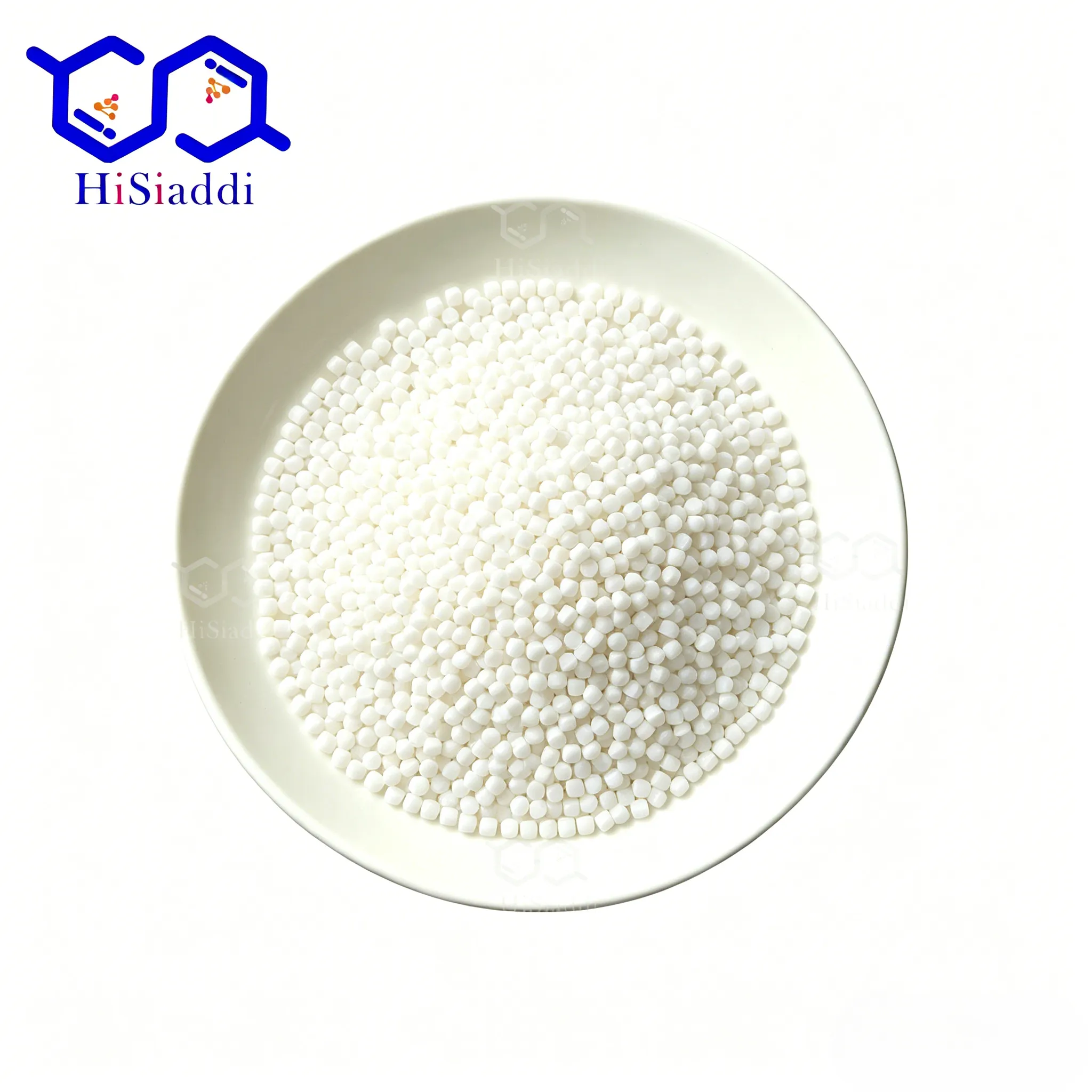
As a new foreign trade service provider driven by both technology transformation and export business, HiSiaddi has built a "1+2+3+4=1" service system, offering access to original factory supplies of PEI granules from multiple well-known brands.
Driven by an integrated development model of "1+1>2" that combines technology transformation and export services, HiSiaddi continuously monitors the global PEI granules market from both R&D and commercial perspectives. Today, we will conduct a professional analysis of new shifts and trends across the global PEI granules market.
If you require more comprehensive and valuable market information on PEI granules, please contact HiSiaddi customer service.
The global PEI market maintains robust high growth. Its market size reached approximately USD 609–738 million in 2025, and it is projected to surpass USD 1–1.4 billion by 2034–2035 at a compound annual growth rate (CAGR) of 6.01%–6.7%. A core shift lies in the restructuring of regional market dynamics:
· North America (dominated by the U.S.) remains the traditional largest market, accounting for 32%–50% of global consumption, yet its growth rate is slowing;
· Europe holds a stable 24%–40% market share, focusing on high-end niche applications;
· The Asia-Pacific region (China, Japan, South Korea, India) claims a 41% market share to become the world’s top consumption zone and the fastest-growing market. 78% of new PEI production capacity slated for 2026–2030 will be launched in the Asia-Pacific, fueled by the expansion of electronics manufacturing, new energy vehicle production, and the booming 5G and semiconductor industries.
China stands as the core growth driver within Asia-Pacific. Its PEI demand exceeded 15,000 tons in 2024, with a five-year CAGR of 12.8%.
While demand for general-purpose PEI remains steady, high-value modified specialty grades are seeing explosive growth. Demand for glass fiber-reinforced PEI (45% higher tensile strength), carbon fiber-reinforced PEI, low-dielectric-loss PEI (for 5G/mmWave), medical-grade PEI (USP Class VI certified), and aerospace-grade PEI (FAR 25.853 flame retardant) rises at 30%–45% annually.
In 2025, end-use demand breakdown for PEI was:
· 41.8% in electrical & electronics (core applications: 5G base station structural components, Mini-LED backplates);
· 18.5% in healthcare (disposable endoscopes, dialysis stents);
· 15.3% in new energy vehicles (battery module insulation brackets, high-voltage connectors);
· 6.2% in aerospace (highest unit value despite low volume share).
A structural imbalance has emerged: low-end general-purpose capacity is gradually oversupplied, while high-end specialty grades (semiconductor, aerospace, medical) remain chronically undersupplied, forming the core market gap.
1. Green low-carbon development becomes a mandatory trend EU CBAM carbon tariffs and global carbon neutrality policies force decarbonization across the entire PEI industrial chain.
· R&D of bio-based PEI accelerates: Global patent filings for bio-based PEI rose 26% from 2025 to 2030, and several manufacturers have achieved mass production with 15%–30% bio-based content.
· Closed-loop recycling technology achieves breakthroughs: Leading European firms realize 100% in-line recycling and re-pelletization of PEI production waste, with property degradation controlled within 5%. Chinese enterprises advance green electricity polymerization and closed solvent recovery, cutting energy consumption by 35% compared with traditional processes.
1. Precision & digitalized manufacturing Synthesis processes are shifting from high-energy batch production to AI-driven continuous manufacturing. SABIC leverages digital twin systems to narrow melt flow rate control tolerance to ±0.3 g/10min. China’s first 500-ton/year continuous polymerization pilot line went into operation in 2024, breaking overseas technological monopolies.
Modification technologies focus on nano-filler interface optimization and fluorinated copolymerization to precisely tune critical metrics such as dielectric constant (Dk ≤ 3.0 @ 10 GHz) and heat deflection temperature (≥ 210 °C), catering to high-frequency semiconductor and 5G scenarios.
1.
The global oligopoly remains entrenched SABIC (Saudi Basic Industries) holds an absolute 38% market share, with its ULTEM brand as the industry benchmark. Solvay (13%), RTP, Ensinger and Mitsui Chemicals form the "multiple strong rivals". The world’s top five manufacturers capture 72% of total market share, backed by extremely high patent barriers (SABIC owns 1,872 active patents).
2.
3.
Accelerated domestic substitution in China Leading Chinese firms including Kingfa Science, Pengfulong and Dawn Polymer have overcome technical bottlenecks, launching kiloton-scale production lines in 2024–2025. General-purpose PEI has achieved full localization, priced 15%–20% lower than imported equivalents. However, high-end medical, aerospace and semiconductor grades still rely on imports, with 70% of domestic enterprise patents concentrated on standard filled formulations and weak overseas market presence.
4.
5.
Restructuring toward regionalized supply chains To avoid tariffs, cut logistics costs and secure supply stability, leading manufacturers are rapidly rolling out a "regional manufacturing hub + localized R&D" layout: SABIC adds modification plants in Asia-Pacific; Chinese enterprises build capacity in Southeast Asia and the Middle East. North American and European buyers gradually adopt a dual-supplier strategy combining imported and local materials.
6.
Boasting five core performance advantages—long-term heat resistance up to 180 °C, UL94 V-0 flame retardancy, high insulation, chemical resistance, and sterilizability—PEI continues penetrating new end markets:
· New energy vehicles (37% annual growth): Battery module insulation brackets, high-voltage connectors, charging station housings, motor end caps; replaces metals and traditional engineering plastics to deliver over 30% weight reduction.
· Semiconductors & 5G (40%+ annual growth): Wafer carriers, chip test sockets, 5G mmWave radomes, high-frequency circuit substrates; ultra-low dielectric loss (tanδ ≤ 0.003 @ 10 GHz) enables high-frequency signal transmission.
· Medical healthcare (42% annual growth): Disposable endoscope handles, surgical instrument housings, blood dialysis stents, sterilization trays; withstands 134 °C autoclave sterilization and complies with ISO 10993 biocompatibility standards.
· Aerospace (34% annual growth): Aircraft interior components, structural parts, cable insulation; balances lightweighting and flame retardancy, with domestically produced PEI components already mass-installed on the C919 passenger jet.
1. Mounting cost pressure: PEI is priced at USD 25–45/kg, far higher than commodity plastics such as PP and ABS, while new energy vehicle OEMs push aggressively to cut material procurement expenses.
2. Long and costly certification barriers: Automotive-grade PEI requires AEC-Q200 certification, with a 18–24 month lead time from sample submission to mass supply covering 12–15 key metrics (heat deflection temperature, dielectric strength, aging resistance). Small and medium buyers struggle to bear certification time and capital costs.
3. Supply stability risks: Premium automotive-grade PEI is dominated by SABIC and Solvay with concentrated global capacity; geopolitical tensions and tariff volatility easily trigger supply disruptions or price hikes.
4. Compatibility issues with processing equipment: PEI requires high-temperature injection molding (barrel temperature 320–380 °C), demanding upgraded screw and mold materials that raise capital expenditure for small component manufacturers.
1. Explosive demand growth: Global new energy vehicle penetration keeps rising, driving over 40% annual growth in PEI consumption for three-electric systems during 2025–2030. Leading OEMs (BYD, CATL, Tesla) place annual orders of hundreds of tons with strong long-term customer stickiness.
2. Domestic substitution dividends: Local Chinese PEI manufacturers launch dedicated automotive grades priced 15%–20% below imports, paired with localized technical support to lower procurement costs and shorten delivery lead times for small and medium buyers.
3. Mandatory lightweighting drives premium pricing: A 10 kg vehicle weight reduction boosts driving range by 2%–3%. PEI cuts component weight by 30%–50% vs. metal alternatives, creating substantial premium margins.
4. Custom modification potential: Formulations can be tailored for high insulation, low-temperature resistance, anti-aging and other properties to differentiate end products and boost competitiveness.
1. Stringent compliance certification barriers: Medical-grade PEI demands FDA, ISO 10993 and USP Class VI certifications, with an 8–12 month biocompatibility testing cycle. Only seven global manufacturers hold mass production qualifications for medical PEI, limiting purchasing options and carrying a 30%–50% price premium over general grades.
2. Zero-tolerance quality requirements: Medical consumables come into direct human contact, with strict thresholds for PEI purity, heavy metal content and sterility. Quality defects may lead to massive compensation claims and severe brand damage.
3. Small-batch, multi-variety demand: Medical device categories are diverse with small single-batch orders (tens to hundreds of kilograms). Leading suppliers impose high minimum order quantities, weakening bargaining power and extending delivery cycles for small buyers.
4. Sustainable compliance burdens: EU MDR and U.S. FDA regulations mandate full-life-cycle LCA reports for medical materials, increasing screening costs for buyers seeking recyclable, low-toxicity PEI.
1. Expanding global medical market: Aging populations, minimally invasive medical adoption and disposable consumable replacement fuel 42% annual growth in medical PEI, with segments including single-use endoscopes and dialysis stents growing over 50% yearly.
2. Breakthroughs in domestic medical-grade materials: Chinese manufacturers have obtained ISO 10993 certifications and launched compliant medical PEI grades at 20%–25% lower prices than imports, offering cost-effective alternatives for small and medium medical device firms.
3. Superior sterilization compatibility: PEI withstands repeated autoclaving at 134 °C, ethylene oxide and gamma ray sterilization for over 50 cycles, outperforming PC and PP to command premium pricing for high-end medical consumables.
4. Blue ocean niche markets: Penetration of PEI remains below 10% in dental instruments, orthopedic auxiliary implants and in-vitro diagnostic equipment housings, presenting underserved market space with limited competitive pressure.
1. Stringent technical specifications and heavy customization: 5G mmWave equipment and semiconductor wafer carriers require PEI with ultra-low dielectric constant (Dk ≤ 3.0), ultra-low dielectric loss (tanδ ≤ 0.003 @ 10 GHz) and exceptional dimensional stability (CTE ≤ 3.5 ppm/°C). Custom modification poses high technical barriers accessible to only a handful of global manufacturers.
2. Highly concentrated supply and disruption risks: Semiconductor and high-frequency PEI are nearly monopolized by SABIC and Solvay, whose production capacity is prioritized for top-tier semiconductor clients, leaving small buyers facing material shortages and inflated prices.
3. Long, costly validation cycles: Semiconductor material validation takes 6–12 months with long-term stability testing under high-temperature and high-humidity environments, incurring prohibitive testing fees for small buyers.
4. Rapid technology iteration raises R&D costs: The shift from Sub-6GHz to mmWave 5G and semiconductor process evolution from 7 nm to 3 nm continuously raise PEI performance standards, forcing buyers to frequently switch material grades and driving up R&D and production expenses.
1. Booming 5G and semiconductor industries: Global 5G base station rollout and semiconductor capacity expansion drive over 40% annual PEI demand growth. Each 5G base station consumes 2.3 kg of PEI structural components, while the wafer carrier market expands at 35% per year.
2. Integrated Chinese industrial chain advantages: China boasts a complete 5G and semiconductor ecosystem. Local PEI manufacturers collaborate with Huawei, SMIC and other enterprises to develop dedicated grades, delivering one-stop "material + processing + validation" services that shorten R&D timelines and cut costs.
3. Massive import substitution potential: Over 90% of PEI used in China’s 5G and semiconductor sectors is imported. Local manufacturers’ breakthroughs in low-dielectric-loss technology unlock huge substitution opportunities, enabling buyers to slash procurement costs by over 30%.
4. High-value premium margins: High-frequency and semiconductor-grade PEI costs USD 50–80/kg, far exceeding general-purpose grades. Adopting these materials elevates end-product added value and market competitiveness.
1. Rigorous certification systems create high entry barriers: Aerospace-grade PEI requires FAA and EASA certification to meet FAR 25.853 flame retardancy and FAR 25.601 structural strength standards, with a 2–3 year certification cycle limited to a small number of manufacturers including SABIC and Solvay.
2. Severe cost pressures from high material prices: Aerospace-grade PEI is priced at USD 60–100/kg, with wide-body aircraft consuming hundreds of kilograms of PEI parts, creating heavy cost control burdens for aerospace manufacturers.
3. Monopolized supply with weak buyer bargaining power: Concentrated aerospace-grade PEI capacity gives suppliers dominant negotiating leverage, paired with long delivery lead times of 3–6 months.
4. Balancing lightweighting and performance: Aerospace components must simultaneously satisfy lightweighting, high strength, heat resistance, flame retardancy and anti-aging requirements, raising material selection and processing complexity while lowering production yields.
1. Post-pandemic aviation recovery and irreversible lightweighting demand: Global air transport volumes rebound, driving demand for wide-body and regional jets. PEI replaces metal components to cut weight by 40%–60%, reducing fuel consumption and carbon emissions to align with core aerospace industry priorities.
2. Domestic large aircraft drive local demand: Mass deliveries of China’s C919 and ARJ21 jets surge demand for aerospace-grade PEI. Local manufacturers gradually overcome technical bottlenecks to supply custom grades for domestic aircraft, lowering procurement costs and securing supply chains.
3. Vast substitution potential for interior parts: Traditional metal and thermoset plastic aerospace interiors (seats, storage bins, control panels) can be replaced with PEI for lightweight integrated molding with flexible design options; PEI penetration stands below 20%, leaving ample market room.
4. Long-term stable order partnerships: The lengthy aerospace material certification process locks in 5–10 year supply relationships once approved, delivering steady orders with reliable payment terms and limited competitive pressure.
1. Core Action 1: Implement a dual-supplier model combining international giants and high-quality local manufacturers
· High-end grades (aerospace, semiconductor, medical): Retain SABIC, Solvay and other global leaders as primary suppliers to guarantee quality and regulatory compliance, while introducing 1–2 certified domestic manufacturers as backups to mitigate supply disruption risks. Domestic alternatives can be leveraged to negotiate a 5%–10% price discount from international suppliers.
· General and modified grades: Prioritize high-quality local manufacturers for 15%–20% lower pricing, localized technical support and shortened delivery lead times of 15–30 days to cut overall procurement expenses.
1. Core Action 2: Advance localized procurement and partnerships to shorten lead times and reduce logistics costs
· Asia-Pacific buyers: Prioritize local PEI modification plants in China, Japan and South Korea to establish long-term strategic partnerships. Near-sourcing cuts logistics costs by over 30% and shortens delivery cycles from 3–6 months to 15–45 days.
· European and American buyers: Sign localized supply agreements with SABIC European factories and Solvay North American plants to avoid transoceanic logistics risks and tariff costs, while partnering with small local modification firms to fulfill small-batch custom orders.
1. Core Action 3: Establish safety stock and dynamic inventory management to hedge price volatility and supply disruptions
· Safety stock reserves: Stock 3–6 months of core grades (automotive, medical) and 1–2 months of general grades to offset sudden supply cuts and price spikes.
· Dynamic management: Build a price monitoring mechanism tracking raw material costs (crude oil, phthalic anhydride, diamines). Conduct bulk purchasing during price troughs (quarter-end, year-end) to lock in costs; adopt JIT procurement to minimize inventory capital occupation.
1. Core Action 1: Co-develop custom modified grades with suppliers to match niche application requirements
· New energy vehicles: Collaborate with suppliers to develop dedicated high-insulation, low-temperature resistant, anti-aging grades for cold-climate high-voltage circuit insulation components and strengthen product competitiveness.
· Medical devices: Formulate high-purity, low-precipitation, sterilization-compatible custom grades for single-use consumables and long-term auxiliary implant components, securing FDA and ISO certifications to enter high-end medical markets.
· 5G & semiconductors: Partner with suppliers to optimize nano-filler formulations and develop ultra-low-dielectric-loss, high-dimensional-stability grades for mmWave high-frequency transmission and high-temperature semiconductor processing environments.
· Cooperation model: Sign joint R&D agreements to share patents and technical outcomes, lower R&D costs and secure priority supply rights for custom grades.
1. Core Action 2: Upgrade processing equipment and workflows to raise yields and cut production costs
· Equipment upgrades: Deploy high-temperature injection molding machines (barrel temperature ≥ 400 °C), wear-resistant screws and high-hardness molds compatible with PEI’s high-temperature processing needs, lifting production yields from 85% to over 95%.
· Process optimization: Refine injection molding parameters (temperature, pressure, cooling time) and adopt hot-runner molding with precise mold temperature control to reduce component warpage and sink marks while boosting dimensional accuracy. Deploy AI process control systems to monitor and adjust production parameters in real time, minimizing human error.
· Waste closed-loop recycling: Build in-house recycling systems to crush sprues and defective products for re-pelletization. Incorporate 10%–20% recycled material into non-critical components to cut raw material costs by 15%–20%.
1. Core Action 3: Target high-value niche segments to avoid low-margin price competition
· New energy vehicles: Prioritize high-voltage connectors and BMS components instead of generic interior parts for 30%–50% premium margins.
· Medical devices: Focus on single-use endoscopes, dialysis stents and dental equipment rather than low-end housings for gross margins of 40%–60%.
· 5G & semiconductors: Concentrate resources on mmWave radomes, wafer carriers and test sockets for gross margins of 50%–70%.
· Strategic guidance: Exit low-margin, homogenized general component markets and allocate resources to high-value, high-technical-barrier niche sectors to build core competitive strengths.
1. Core Action 1: Obtain key industry certifications to unlock market access
· New energy vehicles: Complete AEC-Q200 certification within 12 months to acquire automotive-grade qualifications and enter top OEM supply chains.
· Medical devices: Secure full ISO 10993 and USP Class VI certifications within 18 months to market medical-grade products across premium European and U.S. markets.
· Aerospace: Partner with suppliers to complete FAA and EASA certifications within 24 months for entry into aerospace manufacturing supply chains.
· 5G & semiconductors: Finish high-frequency dielectric performance and dimensional stability testing within 6 months to obtain qualification from leading equipment manufacturers.
1. Core Action 2: Build a full-life-cycle compliance system to address global environmental policies
· Material compliance: Mandate suppliers to provide REACH, RoHS and FDA certification reports confirming compliance with heavy metal and hazardous substance limits.
· Carbon compliance: Align with EU CBAM and global carbon neutrality policies by requesting LCA (Life Cycle Assessment) reports from suppliers and prioritizing low-carbon-footprint PEI materials.
· Traceability systems: Deploy full batch traceability covering raw material procurement, production processing and finished goods shipment to support regulatory audits and quality recall management.
1. Core Action 1: Digitize supply chains to enhance collaboration and reduce communication costs
· Build a digital procurement platform integrated with supplier ERP systems for real-time sharing of order status, production progress, logistics and quality data, cutting delivery lead times by over 20% and communication expenses by over 30%.
· Blockchain quality traceability: Deploy blockchain technology for high-end medical, aerospace and semiconductor PEI grades to record full production, testing and logistics data, ensuring full traceability and strengthening customer trust.
· Big data price forecasting: Leverage big data analytics to predict PEI price fluctuations based on raw material costs, market supply-demand balance and exchange rate trends, supporting data-driven procurement decisions and mitigating cost risks.
1. Core Action 2: Develop specialized technical and procurement talent to build core internal teams
· Technical talent: Recruit PEI material R&D, modification and processing specialists to build in-house technical capabilities, reducing reliance on supplier technical support through mastery of formulation and process optimization know-how.
· Procurement talent: Train dedicated procurement specialists with expertise in the global PEI market, cross-border supply chains and industry certifications, equipped with supplier evaluation, negotiation and risk management capabilities.
· Training framework: Host regular technical workshops and industry seminars covering PEI cutting-edge technologies, market trends and regulatory updates to upgrade team professional capabilities.
If you require more authentic, objective information on multiple well-known Chinese PEI granule brands, please contact HiSiaddi customer service.

 +86-13120989737
  info@hisiaddi.com
 English