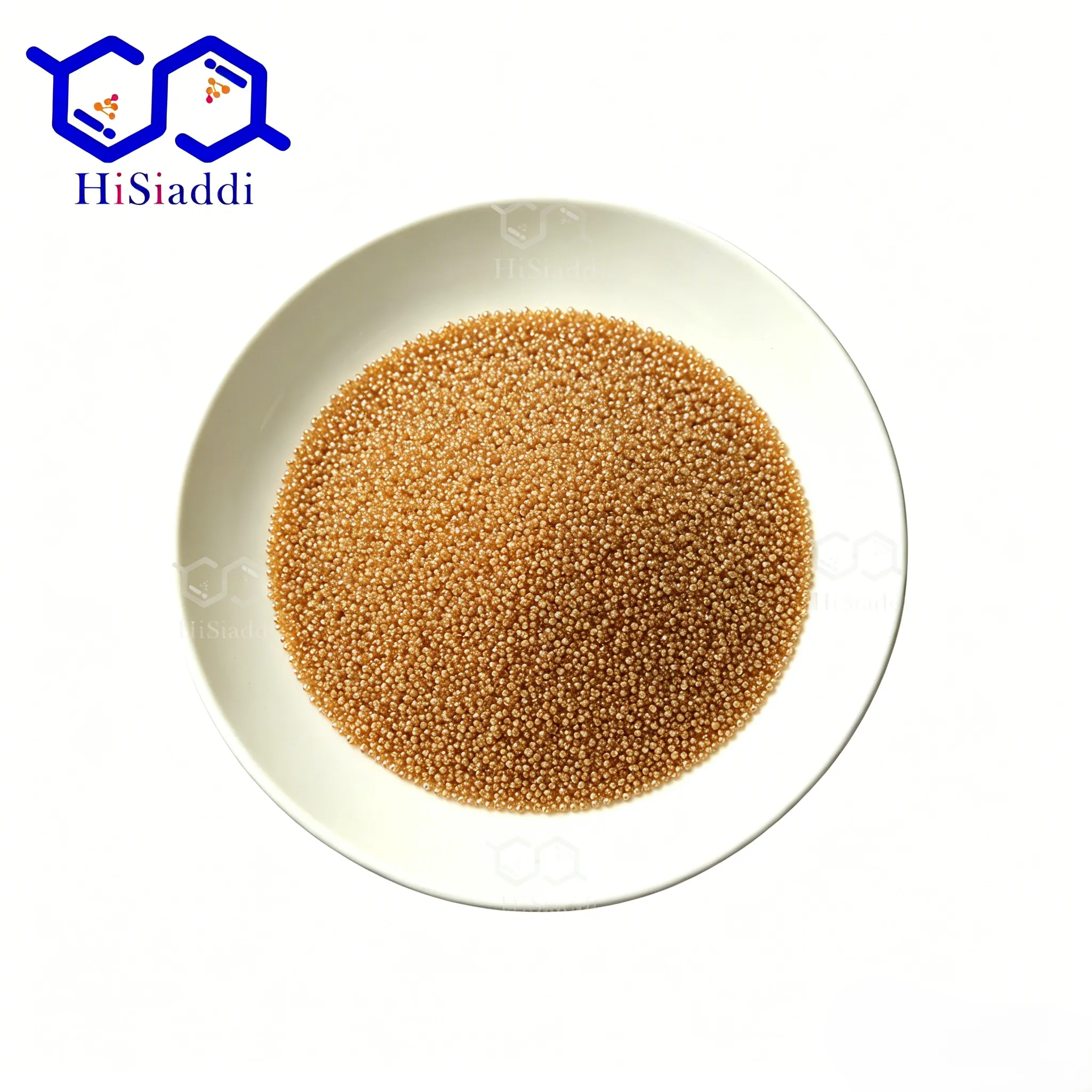
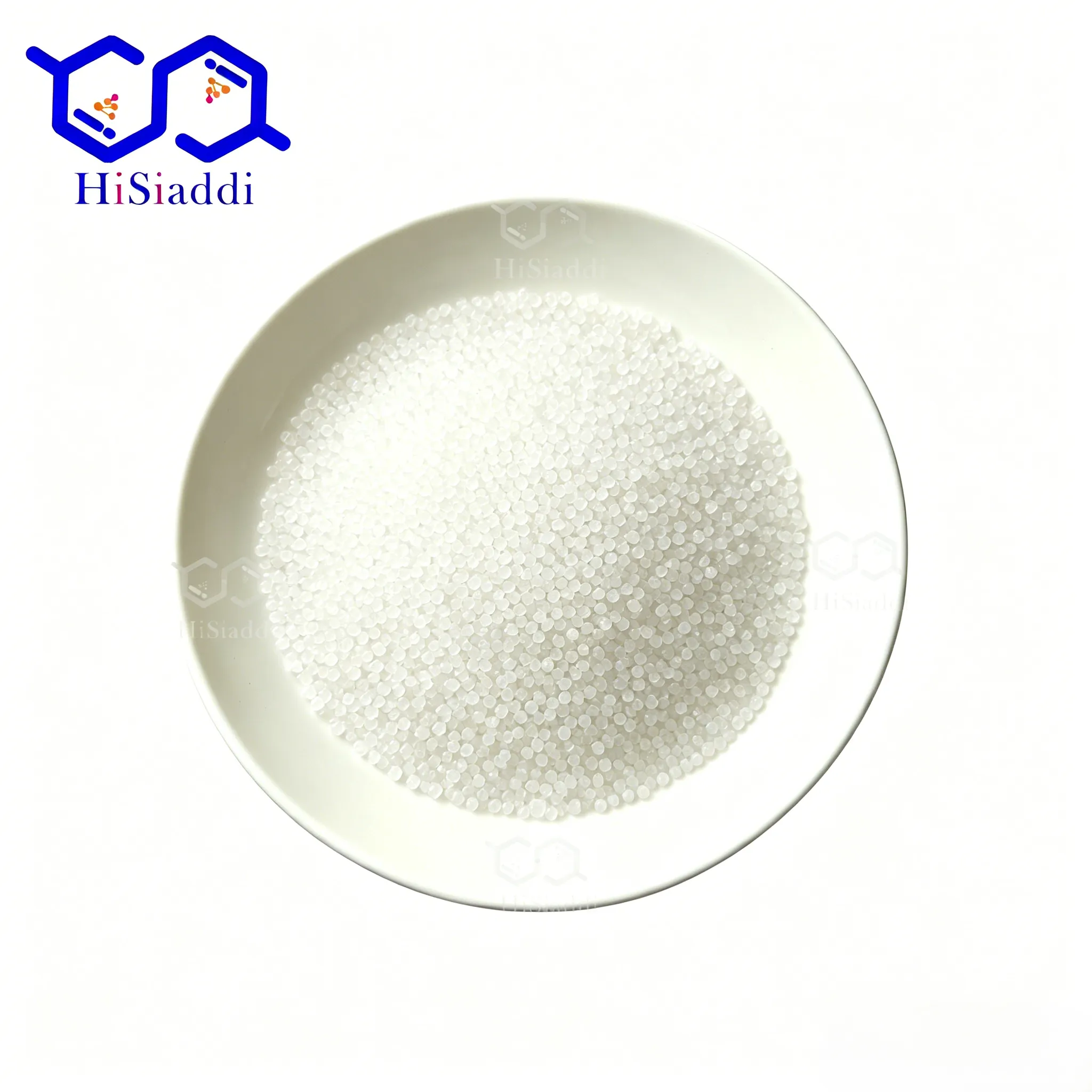
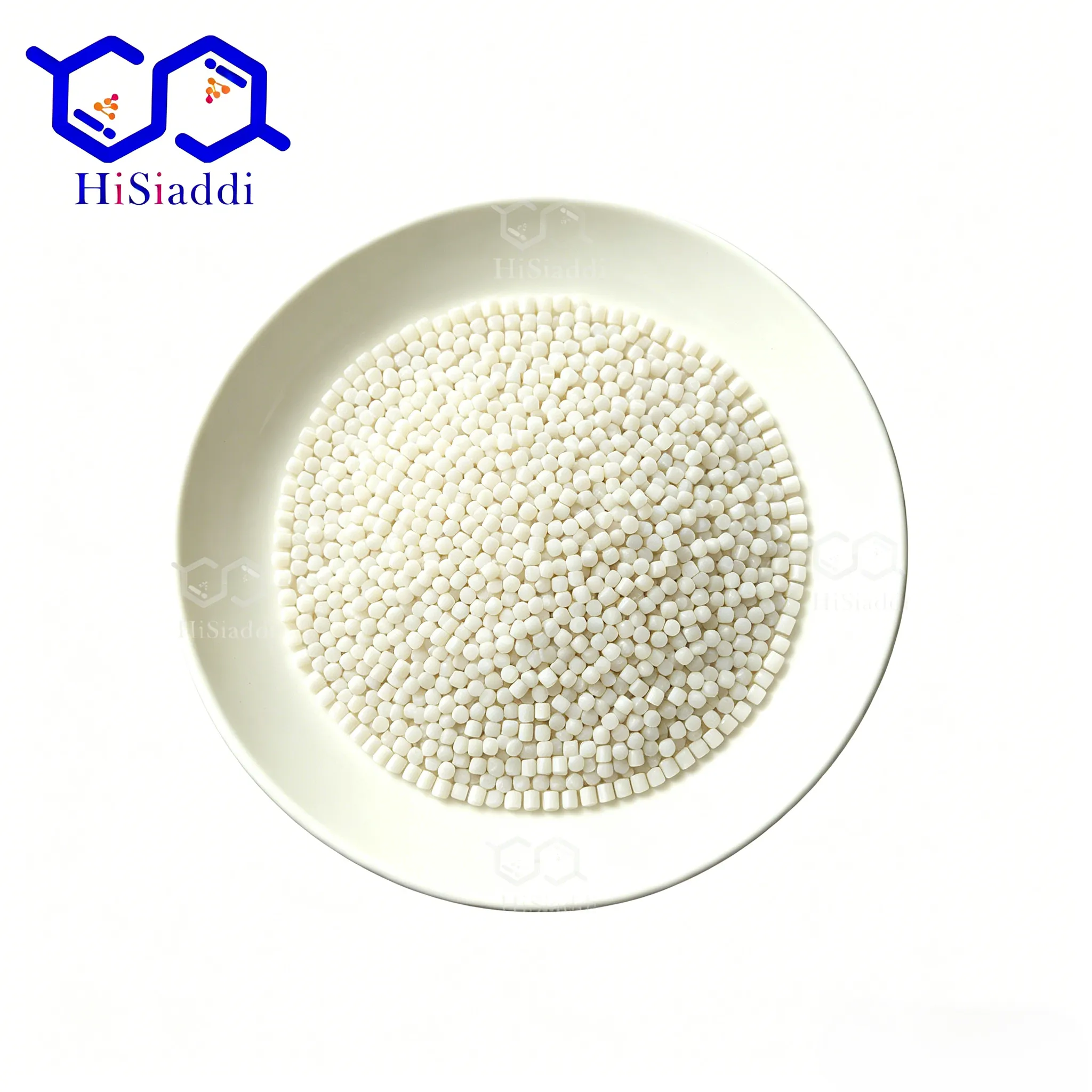
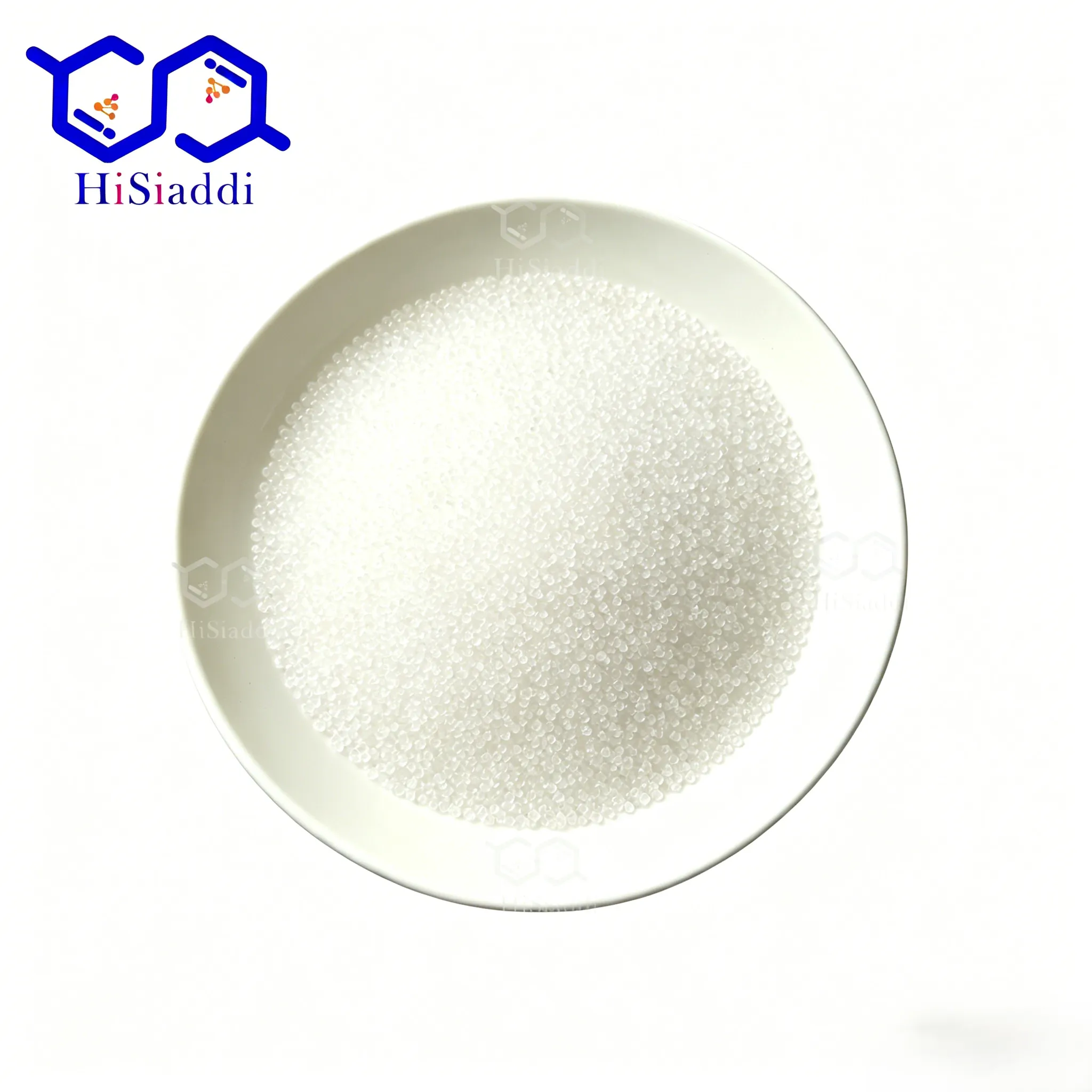
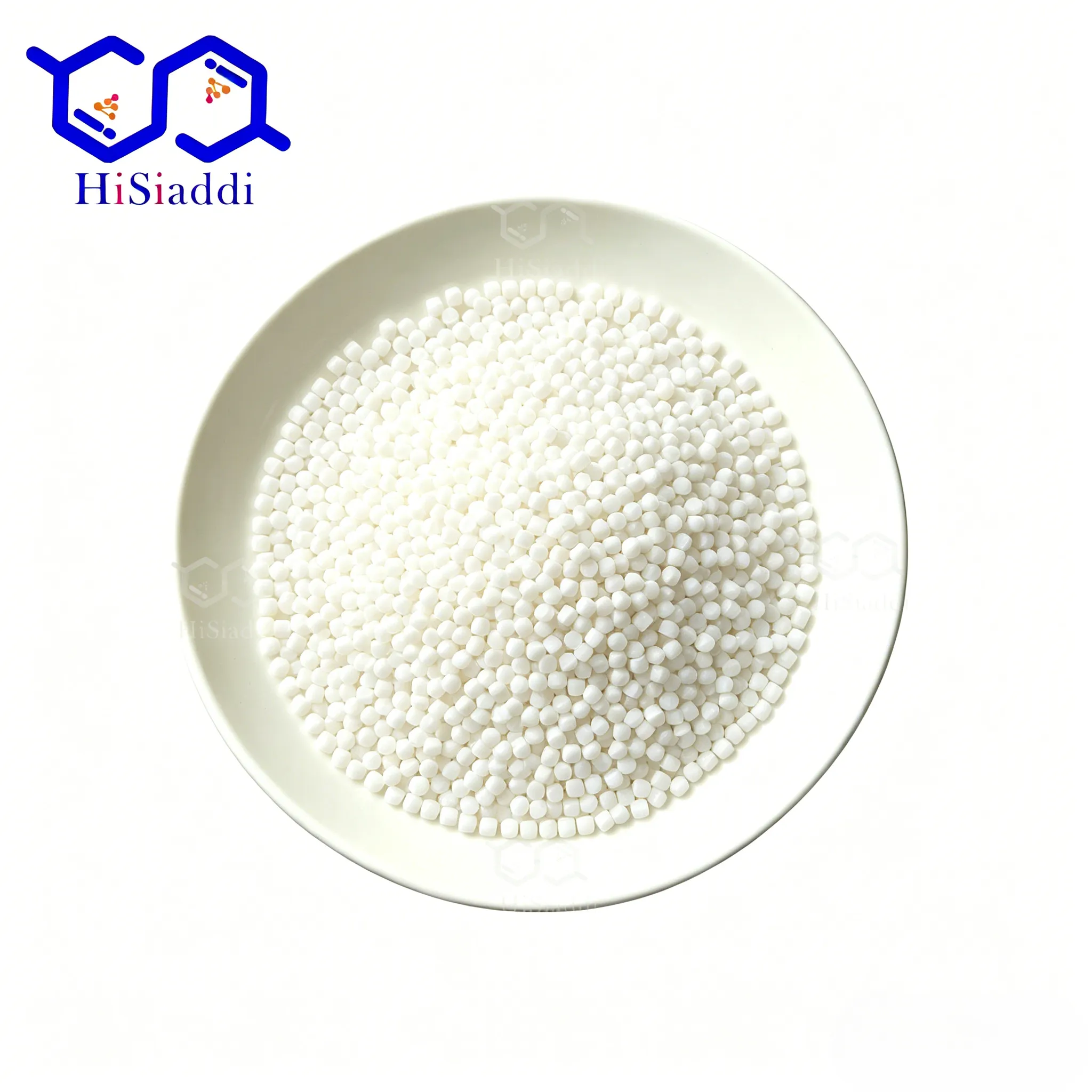
Polylactic Acid abbreviated as PLA, it is a biodegradable thermoplastic, used in food packaging, 3D printing consumables and textile fibers. HiSiaddi can supply original factory sources of multiple Chinese brands and provide "1+2+3+4=1" services.
Hisun: PLA-REVODE 101, PLA-REVODE 201 (heat resistant grade), melting point 150℃, biodegradation rate ≥90% (180 days), tensile strength ≥60MPa, low residual monomer < 0.3%, 25%~35% lower in price than NatureWorks with equivalent performance, suitable for food packaging factories, 3D printing material enterprises and textile fiber processing factories.
BBCA: PLA-FY801 (extrusion grade), PLA-FY802 (injection molding grade), high gloss, temperature resistance 75℃, high melt strength, good compatibility with PBAT, international grade quality, 20%~25% lower in price, suitable for mid-to-high-end packaging and degradable product applications.
HiSiaddi Service: Customization of heat resistance / toughening modification; formula optimization of degradable packaging, technical support for replacing NatureWorks, regulation of degradation rate; compliance testing on biodegradation rate, residual monomer, heavy metals and food contact
 CONTACT HiSiaddi NOW
| CAS No: | 26100-51-6 | Brand Name: | Multi-brand |
| MF: | N/A | Model Number: | Multi-models |
| EINECS No: | N/A | Grade: | N/A |
| Purity: | N/A | Place of Origin: | Shandong, China |
| MOQ: | 1ton | Storage: | Please refer to the product packaging or contact the customer service. |
When purchasing PLA as a buyer, you may encounter the following questions:
What are the key index advantages and application impacts of mainstream models from well-known PLA brands?
What competitive services can PLA suppliers provide?
How about the qualification certifications and market feedback of target PLA brands?
What is the inventory level and supply stability of PLA suppliers?
What factors need to be considered when selecting PLA?
...and many other related questions.
Core positioning: Industry leader, No.1 global exporter of general injection molding grade, food-contact grade and film blowing grade with the highest overseas recognition
FY PLA 201: General injection molding grade, equivalent to NatureWorks 4032D
FY PLA 403: Special grade for film blowing & packaging film, equivalent to NatureWorks 6202D
FY PLA 801: High-rigidity spinning & non-woven fabric grade
FY PLA HT: High heat-resistant modified grade (heat resistance up to 100℃)
Optical performance & purity: L-lactic acid purity ≥99.5%, D-lactic acid content <0.5%, light transmittance 92%-94%, ultra-low yellow index, flawless transparent finished products without haze and crystal spots, zero precipitation for food-grade products.
Mechanical properties: Tensile strength of neat resin 60-65MPa, flexural modulus 3.5-4.0GPa, far higher rigidity than PE and PP, ideal for rigid packaging and tableware production.
Processing stability: Narrow molecular weight distribution, melt flow index fluctuation within ±0.3g/10min, compatible with high-speed injection molding, film blowing and non-woven coating production lines overseas, effectively avoiding film breakage and mold sticking.
Biodegradation compliance: Certified with EN13432, ASTM D6400, OK Compost and OK Biodegradable Marine; fully degraded within 180 days under industrial composting conditions, partial grades support marine biodegradation.
Food safety compliance: Conform to FDA, EU 10/2011 and German LFGB standards; strictly controlled heavy metals, plasticizers and residual monomers, safe for drinking straws, food containers and food packaging.
Batch consistency: Integrated industrial chain covering biomass fermentation and polymerization with self-sufficient raw materials, far more stable product performance than small manufacturers, suitable for large-scale overseas mass production.
Cut core raw material procurement cost by 42%-52%, greatly boosting profit margin and market competitiveness of overseas biodegradable product enterprises under global plastic ban policies.
High-purity & low D-lactic acid formula prevents products from hydrolysis and whitening, extending shelf life and reducing return loss.
Complete set of food-grade certifications enable direct access to European and American supermarket food supply chains.
Self-sufficient full industrial chain ensures stable supply in peak seasons, eliminating risks of price hike, supply shortage and ultra-long delivery lead time of imported materials.
Biodegradable tableware and straws feature excellent rigidity and deformation resistance, delivering user experience close to traditional plastic products.
Food packaging products are free from harmful substance precipitation, meeting health consumption demands in Europe and America.
Waste products achieve complete degradation via industrial composting without white pollution, complying with global environmental regulations.
Core positioning: Leading exporter of spinning non-woven grade and fiber grade, dominant advantages in filter material industry
JD PLA S100: Fiber spinning grade, equivalent to Corbion LX175
JD PLA S200: Superfine fiber & spunlace non-woven fabric grade
JD PLA MOD: Special modified grade for biodegradable fiber
Excellent spinnability: L-lactic acid purity ≥99.6%, low impurity and gel content, stably produce 0.8-2.5d superfine fiber with extremely low yarn breakage rate, perfectly matching high-speed spinning and spunlace non-woven production equipment overseas.
Stable fiber mechanical property: Fiber breaking strength ≥4.5cN/dtex, soft texture and excellent washing resistance, applicable for inner mask layers, wet wipes, sanitary products and agricultural covering fabrics.
Hydrothermal stability: Optimized end-capping technology realizes controllable hydrolysis rate at room temperature, ensuring product shelf life over 12 months.
Low-carbon environmental protection: Entire production adopts biomass raw materials with much lower carbon footprint than petroleum-based plastics, helping clients cope with EU carbon border adjustment mechanism policies.
Spinning grades are fully compatible with mainstream overseas spinning equipment without major production process adjustment.
Remarkable raw material cost reduction helps overseas non-woven fabric enterprises seize global biodegradable sanitary product market share.
Low carbon footprint advantage assists clients in avoiding EU CBAM carbon tariffs and enhancing export competitiveness.
Discarded biodegradable wet wipes and mask inner layers degrade rapidly to mitigate marine plastic pollution.
Agricultural covering fabrics degrade naturally without manual recycling, cutting agricultural labor costs.
Core positioning: Rising leading exporter of medical-grade and low-precipitation high-purity grade, competing with NatureWorks medical series in high-end markets
HZ PLA MED: Absorbable medical grade, equivalent to NatureWorks 6060D
HZ PLA HP: Ultra-low D-lactic acid high-purity grade (D-lactic acid <0.2%)
HZ PLA 3D MED: Medical 3D printing scaffold special grade
Ultra-high purity control: D-lactic acid content <0.2%, residual monomer <0.1%, heavy metal content below 0.5ppm, no catalyst residue.
Superior biocompatibility: Fully compliant with all ISO 10993 biocompatibility tests, non-cytotoxic and non-allergenic, suitable for surgical sutures, bone pins, drug sustained-release microspheres and medical aesthetic supplies.
Adjustable degradation cycle: Customizable slow degradation period ranging from 6 to 24 months to fit different implantable medical devices.
Low precipitation & high cleanliness, ideal for high-end medical aesthetics and tissue engineering scaffolds.
Domestic high-purity medical-grade PLA matches imported product performance, enabling clients to enter high-end overseas medical device and medical aesthetic supply chains and avoid low-end market homogenized competition.
Ultra-low precipitation reduces inflammation risks caused by implants and improves clinical product safety.
Flexible small-batch supply supports overseas research and development-oriented clients.
Absorbable bone pins and surgical sutures eliminate secondary surgery removal, alleviating patient pain and medical expenses.
Safe and degradable medical aesthetic supplies lower residual substance risks in human bodies.
Core positioning: Major exporter of exclusive 3D printing grade and high heat-resistant modified grade, leading in new energy and precision molding fields
JF PLA 3D: Special grade for FDM 3D printing
JF PLA HT105: High heat-resistant modified grade (105℃ heat resistance)
JF PLA FR: Halogen-free flame retardant modified grade
Premium 3D printing performance: Low shrinkage rate, low warpage, strong interlayer adhesion and smooth printed surface, compatible with mainstream desktop and industrial FDM 3D printers worldwide.
Outstanding heat resistance improvement: Copolymerization and nucleation modification raise heat deflection temperature to 100-105℃, solving the defect of poor heat resistance and high-temperature deformation of ordinary PLA, perfectly serving high-temperature markets in the Middle East and Southeast Asia.
Halogen-free flame retardant property reaching UL94 V0 grade, applicable for biodegradable electronic packaging and new energy buffer materials.
Complete modified material system, blendable with PBAT and PCL for toughening modification to produce high-end biodegradable finished products.
Cost Performance: Priced at 44%-54% of modified PLA from BASF and NatureWorks, great cost-effectiveness in professional modified material sector.
Target Overseas B-end Buyers: 3D printing filament manufacturers, high-end heat-resistant biodegradable product factories, electronic buffer packaging enterprises, new energy biodegradable accessory suppliers.
Dedicated 3D printing grades match overseas mainstream printing equipment and slash raw material cost of printing filaments.
High heat-resistant grades help clients expand business in tropical and Middle Eastern high-temperature markets to achieve differentiated competition.
Flame retardant modified PLA opens up high-end industrial packaging market and avoids fierce competition in disposable commodity industry.
Odor-free and safe 3D printed models are widely used in education, cultural creation and children articles.
Heat-resistant biodegradable products maintain stable performance in high-temperature environments and expand application scenarios.
Core positioning: Specialist in hydrolysis-resistant long-term biodegradable grade and exclusive marine biodegradation grade, growth engine in overseas niche blue-chip markets
TB PLA MAR: Exclusive marine biodegradable grade
TB PLA AH: Long-term hydrolysis-resistant grade
TB PLA BLEND: Pre-blended PLA & PBAT special grade
Marine biodegradation capability: Modified formula enables gradual degradation in seawater and salt spray environments, fully complying with EU marine plastic ban regulations.
Long-term hydrolysis resistance: End-capping modification greatly slows down hydrolysis speed at room temperature and humid conditions, extending product shelf life to over 18 months.
Pre-blended material advantage: Integrated PLA & PBAT premix saves clients compounding and granulation procedures, supporting direct film blowing and injection molding production.
Flexible customized modification: Adjust toughness, degradation cycle and heat resistance as required to quickly respond to high-end niche orders.
Marine biodegradable grades help clients seize policy-driven blue-chip market opportunities under global marine plastic restriction regulations.
Hydrolysis-resistant formula solves product damage problems in humid areas and facilitates market expansion in Southeast Asia and South America.
Ready-to-use pre-blended materials simplify production processes and reduce equipment and labor input costs.
Marine biodegradable packaging decomposes naturally after entering seawater to reduce marine microplastic pollution.
Tableware and packaging films made of hydrolysis-resistant PLA maintain stable service performance and are not easy to damage in humid environments.

| Comparison Items | Anhui Fengyuan Biotech | Henan Jindan Technology | Zhejiang Hisun Biotech | Guangdong Kingfa | Shandong Tongbang |
| Export Ranking | 1 | 2 | 3 | 4 | 5 |
| Core Business Segments | General injection molding, film blowing, food-contact, high-rigidity grade | Spinning/non-woven, fiber, spunlace fabric grade | Absorbable medical, ultra-low D-lactic acid high-purity, medical 3D printing grade | Exclusive 3D printing, high heat-resistant modified, halogen-free flame retardant grade | Marine biodegradable, long-term hydrolysis-resistant, PLA&PBAT pre-blended grade |
| Main Export Models | FY PLA 201/403/801/HT | JD PLA S100/S200/MOD | HZ PLA MED/HP/3D MED | JF PLA 3D/HT105/FR | TB PLA MAR/AH/BLEND |
| Equivalent Overseas Brands | Full series of NatureWorks, general grades of Total Corbion | Total Corbion, Mitsubishi Chemical fiber grade | NatureWorks high-purity medical series, Purac | BASF, NatureWorks modified series | Corbion niche modified grades, BASF exclusive marine grades |
| Core Advantages | L-lactic acid ≥99.5%, D<0.5%; light transmittance 92-94%; full food safety certifications; qualified biodegradation performance; ultra-stable processability; integrated full industrial chain | L-lactic acid ≥99.6%; low gel content for superfine fiber spinning; high fiber strength; washing resistance; low carbon footprint; compatible with high-speed spinning equipment | D-lactic acid <0.2%; ultra-low residual monomer; ISO 10993 biocompatibility; adjustable 6-24 months degradation cycle; low precipitation | Low shrinkage & low warpage for 3D printing; heat resistance up to 100-105℃; UL94 V0 flame retardant; blendable with PBAT/PCL | Seawater degradable; long-term hydrolysis resistance; ready-made premix materials; flexible customized modification; suitable for humid & marine working conditions |
| Price Ratio vs Imported Equivalents | 48%-58% | 45%-55% | 46%-56% | 44%-54% | 54%-64% |
| Cost-effectiveness Rating | ★★★★★ | ★★★★★ | ★★★★☆ | ★★★★☆ | ★★★★ |
| Core Overseas B-end Buyers | Disposable tableware factories, film producers, food packaging enterprises, straw injection molding plants | Non-woven fabric manufacturers, spunlace fabric suppliers, sanitary product factories, agricultural mulch fabric producers | Absorbable medical device factories, medical aesthetic material dealers, drug sustained-release enterprises | 3D printing filament suppliers, heat-resistant biodegradable product factories, electronic packaging manufacturers | Marine degradable packaging producers, humid-area product factories, pre-blended modified material traders |
| Downstream Buyer Benefits | 1. 42%-52% raw material cost reduction2. Extended shelf life via low D-lactic acid formula3. Complete food-grade certifications4. Stable peak-season supply | 1. Perfect fit for overseas high-speed spinning devices2. Cost reduction to boost global market share3. Avoid EU carbon tariffs | 1. Access to high-end overseas medical supply chains2. Improved product safety with low precipitation3. Flexible small-batch delivery | 1. Compatible with mainstream global 3D printing equipment2. Tap tropical high-temperature markets3. Enter high-end flame retardant packaging industry | 1. Capture marine plastic ban policy dividends2. Stable performance in humid regions3. Simplified production with pre-blended materials |
| End User Benefits | 1. Rigid & non-deformable biodegradable tableware2. Safe and harmless food packaging3. Zero white pollution after disposal | 1. Eco-friendly degradable sanitary products2. Labor-saving agricultural fabric without recycling | 1. No secondary surgery needed for implant devices2. Residue-free safe medical aesthetic supplies | 1. Safe & odorless 3D printed daily & educational products2. Stable use of heat-resistant products in hot areas | 1. Effectively reduce marine microplastic pollution2. Durable biodegradable products in humid environments |
As an innovative foreign trade service provider driven by dual engines of technology commercialization and cross-border trading, HiSiaddi has built a "1+2+3+4=1" product service system: 1 seasoned foreign trade sales specialist with over 3 years of industry experience, 2 dedicated R&D teams, 3 rigorously vetted premium suppliers, and 4 shared warehouses — all aligned to fulfill one integrated product demand.
Backed by this comprehensive service framework, HiSiaddi boasts deeper expertise in PLA Pellets R&D optimization and manufacturing processes than most conventional trading firms, a sharper grasp of market demands and competitive edges across various PLA brands than standalone manufacturers, and more in-depth insights into the global export market for PLA Pellets than pure research institutions.
1 Professional Salesperson With More Than 3 Years of Experience
HiSiaddi exclusively recruits foreign trade specialists with a minimum of 3 years of hands-on experience. Before serving clients, all staff must complete over six months of joint training delivered by our R&D and foreign trade teams.
(1) Basic Full-Cycle Support Services
Leveraging our integrated foreign trade team and corporate service system, we deliver one-stop end-to-end order management for clients, including but not limited to:
Issuance and application of all compliance certifications for PLA Pellets
Provision of third-party test reports and full resolution of quality warranty claims
(2) Exclusive Value-Added Technical Services
Supported by our in-house R&D teams, we offer bespoke product customization and technical consultation solutions, covering:
Comparative analysis of core indicator compatibility and cost performance across all mainstream PLA Pellets brands
Regular updates on global market trends for PLA Pellets
Blind Sample Comparative Testing for PLA
We supply anonymous blind test samples of domestic PLA alongside imported grades from NatureWorks and Corbion. Clients independently conduct lab assessments on rigidity, transparency, heat resistance and biodegradability. Direct side-by-side performance verification dismantles the long-standing misconception that imported biodegradable resins outperform domestic alternatives, delivering highly persuasive technical validation.
Downstream PLA Application Physical Sample Kits
Custom sample packages include a full range of PLA pellet grades, transparent injection molded parts, blown film sheets, non-woven fabric specimens, 3D printing prototypes and biodegradable drinking straw samples. Tangible finished product samples build far stronger trust with overseas clients than technical datasheets alone.
Monthly Global PLA & Plastic Ban Policy Intelligence Briefings
Regular intelligence updates track overseas competitor price trends, global single-use plastic bans & marine plastic regulations, carbon border adjustment mechanism (CBAM) policies, downstream demand across catering, packaging and medical sectors, and popular modified PLA grades. Clients leverage these insights to optimize market layout and avoid regulatory compliance risks.
2 Chemical R&D Teams: Dietary Nutrition & Chemical Additive Divisions
We maintain deep collaborative ties with upstream manufacturers via technology commercialization, paired with seamless internal coordination between R&D and foreign trade teams. Our technical training programs equip sales teams with profound bio-based material expertise to deliver professional PLA Pellets customization, alongside research-grade consulting for brand matching and application formulation optimization of PLA materials.
(1) Research-Grade Customization Services
Specialized Import Substitution Comparative Analysis
For clients currently utilizing imported PLA from NatureWorks, Corbion and Mitsubishi Chemical, we conduct full-dimensional one-on-one benchmarking covering L-lactic acid purity, D-lactic acid content, molecular weight, heat resistance, toughness, biodegradability, batch consistency, cost reduction margins and lead time comparisons. A formal professional substitution report is issued to guide overseas buyers in switching to domestic alternatives — a capability unavailable to general traders lacking polymer material technical know-how.
PLA Technology Commercialization & Custom Modification Service
We partner with R&D centers of five leading manufacturers and domestic biodegradable materials research institutes to fulfill custom modification requirements from global clients, including:
Ultra-low D-lactic acid medical-grade PLA
Super high heat-resistant PLA (105–120°C)
Marine biodegradable specialized PLA
Long-term hydrolysis-resistant PLA
Pre-blended PLA-PBAT composite compounds
Antimicrobial biodegradable PLA
We deliver full technical implementation from lab trial and pilot production to mass manufacturing, translating cutting-edge lab-developed modified PLA formulations into export-ready products to capture high-end niche overseas markets.
(2) Research-Grade Consulting Services
Localized Overseas PLA Blending & Processing Technical Support
Our bilingual technical team specializing in bio-based polymers provides remote formulation engineering consultation for overseas clients, covering:
PLA-PBAT/PCL toughening blending formulations
Temperature profiles for injection molding, film blowing and fiber spinning
3D printing parameter optimization
End-group modification for enhanced hydrolysis resistance
Anti-pinhole processing technology for thin films
General foreign trade firms without biodegradable formulation expertise cannot deliver this depth of technical backing.
Specialized Food & Medical-Grade Safety Control
For food packaging and medical device manufacturers, third-party test reports for D-lactic acid, residual monomers, heavy metals and cytotoxicity are provided for every production batch. Strict monitoring of compliance indicators meets rigorous market access standards across Europe and North America.
Marine & Industrial Compost Biodegradability Qualification Testing
We cooperate with nationally accredited biodegradation laboratories to conduct seawater biodegradation, soil biodegradation and industrial composting tests in accordance with OK Marine and EN13432 standards. Test reports formatted for international overseas recognition accelerate clients’ eco-certification procedures.
Carbon Footprint Calculation & CBAM Compliance Support
For EU export clients, we deliver full life-cycle carbon footprint audits for PLA and customized carbon tariff mitigation solutions. Comparative analysis against petroleum-based plastics highlights the low-carbon advantages of bio-based PLA, lowering clients’ overall import tax expenditures.
Heat & Hydrolysis Resistance Environmental Simulation Testing
Cyclic temperature aging, damp heat aging, seawater immersion and high-temperature storage stability testing are performed with formal lab reports, addressing overseas buyers’ concerns regarding inferior heat resistance and rapid hydrolysis of domestic PLA materials.
Spinning & Film Blowing Process Optimization
For non-woven and film producers, we adjust PLA molecular weight and melt flow index to match high-speed overseas production equipment, boosting fiber uniformity, film toughness and tear resistance.
3 High-Quality Suppliers Screened via Multi-Round Audits & Technology Transfer
Our foreign trade and R&D teams work in tandem to conduct multi-stage evaluations including preliminary market research, on-site factory audits, full material testing, deep technology commercialization partnerships and trial procurement cooperation. We select approximately three brand manufacturers featuring reliable quality, stable supply, solid market reputation and robust growth potential.
(1) Procurement Edge for Competitive Raw Material Pricing
Long-term partnerships rooted in technology commercialization and authorized distribution grant us direct access to factory-origin materials at preferential price points.
(2) Long-Term Stable Supply Chain Assurance
Our deep collaboration strengthens full-process production monitoring, end-to-end product traceability, consistent batch quality control, and robust compensation guarantees in cases of non-compliant third-party test results.
Exclusive Medical / High-Purity Production Capacity Reservation for Overseas Clients
Framework agreements with top-tier manufacturers secure dedicated overseas-exclusive medical-grade polymerization lines and high-purity refining facilities. Reserved capacity caters to medical device and aesthetic medicine buyers, preventing supply shortages caused by domestic enterprises bulk purchasing premium PLA during peak demand seasons.
4 Distribution Warehouses Powered by Shared Efficient Logistics Network
We operate four jointly managed warehouses in partnership with our suppliers to stock fast-moving PLA products.
(1) Proximity Shipping for Fast Delivery & Rapid Issue Resolution
Our four warehouses are strategically positioned at Qingdao Port (Northern China), Ningbo Port (Eastern China), Shenzhen Port (Southern China), and Zhengzhou — China’s inland logistics hub. This layout guarantees expedited shipment of PLA Pellets. On-site staff stationed near each warehouse enable immediate on-location resolution of transit damage, packaging defects and export compliance complications.
(2) Mitigate Price Fluctuations & Support Custom Packaging Solutions
We pre-emptively stock inventory when sharp price surges are forecast during peak seasons to stabilize client procurement costs. Our self-operated warehouses fully accommodate personalized customization of packaging, labeling and other branding requirements.
As an innovative foreign trade service provider driven by technological transformation and cross-border trading, HiSiaddi has established a "1+2+3+4=1" service system and can supply original factory PLA Pellets from multiple well-known brands. As a R&D-focused foreign trade enterprise, we systematically sort out the common difficulties encountered by B-end buyers sourcing PLA Pellets in China and propose targeted solutions from HiSiaddi.
If you require more professional and in-depth analysis on PLA Pellets sourcing, please contact HiSiaddi customer service.
Stringent multi-country environmental compliance standards, tight control over melt index and thermal stability, lactic acid raw material price volatility linked to grain markets, and moisture-induced hydrolysis deterioration during ocean shipping.
1.
Differentiated compliance grading & strict market access standardsProducts are categorized into extrusion grade, injection molding grade, fiber spinning grade, film blowing grade and food contact grade. Compliance requirements include EU REACH, RoHS and EN13432 biodegradation certification; food-grade specifications must meet EU Regulation 10/2011 and US FDA 21CFR. Rigorous control is enforced over MFR, moisture content, residual monomers, free lactic acid, melting point, ash content, heavy metals and biodegradation rate. Each batch is supplied with English COA, SDS, certificate of origin and third-party biodegradation reports. Major brands conduct factory audits focusing on biodegradation credentials; shipments with off-spec indicators or incomplete documentation risk customs seizure.
2.
3.
Indicator fluctuations trigger mass defective finished productsExcessive moisture causes hydrolytic chain scission during high-temperature extrusion, generating bubbles and brittleness in finished goods. Unstable MFR leads to film rupture during blowing and fiber breakage during spinning. Elevated residual monomers result in excessive substance migration from food containers. PLA is highly hygroscopic; high temperature and humidity during long-distance ocean shipping cause water absorption and performance degradation rendering materials unprocessable.
4.
5.
Corn-based lactic acid raw materials vulnerable to crop yields and grain price swingsThe fermentation industrial chain relies on agricultural feedstocks; global grain market fluctuations and production line maintenance drive price hikes. European and American domestic PLA capacity remains tight, relying heavily on Chinese polymerization plants for supply. Combined sea freight and customs clearance takes 5–7 weeks. Peak season stocking for supermarket biodegradable packaging creates container shortages and delivery delays, forcing downstream production lines to halt operations.
6.
1.
Full set of graded compliance documents for one-stop customs clearance & factory audit supportSeparate production lines for food/injection/blow/spinning grades with complete EN13432, REACH and FDA food contact registration. English COAs fully benchmark EU and US testing standards, with assistance provided for import registration and customer factory audits.
2.
3.
Lactide ring-opening polymerization + deep post-production dehumidification for narrow-range performance controlSealed polymerization with negative-pressure stripping to remove residual lactide, followed by constant-temperature deep dehydration post-pelletization and full third-party SGS testing. Vacuum PE inner lining + 25kg kraft paper bag sealed moisture-proof packaging prevents water absorption and hydrolysis during ocean transit.
4.
5.
6–12 month annual long-term price lock + bonded warehouse stockpiling in Europe & USLong-term contracts lock base prices with annual price adjustments capped at 5%. Bonded warehouses in Rotterdam and Los Angeles maintain 2–3 months of inventory; standard orders ship locally within 3–5 working days, with urgent air freight for high-end samples delivered within 48 hours.
6.
Premium surcharges for small orders, widespread adulterated raw materials, production losses due to lack of processing technical guidance, and full prepayment requirements tying up working capital.
1.
Marked-up pricing for small-batch purchasesMost manufacturers impose a minimum order quantity (MOQ) of 500kg with a 10%–18% surcharge for small orders of 100–300kg. Counterfeit PLA blended with PP, calcium carbonate or recycled waste materials saturates the market, failing biodegradation testing for finished goods.
2.
3.
Improper grade selection & insufficient drying lead to high production lossesBuyers often fail to distinguish dedicated film blowing/injection molding grades or skip adequate pre-drying, triggering raw material hydrolysis and brittle finished products with overall production losses exceeding 8%.
4.
5.
Long ocean shipping lead times of 45–60 days with small orders delayed an additional 2–3 weeks; full prepayment burdens cash flow.
6.
1.
100kg MOQ with factory direct pricing free of small-order surcharges, tiered pricing structureMOQ lowered to 100kg at ex-factory rates; preferential pricing for 500kg orders, with an additional 4% discount for orders above 1 metric ton. Direct supply from manufacturers eliminates middlemen, cutting procurement costs by over 20%.
2.
3.
Free full-specification samples of 1–2kg + English processing manualsSupporting documents include drying parameters, extrusion temperature profiles and modification formulation ratios, paired with remote process guidance to limit production losses to under 3%.
4.
5.
Consolidated container shipments for regional orders, flexible payment terms & full batch traceabilityConsolidation of scattered orders reduces lead times to 30–35 days. Payment terms: 30% prepayment + 70% against copy of bill of lading. Full quality traceability attached to every shipment; full refund & round-trip freight coverage for adulterated or non-compliant materials.
6.
Stringent low-monomer high-purity specifications, poor processing stability under low-temperature conditions, and frequent small-batch sampling for new product R&D.
1.
Strict residual lactide and heavy metal limits for food & medical applicationsExcess residual monomers in high-end products fail FDA and EU food safety testing; adulterated low-quality materials are barred from supermarket and medical supply chains.
2.
3.
Minimal moisture triggers hydrolytic brittleness and film pinholes under low-temperature production environments.
4.
5.
Rapid formulation iteration requires trial batches of 5–20kg, which mass-production lines cannot accommodate.
6.
1.
High-purity low-monomer food/medical grades with dedicated safety testing reportsSecondary negative-pressure devolatilization refining reduces free monomer and extractable substance levels below EU and US regulatory limits.
2.
3.
Rheologically modified grades with wide-temperature hydrolysis-resistant stable moldingOptimized molecular weight distribution enhances moisture resistance, preventing hydrolytic brittleness during extrusion across high and low temperature ranges.
4.
5.
R&D sample orders starting at 5kg with priority scheduling on small-batch pilot linesCustom MFR grades developed on demand, supporting formula debugging and laboratory testing for overseas clients.
6.
Difficult compatibility control for blended multi-resin formulations, high hydrolysis losses from improper warehouse moisture control, and large-volume annual procurement supply chain pressure.
1. Uneven dispersion during blending with PBAT and talc generates agglomeration, rendering entire batches of modified compound unusable.
2. Insufficient warehouse moisture protection causes raw material water absorption and hydrolysis, producing large volumes of defective goods during compounding and molding.
3. Annual multi-ton procurement exposes manufacturers to profit compression from raw material price hikes; production line shutdowns due to supply shortages require compatibility with automated closed feeding systems.
1.
Dedicated modified grades for blending with pre-tested multi-system compatibilityFormulations optimized for mainstream fully biodegradable compounding recipes deliver uniform mixing without phase separation when blended with PBAT and inorganic fillers.
2.
3.
Ultra-low moisture factory specifications + warehouse moisture control guidelinesDeep dehumidification implemented at production; clients provided with guidance on closed, temperature-controlled moisture-proof storage to minimize hydrolysis losses.
4.
5.
Tiered pricing for bulk orders + full-year capacity reservation + multi-specification packagingVolume discounts for ton-level orders with full-container shipments to cut costs; 25kg bags and bulk ton bags available to suit automated feeding equipment.
6.
Capital tie-up from multi-grade inventory stocking, inability to identify adulterated materials without in-house testing equipment, and high after-sales compensation costs from moisture absorption during pellet transit.
1. Stocking multiple injection/blow/spinning grades locks up large amounts of working capital.
2. Lack of in-house testing equipment for moisture and MFR leads to accidental sourcing of adulterated PLA filled with extenders, triggering end-product non-compliance claims.
3. Cumbersome customs clearance for scattered shipments; rain exposure and moisture absorption during ocean shipping causes hydrolysis with high after-sales compensation expenses.
1. Mixed-grade consolidated minimum orders, overseas warehouse repackaging & drop-shipping for zero-inventory operations.
2. Third-party full-test COA provided with every shipment; full compensation for round-trip freight for off-spec materials.
3. Vacuum-sealed moisture-proof packaging + dedicated chemical logistics lines with full shipment traceability, drastically reducing after-sales cases related to water absorption and hydrolysis.
For more professional and in-depth analysis on PLA Pellets sourcing, please contact HiSiaddi customer service.
Difficult to maintain high optical purity and stable molecular weight. Racemization tends to occur during polymerization, which reduces the optical purity of lactide and further impairs the heat resistance and uniform degradation performance of PLA. Meanwhile, fluctuating polymerization temperature will lead to deviation of molecular weight, and it was highly demanding to control both indicators simultaneously.
Contradiction between heat resistance modification and toughness. Conventional PLA has a low heat deflection temperature and cannot withstand hot filling for food products. Addition of heat-resistant additives will further reduce material toughness and cause brittle cracking of films.
Complex regulation of controllable degradation cycle. To meet the requirement of complete degradation within 270 days, the hydrolysis rate of molecular chains needed precise adjustment; either excessively fast or slow degradation would fail to meet application standards.
Strict control on ultra-low migration for food and medical grade products. Residual monomers and oligomers generated during polymerization had to be thoroughly removed to eliminate migration risks in contact scenarios.
PLA is highly hygroscopic and prone to hydrolysis. Strict requirements were imposed on moisture-proof and hydrolysis-proof packaging as well as temperature-controlled transportation for long-distance ocean shipping.
Complicated document system for dual compliance with EU food and medical standards. Multiple special tests and certification procedures took a long time to complete.
Narrow fluctuation limits for gloss, melt flow rate and heat resistance among different batches, bringing heavy pressure on quality control for mass production.
For optical purity and molecular weight: High-purity L-lactide raw materials and low-temperature controlled ring-opening polymerization technology were adopted to inhibit racemization. The final optical purity reached 99.5% and the molecular weight fully met the standard.
For the balance between heat resistance and toughness: A composite heat-resistant modification system combined with flexible toughening components was applied. The heat deflection temperature was increased to 118℃ while retaining the basic toughness of films.
For controllable degradation: The molecular chain structure and content of hydrolysis additives were fine-tuned to accurately realize complete degradation in 270 days.
For low migration performance: Multi-stage vacuum technology was used to remove residual lactide monomers and oligomers thoroughly, satisfying safety requirements for food contact and medical use.
For storage and transportation: The pellets were packaged with multi-layer moisture-proof vacuum nitrogen-filled packaging and transported under dry and constant temperature during ocean shipping to prevent moisture absorption and hydrolysis.
For compliance documents: All items were tested in accordance with dual EU standards, and a complete set of English compliance documents was compiled.
Insufficient material toughness leading to brittle cracking of finished products.
Pellets were prone to moisture absorption and hydrolysis, with poor storage stability.
Low surface gloss and unqualified appearance of films.
Excessive shrinkage rate causing insufficient dimensional accuracy of molded products.
Fluctuating melt flow rate among batches, leading to unstable production processes.
To solve brittle cracking: Replace the material with toughened modified PLA grade and optimize the cooling curve of molding process to release internal stress.
To prevent hydrolysis: Control the humidity of raw material warehouse within 42%, adopt hermetically sealed nitrogen-filled packaging, and pre-dry the pellets at 90℃ for 3 hours before use.
To improve film gloss: Select special high-gloss resin and optimize parameters of film blowing die head and cooling air.
To reduce shrinkage rate: Adjust the holding pressure parameters for injection molding and adopt low-shrinkage PLA grade.
To stabilize batch quality: Establish an incoming inspection system for raw materials to strictly control batch differences. Meanwhile, compile operation specifications for molding and storage, and provide professional training for operators.
Lead time
Quantity (ton) | 0 - 10 | 10 - 30 | > 30 |
Lead time (days) | 7 | 15 | To be negotiated |
The monthly inventory volume of PLA is 10 tons, with appropriate adjustments upwards or downwards in response to peak and off-peak seasons.
HiSiaddi safeguards the supply stability of PLA through the following measures:
(1) Performance evaluation and screening of PLA brand factories based on on-time delivery rate, batch pass rate, timeliness of risk alerts, and completeness of documentation to assess their supply stability.
(2) For each mainstream model or major grade of PLA, secure 1 primary high-quality brand manufacturer and 2 backup high-quality manufacturers.
(3) Each factory operates independent production lines in separate production zones to prevent production halts caused by major unforeseen incidents such as environmental production suspensions and power outages.
Through long-term cooperation with brand manufacturers via technology commercialization and authorized distribution channels, HiSiaddi can effectively strengthen supervision over the production processes of brand manufacturers, optimize full-process traceability management, improve batch stability control, and further reinforce real-time monitoring of the supply stability of PLA products.
Long-term Annual Framework Supply Guarantee Agreement. HiSiaddi signs 12-month long-term agreements with leading manufacturers. The agreements specify the minimum guaranteed supply volume, maximum price hike range, and priority production scheduling rights during peak seasons. It is stipulated that manufacturers shall issue a 30-day prior written notice if production is suspended due to environmental rectification or equipment maintenance, and backup manufacturers will be activated to replenish goods accordingly.
We have 4 warehouses, which are jointly operated and managed with suppliers to store hot-selling products.The four warehouses are located at Qingdao Port in North China, Ningbo Port in East China, Shenzhen Port in South China, and Zhengzhou, China’s inland logistics hub. This setup guarantees sufficient supply and timely shipment of PLA during peak seasons.
HiSiaddi issues a rolling demand forecast covering the subsequent three months on the 25th of each month, allowing manufacturers to reserve production capacity in accordance with the forecast. Any new urgent orders from overseas clients will be prioritized to draw on inventories or production capacity from backup manufacturers.
Unstable logistics for PLA will extend delivery lead times. HiSiaddi has established alternative arrangements covering multiple freight forwarders, ports and transportation solutions:
(1) Binding of multiple professional chemical freight forwarders for PLA
Each product is assigned 2 to 3 freight forwarders with hazardous chemical/food transport qualifications affiliated with different shipping lines. Alternative sailing schedules can be switched to immediately in case of space shortages or customs inspections on a single shipping route.
(2) Backup transportation solutions for PLA
Ocean freight serves as the standard mode; air freight and rail freight are reserved as alternatives for urgent orders. Long-term agreements for temperature-controlled containers are signed for temperature-sensitive and perishable food additives to secure shipping space.
(3) Visual tracking and digital early warning for PLA
Freight forwarders synchronize daily updates on container loading, customs declaration, vessel loading and port arrival milestones. If customs inspection occurs, replenishment from backup inventory will be initiated immediately to shorten client waiting periods.
Full-chain digital early warning automatically monitors four categories of risks:
Factory side: Expiring supplier environmental assessment certificates, renewal of production permits, scheduled major equipment overhauls, and notifications of price hikes for upstream raw materials;
Inventory side: Inventory falling below safety thresholds, excessive inventory age, and batches failing quality inspection;
Logistics side: Shipping line space shortages, strikes at destination ports, and updates to customs policies;
Overseas side: Revisions to additive regulations and adjustments to import restriction lists in target countries.
Early warning notifications are automatically pushed to procurement and business leads, allowing backup suppliers or inventory contingency plans to be activated in advance.
As a new-type foreign trade service provider driven by both technology commercialization and export services, HiSiaddi has built a "1+2+3+4=1" service system, capable of supplying original factory sources of PLA Pellets from multiple well-known brands.
As an R&D-focused foreign trade service provider, HiSiaddi avoids the brand-biased promotion practiced by single-brand manufacturers. We objectively analyze several highly competitive Chinese export PLA brands and share their certification portfolios and market feedback to help buyers make efficient, reliable purchasing decisions.
If you require more authentic, objective information on multiple well-known Chinese PLA Pellets brands, please contact HiSiaddi customer service.
Ranked first in export volume for three consecutive years (accounting for 28.7% of China’s total PLA exports in 2025), it is the leading exporter of high-end modified and medical-grade PLA, serving premium packaging, medical and 3D printing brands across Europe, America and Japan.
1. REVODE711 (Straw Special Grade)
· Core advantages: Food-grade ultra-high purity, 85°C heat resistance, flexible and anti-fracture, compatible with high-speed straw extrusion; MFR 8–12g/10min, no weld lines and minimal die clogging.
· Market feedback: Specified raw material for global straw giants (Shuangtong, Fengyuan Fibers), core supplier for hot drink straws sold at European and American supermarkets (Starbucks, Heytea). Export volume reached 12,000 tons in 2025 with a 92% customer repeat purchase rate.
1. REVODE213 (Heat-Resistant Injection Molding Grade)
· Core advantages: 100°C heat resistance, high gloss, easy color matching, specialized for disposable tableware and microwave food containers, with 30% superior impact resistance versus general PLA.
· Market feedback: Preferred compliant material under the EU SUP Directive, core raw material for biodegradable tableware at McDonald’s and KFC. Massively purchased by single-use product manufacturers in Southeast Asia and the Middle East, praised for consistent durability and zero odor.
1. REVODE195 (3D Printing Grade)
· Core advantages: Low warpage, stable filament extrusion, high toughness, compatible with high-speed FDM printing, strong interlayer adhesion and crack resistance.
· Market feedback: Certified partner of Germany’s BASF and US MakerBot, a top-tier supplier for educational and household 3D printing filaments across Europe and America. Export unit price reached USD 3,200/ton in 2025, a 20% premium over domestic competitors.
1. REVODE Medical Grade (99.95% Purity)
· Core advantages: Narrow molecular weight distribution (PDI<1.2), sterile, pyrogen-free, controllable degradation cycles of 18–24 months.
· Market feedback: FDA DMF filing and EU CE certified, integrated into supply chains of Johnson & Johnson and Mindray Medical for absorbable sutures and orthopedic fixation devices. Export unit price of premium medical PLA hits USD 56,000/ton, the only domestic PLA brand admitted to European and American medical systems.
· International certifications: Full-category US BPI certification, EU EN13432, German DIN, Japan JBPA, FDA food contact certification, FDA DMF medical filing.
· Domestic certifications: CNAS laboratory accreditation, GB4806.7 food contact safety certification, recommended brand by China Biodegradable Plastics Association.
· Industry honors: World’s fourth-largest PLA production capacity, benchmark Chinese PLA exporter, designated supplier for global FMCG and medical brands.
Ranked second in export volume (22.3% market share in 2025), the world’s sole fully integrated enterprise covering "crop straw → lactic acid → lactide → PLA", a leading exporter of bulk general-purpose and fiber-grade PLA with outstanding cost performance.
1. FY404 (Extrusion Blow Molding Grade)
· Core advantages: High transparency, low-temperature resistance, stable film blowing, haze ≤1.5%, suitable for food packaging, shopping bags and cling film.
· Market feedback: Core eco-packaging supplier for Walmart and Carrefour, designated raw material for fresh produce cling film in European supermarkets. Export volume hit 15,000 tons in 2025, the preferred supplier for single-use packaging manufacturers in Southeast Asia and the Middle East, commended for low pricing and stable quality.
1. GH215A (Biaxial Stretching Special Grade)
· Core advantages: High rigidity, controllable heat shrinkage, ultra-high transparency; 45μm OPLA film achieves haze of only 1.4%, substituting OPS/OPETG.
· Market feedback: Certified by global top manufacturers of premium labels and heat-shrink films (Shuye Environmental Protection), used for high-end food and cosmetic packaging. Bulk purchased by European and American luxury packaging brands, rated "comparable to imported materials at a 30% lower price".
1. FY606 (Fiber-Grade Short Staple)
· Core advantages: Standard 1.5D×38mm specification, natural antibacterial and anti-mite properties, moisture permeability, antibacterial rate meeting PLA Pellets standards, suitable for spunlace nonwovens and infant products.
· Market feedback: Core raw material for P&G, Johnson & Johnson and Babycare, applied to baby diapers, feminine hygiene products and disposable underwear. Export volume of fiber-grade PLA reached 11,000 tons in 2025 with an 89% repeat purchase rate among Southeast Asian hygiene manufacturers.
· International certifications: US BPI, EU EN13432, German DIN, Australian AS4736, Korea EL724, FDA food contact, EU REACH, SGS antibacterial and anti-mite certification (Anhui Fengyuan Biotechnology Co., Ltd.).
· Domestic certifications: National Green Factory, LCA life cycle assessment certification, Vice Chairman Unit of China Bio-Based Materials Association (Anhui Fengyuan Biotechnology Co., Ltd.).
· Industry honors: Global benchmark for straw-based PLA technology, China’s top exporter of PLA fibers, "Sustainable Material Recommended Brand" by the United Nations Environment Programme.
Ranked third in export volume (15.8% market share in 2025), a subsidiary of COFCO Group with reliable state-owned grain supply, a leading exporter of food-grade, agricultural-grade and packaging-grade PLA characterized by consistent batch quality.
1. PLA-CC801 (Food Packaging Grade)
· Core advantages: Ultra-high purity, low odor, excellent thermal stability, MFR 6–10g/10min, compatible with film blowing, casting and thermoforming.
· Market feedback: EU food-grade certified packaging material for cheese/yogurt packaging and bakery trays. 8,000 tons exported to Europe in 2025, praised by German and French food manufacturers for stable batches and food safety compliance.
1. PLA-CC902 (Agricultural Mulch Film Special Grade)
· Core advantages: Weathering resistance, controllable degradation cycles (6–12 months), high toughness, suitable for mulch films and seedling trays.
· Market feedback: Specified mulch film raw material for major agricultural nations in Southeast Asia and South America (Thailand, Brazil). 7,000 tons of agricultural-grade PLA exported in 2025; local farmers report complete soil-friendly degradation and 5%–8% higher crop yields.
1. PLA-CC703 (General Injection Molding Grade)
· Core advantages: High fluidity, easy processing, cost-effective, suitable for disposable tableware and daily storage containers, priced 40% lower than imported alternatives.
· Market feedback: Preferred raw material for single-use product manufacturers in Africa and the Middle East, with 6,500 tons exported to the region in 2025; recognized for low costs, fast delivery and stable quality.
· International certifications: FDA food contact, EU EN13432, German DIN, ISO9001, ISO14001, ISO22000 food safety management system certification.
· Domestic certifications: 3 National Green Factories, carbon management system certification, recommended agricultural mulch film brand by Ministry of Agriculture and Rural Affairs of China.
· Industry honors: Benchmark bio-based material manufacturer under central SOE management, China’s top exporter of agricultural PLA, 100% self-sufficient grain feedstock, zero quality complaints from global customers.
Ranked fourth in export volume (12.5% market share in 2025), China’s top modified plastic manufacturer, a leading exporter of heat-resistant, glass fiber reinforced and electronic-grade PLA, a domestic substitution benchmark for high-end engineered PLA.
1. KINGFA-PLA820 (Heat-Resistant Modified Grade)
· Core advantages: 128°C heat resistance, high rigidity, anti-aging, PLA/PDLA stereocomplex alloy with a heat distortion temperature of 128°C, capable of substituting PP/PE for high-temperature applications.
· Market feedback: Core raw material for EU heat-resistant food packaging and microwave food containers, with 5,000 tons exported to Europe in 2025; customers note heat resistance matching imported materials at a 35% lower price.
1. KINGFA-PLA650 (Glass Fiber Reinforced Grade)
· Core advantages: 20%–30% short glass fiber reinforcement, tensile strength of 75–80MPa, impact strength of 9–10kJ/m², substituting ABS for electronic housings and structural components.
· Market feedback: Certified raw material for Samsung and LG electronic accessories (charger housings, home appliance interiors). 4,500 tons of electronic-grade PLA exported in 2025 with an 85% repeat purchase rate among Southeast Asian electronics manufacturers.
1. KINGFA-PLA510 (Toughened Modified Grade)
· Core advantages: Ultra-high toughness, elongation at break of 250%, superior impact resistance to eliminate PLA brittleness, suitable for toys, home goods and thin-wall products.
· Market feedback: Specified raw material for European and American toy brands (Lego OEM factories), with 4,000 tons exported for this segment in 2025; praised for high toughness, crack resistance and non-toxic eco-friendly properties.
· International certifications: US BPI, EU EN13432, FDA food contact, ISO9001, IATF16949 automotive certification, ISO13485 medical certification.
· Domestic certifications: National High-Tech Enterprise, Guangdong Provincial Government Quality Award, Six Sigma quality certification, President Unit of China Modified Plastics Association.
· Industry honors: China’s benchmark for modified PLA technology, core global supplier of heat-resistant PLA, the sole domestic PLA brand certified by international automotive and electronics brands for engineered applications.
Ranked fifth in export volume (10.2% market share in 2025), the world’s largest lactic acid producer (220,000 tons annual capacity), a leading exporter of low-cost general-purpose, fiber and straw-grade PLA with 100% self-sufficient lactic acid and superior pricing advantages.
1. JINDAN-PLA201 (General Injection Molding Grade)
· Core advantages: High fluidity, easy processing, lowest market price, MFR 10–14g/10min, suitable for disposable tableware, daily goods and garbage bags.
· Market feedback: Preferred low-cost raw material for Southeast Asian and African manufacturers, with 8,000 tons exported in 2025; customers highlight low pricing, fast delivery and compliance with basic biodegradation standards.
1. JINDAN-PLA302 (Fiber-Grade Short Staple)
· Core advantages: Standard 1.5D×38mm specification, low melting point, natural antibacterial properties, suitable for spunlace nonwovens, hygiene products and home textiles, priced 8%–10% lower than Fengyuan’s equivalent fiber grade.
· Market feedback: Massively purchased by mid-to-low-end hygiene manufacturers in Southeast Asia for baby diapers and disposable towels, with 6,000 tons of fiber-grade PLA exported in 2025 and an 82% repeat purchase rate.
1. JINDAN-PLA403 (Straw Special Grade)
· Core advantages: Food-grade compliant, 75°C heat resistance, flexible, suitable for cold drink straws and disposable cup lids with outstanding cost performance.
· Market feedback: Specified raw material for Southeast Asian milk tea chains (Heytea overseas stores), with 5,000 tons exported in 2025; commended for flexible anti-fracture performance and affordable pricing.
· International certifications: US BPI, EU EN13432, German DIN, Japan JBPA, FDA food contact, TÜV Rheinland industrial composting certification.
· Domestic certifications: National Science and Technology Progress Award, National May 1st Labor Medal, President Unit of China Lactic Acid Association, National Green Manufacturing Demonstration Enterprise.
· Industry honors: World’s largest lactic acid production capacity, China’s benchmark low-cost PLA exporter, 100% self-sufficient lactic acid feedstock with minimal price fluctuation risks.
1. High-End Markets (Medical, Premium Packaging, Electronics): Prioritize Hisun Bio and Kingfa Sci. & Tech.
· Hisun: Global leader in medical-grade PLA with comprehensive certifications and tier-one brand endorsements;
· Kingfa: Industry-leading modification technology, superior heat-resistant and glass fiber reinforced grades, complete automotive and electronic certification portfolios.
1. Bulk Packaging, Fiber & Hygiene Materials: Prioritize Fengyuan Bio and COFCO Technology
· Fengyuan: Full industrial chain cost advantages, China’s top fiber-grade PLA exporter, certified by global FMCG brands;
· COFCO: Central SOE quality consistency, strong food and agricultural-grade compliance, zero customer quality complaints.
1. Low-Cost Rigid Demand Markets (Disposable Tableware, Daily Goods): Prioritize Jindan Technology
· Jindan: Self-sufficient lactic acid for the lowest market pricing, mature distribution channels across Southeast Asia and Africa.
If you require more authentic, objective information on multiple well-known Chinese PLA Pellets brands, please contact HiSiaddi customer service.
As a new-type foreign trade service provider driven by both technology commercialization and export services, HiSiaddi has built a "1+2+3+4=1" service system, capable of supplying original factory sources of PLA Pellets from multiple well-known brands.
As an R&D-focused foreign trade service provider, HiSiaddi avoids the brand-biased promotion practiced by single-brand manufacturers. We objectively analyze several highly competitive Chinese export PLA brands and share their production processes, supply stability and core performance indicators, as well as the downstream procurement impacts of these factors to help buyers make efficient, reliable purchasing decisions.
If you require more authentic, objective information on multiple well-known Chinese PLA Pellets brands, please contact HiSiaddi customer service.
Complete manufacturing route: Non-GMO corn starch saccharification → liquid L-lactic acid fermentation → lactic acid concentration and dehydration to form polylactide oligomers → high optically pure lactide synthesis via proprietary catalytic systems → fully sealed continuous melt ring-opening polymerization → online vacuum devolatilization to remove residual monomers → grade-specific pelletization. Medical-grade production adds secondary rectification and sterile filtration stages.
1. General packaging/straw grades: Continuous polymerization lines with precise temperature control (±0.5°C) and reactor pressure regulation (±0.02MPa), closed-loop real-time online viscosity adjustment to eliminate severe molecular weight fluctuations; residual monomer content controlled ≤0.35%.
2. Heat-resistant injection molding/3D printing grades: Stereocomplex modification integrated at the end of polymerization via in-situ PDLA addition, delivering superior material homogeneity versus post twin-screw blended alternatives without secondary reprocessing.
3. Medical-grade PLA: Lactide undergoes two-stage high-vacuum rectification to eliminate trace heterocyclic impurities; polymerization proceeds under full nitrogen-sealed protection, with ultrafiltration post-processing to remove heavy metals and pyrogens. One of the few domestic manufacturers with fully self-contained medical-grade production workflows. Process highlight: 100% self-sufficient lactide production, eliminating quality risks from outsourced intermediate feedstocks.
1. Capacity layout: Taizhou Zhejiang main plant (105,000 tons/year, 4 dedicated high-grade production lines) + Tongliao Inner Mongolia plant (45,000 tons/year general-grade capacity), total capacity 150,000 tons/year. Medical, 3D printing and heat-resistant grades operate on exclusive dedicated lines, separate from general-grade production to avoid cross-contamination and scheduling conflicts from grade switching.
2. Raw material security: In-house lactic acid workshop with 80% self-sufficiency; remaining feedstock demand secured via long-term grain enterprise contracts with 6-month advance price and inventory locking for corn feedstock.
3. Export delivery performance: 98.7% full-year order fulfillment rate in 2025; standard-grade lead times of 22–28 days for Europe/America, 15–20 days for Southeast Asia. Long-term contract lock-in opens 45 days ahead of global peak demand in Q4. High-end customized grades experience ≤1 stockout incident annually over the past three years; permanent safety stock of 300–800 tons per grade accommodates small-batch rush orders.
4. Quality traceability: Batch samples retained for 18 months with full test reports shipped alongside goods to support audit traceability for European and American brand owners.
1. REVODE711 (Food-Grade Straw Special): MFR 8–12g/10min (210°C/2.16kg, batch fluctuation ≤±0.8), HDT 85°C, haze ≤1.8%, tensile strength ≥45MPa, withstands 120 normal-temperature bends without fracture;
2. REVODE213 (Heat-Resistant Injection Molding Food Containers): HDT 100°C, MFR 6–10g/10min, Charpy impact ≥3.5kJ/m², maintains shape unchanged after 100°C boiling water immersion;
3. REVODE195 (FDM 3D Printing): MFR 4–6g/10min, warpage <0.8%, elongation at break ≥80%, yellowing index ≤2;
4. High-Purity Medical-Grade PLA: Optical purity ≥99.95%, molecular weight distribution PDI<1.2, total heavy metal content <0.1ppm, controllable degradation cycles of 18–24 months.
1. Minimal batch-to-batch raw material fluctuations reduce downstream extrusion/injection molding reject rates to 1.2%–1.8%, cutting raw material waste per ton of finished goods by over 5% compared to ordinary domestic PLA (4%–6% reject rates);
2. Built-in heat resistance and ultra-high purity enable finished goods to directly comply with FDA and EN13432 standards, eliminating additional third-party testing costs of tens of thousands of Euros per product category for buyers;
3. Complete medical-grade certification portfolio allows buyers to directly access European and American medical device manufacturers, delivering end-product premiums of 35%–60%.
1. Higher production costs translate to selling prices 15%–22% above general domestic PLA;
2. Minimum order quantity of 5 tons for standard high-end grades; small 1-ton trial orders incur extra packaging fees, raising sample development costs.
Manufacturing route: Agricultural straw/corn cob pretreatment and saccharification → biological fermentation for L-lactic acid → single-step short-path distillation to refine lactic acid → improved lactide rectification technology licensed from Corbion (Europe) → continuous polymerization → differentiated pelletization for film and fiber grades.
1. Bulk blow molding FY series: Twin-screw continuous polymerization + multi-stage vacuum devolatilization to cap residual monomer ≤0.3%, delivering stable throughput for high-speed film blowing equipment;
2. BOPLA film GH series: Low-shrinkage directional polymerization to optimize molecular chain regularity, compatible with biaxial stretching equipment;
3. Short fiber FY606: Controllable low-melting-point polymerization with natural antibacterial additives integrated in-situ during synthesis, eliminating post-impregnation modification steps. Exclusive process advantage: 60% of feedstock sourced from agricultural waste straw for non-grain production, delivering full life-cycle LCA carbon footprint of 1.55–1.65 tons CO₂/ton to qualify for EU CBAM carbon tariff deductions.
1. Capacity configuration: 100,000 tons/year PLA capacity at the integrated Bengbu Anhui industrial park, supported by in-house 50,000 tons/year lactic acid and lactide facilities with separate dedicated production lines for film, fiber and injection molding grades. Annual straw feedstock collection of 500,000 tons delivers 100% raw material self-sufficiency.
2. Pricing & scheduling: Permanent 3-month raw material safety stock limits quarterly factory price fluctuations to ≤5%. 99.2% export order fulfillment rate in 2025; bulk European order lead times of 18–22 days, Southeast Asian lead times of 12–16 days.
3. Emergency safeguards: On-site biomass power generation using green power avoids production shutdowns from regional power rationing. No full-grade stockouts during peak demand seasons over the past three years; minor delays of ≤3 days only apply to niche customized grades.
1. FY404 (Blow Molding Food Packaging): MFR 5–8g/10min, haze ≤1.5%, no cracking under -15°C low-temperature bending, tensile strength ≥40MPa;
2. GH215A (BOPLA Biaxial Stretching Film): Elastic modulus ≥3500MPa, heat shrinkage rate 4%–6%, light transmittance ≥92%;
3. FY606 (1.5D×38mm Hygiene Short Staple): Fiber breaking strength ≥3.5cN/dtex, antibacterial rate ≥99%, moisture absorption ≥7%.
1. Non-grain low-carbon properties reduce EU CBAM carbon tariff costs by 10%–14% for export buyers;
2. Wide spinnable processing window cuts yarn breakage rates for downstream nonwoven manufacturers from 12% to below 7%, slashing unit production costs by 9%–12%;
3. Ample bulk-grade spot inventory enables large-volume long-term stock locking to lower average raw material procurement prices.
All standard grades cap heat resistance at 85°C, unsuitable for microwave food containers requiring ≥100°C thermal tolerance; limited ultra-high transparency optical grade portfolio restricts sourcing options for premium high-clarity packaging applications.
Manufacturing route: COFCO designated non-GMO corn → starch liquefaction and saccharification → sealed lactic acid fermentation → multi-effect concentration purification → lactide ring-opening batch polymerization → grade-specific pelletization; agricultural grades incorporate controllable degradation regulators blended during polymerization.
1. Food-grade CC801: Lactic acid undergoes three-stage decolorization and impurity removal; full stainless steel sealed piping throughout polymerization eliminates heavy metal precipitation, with finished product food migration indicators aligned with EU Regulation EU10/2011;
2. Agricultural CC902: Built-in controllable degradation regulators uniformly dispersed during polymerization blending to avoid uneven local degradation from post-mixing inconsistencies;
3. General injection molding CC703: Cost-optimized batch polymerization balancing fluidity and price for mid-to-low-end single-use goods. Process characteristic: 100% virgin raw material production with no recycled offcut blending of unknown origin.
1. Capacity layout: Combined 80,000 tons/year capacity across Songyuan Jilin and Bengbu Anhui facilities, with 2 dedicated food-grade production lines and 1 dedicated agricultural mulch film line operating separately to eliminate cross-contamination. Leveraging COFCO’s global grain supply chain, permanent 3-month strategic corn feedstock reserves insulate production from international grain price surges.
2. Delivery performance: 99.5% export order fulfillment rate in 2025; lead times of 21–28 days for European food customers, 25–32 days for South American agricultural buyers. Central SOE risk control systems lock raw material inventory upon order signing; zero major quality complaints from food export batches over the past five years.
1. PLA-CC801 (Food Casting/Thermoforming): MFR 6–10g/10min, VOC <5ppm, stable thermal performance with no obvious decomposition after 15 minutes at 200°C;
2. PLA-CC902 (Biodegradable Agricultural Mulch Film): Tensile strength ≥35MPa, elongation at break ≥400%, three selectable degradation cycles of 6/9/12 months, weathering resistance ≥500 hours;
3. PLA-CC703 (General Tableware Injection Molding): MFR 10–14g/10min, room-temperature impact ≥2.5kJ/m², easy color matching.
1. Inherent food safety compliance with built-in FDA and EU food certifications eliminates duplicate product safety testing for importers entering European and American supermarkets, saving substantial certification expenses;
2. Stable, uniform degradation cycles for agricultural grades deliver consistent soil breakdown in Southeast Asian and South American farm applications with no crop damage from residual film, enabling 8%–15% end-product premiums;
3. Flexible settlement terms for long-term cooperative clients, with minimum advance payments reduced to 30% to ease buyer capital occupation pressure.
General-grade materials exhibit weak low-temperature toughness below -5°C, prone to cracking for frozen food packaging in cold regions; limited high-heat resistant modified grade product portfolio.
Core workflow: Sourcing qualified PLA base pellets → twin-screw high-temperature melting → in-situ addition of PDLA/glass fiber/elastomer modification additives → co-blending via co-rotating twin-screw extruders → water cooling and pelletization, specializing in refined post-polymerization modification processing.
1. Heat-resistant Grade 820: PLA+PDLA stereocomplex modification technology elevates heat distortion temperature via molecular stereocrystallization without filler reinforcement;
2. Glass Fiber Reinforced Grade 650: Side feeding of 20%–30% short-cut glass fibers with in-situ coupling agent coating to strengthen resin-fiber interfacial bonding;
3. Toughened Grade 510: Co-blending with food-grade eco-friendly elastomers to drastically boost elongation at break. Process feature: No in-house lactide polymerization; core focus on modification formula R&D with flexible production lines enabling rapid small-batch formula adjustments.
1. Capacity layout: 60,000 tons/year total PLA modification capacity at the Guangzhou plant, with 70% of output allocated to dedicated modified grades across three independent modification production lines. Annual long-term raw material contracts with Fengyuan and Jindan cap annual base resin price fluctuations at ±5%.
2. Delivery performance: 97.8% export order fulfillment rate in 2025; standard modified grade lead times of 21–30 days for Europe/America, extended maximum lead time of 35 days for niche customized formulations. Unique industry advantage: minimum order quantity reduced to 1 ton for modified grades, supporting low-cost small-batch new product trials for buyers.
1. KINGFA-PLA820 (Ultra Heat-Resistant): HDT 128°C, tensile strength ≥55MPa, room-temperature impact ≥4kJ/m², withstands short-duration microwave heating;
2. KINGFA-PLA650 (30% Glass Fiber Reinforced): Tensile strength ≥75MPa, flexural modulus ≥4500MPa, mechanical performance matching general ABS;
3. KINGFA-PLA510 (Ultra Toughened): Elongation at break ≥250%, impact strength ≥8kJ/m², completely resolving PLA’s inherent brittleness defect.
1. Heat-resistant grades substitute PP, glass fiber reinforced grades substitute ABS, cutting raw material procurement costs by 10%–18% for downstream tableware and electronics manufacturers, while eco-friendly product attributes unlock brand premiums of 30%+;
2. Low minimum order quantity slashes sample development costs for new product R&D, enabling buyers to rapidly expand high-end eco-friendly finished goods markets.
Modified grades carry a 30%–40% price premium over general PLA; reliance on outsourced base resins creates risk of 5–7 day delivery delays during peak demand when upstream manufacturers face scheduling constraints.
Manufacturing route: Corn starch → biological fermentation of L-lactic acid (128,000 tons annual self-owned lactic acid capacity) → green heavy-metal-free catalysis for lactide synthesis → continuous polymerization and pelletization; minor polymerization temperature adjustments for straw and fiber grades without complex advanced purification stages. Core cost advantage: World’s largest standalone lactic acid producer with 100% self-sufficient lactic acid feedstock, eliminating intermediate markup costs for outsourced lactic acid. Simplified polymerization workflows cut energy consumption by approximately 12% versus high-end production lines, establishing Jindan as the domestic cost benchmark for general PLA production.
1. Capacity layout: 70,000 tons/year total PLA capacity at the Zhoukou Henan plant, including two large-scale general-grade mass production lines, one dedicated straw grade line and one short fiber line. 80% self-sufficient lactide production with remaining demand secured via long-term purchasing contracts to insulate against short-term market raw material shortages.
2. Delivery performance: 98.1% full-year export order fulfillment rate in 2025; lead times of 10–18 days for Southeast Asian and African orders. Permanent spot inventory of thousands of tons for general grades enables shipment within 3–7 days upon payment confirmation, serving as the primary emergency replenishment supplier for single-use goods manufacturers in Southeast Asia.
1. JINDAN-PLA201 (General Injection Molding): MFR 10–14g/10min, impact strength ≥2.2kJ/m², meets national biodegradation standards for standard disposable tableware;
2. JINDAN-PLA302 (1.5D Short Staple): Standard melting point of 152°C, basic natural antibacterial properties, compatible with mid-to-low-end spunlace nonwovens;
3. JINDAN-PLA403 (Cold Drink Straw Special): HDT 75°C, bending toughness compliant with cold drink straw application standards.
1. Lowest unit raw material price among the five manufacturers drastically reduces production costs for disposable tableware and low-cost garbage bags, ideal for meeting plastic restriction rigid demand in Africa and Southeast Asia. Permanent spot inventory eliminates stockout risks during peak season emergency replenishment.
Overall upper limits for heat resistance and toughness remain low, disqualifying materials for high-end European and American food packaging and high-temperature food container orders, restricting buyers to mid-to-low-end single-use product market segments.
1. High-End Medical, Premium Heat-Resistant Packaging & 3D Printing: Prioritize Hisun Bio; Bulk BOPLA Film & Hygiene Fiber Mass Procurement: Prioritize Fengyuan Bio; Imported Food Packaging & Agricultural Mulch Film: Prioritize COFCO Technology; Heat-Resistant Modified & Glass Fiber Reinforced Electronic Components: Select Kingfa Sci. & Tech.; Low-Cost Single-Use Goods for Africa & Southeast Asia: Lock in Jindan Technology.
2. For buyers with multi-category procurement requirements, we offer consolidated container loading integrating supplies from all five manufacturers to optimize ocean freight expenses and stocking lead times.
If you require more authentic, objective information on multiple well-known Chinese PLA Pellets brands, please contact HiSiaddi customer service.
As an innovative foreign trade service provider driven by technological transformation and cross-border trading, HiSiaddi has established a "1+2+3+4=1" service system and can supply original factory PLA Pellets from multiple well-known brands. As a R&D-focused foreign trade enterprise, we will analyze key purchasing considerations and critical indicators from a professional perspective to ease buyers’ sourcing concerns.
If you require more professional and in-depth analysis on PLA Pellets sourcing, please contact HiSiaddi customer service.
PLA is produced via fermentation of corn, cassava or sugarcane into L-lactic acid, followed by ring-opening polymerization of lactide. The global total production capacity of PLA in 2026 stands at approximately 1.35 million metric tons, with China accounting for nearly 50% to become the world’s largest producer. Leading domestic mass-production enterprises include Hisun Biomaterials, Anhui Fengyuan and Jindan Technology, featuring a complete industrial chain with self-developed lactide mass production and controllable raw material costs.
Major overseas suppliers consist of two global giants: US-based NatureWorks (Ingeo) and Netherlands-based Total-Corbion (Luminy), which together hold over 55% of the global high-end market share. Their production facilities are mainly located in the US and Thailand, subject to price volatility of grain feedstocks, EU Carbon Border Adjustment Mechanism (CBAM) tariffs and natural gas energy costs. Original imported stocks are in tight supply: standard grades carry a 40–60 day lead time, while high-heat-resistant modified grades require 60–90 days of production scheduling, with prices 28%–42% higher than domestic equivalents of identical specifications. Thailand leverages sugarcane feedstocks as a Southeast Asian production base, yet its capacity remains limited and supplies tighten during peak seasons.
Advantages of domestic PLA: Same-specification grades come at far lower procurement costs than European and American imports. Sea freight offers prominent cost benefits for full-container shipments to Southeast Asia, the Middle East, Latin America and Australia. Driven by global plastic ban regulations, importers have gradually switched to domestic PLA supplies in recent years.
PLA products are divided into six categories: food-contact injection molding grade, film blowing modification grade, fiber spinning nonwoven grade, 3D printing grade, high-heat-resistant modified grade and high-purity medical grade.
Standard supporting documents: SDS/MSDS, REACH+SVHC, RoHS.
Mandatory certifications for EU & US exports: EU EN13432 (TÜV industrial compost certification), US ASTM D6400/BPI. Without these two certifications, products cannot be labeled compostable and risk customs detention in the EU.
Additional certifications for food/medical applications: FDA 21CFR, EU Regulation 10/2011 food contact approval, ISO biocompatibility testing. Domestic top manufacturers provide batch-specific COAs and third-party biodegradation reports with shipments for smooth customs clearance.
Grades are benchmarked against international Ingeo and Luminy products based on Intrinsic Viscosity (IV), Melt Flow Rate (MFR) and Optical Purity (L/D stereoisomer composition).
Spot standard products: Virgin homopolymer PLLA natural color pellets.Customizable options: Hydrolysis-resistant modification, high-temperature-resistant stereocomplex SC-PLA, toughened modification, black/color masterbatch compounded pellets.
Overseas original brands feature fixed grades with high minimum order quantities and long lead times. Domestic suppliers can flexibly adjust melt flow rate, crystallization rate and D-lactic acid content to resolve formulation pain points such as easy film rupture during blowing, brittleness after injection molding and wire warpage during extrusion. Standard packaging includes 25kg paper-plastic composite bags or bulk ton bags, with 5kg small sample packages available for rapid trial production testing.
Viscosity and melt flow rate directly determine processing temperature, film toughness and biodegradation cycle. Our engineers provide remote technical support for film blowing, injection molding, fiber spinning and 3D extrusion process debugging to address common defects including brittle finished products, poor heat sealing and high-temperature deformation.
PLA pellets are general goods, non-hazardous chemicals, available under EXW/FOB/CIF trade terms. Annual long-term orders can lock prices against raw material fluctuations, enable phased production scheduling and support negotiable credit periods.
1. Melt Flow Rate (MFR, 210℃/2.16kg): 1–40g/10min. High MFR suits thin-wall injection molding; low MFR fits film blowing and fiber spinning extrusion.
2. Intrinsic Viscosity (IV): 0.6–2.0dL/g. Higher IV corresponds to larger molecular weight, superior toughness and increased processing difficulty.
3. Melting Point: Conventional PLLA ranges 155–170℃; high-temperature-resistant SC-PLA reaches 215–230℃.
1. Appearance: Premium grade pellets are milky white cylindrical particles free of burnt pellets, yellowed particles and powder agglomeration. Pellets mixed with recycled waste materials appear yellow with numerous black specks, leading to high defect rates during processing.
2. Density: 1.24–1.26g/cm³, used for feed ratio calculation and finished product weight estimation.
1. Residual lactide monomer: ≤0.3% for food/medical grades; ≤0.6% for general industrial grades. Excess monomer causes odor during high-temperature processing and accelerated hydrolysis of finished products in service.
2. Moisture content: ≤0.05% for all grades. Excessive moisture triggers hydrolytic chain scission during thermal processing, resulting in film pinholes and brittle extruded wires.
1. Full biodegradability: Complete decomposition into CO₂ and H₂O within 55–180 days under industrial composting conditions, complying with global plastic restriction regulations. Pellets can be stored long-term without degradation under dry ambient conditions.
2. Rigidity & transparency: High light transmittance and hardness comparable to PET/PS. Drawbacks include inherent brittleness at room temperature and softening/deformation above 60℃.
3. Biocompatibility: High-purity medical grade exhibits no cytotoxicity, with FDA approval for implantable medical consumables.
4. Blending compatibility: Highly miscible with PBAT, PCL and starch, serving as the primary base resin for fully biodegradable films.
Classified as ordinary eco-friendly plastic pellets. Store in cool, dry, shaded warehouses with moisture and rain protection to avoid premature hydrolysis under high-temperature humid conditions. Standard 25kg packaging is compatible with global ocean shipping, with no hazardous goods packaging certificate required.
For more professional and in-depth analysis on PLA Pellets sourcing, please contact HiSiaddi customer service.



 +86-13120989737
  info@hisiaddi.com
 English