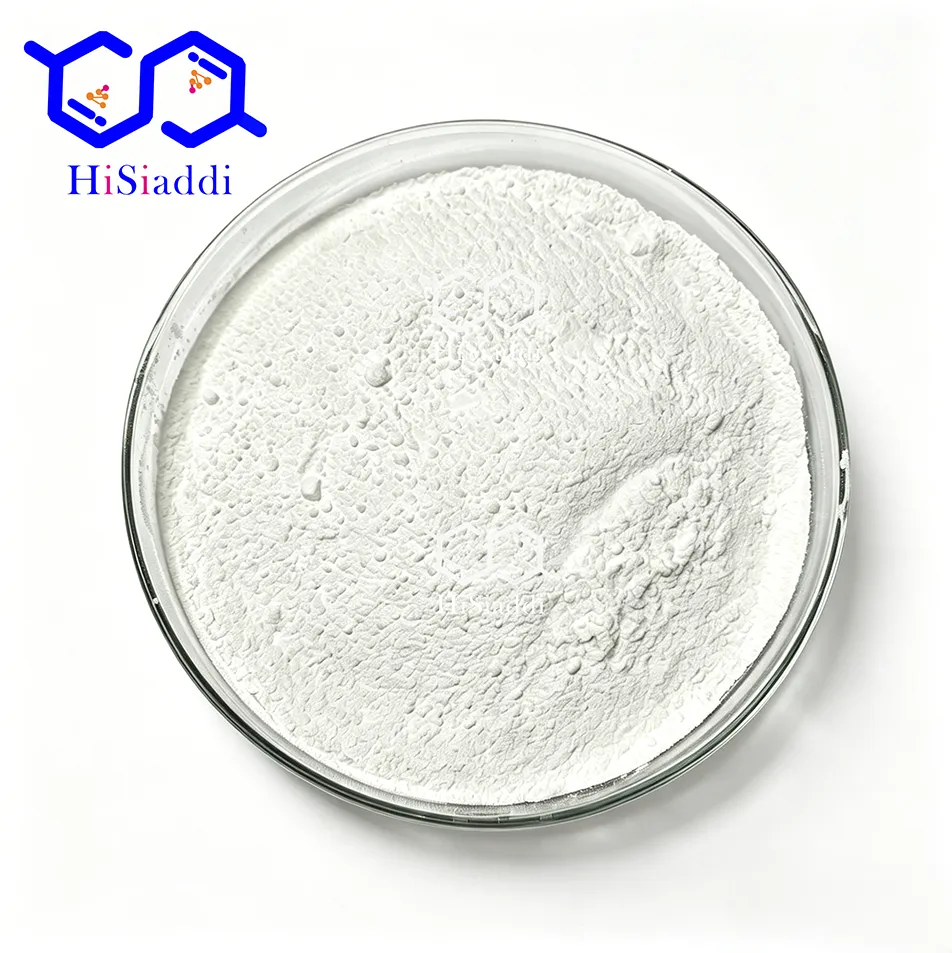
HiSiaddi is an innovative foreign trade service provider driven by both technology transformation and export business. We operate a service system defined as "1+2+3+4=1" and can supply PVI rubber vulcanizing agents sourced directly from multiple well-known original manufacturers. With over a decade of market experience and sustained technology conversion cooperation with manufacturers, HiSiaddi possesses extensive expertise resolving product compliance issues. Below is a case detailing HiSiaddi’s resolution of PVI regulatory compliance challenges.
Contact HiSiaddi customer service for inquiries about PVI product regulatory compliance consulting.
Purchaser: ElasPower GmbH, North Rhine-Westphalia, Germany Leading European Tier 1 supplier for new-energy vehicle batteries, specializing in power battery housing sealing gaskets, EPDM rubber hoses for on-board drinking water pipelines and engine fluororubber oil seals. Its products supply Volkswagen and BMW new-energy vehicle OEMs, requiring simultaneous compliance with EU REACH regulations, SVHC Substances of Very High Concern control, EU food-contact rubber additive standards (EC 1935/2004), German LFGB and IATF16949 automotive OEM access specifications. The client previously purchased original Eastman PVI anti-scorch agent long-term; facing surging European chemical raw material costs and extended ocean transit lead times, they launched a localized domestic PVI substitution project with an annual total demand of 168 tons (92 tons high-purity food-grade PVI powder, 76 tons EPDM pre-dispersed PVI-80 granules).
The client independently sourced samples from two leading domestic PVI manufacturers and confirmed satisfactory physical and chemical indicators before preparing a 42-ton initial shipment. Three critical compliance defects emerged shortly before delivery: SDS safety data sheets issued by manufacturers failed to comply with the latest EU REACH formatting rules; third-party testing detected trace SVHC impurity exceeding limits in products; carrier additives of pre-dispersed granules lacked German LFGB food-contact certification. Freight forwarders notified the client that incomplete documentation would result in customs detention and heavy fines upon EU arrival, with full rejection of raw materials during incoming audits by European vehicle OEMs. The client immediately suspended planned shipments and fully entrusted HiSiaddi Fine Chemical Foreign Trade with end-to-end compliance rectification coordination.
HiSiaddi operates an in-house chemical compliance division with dedicated EU REACH compliance specialists and rubber & plastic testing coordination engineers, with over a decade of experience supporting rubber additive export regulatory compliance. We maintain deep familiarity with EU, German and North American chemical regulations and coordinate upstream manufacturers and authoritative third-party testing laboratories to resolve compliance gaps across formulation fine-tuning, testing certification, document compilation and customs filing – a capability absent from ordinary goods-brokering trade merchants.
PVI produced via conventional domestic manufacturing processes retains trace phthalate impurities from side reactions. SGS third-party testing detected single SVHC substance content at 0.13%, exceeding the EU mandatory limit of 0.1%. Under REACH regulations, annual imports exceeding 1 ton mandate SCIP database notification to ECHA (European Chemicals Agency). Domestic manufacturers lack impurity control processes and cannot deliver compliance rectification solutions. Additionally, factory-original SDS documents are compiled per Chinese national standards, with chemical classification, toxicity descriptions and exposure limits inconsistent with EU CLP classification rules, resulting in non-recognition by German customs.
Raw materials for the client’s white on-board drinking water rubber hoses must satisfy German LFGB food-contact certification. The two domestic suppliers could only provide national standard quality inspection reports without dedicated LFGB test certificates for corresponding grades. Pre-dispersed granules used generic SBR carriers without food-contact regulatory screening of carrier additives, rendering them ineligible for drinking water contact rubber formulations and triggering automatic rejection during vehicle OEM quality audits.
The two manufacturers mislabeled identical HS customs codes for powder and granular PVI; inconsistent component parameters across factory COAs, MSDS and packing lists violated documentation logic required for domestic export commodity inspection and EU import declaration. Freight forwarders predicted high risks of cargo detention or return at Hamburg Port, with single-container daily detention storage and demurrage costs exceeding EUR 2,200.
Domestic PVI manufacturers focus solely on product production, lacking internal EU regulatory compliance teams, and can only cooperate with production rectification without end-to-end support covering regulatory interpretation, third-party testing and document correction.
HiSiaddi compliance engineers collaborated with upstream manufacturer R&D departments to optimize PVI rectification processes targeting trace excess impurities:
1. Add secondary negative-pressure rectification procedures for high-purity powder PVI with extended thermal purification holding time to remove residual phthalate derivatives from side reactions.
2. Discontinue standard SBR carriers for pre-dispersed PVI-80 granules and replace with EU food-grade EPDM carrier raw materials to eliminate restricted additives originating from carrier components. Post-rectification resubmission for SGS retesting confirmed all single SVHC substance levels controlled below 0.07% across all product grades, meeting REACH limit requirements and eliminating mandatory SCIP notification obligations.
1. REACH/SVHC compliance: Partnered with EU local compliance laboratories to conduct full screening of 250 items per the 2025 updated SVHC list and issue English-language REACH test reports. Compliance specialists recompiled bilingual (Chinese/English) SDS documents per new EU CLP regulations, supplementing toxicity data, storage & transportation specifications and waste disposal clauses to satisfy German customs declaration standards.
2. Food-contact compliance: Coordinated testing at authoritative German laboratories for dual German LFGB + EU EC 1935 food-contact certification for both high-purity powder PVI and modified EPDM-carrier granules, issuing English compliance certificates recognized by automotive OEMs to fill qualification gaps for white water hose raw materials.
3. Vehicle OEM dedicated documentation: Consolidated COA quality certificates, full test reports and compliance certificates into unified raw material compliance archives aligned with IATF16949 system requirements for filing during BMW and Volkswagen factory incoming audits.
1. Separate powder PVI and granular pre-dispersed PVI into two distinct product categories with accurately assigned corresponding HS customs codes to correct prior mixed coding errors.
2. Unify component data across factory COAs, SDS, packing lists and commercial invoices to ensure full parameter consistency across all supporting documents, passing pre-inspection for domestic export commodity inspection and eliminating customs declaration rejection risks.
A formal agreement was reached for pre-shipment sampling and testing of critical compliance indicators by HiSiaddi for every subsequent shipment, with batch-specific compliance summary archives attached to each consignment to facilitate German factory incoming storage, EU regulatory random inspections and annual traceability audits by vehicle OEMs.
1. Smooth delivery of rectified initial 42-ton consignment: Full compliance documentation passed Hamburg Customs verification in one submission. Raw materials cleared incoming third-party laboratory testing at BMW and were deployed across four EPDM mass production lines without detention, rejection or financial losses.
2. Stable delivery of full-year 168-ton framework order: Monthly consolidated FOB Shanghai shipments split into 92 tons high-purity food-grade powder and 76 tons EPDM pre-dispersed granules with zero compliance abnormalities throughout the delivery cycle.
3. Expanded long-term cooperation: The client launched an energy storage sealing component project the following year, adding an additional annual PVI procurement volume of 72 tons. The client also fully entrusted HiSiaddi with compliance sourcing and import coordination for all rubber auxiliary materials including zinc oxide and vulcanization accelerators.
4. Significant client cost reduction: Comprehensive procurement cost of domestically sourced compliant PVI reduced by 31% versus original Eastman products, with substantial cuts to hidden compliance risk costs for import activities.
Domestic PVI manufacturers focus on synthesis and mass production without comprehensive EU multi-regulatory compliance system reserves, only capable of guaranteeing physical and chemical compliance at factory exit while lacking familiarity with EU access rules including REACH and LFGB. Mid-to-high-end European auto parts manufacturers operate under stringent vehicle OEM compliance constraints; any single compliance defect in raw materials triggers production line shutdowns and order breach liabilities, with extended rectification cycles and high trial-and-error costs if manufacturers are coordinated independently by overseas clients.
Integrating dual compliance and technical capabilities, we deliver full-chain solutions covering formulation optimization, third-party testing, certification acquisition, document compilation and customs filing, resolving multi-dimensional regulatory barriers in one stop and bridging compliance information gaps between domestic manufacturers and high-end overseas end clients.
European automotive Tier 1 parts manufacturers evaluate additive suppliers based not only on product quality and pricing, but also full-process regulatory risk mitigation capacity. Comprehensive compliance service support constitutes the core competitive advantage enabling domestic additives to penetrate high-end European automotive supply chains.
Contact HiSiaddi customer service for inquiries about PVI product regulatory compliance consulting.

 +86-13120989737
  info@hisiaddi.com
 English