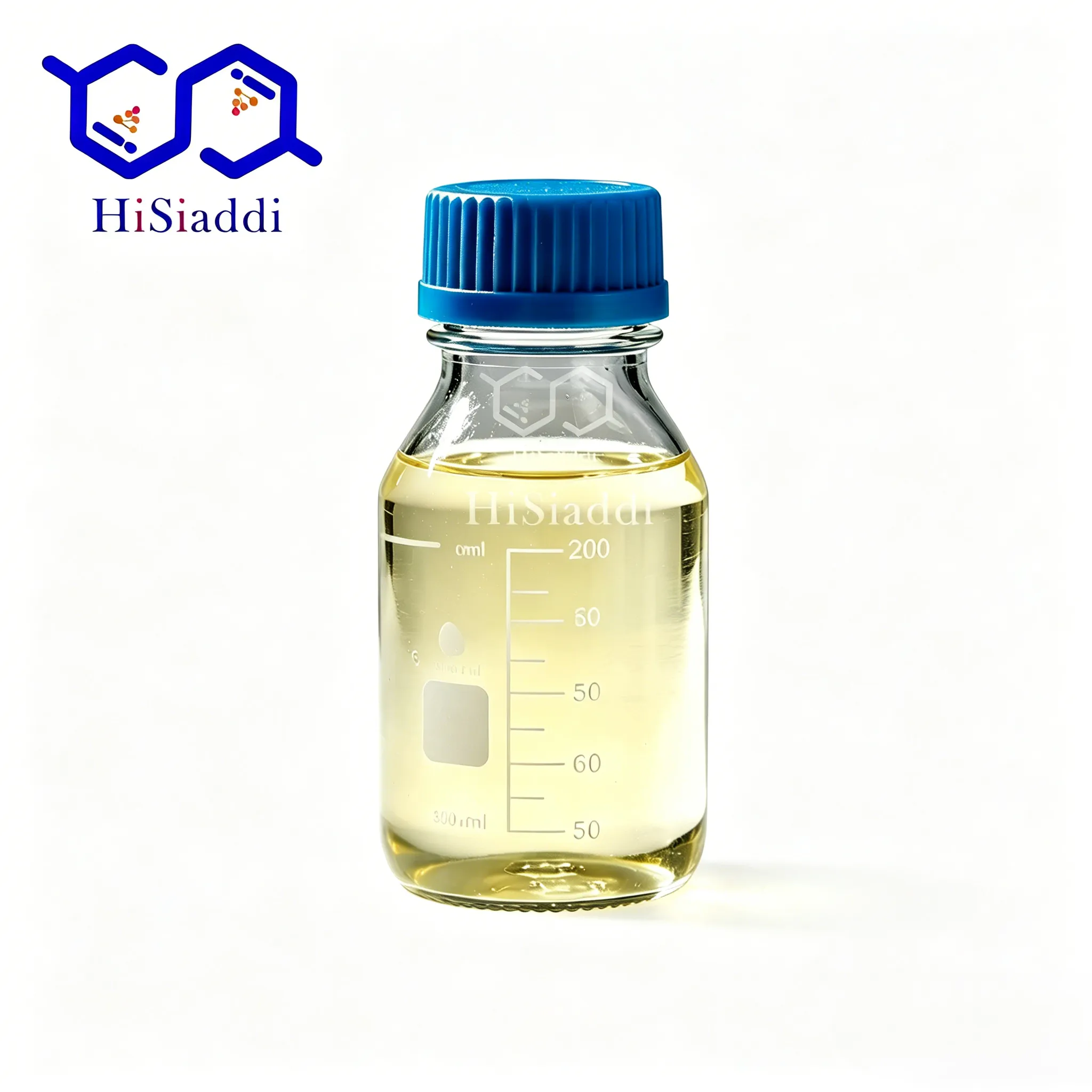
As a new type of foreign trade service provider driven by both technology transformation and foreign trade business, HiSiaddi has established a "1+2+3+4=1" service system and can supply raw materials from multiple well-known original manufacturers of triethyl citrate (TEC). Equipped with R&D capabilities, HiSiaddi has repeatedly proposed TEC formulation optimization schemes and application improvement suggestions through technological transformation cooperation with manufacturers and accurate insight into market demands. Below is a consulting case of HiSiaddi on TEC formulation optimization.
Please contact HiSiaddi customer service if you need more formulation optimization consulting services.
Purchaser: NORPHARM AS, located in the biomedical industrial park of Oslo, Norway. With 31 years of expertise in R&D and production of enteric sustained-release hard capsules and pediatric oral preparations, it supplies Nordic chain pharmacies and undertakes OEM production for multiple multinational pharmaceutical companies. Its products comply with USP Pharmacopoeia, EU Regulation 10/2011, FDA 21CFR, and Nordic NOM food and pharmaceutical excipient regulations. Its established enteric coating system uses pharmaceutical-grade TEC imported from BASF Germany as a plasticizer, with an annual stable TEC procurement volume of 156 tons. The mature formulation of HPMC + Eudragit L100-55 enteric coating matched with imported TEC delivers smooth capsule coatings, stable disintegration time limits, no precipitation during ambient storage, and a consistent finished product yield rate above 99.6%.
Faced with rising European chemical raw material prices and extended delivery cycles of imported products up to 98 days, the client purchased 26 tons of national standard food-grade TEC from a domestic Chinese manufacturer to cut costs and shorten lead times. The original coating formulation, ingredient ratios, and automatic spray coating processes developed for BASF TEC were applied directly on 6 full-automatic enteric capsule production lines. Within one week of production launch, three fatal manufacturing defects emerged, resulting in over 3.7 tons of semi-finished product scrap. Downstream pharmaceutical clients suspended goods receipt, leading to heavy compensation penalties for delayed delivery. The raw material supplier only provided national standard factory certificates and lacked R&D capabilities for pharmaceutical formulation applications. After 11 repeated trial production runs with adjusted TEC addition dosages, the manufacturer failed to resolve the dilemma: excess TEC caused oil precipitation and bloom on coatings, while insufficient TEC led to brittle coating films and unqualified disintegration time limits. NORPHARM urgently commissioned HiSiaddi to set up a special pharmaceutical excipient technical team to resolve technical issues across the full chain: raw material testing and source tracing, root cause analysis of defects, enteric coating formulation optimization, and workshop spray process adjustment.
Baseline original formulation (based on 100 PHR HPMC): 100 parts enteric HPMC polymer, 22 PHR imported TEC, 8 PHR talc powder, ethanol-water solvent system. After direct 1:1 replacement with domestic TEC at 22 PHR, all three defects exceeded the enterprise’s internal acceptance standards:
1. Oil bloom and precipitation on capsule coating surfaces: After 7 days of sealed ambient storage, oily white fog and greasy precipitates appeared on coating surfaces. TEC migration levels in dissolution tests exceeded Nordic pharmaceutical excipient control limits, disqualifying the products for oral pharmaceutical use;
2. Whitening, fogging and film cracking after high-temperature drying: Transparent enteric coatings turned opaque white after 48℃ hot air drying, with tiny cracks forming locally, triggering premature disintegration in gastric fluid and complete failure of enteric protection performance;
3. Severe fluctuation of finished product disintegration time after storage: Disintegration time of identical batches varied by ±25 minutes after 15 days of storage, violating USP Pharmacopoeia limits for enteric preparations and causing uncontrolled drug release rates.
HiSiaddi collected original pharmaceutical-grade TEC from BASF, the domestic TEC stock in the client’s warehouse, plus the client’s HPMC, Eudragit enteric resin, and talc powder, and submitted all raw materials to an SGS laboratory with EU accreditation for full parallel physicochemical testing. Three root causes of defects were identified:
① Original BASF pharmaceutical-grade TEC has a main ester content ≥99.90%, while the delivered domestic TEC only reached 99.32%. Excess residual free citric acid, incompletely stripped trace ethanol, and low-molecular by-products exhibited poor compatibility with HPMC resin. Small-molecule impurities migrated outward from the coating substrate during long-term storage, the core driver of oil bloom and precipitation; ② Domestic TEC had an acid value of 0.09 mgKOH/g, far higher than the imported grade’s 0.028 mgKOH/g. Acidic impurities degraded the molecular structure of enteric polymers under heating during drying, leading to whitening and brittleness of coatings; ③ Elevated trace high-boiling-point impurities in the product slowly seeped out of coating films under heating, continuously altering coating hydrophilicity and causing erratic fluctuations in capsule disintegration time.
The polarity and hydrogen bonding capacity of each component in the original formulation were designed around high-purity imported TEC. The weaker polarity of domestic TEC meant 22 PHR addition exceeded the safe compatibility threshold of HPMC. The original talc powder and solvent ratios formulated for high-purity TEC caused uneven dispersion when compounded with standard domestic TEC, worsening plasticizer migration and precipitation.
BASF TEC features superior thermal stability, matching the original coating inlet air temperature of 52℃ and atomization pressure of 0.32 MPa. Domestic TEC has inferior heat resistance; high temperatures accelerated small-molecule impurity volatilization and resin degradation, exacerbating whitening and precipitation defects.
HiSiaddi coordinated cooperating TEC manufacturers to adjust production processes: replacing sulfuric acid catalysts with solid acid catalysts and adding tertiary high-vacuum precision rectification sections to remove free acids and small-molecule impurities. A dedicated NP pharmaceutical-grade TEC grade exclusive to NORPHARM was finalized with stable indicators: main content ≥99.88%, acid value ≤0.035 mgKOH/g, moisture ≤0.04%. For the 26 tons of standard-grade TEC in stock, HiSiaddi guided the client to conduct 30-hour constant-temperature sealed storage pre-treatment at 42℃ to reduce the activity of free small molecules, improve fusion with HPMC, maximize inventory utilization, and minimize scrap losses.
Original mature formulation: 100 HPMC + 22 TEC + 8 talc powder + anhydrous ethanol-water mixed solvent Revised optimized formulation: 100 HPMC + 17 modified pharmaceutical TEC + 4.5 pharmaceutical-grade acetyl tributyl citrate (ATBC) + 7.2 ultra-fine pharmaceutical talc powder + 0.3 trace anti-crystallization auxiliary agent
Optimization logic:
1. TEC dosage reduced from 22 parts to 17 parts, compounded with 4.5 parts pharmaceutical-grade ATBC. ATBC’s superior compatibility encapsulates free small molecules to eliminate oil bloom and precipitation at the formulation stage;
2. Adjust talc powder fineness and dosage by adopting pharmaceutical ultra-fine mesh talc powder to reduce local stress cracking caused by powder agglomeration;
3. Trace compliant pharmaceutical anti-crystallization additives neutralize trace free acids in TEC, preventing resin acid degradation and whitening during drying, and stabilizing enteric disintegration time limits.
1. Batching and stirring process: Adjust material feeding sequence — pre-dissolve HPMC powder in water with 30 minutes of stirring → mix talc powder and auxiliary agents evenly → slowly drip pre-treated TEC under low-speed constant stirring to avoid localized plasticizer enrichment;
2. Coating temperature and atomization rectification: Reduce inlet drying temperature from 52℃ to 45℃, synchronously lower outlet air temperature by 3℃; cut atomization air pressure from 0.32 MPa to 0.27 MPa to decrease spray droplet size and achieve more uniform film formation from coating liquid;
3. Segmented temperature-controlled drying: Low-temperature shaping in the initial stage followed by gradual slow temperature rise in later drying stages to avoid film shrinkage cracking caused by instantaneous high temperatures.
Optimized formulation samples were sent to Norwegian R&D laboratories for four full tests: ambient storage stability, 48℃ accelerated aging, pharmacopoeia enteric disintegration performance, and solvent migration. Results showed smooth coatings free of white fog or precipitation, no whitening or cracking after drying, and disintegration time fluctuation controlled within ±3 minutes — all indicators comparable to finished products made with original BASF TEC.
One production line was first switched to the new formulation and optimized process for uninterrupted mass production over 72 hours. The capsule yield rate rebounded from 61.7% before rectification to 99.72%. The remaining 5 production lines adopted the updated process in batches, fully consuming the 26 tons of stock TEC, delivering delayed OEM orders on schedule and avoiding penalty fines.
Balanced monthly shipments of the exclusive NP customized pharmaceutical-grade TEC across 12 months. Comprehensive procurement costs dropped by 30.8% compared to original BASF Germany raw materials, and ocean delivery cycle was shortened from 98 days to 31 days.
1. Full-category pharmaceutical excipient technical trusteeship: For new sustained-release pellet projects launched by NORPHARM, all localized material selection, compatibility testing of plasticizers including TEC, ATBC, and epoxy plasticizers were entrusted to HiSiaddi for long-term technical management. Compatibility verification of samples is completed in advance before raw material arrival to avoid production failures at source;
2. Standardized export-exclusive grade finalized: Based on test data from Norwegian pharmaceutical manufacturers, the factory designated NP-TEC as an exclusive grade for Northern European pharmaceutical applications, complete with full USP and EU test reports plus REACH compliance documentation. Leveraging this grade, HiSiaddi successfully developed two equivalent pharmaceutical manufacturers in Sweden and Denmark;
3. Pre-inspection mechanism for incoming raw materials: HiSiaddi assists in physicochemical and compatibility sampling inspection for all TEC batches before delivery; products can only be warehoused and put into production after passing testing, establishing a long-term risk prevention system for raw material quality.
1. Industry Pain Points: Most domestic TEC manufacturers prioritize mass production of standard national standard grades, only controlling basic national standard physicochemical indicators while lacking supporting application technology for pharmaceutical coating formulations. Formulations of high-end European and American pharmaceutical enterprises are developed around imported high-purity pharmaceutical TEC; direct 1:1 replacement with standard domestic raw materials easily triggers unbalanced compatibility and mass scrap of finished products;
2. Core Value of HiSiaddi: Closing a full technical loop covering raw material defect diagnosis, grade and process improvement, pharmaceutical formulation restructuring, and production process implementation, bridging the application technology gap between raw material manufacturers and overseas pharmaceutical end-users;
3. Sourcing Logic of High-end Clients: Mid-to-high-end Northern European pharmaceutical buyers do not pursue low prices unilaterally. Matching raw material performance, supporting formulation and process technical services, and consistent batch stability are core factors for clients to sign large annual long-term orders.
Please contact HiSiaddi customer service if you need more formulation optimization consulting services.

 +86-13120989737
  info@hisiaddi.com
 English