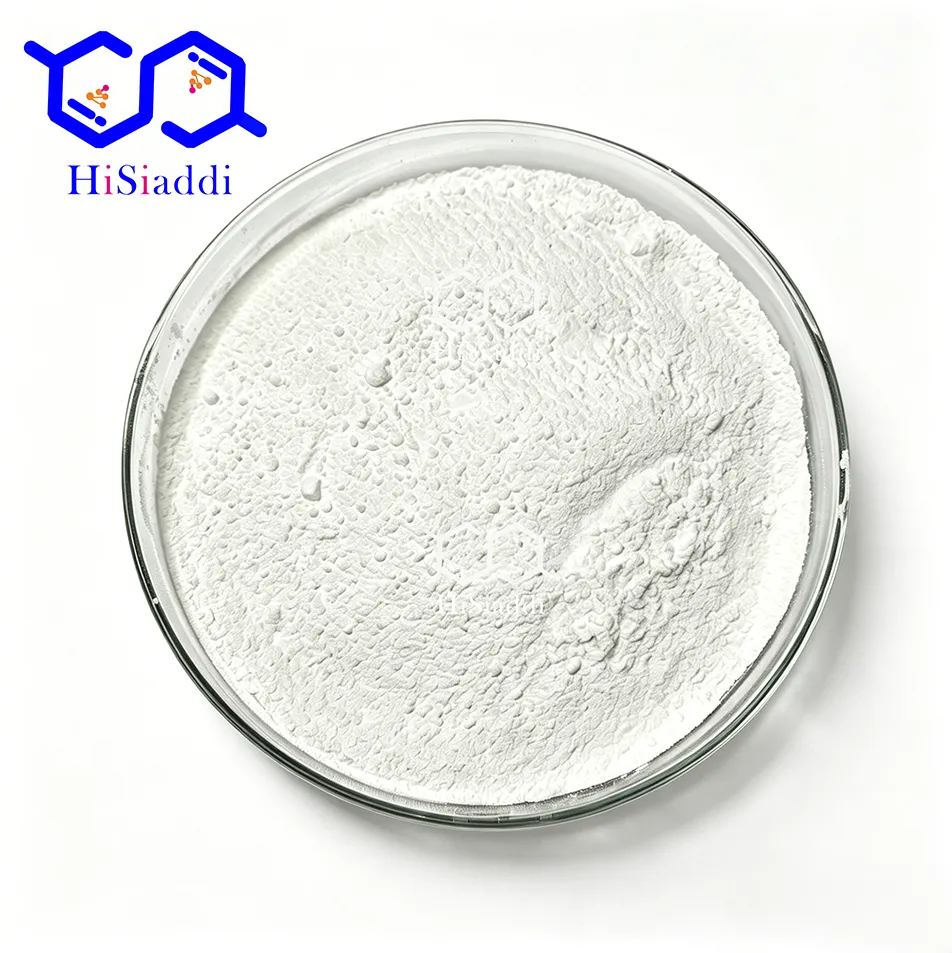
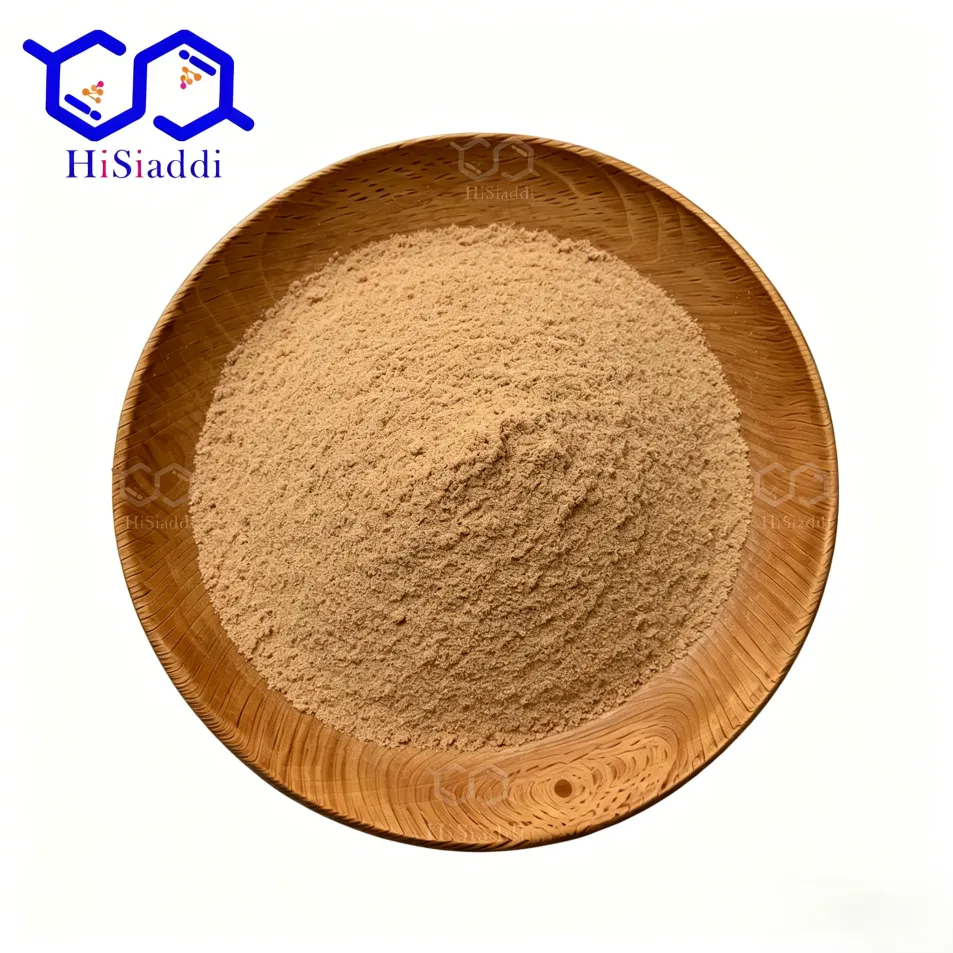
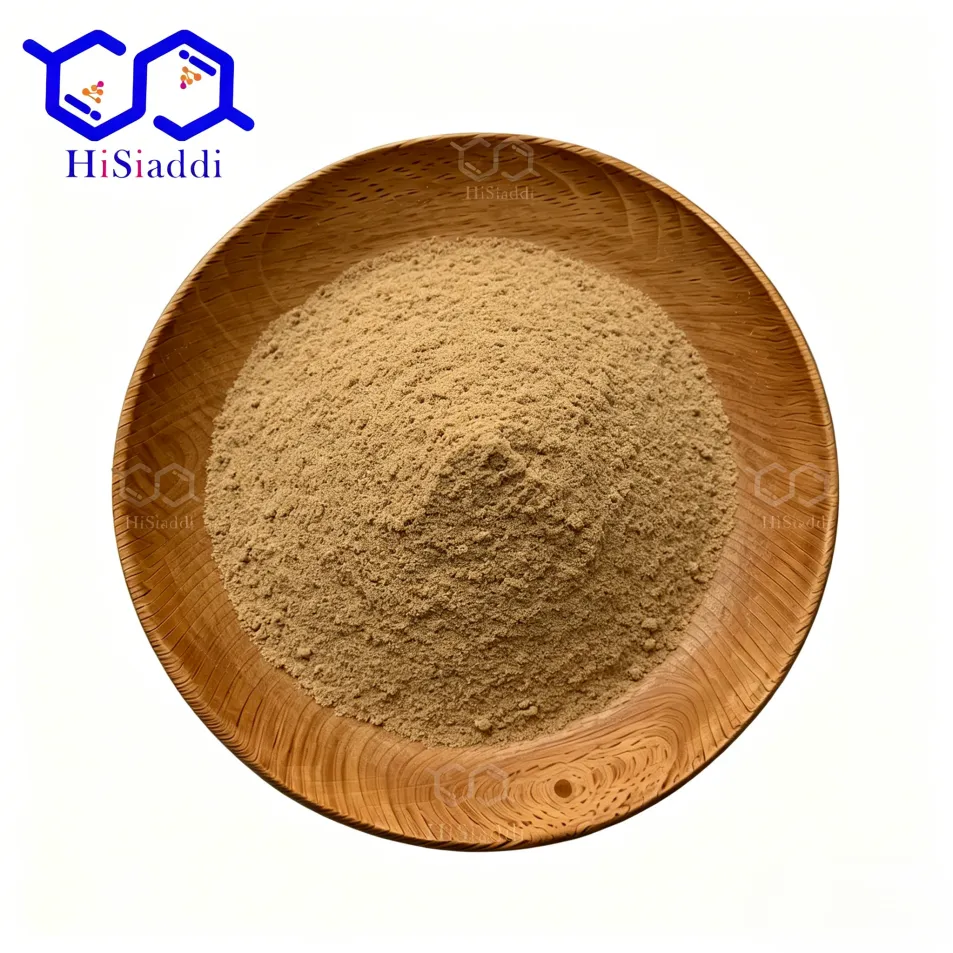
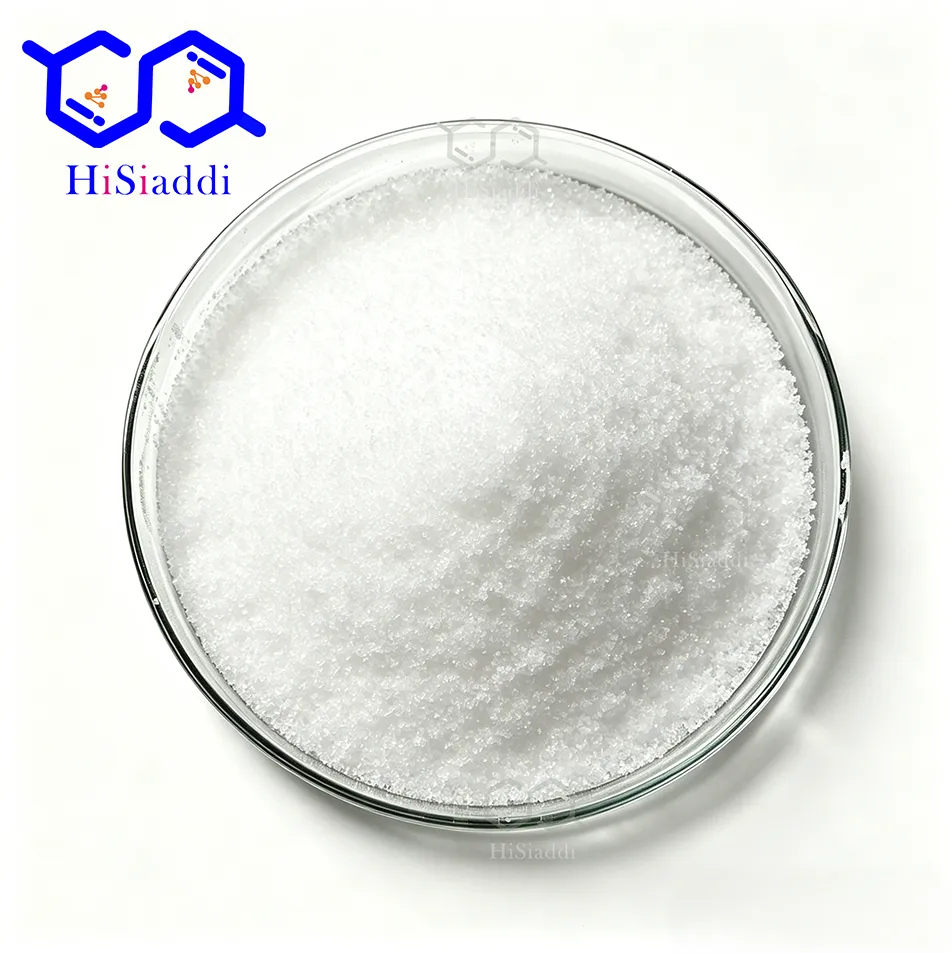
As a new-type foreign trade service provider driven by technological transformation and foreign trade services, HiSiaddi has established a "1+2+3+4=1" service system and can supply raw materials of Ashwagandha Extract and Withanolides from multiple well-known original manufacturers.
As a tech-driven foreign trade service provider, HiSiaddi has repeatedly proposed formula optimization plans and application improvement suggestions for Ashwagandha Extract and Withanolides products through technological transformation cooperation with manufacturers and precise insight into market demands. Below is a consultation case of HiSiaddi on formula optimization for Ashwagandha Extract and Withanolides products.
Contact HiSiaddi customer service if you need more formula optimization consultation services.
The purchaser is Zenith Wellness, a premium health company based in Auckland, New Zealand. For over 20 years, it has developed and produced premium soothing dietary supplements, botanical calming oral liquids and sports stress repair tablets for premium clinics across New Zealand and Australia. Its products are sold in private rehabilitation clinics, national organic health supermarket chains and professional athlete wellness centers in New Zealand. All product lines strictly comply with Australia’s TGA drug administration standards, New Zealand’s FSMA food regulations, USP Pharmacopoeia, EU EC396 226-item pesticide residue control, and dual clean certifications of Kosher and Non-GMO. Its two core finished products, compound sustained-release withanolide capsules and water-soluble botanical calming oral liquids, take withanolide extract as the core functional raw material in formulations. For more than a decade, it has sourced fixed pharmaceutical-grade customized raw materials from formal South African plant extraction enterprises, representing a typical refined mid-to-high-end purchaser with raw material screening standards far higher than ordinary domestic health supplement raw materials, refusing bulk generic crude Ashwagandha Extract from small workshops lacking quality control.
Affected by multiple factors including reduced local medicinal herb output in South Africa, skyrocketing international sea freight costs and extended original factory production lead times up to 92 days, the client’s procurement department launched a localized Chinese raw material replacement project, independently selecting three mid-sized domestic plant extraction manufacturers and placing an initial 4.2-ton order for generic 5% total withanolide Ashwagandha Extract. On the day the raw materials arrived at the client’s New Zealand GMP formulation workshop for production, four major production failures occurred one after another: poor powder flowability causing frequent blockage during capsule filling, rapid attenuation and discoloration of active monomers during compound storage, white flocculent precipitation after cooling in oral liquid systems, and unqualified finished product internal control due to excessive solanesol impurities. Two finished product production lines were fully shut down. Losses of auxiliary materials, packaging materials and labor invested exceeded 142,000 New Zealand Dollars, and the original autumn and winter calming new product launch plan for the Southern Hemisphere was delayed by 69 days overall.
The three domestic raw material suppliers could only guarantee the total lactone content upon factory delivery, with production R&D solely focused on national standard mass production, lacking formulation compatibility R&D capabilities for terminal finished products, making them unable to conduct systematic rectification and optimization from both raw material production processes and terminal finished product formulations. Recommended by the Oceania Natural Raw Materials Association, the client formally entrusted HiSiaddi, a foreign trade service provider with a team of professional plant extraction engineers, to systematically investigate technical root causes and implement comprehensive rectification and optimization solutions covering three dimensions: upstream raw material production process improvement, midstream terminal finished product formula optimization and downstream on-site workshop production parameter adjustment.
The client’s internal mandatory technical indicators for terminal products serve as the benchmark for HiSiaddi’s full-process rectification:
1. For capsule-specific extracts: powder repose angle of 36°±3°; raw materials shall not absorb moisture and cake after being exposed to air for 4 hours under the client’s workshop ambient humidity of 49%~56%; when compounded with γ-aminobutyric acid and microcrystalline cellulose and sealed for storage at room temperature for 24 months, the total attenuation of Withanolide A and D monomers shall not exceed 3%.
2. For oral liquid-specific modified raw materials: fully soluble in cold water, no impurity precipitation after standing at 25°C for 90 days, and active lactone loss below 3.8% under 82°C emulsification processing conditions.
3. For all batches of raw materials: total lactones 5%, Withanolide A ≥2.5%, D ≥1.2%, solanesol impurities ≤0.15%, solvent residue <400 ppm; heavy metals and all pesticide residues shall meet entry filing standards of Australian and New Zealand drug authorities.
HiSiaddi’s technical engineers collected problematic raw materials and scrapped semi-finished products sent by the client, and carried out two-way physical-chemical benchmark testing together with CNAS-certified domestic third-party laboratories and the client’s self-developed laboratory in New Zealand. It was confirmed that all production failures stemmed from crude domestic generic Ashwagandha Extract processes without monomer grading and powder modification tailored to Australian and New Zealand terminal formulation demands. Four major technical shortcomings are broken down as follows:
Domestic suppliers source a mixture of domestically cultivated and bulk Indian Ashwagandha raw materials without manual sorting of mature rhizomes, tender roots and fibrous roots for separate feeding, resulting in natural wide fluctuations of active ingredients. Production adopts traditional high-temperature full-reflux ethanol extraction and hot air oven drying, forming loose porous structures inside extracts with large powder specific surface area, which rapidly absorbs water vapor under high humidity in New Zealand workshops. Raw materials agglomerate within 2 hours of unpacking. Material bridging and adhesion to molds frequently occur at the feed inlet of fully automatic capsule filling machines, requiring equipment shutdown and disassembly for cleaning every half hour, slashing production efficiency by 63%, exceeding capsule filling deviation standards and pushing finished product rejection rate up to 26.8%, far above the client’s internal control rejection limit of 3%. Meanwhile, disordered powder particle sizes cause severe layering during mixing, with monomer content differences up to 11.7% within the same batch of capsules, failing New Zealand pharmacy finished product sampling inspections.
Generic crude Ashwagandha extraction only uses single large-pore resin to enrich total lactones without special refining sections for solanesol removal. Tested samples show solanesol at 0.38%, far exceeding the client’s internal control upper limit of 0.15%. As a highly lipophilic impurity, solanesol continuously undergoes oxidation reactions when compounded with botanical polyphenols in capsule formulations, turning finished products from light beige to yellowish-brown after 3 months of storage and accelerating lactone monomer degradation. When used in oral liquid production, impurities break the original emulsified colloid balance, leading to massive flocculent precipitation after product cooling, resulting in direct unqualified judgment during terminal supermarket sampling and removal from shelves.
Factories rely on simple atmospheric distillation for ethanol recovery, with finished ethanol residue measured at 1160 ppm, far exceeding the 400 ppm limit. Residual ethanol volatilizes rapidly during the 82°C high-temperature emulsification process of oral liquids, breaking colloid stability, while polar ethanol catalyzes hydrolysis of withanolides, causing monomer loss up to 18.3% under high-temperature working conditions. The final finished product active ingredient content fails to reach labeled values, violating New Zealand food labeling regulatory laws.
Capsules require low-moisture, high-flow dry fine powder, while oral liquids require highly water-soluble, low-impurity modified water-soluble raw materials, with completely different requirements for crystal form, particle size and solubility. However, domestic suppliers only mass-produce unified generic extracts without flexible graded screening and cyclodextrin water-soluble modification supporting production lines. Separate differentiated specifications cannot be produced for the two product lines, so a single raw material used for both production lines inevitably leads to high rejection rates for one product. Restricted by fixed mass production lines, manufacturers refuse to invest in equipment renovation for special customized modification.
HiSiaddi set up a special task force consisting of plant extraction refining process engineers, dietary formulation specialists and cross-border compliance technical coordinators, cooperating with two mid-to-high-end Ashwagandha Extract manufacturers in China with imported medicinal herb qualifications and flexible customized refining production lines, while synchronously liaising with Zenith Wellness’s R&D laboratory in New Zealand. Following a three-step plan of upstream raw material production process iteration and optimization → midstream terminal finished product formula fine-tuning → downstream client workshop production control refinement, the four technical problems were resolved one by one. The full rectification process was divided into three stages for repeated data verification: lab sample testing, 50kg pilot trials and mass production.
1.
Source fixed imported graded feeding to stabilize base raw material components Cooperate with Indian standardized GAP planting bases in Maharashtra to source compliant Ashwagandha rhizomes by fixed import. After arrival, mature main rhizomes are manually sorted to remove fine fibrous roots and moldy miscellaneous materials for separate feeding, narrowing the fluctuation range of active ingredients from the raw material source.
2.
3.
Low-temperature enzymatic hydrolysis + serial chromatographic refining to precisely control monomers and solanesol impurities Abandon high-temperature full-reflux crude extraction, adopt low-temperature biological enzymatic wall-breaking plus gradient ethanol segmented percolation extraction to avoid thermal decomposition of Withanolide A and D under high temperatures. Pair non-polar and medium-polar resins for serial chromatography: the first stage enriches target lactone components, the second stage directionally adsorbs and removes solanesol, supplemented by trace alumina refining to eliminate residual lipophilic impurities. After multiple rounds of parameter adjustment, finished solanesol is stably controlled at 0.11%~0.14%, with Withanolide A and D steadily within the client’s standard ranges.
4.
5.
Three-stage negative-pressure distillation + vacuum freeze-drying modification to balance low solvent residue and powder flowability Renovate the ethanol recovery section with three-stage low-temperature negative-pressure distillation to remove residual solvents, stabilizing finished ethanol residue at 300~375 ppm. Replace hot air drying with vacuum low-temperature freeze-drying plus sealed airflow classified crushing to optimize powder particle size distribution. The finished product repose angle ranges from 35.8 to 37.2°, with moisture absorption weight gain ≤0.62% after 72 hours under 55% ambient humidity. Natural loose powder is achieved via crystal form modification without adding silica dioxide or other anti-caking excipients at any stage.
6.
7.
Produce two differentiated specification raw materials on separate production lines: graded fine powder for capsules and cyclodextrin inclusion water-soluble modified powder for oral liquids, produced and stored separately.
8.
Fine-tune auxiliary material ratios within the compliance framework of New Zealand’s FSMA and Australia’s TGA regulations to avoid oxidation compatibility and colloid demulsification risks.
1.
Sustained-release capsule formula optimization: Remove high-moisture lactose from the formula and replace it with low-hygroscopic anhydrous microcrystalline cellulose; add a small amount of food-grade citric acid chelating agent to chelate trace metal ions and block oxidation catalysis. Optimize feeding sequence by mixing Ashwagandha Extract and mineral auxiliary materials in two separate batches to reduce direct contact-induced oxidation and discoloration. Accelerated stability testing shows finished product content and color meet all standards after 24 months of storage.
2.
3.
Calming oral liquid formula optimization: Stabilize the system pH within a weak acid buffer range of 4.3~4.7 to improve solubility of trace impurities; fine-tune the ratio of citric acid and sodium bicarbonate. Raw materials are pre-dissolved at 60°C before segmented temperature rise heating to shorten high-temperature residence time, controlling lactone loss under heating within 3.5% and eliminating precipitation after cooling.
4.
1. Raw material warehouse control: Install dehumidifiers in the client’s raw material warehouse, maintain constant temperature at 22°C and ambient humidity ≤37%. Raw materials are packed in vacuum aluminum foil bags and taken in small batches as needed; unused raw materials shall be sealed immediately after unpacking.
2. Capsule workshop control: Calibrate the screw rotation speed and feed air pressure of fully automatic filling machines based on optimized powder flow parameters to shorten open-air exposure time of powder.
3. Oral liquid production control: Establish a special raw material pre-dissolution station for low-temperature pretreatment of raw materials before entering the emulsification process to avoid active ingredient loss caused by one-time high-temperature feeding.
After four rounds of cross-border sample delivery and full physical-chemical and formulation pilot acceptance by New Zealand laboratories, the two customized withanolide extracts after optimization fully passed TGA full testing and pre-filing with New Zealand drug authorities. The first batch of 4.5 tons of raw materials in two specifications, temperature-controlled and moisture-proof sealed, were shipped by sea to Auckland. After raw material production, the capsule production line operated stably for 32 consecutive days without filling blockages, with filling error controlled within ±2% and finished product rejection rate reduced to 1.9%. All batches of oral liquid remained clear and transparent with no flocculent precipitation after standing at room temperature for 90 days, and lactone loss under 82°C heating was 3.4%, fully meeting internal control standards. The autumn and winter new product delayed for 69 days was successfully launched across all premium pharmacies and sports wellness institutions in New Zealand and Australia.
The client immediately signed an annual long-term framework procurement order of 16.3 tons, including 9.5 tons of capsule-specific fine powder and 6.8 tons of oral liquid water-soluble modified powder, scheduled for monthly production in 10 batches throughout the year. Compared with original pharmaceutical-grade raw materials imported from South Africa, comprehensive localized procurement costs decreased by 29.5%, and cross-border sea transportation cycle was shortened from 61 days to 24 days, greatly optimizing the client’s global raw material supply chain structure.
In the following year, relying on stable customized raw materials, Zenith Wellness expanded its premium wellness market in Fiji and Papua New Guinea, launching two new segmented product categories of low-irritation withanolide raw materials for pet soothing dietary supplements and high-end skincare cosmetics. All process debugging, customized production and compliance support for the full range of raw materials were fully entrusted to HiSiaddi for overall coordination and implementation. Endorsed by this mid-to-high-end Oceania brand as a fixed purchaser, the cooperating domestic plant extraction manufacturers upgraded refined modification production lines for imported raw materials, and successively secured long-term customized orders from three equivalent premium wellness enterprises in Australia and Fiji, escaping the low-price homogeneous competition of domestic generic Ashwagandha Extract and transforming from low-grade raw material manufacturers to high-end customized plant extract service providers. Drawing on this technical renovation case, HiSiaddi built a formulation-adapted process database for segmented specifications of withanolides, continuously providing raw material technical optimization and implementation services for mid-to-high-end dietary brands in Oceania, Europe and America.
The vast majority of domestic Ashwagandha Extract manufacturers focus on mass production of national standard generic raw materials, with production processes designed around cost reduction. They only control total lactone content indicators, lacking R&D for monomer precise separation, targeted impurity removal and powder water-soluble modification tailored to overseas capsule and oral liquid production conditions and formulation compatibility logic. While overseas mid-to-high-end wellness brands excel in terminal finished product R&D and are proficient in local drug administration regulations and formulation processes, they lack understanding of production process shortcomings in China’s plant extraction industry. Independent direct procurement of domestic generic extracts easily leads to mass production rejection and delayed new product launches with heavy losses.
Breaking away from the traditional foreign trade model of only spot intermediary resale, HiSiaddi relies on plant extraction technical reserves and full industrial chain resources to connect an integrated technical service chain covering upstream raw material process optimization, midstream terminal formula coordinated adjustment and downstream on-site production guidance, bridging the technical information gap between domestic raw material production and overseas finished product formulation, helping high-end domestic plant extracts escape low-price competition and steadily enter mid-to-high-end Oceania dietary raw material supply chains.
Contact HiSiaddi customer service for more formula optimization consultation services.

 +86-13120989737
  info@hisiaddi.com
 English