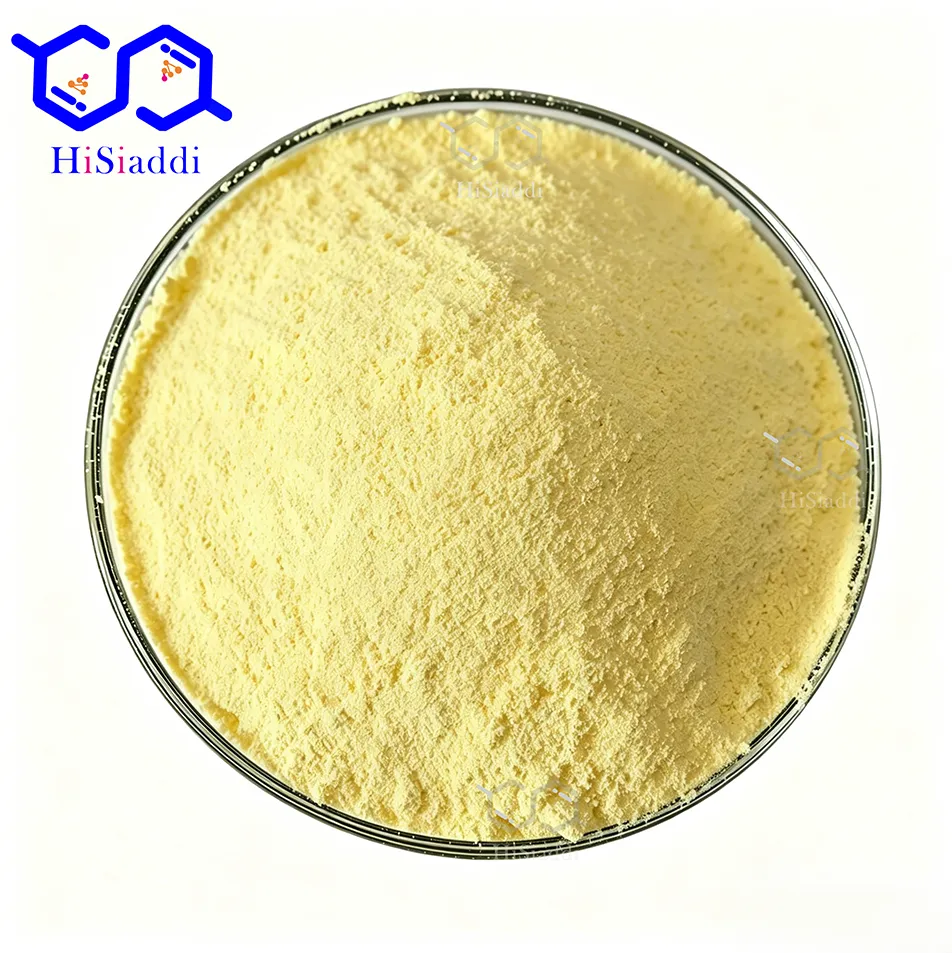
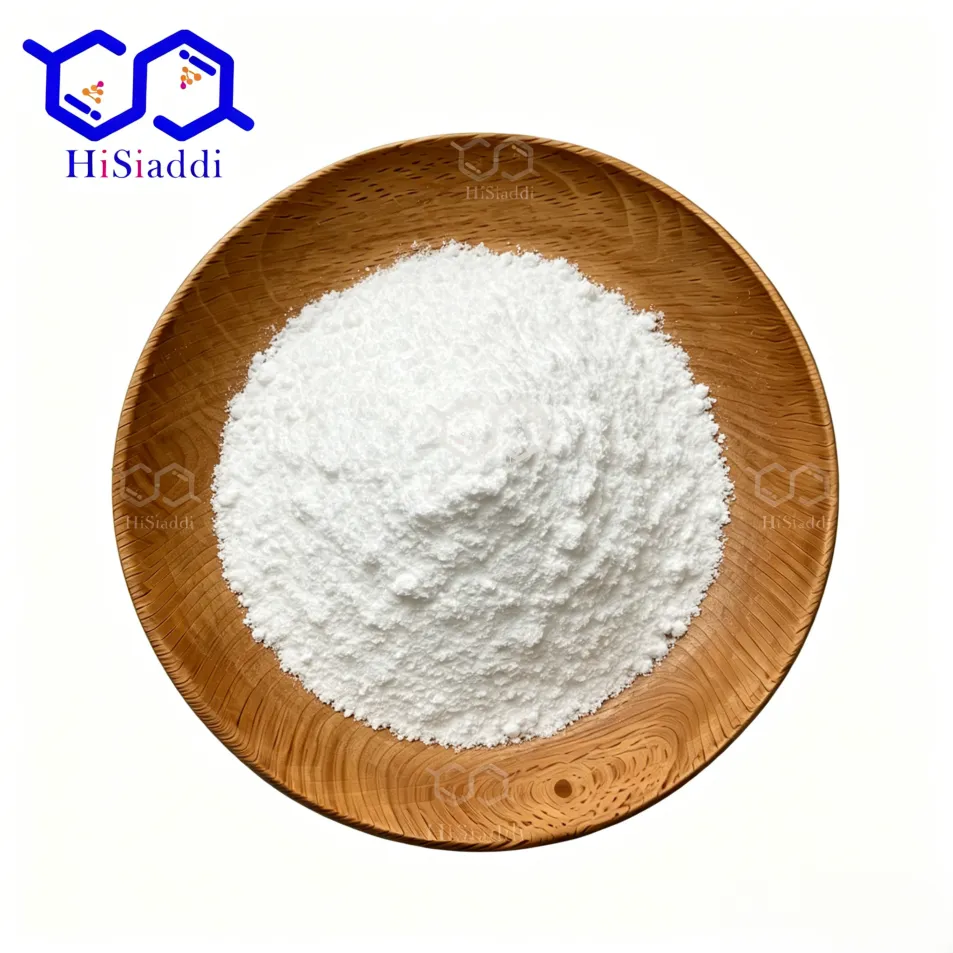
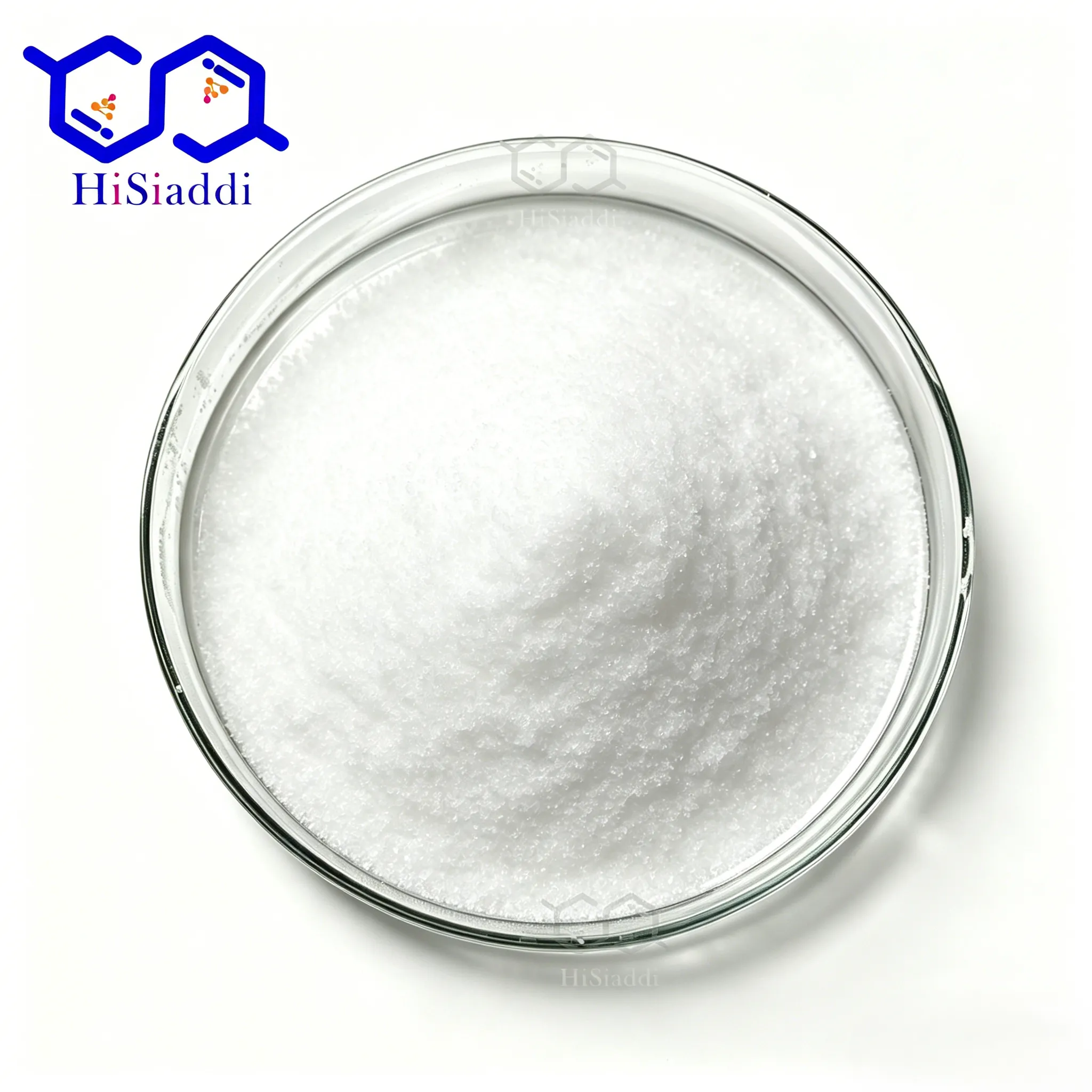
HiSiaddi is an innovative foreign trade service provider driven by technological transformation and foreign trade business, establishing a service system defined as "1+2+3+4=1" and supplying ethyl vanillin from multiple reputable original manufacturers. As a technology-driven foreign trade enterprise, HiSiaddi has repeatedly collaborated with factories on technological conversion and accurately captured market demands to propose formula optimization schemes and application improvement suggestions for ethyl vanillin. Below is a case of HiSiaddi’s formula optimization consulting service for ethyl vanillin.
Please contact HiSiaddi customer service for further formula optimization consulting support.
ChocoBel, a Belgian enterprise with over 50 years of expertise in premium handmade chocolate, low-temperature fermented yogurt and high-end cream ice cream, supplies products to high-end supermarkets in Belgium and Luxembourg as well as Michelin-starred dessert stores. All raw materials comply with EU EFSA, LFGB and Belgian FASFC food regulations. The group long-term purchased pharmaceutical-grade ethyl vanillin from Givaudan Switzerland. In 2025, it fully shifted to mass production with domestically refined ethyl vanillin, yet three production lines simultaneously developed finished product quality defects after launch, endangering 2,100kg of semi-finished goods for scrapping. The raw material manufacturer only guaranteed national standard factory indicators and lacked R&D capacity for downstream food formula applications, attributing all finished product abnormalities to unreasonable production processes on the client’s side, creating a technical deadlock between supplier and buyer. The client entrusted HiSiaddi to resolve all technical challenges via closed-loop solutions covering upstream raw material process modification, terminal formula fine-tuning and revision of factory production SOPs. After rectification, the group maintained stable annual procurement of 28.6 tons of customized ethyl vanillin.
Lab-scale small samples passed sensory and physical-chemical testing without abnormalities, yet mass production after complete replacement with domestic general refined ethyl vanillin triggered continuous quality defects across three terminal product lines, delaying the scheduled new product launch by 45 days. The client adopted mature production parameters optimized for imported Swiss raw materials, lacking familiarity with differences in impurity composition, crystal structure, thermal stability and lipid dispersion performance of domestic ethyl vanillin. Domestic manufacturers only controlled national standard testing items including main content, moisture and melting range, with no research experience in chocolate and dairy formula compatibility, making it impossible to trace root causes from the raw material end.
Client dark chocolate production process: Cocoa butter refined and boiled at 112℃, precisely tempered at 32℃ for molding, sealed and stored at ambient temperature. Domestic raw materials contained trace ortho-vanillin isomers and residual high-boiling organic solvents, which exhibited poor compatibility with cocoa butter and gradually migrated to precipitate white bloom during long-term storage. Mixed large and small crystal particles of raw materials dissolved incompletely in cocoa butter, causing localized enrichment that disrupted the oil crystal system and masked the primary vanilla aroma with off-notes. Original Swiss grades underwent multi-stage isomer separation and deep impurity removal, eliminating such precipitation issues.
The yogurt system undergoes low-temperature anaerobic fermentation at pH 3.7~4.3, with finished products stored under cold chain conditions of 2~6℃ throughout shelf life. Trace phenol synthetic intermediates remaining in domestic raw materials slowly hydrolyze under weak acidic yogurt conditions to generate bitter substances. Coupled with weak liposolubility of the raw material, most ethyl vanillin remained in the aqueous phase, with the milk fat system unable to lock in aroma, leading to continuous flavor volatilization loss during storage.
Ice cream undergoes rapid freezing at -40℃ post-molding. Domestic ethyl vanillin contained excessive fine powder prone to moisture absorption and agglomeration. Clumped particles failed to disperse uniformly across oil and water phases after feeding, and flavorants migrated alongside oil-water stratification during storage. Trace furfural impurities slowly released burnt off-notes under long-term low-temperature storage, spoiling the clean vanilla flavor of ice cream.
Staffed with edible flavor engineers and dairy formula specialists, HiSiaddi collaborated on-site with leading domestic ethyl vanillin manufacturers to optimize synthesis and refining processes for source improvement of raw material impurities and physical properties. Meanwhile, remote coordination with the Belgian R&D center enabled fine formula parameter adjustments without altering core product formula frameworks, raw material ratios or product positioning, alongside revision of complete feeding SOPs at the client’s European factory.
1. High-Temperature Resistant Homogeneous Crystalline Ethyl Vanillin for Dark Chocolate: Coordinated factory optimization of segmented interception rectification processes with additional precision side rectification procedures to separate and remove ortho-vanillin isomers, reducing isomer content from conventional 0.045% to 0.018%. Optimized gradient cooling recrystallization parameters to produce uniform short columnar crystals with fine powder proportion controlled ≤6%, and vacuum low-temperature drying limited residual solvents below 35ppm to boost cocoa butter compatibility and eliminate chocolate white bloom.
2. Low-Impurity High-Purity Ethyl Vanillin for Fermented Yogurt: Added resin adsorption phenol removal procedures in the refining stage to control phenol intermediate residues below 0.8ppm, avoiding bitter by-product formation under acidic environments. Recrystallization solvent ratios were fine-tuned to enhance liposolubility and balance oil-water phase dispersion capacity, slowing aroma loss during low-temperature storage.
3. Moisture-Resistant Slow-Release Ethyl Vanillin for Ice Cream: Optimized drying and air classification processes to screen out ultra-fine dust particles, limiting finished product moisture to ≤0.28% to reduce moisture absorption and agglomeration risks. Trace coating modification improved low-temperature stability with furfural impurities controlled below 8ppm to resolve off-odor precipitation during long-term frozen storage. After rectification, each batch was accompanied by EU SGS full test reports, HPLC impurity chromatograms and bilingual Chinese-English customized COAs, with all indicators benchmarked against internal control standards of original Swiss imported raw materials.
1. Dark Chocolate Formula Optimization: Added 0.4% modified lecithin as a dispersing aid to the formula and adjusted segmented cocoa butter feeding ratios to improve uniform dispersion of ethyl vanillin in oil. Tempering range was slightly adjusted ±0.5℃ to enhance cocoa butter crystal stability and assist in inhibiting impurity migration and bloom formation.
2. Fermented Yogurt Formula Optimization: Blended 0.3% food-grade glycerin and a small amount of whey powder to strengthen flavor binding with milk fat and reduce volatile free flavorants in the aqueous phase. Minor adjustment of buffer salts stabilized pH fluctuations of the system and slowed impurity hydrolysis rates.
3. Cream Ice Cream Formula Optimization: Added trace food-grade chelating agent sodium citrate to complex trace metal ions in raw materials and block impurity-catalyzed deterioration. Emulsifier ratios were optimized to reinforce oil-water encapsulation systems and prevent flavor stratification and migration.
1. Abandon direct dry powder feeding: Uniformly pre-dissolve ethyl vanillin in anhydrous cream at 35℃ to prepare flavor mother liquor before slow pumping into batching systems, completely eliminating powder agglomeration and poor dispersion.
2. High-Temperature Chocolate Refining Process: Delay flavor feeding until temperature drops below 85℃ to avoid flavor decomposition and loss during prolonged high-temperature exposure.
3. New Raw Material Warehouse Regulations: Customized ethyl vanillin stored sealed, away from light and at constant temperature (warehouse temperature ≤22℃). Opened raw material packages must be fully consumed within 48 hours to prevent moisture absorption and deterioration.
4. HiSiaddi issued English-Dutch bilingual standardized operation manuals and conducted online video specialized practical training for production line operators to unify feeding specifications across the entire workshop.
1. Three Rounds of Transnational Sample Verification: 5kg of each modified raw material grade was air-shipped to ChocoBel’s R&D laboratory in Belgium for 3-month normal-temperature and 6-month low-temperature accelerated stability testing. Chocolate exhibited no white bloom, yogurt no bitterness or flavor loss, and ice cream no off-odor stratification, with sensory and physical-chemical indicators fully matching Swiss imported raw materials.
2. Small-Batch Pilot Production Launch: 600kg pilot production of each specification, with full production line replication of formal manufacturing processes at the client’s facility. The 2,100kg of rectified semi-finished goods all passed rework testing, avoiding losses from scrapped finished products.
3. Batch Delivery Performance: Total annual order volume of 28.6 tons (12.2t chocolate grade, 9.7t yogurt grade, 6.7t ice cream grade) shipped in 7 batches from Shanghai Port to Antwerp Port. HiSiaddi provided supporting REACH-SDS, LFGB testing documents and notarized free sales certificates, enabling smooth customs clearance and warehousing for all batches.
1. Recovered approximately 136,000 EUR in losses from scrapped 2,100kg semi-finished goods, enabling scheduled launch of three new product lines in high-end supermarkets across Belgium and Luxembourg. Comprehensive procurement costs for customized domestic ethyl vanillin decreased by 33.5% compared with original Swiss imports, while sea freight lead times shortened from 48 days to 23 days.
2. Renewed a 33.2-ton annual long-term order the following year, with additional customized demand for modified ethyl vanillin for organic zero-sugar chocolate. Leveraging raw material acceptance and feeding specifications output by HiSiaddi, the client established internal filing standards for domestic raw materials.
1. Developed standardized production processes for low-isomer, low-phenol and crystal-form controlled high-end customized grades via this benchmark rectification project for European premium chocolate clients. Customized export grades commanded a 29% premium, supporting subsequent development of multiple high-end dessert and dairy brand clients in the Netherlands and France.
2. Established standardized quality control systems for ethyl vanillin targeting EU food markets, escaping low-price competition for domestic standard-grade products.
1. Built an integrated technical service system covering upstream raw material process optimization, downstream formula improvement and production SOP guidance for ethyl vanillin, establishing a technical database segmented by three application scenarios: chocolate, fermented yogurt and frozen ice cream.
2. Secured subsequent domestic raw material substitution technical supporting projects for multiple mid-to-high-end food flavor enterprises in Norway and Germany.
1. Industry Pain Points: Domestic ethyl vanillin manufacturers focus on mass-produced national standard general products, only controlling national standard physical-chemical indicators without R&D capacity for downstream food formula compatibility. Mid-to-high-end European and American dessert and dairy enterprises long utilize refined imported flavorants; direct replication of original mature production processes with domestic raw materials easily triggers batch quality defects arising from raw material differences in impurities, crystal form and liposolubility, creating technical information barriers between upstream and downstream players.
2. Procurement Logic of Mid-to-High-End Clients: Terminal product shelf stability and flavor performance carry far higher priority than raw material unit prices. Raw material defects directly damage premium brand reputation, making quality flaws such as chocolate bloom, off-odors and flavor degradation unacceptable.
3. Core Value of HiSiaddi: Acting as a neutral third-party foreign trade technical service provider, HiSiaddi breaks barriers between raw material manufacturers and terminal formula production facilities, implementing full-chain rectification covering raw material technical transformation, formula fine-tuning and workshop production specifications to comprehensively resolve various production technical risks arising from domestic raw material substitution.
Please contact HiSiaddi customer service for further formula optimization consulting support.

 +86-13120989737
  info@hisiaddi.com
 English