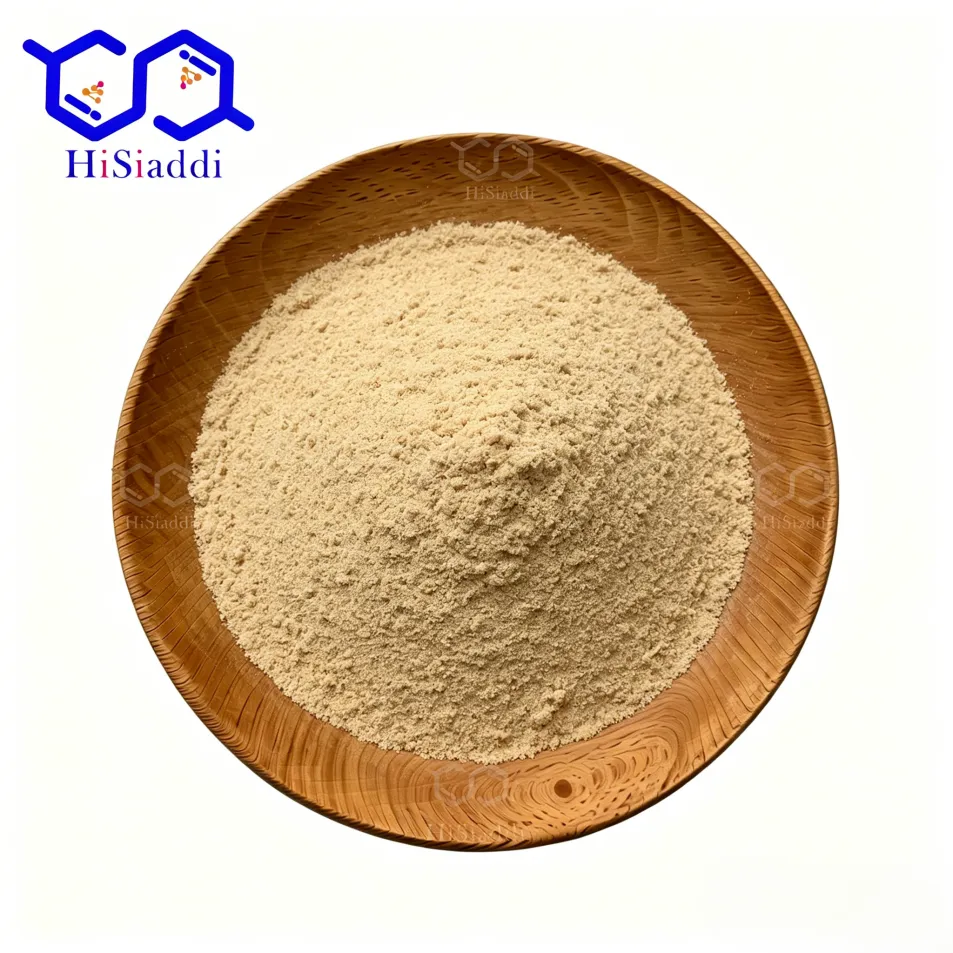
HiSiaddi is an innovative foreign trade service provider integrating technology transformation and international trade services. We operate a "1+2+3+4=1" service system and can supply authentic raw materials of Ethyl Maltol from multiple well-known original manufacturers. With over a decade of deep engagement in the global Ethyl Maltol foreign trade market, HiSiaddi has sorted out global supply and demand market conditions for your reference.
If you have inquiries regarding Ethyl Maltol supply & demand market conditions or product consultation, please contact HiSiaddi customer service or visit our official website www.hisiaddi.com.
This report focuses on Ethyl Maltol (3-Hydroxy-2-ethyl-4-pyrone), integrating global production capacity, demand, import & export data, competitive landscape, price cycles and medium-to-long-term forecast data covering 2024–2026. It covers five core downstream sectors: Food & Beverage, Meat & Condiments, Tobacco, Daily Chemical Cosmetics and Pharmaceutical Excipients. The report fully dissects industrial chain supply-demand contradictions, cost logic, industry risks and corporate operation strategies, presented in full text format.
Ethyl Maltol is a high-magnification flavor-enhancing and sweetener-modifying synthetic fragrance with flavor boosting efficiency 4–6 times that of Methyl Maltol. It features caramel sweet notes, high temperature resistance, bitterness suppression, taste correction and stable long-lasting fragrance, making it a universal multi-functional flavor modifier worldwide. It is categorized by aroma into Caramel Aroma, Pure Fruit Aroma and Premium Mellow Aroma; categorized by purity into General Food Grade (≥99.0%), Premium Fragrance Grade (≥99.2%) and Pharmaceutical Injection Excipient Grade (≥99.5%); categorized by application into Food & Beverage Grade (54.8%), Meat & Condiment Grade (22.2%), Tobacco Grade (11%), Daily Chemical Cosmetic Grade (8%) and Pharmaceutical Excipient Grade (4%).
In 2025, the global raw material market scale of Ethyl Maltol reached USD 312 million, with a year-on-year growth of 5.1% and a CAGR of 5.0% for 2025–2033. Total global production capacity stands at 36,000 tons/year, with total annual demand of 33,500 tons/year, resulting in overall loose supply-demand balance. However, structural shortages persist for high-purity 99.5% pharmaceutical grade and premium mellow aroma high-end fragrance materials.
China is the absolute core global producer with 56% of global production capacity; Germany, the US and Japan only retain small-scale premium refining capacity. The Asia-Pacific region represents the world’s largest consumer market, with steady incremental demand for high-end food and daily chemical products in North America and Europe. The global market scale is projected to reach USD 451 million by 2033, with high-purity refined grade, clean label dedicated Ethyl Maltol and plant-based food dedicated compound flavor raw materials as core incremental tracks.
1. Caramel Aroma Type (58% Market Share): Rich caramel and roasted sweet potato aroma, high temperature resistance, primarily used for meat products, braised food, baked goods and candy; largest industrial consumption volume.
2. Pure Fruit Aroma Type (32% Market Share): Mild fresh fruit sweet notes without burnt caramel undertones, suitable for fruit juice, dairy beverages, cold drinks and premium skincare products.
3. Premium Mellow Aroma Type (10% Market Share): Pure, mild fragrance free of off-notes, delivers prominent sweetness at low dosage, applied to high-end compound flavors, pharmaceutical taste masking and premium sugar-free beverages; highest technical barriers and premium pricing power.
1. General Food Grade (≥99.0%): Mainstream industrial raw material with total impurities ≤0.1%, suitable for ordinary food and daily chemicals, largest market circulation volume.
2. Premium Fragrance Grade (≥99.2%): Strictly controlled heavy metals and residual solvents, used for export flavors, high-end baked goods and sugar-free functional food.
3. Pharmaceutical Excipient Grade (≥99.5%): Ultra-low heavy metals and no harmful intermediate residues, compliant with USP/EP Pharmacopoeia standards, used for oral tablets and oral liquid taste masking; highest added value.
Food & Beverage 54.8%, Meat & Compound Condiments 22.2%, Tobacco 11%, Daily Chemical Personal Care 8%, Pharmaceutical Excipients 4%.
1.
Food & Beverage (Largest Downstream Sector, 54.8%) Fruit juice, carbonated beverages, dairy drinks, sugar-free meal replacements, baked pastries, candy & chocolate, ice cream. Core functions: Enhance natural sweetness, reduce white granulated sugar dosage, mask sour and bitter tastes, extend flavor retention. The global expansion of low-sugar & zero-calorie beverage drives demand growth of 7.8% for premium mellow aroma Ethyl Maltol, significantly higher than ordinary aroma types.
2.
3.
Meat Products & Compound Condiments (22.2%) Ham sausage, braised meat, cured bacon, quick-frozen meat products, chicken essence, oyster sauce, compound hot pot base. Caramel aroma type is mainstream, eliminating fishy odors and boosting rich meat umami. Continuous expansion of condiment production capacity in Southeast Asia and China supports stable demand.
4.
5.
Tobacco Industry (11%) Cigarettes and e-cigarette liquid flavoring, softens smoke and enhances sweet smooth taste. Tightening tobacco production limits and flavor additive regulations worldwide lead to annual demand decline of 3%–4%, a long-term shrinking track.
6.
7.
Daily Chemical Cosmetics (8%) Perfume, hair & body wash fragrances, hand cream, toothpaste and oral care products. Pure fruit aroma Ethyl Maltol matches fruity and milk fragrance systems; demand for clean label raw materials in European and American daily chemical brands maintains an upward trend.
8.
9.
Pharmaceutical Excipients (4%) Taste masking agent for tablets, granules and oral liquids, improving bitter taste of pediatric medicines and antibiotics. European and American pharmacopoeias impose extremely high market access thresholds for high-purity pharmaceutical grade raw materials, leading to tight supply and gross profit margins exceeding 65%.
10.
1. Furfural Chemical Synthesis Route (83% Global Market Share, Current Mainstream): Core intermediates furfural and acetaldehyde undergo addition, cyclization, neutralization and multi-stage distillation crystallization to obtain finished products. Advantages: Large-scale production and controllable costs. Disadvantages: High refining barriers for high-purity products and heavy environmental waste water & gas treatment pressure.
2. Biosynthetic Fermentation Route (Emerging Route, 17% Market Share): Microbial transformation of carbohydrate substrates to prepare intermediates followed by purification. Unit production cost is 15% lower than chemical synthesis with fewer impurities, suitable for high-end food and pharmaceutical grade applications. Only leading enterprises have achieved large-scale mass production, representing the future direction of process upgrading.
Core Raw Materials: Furfural, acetaldehyde, ethyl acetate and catalysts. Furfural relies on agricultural and forestry by-products including corn cobs and sugarcane bagasse; China is the world’s largest furfural supplier with 90% self-sufficiency rate of raw materials. Fluctuations in intermediate prices directly determine Ethyl Maltol costs; furfural prices rose over 42% during 2024–2025, continuously pushing up finished product factory prices. Upstream Supporting Facilities: Distillation equipment and environmental waste water treatment devices; high-end refining equipment relies on imports from Germany and Japan.
Production capacity is highly concentrated in fine chemical industrial parks in Anhui, Shandong, Jiangsu and Zhejiang, China. Overseas manufacturers including BASF (Germany), Vigon (US) and Hasegawa Fragrance (Japan) only retain small-scale premium refining capacity without large-scale synthetic production capacity. The top five enterprises (CR5) account for 71% of global market share, forming an oligopolistic competitive landscape. Leading enterprises own fully integrated industrial chains covering intermediate production, synthesis and distillation, delivering prominent cost advantages.
Flavor & fragrance companies, compound condiment manufacturers, major beverage factories, tobacco flavor enterprises, daily chemical fragrance producers and pharmaceutical API excipient manufacturers. Downstream sectors are fragmented; leading flavor enterprises have large purchasing volume and strong bargaining power, while small & medium food processing plants make scattered purchases.
1. Global clean label and low-sugar zero-calorie food trend: Ethyl Maltol can replace large volumes of sweeteners, triggering explosive demand for functional beverages and plant-based protein food with growth rate exceeding 10% for emerging food applications.
2. Rapid expansion of condiment and snack food industries in Southeast Asia and Latin America, driving sustained growth in imports of food-grade fragrances.
3. Stable growth in demand for oral pharmaceutical preparations, steady incremental demand for pediatric formulations and traditional Chinese medicine taste masking excipients.
4. China’s phase-out of environmentally substandard small-scale backward production capacity leads to supply contraction in the industry, rising capacity utilization of leading enterprises and improved industry profitability.
5. Updated food additive regulations in Europe and the US recognize safe dosage limits of Ethyl Maltol, expanding application scenarios for high-end food products.
1. Sustained global tobacco industry regulation leads to shrinking demand for tobacco flavoring, dragging down overall growth momentum.
2. Tightening labeling regulations for food additives in various countries prompt some end brands to voluntarily reduce synthetic fragrance usage and shift to natural extract alternatives.
3. Cyclic sharp price fluctuations of petrochemical and agricultural forestry intermediates including furfural and acetaldehyde compress corporate profit margins.
Total global capacity: 36,000 tons/year
· China: 20,160 tons (56% Global Share)
· Germany: 3,600 tons (10%)
· US: 2,880 tons (8%)
· Japan: 2,160 tons (6%)
· India, Brazil and other regions: 7,200 tons (20%)
Product Capacity Breakdown:
· Aroma Types: Caramel Aroma 20,880 tons (58%), Pure Fruit Aroma 11,520 tons (32%), Premium Mellow Aroma 3,600 tons (10%)
· Purity Grades: General Food Grade 28,800 tons (80%), Premium Fragrance Grade 5,400 tons (15%), Pharmaceutical Grade 1,800 tons (5%)
Actual global output in 2025: 33,500 tons, average industry capacity utilization rate 93.1%. Low-end general grade capacity overcapacity exists, while high-end 99.2%/99.5% refined capacity is insufficient with an annual structural shortage of approximately 1,200 tons.
1.
Asia-Pacific (China Dominant, 56% Global Capacity) Core production zones: Chuzhou (Anhui), Zibo (Shandong), Lianyungang (Jiangsu), Huzhou (Zhejiang). Leading enterprises self-produce furfural intermediates with extreme integrated cost advantages, covering all aroma types and purity grades. 78% of domestic output is exported to 120 countries worldwide; China is the only global region capable of mass supply of pharmaceutical grade Ethyl Maltol. India and Southeast Asia only operate small-scale compound blending capacity without complete synthetic production lines, fully dependent on imported raw materials from China.
2.
3.
Europe (Germany Dominant, 10% Global Capacity) BASF factories only produce premium fragrance and pharmaceutical refined grades without large-scale ordinary caramel aroma capacity. Production costs are 1.8–2.2 times higher than Chinese leading enterprises, supplying only high-end domestic food and pharmaceutical customers in the EU, relying on imported base raw materials from China for compound processing.
4.
5.
North America (US, 8% Global Capacity) Enterprises including Vigon focus on blending and refined purification with minimal self-owned base synthetic capacity; 90% of raw materials are imported from China, targeting high-end domestic daily chemical and pharmaceutical markets in North America.
6.
7.
Other Regions (20% Global Capacity) Brazil, South Africa and Indonesia only maintain small low-end blending capacity without synthetic production capability, fully importing general grade products from China to supply local low-end food and daily chemical markets.
8.
1. Anhui Jinhe Industrial: World’s largest producer with total Ethyl Maltol capacity of 7,000 tons/year, 19.4% global market share. Self-produced furfural and acetaldehyde intermediates, full coverage of caramel/pure/premium mellow aroma types, mass production of 99.5% pharmaceutical grade, full series certifications including FDA, EP and ECOCERT. Customers cover global leading fragrance, food and pharmaceutical enterprises with strong pricing power.
2. BASF (Germany): Premium refined capacity of 3,000 tons, 8.3% global market share. No low-end caramel aroma production, focusing on high-end fragrance and pharmaceutical grade with prominent European local channel barriers and significant product premium pricing.
3. Zhejiang Sanyuan Biotech: Second-largest domestic producer with capacity of 3,200 tons, 8.9% global market share. Specializes in food-grade caramel and pure fruit aroma types with mature export channels in Southeast Asia and prominent cost-performance advantages.
1. Jiangsu Jiafu Pharmaceutical: Capacity of 2,650 tons, 7.4% global market share. Core supplier of pharmaceutical grade Ethyl Maltol with stable supporting supply for domestic pharmaceutical factories, deep layout in oral taste masking excipient track.
2. Vigon International (US): Refined blending capacity of 2,400 tons, 6.7% global market share. Core supplier of North American daily chemical and high-end food flavors, focusing on customized compound flavor raw materials.
3. Hebei Huaxu Chemical: Capacity of 1,980 tons, 5.5% global market share. Main producer of low-end food-grade caramel aroma, supplying mass-market condiment and meat product factories worldwide with prominent price competition advantages.
Domestic small chemical plants, Indian blending factories and local raw material suppliers in Brazil with combined capacity of approximately 8,770 tons, only producing 99.00% ordinary caramel aroma without high-end distillation purification equipment and weak environmental compliance capacity. Products are limited to low-end food and industrial daily chemical applications with gross profit margins below 18%; continuous industry consolidation eliminates backward production capacity.
1. Self-sufficient integrated upstream furfural and acetaldehyde intermediate industrial chain, reducing unit production costs by 45%–55% compared with European and American manufacturers.
2. Mature large-scale distillation and continuous synthesis processes; leading enterprises gradually launch biosynthetic fermentation routes to further cut costs.
3. Full product coverage enabling simultaneous mass production of industrial general grade, premium fragrance grade and pharmacopoeia pharmaceutical grade, an advantage unavailable to overseas manufacturers.
4. Complete global import & export customs clearance and food additive compliance certification system, with export channels covering all mainstream consumption regions worldwide.
Total annual demand: 33,500 tons
· Aroma Split: Caramel Aroma 19,430 tons (58%), Pure Fruit Aroma 10,720 tons (32%), Premium Mellow Aroma 3,350 tons (10%)
· Purity Split: General Food Grade 26,800 tons (80%), Premium Fragrance Grade 5,025 tons (15%), Pharmaceutical Grade 1,675 tons (5%)
· Downstream Split: Food & Beverage 18,360 tons (54.8%), Meat & Condiments 7,440 tons (22.2%), Tobacco 3,690 tons (11%), Daily Chemicals 2,680 tons (8%), Pharmaceuticals 1,340 tons (4%)
Structural Shortage Concentration: Combined shortage of 1,200 tons for 99.2% fragrance grade and 99.5% pharmaceutical grade with tight supply of premium mellow aroma; overcapacity of approximately 2,500 tons for ordinary caramel aroma triggering fierce price competition.
1.
Asia-Pacific (World’s Largest Consumer Market, 46.2% Demand Share, 15,480 tons) Dominated by China, Southeast Asia, Japan and South Korea. Domestic Chinese demand accounts for 62% of Asia-Pacific consumption with huge production capacity of condiments, snack food and beverages. Rapid expansion of food industry in Southeast Asia drives annual import growth of 7%–9%. High-end sugar-free beverages and pharmaceutical excipients in Japan & South Korea boost incremental demand for premium mellow and pharmaceutical grades. Domestic capacity is sufficient with self-sufficiency rate of 91%; small volumes of high-end refined products are imported from Germany.
2.
3.
North America (26% Demand Share, 8,710 tons) Dominated by the US and Canada; strong demand for high-end functional beverages, organic daily chemicals and pediatric oral medicines, with preference for low-impurity premium mellow aroma products. Minimal domestic synthetic capacity with 92% of raw materials imported from China. Sustained shrinking tobacco demand drags overall growth rate down to 4.2%.
4.
5.
Europe (21% Demand Share, 7,040 tons) Core consumption countries: Germany, France, UK. Stringent EU food additive standards only recognize ≥99.2% refined grade products with stable incremental demand for green daily chemicals and plant-based food. Strictest tobacco control policies lead to annual demand decline of 5% for tobacco-grade Ethyl Maltol. Domestic BASF capacity only covers 28% of high-end demand, with the rest imported from China.
6.
7.
Middle East, Latin America & Africa (6.8% Demand Share, 2,280 tons) Demand dominated by low-end meat products, low-cost beverages and hair & body wash daily chemicals, all sourcing general caramel aroma from China. Large room for per capita consumption growth with annual growth rate of 6.5%, yet low unit purchasing prices delivering thin profit margins.
8.
1.
Food & Beverage (18,360 tons, 54.8%, CAGR 6.2%) Core growth drivers: Sugar-free sparkling beverages, plant milk and baked meal replacements. Premium mellow aroma growth rate 8%, ordinary caramel aroma growth rate 3.5%. High-end clean label food brands in North America and Europe only purchase ≥99.2% high-purity products, while fierce competition exists in low-end general grade markets.
2.
3.
Meat Products & Compound Condiments (7,440 tons, 22.2%, CAGR 4.5%) Stable demand without sharp fluctuations, dominated by caramel aroma. Incremental demand comes from pre-cooked dishes and braised food processing in Southeast Asia and Latin America. Saturated domestic Chinese condiment production capacity positions exports as primary growth space.
4.
5.
Tobacco (3,690 tons, 11%, CAGR -3.8%) Long-term shrinking track suppressed by global tobacco control policies and e-cigarette flavor regulation, only small demand maintained in niche tobacco markets of the Middle East and Southeast Asia with no long-term growth potential.
6.
7.
Daily Chemical Personal Care (2,680 tons, 8%, CAGR 7.5%) High-growth segmented track driven by premium fragrance, children’s hair & body wash and oral care toothpaste boosting demand for pure fruit and premium mellow aroma types. European and American daily chemical brands prioritize low-residue refined grade products with wide premium pricing space.
8.
9.
Pharmaceutical Excipients (1,340 tons, 4%, CAGR 8.1%) Fastest-growing downstream sector, mandatory for bitter taste masking of pediatric proprietary Chinese medicines, antibiotic oral liquids and sustained-release tablets. Extremely high market access barriers with only a small number of enterprises holding EP/USP certifications, leading to persistent supply shortages.
10.
Total capacity 36,000 tons, total demand 33,500 tons, overall surplus of 2,500 tons exclusively from low-end 99.0% caramel aroma products; structural shortage of 1,200 tons for high-end refined products creating obvious industry differentiation:
· Low-End General Grade: Overcapacity with price pressure and sustained losses for small & medium manufacturers.
· Premium Fragrance/Pharmaceutical Grade: Tight supply enabling long-term high gross profit margins (55%–70%) for leading enterprises.
Regional Shortages: North America shortage of 7,900 tons, Europe shortage of 5,070 tons. China maintains sufficient capacity with annual exports of 21,000 tons as the world’s sole net export supply region.
1. General Industrial Caramel Aroma (≥99.0%): 82,000–95,000 CNY/ton
2. Pure Fruit Aroma Food Grade (≥99.0%): 98,000–112,000 CNY/ton
3. Premium Mellow High-End Fragrance Grade (≥99.2%): 130,000–160,000 CNY/ton
4. Pharmacopoeia Pharmaceutical Grade (≥99.5% EP/USP): 240,000–280,000 CNY/ton
Domestic factory prices for identical specifications are 50%–58% of German and US manufacturers; overseas premium pharmaceutical grade selling prices reach 2.1 times those of Chinese leading enterprises, driven by extremely high overseas labor, environmental and refining processing costs.
1. 42.3% price surge of upstream furfural raw materials in 2024 forming rigid cost support for bottom prices.
2. Domestic environmental production restrictions eliminating 1,800 tons of backward low-end capacity leading to supply contraction in low-end segments.
3. Coordinated production control by leading enterprises lifting industry capacity utilization rate to 83% and alleviating vicious price wars.
4. Sustained growth in demand for high-end refined grade products with continuous upward premium pricing for high-purity materials.
1. Low-End General Caramel Aroma: Persistent overcapacity triggering narrow price fluctuations of ±4% annually; modest price hikes follow sharp raw material increases while prices drop rapidly when raw material costs decline, with no large upward space in the long run.
2. High-End Pure Fruit & Premium Mellow Fragrance Grade: Sustained expansion of demand with limited new high-end refined capacity launches, driving steady annual price growth of 4%–6%.
3. Pharmacopoeia Pharmaceutical Grade: High barriers and long-term supply shortages delivering annual price growth of 5%–7%, the most profitable track across the entire industrial chain.
1.
High-End Track (Fragrance Grade, Pharmaceutical Grade, Premium Mellow Aroma): Oligopoly Monopoly Only three market participants: Jinhe Industrial, BASF and Jiafu Pharmaceutical, mastering high-purity distillation, biosynthetic technology and global pharmacopoeia compliance certifications. Competition focuses on integrated intermediate production, purification technology, overseas compliance qualifications and long-term binding with major customers. Product gross profit margins range from 60%–72% with extremely high moats; new entrants require at least 3–5 years to achieve mass supply.
2.
3.
Mid-to-High-End Food Grade (Pure Fruit, Premium Caramel Aroma): Full Competition Market participants include Sanyuan Biotech, Vigon, Huaxu Chemical, etc. Competition relies on large-scale production, export channels and cost-performance with gross profit margins of 35%–50%. Small & medium factories can replicate ordinary purity products yet cannot stably supply export-certified orders.
4.
5.
Low-End Industrial Caramel Aroma: Red Ocean Price War Large numbers of small chemical manufacturers participate with low technical barriers, competing for low-end condiment and industrial daily chemical orders solely via low pricing. Gross profit margins range from 15%–22%; enterprises easily incur losses amid environmental inspections and raw material price fluctuations, with continuous industry capacity elimination.
6.
1.
Product Upgrading to High Purity & Clean Label Adaptation Global food and daily chemical brands accelerate phase-out of low-purity synthetic fragrances, driving rising demand share for ≥99.2% refined grade products. Enterprises increase R&D investment in premium mellow aroma and low-residue pharmaceutical grade, alongside development of compound flavor systems tailored for sugar-free, plant-based and organic food tracks.
2.
3.
Green Production Process Upgrading, Biosynthesis to Replace Traditional Chemical Synthesis Tightening environmental emission standards worldwide push rising three-waste treatment costs for furfural chemical routes. Leading enterprises accelerate capacity expansion of biosynthetic fermentation technology to reduce intermediate consumption and waste water discharge while cutting unit production costs; biosynthetic capacity share is projected to rise to 35% within the next 5 years.
4.
5.
Further Concentration of Production Capacity in China, Overseas Markets to Retain Only High-End Refining & Blending Supported by complete integrated intermediate industrial chains, low-cost large-scale manufacturing and comprehensive compliance certifications, China’s global capacity share will rise to 62% by 2033. European and American enterprises will abandon base synthetic capacity, retaining only high-end purification, compound blending and brand sales segments with full reliance on imported base raw materials from China.
6.
7.
Expanding Application Boundaries & Tightening Compliance Supervision Three major incremental segments emerge: pet food, oral care and sustained-release pharmaceutical excipients. EU, US and China continuously update standard limits for residues, heavy metals and solvents in food additives; small & medium enterprises without compliance qualifications will be completely excluded from export markets. Industry concentration CR5 will rise to 78% with accelerated elimination of backward production capacity.
8.
1.
Cyclical Price Fluctuation Risk of Upstream Raw Materials Core raw material furfural relies on agricultural forestry by-products while acetaldehyde depends on petrochemical industrial chains; grain and oil price volatility directly trigger sharp production cost hikes squeezing corporate profit margins. Small & medium enterprises lack raw material price locking capacity with weak risk resistance.
2.
3.
Environmental & Policy Compliance Risk Synthetic routes impose strict control over waste water and gas emissions; China continuously eliminates small production facilities without supporting environmental protection equipment. Updated residue and heavy metal testing standards for food additives imported into Europe and the US cut off overseas market access for enterprises without FDA/EP certifications.
4.
5.
Disruption Risk from Alternative Raw Materials Natural malt extracts, steviol glycoside compound flavors and plant hydrolyzed protein gradually replace partial low-end Ethyl Maltol applications. Clean label demands from end brands divert demand for traditional synthetic fragrances.
6.
7.
Shrinking Downstream Tobacco Demand Risk Long-term global tobacco control policies trigger annual decline in tobacco flavoring dosage, creating sustained demand pressure for small & medium enterprises reliant on tobacco customers.
8.
9.
Low-End Overcapacity & Price War Risk Low entry barriers for ordinary caramel aroma lead to unordered capacity expansion by small & medium manufacturers, triggering vicious low-price competition during market downturns and declining profitability across the entire industry.
10.
1.
Technical Layout: Integrated Industrial Chain + Biosynthetic Process Self-build furfural and acetaldehyde intermediate production lines to lock raw material costs; invest in biosynthetic fermentation technology to reduce environmental pressure and manufacturing costs; develop 99.5% pharmaceutical grade purification technology to enter high-premium pharmaceutical excipient tracks and avoid low-end red ocean competition.
2.
3.
Supply Chain Layout: Long-Term Agreements for Price Locking + Diversified Raw Material Sourcing Sign 1–3 year long-term supply agreements with agricultural forestry and petrochemical raw material manufacturers to hedge raw material price hikes; deploy multi-regional raw material procurement bases to avoid supply cuts and price surges from single-region production shortfalls.
4.
5.
Product Structure Layout: Cut Low-End Capacity, Expand High-End Refined Product Lines Gradually phase out low-margin general caramel aroma capacity and expand production of premium mellow fragrance grade and pharmaceutical grade; develop food-specific compound flavor raw materials to bind leading sugar-free beverage and pre-cooked dish end customers and boost product added value.
6.
7.
Market Channel Layout: Global Compliance Certifications + Diversified Regional Layout Complete full food additive certifications including FDA, EP, ECOCERT and JECFA to access high-end food and pharmaceutical customers in Europe and the US; balance market layout across Asia-Pacific, North America and Latin America to avoid revenue shocks from demand declines in single regions; reduce reliance on tobacco customers and prioritize expansion of high-growth downstream sectors including food, daily chemicals and pharmaceuticals.
8.
9.
Compliance Operation Layout: Upgrade Environmental Protection Facilities & Proactively Respond to Regulatory Standards Upgrade waste water distillation and waste gas recovery equipment to meet domestic and overseas environmental emission standards; establish complete in-house product testing laboratories to strictly control heavy metal and solvent residues adapting to increasingly stringent additive supervision rules worldwide.
10.
2025 Market Scale: USD 312 million, 2025–2033 CAGR = 5.0%, Projected 2033 Global Market Scale: USD 451 million
· Asia-Pacific: 2033 Scale USD 208 million, CAGR 5.8%
· North America: 2033 Scale USD 117 million, CAGR 4.2%
· Europe: 2033 Scale USD 98 million, CAGR 4.0%
· Other Regions: 2033 Scale USD 28 million, CAGR 6.5%
2025 Total Capacity 36,000 tons, Total Demand 33,500 tons; 2033 Total Capacity 50,500 tons, Total Demand 47,200 tons, Capacity CAGR 4.3%, Demand CAGR 5.0%. Shortage of high-end products will expand to 2,100 tons by 2033.
Projected 2033 Product Structure:
1. Aroma Types: Caramel Aroma 27,380 tons (58%), Pure Fruit Aroma 15,100 tons (32%), Premium Mellow Aroma 4,720 tons (10%)
2. Purity Grades: General Food Grade 37,760 tons (80%), Premium Fragrance Grade 7,080 tons (15%), Pharmaceutical Grade 2,360 tons (5%)
3. Downstream Demand Share Remains Stable: Food & Beverage 54.8%, Meat Products 22.2%, Tobacco 11%, Daily Chemicals 8%, Pharmaceuticals 4%.
1. High-Purity Premium Mellow Fragrance Ethyl Maltol: 8-Year CAGR 7.8%, Top Incremental Track
2. EP/USP Pharmaceutical Taste-Masking Excipient Grade: 8-Year CAGR 8.1%, Highest Profitability Track
3. High-End Daily Chemical Pure Fruit Aroma: 8-Year CAGR 7.5%
4. Ordinary Caramel Aroma Meat Raw Materials: Growth Rate 3.5%, Stable Stock Market Track
5. Tobacco-Specific Aroma Type: Annual Negative Growth 3.8%, Continuous Shrinking Track
The 2025 global Ethyl Maltol raw material market scale reaches USD 312 million with total capacity of 36,000 tons and total demand of 33,500 tons, resulting in overall loose supply balance yet persistent structural shortages of high-purity 99.2% fragrance grade and 99.5% pharmaceutical grade products. Leveraging complete integrated intermediate industrial chains and mature large-scale synthesis & distillation technology, China holds 56% of global production capacity as the world’s sole supplier capable of full-category product provision. European and American manufacturers only retain high-end refining and blending capacity with heavy reliance on imported base raw materials from China.
The industry presents distinct layered patterns: Low-end general caramel aroma suffers from overcapacity and fierce price competition; high-end premium mellow and pharmaceutical Ethyl Maltol feature high technical barriers and tight supply enabling sustained excess profits for leading enterprises. Medium-to-long-term growth drivers derive from three high-increment tracks: global low-sugar functional food, high-end daily chemicals and oral pharmaceutical excipients, while sustained contraction of the tobacco sector drags overall growth momentum. Three core development trends dominate the industry: green process upgrading, further concentration of production capacity in China and product high-purity clean label transformation.
Core industry risks concentrate on cyclical upstream raw material price fluctuations, environmental compliance supervision and disruption from alternative natural raw materials. The optimal corporate development path involves integrated industrial chain layout, expanded production of high-end refined products and completion of full global food additive compliance certifications to avoid low-end red ocean price wars.
Investment & Industrial Layout Recommendations: Prioritize layout of leading enterprises with self-produced furfural intermediates, biosynthetic fermentation technology and full FDA/EP certifications; Focus on expanding incremental markets of premium mellow fragrance grade and pharmaceutical excipient grade; Reduce low-end industrial caramel aroma production capacity and bind high-growth downstream customers including sugar-free beverage and pre-cooked dish manufacturers; Balance export regions globally to mitigate demand shrinkage risks from the tobacco track.
If you have inquiries regarding Ethyl Maltol supply & demand market conditions or product consultation, please contact HiSiaddi customer service or visit our official website www.hisiaddi.com.

 +86-13120989737
  info@hisiaddi.com
 English