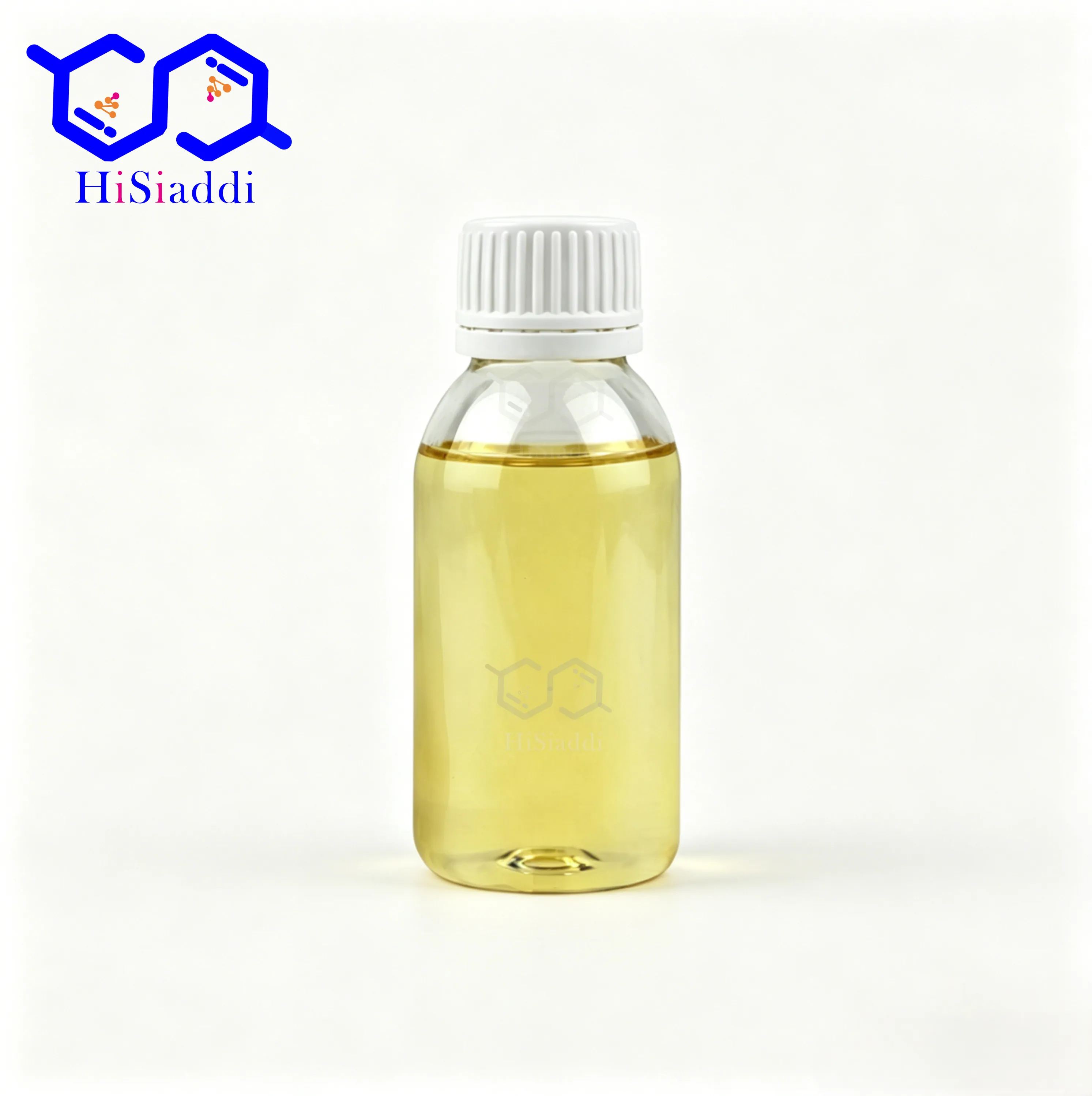
Cinnamon Oil, also known as Cassia Oil, is dominated by cinnamaldehyde, applied in daily chemical essences and pharmaceutical antibacterial fields. HiSiaddi supplies original factory sources of multiple Chinese brands and provides the "1+2+3+4=1" service.
Guangxi Gengyuan Spice Co., Ltd.: GY-C90 (cinnamaldehyde ≥ 90%), GY-C95 (cinnamaldehyde ≥ 95%); cinnamaldehyde content 90%-95%; acid value ≤ 1.5mg/g, far below the international standard (≤3.0mg/g); pharmaceutical grade is 40% cheaper than European and American brands, suitable for high-end pharmaceutical and food essence companies.
Zhaoqing Gaoyao Huaxin (COFCO subsidiary): HX-C88 (cinnamaldehyde ≥ 88%), HX-C92 (cinnamaldehyde ≥ 92%); whole industrial chain controlled by COFCO, raw materials from core producing areas in Guangxi; stable cinnamaldehyde and pure aroma; heavy metal content < 5ppm; mid-purity grade is 12% cheaper than Southeast Asian brands.
HiSiaddi Exclusive Services: Cinnamaldehyde content customization (80%-95%), dual-process product options of distillation and supercritical extraction; direct supply from core producing areas in Guangxi and Guangdong; 3%-5% direct discount for bulk procurement.
 CONTACT HiSiaddi NOW
Name: | Cinnamon Oil | Other Name: | Cassia Oil |
CAS No. | 8007-80-5 | Brand: | Multi-brand |
MF: | N/A | Model Number: | Multi-models |
EINECS No. | 283-100-5 | Place of Origin: | Guangxi, China |
Purity: | 99% | Grade: | Industrial grade, food grade, cosmetic grade |
MOQ: | 1ton | Storage: | Please refer to the product packaging or contact the customer service |
When you purchase cinnamon oil as a buyer, you may encounter the following questions:
What are the core index advantages and application impacts of mainstream models from well-known cinnamon oil brands?
What competitive services can cinnamon oil suppliers provide?
How about qualification certifications and market reputation of target cinnamon oil brands?
What is the inventory level and supply stability of cinnamon oil suppliers?
What factors need to be considered when selecting cinnamon oil?
...and many other relevant questions.
Main export models:
① WZ C95 (Pharmacopoeia grade for pharmaceutical use, Cinnamaldehyde ≥95%)
② WZ C90 (High-purity food export grade, Cinnamaldehyde ≥90%)
③ WZ C82 (General leaf cinnamon oil, Cinnamaldehyde ≥82%)
Core competitive strengths
Cinnamaldehyde content of WZ C95 steadily reaches over 95%, far exceeding the national standard (≥80%) and EU food access standard (≥88%), complying with European Pharmacopoeia (EP) standards.
Strict impurity control: Safrole ≤0.002%, precise control of eugenol and coumarin ratio; lead<1mg/kg, arsenic<0.5mg/kg, fully meeting zero-residue requirements of European and American pharmaceutical industries.
Acid value ≤1.0mgKOH/g, extremely low peroxide value and strong oxidation resistance, keeping stable quality during long-distance sea transportation and overseas storage.
Distilled from native large-leaf cinnamon in Fangchenggang, Guangxi, featuring strong spicy aroma and long-lasting fragrance, superior to faint-scented Southeast Asian leaf cinnamon oil.
Fully certified with FDA, EP pharmacopoeia certification, REACH registration, HALAL and KOSHER, being the preferred Chinese supplier for European and American pharmaceutical enterprises and high-end flavor & fragrance groups.
Cost performance: High-end positioning, unit price: 18-23 USD/kg; 50% lower than equivalent European and American repackaged brands, 35% lower than high-purity Ceylon cinnamon oil from Sri Lanka; ranking first in cost performance globally in pharmaceutical applications with no substitutes for high-end clients.
Target B-end buyers: European and American antiviral & antibacterial pharmaceutical enterprises, world-leading flavor & fragrance giants, high-end functional food groups in Japan and South Korea, halal pharmaceutical raw material suppliers in the Middle East and high-end health product raw material importers.
Benefits for downstream buyers: Pharmaceutical-grade WZ C95 can be directly used for antibacterial & antiviral intermediates, external anti-inflammatory preparations and oral medicine raw materials without secondary rectification, saving over 35% of purification equipment and labor costs; highly consistent batch indicators fully fit GMP production specifications of pharmaceutical factories; unified aroma eliminates extra flavor adjustment procedures.
Benefits for end consumers: Stable antibacterial effect of medicines and external preparations without harmful residual impurities; authentic spicy flavor of high-end food and health products with prominent natural properties, catering to clean label and organic health consumption trends in Europe and America.
Main export models: HF C88 (high-aroma food grade, ≥88% cinnamaldehyde), HF C85 (general food grade, ≥85% cinnamaldehyde), HF C80 (daily chemical leaf cinnamon oil, ≥80% cinnamaldehyde)
Core competitive strengths
Stable cinnamaldehyde content at 85%-88% with mild and balanced spicy-sweet flavor, ideal for flavoring meat products, sauces, baked goods and alcoholic drinks.
Fully compliant with EU EC 1881/2006 food additive safety standards with undetected pesticide residues, applicable to infant food and high-end sauces.
Raw materials sourced from standardized cinnamon planting bases in Luoding, Guangxi; stable oil yield with annual output over 1000 tons ensuring uninterrupted supply all year round.
Excellent high temperature resistance with no aroma loss above 180℃, adapting to high-temperature sterilization food processing technology overseas.
Complete standard export packages including 25kg food-grade iron drums and 180kg IBC tanks, sea transportation loss rate<0.4%.
Cost performance: Mid-range mainstream product, unit price:13-16 USD/kg; most cost-effective choice for food markets in EU and Southeast Asia, outperforming low-grade Indonesian and Vietnamese cassia oil, priced at only 55% of European and American food-grade cinnamon oil.
Target B-end buyers: EU food flavor factories, Southeast Asian condiment groups, Indian curry and tobacco flavoring enterprises, Middle Eastern baking raw material suppliers, global spice trading distributors and Latin American snack food manufacturers.
Benefits for downstream buyers: Directly applicable for deodorization and flavor enhancement of meat products, hot pot seasonings, sauces, candies and wines without compound modification; supply free from seasonal output reduction of Southeast Asian cinnamon with stable delivery time; sea-freight friendly packages reduce breakage and loss costs.
Benefits for end consumers: Pure natural spicy flavor without pungent chemical smell; natural origin supports product marketing and increases terminal product premium; high temperature resistance ensures stable unified flavor in industrial food processing.
Main export models: ST C86 (native cassia bark distilled type, ≥86% cinnamaldehyde), ST C89 (supercritical CO₂ extracted organic type, ≥89% cinnamaldehyde), ST C78 (crude basic type, ≥78% cinnamaldehyde)
Core competitive strengths
Raw materials harvested from ecological cinnamon forests in Shiwandashan Mountains, Guangxi with zero pesticide and chemical fertilizer usage; ST C89 adopts supercritical extraction to avoid aroma damage under high temperature and holds EU organic certification.
Optimized optical rotation with rich and mellow aroma, better than thin-scented Southeast Asian leaf cinnamon oil.
ST C78 crude oil with 78% cinnamaldehyde allows overseas buyers to conduct independent rectification and greatly cut raw material procurement costs.
Direct factory supply without intermediate markup in China; support 1kg small-batch samples and long-term bulk framework orders with flexible pricing.
Cost performance: Dual layout covering mid-low and high-end markets; ST C78:10-12 USD/kg (more stable quality than Southeast Asian crude oil), ST C89:17-19 USD/kg (high-end organic grade) with strong origin price advantages.
Target B-end buyers: Australian organic daily chemical brands, African spice importers, South American food processing factories, overseas small-scale rectification plants, cross-border niche spice traders and natural health product raw material suppliers.
Benefits for downstream buyers: Self-rectifiable crude oil helps raise cinnamaldehyde content and control overall raw material costs; organic grade products are directly applicable for overseas organic, vegetarian and natural-labeled commodities; clear origin traceability supports end brand marketing endorsement.
Benefits for end consumers: Organic variants fit high-end skin care products, natural essential oil fragrances and premium health supplements; cost-effective basic crude oil suits mass-market daily chemicals and common condiments with prominent terminal pricing advantages.
Main export models: LY C87 (daily chemical flavoring type, ≥87% cinnamaldehyde), LY C84 (Japan & South Korea food compliant type, ≥84% cinnamaldehyde), LY C79 (industrial anticorrosion intermediate type, ≥79% cinnamaldehyde)
Core competitive strengths
Mild and soft aroma of LY C87 without sharp spicy irritation, perfect for flavoring perfume, toothpaste, mouthwash and skin care products.
Strict control over safrole and coumarin content fully meeting strict import limits set by Japan MHLW and South Korea KFDA.
Support precise customization of cinnamaldehyde content ranging from 79% to 89% to match customer formulas and flavor requirements.
Flexible small-batch production covering specifications from 1kg to 180kg with short sample delivery cycle, satisfying R&D demands of medium and small daily chemical brands.
Cost performance: Top cost-performance choice in segmented daily chemical sector, unit price:12-15 USD/kg; stable long-term reputation in Japan and South Korea markets, over 50% cheaper than European and American daily chemical grade cinnamon oil.
Target B-end buyers: Japanese & South Korean daily chemical groups, Southeast Asian oral care brands, perfume & flavor blenders, overseas fine chemical anticorrosion raw material manufacturers and small daily chemical OEM factories.
Benefits for downstream buyers: Customized indicators perfectly match client formulas to eliminate repeated debugging costs; fast small-batch sample delivery reduces R&D trial-and-error risks; complete compliance documents ensure smooth customs clearance in Japan and South Korea without detention risks.
Benefits for end consumers: Mild and long-lasting fragrance of daily chemical products causes no irritation to skin and oral cavity; food-grade variants meet Japanese and South Korean safety standards, suitable for high-end snacks, sauces and functional beverages.
Main export models: YX C83 (global standard general type, ≥83% cinnamaldehyde), YX C77 (industrial crude rectification raw material, ≥77% cinnamaldehyde), YX C88 (high-purity enhanced export type, ≥88% cinnamaldehyde)
Core competitive strengths
Compliant with national and universal international standards with stable batch-to-batch cinnamaldehyde content.
Well-controlled heavy metals, pesticide residues and impurities with complete basic compliance documents for customs clearance in most countries worldwide.
Diverse supply forms including 1kg samples, bulk tonnage goods and IBC tank packaging adapting to global large-scale distribution networks.
Highly competitive pricing, YX C77 at 9-11 USD/kg fully outcompetes low-grade Indonesian and Vietnamese crude cinnamon oil.
Cost performance: Best cost-performance bulk commodity choice with lowest price and complete compliance, ideal for global B-end distribution, secondary repackaging and industrial anticorrosion raw material procurement.
Target B-end buyers: Global large-scale chemical distributors, overseas essential oil repackaging factories, small flavor factories, industrial anticorrosion raw material traders and bulk commodity importers in Africa and the Middle East.
Benefits for downstream buyers: Minimum procurement cost leaves large profit margin after secondary rectification and repackaging; flexible packages adapt to sea transportation across multiple countries; universal compliance documents simplify customs clearance without technical barriers.
Benefits for end consumers: Widely applicable to mass-market daily chemicals, basic condiments, industrial anticorrosion and feed mildew prevention with outstanding cost-effectiveness and strong price competitiveness of end products.

| Brand | Main Models | Core Indicators | Unit Price (USD/kg) | Cost Positioning | Core B-end Buyers | Advantages for Downstream Buyers | Advantages for End Users | Superiority over Overseas Rivals |
| Guangxi Wuzhou Xianghua | WZ C95/C90/C82 | Cinnamaldehyde 90%-95%, Safrole≤0.002%, Acid value≤1.0, EP pharmacopoeia grade | 18-23 | Top global pharmaceutical grade | European & American pharmaceutical enterprises, international flavor giants, high-end Japanese & South Korean food brands | No secondary purification needed, GMP compliant, 100% stable batch quality | Safe pharmaceutical products, authentic high-end food flavor | Surpass Southeast Asian crude oil, 50% cheaper than European & American brands |
| Guangdong Hengfang Biotechnology | HF C88/C85/C80 | Cinnamaldehyde 85%-88%, high temperature resistance, zero detected pesticide residues, EU food grade | 13-16 | Top food grade for EU & Southeast Asia | EU flavor factories, Southeast Asian condiment groups, Indian tobacco manufacturers | Stable mass supply, sea freight loss<0.4%, fit high-temperature processing | Support clean label marketing, excellent deodorization & flavoring effect | Far better quality than Vietnamese & Indonesian oil, 55% price of European & American counterparts |
| Guangxi Sentai Spice | ST C86/C89/C78 | Cinnamaldehyde 78%-89%, supercritical extraction, organic zero pesticide residue, native cassia bark oil | 10-19 | Dual origin-based layout | Australian organic daily chemical brands, African spice traders, South American food factories | Self-purifiable crude oil, complete organic certification, clear origin traceability | Ideal for organic skin care and natural health products | Richer aroma than Sri Lankan Ceylon cinnamon oil |
| Jiangxi Lvyuan Spice | LY C87/C84/C79 | Cinnamaldehyde 79%-89%, strict safrole control, Japan & South Korea compliant customized mild flavor | 12-15 | Best choice for segmented daily chemical industry | Japanese & South Korean daily chemical groups, Southeast Asian oral care brands | Formula-matched customization, fast small-batch sample delivery | Mild daily chemical fragrance, food compliant with Japan & South Korea standards | Better compliance than Southeast Asian oil, meet strict East Asian import standards |
| Yunnan Yunxiang Natural Spice | YX C83/C77/C88 | Cinnamaldehyde 77%-88%, universal national & international standards, multi-spec packaging | 9-11 | Most cost-effective bulk commodity | Global chemical distributors, overseas repackaging factories, African importers | Lowest procurement cost, multi-purpose packaging, easy customs clearance | Cost-effective for mass daily chemicals, basic condiments & industrial anticorrosion | Lowest price with superior quality against low-grade Southeast Asian crude oil |
vs Cinnamon oil from Sri Lanka, Indonesia and Vietnam: Overseas rivals generally have cinnamaldehyde content of 70%-82% with drastic batch fluctuations, frequent excessive pesticide residue and safrole content, insufficient pharmaceutical-grade output and incomplete international certifications. Chinese brands feature higher purity, stable aroma, sound compliance systems and sufficient pharmaceutical-grade production capacity, serving as the only reliable option for the global high-end market.
vs Local European & American cinnamon oil brands: European and American manufacturers have no large-scale raw material production capacity and only conduct repackaging and blending, with prices 2-3 times higher than Chinese products. Chinese brands provide direct origin supply cutting out intermediate links, featuring higher purity, lower cost, more stable delivery and richer aroma.
Segmented market positioning: The top five brands are precisely positioned in high-end pharmaceutical, mid-range food, segmented daily chemical and bulk commodity markets, fully meeting budget, quality and application demands of all types of global B-end buyers.
HiSiaddi is an innovative foreign trade service provider driven by dual engines of technology transformation and foreign trade services. It has built a "1+2+3+4=1" product service system: 1 foreign trade salesperson with over 3 years of experience, 2 R&D teams, 3 high-quality suppliers and 4 warehouses to fulfill one product demand.
With this service system, HiSiaddi outperforms most foreign trade companies in R&D optimization and technical processes of Cinnamon Oil, understands the market demands and competitive advantages of Cinnamon Oil for different brands better than single factories, and has deeper insights into the foreign trade market of Cinnamon Oil than scientific research institutions.
HiSiaddi only recruits foreign trade salespersons with more than 3 years of work experience. Before serving customers, all sales staff must receive training from both scientific research and foreign trade teams for more than 6 months.
(1) Basic Support Services for Cinnamon Oil
Supported by the foreign trade team and corporate service system, we provide customers with one-stop full-process document handling services, including but not limited to issuance and application of various compliance certificates for Cinnamon Oil, provision of third-party test reports, and resolution of quality after-sales issues.
(2) Exclusive Advantage Services for Cinnamon Oil
Backed by our R&D team, we offer customers customized product and technical consulting services, including but not limited to core indicator adaptation and cost comparison analysis of Cinnamon Oil from various brands, regular sharing of Cinnamon Oil market trends, etc.
Monthly global Cinnamon Oil market intelligence reports with real-time tracking of raw material prices in Southeast Asia, end-market demand in Europe & America, policy updates and technical iterations in the flavor industry, delivering purchasing timing recommendations to overseas buyers.
Free marketing material empowerment for overseas end brands. We provide free storytelling about Chinese cinnamon origins, efficacy popularization and compliant promotional assets to help clients boost end-consumer appeal and product premium.
Through in-depth cooperation with source factories via technology transformation and close internal collaboration with the foreign trade team, our R&D teams deliver professional technical training to sales staff, enabling more customized Cinnamon Oil solutions and providing research-grade consulting for brand matching and application formula optimization of Cinnamon Oil.
(1) Research-Grade Customization Services for Cinnamon Oil
Precise customization of Cinnamaldehyde & aroma via technology transformation. Cooperating with top manufacturers via independent flavor labs, we adjust rectification processes to customize Cinnamaldehyde content (77%–96%), safrole limits and spiciness levels. We formulate mild variants for daily chemicals, high-heat resistant food grades and high-purity pharmaceutical grades for antibacterial intermediates, with free sample debugging and formula optimization.
Custom aroma blending service for daily chemical brands. We partner with professional perfumers to craft soft, warm spice accords for perfume, skincare and oral care products, solving overseas formulation pain points of overly pungent raw materials.
(2) Research-Grade Consulting Services for Cinnamon Oil
Exclusive technical support for pharmaceutical-grade antibacterial intermediates. We source high-purity pharmaceutical-grade Cinnamon Oil from Guangxi Wuzhou Xianghua and provide full-process pharmacopoeia compliance guidance for European and American pharmaceutical clients, connecting research institutes to optimize intermediate production efficiency.
Clean label certification support for food-grade Cinnamon Oil. We assist European and American food clients in applying for organic, non-GMO and vegetarian certifications, supplying origin traceability reports to build premium "natural Chinese cinnamon" selling points.
Exclusive technical guidance on anti-oxidation and storage. Custom light-proof storage and transportation solutions are provided to address oxidation and aroma loss issues in high-temperature & humid overseas regions.
Global flavor industry network matching service to connect buyers with international flavor houses, perfumers and supply chain communities for dual empowerment of raw material sourcing and channel expansion.
Our foreign trade and R&D teams work together to select around 3 reliable, stable and promising suppliers through multi-stage assessments including preliminary market research, on-site factory audits, product testing and deep technology & purchasing cooperation.
(1) Initiative to Secure Lower Cinnamon Oil Prices
Long-term cooperation via technology transformation and exclusive distribution allows us to source factory-direct raw materials at preferential prices.
(2) Long-Term Supply Chain Assurance Services for Cinnamon Oil
Long-term technical transformation and distribution partnerships strengthen production monitoring, full-product traceability, batch stability control and compensation guarantees for products failing third-party inspections.
We operate 4 warehouses jointly with suppliers for stocking hot-selling Cinnamon Oil products.
(1) Fast Local Shipment & On-Site Issue Resolution
Our four warehouses are located in Qingdao Port (North China), Ningbo Port (East China), Shenzhen Port (South China) and Zhengzhou (inland logistics hub), ensuring timely delivery of Cinnamon Oil. On-site staff can resolve transportation damage, packaging defects and export compliance issues promptly when they occur.
(2) Price Fluctuation Mitigation & Custom Packaging Support
We stock inventory in advance ahead of peak seasons to offset drastic price swings. Our self-owned warehouses support customized packaging and label designs to meet personalized client demands.
Custom anti-oxidation international logistics service for Cinnamon Oil. Light-proof food-grade iron drums filled with inert gas and constant-temperature shipping containers are supplied to control oxidation discoloration loss below 0.3%; DDP/DDU/DAP door-to-door delivery options eliminate customs clearance hassle for clients.
Custom flavor sample gift box service for flavor, daily chemical and food R&D teams, including spicy, mild and organic Cinnamon Oil samples with aroma guides to accelerate testing workflows.
As a new-type foreign trade service provider driven by both technological transformation and foreign trade services, HiSiaddi has established a "1+2+3+4=1" service system and can supply cinnamon oil from multiple well-known original manufacturers. As a technology R&D-oriented foreign trader, HiSiaddi will professionally sort out common challenges faced by B2B buyers sourcing cinnamon oil from China and propose targeted solutions from HiSiaddi.
If you require more professional and in-depth analysis regarding cinnamon oil selection, please contact HiSiaddi’s customer service team.
1.
Flavor inconsistency caused by fluctuating cinnamaldehyde content Overseas food-grade standards mandate minimum 85% cinnamaldehyde in cinnamon bark oil with batch RSD ≤2%. Crude oil from small-scale farmers only contains 72%–83% cinnamaldehyde with batch RSD ≥6.2%. 48% of batches deliver overpowering spicy notes, insufficient sweet aroma and bitter aftertaste, resulting in ineffective meat deodorization and off-flavor baked goods with a 15% bulk rework rate. Root cause: Mixed young and aged bark raw materials, unclosed-loop distillation temperature control, and imbalanced light/heavy fractions leading to unstable core flavor and antibacterial components.
2.
3.
Excess irritant terpenes and burnt impurities causing harsh spicy taste Unrefined crude oil retains excessive terpenes and high-temperature carbonized impurities, creating an overpowering spicy sensation in beverages and candies that masks base ingredients. 32% of high-end food products fail market launch due to excessive oral irritation. Root cause: Traditional high-temperature steam distillation generates minor burnt byproducts without low-temperature rectification to remove irritant small molecules.
4.
5.
Rapid aroma loss under high-temperature food processing High-temperature sterilization (100–121°C) and baking (180°C) severely degrade conventional cinnamon oil’s heat-sensitive components. After 10 minutes of 121°C treatment, aroma retention falls to only 55%–62%, yielding weak, one-dimensional flavor in finished goods. Root cause: Natural cinnamaldehyde molecules lack thermal stabilization and readily oxidize, volatilize and degrade under high heat.
6.
7.
Customs detention due to non-compliant allergen labeling under EU regulations The 2025 updated IFRA and REACH rules enforce mandatory allergen labeling when cinnamaldehyde exceeds threshold limits. Most suppliers lack dedicated risk assessment documentation, leading to 31% of shipments detained at customs with clearance delays exceeding 14 days. Root cause: Most foreign trade suppliers do not provide allergen test reports or compliance statements and lack familiarity with EU food flavor access rules.
8.
1.
Five-stage low-temperature vacuum rectification to lock stable cinnamaldehyde levels Fully automated closed-loop temperature-controlled rectification removes light and heavy impurities, stabilizing food-grade bark oil cinnamaldehyde at 87%–90% with batch RSD ≤1.6%, enabling 100% replicable fixed flavor formulas with consistent taste profiles.
2.
3.
Specialized removal of irritant impurities for mild, pure cinnamon flavor Low-pressure terpene and burnt impurity stripping eliminates harsh spicy small molecules while preserving warm, sweet natural cinnamon aroma, ideal for mild-tasting beverages, candies and premium baked goods.
4.
5.
Food-grade heat-resistant modification to drastically reduce high-temperature aroma loss Natural food-grade heat stabilizers are incorporated; after 10 minutes of 121°C processing, aroma retention reaches ≥85%, delivering full, multi-layered flavor post-baking and sterilization.
6.
7.
Full allergen compliance document package for zero-risk EU customs clearance Each batch is accompanied by cinnamaldehyde allergen testing, compliant label declarations, FCC/GRAS certification documents fully aligned with EU REACH and IFRA new standards, eliminating cargo detention, return shipments and accelerating clearance.
8.
1.
Oxidation, discoloration and rancid off-odor during long-term storage Premium daily chemical products require stable color and aroma over a 24-month shelf life. Conventional cinnamon oil contains abundant unsaturated components; after 6 months of light-shielded ambient storage, acid value rises from 0.8 to 2.1, color shifts from pale yellow to dark amber, and fresh warm notes turn heavy and rancid, creating a 23% finished product scrap rate for personal care lines. Root cause: Crude essential oil lacks anti-oxidation refining; unsaturated olefins continuously oxidize, disrupting fragrance systems and visual appearance.
2.
3.
Unbalanced fragrance retention with disjointed top and base notes Fragrance products demand uniform, long-lasting scent with consistent top-to-base profile. Conventional crude oil contains overly volatile light fractions and heavy off-odor heavy fractions, creating harsh top notes and faint base notes with batch fragrance duration fluctuations ≥25%, driving a 9% increase in customer complaints for aromatherapy candles. Root cause: Absence of precise fraction separation disrupts fragrance volatilization rhythm and unbalances sweet/spicy ratios.
4.
5.
Excessive skin irritation limiting use for sensitive-skin formulations High-end personal care lines target all skin types with skin irritation index ≤0.2. Unrefined crude oil retains irritant aldehyde impurities with irritation index ranging 0.45–0.6; high addition rates trigger redness and stinging, with 20% of skincare product users reporting discomfort. Root cause: Irritant small-molecule impurities remain unremoved, and native cinnamaldehyde’s irritant properties are unmitigated.
6.
7.
Inconsistent batch color causing visible production batch color difference Unstandardized raw material oxidation and impurity levels create wide color variation across batches, resulting in finished body wash and aromatherapy solution color difference ΔE ≥3.2, complicating brand quality control for mass production. Root cause: Lack of standardized decolorization and color stabilization processes for variable raw material impurities and oxidation levels.
8.
1.
Anti-oxidation refining + nitrogen-sealed packaging for 24-month stability Oxidation-prone unsaturated impurities are removed with a natural anti-oxidation compound system; acid value stabilizes at ≤1.2 with no discoloration or rancid off-notes over long-term storage, perfectly matching long-shelf-life daily chemical products.
2.
3.
Precise fraction separation for balanced, long-lasting fragrance retention Overly volatile light fractions and heavy, dull heavy fractions are stripped to optimize fragrance ratios, delivering soft, clear top notes and enduring warm sweet middle/base notes with consistent fragrance duration ≥48 hours and batch variation ≤6%.
4.
5.
Irritation mitigation modification for mild, sensitive-skin compatibility Deep removal of irritant small-molecule impurities and mild passivation of cinnamaldehyde reduce skin irritation index to ≤0.18, suitable for sensitive-skin body care oils and home fragrances.
6.
7.
Standardized decolorization and color stabilization for uniform batch shade Uniform color control processes produce pale, transparent yellow oil with batch color difference ΔE ≤1.2, eliminating visual inconsistencies in mass filling and meeting premium daily chemical mass production quality standards.
8.
1.
Variable antibacterial efficacy leading to inconsistent sterilization rates Disinfection products require ≥90% bacterial and fungal inhibition rates. Unrefined crude oil delivers unstable active components with inhibition rates ranging only 72%–88%; 42% of batches fail terminal acceptance testing due to substandard disinfection performance. Root cause: Fluctuating core antibacterial cinnamaldehyde and eugenol content paired with high inert impurity levels dilute overall antibacterial activity.
2.
3.
Poor emulsification in aqueous disinfection formulations causing oil floating and stratification Aqueous disinfection sprays require no stratification or oil floating after 60 days of standing. Unmodified native cinnamon oil is highly lipophilic, separating into distinct oil layers after only 7 days of rest, resulting in uneven spraying and localized loss of antibacterial efficacy. Root cause: High surface tension of unmodified essential oil creates poor compatibility with aqueous phases, preventing uniform dispersion and suspension.
4.
5.
Rapid volatilization of active components shortening sustained efficacy Unprotected conventional essential oil loses ≥45% of active antibacterial small molecules after 7 days of opening, delivering only 12–15 days of sustained disinfection versus the industry 30-day standard. Root cause: Unencapsulated antibacterial active small molecules volatilize rapidly at ambient temperature.
6.
7.
Clouding and coagulation under low-temperature cross-border logistics disrupting formulation stability At cross-border cold chain temperatures of 5–10°C, conventional cinnamon oil solubility declines, generating cloudy flocculates that unbalance sanitizer formulations and reduce efficacy, driving high return rates in winter shipments. Root cause: Unoptimized high-melting-point components precipitate flocculates under low temperatures, destabilizing emulsion systems.
8.
1.
Directional enrichment of active components for stable antibacterial efficacy Rectification concentrates high-activity cinnamaldehyde and eugenol while removing inert impurities, delivering consistent ≥93% antibacterial inhibition with batch efficacy variation ≤4%, ensuring 100% compliance with terminal disinfection acceptance standards.
2.
3.
Amphiphilic emulsification modification compatible with all aqueous disinfection systems Cosmetic/disinfection-grade nonionic surfactant modification lowers surface tension, enabling uniform suspension in aqueous solutions with zero stratification or oil floating after 90 days of standing for consistent full-spectrum disinfection.
4.
5.
Micro-slow-release encapsulation technology to extend sustained efficacy cycles Slow-release encapsulation of active small molecules enables steady, gradual volatilization, extending post-opening sustained antibacterial and deodorant performance to ≥38 days.
6.
7.
Low-temperature anti-coagulation modification for stable cold-chain logistics Optimized component melting points and low-temperature solubility eliminate cloudiness and flocculation at 5°C, preserving full formulation stability and quality during cross-border cold chain transport.
8.
1.
Excessive heavy metals and microorganisms failing pharmaceutical raw material access standards Overseas topical pharmaceutical raw material limits: Pb ≤0.5ppm, As ≤0.3ppm, total bacterial count ≤30CFU/g, zero pathogenic bacteria. Unrefined crude oil carries heavy metal residues of 1.2–2.5ppm and total bacterial count of 120–260CFU/g; 45% of batches fail compliance, posing skin safety risks. Root cause: Non-cleanroom production without dedicated heavy metal removal and sterile filtration concentrates native plant microbes and heavy metal impurities.
2.
3.
Excessive organic solvent residues violating ICH Q3C and EP Pharmacopoeia limits Pharmacopoeia caps essential oil solvent residues at ≤800ppm; unrefined crude oil retains 1500–2200ppm solvent residues, exceeding limits by over twofold and disqualifying products for pharmaceutical formulation registration. Root cause: Traditional distillation lacks staged vacuum post-extraction solvent stripping, leaving trapped solvents unable to fully evaporate.
4.
5.
Trace allergen impurities triggering skin redness and hypersensitivity Topical pharmaceutical preparations require ultra-low sensitization potential; unrefined crude oil retains trace plant protein and resin impurities, driving an 18% topical hypersensitivity rate unsuitable for sensitive skin and post-procedure repair formulations. Root cause: Absence of deep molecular sieving fails to remove high-molecular allergenic impurities.
6.
7.
Volatile physical-chemical indicators disrupting precise pharmaceutical formulation dosing Pharmaceutical formulas rely on fixed density, refractive index and acid value metrics; conventional batch physical-chemical indicators fluctuate ≥3.8%, creating inconsistent medicinal efficacy and a 12% formulation rework rate after fixed dosing. Root cause: Unstandardized control of component purity and impurities generates wide swings in core physical-chemical parameters.
8.
1.
Pharmaceutical-grade purification + sterile treatment for zero non-compliant hygiene indicators Ion exchange deep heavy metal removal, 0.22μm sterile filtration and irradiation sterilization reduce Pb ≤0.4ppm, As ≤0.2ppm and total bacterial count ≤10CFU/g with zero pathogenic bacteria, fully meeting overseas topical pharmaceutical raw material standards.
2.
3.
Staged vacuum solvent stripping reduces solvent residues far below pharmacopoeia limits Segmented negative-pressure vacuum solvent removal delivers solvent residues ≤500ppm, complying with ICH Q3C and EP Pharmacopoeia for direct use in pharmaceutical formulation registration and mass production.
4.
5.
Molecular sieving allergen removal for medical-grade low-sensitization safety Specialized stripping of high-molecular allergenic plant protein and resin impurities cuts skin hypersensitivity rate to ≤1%, suitable for post-aesthetic medical and sensitive-skin topical repair formulations.
6.
7.
Closed-loop full-indicator control for precise pharmaceutical dosing consistency Fixed rectification and purification process parameters limit physical-chemical indicator fluctuation to ≤1.2% with exceptional batch consistency, eliminating formulation dosing deviation and unstable medicinal efficacy.
8.
1.
Severe loss of active ingredients during high-temperature feed pelleting Feed undergoes 85–105°C wet-heat pelleting; conventional cinnamon oil exhibits poor thermal stability with ≥38% loss of antibacterial and flavoring activity after 105°C pelleting, drastically reducing finished feed mildew resistance and palatability. Root cause: Natural cinnamaldehyde small molecules lack thermal stability and rapidly oxidize and volatilize under high-temperature humid conditions.
2.
3.
Variable aroma intensity causing inconsistent livestock feed intake rates Unstandardized crude oil delivers inconsistent batch flavor balance, creating large swings in livestock feed intake deviation ≥16% and unstable livestock weight gain data. Root cause: Variable raw material maturity and non-standard distillation drive fluctuating ratios of flavor and antibacterial components.
4.
5.
High premium pricing for high-purity food/pharmaceutical grades squeezing breeding profit margins High-purity premium essential oils contain redundant ultra-high-standard refinement steps irrelevant to feed applications, increasing feed addition costs by USD 20–28 per ton and compressing breeding profit margins. Root cause: General high-grade essential oils are engineered for stringent food and daily chemical requirements, with unnecessary refinement processes inflating unit pricing; no cost-effective feed-specialized specifications exist.
6.
7.
Inconsistent mildew prevention efficacy leading to high feed storage spoilage rates Unstable active ingredient levels across batches create variable mildew suppression performance; feed spoilage rates rise by 17% after 20 days of high-humidity storage, increasing inventory loss. Root cause: Fluctuating core antibacterial component content fails to consistently inhibit mold and yeast proliferation.
8.
1.
Feed-specific heat-resistant modification to minimize pelleting activity loss Feed-grade thermal stabilizers are incorporated to improve molecular heat resistance, retaining ≥84% antibacterial and flavoring activity post 105°C pelleting for stable mildew prevention and palatability.
2.
3.
Standardized flavor control for consistent livestock feed intake Fixed ratios of core flavor and antibacterial components deliver uniform batch aroma with livestock feed intake deviation ≤5%, stabilizing livestock weight gain efficiency.
4.
5.
Custom feed-grade specifications to drastically optimize procurement cost-effectiveness Redundant high-end refinement processes are eliminated while retaining core antibacterial and palatability functions; feed-specialized grades reduce unit pricing by 22%–25%, capping feed addition costs below USD 10 per ton.
6.
7.
Locked antibacterial efficacy for long-term consistent feed mildew resistance Directional enrichment of antibacterial active components unifies batch mildew suppression performance, limiting feed spoilage rate to ≤3% after 30 days of high-humidity storage and drastically reducing inventory losses.
For more comprehensive and valuable cinnamon oil market intelligence, please contact HiSiaddi’s customer service team.
Under the new US regulations issued in 2024 on coumarin limits, conventional domestically produced cinnamon oil contains 0.8% to 1.5% coumarin on average, which fails to meet the standard.
The client placed small-batch orders in quarterly installments (300–600 kg per delivery). Frequent production runs brought high costs, making manufacturers reluctant to accept the orders.
Drastic temperature fluctuations during transoceanic shipping would cause discoloration and oxidation of the oil when packed in ordinary iron drums.
The gelatin capsule shells were quickly eroded and leaked after contact with cinnamon oil.
Rancid odor occurred due to oil deterioration after the products were stored at room temperature for two months.
The product failed in in vitro bacteriostasis tests and could not meet New Zealand’s safety standards for pet feed.
Lead time
Quantity (ton) | 0 - 10 | 10 - 30 | > 30 |
Lead time (days) | 7 | 15 | To be negotiated |
The monthly inventory volume of Cinnamon Oil is 20 tons, with appropriate adjustments upwards or downwards in response to peak and off-peak seasons.
HiSiaddi safeguards the supply stability of Cinnamon Oil through the following measures:
(1) Performance evaluation and screening of Cinnamon Oil brand factories based on on-time delivery rate, batch pass rate, timeliness of risk alerts, and completeness of documentation to assess their supply stability.
(2) For each mainstream model or major grade of Cinnamon Oil, secure 1 primary high-quality brand manufacturer and 2 backup high-quality manufacturers.
(3) Each factory operates independent production lines in separate production zones to prevent production halts caused by major unforeseen incidents such as environmental production suspensions and power outages.
Through long-term cooperation with brand manufacturers via technology commercialization and authorized distribution channels, HiSiaddi can effectively strengthen supervision over the production processes of brand manufacturers, optimize full-process traceability management, improve batch stability control, and further reinforce real-time monitoring of the supply stability of Cinnamon Oil products.
Long-term Annual Framework Supply Guarantee Agreement. HiSiaddi signs 12-month long-term agreements with leading manufacturers. The agreements specify the minimum guaranteed supply volume, maximum price hike range, and priority production scheduling rights during peak seasons. It is stipulated that manufacturers shall issue a 30-day prior written notice if production is suspended due to environmental rectification or equipment maintenance, and backup manufacturers will be activated to replenish goods accordingly.
We have 4 warehouses, which are jointly operated and managed with suppliers to store hot-selling products.The four warehouses are located at Qingdao Port in North China, Ningbo Port in East China, Shenzhen Port in South China, and Zhengzhou, China’s inland logistics hub. This setup guarantees sufficient supply and timely shipment of Cinnamon Oil during peak seasons.
HiSiaddi issues a rolling demand forecast covering the subsequent three months on the 25th of each month, allowing manufacturers to reserve production capacity in accordance with the forecast. Any new urgent orders from overseas clients will be prioritized to draw on inventories or production capacity from backup manufacturers.
Unstable logistics for Cinnamon Oil will extend delivery lead times. HiSiaddi has established alternative arrangements covering multiple freight forwarders, ports and transportation solutions:
(1) Binding of multiple professional chemical freight forwarders for Cinnamon Oil
Each product is assigned 2 to 3 freight forwarders with hazardous chemical/food transport qualifications affiliated with different shipping lines. Alternative sailing schedules can be switched to immediately in case of space shortages or customs inspections on a single shipping route.
(2) Backup transportation solutions for Cinnamon Oil
Ocean freight serves as the standard mode; air freight and rail freight are reserved as alternatives for urgent orders. Long-term agreements for temperature-controlled containers are signed for temperature-sensitive and perishable food additives to secure shipping space.
(3) Visual tracking and digital early warning for Cinnamon Oil
Freight forwarders synchronize daily updates on container loading, customs declaration, vessel loading and port arrival milestones. If customs inspection occurs, replenishment from backup inventory will be initiated immediately to shorten client waiting periods.
Full-chain digital early warning automatically monitors four categories of risks:
Factory side: Expiring supplier environmental assessment certificates, renewal of production permits, scheduled major equipment overhauls, and notifications of price hikes for upstream raw materials;
Inventory side: Inventory falling below safety thresholds, excessive inventory age, and batches failing quality inspection;
Logistics side: Shipping line space shortages, strikes at destination ports, and updates to customs policies;
Overseas side: Revisions to additive regulations and adjustments to import restriction lists in target countries.
Early warning notifications are automatically pushed to procurement and business leads, allowing backup suppliers or inventory contingency plans to be activated in advance.
As a new-type foreign trade service provider driven by dual engines of technology commercialization and foreign trade, HiSiaddi has established a "1+2+3+4=1" service system, capable of supplying genuine raw materials from multiple well-known original manufacturers of Cinnamon Oil.
As a research-driven foreign trade service provider, HiSiaddi differs from single-brand factories that only promote their own products. We objectively analyze multiple competitive well-known Chinese export brands of Cinnamon Oil and share their certification credentials and market feedback, enabling buyers to make more efficient and reliable purchasing decisions.
If you require more authentic and objective introductions of multiple well-known Chinese Cinnamon Oil brands, please contact HiSiaddi customer service.
· JG-95 (Food / Daily Chemical Grade): Cinnamaldehyde ≥95%, impurities ≤0.3%, dual processes of steam distillation and molecular distillation, suitable for food seasoning and high-end aromatherapy.
· JG-98 (Pharmaceutical / Skincare Grade): Cinnamaldehyde ≥98%, heavy metals ≤0.5mg/kg, supercritical CO₂ extraction, exclusively supplied for pharmaceutical excipients and essence serum raw materials.
· JG-ORG (Organic Certified Grade): Dual ECOCERT + NOP organic certifications, full-chain traceability, organic cinnamaldehyde ≥95%, targeting EU and U.S. organic markets.
1. 89.3% repeat purchase rate among high-end European and U.S. clients: Long-term supplier to leading enterprises including L’Oréal, Estée Lauder and Nestlé, rated as a "zero-complaint supplier" for consistent inter-batch aroma and purity stability.
2. Top recognition in the food industry: Model JG-95 is an authorized cinnamon oil supplier for Coca-Cola and PepsiCo, suitable for high-temperature beverage and baking applications with 92% flavor retention rate.
3. Outstanding reputation in the pharmaceutical sector: Model JG-98 complies with European Pharmacopoeia EP standards, supplied to Merck (Germany) and Sun Pharmaceutical (India) for antibacterial formulations, with clinically verified efficacy stability.
· International Certifications: EU ECOCERT Organic, U.S. NOP Organic, IFRA Standard 51 Compliance, Kosher & Halal Certifications.
· Domestic Qualifications: CNAS Accredited Testing Laboratory, GMP Production Specifications, Guangxi Cinnamon Geographical Indication Authorization, Chinese Pharmacopoeia 2020 Edition Pharmaceutical Grade Filing.
· Industry Honors: 2025 Natural Essential Oil Quality Gold Award from China Spices Association, EU CBAM Low-Carbon Certification (unit energy consumption 25% below industry average).
· PB-90 (General Food Grade): Cinnamaldehyde 90%-92%, suitable for condiments and mass-market daily chemicals, cost-effective flagship for Southeast Asian and Middle Eastern mass markets.
· PB-95S (High-Temperature Resistant Custom Grade): Cinnamaldehyde ≥95%, microcapsule encapsulation, heat-resistant up to 180°C, exclusively supplied to instant noodle and baking enterprises.
· PB-TR (Traceability Special Grade): Blockchain traceability + direct plantation supply, cinnamaldehyde ≥93%, targeting EU food traceability markets.
1. 32% market share in Southeast Asia and the Middle East: Model PB-90 dominates procurement from condiment manufacturers in Indonesia, Vietnam and the UAE due to cost efficiency and short 25-30 day delivery cycles, with annual purchasing volume exceeding 500 tons.
2. In-depth cooperation with leading domestic food enterprises: Custom high-temperature resistant microcapsule product PB-95S supplies Master Kong and Uni-President, with single-category annual procurement volume exceeding 38 million RMB, widely recognized for consistent soup base flavor.
3. Steady reputation in mid-tier daily chemical markets: Supplier to Unilever and domestic aromatherapy brands, delivering pure aroma free of off-notes with a 100% batch pass rate and complaint rate below 0.5%.
· International Certifications: EU ECOCERT, U.S. FDA GRAS, FSSC22000 Food Safety Certification.
· Domestic Qualifications: ISO9001 Quality System, ISO14001 Environmental Certification, Guangxi Specialized & Sophisticated Enterprise, Key Agricultural Industrialization Leading Enterprise.
· Industry Honors: 2nd largest exporter of cinnamon oil in China (2025), Best Supplier Award from ASEAN Spices Association, Green Factory Certification.
· LAY-95 (Food / Health Supplement Grade): Cinnamaldehyde ≥95%, low-temperature molecular distillation, low pesticide residues (≤0.1mg/kg), exclusively supplied to health food and functional beverage manufacturers.
· LAY-99 (Ultra-High Purity Pharmaceutical Grade): Cinnamaldehyde ≥99%, zero solvent residues, CDE registration, suitable for TCM pharmaceutical production and dietary supplements.
· LAY-ORG (Organic Traceable Grade): Dual ECOCERT + China Organic Certifications, self-owned planting bases, targeting European and U.S. organic health food markets.
1. Top recognition in the pharmaceutical and health supplement industry: Model LAY-99 complies with Chinese Pharmacopoeia, European Pharmacopoeia EP and U.S. FDA pharmaceutical excipient filing standards, supplied to Yunnan Baiyao and Bayer (Germany) for antibacterial and anti-inflammatory formulations with clinically validated efficacy stability.
2. High premium potential in health supplements: Model LAY-95 is customized for By-health and Swisse for probiotic and antioxidant supplements, supporting a 50%-80% product price premium.
3. 85% repeat purchase rate among international clients: Exported to Europe, America, Japan and South Korea with core selling points of natural, organic and low pesticide residues, awarded the title of "High-Quality Global Natural Extract Supplier".
· International Certifications: cGMP, FAMI-QS, FSSC22000, ISO9001/14001/45001, Kosher & Halal, ECOCERT/NOP Organic.
· Domestic Qualifications: National Green Factory, Specialized & Sophisticated "Little Giant" Enterprise, Key Agricultural Industrialization Leading Enterprise, CNAS Accredited Testing Center.
· Industry Honors: Ranked among China’s Top 100 Plant Extract Enterprises (2025), Patented Cinnamon Polyphenol-Cinnamaldehyde Synergy Technology (22.6% higher antibacterial efficiency).
· BH-92 (Daily Chemical Aroma Grade): Cinnamaldehyde 92%-94%, multi-layer sweet-spicy aroma, suitable for aromatherapy, perfume and body wash.
· BH-96 (High-End Skincare Grade): Cinnamaldehyde ≥96%, low sensitization, suitable for essence serums, facial masks and oral care products.
· BH-MC (Microcapsule Sustained-Release Grade): Cinnamaldehyde ≥93%, sustained-release technology boosting aroma persistence by 40%, exclusively supplied for high-end aromatherapy candles.
1. Core raw material supplier to global aroma giants: Models BH-92 and BH-96 supply Firmenich, Givaudan and Coty, recognized for pure, multi-layer aroma ideal for premium perfume and aromatherapy, awarded the "Best Aroma Supplier" rating.
2. Blockbuster for Generation Z aromatherapy market: BH-MC microcapsule products tailored for wellness aromatherapy candles deliver long-lasting aroma and strong diffusion, with European and U.S. sales surging 28% year-on-year.
3. Favorable reputation in oral care: BH-96 is formulated into toothpaste and mouthwash for powerful antibacterial and breath-freshening effects, supplied to Colgate and Yunnan Baiyao with high repeat purchase rates.
· International Certifications: IFRA Standard 51 Compliance, EU ECOCERT, U.S. NOP Organic, Kosher & Halal, Cosmetic Raw Material Safety Certification.
· Domestic Qualifications: ISO9001, ISO22716 (Cosmetic GMP), Director Unit of China Spices Association, CNAS Accredited Testing Laboratory.
· Industry Honors: China Daily Chemical Fragrance Innovation Enterprise (2025), Patented Microcapsule Sustained-Release Technology, High-Quality Supplier of Premium Aromatherapy Raw Materials.
· GY-95O (Organic Food Grade): Dual ECOCERT + NOP organic certifications, cinnamaldehyde ≥95%, full-chain traceability, targeting EU organic food markets.
· GY-97 (High-Purity Daily Chemical Grade): Cinnamaldehyde 97%-98.5%, supercritical CO₂ extraction for pure aroma, suitable for high-end skincare and aromatherapy.
· GY-CBAM (Low-Carbon Special Grade): Carbon emission reduction certification with unit energy consumption 25% below industry average, tailored for EU CBAM markets.
1. 25% market share in EU organic markets: Dual organic certification and full-chain traceability make GY-95O the top choice for EU organic food and natural daily chemical manufacturers, with an 89.3% client repeat purchase rate.
2. Primary beneficiary of low-carbon compliance dividends: GY-CBAM low-carbon products enjoy tariff reductions and priority customs clearance when exported to the EU, with export volume jumping 40% year-on-year in 2025.
3. Strong reputation in high-end Southeast Asian markets: Supplied to premium condiment and aromatherapy brands in Singapore and Malaysia, well-received by consumers for organic, natural and low-carbon positioning.
· International Certifications: EU ECOCERT, U.S. NOP Organic, IFRA Compliance, Kosher & Halal, EU CBAM Low-Carbon Certification.
· Domestic Qualifications: ISO9001, ISO14001, Guangxi Cinnamon Geographical Indication Authorization, Organic Planting Base Certification.
· Industry Honors: China Organic Cinnamon Oil Export Benchmark Enterprise (2025), Green Supplier Award from ASEAN Spices Association, Blockchain Traceability Demonstration Enterprise.
If you require more authentic and objective introductions of multiple well-known Chinese Cinnamon Oil brands, please contact HiSiaddi customer service.
As a new-type foreign trade service provider driven by dual engines of technology commercialization and foreign trade, HiSiaddi has established a "1+2+3+4=1" service system, capable of supplying genuine raw materials from multiple well-known original manufacturers of Cinnamon Oil.
As a research-driven foreign trade service provider, HiSiaddi differs from single-brand factories that only promote their own products. We objectively analyze multiple competitive well-known Chinese export brands of Cinnamon Oil and share their production processes, supply stability and key indicators, as well as the downstream procurement impacts of these core factors, enabling buyers to make more efficient and reliable purchasing decisions.
If you require more authentic and objective introductions of multiple well-known Chinese Cinnamon Oil brands, please contact HiSiaddi customer service.
· JG-95 (Food / Daily Chemical Grade): Raw materials → air-dried & shredded → continuous steam distillation (95–105°C, 0.04–0.18MPa) → condensation & oil-water separation → molecular distillation (120°C high vacuum) → decolorization & filtration. Features: Thermal efficiency ≥70%, minimal inter-batch variance, pure aroma, ideal for high-temperature food and daily chemical applications.
· JG-98 (Pharmaceutical / Skincare Grade): Selected cinnamon bark → low-temperature crushing → supercritical CO₂ extraction (35–45°C, 25MPa) → molecular distillation refining → sterile filtration. Features: Zero solvent residues, high retention of heat-sensitive active ingredients, low sensitization, compliant with EP/USP Pharmacopoeia standards.
· JG-ORG (Organic Grade): Branches & leaves from organic plantations → low-temperature batch distillation → molecular distillation → fully traceable packaging.
· Raw material self-sufficiency: 23,000 mu of self-owned cinnamon plantations in core Tengxian and Cenxi producing regions, with directional harvesting of 8-year mature forests supplying ≥18,000 tons of fresh branches and leaves annually.
· Production capacity configuration: 3 continuous distillation lines + 2 molecular distillation lines + 1 supercritical extraction line, total annual capacity 2,200 tons, 65% of which is premium Cinnamon Oil grade.
· Delivery cycle & stability: Standard 25–30 days; within 35 days during peak Q4 season; 100% batch pass rate, supply disruption rate <0.3%; priority production scheduling for long-term agreement clients.
· JG-95: Cinnamaldehyde 95.0%–96.5%; impurities ≤0.3%; heavy metals: lead ≤0.5ppm, arsenic ≤0.2ppm; moisture ≤0.1%; refractive index 1.605–1.612; relative density 1.046–1.052.
· JG-98: Cinnamaldehyde 98.0%–99.2%; impurities ≤0.15%; undetectable heavy metals; solvent residues <1ppm; sterile microbial content.
· JG-ORG: Cinnamaldehyde ≥95%; non-detectable pesticide residues; dual ECOCERT/NOP organic certifications.
· Food & Beverage: Consistent inter-batch flavor and heat resistance up to 180°C for baking and beverage applications, cutting customer complaint rates by 70%; organic variant carries a 20%-25% price premium.
· High-End Skincare & Aromatherapy: Low sensitization and multi-layer aroma suitable for direct use in essences and aromatherapy, with sensitization risk <0.1% supporting a 40%-60% premium for high-end product lines.
· Pharmaceutical & Health Supplements: EP/USP compliance limits efficacy fluctuation to ≤1%, directly eligible for FDA/EMA filings and boosting approval pass rates by 50%.
· PB-90 (General Food Grade): Branches & leaves → shredding → continuous steam distillation (98–102°C) → oil-water separation → vacuum rectification (80°C) → filtration. Features: High oil yield (1.2%–1.5%), low production cost, standard pure aroma.
· PB-95S (High-Temperature Resistant Microcapsule Grade): Crude distilled oil → molecular distillation → microcapsule encapsulation (maltodextrin wall material) → drying. Features: Heat-resistant up to 180°C, sustained release, ≥92% flavor retention rate.
· PB-TR (Traceability Grade): Direct plantation supply → blockchain traceability distillation → molecular distillation → coded packaging.
· Raw material sources: 35,000 mu of combined self-owned and contracted plantations (Guangxi + Yunnan), supplying 25,000 tons annually with minimal seasonal volatility.
· Production capacity configuration: 4 continuous distillation lines + 1 molecular distillation line + 1 microcapsule line, total annual capacity 2,800 tons, 70% allocated to general grades.
· Delivery cycle & stability: Standard 20–25 days; 12–15 days for urgent Southeast Asian orders; 99.8% batch pass rate; 30% spare production capacity during peak seasons.
· PB-90: Cinnamaldehyde 90%–92%; impurities ≤0.5%; lead ≤1.0ppm; moisture ≤0.2%; pure aroma free of off-notes.
· PB-95S: Cinnamaldehyde ≥95%; encapsulation rate ≥90%; heat-resistant up to 180°C; 4–6 hour sustained release.
· PB-TR: Cinnamaldehyde ≥93%; fully traceable supply chain complying with EU food traceability standards.
· Condiment & Mass-Market Food: 8%-12% lower pricing than Jinggui plus fast delivery, ideal for bulk monthly orders of 50 tons and above with strong competitiveness in Southeast Asian and Middle Eastern markets.
· Instant Noodle & Baking: PB-95S high-temperature resistance reduces flavor loss and extends shelf life, lifting repeat purchase rates by 20%.
· Mid-Tier Daily Chemicals: Consistent aroma at moderate cost for body wash and soap formulations, enabling controlled raw material expenses and low complaint rates.
· LAY-95 (Food / Health Supplement Grade): Cinnamon leaves → air-drying → low-temperature steam distillation (85–90°C) → molecular distillation (high vacuum, <110°C) → bacteria removal filtration. Features: Low pesticide residues (<0.1ppm), high retention of active ingredients, mild odor.
· LAY-99 (Ultra-High Purity Pharmaceutical Grade): Selected cinnamon bark → supercritical CO₂ extraction → secondary molecular distillation → sterile cold filtration. Features: Cinnamaldehyde ≥99%, zero solvent residues, pharmacopoeia compliant.
· LAY-ORG (Organic Traceable Grade): Organic plantations → low-temperature distillation → molecular distillation → traceable packaging.
· Raw material self-sufficiency: 12,000 mu Guangxi plantations + 8,000 mu self-owned Vietnam plantations supplying 15,000 tons annually with balanced year-round harvesting.
· Production capacity configuration: 2 low-temperature distillation lines + 2 molecular distillation lines + 1 supercritical extraction line, total annual capacity 1,800 tons, 40% allocated to pharmaceutical grades.
· Delivery cycle & stability: Standard 30–35 days; within 40 days for pharmaceutical-grade orders; 100% batch pass rate; long-term agreement clients lock production capacity for minimal supply disruption risk.
· LAY-95: Cinnamaldehyde 95%–97%; non-detectable pesticide residues (<0.1ppm); heavy metals: lead ≤0.3ppm; microbial count ≤10CFU/g.
· LAY-99: Cinnamaldehyde 99.0%–99.8%; impurities ≤0.1%; non-detectable solvent residues; compliant with EP/USP/CDE standards.
· LAY-ORG: Organic certified; cinnamaldehyde ≥95%; non-detectable pesticide residues.
· Health Food & Dietary Supplements: Low pesticide residues and high active ingredient retention ideal for probiotic and antioxidant formulations, supporting a 50%-80% price premium with strong European and U.S. market recognition.
· TCM Pharmaceutical & Topical Preparations: Pharmacopoeia compliance guarantees stable efficacy for direct medicinal use, cutting internal testing costs and shortening filing cycles.
· High-End Functional Beverages: Mild non-irritating aroma well-suited for low-sugar and plant-based drinks, boosting consumer acceptance and lifting repeat purchase rates by 30%.
· BH-92 (Daily Chemical Aroma Grade): Branches & leaves → precision steam distillation (92–96°C) → molecular distillation → perfumer-customized aroma blending → filtration. Features: Rich sweet-spicy multi-layer aroma, strong diffusion and long-lasting scent.
· BH-96 (High-End Skincare Grade): Selected cinnamon bark → supercritical extraction → molecular distillation → low-sensitization treatment → sterile filtration. Features: Pure mild aroma with low irritation, suitable for facial care products.
· BH-MC (Microcapsule Sustained-Release Grade): High-purity cinnamon oil → microcapsule encapsulation (gelatin / gum arabic wall material) → low-temperature drying. Features: 40% longer aroma persistence, heat resistance and sustained release.
· Raw material sources: 20,000 mu combined contracted plantations in Zhaoqing (Guangdong) and Wuzhou (Guangxi), supplying 12,000 tons annually prioritizing aroma quality.
· Production capacity configuration: 2 distillation lines + 1 molecular distillation line + 1 microcapsule line + 1 aroma blending line, total annual capacity 1,500 tons, 80% allocated to daily chemical grades.
· Delivery cycle & stability: Standard 25–30 days; 35–40 days for custom aroma blending orders; 99.5% batch pass rate; flexible small-batch production starting at 500kg for fast new product iteration.
· BH-92: Cinnamaldehyde 92%–94%; rich sweet-spicy multi-layer aroma; impurities ≤0.4%; suitable for perfume and aromatherapy.
· BH-96: Cinnamaldehyde 96%–97.5%; low sensitization; heavy metals ≤0.5ppm; suitable for essence serums and facial masks.
· BH-MC: Cinnamaldehyde ≥93%; encapsulation rate ≥85%; 8–12 hour aroma persistence; suitable for aromatherapy candles and diffusers.
· High-End Perfume & Aromatherapy: Unique multi-layer aroma creates strong product differentiation with a 50%-70% price premium, the top raw material choice for Generation Z wellness aromatherapy blockbusters.
· Skincare & Oral Care: Low sensitization and antibacterial properties deliver mild effective performance for essences and toothpaste, minimizing customer complaints.
· Aromatherapy Candles & Diffusers: BH-MC sustained-release technology extends aroma lifespan, improving product experience and lifting repeat purchase rates by 25%.
· GY-95O (Organic Food Grade): Branches & leaves from organic plantations → low-temperature batch distillation (90°C) → molecular distillation → low-carbon treatment (waste heat recovery) → traceable packaging. Features: Organic certified, low energy consumption, minimal carbon footprint, full supply chain traceability.
· GY-97 (High-Purity Daily Chemical Grade): Selected cinnamon bark → supercritical CO₂ extraction → molecular distillation → aroma optimization → filtration. Features: Pure high-purity aroma for high-end aromatherapy and skincare applications.
· GY-CBAM (Low-Carbon Special Grade): Distillation → molecular distillation → carbon emission reduction certification (25% lower energy consumption) → packaging.
· Raw material self-sufficiency: 18,000 mu of organically certified cinnamon plantations in Guangxi supplying 10,000 tons annually under full organic control standards.
· Production capacity configuration: 2 green distillation lines + 1 molecular distillation line + 1 low-carbon cogeneration line, total annual capacity 1,200 tons, 70% allocated to organic/low-carbon grades.
· Delivery cycle & stability: Standard 30 days; within 35 days for organic certified orders; 100% batch pass rate; priority production scheduling for EU clients with 100% delivery rate for organic/low-carbon orders.
· GY-95O: Cinnamaldehyde ≥95%; dual ECOCERT/NOP organic certifications; non-detectable pesticide residues; carbon footprint ≤3.2kgCO₂e/kg.
· GY-97: Cinnamaldehyde 97%–98.5%; impurities ≤0.2%; pure aroma; suitable for high-end aromatherapy and skincare.
· GY-CBAM: Cinnamaldehyde ≥95%; 25% lower energy consumption; EU CBAM low-carbon certification; priority customs clearance in the EU.
· EU Organic Food & Daily Chemicals: Dual organic certification and full traceability satisfy strict EU standards with a 25%-30% price premium, alongside CBAM tariff reductions and expedited customs clearance.
· ESG & Low-Carbon Brands: Low-carbon certification and transparent carbon footprints enhance brand image and attract eco-conscious consumers.
· High-End Natural Personal Care: Combined organic and high-purity properties deliver mild natural efficacy with strong market competitiveness in Europe and the U.S.
· Jinggui: Dual refining + supercritical extraction, benchmark for high-end pharmaceutical and food applications.
· Pengbo: Continuous distillation + vacuum rectification, cost-effective mass-market supplier.
· Layn: Low-temperature extraction + supercritical extraction, low-pesticide-residue leader for pharmaceuticals and health supplements.
· Baihua: Precision distillation + aroma blending + microencapsulation, differentiated daily chemical & aromatherapy specialist.
· Gengyuan: Green low-carbon production + organic traceability, expert in EU organic and CBAM-compliant products.
· Production capacity scale: Pengbo (2,800 tons) > Jinggui (2,200 tons) > Layn (1,800 tons) > Baihua (1,500 tons) > Gengyuan (1,200 tons).
· Delivery cycle: Pengbo (20–25 days) < Baihua (25–30 days) < Jinggui (25–30 days) < Layn (30–35 days) < Gengyuan (30–35 days).
· Supply disruption risk: Jinggui & Layn < Gengyuan < Baihua < Pengbo (highest spare production capacity).
· Pharmaceutical Grade (≥98%): Jinggui JG-98, Layn LAY-99, Gengyuan GY-97.
· High-End Food / Daily Chemical Grade (95%–97%): Jinggui JG-95, Layn LAY-95, Gengyuan GY-95O, Baihua BH-96.
· General Grade (90%–94%): Pengbo PB-90, Baihua BH-92.
· High-End / Organic Food: Jinggui, Gengyuan.
· Mass-Market Condiment Food: Pengbo.
· Pharmaceutical & Health Supplements: Layn, Jinggui.
· High-End Custom Daily Chemicals & Aromatherapy: Baihua, Gengyuan.
· EU Organic & CBAM Compliance: Gengyuan, Jinggui.
If you require more authentic and objective introductions of multiple well-known Chinese Cinnamon Oil brands, please contact HiSiaddi customer service.
As a new-type foreign trade service provider driven by both technological transformation and foreign trade services, HiSiaddi has established a "1+2+3+4=1" service system and can supply cinnamon oil from multiple well-known original manufacturers. As a technology R&D-oriented foreign trader, HiSiaddi will analyze key purchasing considerations and critical indicators from a professional perspective to ease procurement concerns.
If you require more professional and in-depth analysis regarding cinnamon oil selection, please contact HiSiaddi’s customer service team.
Cinnamon oil is split into two mainstream categories: bark oil and leaf oil, which differ significantly in chemical composition, aroma and application. Classified as Class 3 flammable liquids, they are subject to dangerous goods regulations for cross-border sea and air transportation. In addition, the oil oxidizes easily and deteriorates under light and high temperatures, while its high phenolic content renders it mildly irritating. Buyers should not merely compare prices and scent; a comprehensive evaluation covering six dimensions—compliance certification, raw materials & production processes, category & grade matching, commercial costs, packaging, storage & transportation, and technical after-sales support—is required.
Cinnamon oil spans food, daily chemical, pharmaceutical and industrial sectors, with distinct regulatory rules varying by application and country. Coupled with its dangerous goods classification, complete compliance documentation is the primary prerequisite for customs clearance and legal commercialization.
1. Match special certifications to end-use scenarios
1. For food, beverage, baking, condiment and tobacco flavoring: Mandatory provision of China’s food additive production qualification and food-grade test reports, with products complying with FCC and IOFI international flavor standards. For food exports to Europe, America and Southeast Asia, additional flavor filing, pesticide residue and heavy metal test reports are required in some regions.
2. For cosmetics, aromatherapy and personal care products: EU shipments must comply with REACH regulation and complete CPNP cosmetic notification, alongside sensitizer test reports and safety assessment documents. North American shipments must meet FDA raw material control requirements for daily chemicals.
3. For pharmaceutical raw materials and excipients: Comply with the pharmacopoeia of the target country, with pharmaceutical-grade certifications and special testing documents provided.
4. For industrial anticorrosion, feed flavoring and agricultural insect repellent: Basic industrial raw material safety data sheets and routine test reports suffice.
2. Prepare complete dangerous goods and general customs clearance documents With a low flash point, cinnamon oil is regulated as Class 3 flammable liquid in international logistics. Suppliers must provide multilingual MSDS, dangerous goods classification appraisal reports, and sea/air dangerous goods packaging certificates—without these documents, booking and customs declaration are impossible. Standard supporting documents include certificates of origin, botanical quarantine certificates, and batch COA quality inspection reports. As plant essential oils are subject to strict customs checks on raw material traceability and pesticide residues in many countries, preparing these documents in advance reduces the risk of inspection and cargo detention.
3. Prioritize suppliers with long-term export track records for target regions Verify that all certificates are officially verifiable to avoid mismatches between paper certifications and actual goods.
Cinnamon oil quality is primarily determined by the part of the raw cinnamon plant used, followed by origin, harvesting standards and distillation processes—these factors drive the price, aroma and efficacy gaps seen across the market.
1. Differentiate raw material parts and origins
1. Two mainstream product types:
1. Cinnamon bark oil: Made from cinnamon bark, featuring high cinnamaldehyde and phenol content, rich aroma and strong efficacy. Widely used in high-end flavoring, food manufacturing, pharmaceuticals and aromatherapy.
2. Cinnamon leaf oil: Made from cinnamon branches and leaves, with lower active ingredient levels and milder aroma at a cost-effective price. Primarily used for basic daily chemical fragrance, industrial anticorrosion and feed flavoring. Buyers must clarify the required category before purchasing to prevent leaf oil being fraudulently sold as bark oil. Confirm raw material origin and harvesting season; select mature, mold-free raw materials and avoid oil refined from fallen or rotten branches and leaves, which carry off-odors, high impurities and unstable chemical profiles. Request pesticide residue test reports as needed.
2. Confirm extraction processes and production environments
1. Atmospheric steam distillation: The industry standard, with high output and moderate costs, suitable for most commercial applications.
2. Vacuum distillation: Adopted for high-end pharmaceutical and aromatherapy-grade oil; low-temperature extraction minimizes damage to heat-sensitive components, fully preserving aroma and active substances. Buyers must distinguish pure distilled crude oil from artificially blended oil—high-end applications strictly prohibit products mixed with synthetic cinnamaldehyde or solvents. Formal manufacturers deploy stainless steel distillation equipment and sealed stainless steel storage tanks, avoiding ordinary plastic containers that risk plasticizer leaching, cross-contamination and oil deterioration.
3. Evaluate quality control, production capacity and inventory Reputable factories are equipped with GC gas chromatography equipment for in-house testing of core components such as cinnamaldehyde and eugenol, providing complete chromatograms and COA reports for every batch. Request test data from multiple consecutive batches to assess quality control rigor by observing the fluctuation range of chemical components. Cinnamon raw material harvesting is seasonal: sufficient production capacity and favorable pricing are available during peak seasons, while supply tightens in off-seasons. Long-term bulk buyers are advised to lock in production capacity and standing inventory in advance. For long-term partnerships, prioritize source manufacturers with self-owned distillation lines to avoid mixed goods, adulteration and inconsistent batches from pure intermediaries.
Clear categories and grades are defined based on raw material source and application scenarios; misalignment directly causes formula failure and non-compliant end products.
1. Clarify category and grade classification
1. Raw material split: Bark oil vs. leaf oil—these two categories cannot be substituted for each other.
2. Application split: Food grade, daily chemical fragrance grade, pharmaceutical grade, industrial grade and aromatherapy grade.
1. Food grade: Subject to the strictest controls for food flavoring, with tight limits on residues and harmful substances.
2. Daily chemical grade: Optimized for aroma performance for fragrances and personal care products.
3. Pharmaceutical grade: Compliant with pharmacopoeia standards, featuring high purity and ultra-low impurities.
4. Industrial grade: Designed for anticorrosion and basic fragrance with low cost.
5. Aromatherapy grade: Emphasizes natural purity for essential oil therapy. Contracts must clearly specify category, grade, core component indicators and acceptance criteria.
2. Confirm oil properties and packaging specifications Premium cinnamon oil appears pale yellow to reddish-brown clear oily liquid without stratification or obvious sediment. Standard bulk export packaging includes 25kg and 50kg thick galvanized iron drums or sealed stainless steel drums; small test samples and brand repackaging use 1kg and 5kg brown light-proof glass or aluminum bottles. Ensure oil undergoes fine filtration and dehydration to eliminate plant residues and free water.
3. Support customized requirements Some flavor and pharmaceutical clients require customized oil with specific cinnamaldehyde content and physical-chemical parameters. Communicate customization standards, minimum order quantities and production lead times upfront. Always request samples prior to bulk orders for scent evaluation and small-scale formula testing to verify aroma, solubility and compatibility with production lines.
As a dangerous commodity, cinnamon oil incurs higher costs for dangerous goods packaging, booking, port handling and insurance than ordinary goods. Unit ex-factory price alone cannot be used to calculate total expenditure.
1. Clarify quotation terms Two mainstream pricing models:
1. FOB China Port: Covers goods, domestic transportation and dangerous goods packaging fees. Overseas logistics, insurance and customs clearance are the buyer’s responsibility. Ideal for large-volume long-term buyers with dedicated dangerous goods freight forwarders, delivering lower overall costs.
2. CIF Destination Port: Includes international sea freight, insurance and dangerous goods handling fees, with the supplier managing full logistics. Suitable for first-time cooperation and small trial orders for simplified operations. Inquire about tiered volume pricing and annual framework cooperation discounts; long-term fixed-price contracts mitigate seasonal raw material price volatility.
2. Negotiate payment terms, delivery schedules and liability clauses International trade commonly adopts T/T and L/C settlement, with clear advance and balance payment timelines. Dangerous goods booking and customs clearance involve complex workflows, so contracts must allocate sufficient lead time for production, dangerous goods packaging and shipment. Establish quality dispute resolution rules defining return, replacement and compensation standards for issues including misclassification of bark/leaf oil, grade mismatch, non-compliant component levels, off-odor and adulteration. Agree on a reasonable loss ratio for natural volatilization during sea transportation to delineate liability boundaries.
3. Confirm minimum order quantities and warehousing terms Source manufacturers generally enforce full-drum minimum orders for bulk shipments, catering to large flavor, food and daily chemical groups; repackaging suppliers and small brands offer flexible minimums. Agree on free domestic storage duration, as prolonged standing causes cinnamon oil oxidation, darkening and aroma loss—avoid excessive dwell time in warehouses and ports.
Cinnamon oil is flammable and volatile, accelerating oxidation, discoloration and aroma degradation upon exposure to air and light, while its chemical composition causes skin irritation. Packaging and logistics must be specially managed in line with dangerous goods regulations.
1. Deploy dedicated sealed, light-proof packaging Transparent containers and ordinary plastic drums are prohibited. Bulk shipments use thick galvanized iron or stainless steel drums with double-sealed lids to prevent leakage; small samples and high-grade oil use brown light-proof glass or aluminum bottles to block light and slow oxidation. Outer packaging must display universal international dangerous goods warning labels and storage/transport tags, marking product name, category, grade, batch number, shelf life and handling requirements: cool, dry, light-free storage, away from fire and heat sources, and avoid direct skin contact. All packaging must pass sea dangerous goods packaging testing to withstand long-distance vibration and moisture erosion.
2. Arrange compliant dangerous goods transport routes For sea freight, select shipping companies with dangerous goods operation qualifications and airtight containers maintained in cool, light-free conditions; do not ship alongside oxidants, strong acids, strong alkalis or other flammable and explosive goods. Air freight must use official dangerous goods air channels, with small samples shipped via professional dangerous goods couriers. Minimize transit stops, as repeated loading/unloading risks packaging damage, leakage and volatile loss. Cargo insurance is recommended for long-distance ocean shipments to cover loss from leakage and damaged goods.
3. Clarify storage/transport liability and usage reminders Suppliers bear responsibility for packaging, dangerous goods inspection and warehouse protection before port departure; buyers take over custody upon arrival and must transfer goods to cool warehouses. Operators must wear protective gear during loading, unloading and use to prevent direct contact with skin and eyes due to cinnamon oil’s irritant properties.
Cinnamon oil features highly active components and marked irritancy, requiring strict compatibility standards across different formulas. Comprehensive technical services reduce production debugging risks.
1. Pre-order application technical support Suppliers provide standard samples for scent evaluation, flavor blending and formula testing, explaining oil solubility in aqueous, oily and ethanol systems, recommended addition ratios, application differences between bark and leaf oil, and anti-oxidation storage techniques. Address compatibility issues for food, daily chemical and pharmaceutical formulations.
2. Support post-arrival re-inspection Agree on sampling rules upon port arrival; buyers may conduct in-house GC component testing or commission third-party laboratories for re-inspection. If measured indicators and aroma deviate from contract and COA specifications, resolve issues promptly per agreed procedures.
3. Documentation assistance and reissuance Dangerous goods customs clearance requires extensive paperwork. Suppliers must revise and reissue MSDS, dangerous goods packaging certificates, quarantine documents and other files promptly if formatting or information errors occur, while assisting interpretation of flavor regulations and indicator limits across different countries.
Classified into six major buyer groups based on global mainstream applications—food flavoring, daily chemical fragrance & personal care, pharmaceutical raw materials, industrial anticorrosion & feed flavoring, aromatherapy, and cross-border flavor distributors—key quality control priorities aligned with international general flavor, food, daily chemical and pharmacopoeia standards are outlined below.
Mainly used in beverages, candies, baked goods, condiments and alcohol flavoring; safety is the top priority under the strictest food standards.
1. Cinnamaldehyde content: Core flavor and functional component directly determining aroma intensity and profile. Separate food flavor standards apply to bark oil and leaf oil with stable batch content; GC gas chromatography spectra must be provided for every batch.
2. Relative density & refractive index: Fundamental physical-chemical properties for authenticity identification and detection of adulteration with other oils or solvents; values must fall within food flavor standard ranges.
3. Acid value & peroxide value: High acid value signals oxidized, rancid oil producing off-notes; peroxide value reflects oxidation level. Both indicators must be tightly controlled at low levels to preserve food flavor and shelf life.
4. Solvent residues, heavy metals & pesticide residues: Three mandatory safety metrics screening production solvents, heavy metals and agricultural pesticides, adhering strictly to FCC and national food additive limit standards.
5. Microbiological indicators: Control total bacterial count, mold and other microbes to eliminate food contamination risks.
6. Sensory properties: Distinct rich cinnamon aroma free of moldy, burnt or chemical off-notes; clear oil with normal color, no abnormal turbidity or sediment.
7. Solubility: Uniform dissolution in ethanol and food-grade solvents without stratification or precipitation, compatible with food flavoring production processes.
Used in perfumes, aromatherapy candles, body wash, hair care oils and home fragrances; balances aroma, cost and production stability with less stringent standards than food grade.
1. Cinnamaldehyde content: Compliant with general daily chemical flavor industry standards allowing reasonable fluctuation to maintain consistent overall fragrance profile.
2. Relative density & refractive index: Maintained within universal standard ranges for quality and authenticity verification.
3. Acid value: Key control metric to prevent oil oxidation and off-odor, as well as corrosion of daily chemical packaging containers.
4. Moisture & mechanical impurities: Limit free water and solid residues to avoid clogged production pipelines, spray nozzles, black specks and turbidity in finished products.
5. Aroma & fragrance retention: Pure, balanced cinnamon aroma free of harsh irritant notes, with lasting fragrance meeting daily chemical product requirements.
6. Solubility: Compatible with ethanol, surfactants and other daily chemical systems without stratification or precipitation.
Used as pharmaceutical excipients, extraction intermediates and antibacterial raw materials with extremely strict indicators and far lower impurity/residue limits than general grades.
1. Cinnamaldehyde and characteristic components: Strictly follow target country pharmacopoeia standards with narrow allowable content ranges and high requirements for batch consistency.
2. Related substances & impurities: Tightly control process impurities and degradation products, with single and total impurities complying with pharmacopoeia limits.
3. Solvent residues & heavy metals: Subject to the strictest pharmaceutical control standards to eliminate toxic residues.
4. Acid value & physical-chemical constants: Fully stable physical-chemical indicators compatible with pharmaceutical manufacturing and long-term storage.
5. Microbial limits: Controlled per pharmaceutical raw material standards to guarantee medication safety.
Applied to industrial anticorrosion, environmental deodorization, livestock & aquaculture feed flavoring and simple insect repellent; loose standards for fine aroma and trace impurities with focus on practicality and cost control.
1. Cinnamaldehyde content: Only required to meet minimum industry effective standards with high tolerance for fluctuation to fulfill basic anticorrosion and flavoring functions.
2. Moisture & impurities: Basic control to prevent stratification and heavy sediment during long-term storage.
3. Acid value: Maintained within reasonable ranges to reduce corrosion of metal equipment and packaging.
4. Flash point: As a flammable liquid, flash point must comply with local industrial chemical safety regulations for safe storage, transport and use.
5. Compatibility: Normal miscibility with feed carriers and industrial additives without adverse reactions or efficacy loss.
For high-end aromatherapy essential oils and wellness fragrances prioritizing natural origin and human contact safety.
1. Natural components including cinnamaldehyde and eugenol: Pure distilled crude oil free of artificially added synthetic components with naturally stable batch composition.
2. Full set of physical-chemical constants: Relative density, refractive index and optical rotation consistent with natural essential oil characteristics, core metrics to identify genuine crude oil.
3. Acid value & peroxide value: Low readings indicating fresh oil with minimal oxidation and extended shelf life.
4. Pesticide residues & heavy metals: Rigorous screening to reduce skin irritation risks.
5. Sensory aroma: Natural, rich, multi-layered cinnamon scent free of harsh chemical or moldy odors.
Do not manufacture end products; purchase bulk drums for repackaging and resale to small global clients, prioritizing circulation performance.
1. Storage stability: Core metric; color, aroma and components must remain largely unchanged after transoceanic shipping and cross-temperature storage with slow oxidation rates.
2. Sealing & leakage resistance: Critical packaging inspection metric to avoid leakage and volatile loss during repeated handling and transit.
3. Routine sampling of core indicators: Cinnamaldehyde content and physical-chemical constants only spot-checked to meet corresponding category and grade standards.
4. Appearance: Clear oil with normal color, free of heavy unknown sediment or mold spots.
5. Complete certification portfolio: Verify universal MSDS, dangerous goods packaging certificates, quarantine certificates, COA and other documents to pass customs and client audits across multiple countries.
For more professional and in-depth analysis on cinnamon oil purchasing, please contact HiSiaddi’s customer service team.



 +86-13120989737
  info@hisiaddi.com
 English