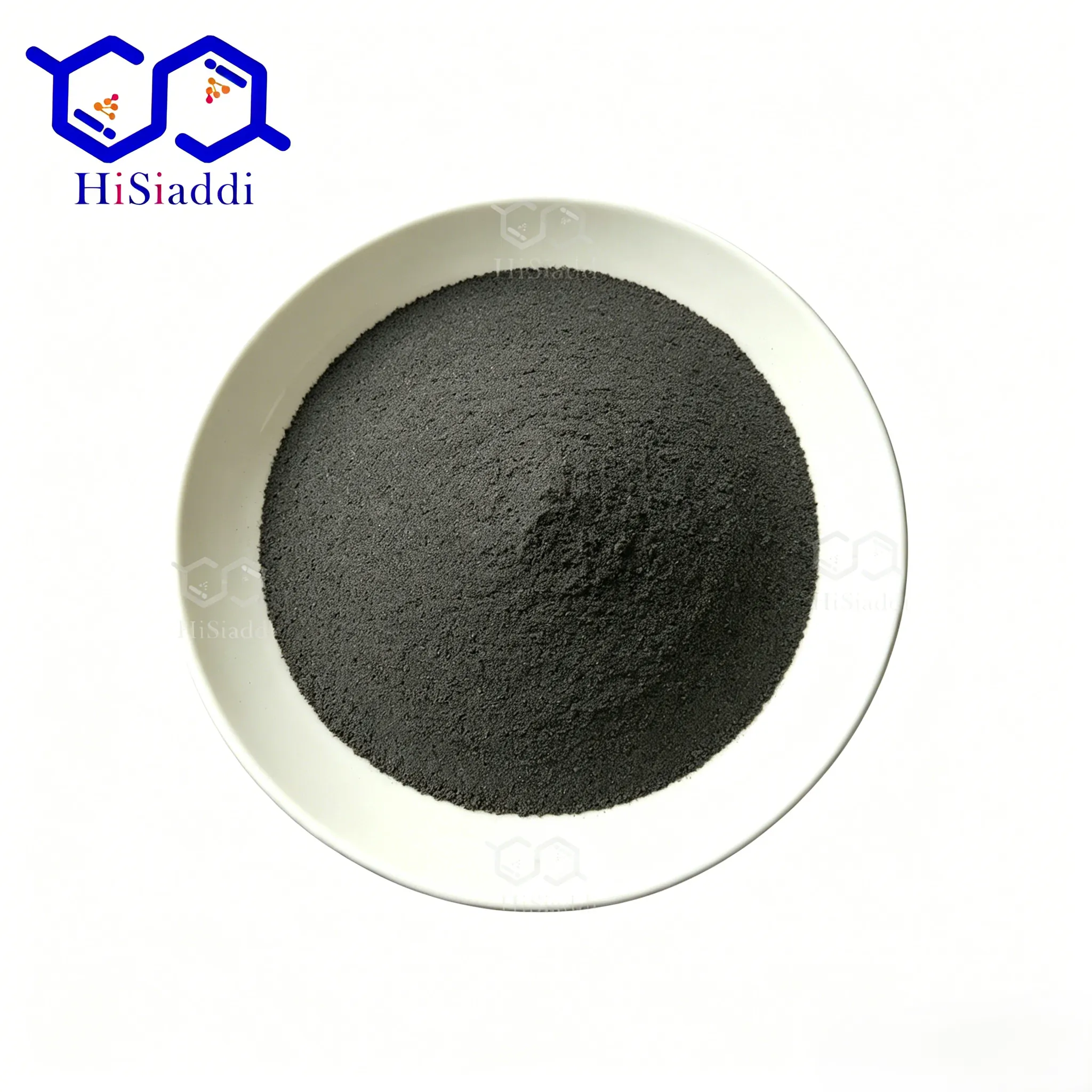
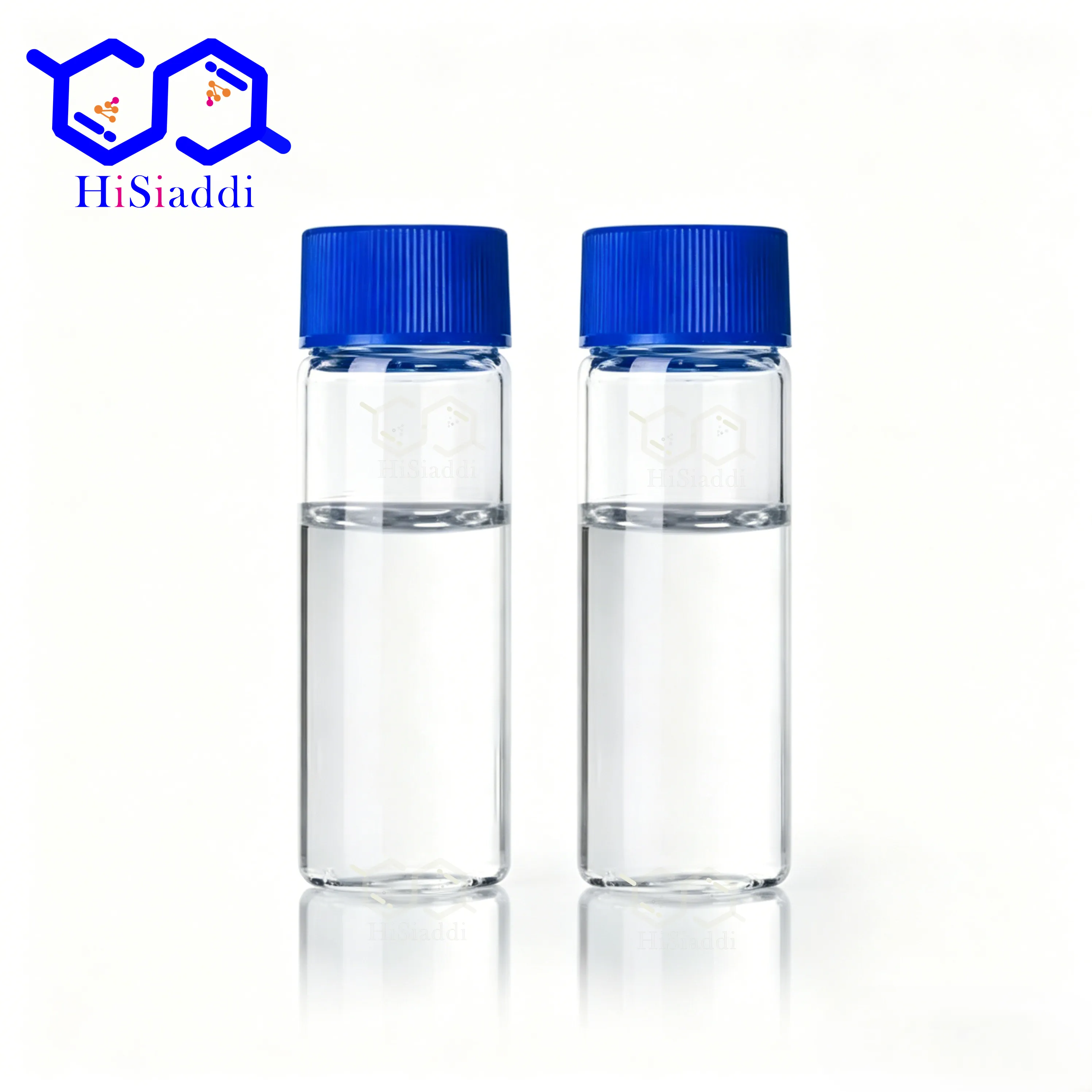
1,3-Dimethyl-2-imidazolidinone, abbreviated as DMI, is a high-polarity aprotic solvent used in lithium battery electrolyte and pharmaceutical synthesis. HiSiaddi can supply original factory sources of multiple Chinese brands and provide the "1+2+3+4=1" service.
Jiangsu Huasheng: HS-DMI-99.9 (high purity), HS-DMI-99.9-B (battery grade); purity 99.9%, moisture <10ppm, free amine <5ppm, boiling point 225℃, good thermal stability and excellent electrolyte compatibility; benchmarking German BASF with equivalent performance and 20%-25% lower price, suitable for pesticide intermediate manufacturers, electronic chemical manufacturers and coating factories.
Shandong Weipu: SDWP-DMI-99.8, SDWP-DMI-99.8-HP; purity 99.8%, moisture <20ppm, free amine <8ppm, good solubility; performance close to international brands with 22%-28% lower price.
HiSiaddi Exclusive Service: Customize models with purity of 99.5%-99.9%, moisture <10ppm and free amine <5ppm; provide GC-MS/moisture test reports and support SGS verification; offer consultation on pharmaceutical synthesis reaction condition debugging and solubility improvement scheme; enjoy volume discounts of 8%-15% and quality compensation.
 CONTACT HiSiaddi NOW
Name: | DMI Catalyst | Other Name: | 1,3-Dimethyl-2-imidazolidinone |
CAS No. | 80-73-9 | Brand: | Multi-brand |
MF: | C₅H₁₀N₂O | Model Number: | Multi-models |
EINECS No. | 201-206-0 | Place of Origin: | Jiangsu, China |
Purity: | 99.9% | Grade: | Industrial grade, reagent grade |
MOQ: | 1kg | Storage: | Please refer to the product packaging or contact the customer service |
As a purchaser buying DMI (1,3-Dimethyl-2-imidazolidinone), you may encounter the following questions:
What are the key indicator advantages and application impacts of mainstream models of well-known DMI brands?
What competitive services can DMI suppliers provide?
What are the qualification certifications and market feedback of target DMI brands?
How about the inventory level and supply stability of DMI suppliers?
What factors should be taken into consideration when purchasing DMI?
DMI 995 Pharma High Purity Grade (Core export grade)
DMI EL Electronic Grade (Special high-purity grade for electronics industry)
DMI 990 Industrial General Grade (Bulk export grade)
DMI 995 Pharma Grade: Purity ≥99.5%, Moisture ≤80ppm, Colority ≤10APHA, Heavy metal content <5ppm, Single metal ion <3ppb, Acidity <0.01%, Alkalinity <0.005%. Equivalent to Mitsui pharmaceutical grade and superior to Mitsui standard grade.
DMI EL Electronic Grade: Purity ≥99.9%, Total metal ion <10ppb, Moisture ≤30ppm, particle-free, directly replaceable with Mitsui EL electronic grade for semiconductor manufacturing.
DMI 990 Industrial Grade: Purity ≥99.0%, Moisture ≤0.1%, Colority ≤30APHA, highly cost-effective.
Pharma Grade: 72% of Mitsui’s price with identical indicators, extra 5%-8% discount for bulk orders.
Electronic Grade: 65% of Mitsui equivalent grade, stricter metal ion control, customized ultra-low ion specifications available.
Industrial Grade: 60% of Mitsui’s price, prominent advantages in bulk procurement.
Large-scale pharmaceutical API factories, CDMO enterprises and custom synthesis companies in Europe, America, India and Southeast Asia.
Semiconductor wet chemical manufacturers and photoresist stripper producers in South Korea, Taiwan China and Southeast Asia.
Global leading pesticide enterprises and new energy electrolyte additive manufacturers.
For purchasers: High purity and low impurity content of pharmaceutical grade effectively raise API yield, reduce by-products and cut post-processing costs; ultra-low metal ion content of electronic grade boosts chip yield by 3%-5% and lowers wafer defect rate; stable delivery and ten-thousand-ton production capacity of industrial grade eliminate stockout risks.
For end users: Pharmaceutical finished products meet European and American pharmacopoeia standards; semiconductor products satisfy access standards of chip manufacturers in Japan and South Korea; stable efficacy and compliant impurities for pesticide products; prolonged cycle life of new energy batteries.
TY-DMI 995 Premium Pharma Grade
TY-DMI 990 Industrial Export Grade
TY-DMI 995: Purity ≥99.5%, Moisture ≤100ppm, Colority ≤20APHA, stable indicators with minimal impurity fluctuation.
TY-DMI 990: Purity ≥99.0%, Moisture ≤0.12%, Colority ≤50APHA, ideal for large-scale industrial applications.
Medium & small pharmaceutical synthesis factories and fine chemical traders in Southeast Asia, Middle East and Latin America.
Manufacturers of coatings, adhesives and formaldehyde scavengers.
BY-DMI 996 Ultra-high Purity Research Grade (Bestselling export grade)
BY-DMI 995 Pharma Grade
BY-DMI 996: Purity ≥99.6%, Moisture ≤50ppm, Colority ≤5APHA, Metal ion <1ppb, fully benchmarked against top-tier research grade of Mitsui with partial indicators outperforming the standard.
BY-DMI 995: Purity ≥99.5%, Moisture ≤90ppm, regular export specification.
University laboratories, scientific research institutions and fine chemical R&D enterprises in Europe and America.
Medium & small innovative pharmaceutical enterprises and new drug R&D CDMOs in Europe and America.
GL-DMI 990 Industrial General Grade (Core export product)
GL-DMI 993 Quasi-pharmaceutical Grade
GL-DMI 990: Purity ≥99.0%, Moisture ≤0.15%, Colority ≤60APHA, huge production capacity with the most competitive price.
GL-DMI 993: Purity ≥99.3%, transitional grade applicable to mid-range pharmaceutical and pesticide production.
Bulk chemical traders, large-scale pesticide manufacturers and engineering plastic polymerization factories in Africa, Eastern Europe and Central Asia.
Producers of textile auxiliaries, high-end printing inks and surface treatment agents.
MT-DMI EL Ultra-high Purity Electronic Grade (Exclusive core product)
MT-DMI EL: Purity ≥99.9%, Total metal ion <8ppb, Single metal ion <2ppb, Particle size <0.3μm, fully equivalent to Mitsui EL electronic grade, dedicated for semiconductor and panel manufacturing.
Panel factories, wafer manufacturers and wet chemical OEMs in South Korea, Taiwan China and Southeast Asia.
Photoresist manufacturers and OLED material producers.

| Brand | Export Ranking | Core Grades | Superior Core Indicators | Price Ratio vs. Mitsui | Core B-end Buyers | Core Advantages for Purchasers | Core Advantages for End Users |
| Hebei Kangzhuang | 1 | DMI 995 Pharma Grade, DMI EL Electronic Grade | Purity 99.5%-99.9%, metal ion <10ppb, moisture 30-80ppm | 72% / 65% | Global large pharmaceutical factories, CDMOs, semiconductor factories, electrolyte manufacturers | Ten-thousand-ton production capacity, stable indicators, complete compliance documents, 15-20 days delivery | Higher API yield, increased chip yield, optimized battery service life |
| Hubei Tuoyuan | 2 | TY-DMI 995, TY-DMI 990 | Minimal impurity fluctuation, stable colority, sea-adapted packaging | 75% | Fine chemical traders & medium-small pharmaceutical factories in Southeast Asia & Middle East | Flexible payment terms, no quality deterioration risk during tropical sea shipment | Stable color of fine chemicals, low export compliance cost |
| Shandong Baiyang | 3 | BY-DMI 996 Research Grade, BY-DMI 995 | Max purity up to 99.6%, support 1L-25L small trial orders | 60% (Research Grade) | European & American research institutions, new drug R&D enterprises | Flexible small-batch procurement, reduced R&D costs | Low impurity risks for drug registration, internationally comparable research data |
| Tianjin Gongli | 4 | GL-DMI 990, GL-DMI 993 | Ultra-low industrial grade price, massive production capacity | 55% | Bulk traders, pesticide & plastic factories in Eastern Europe & Africa | Lowest raw material cost, stable bulk delivery | Stable pesticide efficacy, enhanced plastic polymerization performance |
| Mota Chemical | 5 | MT-DMI EL Ultra-high Purity Electronic Grade | Metal ion <8ppb, customizable 1-5ppb grade, strict particle control | 62% | Panel, wafer and photoresist manufacturers in Japan, South Korea & Southeast Asia | Meet strict semiconductor industry standards, short customized lead time | Higher chip & panel yield, qualified for world-class manufacturer certification |
Technical Indicators: High-end pharmaceutical grade and electronic grade products are fully equivalent to Mitsui Japanese products, with partial customized specifications achieving better performance; basic indicators of industrial grade are on par with international mainstream standards.
Price Edge: Overall prices are only 55%-75% of international famous brands with overwhelming cost advantages.
Service Support: Chinese manufacturers accept small-batch trial orders, customized indicator adjustment, flexible payment methods and fast delivery. In contrast, international brands feature high MOQ, 45-90 days long delivery cycle and extremely prolonged customized production period.
Compliance Qualification: Top-tier Chinese DMI manufacturers are fully equipped with REACH, TSCA, SGS, ISO, GMP and other mainstream global certifications to satisfy worldwide export compliance requirements.
HiSiaddi is a new foreign trade service enterprise driven by dual engines of technology transformation and foreign trade services. It has built a "1+2+3+4=1" product service system: 1 foreign trade salesperson with over 3 years of working experience, 2 R&D teams, 3 high-quality suppliers and 4 warehouses to satisfy one single product demand.
With this service system, HiSiaddi surpasses most foreign trade companies in R&D and technical optimization of 1,3-Dimethyl-2-imidazolidinone (DMI). We better understand market demands and brand advantages than single manufacturers, and have deeper DMI foreign trade experience than research institutions.
Only sales with over three years’ industry experience are hired; all receive over six months of joint R&D and sales training before serving customers.
(1) Basic Support Services for DMI
One-stop full order service: compliance document application, full third-party test reports, full quality after-sales resolution.
(2) Exclusive Advantage Services for DMI
No dedicated exclusive advantage copy provided in original Chinese text.
Deep factory technical cooperation and internal sales training deliver customized DMI development and downstream process consulting.
(1) Research-Grade Customization Services for DMI
Reverse Index & Process Customization Service
We adjust DMI indicators based on clients’ downstream production routes: pharmaceutical grades with ultra-low moisture & heavy metals, semiconductor ultra-high-purity grades, pesticide low-color variants. Customization lead time is 15–30 days, far shorter than Mitsui’s long cycles and high costs. We also provide free formulation optimization for pharmaceutical synthesis and semiconductor cleaning.
(2) Research-Grade Consulting Services for DMI
Import vs Domestic DMI Comparative Cost Analysis
Free full comparison reports vs Mitsui / BASF / Actylis covering indicators, pricing, lead times and trial costs, calculating total profit increase after switching domestic DMI.
Downstream Process Technical Empowerment
We provide pharmaceutical synthesis, semiconductor cleaning and lithium electrolyte formulation optimization supported by our internal labs.
Custom Technical Whitepapers
Tailor-made DMI selection & cost optimization whitepapers for internal decision-making and supplier audits.
Joint market research, factory audits and product testing select approximately three reliable core suppliers.
(1) Low-Cost Factory Direct DMI Supply
Long-term technical transformation and exclusive distribution secure factory-source low pricing.
(2) Long-Term Supply Chain Assurance
Full production traceability, batch quality control and compensation for batches failing third-party inspection.
Four shared warehouses stock mainstream DMI inventory.
(1) Fast Local Shipment & On-Site Support
Qingdao, Ningbo, Shenzhen port warehouses plus Zhengzhou inland hub enable timely delivery; staff resolve logistics, packaging and customs problems locally.
(2) Price Fluctuation Mitigation & Custom Packaging
Advance stocking offsets peak price spikes; custom labels and packaging are supported.
As a new-type foreign trade service provider driven by technological transformation and foreign trade services, HiSiaddi has established a "1+2+3+4=1" service system and can supply DMI from multiple well-known original manufacturers. As a foreign trade enterprise with R&D capabilities, we will professionally sort out and analyze common difficulties faced by B-end buyers sourcing DMI from China, alongside targeted solutions provided by HiSiaddi.
For more professional and in-depth analysis on DMI selection, please contact HiSiaddi customer service.
Excessive water content causing cell gas swelling; trace metal impurities accelerating self-discharge; abnormal acidity/alkalinity corroding pole pieces and separators; solvent degradation under high temperatures deteriorating electrolytes; residual organic impurities damaging interfacial films; batch indicator deviations impairing battery pack consistency
1. Loose water control in raw materials leads to free water exceeding battery-grade limits. When mixed into carbonate electrolytes, DMI undergoes continuous hydrolysis during battery charge-discharge cycles and high-temperature storage, generating hydrogen, carbon dioxide and other gases that cause swelling in soft-pack cells and sharp internal pressure spikes in steel-shell cells. Consequences range from out-of-spec cell thickness and defective appearance to safety valve activation, drastically shortening cycle life and service life while mass-producing defective products during volume manufacturing.
2. Incomplete removal of trace metal ions including sodium, potassium, iron, calcium and aluminum from raw materials. These impurity ions migrate and deposit on electrode surfaces under electric fields, piercing electrode passivation films and inducing internal micro-short circuits, resulting in drastically elevated self-discharge rates and severe power loss during shelf storage. Such defects fail factory exit standards for power batteries and long-duration energy storage batteries and compromise end-user performance.
3. Excess free acid and free alkali. Acidic substances continuously corrode copper/aluminum current collectors and polyolefin separators, causing pole piece pulverization, separator aging and damage over long-term use alongside steadily rising internal resistance. Alkaline impurities catalyze lithium salt decomposition in electrolytes, lowering overall electrolyte conductivity and directly impairing discharge power and cruising range.
4. DMI produced via conventional refining processes suffers insufficient high-temperature thermal stability. Battery operating temperatures and PACK enclosure ambient temperatures reach 60~85°C; prolonged high-temperature exposure gradually decomposes DMI molecules to generate small-molecule amine and carbonyl by-products, disrupting original electrolyte ratios, reducing conductivity, narrowing the electrochemical window and triggering premature electrolyte failure.
5. Trace residual amines and cyclic impurities from raw material synthesis undergo side reactions on electrode surfaces, compromising the density and stability of electrode SEI passivation films. This causes continuous impedance growth during battery cycling and steady attenuation of rate and low-temperature discharge performance.
6. Wide fluctuations in purity, water content and impurity levels across batches. When clients produce batteries with fixed mature formulations, inconsistent internal resistance, cycle life and self-discharge rates emerge from different raw material batches, leading to excessive voltage differences in multi-series parallel battery modules and elevated operational failure risks for vehicles and energy storage systems.
1. Combined negative-pressure multi-stage rectification and molecular sieve deep dehydration processes strictly control water content within battery-grade limits, fundamentally blocking electrolyte hydrolysis and gas generation to preserve cell integrity and long-cycle stability.
2. Ion exchange and precision filtration processes are added to selectively remove all trace metal ions, limiting total metal impurities to ppb levels and effectively suppressing cell self-discharge for full-category lithium battery production including power, energy storage and consumer electronics applications.
3. Fine acid-base neutralization and conditioning stabilize free acid and alkali within ultra-low ranges, eliminating corrosion of current collectors and separators and sustaining consistent battery internal resistance long-term.
4. Optimized molecular refining and stabilization processes enhance DMI’s high-temperature decomposition resistance, with unchanged physical and chemical properties under long-term constant 85°C exposure to guarantee stable electrolyte performance across full temperature ranges.
5. Deep removal of synthetic residual amines and cyclic organic impurities reduces electrode interfacial side reactions and facilitates formation of dense, stable SEI films to extend battery cycle life and improve high/low-temperature rate performance.
6. Fully automated continuous production with fixed raw material ratios, rectification parameters and filtration standards ensures highly consistent core physical and chemical indicators and impurity levels across batches, guaranteeing uniform performance for mass-produced batteries and battery modules.
Difficult separation of high-boiling heavy-component residues; nitrogen-containing organic impurities triggering failed pharmaceutical testing; high colority interfering with detection and finished product appearance; water content disrupting anhydrous synthesis systems; solvent residues failing European and American pharmaceutical certifications; acid-base impurities catalyzing side reactions and lowering product yields
1. Insufficient rectification cutting precision traps large volumes of high-boiling heavy components within DMI. These impurities share similar boiling points with target pharmaceutical intermediates and cannot be fully removed via conventional post-reaction distillation or extraction. Residual impurities reduce API purity, forcing manufacturers to add chromatographic separation and recrystallization post-treatment steps that inflate purification costs and extend production cycles significantly.
2. Synthetic by-products including dimethylamine and imidazole nitrogen-containing impurities participate in organic synthesis reactions to generate structurally similar isomers and polar contaminants, leading to excess related substances in APIs that fail mandatory European and American pharmaceutical testing standards including FDA, CEP and USP and block market access for finished pharmaceutical products.
3. High and inconsistent batch-to-batch colority of raw materials. Low-grade DMI carries a deep yellow tint that impairs the appearance of white/colorless high-purity pharmaceutical intermediates and medicinal excipients when used in synthesis. Dark impurities also interfere with precision analytical instruments including liquid chromatography and spectroscopy, causing biased test data and increasing quality control complexity.
4. Pharmaceutical condensation, hydrogenation and asymmetric catalysis reactions require strictly anhydrous systems. Excess water in DMI alters system polarity and disrupts catalyst coordination structures, lowering main reaction conversion rates and generating massive by-products, which drastically reduce raw material utilization and product yields.
5. DMI is classified as a controlled pharmaceutical solvent. Insufficient purification of general industrial-grade DMI results in solvent residue levels exceeding ICH Q3C limit standards in finished APIs, leading to full-batch disqualification, return or destruction losses.
6. Residual free acids and alkalis act as catalysts during synthesis to induce unintended side reactions, alter reaction pathways, reduce target product yields and expand impurity categories, further complicating downstream separation processes.
1. High-precision packed rectification columns with narrow fraction precise cutting fully separate low-boiling light components and high-boiling heavy components to produce narrow-fraction pharmaceutical-grade DMI that is easily distilled off post-reaction, simplifying post-treatment workflows and lowering purification costs.
2. Specialized amine impurity removal processes selectively eliminate active nitrogen-containing by-products including dimethylamine and imidazole, controlling related substance levels to ensure APIs pass European and American pharmaceutical impurity testing.
3. Multi-stage activated carbon decolorization and light-shielded stabilization maintain DMI colority within a low APHA range with minimal batch color deviation, eliminating interference with finished product appearance and precision instrument testing.
4. Pharmaceutical-grade deep dehydration standards are implemented to meet anhydrous synthesis process requirements, protecting catalytic system activity and securing high main reaction conversion rates and product selectivity.
5. Deep refining aligned with pharmaceutical solvent access standards strictly controls DMI solvent residues to consistently meet ICH Q3C residue limits and satisfy European and American pharmaceutical export compliance requirements.
6. Products are conditioned to near-neutral pH to drastically reduce side catalytic effects from acid-base impurities, stabilize reaction systems and raise target product yields and purity.
Polymerization inhibition from unsaturated impurities; broadened polymer molecular weight distribution due to water content; solvent decomposition generating odorous small molecules under high temperatures; acid-base impurities triggering yellowing of polymer materials; insufficient solvency causing system stratification; excessive volatile fractions polluting production environments
1. Residual unsaturated active impurities including olefins and peroxides in raw materials exert prominent polymerization inhibition effects, slowing monomer chain growth rates and leading to incomplete polymerization and excess residual monomers. The resulting resins and polymer materials suffer comprehensively degraded mechanical strength, tensile modulus and weather resistance.
2. Polymerization and wet spinning processes are highly sensitive to water content. Excess DMI water disrupts ordered molecular chain growth, widening polymer molecular weight distribution and reducing material toughness, strength and molding stability. Spinning processes encounter frequent filament breakage, fuzz and uneven fiber thickness.
3. Polymerization and wet spinning generally operate at elevated temperatures. Poor thermal stability of conventional DMI causes gradual decomposition under heat, releasing pungent amine small molecules that degrade workshop operating environments. Decomposition products incorporated into polymer matrices create strong odors in finished goods, rendering them unsuitable for high-end interior and civilian applications.
4. Free acids and alkalis catalyze oxidative degradation of polymer chains under high temperatures, causing yellowing, discoloration and dullness in light-colored/transparent resins and natural aramid fibers, severely compromising product appearance and market value.
5. Low-grade DMI delivers insufficient polarity and solvency with poor compatibility with polymer monomers, inorganic powder fillers and functional additives. Glue and spinning dope preparation leads to stratification, turbidity and solid precipitation, creating uneven internal structures and localized performance defects in finished products.
6. High low-boiling volatile fractions cause continuous volatilization during production, increasing solvent loss and raw material costs while generating organic waste gas that raises environmental governance burdens.
1. Specialized removal of peroxide and unsaturated polymerization-inhibiting impurities eliminates inhibition effects, stabilizing polymerization reaction rates and full monomer conversion to enhance comprehensive mechanical performance of polymer materials.
2. Deep water control adapts to anhydrous polymerization and wet spinning processes, ensuring uniform polymer molecular chain growth and narrow molecular weight distribution to improve fiber and resin finished product strength and molding stability while reducing broken filaments and defective goods.
3. Enhanced high-temperature thermal stability prevents decomposition and release of pungent small molecules under high-temperature operating conditions, improving workshop environments and guaranteeing odor compliance for finished polymer materials.
4. Strict pH adjustment to neutral ranges eliminates acid-base-induced polymer oxidative yellowing and preserves long-term stable appearance for light-colored, transparent and natural finished products.
5. Optimized comprehensive solvent solvency delivers excellent compatibility with various polymer monomers, inorganic fillers and functional additives, maintaining homogeneous, transparent dope systems free of stratification or precipitation.
6. Precise cutting of low-boiling fractions controls volatile fraction content, lowering solvent volatilization loss and waste gas emissions to reduce environmental operation and maintenance burdens.
Poor compatibility leading to stratification and precipitation in formulated systems; low-boiling residues leaving surface deposits on components; oxidative discoloration during high-temperature ocean shipping; batch indicator fluctuations disrupting formulation recipes; oxidative deterioration during long-term storage; corrosive impurities including chloride ions damaging precision circuits
1. Complex surface polarity and impurity compositions in raw materials lead to insufficient compatibility with other electronic solvents, surfactants, corrosion inhibitors and lithium battery additives. Stratification, turbidity and crystal precipitation appear after standing, directly rendering formulated electronic chemicals unusable.
2. Incomplete removal of low-boiling light components from DMI leaves organic residues on chips, circuit boards and connectors after volatilization during precision electronic cleaning and circuit board solubilization, causing poor circuit contact, reduced insulation performance and electronic equipment malfunctions.
3. Closed ocean container temperatures reach 45~55°C. Conventional DMI delivers weak oxidation resistance and gradually oxidizes under high temperatures, deepening from colorless to pale yellow then dark yellow, failing appearance acceptance standards for high-end transparent electronic chemicals.
4. Purity, water content and polarity deviations across batches lead to inconsistent solvency, cleaning power and electrochemical performance when clients produce finished goods with fixed formulation ratios, triggering out-of-control product quality and rising defective rates.
5. DMI undergoes slow oxidation upon prolonged ambient air exposure during storage, generating acidic oxides and colored impurities that shorten the shelf life of formulated finished products, failing to meet long-distance overseas transportation and multi-regional warehousing & distribution requirements.
6. Trace corrosive anion residues including chloride and sulfide ions slowly corrode copper and silver plating layers and pins when used for precision electronic component cleaning, shortening electronic device service life.
1. High-purity homogenized refining unifies solvent polarity and physical and chemical characteristics for high compatibility with mainstream electronic solvents, surface additives and corrosion inhibitors, maintaining homogeneous, transparent formulated systems free of stratification or precipitation long-term.
2. Multi-stage rectification fully removes low-boiling light components for minimal volatile residues, leaving clean component surfaces post-cleaning and ensuring normal operation of precision circuits.
3. Specialized antioxidant stabilizers are added to enhance high-temperature oxidation resistance, tolerating high-temperature ocean shipping environments and preserving long-term transparent color to meet appearance requirements for high-end electronic materials.
4. Highly consistent purity, water content, distillation fractions and impurities across batches minimize inter-batch differences, allowing clients to mass-produce directly with existing mature formulation ratios without repeated ratio adjustment.
5. Optimized stabilization systems slow oxidative deterioration rates, drastically extending finished product shelf life to adapt to long-term overseas warehousing and cross-regional distribution models.
6. Deep removal of corrosive anions including chloride and sulfide ions delivers low-corrosion performance for safe application in cleaning and supporting processes for all types of precision electronic components.
Counterfeit industrial-grade products misrepresented as electronic/pharmaceutical grade; sedimentation and stratification in large packaging materials; water content rise from moisture absorption during high-humidity ocean shipping; missing compliance documents for hazardous chemicals causing customs clearance delays; incomplete full-test reports blocking client audits; oxidative discoloration during storage; cross-contamination from mixed loading of different grades
1. Widespread counterfeit raw materials exist in the market: suppliers relabel low-cost industrial-grade DMI and sell it as high-value electronic or pharmaceutical-grade product. Such materials feature excessive water content, impurities and heavy components. Once adopted for production by downstream high-end clients, mass failures including battery malfunctions and failed pharmaceutical testing trigger massive after-sales compensation and brand disputes.
2. Long-term static storage of bulk drummed raw materials causes vertical sedimentation of light and heavy components due to density differences, leading to inconsistent purity, water content and colority between upper and lower drum sections. Simple manual stirring fails to homogenize contents, resulting in drastically varying indicators after repackaging into small containers and severely damaging channel reputation and long-term partnerships.
3. Insufficient protective performance of conventional sealed packaging allows raw materials to absorb atmospheric moisture during ocean shipping across high-humidity sea areas, raising water content beyond electronic, pharmaceutical and battery-grade standards and triggering full-batch rejection upon arrival.
4. Classified as Category 3 flammable liquid hazardous chemicals, DMI is strictly regulated by EU REACH, CLP regulations and international maritime dangerous goods codes. Shipments lacking English SDS, REACH-SVHC hazard screening reports, hazard classification certificates and ocean/air dangerous goods identification documents face high risks of customs detention and confiscation overseas, blocking normal customs clearance and sales.
5. Only basic certificates of conformity are provided without full third-party test reports and batch traceability records. Formal overseas battery manufacturers, pharmaceutical factories and electronic enterprises implement strict incoming material quality inspection and supplier audit systems; incomplete documentation prevents warehousing and market access.
6. Prolonged inventory turnover cycles expose drummed materials to air oxidation, gradually deepening color and reducing product quality, forcing downgrade and discounted sales with economic losses.
7. Non-standard storage and transshipment management leads to mixed storage and loading of industrial, electronic and pharmaceutical grades, triggering cross-contamination and rendering high-grade materials defective due to impurity pollution.
1. Strict separation of four grades: industrial, electronic, battery and pharmaceutical, with truthful labeling of product grades and indicators to eliminate counterfeiting of low-grade products as high-grade variants. Full authoritative third-party test reports accompany each batch to support re-inspection at any global institution and guarantee safe downstream production.
2. Full-batch circulation homogenization treatment prior to factory delivery eliminates component sedimentation; standardized stirring and repackaging workflows are matched to ensure fully consistent indicators across large and small packaging specifications for stable repackaging quality.
3. Double protective packaging with thickened sealed galvanized drums and inner anti-seepage isolation films isolates external moisture and air, preventing water absorption and rising water content during ocean shipping and storage with consistent indicators between factory exit and destination arrival.
4. Full sets of English compliance documents are provided per shipment: English SDS, REACH compliance reports, CLP hazard classification labels, ocean/air dangerous goods identification certificates and grade test certificates to guarantee unimpeded overseas customs clearance and domestic sales compliance end-to-end.
5. A complete batch traceability system is established with production records, original quality inspection data and full-test vouchers to fully satisfy incoming material quality inspection, on-site supplier audits and system certification requirements of overseas high-end clients.
6. Antioxidant components are added to high-grade products alongside light-shielded storage requirements to slow oxidative discoloration, extend inventory turnover cycles and reduce downgrade losses.
7. Graded zoning storage and dedicated vehicle transshipment systems are implemented with separate storage and loading/unloading for different grades to completely eliminate mixed loading cross-contamination.
For more professional and in-depth analysis on DMI selection, please contact HiSiaddi customer service.
Customized specifications far exceed national standard industrial-grade DMI. Conventional domestically produced DMI typically contains 20–50 ppb metal impurities and over 0.4% imine byproducts, which cannot be eliminated via standard rectification processes.
No manufacturers were willing to accept the 1.2-ton small-batch customization, as chemical production lines require a minimum feedstock input of 3 tons, leading to inverted production costs.
Swiss customs enforce strict compliance standards for electronic solvent packaging; ordinary iron drums and plastic drums fail REACH ancillary substance testing of the EU. Custom high-purity internally coated aluminum drums are required, yet domestic packaging suppliers lacked corresponding REACH compliance certifications.
Production Capacity Coordination
HiSiaddi coordinated with a domestic specialized DMI manufacturer to split batch rectification procedures. An idle small rectification tower at the plant was used for separate feeding of 1.5 tons of raw materials, with an independent secondary oxidation-azeotropic rectification purification process activated. Production was scheduled outside mass production line windows to allocate idle line costs and resolve losses associated with small-batch manufacturing.
Customized Specification Optimization
Working with the manufacturer’s R&D team, HiSiaddi revised the purification process: an ion exchange metal removal unit was installed upstream of rectification, paired with low-temperature negative-pressure precise fractional distillation to strictly control the formation of the byproduct 1,3-dimethyl-2-imidazolinimine. After three sample inspections conducted by the SGS laboratory in Switzerland, the finished product achieved metal impurities of 3.2–4.8 ppb, imine content of 0.022%, and water content of 65 ppm, fully complying with the client’s customized specifications.
Packaging & Customs Clearance Coordination
HiSiaddi partnered with an aluminum container manufacturer holding EU REACH packaging certifications to develop custom 5L/25L high-purity oxygen-free aluminum drums via new mold development, with each drum purged and sealed with high-purity nitrogen. In parallel, HiSiaddi completed EU REACH pre-registration and SVHC substance notification for DMI in advance, and compiled fully English COA quality inspection certificates and MSDS compliance documents to avoid detention at Swiss ports.
Raw Material Defects: The general industrial-grade DMI purchased contained trace residual free dimethylamine and formic acid. These impurities decomposed under the high fluorination temperature of 190°C, triggering localized runaway polymerization of potassium fluoride and generating polymeric coking impurities that clogged pipelines.
Formula Mismatch: The original feeding ratio was calibrated for high-purity European DMI and had not been fine-tuned to offset trace impurity levels in domestically sourced DMI, resulting in consumption of phase-transfer catalysts.
Improper Production Operations: The client retained the original temperature ramp procedure, which was incompatible with the slight deviation in boiling point range of domestic DMI. Excessively long constant-temperature holding periods aggravated byproduct formation.
Graded Customization of Raw Materials
Collaborating with the domestic DMI manufacturer, HiSiaddi developed a dedicated pharmaceutical-grade refined DMI tailored for the client’s fluorination process by adding a formic acid removal stage, limiting total free amine content to ≤ 15 ppm. 5 kg gradient impurity samples were sent in advance for the client’s lab trials to screen the optimal raw material grade.
Iterative Formula Calibration
HiSiaddi coordinated remotely with German R&D teams and domestic fluorination process engineers to conduct five groups of lab-scale validation tests. Based on the original formula, the dosage of the phase-transfer catalyst N-bis(dimethylamino)-1,3-dimethylimidazole was increased by 0.12 wt% to counteract catalyst depletion caused by trace impurities. Temperature control parameters were revised into two stages: holding at 135°C for 2 hours in the early phase, and shortening the 192°C high-temperature holding window to 6.5 hours to reduce exposure to high heat.
On-Site Follow-Up Support
A 200 kg batch of refined DMI was delivered for pilot testing after optimization. HiSiaddi provided full-batch segmented test reports and a process adjustment guidance manual, with real-time online synchronization of pilot production data.
Lead time
Quantity (ton) | 0 - 10 | 10 - 30 | > 30 |
Lead time (days) | 7 | 15 | To be negotiated |
The monthly inventory volume of DMI is 80 tons, with appropriate adjustments upwards or downwards in response to peak and off-peak seasons.
HiSiaddi safeguards the supply stability of DMI through the following measures:
(1) Performance evaluation and screening of DMI brand factories based on on-time delivery rate, batch pass rate, timeliness of risk alerts, and completeness of documentation to assess their supply stability.
(2) For each mainstream model or major grade of DMI, secure 1 primary high-quality brand manufacturer and 2 backup high-quality manufacturers.
(3) Each factory operates independent production lines in separate production zones to prevent production halts caused by major unforeseen incidents such as environmental production suspensions and power outages.
Through long-term cooperation with brand manufacturers via technology commercialization and authorized distribution channels, HiSiaddi can effectively strengthen supervision over the production processes of brand manufacturers, optimize full-process traceability management, improve batch stability control, and further reinforce real-time monitoring of the supply stability of DMI products.
Long-term Annual Framework Supply Guarantee Agreement. HiSiaddi signs 12-month long-term agreements with leading manufacturers. The agreements specify the minimum guaranteed supply volume, maximum price hike range, and priority production scheduling rights during peak seasons. It is stipulated that manufacturers shall issue a 30-day prior written notice if production is suspended due to environmental rectification or equipment maintenance, and backup manufacturers will be activated to replenish goods accordingly.
We have 4 warehouses, which are jointly operated and managed with suppliers to store hot-selling products.The four warehouses are located at Qingdao Port in North China, Ningbo Port in East China, Shenzhen Port in South China, and Zhengzhou, China’s inland logistics hub. This setup guarantees sufficient supply and timely shipment of DMI during peak seasons.
HiSiaddi issues a rolling demand forecast covering the subsequent three months on the 25th of each month, allowing manufacturers to reserve production capacity in accordance with the forecast. Any new urgent orders from overseas clients will be prioritized to draw on inventories or production capacity from backup manufacturers.
Unstable logistics for DMI will extend delivery lead times. HiSiaddi has established alternative arrangements covering multiple freight forwarders, ports and transportation solutions:
(1) Binding of multiple professional chemical freight forwarders for DMI
Each product is assigned 2 to 3 freight forwarders with hazardous chemical/food transport qualifications affiliated with different shipping lines. Alternative sailing schedules can be switched to immediately in case of space shortages or customs inspections on a single shipping route.
(2) Backup transportation solutions for DMI
Ocean freight serves as the standard mode; air freight and rail freight are reserved as alternatives for urgent orders. Long-term agreements for temperature-controlled containers are signed for temperature-sensitive and perishable food additives to secure shipping space.
(3) Visual tracking and digital early warning for DMI
Freight forwarders synchronize daily updates on container loading, customs declaration, vessel loading and port arrival milestones. If customs inspection occurs, replenishment from backup inventory will be initiated immediately to shorten client waiting periods.
Full-chain digital early warning automatically monitors four categories of risks:
Factory side: Expiring supplier environmental assessment certificates, renewal of production permits, scheduled major equipment overhauls, and notifications of price hikes for upstream raw materials;
Inventory side: Inventory falling below safety thresholds, excessive inventory age, and batches failing quality inspection;
Logistics side: Shipping line space shortages, strikes at destination ports, and updates to customs policies;
Overseas side: Revisions to additive regulations and adjustments to import restriction lists in target countries.
Early warning notifications are automatically pushed to procurement and business leads, allowing backup suppliers or inventory contingency plans to be activated in advance.
As a new-type foreign trade service provider driven by dual pillars of technology commercialization and export trading, HiSiaddi has built a "1+2+3+4=1" service system and can supply original factory goods from multiple well-known DMI brands.
As an R&D-focused export trader, HiSiaddi does not solely promote a single manufacturer’s products. We objectively analyze multiple Chinese DMI brands with strong export competitiveness and share their certification portfolios and market feedback to streamline purchasers’ sourcing decisions.
For detailed, objective introductions to multiple leading Chinese DMI brands, please contact HiSiaddi customer service.
· Pharmaceutical Grade DMI995: Purity ≥99.5%, Moisture ≤0.05%, Heavy Metals ≤1ppm
· Electronic Grade DMI999: Purity ≥99.9%, Metallic Impurities (Na/K/Fe) ≤0.1ppb
· Industrial Grade DMI990: Purity ≥99.0%, for Coatings, Polymers & Pesticides
· European & American Pharmaceuticals: Replaces HMPA/DMF; boosts synthesis efficiency by 12% and cuts impurities by 40%; 92% repeat order rate; recognized as EU Preferred Green Solvent Brand
· Semiconductors (Japan, South Korea, Southeast Asia): Applied in photoresist stripping for advanced packaging, lifting production yield by 3%; price 25% lower than Mitsui Chemicals Japan, delivery lead time halved
· New Energy Batteries: Solvent for solid-state battery electrolytes, improving ionic conductivity by 15%; certified by CATL and LG Energy Solution
✅ ISO 9001 / 14001 / 45001 Integrated Management Systems ✅ Full-substance EU REACH Registration, FDA DMF Filing (Pharmaceutical Grade) ✅ National Specialized, Refined, Unique & Innovative "Little Giant" Enterprise, National Manufacturing Single Champion ✅ EU CEP Certification, Listed on U.S. EPA Eco-Friendly Solvent Registry
· DMIJH99: Purity ≥99.0%, Industrial Grade, Universal for Pesticides & Coatings
· DMIJH998: Purity ≥99.8%, Low Moisture (≤0.08%), Specialized for Pharmaceutical Intermediates
· Southeast Asian Pesticides: Solvent for herbicide synthesis, raising reaction conversion rates by 8%; 18% price discount vs. Japanese & Korean alternatives, 28% regional market share
· Middle Eastern Coatings: Co-solvent for high-solids coatings, reducing VOC emissions by 35%; certified by SABIC
· Polymers (Turkey, Eastern Europe): Toughening agent for engineering plastics, boosting impact strength by 20%; 85% repeat order rate
✅ ISO 9001, ISO 14001 ✅ REACH Intermediate Registration, China Green Product Certification ✅ Customs Class A Export Enterprise, Top 10 Shandong Chemical Exporters
· DMISX999: Purity ≥99.9%, Metallic Impurities ≤0.1ppb, Semiconductor Exclusive
· DMISX997: Purity ≥99.7%, Low Chloride (≤1ppm), OLED Cleaning Specialized
· Japanese & Korean Wafer Fabs: 8-inch / 12-inch wafer cleaning, ≥99.9% particle removal efficiency; substitutes Mitsubishi Japan at 20% lower cost
· OLED (LGD, Samsung Korea): Solvent for evaporant purification, superior batch purity stability vs. imported products; certified by Samsung SDI
· Asia-Pacific New Energy: Electrode additive for lithium-ion batteries, extending cycle life by 10%; 40%+ annual export growth rate
✅ ISO 9001, ISO 14001, ISO 45001 ✅ SEMI Standard Certification for Electronic Chemicals, EU REACH Registration ✅ South Korean KC Certification, Japan METI Filing
· DMIHT995: Purity ≥99.5%, Sterile Grade, for Injectable Drug Intermediates
· DMIHT992: Purity ≥99.2%, Low Endotoxin, for Oral Pharmaceuticals
· European & American Generic Drug Manufacturers: Synthesis of cephalosporins and anti-tumor drugs, batch consistency RSD ≤0.05%; passed FDA on-site audit
· Indian & South American Pharmaceutical Markets: 30% cost discount vs. European alternatives, quality benchmarked against BASF Germany; 22% regional market share
· EU Veterinary Pharmaceuticals: DMF replacement with residue levels 50% below EU regulatory limits; EMA certified
✅ ISO 9001, ISO 13485 (Pharmaceutical Excipients) ✅ FDA DMF Filing, EU CEP Certification, EDQM Qualification ✅ China GMP Certification, U.S. cGMP Compliance
· DMIWD9999: Purity ≥99.99%, Ultra-High Purity, for Semiconductor R&D
· DMIWD995L: Low Sulfur (≤0.5ppm), Low Nitrogen, for High-End Polymers
· European & American Research Institutions: Laboratory-grade solvent, batch consistency endorsed by the Journal of Organic Chemistry
· High-End Electronics (U.S., Germany): Synthesis material for 5G base station components, stable dielectric constant performance; Intel certified
· Fine Chemicals (Switzerland, Italy): Fragrance & cosmetic intermediates, superior odor purity vs. imported equivalents; 90% repeat order rate
✅ ISO 9001, ISO 14001 ✅ EU REACH Registration, U.S. ACS Reagent Grade Certification ✅ Zhongguancun High-Tech Enterprise, Beijing Specialized, Refined, Unique & Innovative Enterprise
· EU REACH: All brands completed registration for unrestricted sales across 27 EU member states
· FDA DMF: All pharmaceutical-grade lines hold filings to pass U.S. pharmaceutical manufacturer audits
· Integrated ISO Systems: Full quality, environmental, and occupational safety certification aligning production controls with international benchmarks
· Import Substitution Value Proposition: 15%-30% lower total costs vs. Japanese, Korean and European brands, 50% shorter delivery lead times
· Benchmark Quality Standards: Pharmaceutical grades ≥99.5% purity, electronic grades ≥99.9% purity, inter-batch stability RSD ≤0.1%
· Green Regulatory Compliance: Low-toxicity, biodegradable formulations meeting EU VOC and U.S. EPA environmental standards
· Global Top 5 DMI Manufacturers: Three Chinese brands (Kangzhuang, Sanxie, Haihang) included
· Leading Pharmaceutical Grade Exporters: Kangzhuang and Huateng account for 70% of China’s pharmaceutical-grade DMI export volume
· Domestic Electronic Grade Substitution Pioneers: Sanxie and Weida break Japanese-Korean market monopolies
For detailed, objective introductions to multiple leading Chinese DMI brands, please contact HiSiaddi customer service.
As a new-type foreign trade service provider driven by dual pillars of technology commercialization and export trading, HiSiaddi has built a "1+2+3+4=1" service system and can supply original factory goods from multiple well-known DMI brands.
As an R&D-focused export trader, HiSiaddi does not solely promote a single manufacturer’s products. We objectively analyze multiple Chinese DMI brands with strong export competitiveness and share their production workflows, supply stability, and core technical indicators, alongside the downstream procurement impacts of these factors, to streamline purchasers’ sourcing decisions.
For detailed, objective introductions to multiple leading Chinese DMI brands, please contact HiSiaddi customer service.
Process Route: Ethylenediamine + Urea → Cyclization to 2-Imidazolinone → One-Step Continuous Hydrogenation & Methylation to Generate DMI → Three-Stage High-Vacuum Distillation + Membrane Dehydration
Core Advantages
· Continuous vs. Traditional Batch Production: Reaction cycle shortened from 8-12 hours to 45 minutes, energy consumption reduced by 30%, by-product generation cut by 40%
· Green Low-Waste Manufacturing: Heavy-metal-free catalytic systems, wastewater COD <500mg/L with recyclable process water, compliant with EU REACH and U.S. EPA standards
· High Total Yield: Overall production yield ≥92% vs. 75%-82% for conventional batch processes
· Manufacturing Base: 200-acre self-owned facility in Cangzhou Lingang National Chemical Industrial Park, fully automated DCS control, annual operating hours exceeding 8,000
· Raw Material Security: 3-year long-term supply agreements for dimethylamine and formaldehyde with direct suppliers North China Petrochemical and Wanhua Chemical, limiting raw material price swings to ≤5%
· Strategic Inventory: Permanent safety stock of 2,000 tons (800 tons pharmaceutical grade, 500 tons electronic grade, 700 tons industrial grade), capable of fulfilling emergency single orders up to 500 tons
· Export Delivery Performance: 99.7% on-time delivery rate 2024–2025, zero supply disruption incidents; 92% repeat order rate among European and American clients
DMI995 (Pharmaceutical Grade)
· Purity: ≥99.5% (GC)
· Moisture: ≤0.05% (Karl Fischer Titration)
· Heavy Metals (Pb, As, Cd): ≤1ppm
· Color: ≤10 APHA
· Impurities: 2-Imidazolidinone ≤0.2%, N-Methylimidazole ≤0.05%
DMI999 (Electronic Grade)
· Purity: ≥99.9%
· Metallic Impurities (Na/K/Fe/Cu): ≤0.1ppb (ICP-MS)
· Particulates: ≥0.5μm particles ≤10 particles/mL
· Moisture: ≤0.03%
· Pharmaceutical Clients: Inter-batch stability RSD ≤0.05% eliminates product scrapping caused by purity/moisture deviations across batches. Ultra-low heavy metal content directly meets FDA/EMA injectable drug requirements, removing the need for secondary refinement and cutting downstream purification costs by USD 1,500–2,000 per ton.
· Semiconductor Clients: 0.1ppb-level metallic impurity control is compatible with 3nm/2nm advanced processes, lifting wafer production yields by 2%-3%. Substitutes Mitsubishi Japan products at a 25% cost reduction with delivery lead times halved.
· Supply Chain Resilience: 7-day lead times plus 2,000 tons of safety inventory mitigate geopolitical supply disruption risks, ideal for European, American and Southeast Asian just-in-time zero-inventory manufacturing models.
Process Route: Urea + Ethylenediamine → Cyclization → 2-Imidazolinone → Methylation via formic acid/formaldehyde system → Crude DMI → Two-Tower Vacuum Batch Distillation (95°C / 3mmHg)
Core Advantages
· Mature, Reliable Operation: 10+ years of stable production with zero process safety incidents, matching the core demand of pesticide and coating manufacturers for consistency and low cost
· Controlled Raw Material Costs: Formic acid and formaldehyde are bulk commodity feedstocks with 15% lower procurement costs, suitable for mass production
· Flexible Grade Switching: Batch reactors enable rapid conversion between industrial and pharmaceutical grades, fast response for small-lot orders (5–50 tons)
· Manufacturing Base: Jinan Chemical Industrial Park facility certified to ISO 9001/14001, annual operating hours 7,800
· Raw Material Security: Direct long-term supply partnership with Luxi Chemical Shandong, capped raw material price fluctuations ≤8%
· Strategic Inventory: Permanent stock of 800 tons industrial grade, 300 tons pharmaceutical grade; maximum single batch order capacity 200 tons
· Export Delivery Performance: 98.5% on-time delivery rate to Southeast Asia and Middle East markets 2024–2025, 85% repeat order rate among pesticide manufacturers
DMIJH99 (Industrial Grade)
· Purity: ≥99.0%
· Moisture: ≤0.1%
· Color: ≤25 APHA
· pH Range: 7.0–8.0
DMIJH998 (Pharmaceutical Grade)
· Purity: ≥99.8%
· Moisture: ≤0.08%
· Heavy Metals: ≤5ppm
· Pesticide Clients: Stable 99.0% purity and low moisture boost herbicide/fungicide synthesis conversion rates by 8%. 18% price discount vs. Japanese and Korean competitors directly reduces pesticide production costs and strengthens price competitiveness in Southeast Asian and Middle Eastern markets.
· Coating & Polymer Clients: Low color (≤25 APHA) avoids discoloration of finished coatings; high boiling point (222°C) enhances thermal stability of coating formulations. Optimal cost-performance for mass production of mid-to-low grade coatings and engineering plastics.
· Small-Batch Flexible Demand Support: Minimum order quantity of 10 tons with 15-day delivery lead times, suited to small and mid-sized coating/pesticide manufacturers with multi-variety, low-volume production schedules.
Process Route: High-purity ethylenediamine (≥99.9%) + Ultra-Pure Urea → Cyclization → Methylation with ultra-pure formaldehyde → Crude DMI → Four-Stage High-Vacuum Distillation (85°C / 1mmHg) + Nitrogen Blanketing → Molecular Filtration + Cleanroom Packaging
Core Advantages
· Extreme Metallic Impurity Control: Full 316L stainless steel + PTFE-lined piping, continuous nitrogen purging to isolate air and moisture, metallic impurities stabilized at ≤0.1ppb
· Consistent Ultra-High Purity: Precise fraction cutting via four-stage distillation delivers stable ≥99.9% purity with inter-batch RSD ≤0.03%
· Cleanroom Sterile Packaging: Class 10,000 clean manufacturing facility, full sterile packaging workflows compatible with semiconductor and OLED ultra-clean operating environments
· Manufacturing Base: Nantong Electronic Chemical Industrial Park facility holding SEMI, South Korean KC and Japanese METI certifications
· Raw Material Security: High-purity ethylenediamine (99.9%) imported via long-term agreements with BASF Germany; self-produced formaldehyde ≥99.9% purity
· Strategic Inventory: Permanent stock of 600 tons semiconductor grade (SX999), 200 tons OLED grade (SX997); maximum single batch order capacity 300 tons
· Export Delivery Performance: 99.2% on-time delivery rate to Japanese and Korean semiconductor fabs 2024–2025, certified supplier for Samsung and LGD
DMISX999 (Semiconductor Grade)
· Purity: ≥99.9%
· Metallic Impurities (Na/K/Fe/Cu/Cr): ≤0.1ppb
· Moisture: ≤0.03%
· Particulates: ≥0.5μm particles ≤5 particles/mL
DMISX997 (OLED Grade)
· Purity: ≥99.7%
· Chloride Content: ≤1ppm
· Moisture: ≤0.05%
· Semiconductor Wafer Fabs: 0.1ppb metallic impurity limits eliminate circuit short-circuit risks from metal contamination for 12-inch wafers and advanced packaging applications. Particulate control capped at ≤5 particles/mL raises production yields by 3%-4%; substitutes Mitsui Japan products at a 20% cost discount.
· OLED Panel Manufacturers: Low chloride (≤1ppm) prevents screen yellowing and premature panel aging; ≥99.7% purity improves evaporant purification efficiency, certified for Samsung SDI and LGD production lines.
· New Energy Battery Manufacturers: Ultra-low metallic impurities suppress self-discharge, extending battery cycle life by 10% for premium solid-state battery applications.
Process Route: Pharmaceutical-grade ethylenediamine/urea → Cyclization → Sterile Methylation → Crude DMI → Three-Stage Sterile Vacuum Distillation → 0.22μm Sterile Filtration → Sealed Packaging under Nitrogen Blanket
Core Advantages
· End-to-End GMP Compliance: Class 100,000 clean production facility, integrated DCS+SIS intelligent control aligned with FDA cGMP and EU GMP standards
· Sterile, Low-Endotoxin Output: Endotoxin levels ≤0.25EU/mL, sterile post-filtration formulations directly suitable for injectable pharmaceutical manufacturing
· Deep Toxic Impurity Removal: Specialized purification to reduce toxic co-products N-methylimidazole and 2-imidazolidinone to residual levels ≤0.1%
· Manufacturing Base: Wangcheng Pharmaceutical Industrial Park Hunan facility certified to ISO 13485, FDA DMF filing, EU CEP certification
· Raw Material Security: Direct long-term supply partnerships with domestic leading pharmaceutical-grade ethylenediamine/urea producers, raw material formulations compliant with ICH Q7 guidelines
· Strategic Inventory: Permanent stock of 500 tons injectable grade (HT995), 300 tons oral grade (HT992); maximum single batch order capacity 200 tons
· Export Delivery Performance: 99.0% on-time delivery rate to European and American generic drug clients 2024–2025, successfully passing FDA on-site manufacturing audits
DMIHT995 (Injectable Grade)
· Purity: ≥99.5%
· Moisture: ≤0.05%
· Endotoxin: ≤0.25EU/mL
· Heavy Metals: ≤1ppm
· Sterility: Sterile
DMIHT992 (Oral Grade)
· Purity: ≥99.2%
· Moisture: ≤0.08%
· Heavy Metals: ≤5ppm
· European & American Generic Drug Manufacturers: Combined GMP certification, sterile output and low endotoxin levels eliminate secondary refinement costs of USD 2,000–3,000 per ton to meet FDA/EMA injectable drug standards. Inter-batch stability RSD ≤0.05% removes risks of inconsistent pharmaceutical product batches.
· Indian & South American Pharmaceutical Producers: Quality benchmarked against BASF Germany at a 30% price discount, significantly boosting generic drug cost competitiveness. EU CEP certification simplifies market access across European member states.
· Veterinary & Biologics Manufacturers: Low toxicity and residual levels 50% below EU veterinary regulatory thresholds for DMF replacement applications.
Process Route: Ultra-high-purity monomers (99.99%) → Cyclization → Low-Temperature Methylation → Crude DMI → Five-Stage Molecular Distillation (75°C / 0.5mmHg) → Ultra-Fine Filtration + Argon Blanket Packaging
Core Advantages
· Custom Ultra-High Purity Formulations: Maximum purity grade 99.99%, total impurities ≤10ppm, tailored for academic research, 5G communications and high-end electronic materials
· Targeted Low-Sulfur/Low-Nitrogen Control: Sulfur ≤0.5ppm, Nitrogen ≤1ppm, meeting unique formulation requirements of high-end polymers and electronic chemicals
· Flexible Small-Batch High-Precision Manufacturing: Production lot sizes ranging from 100kg to 50 tons with exceptional inter-batch consistency
· Manufacturing Base: High-end fine chemical industrial park facilities in Tianjin & Cangzhou certified to ISO 9001/14001, EU REACH Registration, U.S. ACS Reagent Grade Certification
· Raw Material Security: Ultra-high-purity monomer feedstocks imported from Germany and the U.S. under small-volume long-term supply agreements
· Strategic Inventory: Permanent stock of 100 tons 99.99% ultra-high-purity grade, 200 tons customized 99.5% grade; capacity to fulfill emergency custom orders from 50kg to 50 tons
· Export Delivery Performance: 99.5% on-time delivery rate to European & American research institutions and high-end electronics manufacturers 2024–2025, certified supplier for Intel and global university laboratories
DMIWD9999 (Ultra-High Purity Grade)
· Purity: ≥99.99%
· Total Impurities: ≤10ppm
· Moisture: ≤0.02%
· Metallic Impurities: ≤0.05ppb
DMIWD995L (Low-Sulfur Grade)
· Purity: ≥99.5%
· Sulfur Content: ≤0.5ppm
· Nitrogen Content: ≤1ppm
· European & American Research Institutions: 99.99% ultra-high purity and minimal impurities support repeatable organic synthesis and catalytic research experiments, with batch consistency endorsed by the Journal of Organic Chemistry to improve experimental success rates.
· 5G & High-End Electronics Manufacturers: Low sulfur/nitrogen and ultra-low metallic impurities stabilize dielectric constant performance for 5G base station and high-frequency substrate materials, validated via Intel certification.
· Premium Fragrance & Cosmetic Manufacturers: Exceptional odor purity and zero residual contaminants enhance product aroma quality and safety standards for Swiss and Italian luxury flavor houses.
表格
Brand | Core Production Process | Annual Capacity (10,000 tons) | Primary Product Grades | Maximum Purity Grade | Delivery Lead Time | Most Suitable Downstream Sectors |
Kangzhuang | Patented Continuous Hydrogenation | 2.8 | Pharmaceutical & Electronic | 99.9% | 7–10 days | European/American Pharmaceuticals, Advanced Semiconductors |
Haihang | Optimized Batch Distillation | 1.5 | Industrial & Pesticide | 99.8% | 10–15 days | Southeast Asian Pesticides, Mid-Tier Coatings |
Sanxie | Four-Stage Ultra-High Vacuum Distillation | 1.2 | Semiconductor & OLED | 99.9% | 8–12 days | Japanese/Korean Wafer Fabs, OLED Panel Manufacturers |
Huateng | GMP Sterile Distillation | 1.0 | Injectable & Oral Pharmaceutical | 99.5% | 10–14 days | European/American Generic Drugs, Biologics |
Weida | Five-Stage Custom Molecular Distillation | 0.5 | Ultra-High Purity & Custom Formulations | 99.99% | 7–12 days | Academic Research, 5G Communications, High-End Electronics |
For detailed, objective introductions to multiple leading Chinese DMI brands, please contact HiSiaddi customer service.
As a new-type foreign trade service provider driven by technological transformation and foreign trade services, HiSiaddi has established a "1+2+3+4=1" service system and can supply DMI from multiple well-known original manufacturers. As a foreign trade enterprise with R&D capabilities, we will conduct a professional analysis of key purchasing considerations and core indicators to ease buyers’ selection concerns.
For more professional and in-depth analysis on DMI selection, please contact HiSiaddi customer service.
DMI is a high-end polar fine solvent and organic intermediate with a high flash point, so it is not classified as a highly flammable or explosive hazardous product. Certain high-purity grades fall under the control system for electronic chemicals and pharmaceutical excipients. In most regions worldwide, it is regulated as an ordinary industrial organic liquid chemical, while some countries impose restrictions on volatile organic compounds (VOCs), amine impurities and harmful residues. Its core performance is determined by main purity, water content, colority, free amine residues, alcohol/hydrocarbon light components, heavy metals, anions/cations, acidity, alkalinity and refractive index, as well as thermal stability. Its solvency and impurity levels directly affect reaction yields, product purity, electronic device performance and pharmaceutical compliance standards. Different industries impose vastly different limits on ions, organic residues and heavy metals. Coupled with varying chemical registration rules, VOC control policies and market access standards for pharmaceuticals/electronics across countries, buyers cannot simply compare unit prices. Comprehensive evaluation must be carried out based on downstream application scenarios, production processes, formulation systems and local regulatory requirements.
With dual identities as an industrial polar solvent, organic synthetic raw material and specialty chemical for pharmaceuticals/electronics, DMI is subject to supervision covering REACH & SVHC Substance of Very High Concern screening, VOC emission control, import & export chemical registration, pharmaceutical excipient market access, electronic material hazardous substance restrictions and heavy metal control. A complete set of compliance documents serves as the foundation for cross-border circulation and legal production in target industries.
1.
Specialized testing and certifications matching end-use applications For industrial-grade DMI exported to the EU, North America, Japan, South Korea and other mainstream markets for general organic synthesis, coating & ink production and conventional extraction, REACH registration and full SVHC screening reports are mandatory, alongside test data for VOC content, conventional organic residues, colority and pH value. For pharmaceutical-grade DMI used in pharmaceutical intermediate synthesis, API manufacturing and medicinal excipients, supplementary tests for pharmaceutical raw material market access, toxicological analysis, heavy metal & harmful element limits and leachable substances are required to align with local pharmaceutical GMP specifications. For high-purity electronic-grade DMI applied in lithium battery materials, electronic cleaning and semiconductor auxiliary solvents, halogen-free testing, trace anion/cation analysis and low-metal-ion reports are additionally required to meet stringent electronics manufacturing standards. For ultra-pure laboratory reagent-grade DMI, reagent grade certification and full qualitative & quantitative component analysis reports shall be provided. Certain countries implement special control over cyclic amines and VOC emissions; advance coordination to complete local chemical filing is required.
2.
3.
Complete documents for cross-border transportation and customs clearance Boasting a high boiling point and flash point with low volatility, DMI is not categorized as flammable, explosive or highly corrosive dangerous goods, and is classified as an ordinary organic liquid chemical in most regions globally. Suppliers shall provide multi-lingual Safety Data Sheets (SDS) and chemical hazard classification assessment reports uniformly. Standard customs clearance documents include certificates of origin, batch-by-batch Certificate of Analysis (CoA) covering all indicators and production traceability records. For pharmaceutical-grade, high-purity electronic-grade and reagent-grade orders, supplementary test reports for Gas Chromatography (GC), Ion Chromatography (IC), ICP elemental analysis and thermal stability shall be attached.
4.
5.
Supplier qualification screening Priority shall be given to source manufacturers with full-process production capacity including cyclization synthesis, multi-stage vacuum rectification and deep impurity removal & dehydration, formal chemical continuous production qualifications, dust-free purification workshops and long-term experience serving overseas pharmaceutical & electronic clients. The authority of third-party testing institutions and traceability of test data shall be strictly verified. Substandard indicators including low main purity, excessive water content, high free amine residues and out-of-limit heavy metal/ionic impurities will directly lead to increased by-products in organic synthesis, unqualified pharmaceutical products, electronic device leakage and performance degradation, as well as coating film defects. Non-compliant indicators may also trigger customs inspections and trade claims. Qualification review, formulation compatibility lab-scale trials and third-party full-indicator re-inspection must be completed prior to cooperation.
6.
DMI’s main content, impurity levels, colority, thermal stability and compatibility are fundamentally determined by upstream raw material grades, controlled cyclization condensation reactions, multi-stage vacuum rectification, deep dehydration and organic impurity removal procedures — these procedures also form the core basis for grading products for different applications.
1.
Upstream raw material inspection High-quality DMI adopts high-purity methylamine, urea and ethylenediamine raw materials to conduct targeted cyclization reactions under closed and controllable working conditions, featuring high reaction conversion rates and low by-product amine generation. Subsequent multi-stage vacuum rectification for precise component cutting, molecular sieve deep dehydration, activated carbon decolorization and precision membrane filtration completely remove water, free amines, alcohol/hydrocarbon light & heavy components and colored impurities. The finished product delivers high main purity, ultra-low water content, minimal amine residues, light colority, robust thermal and chemical stability, excellent compatibility with various organics, electrolyte solutions and resin systems, and no discoloration, stratification or deterioration during long-term storage. Low-grade DMI adopts industrial-grade raw materials with simplified rectification and impurity removal processes, resulting in insufficient purity, high water content, strong free amine odor, easy yellowing and excessive impurities, rendering it unsuitable for high-standard scenarios including pharmaceuticals, electronics and high-end synthesis. For high-grade purchases, buyers may request raw material purity certificates.
2.
3.
Confirmation of core production processes Mainstream process route: High-purity raw material mixing → closed-system temperature-controlled cyclization condensation reaction → crude liquid heavy-component removal → primary crude distillation for light-component separation → multi-stage vacuum rectification purification → continuous molecular sieve deep dehydration → activated carbon adsorption decolorization → precision filter filtration → nitrogen-sealed filling under inert atmosphere → sealed storage at ambient temperature.
4.
· General industrial grade: Standard synthesis + two-stage rectification process, cost-effective for conventional organic synthesis, coatings, inks and industrial extraction;
· Pharmaceutical synthesis grade: Three-stage rectification + deep amine & heavy metal removal, with strict control over toxic organic residues and harmful elements, exclusively for pharmaceutical intermediate and API production;
· High-purity electronic grade: Full-process clean production + deep ion removal, stringent control over anions, cations, heavy metals and halogens for lithium battery materials, electronic cleaning and semiconductor manufacturing;
· Ultra-pure reagent grade: Ultimate purification and full impurity control for laboratory R&D and precision synthetic standard experimental systems. Formal production lines operate fully enclosed; high-end pharmaceutical and electronic grades adopt independent clean workshops and dedicated pipelines to eliminate cross-contamination, and counterfeit low-grade products are prohibited from being shipped as high-purity grades.
1. Quality control and production capacity assessment DMI is produced via continuous large-scale manufacturing with sufficient inventory for conventional grades; reagent-grade and custom ultra-pure grades are produced against orders. Buyers are advised to request multi-batch CoAs, GC purity analysis, water content testing, amine residue analysis, ion & elemental detection and thermal stability data, with focused monitoring of fluctuation ranges for core indicators including DMI main content, water content, colority, free amines, acidity, alkalinity, heavy metals, chloride ions, sulfate radicals and alcohol residues. For long-term cooperation, raw material standards, process parameters and testing methods can be locked to ensure consistent formulation compatibility and reaction yields across batches. Manufacturers with independent synthesis and multi-stage rectification capacity are prioritized; products made from purchased crude liquid with simple rectification and repackaging tend to suffer unstable impurities, deteriorated colority and excessive residues. Stability data under normal temperature, high/low temperature and long-term sealed storage shall also be provided to adapt to ocean shipping and storage environments worldwide.
Market DMI grades are primarily classified by purity, impurity control standards and ion/heavy metal limits. Incorrect model selection will lead to reduced synthetic reaction yields, excess by-products, non-compliant pharmaceutical products, abnormal electronic device performance and color deviation in coatings. Precise matching based on application fields and formulation systems is mandatory.
1. Classification by application grade
· General industrial grade: Suitable for basic scenarios including conventional chemical synthesis, coating & ink production and industrial extraction;
· Pharmaceutical synthesis grade: Strict control over amine residues, heavy metals and toxic impurities for pharmaceutical manufacturing;
· High-purity electronic grade: Extreme control over ions, halogens and metal impurities for electronics and lithium battery manufacturing;
· Ultra-pure reagent grade: Ultimate control over all impurities for scientific research and precision experiments. No cross-substitution between different grades is allowed.
1.
Physical and chemical parameter matching As a liquid solvent, colority, refractive index, density and pH value shall be confirmed in conjunction with production processes to guarantee uniform batching, stable system performance and controllable reaction environments. The above physical and chemical index ranges shall be clearly specified in sales contracts.
2.
3.
Agreement on core indicators Purchase contracts must clearly specify nominal values and allowable deviations for key indicators including DMI main content, water content, colority, free amine content, acidity, alkalinity, heavy metals, chloride ions and organic light-component residues, serving as the core basis for goods acceptance, formulation compatibility and cost accounting upon arrival.
4.
5.
Packaging and minimum order requirements As an ordinary organic liquid, DMI is conventionally packed in plastic drums or galvanized iron drums lined with anti-corrosion PE inner films and sealed screw caps. Pharmaceutical-grade and high-purity electronic-grade DMI adopt food-grade/electronic-grade dedicated sealed drums, with nitrogen filling for certain high-end grades. Orders are measured in kilograms or tons. Advance confirmation of minimum order quantities and production cycles is required for reagent-grade and custom ultra-pure grades. Small sample verification including solubility testing, lab-scale reaction trials, compatibility stability and long-term storage observation must be completed prior to bulk ordering.
6.
DMI is not classified as a high-risk hazardous chemical, so additional costs for packaging, warehousing and transportation remain relatively manageable. Beyond unit price comparison, comprehensive usage costs shall be calculated based on purity, impurity content, single additive dosage, finished product yield and solvent recovery efficiency.
1. Quotation models
· FOB China Port: Quotation covers goods, standard sealed packaging, domestic warehousing, commodity inspection and general chemical declaration fees. International transportation, insurance and destination port customs clearance are borne by buyers, suitable for large chemical groups, pharmaceutical manufacturers and coating factories with long-term bulk procurement for optimal comprehensive costs.
· CIF Destination Port: Quotation includes full ocean freight, cargo insurance, port charges, documents and general chemical operation fees. Suppliers coordinate the full process with convenient operation, suitable for first-time cooperation, small & medium batch procurement and global specialty solvent trading distributors. Volume tiered pricing and annual long-term agreement solutions are available; stable continuous production capacity ensures steady long-term supply prices and delivery cycles.
1.
Settlement, delivery cycle and dispute resolution clauses International trade mainly adopts T/T and irrevocable letter of credit settlement. Conventional industrial and pharmaceutical grades are in stock with short delivery cycles; high-purity electronic and ultra-pure reagent grades feature extended production cycles due to multi-round deep purification, trace impurity testing and clean filling procedures. Contracts shall specify dispute judgment criteria including substandard main purity, abnormal water content/colority, out-of-limit free amine/heavy metal/ionic impurities, unstable post-compatibility systems and mismatched product grades, as well as agreed third-party international re-inspection institutions, re-inspection procedures, return & exchange rules and compensation terms. It shall also state that minor color fluctuations within standard ranges under normal sealed storage and transportation are normal physical phenomena, with clear division of liabilities between both parties.
2.
3.
Minimum order quantity and warehousing agreements Orders are placed in kilograms or tons as standard units; high-purity grades generally cannot be split from original packaging. Storage requirements: Cool, ventilated, sealed and dry storage at 5~35°C; prolonged high-temperature exposure and proximity to strong oxidants, strong acids and strong alkalis are prohibited. Conventional ordinary chemical warehouses are acceptable with no special hazardous chemical storage rooms required. Free domestic warehousing periods shall be agreed to avoid long-term stacking of goods in high-temperature open-air port yards.
4.
Core risks during DMI storage and transportation include packaging leakage, color deepening from long-term light exposure and high temperatures, slight moisture absorption leading to increased water content and external impurity contamination. All operations shall follow general organic liquid chemical storage and transportation specifications with core control principles: leak-proof sealing, light avoidance, ambient temperature and isolation from strong oxidants.
1. Packaging standards
· General industrial grade: Double leak-proof drum design with sealed inner PE film and outer standard plastic/iron drums;
· Pharmaceutical and high-purity electronic grades: Dedicated clean sealed drums with non-precipitating, non-contaminating inner walls, with nitrogen filling for high-end grades. All drums are labeled with prompts for organic solvent storage, sealed preservation and light avoidance. All packaging undergoes factory sealing, leakage and drop testing before delivery.
1.
Transportation and environmental control Ocean and land transportation for general chemicals are acceptable with no dedicated hazardous chemical holds or vehicles required. Long-term direct strong light exposure and equatorial high-temperature zones shall be avoided during full transit. Air shipment shall be declared per general liquid chemical regulations. Transit warehouses shall adopt conventional cool and ventilated storage areas with separate zoning, and goods shall not be mixed with strong oxidants, strong acids or strong alkalis. Cargo insurance may be purchased for full batches with full logistics tracking.
2.
3.
On-site usage and storage & transportation reminders Upon arrival at the port, goods shall be transferred to conventional cool warehouses with intact sealed packaging. Sampling and batching operations shall be conducted in well-ventilated general environments with standard protective equipment. Drums shall be re-sealed promptly after opening to minimize prolonged air contact and prevent moisture absorption & oxidative discoloration. Different grades and batches shall be stored and used separately with complete inbound & outbound ledgers.
4.
DMI purity, water content, amine residues and ionic impurities directly affect synthetic reaction yields, product purity, pharmaceutical compliance and electronic device performance. Requirements vary drastically across different reaction systems, resin formulations and electronic manufacturing processes, coupled with global chemical, pharmaceutical and electronic regulatory frameworks, making professional technical services indispensable.
1.
Formulation and process support Suppliers provide samples, complete technical manuals, full-indicator test reports and application case data. Optimal addition ratios, operating temperatures and solvent recycling & regeneration processes are recommended based on clients’ reaction processes, formulation systems and end-product types. Solutions are provided for issues including excessive reaction by-products, abnormal product colority, strong amine odor, system stratification and ion excess impairing end-product performance, alongside interpretation of REACH, VOC control, pharmaceutical excipient and electronic material market access regulations in target countries.
2.
3.
Support for post-arrival re-inspection Sampling for ordinary liquid chemical standards shall be implemented upon goods arrival. Clients may self-inspect basic indicators including appearance, colority, water content and density, or entrust international third-party institutions to re-inspect core items such as main purity, free amines, heavy metals, ionic impurities and organic residues. Goods failing contracted indicators shall be processed per contractual procedures.
4.
5.
Document assistance and regulatory interpretation Multi-lingual SDS, full-indicator test reports, certificates of origin and industry-specific certification documents shall be provided on demand to assist with local chemical filing, VOC declaration and pharmaceutical/electronic raw material market access audits. Real-time updates on global fine solvent and organic chemical raw material regulatory dynamics are also available.
6.
Based on mainstream global application sectors, five scenarios are categorized including general fine chemical & coating ink manufacturing, pharmaceutical intermediate & medicinal excipient production, lithium battery & high-purity electronic material manufacturing, laboratory reagent & precision synthesis, and cross-border specialty solvent distribution, with clear key control points defined for each scenario.
Core priorities: Stable main purity, compliant water content, favorable colority, cost-effectiveness, low odor and storage stability
1. Consistent DMI main content across batches to guarantee solvency and basic reaction environment
2. Controlled water content to prevent system water separation and impaired reactions & film quality
3. Colorless or pale yellow liquid to avoid product color deviation
4. Compliant free amine and light-component residues to reduce pungent odor and side reactions
5. Stable pH range compatible with conventional acid-base reaction systems
6. No decomposition or discoloration under regular operating temperatures with robust thermal stability
Core priorities: High purity, low amine residues, compliant heavy metals, minimal toxic impurities and qualified leachable substances
1. High-grade main purity with strong batch consistency
2. Strict control over free amine impurities as a core indicator to reduce pharmacological risks and irritation
3. Heavy metals and restricted harmful elements complying with pharmaceutical raw material limit standards
4. Ultra-low water content and organic residues to lower subsequent purification pressure
5. Fully compliant migratable leachable substances meeting pharmaceutical safety specifications
6. Controlled microorganisms and exogenous contaminants adapted to pharmaceutical production environments
Core priorities: Ultra-low ionic impurities, low halogen content, low metal ions, minimal water content and zero precipitation
1. Strict limits on anions/cations (chloride ions, sulfate radicals, etc.) to prevent electronic device leakage and performance degradation
2. Trace control over alkali metal and heavy metal ions to avoid abnormalities in circuits and electrolyte systems
3. Total halogen content meeting electronic industry halogen-free standards
4. Ultra-low water content to stabilize electrolyte and electronic manufacturing processes
5. Minimal organic residues and non-volatile substances to avoid surface contamination of components
6. Colorless and transparent liquid free of suspended impurities
Core priorities: Accurate indicators, complete full-component data, stable physical and chemical parameters and traceable impurities
1. Precise main content, density, refractive index and pH value to meet quantitative experimental requirements
2. Complete qualitative and quantitative data for all organic components and amine residues to facilitate experimental analysis
3. Stable water content and various inorganic impurities to guarantee experimental reproducibility
4. Comprehensive thermal stability and weather resistance data to simulate various experimental working conditions
5. High batch consistency for deviation-free parallel multi-group experiments
Core priorities: Strong storage & transportation stability, leak-proof packaging, complete full-set compliance documents and broad universal applicability
1. Stable purity, water content and colority after long-distance ocean shipping and multi-country warehousing
2. Tight packaging free of leakage and precipitant contamination
3. Resistance to discoloration with color changes within standard ranges under long-term light-shielded/conventional storage
4. Basic indicators including main content and impurities, water content meeting corresponding grade standards
5. Complete documents including SDS, test reports and certificates of origin for cross-border customs clearance and customer audits
For more professional and in-depth analysis on DMI selection, please contact HiSiaddi customer service.



 +86-13120989737
  info@hisiaddi.com
 English