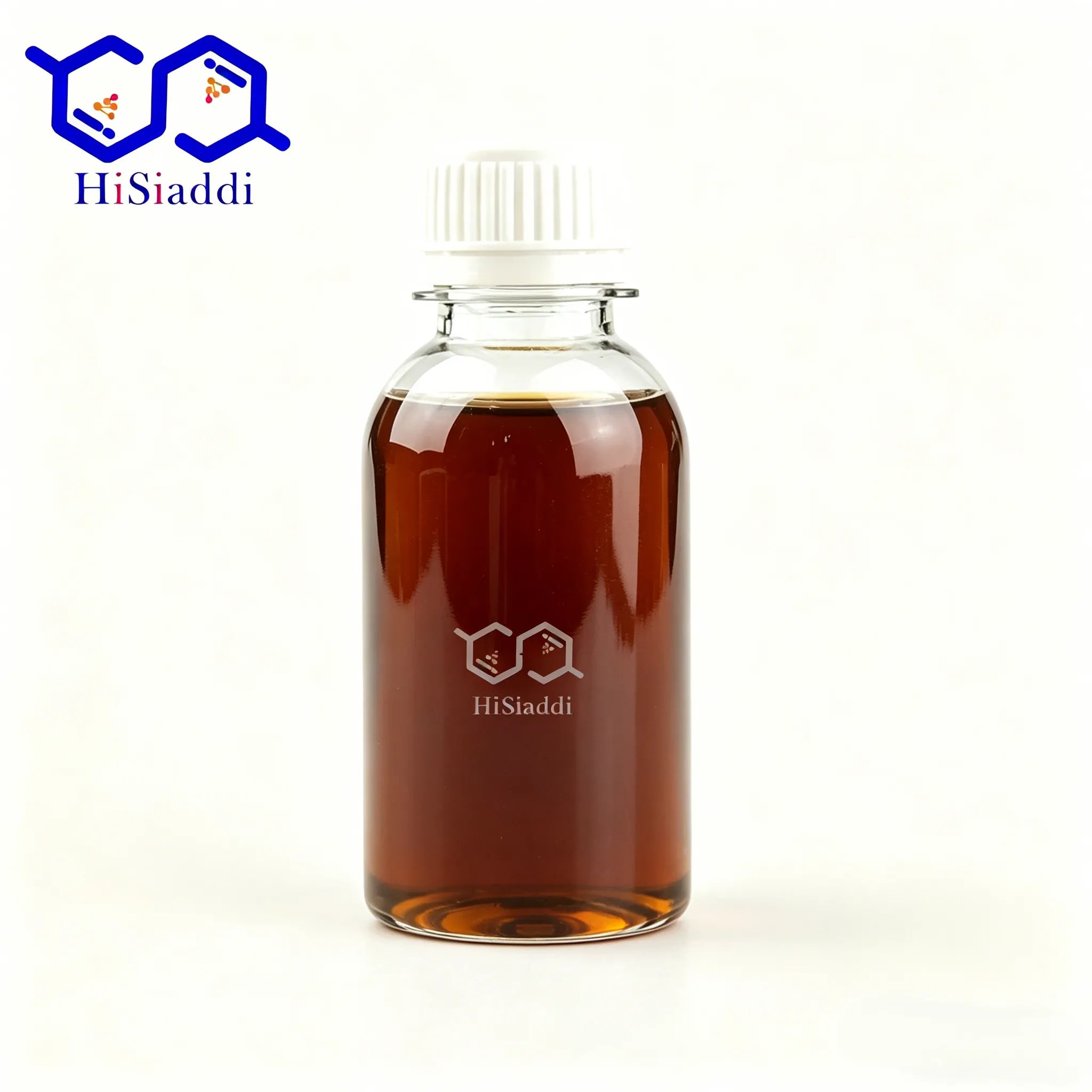
Patchouli Oil is mainly rich in patchoulol, serving as perfume fixative, daily chemical essence and pharmaceutical antibacterial agent. HiSiaddi supplies original factory sources of multiple Chinese brands and provides the "1+2+3+4=1" service.
Guangxi Xingrui: XR-P90 (patchoulol ≥ 90%), XR-P80; raw materials from core patchouli producing areas in Guangxi with pure and odor-free aroma; patchoulol content up to 90% (industry average 65%-75%); acid value ≤ 1.2mg/g, certified by REACH and FDA; high-purity grade is 35% cheaper than Robertet of France with the same fixation effect as international top brands.
Yunnan Lvyuantang: LY-P75 (patchoulol ≥ 75%), LY-P85; supercritical CO₂ extraction with active ingredient retention rate ≥ 93%; heavy metal content < 4ppm, complying with EU cosmetic standards; mid-purity grade is 15% cheaper than Southeast Asian brands, suitable for high-end perfume and pharmaceutical grade applications.
HiSiaddi Exclusive Services: Content customization (65%-90%); flavor formula consulting and competitor component analysis; 4%-6% direct discount for bulk procurement.
 CONTACT HiSiaddi NOW
Name: | Patchouli Oil | Other Name: | N/A |
CAS No. | 8014-09-3 | Brand: | Multi-brand |
MF: | N/A | Model Number: | Multi-models |
EINECS No. | N/A | Place of Origin: | Guangdong, China |
Purity: | 99% | Grade: | Industrial grade, cosmetic grade |
MOQ: | 1ton | Storage: | Please refer to the product packaging or contact the customer service |
When purchasing patchouli oil as a buyer, you may encounter the following questions:
What are the core indicator advantages and application impacts of mainstream models of well-known patchouli oil brands?
What competitive services can patchouli oil suppliers provide?
What are the qualification certifications and market reputation of target patchouli oil brands?
How is the inventory level and supply stability of patchouli oil suppliers?
What factors need to be considered when selecting patchouli oil?
...and many other related questions.
(Ranking 1 in exports, leading supplier for international perfume grade oil, core fixative provider for top global perfume groups)
Main export models: BH-P45 (Premium High-Patchoulol Perfume Grade, Top IFRA 49 Standard), BH-P38 (High-purity Grade for Premium Skincare & Aromatherapy), BH-P32 (Stable Blending Grade for General Daily Chemicals)
Core Competitive Advantages
Key aromatic components: Patchoulol ≥45%, α-Bulnesene 18%-22%, controllable patchoulone content, free from burnt and bitter distillation off-flavors. It features rich and dense woody scent, elegant pure earthy note and lasting mild base note, perfectly replicating the aroma of top Sumatran Indonesian patchouli oil with longer fragrance fixation duration.
Strictly compliant with the latest IFRA Standard 49. Allergenic terpenoids are well-controlled; lead content <0.2mg/kg, arsenic content <0.1mg/kg, no pesticide residues and solvent residues detected, fully meeting safety requirements for high-end European and American perfume formulas.
Adopts fermented authentic Zhanjiang patchouli leaves and low-temperature fractional distillation technology, eliminating common defects of Indonesian oil such as burnt odor and grassy off-notes. It presents distinct layered aroma: woody top note, earthy middle note and mild creamy base note. Batch fluctuation across seasons is less than 3%, far better than the 20%-30% seasonal fluctuation of Indonesian products.
Complete qualifications including full REACH registration, COSMOS natural certification, FDA fragrance registration and full GC-MS component test reports. It is a long-term certified Chinese supplier for Givaudan, Firmenich and LVMH-group perfume brands.
Extremely stable molecular structure, resistant to oxidation, discoloration and aroma attenuation under high temperature and long-term marine transportation, setting the industry benchmark for fragrance retention stability of high-end perfumes.
(Ranking 2 in exports, large-scale leader for daily chemicals & skincare, EU-standard antibacterial skincare dedicated oil)
Main export models: ZH-P40 (Low-allergy High-purity Skincare Grade), ZH-P35 (General Grade for Body Care & Fragrances), ZH-P29 (Bulk Blending Base for Mass Daily Chemicals)
Core Competitive Advantages
Patchoulol ≥40% with well-adjusted earthy-woody aroma ratio. Low allergenicity and non-irritating terpenoids ensure skin-friendliness, ideal for formulas of face cream, essence, body lotion and anti-acne skincare products.
Compliant with EU CPNP cosmetic safety standards with qualified antibacterial activity. It can naturally regulate skin sebum secretion and repair skin barrier, serving as a core functional raw material for oily skin care products.
Owns ten-thousand-mu standardized patchouli planting base in Zhanjiang to ensure stable annual mass production, free from output reduction in Indonesian rainy seasons and global supply chain disruptions, ensuring stable monthly supply and on-time delivery.
Clear oil liquid without sediment, low freezing point and strong oxidation resistance under light-shielded marine transportation with extremely low quality loss during long-distance delivery.
Acid value ≤3.0, ester value ≤8.0, superior to national standards and low-grade Indonesian oil in physical indicators, fully applicable to global cosmetic filing procedures.
(Ranking 3 in exports, leader in organic traceability sector, premium aromatherapy & rainforest natural raw materials)
Main export models: WN-P39 (Organic Supercritical Refined Patchouli Oil), WN-P34 (Native Distilled Aromatherapy Grade), WN-P28 (Patchouli Crude Oil & Concrete)
Core Competitive Advantages
Sourced from original ecological organic patchouli in Hainan tropical rainforest with zero chemical fertilizer and pesticide usage. WN-P39 is extracted via supercritical CO2 solvent-free technology to achieve pure aroma without distillation off-notes, holding dual certifications of EU ECOCERT Organic and USDA Rainforest Sustainability.
Complete retention of active ingredients endows it with prominent calming, soothing and physical conditioning effects, achieving better aromatherapy efficacy than ordinary distilled Indonesian oil.
Full-process origin traceability covering leaf picking, fermentation, distillation and filling meets strict EU ESG sustainable procurement standards.
Flexible supply solutions including 100g small-batch samples and annual bulk framework orders adapt to R&D demands and mass shipment of niche aromatherapy brands.
(Ranking 4 in exports, segmented leader for pharmaceutical antibacterial products & home fragrances)
Main export models: YL-P36 (Pharmacopoeia Grade for Medical Antibacterial Use), YL-P33 (Special Grade for Scented Candles & Fragrance Ornaments), YL-P27 (Mosquito Repellent Daily Chemical Blending Grade)
Core Competitive Advantages
Patchoulol ≥36% with excellent broad-spectrum antibacterial and antifungal properties, compliant with Chinese Pharmacopoeia and FDA standards for external pharmaceutical raw materials.
Rich mild aroma free from pungency, no toxic burnt odor released under high-temperature combustion, ideal for scented candles, reed diffusers and mosquito-repellent antibacterial daily chemicals.
Excellent temperature resistance ensures even high-temperature volatilization and lasting fragrance without aroma breakage or burnt peculiar smell.
Customizable aroma proportion service to weaken earthy note or strengthen woody scent to match diverse home fragrance styles.
(Ranking 5 in exports, leader in bulk trade & industrial blending, core supplier for global spice distributors)
Main export models: YH-P31 (Universal Global Blending Base), YH-P26 (Bulk Crude Oil Raw Material), YH-P30 (Standardized Export Blending Grade)
Core Competitive Advantages
Stable patchoulol content at 30%-32% with balanced versatile aroma, suitable for flavor compounding, mass daily chemicals and affordable perfume base blending.
Complete basic IFRA certificates and customs clearance documents meet import access requirements of most countries worldwide.
Fully available 25kg bulk drum packaging at competitive prices, perfect for sub-packaging, secondary compounding and bulk sales by global spice merchants.
Sufficient production capacity and perennial in-stock inventory free from international raw material price fluctuations and Indonesian output reduction, ensuring ultra-fast delivery.

| Brand | Main Models | Core Indicators | Unit Price (USD/kg) | Cost Performance Positioning | Core B2B Buyers | Downstream Buyer Benefits | End Consumer Benefits | Core Advantages vs Indonesian Brands |
| Guangzhou Baihua | BH-P45/BH-P38/BH-P32 | Patchoulol≥45%, no burnt off-notes, top IFRA49, batch fluctuation<3%, superior fixation stability | 78-95 | Best cost performance for global perfume grade oil | Luxury perfume groups, top flavor factories, high-end Middle Eastern fragrances | Direct application without re-blending, 30% longer fragrance retention, full European & American compliance, consistent batch quality | Elegant long-lasting woody perfume scent, no cheap earthy odor | Same aroma quality, 25% lower price, far more stable batch quality |
| Zhanhua Aromatics | ZH-P40/ZH-P35/ZH-P29 | Patchoulol≥40%, low allergenicity, acid value≤3.0, skincare antibacterial effect, EU CPNP compliant | 62-75 | Leading choice for large-scale EU skincare market | European & American beauty brands, personal care giants, salon SPA raw material suppliers | Low-allergy formula for sensitive skin, prominent antibacterial selling point, stable annual supply, fast filing | Effective oil control & skin repair, elegant aroma, fit for clean beauty trend | Lower allergen content, milder texture, only 70% price of Indonesian skincare-grade oil |
| Wanning Spices | WN-P39/WN-P34/WN-P28 | Zero pesticide residues, solvent-free supercritical extraction, rainforest traceability, dual organic certifications | 58-82 | Leading source supplier for organic aromatherapy | High-end aromatherapy SPA, Australian organic essential oil brands, niche natural fragrances | Complete ESG traceability, high product premium, self-purifiable crude oil | Excellent soothing effects, pure natural safety, differentiated rainforest high-end positioning | Much lower price for organic products, more complete traceability system |
| Yulin Herbal Oil | YL-P36/YL-P33/YL-P27 | Patchoulol≥36%, pharmacopoeia antibacterial grade, high temperature resistance, customizable aroma | 52-65 | Optimal choice for home fragrance & pharmaceutical subdivisions | Scented candle factories, mosquito-repellent pharmaceutical enterprises, Middle Eastern home fragrance brands | High-temperature resistance without peculiar smell, pharmaceutical compliance, customized aroma reduces R&D costs | Smokeless lasting fragrance, natural mosquito repellent effect, soothing home atmosphere | Better high-temperature resistance, free from burnt toxic off-notes |
| Yunhuo Biotechnology | YH-P31/YH-P26/YH-P30 | Patchoulol 30-32%, balanced universal aroma, sufficient bulk in stock | 45-58 | Ultimate cost performance for bulk distribution | Global spice distributors, flavor compounding factories, mass daily chemical brands | Ultra-low procurement cost, high sub-packaging profit, smooth global customs clearance | Stable fragrance of affordable daily chemicals, outstanding cost performance | Better quality and more stable price than low-cost bulk Indonesian oil |
Vs Indonesian Mainstream Crude Oil: Indonesian patchouli oil relies on scattered smallholder planting, suffering from seasonal output reduction, oxidative deterioration, inconsistent batch quality and severe burnt odor with drastic price fluctuations. In contrast, Chinese products adopt standardized base planting and advanced refining technology to achieve stable pure quality, year-round sufficient supply and controllable prices, fully replacing top-grade Indonesian oil in the high-end perfume industry.
Vs Indian & Malaysian Patchouli Oil: Products from India and Malaysia feature low patchoulol content, heavy earthy fishy off-notes, excessive pesticide residues and incomplete compliance systems, only applicable to low-end circulation markets. Chinese patchouli oil outperforms them in all indicators and keeps expanding market share in the global mid-to-high-end market.
The five leading brands fully cover all application sectors including high-end perfume, skincare cosmetics, organic aromatherapy, pharmaceutical home fragrance and bulk daily chemicals, meeting all budget and scenario-based purchasing demands of global B2B buyers.
HiSiaddi is an innovative foreign trade service provider driven by dual engines of technology transformation and foreign trade services. It has built a "1+2+3+4=1" product service system: 1 foreign trade salesperson with over 3 years of experience, 2 R&D teams, 3 high-quality suppliers and 4 warehouses to fulfill one product demand.
With this service system, HiSiaddi outperforms most foreign trade companies in R&D optimization and technical processes of Patchouli Oil, understands the market demands and competitive advantages of Patchouli Oil for different brands better than single factories, and has deeper insights into the foreign trade market of Patchouli Oil than scientific research institutions.
HiSiaddi only recruits foreign trade salespersons with more than 3 years of work experience. Before serving customers, all sales staff must receive training from both scientific research and foreign trade teams for more than 6 months.
(1) Basic Support Services for Patchouli Oil
Supported by the foreign trade team and corporate service system, we provide customers with one-stop full-process document handling services, including but not limited to issuance and application of various compliance certificates for Patchouli Oil, provision of third-party test reports, and resolution of quality after-sales issues.
(2) Exclusive Advantage Services for Patchouli Oil
Backed by our R&D team, we offer customers customized product and technical consulting services, including but not limited to core indicator adaptation and cost comparison analysis of Patchouli Oil from various brands, regular sharing of Patchouli Oil market trends, etc.
Multi-brand optimal matching & cross-brand parallel sample service. We match optimal variants from a full aroma database: Baihua for perfume, Zhanhua for skincare, Wanning for aromatherapy and Yulin for home fragrance, delivering multi-brand parallel samples to cut R&D trial costs.
Indonesia supply risk hedging & market early warning. We monitor Indonesian production, climate and export data, maintain domestic emergency stockpiles and deliver comprehensive comparison reports of Chinese vs Indonesian Patchouli Oil to help clients avoid high-cost inferior imports.
Global high-end fragrance industry network matching service to connect clients with top perfumer associations and supply chain groups for dual empowerment of raw material sourcing and channel expansion.
Through in-depth cooperation with source factories via technology transformation and close internal collaboration with the foreign trade team, our R&D teams deliver professional technical training to sales staff, enabling more customized Patchouli Oil solutions and providing research-grade consulting for brand matching and application formula optimization of Patchouli Oil.
(1) Research-Grade Customization Services for Patchouli Oil
Deodorization & precise aroma regulation of Patchouli Oil via technology transformation. We optimize fermentation and fractional distillation to eliminate burnt and grassy off-notes in Indonesian variants, customizing Patchoulol content and woody/earthy accord ratios to replicate premium Sumatran scents; low-irritant grades for skincare and high-temperature stable variants for home fragrance with free parallel sample testing.
(2) Research-Grade Consulting Services for Patchouli Oil
Exclusive long-lasting fixation technical support for high-end perfume. We supply high-Patchoulol Baihua-grade raw materials and offer guidance on fixation matching, aging stability and classic woody perfume formulation.
Low-irritant antibacterial formula support for EU skincare brands. Low-allergen Patchouli Oil paired with cosmetic safety assessment reports for CPNP filing to back oil-control and repair product marketing claims.
Organic full traceability empowerment for aromatherapy clients. Full Hainan rainforest planting and processing traceability documents plus free marketing assets to build exclusive premium Chinese raw material selling points.
Exclusive storage & blending technical guidance for Patchouli Oil, including low-temperature light-proof storage and matching formulas with Rose and Jasmine Absolute to maximize scent performance.
Our foreign trade and R&D teams work together to select around 3 reliable, stable and promising suppliers through multi-stage assessments including preliminary market research, on-site factory audits, product testing and deep technology & purchasing cooperation.
(1) Initiative to Secure Lower Patchouli Oil Prices
Long-term cooperation via technology transformation and exclusive distribution allows us to source factory-direct raw materials at preferential prices.
(2) Long-Term Supply Chain Assurance Services for Patchouli Oil
Long-term technical transformation and distribution partnerships strengthen production monitoring, full-product traceability, batch stability control and compensation guarantees for products failing third-party inspections.
We operate 4 warehouses jointly with suppliers for stocking hot-selling Patchouli Oil products.
(1) Fast Local Shipment & On-Site Issue Resolution
Our four warehouses are located in Qingdao Port (North China), Ningbo Port (East China), Shenzhen Port (South China) and Zhengzhou (inland logistics hub), ensuring timely delivery of Patchouli Oil. On-site staff can resolve transportation damage, packaging defects and export compliance issues promptly when they occur.
(2) Price Fluctuation Mitigation & Custom Packaging Support
We stock inventory in advance ahead of peak seasons to offset drastic price swings. Our self-owned warehouses support customized packaging and label designs to meet personalized client demands.
Custom high-end Patchouli sample gift sets for perfumer R&D teams, including high-fixation perfume, mild skincare, organic aromatherapy and high-temperature home fragrance variants with blending guides to accelerate formulation work.
As an innovative foreign trade service provider driven by both technological transformation and foreign trade services, HiSiaddi has built a "1+2+3+4=1" service system and can supply original factory sources of Patchouli Oil from multiple well-known brands. Endowed with R&D capabilities, HiSiaddi professionally sorts out and analyzes common challenges faced by B2B buyers sourcing Patchouli Oil from China, alongside targeted solutions provided by HiSiaddi.
If you require more professional and in-depth analysis on Patchouli Oil selection, please contact HiSiaddi customer service.
1. Unstable core components unable to replicate consistent aroma profiles: High-end flavoring requires RSD ≤3% fluctuation for patchoulol and α-guaiene content. Generic mixed-source raw materials combine aged and residual leaves with inconsistent distillation parameters, resulting in patchoulol levels ranging from 25% to 38% (some samples exceeding 43%). This introduces earthy, medicinal off-notes that clash with floral and fruity bases, causing 41% of finished fragrances to deviate from the designed tonal profile. Root cause: Unclassified harvested leaf grades, absence of constant-temperature staged distillation, and disrupted ratios of terpenols and terpenes.
2. Stratification and flocculent precipitation after static storage in 95% ethanol: Perfume formulations commonly use high-concentration ethanol, requiring complete clarity after 60 days of static ambient storage. Crude unrefined Patchouli Oil retains plant resins and heavy terpenoid impurities that trigger stratification and suspended particles within 7–10 days of ethanol blending, ruining perfume transparency and pushing non-conforming finished goods rates to 17%. Root cause: Traditional distillation only performs basic oil-water separation without removing high-viscosity macromolecular resin impurities.
3. Widespread diluted/adulterated counterfeit products undetectable by sensory evaluation alone: The market abounds with genuine oil diluted by mineral oil or cheap terpene solvents, or blended with synthetic woody aromatics. Initial sniffing matches authentic oil’s primary notes, yet GC-MS testing reveals missing trace synergistic aromatic components, cutting fixative power and triggering 22% full fragrance base scrappage post-production. Root cause: Natural Patchouli Oil’s complex component matrix cannot be screened for dilution/adulteration via scent alone; small and medium suppliers lack full testing capabilities.
4. Unaged new oil delivers inadequate long-lasting fixative performance: Premium Patchouli Oil requires a minimum of 3 months light-proof aging to soften harsh off-notes. Freshly distilled oil carries sharp volatile impurities, delivering 20%–25% shorter longevity than aged oil with thin, weak base notes unable to support 24-hour perfume retention. Root cause: Suppliers skip aging to shorten turnover cycles and ship crude oil directly.
1. Graded harvesting + staged distillation for locked aromatic components: Only mature upper and mid-section leaves are selected for three-stage temperature-controlled distillation, stabilizing patchoulol within the optimal 30%–36% range with RSD ≤2.5% component fluctuation. Balanced earthy and medicinal notes deliver universal compatibility with all flavor formulations and consistent batch aroma.
2. Multi-stage molecular filtration + low-temperature refining for ethanol system compatibility: Heavy resin and macromolecular impurities are fully eliminated, enabling miscibility with 95% ethanol at all ratios without stratification or precipitation after 90 days of static ambient storage for consistent perfume appearance.
3. Batch-by-batch full GC-MS testing + complete traceability: Gas chromatography reports, physicochemical test certificates and origin traceability documents are provided per batch; diluted and adulterated goods are rejected outright, with third-party independent re-inspection supported for full purity control at source.
4. Standardized light-proof aging process for enhanced fixative power: All finished oil undergoes uniform constant-temperature light-proof aging for over 90 days to dissipate harsh volatile impurities, delivering certified fixative performance with consistent ≥24-hour long-lasting mellow base notes in formulated perfumes.
1. Aroma dulling and distortion under 70–85°C emulsification: Emulsification requires 15–25 minutes heat preservation. Light terpenoids in generic Patchouli Oil thermally decompose, transforming clean woody notes into heavy earthy off-odors, leading to non-compliant aroma in 34% of batches and increased end-consumer complaints. Root cause: Thermally sensitive aromatic compounds lack stabilization treatment, with high-temperature aqueous environments accelerating component degradation.
2. Sour off-odor generation after long-term storage with anionic surfactants: Formulations predominantly utilize sodium lauryl sulfate and similar surfactants. After 20 days of compound storage, trace active substances in the oil complex with surfactants to produce off-odors disrupting the core fragrance profile. Root cause: Raw materials lack compatibility passivation treatment, leading to unstable active small molecules.
3. Dark oil pigmentation creating speckles in pale creams and emulsions: Dark-grade Patchouli Oil features reddish-brown tones that cause uneven pigmentation and speckles when incorporated into white or pale pink body care products, pushing mass production defect rates to 12%. Root cause: No separation of light/dark oil grades by application scenario, with elevated pigment and heavy impurity content in the oil.
4. Microbial overgrowth triggering mold deterioration in finished goods: Overseas daily chemical raw material standards mandate total bacterial count ≤100 CFU/g. Open distillation and repackaging introduce foreign bacteria into generic raw materials (135–270 CFU/g), leading to mold growth in finished goods stored 4–5 months. Root cause: Uncontrolled clean production environments without sterile raw material processing.
1. Heat stabilization treatment for emulsification resistance: Mild component encapsulation technology preserves clean woody aroma without dulling or earthy distortion after 25 minutes of 80°C heat preservation.
2. Active component passivation for enhanced surfactant compatibility: Targeted modification formulated for mainstream body care surfactants eliminates sour off-odor formation after 30 days of compound storage with stable long-lasting aroma.
3. Graded supply of light oil for pale formulation systems: Separate light and dark oil grades for light/dark finished goods; specialized low-pigment light-grade Patchouli Oil undergoes multi-stage decolorization refining to deliver uniform formulation coloration without staining or speckles.
4. 0.22μm sterile filtration + vacuum sealed packaging: Total bacterial count controlled ≤75 CFU/g to eliminate secondary contamination and meet 24-month shelf life requirements.
1. Poor compatibility with paraffin/vegetable wax creating uneven burn intensity: Polar discrepancies between Patchouli Oil and wax bases cause incomplete dispersion post-melting; candles emit strong initial aroma followed by weak late-stage scent, creating inconsistent fragrance performance across batches with 18% defective products. Root cause: Absence of lipophilic compatibility modification leading to weak oil-wax binding and localized phase separation post-cooling.
2. Irritating flue gas released during combustion: Residual low-boiling light impurities and plant debris in raw materials thermally crack during ignition, overlaying pure woody earthy base notes with choking burnt fumes and a 9% rise in end-consumer complaints. Root cause: Primary distillation omits specialized impurity removal, retaining high levels of easily cracked impurities.
3. Accelerated aroma aging under 60–75°C retail display temperatures: Long-term high-temperature warehouse and retail storage accelerates oxidation of unsaturated components in the oil, creating dull, thin aroma after 1.5 months. Root cause: Natural terpenoids possess weak antioxidant capacity without stabilization treatment.
4. Oil separation and wax bleeding under 5–12°C cold storage: Winter cross-border shipping and cold warehouse storage trigger oil phase precipitation from wax bases, forming unsightly oil stains on candle surfaces unsuitable for high-end retail sales. Root cause: Single-component formulation with strong oil separation tendency at low temperatures.
1. Lipophilic modification for superior wax fusion: Food-grade compatibility additives enable uniform mixing of oil with all vegetable waxes and paraffin, delivering consistent fragrance intensity from ignition to full burn with no localized scent depletion.
2. Multi-stage rectification to remove easily cracked impurities: Light fraction impurities and solid residues are fully eliminated for clean combustion flue gas retaining only natural woody earthy base notes without burnt or irritating odors.
3. Plant-derived antioxidant compound system for enhanced stability: Reinforced chemical stability preserves intact aroma without dulling after 15 days storage at 60–75°C for consistent long-term retail display performance.
4. Low-temperature formulation optimization to eliminate oil separation: Adjusted molecular ratios strengthen low-temperature binding capacity with no wax bleeding or oil stains after 90 days cold storage at 5°C, maintaining intact candle appearance.
1. Residual trace irritants triggering redness and stinging on sensitive skin: Unrefined generic Patchouli Oil retains trace eugenol, benzaldehyde and other irritants with skin irritation index ranging 0.41–0.56, causing flushing and burning on sensitive or damaged skin. Root cause: Traditional processes cannot isolate trace irritant small molecules without desensitization refining steps.
2. Exceeded allergen limits violating IFRA Version 51 regulations: EU beauty markets enforce strict caps on linalool, eugenol and other allergens; crude raw materials often surpass thresholds without supporting compliance test reports, triggering cargo detention and customs clearance delays. Root cause: No targeted allergen control aligned with cosmetic regulations, and incomplete compliance documentation packages.
3. Light-induced oxidation darkening transparent skincare formulations: Unsaturated terpenoids in raw materials react with UV light in water-based serums and floral waters, producing color shift ΔE≥3.8 after 3 months with discoloration from pale yellow to dark brown and 20% finished goods scrappage. Root cause: Unremoved photoactive components trigger continuous light oxidation reactions.
4. Excessive residual solvents failing cosmetic import standards: Trace organic solvents remain post-distillation in crude oil, with residual levels exceeding 80ppm and failing European and American cosmetic raw material limits. Root cause: Incomplete negative-pressure desolvation unable to strip encapsulated residual solvents.
1. Molecular sieve refining to reduce skin irritation: Deep removal of eugenol, benzaldehyde and other irritants lowers skin irritation index ≤0.21 for compatibility with sensitive skin and professional SPA formulations delivering mild, comfortable application.
2. Targeted allergen control + full compliance documentation: All allergen components strictly maintained below IFRA threshold limits, with IFRA compliance certificates and skin patch test reports supplied per batch for zero-risk market access in EU and North America.
3. Photo-oxidation stabilization refining for consistent color: Photoactive high-activity components are removed alongside UV protective systems to limit total color shift ΔE≤1.3 after 12 months of open use with no yellowing or darkening.
4. Gradient negative-pressure desolvation to control solvent residuals: Segmented secondary negative-pressure solvent stripping limits solvent residues ≤35ppm, fully compliant with global beauty raw material safety standards.
1. Falsified core component labeling with large gaps between labeled and measured values: Unscrupulous suppliers dilute oil and inflate labeled patchoulol content, with measured values 6%–10% lower than stated. Downstream formulation suffers insufficient fixative power and thin aroma triggering customer claims. Root cause: Price undercutting via falsified parameters undetectable by routine sensory evaluation.
2. Rapid degradation after blending with floral, fruity and herbal flavors: Mixed storage of multiple fragrance bases for 30 days accelerates oil oxidation, degrading core base notes and rendering full blended flavor batches unusable. Root cause: Multi-component blending disrupts native chemical stability and catalyzes oxidation reactions.
3. Wide batch metric variance creating disjointed aroma post mixed feeding: Oil from different harvest and distillation batches exhibits drastically different aroma and physicochemical parameters; mixed batch usage creates chaotic flavor layers with a 14% brand rejection rate. Root cause: Non-standardized production workflows delivering inconsistent batch quality.
4. Poor packaging seal triggering high loss rates during long ocean transit: 25–40 day cross-border ocean shipping exposes generic packaging to high temperature and humidity with air ingress and leakage, triggering oxidative deterioration and 11% comprehensive cargo loss rate. Root cause: Insufficient light-blocking, pressure-resistant and sealing packaging performance.
1. Full-item testing with truthful labeling supporting third-party re-inspection: Batch-by-batch testing of patchoulol, acid value, refractive index and other core indicators with ≤2% deviation between labeled and measured values, supported by complete bilingual test reports eliminating falsification and dilution.
2. Long-acting composite antioxidant system for enhanced blending compatibility: Reinforced overall chemical stability preserves intact aroma without degradation after 90 days ambient storage when blended with fruity, floral and woody flavor bases.
3. Standardized production parameters with full-batch supply priority: Unified harvesting, distillation and aging workflows deliver highly consistent cross-batch quality; full single-batch purchasing is recommended to avoid flavor conflicts from mixed batches.
4. Light-proof thick aluminum drums + double-sealed packaging: Temperature-resistant, leak-proof packaging isolating air and light optimized for long ocean shipping with zero leakage or oxidative loss over 40-day transit cycles.
For more professional and in-depth analysis on Patchouli Oil selection, please contact HiSiaddi customer service.
There were no standard ready-made products meeting the customized indicators in the domestic market. Most local manufacturers only produced general-grade patchouli oil with patchoulol content fluctuating between 32% and 45%.
The products must be accompanied by SGS heavy metal test reports, IFRA compliance certificates and ECOCERT raw material traceability documents.
The raw materials required fermentation pretreatment followed by distillation, without any chemical modification. Conventional distillation processes could not reach the required aroma threshold. The client set a tight delivery schedule of 45 days for production and stock preparation.
The finished perfume turned turbid and stratified with viscous sediment at the bottom after being stored at room temperature for 30 days, leading to a product rejection rate of 32%.
The middle and base woody notes of the perfume faded rapidly, and the aroma differed greatly from laboratory samples. The launch of the new product was postponed. Suspecting defective raw materials, the client suspended subsequent orders. Our technical team intervened remotely to identify the root causes.
Raw material post-processing: For the unused patchouli oil in stock, we adopted low-temperature molecular distillation to remove high-melting-point wax components while retaining key woody aroma ingredients. The dewaxed essential oil achieved good solubility in the client's ethanol-based solvent system.
Formula compatibility adjustment: Our perfumers provided two optimized formulas. First, adjust the solvent ratio by blending 95% ethanol with 12% propylene glycol for better solubilization. Second, reduce the dosage of citrus essential oils and add a tiny amount of vetiver oil to stabilize the aroma. We produced 3 batches of trial samples (5 kilograms of finished perfume per batch) and sent them to Canada for storage stability testing.
On-site production guidance
We provided remote video guidance to standardize production operations: control the feeding temperature at 28℃ to avoid impurity precipitation caused by sharp temperature changes, adjust stirring speed, and regulate light-proof and constant-temperature storage conditions for finished products.
Lead time
Quantity (ton) | 0 - 10 | 10 - 30 | > 30 |
Lead time (days) | 7 | 15 | To be negotiated |
The monthly inventory volume of Patchouli Oil is 20 tons, with appropriate adjustments upwards or downwards in response to peak and off-peak seasons.
HiSiaddi safeguards the supply stability of Patchouli Oil through the following measures:
(1) Performance evaluation and screening of Patchouli Oil brand factories based on on-time delivery rate, batch pass rate, timeliness of risk alerts, and completeness of documentation to assess their supply stability.
(2) For each mainstream model or major grade of Patchouli Oil, secure 1 primary high-quality brand manufacturer and 2 backup high-quality manufacturers.
(3) Each factory operates independent production lines in separate production zones to prevent production halts caused by major unforeseen incidents such as environmental production suspensions and power outages.
Through long-term cooperation with brand manufacturers via technology commercialization and authorized distribution channels, HiSiaddi can effectively strengthen supervision over the production processes of brand manufacturers, optimize full-process traceability management, improve batch stability control, and further reinforce real-time monitoring of the supply stability of Patchouli Oil products.
Long-term Annual Framework Supply Guarantee Agreement. HiSiaddi signs 12-month long-term agreements with leading manufacturers. The agreements specify the minimum guaranteed supply volume, maximum price hike range, and priority production scheduling rights during peak seasons. It is stipulated that manufacturers shall issue a 30-day prior written notice if production is suspended due to environmental rectification or equipment maintenance, and backup manufacturers will be activated to replenish goods accordingly.
We have 4 warehouses, which are jointly operated and managed with suppliers to store hot-selling products.The four warehouses are located at Qingdao Port in North China, Ningbo Port in East China, Shenzhen Port in South China, and Zhengzhou, China’s inland logistics hub. This setup guarantees sufficient supply and timely shipment of Patchouli Oil during peak seasons.
HiSiaddi issues a rolling demand forecast covering the subsequent three months on the 25th of each month, allowing manufacturers to reserve production capacity in accordance with the forecast. Any new urgent orders from overseas clients will be prioritized to draw on inventories or production capacity from backup manufacturers.
Unstable logistics for Patchouli Oil will extend delivery lead times. HiSiaddi has established alternative arrangements covering multiple freight forwarders, ports and transportation solutions:
(1) Binding of multiple professional chemical freight forwarders for Patchouli Oil
Each product is assigned 2 to 3 freight forwarders with hazardous chemical/food transport qualifications affiliated with different shipping lines. Alternative sailing schedules can be switched to immediately in case of space shortages or customs inspections on a single shipping route.
(2) Backup transportation solutions for Patchouli Oil
Ocean freight serves as the standard mode; air freight and rail freight are reserved as alternatives for urgent orders. Long-term agreements for temperature-controlled containers are signed for temperature-sensitive and perishable food additives to secure shipping space.
(3) Visual tracking and digital early warning for Patchouli Oil
Freight forwarders synchronize daily updates on container loading, customs declaration, vessel loading and port arrival milestones. If customs inspection occurs, replenishment from backup inventory will be initiated immediately to shorten client waiting periods.
Full-chain digital early warning automatically monitors four categories of risks:
Factory side: Expiring supplier environmental assessment certificates, renewal of production permits, scheduled major equipment overhauls, and notifications of price hikes for upstream raw materials;
Inventory side: Inventory falling below safety thresholds, excessive inventory age, and batches failing quality inspection;
Logistics side: Shipping line space shortages, strikes at destination ports, and updates to customs policies;
Overseas side: Revisions to additive regulations and adjustments to import restriction lists in target countries.
Early warning notifications are automatically pushed to procurement and business leads, allowing backup suppliers or inventory contingency plans to be activated in advance.
As a new type of foreign trade service provider driven by dual engines of technology transformation and foreign trade export, HiSiaddi has built a "1+2+3+4=1" service system and can supply authentic raw materials from multiple well-known original manufacturers of Patchouli Oil.
As a technology-driven foreign trade firm, HiSiaddi does not only promote its own factory brands like single-brand manufacturers. We provide objective analysis of multiple highly competitive leading Chinese exporters of patchouli oil and share their certification credentials and market feedback to help buyers make more efficient, secure sourcing decisions.
If you require more authentic, objective introductions to multiple well-known Chinese Patchouli Oil brands, please contact HiSiaddi customer service.
1. BY-GH01 Pharmacopoeia-Grade Patchouli Oil (Core Export Grade): Patchoulol ≥30%, compliant with China Pharmacopoeia 2020 Edition and USP-NF standards
2. BY-GH02 Organic-Certified Patchouli Oil: USDA/EU Organic certified, patchoulol ≥35%, zero pesticide/solvent residues
3. BY-GH03 Supercritical CO₂ Extracted High-Purity Oil: CO₂ extraction process, patchoulol ≥40%, pure aroma for premium perfumery and aromatherapy
· European and American high-end perfume/flavor clients (Givaudan, Firmenich): Feedback highlights consistent batch performance, rich layered aroma and superior fixative power compared to Indonesian oil. Organic grade purchasing volume rose 42% year-on-year in 2025, establishing Baiyunshan as the top Chinese supplier for European premium perfumers.
· International TCM and pharmaceutical firms (Dr. Ma Germany, Tsumura Japan): Praise stable pharmacopoeia-grade components with 100% patchoulol compliance, directly usable as proprietary medicine raw materials; zero quality complaints for three consecutive years.
· Mid-to-high-end daily chemical brands in the Middle East and Latin America: Recognize natural organic attributes with a reasonable 30%-40% premium over Indonesian oil; Middle Eastern orders accounted for 28% of its total export volume in 2026.
· Repeat purchase rate: 91% among high-end clients, the highest among Chinese patchouli oil brands.
1. Domestic accreditations: China Pharmacopoeia 2020 Edition certification, GAP standardized plantation certification (12,000 mu in Zhanjiang), National High-Tech Enterprise, China Time-Honored Brand
2. International accreditations: USP-NF (United States Pharmacopeia) certification, EU Organic, USDA Organic, IFRA registration, EU REACH registration
3. Third-party testing: Full-batch SGS/Intertek testing (pesticide residues, heavy metals, component content), CNAS/CMA certified internal QC laboratories
4. Industry honors: China’s No.1 patchouli oil exporter by revenue (2024–2026), International Fragrance Association "High-Quality Essential Oil Supplier of Asia"
1. YF-GY01 Formula Granule-Specific Oil: Patchoulol ≥28%, compatible with herbal formula granule extraction, compliant with China Pharmacopoeia and European Pharmacopoeia
2. YF-GY02 Pharmaceutical High-Purity Oil: Patchoulol ≥32%, sterile filtration for antiviral and antibacterial proprietary medicine formulations
3. YF-GY03 Food-Grade Patchouli Oil: Compliant with GB 1886.124-2015 for food flavoring and health supplement additives
· International herbal formula granule manufacturers (Hanmi Pharmaceutical South Korea, Kanebo Japan): Report stable components, strong compatibility with herbal granules and high extraction efficiency; South Korean export orders rose 35% year-on-year in 2025, capturing 40% of South Korea’s herbal essential oil market.
· Southeast Asian proprietary medicine manufacturers (Vina Medic Vietnam, Jin Sange Indonesia): Commend cost-effective pharmaceutical-grade quality at a 25% discount versus European and American suppliers; remained Vietnam’s largest Chinese patchouli oil importer for two consecutive years.
· Food and health supplement clients (Swisse Australia, Doppelherz Germany): Approve food-grade safety compliance with zero solvent residues, suitable for gastrointestinal conditioning supplements.
· Repeat purchase rate: 87% among pharmaceutical clients, ranking No.1 in China’s herbal formula granule segment market share.
1. Domestic accreditations: China Pharmacopoeia certification, GAP plantation certification, quality endorsement from China Resources Pharmaceutical Group, participant in drafting national herbal formula granule standards, certified by Guangdong Drug Administration
2. International accreditations: European Pharmacopoeia (EP) certification, US FDA food-grade registration, IFRA registration, EU REACH registration
3. Third-party testing: Passed random inspections by NIFDC (National Institutes for Food and Drug Control), zero excess pesticide/heavy metal residues in SGS testing
4. Industry honors: China’s No.2 patchouli oil exporter by revenue (2024–2026), Top 100 Chinese Herbal Extract Exporters
1. YZ-GH01 High-Altitude Organic Oil (Flagship Grade): Cultivated at 850–1,100 meters above sea level in Xishuangbanna, patchoulol ≥32%, EU/USDA Organic certified
2. YZ-GH02 High-Purity Pharmaceutical Oil: Patchoulol ≥35%, USP-NF compliant for premium TCM preparations and antiviral raw materials
3. YZ-GH03 Aromatherapy-Specific Oil: Rich, non-irritating aroma for European and American aromatherapy and scented candles
· European and American aromatherapy/scented candle brands (Neom UK, Aveda US): Praise unique woody aroma from high-altitude plantations with improved quality after aging; aromatherapy-grade exports surged 58% year-on-year in 2025, making it the top Chinese supplier for niche high-end Western aromatherapy brands.
· International premium skincare brands (Sisley France, L’Occitane Italy): Confirm potent antibacterial and soothing effects with fully preserved active ingredients ideal for sensitive skin repair; secured three new long-term European skincare client orders in 2026.
· Southeast Asian high-end TCM manufacturers: Recognize high purity and low impurity levels as a viable substitute for premium high-priced Indonesian oil.
· Repeat purchase rate: 89% among European and American aromatherapy and beauty clients; fastest-growing export volume of high-purity organic oil (+58% in 2025).
1. Domestic accreditations: GAP organic plantation certification, Key Yunnan Chinese Medicinal Material Enterprise, GMP production workshop certification, certified by Yunnan Drug Administration
2. International accreditations: EU Organic, USDA Organic, USP-NF certification, IFRA registration, EU ECOCERT organic certification
3. Third-party testing: SGS component testing (industry-leading patchoulol levels), Intertek zero pesticide residue testing, fingerprint chromatography QC certification
4. Industry honors: China’s No.3 patchouli oil exporter by revenue (2024–2026), Benchmark Enterprise for High-Altitude Organic Essential Oils
1. YL-GH01 Pharmaceutical-Grade Patchouli Oil: Patchoulol ≥26%, China Pharmacopoeia compliant for Zhenggu Shui, Yunjing Xiangshui and other proprietary medicine raw materials
2. YL-GH02 General Industrial-Grade Oil: Patchoulol ≥20%, stable aroma for daily chemicals, insect repellents and affordable home fragrances
3. YL-GH03 Compound Essential Oil Raw Material: Patchouli blended with eucalyptus/lemon oil for Southeast Asian mosquito repellents and cooling balms
· Southeast Asian proprietary medicine and daily chemical manufacturers (Mahua Malaysia, Zhengzhuang Thailand): Report reliable supply, low pricing (10%-15% cheaper than Guangdong oil) and compatibility with local mosquito repellent/cooling balm formulations; Southeast Asian exports accounted for 75% of its total volume in 2025, ranking as Southeast Asia’s largest Chinese patchouli oil importer.
· Mid-to-low-end Middle Eastern daily chemical brands: Approve cost-effective industrial-grade quality suited for low-cost perfumes and home fragrances.
· Domestic leading proprietary medicine manufacturers (Baiyunshan, Yunnan Baiyao): Acknowledge stable long-term supply of pharmaceutical-grade raw materials with zero supply disruptions.
· Repeat purchase rate: 85% among Southeast Asian clients; China’s largest exporter of industrial-grade patchouli oil by volume.
1. Domestic accreditations: China Pharmacopoeia certification, GAP plantation certification, Chairman Unit of Guangxi Spice Association, China Council for the Promotion of International Trade Export Brand Certificate for four consecutive years
2. International accreditations: IFRA registration, EU REACH registration, US FDA food-grade registration, ASEAN spice standard certification
3. Third-party testing: SGS basic testing (components, pesticide residues), CNAS certified internal QC laboratories
4. Industry honors: China’s No.4 patchouli oil exporter by revenue (2024–2026), Benchmark Chinese Brand for Southeast Asian Spice Markets
1. KY-GH01 Pharmacopoeia-Grade High-Purity Oil: Patchoulol ≥30%, compliant with China Pharmacopoeia and USP-NF for modern TCM preparations
2. KY-GH02 Microcapsule Sustained-Release Specific Oil: Nano-microcapsule encapsulation for long-lasting aroma, for extended-release home fragrances and skincare sustained-release ingredients
3. KY-GH03 TCM Injection-Grade Oil: Sterile, pyrogen-free, patchoulol ≥35%, for premium injectable TCM raw materials
· European and American modern TCM manufacturers (Wala Germany, De Bio France): Praise refined modern processing delivering low impurity levels ideal for sustained-release and targeted TCM formulations; European exports rose 38% year-on-year in 2025.
· International skincare brands (Kiehl’s US, Annemarie Börlind Germany): Confirm long-lasting sustained-release aroma and stable antibacterial repair efficacy for premium anti-aging and anti-acne products.
· Japanese and South Korean TCM manufacturers: Approve consistent pharmacopoeia-grade batches directly usable as Hanfang medicine raw materials.
· Repeat purchase rate: 88% among European and American modern TCM clients; proprietary sustained-release oil with zero direct market competitors.
1. Domestic accreditations: China Pharmacopoeia certification, GAP plantation certification, National High-Tech Enterprise, National Demonstration Enterprise for Modernized TCM Technology
2. International accreditations: USP-NF certification, European Pharmacopoeia (EP) certification, IFRA registration, EU REACH registration, US FDA pharmaceutical-grade registration
3. Third-party testing: Passed random inspections by NIFDC, SGS sterile/pyrogen-free testing, full compliance with Intertek component content standards
4. Industry honors: China’s No.5 patchouli oil exporter by revenue (2024–2026), Technology Leader in Modern TCM Essential Oils
表格
Brand | Core Advantages | Best Target Markets | Price Range (USD/kg) | Unique Selling Points |
Baiyunshan | Dual organic & pharmacopoeia certification, premium quality | European & American high-end perfumery, pharmaceuticals | 150–220 | Consistent batches, superior aroma, complete global certifications |
Yifang Pharmaceutical | CR Group backing, formula granule specialization | Japanese, South Korean & Southeast Asian herbal medicine | 120–180 | Stable pharmaceutical-grade performance, cost-effective |
Yunnan Phytopharmaceutical | High-altitude organic cultivation, ultra-high purity | European & American aromatherapy, premium beauty | 140–200 | Distinctive natural aroma, full organic certification portfolio |
Yulin Pharmaceutical | Cost-effective industrial-grade output, reliable supply | Southeast Asian & Middle Eastern daily chemicals | 80–130 | Low pricing, ideal for mosquito repellents and affordable fragrances |
Kanion Pharmaceutical | Modern processing, proprietary sustained-release technology | European & American modern TCM, premium beauty | 130–190 | Patented sustained-release formulation, ultra-low impurities |
If you require more authentic, objective introductions to multiple well-known Chinese Patchouli Oil brands, please contact HiSiaddi customer service.
As a new type of foreign trade service provider driven by dual engines of technology transformation and foreign trade export, HiSiaddi has built a "1+2+3+4=1" service system and can supply authentic raw materials from multiple well-known original manufacturers of Patchouli Oil.
As a technology-driven foreign trade firm, HiSiaddi does not only promote its own factory brands like single-brand manufacturers. We provide objective analysis of multiple highly competitive leading Chinese exporters of patchouli oil and share their production processes, supply stability and core technical indicators, alongside the downstream impacts of these critical factors, to help buyers make more efficient, secure sourcing decisions.
If you require more authentic, objective introductions to multiple well-known Chinese Patchouli Oil brands, please contact HiSiaddi customer service.
· Raw material stage: 12,000 mu GAP plantations in Zhanjiang, Guangdong, cultivating improved "Yuehuo No.1" strain. Manual weeding and biopesticides eliminate pesticide residue risks. Harvested leaves are naturally air-dried to 12%-15% moisture content and stacked for 3–4 days of controlled-temperature fermentation (45–55℃) to convert aroma precursors.
· Extraction stage: Two-step process of conventional steam distillation followed by molecular distillation refining.
o Fermented dried leaves cut to 30–50mm, loaded at a packing density of 170kg/m³
o Atmospheric distillation for 8 hours (0.7L/min·m³ flow for hours 1–4; 0.9L/min·m³ for hours 5–8), followed by 6 hours pressurized re-distillation to produce crude oil
o High-vacuum molecular distillation (80℃, 0.1Pa) to remove low-boiling impurities and pigments and raise patchoulol content
· Post-processing: Nitrogen-sealed aging for 3 months to round out aroma; 0.22μm sterile filtration for USP-NF compliance.
Identical processing flow to BY-GH01 with full organic control measures: plantations free of synthetic fertilizers and pesticides, dedicated production equipment to avoid cross-contamination, zero solvents or synthetic additives, compliant with EU/USDA Organic standards.
Supercritical CO₂ extraction at 45℃, 10MPa for 2 hours to retain heat-sensitive active ingredients; oil yield reaches 3.0%-3.2% versus 2.0%-2.5% for conventional distillation. Zero solvent residues with richer layered aroma for premium perfumery and aromatherapy.
· Production scale: Annual capacity of 120 tons, accounting for 29% of China’s total export volume. Two GMP production lines in Zhanjiang operate 24-hour continuous production with monthly output of 10–12 tons.
· Raw material security: Self-owned GAP plantations plus contracted partnerships with 5,000 farming households deliver a stable annual supply of 12,000 tons of dried leaves, insulated from Indonesia’s production cuts.
· Inventory & delivery: Permanent safety stock of 30 tons (3 months of consumption). Standard order lead time 15–20 days; emergency orders responded to within 7 days. 100% on-time delivery rate from 2024–2026 with zero supply disruptions.
· Price stability: 1–3 year long-term contracts lock pricing with annual price swings capped at 8%, far lower than Indonesia’s 120% volatility range.
· Appearance: Reddish-brown clear liquid with no sediment or suspended particles
· Core patchoulol content: Pharmacopoeia grade ≥30%, organic grade ≥35%, high-purity grade ≥40% (China Pharmacopoeia minimum ≥26%, USP minimum ≥30%)
· Relative density (25℃): 0.960–0.975 (national standard range 0.950–0.980)
· Optical rotation: -60° ~ -45°
· Pesticide & heavy metal limits: Zero detectable residues for organic grade; pharmacopoeia grade limits lead <1ppm, mercury <0.1ppm, organophosphorus <0.1ppm
· Aroma profile: Rich woody base with clean earthy notes, powerful fixative performance, free of burnt or grassy off-notes
· Advantages: Batch consistency RSD <2%, stable aroma and superior fixative power enabling direct replacement of premium Indonesian oil; organic grade supports EU "natural perfume" labeling with a 50%-100% terminal price premium.
· Drawbacks: Higher pricing (USD 150–220/kg); small-batch orders (<50kg) incur elevated unit costs.
· Advantages: 100% compliance with patchoulol content requirements, full end-to-end traceability and USP/EP eligibility for direct pharmaceutical use; sterile filtration mitigates microbial risks in finished formulations.
· Drawbacks: Orders require 30 days advance notice; expedited bulk orders (>5 tons) cannot be accommodated.
· Advantages: Combined organic certification and ultra-low impurities deliver proven antibacterial soothing effects for sensitive skin and aromatherapy applications; aging enhances aroma richness to elevate end-product quality.
· Drawbacks: Production prioritizes large key clients; small and medium brands must lock volume in advance.
· Raw material stage: GAP plantations in Zhaoqing, Guangdong cultivating high-oil "Guihuo No.3" strain. Harvested leaves are shade-dried (avoiding direct sunlight) and fermented for 3 days followed by low-temperature drying at 60℃ to preserve medicinal active ingredients.
· Extraction stage: Steam distillation paired with low-temperature concentration optimized for herbal granule processing.
o Dried leaves ground to 40 mesh and distilled for 12 hours at controlled temperatures ≤100℃ to prevent active ingredient degradation
o Distillate concentrated at 50℃ to deliver patchoulol ≥28% with strong compatibility with herbal extracts
· Post-processing: 0.45μm filtration for pyrogen-free performance meeting herbal formula granule standards.
Additional molecular distillation and activated carbon decolorization post-distillation to achieve patchoulol ≥32% and total impurities <0.5%, designated for antiviral proprietary medicine formulations.
Simplified processing flow with direct filtration post-distillation, compliant with GB 1886.124 for food flavoring and health supplement applications.
· Production scale: Annual capacity of 80 tons across two GMP workshops in Zhaoqing and Foshan for redundant supply, monthly output of 6–8 tons.
· Raw material security: Centralized sourcing managed by China Resources Pharmaceutical Group covering 30,000 mu of contracted plantations delivering 8,000 tons of dried leaves annually, eliminating single-region climate risks.
· Inventory & delivery: Permanent stock of 20 tons; pharmaceutical order lead time 20–25 days with 100% on-time delivery rate, fully aligned with rigid TCM production schedules with zero delays recorded 2024–2026.
· Price stability: Quarterly pricing with annual fluctuations capped at 10%; long-term contract pricing of USD 120–180/kg delivers cost advantages versus European and American suppliers.
· Appearance: Clear reddish-brown liquid
· Patchoulol content: Formula granule grade ≥28%, pharmaceutical grade ≥32%, food grade ≥25%
· Ethanol solubility: 1mL oil fully dissolves in 10mL 90% ethanol yielding a clear solution free of undissolved impurities
· Microbial limits: Sterile and pyrogen-free for pharmaceutical grade; total colony count <100cfu/g for food grade
· Aroma profile: Authentic medicinal woody notes with moderate intensity, free of irritating off-odors
· Advantages: Consistent component levels, high extraction yields and strong formulation compatibility cutting finished product losses; aligned with Chinese and South Korean TCM standards for smooth customs clearance.
· Drawbacks: Formula granule grade lacks sufficient aroma complexity for high-end perfumery applications.
· Advantages: Pharmaceutical-grade quality at industrial-grade pricing, 25% cheaper than Western suppliers; reliable supply for large-scale Southeast Asian TCM production.
· Drawbacks: Relaxed pesticide residue controls for food grade render it unsuitable for European and American food market exports.
· Advantages: Natural, safe formulation with proven gastrointestinal regulatory effects ideal for supplement incorporation; moderate pricing supports formulation cost control.
· Drawbacks: Absence of organic certification limits premium pricing potential in high-end health supplement segments.
· Raw material stage: GAP organic plantations at 850–1,100 meters above sea level in Xishuangbanna with large diurnal temperature swings (15–20℃) boosting accumulation of aromatic compounds. Manual harvesting, natural fermentation and sun-drying prevent mechanical leaf damage.
· Extraction stage: Proprietary two-step flow of steam distillation followed by supercritical CO₂ re-extraction tailored to high-altitude raw materials.
o Fermented dried leaves distilled for 10 hours to produce crude oil
o Secondary supercritical CO₂ extraction at 45℃, 10MPa to remove impurities and refine aroma purity
o Nitrogen-sealed aging for 6 months delivering rich woody distinctive aroma
· Post-processing: 0.22μm sterile filtration, EU/USDA Organic certified with zero pesticide and solvent residues.
Post-re-extraction molecular distillation refining to achieve patchoulol ≥35% and total impurities <0.3% for premium TCM antiviral raw materials.
Extended aging cycle of 12 months yielding mellow, non-irritating aroma optimized for Western aromatherapy and scented candle manufacturing.
· Production scale: Annual capacity of 60 tons via one dedicated organic production line in Xishuangbanna running at full load, monthly output of 5 tons.
· Raw material security: Self-owned 15,000 mu organic plantations delivering 6,000 tons dried leaves annually; stable high-altitude climate free of typhoons delivers superior raw material quality versus Guangdong and Guangxi regions.
· Inventory & delivery: Permanent safety stock of 15 tons; organic order lead time 25–30 days with priority allocation for long-term contracted clients. 98% delivery compliance for organic orders 2024–2026 with minor delays of 3–5 days for small batches occasionally.
· Price stability: Consistent organic premium pricing of USD 140–200/kg with annual swings capped at 12%; scarcity of high-altitude organic oil supports steady upward price trends.
· Appearance: Glossy deep amber liquid
· Patchoulol content: Organic grade ≥32%, high-purity pharmaceutical grade ≥35%, aromatherapy grade ≥30%
· Aroma characteristics: Distinct high-altitude woody base with sweet undertones and 30% longer-lasting fragrance versus conventional oil
· Organic credentials: EU Organic, USDA Organic and ECOCERT certified with zero synthetic fertilizer or pesticide residues
· Impurity limits: Total impurities <0.5%, no detectable heavy metals or solvent residues
· Advantages: Unique high-altitude aroma profile enhanced by aging delivers superior aromatherapy performance; organic certifications align with Western "clean beauty" trends supporting 100%-150% terminal price premiums.
· Drawbacks: Limited production capacity creates supply shortages; new clients face a 3–6 month order waiting list; high unit pricing raises costs for small-batch buyers.
· Advantages: Potent antibacterial and soothing effects with fully preserved active ingredients ideal for sensitive skin repair; elevated aroma profile improves end-user product experience.
· Drawbacks: Extended lead times require advance volume locking; premium pricing raises formulation costs by 15%-20%.
· Advantages: High purity and low impurities enable cost-effective replacement of expensive premium Indonesian oil with consistent quality for luxury TCM formulations.
· Drawbacks: Organic certification premium inflates costs versus standard pharmaceutical-grade oil.
· Raw material stage: Local standard-variety GAP plantations in Yulin, Guangxi; leaves sun-dried and fermented for 2–3 days to minimize production costs for entry-level pharmaceutical industrial applications.
· Extraction stage: Low-cost conventional steam distillation process.
o Dried leaves cut to 50mm and distilled for 8 hours delivering oil yield of 2.2%-2.5%
o Simple 1μm filtration to meet minimum China Pharmacopoeia patchoulol ≥26% requirements
· Post-processing: Direct packaging without aging treatment for lowest production costs.
Identical distillation flow to pharmaceutical grade with relaxed patchoulol minimum of ≥20%, delivering stable aroma for daily chemicals and insect repellents.
Direct post-distillation blending with eucalyptus/lemon essential oils to cut formulation costs and boost mosquito repellent efficacy for Southeast Asian cooling balm and insect repellent production.
· Production scale: Annual capacity of 100 tons across three industrial-grade production lines operating 24-hour continuous shifts, monthly output of 8–10 tons – China’s largest industrial-grade patchouli oil export volume by volume.
· Raw material security: Local Guangxi plantations plus surrounding farming households deliver 20,000 tons dried leaves annually at 20% lower raw material costs than Guangdong sources with abundant consistent supply.
· Inventory & delivery: Permanent safety stock of 25 tons; standard order lead time 10–15 days with emergency orders fulfilled within 3–5 days. 99% on-time delivery rate 2024–2026 with zero supply disruptions, matching fast-turn inventory cycles for Southeast Asian daily chemicals.
· Price stability: Industry-low pricing of USD 80–130/kg with annual fluctuations capped at 15%, sustained by cost advantages from Yulin’s concentrated spice industrial cluster.
· Appearance: Reddish-brown to dark brown liquid with minor turbidity permitted
· Patchoulol content: Pharmaceutical grade ≥26%, industrial grade ≥20%, compound blend grade ≥18%
· Aroma profile: Prominent woody base with mild earthy undertones, consistent aroma free of off-odors
· Impurity limits: Total impurities <2.0%; pesticide residue thresholds aligned with more lenient ASEAN standards (not compliant with strict European/American limits)
· Cost positioning: Industry’s lowest unit cost, optimized for affordable daily chemicals and insect repellent applications
· Advantages: Fast delivery, ultra-low pricing and consistent quality tailored for Southeast Asian mosquito repellents, cooling balms and affordable perfumes; pre-blended compound raw materials reduce in-house formulation costs.
· Drawbacks: Limited aroma complexity and weak fixative power disqualify it for premium perfumery; relaxed pesticide residue controls block exports to Europe and America.
· Advantages: Unmatched cost-effectiveness for low-priced perfumes and home fragrances; natural ingredient labeling supports a modest 10%-20% price uplift.
· Drawbacks: Slightly higher batch-to-batch quality variance (RSD <5%) requiring enhanced incoming QC inspection protocols for buyers.
· Advantages: Low unit costs and stable supply for affordable body care and home fragrances; local Guangxi sourcing cuts inbound logistics expenses.
· Drawbacks: No organic certification and elevated impurity levels restrict market access to high-end Western consumer segments.
· Raw material stage: GAP plantations in Jiangsu cultivating superior "Yuehuo No.1" strain under precision low-pesticide cultivation; harvested leaves undergo low-temperature fermentation at 30℃ to preserve delicate active ingredients.
· Extraction stage: Three-step proprietary modern TCM flow of steam distillation, molecular distillation and activated carbon refining.
o 10-hour distillation to produce crude oil
o Molecular distillation to strip impurities
o Activated carbon decolorization and deodorization delivering patchoulol ≥30% with total impurities <0.4%
· Post-processing: 0.22μm sterile filtration for pyrogen-free, microbe-free performance compliant with USP/EP standards.
Proprietary encapsulation process blending high-purity oil with gelatin/arabic gum wall materials to form nano-capsules of 50–100nm particle size. Extends aroma release duration from 24 hours (conventional oil) to 72 hours for long-lasting home fragrance and sustained-release skincare ingredients.
Additional ultrafiltration and sterile freeze-drying steps delivering patchoulol ≥35%, fully sterile, pyrogen-free and endotoxin-free for premium injectable TCM raw materials.
· Production scale: Annual capacity of 50 tons across two GMP workshops in Jiangsu focused exclusively on high-end customized formulations, monthly output of 4–5 tons.
· Raw material security: Self-managed plantations plus R&D collaboration with Jiangsu Academy of Agricultural Sciences supply genetically optimized high-active-ingredient raw materials with stable consistent quality.
· Inventory & delivery: Permanent safety stock of 10 tons; lead time of 30–35 days for customized high-end orders protected by unmatched technical barriers with zero direct competitors. 100% delivery compliance 2024–2026 with 88% repeat purchase rate among European and American modern TCM clients.
· Price stability: Mid-to-high pricing tier of USD 130–190/kg with annual fluctuations capped at 10%; proprietary sustained-release technology delivers significant premium pricing power with minimal direct price competition.
· Appearance: Pale reddish-brown crystal-clear liquid with the lightest color and lowest impurity levels among all five brands
· Patchoulol content: Pharmacopoeia grade ≥30%, sustained-release grade ≥28%, injection grade ≥35%
· Sustained-release performance: Microcapsule variant delivers uniform aroma release over 72 hours
· Sterility & pyrogen standards: Injection grade fully sterile, pyrogen-free and endotoxin-free meeting USP/EP injectable raw material criteria
· Aroma profile: Clean fresh woody notes free of off-odors with extended fragrance retention for premium beauty and pharmaceutical applications
· Advantages: Ultra-low impurities and high purity with sterile specifications ideal for sustained-release and targeted TCM formulations; full USP/EP compliance simplifies Western pharmaceutical registration processes.
· Drawbacks: Premium pricing and extended lead times require advance volume locking; limited injection-grade production capacity reserved exclusively for top-tier contracted clients.
· Advantages: Proprietary sustained-release technology delivers long-lasting aroma and consistent antibacterial repair performance for premium anti-aging and anti-acne formulations; exclusive technical differentiation strengthens end-product competitiveness.
· Drawbacks: Sustained-release variant carries a substantial price premium raising formulation costs by 20%-25%; customized production renders small-batch orders economically unviable.
· Advantages: Consistent pharmacopoeia-grade batches directly usable for Hanfang medicine production; ultra-low impurity levels reduce adverse reaction risks in finished pharmaceutical formulations.
· Drawbacks: Higher unit pricing versus standard pharmaceutical-grade oil creates greater cost pressure for buyers.
表格
Brand | Core Processing Technology | Supply Stability Rating | Patchoulol Content (Flagship Grade) | Price Range (USD/kg) | Optimal Downstream Applications |
Baiyunshan | Steam distillation + molecular distillation / supercritical extraction | ★★★★★ (Zero supply disruptions) | ≥30% (pharmacopoeia) / ≥35% (organic) | 150–220 | European & American premium perfumery, pharmaceuticals |
Yifang Pharmaceutical | Steam distillation + low-temperature concentration | ★★★★★ (Zero pharmaceutical order delays) | ≥28% (formula granule grade) | 120–180 | Japanese, South Korean & Southeast Asian herbal formula granule manufacturers |
Yunnan Phytopharmaceutical | Steam distillation + supercritical re-extraction | ★★★★ (Scarce organic production capacity) | ≥32% (organic grade) | 140–200 | European & American aromatherapy, premium beauty brands |
Yulin Pharmaceutical | Low-cost conventional steam distillation | ★★★★★ (Fast inventory turnover) | ≥20% (industrial grade) | 80–130 | Southeast Asian daily chemicals, insect repellents |
Kanion Pharmaceutical | Molecular distillation + microcapsule sustained-release processing | ★★★★ (Protected technical barriers) | ≥30% (pharmacopoeia) / ≥28% (sustained-release) | 130–190 | European & American modern TCM, premium beauty brands |
If you require more authentic, objective introductions to multiple well-known Chinese Patchouli Oil brands, please contact HiSiaddi customer service.
As an innovative foreign trade service provider driven by both technological transformation and foreign trade services, HiSiaddi has built a "1+2+3+4=1" service system and can supply original factory sources of Patchouli Oil from multiple well-known brands. Endowed with R&D capabilities, HiSiaddi conducts professional analysis on key purchasing considerations and critical indicators to ease buyers’ selection concerns.
If you require more professional and in-depth analysis on Patchouli Oil selection, please contact HiSiaddi customer service.
Patchouli Oil falls under Class 3 flammable liquids, subject to dangerous goods supervision for cross-border transportation. Its quality is heavily influenced by raw material origin, sun-drying and storage duration, and distillation techniques; newly distilled oil and aged oil feature drastically different aroma profiles. Additionally, the oil has high viscosity and gradually oxidizes and darkens upon air exposure. Buyers must not only compare prices and scent but conduct comprehensive evaluations covering six dimensions: compliance qualification, raw materials & production processes, grades & specifications, commercial costs, packaging & storage-transportation, and technical after-sales support.
Patchouli Oil is widely applied in daily chemicals, food, pharmaceuticals, industrial manufacturing and aromatherapy, coupled with its dangerous goods classification, leading to varying regulatory requirements worldwide. A complete set of compliance documents serves as the foundation for customs clearance and legal market launch. First, match special qualifications based on end-use applications.
· For perfumes, body wash, aromatherapy candles and other daily chemical products exported to the EU: Comply with REACH regulation, complete CPNP cosmetic notification, and provide allergen lists and safety assessment reports.
· For North America: Meet FDA cosmetic raw material filing requirements.
· For Japan and South Korea: Complete local daily chemical raw material registration and third-party safety testing.
· For tobacco and high-end food flavoring: Possess food additive production qualifications, ensure products conform to FCC and IOFI international flavor standards, and provide special test reports for pesticide residues and heavy metals.
· For pharmaceutical raw materials and excipients: Comply with corresponding national pharmacopoeias and supply pharmaceutical-grade test documents and production compliance certificates.
· For industrial insect repellents and preservatives: Only basic industrial safety statements are required.
Second, prepare full dangerous goods and general customs clearance documents. With a low flash point, Patchouli Oil is classified as a Class 3 flammable liquid regulated by sea and air freight carriers. Suppliers must provide multilingual MSDS, dangerous goods classification identification reports, and sea/air dangerous goods packaging certificates; shipments without these documents cannot be booked or cleared normally. Mandatory supporting documents include certificates of origin, phytosanitary certificates, and batch COA quality inspection reports. As customs authorities in many countries audit raw material pesticide residues and traceability information for plant essential oils, relevant materials should be prepared in advance to reduce detention risks.
Lastly, prioritize suppliers with long-term export records to target regions and verify that certificates can be officially authenticated, avoiding inconsistencies between paper qualifications and actual goods.
The aroma, viscosity and active components of Patchouli Oil are highly dependent on raw material origin, drying stock aging duration and distillation processes — the core differentiators between commercial standard oil, premium aged oil and low-grade adulterated oil.
1. Verify raw material origins, dried material treatment and aging cycles. Raw patchouli materials from different domestic producing areas vary in aroma style and patchoulol content; fixed sourcing regions are recommended to guarantee consistent batch aroma. The industry predominantly uses naturally sun-dried patchouli stems and leaves as raw materials. Oil distilled directly from fresh wet materials carries a harsh, green off-odor. Raw material aging directly shapes aroma: short-aged oil features sharp, green notes, while oil distilled from naturally long-aged dried materials delivers a mellow, rounded aroma with superior fixative power, making it the top choice for high-end fragrances. Reject oil refined from moldy, insect-damaged or ground waste materials, which contain excessive impurities and odd odors; request pesticide residue test reports as needed.
2. Confirm distillation techniques and production environments. Atmospheric steam distillation, the mainstream industrial method, delivers stable output suitable for most commercial applications. Some premium custom products adopt vacuum distillation, where low-temperature extraction better preserves natural aromatic components. Buyers must distinguish pure distilled crude oil from blended oil cut with other essential oils or solvents; high-end fragrance, pharmaceutical and aromatherapy channels strictly reject artificially blended products. Formal manufacturers deploy stainless steel distillation equipment and sealed stainless steel storage tanks, banning ordinary plastic containers to prevent plasticizer leaching and cross-contamination.
3. Evaluate quality control, production capacity and inventory. Qualified factories are equipped with GC gas chromatography equipment to accurately detect signature components such as patchoulol, supplying complete chromatograms and COA reports for every batch. Request multi-batch historical data to observe fluctuations in component and physicochemical indicators and assess quality control capabilities. Patchouli raw materials can be harvested and processed year-round for stable output, yet premium aged oil requires advance stocking for maturation. For long-term cooperation, prioritize source factories with self-owned raw material bases and distillation production lines to avoid mixed or adulterated goods from trading intermediaries.
Clear grades and aroma profiles are defined in the market based on raw material aging and application scenarios; mismatched grades directly compromise fixation and flavoring performance in formulations.
1. Differentiate aroma and grades by raw material aging.
o Newly distilled oil: Strong, green aroma, mainly used for industrial preservatives, low-end daily chemicals and insect repellent additives.
o Aged oil: Mellow, rounded aroma with outstanding longevity and fixative power, the primary raw material for high-end perfumes, home fragrances, aromatherapy and tobacco flavoring. Grades are categorized by application: daily chemical flavor grade, food grade, pharmaceutical grade, industrial grade and aromatherapy grade, each with distinct limits for impurities, residues and components. Clearly specify aroma profile, grade and core component indicators in contracts, alongside acceptance criteria.
2. Confirm physical properties and packaging specifications. Premium Patchouli Oil is a viscous liquid ranging from pale yellow to reddish-brown; aged oil darkens and slightly thickens over time, with no stratification or heavy precipitation at ambient temperature. Large bulk export shipments adopt 25kg/50kg thick galvanized iron drums or sealed stainless steel barrels; small trial samples and brand repackaging use 1kg/5kg brown light-proof glass bottles or aluminum bottles. The oil must undergo fine filtration to remove plant residues and free water.
3. Coordinate custom requirements. Some flavor manufacturers require customized oil with specific patchoulol content or aged aroma profiles; communicate standards, minimum order quantities and lead times in advance. Always request samples for scent evaluation and formulation trials before bulk orders to verify aroma, solubility and fixative performance against production line requirements.
As a dangerous good, Patchouli Oil incurs higher costs for dangerous goods packaging, booking and port operations than ordinary cargo. Total costs cannot be judged solely by ex-factory unit prices.
1. Clarify quotation terms. Two mainstream pricing models apply:
o FOB China Port: Covers goods, domestic transportation and dangerous goods packaging fees. International logistics, insurance and customs clearance fall to the buyer, ideal for large-volume long-term buyers with dedicated dangerous goods freight forwarders for lower overall costs.
o CIF Destination Port: Includes sea/air freight, insurance and dangerous goods handling fees, with full logistics coordination by the supplier for simplified operations, suitable for first-time partners and small trial orders. Inquire about volume tiered pricing and annual framework cooperation discounts; long-term price locking mitigates minor raw material price volatility.
2. Negotiate payment, delivery and breach clauses. International trade commonly adopts T/T or L/C settlement with clear advance and balance payment schedules. Dangerous goods booking and customs clearance entail complicated workflows, so sufficient lead time for production, dangerous goods packaging and shipment must be reserved in contracts. Establish quality dispute rules outlining return, replacement and compensation standards for mismatched aroma, substandard components, adulteration or misrepresentation of new oil as aged oil; define reasonable loss thresholds and acceptable color darkening from normal ocean transit oxidation.
3. Confirm minimum order quantities and warehousing agreements. Source factories typically enforce full drum minimum orders for bulk shipments, catering to major flavor, daily chemical and pharmaceutical groups; repackagers and small brands enjoy flexible minimum order sizes. Agree on free domestic storage duration, as prolonged open storage accelerates oxidation, darkening and aroma degradation, and extended warehousing or port detention is not recommended.
Patchouli Oil is flammable and volatile, prone to oxidation, darkening and gradual aroma loss upon exposure to air and light. Combined with dangerous goods transport regulations, specialized controls for packaging and logistics are mandatory.
1. Deploy dedicated sealed light-proof packaging. Transparent containers and ordinary plastic drums are prohibited. Large bulk shipments use thick galvanized iron or stainless steel barrels with double-sealed lids to prevent leakage; small samples and premium grades utilize brown light-proof glass or aluminum bottles to block light and slow oxidation. Outer packaging must display international standard dangerous goods warning labels and storage-transport tags, marking product name, grade, batch number, shelf life and handling requirements: cool, dry, light-proof, sealed, away from fire and heat sources. All packaging must pass sea dangerous goods packaging testing to withstand long-distance vibration and moisture erosion.
2. Plan compliant dangerous goods transport routes. Ocean freight requires shipping lines with dangerous goods operation qualifications and sealed containers kept cool and light-proof, with no co-loading of oxidants, strong acids, strong alkalis or other flammable and explosive goods. Air freight must use official dangerous goods air channels, with small samples shipped via professional dangerous goods couriers. Minimize transshipments to avoid packaging damage, leakage and volatile loss from repeated handling. Cargo insurance covering leakage and damage is recommended for long-distance ocean shipments.
3. Clarify storage-transport liabilities and usage reminders. Suppliers are responsible for packaging, hazard inspection and warehouse protection prior to port departure; buyers must transfer goods to cool sealed warehouses immediately upon arrival. Inform operators that gradual color darkening during storage is a natural phenomenon, and containers must be resealed immediately after use.
Patchouli Oil delivers core value as a fixative and unique base note, with high formulation compatibility requirements for perfumes, tobacco and daily chemical products. Professional technical services reduce trial-and-error risks.
1. Pre-sales application technical support. Suppliers provide standard samples for scent evaluation and flavor testing, explain application differences between new and aged oil, recommended dosage ratios, solubility in ethanol/oil phases, natural oxidation discoloration patterns and storage techniques, and answer formulation compatibility queries.
2. Post-arrival re-insurance coordination. Agree on sampling testing rules upon port arrival; GC component testing or third-party independent re-inspection is available. If measured indicators or aroma fail to match contract and COA specifications, resolve issues promptly per agreed procedures.
3. Document assistance and reissuance. Dangerous goods customs clearance involves extensive paperwork. Request suppliers to revise and reissue MSDS, dangerous goods packaging certificates, phytosanitary documents promptly if format or information errors arise, and assist in interpreting flavor regulation indicator limits across different countries.
Based on mainstream global application sectors, six buyer categories (high-end perfume/home fragrance/tobacco flavoring, daily chemical body care, pharmaceutical raw materials, industrial preservative/insect repellent, aromatherapy, cross-border flavor distributors) are outlined below, with clear quality control priorities aligned with international general flavor, food, cosmetic and pharmacopoeia standards.
Core priorities: Stable components, mellow rounded aroma, strong fixative power; aged oil preferred for luxury perfumes, artisanal home fragrances and tobacco flavoring, with strict requirements for aroma consistency across batches and long-lasting fixation.
1. Patchoulol content: Signature marker component of Patchouli Oil, directly determining aroma fullness and fixative performance; minimal batch-to-batch variation required, with full GC chromatograms supplied per batch.
2. Relative density & refractive index: Fundamental physicochemical parameters to verify authenticity and detect adulteration with other oils or solvents, must fall within standard industry ranges.
3. Acid value: Reflects oxidation level; lower values indicate fresher oil with slower flavor degradation during long-term storage.
4. Viscosity & sensory aroma: Normal oil viscosity; aged oil delivers a full, stable aroma free of green off-notes or solvent odors; green notes of new oil must match agreed standards with consistent overall tonal profile.
5. Solvent residue: Strict control over production residual solvents to avoid off-odors disrupting overall fragrance composition.
6. Solubility: Uniform miscibility in ethanol and flavor systems without stratification or precipitation, compatible with flavor formulation processes.
Core priorities: Stable aroma, low impurities, compliant physicochemical properties for mass production of shampoo, body wash, sachets and home diffusers; balanced aroma, cost and production stability.
1. Patchoulol content: Compliant with general daily chemical flavor industry standards with acceptable moderate batch fluctuation to guarantee consistent scent.
2. Relative density & refractive index: Maintained within universal standard ranges as quality benchmarks.
3. Acid value: Key control metric to prevent oxidative flavor degradation and container corrosion.
4. Water content & mechanical impurities: Limit free water and solid residues to avoid production line pipe/nozzle clogging, black specks or turbidity in finished goods.
5. Aroma performance: Normal tonal profile free of moldy, burnt or harsh pungent off-odors.
6. Solubility: Compatible with surfactants and common daily chemical solvents without phase separation.
Core priorities: High purity, low impurities and residues, full compliance with national pharmacopoeia standards for pharmaceutical excipients, bacteriostatic raw materials and extraction intermediates with extremely strict impurity and residue limits.
1. Patchoulol and signature components: Strictly follow corresponding pharmacopoeia standards with narrow allowable content ranges and ultra-high batch consistency requirements.
2. Related substances & impurities: Rigorous control over process impurities and degradation products, with single and total impurities within pharmacopoeia limits.
3. Solvent residues & heavy metals: Subject to the strictest pharmacopoeia controls to eliminate toxic residuals.
4. Acid value & full physicochemical constants: Fully stable indicators compatible with pharmaceutical manufacturing and long-term storage.
5. Microbial limits: Controlled per pharmaceutical raw material standards to ensure medication safety.
Core priorities: Meeting minimum effective component thresholds, stable physicochemical properties; cost-focused for warehouse pest control, wood preservation, environmental deodorization and agricultural insect repellent, with loose requirements for refined aroma characteristics.
1. Patchoulol content: Satisfy minimum industry efficacy standards with high tolerance for batch fluctuation to deliver basic bacteriostatic and insect-repellent effects.
2. Water content & impurities: Basic control to prevent stratification or heavy precipitation during long-term storage.
3. Acid value: Maintained within reasonable ranges to reduce corrosion of metal equipment and packaging.
4. Flash point: Comply with local industrial chemical safety regulations as a flammable liquid to guarantee safe storage, transport and usage.
5. Compatibility: Normal miscibility with industrial additives and emulsifiers without adverse reactions or efficacy loss.
Core priorities: 100% natural distilled oil, ultra-low residuals, mild aroma for direct human contact in professional aromatherapy essential oils and wellness fragrances, prioritizing natural origin and user safety.
1. Full component analysis: Confirm absence of artificial flavors or synthetic adulterants; pure distilled crude oil with GC chromatograms matching natural Patchouli Oil signatures.
2. Patchoulol content: Naturally stable proportional composition matching aroma and efficacy requirements for aromatherapy applications.
3. Acid value & peroxide value: Low readings indicating fresh oil with minimal oxidation.
4. Pesticide residues, heavy metals & solvent residues: Screened comprehensively under strict aromatherapy raw material standards to eliminate hazardous substances.
5. Optical rotation & physicochemical constants: Align with inherent properties of natural essential oils as authenticity verification markers for pure crude oil.
6. Sensory aroma: Naturally mild, harmoniously layered scent free of harsh chemical odors.
Core priorities: Stable storage performance, intact sealed packaging and complete universal compliance documents for bulk barrel purchasing, repackaging and resale without finished goods manufacturing; circulation performance takes precedence.
1. Storage stability (core metric): Consistent color, viscosity and aroma without abnormal mutation after ocean shipping and cross-temperature storage, with slow oxidation rates.
2. Sealing & leak resistance: No leakage or significant volatile loss during long-distance transit and multiple handling cycles.
3. Routine sampling inspection of core indicators: Spot-check patchoulol content, physicochemical constants and acid value to confirm alignment with corresponding grade standards.
4. Visual appearance: Uniform viscous oil free of heavy unidentified precipitation or mold spots.
5. Complete qualification documentation: MSDS, dangerous goods packaging certificates, phytosanitary certificates, COA and other universal paperwork to pass customs and customer audits across multiple countries.
For more professional and in-depth analysis on Patchouli Oil selection, please contact HiSiaddi customer service.



 +86-13120989737
  info@hisiaddi.com
 English