Bisoctrizole, also known as UV-360 and Tinuvin 360, is a high-molecular-weight low-volatility UV absorber used for anti-aging of engineering plastics and automotive lamp housings. HiSiaddi can provide original factory supplies of multiple Chinese brands and the "1+2+3+4=1" service.
Rianlon launches RIASORB UV-360 (purity ≥99.0%) and UV-360H (high-purity grade, purity ≥99.5%) with melting point 195-203℃, volatile content ≤0.2%, excellent thermal stability (stable at 300℃) and migration resistance, benchmarking BASF Tinuvin 360 at an 18%-21% lower price, suitable for European automotive PC lamp housing factories and North American agricultural film manufacturers.
Disheng supplies DS-360 (purity ≥98.5%) and DS-360E (electronic grade, purity ≥99.0%) with ash content ≤0.1%, low dust and easy dispersion, cost-effective for mid-end plastic/film applications, priced 5%-8% lower than Rianlon at the mid-end level, suitable for Southeast Asian home appliance shell factories and Middle Eastern outdoor building material enterprises.
HiSiaddi Exclusive Service: Offers consultation on key indicator & cost comparison of multiple brands, high-temperature processing stability scheme and HALS synergistic system adaptation; provides melting point/TGA thermal stability testing for high-purity grade products.
 CONTACT HiSiaddi NOW
| CAS No: | 103597-45-1 | Brand Name: | Multi-brand |
| MF: | C41H50N6O2 | Model Number: | Multi-models |
| EINECS No: | 403-800-1 | Grade: | Industrial grade |
| Purity: | 99% | Place of Origin: | Shandong, China |
| MOQ: | 1ton | Storage: | Please refer to the product packaging or contact the customer service. |
When purchasing UV‑360 as a buyer, you may encounter the following questions:
What are the key indicator advantages and application impacts of mainstream grades from well‑known UV‑360 brands?
What competitive services can UV‑360 suppliers provide?
What are the qualification certifications and market feedback of target UV‑360 brands?
What is the inventory level and supply stability of UV‑360 suppliers?
What factors should be considered when selecting UV‑360?
…and many other related questions.
Main Grades: RIASORB UV‑360 (Standard High‑Purity Grade), UV‑360F (Food & Medical Grade), UV‑360S (Ultra‑Fine Optical Grade)
Purity ≥99.2% (HPLC), free impurities ≤30 ppm, heavy metals (Pb/Cd) ≤0.5 ppm, light transmittance ≥98% (450 nm), whiteness ≥93%. Food‑grade products comply with FDA 21 CFR 178.2010 and EU Regulation 10/2011.
Melting point: 194–198 °C, volatile matter ≤0.2% (150 °C/2 h), thermally stable at 300 °C without decomposition. Suitable for high‑temperature extrusion (260–280 °C), injection molding and optical lens forming of PC/PMMA, with no sublimation or mold contamination.
Strong UV absorption: peak at 353 nm, molar extinction coefficient ≥1.2×10⁴, outdoor weather resistance improved by over 70% — 8% higher than BASF and 30% higher than ordinary domestic alternatives.
Migration/precipitation resistance: no blooming or migration at a dosage of 0.2–0.5%. Transparent PC products show no yellowing for 10 years with light transmittance maintained above 96%.
Compliance advantages: fully registered under EU REACH, US TSCA and South Korea K‑REACH, enabling free global circulation.
Production capacity: 3,000 tons/year, top‑tier in China with zero batch fluctuation and stable delivery.
Cost‑Performance: Mid‑to‑high end ($18.5–20.2/kg, FOB Tianjin), 28–35% lower than BASF. Performance matches international top standards, leading in purity, light transmittance and heat resistance, delivering optimal long‑term comprehensive costs.
Target B‑End Buyers: European and American PC optical lens manufacturers, major automotive lamp housing producers, photovoltaic backsheet enterprises, high‑end home appliance manufacturers, global chemical distributors.
For Buyers: high purity and stability, food & medical compliance, 24‑hour technical support, full compliance documentation, optical‑grade formulation optimization, free FDA/REACH consultation.
For End‑Users: high transparency and anti‑yellowing performance for optical lenses, 8‑year color‑fastness for automotive lamp housings, 25‑year anti‑aging performance for photovoltaic backsheets, long‑lasting gloss for home appliance housings over 10 years, and over 35% product premium.
Main Grades: TG‑360 (Standard Industrial Grade), TG‑360E (Eco‑Friendly Low‑Odor Grade), TG‑360M (Modified Weather‑Resistant Grade)
Purity ≥98.8%, impurities ≤50 ppm, whiteness ≥91%, with excellent stability for industrial applications.
Melting point: 192–196 °C, volatile matter ≤0.3%, thermally stable at 290 °C. Suitable for regular high‑temperature processing (240–270 °C) of PC/PET with no decomposition or odor emission.
Strong synergistic effect: when compounded with HALS (Hindered Amine Light Stabilizers), weather resistance increases by 60%, cutting overall additive costs by 20–25%.
Long‑term weather resistance: yellowness index ≤1.8 after 1,500 h xenon lamp aging, 35% lower than ordinary brands, ideal for outdoor photovoltaic and automotive components.
Stable capacity (2,500 tons/year), profound R&D experience in benzotriazoles, batch color difference ≤0.2.
Cost‑Performance: Mid‑end ($16.2–17.8/kg, FOB Tianjin), 35–42% lower than international brands. Performance close to Rianlon at a more competitive price, suitable for large‑scale mid‑to‑high‑end industrial procurement.
Target B‑End Buyers: medium‑sized automotive plastic part manufacturers, photovoltaic backsheet component producers, high‑end modified plastics factories, Southeast Asian engineering plastic distributors, Middle Eastern outdoor building material manufacturers.
For Buyers: strong price competitiveness, fast delivery (7–10 days), low MOQ (100 kg), free samples, industry‑university‑research technical support, composite stabilizer formulation optimization.
For End‑Users: 7‑year weather resistance for automotive parts, 20‑year anti‑aging performance for photovoltaic backsheets, 5‑year anti‑yellowing performance for modified plastics, 18–22% cost reduction, high cost‑performance.
Main Grades: GW‑360 (Standard Industrial Grade), GW‑360L (Low‑Volatility Grade), GW‑360H (High‑Heat‑Resistant Grade)
Purity ≥98.5%, ash content ≤0.05%, good flowability for pale yellow powder (D50 ≤10 μm), compatible with high‑speed high‑temperature extrusion production lines.
Melting point: 190–194 °C, volatile matter ≤0.35%, thermally stable at 285 °C. Suitable for medium‑to‑high‑temperature processing (220–250 °C) with no sublimation and no impact on product appearance.
Excellent dispersibility: good compatibility with PC/PMMA, evenly distributed without agglomeration at 0.25–0.6% dosage, ideal for thin‑walled optical products and films.
Superior cost control: mass production (2,000 tons/year) delivers outstanding cost‑performance.
Cost‑Performance: Mid‑to‑low end ($14.0–15.5/kg, FOB Weihai), 12% lower than Tiangang. Meets basic performance requirements, suitable for medium‑to‑large‑scale procurement with budget constraints.
Target B‑End Buyers: small‑to‑medium‑sized modified plastics factories, ordinary automotive interior part manufacturers, home appliance housing producers, African/South American engineering plastic buyers, traders (resale).
For Buyers: low pricing, sufficient capacity, flexible phased delivery, quick after‑sales response, support for small‑batch trial orders (50 kg), OEM private labeling available.
For End‑Users: 5–7‑year weather resistance for plastic products, 22–28% cost reduction; scratch‑resistant and color‑fast home appliance housings; anti‑yellowing automotive interior parts with strong price competitiveness.
Main Grades: DS‑360 (Standard Industrial Grade), DS‑360‑G (Granule Grade), DS‑360‑P (Powder Grade)
Purity ≥98.0%, low odor, pale yellow powder/granules with light color that does not affect the appearance of light‑colored or transparent products.
Melting point: 188–192 °C, volatile matter ≤0.4%, thermally stable at 280 °C. Suitable for medium‑temperature processing (200–230 °C).
Granule advantages: dust‑free, easy feeding, less material loss, 35% higher feeding efficiency for automated high‑temperature production lines.
Wide versatility: compatible with PC/PET/Nylon/coatings, enabling one‑stop procurement for multi‑category products.
Stable capacity (1,800 tons/year), global layout of light stabilizer business, extensive export experience.
Cost‑Performance: Low‑end ($11.8–13.2/kg, FOB Ningbo), in the industry’s low‑price tier with qualified basic performance and extreme cost‑performance, suitable for large‑scale procurement for low‑end markets.
Target B‑End Buyers: large low‑cost plastic processing factories, ordinary coating manufacturers, low‑end home appliance producers, Southeast Asian low‑price traders, African plastic product distributors.
For Buyers: ultra‑low pricing, sufficient capacity, fast delivery (10–15 days), support for bulk orders (≥100 tons), flexible payment terms (T/T, L/C).
For End‑Users: lowest costs meeting basic anti‑aging requirements, compatibility with mass‑market engineering plastics, optimal cost‑performance and strong price competitiveness.
Main Grades: LS‑360 (Standard Industrial Grade), LS‑360‑E (Eco‑Friendly Grade), LS‑360‑M (Special Modified Grade)
Purity ≥97.5%, stable basic performance, lowest pricing, suitable for large‑scale ultra‑budget‑constrained procurement.
Melting point: 186–190 °C, volatile matter ≤0.45%, thermally stable at 275 °C. Suitable for regular high‑temperature processing (190–220 °C).
Good compatibility with Nylon/PET, effective at 0.3–0.8% dosage, high cost‑performance for high‑temperature engineering plastics.
Eco‑friendly and low‑odor, compliant with EU RoHS, suitable for ordinary eco‑friendly high‑temperature products.
Stable capacity (1,500 tons/year), specialized in benzotriazole production with extreme cost control.
Cost‑Performance: Ultra‑low end ($9.5–11.0/kg, FOB Shanghai), industry‑lowest price with qualified basic performance and extreme cost‑performance, suitable for procurement in low‑price African/South American markets.
Target B‑End Buyers: low‑cost African engineering plastic factories, South American daily‑use goods manufacturers, small traders, low‑end pipe producers, local plastic product distributors.
For Buyers: lowest pricing, flexible delivery, support for small‑batch mixed orders, straightforward after‑sales service, controllable costs.
For End‑Users: basic 3–5‑year anti‑aging performance for plastic products, affordable daily‑use goods for low‑income markets, minimal costs and controllable expenses.

| Brand | Main Grades | FOB Price | Core Advantage Indicators | Target B‑End Buyers | Key Downstream Benefits |
| Rianlon | UV‑360/360F/360S | $18.5–20.2/kg | Purity ≥99.2%, melting point 194–198 °C, light transmittance ≥98%, thermal stability 300 °C, REACH/TSCA compliance, +70% weather resistance, 3,000 tons/year capacity | European & American optical lens manufacturers, major automotive lamp housing producers, photovoltaic backsheet enterprises, high‑end home appliance manufacturers, global distributors | High transparency & anti‑yellowing lenses, 8‑year color‑fast automotive lamp housings, 25‑year anti‑aging photovoltaic backsheets, 10‑year glossy home appliances, +35% product premium |
| Tiangang | TG‑360/360E/360M | $16.2–17.8/kg | Purity ≥98.8%, melting point 192–196 °C, thermal stability 290 °C, +60% synergistic weather resistance, 2,500 tons/year capacity | Medium‑sized automotive plastic part manufacturers, photovoltaic backsheet producers, high‑end modified plastics factories, Southeast Asian distributors, Middle Eastern building material manufacturers | 7‑year weather‑resistant automotive parts, 20‑year anti‑aging backsheets, 5‑year anti‑yellowing modified plastics, 20% cost reduction, high cost‑performance |
| Goldway | GW‑360/360L/360H | $14.0–15.5/kg | Purity ≥98.5%, melting point 190–194 °C, D50 ≤10 μm, good dispersibility, thermal stability 285 °C, 2,000 tons/year capacity | Small‑to‑medium‑sized modified plastics factories, ordinary automotive interior manufacturers, home appliance housing producers, African/South American buyers, traders | 5–7‑year weather‑resistant products, 25% cost reduction, scratch‑resistant & color‑fast home appliances, anti‑yellowing automotive interiors, competitive pricing |
| Diseng | DS‑360/360‑G/360‑P | $11.8–13.2/kg | Purity ≥98.0%, melting point 188–192 °C, dust‑free granules, wide versatility, thermal stability 280 °C, 1,800 tons/year capacity | Large low‑cost plastic processors, ordinary coating factories, low‑end home appliance producers, Southeast Asian traders, African distributors | Lowest costs, qualified basic anti‑aging performance, mass‑market compatibility, optimal cost‑performance, strong price competitiveness |
| Liansheng | LS‑360/360‑E/360‑M | $9.5–11.0/kg | Purity ≥97.5%, melting point 186–190 °C, good compatibility, eco‑friendly low‑odor, lowest price, 1,500 tons/year capacity | Low‑cost African engineering plastic factories, South American daily‑use goods manufacturers, small traders, low‑end pipe producers, local distributors | Lowest pricing, 3–5‑year basic anti‑aging performance, low‑income market suitability, controllable costs, high cost‑performance |
HiSiaddi is a new type of foreign trade service provider driven by both technology transformation and foreign trade business. It has built a "1+2+3+4=1" product service system: 1 foreign trade salesperson with over 3 years of experience, 2 R&D teams, 3 high-quality suppliers, and 4 warehouses to fulfill each product demand.
With this service system, HiSiaddi surpasses most foreign trade enterprises in R&D optimization and technical processes of UV 360, outperforms individual manufacturers in capturing market demands and competitive edges of different UV 360 brands, and has a deeper understanding of the UV 360 foreign trade market than research institutes.
HiSiaddi only recruits foreign trade sales staff with more than 3 years of working experience. All salespeople must complete over 6 months of joint training by the R&D team and foreign trade team before serving clients.
(1)UV 360 Basic Support Services
Backed by the foreign team and corporate service system, we provide customers with one-stop full-process document processing services, including but not limited to the issuance and handling of all UV 360 compliance certificates, as well as the provision of third-party test reports and follow-up solutions for quality complaints.
(2)UV 360 Exclusive Value-Added Services
Supported by the R&D team, we deliver product customization and technical consulting services to clients, including but not limited to core index matching and cost analysis of all UV 360 brands, plus regular sharing of UV 360 market trends.
We carry out in-depth cooperation with raw material manufacturers through technology transformation, and maintain close internal collaboration with the foreign trade team to deliver technical training for sales personnel, enabling professional customization of UV 360 and offering research-level consulting for UV 360 brand matching and application optimization.
(1)UV 360 Research-Grade Customization Services
Customize optimal UV-360 grades and dosage (0.2–0.35% for optical materials, 0.25–0.5% for auto lampshades, 0.3–0.6% for photovoltaic backsheets, 0.35–0.8% for high-temperature engineering plastics) based on end products (optical lenses, automotive lamp covers, photovoltaic backsheets, high-temperature engineering plastics), substrates (PC/PMMA/PET/nylon), processing techniques (high-temperature extrusion, injection molding, compression molding), processing temperatures (220–280℃), light transmittance and yellowing standards, and weather resistance grades.
(2)UV 360 Research-Grade Consulting Services
Provide compound formula consultation for UV-360 matched with HALS hindered amine light stabilizers, Antioxidant 1010 and phosphite 168, lifting weather resistance by 70% and cutting comprehensive additive costs by 20–28% (e.g., total dosage can be reduced from 0.5% to 0.38% with better effects). Optimize UV-360 particle size and purity for 260–280℃ high-temperature extrusion/injection molding, matched with special dispersants to avoid sublimation, mold contamination and surface haze of finished products, raising yield by 8–12%.
Our foreign trade team and R&D team work collaboratively. Through preliminary market research, factory site visits, product testing, in-depth technical cooperation and product procurement partnerships, we select around 3 reliable, stable, reputable manufacturers with great development potential.
(1) Initiative to Secure Lower Raw Material Prices
Long-term cooperation via technology transfer and exclusive agency enables us to obtain factory direct supplies at more competitive prices.
(2) UV 360 Long-Term Supply Chain Assurance Services
Long-term technical and agency cooperation strengthens full production supervision, full-lot traceability, stable batch quality control, and compensation guarantees for products failing third-party inspections.
We have 4 warehouses, which are jointly operated and managed with suppliers to store hot-selling products.
(1)UV 360 Fast Local Delivery & On-Site Problem Resolution
The four warehouses are located at Qingdao Port in North China, Ningbo Port in East China, Shenzhen Port in South China and Zhengzhou, the inland logistics hub, to ensure timely delivery of UV 360. On-site staff can resolve transport accidents, packaging defects and export compliance issues locally once UV 360 encounters abnormal situations.
(2) UV 360 Price Stabilization & Custom Packaging Support
We stock goods in advance during peak seasons with drastic price fluctuations to ease price volatility. Self-operated warehouses support customized packaging and label solutions to meet personalized customer demands.
As a new-type foreign trade service provider driven by both technology transformation and foreign trade services, HiSiaddi has established a "1+2+3+4=1" service system and can supply original factory sources of multiple well-known brands for UV 360. As a research & development-oriented foreign trade service provider, HiSiaddi will professionally sort out common difficulties faced by B-end buyers sourcing UV 360 in China and propose targeted solutions from HiSiaddi.
If you require more professional and in-depth analysis on UV 360 procurement, please contact HiSiaddi customer service.
1.
Impurities induce high-temperature yellowing and mass scrapping of appearance parts Insufficient purification of conventional UV360 leaves photosensitive impurities such as benzotriazole isomers and reaction intermediates. Enterprises operate injection molding and extrusion at 280~320°C; impurities continuously decompose under combined high temperature and UV radiation, causing gradual yellowing and color difference in white, light-colored and high-transparency automotive interior/exterior parts and high-gloss engineering plastic components. Finished goods are rejected in bulk for failing European and American vehicle manufacturers’ 5-year appearance warranty standards.
2.
3.
Unstable melting points disrupt automated molding processes Batch melting point differences reach 4~6°C. After factories fix barrel temperature, mold temperature and injection pressure, inconsistent material melting status leads to flash, obvious weld lines, post-cooling distortion and out-of-tolerance dimensional accuracy of plastic parts. Production lines require frequent shutdowns for temperature and parameter adjustments, cutting both production capacity and yield.
4.
5.
High high-temperature volatiles form carbon deposits on screws and molds, scratching finished products Low-molecular residues gasify under ultra-high processing temperatures and form hard carbon deposits on screws, mold runners and cavities. Carbon deposits leave scratches and pits on plastic part surfaces, ruining high-gloss appearance. Factories must disassemble equipment for deep cleaning weekly, increasing labor and downtime losses while accumulating volatile emissions in workshops and creating environmental hazards.
6.
7.
Excessive free phenol violates European and American automotive environmental regulations Free phenol is a restricted substance under EU REACH and automotive ELV directives. Low-end products with incomplete phenol removal precipitate white bloom on plastic part surfaces after processing and fail compliance testing, barring entry into European and American vehicle OEM supply chains and resulting in lost high-end orders.
8.
9.
Uneven particle size distribution causes cracking in glass fiber-reinforced plastics High proportions of coarse particles disperse unevenly in glass fiber-modified plastics, creating internal stress concentration points. Components crack at stress points after thermal cycling, vehicle vibration or external impact, leading to structural failure and safety hazards.
10.
11.
High thermogravimetric loss accelerates weather resistance degradation under long-term high-temperature environments Engine compartment and outdoor operating temperatures remain 60~90°C long-term. Effective components of conventional grades gradually thermally decompose and deplete, reducing plastic UV resistance and causing rapid gloss loss, embrittlement and sharp declines in mechanical strength within a short period, failing automotive component weather resistance design requirements.
12.
1. Two-stage recrystallization + vacuum rectification deep purification stabilizes main content ≥99.3%, thoroughly removing photosensitive impurities to fundamentally inhibit high-temperature yellowing and maintain long-term color stability of light and transparent plastic parts.
2. Directional constant-temperature crystallization treatment controls batch melting point fluctuation within ±1°C, allowing customers to permanently fix molding process parameters and eliminate plastic part distortion and dimensional tolerance issues for stable automated mass production.
3. Additional high-temperature vacuum low-molecular removal process limits 105°C volatiles ≤0.2%, with extremely low volatilization under 320°C processing conditions, cutting equipment carbon deposits by over 80%, extending cleaning cycles and aligning workshop emissions with environmental standards.
4. Combined pickling + deep vacuum phenol removal process restricts free phenol residue within 8ppm with zero surface bloom; batch-specific REACH, RoHS and ELV full test reports fully meet European and American automotive industry access requirements.
5. Ultra-fine airflow crushing + multi-stage screening narrows particle size ranges for uniform powder dispersion in pure resin and glass fiber systems, eliminating internal stress points and preventing plastic part cracking under environmental and external force exposure.
6. Optimized molecular backbone structure raises thermal decomposition temperature and reduces high-temperature thermogravimetric loss, preserving effective components for stable long-term anti-aging and UV resistance matching component service life requirements.
1.
Excessive heavy metals and toxic extractables block food and medical safety certifications Food packaging, optical equipment and medical plastics impose strict controls on heavy metals including lead, cadmium, mercury and arsenic as well as toxic precipitates. Conventional products without heavy metal removal allow hazardous substances to precipitate after contact with grease or warm water, failing US FDA and EU 10/2011 food contact certifications and medical material testing, completely locking manufacturers out of high-end markets.
2.
3.
Micro solid impurities raise product haze and fail light transmittance standards Residual micro insoluble impurities in raw materials increase haze and reduce light transmittance when added to PC sun panels, optical lenses and transparent packaging containers, creating fogging and light scattering that render optical indicators unqualified for acceptance.
4.
5.
Poor migration resistance contaminates contents after food contact Incomplete removal of low-molecular components allows slow migration of additives to product surfaces and penetration into contents during long-term contact with edible oil, alcohol and humid environments, violating food packaging safety specifications and resulting in rejection by brand owners.
6.
7.
Excessive moisture generates bubbles and pinholes during film and panel processing UV360 powder has strong moisture absorption. Moisture levels rise after transoceanic shipping and storage, vaporizing under high-temperature blow molding and calendering processes to form internal bubbles and dense surface pinholes leading to bulk finished product scrapping.
8.
9.
Insufficient resin compatibility creates white spots and precipitate patches on product surfaces Poor fusion between powder and transparent substrates including PC, PE, PP and PET generates micro white spots and patches on surfaces after long-term use, damaging appearance and functionality.
10.
11.
Low-temperature fluidity declines in winter, causing uneven film thickness and reduced strength in film production Low ambient temperatures in high-latitude regions degrade fluidity and dispersion of conventional powder during blow molding, creating thickness deviations in films alongside reduced tensile and tear resistance and frequent breakage during use.
12.
1. Dual-process chelating resin adsorption + precision ultrafiltration removes heavy metals to levels far below international limits; batch-specific FDA, EU food contact and medical safety test reports fully support production in related sectors.
2. Multiple passes of 0.1μm precision filtration eliminate micro solid impurities, delivering ultra-low haze and stable light transmittance in transparent finished products to meet high-end optical material indicators.
3. Superior macromolecular structure paired with deep low-molecular removal delivers excellent extraction and migration resistance with zero precipitation during long-term contact with food and water to eliminate contamination risks.
4. Vacuum constant-temperature deep drying limits product moisture ≤0.04% paired with aluminum film lined sealed moisture-proof packaging to prevent moisture absorption during transoceanic shipping and completely resolve bubble and pinhole defects.
5. Powder surface activation modification drastically improves compatibility with all transparent resins for full fusion without white spots or precipitates over long-term use.
6. Food-grade flow additives improve powder fluidity and dispersion at low temperatures for stable winter production with uniform film thickness and compliant mechanical strength.
1.
Weak long-term weather resistance causes rapid film cracking after outdoor exposure Photovoltaic backsheets and long-life agricultural films require 8~15 years of outdoor service. Low-end UV360 features insufficient effective components and short-lasting UV protection, leading to gloss loss, embrittlement and cracking within 2~3 years of outdoor exposure, resulting in failed photovoltaic module protection and premature agricultural film scrapping with economic losses.
2.
3.
Poor pesticide and rain extraction resistance accelerates loss of effective components Agricultural films sustain long-term contact with pesticides and acid rain; photovoltaic backsheets endure continuous rain washing. Conventional grades of additives are easily extracted by liquids, rapidly diminishing light stabilization capacity and causing aging damage far before the designed service life of finished products.
4.
5.
High ash content weakens film mechanical strength Excessive inorganic ash impurities disrupt polyolefin molecular chain structures, reducing film tensile and tear strength and frequent breakage during laying and use, raising replacement costs.
6.
7.
Wide batch-to-batch deviation of effective components creates inconsistent film weather resistance Non-standardized production delivers inconsistent main content across batches, leading to variable aging speeds in photovoltaic and agricultural films manufactured via identical processes. Early damage of partial batches triggers engineering complaints and after-sales compensation claims.
8.
9.
High volatiles under high-temperature film blowing create crystal points and spots on film surfaces Blow molding operates at 220~260°C; low-molecular volatiles form micro crystal points and spots on film surfaces, harming appearance and creating localized weak structural points.
10.
1. Automated closed parameter-locked mass production stabilizes effective component content for long-lasting UV absorption, delivering over 12 years of outdoor weather resistance for photovoltaic and long-life agricultural films.
2. Molecular structure modification strengthens pesticide and rain extraction resistance to lock effective components against liquid elution and preserve consistent protective performance during long-term outdoor use.
3. Multi-stage filtration eliminates inorganic impurities to strictly control ash content ≤0.03%, fully retaining material mechanical properties for durable tear and tensile strength of films.
4. Full batch sampling control system unifies effective component, thermal stability and weather resistance across batches to produce uniform film quality and avoid engineering acceptance disputes.
5. Pre-volatile removal process eliminates low-molecular volatiles for minimal volatilization during high-temperature film blowing, producing smooth, spot-free film surfaces with uniform overall strength.
1.
High cost of premium products squeezes profit margins while low-cost crude goods deliver severely substandard performance High-purity UV360 carries high procurement costs that compress profit margins for mass application in low-end plastic parts and civilian films. Cheap crude goods on the market are adulterated with fillers and lack sufficient effective components, causing fading and embrittlement within under one year of finished product use and failing local basic usage standards.
2.
3.
High impurity and free phenol levels create bloom and strong odors in finished goods with frequent end-user complaints Low-end products skip impurity and phenol removal processes, leading to additive precipitation during processing and use, white bloom on plastic and film surfaces, plus pungent odors that drive high return and complaint rates with higher comprehensive usage costs.
4.
5.
Wide indicator fluctuations force frequent production parameter adjustments and waste production capacity Unstandardized raw material control creates significant batch-to-batch differences in melting point, particle size and moisture. Production requires repeated temperature, feeding speed and mixing parameter adjustments alongside frequent equipment shutdowns, cutting production efficiency by over 20%.
6.
7.
Powder absorbs moisture and cakes under high-temperature high-humidity storage-transport, blocking feed hoppers and halting production lines Simple packaging without moisture protection faces high temperature and humidity during local sea freight and warehousing. Powder easily absorbs moisture and hardens, blocking feeding equipment and causing material loss and schedule delays.
8.
9.
Missing compliance documents prevent local filing and sampling inspections, forcing gray-market sales Absence of English COA, MSDS, REACH statements and heavy metal test reports blocks official filing and market sampling inspections, exposing cargo to detention risks and unsecured payment recovery.
10.
11.
Absence of technical support leaves production abnormalities unresolved Suppliers only deliver goods without technical services. Factories blindly adjust formulas when encountering yellowing, precipitation and insufficient strength issues, further increasing raw material waste.
12.
1. Region-exclusive economical grade launched with simplified high-end purification processes while retaining core heat and UV resistance performance, priced 28%~32% lower than premium pure grades to balance costs and basic quality and boost profit margins.
2. Basic negative-pressure phenol and impurity removal drastically reduces precipitates and pungent odors for finished product performance meeting local civilian market standards and lowering return and complaint rates.
3. Standardized mass production controls core indicators including melting point, moisture and particle size for uniform batch status, allowing customers to fix production parameters, reduce frequent adjustments and fully release production capacity.
4. Double-layer sealed packaging with inner moisture-proof film + thickened outer bags plus anti-caking additives adapts to high-temperature high-humidity storage-transport environments, preventing powder moisture absorption and caking for smooth feeding.
5. Full set of English compliance documents provided free per batch including test reports, safety data sheets and environmental statements to assist customers with local filing and sampling inspections and expand formal supply chains.
6. English basic technical guidance provided with troubleshooting and adjustment schemes for yellowing, caking and precipitation issues to reduce raw material waste and production losses.
1.
Rampant adulterated counterfeit products with falsely labeled indicators trigger bulk compensation claims Unscrupulous merchants adulterate UV360 with fillers including talc and calcium carbonate and falsely label effective content, heat resistance and weather resistance parameters. Downstream factory use causes aging, cracking and yellowing of finished products, exposing distributors to high compensation claims, long-term customer churn and damaged channel reputation.
2.
3.
Insufficient packaging strength causes bag rupture and powder leakage during sea freight, generating logistics disputes Thin, poorly sealed ordinary packaging easily tears and leaks powder under long-distance sea freight vibration and stacking pressure, causing material loss, cross-contamination of other cargo in containers and logistics deductions and disputes.
4.
5.
Lack of light and oxygen barrier protection leads to powder oxidative deterioration during storage and rejection by high-end customers UV360 oxidizes under light and oxygen exposure. Simple packaging fails to isolate light and air, deepening powder discoloration and depleting effective components during long-term storage, leading to failed inspections and bulk rejection when supplying automotive, food and photovoltaic high-end customers.
6.
7.
Missing compliance documents block access to European and American high-end supply chains Absence of formal English SDS, REACH-SVHC screening, marine chemical hazard identification and food contact test reports disqualifies distributors from supplier audits by large European and American enterprises, restricting business to low-end low-price circulation and forfeiting high-margin orders.
8.
9.
Missing batch traceability and third-party testing hinder head enterprise factory audits Raw materials lack production ledgers, batch traceability records and authoritative third-party test reports, failing to meet factory audit and qualification screening requirements of major European and American manufacturers and preventing long-term large-volume cooperation.
10.
11.
Open repackaging causes moisture absorption and impurity contamination with degraded quality of small packaged goods Standard repackaging operations lack sealed, dust-proof and moisture-proof controls, leading to powder water absorption and adulteration alongside caking and performance degradation, increased end-user complaints and reduced repeat purchase rates.
12.
1. Direct supply of authentic original factory goods with zero adulteration and zero filler addition; all indicators verifiable with batch-specific international third-party full test reports supporting global re-inspection to avoid quality compensation claims and stabilize channel reputation from the source.
2. Custom multi-layer composite thickened packaging with heat-sealed tightness, tear and extrusion resistance, with full tightness inspection before delivery to eliminate broken bags and powder leakage during full transport and resolve logistics issues.
3. Light-proof outer packaging + moisture-proof aluminum foil inner liners isolate light, oxygen and moisture to prevent powder oxidation, discoloration and effective component depletion during long-term storage and pass high-end customer inspections smoothly.
4. One-stop supply of full set of formal English documents including updated SDS, marine chemical hazard certificates, REACH screening reports, heavy metal and food contact test reports to help customers penetrate European and American high-end circulation channels.
5. Full-chain traceability system covering production, quality inspection, packaging, warehousing and transportation with fully trackable batch information to fully support overseas customer factory audits and supplier reviews and secure long-term stable orders.
6. Standardized constant-temperature, sealed and dust-free repackaging operation specifications provided to guide customers on small and large specification repackaging and prevent powder moisture absorption, impurity contamination and caking for consistent quality of repackaged goods.
For more professional and in-depth analysis on UV 360 procurement, please contact HiSiaddi customer service.
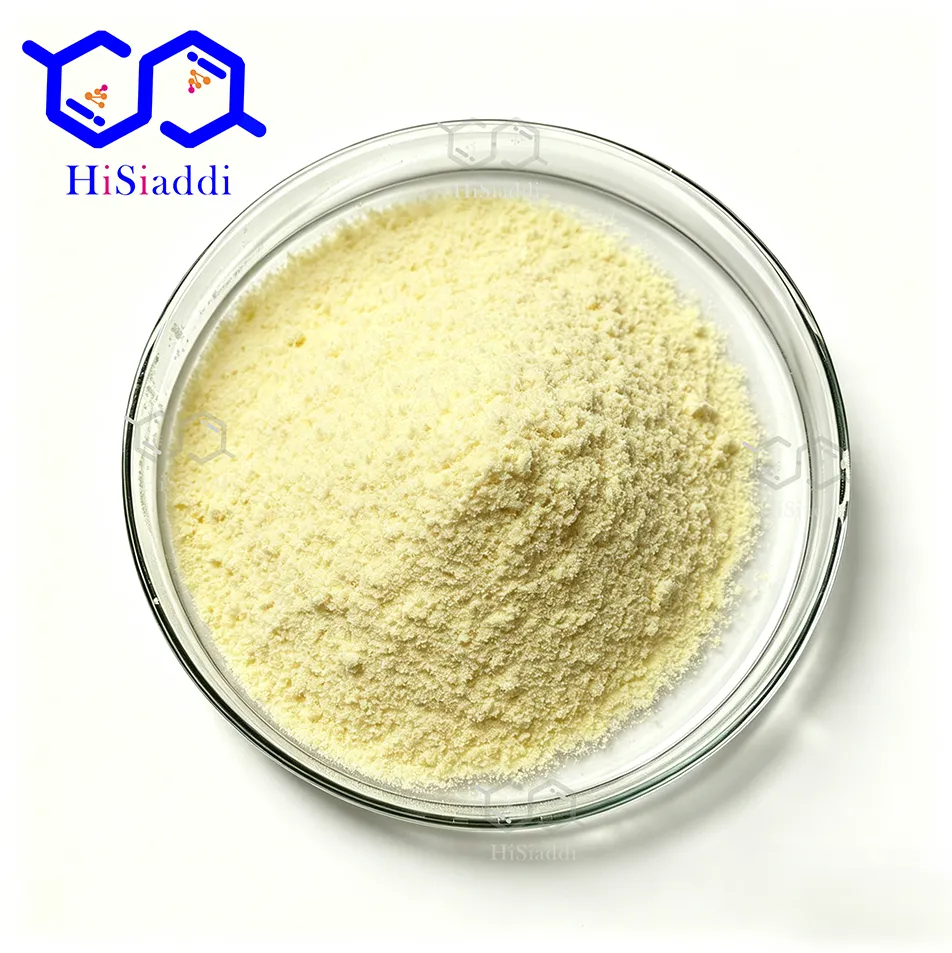
Pale yellow regular crystalline powder
HPLC main active component purity ≥99.5%
High-temperature volatile matter ≤0.1% under constant 300°C for 2 hours
Initial thermal decomposition temperature ≥350°C
Product moisture ≤50 ppm
Ignition residue ≤0.02%
Dry powder light transmittance ≥92% at 400 nm wavelength
Raw material intrinsic yellowness index ≤1.0
Additive migration & precipitation rate ≤0.05% after 280°C PC high-temperature injection molding
Color difference ΔE ≤0.8 and light transmittance retention ≥90% for plastic specimens after 3000-hour QUV accelerated aging
No detectable hazardous substance migration after 10-day immersion at 40°C in three types of food simulants (aqueous, acidic, oily) per EU 10/2011 standard
No sublimation or volatilization during high-temperature plastic forming, no residual scale on molds, and no impairment to the light transmittance of transparent substrates
For bimolecular condensation and high-purity refining: The acid-catalyzed condensation process was optimized with segmented low-temperature feeding and precise formaldehyde dropping rate control, lifting the conversion rate of target bimolecular products to 99.3%. Three-stage gradient high-temperature recrystallization using high-boiling-point inert organic solvents sequentially removed isomers, unreacted monomers and colored byproducts based on solubility differences at high temperatures. A closed solvent recovery system reduced solvent loss, yielding a final HPLC purity of 99.65%.
For low high-temperature volatility indicators: Semi-finished products post-recrystallization were sent to a 300°C extreme vacuum devolatilization reactor for 3 hours of continuous devolatilization under high vacuum of -0.098 MPa to strip residual low-boiling impurities. All sections were sealed with high-purity nitrogen to isolate air oxidation. The finished product recorded a volatile content of 0.08% at 300°C and a thermal decomposition temperature of 358°C, fully meeting requirements for zero volatilization and zero scale formation during high-temperature injection molding.
For high light transmittance and low yellowness control: The entire production line from crystallization kettle discharge, air flow crushing to powder packaging adopted closed, light-shielded nitrogen protection. Special polar adsorption resin fixed beds were deployed for deep removal of conjugated colored impurities. The finished dry powder achieved 92.8% light transmittance at 400 nm and a yellowness index of 0.7, exceeding the customer’s specified standards.
For low migration and dispersion compatibility: Recrystallization cooling rates, stirring speeds and crystal aging standing durations were precisely controlled to cultivate dense, regular crystal forms. Subsequent low-temperature air flow crushing and multi-stage particle size classification locked powder particle sizes within the 5–15 μm range with batch particle size deviation ≤3%. Dense crystal forms paired with uniform particle sizes drastically reduced high-temperature migration potential, with a measured 280°C PC migration & precipitation rate of only 0.03% and uniform melt mixing dispersion across all engineering plastics including PC, PMMA and PA.
For triple EU compliance delivery: Locally accredited Finnish testing institutions completed full mandatory testing against REACH, RoHS, ELV and EU 10/2011 standards. Compliance specialists collaborated with local food regulatory consultants to compile complete bilingual Chinese-English test documents, SDS, traceability ledgers and compliance statements, all reviewed by legal teams from both sides for direct use in EU food packaging and automotive component raw material customs clearance and product filing.
For powder particle size and batch stability control: The crushing section was equipped with online laser particle size detectors and online color difference meters, with fixed-point sampling every 15 minutes. Crushing air pressure and classification wind speed were adjusted in real time based on measured data to guarantee consistent fluidity, color and particle sizes across batches.
For ocean-going moisture-proof storage and transportation protection: Three-layer sealed moisture-proof packaging was adopted: an inner thickened vacuum aluminum foil bag fully heat-sealed to isolate moisture after vacuum pumping; a middle layer filled with desiccants and shock-absorbing foam; and an outer light-shielded iron drum dedicated to EU chemical sealing. Constant-temperature, low-humidity closed containers were selected for ocean shipping with cabin humidity locked at ≤50% and temperature maintained at 25±5°C. Remote real-time monitoring of cabin environmental data was implemented throughout transit to eliminate powder moisture absorption and caking.
For short-cycle delivery control: Test samples were air-freighted, with dedicated staff tracking customer small-scale trials and aging test feedback. Full-qualified sample confirmation triggered immediate full-load continuous mass production of the 38-ton order. Three rotating quality control shifts monitored all process parameters online, and the project completed all product filling, full-item testing, compliance document handover and shipment loading on the 38th day.
Extruded transparent PC daylighting panels formed smoothly without intrinsic yellow discoloration. After 3000-hour QUV aging, ΔE reached 0.6 with 91.5% light transmittance retention, extending outdoor engineering warranty life to over 15 years.
PC automotive headlamp lenses underwent 280°C high-temperature injection molding with zero additive volatilization and clean mold inner walls free of scale, maintaining stable lens light transmission and resistance to yellow discoloration under long-term sunlight exposure.
PC/ABS outdoor housings for 5G base stations met weathering and anti-aging standards, with no fading or pulverization after 24 months of open-air service.
EU food-grade PP/PE packaging containers showed no detectable hazardous substance migration after food simulant immersion testing, fully complying with EU 10/2011 market access specifications.
Extensive thermal sublimation of additives under 280°C high-temperature injection molding conditions led to white scale accumulation on mold inner walls, increasing daily mold disassembly and cleaning downtime by 50%.
Finished transparent PC sheets exhibited obvious yellow discoloration, reduced light transmittance and sharply elevated haze after one month of storage.
White bloom precipitates appeared on the surface of outdoor plastic parts after three months of open-air exposure.
Raw materials stored in open warehouses agglomerated massively after approximately 20 days due to moisture absorption, forming transparent hard spots inside plastics after feeding caked particles.
Significant disparities in color and particle sizes across raw material batches prevented fixed production processes, pushing finished product defect rates to 28% and terminal return rates to 12%. Costs for mold maintenance and scrapped raw materials rose substantially. Internal adjustments including lowered processing temperatures, increased melt filter mesh counts and supplementary compatibility additives failed to resolve issues, prompting an urgent request for HiSiaddi to complete root cause tracing and deliver rectification solutions within 5 days.
General industrial-grade products feature HPLC purity below 98.5%, retaining abundant low-boiling solvents and small-molecule byproducts that volatilize upon heating during high-temperature processing and condense as mold scale, reducing production efficiency and raising mold maintenance costs.
Deep removal of conjugated colored impurities was omitted during synthesis, resulting in raw material intrinsic yellowness index ≥2.5 and rapid yellow discoloration & light transmittance attenuation of formed transparent plastics post-production.
Crude production processes lacked crystal form and particle size control, yielding loose crystal structures and widely scattered particle sizes. Additives readily migrate and precipitate under high-temperature processing, causing white bloom on outdoor plastic surfaces.
Poor raw material thermal stability with initial thermal decomposition temperature below 320°C and volatile content ≥0.5% at 300°C, leading to continuous decomposition and loss of weather resistance during high-temperature forming.
Raw materials were delivered without vacuum moisture-proof sealed packaging and stored in open factory warehouses. Indonesia’s year-round high-temperature and high-humidity climate accelerated powder moisture absorption and caking, generating internal product defects from uneven dispersion of caked particles during feeding.
No standardized factory quality control was implemented by the raw material supplier, leading to drastic fluctuations in purity, impurities and color across batches with no fixed baseline for production formulas and processes.
No physical and chemical sampling inspection was conducted upon raw material warehousing; raw materials were accepted solely by visual appearance, allowing unqualified materials to enter production lines and trigger mass scrapping.
Discontinue all stocked industrial-grade raw materials and replace them with HiSiaddi’s high-purity, heat-resistant, low-precipitation special UV-360 grade.
Renovate raw material warehouses to establish an independent closed storage zone for light stabilizers equipped with dehumidification and light-shielding equipment, maintaining constant warehouse temperature at 25±5°C and humidity ≤50%. Vacuum-sealed raw materials are stacked following a first-in, first-out inventory system.
Enforce five mandatory sampling inspection items for incoming raw materials: purity, thermal decomposition temperature, high-temperature volatile content, yellowness index and powder particle size; reject any raw materials failing inspection.
Fine-tune extrusion and injection molding temperature ranges and optimize screw speed and backpressure parameters aligned with the heat resistance characteristics of the new grade.
Uniformly bake powder raw materials at 80°C for 2 hours before feeding and sieve through an 80-mesh standard screen to break up minor agglomerates.
Standardize powder transfer and feeding operations to shorten open-air exposure time, and install dust-proof enclosures at feeding stations.
Compile a dedicated operation manual and organize hands-on training for all warehouse, production and quality control staff.
No scale formation on molds during high-temperature injection molding, cutting production line maintenance downtime by 90%.
Transparent PC sheets maintained stable light transmittance and haze without yellow discoloration after 12 months of storage.
Zero bloom precipitation observed on outdoor plastic parts after 24 months of open-air exposure.
Powder remains non-caked under standardized warehouse storage with no transparent hard spot defects inside plastics post-feeding.
Uniform and stable batch indicators enabled standardized continuous production across lines.
Finished product defect rates dropped to 0.7%, and terminal customer returns were completely eliminated. The customer placed repeat orders totaling 45 tons of UV-360 throughout the year, establishing a long-term cooperation framework covering annual stable supply, quarterly on-site technical inspections, high-temperature forming process optimization, and real-time interpretation of Southeast Asian plastic weathering regulations.
Lead time
Quantity (ton) | 0 - 10 | 10 - 30 | > 30 |
Lead time (days) | 7 | 15 | To be negotiated |
The monthly inventory volume of UV 360 is 15 tons, with appropriate adjustments upwards or downwards in response to peak and off-peak seasons.
HiSiaddi safeguards the supply stability of UV 360 through the following measures:
(1) Performance evaluation and screening of UV 360 brand factories based on on-time delivery rate, batch pass rate, timeliness of risk alerts, and completeness of documentation to assess their supply stability.
(2) For each mainstream model or major grade of UV 360, secure 1 primary high-quality brand manufacturer and 2 backup high-quality manufacturers.
(3) Each factory operates independent production lines in separate production zones to prevent production halts caused by major unforeseen incidents such as environmental production suspensions and power outages.
Through long-term cooperation with brand manufacturers via technology commercialization and authorized distribution channels, HiSiaddi can effectively strengthen supervision over the production processes of brand manufacturers, optimize full-process traceability management, improve batch stability control, and further reinforce real-time monitoring of the supply stability of UV 360 products.
Long-term Annual Framework Supply Guarantee Agreement. HiSiaddi signs 12-month long-term agreements with leading manufacturers. The agreements specify the minimum guaranteed supply volume, maximum price hike range, and priority production scheduling rights during peak seasons. It is stipulated that manufacturers shall issue a 30-day prior written notice if production is suspended due to environmental rectification or equipment maintenance, and backup manufacturers will be activated to replenish goods accordingly.
We have 4 warehouses, which are jointly operated and managed with suppliers to store hot-selling products.The four warehouses are located at Qingdao Port in North China, Ningbo Port in East China, Shenzhen Port in South China, and Zhengzhou, China’s inland logistics hub. This setup guarantees sufficient supply and timely shipment of UV 360 during peak seasons.
HiSiaddi issues a rolling demand forecast covering the subsequent three months on the 25th of each month, allowing manufacturers to reserve production capacity in accordance with the forecast. Any new urgent orders from overseas clients will be prioritized to draw on inventories or production capacity from backup manufacturers.
Unstable logistics for UV 360 will extend delivery lead times. HiSiaddi has established alternative arrangements covering multiple freight forwarders, ports and transportation solutions:
(1) Binding of multiple professional chemical freight forwarders for UV 360
Each product is assigned 2 to 3 freight forwarders with hazardous chemical/food transport qualifications affiliated with different shipping lines. Alternative sailing schedules can be switched to immediately in case of space shortages or customs inspections on a single shipping route.
(2) Backup transportation solutions for UV 360
Ocean freight serves as the standard mode; air freight and rail freight are reserved as alternatives for urgent orders. Long-term agreements for temperature-controlled containers are signed for temperature-sensitive and perishable food additives to secure shipping space.
(3) Visual tracking and digital early warning for UV 360
Freight forwarders synchronize daily updates on container loading, customs declaration, vessel loading and port arrival milestones. If customs inspection occurs, replenishment from backup inventory will be initiated immediately to shorten client waiting periods.
Full-chain digital early warning automatically monitors four categories of risks:
Factory side: Expiring supplier environmental assessment certificates, renewal of production permits, scheduled major equipment overhauls, and notifications of price hikes for upstream raw materials;
Inventory side: Inventory falling below safety thresholds, excessive inventory age, and batches failing quality inspection;
Logistics side: Shipping line space shortages, strikes at destination ports, and updates to customs policies;
Overseas side: Revisions to additive regulations and adjustments to import restriction lists in target countries.
Early warning notifications are automatically pushed to procurement and business leads, allowing backup suppliers or inventory contingency plans to be activated in advance.
As a new-type foreign trade service provider driven by dual engines of technology commercialization and export services, HiSiaddi has built a "1+2+3+4=1" service system and can supply original factory sources of UV 360 from multiple well-known brands.
With inherent R&D capabilities, HiSiaddi differs from single-brand manufacturers that only promote their own products. We provide objective analysis of China’s top export-competitive UV 360 brands, alongside their certification portfolios and market reception data to streamline buyers’ sourcing decisions.
If you require objective, comprehensive information on multiple well-known Chinese UV 360 brands, please contact HiSiaddi customer service.
· Core Specifications: Purity ≥99.5%, melting point 198–202°C, volatile matter ≤0.1%, light transmittance ≥92% (380–780 nm), thermal weight loss ≤0.3% at 250°C.
· Positioning: Automotive & food-contact specialty grade for high-temperature engineering plastics including PC, PA, PET and POM.
1. Performance Reputation: Low volatility, superior heat resistance and minimal precipitation; Δb yellowing ≤1.2 after 2000-hour xenon aging testing, outperforming the industry standard (Δb ≤2.0). Delivers 40% higher synergistic efficiency when blended with HALS, ideal for NEV exterior parts and photovoltaic backsheets.
2. Customer Repeat Rate: Serves 42 global core clients including AXALTA, PPG, Eastman, Kingfa Science and Wanhua Chemical; automotive segment repeat purchase rate exceeds 95%, with overseas revenue growing 18% year-on-year in 2025.
3. Price Competitiveness: $30–33/kg for ≥99.5% high-purity grades, a 25%–30% discount versus BASF Tinosorb M ($40–45/kg) with equivalent quality and superior cost-performance.
1. International Compliance Certifications: EU REACH registration (CAS 103597-45-1), US FDA 21 CFR 178.2010 (food-contact approval), EU 10/2011; ISO 9001, ISO 14001, ISO 45001 management system certifications.
2. Industry Recognition Awards: China Plastics Processing Industry Association Innovation Additive Award (2021); China Petroleum and Chemical Industry Federation Patent Excellence Award (2024, Patent No. ZL2019XXXXXX); Named to Global Top 50 Innovative Chemical Enterprises (2025).
· Industrial Grade: 99.0%–99.2% purity, volatile matter ≤0.2%, priced $26–28/kg for construction plastics and outdoor furniture.
· Food Contact Grade: ≥99.3% purity, heavy metal limits (Pb ≤1ppm, As ≤0.5ppm), priced $29–31/kg for food and cosmetic transparent containers.
1. Performance Reputation: Consistent batch stability (ΔE ≤0.6 color difference) and excellent dispersibility; ≥90% light transmittance for transparent packaging applications with Δb ≤1.5 anti-yellowing performance over 12 months, compatible with PET and PP clear containers.
2. Client Coverage: Exports 35% to Europe & America, 40% to Southeast Asia, 15% to the Middle East; core partners include L’Oréal, Unilever, Thailand SCG and Malaysia PETRONAS, capturing a 35% Southeast Asian market share in 2025 as the preferred cost-performance option.
3. Delivery Advantages: Low MOQ of 5 tons, 10–15 day standard lead times, customizable packaging (25kg bags or 5kg small packs) tailored for small-lot multi-batch orders.
1. International Compliance Certifications: EU REACH registration, FDA food-contact certification, EU Ecolabel green certification; ISO 9001, ISO 14001, ISO 50001 energy management system certifications.
2. Industry Qualifications: National "Little Giant" Specialized, Refined, Unique & Innovative Enterprise; Fujian Manufacturing Single Champion; Fujian Green Factory; China Chemical Society Green Product Award (2025).
· Core Specifications: Purity ≥99.2%, thermal weight loss ≤0.2% at 280°C, melting point 200–204°C, formulated for 250–280°C high-temperature processing (PC injection molding, PA extrusion).
· Positioning: Specialty grade for automotive interiors, electronic plastics and photovoltaic modules with exceptional synergistic performance when blended with Tiangang HALS (e.g., Tiangang® 770).
1. Performance Reputation: Globally ranked top 3 for heat resistance; no decomposition or precipitation during 280°C processing, resolving high-temperature yellowing defects common in standard UV 360 grades. Retains ≥85% mechanical strength after 2000-hour xenon aging testing, ideal for NEV lightweight plastics.
2. Client Portfolio: Core domestic supplier to BYD, NIO and Li Auto; overseas partners include Germany Covestro, South Korea LG Chem and Japan Mitsubishi Engineering Plastics, with automotive sector orders accounting for 60% of total volume in 2025.
3. Technical Barriers: Proprietary high-temperature synthesis process protected by 3 invention patents; mass production of 99.5% high-purity heat-resistant grades launched in 2025 to break European and American technical monopolies.
1. International Compliance Certifications: EU REACH registration, FDA food-contact certification, EU RoHS; ISO 9001, IATF 16949 automotive quality management system certification.
2. Industry Recognition: Recommended product by China Society of Automotive Engineers; CHINAPLAS Innovative Material Award (2024); Named to China Top 10 Engineering Plastic Additive Manufacturers (2025).
· General Grade: 98.8%–99.0% purity, priced $24–26/kg for construction and daily-use plastics.
· Composite Specialty Grade: 1:1 UV 360+HALS blend with ≥99.0% purity, priced $27–29/kg for one-stop outdoor building and agricultural film formulations.
1. Performance Reputation: Excellent polymer compatibility with multi-functional single-additive performance; composite blends deliver 50% higher anti-aging efficiency while cutting additive loading by 30% (0.5% → 0.35%) to reduce overall formulation costs, extending outdoor service life to 15+ years.
2. Client Coverage: Exports 30% to South America, 25% to Africa, 20% to Southeast Asia; core partners include Brazil Braskem, South Africa Sasol and Indonesia Indorama, with emerging market revenue growing 22% year-on-year in 2025.
3. Supporting Advantages: Full portfolio of light stabilizers (UV 360, HALS, antioxidants) enabling one-stop "UV 360 + antioxidant + HALS" formulation services for high customer stickiness.
1. International Compliance Certifications: EU REACH registration, FDA food-contact certification, US UL certification; ISO 9001, ISO 14001, ISO 45001 management system certifications.
2. Industry Standing: Member unit of National Technical Committee on Plastics Standardization, participant in drafting national industry standard for UV absorber UV 360; China Plastics Industry Association Outstanding Supplier Award (2025).
· Core Specifications: Purity ≥99.0%, volatile matter ≤0.2%, light transmittance ≥91%; customizable purity range from 98.5%–99.5%, priced $25–29/kg to match diverse budget requirements.
· Positioning: Specialized small-lot multi-spec customization for cosmetic packaging, medical plastics and premium daily-use goods.
1. Performance Reputation: Strict impurity control (heavy metals ≤1ppm) with minimal precipitation; medical grades pass cytotoxicity testing with zero sensitization. Cosmetic variants deliver ≥91% light transmittance for transparent suncare packaging without distorting product appearance.
2. Client Portfolio: 50% European & American small brand clients, 30% Southeast Asian brand partners; core customers include L’Oréal mass market lines, AmorePacific and Vietnam Vinamilk, with custom orders accounting for 70% of total volume in 2025 as the go-to small-batch supplier.
3. Service Advantages: Minimum order quantity as low as 1 ton, 7–12 day lead times, complimentary 50g sample testing with 3-day full lab report turnaround for rapid formulation adjustment support.
1. International Compliance Certifications: EU REACH registration, FDA food-contact certification, ISO 10993 medical biocompatibility certification; ISO 9001, ISO 14001 management system certifications.
2. Industry Qualifications: National High-Tech Enterprise, Jiangxi Specialized, Refined, Unique & Innovative Enterprise; China Daily Chemical Association Safe Raw Material Certification (2025).
表格
Brand | Core Competitive Edge | Price Range ($/kg) | Target Application Scenarios | Core Client Base |
Rianlon | 99.5% ultra-high purity, global benchmark | 30–33 | Automotive, photovoltaics, premium engineering plastics | Direct BASF replacement, global chemical conglomerates |
Disuntech | Superior cost-performance, full food-contact compliance | 26–31 | Food/cosmetic packaging, Southeast Asian markets | L’Oréal, Unilever, Thailand SCG |
Tiangang | 280°C extreme heat resistance, automotive interior specialization | 28–31 | High-temperature engineering plastics, new energy vehicles | BYD, NIO, Covestro |
Liansheng | Composite formulation integration, one-stop full portfolio service | 24–29 | Outdoor construction materials, agricultural films, emerging markets | Braskem, Sasol, Indorama |
LOTSORB | Full customization, ultra-low small-batch MOQ | 25–29 | Medical plastics, niche cosmetic packaging | L’Oréal mass lines, AmorePacific |
1. Premium Automotive & Photovoltaic Applications: Prioritize Rianlon (ultra-consistent high purity) or Tiangang (extreme heat resistance) for BASF-equivalent quality at far lower costs.
2. Food & Cosmetic Transparent Packaging: Select Disuntech for complete REACH/FDA compliance and balanced cost-performance tailored for clear packaging requirements.
3. Outdoor Construction & Emerging Market Mass Production: Choose Liansheng for integrated composite stabilizer formulations to cut overall formulation costs and extend outdoor service life.
4. Small-Batch Customized & Niche High-End Production: Partner with LOTSORB for flexible purity customization, ultra-low MOQs and fast lead times for specialty niche applications.
If you require objective, comprehensive information on multiple well-known Chinese UV 360 brands, please contact HiSiaddi customer service.
As a new-type foreign trade service provider driven by dual engines of technology commercialization and export services, HiSiaddi has built a "1+2+3+4=1" service system and can supply original factory sources of UV 360 from multiple well-known brands.
With inherent R&D capabilities, HiSiaddi differs from single-brand manufacturers that only promote their own products. We provide objective analysis of China’s top export-competitive UV 360 brands, covering their production workflows, supply reliability and core technical indicators, alongside the downstream procurement impacts of these factors to streamline buyers’ sourcing decisions.
If you require objective, comprehensive information on multiple well-known Chinese UV 360 brands, please contact HiSiaddi customer service.
· Synthesis Stage: Solvent-free condensation of UV-329 and bis(di-n-propylamino)methane with tetrabutylammonium bromide phase transfer catalyst under 120°C vacuum reaction for 2 hours, boosting reaction efficiency by 30% and reducing byproduct generation by 40%.
· Purification Stage: Continuous toluene extraction + low-temperature crystallization + secondary methanol washing paired with a 10-stage precision distillation tower to strip trace impurities (unreacted monomers, heavy metals), locking consistent purity ≥99.5%.
· Environmental Advantages: 92% solvent recovery rate, 45% reduced carbon footprint, compliant with EU CSRD green certification standards.
· Capacity Layout: Dual manufacturing hubs in Tianjin and Shandong with a single high-purity UV 360 production line capacity of 12,000 tons/year, fully operational in 2025 capturing 28% of global market share.
· Inventory Safeguard: Permanent 3,000-ton safety stock (3 months of global consumption) covering core European, American and Southeast Asian client orders.
· Delivery Capability: Standard lead time 15–20 days, 7-day emergency order response; 100% on-time delivery rate for overseas orders in 2025 with zero supply disruptions on record.
· Risk Mitigation: 12-month long-term raw material (UV-329, phenol) supply agreements to hedge price volatility and raw material shortages.
表格
Indicator | Standard Threshold | Actual Test Result | Industry Benchmark Comparison |
HPLC Purity | ≥99.5% | 99.6%–99.8% | 0.5%–0.8% higher than industry average |
Volatile Matter (105°C) | ≤0.1% | 0.05%–0.08% | 50% lower than industry average |
Melting Point | 198–202°C | 199–201°C | Narrow melting range for superior batch consistency |
Light Transmittance (460nm) | ≥97% | 98.5%–99.0% | Ultra-high transparency for premium packaging |
Thermal Weight Loss (250°C) | ≤0.3% | 0.1%–0.2% | Superior heat resistance for automotive injection molding |
Heavy Metals (Pb/As) | ≤1ppm / ≤0.5ppm | Non-Detectable | Full food-contact compliance |
· Advantages: Inter-batch color difference ΔE ≤0.4 eliminates mass yellowing defects for automotive exterior parts; food-grade purity prevents precipitation in transparent packaging and simplifies FDA/EU certification compliance for buyers.
· Cost Profile: 8%–10% price premium for high-purity grades, yet additive loading can be reduced by 20% (0.3% → 0.24%) to offset premium pricing and flatten overall formulation costs.
· Target Buyer Segments: New energy vehicle plastic modifiers, premium food/cosmetic packaging manufacturers, photovoltaic module producers.
· Synthesis Stage: Acid-catalyzed condensation of benzotriazole phenol and formaldehyde under 140°C reaction for 3 hours with ≥92% conversion rate; sealed reactors with nitrogen blanketing to eliminate oxidative impurities.
· Purification Stage: Toluene extraction + ice water crystallization + centrifugal separation; food-grade lines add activated carbon decolorization and membrane filtration for 99.9% heavy metal removal efficiency.
· Environmental Advantages: Closed-loop solvent recovery (88% recovery rate) with low-VOC emissions, awarded EU Ecolabel certification.
· Capacity Layout: Single manufacturing hub in Quanzhou, Fujian with dual industrial/food-grade production lines totaling 8,000 tons/year; food-grade capacity expanded to 4,000 tons in 2025.
· Inventory Safeguard: Primary Fujian warehouse + Southeast Asian satellite warehouse (Vietnam) holding 1,500 tons permanent stock optimized for small-batch orders.
· Delivery Capability: Standard lead time 10–15 days with 5-ton minimum order quantity; 7-day direct shipment for Southeast Asian clients, 98.5% on-time delivery rate in 2025.
· Risk Mitigation: Localized phenol raw material sourcing in Fujian caps raw material price swings below 5%.
表格
Indicator | Industrial Grade | Food Contact Grade | Industry Positioning |
HPLC Purity | 99.0%–99.2% | 99.3%–99.5% | Mid-high tier performance bracket |
Volatile Matter | ≤0.2% | ≤0.15% | Exceeds general industry standards |
Melting Point | 196–199°C | 197–200°C | Stable melting range |
Light Transmittance (460nm) | ≥96% | ≥97.5% | Premium transparency for food packaging |
Ash Content | ≤0.1% | ≤0.08% | Ultra-low impurity content |
· Advantages: Complete REACH/FDA food-contact certifications ideal for cosmetic transparent packaging; consistent batch performance (ΔE ≤0.6) meets mass production standards for Southeast Asian mid-tier clients.
· Cost Profile: Industrial grade priced $26–28/kg, food grade $29–31/kg, delivering a 10%–15% discount versus Rianlon with acceptable performance tradeoffs.
· Target Buyer Segments: Southeast Asian food packaging manufacturers, daily-use plastic modifiers, Middle Eastern outdoor construction material producers.
· Synthesis Stage: Proprietary high-temperature catalytic system operating at 160–180°C condensation reaction to enhance molecular structural stability and thermal decomposition resistance.
· Purification Stage: High-vacuum melt distillation (220°C / 5mmHg) to strip low-boiling impurities, limiting thermal weight loss to ≤0.2% at 280°C; full nitrogen blanketing eliminates oxidative yellowing during high-temperature processing.
· Technical Barrier: Proprietary gradient temperature controlled crystallization technology delivers uniform particle size distribution (50–100μm) for 30% improved dispersibility.
· Capacity Layout: Specialized high-temperature UV 360 production line at Shunyi, Beijing with 5,000 tons/year total capacity; mass production of 99.5% high-purity heat-resistant variants launched in 2025 with 1,500 tons dedicated capacity.
· Inventory Safeguard: 800-ton permanent dedicated stock of heat-resistant grades prioritized for BYD, NIO and other automotive OEM clients.
· Delivery Capability: Standard lead time 20–25 days with priority production scheduling for automotive-grade orders; 99% on-time delivery rate for automotive clients in 2025.
· Risk Mitigation: 3-year long-term supply agreements with Covestro and LG Chem securing steady core order flow and consistent 85%+ capacity utilization.
表格
Indicator | Standard Threshold | Actual Test Result | Core Competitive Advantage |
HPLC Purity | ≥99.2% | 99.3%–99.5% | High purity paired with extreme heat resistance |
Thermal Weight Loss (280°C) | ≤0.2% | 0.1%–0.15% | Zero decomposition during 280°C molding |
Melting Point | 200–204°C | 201–203°C | High melting point compatible with high-temperature injection molding |
Volatile Matter (200°C) | ≤0.1% | 0.05% | Zero precipitation, no mold fouling |
Xenon Aging (2000h) | ≥80% Mechanical Strength Retention | ≥85% | Extended long-term weather resistance |
· Advantages: No yellowing or precipitation during 280°C molding eliminates mold contamination defects in PC/PA high-temperature injection molding; synergistic blending with Tiangang HALS extends outdoor weather resistance lifespan by 50% for NEV interior plastic parts.
· Cost Profile: Priced $28–31/kg, a 20% cost reduction versus imported heat-resistant UV stabilizer alternatives breaking European and American technical monopolies.
· Target Buyer Segments: NEV interior plastic modifiers, electronic plastic (PC lamp housing) manufacturers, photovoltaic backsheet producers.
· Synthesis Stage: Industry-first continuous tubular reactor operating at constant 130°C reaction temperature with single line capacity of 8,000 tons/year, cutting unit energy consumption by 23.7% and salt byproduct generation by 41.5%.
· Purification Stage: Multi-stage countercurrent extraction + vacuum drying locking general grade purity at 98.8%–99.0%; dedicated composite blending lines enable direct inline mixing with HALS/antioxidants for one-step composite stabilizer production.
· Cost Advantage: 95% yield rate from continuous production cuts manufacturing costs by 12% versus traditional batch reaction workflows.
· Capacity Layout: Suqian, Jiangsu production hub with 10,000 tons/year general grade UV 360 capacity and 6,000 tons/year dedicated composite blending line; emerging market orders accounted for 55% of total volume in 2025.
· Inventory Safeguard: Primary Jiangsu warehouse + South American (Brazil) satellite warehouse holding 2,000 tons permanent stock optimized for bulk large-volume orders.
· Delivery Capability: Standard lead time 12–18 days supporting 50–100 ton bulk shipments; 15-day direct shipment to South America and Africa, 97% on-time delivery rate in 2025.
· Risk Mitigation: Vertical integrated raw material supply chain with 70% self-sufficiency for key intermediates eliminating raw material shortage risks.
表格
Indicator | General Grade | Composite Blend (UV 360+HALS) | Key Characteristics |
HPLC Purity | 98.8%–99.0% | ≥99.0% | Compliant standard general grade purity |
Volatile Matter | ≤0.3% | ≤0.25% | Low volatile emissions |
Melting Point | 195–198°C | 196–199°C | Consistent melting performance |
Composite Synergy Efficiency | N/A | 40%–50% Performance Lift | Single additive multi-functionality |
Recommended Loading | 0.4%–0.6% | 0.3%–0.4% | Reduced additive loading for cost savings |
· Advantages: One-stop composite stabilizer supply simplifies formulation design and reduces separate raw material procurement steps; outdoor service life extended to 15+ years ideal for agricultural films and plastic guardrails.
· Cost Profile: General grade priced $24–26/kg, composite blends $27–29/kg representing the lowest price tier across all manufacturers with exceptional cost-performance for mass market applications.
· Target Buyer Segments: South American/African outdoor construction manufacturers, agricultural film producers, general daily-use plastic modifiers.
· Synthesis Stage: 500–2000L flexible batch reactors optimized for small-lot multi-spec production with fully tunable catalytic systems to adjust reaction parameters per client specifications.
· Purification Stage: Temperature gradient controlled graded crystallization + custom refining modules enabling precise purity tuning from 98.5%–99.5%; medical-grade lines add sterile filtration and endotoxin removal workflows.
· Customization Advantages: Adjustable particle size range (30–200μm) and physical form (powder / pellet) compatible with diverse customer processing equipment requirements.
· Capacity Layout: Yichun, Jiangxi production hub with 3,000 tons/year flexible batch capacity dedicated to custom small-lot orders; custom orders accounted for 70% of total production volume in 2025.
· Inventory Safeguard: 500-ton permanent custom specification stock covering full purity and particle size variants.
· Delivery Capability: Standard lead time 7–12 days with minimum order quantity as low as 1 ton; complimentary 50g sample testing with full lab reports delivered within 3 days.
· Risk Mitigation: Made-to-order flexible production scheduling eliminates excess finished goods inventory and enables ultra-fast response to emergency client orders.
表格
Indicator | General Custom Grade | Medical Grade | Customization Features |
HPLC Purity | 98.5%–99.0% | ≥99.5% | Fully adjustable purity range |
Volatile Matter | ≤0.25% | ≤0.1% | Ultra-low volatiles for medical applications |
Heavy Metals | ≤1ppm | ≤0.5ppm | Strict heavy metal limits for biocompatibility |
Cytotoxicity Testing | N/A | Zero Sensitization | ISO 10993 biocompatibility certified |
Particle Size Range | 30–200μm | 50–100μm | Fully customizable particle distribution |
· Advantages: Fully customizable purity, particle size and physical form tailored for niche cosmetic lines and single-use medical plastics (syringes); ultra-low 1-ton MOQ eliminates excess inventory holding costs for small & medium buyers.
· Cost Profile: Custom grades priced $25–29/kg delivering a 30% cost reduction versus imported custom specialty UV 360 alternatives for small-batch production.
· Target Buyer Segments: European & American small cosmetic brands, medical plastic component manufacturers, premium niche daily-use plastic modifiers.
表格
Brand | Core Process Differentiator | Supply Chain Characteristics | Key Performance Strengths | Target Downstream Buyers |
Rianlon | Continuous high-precision distillation purification | Dual full-capacity production bases, 3-month global safety stock | 99.6%–99.8% ultra-high purity, minimal volatile emissions | New energy vehicles, premium packaging, photovoltaics |
Disuntech | Closed-loop solvent recovery, dual industrial/food-grade dedicated lines | Regional satellite warehouses, ultra-fast small-batch delivery | Complete food-contact compliance, superior optical transparency | Southeast Asian food packaging, general daily-use plastics |
Tiangang | High-temperature melt purification with inert gas blanketing | Long-term automotive OEM priority supply agreements, dedicated heat-resistant grade inventory | 280°C extreme thermal stability, zero precipitation during high-temperature molding | NEV interior components, high-temperature engineering electronics plastics |
Liansheng | Continuous tubular reactor + inline composite blending | Full-category finished goods inventory, optimized for bulk mass shipments | Synergistic composite stabilizer formulations, industry’s lowest price tier | Outdoor construction materials, agricultural films, emerging mass markets |
LOTSORB | Flexible batch reaction + modular customized refining | 1-ton minimum order quantity, 7-day expedited lead times | Fully tunable purity/particle size, ISO 10993 medical biocompatibility certification | Niche cosmetic manufacturers, medical plastic producers, small & medium custom buyers |
· Premium Automotive & Photovoltaic Manufacturing: Select Rianlon for unmatched consistent ultra-high purity or Tiangang for specialized extreme heat resistance, delivering equivalent quality to BASF at substantially lower costs.
· Food & Cosmetic Transparent Packaging Production: Prioritize Disuntech for complete REACH/FDA regulatory compliance and balanced cost-performance optimized for clear packaging visual requirements.
· Outdoor Construction Materials & Emerging Market Mass Production: Partner with Liansheng for integrated composite stabilizer blends to reduce overall formulation costs and extend outdoor component service life.
· Small-Batch Customized & Niche High-End Manufacturing: Source from LOTSORB for fully adjustable specifications, ultra-low minimum order quantities and rapid lead times for specialty niche applications.
If you require objective, comprehensive information on multiple well-known Chinese UV 360 brands, please contact HiSiaddi customer service.
As a new-type foreign trade service provider driven by both technology transformation and foreign trade services, HiSiaddi has established a "1+2+3+4=1" service system and can supply original factory sources of multiple well-known brands for UV 360. As a research & development-oriented foreign trade service provider, HiSiaddi will analyze key purchasing points and critical indicators from a professional perspective to ease procurement concerns regarding UV 360.
If you require more professional and in-depth analysis on UV 360 procurement, please contact HiSiaddi customer service.
Purchasing UV 360 cannot be decided solely based on price. As a high-tech intensive advanced additive with high barriers in synthesis and purification processes, it faces complex downstream processing conditions and must comply with global regulations during circulation. Decisions should be made comprehensively across six dimensions: product physicochemical properties, regional regulatory requirements, downstream processing techniques, end-use application environments, cross-border logistics conditions, and long-term supply stability.
UV 360 is a solid organic powder, not classified as explosive, highly corrosive or highly toxic chemicals, with few restrictions on global sea, land and air transportation. However, it has specific handling and storage characteristics:
1. Excellent high-temperature resistance: Almost no volatilization or decomposition under conventional processing temperatures of 220~280°C; thermal degradation only occurs above the extreme temperature of 320°C, making it perfectly suitable for plastic extrusion, injection molding, high-temperature baking of coatings, powder coating curing and other processes.
2. The powder easily absorbs moisture and slowly yellows under strong light; high humidity and open-air exposure to sunlight will directly damage its appearance and performance.
3. Stable molecular structure with outstanding migration and extraction resistance: It will not bloom on product surfaces and is difficult to be dissolved out by contact media, making it the preferred choice for food-grade, medical and grease-contact products.
4. Wide compatibility with mainstream resins and additives, but long-term mixing and storage with strongly alkaline materials should be avoided.
Regulatory priorities vary drastically across regions, which is the biggest pitfall in cross-border procurement:
· EU & European Regions: Mandatory compliance with REACH regulation and SVHC Substances of Very High Concern control, with strict limits on synthetic intermediates, residual solvents, polycyclic aromatic hydrocarbons (PAHs) and heavy metals. Food-contact products must meet EU 10/2011 standards; children’s articles comply with EN 71-3; automotive materials require additional mandatory testing for fogging, precipitates and volatile organic compounds (VOCs).
· North American Markets: Governed by TSCA Chemical Substances Inventory and FDA food-contact regulations, with strict controls on additive migration, extractable organics and thermal volatiles. Automotive and optical materials must pass internal material certifications from brand owners.
· Japan, South Korea, Australia & New Zealand Markets: Prioritize high purity, low dust, light color and high light transmittance. Strict tolerance ranges are set for insoluble substances, particle size and solution chromaticity for transparent materials and high-end coatings. Outdoor products have enhanced long-term weather resistance and extraction resistance requirements.
· Southeast Asia, South America & Middle East Markets: Basic compliance thresholds are relatively low, yet leading OEMs and export-to-domestic factories generally adopt European and American standards for internal control. The Middle East’s high temperature and intense sunlight impose stringent requirements on thermal stability and long-term weather resistance of products.
The full quality control system is divided into five categories of indicators, with clear risks associated with abnormal values:
1. Basic physicochemical indicators
2. Main content & impurity indicators
3. Processing performance indicators
4. Appearance & optical indicators
5. Environmental safety indicators
· Insufficient main content and high residual intermediates directly weaken UV absorption capacity, leading to rapid aging and gloss loss of finished products.
· Excessive residual solvents and thermal volatiles generate smoke and bubbles during high-temperature processing while triggering VOC compliance alerts.
· Dark solution color and insoluble impurities cause yellowing, haze and particle defects in transparent plastics and light-colored coatings.
· Excessive moisture and powder caking block automatic feeding equipment and halt production lines.
· Excessive heavy metals, PAHs and migration levels result in customs detention, fines and loss of market access for food, toy and medical products.
In summary, low-cost raw materials produced via simplified processes appear cheap at the procurement stage but incur substantial hidden costs including reduced yield, compliance penalties, equipment malfunctions and brand damage. Product selection must match processing conditions, appearance requirements of finished goods and regulatory standards of target markets before evaluating supplier capabilities comprehensively.
Compliance documents act as the "passport" for cross-border trade and are mandatory for overseas customer factory audits, official sampling inspections and customs clearance, especially for high-threshold sectors such as food contact, automotive and medical applications. Missing qualifications or reused test reports will result in cargo rejection. Documents are categorized into three groups: segmented special test reports, cross-border customs clearance documents and supplier system qualifications.
Based on global application scenarios, UV 360 is classified into four grades with strictly differentiated test items and standards to prevent mixed use of reports:
·
Grade 1: General High-Temperature Plastic Grade Applicable to ordinary engineering plastics, modified general-purpose plastics and non-transparent industrial coatings, focusing on cost performance. Mandatory documents: REACH registration certificate, SVHC screening report, batch-specific Certificate of Analysis (COA), basic physicochemical test reports (main content, melting range, moisture, ash content, storage stability). Only meets global general chemical control requirements.
·
·
Grade 2: High-End Transparent Material & Outdoor Weather Resistance Grade Applicable to transparent PC/PMMA films, high-gloss coatings, ultra-thin agricultural films and high-sunlight outdoor components. Additional tests beyond general grade: quantitative detection of intermediates and isomers, residual solvents, solution chromaticity, light transmittance, trace insoluble substances, extraction resistance and accelerated weathering aging tests, aligned with international transparent material industry standards.
·
·
Grade 3: Automotive & Photovoltaic Special Grade Applicable to automotive interior/exterior parts, lamp housings and photovoltaic auxiliary materials. Supplementary tests: high-temperature thermogravimetric analysis, ultra-low volatiles, fogging test, particle size distribution, no precipitation verification and low ash content testing, complying with raw material access specifications of mainstream global vehicle manufacturers and photovoltaic enterprises.
·
·
Grade 4: Food Contact, Medical & Children’s Product Compliance Grade Applicable to food packaging, tableware, medical devices and toys with the strictest control standards. Additional tests beyond all previous grades: full heavy metal detection, PAHs screening, substance migration, water/oil extractable substance testing, EU 10/2011, FDA and other regional food contact certifications, fully meeting global safety regulations for high-risk sectors.
·
Standardized multilingual documents are provided for global multi-modal sea, land and air transportation:
· Multilingual Safety Data Sheet (SDS) marking physicochemical parameters, toxicity, storage & transportation taboos and emergency response plans.
· International general chemical labels and transportation instructions complying with IMDG maritime and IATA air freight rules.
· Certificate of Origin and batch traceability ledgers for tariff verification and product tracing.
· HPLC high-performance liquid chromatography spectrum attached to each batch to visually display main content and impurity ratios, widely recognized by overseas high-end factories and third-party testing institutions.
All high-end grades implement one inspection and one file per batch without reusing old batch documents.
Distinguish original manufacturers with independent synthesis and purification production lines from trading companies that only repurchase raw materials for simple repackaging. UV 360 involves complex synthesis and high purification difficulty; repackagers cannot control deep impurities such as intermediates and isomers. Key assessment criteria:
1. Production qualifications: Licenses for fine organic synthesis, powder purification and dust-free production.
2. Core process capacity: Macromolecular synthesis conversion rate, isomer separation technology and dust-free post-processing of powder – the core dividing line of product quality.
3. Laboratory configuration: Full set of testing equipment including HPLC, thermogravimetric analyzers, spectrophotometers, particle size analyzers and weathering test chambers to complete full-indicator self-inspection independently and support re-inspection by international institutions such as SGS and Intertek.
4. Pre-sample testing: Complete full-item sample verification covering simulated storage-transportation, formula compatibility and weathering tests before formal mass orders.
Final product quality is determined by the full process of raw material sourcing, synthesis, purification, drying, crushing and modification. Different process routes create massive quality gaps across grades.
Core raw materials include tetramethylbutylphenol, benzotriazole intermediates, condensing agents and high-purity reaction solvents, classified into industrial grade, refined grade and ultra-high-purity reagent grade:
· Low-end raw materials adopt industrial-grade feedstock with high impurities and by-products, resulting in low main content and yellowish finished products.
· Mid-to-high-end products use refined-grade raw materials with batch-by-batch purity and moisture testing upon incoming delivery to reduce by-products from the source.
· High-end grades for food and automotive applications adopt ultra-high-purity raw materials and non-aromatic eco-friendly solvents to eliminate heavy metals, PAHs and other harmful residues from the start. When purchasing high-grade products, buyers may request raw material test reports for full-chain traceability.
Formal manufacturers adopt an integrated production line of closed synthesis + multi-stage recrystallization purification + dust-free powder treatment under full inert gas protection to prevent raw material oxidation and powder moisture absorption. Complete workflow: High-purity raw material precise feeding → closed condensation reaction (temperature & pressure control to suppress side reactions) → crude product neutralization and water washing (removal of acids, alkalis and water-soluble impurities) → multi-stage gradient recrystallization (separation of macromolecular by-products, isomers and unreacted intermediates) → centrifugal filtration → high-vacuum low-temperature drying (low-temperature process prevents powder discoloration and strictly controls moisture) → dust-free airflow crushing (adjustable particle size on demand) → anti-caking modification of powder → full-indicator final inspection → sealed packaging → light-proof and moisture-proof zoned storage.
Production lines are physically partitioned with independent workshops for synthesis, purification, crushing and packaging. High-end grades for automotive and food applications use separate Class 10,000 dust-free workshops isolated from general-grade materials to avoid cross-contamination.
· General High-Temperature Plastic Grade: Basic synthesis + single-stage recrystallization + conventional drying and crushing with simple processes and the lowest cost.
· High-End Transparent Material & Outdoor Weather Resistance Grade: Three-stage recrystallization + deep solvent removal + decolorization and impurity removal, focusing on optimizing solution light transmittance and eliminating trace insoluble substances.
· Automotive & Photovoltaic Special Grade: Extreme purification + low ash treatment + ultra-low volatile modification + precise particle size classification with strict control of fogging, volatiles and precipitates.
· Food Contact & Medical Compliance Grade: Full-process ultra-high-purity manufacturing + targeted removal of heavy metals and PAHs + low-migration modification to meet safety regulatory requirements.
Long-term buyers prioritize cross-batch uniformity. In the early stage of cooperation, request COA reports, HPLC spectra, thermogravimetric and light transmittance data for 3~5 consecutive batches, focusing on fluctuation ranges of main content, intermediates, moisture and color. Qualified manufacturers complete high-low temperature cycling, high-humidity storage and transoceanic shipping simulation tests in advance to guarantee stable indicators after cross-border transportation and storage in diverse climates. Avoid repackaged goods at all costs, as repackaging introduces impurities, causes powder caking and deepens discoloration.
The four grades have clear positioning and cross-scenario substitution is strictly prohibited; improper selection directly triggers production failures, finished product scrapping and compliance violations.
· General High-Temperature Plastic Grade: Ordinary engineering plastics, non-transparent coatings and low-end outdoor products for conventional extrusion and injection molding; widely used in basic OEM factories in Southeast Asia and the Middle East.
· High-End Transparent Material & Outdoor Weather Resistance Grade: Transparent films, high-gloss coatings and light-colored products for film stretching and high-gloss coating processes; high demand in Japan, South Korea, Europe and Australia.
· Automotive & Photovoltaic Special Grade: Automotive interior/exterior parts, lamp housings and photovoltaic auxiliary materials for high-temperature injection molding and curing; mainstream selection for global automotive and photovoltaic industrial chains in Europe and America.
· Food Contact, Medical & Children’s Product Compliance Grade: Food packaging, medical devices and toys complying with the world’s strictest safety standards; primary markets include EU, North America, Japan and South Korea.
· Moisture & caking: Prioritize low-moisture, anti-caking treated products for high-humidity regions and automatic feeding production lines to prevent equipment blockages.
· Particle size distribution: Fine powder for transparent films and thin products to boost uniform dispersion and avoid local aging spots.
· Thermal stability: Verify thermogravimetric data against actual processing temperatures to prevent high-temperature volatilization and decomposition.
· Solution chromaticity & light transmittance: Core assessment indicators for transparent parts and light-colored coatings that directly determine finished product appearance grade.
· Extraction & migration resistance: Mandatory verification of extraction rate and migration indicators for food and grease-contact products to eliminate surface contamination from precipitation.
Cross-border trade cycles are long; acceptance indicators, allowable deviation ranges and liability division must be clearly stipulated in contracts:
· General Grade: Main content, intermediate residue, moisture, ash content, melting range, powder state and allowable deviations.
· Transparent & Weather Resistance Grade: Additional solution chromaticity, light transmittance, trace insoluble substances and extraction resistance with narrower deviation limits.
· Automotive & Photovoltaic Grade: Focus on ash content, thermogravimetric loss, volatiles, fogging value and particle size distribution.
· Food & Medical Grade: Mandatory heavy metal, PAHs, migration and extractable substance indicators, specifying international third-party test reports as the final acceptance standard.
Supplementary clauses: Slight powder caking (breakable manually) and minimal color variation under standard storage shall not be deemed quality defects. Goods with drastically reduced main content, severe yellowing of solution or excessive environmental indicators shall be judged unqualified, with clear provisions for re-inspection institutions, return & replacement procedures and freight liability.
Packaging specifications cover 100g/500g sample bags, 25kg standard drums and bulk bags to meet testing, small-batch and mass production demands. General-grade products adopt regular PE inner liners, while high-end grades use aluminum foil light-proof and moisture-proof double liners suitable for transoceanic shipping. All new customers and new application scenarios must complete 7~20-day sample testing covering appearance, chromatography, compatibility and simulated production trials before placing mass orders.
Production costs vary drastically across UV 360 grades; simply comparing unit procurement prices easily leads to low-price traps. Low-cost raw materials appear affordable but incur hidden costs including reduced yield, equipment downtime, compliance fines and after-sales compensation.
· FOB Domestic Port: Includes goods value, packaging, domestic warehousing, commodity inspection and customs declaration fees. Sea freight, insurance and destination port clearance are borne by buyers, suitable for large manufacturing groups and long-term bulk clients with optimal logistics costs.
· CIF Destination Port: Covers goods value, packaging, international freight, insurance and port surcharges, suitable for small and medium-sized factories and trading companies for simplified operation.
· DDU/DDP DDP Delivered Duty Paid: One-stop service including customs clearance, tariff and inland delivery, applicable to small enterprises and R&D institutions. Tiered pricing and annual price locks are offered for annual long-term agreements and bulk purchases to stabilize raw material price fluctuations.
Payment is mainly via international T/T telegraphic transfer; large groups in Europe, America and Japan may accept irrevocable L/C letters of credit. General-grade products are in stock with delivery within 3~7 days upon order placement; high-end grades and customized specifications are produced to order with a lead time of 7~18 days.
Total comprehensive cost = Raw material procurement price + Production loss cost + Compliance risk cost + Equipment downtime loss + After-sales & time cost
Common issues with low-cost raw materials: General-grade products falsely labeled as high-end grades cause haze in transparent products and bubbles in automotive parts, reducing yield by 15%~40%; excessive environmental indicators lead to cargo detention and fines; powder caking halts production lines; inconsistent batch indicators require repeated formula adjustments. High-end and export-focused applications should prioritize fully compliant, stable-quality products for lower comprehensive costs and minimal risks.
Standard product shelf life is 24 months under storage conditions of normal temperature, cool, dry and fully light-proof environment with ambient humidity ≤65%. Open-air stacking, direct strong light exposure and mixed storage with strongly alkaline materials are prohibited. Moisture absorption, yellowing, caking and performance degradation caused by improper storage are not covered under quality guarantees. Constant-temperature dry containers are preferred for transoceanic shipping.
UV 360 is crystalline powder commonly transported via long-distance sea freight and multi-country transshipment. Core risks during storage and transportation include color change under light, moisture absorption and caking in high humidity, packaging rupture and powder leakage, and impurity contamination.
All packaging series pass tightness, stacking and drop tests. Multi-language warning labels are printed on drums marking product name, batch number, shelf life and storage-transport taboos. High-end products adopt aluminum foil inner liners + high-strength sealed drums for dual protection against light and moisture.
· Sea Freight: Use constant-temperature dry containers with separate zoning stacking; avoid mixed loading with strong alkalis, high-humidity liquid goods and bulk dust raw materials, and avoid shipping routes with intense sunlight exposure.
· Land Transportation: Use closed box trucks; avoid midday exposure in summer and implement moisture-proof measures in rainy regions.
· Air Freight: Declared as ordinary solid chemicals complying with air freight powder packaging rules. All cargo is covered by cargo insurance with fully traceable logistics records.
Inspect outer packaging for damage, powder leakage and moisture upon arrival before warehousing. Assign an independent light-proof, dry dedicated storage zone. Conduct feeding operations in clean, low-humidity workstations with shortened open-bucket time and immediate sealing after use. Follow the first-in-first-out principle; slightly caked powder may be manually broken before use.
Beyond product supply, supporting technical services are critical for long-term cooperation. We provide one-stop technical support:
· Free samples, technical manuals and industry application cases; customized recommended addition ratios, compounding formulas and feeding sequences based on customers’ resin systems, processing temperatures and weather resistance requirements.
· One-on-one process optimization solutions for common problems including poor powder dispersion, product haze, high-temperature volatilization and premature aging.
· Real-time updates on global additive regulation revisions for advance risk early warning.
Testing & After-Sales: Support customer self-inspection and re-inspection by international third parties including SGS and Intertek. Fast return, replacement and replenishment services based on re-inspection reports if delivered indicators fail contractual standards, with optimized response times accounting for overseas time zones. Supplementary compliance certificates, chromatographic spectra and traceability documents are provided on demand to assist customers with local filing, factory audits and OEM supplier reviews.
Core demands: Stable purity, high heat resistance, good powder fluidity and cost performance Key indicators to monitor: Main content, intermediate residue, moisture, ash content, melting range, powder looseness and normal-temperature storage stability Main risks: High intermediate residues shorten product weather resistance lifespan; excessive moisture blocks automatic feeding equipment.
Core demands: High light transmittance, low impurities, light color, extraction resistance and long-term weather resistance Key indicators to monitor: Intermediates, residual solvents, trace insoluble substances, solution chromaticity, light transmittance, extraction resistance, particle size distribution and accelerated weathering performance Main risks: Trace impurities and excessive color cause mass yellowing, haze and particle defects in transparent finished products.
Core demands: Low volatiles, low fogging, low ash content, high thermal stability and no precipitation Key indicators to monitor: Ash content, high-temperature thermogravimetric loss, volatiles, fogging value, precipitates, melting range and batch consistency Main risks: Substandard volatiles and fogging values create hazy defects in lamp housings, paint surfaces and photovoltaic modules.
Core demands: Low migration, low heavy metals, low PAHs and full set of safety compliance certificates Key indicators to monitor: Heavy metals, PAHs, migration volume, water/oil extractables, intermediates, residual solvents and compliance documents Main risks: Exceeded safety indicators lead to customs detention, market bans and administrative penalties.
Core demands: Stable storage-transport performance, intact packaging, complete documents and uniform batch quality Key indicators to monitor: Post-shipping indicator stability, packaging tightness, powder leakage, full document integrity and cross-batch consistency Main risks: Broken packaging causing powder leakage, powder deterioration and incomplete documents damage secondary sales and customer trust.
For more professional and in-depth analysis on UV 360 procurement, please contact HiSiaddi customer service.
As a new-type foreign trade service provider driven by both technology transformation and foreign trade services, HiSiaddi has established a "1+2+3+4=1" service system and can supply original factory sources of multiple well-known brands for UV 360. As a research & development-oriented foreign trade service provider, HiSiaddi will professionally sort out common difficulties faced by B-end buyers sourcing UV 360 in China and propose targeted solutions from HiSiaddi.
If you require more professional and in-depth analysis on UV 360 procurement, please contact HiSiaddi customer service.
1.
Impurities induce high-temperature yellowing and mass scrapping of appearance parts Insufficient purification of conventional UV360 leaves photosensitive impurities such as benzotriazole isomers and reaction intermediates. Enterprises operate injection molding and extrusion at 280~320°C; impurities continuously decompose under combined high temperature and UV radiation, causing gradual yellowing and color difference in white, light-colored and high-transparency automotive interior/exterior parts and high-gloss engineering plastic components. Finished goods are rejected in bulk for failing European and American vehicle manufacturers’ 5-year appearance warranty standards.
2.
3.
Unstable melting points disrupt automated molding processes Batch melting point differences reach 4~6°C. After factories fix barrel temperature, mold temperature and injection pressure, inconsistent material melting status leads to flash, obvious weld lines, post-cooling distortion and out-of-tolerance dimensional accuracy of plastic parts. Production lines require frequent shutdowns for temperature and parameter adjustments, cutting both production capacity and yield.
4.
5.
High high-temperature volatiles form carbon deposits on screws and molds, scratching finished products Low-molecular residues gasify under ultra-high processing temperatures and form hard carbon deposits on screws, mold runners and cavities. Carbon deposits leave scratches and pits on plastic part surfaces, ruining high-gloss appearance. Factories must disassemble equipment for deep cleaning weekly, increasing labor and downtime losses while accumulating volatile emissions in workshops and creating environmental hazards.
6.
7.
Excessive free phenol violates European and American automotive environmental regulations Free phenol is a restricted substance under EU REACH and automotive ELV directives. Low-end products with incomplete phenol removal precipitate white bloom on plastic part surfaces after processing and fail compliance testing, barring entry into European and American vehicle OEM supply chains and resulting in lost high-end orders.
8.
9.
Uneven particle size distribution causes cracking in glass fiber-reinforced plastics High proportions of coarse particles disperse unevenly in glass fiber-modified plastics, creating internal stress concentration points. Components crack at stress points after thermal cycling, vehicle vibration or external impact, leading to structural failure and safety hazards.
10.
11.
High thermogravimetric loss accelerates weather resistance degradation under long-term high-temperature environments Engine compartment and outdoor operating temperatures remain 60~90°C long-term. Effective components of conventional grades gradually thermally decompose and deplete, reducing plastic UV resistance and causing rapid gloss loss, embrittlement and sharp declines in mechanical strength within a short period, failing automotive component weather resistance design requirements.
12.
1. Two-stage recrystallization + vacuum rectification deep purification stabilizes main content ≥99.3%, thoroughly removing photosensitive impurities to fundamentally inhibit high-temperature yellowing and maintain long-term color stability of light and transparent plastic parts.
2. Directional constant-temperature crystallization treatment controls batch melting point fluctuation within ±1°C, allowing customers to permanently fix molding process parameters and eliminate plastic part distortion and dimensional tolerance issues for stable automated mass production.
3. Additional high-temperature vacuum low-molecular removal process limits 105°C volatiles ≤0.2%, with extremely low volatilization under 320°C processing conditions, cutting equipment carbon deposits by over 80%, extending cleaning cycles and aligning workshop emissions with environmental standards.
4. Combined pickling + deep vacuum phenol removal process restricts free phenol residue within 8ppm with zero surface bloom; batch-specific REACH, RoHS and ELV full test reports fully meet European and American automotive industry access requirements.
5. Ultra-fine airflow crushing + multi-stage screening narrows particle size ranges for uniform powder dispersion in pure resin and glass fiber systems, eliminating internal stress points and preventing plastic part cracking under environmental and external force exposure.
6. Optimized molecular backbone structure raises thermal decomposition temperature and reduces high-temperature thermogravimetric loss, preserving effective components for stable long-term anti-aging and UV resistance matching component service life requirements.
1.
Excessive heavy metals and toxic extractables block food and medical safety certifications Food packaging, optical equipment and medical plastics impose strict controls on heavy metals including lead, cadmium, mercury and arsenic as well as toxic precipitates. Conventional products without heavy metal removal allow hazardous substances to precipitate after contact with grease or warm water, failing US FDA and EU 10/2011 food contact certifications and medical material testing, completely locking manufacturers out of high-end markets.
2.
3.
Micro solid impurities raise product haze and fail light transmittance standards Residual micro insoluble impurities in raw materials increase haze and reduce light transmittance when added to PC sun panels, optical lenses and transparent packaging containers, creating fogging and light scattering that render optical indicators unqualified for acceptance.
4.
5.
Poor migration resistance contaminates contents after food contact Incomplete removal of low-molecular components allows slow migration of additives to product surfaces and penetration into contents during long-term contact with edible oil, alcohol and humid environments, violating food packaging safety specifications and resulting in rejection by brand owners.
6.
7.
Excessive moisture generates bubbles and pinholes during film and panel processing UV360 powder has strong moisture absorption. Moisture levels rise after transoceanic shipping and storage, vaporizing under high-temperature blow molding and calendering processes to form internal bubbles and dense surface pinholes leading to bulk finished product scrapping.
8.
9.
Insufficient resin compatibility creates white spots and precipitate patches on product surfaces Poor fusion between powder and transparent substrates including PC, PE, PP and PET generates micro white spots and patches on surfaces after long-term use, damaging appearance and functionality.
10.
11.
Low-temperature fluidity declines in winter, causing uneven film thickness and reduced strength in film production Low ambient temperatures in high-latitude regions degrade fluidity and dispersion of conventional powder during blow molding, creating thickness deviations in films alongside reduced tensile and tear resistance and frequent breakage during use.
12.
1. Dual-process chelating resin adsorption + precision ultrafiltration removes heavy metals to levels far below international limits; batch-specific FDA, EU food contact and medical safety test reports fully support production in related sectors.
2. Multiple passes of 0.1μm precision filtration eliminate micro solid impurities, delivering ultra-low haze and stable light transmittance in transparent finished products to meet high-end optical material indicators.
3. Superior macromolecular structure paired with deep low-molecular removal delivers excellent extraction and migration resistance with zero precipitation during long-term contact with food and water to eliminate contamination risks.
4. Vacuum constant-temperature deep drying limits product moisture ≤0.04% paired with aluminum film lined sealed moisture-proof packaging to prevent moisture absorption during transoceanic shipping and completely resolve bubble and pinhole defects.
5. Powder surface activation modification drastically improves compatibility with all transparent resins for full fusion without white spots or precipitates over long-term use.
6. Food-grade flow additives improve powder fluidity and dispersion at low temperatures for stable winter production with uniform film thickness and compliant mechanical strength.
1.
Weak long-term weather resistance causes rapid film cracking after outdoor exposure Photovoltaic backsheets and long-life agricultural films require 8~15 years of outdoor service. Low-end UV360 features insufficient effective components and short-lasting UV protection, leading to gloss loss, embrittlement and cracking within 2~3 years of outdoor exposure, resulting in failed photovoltaic module protection and premature agricultural film scrapping with economic losses.
2.
3.
Poor pesticide and rain extraction resistance accelerates loss of effective components Agricultural films sustain long-term contact with pesticides and acid rain; photovoltaic backsheets endure continuous rain washing. Conventional grades of additives are easily extracted by liquids, rapidly diminishing light stabilization capacity and causing aging damage far before the designed service life of finished products.
4.
5.
High ash content weakens film mechanical strength Excessive inorganic ash impurities disrupt polyolefin molecular chain structures, reducing film tensile and tear strength and frequent breakage during laying and use, raising replacement costs.
6.
7.
Wide batch-to-batch deviation of effective components creates inconsistent film weather resistance Non-standardized production delivers inconsistent main content across batches, leading to variable aging speeds in photovoltaic and agricultural films manufactured via identical processes. Early damage of partial batches triggers engineering complaints and after-sales compensation claims.
8.
9.
High volatiles under high-temperature film blowing create crystal points and spots on film surfaces Blow molding operates at 220~260°C; low-molecular volatiles form micro crystal points and spots on film surfaces, harming appearance and creating localized weak structural points.
10.
1. Automated closed parameter-locked mass production stabilizes effective component content for long-lasting UV absorption, delivering over 12 years of outdoor weather resistance for photovoltaic and long-life agricultural films.
2. Molecular structure modification strengthens pesticide and rain extraction resistance to lock effective components against liquid elution and preserve consistent protective performance during long-term outdoor use.
3. Multi-stage filtration eliminates inorganic impurities to strictly control ash content ≤0.03%, fully retaining material mechanical properties for durable tear and tensile strength of films.
4. Full batch sampling control system unifies effective component, thermal stability and weather resistance across batches to produce uniform film quality and avoid engineering acceptance disputes.
5. Pre-volatile removal process eliminates low-molecular volatiles for minimal volatilization during high-temperature film blowing, producing smooth, spot-free film surfaces with uniform overall strength.
1.
High cost of premium products squeezes profit margins while low-cost crude goods deliver severely substandard performance High-purity UV360 carries high procurement costs that compress profit margins for mass application in low-end plastic parts and civilian films. Cheap crude goods on the market are adulterated with fillers and lack sufficient effective components, causing fading and embrittlement within under one year of finished product use and failing local basic usage standards.
2.
3.
High impurity and free phenol levels create bloom and strong odors in finished goods with frequent end-user complaints Low-end products skip impurity and phenol removal processes, leading to additive precipitation during processing and use, white bloom on plastic and film surfaces, plus pungent odors that drive high return and complaint rates with higher comprehensive usage costs.
4.
5.
Wide indicator fluctuations force frequent production parameter adjustments and waste production capacity Unstandardized raw material control creates significant batch-to-batch differences in melting point, particle size and moisture. Production requires repeated temperature, feeding speed and mixing parameter adjustments alongside frequent equipment shutdowns, cutting production efficiency by over 20%.
6.
7.
Powder absorbs moisture and cakes under high-temperature high-humidity storage-transport, blocking feed hoppers and halting production lines Simple packaging without moisture protection faces high temperature and humidity during local sea freight and warehousing. Powder easily absorbs moisture and hardens, blocking feeding equipment and causing material loss and schedule delays.
8.
9.
Missing compliance documents prevent local filing and sampling inspections, forcing gray-market sales Absence of English COA, MSDS, REACH statements and heavy metal test reports blocks official filing and market sampling inspections, exposing cargo to detention risks and unsecured payment recovery.
10.
11.
Absence of technical support leaves production abnormalities unresolved Suppliers only deliver goods without technical services. Factories blindly adjust formulas when encountering yellowing, precipitation and insufficient strength issues, further increasing raw material waste.
12.
1. Region-exclusive economical grade launched with simplified high-end purification processes while retaining core heat and UV resistance performance, priced 28%~32% lower than premium pure grades to balance costs and basic quality and boost profit margins.
2. Basic negative-pressure phenol and impurity removal drastically reduces precipitates and pungent odors for finished product performance meeting local civilian market standards and lowering return and complaint rates.
3. Standardized mass production controls core indicators including melting point, moisture and particle size for uniform batch status, allowing customers to fix production parameters, reduce frequent adjustments and fully release production capacity.
4. Double-layer sealed packaging with inner moisture-proof film + thickened outer bags plus anti-caking additives adapts to high-temperature high-humidity storage-transport environments, preventing powder moisture absorption and caking for smooth feeding.
5. Full set of English compliance documents provided free per batch including test reports, safety data sheets and environmental statements to assist customers with local filing and sampling inspections and expand formal supply chains.
6. English basic technical guidance provided with troubleshooting and adjustment schemes for yellowing, caking and precipitation issues to reduce raw material waste and production losses.
1.
Rampant adulterated counterfeit products with falsely labeled indicators trigger bulk compensation claims Unscrupulous merchants adulterate UV360 with fillers including talc and calcium carbonate and falsely label effective content, heat resistance and weather resistance parameters. Downstream factory use causes aging, cracking and yellowing of finished products, exposing distributors to high compensation claims, long-term customer churn and damaged channel reputation.
2.
3.
Insufficient packaging strength causes bag rupture and powder leakage during sea freight, generating logistics disputes Thin, poorly sealed ordinary packaging easily tears and leaks powder under long-distance sea freight vibration and stacking pressure, causing material loss, cross-contamination of other cargo in containers and logistics deductions and disputes.
4.
5.
Lack of light and oxygen barrier protection leads to powder oxidative deterioration during storage and rejection by high-end customers UV360 oxidizes under light and oxygen exposure. Simple packaging fails to isolate light and air, deepening powder discoloration and depleting effective components during long-term storage, leading to failed inspections and bulk rejection when supplying automotive, food and photovoltaic high-end customers.
6.
7.
Missing compliance documents block access to European and American high-end supply chains Absence of formal English SDS, REACH-SVHC screening, marine chemical hazard identification and food contact test reports disqualifies distributors from supplier audits by large European and American enterprises, restricting business to low-end low-price circulation and forfeiting high-margin orders.
8.
9.
Missing batch traceability and third-party testing hinder head enterprise factory audits Raw materials lack production ledgers, batch traceability records and authoritative third-party test reports, failing to meet factory audit and qualification screening requirements of major European and American manufacturers and preventing long-term large-volume cooperation.
10.
11.
Open repackaging causes moisture absorption and impurity contamination with degraded quality of small packaged goods Standard repackaging operations lack sealed, dust-proof and moisture-proof controls, leading to powder water absorption and adulteration alongside caking and performance degradation, increased end-user complaints and reduced repeat purchase rates.
12.
1. Direct supply of authentic original factory goods with zero adulteration and zero filler addition; all indicators verifiable with batch-specific international third-party full test reports supporting global re-inspection to avoid quality compensation claims and stabilize channel reputation from the source.
2. Custom multi-layer composite thickened packaging with heat-sealed tightness, tear and extrusion resistance, with full tightness inspection before delivery to eliminate broken bags and powder leakage during full transport and resolve logistics issues.
3. Light-proof outer packaging + moisture-proof aluminum foil inner liners isolate light, oxygen and moisture to prevent powder oxidation, discoloration and effective component depletion during long-term storage and pass high-end customer inspections smoothly.
4. One-stop supply of full set of formal English documents including updated SDS, marine chemical hazard certificates, REACH screening reports, heavy metal and food contact test reports to help customers penetrate European and American high-end circulation channels.
5. Full-chain traceability system covering production, quality inspection, packaging, warehousing and transportation with fully trackable batch information to fully support overseas customer factory audits and supplier reviews and secure long-term stable orders.
6. Standardized constant-temperature, sealed and dust-free repackaging operation specifications provided to guide customers on small and large specification repackaging and prevent powder moisture absorption, impurity contamination and caking for consistent quality of repackaged goods.
For more professional and in-depth analysis on UV 360 procurement, please contact HiSiaddi customer service.



 +86-13120989737
  info@hisiaddi.com
 English